• About

northierthanthou

northierthanthou

Tag Archives: Navajo

When Values Trump Themselves: A Rant About Self-Defeating Ethics

01 Thursday Nov 2012

Posted by danielwalldammit in Philosophy

≈ 5 Comments

Tags

atheism, Christianity, Ideals, Jesus, Navajo, Philosophy, Rationality, Reason, religion, Semantics

Sometimes idealization strengthens a value; sometimes it destroys it. The trick is to know the difference.

It gets more difficult to tell the difference when a value becomes central to one’s own life, or if it has become a commonplace theme in the community around her. Failure to follow a given value can become so unthinkable that dissonance reduction strategies simply overtake the effort to apply it to the miscellaneous judgement calls of daily life.

At the extreme end of caring about something, defense mechanisms become so strong that the rhetoric of rationalization simply eclipses the discourse needed to plan effective action. Thus, love becomes a foreign notion to much of Christianity, Reason and Logic brand-names jealously guarded by unbelievers, and self-reliance the hallmark of Americans themselves as dependent on others as any people ever were. In like manner, racism becomes unthinkable to liberals, notwithstanding the prominence of racial categories in our policies, and patriotism goes without saying to conservatives, even when they attack their own nation (literally or metaphorically). It is easy enough to see that talking-up a value doesn’t always mean living up to it; but things are worse than that. Talking up a value can sometimes chase any meaningful effort to put it into practice right out of the building.

***

I used to think about this a lot when I worked in Navajo country. Out there the value term with the most weight to it was hózhǫ́. This is usually translated as something like ‘balance’ or ‘harmony,’ and for many this is enough to tie the notion to themes better suited to American pop-Buddhism and New Age thought. In contrast to bilagáanas, diné (Navajos) were non-confrontational, at least according to common folk-wisdom on the subject.But it wasn’t merely outsiders that approached the concept in these terms; Navajos themselves sometimes use this approach to explain themselves to others.

This theme always troubled me, because it sure as Hell didn’t describe the people I knew and worked with. Sure I had seen plenty of situations in which I had seen diné show notable restraint or reluctance to engage in confrontation. But I had seen some spectacular confrontations in my days out there. More to the point, it had always seemed to me that conflict rested just under the surface of pretty much every item of business occurring in that area. The question it seems to me is not whether Navajos engage in conflict more or less than the average Bilagáana (white person); but rather under what circumstances will each do so and for what purposes. I think the answer to this question is different for Navajo than it is for Anglos, but I also think this requires a lot more subtlety than the oppositional stereotypes generally allow.
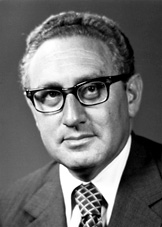
I had a boss out there who used to tell me that the sort of balance implied in the concept of hózhǫ́ actually entailed a trace of conflict. Conflict too had its value in this ideal, he seemed to be telling me, and so it too had its place in the balance people strove to attain. So, I shouldn’t have been surprised to find a layer of conflict in the workings of folks who embraced this value. But sometimes I am a damned slow student. Years after I had moved on from that job, I think I finally got this lesson. I got the point while reading up on Henry Kissenger. Thinking of hózhǫ́ as a kind of Realpolitik is of course little more than replacing one metaphor for another, but I continue to think it is a helpful correction to the cosmic muffin concepts that saturated so much of the public discussion of hózhǫ́, at least when the rest of the conversation occurred in English. Even still, the distance between this value and the practices of those who hold it dear is vast, so vast that it seems often to escape the ability of folks to conceptualize the matter.

Which I suppose puts diné on par with the rest of us.

***

It used to drive me to tears, back during my brief stint as a moderator on the Internet Infidels message boards, when I would see some fellow heathen lecturing a Christian on the virtues of reason and rationality. Okay, this didn’t always bother me, but it drove me nuts those specific moments when the Christian was doing a damned good job of reasoning about the particular issue and the unbeliever not so much

Yes, that does happen.

I wouldn’t count myself an Atheist if I didn’t think that ultimately the most reasonable thing to do about gods is to just say ‘no’ to them. But the backing of reason needs to be earned in the details of a discussion, and which side will earn it is back on the table every time you decide to take up the subject. Like it or not, in some conversations about religious matters, it is in fact the believer that is doing a better job of reasoning. That really shouldn’t surprise anyone whose sense of human nature hasn’t been completely overdetermined by their sense of the battle lines in question. Yet in such moments, when the compelling argument just isn’t coming, leave it to the rotten-hearted to simply claim the cultural capital of a free thinking rational person and remind the believer that she isn’t in the club, so to speak.

That is the sort of hypocrisy I suppose I should expect in any camp, including my own, but it doesn’t make seeing it any easier. Take any given value, and you will always see a sort of tension between its motivating characteristics, the oughtness it urges on us, and its currency for those with some claim to that value. Ideally, one could expect those claiming the virtue of reason to be those who actually live up to it, but ideological movements and philosophical orientations also generate a degree of association with a given virtue. And for some, that is enough. They are more rationale by virtue of their allegiances; and little else need be said about the matter.

***

Likewise I will never accept the excuses that conservative Christians make for opposition to homosexuality. It is common enough to hear from folks that their stance on the topic is taken out of love, that they have gay friends, and that they are merely following the word of the Lord on this. (I’ll skip the example of the lady who re-assured me that she had nothing personal against gay people, because she loved Will & Grace. …okay, I didn’t quite skip it, but, well, …I can’t help myself sometimes.) Conservative Christians often cry foul when their position is described as hateful, insisting that we take their own motivations into account.

In my book, you measure goodwill by the way people treat others; and efforts to deprive gay lesbian folks of the right to marry, to adopt, or to security in the workplace make for a straight forward case of malice. Even without these concrete harms, the high suicide rates for those of homosexual orientation speak to the high costs that some folks pay for unwarranted stigma placed on certain sexual preferences. Against all this and more, the oft-repeated claims that one can oppose homosexuality while keeping to the admonition to love others starts to ring a bit hollow. The approach taken by conservative Christians against homosexuality makes of ‘love’ a mere footnote, an intellectual exercise in resolving an apparent inconsistency. It falls well short of living up to a virtue which could well be the shining light of Christian faith.

***

What has me thinking about this is a recent encounter with one of the ways this sort of problem is commonly expressed in ordinary language. I can’t think of any other way to put it, so I will just call it ‘vacuous Idealization’. What I mean to get at by coining this monstrous bit if vocabulary is a variety of rhetoric that cancels a value in practice by elevating it to a level of abstraction which is utterly meaningless.

Take for example ‘true love,’ which we are often assured isn’t selfish at all. But that’s not all that true love isn’t. It also isn’t carnal, and it isn’t fleeting. It really isn’t harmful to the one who is loved, and it most certainly isn’t conditional. True love doesn’t keep track of the time, and it doesn’t care how much money you have or how tall you are. True love is timeless, and true love is, …blech! I can’t go on.

By the time we get done with all the things true love isn’t, I can’t help wondering if anything is left in the category at all. And that I suspect is the point of ‘true love’; it is actually an empty set, with no concrete members no associated concepts to define it. Instead we get the illusion that true love has been defined by taking ordinary instances of perfectly human (and rather flawed) love and negating each of the flaws. We are left to believe that we still know what we are talking about when all of the frailties of human relationships have been tossed in the trash of love that is merely real, as opposed to that which is true, …pardon me True.

I call Shenanigans!

Real love looks nothing like this True love that people talk about. You notice when she gets in bed without brushing her teeth. And yes Real Love hopes that her relatives will take care of her when she needs them. Real love may not care how tall you are, but she’s damned glad you don’t have any really ugly birthmarks. And if real love hasn’t made a point of principle out of your race, your nationality, your political party or your religion, then she certainly does have a way of finding people most when they travel in the same circles she does. Real love comes and goes (dammit anyhow) sometimes without warning and without leaving behind any explanation for her visit, or her departure. And sad to say, real love does have her contingencies, much as we might wish otherwise. Real love always comes with the blemishes, and the do matter, and they don’t go away.

True love is little other than the hope of some ineffable residue left when we’ve taken out all the things that come with Real love in our actual lives. But that is a hope hung on an imaginary hook. If you take away enough of the things that come with real love, you end up with nothing at all. Sadly, I am inclined to think that may be the point of this kind of rhetoric. By stripping out the foibles of real human relationships and the attitudes that go with them, one ends up with a value that is whatever you will make of it. It is something that will never happen, a virtue no-one will ever realize, nor will they ever have to.

And being thus emptied of its meaning, True Love is the perfect predicate for an imaginary subject, to wit, “God is love!”

***

On a side note, and I will just throw it out there, I do think this is one the reasons those who emphasize the divinity of Jesus most seem least likely to emulate his actions and teachings. If he is a human, with real human foibles, then the stories told about him offer a real example of how one ought to live. If he is a God, though, well then who could hope to live up to that example?

Yes, I get that this is generally thought to be a paradox in that Jesus is commonly supposed to be both. And yet it is the nature of such enigma that one can only meaningfully speak of, or think about, one of its axes at any given moment. You can say of a paradox that it is both x and y, but you cannot grasp both at the same time. And of course believers do typically come with a marked preference.

***

In like manner, I think people often approach issues of objectivity in the most self-defeating manner. It is common enough to speak of a knowing subject and known object when framing different questions about how knowledge works. There is nothing particularly wrong with this, providing one understands the two as part of a relationship of sorts. Once folks start talking about the possibility that a claim could belong entirely to one or the other, the whole model gets rather misleading.

To put it another way, I think we can speak meaningfully about objective features in knowledge, or even of greater or lesser degrees of objectivity, but if objectivity is defined as the total absence of subjective input, well then that is epistemological failure on the horizon. Bringing this a little closer to actual contexts of reasoning, I often hear (or read) commentary in which people compare reasoning with emotion or logic with rhetoric, etc., the implication being that one must choose one over the other. In the popular imagination good reasoning does not appeal to emotion, and rhetoric is always a bad.

But of course the point of much good reasoning is rhetorical; it is an attempt to convince someone of something. Far from requiring an absence of emotion, this kind of project is often enhanced by a display of emotion. If you want people to care about something, then you ought to show them that you do too. Fail to do that and watch them doodle as you talk.

The bottom line here is that the quest for objectivity becomes mysticism when it is conceived in terms of purity. If the practice of careful judgement requires an absence of subjectivity, emotion, or conscious efforts at persuasion, then careful judgement resides in a world we have never been and never will be. In fact, we don’t have the faintest idea how to get there, because the very notion is simply nonsense.

***
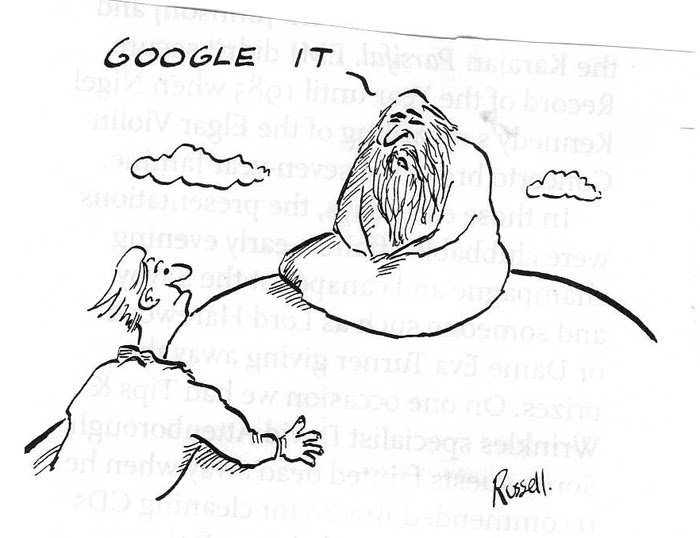
On a related note, let us consider the notion of Truth with a capital T. I’ve long since lost track of the number of times I have been told that truth is unattainable, or heard questions such as ‘what is truth’ framed as though it were something ‘out there’, so to speak. Not surprisingly, this approach has the effect of rendering meaningless the mundane truths of daily life. Against the promise of this cosmic Truth, no mere fact could possibly hope to hold our attention. And so the quest for Truth so often becomes an escape from truths.

Countless sophomoric essays have been written about the unattainability of this grand truth …Truth. It sits like the Kantian thing-in-itself well beyond our mere mortal efforts to find it. Many are the ways people have found to explain our failure to find this elusive entity, hiding somewhere in the mountains of philosophical goodness. But the details are un-necessary, because the failure of this quest begins with the framing of the question.

We use the concept of truth (or falsehood) on a daily basis to help us distinguish between claims we agree with and those we don’t. There is a lot of room for disagreement over the nature of that process, and it’s a damned interesting question, but if any theory of truth doesn’t address that sort of process then it is already headed down the wrong path from the outset.

Ultimately, questions about truth are less a matter of discovering a fact in the myriad lands of facts about the world around us, than it is a question of figuring out what means to say that something is true (and how that possibility relates its alternatives). Questions of truth value often involve great concepts and momentous philosophical questions, but they also occur in the context of topics of little importance, some of them being outright dull.  I know that I consider it true that the Dr. Pepper I am drinking is too warm and false that the weather is nice outside. (I live in the arctic; what did you expect?) Any theory about the nature of truth that separates it entirely from such mundane matters is less a theory about truth than a hijacking of the notion for some other purpose.

What is Truth?

If you really must go on a quest to discover the answer to this question, then don’t let that quest

***

On a related note, and because it fits the pattern, could someone please tell the boys from Chicago what time it is. It is a good song, but seriously, does anyone really know what time it is?

YES!

We know what time it is, because time is not a thing to be known independent of human reckoning. If the conventions of human discourse say it is 5:30pm, Alaskan Standard Time, then it is 5:30pm, Alaskan Standard Time.

To make the question more complicated than that is not a quest for something profound; it is a dramatic self-indulgence.

Yes, I’m a lot of fun at parties too.

***

And with that the rant is nearing its end. If you are still reading this, then you have more patience than I do, and I apologize for tramping through matters both sacred and profane as well as a good many points in between. But of course that is my point, so to speak, that in effect the two extremes may at times prove to be one in the same. When a value becomes too important, even to conceive the possibility of transgressing against it, then people remove it from conscious thought in ways that parallel the treatment of things they abhor. Such sacred values can cease to be an effective means of motivating people, precisely because they mean too much to allow for the full range of human possibilities. Worse yet, people sometimes seem to take a value down this road for the very purpose of cancelling its bearing on daily life. Either way my point is that you should be careful about just how much you care about such things, because somewhere past “a lot” lies “Fuhgetaboutit!

71.271549 -156.751450

Share this:

  • Tweet
  • Share on Tumblr
  • Click to print (Opens in new window) Print
  • Click to email a link to a friend (Opens in new window) Email
  • Click to share on Reddit (Opens in new window) Reddit
Like Loading...

Indians Through the Eyes of A White Kid: In Which I Wax Nostalgic and Feel Slightly Awkward About the Whole Thing

28 Sunday Oct 2012

Posted by danielwalldammit in Childhood, Native American Themes

≈ 28 Comments

Tags

Childhood, Colorado, Comanche, Indian, Monkey Bars, Native American, Navajo, Pueblo, Stereotype

Having spent most of my career working with Native Americans (and more recently,  Alaska Natives), I’ve often had cause to reflect on the differences between the people I have met as an adult and the ideas circulating about them in the public imagination. Often I find myself thinking about notions of Indian-ness I learned when I was little. What were Indians to me as a child? And how did I arrive at those notions? I don’t know if there is any special insight to be gained here, but I seem to think with a keyboard, so anyway…

What do I remember?

***

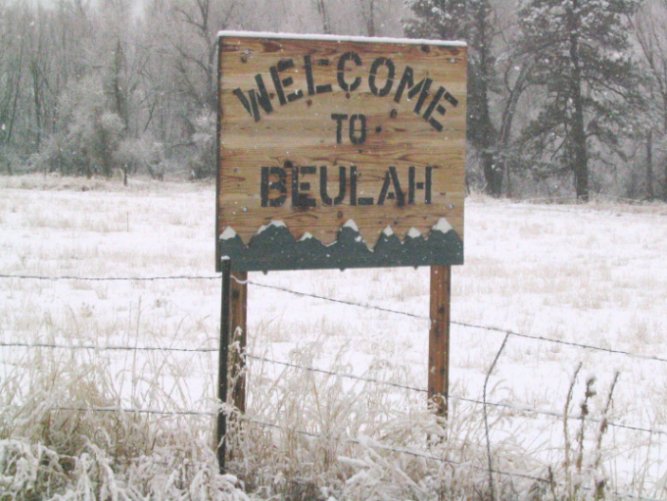
Beulah, CO

I certainly remember cowboys and Indians on the playground in a small school in Southern Colorado. That and army were all I wanted to play (or tackle football – at least until it dawned on me that I sucked at sports). I remember that playing the Indian was somewhat of a social obligation on our playground, because they had to die more than the cowboys; it was expected. You had to take your turn out there storming the monkey bars which served as a fortress from which the playground cowboys picked off playground Indians with relative ease. As I didn’t mind dying on the playground, I did this more than most of my classmates, except for Joe, (I think that was his name). Joe claimed some Arapaho ancestry. He was happy to play an Indian. I don’t remember whether died more than the cowboys, but I sort of hope he didn’t.

A part of me suspects Joe eventually found something else to do on the playground.

Monkey Bars

I must admit that I got frustrated, because certain folks (like …ahem, Scotty and Paul) never seemed to take their turn as an Indian, and they never, NEVER, died when you shot them with an arrow, not even when you snuck-up close on them and got ’em right in the heart.

Cheaters!

***

I recall a number of class projects. Whether it was kindergarten or first grade, I can’t say, but some teacher had us all dress up as Indians once. This meant cutting holes into brown sacks for us to stick our heads and arms through, then cutting up the bottom for fringe. Mostly, I remember the dull scissors that we used to cut through the sacks, and the terrible blister I ended up with between my thumb and index finger.

I was not a huge fan of Indian dress after that assignment.

***

The wampum beads (colored macaroni on a string) went over much better. We wore them as necklaces. I and my classmates were more than happy to play Indian on the playground for awhile after making those. Naturally, we were plains Indians (pasta wampum having a slightly different regional presence than it’s namesake), but well, the important thing is that we fell when the cowboys shot us. That expectation was written in stone. I mean they could miss a time or two, but eventually you had to give it to the cowboy, grab your chest and fall.

Pasta wampum doesn’t hold up well when you fall on it.

***

I remember a trip to Yellowstone National park netted me a headdress, a toy bow and some picture-books filled with spectacular images of plains Indians. I think I played Indian that night until my parents wanted to shoot me for real.

As a side note, I recall that when my classmates started getting guns for Christmas (this was rural Colorado), and I started hinting, Mom and Dad responded to this by getting me a real bow. As if I couldn’t have killed myself with that. …Or for that matter Lawrence what’s-his-name from 6th grade. (In my defense, it was his idea to sit on the fence below and watch as the arrow fell back to earth; it saved time retrieving the thing.)

I still cringe when I think about that one.

***

I remember once while still living in Colorado, the class had to make models of different types of Indian homes. Somehow I got stuck with Navajo. Some friends are gonna kill me for saying that (and well they should) but that was exactly how I felt about it at the time. The ‘real Indians’ as far as I was concerned lived in teepees; I was stuck representing a hogan. At the time, ‘real Indian’ meant for me something like the plains Indians I had seen on TV so many times, usually charging over the hill to be shot down by the cowboys.

My hogans eventually took the form of an egg-shaped panty-hose container covered in something to make it look like mud; two of them of course. (Yes, the container was my Mother’s suggestion.) I wasn’t anymore pleased to have anything to do with panty-hose than I was to be making the homes of a tribe that didn’t appear in any of the movies I had been watching. (Little did I know where so many of the John Wayne films were made, …or how many Navajos I had already seen on film. I certainly didn’t know to call them Diné, nor did I appreciate the fact that I was setting their architecture back a couple hundred years with this mud-covered L’Eggs-model.) The bottom half of the shell seemed about right, but the top shell was way too pointed.

And my classmates made such perfect teepees, too!

I really hated that project.

***

Several years on down the road, another teacher gave out the same assignment, and somehow I ended up with Pueblos this time. I was a little older and a little less disappointed. …a little. I ended up with a gigantic sugar cube structure that didn’t look too bad until we covered it in brown wood-stain. Truth be told, it looked more like a castle than a Pueblo, but I still counted this as an improvement over my panty-hose hogan from previous years. After getting it back from the teacher, this structure made a really nice fort, one which helped to protect many a plastic army soldier from sundry enemies. What WW II-type army soldiers were doing in a castle-pueblo-fortress, I don’t know, but they fought well, let me tell you.

…at least until one of our cats used the box I had put this in as a substitute litter box.

***

I had a sister-in-law for a little while. She was “part native,” as they say. I remember, she had a lot of siblings, and I recall studying them quite carefully to see which ones looked like Indians and which didn’t. I figured you could see the Indian in about half of her siblings, but the other half looked white to me.

Naturally, I was quite confused.

***

I do believe it was my sister-in-law that caught me talking about ‘bad Indians’ one day and schooled me on the subject right quick. This had a pretty strong impact, not the least of reasons being that I liked all the Indians I knew. I liked Joey, I liked my sister-in-law, and as I recall I had a major puppy-crush on one of her little sisters, …possibly two. So, when she told me that Indians weren’t all bad, I was quite willing to believer her.

But that left me with one big problem; how to square this new understanding with all those westerns?

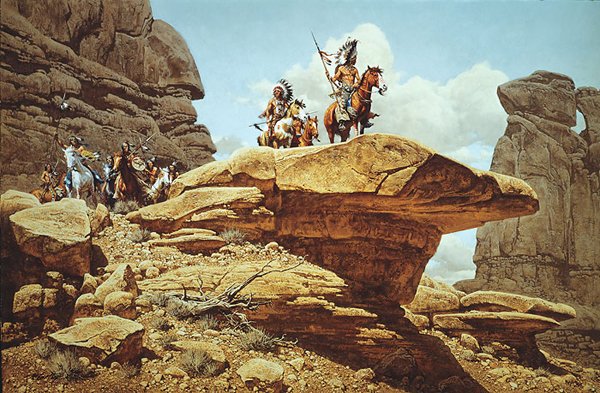
It all came to a head one day as I was looking down at a book illustration. The image is still quite clear in my mind; it depicted a whole bunch of plains Indians mounted on horse-back and charging toward the viewer looking fierce and warlike. Some adult in the household (I believe a guest) asked me what kind of Indians I thought they were. And that created quite a dilemma for me. I still didn’t know one tribe from another, much less how artificial those categories could be. More importantly, I was still stuck on the good Indian/bad Indian thing.

I stared at the image in silence for awhile, and I reasoned to myself that if not all Indians were bad, surely some were. There were bad cowboys and good cowboys in the movies, so why not good Indians and bad Indians? And maybe those bad Indians were the ones I had seen in all the movies. Maybe those were the Indians we had been playing as we stormed the monkey-bar fortress at recess. And if there were bad Indians, I thought, surely these guys (fierce looking as they were) must belong to that group! So, that’s what I said, my tone rising as I spoke; “…bad Indians?” after a bit of a pause, whoever it was offered that perhaps they were Comanche.

Total victory!

Frank C. McCarthy – The Hostiles

As far as I understood it, my theory that there were in fact bad Indians had just been confirmed, and I had just been given a name for at least some of them, Comanche! Comanche were the bad Indians. My sister-in-law and her family and Joey must have been the good ones. The next time I took off after that monkey-bar fortress, I feel quite certain that I counted myself as a ‘Comanche’ rather than a mere ‘Indian’.

Of course someone shot me and I had to fall down dead.

***

Naturally, my perspective on things having to do with Native Americans has changed over the years, not the least of them being my vocabulary preferences. But I often wonder how much of it is due to simply growing up and how much may be due to specific paths I have taken over the years? Most importantly, I find myself wondering how many of the ideas which shaped what an ‘Indian’ was to a little white guy living in Southern Colorado in the 1970s might have been due to the times I lived in? And how much that in itself may have changed?

I guess another way of putting it would be; do Indians still fight cowboys on the playground?

And if so, do the Indians ever win?

***

Many years had passed since all those stories mentioned above when I arrived in Navajo country to receive my first lesson on indigenous perspectives from a native source. My new landlord hadn’t quite cleared out of his place yet, but he had made a fold-out bed available for me. Observing a pile of pillows and blankets arranged in a familiar manner about the bed, I mentioned that his son had built a fort out of it.

A very irritated preschool child quickly emerged from beneath the bed to tell me it was not a fortress.

It was a Pueblo!

71.271549 -156.751450

Share this:

  • Tweet
  • Share on Tumblr
  • Click to print (Opens in new window) Print
  • Click to email a link to a friend (Opens in new window) Email
  • Click to share on Reddit (Opens in new window) Reddit
Like Loading...

The Spirit Always Grows Deeper On the Other Side of the Fence

23 Wednesday May 2012

Posted by danielwalldammit in Native American Themes, Religion

≈ 15 Comments

Tags

American Indian, Indian, Native American, Navajo, New Age, religion, Spirituality, Tourism

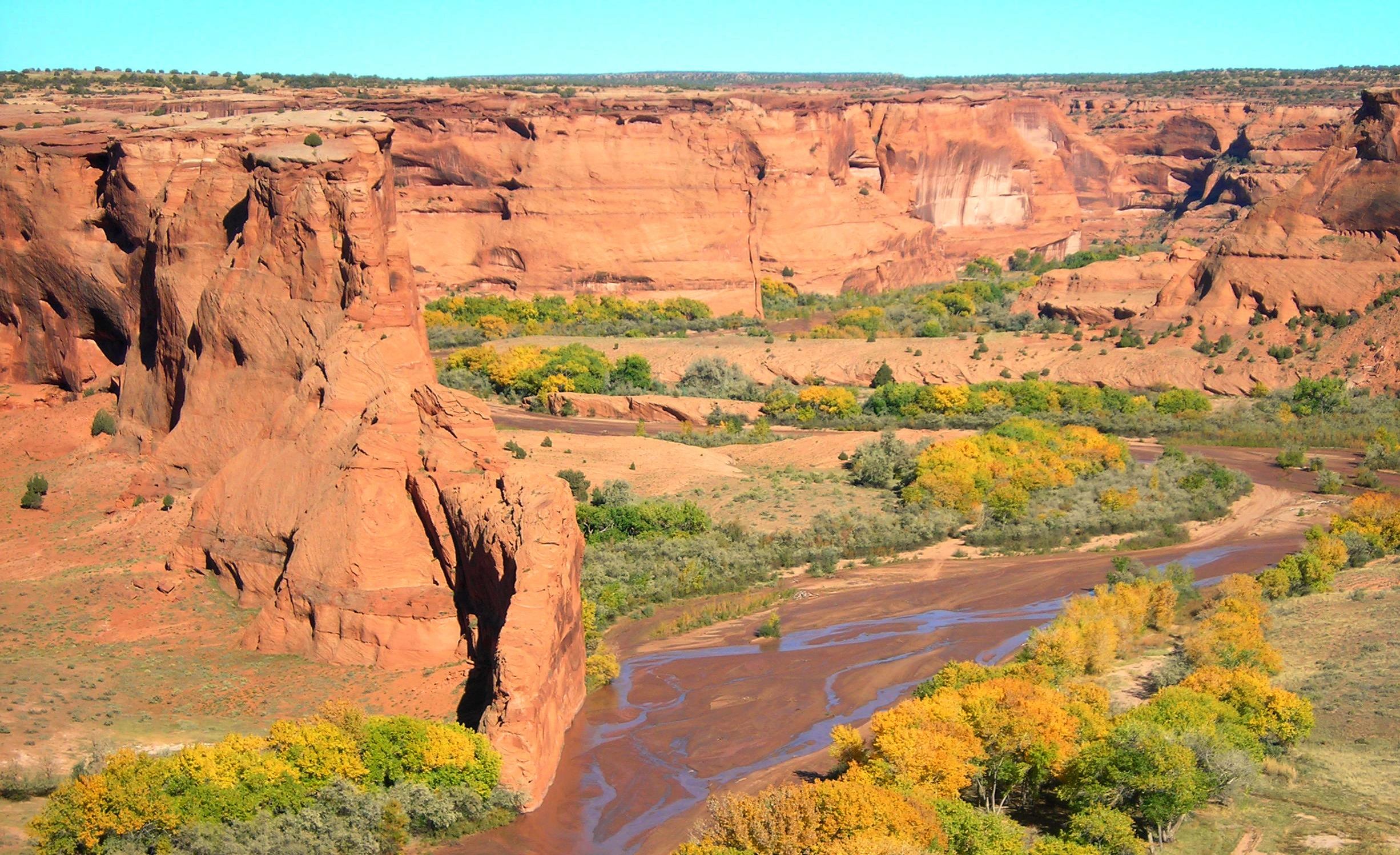
Canyon de Chelly national Monument (Chinle)

It had been a very long drive into work that week, not the least of reasons being a heavy snow storm that descended upon the central Navajo Nation just as I got into the area. I didn’t expect to see my landlady in the office, but there she was. She and I normally passed each other going both ways of our weekly commutes, and upon seeing her I assumed she had been trapped in town by the snowstorm. Would I be on the floor that night? …or asleep in the office? Not to worry, my landlady and her 4-wheel drive were on the way out of town, but she wanted me to know that I would have company that night after all.

I cocked an eyebrow and waited to learn more.

It turns out she had picked up a guy on the side of the road near Chinle. She didn’t know much about him, except that he was a bilagáana (a white guy) and he had come out to the reservation looking for native wisdom. She had blessed him with his first taste of that wisdom by getting him in out of the cold. She added that she thought he was sick. So, I taught my class that evening and headed over to the house wondering what (or rather whom) I would find.

I’ve long since forgotten the man’s name, but he was indeed sick. A doctor had apparently told my guest that his Prostate Cancer could not be treated. So, he had come to Navajo country in the hopes that a Medicine Man could accomplish something that modern science could not. My guest didn’t elaborate much on his condition, though his frequent trips to the bathroom might have testified in some sense to the diagnosis. He was French, as I recall. I don’t think he ate at all that night, nor did he accept an invitation to breakfast.

The house contained two quite decent beds, but no central heating. So, my guest slept on the floor that night and I slept on the couch, thus putting us both near the coal-burning stove. In the morning, he pulled out his tarot cards and tried to get a sense of what the day had in store for him. The man offered to do a reading for me, but I declined. It had been a long time since I had left that sort of thing behind, and I didn’t want it back in my life, not even as a sort of social experiment. Instead, the man explained what each card meant as he drew it during his own reading. There was some good and some bad, and as one might expect, a lot of wiggle room on the particulars.

Although I asked, the man never really told me whether or not he was looking for someone in particular. I suspect he thought the practical problem of finding a Medicine Man willing to help him would resolve itself, perhaps with the aid of his cards or some comparable means of divination.

I don’t think my guest ever asked me for anything, nor did he accept anything I offered. The storm had broken late that evening, and his reading had been promising. So, the man opened the door to find a truly beautiful morning. Soon, he was on his way.

***

It is hard to explain just how out-of-place my guest for the evening had been. The man would have had far more luck turning south and heading into Sedona. Perhaps one of the more shady medicine-men would have sold him a quick Blessing-Way, but the real thing, so to speak, is a family affair. It would take friends and relatives to put together the resources, to aid in the ceremonies, and to help in the long rites. The proper healing from a local perspective might have taken several nights on end with several participants needed to make all this work. The logic of the system is as much social as it is metaphysical. Repayment for all of this effort would take the form of similar service when those same people needed help in various forms over the course of their lives.

This man didn’t really fit into the scenario he was trying to bring about. It wasn’t just the clumsy eclecticism of tarot cards and native healers that seemed off to me. On a much more profound level, my guest had come seeking a personal experience; its social implications were simply beyond him. With enough goodwill, folks could of course devise a work-around, but how likely was it that anyone would give him the chance? To say nothing of the odds that any of it would work!

Who knows?

I could easily hope that my guest for that evening found what he was looking for and flourishes today, living evidence that my sense of both metaphysics and indigenous culture are dead wrong on all counts.

It was desperation, not malice, that brought this man to Navajo country, and yet his failure to appreciate the social setting was part of a much larger problem. I often wonder just what is it about other people’s rituals and beliefs that makes them so attractive to those on a spiritual quest, even with personal health hanging in the balance? Among other things, this question always comes to mind when I think of that particular night in Chinle. Once that question takes hold of my thoughts, I cannot help but to want to follow it down a few similar paths.

***

I’m not altogether unfamiliar with the sort of thinking my guest brought with him that night. I remember reading about the ascended spiritual masters (Kuthumi, Maitreya, St. Germaine, etc.) in my grandmother’s old Theosophy books. The masters dwelt on this earth, at least when they wanted to, or so I read. The home of the masters, so the story goes, rested in the remotest parts of Tibet. I suppose that when the books had been written, this seemed an adequate explanation for the seeming impossibility of finding the masters by normal means. It took meditation to bridge the distance.

I remember sitting in on a séance as a child in the early 70s, one in which I and several family members received the names of our spirit guides. I remember the name of my “Indian guide.” It was “White Thumb.” With the name of “Wee One,” my “Joy Guide” also seemed to bring to mind an Indian, albeit a little one, perhaps an invisible playmate, …very useful to a kid living on a ranch inconveniently far from my classmates. I wasn’t half as interested in any of my other guides as I was in these two.

I also remember that the name of my father’s Indian guide had been of the South Asian variety. I cringe at the explanation, …this was a higher form of Indian guide, so he was told. I cringed again many years later when a family friend dismissed questions about the authenticity of sweat baths run by non-Indian practitioners. She assured me that she and her spiritual mentors were engaged in practices far more advanced than anything Native Americans had actually done. And of course I thought about all of this when I learned about the tragedy of a sweat bath lead by James Arther Ray. I wonder if he too was engaged in practices far more advanced than those of the Indian peoples from whom he borrowed piecemeal?

I remember a woman at a Native American Studies conference who once asked me if I was following the “Red Road,” a question so loaded with cultural baggage I couldn’t begin to unpack it in time to give an adequate response. I expect the woman must have found me quite a disappointment.

But Spiritual appropriation isn’t just limited to Native American traditions. I recall with great pleasure reading Karma Cola long before I headed out to the rez. Gita Mehta’s brutal observations on the antics of spiritual tourists in India touch upon issues quite familiar to those observing how Native traditions fare in New Age circles. Many of the characters she describes in Karma Cola appear quite as hapless as my guest sitting there reading tarot cards on his way to find a Medicine Man. Few seem quite so innocent or nearly as sympathetic.

Mehta has been rightly criticized for focusing on the negatives. So many claim to have found something of value in Eastern traditions. What personal pettiness it must take to deny or to minimize this! And yet the specter of people on a personal quest, proceeding oblivious to the social context in which they operate rings true for me. Whatever folks may have found in these strange, foreign, traditions, it seems a safe bet to suggest that they commonly miss much more.

What bothers me most is that the part spiritual tourists miss may well be the most important piece of the story, the part which anchors all that spiritual talk to an established community. I cannot help but wonder if the quest to learn someone else’s spirituality isn’t rather commonly an effort to escape that very thing!

Those traveling (literally or metaphorically) through another people universe are freed from much of the social context in which the symbols and ideas they seek to learn acquire meaning. They can learn how to perform a ritual, or even what it’s iconography means in some idealized sense, but they are freed from the tedium by which that ritual is connected to countless aspects of daily existence. Most importantly, spiritual tourists are free to fill in the gaps of their understanding as they see fit, unencumbered by multiple sources of information, some of which will surely disagree. What spiritual tourists acquire is a radically simplified version of some other world view, all the easier to tweak it to their own tastes. Perhaps some people need this; perhaps some even do great things with the opportunity. Either way, the point stands. Something highly important is lost in translation.

For some at least, the chance to strip a practice of its social context and rebuild it as they see fit is precisely the pay-off for embarking on a trip into unknown spiritual territory. There may be good reasons for doing that, but how often do people even realize that is what they are doing?

71.271549 -156.751450

Share this:

  • Tweet
  • Share on Tumblr
  • Click to print (Opens in new window) Print
  • Click to email a link to a friend (Opens in new window) Email
  • Click to share on Reddit (Opens in new window) Reddit
Like Loading...

Native American Ceremonies and the Meaning of ‘Religion’: Unpacking the Semantic Baggage, …Well at Least the Carry-On

03 Thursday May 2012

Posted by danielwalldammit in atheism, Native American Themes, Religion

≈ 37 Comments

Tags

atheism, Belief, Ceremonialism, Christian Forums, History, Indian, Native American, Navajo, religion, Semantics

Hogan

Not everyone has a religion!

More to the point at hand, the term seems to be an awfully bad fit for a lot of the things it is commonly used to describe.

When I was teaching on the Navajo Nation, I used to illustrate this by asking my students; when you hold a healing ceremony, who comes? The answer was always something to the effect of the community itself, friends, relatives, etc. What happens if you don’t believe in the effectiveness of the ceremony? Frankly, I don’t think the question came up very often, at least not in the context of deciding who belonged at the ceremony, but I did once meet a woman who had effectively answered it. A born again Christian, she stayed at the main house during the chants and entered the Hogan to help serve food during the breaks. She thus met her family obligations without implicating herself in a ceremony that was anathema to her own beliefs.

When I asked my students who goes to a church, the answer was invariably something along the lines of its members, believers, etc. Catholics go to a Catholic Church, Baptists to a Baptist Church, and so on. Of course this doesn’t mean that others aren’t welcome at a given church, but there is a distinct sense that the church exists for those that adhere to its doctrines. Those testing the waters will be expected to make a choice at some time.

Which brings me to another point, a religion can be modeled as a debate stance. Who belongs to a church? In many cases, we can literally trot out a range of statements and ask people whether or not they will vouch for the truth of those claims. “God Exists.” “Jesus rose from the dead.” You get the idea. Say ‘yes’ to the right statements, affirm one’s beliefs that they are true, and you are in the club. Say no, and you are out. Whatever else is happening here, it is a process of segregating folks according to an imagined argument within a larger community.

Sandpainting

When I used to post on christianforums.com (CF), this was explicit policy for many years. Those who affirmed the Nicene Creed (or perhaps the Apostle’s Creed) could count themselves as Christian and post in the Christians-only sections. Those of us who could not were asked to restrict our posts to the open-debate areas. The policy varied in its details from time to time, and as I recall it changed rather dramatically a few years back, but when I was there at least CF policy fits the model I am proposing, membership in the faith, as it was defined on CF could be determined by one’s willingness to back a series of truth-claims.

So, what is the difference?

I’m about to paint it in pretty broad strokes, but I’ll warrant the paint gets more or less within the proper lines.

A religion is defined in terms of beliefs which consist of the willingness to vouch for the truth of a claim. A native ceremonial system is defined in terms of community membership and participation. Of course there is considerable overlap between the two. People expressed a number of beliefs connected with Navajo ceremonies, and churches can be remarkable community institutions. But as with any other questions of value, it is the priorities that count. Failure to vouch for essential doctrine gets you out of a church. It doesn’t get you out of a Navajo ceremony, at least it didn’t when I was there.

So, what is going on here? I would suggest, the point of the ceremony is at least partly to unite the community, to get them all involved in something of great importance to the community at large (the health of its members in the Navajo case). What is the point of the religion? Well it is at least partly to distinguish a select membership from some larger community. A religion isn’t simply about what group you belong to; it is about what separates you from those others. What a native ceremonial system unites, a religion divides.

Some might find that shocking, or at least counter-intuitive. Often when religious debates get rather heated, someone will lament the divisiveness of the issue and give a variant of the “can’t we all just get along” speech. The sentiments are noble enough, but I often wonder how many times people can see the process of division before it sinks in; that is what is SUPPOSED to happen.

Rainbow Bridge (Sacred Site)

Of course both ceremonial systems and religions unite as well as divide, but they do so on different parameters. The ceremonial system unites people along the lines of an established community, it gives people who share in a range of political and economic interactions a means of emphasizing their connections. A religion carves off a notch of those people and sets them in ideological opposition to others in their community.

So, this is my particular take on a running theme in Native American studies, the unfitness of “religion” to the understanding of Native American practices commonly described using precisely that term. The problem was particularly critical to the workings of a Federal law passed in 1978, The American Indian Religious Freedom Act, which I happened to study for a bit. The law had a rocky history from the start, and at least in the early 90s (when I studied the matter) an awful lot of people were disappointed in its application to real life.

It was easy enough to say that various indigenous practices raised a lot of First Amendment issues. (Well at least it was in 1978; the prior history of willful abuse is dismal, and a topic for another post.) But actually extending Free Exercise protections to Native American “religious” practices proved very difficult. How do you protect the right to prayer when that might mean a lot more than a moment of silence or even a few words spoken in a certain posture? What do you do about ritual paraphernalia at border crossings? How about odd dress in schools or prisons? How do you deal with strange substances? Nevermind peyote; a simple smudge-pot can really screw up a paradigm! …and (this was the real sticking point) what do you do about access to sacred sites on public lands, especially sites that might not be so sacred anymore if someone builds a road or a fast food restaurant in the vicinity?

See, the problem was that native “religious” practices simply didn’t fit into the niche already carved out for religions within the American political economy. So, time and again, when Native Americans sought to enjoy their religious freedom, they found some official or judge who couldn’t (or wouldn’t) grant that protection. The necessary relief always seemed to be too much to ask, and the resulting case-law was dismal to say the least.

So, what was the problem? At least some folks figured it lay with the key term “religion.” It just didn’t fit. The practices in question may have included enough of what people call ‘religion’ to get the issue on the table, but they weren’t restricted to quite the semantic domain one normally expects of things described using that term. The contents Native American “religions” thus tended to spill over into other social terrain. Where western religions had learned to reside in the spaces between other public matters, their Native American analogs didn’t even come close.

So, if the term “religion” doesn’t fit, what does?

It really is difficult to answer that question. We can of course use the term “religion” anyway, but the warrant for its use is analogical, and my point is the analogy breaks down, often in really inconvenient ways. A common practice is to talk about native “spirituality,” but the chief benefits of “spirituality” seem to be that the term means just about anything you want it to mean, which is not an argument in its favor.

My own solution is to focus on the ceremonial practices. As the community-building functions of those ceremonies take priority over the argument-framing functions, those practices naturally stretch into social interactions well beyond those of religions. Of course this way of talking about the issue involves a judgement about priorities; it is a claim about what matters most. So, I won’t be too offended if someone opts to go another route.

Yes, I will. Let’s fight about it!

Anyway, what interests me about this is that it is the other half of a coin to my own situation when it comes to the subject. Religion obviously doesn’t do much for me, and as my last post ought to have established, I obviously think there is something about religion that is NOT part of my life and thinking. What that is, is another question, and admittedly a satirical post isn’t really going to nail it down. So, I am trying think my way through that issue (for the umpteenth time) by looking at people who may have a similar problem.

…and by “similar” I probably mean “opposite.”

If I as an atheist lack something falling under the heading of ‘religion’, the people I am talking about seem to have a surplus of it. Where the term denotes something I don’t want in my life, it denotes something that falls well short of what they want in their own lives. Where use of the word “religion” commits me to too much, it commits them to too little.

Either way, we have a problem.

***

The Hogan picture comes from the website, Virtual Tourist. It is part of the Navajo Museum and Visitor’s center in Window Rock, AZ. The sandpainting is from navajopeople.org which includes a nice description of its symbolism and ritual significance. The picture of Rainbow Bridge comes from Destination360. It was the subject of sacred site litigation in Badoni v. Higginson, one of many sacred sites litigated in the 70s and 80s.

71.271549 -156.751450

Share this:

  • Tweet
  • Share on Tumblr
  • Click to print (Opens in new window) Print
  • Click to email a link to a friend (Opens in new window) Email
  • Click to share on Reddit (Opens in new window) Reddit
Like Loading...

Old Gripes, New Tundra, and a Thin Ray of Hope.

10 Thursday Nov 2011

Posted by danielwalldammit in Alaska, Education, Native American Themes

≈ Leave a comment

Tags

Alaska, Arizona, College, Culture, Curriculum Development, Diné, Education, Indigenization, Inupiat, Native American, Navajo, North Slope

How do you adapt course material to the cultural context of a tribal college? I have had enough conversations about that topic in the last couple days to last me a little while. Whether any of them will help or not is of course an open question, but for the moment, I have a little time to reflect on the matter.

It feels like I am never on the same page with others when the topic comes up. Most of the cultural materials I have seen have been saturated with over-extended metaphors, clunky diagrams with over-simplified cultural motifs all over them, and deep philosophical discussions on the English gloss of some native term. When such materials show up, I always feel some trepidation. When such materials show up, I can’t help but want to step outside and get a breath of fresh air.

It’s no big deal, really. I get that feeling in most meetings sooner or later. Why should those aimed at indigenizing education be any different!

But seriously, before moving on I suppose I should say that my ‘exhibit A’ for how not to to an indigenous educational policy would be Diné Educational Philosophy, at least as it was taught when I was at Diné College. At the heart of this policy was a grand metaphor in which call lessons could be divided into four stages of learning, each of which corresponded to four stages of life development, which in turn corresponded to the four cardinal directions, and from there the metaphors multiplied as various aspects of Navajo cosmology could be mapped onto this four-part division. I should say that the whole thing always fascinated me, and there are a lot of interesting details about it that just are not going to make it into this blog piece. In practice, it was an awful clunky system.

Mind you, it was college policy that all classes had to incorporate a methodology based on this metaphor into each of our classes. New full-time instructors took classes in the subject (unless it conflicted with our schedules) and part-time instructors had a training day on it (or at least they were supposed to). So what most of us did was to draw a circle on the board, divide it into a four-piece pie, attach the requisite metaphors, and get on with what we would have been doing anyway. To say that this paint-by-numbers approach to an indigenous education was less than helpful would be putting it mildly. As often as not, it was the more “traditional” students who were displeased to see one  of those circles go up on the board at the beginning of a lesson.

So, leaving my past frustrations aside, how would I prefer to approach this? I’m still relatively new to the North slope, so my learning curve is still pretty steep. And tonight, I think I may have just had a mini epiphany, the kind that advances the process for me. It came while reading the blog, “Stop and Smell the Lichen,” written by Rainey Hopson, a woman living in Anaktuvuk pass.

A wonderful piece entitled, “A Good Person,” had the following observations about how one judges character in a small village:

In the village you know everyone, and everyone knows you. You know their secrets and their deeds of kindness. You know wether they are kind to the elder that needed help walking on slippery ice. You know every mean word that they ever said. You know the bad as well as the good. You always act as politely as you can, because you know you will have to deal with this person for the rest of your life, wether you like them or not. You know, after years of interaction and observing a persons actions wether they are good or not, wether you can trust them for certain things, wether or not this person speaks with authority and knowledge. We see each other as permanent beings in our life, and the job and the money and the physical objects as fleeting insubstantial things. A very different view. A different set of scales.”

There is a lot to think about in this piece, but what turned my head back to the subject of adapting lessons to the cultural context of teaching native students was the realization that this is a critical difference between the great city of Barrow (with its enormous population of around 4,000 people) and the smaller villages with populations in the low hundreds.

To someone living in a modern city, much less a metropolitan center, the difference must seem negligible. Living in a town of four thousand and isolated from any major cities by hundreds of miles of tundra must seem to pose many of the same challenges as living in one with a few hundred people. But there are critical differences.

Barrow does have a small town feel. But here it is still possible, even for long-time residents, to see people one does not yet know, or to choose whether one wishes to deal with at least some people. If the population is small, it is not so small as to render relationships entirely inevitable as the village relationships Mrs. Hopson describes in the passage above. Small wonder that our “village students” often seem to have trouble adapting to life in the big city of Barrow, or (more to the point, perhaps) to life away from home.

Thinking about this, I made a small connection to just one lesson in one of the classes that I teach, an introductory course on cultural anthropology. What part of my anthropology class did I connect to this piece? Well life in the Amazonian rainforest of course.My textbook for that class contains an extensive discussion of the limits of leadership by personal credibility. When leaders lack coercive authority, the ability to influence others depends on the ability to form direct personal relationships with them. Some anthropologists have attempted to put a number on the possibilities, an objective limit to the number of people whose actions you can guide without the ability to issue an order, point to a rule, or hand out a set punishment.

What is the magic number? Pssh! Don’t believe everything I tell you!

…Okay, if you insist. To say this is an oversimplification is an an understatement dipped in some damned weak sauce, but anyway, the limit is somewhere in the low hundreds.

It occurred to me that the difference between the smaller villages and Barrow falls somewhere in the vicinity of that same set of limitations. Whatever the number in question, the point is that there is some point at which a population becomes too big to ensure significant personal interactions with someone in any given household, and THAT means real differences in the social organization of the community. What Rainey Hopson described in her blog is a quality of social life that is present in the smaller of the North Slope. If the Amazonian specialists covered in my anthropology texts are to be believed, it also exists (or existed) in a number of Amazonian societies.

So, in reading Mrs. Hopson’s blog I had a little ‘aha!’ moment about a connection between something my students have not experienced at all (life in an Amazonian village) and something they with which they will most likely have some familiarity. Even those students who have not lived in the villages will likely be familiar with the difference. They will know there is a difference, and those that have lived here all their lives will have formed ideas about that difference. This means that I can use the comparison as a jumping off point for exploring a range of related issues. I can now use the bridge between these topics as a means of helping students understand he foreign topics of Amazonian villagers and in turn use the study of those Amazonian villages as a jumping off point for discussions of local living conditions.

So, now I have a link between something I will teach at least once a year (and the truth is it will come up in other classes). The question is what to do with it? Some might view this as an opportunity to create a lesson plan, some set exercise in which students will be invited to meditate on the linkage. And such a lesson may or may not be a good thing. To me, however, that is not really the point.

For myself, I will address this point in as many different ways as I can in my different classes, asking students a variety of questions, and working to see just how far I can push the connection, just how much it can explain, and where else might the topic lea.

The point is that I need more moments like that, more links between the familiar pieces of life here on the North Slope, and various strange topics that I cover in my classes (many of which are as foreign to my life experiences as to those of my students).

And that is where my revulsion at so much prefabricated cultural literacy comes in. It is a simple question of where you want to put your effort. If I’m a new teacher, just in from off-slope, I don’t need an exercise or a diagram that will draw this connection for me. …one that I can use in my classroom with or without understanding the point at hand myself. I don’t need a master mataphore in which to plug all my regular lessons. What I need to help me do my job is a venue wherein I can learn as much as possible about life here in this area, where I can talk to people from the local communities about things relevant to my teaching responsibilities. What I need is something that helps me form personal relationships with the right folks, learn the right information from them, and put that information into practice in my courses.

And here is where so many educators in this area miss the boat, because it is simply easier (and perhaps more effective when dealing with accreditation agencies) to produce formulaic educational materials than it is to build learning environments. It is easier to dictate cultural content to instructors than it is to facilitate learning that will enable an educator to draw connections between their subject and the cultural environment in which they work.

This is how I actually approached my classes at Diné College, and it is how I hope to approach them here; learning as much as I can about the cultural setting and engaging my native students in dialogue about the issues that affect their lives here.

If circles go on the board, hopefully, it won’t be because they have become a procedural requirement.

Note: The photo is a picture of the village of Wainwright, AK. The Anthropology text mentioned above is John H. Bodley. Cultural Anthropology: Tribes, States, and the Global System. Fourth Edition. (Boston: McGraw Hill) 2005. Rainey Hopson’s blog is called; “Stop and Smell the Lichen.”

http://www.salmonberryblood.blogspot.com/

71.271549 -156.751450

Share this:

  • Tweet
  • Share on Tumblr
  • Click to print (Opens in new window) Print
  • Click to email a link to a friend (Opens in new window) Email
  • Click to share on Reddit (Opens in new window) Reddit
Like Loading...
Newer posts →

Top Posts & Pages

  • Hostiles and Spoilers: A Magic Studi
    Hostiles and Spoilers: A Magic Studi
  • I'll Just Leave This Here
    I'll Just Leave This Here
  • When Sex Falls Out of the Performance
    When Sex Falls Out of the Performance
  • Southern Paiutes as Portrayed in Las Vegas Area Museums.
    Southern Paiutes as Portrayed in Las Vegas Area Museums.
  • A Godless Reason for the Season
    A Godless Reason for the Season
  • Dancing for the Dead - Movie Review
    Dancing for the Dead - Movie Review
  • The Erotic Heritage Museum in Las Vegas: A Very NSFW Review
    The Erotic Heritage Museum in Las Vegas: A Very NSFW Review
  • The CSS Shenandoah
    The CSS Shenandoah
  • An Uncommon Security Guard: Dave Eshelman, AKA 'John Wayne'
    An Uncommon Security Guard: Dave Eshelman, AKA 'John Wayne'
  • Race Card Recursion: A Game of Social (In-)Justice
    Race Card Recursion: A Game of Social (In-)Justice

Topics

  • Alaska
  • Animals
  • Anthropology
  • atheism
  • Bad Photography
  • Books
  • Childhood
  • Education
  • Gaming
  • General
  • History
  • Irritation Meditation
  • Justice
  • Las Vegas
  • Minis
  • Movie Villainy
  • Movies
  • Museums
  • Music
  • Narrative VIolence
  • Native American Themes
  • Philosophy
  • Politics
  • Public History
  • Re-Creations
  • Religion
  • Street Art
  • The Bullet Point Mind
  • Travel
  • Uncategorized
  • Uncommonday
  • White Indians
  • Write Drunk, Edit Stoned

Blogroll

  • American Creation
  • An Historian Goes to the Movies
  • Aunt Phil's Trunk
  • Bob's Blog
  • Dr. Gerald Stein
  • Hinterlogics
  • Ignorance WIthout Arrogance
  • Im-North
  • Insta-North
  • Just a Girl from Homer
  • Multo (Ghost)
  • Native America
  • Norbert Haupt
  • Northwest History
  • Northy Pins
  • Northy-Tok
  • Nunawhaa
  • Religion in American History
  • The History Blog
  • The History Chicks
  • What Do I Know?

Archives

  • December 2023
  • November 2023
  • June 2023
  • April 2023
  • February 2023
  • December 2022
  • November 2022
  • October 2022
  • September 2022
  • August 2022
  • July 2022
  • June 2022
  • April 2022
  • January 2022
  • December 2021
  • November 2021
  • October 2021
  • September 2021
  • August 2021
  • June 2021
  • May 2021
  • March 2021
  • February 2021
  • January 2021
  • December 2020
  • November 2020
  • October 2020
  • September 2020
  • June 2020
  • May 2020
  • March 2020
  • February 2020
  • January 2020
  • December 2019
  • November 2019
  • September 2019
  • August 2019
  • July 2019
  • June 2019
  • May 2019
  • April 2019
  • January 2019
  • December 2018
  • November 2018
  • October 2018
  • September 2018
  • August 2018
  • July 2018
  • June 2018
  • May 2018
  • April 2018
  • March 2018
  • February 2018
  • January 2018
  • December 2017
  • November 2017
  • October 2017
  • September 2017
  • August 2017
  • July 2017
  • June 2017
  • May 2017
  • April 2017
  • March 2017
  • January 2017
  • December 2016
  • November 2016
  • October 2016
  • September 2016
  • August 2016
  • July 2016
  • June 2016
  • May 2016
  • April 2016
  • March 2016
  • February 2016
  • January 2016
  • December 2015
  • November 2015
  • October 2015
  • September 2015
  • August 2015
  • July 2015
  • June 2015
  • May 2015
  • April 2015
  • March 2015
  • January 2015
  • December 2014
  • November 2014
  • October 2014
  • July 2014
  • June 2014
  • May 2014
  • April 2014
  • March 2014
  • February 2014
  • January 2014
  • December 2013
  • November 2013
  • October 2013
  • September 2013
  • August 2013
  • July 2013
  • June 2013
  • May 2013
  • April 2013
  • March 2013
  • February 2013
  • January 2013
  • December 2012
  • November 2012
  • October 2012
  • September 2012
  • August 2012
  • July 2012
  • June 2012
  • May 2012
  • April 2012
  • March 2012
  • January 2012
  • December 2011
  • November 2011
  • October 2011

My Twitter Feed

Follow @Brimshack

RSS Feed

  • RSS - Posts
  • RSS - Comments

Enter your email address to follow this blog and receive notifications of new posts by email.

Join 8,075 other subscribers

Blog at WordPress.com.

  • Subscribe Subscribed
    • northierthanthou
    • Join 8,075 other subscribers
    • Already have a WordPress.com account? Log in now.
    • northierthanthou
    • Subscribe Subscribed
    • Sign up
    • Log in
    • Report this content
    • View site in Reader
    • Manage subscriptions
    • Collapse this bar
 

Loading Comments...
 

    %d