• About

northierthanthou

northierthanthou

Tag Archives: White Privilege

The Good Lord Baldwin Country, and to Hell With Buckley Anyway!

03 Sunday Jan 2021

Posted by danielwalldammit in History, Justice, Politics

≈ 3 Comments

Tags

Debate, History, Horror, James Baldwin, Lovecraft Country, Racism, Slavery, The Good Lord Bird, White Privilege, William F. Buckley

“Are white South African or Mississippi sharecropper, or Mississippi sheriff, or a Frenchman driven out of Algeria, all have, at bottom, a system of reality which compels them to, for example, in the case of the French exile from Algeria, to offend French reasons from having ruled Algeria. The Mississippi or Alabama sheriff, who really does believe, when he’s facing a Negro boy or girl, that this woman, this man, this child must be insane to attack the system to which he owes his entire identity.”

God damn that James Baldwin!

He was right about far too many things.

He was right about them in 1965, and speaking as he was in 1965, he is just as right about them today, damn it anyhow. It’s enough to make a white guy raised on stories of progress feel all somehow!

I really do hate that!

You can hear Baldwin’s voice in the first episode of Lovecraft Country. An exerpt from a speech he gave at Cambridge Union back in 1965 plays over a couple scenes this in this episode.

This is as brilliant as it is ironic.

This Baldwinization of Lovecraft effectively transforms the literary themes of a known racist into a meditation on the nature of racism in American history. You can see Lovecraft in the monsters. You can see Baldwin in the protagonists.

YEAH SPOILERS!

Lest one miss the connection to Baldwin’s speech in 1965, one has only to think about a few more of his words;

“We talk about integration in America as though it was some great new conundrum. The problem in America is that we’ve been integrated for a very long time. Put me next to any African and you will see what I mean. My grandmother was not a rapist.”

Now just think about the plot-line for the male lead in Lovecraft country, a back man (Atticus Freeman – played by Jonathan Majors) turns out to be an heir of a rich white explorer. Far from being a blessing, this proves to be a terrible curse.

Lovecraft Country, is James Baldwin’s critique of American racism transformed into a horror story. Just how much of a transformation that took is another question. It should come as no surprise to find Jordan Peele listed as one of the show’s producers. It wouldn’t be the first time, he mapped the patterns of racism directly onto a horror story and left some of us more than a little disturbed at how easy and obvious the connection turned out to be. It’s also fitting that Lovecraft, in particular, would be the vehicle for this narrative, not just because of the delicious irony, but because so much of Lovecraftian horror resides in the prospect of insanity. In Lovecraft, this horror is about the encounter with horrors such as C’thulhu, in the consequence of knowing one day a monstrous God will destroy everything and there is nothing we can do about it. In Baldwin, this insanity the consequences of racism. It is about the perception of whites threatened by those challenging racism, and about the impact of racism itself on the minds of white people struggling to rationalize our own privilege. As Baldwin suggests, white privilege leads us to think of those who challenge it as insane, and yet that same same privilege cannot skew the reality of those who benefit from it. Racism, as Baldwin describes it, does merely enable one segment of society to oppress another; it twists the minds of each into a distorted of reality.

“I suggest that what has happened to white Southerners is in some ways, after all, much worse than what has happened to Negroes there because Sheriff Clark in Selma, Alabama, cannot be considered – you know, no one can be dismissed as a total monster. I’m sure he loves his wife, his children. I’m sure, you know, he likes to get drunk. You know, after all, one’s got to assume he is visibly a man like me. But he doesn’t know what drives him to use the club, to menace with the gun and to use the cattle prod. Something awful must have happened to a human being to be able to put a cattle prod against a woman’s breasts, for example. What happens to the woman is ghastly. What happens to the man who does it is in some ways much, much worse.”

You can see the psychological impact of racism all over Lovecraft country. The horrors faced by the central characters in this story are consistently brought to them by white people. For their own part, the world of the white characters in this series appears to be quite insane.

But of course!

How could the white characters in this world not prove insane. They are on the back end of the cattle prod, so to speak, and that, as Baldwin warns us, has its own hazards.
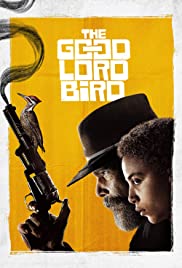
This same theme, the psychological effect of racism, also plays out in yet another contemporary series, The Good Lord Bird. Ostensibly a story about John Brown, the series turns into a meditation on the insanity of slavery, and in particular of its effect on those who benefit from it. There are few well-grounded characters in this story. Most of them are slaves. Even Frederick Douglas comes across as a man spoiled by privilege, one whose sense of reality is distorted by his own fame as an abolitionist, and whose commitments to the abolition of slavery are compromised by that very fame. To say nothing of John Brown himself! As he is portrayed in this series, Brown is an absolute lunatic. We love him, of course, at least in the end, but there is little question about his sanity. He doesn’t have it. No. To find a sensible character in this story, one has to look with the characters held in bondage. The slaves in this story are the only characters with the good sense to look after themselves. The rest are either too busy defending slavery and exploiting it or spiraling into ever more crazy schemes for opposing it. For those held in bondage, slavery in the Good Lord Bird is a force which keeps subjected to it well grounded; it is a force which sends those free of it into ever more bizarre flights of fancy.

The Good Lord Bird follows the story of an adolescent boy, Henry Shackleford (played by Joshua Caleb Johnson). Henry is labeled a girl by John Brown himself and Christened with a new nickname, ‘Onion’. When Brown proves incapable of correction, Henry simply accepts his new identity and thus becomes ‘Onion’ for the rest of the series. Henry knows who he is of course, but this is what it takes to get along in a world driven mad by people high on the privilege of freedom denied to others.

There is something especially interesting about the insanity of Brown and Douglas in the Good Lord Bird. It is as though the series producers believe you would have to be a little crazy to cut so far against the grain of the society in which you live, to seek to act effectively in opposition to slavery, to actually do what it takes to end it. Brown is typically regarded as something of a lunatic or a fanatic in history. (As I recall, this was one of the gripes mentioned by James Loewen in Lies My Teachers Told Me.) But how does one oppose an institution as powerful as slavery without becoming a lunatic or a fanatic. You can mumble, “oh that’s wrong,” or speak of some day overcoming the institution, but systemic oppression is not so fragile as to be threatened by expressions of passive regret. To actually confront the institution is to wage war against so many other things right along with it, even to risk bringing about harm to many people. That would of course include friends, and family, and even those one might seek to help in the end. You’d have to be a little crazy to want to do such a thing. Ethan Hawke is a lot crazy as John Brown in this series, and (for some of us anyway) it is a truly lovable performance.

James Baldwin reminds us that it shouldn’t surprise anyone to see a man confronting slavery treated as a crazy person, not at the time, not the history books, and not now on screen.

Damn that Baldwin!

His ghost is writing scripts for cable television.

But of course Baldwin wrote one other script with his speech back in Cambridge. He wrote the script for his debate opponent. You see, Baldwin was there in Cambridge on that day in 1965 to debate William F. Buckley, Jr. The topic for the debate was the proposition; “The American dream is at the expense of the negro.” Baldwin was to take the affirmative and Buckley was there to oppose it.

Two things are particularly striking about this debate: the absolute brilliance of Baldwin’s own speech, and the utterly pathetic response that Buckley makes to it.

It’s worth noting that two separate publications haunt the debate. (See, I haven’t given up the horror references.)

The first of these writings was an article published in 1957 by William F, Buckley entitled “Why the South Must Prevail.” In this publication, Buckley, argued in defense of segregation, suggesting that white southerners needed to maintain segregated institutions and reserve power to whites until such a time as African-Americans (‘negroes’ in Buckley’s article) would prove worthy of it. Now some have suggested Buckley had changed his mind by 1965, but at least in this debate the difference is little more than a courteous veneer. Buckley was always capable of being courteous (though Gore Vidal might have thought otherwise); he was always capable of putting a polite face on his life-log defense of elitism and privilege. The second of these publications was book Baldwin had published in in 1963, The Fire Next Time, which is said to contain a warning that violence could well be the result of continued injustice. Buckley would have described it as a threat. Buckley’s article is the reason he was invited to debate Baldwin. Baldwin’s book is the key to Buckley’s response.

That and Baldwin’s tip that opposing racism must seem like insanity to those whose identity is tied to it.

It’s worth noting that Baldwin makes a point of personalizing the issue of race in his own speech. He claims that he built the infrastructure of the American south, that he himself is the subject of discrimination and racist policies. In effect he makes of himself an indexical icon (as my old professor would have put it), through which to contemplate all of the implications of racism. This offends Buckley a great (as it often seems to offend many today to hear that racism has a negative impact on persons of color). So, Buckley’s first move is to deny it. He suggests that he is going to treat Baldwin as though he were white, and that he will do so, because Baldwin’s race is irrelevant to the matter at hand. He does this in order to deny Baldwin the protections afforded to him as a public speaker making use of a negro identity.

And thus, Buckley’s own speech begins in a world where in Baldwin’s race is irrelevant to the topic of racism; a world in which being black is a privilege, one to which Baldwin is not actually entitled.

But that’s not insane is it?

(Of course it is.)

It gets worse from there!

Buckley does not defend segregation here, nor racism. Instead he dissembles his way through the topic, describing segregation as a ‘dastardly situation’, mocking the excessive concern about racism in American Universities, and suggesting in the end that it is negroes themselves that have failed to advance themselves as a people. In Buckley’s narrative, Segregation appears to be a ghost in the machine, a presence over which no-one takes responsibility, except as it seems, those oppressed by it. If only those gosh-darned negroes and their rotten liberal friends could just get over the whole thing and get on with their lives! As Buckley would have it, the only reason racism is still with us, is because it lives in the efforts of those actively opposing it. You can hear people saying similar things, today of course. It’s just a little more jarring to see someone saying this in the very era in which buses were burned, bombs, were set off, and children spat upon while going to school, all over the topic of racism. …but wait! Dammit! It’s just as jarring to hear it in the era when cops put a knee to man’s neck in broad daylight and on camera, when the Republican Party actively works to deny African-Americans the right to vote, and when white supremacists openly mix their own flags and symbols with those of mainstream American politics.

Shit!

That Baldwin guy just keeps getting righter and righterer!

It’s almost like he’s had some personal experiences with racism or something.

Dammit!

And what about this segregation anyway!?! Buckley’s vision of segregation is a monster worthy of Lovecraft country, one which somehow appears to the majority of us only in hindsight, but which haunts the lives of those afflicted with it. One must think those who complain of racism terribly insane to be afflicted by a demon that exists only in their own politics! Buckley certainly seems to think so. Those telling us “liberalism is a mental illness” today surely do, but of course the brunt of their criticism falls less on liberals than on those in need of remediation. We get insulted; they get to go on living with the with the demon folks like Buckley and his modern descendants will neither claim as their own nor confront in any meaningful way. Buckley did a lot to set ‘conservative’ politics on this course through his publication, National Review. That his vapid waffling response to racism could be considered intellectualism, as it has for so many calling themselves ‘conservative’ has always been a mystery to me. Buckley, never really had anything to say about anything, but he could sure as Hell take more words to say nothing than most any other public figure in modern history. Most particularly, he had nothing meaningful to say about racism or segregation in response to Baldwin.

Buckley concludes his meandering speech by warning Baldwin and those who sympathize with him of an apocalyptic scenario worthy of modern horror films. If, Buckley suggests, folks such as Baldwin insist that the American dream itself is antithetical to the justice which they seek, then he and others who love their country will be forced to fight over it, “on the beaches,” so to speak. Oddly enough, they would be doing so, even for for the benefit of the negro himself, as Buckley would have us believe.

Thus, Buckley ends his speech by imagining, not how segregation might be ended, but how the call for it threatens everything he loves, and how the defense of segregation under the pretense of basic patriotism is in the end, all for the benefit of those oppressed by it.

As beautiful as Baldwin’s speech was, Buckley’s own efforts are sickening.

What’s worse! This debate hasn’t moved a whole Hell of a lot since 1965. In this Debate, Baldwin struggled not to impress the audience with the notion that racism is wrong, but to get people to give a damn about it, to act meaningfully against it. For his part, Buckley struggles to hide it, and to hide the degree to which racism was always central to the world he defended throughout his life. Buckley has a lot in common with an awful lot of people today.

Small wonder that the script for this debate can still be found on your cable television networks.

***

Those present voted 544 to 164 in favor of Baldwin as the winner of the debate. For his part Buckley, bragged that he “didn’t give them a goddamned inch,” or something to that effect.

People can be proud of the strangest things!

Share this:

  • Tweet
  • Share on Tumblr
  • Click to print (Opens in new window) Print
  • Click to email a link to a friend (Opens in new window) Email
  • Click to share on Reddit (Opens in new window) Reddit
Like Loading...

I’ll Motte Your Bailey! The White Privilege Edition

13 Tuesday Oct 2020

Posted by danielwalldammit in Justice, Politics

≈ 5 Comments

Tags

Confirmation Bias, Critical Thinking, Motte and Bailey Doctrine, prejudice, Privilege, Race, Racism, Social Justice, White Privilege

Criming While White

Okay, I’m going to regret this…

What’s a “Motte and Bailey doctrine?” The term was coined by Nicholas Shackel. It describes a position in which somebody defines a term in narrow and well-defined terms in contexts of likely dispute and/or rigorous scrutiny, only to adopt a much broader and less rigorous approach to the same topic in practice (e.g. when speaking to a very friendly audience). The language comes from a medieval system of defense in which a tower (usually built on a mound) is surrounded by a stretch of desirable land. The tower on its mound (i.e. the Motte) is where the people of the community go for defense when attacked. The bailey is where people actually live and make their living. So, the concept here is really one of equivocation wherein people employ a strict definition of their stance when pressed only to get sloppy with it whenever opportunity tempts them to less than precise applications.

***

So…

Is “white privilege” a Motte and Bailey doctrine?

Well it certainly can be.

***

What’s the Motte version of “white privilege?”

As I understand it, the rigorous approach to “white privilege” is defined something like this; It is a range of unearned benefits conferred upon those perceived as white. [Alternatively, it is the lack of unearned debits conferred on countless underprivileged peoples as a result of their own (non-white) identity.] To say that this pattern has parallels to gender, sexual orientation, and range of other indices of social stratification is obvious.

What makes this the motte, as far as I see it anyway, is the lack of any direct assertions about the significance of this privilege relative to other issues. A white guy may have less to fear from the police during a traffic stop, for example, but he might still have grown up poor. He might still face discrimination if he speaks with a distinct regional accent. He could possess a disability, grow up with abusive parents, etc. Conversely, someone from an underprivileged minority group might still be wealthy, might still be connected, might still enjoy a range of benefits not available to all whites. In other words, the Motte version of this concept recognizes that white privilege does not automatically amount to getting the upper hand all across the board of social stratification. It is a ascribed status benefit enjoyed by white people. How that benefit stacks up against other such status benefits and detriments is another question.

What’s the bailey?

Well just ask critics of the concept!

How many times has a white guy told you he grew up in a trailer park or a crowded shack in response to comments about white privilege, or otherwise commented on countless travails of her or his early life in an effort to demonstrate that he or she did not have it easy? These arguments wouldn’t work against the motte version of this concept. They only work if ‘white privilege’ clearly entails an easier life for all white people, or at least the vast majority of them. As the possibility that other indices of social stratification would come into play is already built into the motte-version of ‘white privilege,’ all of these arguments fall well short of disproving that concept.

They really do.

So, why aren’t these points just straw man arguments?

They aren’t straw man arguments, because proponents of white privilege don’t always stay in the motte. Sometimes, those employing the notion really do seem to think (or at least say) that whites are uniformly better off. I have personally been told in no uncertain terms that I have had an easier life than they have because I am white, and I have certainly heard the sweeping comparisons from others invoking the notion of white privilege. Additionally, the practice of dismissing anything a white person says on the subject of race, racial privilege, or other social justice themes by reminding us that we speak from a position of privilege tends at least to erase the narrow definitions of the motte and nudge us all closer to a broad generalization about the overall status of white people relative to on-whites. Sometimes, people using this concept really do seem to be painting a simple picture of privilege that squashes a number of other measures of privilege and oppression under the weight of race. All-too-often the notion of white privilege, defined narrowly when scrutiny is likely, becomes in practice a categorical assumption that all white people have it better than all any-other-kinda people.

So, if it is tempting to dismiss the critics of white privilege for attacking a straw man, that temptation must be tempered by the awareness that at least some proponents of the notion actually embody that straw man, at least when they are on a roll.

***

And here is where the whole metaphor begins to fail us. Do people shift back and forth between strict and loose definitions of ‘white privilege.’ Yes, they do. They also do this with debates about the existence (and nature) of God, support for law and order, use of terms like ‘socialism’ or ‘capitalism,” or the love of rock and roll.

Wiggle room happens!

While we might want to encourage people to stick to a single definition of the key terms they use (or even to hold opponents in a debate responsible for doing so whether they want to or not), it is somewhat of a distortion to suggest that this is unusual. It is also a distortion to suggest that it takes the form of two clearly defined variations. Often the slippage is more subtle than that.

And of course it doesn’t help that nobody seems to trust anybody enough to anybody enough to grant them the benefit of the doubt on this topic. To hear some people talk, the very notion of white privilege will bring about the downfall of America, taking Europe with us, and fairly clipping the wings of half the angels in heaven. They can’t even address the motte version of the concept, and they certainly won’t concede it. Others will assume the only reason for expressing skepticism on this concept is a clear dedication (Whether conscious or not) to the support of white privilege. The principle of charity, long advocated by introductory logic teachers all across the land, just isn’t welcome in social justice debates of the modern world. When we acknowledge doubt at all, we tend not to give the other guy the benefit of it, and since nobody is getting any of this benefit themselves, we are that much more stingy about giving it to others.

Dammit all anyhow!

…and of course one of the benefits some of us do enjoy here is the privilege of experiencing this as a largely theoretical subject. For some folks the problem is a lot more urgent than others.

***

In this case, in particular, the middle ground is critical, not because all things moderate are great and wonderful, but because there is a critical question here, one that falls squarely on the boundaries between the motte and the bailey of this particular notion.

Relative to other indices of ascribed social status, just how important is ‘white privilege?” In the life of any given person, or the prospect for a positive outcome in any critical situation, just how likely is white privilege to make the difference? I can well understand that a black man might enjoy the secondary benefits of wealth or that a white man might face discrimination for being poor, but how does wealth (or the display of it) really stack up in comparison to race?

In attempting to answer this question, we do so haunted by the specter of confirmation bias.

White folks like myself typically underestimate the pervasiveness of our privilege. This was once brought home to me quite vividly when driving with my gal, Moni, in the passenger seat. Seeing a police officer race up beside us on the highway only to motion at me to slow down, she was shocked to see how easily I got away with driving over the speed limit. (In my defense, I wasn’t going that fast. Honest!) This is an event she now commemorates by taking pictures of me ‘criming while white’ whenever she gets the chance. Of course, I haven’t always gotten a break from cops in such situations, but after talking to her, I have come to realize that my own ideas about how a traffic stop is likely to go vary considerably with her own, and yes, I do put the difference down to race.

Of course, some in the social justice camp may be a little too quick too assume that racial identity has made the difference in this or that situation, but of course, not all biases are equal. If I was to bet on this, I would put my money on the likelihood that those of us enjoying white privilege miss its effect in our lives far more than those who lack this privilege see it when it isn’t there. In any event, the answer to how much weight white privilege gets in comparison to other indices of social status is going to be heavily skewed by the impact of this very phenonomenon (along with other all the other variables that skew the way that humans experience and treat each other).

The notion of ‘white privilege’ isn’t sufficiently robust without accounting for its relative weight. If we just say, “yes, that’s a benefit, one of many,” then all we are doing is acknowledging that race is one of many things that could trigger prejudice, and that when this happens white people are likely to benefit from the effect of that prejudice.

That takes ‘meh’ all the way to 5!

Simply saying that whiteness is just one index of unearned privilege among many others invites us all to shrug our shoulders and go back to whatever else we were doing. Perhaps we will notice when it matters; perhaps we will not. That position is not just a motte; it’s a meh. We can do better than that.

If on the other hand, we say that white privilege trumps all other considerations in all imaginable contexts, then, well, that just isn’t true. There are at least some contexts in which class, regional dialect, age, health, sexual orientation, personal connections, or any range of considerations could trump race. That white privilege skews the likelihood of positive privilege in some of these areas (e.g. class) more likely is certainly true, but at least some of the time, being white may not matter as being something else.

Some of the time.

In the end, the concept of ‘white privilege’ isn’t significant until we assign it some weight relative to other things that can skew the way that people treat one another.

As I write this, I am envisioning a much-needed trip through the relevant statistical research, but for now I mean to wrap this up by simply framing the position that most sense to me. It is the notion that white privilege, at least in the modern United States, is the most critical index of social status, at least when you account for both the likelihood that it will come up and the impact it will have. There may be less-severe sources of social bias which are more prevalent, and there may be less common sources of bias with more substantial impact when they do occur, but in the long run, white privilege is more likely to make a difference in a critical situation than class, region, age, etc. Do I believe this? Yes, though I am quite open to reconsideration and/or modification of the position.

***

So where does this leave us, or me at any rate?

I reckon us (me), somewhere in the transition from motte to bailey. I am grumble when I see the easy assumption that white people just have it better than others. I grumble more when I talk to white people who can’t even grasp the possibility that their whiteness might have given them an edge in life, at least some of the time. I reckon, the most appropriate thing to do here is to think of this in terms of priorities. As far as social ills go, this is at (or damned near) the top of the hierarchy. It isn’t the be-all and end-all of social justice, but I’d be hard pressed to think of anything more critical to address than racial disparities. That’s not a blank check written for anyone who wants to cash in on the claim to fighting for social justice. A certain amount of mere noise attaches itself to every signal, and shameless opportunists find their way into every cause. Still, I do think this problem is real, and I want more folks who enjoy white privilege would take the notion seriously.

***

It occurs to me that I may have just taken ‘meh’ all the way to 6, but it really does seem to me that the issue only gets interesting when you start asking how important white privilege is relative to other sources of social status. In suggesting that white privilege is more important than other variables, I am certainly picking a fight with anyone who seeks to deny that white privilege exists altogether, and also with those who see it as just one variable drowning in a see of other claims on our social conscience. To say that any other variables of social status could even be weighed against race and white privilege in any manner puts me at odds with quite a few of the proponents of the notion. I may have staked out a position on the middle ground, but in this instance, I doubt this will prove convenient.

Share this:

  • Tweet
  • Share on Tumblr
  • Click to print (Opens in new window) Print
  • Click to email a link to a friend (Opens in new window) Email
  • Click to share on Reddit (Opens in new window) Reddit
Like Loading...

White Privilege? Let Me Whitesplain it to Ya!

15 Friday Dec 2017

Posted by danielwalldammit in Justice, Politics

≈ 6 Comments

Tags

Eric Post, Ethnicity, Inequality, Race, Racism, Success, White Privilege, Whitesplaining, Youtube

If white privilege is a problem, then it stands to reason that I can only see that problem through the lens of white privilege, and if whitesplaining is a problem, then any account I might give of it carries a real danger of becoming yet another instance of whitesplaining. I don’t always handle these issues well. (Seriously, I think about some of my past comments and cringe.) It’s a tricky issue. Still, I don’t think it’s one I can avoid any more than the next guy or gal with a keyboard and a penchant for social commentary, and I will make one (possibly gratuitous) assumption here, which is that there must be some reasonable way for a guy like me to approach the subject. Whether or not I find that approach in this post?

Well, let’s see…

What has me thinking about this? Well I just happened upon a Youtube clip from another white guy who took it upon himself to present a reasonable approach to this issue. Suffice to say, that I don’t think he managed it, and again, I don’t know that I’ll do much better myself. Still, I think the problems with his approach make a nice springboard for tackling the issue.

…or at least for addressing some of the problems frequently arising when those of us on the pale end of the privilege spectrum try to address the issue.

The video in question was produced by Eric Post, a military veteran also famous for this response to a flag burning protest. He has other posts, but these two seem to particularly resonate with the sentiments of quite a few people. In both cases, Post adopts what seems to be a fairly reasonable response to a (probably left-wing) challenge to the social order. In both cases, Post seems to dismiss the challenge altogether. He prefers constructive engagement to insults and (thankfully) violence, but the impact of both these videos would seem to be a clear rejection of the concerns and problems in question. It’s tempting to see his approach as positive, given the man’s general tone, but I think the most important thing here is to pay attention to the story he is telling. In both cases, he generates a rather one-sided narrative, and in both cases the appearance of reasonability provides him with a moral high ground denied to those he claims to be responding to.

Anyway, here is the video:


The first thing I want address here is the way Post frames the problem, the context he generates within which to discuss the issue. We don’t encounter the case for white privilege here in any direct sense. What we get in the video is Post telling us a story about a black guy who said something to him about ‘white privilege’. What we learn of the black man’s thoughts on the subject is what Post chooses to tell us. So, his own white privilege here gets a solid boost from the privilege he acquires as the narrator of this story. But how reliable is Post as a narrator? For all we know, he made the whole thing up, though I think it more likely he is taking more subtle liberties with the story-line.

As Post would have it, this is the story of him setting a man straight on the issue before they hug it out and wind up with a hopeful ending. That’s the kind of ending I would expect from a Disney movie or a television sitcom. Most verbal confrontations don’t follow such a neat pattern. People interrupt each other. In the rush of rapidly phrased arguments, points don’t quite get made the way you would want to make them. The other guy scores a good point or three as well, and some really important stuff just gets dropped while tangents take people into all manner of foolish places. Moreover, there is always a genuine prospect that each side in an argument will just end up talking past the other without engaging them in any meaningful way. The prospect that Post really did just have a nice conversation with a guy who took all his points with grace, and without rejoinder, before agreeing with him in the end strikes me as about as likely as any other happily-ever-after ending in any other story. Suffice to say that he’s asking his viewers to take an awful lot on faith.

It’s a bit much to ask.

More to the point, consider the nature of the encounter. This began at least as a petty insult, followed by at least the beginnings of a pissing contest (Post does tell us he got in the guy’s face). So, right away, the case for the existence of white privilege gets off to poor footing in this video. It enters the story as petty insult, an expression of personal animosity cast at a complete stranger. In effect, the issue emerges here as a sort of game piece played in a petty conflict over personal status.

Social justice, this ain’t.

Now, I have no doubt there are people who would do that, people for whom ‘white privilege’ is little more than an insult to be thrown at random white people, or at least those of us who get in their way. Whether or not Post’s account of the man’s behavior is accurate is one thing, but I think I’ve met a few people like that myself. The thing is that I’ve also met folks for whom this issue is NOT about humiliating anybody, and for whom this issue is an important obstacle to social justice.

… or as I like to call it, justice.

The notion of ‘white privilege’ connects to a broad range of other controversial topics associated with social justice, inequality, and all manner of things deep and divisive. I probably won’t be solving any of them in this blog post, and wouldn’t expect Post to solve them in his short video, but perhaps, that’s the problem. Post does solve these issues, or at least he pretends to solve them insofar as he explains them away and replaces the whole issue with a quick motivational lesson shaped for the benefit of black people and liberals everywhere. This would be an impressive accomplishment, but it isn’t, because the problems he pretend to solve never amount to much more than a dirty story about an asshole he met on the street. If this isn’t a straw man, it’s certainly a whipping boy. Just an easy set up easily smacked down, and narrative easily applied to all those complex issues Post hasn’t really addressed at all.

The problem here isn’t entirely contained in the video. If folks would treat this as a random encounter with a random jerk whose particular flavor of jerkitude just happened to be racial politics, then perhaps we could file the whole thing under guilty pleasures of little or no consequence. But that isn’t happening. No, this is one of many videos out there which  circulate around the net under the guise of substantive commentary about the notion of white privilege. A white guy whitesplains away the whole issue through a dirty story about an asshole he met on the street and a good chunk of the internet says ‘huzzah’!

This isn’t solution. It’s avoidance.

So, how does Post dispense with the issue? He begins by telling us he has had some problems of his own in life, and yes, these do seem like serious problems. He goes on to lecture the man from his story on the need to be realistic about his job prospects and to educate himself properly for the kind of job he hopes to do. In effect, Post is saying that white privilege is a myth, and that the difference between a successful person and an unsuccessful one is a function of the effort they put into life.

As an answer to the problem of white privilege, this seems to be equal parts straw man and false dichotomy. Simply put, success isn’t either race or effort. It’s a function of both (and a lot of other things).  If the black man in Post’s story is wrong, then so is Post, bearing in mind, of course that this whole thing is Post’s story. In effect, it is a story about the choice between two different kinds of mistake, and that is all that Post seems capable of understanding about the matter.

This brings us back to the concept of ‘white privilege’ itself. What does the phrase mean? I’ve heard people use it in at least three different ways. Some clearly use the phrase to suggest that white people are categorically better off than others, that we all have a better shot at success (through no credit of our own) simply by being white. This approach would seem to dismiss the significance of any mere white-people-problems and sweep any advantages enjoyed by any particular non-whites under the rug. If mileage may vary, this way of talking about white privilege doesn’t acknowledge any variance outside the boundaries of a clear case that some people (white ones) have it better than all the others. I don’t think this way of talking about the issue stands up to scrutiny all that well, but it’s a sense of the phrase that is well suited to insult contests and generally morbid reflections about personal status, hence it’s appearance in Post’s story, and hence the ease with which he dispatches it.

A second approach would be to suggest that white people enjoy an advantage on account of being white. How this particular privilege stacks up against the other advantages and disadvantages that individuals experience in life is another question altogether. One needn’t deny that white people have our own problems or that some individual minorities may have some clear benefits in their own personal lives. Hell, we don’t even need to deny that there may be contexts in which being a member of a minority could actually be an advantage. It is enough to say that being white can help out in some ways. This approach seems more reasonable, but it achieves the reasonability at the expense of weakening the proposition quite a bit. It’s particularly attractive to white liberals such as myself, who may want to acknowledge privilege while minimizing its importance in our lives. “…yeah, I caught a break by being white, but let me tell you about this other personal hardship, and look at you, you got all this.”

…which is why most who talk about white privilege would step the whole thing up a notch and insist that in the grand scheme of things whiteness weighs rather heavily against those other factors. It still may be that particular white people have real problems and particular non-white people may have real privileges of their own, but in the grand scheme of things race is more likely than not to play a significant role in determining one’s status in life. In other words, whiteness may be one of many variables, but it is often the decisive variable in getting a job, getting a house, talking to a police officer, or any number of things that affect peoples wealth and well-being (not to mention their lives). This third approach is, I think the more serious of the three. It isn’t really all that different from the second approach, except insofar as it insists on the relative importance of whiteness in relation to other variables.

Suffice to say that Post’s argument wouldn’t touch either of the last two approaches to the subject of ‘white privilege’. Whether real or imagined, his adversary in the story isn’t up to the task of clarifying the issue, or if the real person did do that, suffice to say that it didn’t make it into Post’s own version of the story. It couldn’t, because Post’s story was always a story about a pissing contest, about a conflict over personal dignity. The antagonist in Post’s story was never going to accomplish anything more than gain a smug sense of satisfaction out of his insult, and so nothing rides on the ‘white privilege’ message but personal vindictiveness. Post is the only one with a dignified goal in the story, and that is true regardless of the (de-)merits of anyone’s thoughts about white privilege.

The reasonability with which Post approaches the issue is illusory; it’s simply a function of the story-line. Notice how he takes it upon himself to lecture the other man about the nature of taxes. Because of course the man he is talking to wouldn’t understand that his government check is paid for by private citizens. This is a common theme among ‘conservatives’ and radical right wingers these days. They like to imagine liberals and minorities in the form of the unemployed demanding government aid. The prospect that a gainfully employed person might advocate the social safety net is a possibility increasingly escaping their own narratives about government and economics. This story facilitates that trend by telling us about an individual who literally occupies that very place in life, and of course it compounds that narrative by enabling Post to explain the nature of taxes to the man as though he’d never thought about it himself. Post is reasonable in the story, because that’s how he tells the story, but in effect it is a story about a black man who doesn’t understand his own situation at all. The cherry on top of this condescending pie is the fact that it’s a white guy explaining it all; in effect whitesplaining white privilege to the clueless minority who hasn’t the faintest idea how to take care of himself.

Of course it is possible that the whole encounter is real and that Post’s account of it is essentially accurate, but once again we have to consider the larger presentation. What makes this video powerful is precisely the way it fits in with the larger narratives of right politics in America. Post winds up the theme by telling the man (or telling us that he told the man) to stop lying to himself. In telling the narrated man to stop lying to himself about his own welfare, Post is effectively telling anyone who supports aid to the poor and/or concerns about social justice to stop lying to ourselves. In effect, this is but another story about lazy minorities who blame others for their own lack of effort along with the foolishness of anyone who would humor them. Reasonable tone aside, Post is pushing an explicitly racist message here.

Which brings me to another point, a larger one about the nature of privilege. One of the reasons the notion of  ‘white privilege’ is so threatening to so many is because it undermines the meaning of success in a meritocracy. It runs contrary to the norms about success and failure in both mainstream liberalism and conservatism Whatever any of us has in America, we typically want to believe we have earned it. That goes without saying. It’s what the money in our bank accounts a little more meaningful than they would be for practical reasons. It’s what makes the houses we live in personal statements and the televisions we watch measures of personal merit. We have these things because we earned them.

But what if we haven’t?

What if our success (in whatever way we define it) is due in part to some break we didn’t earn? That’s a damning prospect. It stings a little, even for hose not so very adverse to messages about social justice. But for the true believers in their own success, for the fundamentalists of the free market this is outright heresy. We cannot admit of anything like white privilege or any number of social factors that might play a significant role in determining our lot in life. For the true believers amongst us, that way lies madness! Hence, the initial problem of this story!

…not the insult.

…the car.

Post begins this story, sitting (as many of his posts do) in a car, telling us about his favorite car. Presumably, he is proud of his seat in this car. Presumably, he feels he has earned that seat. I don’t think that’s an accident. Whatever the significance of white privilege for African-Americans or any other minority, in this story, it is the threat to the moral significance of a nice car that is really at stake.

This is the real threat to acknowledging white privilege. for Post. It could mean, he hasn’t really earned that car, or perhaps anything else in life.The issue isn’t whether or not white privilege can explain any measure of social inequality, it is whether or not it leaves intact the moral value of consumer products.

So, it’s rather fitting that Post takes time to provide the man in his story with a kind of motivational lesson. According to Post, the central lie that both he and the man in his story were told (by whom he doesn’t say) is the notion that one must work to achieve happiness. The truth, he says is just the reverse. In this respect, he isn’t all that far from the Puritans of old, worrying about the apparent elect (also a class defined in part by worldly possessions in elation to some imagined moral characteristic). Post is just one among many to suggest that wealth is somehow a function of character.

The problem of course is that it’s not that simple. Personal resilience can explain a lot, but it doesn’t explain everything. Time and again, studies have shown that minorities and women (among other groups) face real obstacles to success in the work place, the housing market, and any number of contexts affecting their economic well-being. Some flourish anyway, and that’s a damned good things. But it’s an insidious logic that turns this into an argument to be used against those that don’t. It’s all well and good to tell people they should do whatever it takes to overcome those obstacles in their personal lives (although doing so often assumes an air of unearned authority on the topic), but I can’t help feeling that one of the many things people ought to do toward overcoming those obstacles is address them on a larger scale. This doesn’t mean spitting insults at white people who drive nice cars, but it does mean challenging white privilege as it plays out in various contexts of modern life.

And no, that doesn’t mean anybody should be ashamed of any privilege they may enjoy in life. It does mean we ought to be careful how we use it. If Post, for example, really does help an unemployed black man get ahead in life, I’d say that’s a damned good use of his own position. Putting out a video demeaning to the status of minorities for the benefit of right-wing consumers isn’t. I’m not suggesting that those of us born into any kind of privilege ought to spend every moment of every waking day trying to figure out how to make it right for others, but we ought to be open at least to the prospect that there are real problems with the way identity shapes the prospects for success in life. Perhaps, we ought also to look for ways to change that.

It isn’t the universe, as Post suggests, whose justice is at stake; it is the communities in which we live. The universe may not owe anyone, but for those of us living in societies committed at least to equality in rights (if not wealth), I reckon we do owe others an even chance at earning a living.

Far from denying the importance of hard work and honest sweat; the point is to ensure that such things really do matter.

For everyone.

Share this:

  • Tweet
  • Share on Tumblr
  • Click to print (Opens in new window) Print
  • Click to email a link to a friend (Opens in new window) Email
  • Click to share on Reddit (Opens in new window) Reddit
Like Loading...

Top Posts & Pages

  • Uncommonday Morning Blues - Ian Anderson Learns to Play the Flute
    Uncommonday Morning Blues - Ian Anderson Learns to Play the Flute
  • Master and Commander Kinda Queered
    Master and Commander Kinda Queered
  • The Erotic Heritage Museum in Las Vegas: A Very NSFW Review
    The Erotic Heritage Museum in Las Vegas: A Very NSFW Review
  • I'll Just Leave This Here
    I'll Just Leave This Here
  • An Uncommon Security Guard: Dave Eshelman, AKA 'John Wayne'
    An Uncommon Security Guard: Dave Eshelman, AKA 'John Wayne'
  • A Joke from a Bygone Era
    A Joke from a Bygone Era
  • Uncommonly Slow on the Uptake
    Uncommonly Slow on the Uptake
  • Map Ain't Time Either.
    Map Ain't Time Either.
  • Spurious Hitler Spuriates Furiously About Guns!
    Spurious Hitler Spuriates Furiously About Guns!
  • Move Over Charlie Sheen; Rand Paul is the Vatican Assassin Now
    Move Over Charlie Sheen; Rand Paul is the Vatican Assassin Now

Topics

  • Alaska
  • Animals
  • Anthropology
  • atheism
  • Bad Photography
  • Books
  • Childhood
  • Education
  • Gaming
  • General
  • History
  • Irritation Meditation
  • Justice
  • Las Vegas
  • Minis
  • Movie Villainy
  • Movies
  • Museums
  • Music
  • Narrative VIolence
  • Native American Themes
  • Philosophy
  • Politics
  • Public History
  • Re-Creations
  • Religion
  • Street Art
  • The Bullet Point Mind
  • Travel
  • Uncategorized
  • Uncommonday
  • White Indians
  • Write Drunk, Edit Stoned

Blogroll

  • American Creation
  • An Historian Goes to the Movies
  • Aunt Phil's Trunk
  • Bob's Blog
  • Dr. Gerald Stein
  • Hinterlogics
  • Ignorance WIthout Arrogance
  • Im-North
  • Insta-North
  • Just a Girl from Homer
  • Multo (Ghost)
  • Native America
  • Norbert Haupt
  • Northwest History
  • Northy Pins
  • Northy-Tok
  • Nunawhaa
  • Religion in American History
  • The History Blog
  • The History Chicks
  • What Do I Know?

Archives

  • December 2023
  • November 2023
  • June 2023
  • April 2023
  • February 2023
  • December 2022
  • November 2022
  • October 2022
  • September 2022
  • August 2022
  • July 2022
  • June 2022
  • April 2022
  • January 2022
  • December 2021
  • November 2021
  • October 2021
  • September 2021
  • August 2021
  • June 2021
  • May 2021
  • March 2021
  • February 2021
  • January 2021
  • December 2020
  • November 2020
  • October 2020
  • September 2020
  • June 2020
  • May 2020
  • March 2020
  • February 2020
  • January 2020
  • December 2019
  • November 2019
  • September 2019
  • August 2019
  • July 2019
  • June 2019
  • May 2019
  • April 2019
  • January 2019
  • December 2018
  • November 2018
  • October 2018
  • September 2018
  • August 2018
  • July 2018
  • June 2018
  • May 2018
  • April 2018
  • March 2018
  • February 2018
  • January 2018
  • December 2017
  • November 2017
  • October 2017
  • September 2017
  • August 2017
  • July 2017
  • June 2017
  • May 2017
  • April 2017
  • March 2017
  • January 2017
  • December 2016
  • November 2016
  • October 2016
  • September 2016
  • August 2016
  • July 2016
  • June 2016
  • May 2016
  • April 2016
  • March 2016
  • February 2016
  • January 2016
  • December 2015
  • November 2015
  • October 2015
  • September 2015
  • August 2015
  • July 2015
  • June 2015
  • May 2015
  • April 2015
  • March 2015
  • January 2015
  • December 2014
  • November 2014
  • October 2014
  • July 2014
  • June 2014
  • May 2014
  • April 2014
  • March 2014
  • February 2014
  • January 2014
  • December 2013
  • November 2013
  • October 2013
  • September 2013
  • August 2013
  • July 2013
  • June 2013
  • May 2013
  • April 2013
  • March 2013
  • February 2013
  • January 2013
  • December 2012
  • November 2012
  • October 2012
  • September 2012
  • August 2012
  • July 2012
  • June 2012
  • May 2012
  • April 2012
  • March 2012
  • January 2012
  • December 2011
  • November 2011
  • October 2011

My Twitter Feed

Follow @Brimshack

RSS Feed

  • RSS - Posts
  • RSS - Comments

Enter your email address to follow this blog and receive notifications of new posts by email.

Join 8,076 other subscribers

Blog at WordPress.com.

  • Subscribe Subscribed
    • northierthanthou
    • Join 8,076 other subscribers
    • Already have a WordPress.com account? Log in now.
    • northierthanthou
    • Subscribe Subscribed
    • Sign up
    • Log in
    • Report this content
    • View site in Reader
    • Manage subscriptions
    • Collapse this bar
 

Loading Comments...
 

    %d