• About

northierthanthou

northierthanthou

Category Archives: Education

Itcs fer thuh larnin’ and whut knot. I tawks abowt itt hear!

Arms Across the Keyboard: Teaching Computer Skills in South Africa

22 Monday Oct 2012

Posted by danielwalldammit in Education

≈ 5 Comments

Tags

Africa, Ambiguity, Computers, Cross-Cultural Education, Culture, Education, Training, Translation, Vocabulary

Airedale on a Computer
(Nancy loves Airedales)

Today we have a Guest Post from a friend of mine, Nancy Sypniewski. I met Nancy when when she began doing volunteer work at an animal shelter where I served as PR, but calling her a volunteer doesn’t even come close to suggesting her full value to the shelter. She was amazing. And she was also amazing to talk to. I recently asked Nancy to share one of her stories for the Blog, and she has graciously agreed.

I don’t know if Nancy will have time to come back and answer any questions, but I wanted to include this story, because it deals with a subject I think about a great deal, teaching something in a cross-cultural setting. The story dates back to a training exercise from her days in the tech industry.

Nancy Sypniewski

We were working in South Africa. Our job was to implement a computer system that would automate the inventory of the power utility. This was back in the day of mainframe computers and big unfriendly user terminals. We first had to understand their business, determine the best method to automate their inventory, modify the “best fit” computer system, convert their existing data, thoroughly test both the modified system and converted data, develop and test customized training materials, and then finally train the people who would be using the system. These steps took thousands of man hours and multiple years.

We were finally ready to start developing our training materials. We were reminded that our audience would be tribesmen, mostly Zulu and Sutu. These men would arrive in the morning wearing a loin cloth and sandals, they would change into company provided blue jumpsuits and steel toe shoes, and then back into their tribal clothing before heading home at the end of the day. It was imperative that our training materials be full of simple language, pictures and diagrams, not because these men were of low intelligence, quite the contrary, the issue was language – English was often the 3rd, 4th or even 5th language they had learned.

Training day arrived. Our instructor had the students lay their arms across the keyboard and watch the letters appear on their terminal screen for every key they had touched. The room was filled with awe. The instructor then told the students to “Hit the key with C L E A R printed on it.” Each and every student did just that, they hit the key with the solid blast of their closed fist, causing many of the keys to pop off and fly all over the classroom. Needless to say, the students jumped up and frantically gathered the keys, now totally afraid of the new “machines” they had just destroyed. We assured them that all could be easily fixed and sent them into the break room for early tea and cookies.

Within about 20 minutes we had popped the keys back onto the keyboards and were ready to resume class. Since I had been with most of the students multiple times over the years and was a familiar face, it was decided that I would restart the class and give reassurances.

I asked that they restart the exercise by laying their arms across their keyboards while watching the letters appear as before. I then carefully said “Now, I want you to depress the key with C L E A R printed on it.” Everyone hesitated. Just then, a man in the front row raised his hand. I asked him what he wanted and he said, “Madame, I do not know what to say to make the key sad.” Luckily, everyone laughed and we had learned the lesson of careful word selection. After that, we always reminded one another to never use a $10 word when a $1 word would would do a better job.

71.271549 -156.751450

Share this:

  • Tweet
  • Share on Tumblr
  • Click to print (Opens in new window) Print
  • Click to email a link to a friend (Opens in new window) Email
  • Click to share on Reddit (Opens in new window) Reddit
Like Loading...

Uncharitable Thoughts About the Principle of Charity

02 Tuesday Oct 2012

Posted by danielwalldammit in Education, Philosophy

≈ 5 Comments

Tags

Critical Thinking, Ethics, Logic, Mitt Romney, Politics, Principle of Charity, Reasoning

This may seem ironic, but among the topics generally falling under the purview of logic and/or critical thinking is a little gem called the “principle of charity.” Simply put, this entails an obligation to interpret any given argument in the strongest sense possible, consistent with its actual wording. In other words, when you come to one of those moments where you could think of more than one way to take what someone else is saying, pick the one that gives them the strongest case possible. You don’t have to rewrite an argument for someone, or pretend you don’t see obvious flaws, but when there are genuine questions about the intent of an author, opt for the interpretation that gives him a fighting chance.

Then give him a hug.

This isn’t really about being nice. One of the most important reasons for applying the principle of charity is that it helps to ensure your own analysis will not be wasted. If you take advantage of some ambiguity in the text of an argument and spin it into something utterly foolish, then your own evaluation of that argument becomes all that much more trivial. If you are in actual dialogue with someone, then it’s easy enough for the other guy to simply restate his argument, filling in the gaps so as to avoid whatever silliness you have read into his claims. By sticking with the strongest version of an argument, you an help to ensue that you really are evaluating a case worth considering.

And then it’s open season!

I’ve often had occasion to reconsider this approach to critical thinking, not the least of reasons being that there seem to exist a rather large number of occasions when folks don’t want to use it. And by ‘folks’ in this instance, I mean “me too!” Whether reading or listening to an argument, sometimes I just don’t feel all that charitable. More to the point, sometimes, I think there are substantial reasons to set the principle aside.

I first noticed this, sitting in an anthropology class, listening to a critical theorist shred some text I have long since forgotten. Simply put, the principle of charity was quite lacking in that analysis, as it was with many similar texts I had been reading in that program. This was no accident. Where my critical thinking teachers had been preparing me for open dialogue with people with whom I might disagree, the critical theorists I had begun to read were far more interested in exploring the role of a given text in promoting power relations within a larger social context. Where the one approach talked about what a text might mean, the other talked about what it did in fact mean, at least under the prevailing circumstances.

And it occurs to me that I did this sort of thing myself in my post on the California law for the protection of the Indian, …i.e. the Law that enslaved Indians in California even as that very state entered the union as a “Free state.” The text is not an argument, but it raises many of the questions I am talking about here.  The text sets up a range of legal mechanisms which include indentured servitude as a possible alternative to incarceration. Bearing, in mind the principle of charity, one could ask if it is really fair to think of this law as a means of establishing slavery? You have to read between the lines, or you have to know some facts about the politics which produced it and guided its implementation. Once, you do know these things, the answer very quickly becomes ‘yes’.

And herein lies the crux of the problem. Application of the principle of charity means setting aside important questions about the actual impact of an argument in order to engage in dialogue with its proponents. This begs the question of whether or not you want such a dialogue in the first place (or whether or not it is even possible). And sometimes, the answer to that question is just ‘no’.

Case in point? Let’s look at this moment of Mitt Romney fame.

Now I know you think I’m going to attack him, and the truth is that I probably am, but not until after I am done defending him.

…I know; it confuses me too.

The common take on this topic is that Romney was echoing the sentiments of Citizens United v. Federal Election Commission (2010), namely the principle that corporations possess many if not all of the same rights as people. The notion that corporations are fictional people is hardly new to the political landscape. My Constitutional History Teacher was quite clear about that matter back in 1992, long before the current outrage, but for various reasons which needn’t concern us here, Citizens United brought about a frightful new firestorm of controversy over the notion, and that was fresh in a lot of people’s minds when Romney made this speech. Add to this a general sense that the Republican party is responsible for the relevant composition of the Supreme Court and for backing its rationale, and you have a ready-made battle just waiting for someone to drop in with the perfect phrasing

But is that what Romney was actually trying to tell his audience? If you look at the video, he was in the midst of making a very different point at the time, namely the fact that someone will have to bear the cost of raising taxes. Urged to levy the tax on corporations, Romney adds quickly that corporations are people. So, the question is this; was he affirming the legal rights of corporations, as per Citizens United, or was Romney trying to suggest that any costs applied to corporations will be paid by people somewhere in the marketplace (investors, employees, or even customers)? Although the categorical language suggests the former, Romney’s subsequent comments suggest the latter. The video itself doesn’t really yield a clear answer, and it is entirely possible that both lines of thought came together in one big mutant two-headed reason with no clear notion of the relationship between its sources.

At some point you have to make a choice as to the meaning of his comment.

If it’s the former choice, then well, go get him Lizzy Warren! And I must admit to a certain soft-spot for this inquiry as to the kind of person that a modern corporation would be, if indeed it were a person. But if Romney really was trying to tell us that costs accrued to corporations are ultimately borne out by people, then he is right.

Broken clocks, and all that!

Hell, there really isn’t much to gainsay that proposition that people will ultimately pay for costs imposed on corporations. There is a lot room for debate about how that works (or doesn’t) and whether or not it adds up to the kind of policies Romney wants to advocate. But that is a debate in which those of us on the left have as much responsibility to chase the devil through the details as Romney and the conservatives.

It’s a lot easier to tell Romney that corporations aren’t really people.

And here is where questions about the willingness to grant someone the Principle of Charity shade into larger questions about whether or not one wishes meaningful dialogue with them to begin with. If you really are exploring an issue with someone, and if they are approaching it in the same spirit, then the effort to assess their views in the strongest light possible facilitates that discussion. If no such goodwill exists, then extending the benefit of the doubt can cost more than its worth.

If the target audience for a debate is more responsive to cheap shots and sound bites, then failure to respond on that level begins to look a lot less like the responsible (grown-up) approach to a discussion and a lot more like failure on the horizon, all the more so if the point of the debate is really is to win something (a legal case or an election for example). If the other guy is just being a jerk, then you can always walk away. But if that jerk is trying to take something of value, then it may well be time to roll up your sleeves and pull out that roll of dimes hidden in your pocket.

Metaphorically speaking, of course.

So, do you really want to have a thoughtful discussion, or do you just want to kick the other guy’s ass? I know the Dudley Dialogue-Right in me wants to say “let’s have that thoughtful discussion,” but years of figurative blunt head trauma combine with political realism to say that sometimes the answer is just ‘no’.

Sometimes the answer is ‘no’, because the larger social context removes all doubt as to intent (the California example); sometimes it’s ‘no’ because the expectations of dialogue are essentially “no quarter given” (Romney?); and sometimes the answer is ‘no’, because you just don’t want to grant any legitimacy to the other side. This is why responsible scholars rarely debate holocaust revisionists, flat-earthers, or creation science hacks. It’s why feminists often give Men’s Rights Activists the face-palm instead of an argument, and its one of the reasons that both sides of the recent debate over Atheism-Plus have done a wonderful job of talking right past one another (just to name a couple netroversies currently bubbling over in sundry parts of the blogosphere). It’s also why you should never read the comments on any article posted anywhere (except here). And of course it’s why only a fool would debate anyone with a 160 character limit on each tweet.

…okay guilty as charged on that last one, but the point stands.

There are of course many ways in which one can shut off meaningful dialogue with others, but at least one of them occurs when you are no longer willing to give someone the benefit of the doubt. One takes their statements at face value and fills in the ambiguities according to a standard script; the possibility that the other guy may have something more interesting in mind is simply not worth the effort to give him a chance. This isn’t the kind of approach folks normally recommend, but it is the kind many of us engage in at one time or another. Combine this with the increasing role of discursive minimalism in public discourse and we have an ever increasing premium on short snide answers to arguments that never really came into their own to begin with.

There is no clear formula here; no objective test to distinguish those who have earned the benefit of the doubt from those who haven’t. While it can be particularly satisfying to see someone you think unworthy of debate forced to talk to the hand, it is equally frustrating when you are looking at that palm yourself. When neither side of a given debate seems capable of engaging the other in meaningful discussion, the results range from entertaining to downright tragic, often within the space of a single paragraph.

I certainly don’t have any great notions about how to make the call, but I do find it a interesting feature of public debate.

71.271549 -156.751450

Share this:

  • Tweet
  • Share on Tumblr
  • Click to print (Opens in new window) Print
  • Click to email a link to a friend (Opens in new window) Email
  • Click to share on Reddit (Opens in new window) Reddit
Like Loading...

Myth-Busting For Fun and Frustration: A History Lesson that Just Didn’t Take

05 Wednesday Sep 2012

Posted by danielwalldammit in Education, History

≈ 12 Comments

Tags

America, American History, Cognitive Bias, Education, History, Myth, Myth-Busting, Note-taking, Puritans, Study-Habits, teaching

I still remember my first real object-lesson in teaching. I had just started as a teaching assistant and they had me working in a class on early American History. The professor spent a good deal of time on the Puritan colonists that semester. By “spent a good deal of time on” I mean he railed on about this particular subject for hours while we slowly fell behind the syllabus, …which was fine with me actually, but quite a few students balked at this approach.

The professor did his best to debunk one common misconception about the Puritans; the notion that they came to America for religious liberty. In his view, it would have been more fair to describe the Puritans as coming to America because their efforts to oppress others had been thwarted in England and Holland. He could go on in great detail about various things they did which were wholly inconsistent with the notion of religious freedom. The very idea was as foreign to them as it was to any of their supposed oppressors.

This message found its way into several lectures that semester. The textbook was a little less emphatic on the subject, but it certainly did nothing to undermine the message my Professor had been working so hard to get across. Whenever I had a chance to talk to the students I was right on the message. Hell I loved that argument, and I was happy to have a go at it whenever I got a chance. With three separate sources providing re-enforcement for the same message, I was pretty confident that it would get through. If the students in that course had learned nothing else, surely I thought they would have learned that the Puritans did not really come to America seeking anything we would recognize as religious liberty.

So, you can imagine my surprise when well over half the class turned in midterm exams with essays going on at length about how the Puritans had come here to find religious liberty and establish democracy!  I actually had to ask the instructor to go over the subject one more time, just for me, because I was convinced I must have misunderstood something. But no, his take on the subject was exactly as I had remembered it.

I looked for signs of conscious disagreement. Were these students showing spine? Could they be fighting back (I hoped)? No. I didn’t see that either; no-one fielded a counter to the specific points made in class. Not one essay fielded any new ideas or information. They were simply repeating the same platitudes the teacher had been at pains to refute as if they had no reason to suspect anything was wrong with those notions. Near as I could tell, these students were telling a story they simply took for granted, a story the truth of which they had no call to question at ll. It wasn’t absenteeism either; many of those hitting this theme had been present virtually every day of class. Judging by the essays, only a handful of the seventy or so students in that class had picked up on the actual lesson. Most were completely unaware that they were telling us the exact opposite of what we had been telling them for over a month.

Why?

It was a complete mystery to me, but I red-inked the Hell out of the tests, assigned grades with a touch of mercy, and we both set about explaining the subject one more time.

Over the next few weeks I came up with a theory. I never had a chance to test this explanation, but it remains my guess as to how the whole thing happened. I watched carefully to see how the students were taking notes, and in most cases the pattern was pretty clear. When the instructor announced the general topic for a stretch of his lectures, the students I could see wrote down down that topic and then sat back to listen to what he had to say about it (or perhaps to drift off to think of something else while appearing as though they were listening). As each each major sub-theme came down, they would write down a single word or phrase underneath the major topic and continue listening. The end-result was something that looked a lot like the outline for a speech or paper. So, when it came time to study for the midterm, a lot of the notebooks must have ended up with a section that looked something like this:

Puritans

– Religious Freedom

– Democracy

Assuming I am right about the note-taking, I can just see the students looking down at their notes when it came time to study for that exam and seeing a simple list of topics. Lacking any of the details from the actual lecture, the students must have simply filled in the gaps with their own preconceptions about the topic, preconceptions that had been re-enforced by years of K-12 lessons and countless pop-cultural references.

All the instructor had managed for all his railing against the notion was to underscore the importance of the very message he had set out to refute. All I had done was to help him underscore that very message.

I try keep this in mind whenever I feel like indulging in a spat of myth-busting.

71.271549 -156.751450

Share this:

  • Tweet
  • Share on Tumblr
  • Click to print (Opens in new window) Print
  • Click to email a link to a friend (Opens in new window) Email
  • Click to share on Reddit (Opens in new window) Reddit
Like Loading...

Gallery – Institute of American Indian Arts in Santa Fe, New Mexico

28 Thursday Jun 2012

Posted by danielwalldammit in Bad Photography, Education, Native American Themes, Street Art

≈ 28 Comments

Tags

American Indian, Art, Education, Institute of American Indian Arts, Native American, Photography, Photos, Santa Fe, Southwest

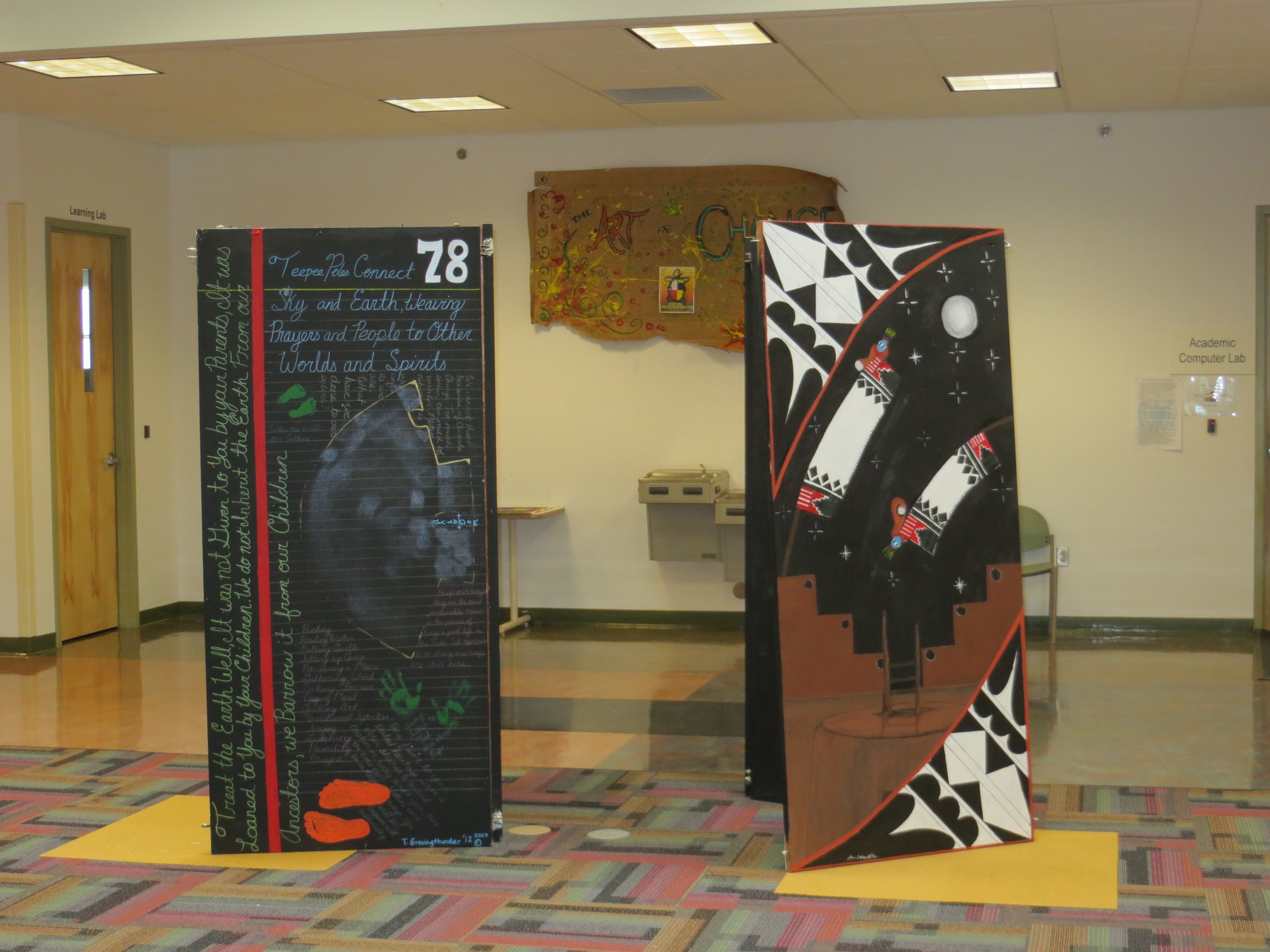
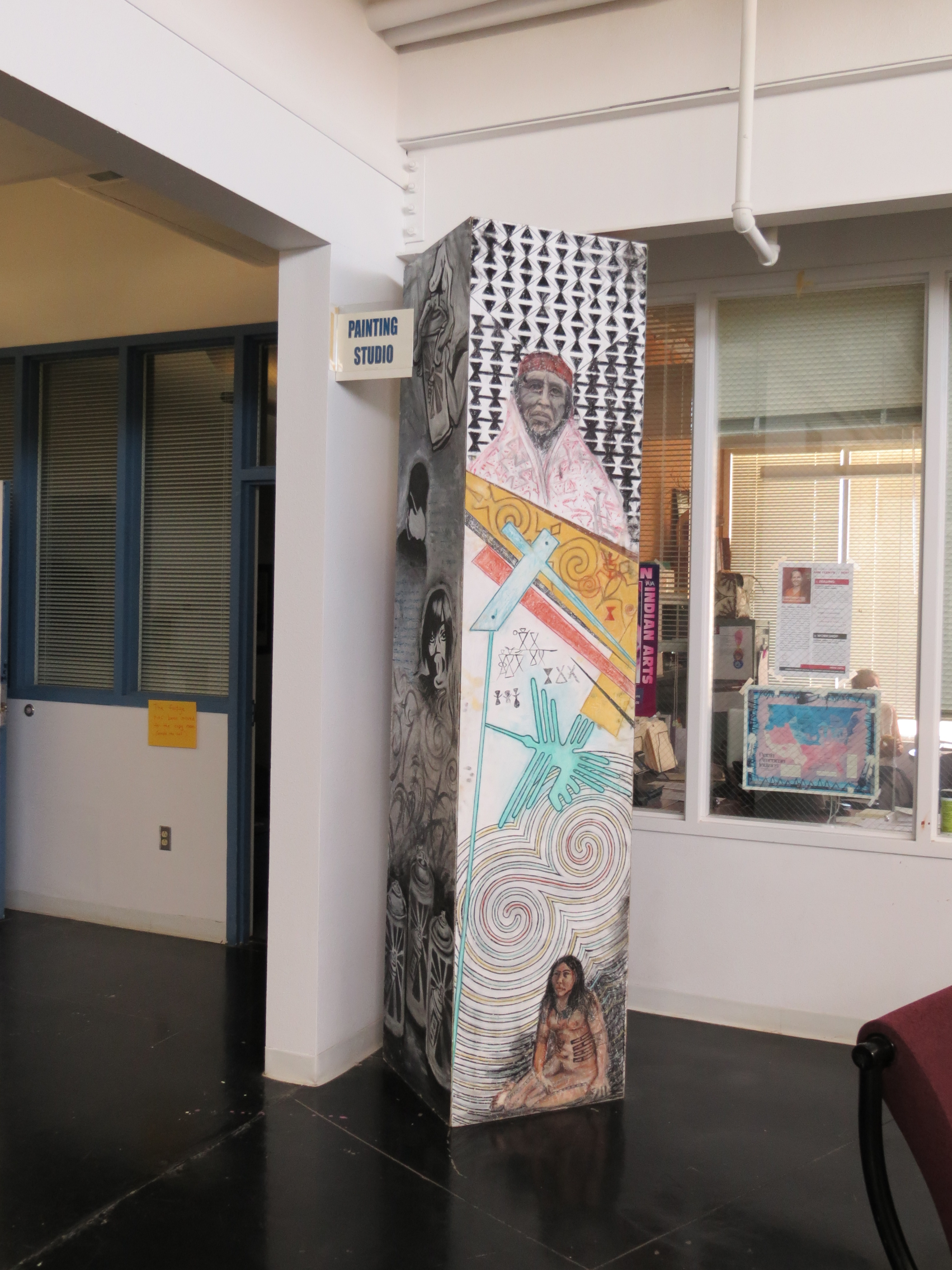
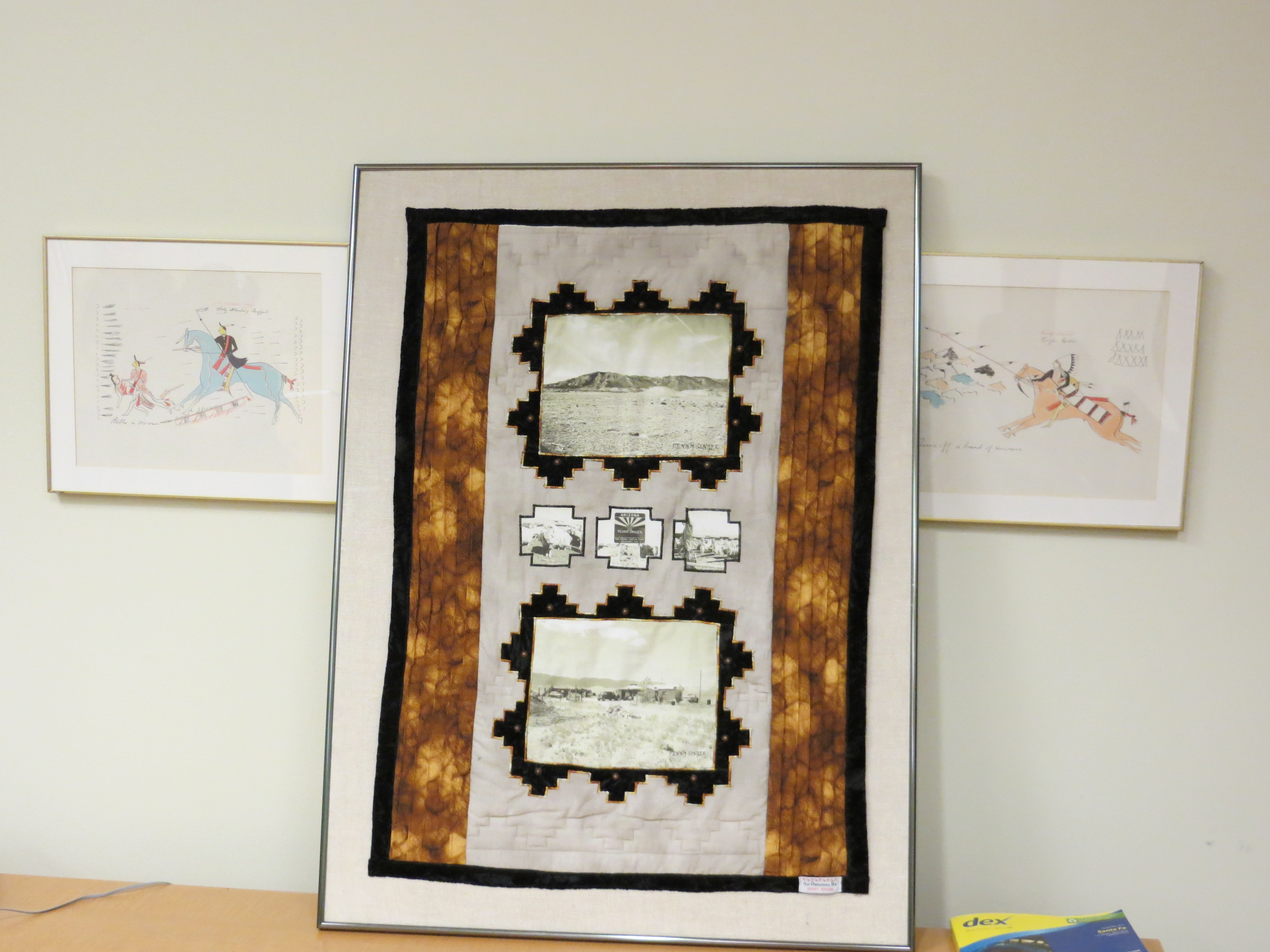
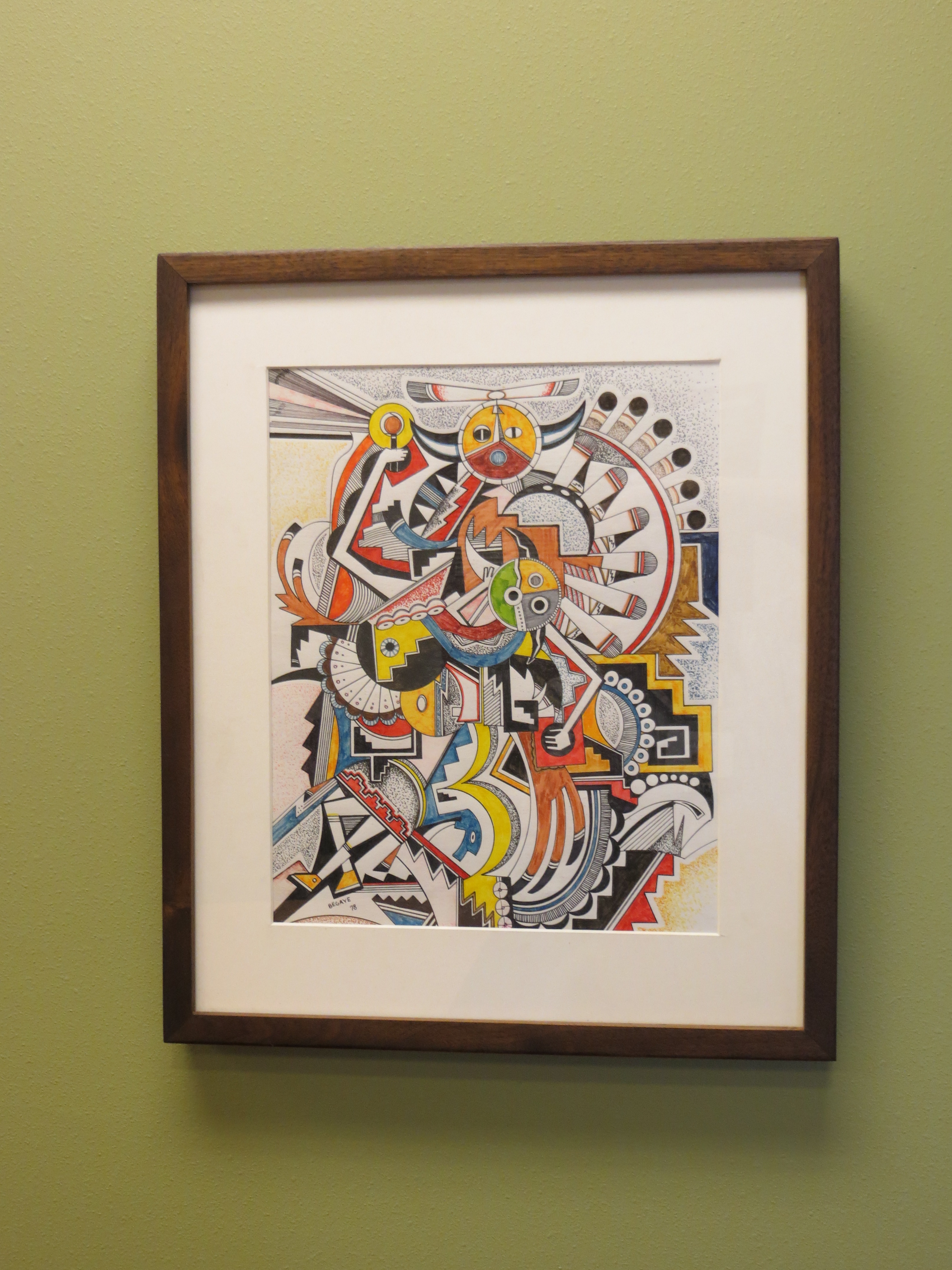
So, I just got back to Vegas after spending a few days in Santa Fe. I was there to visit the Institute of American Indian Arts (IAIA) along with some folks from my own institution and about 5 other tribal colleges. IAIA is a 4-year tribal college, and they have an awful lot going for them. The trip also included a visit to Taos Pueblo, several excursions into downtown, and a trip out to some interesting rock formations. For the present, I thought I would just put up a gallery of the lovely IAIA campus.

Students were gone for the summer, and a number of displays had been pulled down, but the campus still has an amazing variety of art projects. They also have a digital dome, the worlds only fully articulating dome. It hangs from four chains which can be raised or lowered to change the angle of the display. …and yes, students get to use it.

Seriously, there are few institutions in this world about which I can’t think of anything critical to say. In fact, right now I think the list may have one entry.

The Institute for American Indian Arts
Dance Circle, They hold various outdoor functions here (including a Powwow in May)
The IAIA Dance Circle from above.

IAIA Sculpture 1, Bison
IAIA Sculpture 2.
IAIA Windchimes

IAIA, Sculpture 4
IAIA, Sculpture 5

IAIA, Sculpture 6
I don’t know the story behind this one. Something tells me it’s a good one.
IAIA, Exterior Mural 1

IAIA, Exterior Mural 2
IAIA. The couches in the student Learning center beckon students to places where the can get help. …it’s a devious kindness that lies in wait here.
IAIA, Interior Mural 1

IAIA, Sundry art 1
IAIA, Sundry Art 2
IAIA, Sundry Art 3

IAIA, Interior Sculpture 1
IAIA, Display 1
IAIA, Interior Sculpture 2 (This appears to be a play on an old cliche, the image of a dying Indian)

IAIA, Decoration in an Office Window
IAIA, Interior Mural 2
IAIA, Interior Sculpture 2 (It’s a Headdress)

IAIA, Interior Mural 3
IAIA, Ethnobotany Display
IAIA, Museum Collections 1 (Storage)

IAIA, Museum Collections 2 (Storage)
IAIA, Museum Collections 3 (Storage)
IAIA, Museum Collections 4 (Storage)

IAIA, Museum Collections 5 (Storage)
IAIA, Museum Collections 6 (Storage)
IAIA, Museum Display 1

IAIA, Museum Display 2
(Digital Dome
IAIA, Digital Dome
IAIA, We all have our battles

IAIA, Metalsmithing Teacher’s Office
IAIA, Sundry Art 4
IAIA, Sundry Art 5

IAIA Display 2
Corner Murals
IAIA, Interior Mural 4

IAIA, Exterior Sculpture 8
IAIA, Sidewalk Art
IAIA, Sidewalk Art 2

IAIA, Landscaping
IAIA, Just Cool!
IAIA, Conference Room and Student Art 1

IAIA, Conference Room and Student Art 2
IAIA, Conference Room and Student Art 3
Conference Room and Student Art 4

Lobby
IAIA, The Garden. They use some of this in the cafeteria, which is by the way the most awesome food I have had in a college cafeteria.

71.271549 -156.751450

Share this:

  • Tweet
  • Share on Tumblr
  • Click to print (Opens in new window) Print
  • Click to email a link to a friend (Opens in new window) Email
  • Click to share on Reddit (Opens in new window) Reddit
Like Loading...

California Admitted as a Free State, …Oh Wait!

16 Wednesday Nov 2011

Posted by danielwalldammit in Education, History, Native American Themes, Politics

≈ 5 Comments

Tags

American Indian, California, Civil War, History, Narrative, Native American, Semantics, Slavery, Story-Telling, teaching

Okay, so we just started a section on slavery and the civil war in my American history class. One thing that always irritates me here, or maybe it just amuses me, I don’t know… Anyway, I think about it whenever I cover this subject. Every textbook I have ever used on American history explains that California was admitted as a free state under the terms of the Compromise of 1850.

So, what’s the problem?

The problem is a little known law passed in California that very year, ostensibly for the protection of Indians. The law imposes a $50.00 fine on anyone forcing an Indian to work against his will. So, that should be good, right?

Actually, no.

The law also contains the following provisions:

When an Indian is convicted of an offence before a Justice of the Peace punishable by a fine, any white person may, by consent of the Justice, give bond for said Indian, conditioned for the payment of said fine and costs, and in such case the Indian shall be compelled to work for the person so bailing, until he has discharged or cancelled the fine assessed against him…

and

Any Indian able to work and support himself in some honest calling, not having wherewithal to maintain himself, who shall be found loitering and strolling about, or frequenting public places where liquors are sold, begging, or leading an immoral and profligate course of life, shall be liable to be arrested on the complaint of any resident citizen of the county, and brought before any Justice of the Peace of the proper county, Mayor or Recorder of any incorporated town or city, who shall examine said accused Indian, and hear the testimony in relation thereto, and if said Justice, Mayor or Recorder shall be satisfied that he is a vagrant, as above set forth, he shall make out a warrant under his hand and seal, authorizing and requiring the officer having him in charge or custody, to hire out such vagrant within twenty four hours to the best bidder, by public notice given as he shall direct, for the highest price that can be had, for any term not exceeding four months; and such vagrant shall be subject to and governed by the provisions of this Act, regulating guardians and minors, during the time for which he has been so hired.

Oh there is a lot more to the act, and plenty of reassuring clauses that appear to keep people from exploiting natives, but it should not take a lot of imagination to read between the lines here and see how this story actually went down. To say that this law opened up the native labor-market to exploitation would be putting it mildly. …too mildly.

In essence, the law made it illegal to enslave an Indian, at least on one’s own initiative, but if someone was caught being an Indian on a city street, the city could bond him over to you for a price. Oh yes, folks would have to go through the trouble of slighting the moral integrity of the Indian first, but how difficult do you think it would be to find a white guy willing to do that?

Not very.

It’s not the most efficient form of slavery one could devise, but it is slavery non-the-less, and that is why it always bugs me to see textbook after textbook announce that California was admitted to the Union as a free state under the terms of the compromise of 1850.

…in the very year they created a legal procedure for enslaving Indians.

Oh I get it; this kind of issue simply falls outside the scope of the narrative in question. It was not even on the horizons of those debating the major issues of the day in Congress. So, if one is recounting the events leading up to the Civil War, then this piece of information does not really change that story much. Neither does the existence of a viable slave-trade in the interior Southwest. If one is focused on the question of slavery as it was framed in the national politics of the day, then yes, California was certainly admitted as a free state.

Or is that the problem, the terms of that debate?

The bottom line is that ‘slavery’ is just a word, and you can choose to use it or not as easily as you can any other term regardless of the realities of the labor conditions in question. So, historians can skate right past these instances of captive labor (much as the great figures of the era did in their own approach to the issue) while focusing on the institutional forms of slavery that were the main issues of the day. But of course that same sleight of hand is necessary to cap off the story of the Civil War in the standard way, describing it as bringing about the end of slavery in America.

To give closure to the issue of slavery in our national storyline, one has to ignore the use of debt-peonage in conjunction with Jim Crow Laws, or at least classify them as a whole new kind of problem. Using the word “slavery” in the chapters leading up the Civil War and dropping it afterwards creates the illusion that the new social problems are significantly different than the old ones. This approach suggests that the problems associated with slavery were somehow resolved with the closing chapters of Reconstruction, perhaps not to the satisfaction of all concerned, but resolved nonetheless. And Jim Crow then becomes a whole different kind of problem, as do a host of similar practices.

Just like the California Law for the protection of the Indian.

***

Note: The law can be found in the California Statutes from 1850. It is also included in the primary documents for the following textbook:

Albert L. Hurtado, Peter Iverson. Major Problems in American Indian History: Documents and Essays. Second Edition. (Houghton Mifflin, 2001).

71.271549 -156.751450

Share this:

  • Tweet
  • Share on Tumblr
  • Click to print (Opens in new window) Print
  • Click to email a link to a friend (Opens in new window) Email
  • Click to share on Reddit (Opens in new window) Reddit
Like Loading...

Old Gripes, New Tundra, and a Thin Ray of Hope.

10 Thursday Nov 2011

Posted by danielwalldammit in Alaska, Education, Native American Themes

≈ Leave a comment

Tags

Alaska, Arizona, College, Culture, Curriculum Development, Diné, Education, Indigenization, Inupiat, Native American, Navajo, North Slope

How do you adapt course material to the cultural context of a tribal college? I have had enough conversations about that topic in the last couple days to last me a little while. Whether any of them will help or not is of course an open question, but for the moment, I have a little time to reflect on the matter.

It feels like I am never on the same page with others when the topic comes up. Most of the cultural materials I have seen have been saturated with over-extended metaphors, clunky diagrams with over-simplified cultural motifs all over them, and deep philosophical discussions on the English gloss of some native term. When such materials show up, I always feel some trepidation. When such materials show up, I can’t help but want to step outside and get a breath of fresh air.

It’s no big deal, really. I get that feeling in most meetings sooner or later. Why should those aimed at indigenizing education be any different!

But seriously, before moving on I suppose I should say that my ‘exhibit A’ for how not to to an indigenous educational policy would be Diné Educational Philosophy, at least as it was taught when I was at Diné College. At the heart of this policy was a grand metaphor in which call lessons could be divided into four stages of learning, each of which corresponded to four stages of life development, which in turn corresponded to the four cardinal directions, and from there the metaphors multiplied as various aspects of Navajo cosmology could be mapped onto this four-part division. I should say that the whole thing always fascinated me, and there are a lot of interesting details about it that just are not going to make it into this blog piece. In practice, it was an awful clunky system.

Mind you, it was college policy that all classes had to incorporate a methodology based on this metaphor into each of our classes. New full-time instructors took classes in the subject (unless it conflicted with our schedules) and part-time instructors had a training day on it (or at least they were supposed to). So what most of us did was to draw a circle on the board, divide it into a four-piece pie, attach the requisite metaphors, and get on with what we would have been doing anyway. To say that this paint-by-numbers approach to an indigenous education was less than helpful would be putting it mildly. As often as not, it was the more “traditional” students who were displeased to see one  of those circles go up on the board at the beginning of a lesson.

So, leaving my past frustrations aside, how would I prefer to approach this? I’m still relatively new to the North slope, so my learning curve is still pretty steep. And tonight, I think I may have just had a mini epiphany, the kind that advances the process for me. It came while reading the blog, “Stop and Smell the Lichen,” written by Rainey Hopson, a woman living in Anaktuvuk pass.

A wonderful piece entitled, “A Good Person,” had the following observations about how one judges character in a small village:

In the village you know everyone, and everyone knows you. You know their secrets and their deeds of kindness. You know wether they are kind to the elder that needed help walking on slippery ice. You know every mean word that they ever said. You know the bad as well as the good. You always act as politely as you can, because you know you will have to deal with this person for the rest of your life, wether you like them or not. You know, after years of interaction and observing a persons actions wether they are good or not, wether you can trust them for certain things, wether or not this person speaks with authority and knowledge. We see each other as permanent beings in our life, and the job and the money and the physical objects as fleeting insubstantial things. A very different view. A different set of scales.”

There is a lot to think about in this piece, but what turned my head back to the subject of adapting lessons to the cultural context of teaching native students was the realization that this is a critical difference between the great city of Barrow (with its enormous population of around 4,000 people) and the smaller villages with populations in the low hundreds.

To someone living in a modern city, much less a metropolitan center, the difference must seem negligible. Living in a town of four thousand and isolated from any major cities by hundreds of miles of tundra must seem to pose many of the same challenges as living in one with a few hundred people. But there are critical differences.

Barrow does have a small town feel. But here it is still possible, even for long-time residents, to see people one does not yet know, or to choose whether one wishes to deal with at least some people. If the population is small, it is not so small as to render relationships entirely inevitable as the village relationships Mrs. Hopson describes in the passage above. Small wonder that our “village students” often seem to have trouble adapting to life in the big city of Barrow, or (more to the point, perhaps) to life away from home.

Thinking about this, I made a small connection to just one lesson in one of the classes that I teach, an introductory course on cultural anthropology. What part of my anthropology class did I connect to this piece? Well life in the Amazonian rainforest of course.My textbook for that class contains an extensive discussion of the limits of leadership by personal credibility. When leaders lack coercive authority, the ability to influence others depends on the ability to form direct personal relationships with them. Some anthropologists have attempted to put a number on the possibilities, an objective limit to the number of people whose actions you can guide without the ability to issue an order, point to a rule, or hand out a set punishment.

What is the magic number? Pssh! Don’t believe everything I tell you!

…Okay, if you insist. To say this is an oversimplification is an an understatement dipped in some damned weak sauce, but anyway, the limit is somewhere in the low hundreds.

It occurred to me that the difference between the smaller villages and Barrow falls somewhere in the vicinity of that same set of limitations. Whatever the number in question, the point is that there is some point at which a population becomes too big to ensure significant personal interactions with someone in any given household, and THAT means real differences in the social organization of the community. What Rainey Hopson described in her blog is a quality of social life that is present in the smaller of the North Slope. If the Amazonian specialists covered in my anthropology texts are to be believed, it also exists (or existed) in a number of Amazonian societies.

So, in reading Mrs. Hopson’s blog I had a little ‘aha!’ moment about a connection between something my students have not experienced at all (life in an Amazonian village) and something they with which they will most likely have some familiarity. Even those students who have not lived in the villages will likely be familiar with the difference. They will know there is a difference, and those that have lived here all their lives will have formed ideas about that difference. This means that I can use the comparison as a jumping off point for exploring a range of related issues. I can now use the bridge between these topics as a means of helping students understand he foreign topics of Amazonian villagers and in turn use the study of those Amazonian villages as a jumping off point for discussions of local living conditions.

So, now I have a link between something I will teach at least once a year (and the truth is it will come up in other classes). The question is what to do with it? Some might view this as an opportunity to create a lesson plan, some set exercise in which students will be invited to meditate on the linkage. And such a lesson may or may not be a good thing. To me, however, that is not really the point.

For myself, I will address this point in as many different ways as I can in my different classes, asking students a variety of questions, and working to see just how far I can push the connection, just how much it can explain, and where else might the topic lea.

The point is that I need more moments like that, more links between the familiar pieces of life here on the North Slope, and various strange topics that I cover in my classes (many of which are as foreign to my life experiences as to those of my students).

And that is where my revulsion at so much prefabricated cultural literacy comes in. It is a simple question of where you want to put your effort. If I’m a new teacher, just in from off-slope, I don’t need an exercise or a diagram that will draw this connection for me. …one that I can use in my classroom with or without understanding the point at hand myself. I don’t need a master mataphore in which to plug all my regular lessons. What I need to help me do my job is a venue wherein I can learn as much as possible about life here in this area, where I can talk to people from the local communities about things relevant to my teaching responsibilities. What I need is something that helps me form personal relationships with the right folks, learn the right information from them, and put that information into practice in my courses.

And here is where so many educators in this area miss the boat, because it is simply easier (and perhaps more effective when dealing with accreditation agencies) to produce formulaic educational materials than it is to build learning environments. It is easier to dictate cultural content to instructors than it is to facilitate learning that will enable an educator to draw connections between their subject and the cultural environment in which they work.

This is how I actually approached my classes at Diné College, and it is how I hope to approach them here; learning as much as I can about the cultural setting and engaging my native students in dialogue about the issues that affect their lives here.

If circles go on the board, hopefully, it won’t be because they have become a procedural requirement.

Note: The photo is a picture of the village of Wainwright, AK. The Anthropology text mentioned above is John H. Bodley. Cultural Anthropology: Tribes, States, and the Global System. Fourth Edition. (Boston: McGraw Hill) 2005. Rainey Hopson’s blog is called; “Stop and Smell the Lichen.”

http://www.salmonberryblood.blogspot.com/

71.271549 -156.751450

Share this:

  • Tweet
  • Share on Tumblr
  • Click to print (Opens in new window) Print
  • Click to email a link to a friend (Opens in new window) Email
  • Click to share on Reddit (Opens in new window) Reddit
Like Loading...
Newer posts →

Top Posts & Pages

  • I'll Just Leave This Here
    I'll Just Leave This Here
  • Hostiles and Spoilers: A Magic Studi
    Hostiles and Spoilers: A Magic Studi
  • When Sex Falls Out of the Performance
    When Sex Falls Out of the Performance
  • A Godless Reason for the Season
    A Godless Reason for the Season
  • Dancing for the Dead - Movie Review
    Dancing for the Dead - Movie Review
  • Happy Juzo Day, And Damn You to Hell if you Don't Know What I'm Talking About!
    Happy Juzo Day, And Damn You to Hell if you Don't Know What I'm Talking About!
  • Gaming the Market and Kitbashing The Old Landlord's Game
    Gaming the Market and Kitbashing The Old Landlord's Game
  • Repellent Utopias and the Case Against Black History Month
    Repellent Utopias and the Case Against Black History Month
  • About
    About
  • The Straight Shooter Who Isn't!
    The Straight Shooter Who Isn't!

Topics

  • Alaska
  • Animals
  • Anthropology
  • atheism
  • Bad Photography
  • Books
  • Childhood
  • Education
  • Gaming
  • General
  • History
  • Irritation Meditation
  • Justice
  • Las Vegas
  • Minis
  • Movie Villainy
  • Movies
  • Museums
  • Music
  • Narrative VIolence
  • Native American Themes
  • Philosophy
  • Politics
  • Public History
  • Re-Creations
  • Religion
  • Street Art
  • The Bullet Point Mind
  • Travel
  • Uncategorized
  • Uncommonday
  • White Indians
  • Write Drunk, Edit Stoned

Blogroll

  • American Creation
  • An Historian Goes to the Movies
  • Aunt Phil's Trunk
  • Bob's Blog
  • Dr. Gerald Stein
  • Hinterlogics
  • Ignorance WIthout Arrogance
  • Im-North
  • Insta-North
  • Just a Girl from Homer
  • Multo (Ghost)
  • Native America
  • Norbert Haupt
  • Northwest History
  • Northy Pins
  • Northy-Tok
  • Nunawhaa
  • Religion in American History
  • The History Blog
  • The History Chicks
  • What Do I Know?

Archives

  • December 2023
  • November 2023
  • June 2023
  • April 2023
  • February 2023
  • December 2022
  • November 2022
  • October 2022
  • September 2022
  • August 2022
  • July 2022
  • June 2022
  • April 2022
  • January 2022
  • December 2021
  • November 2021
  • October 2021
  • September 2021
  • August 2021
  • June 2021
  • May 2021
  • March 2021
  • February 2021
  • January 2021
  • December 2020
  • November 2020
  • October 2020
  • September 2020
  • June 2020
  • May 2020
  • March 2020
  • February 2020
  • January 2020
  • December 2019
  • November 2019
  • September 2019
  • August 2019
  • July 2019
  • June 2019
  • May 2019
  • April 2019
  • January 2019
  • December 2018
  • November 2018
  • October 2018
  • September 2018
  • August 2018
  • July 2018
  • June 2018
  • May 2018
  • April 2018
  • March 2018
  • February 2018
  • January 2018
  • December 2017
  • November 2017
  • October 2017
  • September 2017
  • August 2017
  • July 2017
  • June 2017
  • May 2017
  • April 2017
  • March 2017
  • January 2017
  • December 2016
  • November 2016
  • October 2016
  • September 2016
  • August 2016
  • July 2016
  • June 2016
  • May 2016
  • April 2016
  • March 2016
  • February 2016
  • January 2016
  • December 2015
  • November 2015
  • October 2015
  • September 2015
  • August 2015
  • July 2015
  • June 2015
  • May 2015
  • April 2015
  • March 2015
  • January 2015
  • December 2014
  • November 2014
  • October 2014
  • July 2014
  • June 2014
  • May 2014
  • April 2014
  • March 2014
  • February 2014
  • January 2014
  • December 2013
  • November 2013
  • October 2013
  • September 2013
  • August 2013
  • July 2013
  • June 2013
  • May 2013
  • April 2013
  • March 2013
  • February 2013
  • January 2013
  • December 2012
  • November 2012
  • October 2012
  • September 2012
  • August 2012
  • July 2012
  • June 2012
  • May 2012
  • April 2012
  • March 2012
  • January 2012
  • December 2011
  • November 2011
  • October 2011

My Twitter Feed

Follow @Brimshack

RSS Feed

  • RSS - Posts
  • RSS - Comments

Enter your email address to follow this blog and receive notifications of new posts by email.

Join 8,075 other subscribers

Blog at WordPress.com.

  • Subscribe Subscribed
    • northierthanthou
    • Join 8,075 other subscribers
    • Already have a WordPress.com account? Log in now.
    • northierthanthou
    • Subscribe Subscribed
    • Sign up
    • Log in
    • Report this content
    • View site in Reader
    • Manage subscriptions
    • Collapse this bar
 

Loading Comments...
 

    %d