• About

northierthanthou

northierthanthou

Tag Archives: Film

A Very Soylent Spoiler Alert

16 Saturday Jun 2018

Posted by danielwalldammit in Movies, Politics

≈ 7 Comments

Tags

Cannibalism, Charlton Heston, Climate Change, Dystopia, Environment, Escatology, Film, Movies, Soylent Green

51E+WFShw9L._SY445_Soylent Green is people!

Yeah we all know that.

Or do we?

I’m sorry, I meant to say; “spoiler alert!”

Anyway, yeah, Soylent Green is people, but the thing is that’s not really what the movie is about, is it? The Movie, Soylent Green, is about the death of the oceans. It’s about the end of life as we know it, or rather the moment in history just before the end of life as we know it. In that moment, as the food sources dwindle down to nothing, human beings begin to cannibalize each other on a scale never before seen in human history.

By ‘human beings’, I of course mean, the powers that be. It is a murky blend of corporate and government power that begins to market human flesh in the form of flavorless green protein wafers. Some might have found it odd to see cannibalism playing out under the auspices of capitalism. The former is a quintessentially primitive practice; the latter is all about of progress.

Right?

When Charleston Heston ends the film screaming “Soylent Green is people,” at least a little of the horror in that moment has always been the realization that the engines of progress have somehow brought humanity to embrace one of the greatest horrors of the primitive world.

It’s fiction, of course, but then again so is the story of progress, and so are a lot of those stories about ‘primitive’ cannibals.

Still it’s a little disconcerting to think that we are already in the timeline of Soylent Green. Yes, that’s right. Way back in 1973, 2018 was the very distant future, distant enough to project upon it all the dystopian horrors you might care to imagine.

For those who haven’t seen this old gem, the main plot has us following a police investigation in a world wracked by overcrowding, starvation, and of course food riots. People live on the streets or the staircases of apartment buildings, guarded by armed men, and…

…and seriously, SPOILER ALERT!!!

…and all these people rely upon one corporation (The Soylent Corporation) for food in the form of artificial wafers, color coded for different kinds of nutritional value. As the story begins to take shape, Soylent has just brought a new wafer into its product line, and yes, it’s green.

…but that’s not too important yet.

The main story-line has us following a murder mystery as Police Detective, Frank Thorn (played by Charlton Heston) investigates the murder of a wealthy and powerful man with the assistance of an aging police analyst named Sol Roth (played by Edward G. Robinson). It turned out the victim had in his possession a report, a large tomb purporting to be an oceanographic survey conducted by the Soylent Corporation over the years 2015-2019. Through careful study and corroboration with his own colleagues, Sol comes to realize the report contains a bombshell. The oceans are dying, irrevocably losing the capacity to produce even the algae used in Soylent wafers. This knowledge is what got the wealthy victim murdered in the first place, but not before he lost all hope and gave up living in the first place. The man, so we are told, was not himself in those final days.

Realizing himself that humanity is doomed, and nearing the end of his own life in this miserable world, Sol himself elects to ‘go home’, which is to say that he reports to a facility where people assist him in committing suicide, treating him to a lovely planetarium display featuring all the sights and sounds of nature as he drifts off into oblivion. Thorn arrives too late to save Sol, but not too late to force his way into the facility and watch the display while speaking with Sol in his last moments. Thorn is shocked by the sight of fields and trees, and animals, even as he learns about the end of the world’s food supply, such as it is. He learns of earth’s former glory even as he comes to grips with its coming end. It’s a maddening thought.

But what to do about it?

Thorn begins by trying to learn a little more about the operations at Soylent. After sneaking into the vehicles transporting Sol and the other dead away the facility, Heston comes to realize the bodies are being processed into the creation of green wafers, thus explaining how the Soylent corporation could come up with a brand new and improved food staple even as humanity’s food supply runs out once and for all. Thus, the infamous line, “Soylent Green is people.”

…oh yeah, there are fights and shootings along the way.

So, yes, Soylent Green is people, but there is a reason it’s people. It’s people because people are the only edible resource left.

Faced with diminishing resources, the powers that be have turned to their own population to reproduce their world, at least for whatever time they may be able to keep this up.

I remember watching this as a kid. Those final moments were pretty shocking back in the early seventies. I remember wondering what would happen in the wake of the credits Would people respond to Heston’s character and shut down the Soylent factories? And if they did, what next? This was a story about the end of everything, and the great crime that echoes through its final moments isn’t going to change that. Perhaps the cannibalism could be stopped, but not the disaster that produced it. It’s a maddening thought, the end of humanity, one next to which the crimes of the Soylent corporation seem to pale in comparison.

What shocks me about the whole story-line now is just how much it pales in comparison to the reality in which we live. We’ve already got our own Soylent report, a whole bunch of them in fact. Scientists have been delivering news quite comparable to that of the Soylent Oceanographic Survey for decades now. Most seem to hold out at least some hope that the disaster in question could be averted, but the scale of tragedy envisioned in climate change is quite comparable to that envisioned in the movie Soylent Green. What is the result? Life goes on.

Somehow, the possibility that all life as we know it could be about to end hasn’t generated sufficient public resolve even to attempt a serious solution. Some folks, such as our Tang-Colored Denialist-in-Chief, seem Hell-bent on making sure the whole disaster comes sooner rather than later, even hiding the facts by suppressing scientific findings on the subject, but the fact is that we are all implicated in this story-line. We are all contributing to the disaster. We can point to certain villains who don’t even want us thinking about this issue, much less attempting to tackle it, but in the end, it is humanity as a whole (or at least the more developed nations within it) that is proceeding full steam ahead.

It’s as though Heston’s cries didn’t even lead to an investigation of the Soylent factories. We all heard him, and then we just kept munching away at the quaint little green wafers that give us so much more energy than the red ones or the white ones and even the purple ones.

It’s one of the things that fascinates me about climate change. Somehow this real-world threat to life as we know it carries with it far less force than the comparable horrors of fiction. We can can appreciate the threat of The Thing or the Body-Snatchers. We can even hope that somehow Heston’s cries will bring an end to the Soylent factories. We can pull for the good guys to save the day in these stories, But when credible sources tell us that all life as we know it could come about as a result of our own actions, we ponder it while and then drive to the store.

Don’t get me wrong. Far from being an exception, I count myself among the worst offenders.

This is perhaps one of the interesting features of story-telling, that it enables us to envision solutions which would escape us in real life. Indeed, stories enable us to conceptualize problems we might not even acknowledge in real life. Our world may not contain vampires, for example, at least in the sense that we cannot find real creatures who suck the blood of others in order to sustain immortal life, but we can certainly find people whose success came at the expense of those around them. We can even find people who seem inexplicably to relish the experience of wasting other peoples time and energy in sundry ways. Deal with someone like that long enough, and you might just be tempted to see in vampire stories a real truth about real people. It wouldn’t be unfair to say of such people, I think, that they prosper, much as vampires do, by draining the life energy of those around them. In the real world, one resolves such problems (if possible) by getting such people out of your life (a peoplectomy as one of my old friends used to put it), but of course this is difficult and messy and the people in question simply move on to screw up other people’s lives when we finally get them out of our own. In a story? In story, you can drive a stake through the heart of the damned vampire. You can actually destroy them in the third act. Ironically enough, the vampires of stories may be easier to defeat than some of the bastards we meet in real life. We can’t drive a stake through the heart of toxic people in the real world, but we an sure as Hell do it with the ones we find in our stories.

Perhaps it is the same with the prospect of an anthropogenic apocalypse. It really is a systemic problem. We all know what we do that contributes to that problem, but refraining as an individual from consumption of oil products is like taking your own drop out of a crashing wave. Well it would be if you could even do it, but most of us really can’t. Most of us couldn’t even eat were it not for the fossil fuels that bring our future meals to the grocery stores. Even if we walked to our breakfast cereal, we would find that or cereal flew and trucked its way to us. The problem is simply too big for any one person to resolve on his own. But what are the odds of finding a collective resolution to the matter? The horror is beyond our reckoning. So, we enjoy zombie stories or watch Bruce Willis save us from an asteroid. (That was him, wasn’t it?) We can hope Will Smith’s blood will save mankind or we can grip our seats and wait quietly in the hopes that John Krasinski figures out how to beat those new sound-killing creatures. The end of the world is just easier to beat in a story.

…except, in Soylent Green, it really isn’t.

Perhaps, this is because the source of the apocalypse in Soylent Green isn’t a monster; it’s us, which is a little too close to the realities already taking shape in 1973. (They are more real now.) Either way the real tragedy coming for those characters is still coming for them regardless of the results of Thorn’s final revelation. This horror is closer to that of Cthulhu than it is to the simple zombies or mean-spirited sound-sniffers. This horror is a certain doom. The people in Thorn’s world may or may not be able to stop Soylent from serving other folks up in bite-sized snacks, but (at least in the terms of the story-line) they are not going to solve the problem of hunger. They are all doomed.

To appreciate the doom one has only to consider the death of Sol at the end of the film. This, it turns out, would be the last scene ever shot with Edward G. Robinson. He died of cancer a short time after shooting wrapped on Soylent Green, giving his death scene an odd real-life significance for those involved in production. Watching this film, or any other apocalyptic fantasy, I can’t help wondering if humanity itself doesn’t find itself experiencing a similar sort of parallelism. We can appreciate all manner of stories about the end of life as we know it, but more and more, I at least watch such stories with a faint sense that they are a little less far fetched than I’d prefer to imagine.

We can wonder if the characters in Soylent Green will heed Thorn’s warning.

But that is missing the point.


Share this:

  • Tweet
  • Share on Tumblr
  • Click to print (Opens in new window) Print
  • Click to email a link to a friend (Opens in new window) Email
  • Click to share on Reddit (Opens in new window) Reddit
Like Loading...

Film Festival?

01 Friday Jun 2018

Posted by danielwalldammit in Alaska, Movies, Uncategorized

≈ 2 Comments

Tags

Alaska, Fairbanks, Film, Film Festival, Filmmakers, Idie Film, Independent Film, Motif, Movies

Motif Film FreewaySo, a couple of friends and I are putting together a film festival, scheduled for August 3-5 in Fairbanks.  We are interested in all manner of independent submissions, but we are particularly interested in just about anything with a social consciousness, so to speak. If you happen to make films, please consider submitting to the festival. And if you happen to like independent films, then please consider watching a few with us in August.

…and if you don’t know, and haven’t been, yes, Fairbanks is gorgeous in August.

We have the following to say for ourselves…

Films from everywhere and of all genres are welcome. MôTif strives to turn our festival into a platform and outlet for voices fighting to be heard. We also encourage submissions from indigenous filmmakers, filmmakers of color, filmmakers with different abilities, LGBTQQIA filmmakers, female-identified filmmakers, and filmmakers from any other underrepresented group. Please help us spread the word and share this with filmmakers from around the world. You can submit your film through FilmFreeway.

MôTif is a multimedia production company that supports and creates art projects, focusing on the underrepresented and the environment.

We have no limits on how to use art to show untold stories and make ideas come true. Our core goal is to explore solutions and help in the fight to decimate racism, bigotry, poverty, sexism, and climate change through art.

We collaborate with masterly artists to offer innovative services for communities, individuals, and organizations including workshops, event development, performing arts, film, photography and design.

With our mission in mind we want to offer the first ever MôTif Film Festival. We are committed to discover new and diverse voices, with 97% of the films coming directly from the submissions we receive. We strive to turn our festival into a platform of voices that still fight to be heard, that need support, and is an outlet for their stories.

Awards & Prizes

The winners of each category will receive an exclusive handmade trophy created by a local Alaskan artist and business owner of The Monolith Project as well as a certificate.

Total Prize Value (USD): Priceless

Rules & Terms

All submitted films must comply with the Submissions Guidelines including deadlines, exhibition format, entry material, etc.

We do not pay screener fees.

Entrants are responsible for obtaining any necessary licenses, royalties, release forms, clearances, permits necessary to present their work. MôTif Film Festival is not responsible for any claim involving copyright, trademark, credits, or royalty infringement related to the work.


Interested parties can find out more here:

https://filmfreeway.com/MoTifFilmFestival

Share this:

  • Tweet
  • Share on Tumblr
  • Click to print (Opens in new window) Print
  • Click to email a link to a friend (Opens in new window) Email
  • Click to share on Reddit (Opens in new window) Reddit
Like Loading...

Shhhhhhh…

09 Wednesday May 2018

Posted by danielwalldammit in Movies

≈ 7 Comments

Tags

A Quiet Place, Context, Emily Blunt, Film, Horror, John Krasinski, Movies, Silence, Terror

MV5BMjI0MDMzNTQ0M15BMl5BanBnXkFtZTgwMTM5NzM3NDM@._V1_SY1000_CR0,0,674,1000_AL_You learn pretty quickly how things work in A Quiet Place. Make a sound and you just may die of it.

Why?

For reasons left largely unexplained, the world has been overrun by creatures that quickly chase down anything making a sound and kill it. They are quick, powerful, seemingly indestructible, and completely without mercy. To survive in this world, one must be utterly silent, at nearly all times. A momentary lapse of discipline will bring a swift and cruel death.

The best part of this premise is that it reaches right through the screen and into the movie theater. Watching a family struggle to survive on screen in this world shaped by monsters, the audience itself struggles to maintain its own silence. It’s difficult. It’s especially difficult for a room full of people still settling into their seats and trying to enjoy their concessions. But we learn the cost of noise early in this film, and nobody wants to be the one who spoils the soundscape for the rest of us. The silence on screen demands silence from its audience. Every candy wrapper threatens to ruin the experience. Every sip from a soda pop  threatens to bring the monsters pouncing. So, we all try to be quiet, and we fail miserably. The whole theater is filled with sound, and with people trying desperately not to make those sounds.

As we all adjust to the need for silence, the restlessness of the audience comes excruciating. The teenagers in the row beside me keep moving about in their seats. They are trying to hold still, but they just haven’t found a comfortable position yet, and the results are excruciating. The sound of a straw sliding through a plastic lid somewhere in the room echoes through the whole theater. We can all hear that straw push through the ice and into the corner of the cup. Lacking a straw, myself, I quickly come to realize how much the ice in my own cup shifts with every drink I take. Taking those final gulps, I feel almost as though I’ve betrayed the whole back section of the theater. Someone down in the front is arguing with his neighbor. His words are soft, but we can all hear him; “No, you watch it!” I amazed this idiot hasn’t gotten us all killed. A woman behind me is extra startled by events on screen. She can’t help but vocalize her distress to her companions. It’s risky, or at least annoying, but who could blame her? That much drama demands an outlet! It’s an outlet that would get her killed up on the screen, but it’s understandable in itself, if also more than a little distressing to a room full of people trying desperately to be quiet.

…which is the genius behind this film. The premise doesn’t just threaten us with monsters; it transforms our own nature into a source of terror. It turns the focus of horror onto the very human quality that is our own noisy nature. We all make sounds. We bang on stuff. We cause our seats to creak, and the ground crackles beneath our feet as we walk. Every once in awhile, we want to say something, even to say it loudly. All of this is perfectly normal until you walk into a theater to watch THIS movie. Then it becomes terrifying. Most anybody can be quiet for little awhile, but can you live your whole life in silence? I know a theater in Anchorage full of people who didn’t manage it for an hour and a half. Oh sure, we achieved a modicum of silence at about the half way point, but not the kind of silence it would have taken to survive in the world up on that screen. Had these monsters entered our own world, I’m not sure any of us would have made it to the third act.

The woman behind me at least would have been toast!

It’s tempting to see political analogies in this story-line. Some have seen it as direct commentary on the present state of American politics. Both John Krasinski (who directed and star in the film) and his costar Emily Blunt have denied that was the original idea. Instead, they suggest the point was to say something about families.

Whatever messages the film-makers might have intended to bundle-up in this movie, it seems easy enough to understand why people would see this film in political terms. The pressure to remain silent is something just about everyone has experienced in one form or another. For most of us, that pressure has been limited to fears of looking foolish, losing friends, or perhaps some reasonable fear that one could lose a job. Others have lived through the very real terror that speaking up could cost them their lives. Perhaps, their loved ones too! The premise here thus has the power to resonate with all manner of audiences well across the political spectrum. Whether the threat was trivial or genuinely hazardous, most (perhaps all) of us can recall the experience of stifling our own voice because of someone out there. In A Quiet Place that message becomes any sound whatsoever and that someone out there becomes a monster ready to rip us apart. It’s a metaphor easily mapped onto all manner of real world problems.

You can really feel the power of this theme in the rare moments when character do speak in A Quiet Place. The transgression of actual sound is shocking; the sense of liberation is powerful. When someone actually does shout in this film, it comes across as a  supreme act of defiance. The character may have been shouting at a monster; but any one of us could well imagine the freedom to finally shout something at somebody or something in our lives.

…preferably without being ripped apart as a result.

Okay, so yes, I liked this movie

***

Also, the ending? The very last moment of this film?

Fucking brilliant!


Share this:

  • Tweet
  • Share on Tumblr
  • Click to print (Opens in new window) Print
  • Click to email a link to a friend (Opens in new window) Email
  • Click to share on Reddit (Opens in new window) Reddit
Like Loading...

Poe Appropriates a Proposal

07 Monday May 2018

Posted by danielwalldammit in Movies, Native American Themes

≈ 2 Comments

Tags

Alaska Natives, Betty White, Cultural Appropriation, Dance, Film, Get Low, Haida, Sandra Bullock, The Proposal

I will admit that I enjoyed the Proposal, but I’m not so sure I liked it.

Well that makes sense to me at any rate. So anyway…

There is one scene in this movie that sits in my memory like a stone in my shoe. I just don’t know what to make of it. It’s this one:

Don’t get me wrong, it ain’t no hangin’ matter as far as I’m concerned, but I have to wonder. Didn’t anybody involved in this production question the wisdom of having two women perform other people’s music and dance? First Betty White pretends to carry out a Haida ritual, adopting the stilted speech patterns of native movie characters for the entire scene. Tasked with joining her in the performance, Sandra Bullock ends up channeling Lil Jon and the East Side Boys. So, one of these women engages in faux native spirituality and the other effectively turns in a rap performance. It’s all at least a little appropriative.

It’s also more than a little cringe-worthy.

To me anyway.

I am admittedly prone to cringitude.

It’s a light comedy anyway, so I guess I shouldn’t expect them to take these issues any more seriously than the rest of the subject matter appearing in the movie. Still, I can’t help but shake my head at the apparent cluelessness.

…but then I wonder!

I come back to my original question; didn’t somebody question the wisdom of this scene? Wasn’t somebody aware that it’s more than a little odd to have two white women finding their bliss in the performance of other people’s music, dance, and ceremony. Wasn’t someone on set at least cognizant of the issue?

And then I wonder, what if someone was?

Could that have been the point?

Quite unexpectedly, the spirit of Nathan Poe haunts this scene!

The whole performance is so completely over the top, I find myself wondering if it isn’t an intentional parody of precisely the kind appropriation I’ve been talking about. Which would make it kinda cool after all.

…I still cringe.

***

I’ve looked around a bit to see if some movie reviewers can shed light on the scene, and I can’t say that I’ve found much. Newspaper Rock comments on the matter pretty directly, but he doesn’t seem to have any extra information on the production itself. The late Roger Ebert seemed perplexed by the scene, particularly insofar as it related to the Alaskan sunrise. Most reviewers seemed to skip the subject altogether. Here is an interesting blog post on the house where they filmed the movie. (I know, that’s a little left of the actual topic here, but it’s just kinda cool.) The Orlando Sentinel quotes Betty White as saying that she had to learn an ‘Eskimo’ song for the film. The Daily News has her explaining that the language was actually Tlingit. I can’t say that any of this sheds much light on the matter, but that’s about enough of this.

Ah well!

My girlfriend will be calling me ‘Danno Downer” after she reads this.

Guilty as charged.

Share this:

  • Tweet
  • Share on Tumblr
  • Click to print (Opens in new window) Print
  • Click to email a link to a friend (Opens in new window) Email
  • Click to share on Reddit (Opens in new window) Reddit
Like Loading...

Beatriz Spoilers for Supper

27 Thursday Jul 2017

Posted by danielwalldammit in Movies, Politics

≈ 5 Comments

Tags

Beatriz at Dinner, Donald Trump, Film, Immigration, Inequality, Liberals, Mexico, Movies, Satire

Beatriz (Salma Hayek) is a selfless healer barely making ends meet. When her vehicle breaks down at the home of a wealthy client, Kathy (Connie Britton), she is invited to stay the evening. Kathy and her husband, Grant (David Warshofsky), are holding a dinner party with several rich associates. One of the guests, Douglas Strutt (John Lithgow) turns out to be as insensitive as he is wealthy, which is to say a lot. The plot thickens when Beatriz begins to suspect Strutt may have been the developer who wrecked her home town back in Mexico, thus scattering her family and ultimately triggering her own immigration into the United States. Is she right about Strutt? And if so, what will she do about it?

…especially after she’s had another glass of wine?

I’m supposed to like Beatriz at Dinner. This film has liberal politics written all over it. It expresses views much like my own, and it raises concerns I take very seriously. So, why don’ I Like it?

First and foremost, I don’t like being pandered to. Beatriz might be good politics (which is debatable), but it’s terrible story-telling. The film contains one and only one sympathetic character, Beatriz. The rest of the central characters in this film are there to be despised. Virtually every line they utter is offered, not to help us understand their point of view, but to give us another reason to hate them. Even Kathy’s kind invitation is riddled with hypocrisy. It is less an expression of generosity or friendship than a kind of pretense, one soon blown apart by events unfolding over the course of the evening. Her feigned friendship notwithstanding, Kathy isn’t really prepared to treat Beatriz as an equal, a fact driven home time and again during the film. The other characters never even come that far. They are simply aweful, from beginning to end.

It’s not just that the characters in this film are one dimensional. The entire story is one-dimensional, showing us only enough of the rich white characters to know that they are contemptible. I don’t need to think of capitalists as terrible people to oppose their impact on the global economy. My concerns over the issue do not depend on moral caricatures, and I’m not at all interested in promoting such caricatures, not even in the furtherance of a liberal agenda.

It’s not that I find anything implausible in the notion that an immigrant woman struggling to pay her own bills could be more thoughtful and interesting than a group of rich white people. I just don’t need to be reminded that that is how I am supposed to feel about these characters with virtually every line of the film. Good characters have depth, even those we might regard as villains. They surprise us. They present us with novel thoughts and feelings. This just doesn’t happen at the dinner Beatriz attends. She is decent, perhaps even a little odd at times. The rest are uniformly terrible people, a fact driven home with virtually everything they do.

It would have been nice if Lithgow’s character actually had an insight or two, perhaps even a trace of moral character however flawed it might have been. Instead, he is relentlessly crass, unfeeling, and utterly incapable of compassion. I want to think of this character as over-the-top and completely unrealistic. But of course, the current President of the United States appears to have been written with same pen. So, I guess we can’t dismiss him as completely unrealistic.

Likely, the comparison with Trump is the real point of Lithgow’s character, but if he is Trump, then this is why the movie fails. It fails because its villain isn’t really at all interesting. Just like Trump, Strutt isn’t impressive in any way. He doesn’t have any style. He’s just an ass with more power than he deserves or really knows what to do with. Such people may exist in real life (and apparently they do), but they don’t make particularly good stories. Whether Strutt is an straw man or an accurate portrayal of mindset we can encounter in real life, he is a consistent disappointment. We engage him through Beatriz only to find that there is nothing to him, that there is no there there in his personality. The man has power and wealth and little else to say for himself or his life choices. He’s a bit like the weather, something to be survived, not reasoned with.

But can one survive Strutt? If a men with that kind of power cannot be reasoned with, then how are we to survive them? This I think is the question trying to make its way through the film to its audience. It is an interesting question. Suffice to say that I am not impressed with the film’s own answer to this question.

Strutt poses a threat to humanity itself, at least in the abstract, and more immediately to Beatriz. It isn’t just that his development projects wreck communities and threaten endangered species. Rather, he represents the worst in modern capitalism, complete with all its current threats to the environment and life as we know it. This is clearly how Beatriz sees him. Strutt himself seems aware enough that his actions create hardship for others, but he also regards the decline of life on this planet as a natural process, one which will occur with or without him. Everything is dying, or so he tells Beatriz. There is nothing to be done about it, so one ought to enjoy himself so long as he can. This, he suggests, is precisely what Beatriz herself should do. With that, Strutt reveals the depths of his own depravity and the conflict between Strutt and Beatriz comes to symbolize a conflict between nihilism and the value of life itself.

It’s in this last twist that Beatriz at Dinner nearly becomes interesting. It is established early on that she has a tremendous sense of empathy. She can feel others’ pain. So Strutt’s complete disregard for every living thing thus poses a kind of existential threat to her. She can feel the harm he causes in others, and if there is nothing she can do about it, then what use are her own efforts? She cannot accept Strutt’s crass hedonism as a way of life, but if he and others like him are setting the course of history, then her own values demand a confrontation.

To heal the world, must Beatriz not defeat people like Strutt, and if he (and others like him) cannot be persuaded, is there any alternative but violence? To fall short of that, as the film seems to suggest, is to accept the end of life as we know it. It is to give up on life itself. At least that seems to be the conclusion Beatriz draws from her encounter with Strutt.

Thus we are left with an ending every bit as dismal as the central villain of the film.


Share this:

  • Tweet
  • Share on Tumblr
  • Click to print (Opens in new window) Print
  • Click to email a link to a friend (Opens in new window) Email
  • Click to share on Reddit (Opens in new window) Reddit
Like Loading...

A Milagro Bagpipe War?

03 Thursday Nov 2016

Posted by danielwalldammit in Movies, Politics

≈ 14 Comments

Tags

Capitalism., Development, Donald Trump, Film, Globalism, Globalization, Milagro Beanfield War, Scotland, You've Been Trumped

mv5bmjizmje3mdcwm15bml5banbnxkftztcwmjk0mjg4ng-_v1_sy1000_cr007071000_al_John Nichols, the author of Milagro Beanfield War once gave the keynote speech at a conference I attended in Colorado. If I recall correctly the name of his presentation was; “Everything I know about the West I Learned in New York.”

…something like that.

Anyway, the point of the speech was that the sort of problems he wrote about in work like Milagro Beanfield War simply weren’t really unique to the western states. They were much the  same as they were anywhere else. Big money can be a terrible danger to small communities. That is as true of an inner city neighborhood facing gentrification as it is a small town in northern New Mexico facing a major development project.

I thought about this last night as I watched You’ve Been Trumped (2011), the story of Donald Trump’s efforts to develop a golf course in the community of Aberdeenshire, Scotland. Conflict between Trump and his team, on the one hand, and a small group of locals who want to hold onto their own homes and their own community provide the central theme of the film. At least one Youtube channel describes this film as a David and Goliath story, which seems fair enough to me. Perhaps, that’s Milagro Beanfield War was too, a David and Goliath Story. The same could be said of Local Hero (a film referenced in You’ve Been Trumped). We could certainly find other such stories if we looked, but whats most striking about this one is that it’s real. Watching the movie, I couldn’t help thinking it was as if someone had taken Nichols book and reworked into a movie script based in Scotland. That someone would have to be Donald Trump himself. It’s almost as if he took that former story of a heartless developer stomping all over a local community and said; “Yep! That villain is what I want to be.” The rest of the plot seems to flow smoothly from there.

Don’t get me wrong. This is not the most balanced documentary I’ve ever seen. If there are arguments in favor of Trump’s development, this film makes little effort to present them. The story-line focuses squarely on the conflicts with those living near Trump’s development project.I do wonder just how representative those individuals may be, and just what the overall balance of support and opposition to Trump may have been in the local community. The movie leaves a definite impression  regarding such matters, but it doesn’t answer them squarely. That said, what this film does show is damning enough in its own terms. Within the narrow scope of Trump’s relationship to those resisting his project, the film reveals enough to condemn the man. Whatever might be said in favor of Trump’s development, the actions covered in this film are truly abysmal in their own right.

It’s fascinating to see how much of the ugliness we’ve seen from this man during his presidential campaign appears in this film from 2011. His abusiveness is on full display as Trump repeatedly describes one hold out (Michael Forbes) as a filthy man living a disgusting life amidst his own trash. His penchant for simply telling the most convenient story regardless of the facts at hand can easily be seen as Trump brags about his wonderful contributions to the environment by stabilizing local dunes even as the film repeatedly shows construction tearing up the land, diverting waterways, and disrupting the natural cycles of the local ecosystem. It’s also present in Trump’s claims to be serving the people of Scotland even as he wages a heavy-handed campaign of harassment against those Scots interfering with his plans for a business clearly aimed at tourists. And of course his easy dismissal of journalism can be seen in his demands for questions from ‘real journalists’ at a press conference, effectively dismissing those who might not support his business. We here in America have seen all this time and again over the last year. The people of Aberdeen had already seen plenty of it by 2011.

Of course others have seen similar treatment in countless places where Donald Trump has done business. This is just one of many instances in which one of Donald Trump’s grand schemes for development fell like a boot-stomp of a local community.

…which brings me to another interesting feature of this film. It helps to illustrate some of the foibles of popular right wing theories about the power-relations between government and big business. As with other populist candidates, much of Donald Trump’s appeal seems to be rooted popular resentment about elites. How such resentment could lead to support for a man who so clearly asserts aristocratic privilege over the mere peasantry is something of a mystery to me. Still, he does draw a great deal of his appeal from messages systematically distorting  the modern political economy all across the media. At least a portion of this can be seen in the movie.

Let us start with libertarianism! This school of thought generally counsels us to avoid government entanglement with business, and with people’s personal lives. In principle this applies to any number of things, but in practice, the message is more likely to carry the day when the issues at stake are progressive taxation, welfare programs, or any number of government regulations tying the hands of big business. It’s a school of thought that consistently tells us we should not look to government to resolve questions of economic inequality. Central to the force of this message is a vision of equity in which government officials treat all people with equal regard and government programs afford equal rights to all of us. You’ve Been Trumped presents us with countless situations in which the Trump organization uses  official power to defeat the mere peasants who stand in his plans. Those people suffer loss of electricity, water, and destruction of their property, to say nothing of a deliberate effort to block their view of the sea for the sake of doing just that. At each stage in this process officials are slow to listen to complains or respond to requests for assistance and quick to enforce rights claimed by Trump. It might be that particular disputes can be sorted out in the courts, but Trump’s organization clearly has the upper hand at stage in this process. The notion that this system is consistent with any formal sense of fairness is at best a laughable proposition.

Libertarians might object that they too wouldn’t support Trump’s use of municipal authorities to abuse local enemies, assuming of course that the abuses shown in this film stand up to critical scrutiny, but that hardly addresses the problem. What this film shows is the leverage that monied interests do get over every level of government authority in existence. It isn’t enough to moralize the issue, to stand on the sidelines and shout; “Hey stop, don’t do that.” The point is that this is exactly what happens when we allow substantial disparities in the distribution of economic resources. Those with more at their disposal WILL use those resources to skew government authority (something Donald Trump appears to have done throughout his long career as a public menace). Despite this fact, libertarian narratives continue to focus on the problems of aid to the poor. They offer no solution whatsoever to the sorts of problems shown in this film, but libertarians continually present themselves as underdogs hard at work fighting against ‘statist’ power. In practice that fight is virtually always a fight to take away what little help and what little protections those in need may have.When an actual aristocrat takes it upon himself to destroy the life of a man he deems to filthy to accord even the most minimal respect, libertarians are simply silent on the matter.

Anti-globalists provide one of the more consistent sources of support for Donald Trump in this election campaign. Alex Jones of Info Wars would have to be counted among his most visible supporters.  He and his own fans often speak of Trump’s detractors as globalists, thus framing the whole election in terms of support for, or opposition globalism. Trump’s support for Brexit, combined with promise to build a wall on the southern U.S. border would seem to have earned him a great deal of points with this crowd. But of course this only counts if you have a really myopic view of globalism. It is one thing to stop people at your borders, which is what Trump is happy to offer the anti-globalist crowd, but of course money and power can easily flow right over those same borders. Yes, Trump has also declared his opposition to a number of international trade deals, but this is a man who has also taken advantage of opportunities on the other side of the border throughout his career. Simply put, big money doesn’t need a special trade deal to take advantage of foreign workers and foreign markets, and this movie illustrates that very clearly. It is Donald Trump’s wealth that enables him to go to a foreign country and simply have his way with a small local community. Nothing in Trump’s political agenda suggest that he intends to stop such things, and a good deal suggests that he intends to continue them.

Trump is happy to control borders, precisely because restricting the movement of workers is critical to optimizing profits under global market conditions. A world in which cheep labor can be found to the left and rich buyers are over to the right is not a bad deal for people like Donald Trump. In this respect, he is the perfect candidate for the anti-globalists. He will make a show of national boundaries, one they can be proud of, but he will never actually challenge the power relations at stake in the global economy. Neither Donald Trump nor Alex Jones really want to see anything truly revolutionary happen there. That might disrupt Jones’ sale of dietary supplements or keep Donald from demolishing coastal communities for his jet-set customers.

In the end, I suppose I shouldn’t be too surprised that Donald Trump could run as a populist candidate. He isn’t the first pampered elitist to pose as the hope of the common man. Still, he does seem to be one of the most clueless, and it does scare me that he could easily become our President. I’m not a fan of Hillary either, to be honest, but I worry that the whole nation may soon hand the keys to a problem child with a history of wrecking most everything he touches. More than that, his candidacy helps to illustrate precisely why the underdog themes of those on the right always ring so hollow for me. Time and again, they consistently seem David for Goliath, or perhaps the David of later years, the one who steals another man’s wife at the height of his own wealth and power for the David of David and Goliath, the one who actually does face down a more powerful opponent. Time and again, the right wing plays the underdog to government power, all the while ignoring real questions about who is really putting one over on whom. It’s a bad habit that some have fallen into. It’s a habit that may soon cost us all.

Just ask the people of Aberdeenshire.


Share this:

  • Tweet
  • Share on Tumblr
  • Click to print (Opens in new window) Print
  • Click to email a link to a friend (Opens in new window) Email
  • Click to share on Reddit (Opens in new window) Reddit
Like Loading...

Libertarian Josey Whales

29 Tuesday Mar 2016

Posted by danielwalldammit in Movies, Politics

≈ 7 Comments

Tags

Clint Eastwood, Cowboys, Film, Free Markets, Libertarianism, Movies, Outlaw Josey Whales, Politics, Westerns

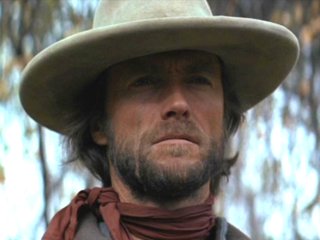
JoseyWDon’t get me wrong. I owe countless hours of entertainment, and many profound lessons learned to Clint Eastwood and his lifetime of utter brilliance. In this post, I will of course repay him by attacking his work on one of my all-time favorite films.

I guess I am feeling lucky.

…or maybe it’s just a blog post, but anyway, that’s not the film I mean to ramble about. I’m thinking about Josey Whales. There is one scene in this film that really bothers me. Maybe it’s meant to. Hell, probably, it’s meant to, but in this case the bother skips out of the bounds of the movie itself and starts to become a real-world bothertation.

I am talking about a scene in which Josey enters a trading post to find two men raping a young Navajo woman right there in the building. He grimaces a bit, and we get the impression he doesn’t really approve, and of course he does what so many of Eastwood’s characters do in this film; he goes on about his business, at least until the men become his business. This character is a reluctant hero after all, not some white-hat good-guy. When the rapists decide to try and take him prisoner, Josey, …uh, …SPOILER ALERT, …shoots them both dead, thus effectively saving the woman from sexual assault even as he saves his own life.

It’s great drama, and one of the things that makes it great is the moral ambiguity of its main character. Would he have helped the young woman if the two men hadn’t gone after him? We might hope so, but the film itself gives us no reason to suspect he would have. What we do know is that he walked right past them, and right past his first chance to help her. The whole scene ends with a disconcerting sense that Josey has put a stop to a number of bad things without ever really making a decision to do so.

It’s good storytelling. Hell, it’s great story-telling. So what’s the problem?

I think of this scene every time I hear of Clint Eastwood’s approach to libertarianism. His take on the subject is often described as “everyone leaves everyone alone” or some variant thereof. I actually rather like this expression, at least for a moment or two whenever I hear it. I can just imagine it being directed at some fussy bastard whose getting into other people’s business, in effect telling them to mind their own. I can get behind that sort of thing, sure I can. But then I find myself thinking that’s not really where this message is going, is it? Not in the grand scheme of things.

Time and again, we see libertarians in league with mainstream conservatives. On the topics of government aid to the poor and interference with the economy their messages are synchronous. On the topic of gender politics, their views clash, and near as I can tell the mainstream conservative themes win-out just about every time. This tells us a lot about the priorities at stake here, and I get damned tired of hearing a message that promises respect for individuals across the board only to see that message work consistently to the benefit of those already powerful at the expense of those struggling just to survive.

…which of course brings us right back to that scene from Josey Whales.

You could think of “everyone leave everyone alone” as a rule that might stop the rapists, albeit, it’s damned weak wording for a crime such as that. More to the point, I can’t help thinking it has more to do with Josey’s initial decision to go about his business, leaving the men free to hurt a young woman in his presence. I can’t help thinking that in that moment, Josey was minding his own business, just as the real Clint Eastwood seems to suggest we should all do.

Of course things work out in the end with Josey Whales, but they work out in the end because that’s the way the story is written. The bad guys go one step too far, thus triggering Josey’s own trigger, and it doesn’t hurt that they are foolish enough to let him get the best of them, just as all the other bad guys in that story do. Evil is vanquished in Josey Whales, but not because anyone has made a conscious choice to oppose it. Indeed, the movie seems rather set against the wisdom of such choices. No, the good that happens in this movie happens as if by accident, as Josey and his companions go about their daily lives, just trying to survive. And so the invisible hand of the writer seems to bring good  things from morally ambiguous behavior, much as the invisible hand of God in free market folklore.

It’s good storytelling, yes, but it’s piss-poor politics.

Share this:

  • Tweet
  • Share on Tumblr
  • Click to print (Opens in new window) Print
  • Click to email a link to a friend (Opens in new window) Email
  • Click to share on Reddit (Opens in new window) Reddit
Like Loading...

The Look of Silence, a Review

29 Friday Jan 2016

Posted by danielwalldammit in Movies, Narrative VIolence, Politics

≈ 6 Comments

Tags

Communism, Documentaries, Film, Indonesia, Joshua Oppenheimer, Movies, The Act of Killing, The Look of Silence, Violence

MV5BOTMwMjI4MjQ3MF5BMl5BanBnXkFtZTgwMjkwOTM2NTE@._V1_SY317_CR0,0,214,317_AL_It’s easy to think of silence as the auditory equivalent to a blank page, a kind of nothing that fits in between the sounds where we actually expect to find meaning. At times, though, silence conveys more than we can hope to cram into the sounds we call words. Joshua Oppenheimer is one person who clearly understands this. His latest film, The Look of Silence explores this topic in one of its more sinister forms. This film is a companion piece to The Act of Killing. Both movies deal with a genocide carried out in 1965 after the government of Indonesia had been taken over by the nation’s military. In the aftermath of this coup anywhere from half a million to a million people were killed. Victims included communists, ethnic Chinese, and those openly critical of the new government. The Act of Killing explored these events through the narratives of killers themselves and the stories they tell about their own actions. In The Look of Silence, Oppenheimer explores the lives of those who survived the massacre, those who lost loved ones in the killings and have since then had to live their lives among those who carried out the killings.

Whatever else silence conveys in this film, it clearly conveys a strong sense of terror, both because the stories it relates are as terrifying as they are real, and because the film-makers exposed themselves to danger in order to get those very stories.

Time and again, we see the main protagonist of the film, Adi Rukun, staring in silence as he listens to the killers of 1965 describing in great detail the horrors they themselves perpetrated in 1965. Sometimes Adi watches the killers telling their stories in video clips. Sometimes, he interviews them himself. Adi’s older brother was one of those killed in 1965. The story of his brother’s killing is among those he learns about over the course of this film.

If there is a plot to The Look of Silence, it is generated from Adi’s own decision to confront the killers, to speak to them himself, to risk engagement on a subject about which he is expected to remain silent. Adi is an Optometrist, and his subjects are aging. An eye exam thus becomes the pretext for one interview after another, each one an opportunity to breach the subject of past horrors. The resulting story is filled with this tension between silence and speech. The possibility that events discussed in the narratives of the killers could well happen again haunts one throughout the film. More to the point, one cannot escape the sense that Adi’s efforts could well make subject him and his own family to such violence. Those he interviews remind him of this frequently over the course of the film. The hints are subtle, but they are real, and they are horrifying.

It seems trite to suggest this, but the silent moments occurring in each interview are as interesting as the words themselves. We learn so much from the killers in this film. They tell us so many things about their past actions and their motivations, and yet each tries to withhold some part of their own stories from Adi and from us. Oppenheimer lets the camera linger in the awkward moments wherein they reconsider their stories and adjust their narratives to new questions and uncomfortable revelations. Always there is Audi, sitting there quietly, courageously choosing his words and listening to their responses. At times he is inscrutable. At others, one can almost feel the tears rising within him. …or the rage. Most often I cannot help thinking it is shame that I see in his face, a kind of deep-seated embarrassment for the murderers and for their inability to face the truth of their own actions.

If this is a story of silence, it isn’t merely the silence of Indonesians that unfolds in this story. American foreign policy is all over the events described in the movie, its long-term significance pervasive not merely in the lives of Indonesians themselves, but also in the consumer culture of Americans.

…in products we’ve all enjoyed in our own lives.

…without every knowing their cost.

Share this:

  • Tweet
  • Share on Tumblr
  • Click to print (Opens in new window) Print
  • Click to email a link to a friend (Opens in new window) Email
  • Click to share on Reddit (Opens in new window) Reddit
Like Loading...

Leo Gets Mauled By a Bear; My Readers Get Mauled By a Spoiler.

14 Thursday Jan 2016

Posted by danielwalldammit in Movies, Native American Themes

≈ 8 Comments

Tags

American Indians, Film, Hugh Glass, Leonardo DiCaprio, Movie Reviews, Movies, Native Americans, The Frontier, The Revenant

220px-The_Revenant_2015_film_posterThe Revenant was cool. In fact it was damned cool!
By ‘damned cool’ I might mean ‘damned hard to watch,’ but then again damned hard to watch can be damned cool. Tastes vary, of course, but watching a CGI brown bear maul Leonardo DiCaprio was well worth the price of admission.

No, I don’t hate DiCaprio. Quite the contrary. It takes some skill to sell that kind of suffering, and he does it damned well.

This is the story of Hugh Glass, a mountain man most famous for surviving an attack by a bear, and (more impressive still) for surviving his subsequent predicament. Left for dead, the man somehow made it roughly 200 miles to safety (mostly by crawling, as I understand it). The real story of Glass is impressive enough as it is, which is one reason writers and movie-makers keep coming back to it. The Revenant weaves its own narratives around the tale of Glass and his trials.

This movie is every bit as bleak and terrible as you might have thought. Images of human suffering abound, and of course the central story here is one about perseverance in the face of tremendous adversity. By perseverance I of course mean suffering. I might even have to write ‘suffering’ in this review a few more times, just to make sure you get the point. There is a lot of suffering in this film. But what does all the suffering add up to?

Therein lies the nitpickery point!

It’s a vision of the frontier as a place filled with violence and pain. That frontier has very little in the way of love, stability, family, or community. The things that connect human beings to one another in meaningful ways have been all but removed from the world of this story. When such connections do appear in this film, they appear to be fragmenting …painfully. Glass, for example, has already lost his Indian wife as the story begins. He will lose his son midway through the story, and he will end the film quite alone.

It isn’t the bear that sets off all this tragedy. It is the leader of an Arikara party who keeps attacking Glass and his companions. This character, we learn, is actually seeking his own daughter, whom he believes to have been captured by Glass’ party. Glass’ doomed wife and son as well as the daughter of the Arikara leader are the only bonds of kinship that I recall from the film, and each is unraveling even as the film begins. We are left with a world in which love itself comes into focus only through the medium of pain.

It’s worth considering for a moment that this kind of world cannot exist over the long duration. There are no births in this world, nor are there the means of nurturing future generations. These are men operating on the fringes of their own communities and/or in the wilderness emerging between them. It comes close to a Hobbesian time of war, or perhaps more appropriately to Frederick Jackson Turner’s frontier as the meeting place between savagery and civilization. Even the Native Americans in this film seem unable to keep a family together. This is the myth of the west taken to 11. It’s a world that must pass, either to complete destruction or eventually into some semblance of social order. It is the latter of course to which this sort of frontier narrative points us, as the frontier anticipates the coming of civilization. For now, we are left to contemplate a world in which few (if any) are born and a good many die every third or fourth scene.

I can’t help but think many will imagine this is the world frontiersman found when they entered the American wilderness, though I’m more inclined to think of it as a world they made by that very entry.

If there is a truly objectionable feature to this narrative theme, it would be the role played by friendly Natives. Some readers may be familiar with the phrase ‘magic negro’, which is usually taken to refer to a stock character used in all-to-many Hollywood films. The magic negro is usually gifted with some mystical power, often a sort of impossible wisdom which he will use to aid the white protagonist in a given story. Just as often, the magic negro will die before the end of the narrative, leaving the great white protagonist to resolve matters using whatever gifts his friend left behind. Suffice to say the magic negro needn’t really be a negro, though it does seem rather commonly to be a minority of some kind. In The Revenant, Glass enjoys the help of not one, not two, but three magic minorities, all Native Americans.

The First (and oddly enough also the last) of these supernatural mentors would be Glass’ wife. Having been slain in a prior event, she continually returns in the form of visions which inspire Glass to continue. Whether these are meant to be real or simply features of his own imagination isn’t really very important. The bottom line is that she is long gone, but she continues to serve as an inspiration to him. She appears at the very end of the film as well, seeming to say goodbye.

The second of these characters would be Glass’ son who remains loyal to him even as his injuries appear to leave Glass without hope of recovery. This loyalty will cost Glass’ son his life, but that in turn will provide Glass with the motivation to survive, to avenge the death of his son.

The third of these magic Indians appears in the form of Pawnee who shares food with Glass, travels with him, and cures him when Glass is overcome with infections. Glass will awaken to find himself well on the road to recovery even as he discovers his Pawnee friend hanging from a tree, leaving him to face yet another terrible challenge quite alone.

Time and again, Glass benefits from Native characters even as they themselves pass away. The death of the magic minority is that much more fitting here insofar as it perpetuates the narratives of western conquest. Native characters may hamper the frontiersman as does the Arikara leader, or they may aid him, as do each of the magic Indians in this film, but it is simply no coincidence that the white protagonist finishes the story on his own.

Does this work? Yes. It’s a Hell of story, and I plan to watch it again. And perhaps it works partly because of the very tropes that have me griping about the story right now. Some may find them extraordinarily compelling even as I find them terribly disappointing. I can’t help but think more interesting stories await the film-maker who learns to take Native characters a bit more seriously.


Share this:

  • Tweet
  • Share on Tumblr
  • Click to print (Opens in new window) Print
  • Click to email a link to a friend (Opens in new window) Email
  • Click to share on Reddit (Opens in new window) Reddit
Like Loading...

So, Adam Sandler, Yeah…

27 Monday Apr 2015

Posted by danielwalldammit in Movies, Native American Themes

≈ 15 Comments

Tags

Adam sandler, American Indians, Film, Humor, Indians, Movies, Racism, Satire, Westerns

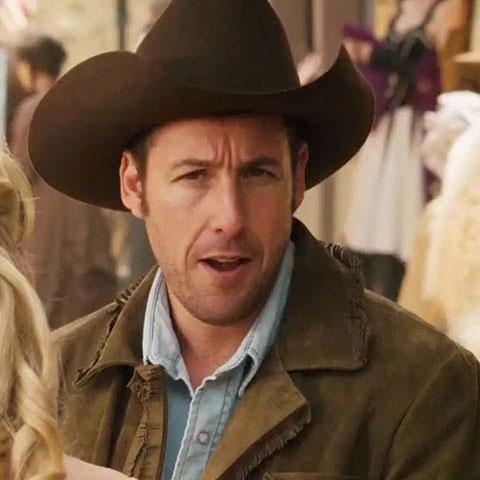
adam-sandlerBy now the story is pretty well known. A number of Native Americans recently walked off the set of an Adam Sandler movie (The Ridiculous Six) citing offensive jokes as the deal-breaker triggering their decision to leave. Most had been cast as extras, but the group also includes a cultural consultant hired for the film. Other sources have detailed the story better than I could, but let’s just get a few of their objections on the table so we all know what we’re talking about:

– The Indians in the movie are supposed to be Apache, but their outfits and material culture generally represented in the film would seem better suited to Comanche (and that not too accurately there either).

– The movie used offensive names for female characters. “No Bra” and “Beaver Breath” come to mind. “Sits-On-Face” was apparently in the script at one point.

– Come to think of it, the movie gives men offensive names too, “Five hairy Moles,” and “One Eyebrow,” for example.

– In the movie a woman is supposed to squat to pee at some point while smoking a peace pipe.

– The extras found a feather arrangement on a teepee inappropriate.

– In the movie, Adam Sandler is supposed to utter the line; “Say honey: how bout after this, we go someplace and I put my pee-pee in your teepee?”

…you get the idea.

I certainly hope that I don’t have to explain why any of this would be offensive. The question is of course what to make of that offense? Someone is almost always the butt of a joke, and so it sometimes seems arbitrary when a particular set of jokes like this one draws a vehement response. Those with little or no connection to the offended group are often that much more mystified, because they simply don’t understand all the implications, and it can be damned tempting to pass the whole thing off as political correctness.

The notion that these extras (and those who support them) are just being too damned sensitive about the whole thing is rolling rather predictably out in various tweets and blog posts. A spokesman for netflicks reportedly characterized the film as ‘broad satire’. Breitbart News carried that theme even further, denying that satire could be disrespect in any context and congratulating the film crew for standing their ground in the face of an overly sensitive group of extras. Sandler’s camp appears to have adopted the stance that his movie is meant to be all in good fun, and that it’s full of low-brow humor to begin with. One of the cast, Vanilla Ice, for example assured us that Sandler is not trying to make something on par with Dances With Wolves. So, it seems we in the public are supposed to give Sandler a pass, because he is just joking.

I’m usually pretty open to raunchy humor, but I find it very hard to imagine a context in which the jokes mentioned above would be anything other than toilet humor fit for a five year old.

…and let’s be clear. there is another context to consider here. For those of us who haven’t seen the film, it’s difficult to assess the context behind the jokes, but for those of us who haven’t lived lives as Native Americans, it’s hard to say what the overall context of life is for determining how these jokes must feel.

Context is a two-way street.

No, actually, it’s more like a giant roundabout with a lot of busy traffic.

The question here is just what makes these jokes funny to begin with (at least for those that find them funny)?  It’s easy enough to say that a name like “Beaver Breath” is just a joke, but is there really any reason to suppose that joke doesn’t turn on a point of prejudice? These names don’t appear to be an in-joke, and they don’t turn any non-native prejudice on its head. They reflect little other than the sensibility of a child snickering at someone different. These jokes turn that difference into an object of brutal and straight-foreword mockery. and there is simply nothing in the accounts given so far to suggest that the target of this humor is anything other than Native American naming practices themselves. If this is satire, it is indistinguishable from racist propoganda.

That the jokes in question may be delivered with a congenial smile doesn’t change the fact that this humor is at face value quite demeaning. Some people don’t even seem to know when they are insulting others; either that or they simply assume the right to do so without being called to account for it.

This is why the claim that The Ridiculous Six is all just satire fails. Oh yes, the movie may well be a satire, but whatever it’s satirizing, there is no reason to believe these jokes aren’t actually directed at the Native American community.

There is nothing in these jokes that suggests familiarity with their own subject matter, much less appreciation for the people close to it. This is why the costumes matter, not because the movie was meant to be historically accurate, but because knowing the difference between Apache dress and Comanche dress might have communicated at the trace of a capacity to give a damn. When such things become too much to ask, the benefit of the doubt slips out the door. And when those who raise the issue, as these extras did, are told by a producer they are being overly sensitive and they should leave, well that pretty well slams the door shut altogether. If there was any chance this humor could have reflected anything other than outright prejudice, the treatment these extras received on the set would appear to have set that prospect to rest.

…which puts the claim that no offense had been intended in this script in an awkward light. It would appear to mean little other than that Native Americans themselves are not supposed to take offense at such things. Sandler and company have produced a highly offensive script, and when called on it, they have done little other than to beg others not to see the plain point of their own jokes. In effect, they have put the responsibility for the insult on those that have called attention to it (which is an awful lot like the strategy taken by Dan Snyder and the Washington football team). in effect, they blame those they insult for knowing they have been insulted. Does that rhetoric sound familiar? It should. This is of course precisely why conservative culture warriors are beginning to weigh in. It isn’t that they don’t know the movie is offensive; the folks at Breitbart for example are defending it precisely because they know that it is.

It’s easy to dismiss Sandler himself. He has often (almost always) presented himself in a rather juvenile manner. His characters are often simpletons, and the humor they produce is accordingly full of foolishness. When this fails, as it often does, Sandler leaves behind more than a trace of disappointment in the jokes. He also leaves us with that slightly creepy feeling that we’ve seen too much of someone’s personal baggage. Still, the man is capable of outstanding humor, often using this very approach. I do recall some brilliant moments in Sandler’s career; Lunch Counter Lady and The Hanakka Song come to mind. I don’t exactly pine for new examples of his work, but I can honestly say that he has brightened my day once or twice over the years. I say this, not because I feel like defending the man at the moment, but because I think it’s important to note that he is at least capable of doing something better than this.

Unfortunately, the man is also capable of turning out utter trash. Case in point, putting a peepee in a woman’s teepee. Try as I might, I cannot find any context in which that line reflects anything but the crudest sensibilities of a petulant child. Reading about this, I can’t help thinking Sandler has gotten entirely too comfortable passing the naughtiest jokes of the playground off as professional comedy. I for one hope that he will take a lesson from his extras, and try once again to produce comedy worth watching.

***

Postscript: I noticed an interesting pattern in this video showing the conversation, the film-makers continually insist that the movie is sympathetic to the Native American characters. Why? Because Adam Sandler’s character loves them.

Speaking of Dances With Wolves…

Suffice to say the notion that respect for Native American characters rests on little other than the values of a non-Native character would be ironic at best.

Actually ‘perverse’ is more like it.

Share this:

  • Tweet
  • Share on Tumblr
  • Click to print (Opens in new window) Print
  • Click to email a link to a friend (Opens in new window) Email
  • Click to share on Reddit (Opens in new window) Reddit
Like Loading...
← Older posts
Newer posts →

Top Posts & Pages

  • Master and Commander Kinda Queered
    Master and Commander Kinda Queered
  • A Joke from a Bygone Era
    A Joke from a Bygone Era
  • Uncommonday Morning Blues - Ian Anderson Learns to Play the Flute
    Uncommonday Morning Blues - Ian Anderson Learns to Play the Flute
  • Uncommonly Slow on the Uptake
    Uncommonly Slow on the Uptake
  • I'll Just Leave This Here
    I'll Just Leave This Here
  • When Sex Falls Out of the Performance
    When Sex Falls Out of the Performance
  • An Uncommon Security Guard: Dave Eshelman, AKA 'John Wayne'
    An Uncommon Security Guard: Dave Eshelman, AKA 'John Wayne'
  • An Uncommon Request
    An Uncommon Request
  • The Murals of Española
    The Murals of Española
  • What are the Necessities of Life?
    What are the Necessities of Life?

Topics

  • Alaska
  • Animals
  • Anthropology
  • atheism
  • Bad Photography
  • Books
  • Childhood
  • Education
  • Gaming
  • General
  • History
  • Irritation Meditation
  • Justice
  • Las Vegas
  • Minis
  • Movie Villainy
  • Movies
  • Museums
  • Music
  • Narrative VIolence
  • Native American Themes
  • Philosophy
  • Politics
  • Public History
  • Re-Creations
  • Religion
  • Street Art
  • The Bullet Point Mind
  • Travel
  • Uncategorized
  • Uncommonday
  • White Indians
  • Write Drunk, Edit Stoned

Blogroll

  • American Creation
  • An Historian Goes to the Movies
  • Aunt Phil's Trunk
  • Bob's Blog
  • Dr. Gerald Stein
  • Hinterlogics
  • Ignorance WIthout Arrogance
  • Im-North
  • Insta-North
  • Just a Girl from Homer
  • Multo (Ghost)
  • Native America
  • Norbert Haupt
  • Northwest History
  • Northy Pins
  • Northy-Tok
  • Nunawhaa
  • Religion in American History
  • The History Blog
  • The History Chicks
  • What Do I Know?

Archives

  • December 2023
  • November 2023
  • June 2023
  • April 2023
  • February 2023
  • December 2022
  • November 2022
  • October 2022
  • September 2022
  • August 2022
  • July 2022
  • June 2022
  • April 2022
  • January 2022
  • December 2021
  • November 2021
  • October 2021
  • September 2021
  • August 2021
  • June 2021
  • May 2021
  • March 2021
  • February 2021
  • January 2021
  • December 2020
  • November 2020
  • October 2020
  • September 2020
  • June 2020
  • May 2020
  • March 2020
  • February 2020
  • January 2020
  • December 2019
  • November 2019
  • September 2019
  • August 2019
  • July 2019
  • June 2019
  • May 2019
  • April 2019
  • January 2019
  • December 2018
  • November 2018
  • October 2018
  • September 2018
  • August 2018
  • July 2018
  • June 2018
  • May 2018
  • April 2018
  • March 2018
  • February 2018
  • January 2018
  • December 2017
  • November 2017
  • October 2017
  • September 2017
  • August 2017
  • July 2017
  • June 2017
  • May 2017
  • April 2017
  • March 2017
  • January 2017
  • December 2016
  • November 2016
  • October 2016
  • September 2016
  • August 2016
  • July 2016
  • June 2016
  • May 2016
  • April 2016
  • March 2016
  • February 2016
  • January 2016
  • December 2015
  • November 2015
  • October 2015
  • September 2015
  • August 2015
  • July 2015
  • June 2015
  • May 2015
  • April 2015
  • March 2015
  • January 2015
  • December 2014
  • November 2014
  • October 2014
  • July 2014
  • June 2014
  • May 2014
  • April 2014
  • March 2014
  • February 2014
  • January 2014
  • December 2013
  • November 2013
  • October 2013
  • September 2013
  • August 2013
  • July 2013
  • June 2013
  • May 2013
  • April 2013
  • March 2013
  • February 2013
  • January 2013
  • December 2012
  • November 2012
  • October 2012
  • September 2012
  • August 2012
  • July 2012
  • June 2012
  • May 2012
  • April 2012
  • March 2012
  • January 2012
  • December 2011
  • November 2011
  • October 2011

My Twitter Feed

Follow @Brimshack

RSS Feed

  • RSS - Posts
  • RSS - Comments

Enter your email address to follow this blog and receive notifications of new posts by email.

Join 8,076 other subscribers

Blog at WordPress.com.

  • Subscribe Subscribed
    • northierthanthou
    • Join 8,076 other subscribers
    • Already have a WordPress.com account? Log in now.
    • northierthanthou
    • Subscribe Subscribed
    • Sign up
    • Log in
    • Report this content
    • View site in Reader
    • Manage subscriptions
    • Collapse this bar
 

Loading Comments...
 

    %d