• About

northierthanthou

northierthanthou

Tag Archives: Native Americans

Decalogic Schmecalogic!

08 Monday Feb 2016

Posted by danielwalldammit in atheism, Native American Themes, Philosophy, Write Drunk, Edit Stoned

≈ 6 Comments

Tags

atheism, Charlton Heston, Christianity, Decalogues., Memes, Morality, Native Americans, religion, Ten Commandments
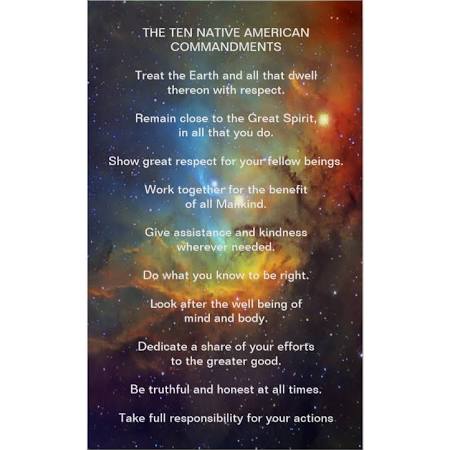
shoppingMaybe you’ve seen it yourself. One of the many pieces of spirit-kitch floating about the net these days is a little gem called The Native American Ten Commandments. It might as easily be labelled an Indian Ten Commandments, or even the Native American Indian Ten Commandments.

…cause extra syllables make it all better.

Either way it’s just the sort of thing that goes with overly staged old photos or pastel-tinged paintings involving beautiful people and lots of feathers. To the left, you can see a poster version of the list. It is short on feathers, but totally cosmic, cause, well, Indians are good for that sort of thing.

…of course.
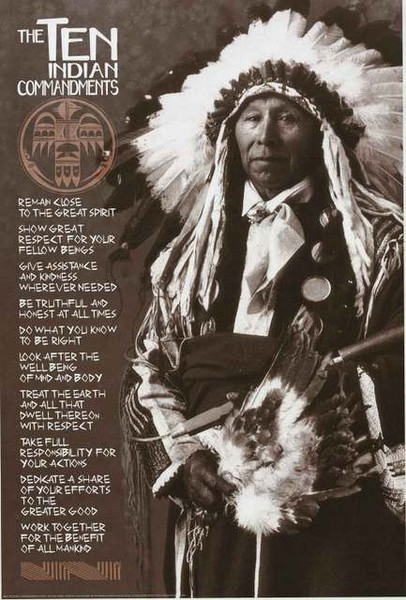
pst2831ntvam_grandeThat’s just one version of the native decalogue. Here is another! The list looks about the same, but the order seems to be different. Apparently, the order of this list isn’t as important to the Great Spirit as it is to the God of Abraham. I know, I know. Some of you are already saying these are the same thing.

Well maybe.

But seriously, I don’t think so.

See, one of the many things that I typically admire about indigenous peoples is that they aren’t the sort of people who normally produce this sort of nonsense.

…or at least they weren’t historically. (Progress ruins just about everything.)

So what’s wrong with a decalogue of commandery goodness? Well we could start with the commandment theme. It contains a whole host of culture-specific assumptions about ethics most of which seem screamingly out of place here, not the least of them being that ideas about how one ought to behave come from some being of cosmic authority. This is one of many respects in which the politics of kings comes screaming through the metaphors of modern Christianity. Ten commandments construe morality in terms of fealty to a liege-lord who gets to tell us how to behave. Whatever else the Lord is, he’s also a Lord, which is to say neither a Democrat nor a Republican. He tells us what to do, and doing His will is what defines our own morality. That is the logic of the Ten Commandments. This logic gets softened a bit in the Native American variant. We don’t exactly know who is commanding us. It might not even be the great spirit. One imagines, perhaps an elder who wishes us to show respect for the Great Spirit, which is at least a little more egalitarian than a God who  starts his list of does and don’ts with a demand that we pay more attention to him than anyone else. So, yeah, it’s a little more egalitarian.

A little!

Tossing the commandment format out altogether would be a lot more egalitarian.

…and as far as I can tell, a lot more authentic. Maybe I’m missing something, like the history behind this particular decalogue. I wonder who produced it, and just what they hoped to accomplish with it. Suffice to say, it doesn’t strike me as having much connection to the traditions of any particular Native American people. It’s language and its metaphors are those of a generic pan-Indian culture, and in this case a pan-Indian culture as envisioned from the viewpoint of an outsider.

indexDo I object to the principles at stake here? Not particularly. Some of them sound rather cool. It’s the total package that sets off the red flags for me, not the least of reasons being its rather non-native packaging. What bothers me about this is the fact that some people don’t approach ethics in terms of a list of rules, much less imagine them to be the product of a cosmic legislator. The Native American decalogue invites us all to appreciate a kind of difference, but imposes an artificial similarity on the subject even as it pretends to acknowledge that difference.

And why ten? Seriously, can’t your ethics come in five or eights, or maybe even thirty-twos. Actually, I’m not a huge fan of listey philosophicals in general. The numbers always seem arbitrary, and along with that goes a lot of potential for contradiction, and very little potential for substantive understanding. It’s the matter-of-fact nature of such lists that seems to me an invitation to the most mechanical of moral sensibilities.

If there is a good place for such lists, I suspect it’s in less cosmic subject matters. They seem quite appropriate for a professional code of ethics, not the least of reasons that folks don’t usually expect a professional code of ethics to be complete. If your morality is dictated entirely by your job, then most folks would say you work to much. Then we just say; “Thou shalt get a life!”

…and thou better get on it, dammit!

Yes, I know I’m misusing ‘thou’. It’s not the worst thing I will do all day, not even in this post. Trust me!

commandments-colour-smallAnyway, I don’t really mean to pick on native Americans here. They aren’t the only ones to fall for the lure of the decalogue (or perhaps to have someone else fall for it on their behalf). Apparently, there is a Ten Commandments of Colour Theory. Ted Talks seem to have their own, ..um, TED Commandments. Unnamed sources tell me there is a Ten Commandments of Journalism. Actors have their own Ten Commandments. So do bartenders. I would not have guessed, but it appears that even Propagandists have Ten Commandments. Even Nudists have Ten Commandments. Writers have one just for social networking. Is there a secret to a successful marriage? Yep, ten of them. Typography has its own decalogue. Apparently millennials have their own Ten Commandments. Following these Ten Commandments will lead to weight loss. …surely. Computer programmers have a decalogue, though presumably they will work on it sometime next week.

5f3129f4f2e3c4dfde49270fbb5646ccAs I understand it, a list of Ten Commandments for Atheists has been floating around for awhile, though I assume the commandery parts of these Commandments is meant to be taken with a grain of salt. Actually, it seems there are a few decalogues for non-believers out there. Richard Dawkins seems to have produce one such list in The God Delusion. Penn Jillette has one too. I don’t remember reading it, but I’m told Bertrand Russell produced such a list long before him. Hitchens has his own list, so now his face appears on memes beside such a list. The guy at Daylight Atheism on Patheos blogs is not to be outdone. Oh look! The Atheism Reddit seems to have a Ten Commandments.

h9r6qCh…it looks like someone else made that up.

…probably not a fan of the atheist reddit.

Hey, there is a Ten Commandments of Logic! Hm…

There is a Ten Commandments for Musicians. Better yet, Captain Beefheart once produced a Ten Commandments for Guitar Playing. Classical Musicians have their own Ten Commandments. Drummers have a list of Ten Commandments, but honestly, I think they have machines for that now.

How many commandments do RPG Gamers have? Ten. It appears that Gamemasters have ten of their own. Do game designers have ten commandments? Of course. But there is a different one for educational game designers. There is even a Ten Commandments specifically for video game menus. Game Inventors have one of their own.

Do Republicans have their own Ten Commandments? Yes, but apparently they didn’t write it. Or this one. Liberals don’t seem to have written theirs either.  Elizabeth Warren once issued 11 Commandments for Progressives, cause apparently one of them is breaking the frame. Mostly, Republicans and Democrats argue about the Ten Commandments, but let’s not get into that.

…today anyway.
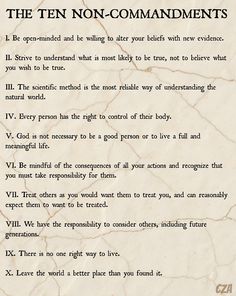
ac95140ca7e38d9210cf7a63357977b6I can only hope that I’ve broken at least three of them, but you can damned well bet that there is a Ten Commandments for bloggers. Actually, there seems to be two of them. No, Three. Make that four. Okay, five. Six? Okay, that’s really enough. No really, stop it! Seriously, stop it! I said STOP!

Someone here says that cats have a Ten Commandments, but they only follow it when they feel like it. Dogs have their own take on the Ten Commandments. I would look for a Ten Commandments of tropical fish, but I imagine it would just go like; “1) Gloop, 2) gloop, gloop.” Horses have a Ten Commandments. There is a Ten Commandments for pets in general.

Oh Hell, I haven’t even got to all the interesting or well known decalogues! This could take all day. …maybe even ten of them. But you get the idea. What’s fascinating about the proliferation of decalogetry, at least to me, is the seeming arbitraryness of the whole thing. Even within the Abrahamioc religions, the Ten Commandments have less to do with actual scripture than pop-Christianity. Compared to its source material, the Ten Commandments are simplified and trimmed of questionable content (one might even say that ‘politically correct’, but of course that phrase is only to be used in attacking liberals). Still, the notion caught on, and caught on so well it just keeps generating itself, time and again. Some of its children are meant to be taken more seriously than others, but an awful lot of people seem to fall quite easily into the notion that ethics begins with a list of ten principle to be declared into existence by someone (with or without the authority to do so).

imagestyIn fact, maybe I’ll have a go at it myself:

The Ten Commandments of Decalogue Building

1: The Number of Commandments Shall be Ten.

2. Ten shall be the number of the commandments.

3) Thou shalt not have 11 Commandments, nor 9, except that…

4 – No Monty Python References!

5 ~ Numbers 2 through 5 are bullshit. Start over!

2b -> …or not to be. That is the question.

3b, Okay, I’ll let you get by with that one.

4b That which is numbered shall be commandments. Simple oughts and issez shall not count in the counting except insofar as one reconstructs them into shalls and shall nots, or even to fuck offs.

5c = No, not fuck-offs, dammit. Do this right!

6 This is hard.

6.2 –You’re wasting time. Do that one over!

6.3 …Okay, …No matter the subject, all that is deemed worthy of the counting shall end in an exclamation mark

6.4 …

6.5 !

7)) All commandments are to be read in the voice of Charlton Heston. Of course!

8:: The decalogue will not be televised.

  • 9 You’re off topic again.

(10) I really can’t do this.

11 Cause my rules go to 11.

Share this:

  • Tweet
  • Share on Tumblr
  • Click to print (Opens in new window) Print
  • Click to email a link to a friend (Opens in new window) Email
  • Click to share on Reddit (Opens in new window) Reddit
Like Loading...

Leo Gets Mauled By a Bear; My Readers Get Mauled By a Spoiler.

14 Thursday Jan 2016

Posted by danielwalldammit in Movies, Native American Themes

≈ 8 Comments

Tags

American Indians, Film, Hugh Glass, Leonardo DiCaprio, Movie Reviews, Movies, Native Americans, The Frontier, The Revenant

220px-The_Revenant_2015_film_posterThe Revenant was cool. In fact it was damned cool!

By ‘damned cool’ I might mean ‘damned hard to watch,’ but then again damned hard to watch can be damned cool. Tastes vary, of course, but watching a CGI brown bear maul Leonardo DiCaprio was well worth the price of admission.

No, I don’t hate DiCaprio. Quite the contrary. It takes some skill to sell that kind of suffering, and he does it damned well.

This is the story of Hugh Glass, a mountain man most famous for surviving an attack by a bear, and (more impressive still) for surviving his subsequent predicament. Left for dead, the man somehow made it roughly 200 miles to safety (mostly by crawling, as I understand it). The real story of Glass is impressive enough as it is, which is one reason writers and movie-makers keep coming back to it. The Revenant weaves its own narratives around the tale of Glass and his trials.

This movie is every bit as bleak and terrible as you might have thought. Images of human suffering abound, and of course the central story here is one about perseverance in the face of tremendous adversity. By perseverance I of course mean suffering. I might even have to write ‘suffering’ in this review a few more times, just to make sure you get the point. There is a lot of suffering in this film. But what does all the suffering add up to?

Therein lies the nitpickery point!

It’s a vision of the frontier as a place filled with violence and pain. That frontier has very little in the way of love, stability, family, or community. The things that connect human beings to one another in meaningful ways have been all but removed from the world of this story. When such connections do appear in this film, they appear to be fragmenting …painfully. Glass, for example, has already lost his Indian wife as the story begins. He will lose his son midway through the story, and he will end the film quite alone.

It isn’t the bear that sets off all this tragedy. It is the leader of an Arikara party who keeps attacking Glass and his companions. This character, we learn, is actually seeking his own daughter, whom he believes to have been captured by Glass’ party. Glass’ doomed wife and son as well as the daughter of the Arikara leader are the only bonds of kinship that I recall from the film, and each is unraveling even as the film begins. We are left with a world in which love itself comes into focus only through the medium of pain.

It’s worth considering for a moment that this kind of world cannot exist over the long duration. There are no births in this world, nor are there the means of nurturing future generations. These are men operating on the fringes of their own communities and/or in the wilderness emerging between them. It comes close to a Hobbesian time of war, or perhaps more appropriately to Frederick Jackson Turner’s frontier as the meeting place between savagery and civilization. Even the Native Americans in this film seem unable to keep a family together. This is the myth of the west taken to 11. It’s a world that must pass, either to complete destruction or eventually into some semblance of social order. It is the latter of course to which this sort of frontier narrative points us, as the frontier anticipates the coming of civilization. For now, we are left to contemplate a world in which few (if any) are born and a good many die every third or fourth scene.

I can’t help but think many will imagine this is the world frontiersman found when they entered the American wilderness, though I’m more inclined to think of it as a world they made by that very entry.

If there is a truly objectionable feature to this narrative theme, it would be the role played by friendly Natives. Some readers may be familiar with the phrase ‘magic negro’, which is usually taken to refer to a stock character used in all-to-many Hollywood films. The magic negro is usually gifted with some mystical power, often a sort of impossible wisdom which he will use to aid the white protagonist in a given story. Just as often, the magic negro will die before the end of the narrative, leaving the great white protagonist to resolve matters using whatever gifts his friend left behind. Suffice to say the magic negro needn’t really be a negro, though it does seem rather commonly to be a minority of some kind. In The Revenant, Glass enjoys the help of not one, not two, but three magic minorities, all Native Americans.

The First (and oddly enough also the last) of these supernatural mentors would be Glass’ wife. Having been slain in a prior event, she continually returns in the form of visions which inspire Glass to continue. Whether these are meant to be real or simply features of his own imagination isn’t really very important. The bottom line is that she is long gone, but she continues to serve as an inspiration to him. She appears at the very end of the film as well, seeming to say goodbye.

The second of these characters would be Glass’ son who remains loyal to him even as his injuries appear to leave Glass without hope of recovery. This loyalty will cost Glass’ son his life, but that in turn will provide Glass with the motivation to survive, to avenge the death of his son.

The third of these magic Indians appears in the form of Pawnee who shares food with Glass, travels with him, and cures him when Glass is overcome with infections. Glass will awaken to find himself well on the road to recovery even as he discovers his Pawnee friend hanging from a tree, leaving him to face yet another terrible challenge quite alone.

Time and again, Glass benefits from Native characters even as they themselves pass away. The death of the magic minority is that much more fitting here insofar as it perpetuates the narratives of western conquest. Native characters may hamper the frontiersman as does the Arikara leader, or they may aid him, as do each of the magic Indians in this film, but it is simply no coincidence that the white protagonist finishes the story on his own.

Does this work? Yes. It’s a Hell of story, and I plan to watch it again. And perhaps it works partly because of the very tropes that have me griping about the story right now. Some may find them extraordinarily compelling even as I find them terribly disappointing. I can’t help but think more interesting stories await the film-maker who learns to take Native characters a bit more seriously.


Share this:

  • Tweet
  • Share on Tumblr
  • Click to print (Opens in new window) Print
  • Click to email a link to a friend (Opens in new window) Email
  • Click to share on Reddit (Opens in new window) Reddit
Like Loading...

The Mating Calls of Violent Men!

20 Friday Nov 2015

Posted by danielwalldammit in Politics, Religion

≈ 12 Comments

Tags

Ann Coulter, Genocide, Islam, Muslims, Native Americans, prejudice, Racism, Right Wing Politics, Syria

CUPDyz-UkAEwa14

Please accept my apologies for posting this piece of filth

So this morning I’m surfing the hashtags on Twitter, cause I have plenty better to do of course, but anyway…

…and I come across the image to your left. It’s just one of many memes produced every day by the right wing hate machine. This one in particular happens to have been retweeted by professional bigot Ann Coulter.

I look at this image and I can’t help but think of the words ‘nits make lice.’ the saying is popularly attributed to Colonel John Chivington, another of history’s great war-mongers who didn’t care to distinguish children from enemies. Ostensibly charged with protecting the people of Colorado from Cheyenne and Arapaho, Chivington wasn’t much good at fighting real warriors, but he sure knew how to kill women and children, and on November 29th, 1864, he knew exactly where to find a band of Cheyenne who weren’t going anywhere. They weren’t going anywhere, because they’d already been placed under the protection of the army at Fort Lyon. Chivington didn’t care.

Neither do people who produce images like this.

Sadly such folk are not such a fringe group in America, or in other parts of the western world. Today the net is also abuzz with talk of plans from Narcissa Trump to force Muslims to register all across the nation so we can keep track of them. We’re still hearing the echoes of a Jeb Bush plan to admit only Christian refugees to America. And of course calls abound to reject all Syrian refugees out of some generalized fears about terrorism. Some are concerned about the possibility of terrorists inserting themselves into the refugee population. Many more simply refuse to think of any Muslims, or those coming from Muslim regions, as anything but terrorists.

CUCnndDWsAEIM4z

Because of course what some Afghans do is the best argument against helping Syrians in distress

I find myself waxing nostalgic for the days after 9-11 when President Bush carefully made it clear that our nation is not at war with Islam. I’ve never been a fan of Bush, but in this regard he at least held the rising tide of right wing malice to within certain degrees of sanity. In the intervening years, pseudo-conservative culture warriors have been working damned hard to overcome that limitation, and they have made great progress. They want a general war between the west (and Christendom) and Islam itself. Sometimes folks will qualify this by saying we are at war with ‘radical Islam’ as if ‘radical’ were ever enough to clarify the difference. These people want desperately for America to commit to general war against proponents of Islam all over the world.

And in this respect, they want very much the same thing that terrorists want. It’s as fascinating as it is disturbing to the dance of dangerous men and their couch-bound cheerleaders. Nothing brings the bigots out from under the rocks that hide them in America quite like events such as Paris. They find in terrorist acts a real source of empowerment, and they use that empowerment as much to attack moderates here in the west as any radicals abroad.

What is the worst thing about Isis? To so many right wingers, that would be Obama.

…or liberals in general.

What these war-mongers want doesn’t have much to do with ending terrorism or defeating actual terrorists, but they will make life miserable for those who happen to live near terrorists, who happen to look like terrorists, or (in the case of Syrian refugees) who happen to have already been hurt themselves by such terrorists. They would have been right at home with Chivington and the Colorado 3rd.

Each act of terrorism is an opportunity for right wingers to push aside the rest of us, to finally defeat their own domestic enemies and set the nation and the world at large on a violent course. They see in Paris and every act by the terrorists proof positive that their own violent worldview is the correct one, and that our nations must ever more place warfare at the center of public policy. That our own war efforts may have similar effects in far regions of the world could hardly be an objection to such a mind-set. It is synergy in action, the benefits of an ever escalating rhetoric of violence. As much as these people hate each other, they hate the rest of us more.

Its tough not to see a measure of alliance between terrorists and those who would reduce of American policy to a war against them, and against all of Islam. In some cases, this connection would be concrete, because you can bet the KKK and everyone at Storm Front are among the voices flooding social media this last week. In other cases the connection takes more thought. But each act of violence brings both forth cries for more of the same. These messages come ostensibly from enemies, and yet they coalesce into an odd sort of harmony.

The mating calls of violent men!

These violent men only have eyes for each other. And if they have their way, the world at large will soon be nothing but a battle ground between such people.

It will also be a dance hall for the morbidly obsessed.

Share this:

  • Tweet
  • Share on Tumblr
  • Click to print (Opens in new window) Print
  • Click to email a link to a friend (Opens in new window) Email
  • Click to share on Reddit (Opens in new window) Reddit
Like Loading...

Chevak Dancers from 2010.

27 Tuesday Oct 2015

Posted by danielwalldammit in Alaska

≈ 9 Comments

Tags

Alaska, Alaska Federation of Natives, Alaska Natives, Chevak, Dance, Native Americans, Performance, Video, Yupik

Chevak Dancers

Chevak Dancers

I thought I’d post this old video of the Chevak Dancers from the Alaska Federation of Natives 2010. It’s really short. I took this on my old Blackberry from too far back in the audience, so the quality is terrible, but the dance itself is really cool. I’ve been hoping to see these guys again, so I can get a better version of this dance, but perhaps this is the best I’ll get.

Bet you can’t tell what it’s about!

🙂

Share this:

  • Tweet
  • Share on Tumblr
  • Click to print (Opens in new window) Print
  • Click to email a link to a friend (Opens in new window) Email
  • Click to share on Reddit (Opens in new window) Reddit
Like Loading...

An Uncommon Holiday Celebration

22 Monday Dec 2014

Posted by danielwalldammit in Alaska, History, Native American Themes

≈ 6 Comments

Tags

Alaaska Native Heritage Center, Alaska, Alaska Natives, Education, Indians, Native Americans, Schools, Thanksgiving, Yupiit

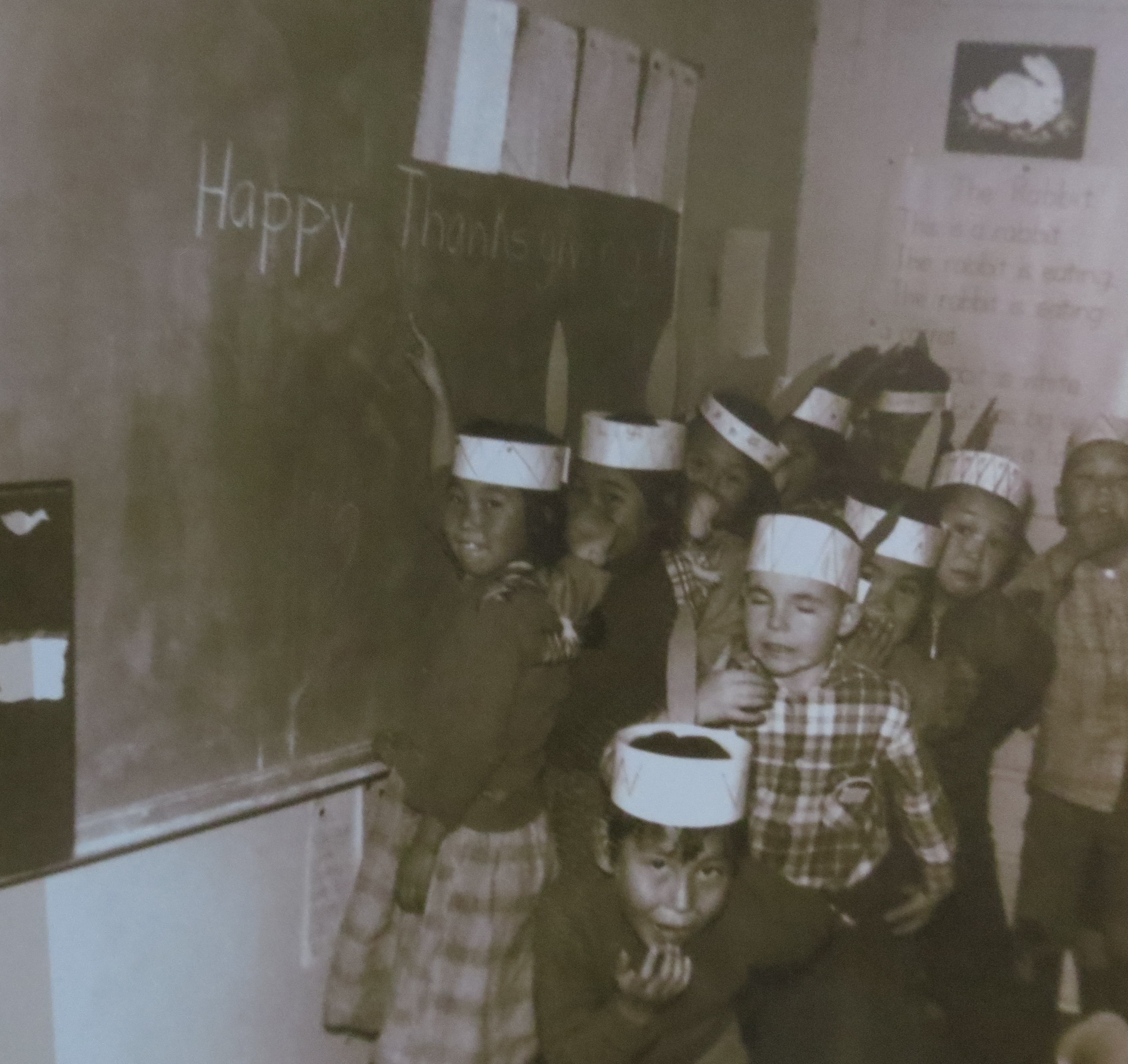
???????????????????????????????Take a look at this image from an old Thanksgiving celebration. It’s part of an exhibit at the Alaska Native Heritage Center (which is definitely worth a visit if you are ever in Anchorage).

These children are Alaska Natives, in this case Yupiit, which would have placed them a long way from New England during the mythic days of the first Thanksgiving celebrations. Still, I can’t help but shake my head at the notion that someone thought to costume these ‘Eskimos’ as ‘Indians’ for Thanksgiving.

So yeah, that happened.

Share this:

  • Tweet
  • Share on Tumblr
  • Click to print (Opens in new window) Print
  • Click to email a link to a friend (Opens in new window) Email
  • Click to share on Reddit (Opens in new window) Reddit
Like Loading...

An Uncommon School Club

16 Monday Jun 2014

Posted by danielwalldammit in Uncommonday

≈ 4 Comments

Tags

Church of Satan, Film, Humor, IAIA, Institute of American Indian Arts, Native Americans, Satanism, Student Clubs, Tribal Colleges

I’ve written about the good folks at the Institute for American Indian Arts, but I thought I would share this totally serious video about one of their student clubs.

Share this:

  • Tweet
  • Share on Tumblr
  • Click to print (Opens in new window) Print
  • Click to email a link to a friend (Opens in new window) Email
  • Click to share on Reddit (Opens in new window) Reddit
Like Loading...

Won’t Someone Please Think of the Dan Snyders?

04 Friday Apr 2014

Posted by danielwalldammit in Justice, Native American Themes

≈ 3 Comments

Tags

Charity, Dan Snyder, Football, Indians, Native Americans, notyourmascot, prejudice, Sports Mascots, Washington Reskins

DanSnyderSomeone really ought to take donations for the Washington Redskins. I hear they are in desperate need of team gear that isn’t racist or demeaning to Native Americans. Mind you, I say ‘Native Americans’ because I think that’s what Redskins owner Dan Snyder would want me to say. Dan clearly doesn’t think it prudent to go around calling real people ‘Redskins‘, but he does seem to think it’s appropriate to use that label for his football team. So, why on earth would Snyder continue using the name? I mean he cares, right? He cares enough to visit 26 tribes and start a charity for Native Americans, and he certainly cares enough not to call anyone this term to their face. So, why would he continue using the name for his team? I can only conclude that he and his organization can’t afford the costs incurred by the change of gear.

The conclusion is inescapable.

I know, I know, a lot of people might think rather poorly of Snyder at this point, but perhaps we are getting it all wrong. We don’t understand the scale of the problem Snyder faces. As Ross Tucker points out, the term ‘Redskins’ is so very divisive that the team name really must be kept. Hell, Tucker assures us that a lot of people would criticize Dan Snyder now regardless of any other consideration, just because he is Dan Snyder. Cause apparently there aren’t any real reasons to be concerned about Snyder’s team name or any of his efforts to defend that name in the public eye. People are just after Dan.

Man, that poor guy!

If Tucker’s point doesn’t show you just what a crazy pickle our poor man Dan has got himself into, then just consider the stories of Chief Dodson, Peter MacDonald, and now Gary Edwards, all figures Dan Snyder has promoted or honored through his organization. I mean Dan’s whole effort to establish relations with indigenous leaders seems to suffer from a bad case of fractal wrongness, because error raises its ugly head at every scale of the project. A more cynical person might suggest that Snyder has been cherry picking cooperative indigenous leaders for the purpose of misleading the public about indigenous support for his team. A more cynical person might suggest that Snyder’s charity was a straight forward bribe, and that he wasn’t all that serious about helping anyone. A really cynical person might even suggest that this kind of thing was part of a time-dishonored tradition of manipulating native leadership, and that such stunts could add real injury to the insult of the team name. A more cynical person might see in Dan Snyder’s efforts to sell his team name a message that he knows and cares even less about Native Americans than the simple racism of his actual team name would seem to suggest. But, well, that’s what a cynical person might think.

Bad cynical person!

For myself, I say the pattern here is obvious. Dan Snyder and his tiny understaffed organization are clearly struggling to keep up with events. Hell, they can hardly vet their people, and frankly, I think a few indigenous folks have taken advantage of Dan’s big heart. If that doesn’t bring a tear to your eye, then focus on the fact that struggling as they are Snyder has taken it upon himself to form a charity to help Native American communities. He and his charity even assisted with the purchase of a backhoe for Pete’s sake! A whole backh…, well part of a backhoe anyway! It’s a giving man that gives part of a backhoe when he can’t even properly vet a PR stunt.

Think about that and try not to get a great big old lump in your throat!

BYtx3CdIcAE8tVTWe know one thing for sure, and that’s that Dan Snyder understands just how insulting the term ‘Redskins’ really is. I think it’s safe to say that he would do something about this if he could. I did a whole fact finding mission about this sometime ago, or maybe I just thought about doing it, but anyway I’m pretty sure I know at least 26 Redskins fans that can live with a change of names. Hell, I’m quite certain I bought a burger for one of them, or at least assisted in its purchase. I’ll send Dan a postcard about all this and we’ll call the whole matter confirmed. It’s definitely time to change the name folks. But the Redskins need your help. They just can’t do this on their own. They can’t afford to change their stationary.

So, please folks, won’t you help Dan Snyder and his unfortunately named football franchise? Send them sports gear that doesn’t suck. Send them helmets, jerseys, shoes, and used mouthpieces. Hell, send them a hockey stick if that’s what you have. After all, it’s the thought that counts, isn’t it? I mean Dan has obviously put a lot of thought into his efforts to help others so it’s only fair that the rest of us ought to help him. So, seriously folks, just dig into that old closet or rifle through the boxes in your garage and see what’s left from your high school days. Somewhere in that dusty attic, you know you have what Dan Snyder and his people need. Send them pair of sensible socks if that’s what you have. Every little bit counts.

Please help Dan!

Please!


71.271549 -156.751450

Share this:

  • Tweet
  • Share on Tumblr
  • Click to print (Opens in new window) Print
  • Click to email a link to a friend (Opens in new window) Email
  • Click to share on Reddit (Opens in new window) Reddit
Like Loading...

Uncommonday Morning News – Shaka May Have a Patent-Suit Against Sitting Bull

02 Monday Dec 2013

Posted by danielwalldammit in History, Native American Themes, Uncommonday

≈ 13 Comments

Tags

American Indians, Anheuser-Busch, Cassilly Adams, Custer's Last Fight, Custer's Last Stand, George Armstrong Custer, History, Little Big Horn, Native Americans, Sioux

62300

(Click to embiggen)

This painting is one of the reasons Custer is still remembered as a hero in some quarters. To quote a fellow-blogger:

In 1884, eight years after George Armstrong Custer’s death, the Anheuser-Busch brewing company commissioned an original oil painting, Custer’s Last Fight, by Cassilly Adams.  It was reproduced as a lithograph by F. Otto Becker in 1889 and distributed as an advertising poster by Anheuser-Busch.  This depiction of the Battle Of the Little Bighorn undoubtedly hung in more saloons than any image before or since, and fixed the iconography of Custer’s last moments in the national imagination.

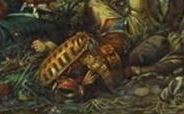
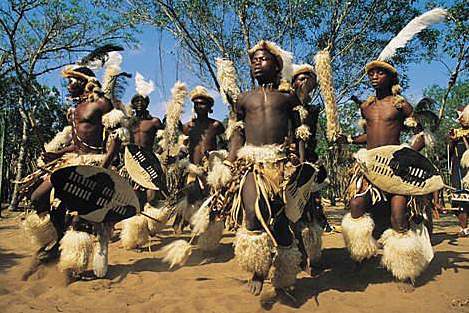
I am told the image represents the terrain at Little Big Horn reasonably well, though some question its depiction of the soldier’s uniforms, the lack of guns among the Sioux, and of course Custer’s heroic posture in those final moments is open to more than a little doubt. What makes this image a truly golden bit of absurdity, however, would have to be the Indian shields.

…just a little off.

???????????????????????????????????????????????????????????????????????????????????????????????????????????????????????????????????????????????????????????????????????????????????????????????????????????????????

hm…

???????????????????????????????????????????????????????????????????????????????????????????????????????????????????????????????????????????????????????????????????????????????????????????????????????????????????

hmmm again!

shakazulu4

Ahem!

71.271549 -156.751450

Share this:

  • Tweet
  • Share on Tumblr
  • Click to print (Opens in new window) Print
  • Click to email a link to a friend (Opens in new window) Email
  • Click to share on Reddit (Opens in new window) Reddit
Like Loading...

Sometimes the Story Tells You! A Few Comments on Narrative Scope and Survey Sedatives.

22 Friday Nov 2013

Posted by danielwalldammit in Education, History

≈ 15 Comments

Tags

American Indians, College, Dakota, Native Americans, Santee, Sioux Uprising, Story-Telling, Survey Texts, The Dakota Sioux Uprising

006When people introduce a given piece of information as “something you don’t learn in the history books” or “something they don’t teach in history class” I often find myself wondering if the individual in question really has read any history books lately?

I think these are comments that just roll off the tongue while someone thinks about what they are going to say next. When I hear what they do say next, as often as not I find myself thinking; “well I teach that,” or even “Hell, that’s right in my textbook!” Sometimes I even find myself thinking; “Every teacher I’ve ever had and every textbook I’ve ever used teach that very thing you numbskull!”

Just kidding; I don’t actually use the word ‘numbskull’ in my internal monologues.

The kind of history-bashing that I am talking about almost always involves old yarns long since unraveled by the majority of historians out there. Just to provide one example, most of the myths about Columbus fall under this heading. I don’t think I’ve ever had a teacher present the classic myth of Columbus discovering America or proving the world is round, at least not without including some form of ironic commentary. I can think of numerous instances where the critique didn’t go far enough, but even my second grade teacher in a conservative lily-white community way back in the 70s made a real effort to debunk some of the standard Columbian themes. My American history textbooks don’t present the classic Columbus myths and my world history textbook even has a small section about the invention of those very myths. Yet, I still hear people preface the standard critique of Columbus with the pretense that we are about to take on the entire history profession just by listening to them.

I get a little tired of it.

***

This isn’t to say that I don’t have my own complaints about the state of the art in teaching history, and especially about textbooks. It’s a rare day that an encounter with any given survey text doesn’t leave me in tears, or at least put me to sleep, and I regard it as poetic justice that I will forever be teaching introductory classes where these instruments of torture seem to be a staple crop.

The problems that plague survey texts are generally a bit more subtle than Sunday morning historians would have it, however, and those problems are often difficult to resolve without asking students to do more than most wish to. The inaccuracies of history texts aren’t always due to fundamental misunderstanding; they often seem to be the result of narrative choices, choices often dictated by the nature of survey-text sedatives.

Case in point?

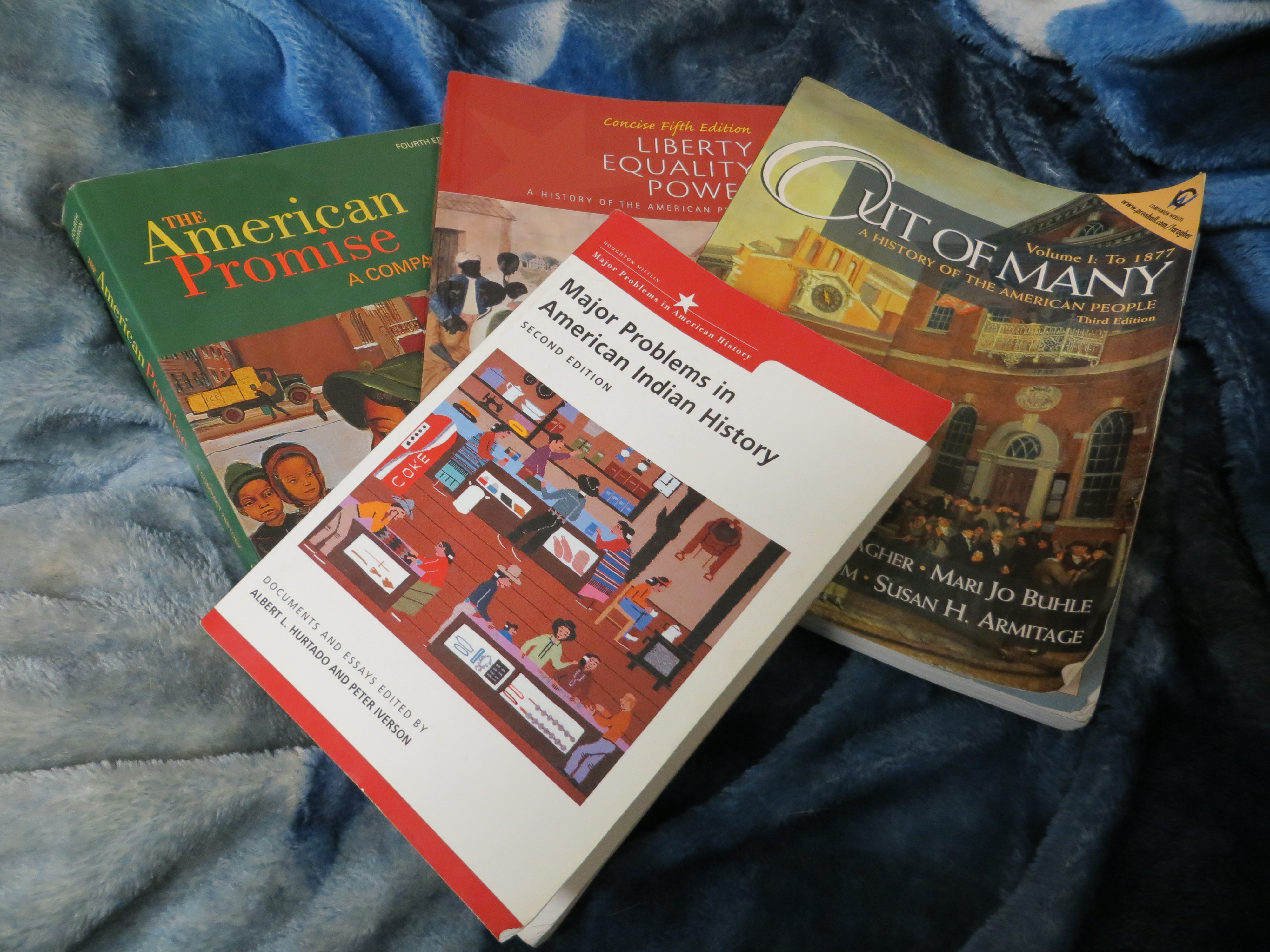
I use a reader for my Native American History class, Major Problems in American Indian History. It contains both primary documents (those produced by actual participants and witnesses in various stages of history) and interpretive essays. One of those essays in this text, “The Dakota Sioux Uprising, 1862” by Gary Clayton Anderson, presents a wonderful glimpse into the internal conflicts associated with this event. In this article Anderson takes on a terrible event in the history of Indian-white relations, one in which a number of atrocities were committed against non-native civilians, including women and children. If one were of a mind to tell such stories, this event could easily be the classic ‘Indian massacre’ that haunts the background of virtually the entire western genre in both film and literature. The uprising certainly contains enough frightful particulars to transform any narrative into a genuine nightmare. In fact Stan Hoig makes a point to suggest fears of a similar outbreak helped to explain the actions of officials in Colorado during the events prior to Sand Creek.

Note: I said prior to Sand Creek; Chivington and his men are a special kind of evil, but that’s a rant for another day.

In Anderson’s view, the uprising is a complex story in which various factions within the Dakota (otherwise known as Santee Sioux) square off against various factions of outsiders. As hunting became impossible, and rations promised by the U.S. government failed to appear, the prospect of starvation became inextricably mixed with questions about ways of living (farming versus hunting) and relations with outsiders. Some Santee had taken up farming; others wanted to resume (or take up) hunting as a primary means of subsistence. Significantly, many of those who had taken up farming had established connections (even marital relations) with local whites. So, the Santee population included a substantial ‘mixed blood’ population, and the local whites included many who had established ties to the tribe, some of which rose to the level of fictive (adoptive) kin ties.

Without going too much further down this rabbit hole (interesting as it is), Anderson does an excellent job of putting the violence of the outbreak in the context of all these factions. He argues that those perpetuating the violence were trying to pull their own community towards hunting as a way of life while punishing those whites they regarded as responsible for their own situation. Mixed bloods and whites with clear ties to Santee were generally spared (with some Santee going to great lengths to protect such people), and significant factions of the Santee pressed to end the fighting. Rivalries between those pressing the fight (which included a conflict over the question of whether to attack civilians or focus on military targets) and those seeking to end the fighting rose to the scale of potential intra-tribal warfare. Indeed, the actions of Santee opposed to the fighting helped to bring an end to the fighting.

One read through this article, and the simple narratives for this uprising go right out the window.

***

So, what do the survey texts in American History classes have to say about all this? Well let’s look at a couple of them…

I used to use a textbook called Out of Many: A History of the American People by John Mack Faragher, et. al. The third edition of this book has the following to say about these events:

Elsewhere in the West, other groups of Indians found themselves caught up in a wider war. An uprising by the Santee Sioux in Minnesota occurred in August of 1862, just as McClellan conceded defeat in the Penninsular campaign in Virginia. Alarmed whites, certain that the uprising was a Confederate plot, ignored legitimate Sioux grievances and responded in kind to Sioux ferocity. In little more than a month 500-800 white settlers and an even greater number of Sioux were killed.  Thirty-eight Indians were hanged in a mass execution in Mankado on December 26, 1862, and subsequently all Sioux were expelled from Minnesota. In 1863, U.S. Army Colonel Kit Carson invaded Navajo country in Arizona…

Let’s look at another text called Liberty, Equality, Power: A History of the American People (Concise Fifth Edition) by John M. Murrin, et.al. This book has the following to say on the subject:

The civil war set in motion a generation of Indian warfare that was more violent and widespread than anything since the 17th century. Herded onto reservations along the Minnesota River by the Treaty of Traverse des Sioux in 1851, the Santee Sioux were angry in the summer of 1862 that annuity payments did not arrive, threatening them with starvation. Young warriors began to speak openly of reclaiming ancestral hunting grounds. Then on August 17, a robbery in which five white settlers were murdered opened the floodgates. The warriors persuaded Chief Little Crow to take them on the warpath, and over the next few weeks at least 500 white Minnesotans were massacred.

Hastily mobilized militia and army units finally suppressed the uprising. A military court convicted 319 Indians of murder and atrocities and sentenced 303 of them to death. Appalled, Lincoln personally reviewed the trial transcripts and reduced the number of executions to 38, the largest act of executive clemency in American history. The government evicted the remaining Sioux from Minnesota to Dakota Territory.

My current textbook, The American Promise: A Compact History, Fourth Edition by James L. Roarke, et. al. has the following passage on the uprising:

The Indian wars in the West marked the last resistance of a Native American population devastated by disease and demoralized by the removal policy pursued by the federal government. More accurately called ‘settlers’ wars’ (since they began with ‘peaceful settlers,’ often miners, overrunning Native American land, the wars flared up again only a few years after the signing of the Fort Laramie treaty. The Dakota Sioux in Minnesota went to war in 1862. For years, under the leadership of Chief Little Crow, the Dakota, also known as the Santee, had pursued a policy of accommodation, ceding land in return for the promise of annuities. But with his people on the verge of starvation (the local Indian agent told the hungry Dakota, ‘Go and eat grass’), Little Crow reluctantly led his angry warriors in a desperate campaign against the intruders, killing more than 1,000 settlers. American troops quelled what was called the Great Sioux Uprising (also called the Santee Uprising) and marched 1,700 Sioux to Fort Snelling where 400 Indians were put on trial for murder and 38 died in the largest mass execution in American history.

Anyway, that’s three texts. I have a couple more that don’t even mention this event, which is a little disturbing.

***

So, what do we get out of all this?

Well, first, you gotta love the way one book describes the event as the largest use of executive clemency in history and another describes it as the largest mass execution in American history. There is probably an interesting lesson in fact selection there, but the most interesting thing about that little point may well be that both facts seem to be part of the same story. In one text, that is a story of great mercy, and in the other it’s a story of slaughter, and neither story is contradicted by the facts (at least not at this level of detail).

Ah well, moving on…

The first thing that I would say here is that none of these texts paints the natives in an overtly negative light. These were not written with the intention of slandering the Santee and pleading the cause of manifest destiny after the fact, so to speak. Such narratives do exist, but I didn’t find them in my stack of survey sedatives. If anything, each of these narratives seems almost painfully to be pleading the Sioux’s case and working hard to ensure the reader understand they had their reasons, so to speak.

The distortions here are a little more subtle; most of them being a function of basic story telling technique. Simply put, the question here is one of peopling the story-line. Where Anderson talks about multiple factions in and around the Santee community, each of these authors is telling a story about whites and natives. When they choose to break that down a little, we get references to ‘warriors’ and to Chief Little crow. Gone is the conflict within the tribe between pro-war and pro-peace factions, the entire existence of mixed bloods, arguments about who should and who should not be killed, and especially the active opposition of some villages to participation in the fighting. The decision to spare some whites while killing others is nowhere on the horizon here. And of course the notion that Little Crow simply led his people ‘on the warpath’ (reluctantly or otherwise) simplifies the nature of his leadership as well as the politics of the uprising itself. None of these sub-themes can be worked into the narrative (or even envisioned within it), because the characters are not even in the cast. There is simply no place for them.

So, what do I expect? Pretty much this, actually. These are survey texts, and the authors are struggling here to get a complex story into a paragraph or two. This means simplification, even oversimplification. It seems to me that in each of these cases, the author has made choices based at least partly on the larger narratives in which this story fits. Where Anderson is telling the story of a specific event, each of the survey text authors is treating this as a moment in a larger narrative about Indian-white relations in the west. They identify the participants in the Santee Sioux uprising based on the characters already filling that larger narrative.

Of course one of the central ironies here is that having put an insufficient number of players on the stage, so to speak, each of the survey authors is then at pains to make understandable the actions of the fictional Santee tribe which has become responsible for these events. Unable to assign specific actions to specific agents in the story, these authors must then work to keep us from walking away with a great big anti-Santee bottom line. But that bottom line is precisely a function of the narrative decisions they have already made. If we knew more about who was doing what and why, that impression would have no place to creep into the story, but we don’t. In the end, I suspect that anti-Santee bottom line will be the take-away for so many students, no matter how many sympathetic comments an author works into the text. In the larger story of American growth, the Santee can’t help but appear as an obstacle to that growth. You can make them sympathetic, but the only way to make them something other than an antagonist is to change the larger story altogether. Nothing done within the space of a couple paragraphs is going to work.

But a couple paragraphs are all the Santee uprising are going to get in the average textbook.

Now, just imagine that same kind of trade-off in every paragraph of virtually every page (side-bars excepted) of every history text out there. So, you see, this isn’t a problem of what is and isn’t taught; it’s a problem of how it’s taught. Many of these stories are just begging to be forgotten. You can see it in the way they are written.

Enjoy your reading kids!

71.271549 -156.751450

Share this:

  • Tweet
  • Share on Tumblr
  • Click to print (Opens in new window) Print
  • Click to email a link to a friend (Opens in new window) Email
  • Click to share on Reddit (Opens in new window) Reddit
Like Loading...

Unommonday – The Fightin’ Whities!

11 Monday Nov 2013

Posted by danielwalldammit in Native American Themes, Uncommonday

≈ 3 Comments

Tags

American Indians, Basketball, Native Americans, Sports, Sports Mascots, The Fighting Whites, The Fighting Whities, University of Northern Colorado

fightinwhitesSince sports mascots are on the public mind once again, I thought it might be a good time to post my all-time favorite team. Mind you, I don’t follow sports. When people talk about sports, to me it sounds a lot like the adults in a Peanuts cartoon. When a game is on the tube, I just see a blue screen. And I must say that I have never seen these guys play, nor do I know anything about their record. I just know the name of the mascot for an intramural basketball team at the University of Northern Colorado: It’s ‘The Fightin’ Whites’, or the ‘fightin’ whities’ as they were more popularly known. Their motto was “Every thang’s gonna be all white.” And just in case the ironic tone isn’t clear, let me point out that the school used sales of team merchandise to fund an excellent scholarship program for Native American Students.

71.271549 -156.751450

Share this:

  • Tweet
  • Share on Tumblr
  • Click to print (Opens in new window) Print
  • Click to email a link to a friend (Opens in new window) Email
  • Click to share on Reddit (Opens in new window) Reddit
Like Loading...
← Older posts
Newer posts →

Top Posts & Pages

  • Master and Commander Kinda Queered
    Master and Commander Kinda Queered
  • Uncommonday Morning Blues - Ian Anderson Learns to Play the Flute
    Uncommonday Morning Blues - Ian Anderson Learns to Play the Flute
  • Uncommonly Slow on the Uptake
    Uncommonly Slow on the Uptake
  • A Joke from a Bygone Era
    A Joke from a Bygone Era
  • When Sex Falls Out of the Performance
    When Sex Falls Out of the Performance
  • An Uncommon Security Guard: Dave Eshelman, AKA 'John Wayne'
    An Uncommon Security Guard: Dave Eshelman, AKA 'John Wayne'
  • I'll Just Leave This Here
    I'll Just Leave This Here
  • What are the Necessities of Life?
    What are the Necessities of Life?
  • An Uncommon Request
    An Uncommon Request
  • The Murals of Española
    The Murals of Española

Topics

  • Alaska
  • Animals
  • Anthropology
  • atheism
  • Bad Photography
  • Books
  • Childhood
  • Education
  • Gaming
  • General
  • History
  • Irritation Meditation
  • Justice
  • Las Vegas
  • Minis
  • Movie Villainy
  • Movies
  • Museums
  • Music
  • Narrative VIolence
  • Native American Themes
  • Philosophy
  • Politics
  • Public History
  • Re-Creations
  • Religion
  • Street Art
  • The Bullet Point Mind
  • Travel
  • Uncategorized
  • Uncommonday
  • White Indians
  • Write Drunk, Edit Stoned

Blogroll

  • American Creation
  • An Historian Goes to the Movies
  • Aunt Phil's Trunk
  • Bob's Blog
  • Dr. Gerald Stein
  • Hinterlogics
  • Ignorance WIthout Arrogance
  • Im-North
  • Insta-North
  • Just a Girl from Homer
  • Multo (Ghost)
  • Native America
  • Norbert Haupt
  • Northwest History
  • Northy Pins
  • Northy-Tok
  • Nunawhaa
  • Religion in American History
  • The History Blog
  • The History Chicks
  • What Do I Know?

Archives

  • December 2023
  • November 2023
  • June 2023
  • April 2023
  • February 2023
  • December 2022
  • November 2022
  • October 2022
  • September 2022
  • August 2022
  • July 2022
  • June 2022
  • April 2022
  • January 2022
  • December 2021
  • November 2021
  • October 2021
  • September 2021
  • August 2021
  • June 2021
  • May 2021
  • March 2021
  • February 2021
  • January 2021
  • December 2020
  • November 2020
  • October 2020
  • September 2020
  • June 2020
  • May 2020
  • March 2020
  • February 2020
  • January 2020
  • December 2019
  • November 2019
  • September 2019
  • August 2019
  • July 2019
  • June 2019
  • May 2019
  • April 2019
  • January 2019
  • December 2018
  • November 2018
  • October 2018
  • September 2018
  • August 2018
  • July 2018
  • June 2018
  • May 2018
  • April 2018
  • March 2018
  • February 2018
  • January 2018
  • December 2017
  • November 2017
  • October 2017
  • September 2017
  • August 2017
  • July 2017
  • June 2017
  • May 2017
  • April 2017
  • March 2017
  • January 2017
  • December 2016
  • November 2016
  • October 2016
  • September 2016
  • August 2016
  • July 2016
  • June 2016
  • May 2016
  • April 2016
  • March 2016
  • February 2016
  • January 2016
  • December 2015
  • November 2015
  • October 2015
  • September 2015
  • August 2015
  • July 2015
  • June 2015
  • May 2015
  • April 2015
  • March 2015
  • January 2015
  • December 2014
  • November 2014
  • October 2014
  • July 2014
  • June 2014
  • May 2014
  • April 2014
  • March 2014
  • February 2014
  • January 2014
  • December 2013
  • November 2013
  • October 2013
  • September 2013
  • August 2013
  • July 2013
  • June 2013
  • May 2013
  • April 2013
  • March 2013
  • February 2013
  • January 2013
  • December 2012
  • November 2012
  • October 2012
  • September 2012
  • August 2012
  • July 2012
  • June 2012
  • May 2012
  • April 2012
  • March 2012
  • January 2012
  • December 2011
  • November 2011
  • October 2011

My Twitter Feed

Follow @Brimshack

RSS Feed

  • RSS - Posts
  • RSS - Comments

Enter your email address to follow this blog and receive notifications of new posts by email.

Join 8,076 other subscribers

Blog at WordPress.com.

  • Subscribe Subscribed
    • northierthanthou
    • Join 8,076 other subscribers
    • Already have a WordPress.com account? Log in now.
    • northierthanthou
    • Subscribe Subscribed
    • Sign up
    • Log in
    • Report this content
    • View site in Reader
    • Manage subscriptions
    • Collapse this bar
 

Loading Comments...
 

    %d