• About

northierthanthou

northierthanthou

Tag Archives: Racism

So, Adam Sandler, Yeah…

27 Monday Apr 2015

Posted by danielwalldammit in Movies, Native American Themes

≈ 15 Comments

Tags

Adam sandler, American Indians, Film, Humor, Indians, Movies, Racism, Satire, Westerns

adam-sandlerBy now the story is pretty well known. A number of Native Americans recently walked off the set of an Adam Sandler movie (The Ridiculous Six) citing offensive jokes as the deal-breaker triggering their decision to leave. Most had been cast as extras, but the group also includes a cultural consultant hired for the film. Other sources have detailed the story better than I could, but let’s just get a few of their objections on the table so we all know what we’re talking about:

– The Indians in the movie are supposed to be Apache, but their outfits and material culture generally represented in the film would seem better suited to Comanche (and that not too accurately there either).

– The movie used offensive names for female characters. “No Bra” and “Beaver Breath” come to mind. “Sits-On-Face” was apparently in the script at one point.

– Come to think of it, the movie gives men offensive names too, “Five hairy Moles,” and “One Eyebrow,” for example.

– In the movie a woman is supposed to squat to pee at some point while smoking a peace pipe.

– The extras found a feather arrangement on a teepee inappropriate.

– In the movie, Adam Sandler is supposed to utter the line; “Say honey: how bout after this, we go someplace and I put my pee-pee in your teepee?”

…you get the idea.

I certainly hope that I don’t have to explain why any of this would be offensive. The question is of course what to make of that offense? Someone is almost always the butt of a joke, and so it sometimes seems arbitrary when a particular set of jokes like this one draws a vehement response. Those with little or no connection to the offended group are often that much more mystified, because they simply don’t understand all the implications, and it can be damned tempting to pass the whole thing off as political correctness.

The notion that these extras (and those who support them) are just being too damned sensitive about the whole thing is rolling rather predictably out in various tweets and blog posts. A spokesman for netflicks reportedly characterized the film as ‘broad satire’. Breitbart News carried that theme even further, denying that satire could be disrespect in any context and congratulating the film crew for standing their ground in the face of an overly sensitive group of extras. Sandler’s camp appears to have adopted the stance that his movie is meant to be all in good fun, and that it’s full of low-brow humor to begin with. One of the cast, Vanilla Ice, for example assured us that Sandler is not trying to make something on par with Dances With Wolves. So, it seems we in the public are supposed to give Sandler a pass, because he is just joking.

I’m usually pretty open to raunchy humor, but I find it very hard to imagine a context in which the jokes mentioned above would be anything other than toilet humor fit for a five year old.

…and let’s be clear. there is another context to consider here. For those of us who haven’t seen the film, it’s difficult to assess the context behind the jokes, but for those of us who haven’t lived lives as Native Americans, it’s hard to say what the overall context of life is for determining how these jokes must feel.

Context is a two-way street.

No, actually, it’s more like a giant roundabout with a lot of busy traffic.

The question here is just what makes these jokes funny to begin with (at least for those that find them funny)?  It’s easy enough to say that a name like “Beaver Breath” is just a joke, but is there really any reason to suppose that joke doesn’t turn on a point of prejudice? These names don’t appear to be an in-joke, and they don’t turn any non-native prejudice on its head. They reflect little other than the sensibility of a child snickering at someone different. These jokes turn that difference into an object of brutal and straight-foreword mockery. and there is simply nothing in the accounts given so far to suggest that the target of this humor is anything other than Native American naming practices themselves. If this is satire, it is indistinguishable from racist propoganda.

That the jokes in question may be delivered with a congenial smile doesn’t change the fact that this humor is at face value quite demeaning. Some people don’t even seem to know when they are insulting others; either that or they simply assume the right to do so without being called to account for it.

This is why the claim that The Ridiculous Six is all just satire fails. Oh yes, the movie may well be a satire, but whatever it’s satirizing, there is no reason to believe these jokes aren’t actually directed at the Native American community.

There is nothing in these jokes that suggests familiarity with their own subject matter, much less appreciation for the people close to it. This is why the costumes matter, not because the movie was meant to be historically accurate, but because knowing the difference between Apache dress and Comanche dress might have communicated at the trace of a capacity to give a damn. When such things become too much to ask, the benefit of the doubt slips out the door. And when those who raise the issue, as these extras did, are told by a producer they are being overly sensitive and they should leave, well that pretty well slams the door shut altogether. If there was any chance this humor could have reflected anything other than outright prejudice, the treatment these extras received on the set would appear to have set that prospect to rest.

…which puts the claim that no offense had been intended in this script in an awkward light. It would appear to mean little other than that Native Americans themselves are not supposed to take offense at such things. Sandler and company have produced a highly offensive script, and when called on it, they have done little other than to beg others not to see the plain point of their own jokes. In effect, they have put the responsibility for the insult on those that have called attention to it (which is an awful lot like the strategy taken by Dan Snyder and the Washington football team). in effect, they blame those they insult for knowing they have been insulted. Does that rhetoric sound familiar? It should. This is of course precisely why conservative culture warriors are beginning to weigh in. It isn’t that they don’t know the movie is offensive; the folks at Breitbart for example are defending it precisely because they know that it is.

It’s easy to dismiss Sandler himself. He has often (almost always) presented himself in a rather juvenile manner. His characters are often simpletons, and the humor they produce is accordingly full of foolishness. When this fails, as it often does, Sandler leaves behind more than a trace of disappointment in the jokes. He also leaves us with that slightly creepy feeling that we’ve seen too much of someone’s personal baggage. Still, the man is capable of outstanding humor, often using this very approach. I do recall some brilliant moments in Sandler’s career; Lunch Counter Lady and The Hanakka Song come to mind. I don’t exactly pine for new examples of his work, but I can honestly say that he has brightened my day once or twice over the years. I say this, not because I feel like defending the man at the moment, but because I think it’s important to note that he is at least capable of doing something better than this.

Unfortunately, the man is also capable of turning out utter trash. Case in point, putting a peepee in a woman’s teepee. Try as I might, I cannot find any context in which that line reflects anything but the crudest sensibilities of a petulant child. Reading about this, I can’t help thinking Sandler has gotten entirely too comfortable passing the naughtiest jokes of the playground off as professional comedy. I for one hope that he will take a lesson from his extras, and try once again to produce comedy worth watching.

***

Postscript: I noticed an interesting pattern in this video showing the conversation, the film-makers continually insist that the movie is sympathetic to the Native American characters. Why? Because Adam Sandler’s character loves them.

Speaking of Dances With Wolves…

Suffice to say the notion that respect for Native American characters rests on little other than the values of a non-Native character would be ironic at best.

Actually ‘perverse’ is more like it.

Share this:

  • Tweet
  • Share on Tumblr
  • Print (Opens in new window) Print
  • Email a link to a friend (Opens in new window) Email
  • Share on Reddit (Opens in new window) Reddit
Like Loading...

RedskinsFacts Does the Meta-Hypocrisy Shuffle

15 Sunday Mar 2015

Posted by danielwalldammit in Native American Themes, Politics

≈ 1 Comment

Tags

Football, Frank Baum, Glenn Beck, Hypocrisy, Oneida, Propaganda, Racism, Recursion, Washington redskins

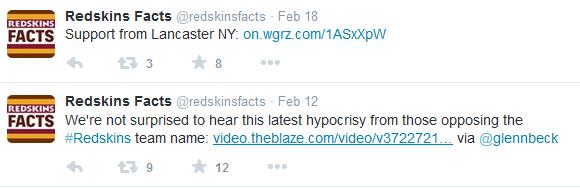
Redskinsfactsagain

(Click to Embiggen)

The accusation of hypocrisy can be a very effective means of facilitating the same. Case in point? This little gem from Redskinsfacts.com. I hesitate to post it, because the link will take you to Blaze TV, which is Glenn Beck’s little neck of the net, but well… professional bigots must at times be answered, even if it means giving petulant children more attention than they deserve.

Glenn Beck is in rare form in that video, trying to turn “What’s up my Cracker?” into a thing. It is neither clever nor insightful, though I suppose he thinks it some sort of social commentary. What his use of the phrase does do is help us understand that some folks never outgrow the adolescent desire to piss off the adults in the room, and that those people frequently find their way into the heart’s and minds of those addicted to right wing political porn. You can also hear some bizarre comments about Hitler’s non-existent children in that video along with something about an alleged apology for his actions. There is nothing in the clip to suggest that Beck and company know this little trip through Godwin’s Law is utter bullshit. Rather, they appear to figure this narrative is true, because, well that’s what must have happened, right?

…which is pretty much how history works in the world of Glenn Beck.

All that aside, Beck’s main point (to the extent that he has one) is that the Oneida Nation of New York is building a casino to be named after The Wizard of Oz. What makes this disturbing is its author’s history of racism. L. Frank Baum advocated the complete annihilation of Native Americans. yes he did. They are right about that. Beck and Company find it absurd that a tribe which has been critical of Washington’s football team would honor the work of a racist. In fact, they find it quite hypocritical.

As you can see above, so do the folks at Redskinsfacts.com.

It pains me to say this, but they do have a point. Whatever the merits of The Wizard of Oz in literature, cinema, or simply marketing strategies, it’s difficult to explain why any Native American community would want to be associated with Baum’s work. We could debate the exact equivalent of naming a casino after a work done by an author whose also expressed racist views and the use of a name that directly perpetuates racist stereotypes with every mention made of it throughout the entire football season, but some might think that was splitting hairs (or giant redwood trees, …whatever!). At the end of the day, they do have a point; this is a problem.

Of course the problem doesn’t end there. Inconsistencies abound in politics, and one can hardly point at the second face of someone else without raising questions about his own self-presentation. Beck and company aren’t really trying to get the tribe to drop its plans for a casino named after Baum’s work, and they are certainly uninterested in spreading the word about Baum’s racism. No, this is an opportunistic moment for them, a chance to seize on a misstep by those who threaten their world in some tiny way. Beck and company are defending the name of the Washington football team, and that team is thoroughly invested in racism at every level of its organization. The Oneida Nation of New York could easily reconsider its pans (and let us hope they do), but a change of the Washington team’s name would require re-branding on a scale unimaginable to some folks. If this is a tale of two racisms it is a tale in which one of them is a Hell of a lot more important than the other. Beck and company know this, and they are hoping their audience doesn’t. As explained by one of Beck’s talking heads, the name of the team has always been used to honor Native Americans.

…he is of course lying.

It’s interesting to watch Beck and company run through the motions of pretending to discuss the issue as one of his talking heads plays good cop to the other guy’s bad cop. His sole effort in defense of the Oneida is to remind us of Washington Team’s name and to add that they are playing football. That’s it. That’s what Beck and company offer to speak for the case against the Washington team’s name. And of course they move on to suggest that the Oneida must be trying to accomplish something secret in attacking the team name. Bad cop can’t quite tell us what that is, and of course he’s somehow forgotten all the other Native Americans who also oppose the team name, but he can probably rely on most of Beck’s audience to forget this as well. Ultimately, the bottom line in this segment is a clear defense of the Washington Team by mans of a simple tu quoque fallacy.

If Beck and company say “what about you” loud enough, they hope everyone will forget about their own politics and those they hope to support through segments like this.

This is of course also the only reason the folks at Redskins Facts bring it up as well. They too are not the least bit interested in saving any indigenous people from exposure to the racist views of L. Frank Baum. They merely hope to embarrass a political enemy by pointing out the inconsistency of linking themselves to the work of a racist while opposing their own team name. They are right to the extent that there is an inconsistency in this, but that inconsistency stands like a mirror reflection of their own agenda. They hope to deflect attention from the racism saturating their own politics by calling attention to the hypocrisy of one of their principle critics. In doing so, they themselves become hypocrites themselves, and their sole hope is that no-one will notice the reflexive nature of the problem.

We can well ask if the Oneida should be building this casino while opposing the name of the Washington football team. We can also ask if RedskinsFacts.com, Glenn Beck, and all his talking heads ought to be complaining about what an Indian tribe chooses to name its casino while defending a sports team with an explicitly racist name?

I’m guessing the better answer is ‘no’ on both counts, but then again, we all know we won’t be getting that kind of answer from the folks pushing this story any time soon.

Share this:

  • Tweet
  • Share on Tumblr
  • Print (Opens in new window) Print
  • Email a link to a friend (Opens in new window) Email
  • Share on Reddit (Opens in new window) Reddit
Like Loading...

It’s the Disinformation Charlie Brown

05 Wednesday Nov 2014

Posted by danielwalldammit in Irritation Meditation, Politics

≈ 13 Comments

Tags

Democrats, Ethnicity, GOP, History, Peanuts, Race, Racism, Red Herring, Whitsplaining

BQiZ-CdCUAAcJsVI came across this D-Nuts bit last night. It’s not the first time I’ve seen it, but what the Hell? This time I thought I’d take a moment to bloggetize a comment or two on the matter. What’s interesting about this piece, you may ask?

We could start with the most obvious game that’s being played here. On one level it is simply a red herring. A claim about the present-day Republican Party has been answered with a series of claims about the history of the GOP and the Democrats, thus substituting a question about what each HAS BEEN for an argument about what each IS today.

Taken at face value, this red herring contains another problem, a seriously convenient omission of historical information, namely the shift in voting patterns over the 20th century culminating in the famous “southern strategy” of Richard Nixon. Simply put, an awful lot of southern conservatives switched parties over the years since the founding of the GOP and of the KKK. It’s tempting to say that a number of them did so precisely because they saw the modern GOP as a better vehicle for their own racist agenda. In any event, the shift has left both parties flip-flopped on civil rights and the proper balance of federal and state authority. There are some other factors besides race at work here to be sure, but a number of GOP leaders have made conscious appeals to racist sentiments over the years and the results have been quite striking.

So, is it fair to say that the GOP is racist?

I could see reasonable arguments against an affirmative answer. Those arguments do not rest on a conveniently incomplete account of history.

Even still, I can’t help thinking the best (worst) part about this cartoon is just how well its content fits with its intended purpose. Here we have Charlie Brown whitesplaining the topic of racism to Franklin, the one black character in Peanuts. Franklin is clueless in comparison to Charlie’s wisdom. The cartoonist has him reacting with a stubborn inarticulate refusal to see Charlie’s point or even to engage the argument in any meaningful way. He just sticks to his position as if incapable of grasping the issues at hand. He is in effect simply playing the so called race card without any substantive reasons for doing so. The GOP isn’t racist, so the cartoon would have us believe, but apparently it takes a white person to understand that.

…a message which would probably come as no surprise to Franklin.


Share this:

  • Tweet
  • Share on Tumblr
  • Print (Opens in new window) Print
  • Email a link to a friend (Opens in new window) Email
  • Share on Reddit (Opens in new window) Reddit
Like Loading...

A Troubled Tale of Two Racisms and the Floundering Efforts to Oppose Them

12 Thursday Jun 2014

Posted by danielwalldammit in Justice, Native American Themes

≈ 17 Comments

Tags

discrimination, Frybread, Power, prejudice, Privilege, Racism, Reverse Racism, Rhetoric, Social Constructivism

lThis wasn’t the first time I felt unwelcome at the mutton stand. In fact, it was the second time this server had ignored me while serving other customers. Just like the first instance, I initially assumed it was an accident, or at least that she had some other reasons for avoiding me, but slowly I started to wonder if it was my color. White people were not entirely foreign to these markets, but the vast majority of folks frequenting these stands were certainly Navajo. And it was beginning to look increasingly like this particular woman had no intention of doing business with me at all.

…which really sucked, because these guys made the best roast mutton in Window Rock!

What to do about it? In my younger days, my social tool kit was long on hammers and short on other options. I had enough sense to realize vocal complaints about unfair treatment of a bilagáana might go down poorly, but not enough subtlety to think of alternative ways to address the matter. As it happens, I didn’t need to think of anything to say. The other customers did it for me. A chorus of “He’s next!” greeted the woman’s next efforts to pass me by, some of their voices tinged with a sense of real irritation. I got my roast mutton that day. More than that, I felt a sense of reassurance. Although resentment of whites could be found in many varieties out on the Navajo Nation, so could a certain sense of fairness. On this day that sense of fairness won out and I got my mutton.

***

Let me start by admitting up front that I could have been wrong about the motivations of the woman who didn’t seem to want to serve me. Perhaps I read the whole thing wrong, and maybe my own behavior had somehow triggered her actions. Hell, maybe I really shouldn’t have been eating there in the first place. All this is quite possible, but I am going to ask you, dear reader, to accept for purposes of argument, that this was an instance of a Navajo woman treating me different (a little bit badly) because of my ethnicity. I think it is also an instance in which the members of her own community found this to be unacceptable behavior.

So here is the question, did I experience racism?

No, that’s not the question.

My real question is how do you go about answering that first question?

It seems to me that at least two radically different approaches to answering that question have become rather common these days, and it is getting more and more difficult for people using these different approaches to talk to each other about the matter. One way of going about it, which I will call the conventional approach (perhaps for no better reason than that it is the approach I grew up with) would be to raise questions about the motives and attitude of the woman who didn’t seem to want to serve me. Granting a certain range of answers about what she had in mind, someone taking this approach would say ‘yes’ I had been subject to racism. Another approach (let’s call it the social constructivist approach) is more common these days in academia and left wing politics in general. From this standpoint, it is best to inquire into the social power of the parties involved and then see how they use that power in respect of one another. Those adopting this approach might also want to expand consideration beyond the mutton stand to the larger patterns of history and contemporary politics. In most cases this approach would lead to an answer of ‘no’ to my first question, or even a ‘hell no’, perhaps with an additional lecture on the privilege of living in a world where slow service at a mutton stand is a moral outrage worthy of remembering nearly two decades later.

***

Okay, so let’s do this…

In the conventional approach, racism is a question of personal judgement and motivation. Racism consists in treating someone different on account of their race, and since all manner of people can do this, anyone can clearly be racist. The possibility of ‘reverse racism’ as it is commonly called is obvious enough with the only real questions being about whether or not this or that particular event illustrates some variety of reverse discrimination. Using this approach (and assuming I wasn’t missing something important), it is quite possible to affirm that I was subjected to racism on that day.

On it’s face, the conventional approach seems a perfectly reasonable take on the subject. People often use it to advance a genuine sense of moral obligation regarding how one ought to treat others, and by people here I do mean all kinds of people. Folks from all sorts of different backgrounds can and do frequently advance the notion that one ought not to treat people differently (or at least badly) on account of their race. This does strike me as a good thing, but the question is whether or not this is an adequate response to the problem of racism.

First and I think foremost, the problem with this approach is that it flattens the significance of discriminatory behavior, putting the denial of a mutton sandwich in much the same boat with minstrel shows, segregated schools, legacy contracts, Japanese internment, involuntary sterilization, lynching. and even the Holocaust. Hell, I  felt a little nausea myself putting my mutton-stand story in the same sentence with all those things, but the absurdity of that comparison is precisely my point. Addressing racism as an issue of personal motivation doesn’t do much to help us understand the difference between petty gestures and genuine atrocities. It isn’t that people can’t understand that there is a difference, but this approach to countering racism creates a fashion of speaking about them which tends to put them all on equal footing, at least for a moment. If we then want to talk about the differences between a simple affront and something that genuinely oppresses whole groups of people, then that talk falls somewhere over and above the problem of racism.

Unfortunately, there is ample evidence that large numbers of people never get out of that fashion of speaking about racism, that large numbers of people never really get the difference between a lynching and an expression of petty personal bias. Indeed, some folks seem prepared to recognize racism only if it is first prefaced with ‘reverse’. Time and again, advocates of social justice find their concerns drowned out by talk of reverse racism and stories in which the under-privileged prove themselves ironically capable of being the bad guys too.

…and in the ultimate poetic injustice, being discriminated against too, becomes the exclusive cultural capital of the privileged.

Don’t laugh. A few pundits have become filthy rich working that very angle.

It is no wonder that persons of color and their political allies often want to do away with this fashion of speaking about racism altogether. The conventional approach to racism is, as many seem to suggest, a well far too poisoned with all this talk of reverse discrimination to be of any real use for understanding the larger issues of oppression and injustice  in the world today. So, many of those interested in such issues have chosen to define racism as something that requires not merely prejudice but the social capital to put that prejudice into play with real and devastating consequences. Racism is from this point of view an expression of power, not merely an individual act, whatever its motivation. This is what I mean by a Social Constructivist approach. It’s a clunky phrase, and a grad-school cliché, but what the hell!?! It works.

It isn’t that people advocating the social constructivist approach don’t think minorities can be jerks; but they don’t see the myriad stories minority jerkitry as a meaningful part of the story of racism. From this standpoint, my mutton-stand story is simple a non-starter. The problem isn’t just the scale of harm (or the lack thereof); such stories are from this point of view a genuine distraction from the central issues of oppression that should be the focus of concerns about racism. It’s easy enough to get the problem with such stories in this kind of loose narrative; the problem comes in when people start trying to explain why such stories are as a matter of principle unimportant to the issue of racism.

Often folks taking the constructivist approach will say something to the effect that racism is about power and since minorities don’t have the power, they can’t be racist. This has always struck me as a terrible oversimplification, and I could only wish it were a straw man, or that its use were limited to less educated circles. But it isn’t.

To me, the core problem here is that the argument uses an awfully ham-handed sense of social power. We can talk of people having more or less power, but the notion that whites have all the power and minorities absolutely none of it is bordering caricature. For one thing, it doesn’t take a lot of power to hurt someone, and it is one of the perversities of racism that it may from time to time offer those whom it keeps from real opportunity the consolation of petty revenge against some unlucky fellow. Whether it is a personal punch in the mouth, a petty decision by a  boss, or a politician playing to his own base, there are plenty of persons of color quite capable of harming those of another ethnicity. One must also consider the possibilities of scape-goating other minorities, or even minority groups within their own community. And finally, there is no reason to expect that racism must always mean hurting those belonging to the race that someone hates. Often as not resentments directed at whole groups of other people precedes a shot to one’s own foot, so to speak. The kind of social power which makes racism a problem simply doesn’t rest only at one end of the spectrum, even if acknowledging that fact let’s an unwelcome foot in the door. Acknowledging the possibility that someone other than a white person might have the means to hurt people on the basis of race should not be difficult, but in short-hand politics, it seems many are happy to simply discount that possibility.

…which is definitely taking liberties with the facts.

It isn’t that an emphasis on social power means abrogation of minority responsibility to others, and I don’t think many people mean to suggest that; it’s that one of the aims of an emphasis on the social construction of power is to put harm to the underprivileged back in the center-spot of opposition to racism.

***

All of this leaves us with one very big problem as I see it. Speaking of racism as something that is by definition an expression of the privileged cuts so far against conventional approaches to the subject that it amounts to quitting the field in a sense, abandoning the larger public discourse. Unless I am underestimating the extent to which social construction has reached the popular consciousness, that approach (with its complete disclaimer of the possibilities of minority racism) is a bit too foreign for most people to comprehend. The reasons for such an approach are well known in academia, and in many circles of left-wing politics, but they aren’t sufficiently well known to guide public perceptions. So while those adopting a social constructivist approach can talk in limited circles as though only the ignorant or malicious would even think of describing racism as something a minority could do, large parts of the public take it for granted that it most certainly is, and that lunacy or at least dishonesty are the only reasons anyone would deny it.

The notion that minorities simply cannot be racist leaves a silence in the space where one would normally raise questions about rude, cruel, or even genuinely harmful actions by minorities. Often, advocates of the social constructivist approach will concede that sundry examples of such behavior are terrible; they might even suggest alternative words to describe them. I hear it time and again, the notion that racism just isn’t the right word for it, but what that word would be isn’t so clear. So, the more reasonable folks taking the social constructivist approach are not really trying to insulate minorities from criticism, but they are working hard to ensure that criticism is divorced from an important source of moral value, opposition to racism. Arguably, what is lost in this approach is simply too valuable, and like it or not, there are legitimate reasons for addressing questions about racially motivated behavior by minorities, reasons that cannot be reduced to the effort to drown pro-minority politics in a deluge of petty complaints by the well privileged.

In the end, denying the possibility of minority racism does not just silence those milking the reverse-racism angle for more than its worth, it also silences people with real concerns and sincere questions about ethnic relations. All too often, the right wing pundits are happy to fill that silence with the suggestion that lefties are just bigots in their on right and that this whole fashion of speaking is just another attack on white people. That may seem a cop-out to many advocates of the constructivist approach, but unfortunately the cop-out is mutual. An awful lot of folks are finding more and more ways to avoid talk to each other about this subject, and even to find ways of speaking really loudly while not really talking to each other about it.

It is extremely important to make a strong case for the significance of social power in the history and politics of racism, but that case poorly served by word games. As certain voices work very hard to ensure the public can’t tell the difference between affirmative action and Jim Crow, a large part of the public is unsure what to make of the issues. The difference must be explained, and yes, perhaps explained again, because those working reverse-racism molehills into great mountains will go right on doing so. They aren’t the  least bit phased to find that lefty scholars have adopted a way of speaking about the issue that side-steps their own gambit.

Far from it.

***

So, was I exposed to racism on that day so many years ago? Meh, …who cares? My real point is that I hear and read people talking about such questions in two very different ways, and more and more I meet people who seem completely incapable of bridging the gap between those ways of speaking.

It’s a problem.

***

Roast Mutton provided by a review of Sacred Hogan.


Share this:

  • Tweet
  • Share on Tumblr
  • Print (Opens in new window) Print
  • Email a link to a friend (Opens in new window) Email
  • Share on Reddit (Opens in new window) Reddit
Like Loading...

It’s Been a Good Week for Whitesplaining, Thank you Cliven Bundy and Dan Snyder!

26 Saturday Apr 2014

Posted by danielwalldammit in Politics

≈ 5 Comments

Tags

Bundy Ranch, Cliven Bundy, Dan Snyder, Nevada, Privilege, Racism, Redskins, Right Wing Echo Chamber, Whitesplaining

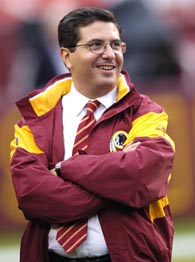
NFL Preseason - Cincinnati Bengals vs Washington Redskins - August 19, 2005I love the smell of Whitesplaining in the morning. Smells like, …privilege!

So, it’s been a good week for me, or at least for my guilty pleasures. One of the greatest joys of the week has been watching my usual qualms about lefty crit-speak vanish in a puff of “Oh yeah, that’s what that means!” See, I have to admit, I’m not always down with the use of ‘whitesplaining’, ‘privilege’, ‘objectification’ in critical commentary. Some might suggest my hesitation is just what you’d expect from a middle-class white guy, but I can’t help thinking these get a little overused at times.

But then Dan Snyder made a true believer out of me.

This miracle of clarity came on Tuesday a charity event in which he answered a few questions, …badly. According to the Associated Press, Snyder simply declared that the team name is “not an issue” and that people need to “focus on reality.” And lo! The matter was settled. If you are like me, you might be thinking that’s a neat trick. When people keep telling you they have a problem with something you’re doing, you just declare it isn’t an issue, and like magic, it simply isn’t. Teenagers everywhere should try that with their parents and teachers.

…or maybe not.

Of course Dan Snyder isn’t a teenager; he isn’t challenging authority. Given his wealth and his power, and that his primary critics here seem to be an underprivileged demographic, the man is speaking down the social scale in some sense, delivering a pronouncement from on-high, one that others will struggle to challenge. If Snyder’s ex cathedra pronouncement seems to work, it is precisely because he has the power to make the story stick, and that power does not come from the clarity of his personal insight or the cogency of his arguments.

This isn’t someone speaking truth to power; it’s someone speaking power in the face of truth.

But of course Snyder isn’t just playing privilege, he also has an argument. That argument has something to do with addressing real issues affecting the lives of Native Americans rather than the symbolic issues associated with mascot politics. As Snyder says; “The real issues are real-life issues, real-life needs, and I think it’s time that people focus on reality.”

Now this little gambit almost has promise. You could make a plausible argument out of prioritizing material needs over symbolic politics, at least some people could under some circumstances. So, this argument seems like it might have some legs. Of course those legs might take his cause further if Snyder weren’t busy laying down a hundred thousand dollars to help a high school team change their football field to field turf, this after bragging up some coats and part of a backhoe given to Native Americans. Those legs stop walking altogether when one considers that any effort to actually help people in their real lives does nothing at all to answer questions about the name of the team. As Keith Olberman pointed out, it is quite possible to do both. And those legs sit down and kick up their feet for a smoke break when one considers just how outrageous it is for a non-native to simply declare that he knows what the actual issues for Native Americans really are in direct opposition to the stated position of so many of them. Mind you, the man isn’t making a suggestion, fielding a question, or even respectfully submitting any thoughts for folks to consider. He simply declares his own command of the issues once and for all. …adding that he and his folks have done their homework, “unlike a lot of people.”

I wonder who Dan Snyder thinks those other people who haven’t done their homework would be? Could it possibly be the people whose lives he pretend to want to help? Could it be the very people he is talking about? So, yep. Dan Snyder thinks he can simply tell the world what the real problems are in Indian Country, all the while ignoring the input, comments, criticism, and vocal outrage from indigenous voices all over the country, not the least of them appearing on the pages of Indian Country Today.

If I had to give an example of whitesplaining, I think this might just be the first one that came to mind.

But of course Dan Snyder had competition this week from rural Nevada where rancher and Tea Party hero Cliven Bundy opted to tell us a thing or two about the ‘negro’. …yep. Of course some folks might not be surprised to find a man with odd thoughts about federal authority (and the lack thereof) also had odd thoughts about minorities, but I prefer to give folks the benefit of the doubt.

…at least while there is doubt.

Here’s the quick and dirty version:

Now some folks seem to feel this shortened version of Bundy’s remarks reflects an unfair edit, so they present a larger version of the clip showing a bit more of Bundy’s thoughts on different people. Here it is:

If you watch this longer version of Bundy’s remarks, you can see quite clearly that he is not trying to spread hatred of or prejudice against anybody. No, he just believes a lot of terrible things about African Americans, at least, and he doesn’t seam to see that those beliefs are offensive and harmful to the people he claims not to hate. Bundy’s comments reflect common stereotypes about African-Americans and somewhat less common musings about the potentially benign effects of slavery. They may not reflect the kind of strident racism one would expect of the KKK (though we might have our suspicions about a few of Bundy’s supporters), but Bundy’s remarks do reflect a casual racism that tends to show up in some circles a couple beers into a good BBQ.

What seems most striking about this to me is the role that minorities play here as an object of contemplation for Bundy and his many defenders. Minorities present to Bundy and casual racists everywhere a source of material, so to speak, one  tailor-made for commentary about where this damned world is going and where it really oughtta be. It’s a tired litany in which the real problems of the world can be found in the privileges of those with the least and with whoever is responsible for creating those imaginary privileges. Black folk aren’t the real evil of Bundy’s remarks. No, they are simply dupes of the Fed, fellow victims of big government who must be saved from it’s diabolical schemes. All the problems of the African-American community are thus subsumed under the interests of Bundy’s states’ rights agenda. They are simply one more reason to oppose big government, all for their benefit as well as his own.

The notion that the modern welfare state is just another form of slavery has been a favorite talking point of right wingers in recent years. It’s just one of the many ways in which the critique of welfare has long since jumped the shark in the echo chambers of America’s pseudo-conservatives and free market fundamentalists. So, I suppose it shouldn’t come as any real surprise to find Bundy reproducing this little yarn. It is a little bit of a surprise, I think, to find that people could be so thoughtless and so clueless about the realities of either slavery or social programs. The problem here is not malice (I will give Bundy supporters that much anyway); it’s ignorance, but it’s ignorance taken to 11.

One of the manifestations of that ignorance is a complete inability to conceive of minorities as anything but an object of casual consideration. Bundy’s past experiences are simply grist for the mill, anecdotes in a narrative about big government. The concerns, thoughts, and ideas of any actual minorities are quite absent from that narrative. So yet again, the key to minority problems turns out to rest in the hands of a random white guy whose principle concerns have little to do with them, who isn’t listening to them, and who has no real concerns for their welfare.

Like I said it’s been a good week for whitesplaining.

…and for nausea.


71.271549 -156.751450

Share this:

  • Tweet
  • Share on Tumblr
  • Print (Opens in new window) Print
  • Email a link to a friend (Opens in new window) Email
  • Share on Reddit (Opens in new window) Reddit
Like Loading...

An Uncommon Television Pilot – Black Bart

03 Monday Feb 2014

Posted by danielwalldammit in Uncommonday

≈ 3 Comments

Tags

Black Bart, Blazing Saddles, Comedy, Humor, Mel Brooks, Racism, Television, Western

Who could possibly forget Blazing Saddles? Certainly not anyone who watched back in the 70s. But who could forget the television pilot inspired  by the same story, Black Bart. Apparently everyone, or at least everyone who doesn’t have a copy of the Blazing Saddles video. (It’s included as an extra.) The pilot features Louis Gossett, Jr. and a few other almost-familiar faces. It’s probably just as well that the series never took off, because this is hardly brilliant comedy. I expect everyone was a little better off without it. Apparently, this did air once, but I have no idea how some of these gags made it past the censors. …or if they did.

Still, it’s interesting to see this mighta-been series.

71.271549 -156.751450

Share this:

  • Tweet
  • Share on Tumblr
  • Print (Opens in new window) Print
  • Email a link to a friend (Opens in new window) Email
  • Share on Reddit (Opens in new window) Reddit
Like Loading...

Love as a Decoy and Ducks as a Many-Layered Narrative

26 Thursday Dec 2013

Posted by danielwalldammit in Politics, Religion

≈ 25 Comments

Tags

A&E, Culture Wars, Duck Dynasty, Fox News, Gay Rights, Homosexuality, Phil Robertson, Racism

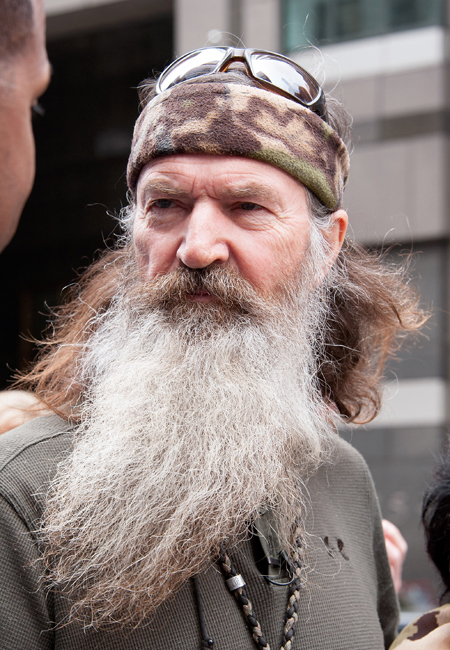
phil-robertson-getty-gospel-according-to-phil-gq-magazineIf I does it, I get a whippin’.

I does it!

At least I should get a whippin’ for posting about this already tired story, but what the duck! I have a few words to tap out over Phil Robertson’s interview with GQ Magazine.

For me, the most striking thing about the recent dust-up over the Duck Dynasty star is a recurrent theme of decoys and deceptions, perhaps even self-deception. In the GQ article, the author’s (Drew Magary) focuses on one prominent theme about the show itself, the role of Duck Dynasty in a message of redemption. That message begins (at least chronologically) with Phil Robertson’s own transformation from an drunken, abusive, and neglectful husband and father to an upstanding head of a household filled righteous dignity. The message will end, so we are told when Duck Dynasty has run its course and Phil is free to make his ministry into a full-time occupation – barring breaks for duck-hunting of course. For Magary, the real story of Duck Dynasty is one of personal redemption. The beards, the ducks, and all the rest are but flavor for that story.

And suddenly it seems ever-so fitting that a man who has made his living off a device intended to lure ducks in for hunters might have used a show to lure in the audience for a sermon on how to live one’s life. The intent itself seems a little bit more benign, at least at this level, but it is still very much a false-front operation. And fair enough, as far as it goes. The Robertson family certainly doesn’t hide their beliefs in the show, and yet they have surrounded themselves with artifice. A family of well-costumed men, playing out a series of scripted scenarios; this is the same sort of pap television has been selling as ‘reality’ for some time now. Even the apparently rustic backwater home is carefully engineered to maintain just the sort of rustic lifestyle this opponent of modern technology wants to live and to show us on television.  Phil’s faith may be one of the most sincere features of the show, wrapped as it is in a facade of down-home-ish nonsense. So, I suppose it is fitting, almost noble, that Phil would hope the success of Duck Dynasty might in the end furnish him with a means to do something more substantive.

***

There isn’t much reason to doubt that Phil is serious about his core message, about the role of Christ in redemption as he sees it. After all, Christianity was central to his own transformation, a transformation that does indeed seem to have been quite dramatic. In assuming that the road to redemption is the same path the rest of us must ultimately take, he is hardly out of step with the mainstream Christian practice. For Robertson, his troubled pas is what comes of sin, and Jesus is the only answer to those problems, just as he would be for the rest of us. This is where his message begins to chafe. The major controversies in this story begin when Phil explains what it will take to go down the path towards Jesus. The tricky parts of the trail would seem to include the following:

It seems like, to me, a vagina—as a man—would be more desirable than a man’s anus. That’s just me. I’m just thinking: There’s more there! She’s got more to offer. I mean, come on, dudes! You know what I’m saying? But hey, sin: It’s not logical, my man. It’s just not logical.

.

Phil On Growing Up in Pre-Civil-Rights-Era Louisiana
‘I never, with my eyes, saw the mistreatment of any black person. Not once. Where we lived was all farmers. The blacks worked for the farmers. I hoed cotton with them. I’m with the blacks, because we’re white trash. We’re going across the field…. They’re singing and happy. I never heard one of them, one black person, say, ‘I tell you what: These doggone white people’—not a word!… Pre-entitlement, pre-welfare, you say: Were they happy? They were godly; they were happy; no one was singing the blues.’

I should say at this point that I am at least a little concerned about the context behind Magary’s presentation of the racial politics. I am currently taking the block above at face value, though the quote itself does not contain a direct reference to segregation era politics. Magary fills that in himself with a heading for the block quote on the subject. If Robertson didn’t mean to address that particular topic with these comments, then I shall have to revise my thinking on that particular point.

[Robertson]Everything is blurred on what’s right and what’s wrong,” he says. “Sin becomes fine.”

[Magary]What, in your mind, is sinful?

[Robertson]’Start with homosexual behavior and just morph out from there. Bestiality, sleeping around with this woman and that woman and that woman and those men,’ he says. Then he paraphrases Corinthians: ‘Don’t be deceived. Neither the adulterers, the idolaters, the male prostitutes, the homosexual offenders, the greedy, the drunkards, the slanderers, the swindlers–they won’t inherit the kingdom of God. Don’t deceive yourself. It’s not right.’

For conservative Christians, this is pretty standard fare. Phil is preaching a gospel of self-reliance and upstanding moral conduct. The power of this message can be seen in the narrative of Phil’s own life, and many conservative Christians will no doubt claim it can be seen in their own lives as well. Ultimately, they might suggest, what Phil is offering is salvation, not condemnation, and that is surely a message of love.

Who could deny that message? Who could reject that love?

It should be added that much of the conservative Christian defense of Phil Robertson (including the family’s own public statement on the matter) has centered on the notion that his views are essentially Biblical in nature. To reject his views one is, so the implication would seem, to reject the Bible. And who could deny that?

Well, I’ll be your huckleberry.

***

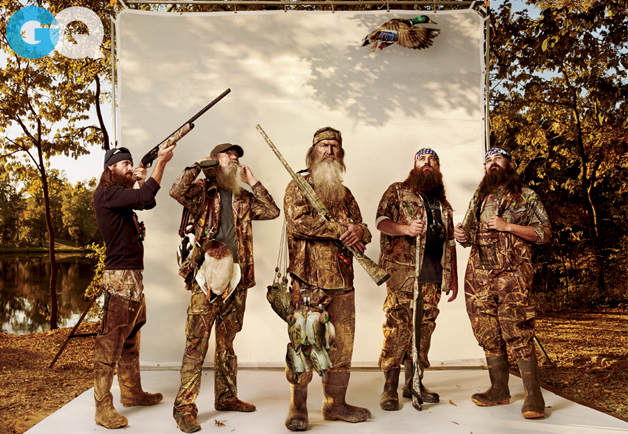
duck-dynasty-gq-magazine-january-2014-01More to the point, there is a great deal more than scripture in Phil’s views, and his chosen horribles (welfare dependence and homosexual behavior) are not dictated by scripture. They are dictated by the politics of modern conservatism.

That Phil denies the horrors of Jim Crow is particularly telling, and particularly disturbing. Perhaps he didn’t see anyone mistreat a black man (though I suspect it more likely that he didn’t recognize it when he did, or that he simply won’t admit it); but Phil goes beyond his personal experience to suggest that blacks were better off in the days of segregation. The notion that Jim Crow was not-so-bad and that welfare is an absolute evil are both hallmarks of modern conservatism. One can no doubt cobble-together a scriptural argument or three on this topic, but that is the way the genre works. It’s a big book, and one can find a broad range of ideas in there, especially is he is fast and loose with the particulars. In point of fact, Robertson’s views on this point are those of the Republican party.

Regarding homosexuality, we may begin by noting that Robertson does not merely say that it is sinful; he uses it as the paradigm case of sinfulness, even going so far as to suggest that other forms of sin can be understood as transformations of homosexuality. This too is a modern pre-occupation, and it is a telling one. I still remember my days on christianforums.com, back when it was the largest Christian forum on the net. The biggest divisions on that forum were not those between Catholic and Protestant or even between Christian and non-Christian. No, the defining battles of that forum were fought over homosexuality and its significance for membership, moderation, and its user-iconography. For all the richness of Christian traditions, and all the varieties of life commitments Christians can make, in the public sphere the dividing line between Christian and non-Christian is today first and foremost a question of how one views homosexuality. This foregrounding of the issue does not come from scripture, much less from Jesus; it is a function of modern politics.

Conservative Christians have employed a great variety of means to argue the point about homosexuality, some plausible, many outright ignorant or deceitful. But what do we get from Phil? In this interview, we get a sermon on the aesthetic benefits of a vagina. The Bible is a big book, but I somehow doubt that is in there. More to the point, I doubt that is where Phil got his thoughts on that particular matter.

There is something particularly disturbing, almost pornographic, about the way some homophobes talk about mechanics of anal sex. The notion that anal sex is somehow-the go-to moment for questions about the meaning of homosexuality is hardly obvious. It misses questions about oral and digital sex, anal sex occurring in straight couples, and (I believe) the vast majority of acts occurring between lesbian couples. It is by no means obvious that this is the sex act of choice for gay men either. And all of this ignores the larger questions of love and the formation of relationships, be they fleeting or long-lasting. Still, one finds folks like Phil meditating on the act of anal sex as if it is the key to the whole issue. That’s just a little creepy.

Did I say that the interest was almost pornographic? Let’s just delete the ‘almost’!

The bottom line is that there is a great deal worth objecting to in Phil’s comments, and much of it simply does not come from the Bible so much as the Republican play book. Small wonder that Phil tells us he voted for Mitt Romney over Barack Obama. Fair enough, he may vote for whomever he wishes, but his stated reason is pathetic (I’ll leave it to y’all to look it up in the article). But I’ve already spent too long on the details, which have been hashed over dozens of times in other posts.

Coming to the point of the matter, what I hear from conservative Christians on this subject is that this is not a message of hatred; it is a message of love and redemption. I can even see a certain case for this, or at least the outlines of a consistent narrative. Phil isn’t saying these things to be hurtful, so the argument goes; he is saying them because he believes that people need Christ in order to overcome the terrible consequences of a life of sin. What looks like condemnation is in fact, so the argument goes, righteous criticism, all part of an effort to help people find the right path. That right path is of course the one Phil has followed, and the one we must all follow. To describe all of this as hatred or cruelty would seem to be a deliberate misreading of the man’s intent.

This is all well enough, providing that one accepts Phil’s narrative at face value, providing one accepts at face value that the horrors Phil is calling out really are horrors. If they are not, then it is a perverse comfort to hear that he is offering hope of salvation. It is hardly a token of love and affection to follow baseless attacks with assertions of hope for change. And herein lies the heartbreaking feature about all this rhetoric; it asks us to simply accept the premise that homosexuality is evil without any evidence (or with the scant evidence of scriptures, many of which are poorly understood by those citing them). Failing that it asks us to accept at face value that Christians believe this premise at least, and to measure their own actions in the light of this belief. Thus, does a premise wholly without foundation become a given for purposes of the conversation about homosexuality, and the intent of people spreading genuinely harmful messages rises to a height beyond reproach. The love in this sort of sermon thus becomes the perfect cover for a harmful message, and its human source is hidden behind a Godly facade.

It does not add to the case for Phil’s love and compassion that his thoughts on the subject would stretch to a defense of segregation or pornographic meditations on other people’s sex lives. This is not merely a reflection of Godly thought; it is perfectly human, and to many of us perfectly contemptible.

This kind of love feels an awful lot like hatred. It looks like hatred, it sounds like hatred, and it smells like hatred. All the talk of love and redemption does little to change this impression, nor does do much to change the impact of such messages on the actual world. Countless African-Americans suffered through life under the system that Phil appears to be defending, and high suicide rate among those of homosexual persuasion alone is enough to give the lie to the distinction between sin and sinner. You simply cannot condemn the most basic elements of a person’s sex drive and then say; “no harm done, I love you.”

It just doesn’t work.

***

The aftermath of the interview is interesting enough. We all know that A&E suspended Phil. Well, maybe not all of us. The folks at Fox seem to think A&E declared war on Christianity, but of course they also think there is a war on Christmas. Note to Fox: if you want an example of an actual war incited by media, y’all can look at Iraq and the propaganda that you used to sell that disaster. Sarah Palin and hoards of similarly illiterate people (et tu Joe Perry)  have hyped this as a free speech issue, thus throwing yet another decoy out into the pond. It has since come to light that Palin did not actually read the interview in question, but I suppose it should come as no surprise to anyone that she didn’t read something or that this fact did not prevent her from commenting on the matter.

4272972928376089539More to the point, this simply isn’t a free speech issue, nor is it an issue of A&E silencing Christians, as many have pretended. It looks to me like A&E has been giving this particular Christian a forum for 5 years. Phil Robertson is certainly free to preach his message, just as he has done before (and it should be noted his actually a very skilled public speaker). Just like the rest of us, he must bear the consequences of his own speech, and if that includes trouble with his employers, then this is part of the price of freedom.

For those of us not privy to the negotiations going on behind the scenes, it is unclear as to whether or not A&E ever intended to keep Phil off the show permanently, but for the moment is appears that Phil’s supporters have enough weight to put Phil back on the show and the Robertson family back in the Cracker Barrel. Whether it because of greater numbers of greater passion, they appear to be winning the battle over Phil’s presence on the show. But this battle too is not what meets the eye. It simply is not a battle over free speech; it is a battle over the thoughts and ideas Phil actually communicated in that speech. Simply put, the vast majority of Phil’s supporters are not merely defending his right to say what he wants; they are endorsing his message itself

Is that a message of love?

Sure it is.

It is about as authentic as a duck call made from a blind.

71.271549 -156.751450

Share this:

  • Tweet
  • Share on Tumblr
  • Print (Opens in new window) Print
  • Email a link to a friend (Opens in new window) Email
  • Share on Reddit (Opens in new window) Reddit
Like Loading...
Newer posts →

Top Posts & Pages

  • An Uncommon Security Guard: Dave Eshelman, AKA 'John Wayne'
    An Uncommon Security Guard: Dave Eshelman, AKA 'John Wayne'
  • Hostiles and Spoilers: A Magic Studi
    Hostiles and Spoilers: A Magic Studi
  • Uncommonday Morning Blues - Ian Anderson Learns to Play the Flute
    Uncommonday Morning Blues - Ian Anderson Learns to Play the Flute
  • A Joke from a Bygone Era
    A Joke from a Bygone Era
  • Master and Commander Kinda Queered
    Master and Commander Kinda Queered
  • When Sex Falls Out of the Performance
    When Sex Falls Out of the Performance
  • Southern Paiutes as Portrayed in Las Vegas Area Museums.
    Southern Paiutes as Portrayed in Las Vegas Area Museums.
  • The Village of Wainwright, Alaska
    The Village of Wainwright, Alaska
  • Stolen Virtues and Teen Angst:  Fond Memories of the 'Nuke Table'
    Stolen Virtues and Teen Angst: Fond Memories of the 'Nuke Table'
  • Northiness Finds a Photo Filter
    Northiness Finds a Photo Filter

Topics

  • Alaska
  • Animals
  • Anthropology
  • atheism
  • Bad Photography
  • Books
  • Childhood
  • Education
  • Gaming
  • General
  • History
  • Irritation Meditation
  • Justice
  • Las Vegas
  • Minis
  • Movie Villainy
  • Movies
  • Museums
  • Music
  • Narrative VIolence
  • Native American Themes
  • Philosophy
  • Politics
  • Public History
  • Re-Creations
  • Religion
  • Street Art
  • The Bullet Point Mind
  • Travel
  • Uncategorized
  • Uncommonday
  • White Indians
  • Write Drunk, Edit Stoned

Blogroll

  • American Creation
  • An Historian Goes to the Movies
  • Aunt Phil's Trunk
  • Bob's Blog
  • Dr. Gerald Stein
  • Hinterlogics
  • Ignorance WIthout Arrogance
  • Im-North
  • Insta-North
  • Just a Girl from Homer
  • Multo (Ghost)
  • Native America
  • Norbert Haupt
  • Northwest History
  • Northy Pins
  • Northy-Tok
  • Nunawhaa
  • Religion in American History
  • The History Blog
  • The History Chicks
  • What Do I Know?

Archives

  • December 2023
  • November 2023
  • June 2023
  • April 2023
  • February 2023
  • December 2022
  • November 2022
  • October 2022
  • September 2022
  • August 2022
  • July 2022
  • June 2022
  • April 2022
  • January 2022
  • December 2021
  • November 2021
  • October 2021
  • September 2021
  • August 2021
  • June 2021
  • May 2021
  • March 2021
  • February 2021
  • January 2021
  • December 2020
  • November 2020
  • October 2020
  • September 2020
  • June 2020
  • May 2020
  • March 2020
  • February 2020
  • January 2020
  • December 2019
  • November 2019
  • September 2019
  • August 2019
  • July 2019
  • June 2019
  • May 2019
  • April 2019
  • January 2019
  • December 2018
  • November 2018
  • October 2018
  • September 2018
  • August 2018
  • July 2018
  • June 2018
  • May 2018
  • April 2018
  • March 2018
  • February 2018
  • January 2018
  • December 2017
  • November 2017
  • October 2017
  • September 2017
  • August 2017
  • July 2017
  • June 2017
  • May 2017
  • April 2017
  • March 2017
  • January 2017
  • December 2016
  • November 2016
  • October 2016
  • September 2016
  • August 2016
  • July 2016
  • June 2016
  • May 2016
  • April 2016
  • March 2016
  • February 2016
  • January 2016
  • December 2015
  • November 2015
  • October 2015
  • September 2015
  • August 2015
  • July 2015
  • June 2015
  • May 2015
  • April 2015
  • March 2015
  • January 2015
  • December 2014
  • November 2014
  • October 2014
  • July 2014
  • June 2014
  • May 2014
  • April 2014
  • March 2014
  • February 2014
  • January 2014
  • December 2013
  • November 2013
  • October 2013
  • September 2013
  • August 2013
  • July 2013
  • June 2013
  • May 2013
  • April 2013
  • March 2013
  • February 2013
  • January 2013
  • December 2012
  • November 2012
  • October 2012
  • September 2012
  • August 2012
  • July 2012
  • June 2012
  • May 2012
  • April 2012
  • March 2012
  • January 2012
  • December 2011
  • November 2011
  • October 2011

My Twitter Feed

Follow @Brimshack

RSS Feed

  • RSS - Posts
  • RSS - Comments

Enter your email address to follow this blog and receive notifications of new posts by email.

Join 8,072 other subscribers

Blog at WordPress.com.

  • Subscribe Subscribed
    • northierthanthou
    • Join 8,072 other subscribers
    • Already have a WordPress.com account? Log in now.
    • northierthanthou
    • Subscribe Subscribed
    • Sign up
    • Log in
    • Report this content
    • View site in Reader
    • Manage subscriptions
    • Collapse this bar
 

Loading Comments...
 

    %d