• About

northierthanthou

northierthanthou

Tag Archives: Privilege

I’ll Motte Your Bailey! The White Privilege Edition

13 Tuesday Oct 2020

Posted by danielwalldammit in Justice, Politics

≈ 5 Comments

Tags

Confirmation Bias, Critical Thinking, Motte and Bailey Doctrine, prejudice, Privilege, Race, Racism, Social Justice, White Privilege
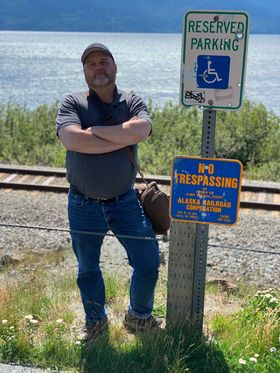
Criming While White

Okay, I’m going to regret this…

What’s a “Motte and Bailey doctrine?” The term was coined by Nicholas Shackel. It describes a position in which somebody defines a term in narrow and well-defined terms in contexts of likely dispute and/or rigorous scrutiny, only to adopt a much broader and less rigorous approach to the same topic in practice (e.g. when speaking to a very friendly audience). The language comes from a medieval system of defense in which a tower (usually built on a mound) is surrounded by a stretch of desirable land. The tower on its mound (i.e. the Motte) is where the people of the community go for defense when attacked. The bailey is where people actually live and make their living. So, the concept here is really one of equivocation wherein people employ a strict definition of their stance when pressed only to get sloppy with it whenever opportunity tempts them to less than precise applications.

***

So…

Is “white privilege” a Motte and Bailey doctrine?

Well it certainly can be.

***

What’s the Motte version of “white privilege?”

As I understand it, the rigorous approach to “white privilege” is defined something like this; It is a range of unearned benefits conferred upon those perceived as white. [Alternatively, it is the lack of unearned debits conferred on countless underprivileged peoples as a result of their own (non-white) identity.] To say that this pattern has parallels to gender, sexual orientation, and range of other indices of social stratification is obvious.

What makes this the motte, as far as I see it anyway, is the lack of any direct assertions about the significance of this privilege relative to other issues. A white guy may have less to fear from the police during a traffic stop, for example, but he might still have grown up poor. He might still face discrimination if he speaks with a distinct regional accent. He could possess a disability, grow up with abusive parents, etc. Conversely, someone from an underprivileged minority group might still be wealthy, might still be connected, might still enjoy a range of benefits not available to all whites. In other words, the Motte version of this concept recognizes that white privilege does not automatically amount to getting the upper hand all across the board of social stratification. It is a ascribed status benefit enjoyed by white people. How that benefit stacks up against other such status benefits and detriments is another question.

What’s the bailey?

Well just ask critics of the concept!

How many times has a white guy told you he grew up in a trailer park or a crowded shack in response to comments about white privilege, or otherwise commented on countless travails of her or his early life in an effort to demonstrate that he or she did not have it easy? These arguments wouldn’t work against the motte version of this concept. They only work if ‘white privilege’ clearly entails an easier life for all white people, or at least the vast majority of them. As the possibility that other indices of social stratification would come into play is already built into the motte-version of ‘white privilege,’ all of these arguments fall well short of disproving that concept.

They really do.

So, why aren’t these points just straw man arguments?

They aren’t straw man arguments, because proponents of white privilege don’t always stay in the motte. Sometimes, those employing the notion really do seem to think (or at least say) that whites are uniformly better off. I have personally been told in no uncertain terms that I have had an easier life than they have because I am white, and I have certainly heard the sweeping comparisons from others invoking the notion of white privilege. Additionally, the practice of dismissing anything a white person says on the subject of race, racial privilege, or other social justice themes by reminding us that we speak from a position of privilege tends at least to erase the narrow definitions of the motte and nudge us all closer to a broad generalization about the overall status of white people relative to on-whites. Sometimes, people using this concept really do seem to be painting a simple picture of privilege that squashes a number of other measures of privilege and oppression under the weight of race. All-too-often the notion of white privilege, defined narrowly when scrutiny is likely, becomes in practice a categorical assumption that all white people have it better than all any-other-kinda people.

So, if it is tempting to dismiss the critics of white privilege for attacking a straw man, that temptation must be tempered by the awareness that at least some proponents of the notion actually embody that straw man, at least when they are on a roll.

***

And here is where the whole metaphor begins to fail us. Do people shift back and forth between strict and loose definitions of ‘white privilege.’ Yes, they do. They also do this with debates about the existence (and nature) of God, support for law and order, use of terms like ‘socialism’ or ‘capitalism,” or the love of rock and roll.

Wiggle room happens!

While we might want to encourage people to stick to a single definition of the key terms they use (or even to hold opponents in a debate responsible for doing so whether they want to or not), it is somewhat of a distortion to suggest that this is unusual. It is also a distortion to suggest that it takes the form of two clearly defined variations. Often the slippage is more subtle than that.

And of course it doesn’t help that nobody seems to trust anybody enough to anybody enough to grant them the benefit of the doubt on this topic. To hear some people talk, the very notion of white privilege will bring about the downfall of America, taking Europe with us, and fairly clipping the wings of half the angels in heaven. They can’t even address the motte version of the concept, and they certainly won’t concede it. Others will assume the only reason for expressing skepticism on this concept is a clear dedication (Whether conscious or not) to the support of white privilege. The principle of charity, long advocated by introductory logic teachers all across the land, just isn’t welcome in social justice debates of the modern world. When we acknowledge doubt at all, we tend not to give the other guy the benefit of it, and since nobody is getting any of this benefit themselves, we are that much more stingy about giving it to others.

Dammit all anyhow!

…and of course one of the benefits some of us do enjoy here is the privilege of experiencing this as a largely theoretical subject. For some folks the problem is a lot more urgent than others.

***

In this case, in particular, the middle ground is critical, not because all things moderate are great and wonderful, but because there is a critical question here, one that falls squarely on the boundaries between the motte and the bailey of this particular notion.

Relative to other indices of ascribed social status, just how important is ‘white privilege?” In the life of any given person, or the prospect for a positive outcome in any critical situation, just how likely is white privilege to make the difference? I can well understand that a black man might enjoy the secondary benefits of wealth or that a white man might face discrimination for being poor, but how does wealth (or the display of it) really stack up in comparison to race?

In attempting to answer this question, we do so haunted by the specter of confirmation bias.

White folks like myself typically underestimate the pervasiveness of our privilege. This was once brought home to me quite vividly when driving with my gal, Moni, in the passenger seat. Seeing a police officer race up beside us on the highway only to motion at me to slow down, she was shocked to see how easily I got away with driving over the speed limit. (In my defense, I wasn’t going that fast. Honest!) This is an event she now commemorates by taking pictures of me ‘criming while white’ whenever she gets the chance. Of course, I haven’t always gotten a break from cops in such situations, but after talking to her, I have come to realize that my own ideas about how a traffic stop is likely to go vary considerably with her own, and yes, I do put the difference down to race.

Of course, some in the social justice camp may be a little too quick too assume that racial identity has made the difference in this or that situation, but of course, not all biases are equal. If I was to bet on this, I would put my money on the likelihood that those of us enjoying white privilege miss its effect in our lives far more than those who lack this privilege see it when it isn’t there. In any event, the answer to how much weight white privilege gets in comparison to other indices of social status is going to be heavily skewed by the impact of this very phenonomenon (along with other all the other variables that skew the way that humans experience and treat each other).

The notion of ‘white privilege’ isn’t sufficiently robust without accounting for its relative weight. If we just say, “yes, that’s a benefit, one of many,” then all we are doing is acknowledging that race is one of many things that could trigger prejudice, and that when this happens white people are likely to benefit from the effect of that prejudice.

That takes ‘meh’ all the way to 5!

Simply saying that whiteness is just one index of unearned privilege among many others invites us all to shrug our shoulders and go back to whatever else we were doing. Perhaps we will notice when it matters; perhaps we will not. That position is not just a motte; it’s a meh. We can do better than that.

If on the other hand, we say that white privilege trumps all other considerations in all imaginable contexts, then, well, that just isn’t true. There are at least some contexts in which class, regional dialect, age, health, sexual orientation, personal connections, or any range of considerations could trump race. That white privilege skews the likelihood of positive privilege in some of these areas (e.g. class) more likely is certainly true, but at least some of the time, being white may not matter as being something else.

Some of the time.

In the end, the concept of ‘white privilege’ isn’t significant until we assign it some weight relative to other things that can skew the way that people treat one another.

As I write this, I am envisioning a much-needed trip through the relevant statistical research, but for now I mean to wrap this up by simply framing the position that most sense to me. It is the notion that white privilege, at least in the modern United States, is the most critical index of social status, at least when you account for both the likelihood that it will come up and the impact it will have. There may be less-severe sources of social bias which are more prevalent, and there may be less common sources of bias with more substantial impact when they do occur, but in the long run, white privilege is more likely to make a difference in a critical situation than class, region, age, etc. Do I believe this? Yes, though I am quite open to reconsideration and/or modification of the position.

***

So where does this leave us, or me at any rate?

I reckon us (me), somewhere in the transition from motte to bailey. I am grumble when I see the easy assumption that white people just have it better than others. I grumble more when I talk to white people who can’t even grasp the possibility that their whiteness might have given them an edge in life, at least some of the time. I reckon, the most appropriate thing to do here is to think of this in terms of priorities. As far as social ills go, this is at (or damned near) the top of the hierarchy. It isn’t the be-all and end-all of social justice, but I’d be hard pressed to think of anything more critical to address than racial disparities. That’s not a blank check written for anyone who wants to cash in on the claim to fighting for social justice. A certain amount of mere noise attaches itself to every signal, and shameless opportunists find their way into every cause. Still, I do think this problem is real, and I want more folks who enjoy white privilege would take the notion seriously.

***

It occurs to me that I may have just taken ‘meh’ all the way to 6, but it really does seem to me that the issue only gets interesting when you start asking how important white privilege is relative to other sources of social status. In suggesting that white privilege is more important than other variables, I am certainly picking a fight with anyone who seeks to deny that white privilege exists altogether, and also with those who see it as just one variable drowning in a see of other claims on our social conscience. To say that any other variables of social status could even be weighed against race and white privilege in any manner puts me at odds with quite a few of the proponents of the notion. I may have staked out a position on the middle ground, but in this instance, I doubt this will prove convenient.

Share this:

  • Tweet
  • Share on Tumblr
  • Click to print (Opens in new window) Print
  • Click to email a link to a friend (Opens in new window) Email
  • Click to share on Reddit (Opens in new window) Reddit
Like Loading...

Eye, You, and Donald Trump

26 Sunday Mar 2017

Posted by danielwalldammit in Childhood, Politics

≈ 17 Comments

Tags

Argumentation, Criticism, demagugue, Donald Trump, eye color, Jane Elliot, prejudice, Privilege, Rhetoric

U.S. Republican presidential candidate Donald Trump listens to a question from the audience at one of the New England Council’s “Politics and Eggs” breakfasts in Manchester, New Hampshire November 11, 2015. REUTERS/Brian Snyder – RTS6IWM

I think I found the source for Donald Trump’s approach to public speaking. There is a clear precedent for his technique.

It’s Jane Elliot!

Jane Elliot is of course the Ohio grade-school teacher made famous for a classroom exercise in which she taught her students to discriminate against each other on the basis of eye-color. If you watch her in action, you can see the elements of Donald Trump’s rhetoric style unfolding before you.

It’s funny, because I’ve been thinking for some time that I have never seen anyone lie so readily, so easily, and in the face of such clear counter-evidence. Never have I seen anyone whose praise or whose censure was so obviously a function of his own self-interest. It is as if facts have no bearing on his evaluation of anything or anyone, and the only thing that registers significance in his evaluation of the world around him is what he wants to happen. Those who support his goals are terrific, and those who oppose him are failures, sad. I keep thinking, no-one I know of has ever been so obvious about it. But no. The man has a clear role model. If you watch Elliot teaching her students to mistreat each other, it’s all there. She may have meant her exercise to warn people against this sort of thing, but I can’t help wondering of Trump didn’t watch her at some point and say to himself; “Yep! That’s exactly what I want to be.”

Elliot set out to instill prejudice in her third graders in the space of a single day, and then to reverse that prejudice the following day, before debriefing the lot of them and ending the lesson. She didn’t have a lot of time and she wasn’t the least bit subtle about it.She employed all manner of tactics to communicate contempt for the wrong-eyed children in her classroom.

You might think Elliot’s lessons less relevant to real-world politics, because, well third graders, right? But of course, Donald Trump’s own rhetoric has all the features of grade school communication. Far from a detriment, it turns out childish vocabulary and simplistic arguments are actually one of the keys to his success. With his simple words and constant repetition of basic themes, Trump leaves a very clear impression. It is the single-mindedness of Trump’s presentation that seems to resonate with his supporters, and in that respect, his approach is very much like that of Elliot.

But does the nature of the message matter?

You bet it does.

It’s not just any simplistic message that Trump offers supporters; it is a simplistic message about who is a better person; them or someone else? In this respect, his approach mirrors that of Elliot. It isn’t merely that Trump advances a message of hatred; it is that he presents that hatred in terms of a clear pay-off. You are are better than they are! That is what Trump keeps telling people (whoever you are and whoever they might be). It’s an invitation to enter a world with a clear hierarchy of value, and to enter that world on the value-laden side of that hierarchy. You don’t even need to do anything. You are already better than the many scapegoats he offers you (Muslims, Mexicans, the Media, minority activists, etc.) Trump really doesn’t call on supporters to do much more than vote for him. Their role in his his America is to be the real Americans while the rest of us take our lumps. It’s this message that survives all the messy details. It is a message not the least bit undermined by questions of fact, reason, or even the evidence of the senses. In this respect, Trump is very much like Elliot teaching half of her classroom to think of the other half as lesser people.

When I watch Elliot tell a child (at about 5:20) that a blue-eyed parent would never kick his son while using the apparent claim that a brown-eyed parent had done that very thing, I can’t help but think of Trump’s many anecdotal attacks on immigrants. It shouldn’t take much critical thinking to see past the argument, but is that more important than the invitation to be better than someone else?

Apparently not for a lot of people.

When Elliot begins telling the Brown-eyed children they can’t use the drinking fountain (at around 6:10), and when she restricts their playground privileges, she is effectively telling the blue-eyed children they are special. The things they all used to take for granted now belong only to the blue-eyed children (at least for a day). The pay-off is not substantially different from that enjoyed by an audience assure more of their kind of jobs will be created while watching others threatened by cuts, told their own health-care will be taken care of (somehow) by cutting others loose, and of course their citizenship will not be sullied by the presence of certain kinds of people. (And no legality was NEVER the issue in Trump’s new-fangled Know-nothingism) We on the left haggle over the details of these policies as if they matter. To the average Trump supporter, I do not think they do. He may be right about this or wrong about that, but what matters most to those who support them is that he keeps elevating them above someone else. He does it free of charge. They don’t have to understand anything difficult; they don’t have to work harder (at least he doesn’t say they will); they don’t even have to listen very carefully. Being better in Trump’s world is as simple as saying yes to him and his gold gilded message. In scapegoating enemies domestic and foreign, Trump is telling anyone who cares to accept him that they are special. They get to drink at the fountain. Others don’t.

When Elliot tells her children that the brown-eyed people are slow or stupid, she creates the very facts she purports to describe. Elliot noted (at 13:15) how the student performance rose or fell with the changes in their status during the course of her exercise. There is little to distinguish this from the effects of social stigma and/or poverty on groups for whom prejudice is not simply an exercise. When Trump promotes such distinctions, he generates real harm.

(At about 12:10) “Do blue-eyed people know how to sit in a chair? Very sad. Very very sad.” …this one speaks for itself.

One might think that folks would see past such a thinly disguised gambit. Elliot is working with third graders. Surely, adults would know better!

Evidently not!

In the end, this may not be a question of what people actually think. It’s a question of what narratives they circulate. We keep hearing that Steve Bannon isn’t really an antisemite or even that Donald Trump isn’t personally against homosexuals, Mexicans, women, etc., but the Trump camp and its supporters keeps producing stories denigrating to these groups and anyone who gets in their way. Like Elliot, they may know better, but like Elliot, they do it anyway.

Except for one thing.

There will be no debriefing at the end of Trump’s Presidency. There will be no great learning moment, no sudden transformation of the whole situation into a great learning lesson. Whatever cynical reasons he and his supporters may have for throwing the rest of humanity under the bus, there is little reason to believe it will stop any time soon. The only credible promise this man ever made is that he would hurt people in their name, and for whatever reason, that was reason enough for a number of people last November. We can only hope that enough people come to their senses, and that if and when they do, something can be done about it.

In the interim, the Trump administration continues its own experiment in social control. The continue teaching us to humor this man’s fantasies, and to think of ourselves as better for doing so.

Let us hope the nation as a whole can respond a little more appropriately than Jane Elliot’s third graders!

Share this:

  • Tweet
  • Share on Tumblr
  • Click to print (Opens in new window) Print
  • Click to email a link to a friend (Opens in new window) Email
  • Click to share on Reddit (Opens in new window) Reddit
Like Loading...

A Troubled Tale of Two Racisms and the Floundering Efforts to Oppose Them

12 Thursday Jun 2014

Posted by danielwalldammit in Justice, Native American Themes

≈ 17 Comments

Tags

discrimination, Frybread, Power, prejudice, Privilege, Racism, Reverse Racism, Rhetoric, Social Constructivism

lThis wasn’t the first time I felt unwelcome at the mutton stand. In fact, it was the second time this server had ignored me while serving other customers. Just like the first instance, I initially assumed it was an accident, or at least that she had some other reasons for avoiding me, but slowly I started to wonder if it was my color. White people were not entirely foreign to these markets, but the vast majority of folks frequenting these stands were certainly Navajo. And it was beginning to look increasingly like this particular woman had no intention of doing business with me at all.

…which really sucked, because these guys made the best roast mutton in Window Rock!

What to do about it? In my younger days, my social tool kit was long on hammers and short on other options. I had enough sense to realize vocal complaints about unfair treatment of a bilagáana might go down poorly, but not enough subtlety to think of alternative ways to address the matter. As it happens, I didn’t need to think of anything to say. The other customers did it for me. A chorus of “He’s next!” greeted the woman’s next efforts to pass me by, some of their voices tinged with a sense of real irritation. I got my roast mutton that day. More than that, I felt a sense of reassurance. Although resentment of whites could be found in many varieties out on the Navajo Nation, so could a certain sense of fairness. On this day that sense of fairness won out and I got my mutton.

***

Let me start by admitting up front that I could have been wrong about the motivations of the woman who didn’t seem to want to serve me. Perhaps I read the whole thing wrong, and maybe my own behavior had somehow triggered her actions. Hell, maybe I really shouldn’t have been eating there in the first place. All this is quite possible, but I am going to ask you, dear reader, to accept for purposes of argument, that this was an instance of a Navajo woman treating me different (a little bit badly) because of my ethnicity. I think it is also an instance in which the members of her own community found this to be unacceptable behavior.

So here is the question, did I experience racism?

No, that’s not the question.

My real question is how do you go about answering that first question?

It seems to me that at least two radically different approaches to answering that question have become rather common these days, and it is getting more and more difficult for people using these different approaches to talk to each other about the matter. One way of going about it, which I will call the conventional approach (perhaps for no better reason than that it is the approach I grew up with) would be to raise questions about the motives and attitude of the woman who didn’t seem to want to serve me. Granting a certain range of answers about what she had in mind, someone taking this approach would say ‘yes’ I had been subject to racism. Another approach (let’s call it the social constructivist approach) is more common these days in academia and left wing politics in general. From this standpoint, it is best to inquire into the social power of the parties involved and then see how they use that power in respect of one another. Those adopting this approach might also want to expand consideration beyond the mutton stand to the larger patterns of history and contemporary politics. In most cases this approach would lead to an answer of ‘no’ to my first question, or even a ‘hell no’, perhaps with an additional lecture on the privilege of living in a world where slow service at a mutton stand is a moral outrage worthy of remembering nearly two decades later.

***

Okay, so let’s do this…

In the conventional approach, racism is a question of personal judgement and motivation. Racism consists in treating someone different on account of their race, and since all manner of people can do this, anyone can clearly be racist. The possibility of ‘reverse racism’ as it is commonly called is obvious enough with the only real questions being about whether or not this or that particular event illustrates some variety of reverse discrimination. Using this approach (and assuming I wasn’t missing something important), it is quite possible to affirm that I was subjected to racism on that day.

On it’s face, the conventional approach seems a perfectly reasonable take on the subject. People often use it to advance a genuine sense of moral obligation regarding how one ought to treat others, and by people here I do mean all kinds of people. Folks from all sorts of different backgrounds can and do frequently advance the notion that one ought not to treat people differently (or at least badly) on account of their race. This does strike me as a good thing, but the question is whether or not this is an adequate response to the problem of racism.

First and I think foremost, the problem with this approach is that it flattens the significance of discriminatory behavior, putting the denial of a mutton sandwich in much the same boat with minstrel shows, segregated schools, legacy contracts, Japanese internment, involuntary sterilization, lynching. and even the Holocaust. Hell, I  felt a little nausea myself putting my mutton-stand story in the same sentence with all those things, but the absurdity of that comparison is precisely my point. Addressing racism as an issue of personal motivation doesn’t do much to help us understand the difference between petty gestures and genuine atrocities. It isn’t that people can’t understand that there is a difference, but this approach to countering racism creates a fashion of speaking about them which tends to put them all on equal footing, at least for a moment. If we then want to talk about the differences between a simple affront and something that genuinely oppresses whole groups of people, then that talk falls somewhere over and above the problem of racism.

Unfortunately, there is ample evidence that large numbers of people never get out of that fashion of speaking about racism, that large numbers of people never really get the difference between a lynching and an expression of petty personal bias. Indeed, some folks seem prepared to recognize racism only if it is first prefaced with ‘reverse’. Time and again, advocates of social justice find their concerns drowned out by talk of reverse racism and stories in which the under-privileged prove themselves ironically capable of being the bad guys too.

…and in the ultimate poetic injustice, being discriminated against too, becomes the exclusive cultural capital of the privileged.

Don’t laugh. A few pundits have become filthy rich working that very angle.

It is no wonder that persons of color and their political allies often want to do away with this fashion of speaking about racism altogether. The conventional approach to racism is, as many seem to suggest, a well far too poisoned with all this talk of reverse discrimination to be of any real use for understanding the larger issues of oppression and injustice  in the world today. So, many of those interested in such issues have chosen to define racism as something that requires not merely prejudice but the social capital to put that prejudice into play with real and devastating consequences. Racism is from this point of view an expression of power, not merely an individual act, whatever its motivation. This is what I mean by a Social Constructivist approach. It’s a clunky phrase, and a grad-school cliché, but what the hell!?! It works.

It isn’t that people advocating the social constructivist approach don’t think minorities can be jerks; but they don’t see the myriad stories minority jerkitry as a meaningful part of the story of racism. From this standpoint, my mutton-stand story is simple a non-starter. The problem isn’t just the scale of harm (or the lack thereof); such stories are from this point of view a genuine distraction from the central issues of oppression that should be the focus of concerns about racism. It’s easy enough to get the problem with such stories in this kind of loose narrative; the problem comes in when people start trying to explain why such stories are as a matter of principle unimportant to the issue of racism.

Often folks taking the constructivist approach will say something to the effect that racism is about power and since minorities don’t have the power, they can’t be racist. This has always struck me as a terrible oversimplification, and I could only wish it were a straw man, or that its use were limited to less educated circles. But it isn’t.

To me, the core problem here is that the argument uses an awfully ham-handed sense of social power. We can talk of people having more or less power, but the notion that whites have all the power and minorities absolutely none of it is bordering caricature. For one thing, it doesn’t take a lot of power to hurt someone, and it is one of the perversities of racism that it may from time to time offer those whom it keeps from real opportunity the consolation of petty revenge against some unlucky fellow. Whether it is a personal punch in the mouth, a petty decision by a  boss, or a politician playing to his own base, there are plenty of persons of color quite capable of harming those of another ethnicity. One must also consider the possibilities of scape-goating other minorities, or even minority groups within their own community. And finally, there is no reason to expect that racism must always mean hurting those belonging to the race that someone hates. Often as not resentments directed at whole groups of other people precedes a shot to one’s own foot, so to speak. The kind of social power which makes racism a problem simply doesn’t rest only at one end of the spectrum, even if acknowledging that fact let’s an unwelcome foot in the door. Acknowledging the possibility that someone other than a white person might have the means to hurt people on the basis of race should not be difficult, but in short-hand politics, it seems many are happy to simply discount that possibility.

…which is definitely taking liberties with the facts.

It isn’t that an emphasis on social power means abrogation of minority responsibility to others, and I don’t think many people mean to suggest that; it’s that one of the aims of an emphasis on the social construction of power is to put harm to the underprivileged back in the center-spot of opposition to racism.

***

All of this leaves us with one very big problem as I see it. Speaking of racism as something that is by definition an expression of the privileged cuts so far against conventional approaches to the subject that it amounts to quitting the field in a sense, abandoning the larger public discourse. Unless I am underestimating the extent to which social construction has reached the popular consciousness, that approach (with its complete disclaimer of the possibilities of minority racism) is a bit too foreign for most people to comprehend. The reasons for such an approach are well known in academia, and in many circles of left-wing politics, but they aren’t sufficiently well known to guide public perceptions. So while those adopting a social constructivist approach can talk in limited circles as though only the ignorant or malicious would even think of describing racism as something a minority could do, large parts of the public take it for granted that it most certainly is, and that lunacy or at least dishonesty are the only reasons anyone would deny it.

The notion that minorities simply cannot be racist leaves a silence in the space where one would normally raise questions about rude, cruel, or even genuinely harmful actions by minorities. Often, advocates of the social constructivist approach will concede that sundry examples of such behavior are terrible; they might even suggest alternative words to describe them. I hear it time and again, the notion that racism just isn’t the right word for it, but what that word would be isn’t so clear. So, the more reasonable folks taking the social constructivist approach are not really trying to insulate minorities from criticism, but they are working hard to ensure that criticism is divorced from an important source of moral value, opposition to racism. Arguably, what is lost in this approach is simply too valuable, and like it or not, there are legitimate reasons for addressing questions about racially motivated behavior by minorities, reasons that cannot be reduced to the effort to drown pro-minority politics in a deluge of petty complaints by the well privileged.

In the end, denying the possibility of minority racism does not just silence those milking the reverse-racism angle for more than its worth, it also silences people with real concerns and sincere questions about ethnic relations. All too often, the right wing pundits are happy to fill that silence with the suggestion that lefties are just bigots in their on right and that this whole fashion of speaking is just another attack on white people. That may seem a cop-out to many advocates of the constructivist approach, but unfortunately the cop-out is mutual. An awful lot of folks are finding more and more ways to avoid talk to each other about this subject, and even to find ways of speaking really loudly while not really talking to each other about it.

It is extremely important to make a strong case for the significance of social power in the history and politics of racism, but that case poorly served by word games. As certain voices work very hard to ensure the public can’t tell the difference between affirmative action and Jim Crow, a large part of the public is unsure what to make of the issues. The difference must be explained, and yes, perhaps explained again, because those working reverse-racism molehills into great mountains will go right on doing so. They aren’t the  least bit phased to find that lefty scholars have adopted a way of speaking about the issue that side-steps their own gambit.

Far from it.

***

So, was I exposed to racism on that day so many years ago? Meh, …who cares? My real point is that I hear and read people talking about such questions in two very different ways, and more and more I meet people who seem completely incapable of bridging the gap between those ways of speaking.

It’s a problem.

***

Roast Mutton provided by a review of Sacred Hogan.


Share this:

  • Tweet
  • Share on Tumblr
  • Click to print (Opens in new window) Print
  • Click to email a link to a friend (Opens in new window) Email
  • Click to share on Reddit (Opens in new window) Reddit
Like Loading...

It’s Been a Good Week for Whitesplaining, Thank you Cliven Bundy and Dan Snyder!

26 Saturday Apr 2014

Posted by danielwalldammit in Politics

≈ 5 Comments

Tags

Bundy Ranch, Cliven Bundy, Dan Snyder, Nevada, Privilege, Racism, Redskins, Right Wing Echo Chamber, Whitesplaining

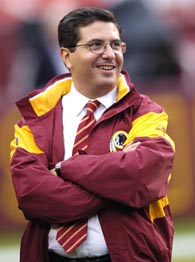
NFL Preseason - Cincinnati Bengals vs Washington Redskins - August 19, 2005I love the smell of Whitesplaining in the morning. Smells like, …privilege!

So, it’s been a good week for me, or at least for my guilty pleasures. One of the greatest joys of the week has been watching my usual qualms about lefty crit-speak vanish in a puff of “Oh yeah, that’s what that means!” See, I have to admit, I’m not always down with the use of ‘whitesplaining’, ‘privilege’, ‘objectification’ in critical commentary. Some might suggest my hesitation is just what you’d expect from a middle-class white guy, but I can’t help thinking these get a little overused at times.

But then Dan Snyder made a true believer out of me.

This miracle of clarity came on Tuesday a charity event in which he answered a few questions, …badly. According to the Associated Press, Snyder simply declared that the team name is “not an issue” and that people need to “focus on reality.” And lo! The matter was settled. If you are like me, you might be thinking that’s a neat trick. When people keep telling you they have a problem with something you’re doing, you just declare it isn’t an issue, and like magic, it simply isn’t. Teenagers everywhere should try that with their parents and teachers.

…or maybe not.

Of course Dan Snyder isn’t a teenager; he isn’t challenging authority. Given his wealth and his power, and that his primary critics here seem to be an underprivileged demographic, the man is speaking down the social scale in some sense, delivering a pronouncement from on-high, one that others will struggle to challenge. If Snyder’s ex cathedra pronouncement seems to work, it is precisely because he has the power to make the story stick, and that power does not come from the clarity of his personal insight or the cogency of his arguments.

This isn’t someone speaking truth to power; it’s someone speaking power in the face of truth.

But of course Snyder isn’t just playing privilege, he also has an argument. That argument has something to do with addressing real issues affecting the lives of Native Americans rather than the symbolic issues associated with mascot politics. As Snyder says; “The real issues are real-life issues, real-life needs, and I think it’s time that people focus on reality.”

Now this little gambit almost has promise. You could make a plausible argument out of prioritizing material needs over symbolic politics, at least some people could under some circumstances. So, this argument seems like it might have some legs. Of course those legs might take his cause further if Snyder weren’t busy laying down a hundred thousand dollars to help a high school team change their football field to field turf, this after bragging up some coats and part of a backhoe given to Native Americans. Those legs stop walking altogether when one considers that any effort to actually help people in their real lives does nothing at all to answer questions about the name of the team. As Keith Olberman pointed out, it is quite possible to do both. And those legs sit down and kick up their feet for a smoke break when one considers just how outrageous it is for a non-native to simply declare that he knows what the actual issues for Native Americans really are in direct opposition to the stated position of so many of them. Mind you, the man isn’t making a suggestion, fielding a question, or even respectfully submitting any thoughts for folks to consider. He simply declares his own command of the issues once and for all. …adding that he and his folks have done their homework, “unlike a lot of people.”

I wonder who Dan Snyder thinks those other people who haven’t done their homework would be? Could it possibly be the people whose lives he pretend to want to help? Could it be the very people he is talking about? So, yep. Dan Snyder thinks he can simply tell the world what the real problems are in Indian Country, all the while ignoring the input, comments, criticism, and vocal outrage from indigenous voices all over the country, not the least of them appearing on the pages of Indian Country Today.

If I had to give an example of whitesplaining, I think this might just be the first one that came to mind.

But of course Dan Snyder had competition this week from rural Nevada where rancher and Tea Party hero Cliven Bundy opted to tell us a thing or two about the ‘negro’. …yep. Of course some folks might not be surprised to find a man with odd thoughts about federal authority (and the lack thereof) also had odd thoughts about minorities, but I prefer to give folks the benefit of the doubt.

…at least while there is doubt.

Here’s the quick and dirty version:

https://www.youtube.com/watch?v=TuaBhfxbDeU

Now some folks seem to feel this shortened version of Bundy’s remarks reflects an unfair edit, so they present a larger version of the clip showing a bit more of Bundy’s thoughts on different people. Here it is:

If you watch this longer version of Bundy’s remarks, you can see quite clearly that he is not trying to spread hatred of or prejudice against anybody. No, he just believes a lot of terrible things about African Americans, at least, and he doesn’t seam to see that those beliefs are offensive and harmful to the people he claims not to hate. Bundy’s comments reflect common stereotypes about African-Americans and somewhat less common musings about the potentially benign effects of slavery. They may not reflect the kind of strident racism one would expect of the KKK (though we might have our suspicions about a few of Bundy’s supporters), but Bundy’s remarks do reflect a casual racism that tends to show up in some circles a couple beers into a good BBQ.

What seems most striking about this to me is the role that minorities play here as an object of contemplation for Bundy and his many defenders. Minorities present to Bundy and casual racists everywhere a source of material, so to speak, one  tailor-made for commentary about where this damned world is going and where it really oughtta be. It’s a tired litany in which the real problems of the world can be found in the privileges of those with the least and with whoever is responsible for creating those imaginary privileges. Black folk aren’t the real evil of Bundy’s remarks. No, they are simply dupes of the Fed, fellow victims of big government who must be saved from it’s diabolical schemes. All the problems of the African-American community are thus subsumed under the interests of Bundy’s states’ rights agenda. They are simply one more reason to oppose big government, all for their benefit as well as his own.

The notion that the modern welfare state is just another form of slavery has been a favorite talking point of right wingers in recent years. It’s just one of the many ways in which the critique of welfare has long since jumped the shark in the echo chambers of America’s pseudo-conservatives and free market fundamentalists. So, I suppose it shouldn’t come as any real surprise to find Bundy reproducing this little yarn. It is a little bit of a surprise, I think, to find that people could be so thoughtless and so clueless about the realities of either slavery or social programs. The problem here is not malice (I will give Bundy supporters that much anyway); it’s ignorance, but it’s ignorance taken to 11.

One of the manifestations of that ignorance is a complete inability to conceive of minorities as anything but an object of casual consideration. Bundy’s past experiences are simply grist for the mill, anecdotes in a narrative about big government. The concerns, thoughts, and ideas of any actual minorities are quite absent from that narrative. So yet again, the key to minority problems turns out to rest in the hands of a random white guy whose principle concerns have little to do with them, who isn’t listening to them, and who has no real concerns for their welfare.

Like I said it’s been a good week for whitesplaining.

…and for nausea.


71.271549
-156.751450

Share this:

  • Tweet
  • Share on Tumblr
  • Click to print (Opens in new window) Print
  • Click to email a link to a friend (Opens in new window) Email
  • Click to share on Reddit (Opens in new window) Reddit
Like Loading...

Top Posts & Pages

  • Master and Commander Kinda Queered
    Master and Commander Kinda Queered
  • Uncommonday Morning Blues - Ian Anderson Learns to Play the Flute
    Uncommonday Morning Blues - Ian Anderson Learns to Play the Flute
  • Uncommonly Slow on the Uptake
    Uncommonly Slow on the Uptake
  • A Joke from a Bygone Era
    A Joke from a Bygone Era
  • When Sex Falls Out of the Performance
    When Sex Falls Out of the Performance
  • An Uncommon Security Guard: Dave Eshelman, AKA 'John Wayne'
    An Uncommon Security Guard: Dave Eshelman, AKA 'John Wayne'
  • An Uncommon Request
    An Uncommon Request
  • The Murals of Española
    The Murals of Española
  • I'll Just Leave This Here
    I'll Just Leave This Here
  • An Uncommon Tree
    An Uncommon Tree

Topics

  • Alaska
  • Animals
  • Anthropology
  • atheism
  • Bad Photography
  • Books
  • Childhood
  • Education
  • Gaming
  • General
  • History
  • Irritation Meditation
  • Justice
  • Las Vegas
  • Minis
  • Movie Villainy
  • Movies
  • Museums
  • Music
  • Narrative VIolence
  • Native American Themes
  • Philosophy
  • Politics
  • Public History
  • Re-Creations
  • Religion
  • Street Art
  • The Bullet Point Mind
  • Travel
  • Uncategorized
  • Uncommonday
  • White Indians
  • Write Drunk, Edit Stoned

Blogroll

  • American Creation
  • An Historian Goes to the Movies
  • Aunt Phil's Trunk
  • Bob's Blog
  • Dr. Gerald Stein
  • Hinterlogics
  • Ignorance WIthout Arrogance
  • Im-North
  • Insta-North
  • Just a Girl from Homer
  • Multo (Ghost)
  • Native America
  • Norbert Haupt
  • Northwest History
  • Northy Pins
  • Northy-Tok
  • Nunawhaa
  • Religion in American History
  • The History Blog
  • The History Chicks
  • What Do I Know?

Archives

  • December 2023
  • November 2023
  • June 2023
  • April 2023
  • February 2023
  • December 2022
  • November 2022
  • October 2022
  • September 2022
  • August 2022
  • July 2022
  • June 2022
  • April 2022
  • January 2022
  • December 2021
  • November 2021
  • October 2021
  • September 2021
  • August 2021
  • June 2021
  • May 2021
  • March 2021
  • February 2021
  • January 2021
  • December 2020
  • November 2020
  • October 2020
  • September 2020
  • June 2020
  • May 2020
  • March 2020
  • February 2020
  • January 2020
  • December 2019
  • November 2019
  • September 2019
  • August 2019
  • July 2019
  • June 2019
  • May 2019
  • April 2019
  • January 2019
  • December 2018
  • November 2018
  • October 2018
  • September 2018
  • August 2018
  • July 2018
  • June 2018
  • May 2018
  • April 2018
  • March 2018
  • February 2018
  • January 2018
  • December 2017
  • November 2017
  • October 2017
  • September 2017
  • August 2017
  • July 2017
  • June 2017
  • May 2017
  • April 2017
  • March 2017
  • January 2017
  • December 2016
  • November 2016
  • October 2016
  • September 2016
  • August 2016
  • July 2016
  • June 2016
  • May 2016
  • April 2016
  • March 2016
  • February 2016
  • January 2016
  • December 2015
  • November 2015
  • October 2015
  • September 2015
  • August 2015
  • July 2015
  • June 2015
  • May 2015
  • April 2015
  • March 2015
  • January 2015
  • December 2014
  • November 2014
  • October 2014
  • July 2014
  • June 2014
  • May 2014
  • April 2014
  • March 2014
  • February 2014
  • January 2014
  • December 2013
  • November 2013
  • October 2013
  • September 2013
  • August 2013
  • July 2013
  • June 2013
  • May 2013
  • April 2013
  • March 2013
  • February 2013
  • January 2013
  • December 2012
  • November 2012
  • October 2012
  • September 2012
  • August 2012
  • July 2012
  • June 2012
  • May 2012
  • April 2012
  • March 2012
  • January 2012
  • December 2011
  • November 2011
  • October 2011

My Twitter Feed

Follow @Brimshack

RSS Feed

  • RSS - Posts
  • RSS - Comments

Enter your email address to follow this blog and receive notifications of new posts by email.

Join 8,076 other subscribers

Blog at WordPress.com.

  • Subscribe Subscribed
    • northierthanthou
    • Join 8,076 other subscribers
    • Already have a WordPress.com account? Log in now.
    • northierthanthou
    • Subscribe Subscribed
    • Sign up
    • Log in
    • Report this content
    • View site in Reader
    • Manage subscriptions
    • Collapse this bar
 

Loading Comments...
 

    %d