Take a look at this image from an old Thanksgiving celebration. It’s part of an exhibit at the Alaska Native Heritage Center (which is definitely worth a visit if you are ever in Anchorage).
These children are Alaska Natives, in this case Yupiit, which would have placed them a long way from New England during the mythic days of the first Thanksgiving celebrations. Still, I can’t help but shake my head at the notion that someone thought to costume these ‘Eskimos’ as ‘Indians’ for Thanksgiving.
So, I opened the door to head off to work earlier today and this fellow was sitting outside. He stayed long enough for me to get my camera and snap a few pics. Being totally free of superstition and all, I immediately decided this fellow was trying to tell me I have been a jack-ass for letting my blog go like this. One of my students ended up giving me a ride. She figured it was the same owl that’d been scaring her dog and said he was probably in town looking for food.
She’s right of course, but I’m going to commence rebloggination anyway.
Some of you may remember this post covering a host of murals in downtown Anchorage. I even had the privilege to meet Ziggy, the source for many of these toward the end of last summer. Over the last year or so, I’ve found a few more murals and picked up a few new pics of the old ones. Finally got a few pics of the last one i was after on my way out of the ice-box. I’m headed to Vegas and a summer with (fingers crossed) more time for bloggety things. So, I thought I’d show the additions now.
.
You may click to embiggen.
Sundry Alaskan Themes.
Russia.
I like how the North Slope is pretty much white-out.
Bears Fishing
Coppin a squat
Unfortunately, the trailer is covering most of this really cool mural.
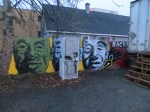
Faces
face
Trixter Raven hiding behind the truck like that!
Marge has fans far and wide.
This was on the road out towards Wassila.
Took this one at night
Cop!
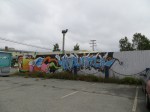
Food Vender
Random Bit
Note the face in the lower left.
Wildlife
It’s a secret mural.
This should drive the cultural conservatives batty-wonkers!
Have you heard about the big harbor at Cape Thompson in Alaska? Oh it doesn’t exist, of course, no thanks to the Atomic Energy Commission. they were going to make a harbor at Cape Thompson, just south of Point Hope. They were going to build it in a jiffy, so to speak.
I did mention this was the Atomic Energy Commission, didn’t I?
Project Chariot would have set off a series of atomic bombs at Cape Thompson in an effort to provide the proof of concept for operation Plowshare, a program to develop peaceful uses for nuclear explosives. In 1958, the prospect of geological engineering stood high on the agenda for the folks behind Operation Plowshare, and the Iñupiat people of the North Slope stood to become human guinea pigs in the process. Already showing signs of increased radiation due to above ground tests, the native population of the North Slope would have seen still more radiation flowing into the lichen to caribou highway to their own bodies. Luckily the natives of Point Hope understood radiation enough to fight back. It took an extensive public relations campaign and several years of struggle to stop Project Chariot. A lot of people fought damned hard to keep that harbor from happening and thankfully, they won, but that was hardly the end of the story.
.
When the Atomic Energy Commission finally gave up its plan to bomb the North Slope of Alaska for the purpose of building a useless harbor, it then proceeded to conduct a study of the radiation would have on Ogotoruk creek in Cape Thompson. Toward this end, they planted radioactive material in the creek and studied the effects.
…without telling anyone in the area.
Are you mad yet? I know I was when I first learned about this story. Bastard that I am, I just had to share the outrage, but I’m not going to tell that full story here, partly because I really am a bastard, and partly because others have already told that story better than I could. A thorough account of the controversy can be found in Dan O’Neill’s book, The Firecracker Boys. More recently, Iñupiat movie-maker Rachel Naninaaq Edwardson released a documentary on Project Chariot. Edwardson’s work raises a number of questions about the lingering effects of the tracer study and health problems in the Point Hope community (including concerns that something may still be buried at Ogotoruk Creek). Her film is available through the North Slope Borough School District.
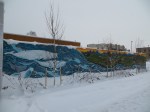
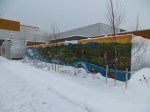
It’s been an odd year here in Barrow, rather warm in fact. Still, a bit of snow did manage to stick to a wall or three, and in due time a few creative individuals took the time to do something clever with it. I don’t have a huge batch of snow-graffiti this time, but a few of these are really cool.
In related news, I actually took the time to tweak a couple of these photos, nothing special. just enhanced the contrast and shifted the color a bit in an effort to make the art come through better. I wouldn’t say that I accomplished anything brilliant, but at least you can read the writing. This is, I think, the first post where I have actually done any post-production on a photo. Sometime, I may have to go back through my old pics and see what I can do to improve a few of them.
Click to embiggen! …come on, all the cool kids are doin’ it!
Snow Shark. He pretends to bring you arctic cotton, then eats your Gilda Radner
Sometimes moving to a new location can change your place in history as much as it does your place on the map. I first noticed this a day or two after arriving in Barrow as I watched a small child drive an ATV down the street. No-one seemed to notice, not that time or the next. I’m pretty sure that it’s as illegal here as it is most places I’ve lived, but law on the books and law in daily life aren’t always the same thing. So, I saw this for the first time, and the word ‘frontier’ came to mind.
…and I smiled.
Of course, the notion of a ‘frontier’ (with all its ideological baggage) would seem to place Barrow on the cutting edge of history. That notion comes up from time to time, especially in the context of oil exploration and drilling, but also with scientific research, and other topics that people like to project onto a scheme of ‘progress’.
At other times, the logic of history places us behind the curve, so to speak. By “behind the curve” I mean that we fall behind someone else’s idea of the direction history is supposed to be going. It might seem more reasonable to think of the issue in terms of straight-forward disagreement, people do things that others don’t approve of, but the point is that people sometimes filter such disagreements through ideas about the general arc of history. It may be a history they urge on the public, or it may be a history they take for granted, but people often plot their values on some sense of an historical timeline. It’s not real history that I’m talking about; it’s an ideological projection of the way history ought to proceed.
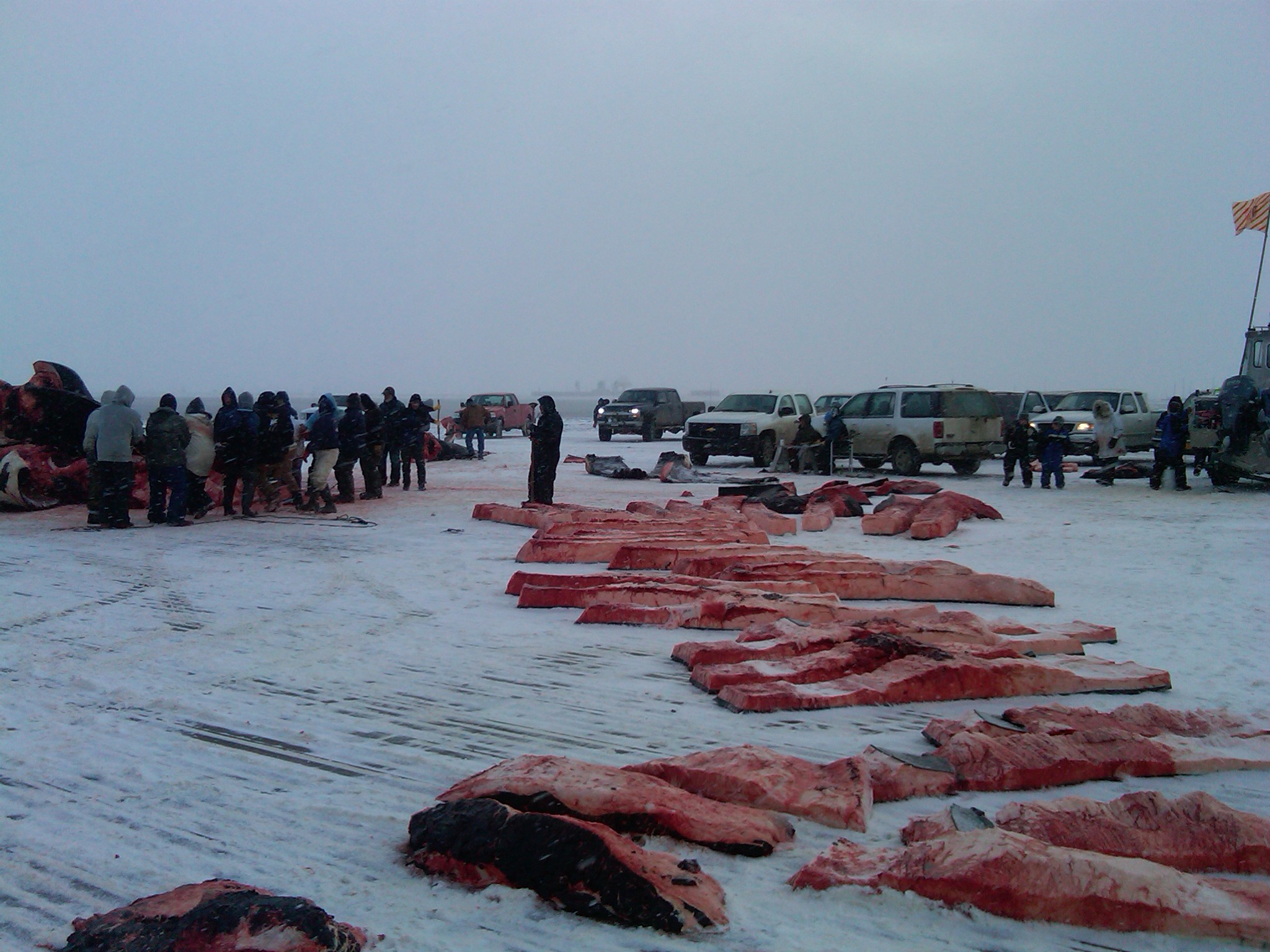
I was reminded of this quite clearly the other day when a student of mine recently shared the video below. It starts with some beautiful outdoor shots of Barrow, AK, but (readers be warned) it continues to show the butchering of a Bowhead whale. The video might seem a jarring journey to some, but for most of us (I believe) here on the North Slope, the transition seems quite natural. A whale harvest is a joyous event as it means food for a lot of people. Much as the serene images at the start of the video, a whale harvest is prone to make us want to smile.
I asked what kind of comments, the video had gotten. A moment of scrolling later, I received my answer. The images of whaling had drawn criticism both on the video and on my student’s Facebook account. On the video itself one individual had written; “It’s really strucked up about how cruel people are to animals. It would be great for all animals and humans to go vegan and to respect each other.” I smiled and laughed as I recalled the first time I posted images of a whale harvest to my own Facebook account. I’ve since learned to post warnings and what-not.
This is one of the many ways that life in Barrow (and much of Alaska) differs markedly from that of the lower 48; hunting is a way of life for many people up here. It simply isn’t for the majority of people down there, and at least some of those people imagine all of history moving towards their way of life. The many artifacts of subsistence hunting are bound to rub such folks the wrong way. A friend once commented about the necessity to remove one’s furs before hitting the Seattle airport, and we both laughed. Surrounded by folks in all-manner of furs, I could only imagine the reception some of the day-to-day outfits of the North Slope would get in other places.
I remember once trying to find a gift for a friend who likes Native American art. A vegetarian with significant interest in animal welfare, she would not have appreciated the ivory earrings or baleen etchings locals produced, nor the many varieties of fur. Most of the native artwork here involves dead animals of one form or another, and that really should come as no surprise in a community where hunting is for many people a fundamental part of their way of life.
The issue isn’t simply a question of whether or not to support or oppose hunting, fur, whaling, and so on.; it’s also a question of how you frame the issues. There is a big difference between the commercial fur industry and the hand-made clothes of locals who’ve eaten the meat previously kept warm by that same fur. Likewise, there is a big difference between a whale taken for commercial purposes and those whose blubber will be shared out to the community. Whether or not that settles the issue is another question, but quite often I think people simply fail to notice the difference.
Which brings us back to whaling!
There is a world of difference between the significance of whaling up here and the meaning given to it in other places. This problem was all over a New York Times article on Spring Whaling published a few years back. Its author framed the whole issue in terms of ‘tradition’, then proceeded to worry over the use of technological innovation in pursuit of that tradition. I also recall a discussion of the Makah whale hunt on a random website (I can’t find it now). Participants simply dismissed the idea that native whaling could be anything but a token gesture, a practice akin to preserving a museum exhibit. A similar view can be found in one of the comments to this post, Whaling Camp: Frozen Seas and Ice-scapes at the blog, Cutterlight. In response to this post, a woman named Kirsten Massebeau wrote:
There is no humane way to kill a whale. Today we know whales and dolphins are higher beings. Sometimes these whales suffer for up to 5 hours after being harpooned. Isn’t it time we stop letting the word “tradition” be an excuse for doing something so wrong. Please stop murdering the people of the sea! You are obviously wearing store bought clothes and shoes. Surely you can see your way clear of murdering our ocean friends.
Don’t get me wrong, I think this woman (as with others) raises some legitimate concerns in her comment, but I also think there are legitimate answers to those concerns, and I think the whole thing thrown askew by a certain refusal to take the Native Alaskan population seriously.
What all of these examples have in common is a refusal to allow or even to imagine the practice of whaling in the modern world. They cannot even fathom the possibility that such a thing could occur in the present world. To many of these folks, whaling (or at least the indigenous version of it) is by definition a thing of the past, a mere tradition, and one gathers an empty one at that. This seems to be a common perception of whaling on the North Slope, and that perception injects a great deal of prejudice into any subsequent discussion. It is a prejudice shaped and defined by people’s ideological views about history as much as anything else.
Whaling here on the North Slope is first and foremost a native matter, but it affects us all. The effort to bring in a bowhead is not limited to the crew of a single boat. Extended families and friends all work together to outfit and support a given crew, and the entire community of the North slope accommodates the needs of those involved. Time off from work is granted without question when it’s time to cut a trail through the ice. Homework deadlines are extended when it’s time to butcher and cook the blubber. Blubber and meat are shared throughout the community following a successful whale harvest. Whaling is no quaint tradition on the North Slope; it is one of the most important economic activities taking place up here.
Seeing the importance of whaling to an entire community, the condescension of some of these random comments can be quite maddening. Of course these are merely random comments on social media, but they provide a telling glimpse into the way that the larger public closes itself to local realities. Folks just can’t seem to find room in their view of the present for activities such as whaling and subsistence hunting. Presented with evidence to the contrary, it seems a common response to construe such things in terms of a museum exhibit.
…even when that exhibit is real people going about their daily lives, very much in the present day.
***
Epilogue: The disconnect between people’s perceptions of whaling works both ways. I recently received a charming example of this when a student of mine who teaches in one of the local villages passed information about the New England whaling fleet of the 19th century onto her own native students. They wanted to know how the meat and blubber would be shared.
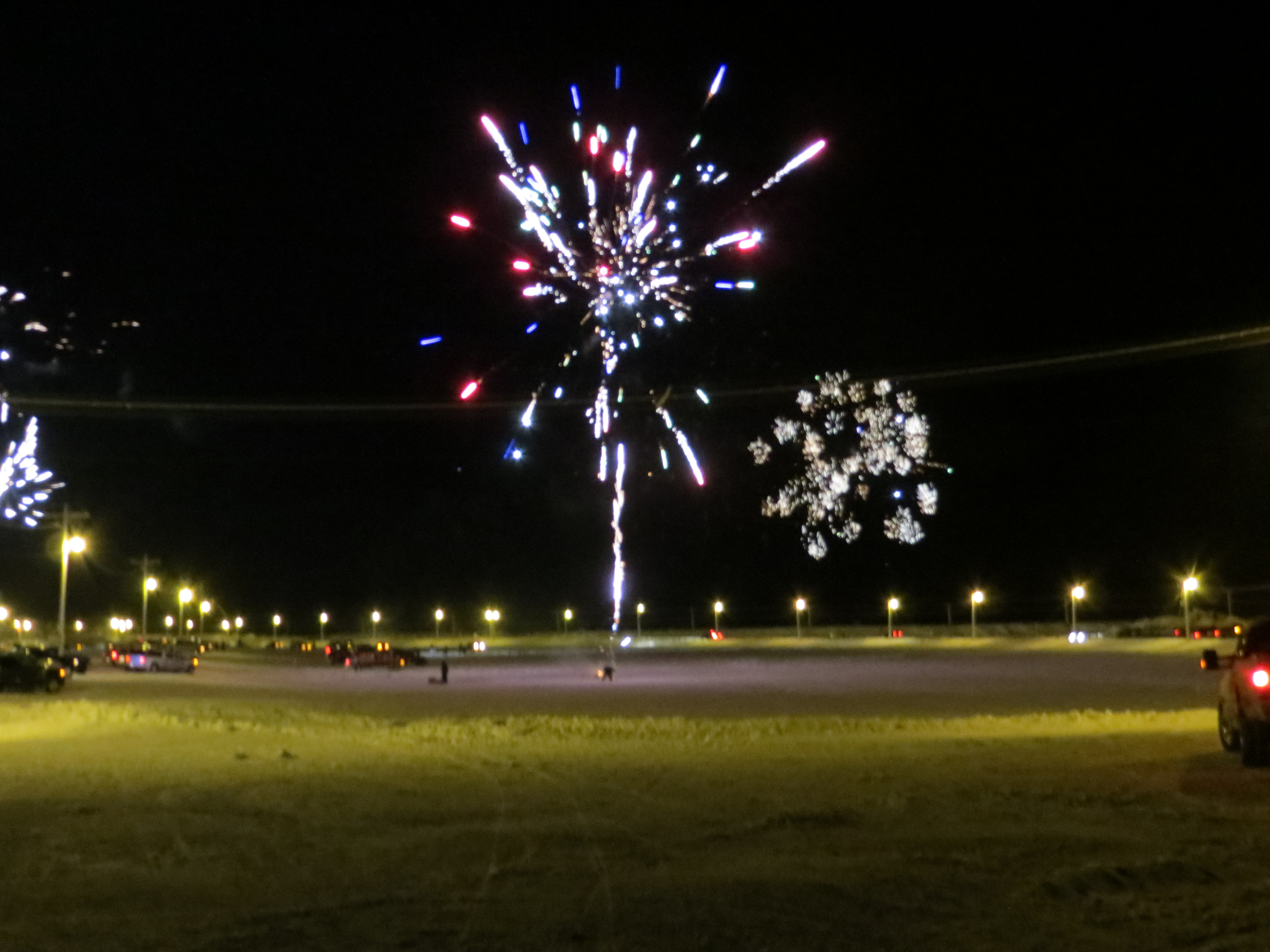
It was a good New Year here at the top of the world. It began at about Texas-Midnight when Maria Falvey posted one of my old Blackberry pictures to her blog. She cropped the picture perfectly and just generally made it much better. So, I was pretty psyched as I headed out at 11;30 to watch the fireworks. Course I didn’t realize the fireworks actually start before midnight, so I could see them going off as I walked down to the lagoon where the whole event took place. Luckily, there was plenty of bang to be had last night, so I still made it in time to see plenty of cool pyrotechnics.
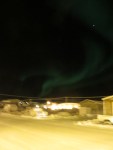
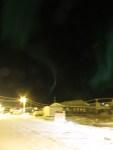
I tried to get some videos of the fireworks, but my camera kept freezing up. It wasn’t working at all during the grand finale. Still, it was pretty cool standing just about directly under some of the blasts, but I have to admit the Aurora may have pwned the whole display shortly thereafter. Conditions (which include a bad photographer and a camera that wanted to hide in my pocket) were less than ideal, but I finally got some pics of the Northern Lights worth showing.
…I think.
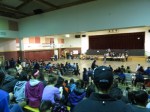
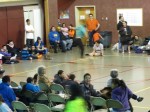
So, I walked over to the elementary school to watch the last night of the Winter games. This is an annual event here in Barrow, the community spends a week on a variety of odd contests late at night, all of it ending with the New Year. Tonight, the contest was between singles men and married men, and the same for women. The women were neck-a-neck, but the single men were getting their asses kicked. If only I had the courage to go down there and join in, …then I guess I would have to say that WE got our asses kicked.
…and I guess we did anyway.
Suffice to say, I stayed in the stands last night, but I had fun just the same, as did most everyone I could see.
Things got started a little after 1:00am in the morning and they were still going strong when I wimped out at about 4:00am. Anyhow, the photo-gallery is just below, and I’ve included a few videos afterwards. You may click on a picture to embiggen it. I don’t know everyone featured below, so if anyone from Barrow sees themselves and prefers not to be featured here, speak up and I will be happy to take your picture down. In any event, it was a great evening, and I really enjoyed all the activities.
Happy New Year everybody!
Bang!
Bang Again
Multi-bangs!
The best part about this one is the light from the snow machine on the snow.
Moar bangs!
A purdy bang!
Boom!
Crackle and Pop
Whizz-bang!
By the time I got away from the bright lights the Aurora was gone.
But it was cool while it lasted.
I thought so anyway.
That narrow band didn’t last a full minute.
Off to the party!
Almost 1:00am, do you know where your kids are? At school of course!
Mid-Jump
The Neck Pull
Nuther Neck Pull
This really does look painful
A brief clip of fireworks.
Jumping!
Both the men and the women have moved on to new games.
If you’re curious about the counting in this one, it’s because no-one had stepped up to challenge the singles-guy on the neck-pull. A ten-count is essentially a way of saying step-up or it’s over.
I don’t recall what this men’s game is called, but the women’s challenge in this one looks especially tough.
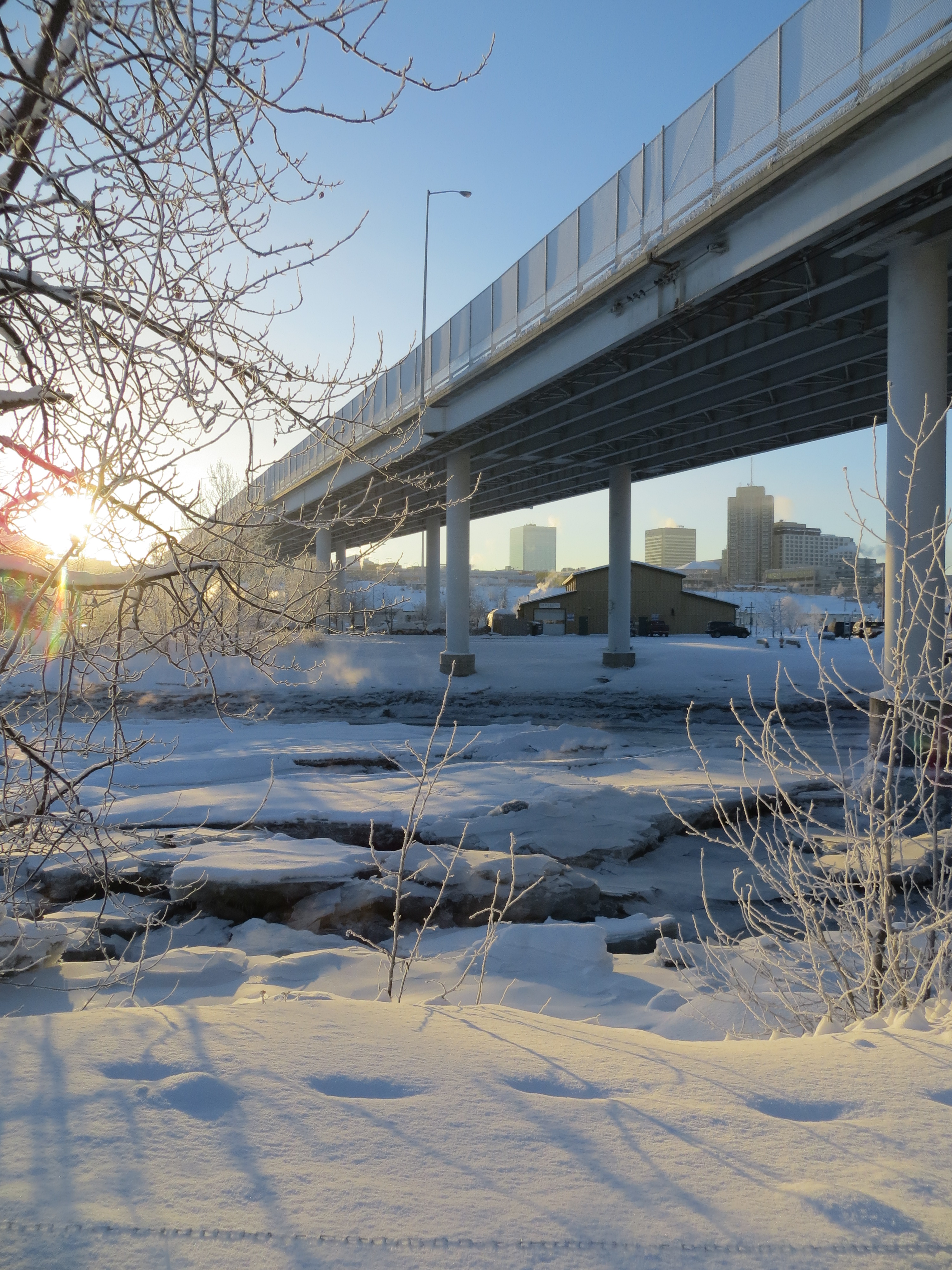
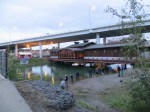
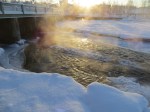
Ship Creek Trail near downtown Anchorage is always good for a nice walk, even in the winter. It’s at least a little odd, because there are always factories and warehouses just beyond the trees, and of course downtown is never far away, but the trees and the water work their magic quite wonderfully.
In the summer a small shack sells fishing gear near the bottom of the trail, and a good day will see plenty of people hoping to catch something, or perhaps to just pass a little time with a rod in hand. Alongside the shack, one finds an upscale restaurant on a low bridge, all of this under an overpass. The end result is an oddly rustic (almost rural) scene nestled snug into a concrete frame. The restaurant is only open for 3-months of the year
I’ve wandered down this route a time or three now and managed to get a few decent pictures. So, let’s see…
A couple of months back I found myself in Anchorage without too much to do. On my last day down there the devil that sits on my shoulder lost a debate with the nerdy bookworm that sometimes passes for my angelic adviser, and so I actually chose to do something instructive and educational. I went to the Anchorage Museum.
Don’t be too disappointed; it was actually kinda cool. My favorite part of the museum was actually the science exhibit, much of which was interactive. sadly, I don’t think my pictures and videos did much to capture the brilliance which was that particular part of the museum. Being a museum, the place was of course full of wonderful artifacts and displays casting light on all manner of things Alaskan. Being a cruel fellow, I am not going to show you much of that.
…at least not today.
No.
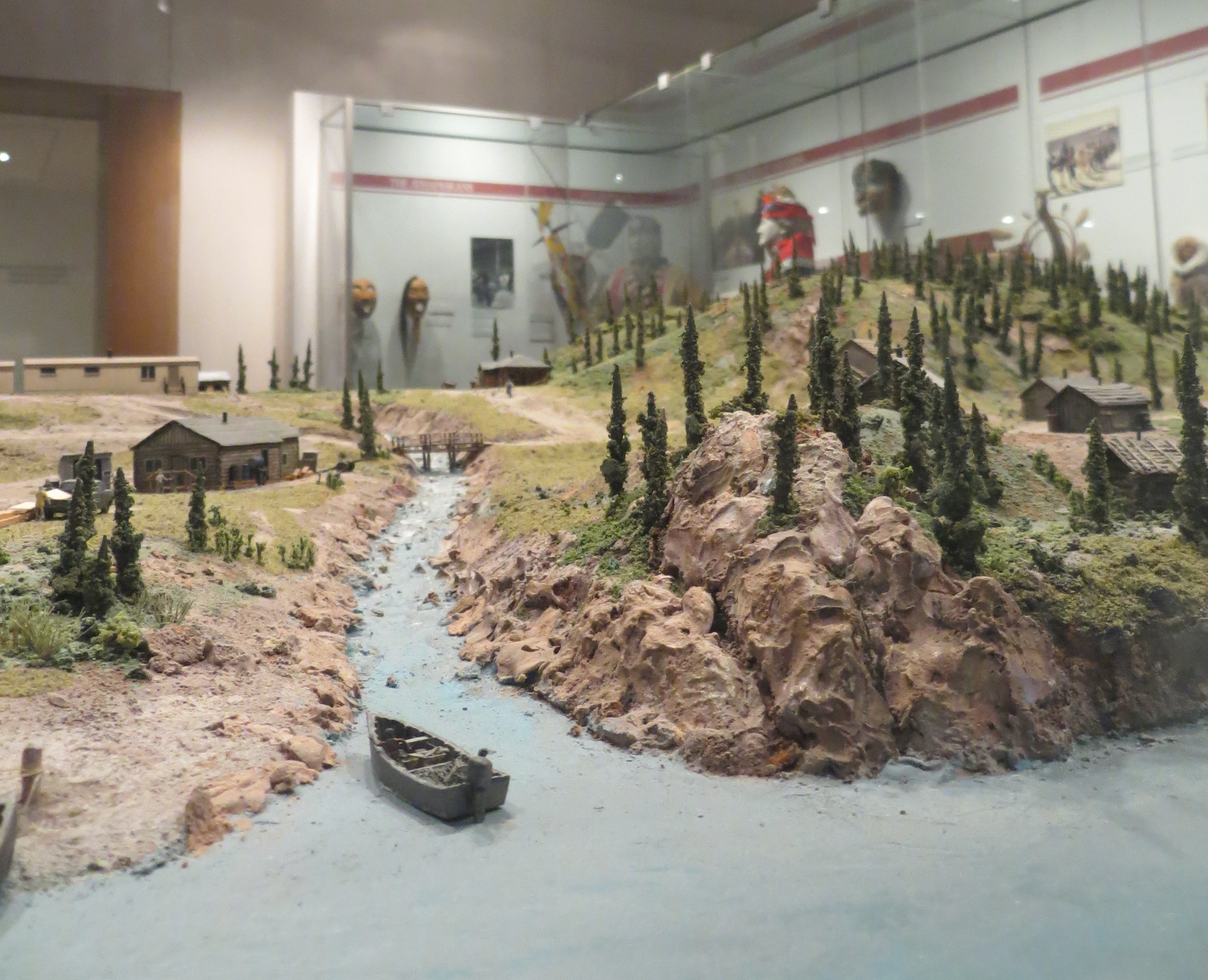
Today, we are looking at dioramas. A number of these were strewn about the museum, and I managed to get few decent pictures of some. I won’t pretend that this is a complete set, so to speak, as I am pretty sure that a few of thee exhibits told my camera to screw off and I completely neglected to right those wrongs, but at any rate, these are the pics I got. Both my devil-advisor and my nerdy-near-angel hope you enjoy them.
Quick Note: rather predictably, the scenes depicting Alaska Natives seem to have got most of my attention here. Depending on how broad you want your paint strokes to be we can bundle the Native Alaska population into 3, 5, or lots of general groups. I would normally go with 5; the natives of the outer Aleutian Islands (Aleutian or Unangan, depending on who you ask); the Alutiiq (or Sugpiak) of the Eastern Aleutians parts of the Southwest coastal region; Yupiit of the Western coast, Inupiat of the Northern coasts, and Athabaskans who occupied interior Alaska. For those wondering, the Yupiit and Inupiat are the natives once commonly referred to as ‘Eskimos’, but we aren’t going to do that here. …oh, and let’s not forget the Northwest Coastal natives, who are ironically located in Southeast Alaska. When I say “Northwest Coast natives” I am referring to a common classification used by anthropologists to break the Native American population into about 10 distinct culture areas. So, ironically enough, Alaska’s Northwest Coastal natives are in the Southeast. …and if that manner of speaking seems weird, then the devil on my shoulder is well pleased.
I don’t seem to have pictures (even bad ones) for Yupiit or Alutiiq populations. I don’t know if Missed an exhibit or if I just wasn’t in a button pressing mood when I happened upon them. So, we have here representations of 3 native populations (depicted more or less as they might have lived prior to contact). I also have a few other pieces on the Alaskan Railroad, the Aleutian Campaign of World War II, and one beautiful scene of a community that I failed to identify (cause I’m a bad man).
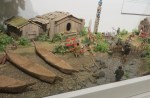
A small community on the coast.
This piece represents Northwest Coastal natives.
The Northwest Coastal Natives (mainly Tlingit and Haida)
This part of Alaska is about as far from Barrow as Orlando is from New York.
Elder Native.
Elder from another angle.
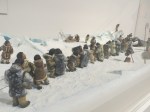
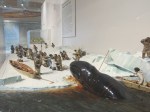
Inupiat hauling up a Bowhead Whale
Lots of mini muktuk for the mini villagers!
Yes, they still do this. Add a few modern tools to the diorama, and this could be a Spring hunt today.
These are the railroad shops of about 1919.
The shops are of course where railroady stuff got fixed.
This represented an Athabaskan community hunting caribou.
Definitely not the best picture, but this is another pic of the Athabaskan village.
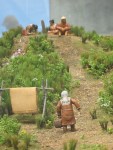
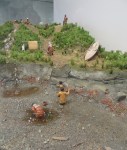
Aleutian village.
Aleutian Villager.
Aleutian Home haunted by a reflection from some other exhibit.
Aleut Village Again.
Moar Aleutian Goodness!
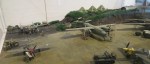
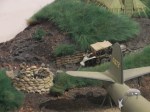
This depicts the Aleutian Campaign in World War II.
More from the Aleutian Campaign
The weather was probably as much trouble in the Aleutian campaign as the Japanese

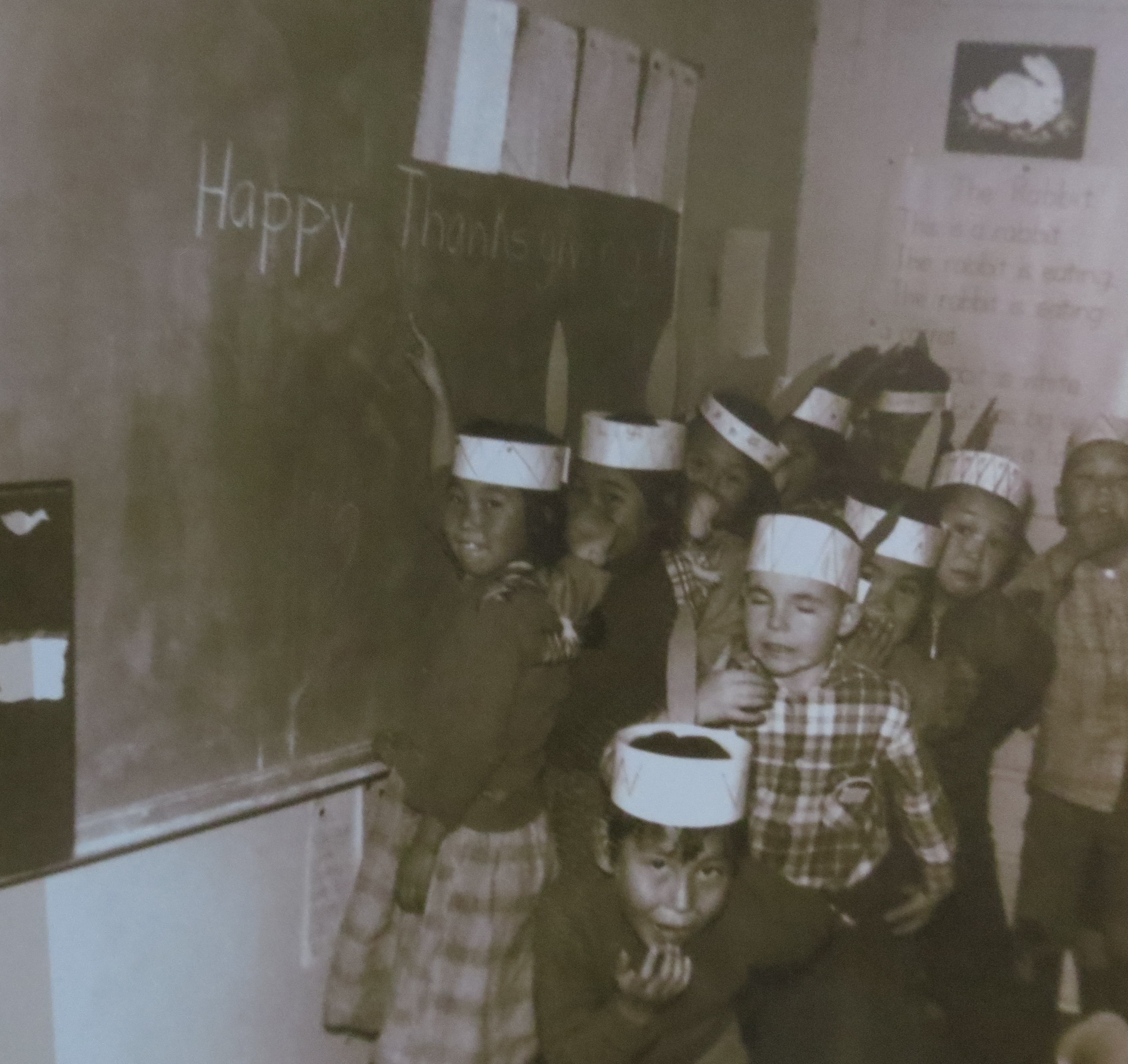 Take a look at this image from an old Thanksgiving celebration. It’s part of an exhibit at the Alaska Native Heritage Center (which is definitely worth a visit if you are ever in Anchorage).










































 northierthanthou