• About

northierthanthou

northierthanthou

Category Archives: History

Yep! This is where I put the stuff that pertains to history. Take notes, because there will be a test.

A Certain Value of ‘Greatness’

25 Sunday Oct 2020

Posted by danielwalldammit in History, Native American Themes, Politics

≈ 17 Comments

Tags

America, Crime, Donald Trump, Gender, Indian Wars, Labor, Slavery, Trump, USA
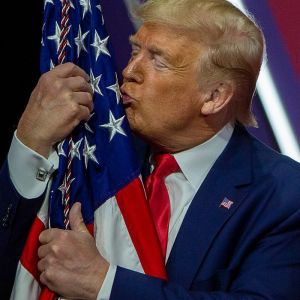
When exactly do you suppose America was great according to Donald Trump?

When do you suppose it was great in the minds of his supporters?

America is not great now, at least not in the minds of Donald Trump, and it certainly wasn’t great when he ran for office. That much is clear from the very nature of his old campaign slogan. “Make America great AGAIN,” certainly means it’s not great in the present age, at least not when he decided to run.

Perhaps Trump and his supporters might think to claim the economic stats he used to parade as success stories in the first 3 years of his administration made the difference and pulled us all the way from something else to greatness. How those economic trends differed from those under Obama is a different question, and whether or not Trump did anything but coast his way to a good look on paper is another. Either way, I could imagine he and his supporters might see in that enough cause to claim putting his label on the nation had made us all great again, but that would be a thin pretext indeed. Regardless, the moment in which this pretext could be claimed is long since gone at this point, and we are back to the same other-than-great world Trump seemed to see in America back in 2016.

***

So, when was America great in the minds of Trump and his supporters?

Could it be when Thomas Jefferson said that “all men are created equal?

Or when Martin Luther King challenged us all to live up to that very principle?

Some folks might say ‘both,’ and maybe so, but that is the answer to a different question. I didn’t ask which message you approve or admire? I asked when do you think America was great in the minds of Donald Trump and his supporters?

Maybe the former, but only if we discount the latter. They might well love the promise of equality and freedom, but only so long as that promise remained unfulfilled for a great many Americans. To the deplorables, the gap between American ideals and our political realities is an essential feature of our greatness. The greatness they seek is always gained at the expense of others.

***

I really don’t see how there could be any doubt in the matter. This man is a bully, and he has a bully’s sense of the world around him. His heroes are bullies. His villains are those that stand in their way. The vast majority of mankind are but cannon fodder by which his heroes distinguish themselves. They are the human sacrifices by which true greatness distinguishes itself from the mere men and women of ordinary humanity. Greatness in the world of Trump is a boot ground into the neck of someone unable to do anything about it.

(Or a knee.)

When was American great according yo Donald Trump and those who support him?

***

When slaves were sold on the market in Charleston, South Carolina, and when the profits from slavery flowed into all of the United States, North and South alike. This was greatness in Donald Trump’s world.

When Confederate Statues went up all across the south, reminding African-American that those who held slaves in bondage were the real heroes of their time, that was greatness in the world of Donald Trump. The suffering of African-Americans in slavery, and in segregation was (and is) a small price to pay for the greatness made possible by the profits of slavery.

…and the second class citizenship which was to follow.

There are those who would return African-Americans to that very second class status in the most explicit terms possible. Trump is a hero to these people. He would deny it of course, but countless White Supremacists have organized in the wake of his rise to power, encouraged by a dog-whistle here, a slow condemnation there, and of course the occasional glaring statement of racist sentiments by Trump or those in his inner circles.

There were those who thought the existence of a plebeian class in America was critical to republic, the price of greatness for those free enough to enjoy it. Clearly, a number of Americans see in Trump’s rise to power the chance to reconstitute that servile class of Americans who don’t quite enjoy their full rights.

For those who share this vision, every confederate statue is a memorial, not just to history, but to a natural aristocracy. Most, I expect imagine themselves the righteous heirs to that aristocracy, denied their proper station by the corruption of liberals and various minorities who are but pawns duped by the white liberal agenda.

It’s a message driven home every time right wingers tell us about the evils of the “Democratic plantation,” or tell us, as Phil Robertson once did, that African-Americans were happier in the days of Jim Crow than they are now living in the shadow of this very ‘plantation.’

For a good portion of Trump’s base, greatness lies in hierarchy, but only when it’s the right kind of hierarchy. In their world, we are all a little happier with slavery or something as close as they can get to it. Equality just means people end up in the wrong places within that hierarchy. For America to be great, each must be in his or her proper place.

***

Lest anyone forget this greatness, the greatness of slavery, it is celebrated in the Star Spangled Banner before every ritual in America’s one true religion, professional sports! This celebration takes the form of the star Spangled Banner, a song which triggers in every good American the obligation to display their loyalty and love of the nation by standing with their hands over their hearts for all to see. Any athletes who take exception to this on behalf of African-Americans mistreated by the police become enemies of America itself, and of its greatness, at least in the eyes of Trump and the deplorables.

That the full song includes a stanza celebrating the return of escaped slaves to their former bondage is perhaps a little more significant than this little-known passage would seem to suggest. That great celebration of freedom is also a celebration of slavery.

A point well made every time Trump and his fans demand obesiance of players and seek punishment for those who hesitate.

***

When Jewish women jumped from the upper floors of the Triangle Shirtwaist Factory in hopes of escaping the flames consuming the building and those within it, that was greatness to Donald Trump. It was greatness, because it was the price paid for great profits and a nation of industry unfettered by regulation or those Goddamned unions and all that bullshit red tape that comes with them. Those were days when Captains of industry were free, dammit, free from the death of a thousand paper cuts that require working fire escapes, reasonable work hours, and countless other protections for the safety and dignity of workers. That world without such regulations, that was greatness to the likes of Donald trump. The women who died in that fire? They were the price paid for the captains of industry to thrive, and the success of those men was worth every life snuffed out in the Triangle Shirtwaist fire.

…and every indignity suffered by any worker ever sacrificed in the name of that greatness.

***

When Custer died for our sins on the greasy grass, THAT was greatness.

A great sacrifice.

And before that when Custer sacrificed the lives of Cheyenne Women and children at the Washita River, that was greatness, a greatness beautified by the music of Garyowen. Garyowen was the song played by Custer as he attacked Black Kettle’s encampment in the early morning of November 27th, 1868. Still reeling from the massacre at Sand Creek, Black Kettle had come to the Washita River in the hopes that he and his people could camp in peace and stay out of the fighting (just as they had tried to do at Sand Creek 4 years earlier). Custer showed them American greatness!

Lest the lesson be lost on any of us, the Trump administration made a point to play Garyowen at their July 4th celebration at the Black Hills this last summer. Most of America would have missed the message sent to Native American activists that day, perhaps noticing only a slight trace of nostalgia for the old west upon hearing the tune without quite knowing how they had come to form that association. For those that knew the tune, however, the message was unmistakable. What made American great was its willingness to slaughter Native Americans, not to respect them or their lands or anything else about them, but to slaughter them.

Accompanied by a catchy tune!

***

This message should have been clear enough earlier in Trump’s administration when he honored the Navajo Code Talkers.

With the name ‘Pocahontas’ falling from his sneering lips.

And the image of Andrew Jackson presiding over the whole scene.

***

Was greatness Abigail Adams telling her husband; “Remember the Ladies?” Or was it John Adams’ response, dismissing her concerns with platitudes about who is really in charge? Does greatness lie in Susan B. Anthony’s efforts to cast a vote in direct violation of the laws of her day. Or does it reside in the fine levied against her for doing so? Perhaps it can be found in Trump’s decision to pardon her? Or in the decision of the Susan B. Anthony Museum and House to reject that very pardon?

Could her greatness reside in the courage to break an unjust law, a greatness only erased by Trump’s worthless pardon?

Or did greatness actually reside in Trump’s pardon itself, a gesture which effectively put Anthony in a league with then likes of Sheriff Arpaio, Roger Stone, or Dinesh D’Souza, all men who have spent their entire lives punching down at those less fortunate than themselves? Some might think these men unworthy of respect. Clearly, they meet Trump’s standards of greatness. I somehow doubt, he’d have thought to put Anthony on par with these feckless whores if she were alive today and ready to give him a piece of her mind. A few a Republicans have indulged in fantasies about taking the vote away from women since Trump’s rise to office. If Anthony really does count as great to Trump, it is for a cause that neither he nor his supporters seem eager to support themselves. I don’t think Trump has suggested taking the vote away from women himself, at least not in public, but it’s easy enough to see how others might see it in Trump’s willingness to trash any woman who stands up to him in public.

…a point driven home withe every humiliation Trump unleashes on any woman who dares to stand up to him in public.

…or when facile deplorables make a point to remind us of the women who Trump always finds to speak on his behalf.

…as he punches down at others.

…other women.

***

I could go on of course, but you get the point. If America was ever great in Trump’s eyes, it was precisely when America’s greatness was clearly obtained at the expense of others, and that expense was itself celebrated openly in full view of bystanders and surviving victims alike.

For both Trump and his supporters, it must be said, the cruelty is always the point. If there is anything about America that they well and truly love, that is it.

Cruelty

That is what passes for greatness in the land of Trump.

Share this:

  • Tweet
  • Share on Tumblr
  • Print (Opens in new window) Print
  • Email a link to a friend (Opens in new window) Email
  • Share on Reddit (Opens in new window) Reddit
Like Loading...

Happy Seward’s Day!

30 Monday Mar 2020

Posted by danielwalldammit in Alaska, History, Native American Themes, Public History, Uncategorized

≈ 3 Comments

Tags

Alaska, Art, History, Ketchikan, Saxman Park, Seward Shaming Pole, Totem Pole, William Seward, Wood Carving

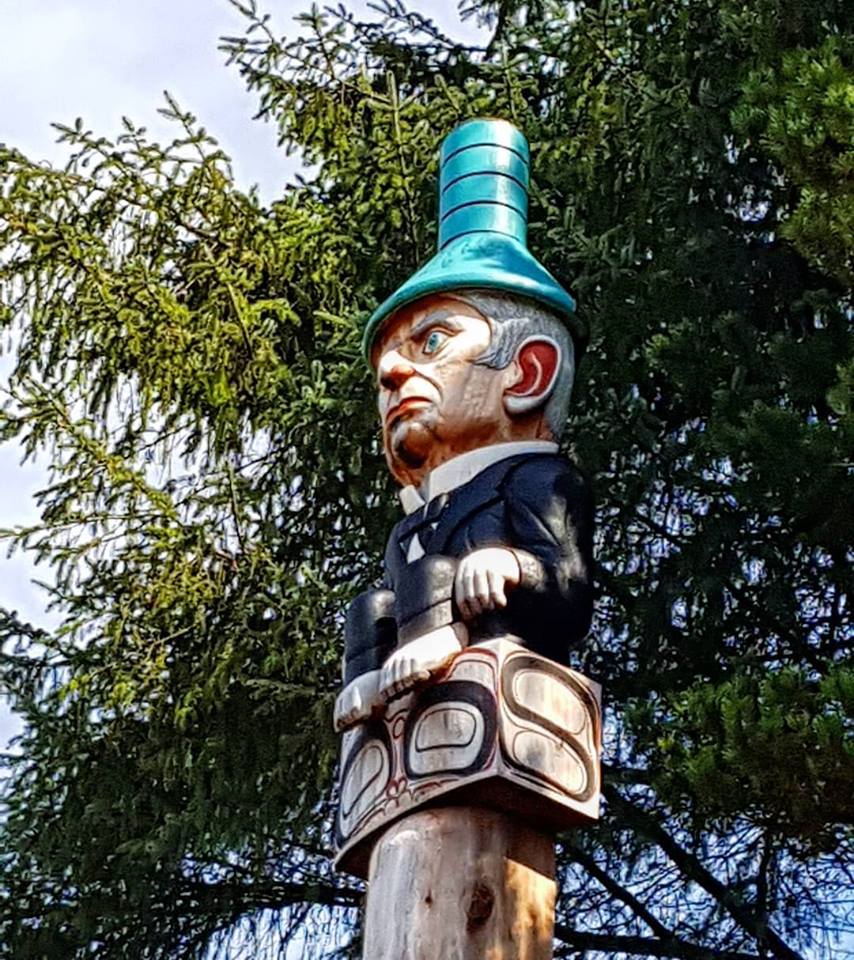
Not to be sarcastic or anything, but I’ll just leave this here.

31280051_10216222128450975_6457664555075357310_n

Share this:

  • Tweet
  • Share on Tumblr
  • Print (Opens in new window) Print
  • Email a link to a friend (Opens in new window) Email
  • Share on Reddit (Opens in new window) Reddit
Like Loading...

Spurious Responses

01 Saturday Jun 2019

Posted by danielwalldammit in History, Politics

≈ 10 Comments

Tags

Critical Thinking, Defensiveness, History, Internet, Pinterest, Quotes, Rationalization, spam, Spurious Quotes

totallyreallincolnnailsitBeen thinking a bit lately about THIS old post?

It’s still an interest of mine.

So, I sometimes make a point to call out the spurious quotes thriving all over the net these days. It’s not the most noble of personal callings, I know, but I noticed a long time ago that the information correcting some of this stuff isn’t often found in the same electronic neighborhood as the political pornography in which these bullshit quotes normally reside. So, I reckon it ain’t the least useful thing a guy could do with a spare 15 minutes or so to introduce the author of an un-sourced quote to a well reasoned debunkitation.

I’m often fascinated by the responses I get.

***

I was quite interested when Pinterest suspended my account for a few weeks, …I think over this. I could be wrong, but I do think this pastime is what did it.

The thing is, you can find the same spurious quotes in countless memes all over Pinterest. It’s just so damned easy to spread information when all it takes is the click of one ‘save’ button. The net is full of ccrap, I know, but the political hashtags at Pinterest are a particularly bullshit rich environment.

I can say it in a few different ways, but what needs to be said in response to these fake quotes is usually pretty simple, and I can’t help thinking a good link to Mount Vernon or Monticello.org ought to find itself somewhere in the response. The link alone really ought to suffice. The trouble is that these misquote-laden memes are distributed through a variety of different accounts on Pinterest. If I’m posting a lot of links to the same page correcting them, then of course I am the spammer.

Oops!

Don’t get me wrong, the principle in question makes a kind of sense, as does its application. You don’t want someone posting the same link over and over again on a social media platform, but it does create an ironic outcome. In this instance, at least, it seems that’s a lot easier to spread disinformation than it is to counter it.

Oh well!

***

Before moving onto the more personal responses I’ve gotten over the years, I must admit that my own tone here varies. If I think the person passing along a fake quote has done so accidentally, I try to just call attention to the problem. Hell, I reckon I’ve probably made this mistake myself once or twice. It ain’t no hanging matter; I just want to correct a (hopefully honest) mistake. If, on the other hand, the fake quote is accompanied by narratives about how teachers, media, and liberals are too damned deceitful to share the ‘truth’ of the quote, I must admit, my own response is likely to come with a little sarcasm on the top. There are of course other signs of bad faith that I typically meet with a more combative tone.

Sometimes I’m nicer about this than others.

Also, sometimes, I just ask people for a source to see what they come up with.

Anyway…

***

Oh yeah, my first post on this topic, the one about Abe Lincoln, has a couple rich responses of its own. Still kinda chuckle about those.

***

By far and away,, the most interesting response I get is the occasional effort to document the quote by linking me to the ‘spurious quotes’ pages at Monticello or Mount Vernon. Seriously, this has happened a few times.

“Did you read it?” I ask.

At least once, someone realized their mistake at that point and owned up to it. She gets props for doing the right thing.

Once I was assured by someone that clearly hadn’t read the material that he totally had read every word of it. He also assured me that he understood what ‘spurious’ means. Yep! Definitely! We went a few rounds on that, before he dropped out of the conversation. A ‘block’ button may have been pushed. I dunno…

Others simply stopped responding immediately.

Someone else told me I was being rude.

…which was of course true.

***

Several people have tried to tell me that the quote in question may have been undocumented, but that it accurately reflected what the person to whom it was attributed really did believe. I got this at least once with a popular bastardization of George Washington’s first address to Congress.

…right after I had explained in detail exactly how the quote misrepresented him.

It seems that to some people making this argument these quotes are a kind of Kantian thing-in-itself (a truth truth-in-itself?). The truth as they envision it rests over and above the facts, even the facts of its own expression. If you can’t find one clear expression of that truth in the messy real-world of the historical record, that doesn’t matter, because we know the truth and the source to whom it has been attributed must have known it. So they might as well have said it.

It’s all true anyway, so what’s the problem?

This is one of the more disturbing responses I get, because it reveals an air tight echo chamber in the thinking of the person in question. They love America’s founding fathers and they love their guns and such, and two things they love must love each other, and so when the real-world George Washington doesn’t live up to their masturbatory fantasies, well then, they can just speak up and say what he woulda said anyway.

The rationale also works for any number of subjects certain people feel America’s founding fathers must certainly have loved every but as much as they do.

…even if those founders didn’t actually say so.

Not much to be done about folks who reason like that.

***

Another common response is to ask how I know the quote isn’t real.

…and that’s one of those moments when I remember why burdens of proof matter.

***

A related tactic is to assure me that the quote is real and tell me to do my own research. Faced with credible sources that claim the quotes can’t be found in any known archives, those using this tactic assure me that the quote is real and that we skeptics really ought to work harder.

…which brings to mind words like ‘gaslighting’, ‘trolling’, ‘asshole’, and a  quick end to the conversation.

***

Sometimes people complain that my efforts to check them reveal a character flaw on my own part. Don’t I have anything better to do?

No such questions seem to have been asked about the time it takes the individuals in question to pass along a spurious quote. But of course, we all have much more important things to do when the one we are presently engaged in turns out to be a little frustrating. It’s human nature.

***

Probably the most common response I get to declare the source of the quote irrelevant. It’s the idea that matters, I am told, and surely that idea is true. So, it doesn’t matter if Thomas Jefferson or Benjamin Franklin or any other made up source didn’t really say what they were supposed to have said. That’s not the point. The point is it’s true.

I must say that it’s an interesting coincidence that so many timeless truths that could come from any source really, seem so often to be attributed to sources of great political value. It’s also an interesting coincidence that so many of them seem quite useful to specific political agendas today, agendas which often sail under the banner of faithfulness to American principles and respect for the wishes of America’s founding fathers. It’s really quite convenient that so many questionable quotes would seem to provide the politics of the people in question with the authority of a voice from the founding fathers. The sources really don’t matter, so it seems, not after the source has been debunked.

Perhaps I could be excused for thinking the source mattered, at least a little, before that source came into question.

What I always find most interesting about this tactic is how seamless the transition is from presenting an undocumented quote to declaring the named source irrelevant to its content. People employing this tactic rarely take so much as a moment to acknowledge their error. Often they avoid conceding the point altogether as they shift from a historical claim about who said what to a kind of Platonic reasoning in which the idea itself is all that really matters.

And thus a person wholly unconcerned with the falsehood of a factual claim suddenly becomes the priest of a timeless truth.

***

Oh yeah, some people don’t respond at all. Some just keep right on producing the bullshit quotes too. This is particularly true of some websites like BrainyQuote. It’s also true of some dedicated ideological warriors. They just keep right on posting the fake quotes long after a reasonable person might have at least quietly deleted the material from a blog or a social media account.

***

There is one response that gets me every time, and that’s the one where somebody simply acknowledges the mistake. Often this is followed by a ‘thank you’. Maybe they take down the quote. Maybe they just let their acknowledgement of the correction stand for itself in the discussion. Either way, it’s a class move.

These days, such responses surprise me a little more than they ought to.

…and that’s kinda sad.

***

I suppose it doesn’t really surprise me that people would respond defensively to such things. People don’t usually like to be corrected. I know I don’t. And of course, any of us could get things like this wrong. That’s not terrible. It’s human. Still, some of these rationalizations do seem to give you a peak behind the curtain, so to speak, into the mind of someone for whom due diligence is simply unthinkable. They must be right one way or another, so they seem to think.

…even if they are wrong!


Share this:

  • Tweet
  • Share on Tumblr
  • Print (Opens in new window) Print
  • Email a link to a friend (Opens in new window) Email
  • Share on Reddit (Opens in new window) Reddit
Like Loading...

Candace Owens in Context

10 Wednesday Apr 2019

Posted by danielwalldammit in History, Politics

≈ 5 Comments

Tags

Candace Owns, Charlie Kirk, History, Hitler, prejudice, Racism, Ted Lieu, Turning Point USA, White Nationalism

…been awhile!

imagesSo what has me thinking with my keyboard again after such a long absence from the blog? It’s the latest dust-up over Candace Owens’ comments on Hitler. Owens was recently called to testify as a witness for congressional hearings on the topic of hate crimes by white nationalists. Expressing contempt over the decision to bring her in for such testimony, Ted Lieu opted to play ‘the first 30 seconds’ of comments she once made on the subject of Adolf Hitler. He then moved on to ask another witness about the significance of those comments, leaving Owens without a chance to respond and the rest of us without much sense for the context in which her comments had originally been made. Given the chance to respond shortly thereafter, Owens charged asserted that Lieu had assumed African Americans wouldn’t look into the matter further, suggesting she had been taken out of context.
…and the fight was quickly farmed out to various social media platforms.

Such is modern politics!

First let me say that this was not one of Lieu’s finer moments. It’s hard to get past the sense that he left out critical information about the context of Owen’s remarks or the sense of unfairness that goes with attacking someone in their own presence without giving them a chance to respond. I can think of all sorts of reasons why he might have chosen to do this, and yes, I want to support his efforts here, but this falls short of certain minimum standards that ought to guide someone’s conduct. Lieu can do better than this. He normally does.

That said, I can certainly empathize with Lieu’s unflattering take on Owens’ credibility. She is not an expert in politics, crime, or anything else coming up in that hearing. It’s tough to say just how we came to the point where Candace Owens counts as having something important to say at a congressional hearing on racially motivated hate crimes.

Answering that question was actually the first thing Owens herself addressed at the hearings. Why was she there? She told us. Her answer just wasn’t all that helpful. What Owens said was that she has herself been the target of racially motivated hate crimes. She said this in order to establish a personal connection to the issue, then went on to talk about anything but that very issue. The rest of Owens’ opening remarks were spent reminding us that words like ‘racism’ meant something in the context of segregation in the old Democratic South while the real threats to African-Americans today come from Democratic policies purportedly aimed at helping them. In short, Owens was there to minimize the significance of racially motivated hate crimes against minorities and shift the discussion to something that might embarrass the Democrats.

You can see all of this for yourself in the video from C-SPAN presented below. Owens’ opening statement begins at around 47:40 and ends at 53:42. Lieu’s remarks begin at around 2:33:14 and end at 2:38:27. Owens reply occurs between 2:38:50 and 2: 40:38.

https://www.c-span.org/video/?459662-1/house-judiciary-committee-holds-hearing-hate-crimes

Much of the subsequent discussion has focused on the question of whether or not Lieu misrepresented Owens in suggesting that she had tried to legitimize Hitler. For her own part, Owens told the committee that she had done no such thing, that she had in fact been trying to suggest that Hitler wasn’t really a nationalist. “A nationalist,” Owens, tells us, “would not kill their own people.”

So what did Owens actually say at the event in question? Her comments can be found here from around 38:45 to around 40:55.

So, did Lieu misrepresent Owens?

Only if we allow the context to swallow the text entirely, and even then, only if we don’t think very hard about that context itself.

What do I mean?

We can start by looking at aspects of the message that appear to support the claim that Owens was defending Hitler. Here it is!

But if Hitler just wanted to make Germany great and have things run well, OK, fine. The problem is that he wanted, he had dreams outside of Germany. He wanted to globalize.

Owens’ and her own defenders have reassured us that these remarks were made in an effort to distinguish Hitler’s actions from those of a proper nationalist. On one level, this is fair enough. That clearly is Owens’ main point, and her remarks are in fact consistent with that point.W should not lose sight of the larger goal of Owens’ remarks even as we ask ourselves why she chose to pursue them using the particular set of claims she did on that day.

The problem is that point isn’t inconsistent with a defense of Hitler, half-assed though it may have been. The odd description of Hitler as someone who might have “just wanted to make Germany great and have things run well” does suggest a sympathetic understanding of Hitler’s motives at least insofar as they applied to Germany.  Adding to that, the sense that Hitler’s actions only become a problem when he goes global and you have a point that does more than distinguish Hitler’s politics from those of an idealized nationalism; you end up with a point that suggests his internal policies were in themselves just fine, that his politics becomes a problem at precisely the when when those politics cross the border. While we shouldn’t lose sight of the fact that Owens is indeed trying to distinguish Hitler from nationalism as she would have it understood, her actual argument leaves plenty of reason to believe that she is in fact sympathetic to aspects of Hitler’s agenda.

Simply put, Owens’ speaks approvingly of Hitler’s domestic agenda, condemning him only when his ambitions cross the border. In subsequent remarks, she may have acknowledged his murderous actions, but in the immediate context of her remarks at the time, Owens shows no awareness of anything worth condemning in Hitler’s domestic policies? Does she think his crimes began on the other side of the border? Does Owens think Hitler did nothing wrong inside of Germany?

In effect, Owens was praising Hitler with faint damn.

All of this brings us to a much larger point; why was Owens trying to distinguish nationalism from the actions of Adolf Hitler in the first place? The simple answer is because that is something key parties in right wing politics want to do at this point in history. Owens is not the only person pushing the idea that nationalism isn’t always a terrible thing. Charlie Kirk’s own comments in that clip push that very theme. It’s a talking point that someone in right wing circles has clearly seen fit to push onto the public stage and the folks at the event in question were hitting their marks quite nicely on this talking point.

…Owens included.

The goal in this agenda is of course to distinguish nationalist politics from the horrors of the Nazi regime and leave us with a reassuring notion that nationalists just want secure borders and lower crime rates in the nations wherein they live, etc. They aren’t, we are supposed to believe, the kind of folks to exterminate 11 million people. No, that was just the Nazis, and they were actually globalists not real nationalists. Real nationalists, true nationalists, would never do that!

The problem of course is that this is utter bullshit, and the reason it’s bullshit is exactly the reason for the hearing Owens had come to troll. Nationalist movements always bring with them a degree of violence, xenophobia, and terrorism, and that means people get hurt at the border. It means they get hurt on the other side of the border. It means they get hurt well inside the border.

…and, yes, nationalists do kill their own people. Hell, they do it all the time!

Also, oh yes, nationalists always seem to have global ambitions as well. You can see this, not only in Hitler’s own plans, but also in Trump’s many ties to Russia, to Saudia Arabia, and to countless other international entities. Hell, you can even see it in Owens and Kirk going to England to help promote nationalist politics across the pond. If what makes a nationalist is a politics that stops at the borders, then Hitler may not be a true nationalist, ok, but then neither is Owens, neither is Kirk, and neither is the Manchurian Cheeto.

Few movements have ever gone global quite like the wave of nationalism presently sweeping the (ahem!) globe and drawing shameless opportunists like Owens into the picture. Her efforts to distinguish the politics of Nazi Germany from the kind of nationalism she herself promotes is little other than a parlor trick. She is telling us to ignore the genocidal maniac behind the curtain even as we look right at him. For that matter, she is also asking us to ignore the countless nationalists who dragged Europe into World War I, because frankly Nazis aren’t the only nationalists to leave a body count behind them. There is a reason ‘nationalism’ has been a dirty word in politics for some time, and that reason isn’t something Owens has even begun to address with her half-assed efforts to address the issue. She may not want us to think there is any connection between nationalism and crime, but her efforts to distract us from that connection are the very problem with her remarks on this subject.

In short, Owens’ own agenda is in fact a lot closer to that of Hitler than she wants us to believe. That’s why her critique of the man falls well short of anything a thoughtful person would produce, even on the spur of the moment.

Should we pay attention to the context of Owen’s comments?

Oh Hell yes!

It is that very context that condemns her.

Share this:

  • Tweet
  • Share on Tumblr
  • Print (Opens in new window) Print
  • Email a link to a friend (Opens in new window) Email
  • Share on Reddit (Opens in new window) Reddit
Like Loading...

A Trip or Two through the Boneyard

02 Wednesday Jan 2019

Posted by danielwalldammit in History, Las Vegas, Museums, Travel

≈ 8 Comments

Tags

Advertizing, Boneyard, History, Las Vegas, Museums, Neon, Neon Museum, Nevada, Travel


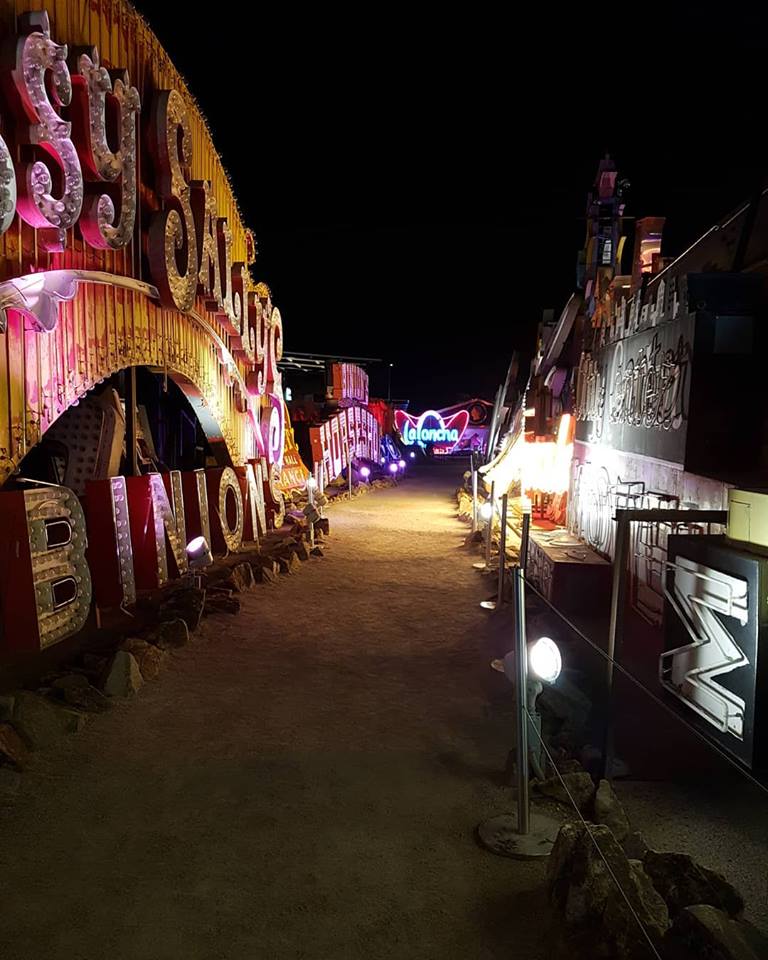
Neon alleyway

Moni and I are back in the icebox now, having just returned from a relatively short bout of southyness over the Christmas break. Didn’t get to see near enough of our loved ones, but it was good to connect with those we could.

We made a stop at one of my favorite haunts in Vegas, the Neon Museum, otherwise known as The Boneyard. This is the afterlife for many of the old marquees used on the strip and throughout town. It’s strange for me, because I used to live in the Vegas area (Boulder City, to be exact). I remember some of these signs when they were alive and in the wild, so to speak. I should say that I sort of remember them. The Strip and much of what most people think of as Vegas was always just as foreign to me as it might be to the tourists coming through town. I don’t think that’s an unusual perspective for locals, but it does give Vegas nostalgia an interesting mix of oddity and familiarity. One of the cultural consequences of tourism, I suppose, a past rendered both intimate and alien. Of course, in this case, the whole thing comes surrounded with the faint glow of neon lights.

Moni and I took a daytime tour of the museum a couple years ago, and we’ve been planning to go back ever since. This time, we made it! Thanks to Mark Thiel of Powel’s Camera Shop for helping us to figure out a few things about our new(ish) cameras. Moni and I made the Neon Museum our testing ground, so to speak. Looking at the photos now, I can see that I have a lot of practice to do, but anyway, the place is cool enough to overcome my clumsy camera skills in at least a couple pics.

The guided tours are an interesting mix of commentary on the signs themselves and stories about old Vegas. One minute you are learning about how they bend neon tubes to make the signs, and the next you are hearing about the role of divorce tourism in the mid-century development of the city. The tours are at their best in those moments when the two themes come together in a single narrative. The stars on the old Stardust marquee are a good example of that. As I recall our old daytime tour-guide related a rumor he couldn’t quite vouch for that they might have been meant to reflect the fall of radioactive dust in the days of nuclear testing. Our night guide on this tour was content to connect them to the era of space exploration. Either way, it’s interesting to see larger patterns of history in the very objects in front of you, or at least in the stories told about them.

My favorite story would have to be that of the Moulin Rouge accord. It’s hard to get a good picture of the Moulin Rouge sign, because it’s so big and distributed in with so many other signs, but the casino played an interesting role in Vegas history. So, it features prominently in the tours. As the first of the Vegas casinos to desegregate, it quickly became a Vegas hot spot, a place where the you could see Frank Sinatra hanging out with Sammy Davis Jr. after doing their own shows. So, it was fitting that the Moulin Rouge would pay a role in the civil rights movement. Facing protests in 1960 over segregation throughout the city, hotel owners met with civil rights leaders at the (already closed) Moulin Rouge. The resulting agreement desegregated the Las Vegas strip.

The tour guides have lots of other stories, of course. I wish I could remember them all.

(Anyway, …click to embiggen!)

Out front
Out front
Beginning of the tour (You can see the Moulin Rouge sign, sorta)
Whole lotta pink going on here.
Vegas Vic is kinda fuzzy here. (I think he'd been drinking.)
Vegas Vic is kinda fuzzy here. (I think he’d been drinking.)
The Lucky Duck
The Lucky Duck
Stardust
Stardust
She's just relaxing
She’s just relaxing
Sahara
Sahara
This was the first openly gay bar in Vegas
Vegas Vic in a clearer moment
Sometimes the neon light takes a back seat to the sunlight
Near the end of the night tour
Wonder if I've ever been in that one
Gold Colors
Daytime guide
Daytime guide
Frontier
From a dry-cleaner, I think
The end of the tour
The end of the tour
Doken Eddie's
Doken Eddie’s
Neon alleyway
Neon alleyway
Cruelty to tourguides. I am guilty of cutting this one in half. (So sorry)
Now about that divorce tourism!


Share this:

  • Tweet
  • Share on Tumblr
  • Print (Opens in new window) Print
  • Email a link to a friend (Opens in new window) Email
  • Share on Reddit (Opens in new window) Reddit
Like Loading...

Oh Come On!

16 Friday Nov 2018

Posted by danielwalldammit in History, Irritation Meditation, Native American Themes, Re-Creations

≈ 12 Comments

Tags

Apache, Geronimo, Lozen, Native Americans, Photography, Photoshop, Retouched, Sex, Warrior

0752efbeda5d33092f99701b68c1b0b9I see this image from time to time circulating about the net. It passes, I suppose, for a kind of homage to Lozen, one of at least three women who fought beside Geronimo at one time or another in the course of his campaigns. Lozen, it seems was with him at the end. She was sent to Florida along with the rest of his warriors (and some of the scouts who had helped bring him). As mentioned in the meme here, the picture above was taken as she and the other prisoners waited in front of the train to be taken away.

So, what has me griping about this?

Well, take a look at the original. Lozen is the 6th figure from the right on the back row.

…and here is another close-up derived from that same photo:

So, just take a moment to compare the two and you might be able to tell what’s bothering me about the first photo.

Yeah, …they sexed her up.

The computer rendering in the first pic definitely lightened up her skin, brought her eyes out more, and gave the overall impression of much more delicate features. Hell, you can practically hear the photographer asking her to lick her lips and work it for the camera. The woman in this meme is a modern heterosexual (white?) male’s dream girl. From what I gather of the stories told about her, Lozen was no such dream.

Far from it!

The problem here isn’t necessary a question of objectivity. People make choices when they render a photo or tell a story. Maybe I’m being a little too cynical here, but I can’t help thinking the choices made in producing the image for this meme aren’t entirely in keeping with the spirit of the woman it portrays.

Share this:

  • Tweet
  • Share on Tumblr
  • Print (Opens in new window) Print
  • Email a link to a friend (Opens in new window) Email
  • Share on Reddit (Opens in new window) Reddit
Like Loading...

Special Spooky Halloween Post: When a Hungry Historical Context Gobbles Up Your Text

31 Wednesday Oct 2018

Posted by danielwalldammit in History, Justice, Politics

≈ 5 Comments

Tags

Birthright Citizenship, Citizenship, Donald Trump, Immigration, Neo-Confederates, Politics, Reconstruction, The Fourteenth Amendment, U.S. Constitution

45282907_10217765362510862_2935286808793055232_oOkay, so by now everyone knows, right? Donald Trump has recently said he wants to change the Fourteenth Amendment so as to eliminate birthright citizenship, and he wants to do it without another amendment. The problem according to the idiot in the White House is that some scholars (he assures us) say the prevailing interpretation of the Fourteenth Amendment is just wrong. Changing it, according to this view, is not a case of rewriting the rules so much as it is a case of just changing the way we interpret them. Therefore, the Cheeto and its enablers think he can do this with just an executive order. Nevermind that Obama’s use of executive orders was proof positive that he himself was a demon from a special Muslim Hell sent to personally devour the Constitution right along with all the babies and pizzas ever served in Tea Party Hell, Donald Trump is thinking he’s just gonna do it.

And the deplorables sing, doot, doot doot, da doot, doot doot doot…

***

Some folks tell me that this is a distraction from bomb scares and right wing shooters, or maybe some other legal decision that Donald is going to quietly sign into being while we stand aghast at the orange Hell that has become of our sweet country, but then again, maybe some of those are distractions from this, or maybe someone is distracting us from a election. I dunno. I give up on trying to sort out what’s supposed to be a distraction from what. The problem with all the distraction talk is it assumes that Donald and the deplorables are focused enough to have clear priorities in the first place. That notion is about as plausible as a degree from Trump University.

***

But all of this does raise an interesting question; what is the case for saying the 14th Amendment doesn’t actually make the children of foreign nationals into U.S. citizens if they born on U.S. soil?

Let’s start with the text itself. Section 1 of the Fourteenth Amendment reads as follows:

All persons born or naturalized in the United States, and subject to the jurisdiction thereof, are citizens of the United States and of the State wherein they reside. No State shall make or enforce any law which shall abridge the privileges or immunities of citizens of the United States; nor shall any State deprive any person of life, liberty, or property, without due process of law; nor deny to any person within its jurisdiction the equal protection of the laws.

The first line contains the case for birthright citizenship, and that case is commonly accepted by most people with any professional responsibility to handle such matters or argue them in a courtroom.

So, why would anyone think they are wrong?

***

The quick and dirty version of this argument is to simply say that this doesn’t apply to foreigners, because they are loyal to another country and another set of laws, so they aren’t subject to the jurisdiction of the U.S.

The quick and dirty version of this argument is also very stupid, but yes, I have met people who make precisely that argument, as stated above, and without adding anything else to the argument.

Anyway, the quick and dirty response to the quick and dirty version of this argument is to point out that foreign nationals, undocumented immigrants, modern secessionists, and full-on fugitives from the law are all subject to U.S. law whether they like it or not. If that’s just a matter of opinion, it’s an opinion likely shared by those with the power to make it so.

***

The quick and dirtier argument is that the 14th Amendment was written to protect the freedman from Jim Crow laws passed in the wake of the civil war. — You know what, let’s all just take a moment here to appreciate the fact that those now reminding us of this fact as a means of denying citizenship to Latinos contain a lot of the same neo-Confederates whose sympathies clearly aren’t with those recently freed slaves anyway, …or their descendants. The 14th Amendment has always been a great big thorn in the side of the bigots who want to resurrect the old South. There is a clear pattern here, and it sure as Hell isn’t defined by careful attention to historical facts and details of Constitutional law. — Anyway, the point in this quick and dirtier version of the argument against birthright citizenship is that the law was always mean to protect a specific class of people, newly freed slaves, and that our nation’s present habit of applying it to just about anyone born in our country extends the application of that law beyond its original purpose.

And here, history gobbles up law. Context eats text, and the whole nation let’s out a big fat bigoted burp in celebration.

…if Donnie and the deplorables get their way anyway.

The problem here is that the context doesn’t in itself elucidate the text, it just gobbles it up. (Yep, I’m sticking with that imagery.) If you go back up and read the text above, it simply doesn’t say; “Hey southerners, black people are citizens, so stop treating them like shit!” No, it doesn’t. Instead, it presents us with a perfectly general principle, and that principle is not limited in scope to the specific historical context in which it was written. Those who wrote it could well have defined its scope more narrowly if they wanted to. They didn’t.

Far from helping us to understand the meaning of the text, this pseudo-historicism invites us to ignore the text on account of an historical factoid.

Neo-confederates iz the cwaziest peopowz!

So, the quick and dirtier argument is also stupid, but I really must insist, I have met people who have made precisely this argument, without adding anything else to it. It’s unimpressive. It really isn’t all that clear that Donald Trump or the vast majority of his supporters have anything more going for them than this simple sleight-of-hand gimmick, not withstanding that we can all see them palming the cards even as they congratulate themselves on a winning hand.

***

But is there more to it?

Yeah, well, kinda. If you aren’t too particular, there is an argument to be made that goes a little beyond this kind of idiocy. It takes us back to the clause “and subject to the jurisdiction thereof.” Some folks would have us believe that there is specific reason to think this clause was not intended by those who wrote it, debated it, and voted on it to apply to foreign nationals. If that’s the case, they maintain, the children of those nationals would not be made citizens by simple birth here in the U.S.

What is that reason?

Well it isn’t a question of legal versus illegal immigration, because America wasn’t really trying to control immigration at that point in our history. So, don’t let any deplorables take you down that dumb-ass dead-end either.

No, the argument rests on the possibility that the framers, so to speak, of the Fourteenth Amendment specifically said that its protections did not apply to non-nationals. If we can find people involved in writing the law who said it shouldn’t apply to foreign nationals, so the argument goes, then we should assume that the phrase invoking jurisdiction was always meant to exclude them. The Supreme Court has already ruled that children of legal immigrants are entitled to birthright citizenship under the 14th Amendment, and no doubt the anti-birthers consider that a mistake, but more importantly, they will insist the court has never applied this standard to the children of illegal immigrants.

…which once again, is a distinction that wasn’t made when the 14th Amendment was drafted and ratified.

That really should be QED right there, but these are strange days indeed, so I guess we’ll have to go a couple extra rounds on the topic.

***

One of the most idiotic versions of this argument comes from a misquoting of the principle author of the 14th Amendment Senator Jacob Howard who stated:

…[E]very person born within the limits of the United State, and subject to their jurisdiction, is by virtue of natural law and national law a citizen of the United States. This will not, of course, include persons born in the United States who are foreigners, aliens, who belong to the families of ambassadors or foreign ministers accredited to the government of the United States, but will include every other class of person

Those using this passage to argue against birthright citizenship typically make one minor alteration the text. They add an ‘or’ before the clause saying “who belong to the families of ambassadors…” This transforms the original text, taking what is in effect an elaboration on a single concept and makes it something of a list. The ambassadors become one more class of people in addition to aliens, whereas the original text is simply spelling out the same concept with a variety of different phrases. Michael Anton, a former aid in the Trump administration pulled this stunt. He still insists that the ‘or’ just spells out the actual intent better for the audience. He is lying of course.

Yes, lying.

***

The argument isn’t always made on such disingenuous grounds. Not surprisingly, the Congressional debates over the 14th Amendment contain an extensive discussion of the range of people covered under the provision. There were many questions about how this might or might not apply to Indians, and in particular to Indians who retained connections to their own tribal communities. There were questions about how it might apply to Chinese immigrants and gypsies, etc.

Far from a clear concept, citizenship itself emerges as a tangled mess of a idea in these discussions. One gets a general sense that while many of the participants assumed that anyone in the United States was entitled to the legal protections in the Bill of Rights (which puts them at odds with much of the right wing today), they also recognized that the right to vote among other things was in fact limited to people who were not loyal to a foreign nation. They also distinguished the basic rights that might go with simply living in America from the right to hold property and/or the obligation to serve in the military if drafted, and all of this was discussed under the banner of ‘citizenship’. One gets the impression that those debating the 14th Amendment weren’t all that certain as to just what citizenship entailed. A few had definite opinions to be sure, but as a group, they are not all on the same page.

***

The whole issue is further complicated by the precedent set by the Civil Rights Act of 1866 which contains explicit language excluding those loyal to a different nation, and an assumption by some participants that the 14th Amendment really does the same thing. In effect, people looking at two different documents containing very different language seemed to treat them as though they meant the same thing.

…which is a problem.

Here is the relevant text from the Civil Rights Act with the relevant section in bold:

To protect all Persons in the United States in their Civil Rights, and furnish the Means of their Vindication

Be it enacted by the Senate and House of Representatives of the United States of America in Congress assembled,

That all persons born in the United States and not subject to any foreign power, excluding Indians not taxed, are hereby declared to be citizens of the United States; and such citizens, of every race and color, without regard to any previous condition of slavery or involuntary servitude, except as a punishment for crime whereof the party shall have been duly convicted, shall have the same right, in every State and Territory in the United States, to make and enforce contracts, to sue, be parties, and give evidence, inherit, purchase, lease, sell, hold, and convey real and personal property, and to full and equal benefit of all laws and proceedings for the security of person and property, as is enjoyed by white citizens, and shall be subject to like punishment, pains, and penalties, and to none other, any law, statute, ordinance, regulation, or custom, to the contrary notwithstanding.

You can see that this doesn’t match the text of the 14th Amendment. Simply put; those who now assume that the 14th Amendment was always intended to exclude children of foreign nationals born in the United States would be right if they were talking about the Civil Rights Act. When talking about the 14th Amendment, however, they are talking about a very different text, and the relevant clause is simply lacking. Instead, such people must look for commentary from supporters in the Congressional record or some source of comparable value.

***

When they aren’t deliberately misrepresenting Jacob Howard, opponents of birthright citizenship usually reference Sen. Lyman Trumbull of Illinois, who maintains in the Congressional Record that the passage only applies to ‘complete’ citizens of the U.S. and goes on to argue that Navajos, for example are not complete citizens because, being still separate in some sense from the rest of the  U.S., they do not vote and maintain their own separate jurisdiction.

(Don’t get your hopes up, racists! This fact has changed.)

Of course one problem with the Navajo example is that it applies to people who actively maintain a separate jurisdiction within the U.S., thus being yet another instance of the degree to which the legal framework for Indian tribes emerges haphazardly within the case history of the Supreme Court. The role that Indian tribal governments play in the legal framework of the United States has never been clear, and that has always complicated the rights of the nation’s indigenous peoples. So, the example is troublesome, to say the least.That said, the example is hardly beside the point. A good portion of the discussion about exemptions to the jurisdiction of the U.S. is driven by the very explicit question of whether or not it would make the entire native population into citizens. Those using comments about that debate are in fact exploiting the vagaries of of Federal Indian law to generalize an exemption from citizenship for non-nationals.

Yes, that’s right. People who want to keep Latinos from becoming American citizens are trying to remind us that the 14th Amendment was only supposed to protect blacks (another group these bigots are not too fond of), and they are resting their argument on efforts to keep Native Americans from voting.

Irony abounds. At last it would, if it weren’t dead already.

***

How Trumbuell’s point relates to the children of foreign nationals is another question. But if we take Trumbull’s claims in terms of the most general implications possible, the notion here is that full citizenship includes those who can vote and who re subject to the draft, etc., not those who, while entitled to protections of citizens, remain separate from the general population. Again, he is talking about the members Indian tribes, and again, this sense of the issue would match the text of the Civil Right Act; it does not match the text of the 14th Amendment.

The distinction between full citizenship and something slightly less did not escape these people; it is all over their discussion, and yet they did not write it into the text of the 14th Amendment. So, what do Trumbull’s comments amount to? Likely as not, a degree of confusion on his part, but those who use him to suggest a new reading of the 14th Amendment do more to show us that people don’t always understand the rules they advocate than they do to show us that the rule in question was clearly meant to exclude the children of foreign nationals.

***

This is one of the big problems with Constitutional originalism; its advocates continually present us with a case for following the rules as America’s founders (or at least those framing particular laws and constitutional provisions) would have understood them, but the understanding of such people is often as shifty as that of anyone we know today. This is one of the reasons we write things down folks; to fix what we mean in a static form, so that you can’t just keep changing your mind. Constitutional originalism effectively enables modern legal scholars to take that fixity out of the equation and cherry pick the past for the most convenient quotes possible. In this case it substitutes a general sense of how some proponents of the 14th Amendment might have understood it at the time (at least when debating the rights of Indian peoples), for the language of the text itself. When the language contradicts its interpretation by their preferred historical sources, they urge us to go with the sources instead of the text.

In effect, those reading birthright citizenship out of the 14th Amendment seek to see the text of the amendment itself swallowed up in a historical narrative. That this narrative itself is quite debatable is an objection in itself, but as a contextualization strategy for reading the 14th Amendment, it is utter bullshit.

This is a version of context suitable for Halloween, because this kind of context swallows up the very text it is intended to shed light on. No, these people aren’t upholding great constitutional principles, no matter how much they would wish we believed that; they are simply weaponizing obscure historical details, and they are doing so for the clear purpose of hurting some of the most powerless people on U.S. soil, the children of undocumented immigrants.

Of course the central irony here is that those pushing a reading of the 14th Amendment that excludes birthright citizenship are not acting in the spirit of the provision in any sense. Whatever else may be said of the 14th Amendment, it was certainly meant to protect people badly in need of help from the violence of racists intent on oppressing them. Historical obfuscation aside, those pushing this narrative today are seeking to empower racists Hell-bent on scapegoating immigrants from Latin America for our nations many problems. As much as these people may tell stories of standing up to great bastions of power and fighting a liberal establishment, these people really are punching down. They are punching down with a vengeance, and summoning a vision of historical context well suited to that purpose. Their argument fails as a point of principle. As a political agenda, it’s monstrous.

…and as far as Halloween monsters go, this one is pretty lame.

Share this:

  • Tweet
  • Share on Tumblr
  • Print (Opens in new window) Print
  • Email a link to a friend (Opens in new window) Email
  • Share on Reddit (Opens in new window) Reddit
Like Loading...

Image

I’ll Just Leave This Here

10 Monday Sep 2018

Tags

Cheyenne, Grave, Greasy Grass, Great Sioux War, History, Lame White Man, Litte Bighorn, Montana, Monument

Lame White Man

Share this:

  • Tweet
  • Share on Tumblr
  • Print (Opens in new window) Print
  • Email a link to a friend (Opens in new window) Email
  • Share on Reddit (Opens in new window) Reddit
Like Loading...

Posted by danielwalldammit | Filed under History, Native American Themes, Public History

≈ 13 Comments

Libertarians on the Prairie – A Reviewish Bit of Bloggetry

24 Tuesday Jul 2018

Posted by danielwalldammit in Books, History, Politics

≈ 10 Comments

Tags

Book Review, Books, Christine Woodside, Individualism, Laura Ingalls Wilder, Libertarianism, Little House on the Prairie, Rose Wilder Lane, The Frontier

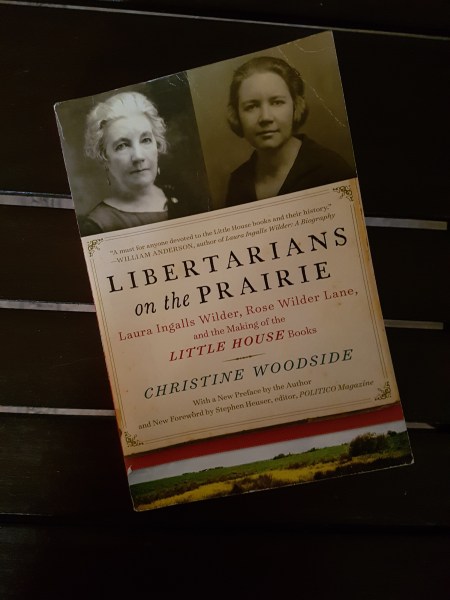
Libertarians on the Prairie

Libertarians on the Prairie

Back in college, I remember a few of my professors speaking ironically about the image of Little House on the Prairie. That the story didn’t exactly match the realities of western expansion was pretty much a forgone conclusion at the time, but I don’t recall anyone going into depth as to the nature of the problems or the reasons this popular story might not have gone so consistently in a suspicious direction.

As a kid, I certainly liked the show.

Hell, I loved it!

I actually remember the very first episode of Little House on the Prairie. I remember liking the characters immediately. I wanted them to succeed. I REALLY wanted to know if they could make that farm work. As the closing credits rolled, I remember, I couldn’t wait to see the next episode.

A whole week! How would I make it!?!

In the coming years, I watched a fair portion of the Little House television series. I can’t say that I ever got around to reading any of the books. It’s funny to think about it though, because those books have had an impact on my life and my thinking – filtered a bit through other media. When a series of books seeps that deep into the popular culture, it leaves an impression on everyone, even those who don’t seek it out. I figure that is why some of my old professors made a point to reference Little House while setting up lessons on western history. It isn’t that they had a specific point to make about the series or the books, but they new that story would be hanging there in the back of our minds. Whatever they meant to say themselves about the subject, these teachers knew they would have to reckon with the themes of the series in one form or another.

Typically, the comments in question took the form of an oblique reference to myths of the old west. The rugged individualism of the old west was a common target of abuse, and the Little House series had always put that theme front and center. Life on the frontier wasn’t really like it had been portrayed in Little House. Saying so wasn’t really necessary for most of us, but it was often a convenient (and amusing) way of sliding into a lecture about what the professors thought might be a little closer to the truth,

What I didn’t know then, not as a kid, and not later on as a college student, was that the tension between the presentation in Little House and the realities of frontier life was a lot more focused than these random comments would seem to suggest. The Little House books didn’t just happen to emphasize themes of rugged individualism, and my professors weren’t simply giving vent to some vague sense that the stories had oversimplified the matter. The original Little House books contained a very clear expression of libertarian views, and my professors were in fact trying to counter that explicit message in order to clear the way for whatever they themselves wanted to teach us. Far from an innocent theme and a series of off-hand rejoinders, the rugged individualism of the Little House books (and later the series) constituted an explicit ideological statement about the way people ought to live. I think some of those old professors knew very well about the connection between libertarianism the Little House narratives; others may have simply been irked at the persistence of themes they regarded a naieve. Either way, the story of that Little House on the Prairie was always political statement, a statement meant to tell us as much about the perils of Roosevelt’s New Deal policies or the depravity of the Great Society as anything that may or may not have happened on any particular prairie. The Little House story wasn’t just a story about the frontier; it was attack on a good deal of the the modern world. What I was hearing in class was at least partly a response from those that had noticed.

The key to this story is the realization that Laura Ingalls Wilder did not write the Little House books alone. They were a product of her collaboration with her daughter, Rose Wilder Lane, one of the great matriarchs of libertarian literature. It had always been acknowledged that Rose typed up Laura’s handwritten manuscripts, and of course that she had done a little editing in the process, but it turns out there was a good deal more to the story. The death of Rose in 1968 freed up the correspondence between the two of them, and along with that, the various drafts of Little House books exchanged between them over the years. Those familiar with these documents realized very quickly that Rose contributed a great deal more than her typing skills and light editing to the process. She was an active collaborator from the very beginning.

The collaboration between Laura Ingalls and her daughter is the subject of Libertarians on the Prairie, by Christine Woodside. I first heard about the book on an episode of  Edward T.Odonell‘s podcast, In the Past Lane, wherein Woodside appeared as a guest. With a little travel on my agenda for this summer, I figured this was the perfect volume to help me get from Barrow Alaska to Billings Montana.

I was not disappointed.

This book is no hack job. Woodside is clearly a lifelong fan of the Little House series, and she clearly admires the work both women put into this series. Peering behind the curtain, so to speak, doesn’t seem to have dampened her enthusiasm. Woodside takes pains to reveal a good deal that Little House fans may find uncomfortable, but she also takes pains to praise Ingalls and Wilder on a number of points. Her work is critical, but not unsympathetic.

Woodside does an excellent job of sorting out the process that went into writing the Little House books. Of course, she is hardly working with a complete record, so she can’t piece together every detail of the process, but Woodside manages to support a number of interesting conclusions about it. She presents Laura as a story-teller with a gift for detail and a vivid memory without which the books could never have been written. It was Rose, according to Woodside, who provided the overall structure of these narratives, and shaped the line by line text enough to help bring that structure out in the final works. In doing so, Rose actively steered the narratives in a direction consistent with her own emerging interest in libertarian politics. If Rose was leaning toward such thought at the beginning of the books, she was fully committed to them by the end of the series, a phase in which Woodside tells us Laura had surrendered more control over the final copies to her daughter. Significantly, Rose omitted from the books a number of stories that would have undermined the central message of rugged individualism, even as she sometimes inserted into the work pointed stories of events her mother hadn’t written herself. The resulting narrative contains more than the occasional embellishment; it actively misrepresents the facts of Laura Ingalls’ early life, and it does so in the service of a specific political message.

Woodside is careful to point out that the books were not simply propaganda. If Rose steered the Little House series in the direction of libertarian thought, it was because that was precisely how she came herself to view the world. It seems unlikely that Laura would have objected to the larger themes of Rose’s politics. Neither were fans of the New Deal; each was increasingly skeptical of government authority (and in fact, their own collaboration had emerged partly out of an effort to commit tax fraud). There is evidence that Laura and Rose sometimes argued over details to be included in their stories, and Rose clearly took a more strident position than Laura had, at least in her written work, but it seems that both women shared a number of assumptions about the importance of hard work and limited government. These assumptions made it into the books. They also made it into the series.

So what of it?

We could haggle over the details. Where the Little House narrative has the Ingalls family working hard to get money for that Laura’s sister, Mary, can attend a school for the blind, we know that in fact the school was funded by the Dakota Territorial Government. We know that the family generally settled closer to other people than they have been portrayed in the Little House books, and we even know that major events in their lives (such as a year in town) were omitted from the stories Laura and Rose chose to tell. Their eviction from Indian territory was played up for the purpose of inserting an anti-government message (which is ironic as Hell given the role the military played in freeing up such lands to begin with). We could go on…

These facts do matter, and Woodside provide a brief list of such details near the end of her book, but the larger issue is a bit murkier.

It may well be that the Little House books contain a very pointed message, and that message may be squarely in tune with libertarian thought, but it would not be true to say that the appeal of these stories is limited to such circles. You don’t have to be a libertarian (much less a Libertarian) to enjoy the Little House stories. Hell, I have little patience for that school of thought myself. That didn’t stop me from watching (and enjoying) an episode or two after reading this book. Their appeal goes beyond the narrow confines of free market fundamentalism, touching upon narratives of American exceptionalism with a much broader appeal in the popular culture of our nation.

It goes without saying; the spirit of Frederick Jackson Turner haunts the Little House narrative. Indeed, the series seems taylor-made to illustrate the Turner-thesis, presenting us with a living, breathing, example of a family struggling against the forces of nature at the meeting point between savagery and civilization. It was the frontier, according to Turner, that made this country unique. That is a message fraught will all manner of perilous implications, but it’s also a message that resonated with generations of historians, and with generations of writers, television and movie-makers, and even musicians. It may even have resonated with a few children reading the Little House books or watching Ma and Pa Ingalls on television. It probably even resonates with a few people who should know better. People who do know better.

Simply put, the story doesn’t become less interesting just because you know it’s fiction. It doesn’t necessarily become less interesting when you realize just how sideways the whole story spun from the realities of life for the Ingalls, or for anyone else on or near that frontier. The story-line itself is just so ingrained in the American imagination. It, like so many other myths, will outlast countless debunkings, even this one.

…which brings us back to the whole ‘what does it matter’ question.

In blending the central themes of libertarian thought with the larger myths of the American frontier, the Little House books effectively provided an exceptionally powerful re-enforcement to those themes. If we can all believe that ma and Pa Ingalls were able to survive along with their little girls out there mostly alone on the frontier, then we can believe Americans with televisions, and credit cards, and cell phones certainly ought to make it on their own too. If we can forget all the ways that frontier families derived help from friends and family, and from government policies, then we can also forget why we have social security, bank regulations, an EPA, Medicare and food stamps. Some of us may think these things are important, but a good number of very powerful people don’t care about these things, and those people are uniquely situated in today’s political environment to do away with them.

They might even tell us it was all about making American great again!


Share this:

  • Tweet
  • Share on Tumblr
  • Print (Opens in new window) Print
  • Email a link to a friend (Opens in new window) Email
  • Share on Reddit (Opens in new window) Reddit
Like Loading...

Pillow-Bombs

14 Thursday Jun 2018

Posted by danielwalldammit in Alaska, History, Museums, Public History

≈ 1 Comment

Tags

Alaska, Alaska Veterans Museum, Anchorage, Army, Bombs, Museum, Pillow, Veterans, World War II

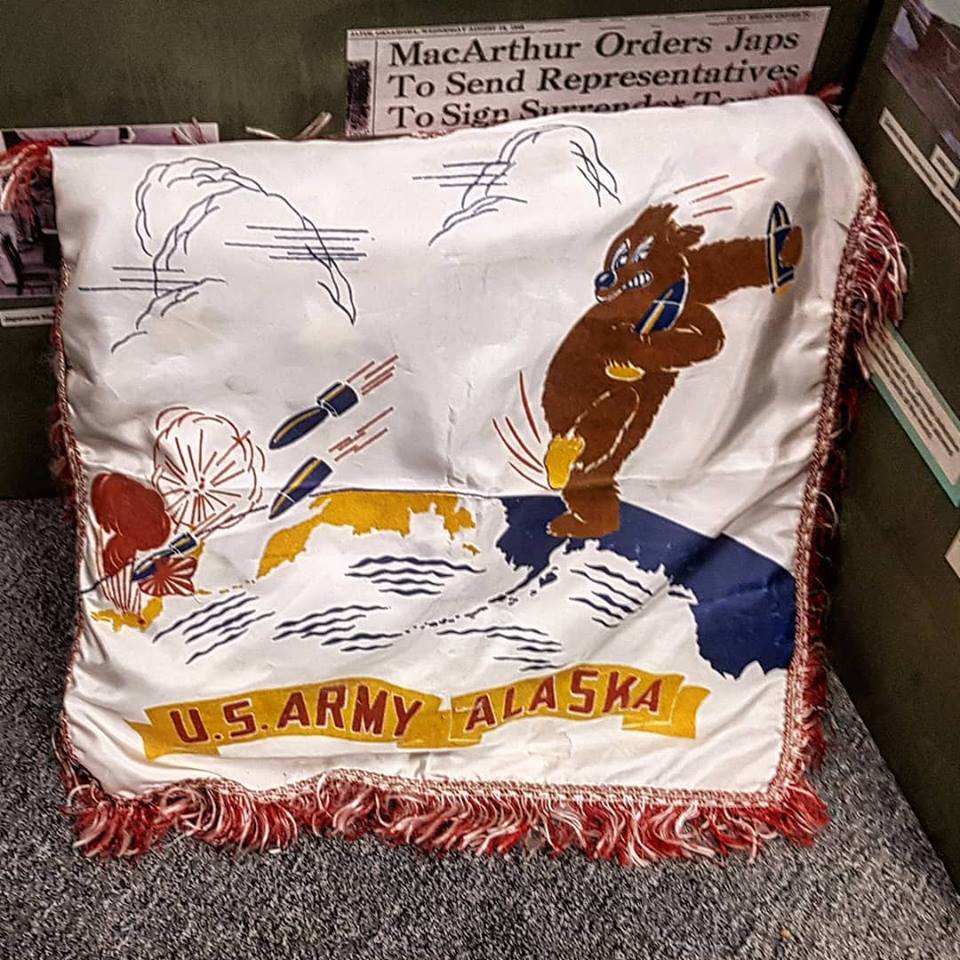
35281652_10216605160826545_1651775535061139456_n

I Made a quick stop recently at the Alaska Veterans Museum on 4th Street  in Anchorage. I’ve written about this place before, but of course they’ve changed a few things around. I’m continually amazed at the amount of material they manage to cram into such a small space. The whole facility is clearly a labor of love.

Anyway, this little throw pillow definitely caught my attention. I think we’ll just let it speak for itself.

Share this:

  • Tweet
  • Share on Tumblr
  • Print (Opens in new window) Print
  • Email a link to a friend (Opens in new window) Email
  • Share on Reddit (Opens in new window) Reddit
Like Loading...
← Older posts
Newer posts →

Top Posts & Pages

  • An Uncommon Security Guard: Dave Eshelman, AKA 'John Wayne'
    An Uncommon Security Guard: Dave Eshelman, AKA 'John Wayne'
  • Hostiles and Spoilers: A Magic Studi
    Hostiles and Spoilers: A Magic Studi
  • Map Ain't Time Either.
    Map Ain't Time Either.
  • Spurious Hitler Spuriates Furiously About Guns!
    Spurious Hitler Spuriates Furiously About Guns!
  • Remember Kids! False Equivalence is a Way of Life
    Remember Kids! False Equivalence is a Way of Life
  • The North Pacific Fur Fish
    The North Pacific Fur Fish
  • Happy Juzo Day, And Damn You to Hell if you Don't Know What I'm Talking About!
    Happy Juzo Day, And Damn You to Hell if you Don't Know What I'm Talking About!
  • Master and Commander Kinda Queered
    Master and Commander Kinda Queered
  • When Sex Falls Out of the Performance
    When Sex Falls Out of the Performance
  • A Very Northy Bloggoversary
    A Very Northy Bloggoversary

Topics

  • Alaska
  • Animals
  • Anthropology
  • atheism
  • Bad Photography
  • Books
  • Childhood
  • Education
  • Gaming
  • General
  • History
  • Irritation Meditation
  • Justice
  • Las Vegas
  • Minis
  • Movie Villainy
  • Movies
  • Museums
  • Music
  • Narrative VIolence
  • Native American Themes
  • Philosophy
  • Politics
  • Public History
  • Re-Creations
  • Religion
  • Street Art
  • The Bullet Point Mind
  • Travel
  • Uncategorized
  • Uncommonday
  • White Indians
  • Write Drunk, Edit Stoned

Blogroll

  • American Creation
  • An Historian Goes to the Movies
  • Aunt Phil's Trunk
  • Bob's Blog
  • Dr. Gerald Stein
  • Hinterlogics
  • Ignorance WIthout Arrogance
  • Im-North
  • Insta-North
  • Just a Girl from Homer
  • Multo (Ghost)
  • Native America
  • Norbert Haupt
  • Northwest History
  • Northy Pins
  • Northy-Tok
  • Nunawhaa
  • Religion in American History
  • The History Blog
  • The History Chicks
  • What Do I Know?

Archives

  • December 2023
  • November 2023
  • June 2023
  • April 2023
  • February 2023
  • December 2022
  • November 2022
  • October 2022
  • September 2022
  • August 2022
  • July 2022
  • June 2022
  • April 2022
  • January 2022
  • December 2021
  • November 2021
  • October 2021
  • September 2021
  • August 2021
  • June 2021
  • May 2021
  • March 2021
  • February 2021
  • January 2021
  • December 2020
  • November 2020
  • October 2020
  • September 2020
  • June 2020
  • May 2020
  • March 2020
  • February 2020
  • January 2020
  • December 2019
  • November 2019
  • September 2019
  • August 2019
  • July 2019
  • June 2019
  • May 2019
  • April 2019
  • January 2019
  • December 2018
  • November 2018
  • October 2018
  • September 2018
  • August 2018
  • July 2018
  • June 2018
  • May 2018
  • April 2018
  • March 2018
  • February 2018
  • January 2018
  • December 2017
  • November 2017
  • October 2017
  • September 2017
  • August 2017
  • July 2017
  • June 2017
  • May 2017
  • April 2017
  • March 2017
  • January 2017
  • December 2016
  • November 2016
  • October 2016
  • September 2016
  • August 2016
  • July 2016
  • June 2016
  • May 2016
  • April 2016
  • March 2016
  • February 2016
  • January 2016
  • December 2015
  • November 2015
  • October 2015
  • September 2015
  • August 2015
  • July 2015
  • June 2015
  • May 2015
  • April 2015
  • March 2015
  • January 2015
  • December 2014
  • November 2014
  • October 2014
  • July 2014
  • June 2014
  • May 2014
  • April 2014
  • March 2014
  • February 2014
  • January 2014
  • December 2013
  • November 2013
  • October 2013
  • September 2013
  • August 2013
  • July 2013
  • June 2013
  • May 2013
  • April 2013
  • March 2013
  • February 2013
  • January 2013
  • December 2012
  • November 2012
  • October 2012
  • September 2012
  • August 2012
  • July 2012
  • June 2012
  • May 2012
  • April 2012
  • March 2012
  • January 2012
  • December 2011
  • November 2011
  • October 2011

My Twitter Feed

Follow @Brimshack

RSS Feed

  • RSS - Posts
  • RSS - Comments

Enter your email address to follow this blog and receive notifications of new posts by email.

Join 8,072 other subscribers

Blog at WordPress.com.

  • Subscribe Subscribed
    • northierthanthou
    • Join 8,072 other subscribers
    • Already have a WordPress.com account? Log in now.
    • northierthanthou
    • Subscribe Subscribed
    • Sign up
    • Log in
    • Report this content
    • View site in Reader
    • Manage subscriptions
    • Collapse this bar
 

Loading Comments...
 

    %d