• About

northierthanthou

northierthanthou

Category Archives: Native American Themes

This is where I talk about Native American themes. No, I’m not Native; I’m just your generic white guy. That said, I have lived and worked in indigenous communities for a significant portion of my life, so I have a few thoughts on the subject. Whether or not they are worth considering depends on who you ask.

So, Adam Sandler, Yeah…

27 Monday Apr 2015

Posted by danielwalldammit in Movies, Native American Themes

≈ 15 Comments

Tags

Adam sandler, American Indians, Film, Humor, Indians, Movies, Racism, Satire, Westerns
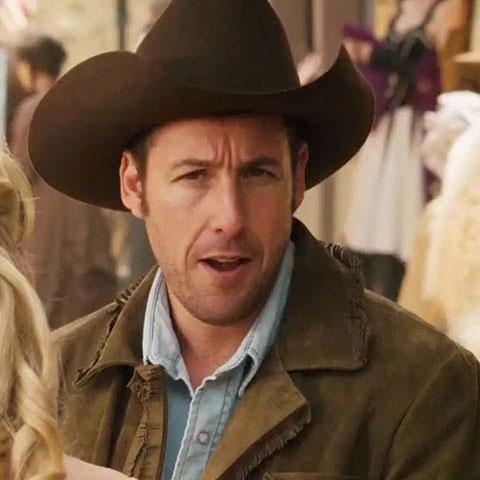
adam-sandlerBy now the story is pretty well known. A number of Native Americans recently walked off the set of an Adam Sandler movie (The Ridiculous Six) citing offensive jokes as the deal-breaker triggering their decision to leave. Most had been cast as extras, but the group also includes a cultural consultant hired for the film. Other sources have detailed the story better than I could, but let’s just get a few of their objections on the table so we all know what we’re talking about:

– The Indians in the movie are supposed to be Apache, but their outfits and material culture generally represented in the film would seem better suited to Comanche (and that not too accurately there either).

– The movie used offensive names for female characters. “No Bra” and “Beaver Breath” come to mind. “Sits-On-Face” was apparently in the script at one point.

– Come to think of it, the movie gives men offensive names too, “Five hairy Moles,” and “One Eyebrow,” for example.

– In the movie a woman is supposed to squat to pee at some point while smoking a peace pipe.

– The extras found a feather arrangement on a teepee inappropriate.

– In the movie, Adam Sandler is supposed to utter the line; “Say honey: how bout after this, we go someplace and I put my pee-pee in your teepee?”

…you get the idea.

I certainly hope that I don’t have to explain why any of this would be offensive. The question is of course what to make of that offense? Someone is almost always the butt of a joke, and so it sometimes seems arbitrary when a particular set of jokes like this one draws a vehement response. Those with little or no connection to the offended group are often that much more mystified, because they simply don’t understand all the implications, and it can be damned tempting to pass the whole thing off as political correctness.

The notion that these extras (and those who support them) are just being too damned sensitive about the whole thing is rolling rather predictably out in various tweets and blog posts. A spokesman for netflicks reportedly characterized the film as ‘broad satire’. Breitbart News carried that theme even further, denying that satire could be disrespect in any context and congratulating the film crew for standing their ground in the face of an overly sensitive group of extras. Sandler’s camp appears to have adopted the stance that his movie is meant to be all in good fun, and that it’s full of low-brow humor to begin with. One of the cast, Vanilla Ice, for example assured us that Sandler is not trying to make something on par with Dances With Wolves. So, it seems we in the public are supposed to give Sandler a pass, because he is just joking.

I’m usually pretty open to raunchy humor, but I find it very hard to imagine a context in which the jokes mentioned above would be anything other than toilet humor fit for a five year old.

…and let’s be clear. there is another context to consider here. For those of us who haven’t seen the film, it’s difficult to assess the context behind the jokes, but for those of us who haven’t lived lives as Native Americans, it’s hard to say what the overall context of life is for determining how these jokes must feel.

Context is a two-way street.

No, actually, it’s more like a giant roundabout with a lot of busy traffic.

The question here is just what makes these jokes funny to begin with (at least for those that find them funny)?  It’s easy enough to say that a name like “Beaver Breath” is just a joke, but is there really any reason to suppose that joke doesn’t turn on a point of prejudice? These names don’t appear to be an in-joke, and they don’t turn any non-native prejudice on its head. They reflect little other than the sensibility of a child snickering at someone different. These jokes turn that difference into an object of brutal and straight-foreword mockery. and there is simply nothing in the accounts given so far to suggest that the target of this humor is anything other than Native American naming practices themselves. If this is satire, it is indistinguishable from racist propoganda.

That the jokes in question may be delivered with a congenial smile doesn’t change the fact that this humor is at face value quite demeaning. Some people don’t even seem to know when they are insulting others; either that or they simply assume the right to do so without being called to account for it.

This is why the claim that The Ridiculous Six is all just satire fails. Oh yes, the movie may well be a satire, but whatever it’s satirizing, there is no reason to believe these jokes aren’t actually directed at the Native American community.

There is nothing in these jokes that suggests familiarity with their own subject matter, much less appreciation for the people close to it. This is why the costumes matter, not because the movie was meant to be historically accurate, but because knowing the difference between Apache dress and Comanche dress might have communicated at the trace of a capacity to give a damn. When such things become too much to ask, the benefit of the doubt slips out the door. And when those who raise the issue, as these extras did, are told by a producer they are being overly sensitive and they should leave, well that pretty well slams the door shut altogether. If there was any chance this humor could have reflected anything other than outright prejudice, the treatment these extras received on the set would appear to have set that prospect to rest.

…which puts the claim that no offense had been intended in this script in an awkward light. It would appear to mean little other than that Native Americans themselves are not supposed to take offense at such things. Sandler and company have produced a highly offensive script, and when called on it, they have done little other than to beg others not to see the plain point of their own jokes. In effect, they have put the responsibility for the insult on those that have called attention to it (which is an awful lot like the strategy taken by Dan Snyder and the Washington football team). in effect, they blame those they insult for knowing they have been insulted. Does that rhetoric sound familiar? It should. This is of course precisely why conservative culture warriors are beginning to weigh in. It isn’t that they don’t know the movie is offensive; the folks at Breitbart for example are defending it precisely because they know that it is.

It’s easy to dismiss Sandler himself. He has often (almost always) presented himself in a rather juvenile manner. His characters are often simpletons, and the humor they produce is accordingly full of foolishness. When this fails, as it often does, Sandler leaves behind more than a trace of disappointment in the jokes. He also leaves us with that slightly creepy feeling that we’ve seen too much of someone’s personal baggage. Still, the man is capable of outstanding humor, often using this very approach. I do recall some brilliant moments in Sandler’s career; Lunch Counter Lady and The Hanakka Song come to mind. I don’t exactly pine for new examples of his work, but I can honestly say that he has brightened my day once or twice over the years. I say this, not because I feel like defending the man at the moment, but because I think it’s important to note that he is at least capable of doing something better than this.

Unfortunately, the man is also capable of turning out utter trash. Case in point, putting a peepee in a woman’s teepee. Try as I might, I cannot find any context in which that line reflects anything but the crudest sensibilities of a petulant child. Reading about this, I can’t help thinking Sandler has gotten entirely too comfortable passing the naughtiest jokes of the playground off as professional comedy. I for one hope that he will take a lesson from his extras, and try once again to produce comedy worth watching.

***

Postscript: I noticed an interesting pattern in this video showing the conversation, the film-makers continually insist that the movie is sympathetic to the Native American characters. Why? Because Adam Sandler’s character loves them.

Speaking of Dances With Wolves…

Suffice to say the notion that respect for Native American characters rests on little other than the values of a non-Native character would be ironic at best.

Actually ‘perverse’ is more like it.

Share this:

  • Tweet
  • Share on Tumblr
  • Click to print (Opens in new window) Print
  • Click to email a link to a friend (Opens in new window) Email
  • Click to share on Reddit (Opens in new window) Reddit
Like Loading...

Adam and Eve and the Sewing Needle

29 Sunday Mar 2015

Posted by danielwalldammit in Movies, Native American Themes

≈ 1 Comment

Tags

Adam and Eve, Arctic, Before Tomorrow, Eskimo, Movies, Ray Mala, Savage Innocents, Sin, Trade

p194794_p_v7_aaY’all know the story. The Serpent tempts Eve with an apple, and she in turn tempts Adam with the same. …Okay, some say it’s more likely to be a pomegranate. That’s not the point! In arctic cinema, the temptation is more likely to be a knife or a gun.

…or a sewing needle.

The analogy isn’t perfect, but with Eskimo populations, cinematic stories of a tragic fall from grace certainly do seem to start with the temptations of trade. Much as the fruit of a certain Biblical tree, these trade goods come with a cost, and with a sudden awareness of things that might best be left out of the world altogether. And just as with the story of Adam and Eve, it seems sex is very much at play in these stories.

The movie Before Tomorrow (2009) begins with a story about the Raven, which is certainly a more fitting motif than Genesis for use in an Inuit production, but its implications are no less ominous. This narrative ends badly, as does that of the movie itself. We are then treated to a joyous reunion between friends and family, one of whom carries a brand new knife made of strange materials. It’s extraordinarily sharp and very sturdy. The same guest soon produces an extraordinary set of sewing needles, along with a story of the strangers from whom these items had been obtained. Everyone laughs and marvels at the wonderful goods.

Sadly, it wasn’t simply trade goods these this fellow and his family picked up from the strangers, and the laughter of these opening scenes will lead us only to tears.

…many tears.

But I left out an interesting detail. You see the needles had to be obtained through sex, one night with a young woman for each needle. That was the price, so we are told. This too is cause for laughter and bawdy humor in that happy moment when the characters in Before Tomorrow can still laugh at the whole story and count the encounter with strangers as a blessing of sorts.

Before Tomorrow is an indigenous production. It handles this theme with grace and sensitivity, but of course the scene echoes others that have come before. Few things about the arctic seem to interest movie makers more than Eskimo sexuality, or more particularly those practices giving rise to phrases like ‘Eskimo hospitality’ or ‘Eskimo Brother’. Aware that arctic natives engage in something akin to wife sharing, a number of film-makers have given this theme a prominent place in several productions. The treatment is almost always short on ethnographic detail and long on prurient interests. White Dawn is perhaps the most indulgent of these films, but the theme has a long-standing presence in the history of arctic film. It is commonly bound to the topic of trade.

…and to narratives of the fall.

(Speaking of terrible things, I must warn you that spoilers are coming.)

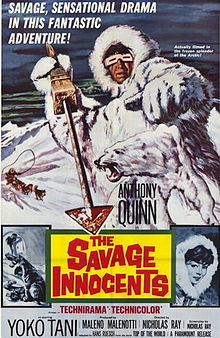
220px-The_Savage_InnocentsIn the year, 1960 (when Anthony Quinn was an Eskimo), his great source of temptation was a gun. I say he was an ‘Eskimo’, because it really wouldn’t be appropriate to saddle any specific people with the cultural baggage of Savage Innocents. a pseudo-documentary narrator notwithstanding, this film is not about any real-world population so much as a certain imaginary people best called to mind by precisely this grotesque term. Like so many films about natives of the Arctic, Savage Innocents really isn’t a film about Inupiaq, Inuit, Yupik, or even Chupik. It is most certainly a film about Eskimos, and that is a topic that has interested movie-makers long before the general public learned to think twice about such vocabulary. Anyway, when Anthony Quinn was an Eskimo, it was his introduction to the gun that kicked off a crises (and hence the story) of Savage Innocents.

For all its crudeness, Savage Innocents does throw a curve ball into my analogy here. Inuk (Quinn) is the one who first falls for this great temptation. Upon learning that white men will trade a gun for a hundred fox furs, he immediately sets about getting one. His wife, Asiak (played by Yoko Tani), will have none of it. She ends up giving away the gun, because she doesn’t want to live on fox meat while Inuk tries to put together enough furs for the bullets to fire it.

That’s a damned sensible Eve if you ask me!

Too bad Asiak is too late in her efforts to get free of the white man’s influence. A visit from a priest goes rather poorly when he refuses the food she and Inuk offer. It goes even more poorly when Inuk and Asiak offer to let the man ‘laugh’ with her (yes that’s an innuendo). When the Priest denounces the offer in the harshest of terms, a foul-tempered Inuk accidentally kills him. (h meant to crack the man’s head a little, inuk will later explain, but the man’s head “cracked a lot.” Legal troubles will soon follow in the form of Peter O’Toole who plays a trooper sent to catch Inuk and bring him back for punishment.

In savage Innocents, it is the gun which gets the action rolling, but it is sex that provides the tragic turn. It’s an interesting variation on a theme, and of course the movie’s title helps to underscore its relevance to stories of the Fall. Inuk and his wife are savages, yes, but they are also innocent (one might even say ‘noble’). Their encounters with the white world bring little other than the threat of guilt. It is the wisdom of this particular Eve that saves them.

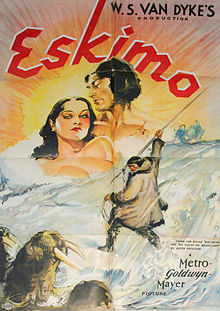
But of course all of these plot developments emulate those of the far more famous film, Eskimo, starring Ray Mala. As in Before Tomorrow and Savage Innocents, visitors bring the temptation to our main characters in the form of trade goods acquired from strangers. A sharp knife is the first temptation to make an appearance in this film, followed shortly thereafter by iron sewing needles, and then a gun. Mala and his family are suitably impressed.

220px-Eskimo-FilmPosterMala’s wife, Aba (played by Lotus Long) asks a woman in possession of the sewing needles if she had received them from a ship’s Captain. No, her guest answers; “I was only able to please the man who did the cooking.”

And thus we learn the price that will be paid for these goods. Mala will of course trade many furs for his gun, but he will also have to share his wife with the strangers. Far from accepting this arrangement as the normal course of things, Mala is outraged that the strangers have taken liberties without asking for permission. this is not the sort of spousal sharing that occurs in his own village; it is violation carried out by men with no respect for either Mala or his wife, Aba.

But of course, it gets worse.

What interests me most about this, howeever, is not the he terrible consequences of trade with outsiders; it is the moment of temptation. In Eskimo that temptation plays out much as it does in Genesis. It is Aba who asks Mala to go trade with the strangers.

The white men have iron needles-

One could be even a greater hunter with a gun.

Like Eve tempting Adam with an Apple pomegranate, she urges Mala to begin the quest that will end their simple, happy existence. “The white men have black hearts,” so an elder warns the both of them, and yet Mala agrees to the trip. they will go, he explains, after the long winter night has ended. Aba will herself pay the highest price of the two for this decision, but that too seems rather appropriate for stories of the fall. When such stories approach the status of mythic narratives, at least in the western traditions, women always seem to fall harder than men. Perhaps that is why they are so often portrayed as the ones most responsible for that very fall.

Why we seem to keep telling such stories is another question altogether.

Of course, the story of Adam and Eve is hardly a narrative indigenous to the arctic, but then again, only one of the three stories listed above is an indigenous production. One can almost see the story of Adam and Eve pulling on the the tragic tale in Savage Innocents and Eskimo, even as each movie grapples to one degree or another with the sensibilities of the people it depicts. And yet elements of this trope overlay nicely (though not precisely) with those of Before Tomorrow. In each case, trade with outsiders would seem to constitute the original sin, and in each case sex would appear to be part of the picture.

Sex, occupies a more tempered role in Before Tomorrow than it does in either of the mainstream productions. It’s characters relate the terms of exchange (sex for needles) in matter of fact tones. They laugh yes, but they are not shocked. Perhaps we as the audience are meant to grasp the exploitive nature of the strangers approach to trade, but in Before Tomorrow that is of little consequence. In both Eskimo and Savage Innocents, it is sex itself (or the prospect of it) that triggers the coming hardship. It does so through conscious decisions of the parties involved. In Before Tomorrow, it is something far more subtle, an exchange understood by no-one present in those opening scenes.

It isn’t hard to see a trace of tragedy in the globalization of the Arctic. So, I suppose it should also come as no surprise the onset of trade would provide a ready subject matter for epic narratives about loss of innocence. These stories carry different inflections, but they also carry a few common themes.

…such as , “beware of strangers with really cool sewing needles.”

Share this:

  • Tweet
  • Share on Tumblr
  • Click to print (Opens in new window) Print
  • Click to email a link to a friend (Opens in new window) Email
  • Click to share on Reddit (Opens in new window) Reddit
Like Loading...

RedskinsFacts Does the Meta-Hypocrisy Shuffle

15 Sunday Mar 2015

Posted by danielwalldammit in Native American Themes, Politics

≈ 1 Comment

Tags

Football, Frank Baum, Glenn Beck, Hypocrisy, Oneida, Propaganda, Racism, Recursion, Washington redskins

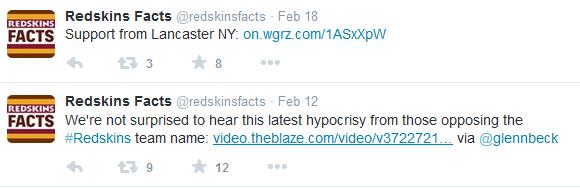
Redskinsfactsagain

(Click to Embiggen)

The accusation of hypocrisy can be a very effective means of facilitating the same. Case in point? This little gem from Redskinsfacts.com. I hesitate to post it, because the link will take you to Blaze TV, which is Glenn Beck’s little neck of the net, but well… professional bigots must at times be answered, even if it means giving petulant children more attention than they deserve.

Glenn Beck is in rare form in that video, trying to turn “What’s up my Cracker?” into a thing. It is neither clever nor insightful, though I suppose he thinks it some sort of social commentary. What his use of the phrase does do is help us understand that some folks never outgrow the adolescent desire to piss off the adults in the room, and that those people frequently find their way into the heart’s and minds of those addicted to right wing political porn. You can also hear some bizarre comments about Hitler’s non-existent children in that video along with something about an alleged apology for his actions. There is nothing in the clip to suggest that Beck and company know this little trip through Godwin’s Law is utter bullshit. Rather, they appear to figure this narrative is true, because, well that’s what must have happened, right?

…which is pretty much how history works in the world of Glenn Beck.

All that aside, Beck’s main point (to the extent that he has one) is that the Oneida Nation of New York is building a casino to be named after The Wizard of Oz. What makes this disturbing is its author’s history of racism. L. Frank Baum advocated the complete annihilation of Native Americans. yes he did. They are right about that. Beck and Company find it absurd that a tribe which has been critical of Washington’s football team would honor the work of a racist. In fact, they find it quite hypocritical.

As you can see above, so do the folks at Redskinsfacts.com.

It pains me to say this, but they do have a point. Whatever the merits of The Wizard of Oz in literature, cinema, or simply marketing strategies, it’s difficult to explain why any Native American community would want to be associated with Baum’s work. We could debate the exact equivalent of naming a casino after a work done by an author whose also expressed racist views and the use of a name that directly perpetuates racist stereotypes with every mention made of it throughout the entire football season, but some might think that was splitting hairs (or giant redwood trees, …whatever!). At the end of the day, they do have a point; this is a problem.

Of course the problem doesn’t end there. Inconsistencies abound in politics, and one can hardly point at the second face of someone else without raising questions about his own self-presentation. Beck and company aren’t really trying to get the tribe to drop its plans for a casino named after Baum’s work, and they are certainly uninterested in spreading the word about Baum’s racism. No, this is an opportunistic moment for them, a chance to seize on a misstep by those who threaten their world in some tiny way. Beck and company are defending the name of the Washington football team, and that team is thoroughly invested in racism at every level of its organization. The Oneida Nation of New York could easily reconsider its pans (and let us hope they do), but a change of the Washington team’s name would require re-branding on a scale unimaginable to some folks. If this is a tale of two racisms it is a tale in which one of them is a Hell of a lot more important than the other. Beck and company know this, and they are hoping their audience doesn’t. As explained by one of Beck’s talking heads, the name of the team has always been used to honor Native Americans.

…he is of course lying.

It’s interesting to watch Beck and company run through the motions of pretending to discuss the issue as one of his talking heads plays good cop to the other guy’s bad cop. His sole effort in defense of the Oneida is to remind us of Washington Team’s name and to add that they are playing football. That’s it. That’s what Beck and company offer to speak for the case against the Washington team’s name. And of course they move on to suggest that the Oneida must be trying to accomplish something secret in attacking the team name. Bad cop can’t quite tell us what that is, and of course he’s somehow forgotten all the other Native Americans who also oppose the team name, but he can probably rely on most of Beck’s audience to forget this as well. Ultimately, the bottom line in this segment is a clear defense of the Washington Team by mans of a simple tu quoque fallacy.

If Beck and company say “what about you” loud enough, they hope everyone will forget about their own politics and those they hope to support through segments like this.

This is of course also the only reason the folks at Redskins Facts bring it up as well. They too are not the least bit interested in saving any indigenous people from exposure to the racist views of L. Frank Baum. They merely hope to embarrass a political enemy by pointing out the inconsistency of linking themselves to the work of a racist while opposing their own team name. They are right to the extent that there is an inconsistency in this, but that inconsistency stands like a mirror reflection of their own agenda. They hope to deflect attention from the racism saturating their own politics by calling attention to the hypocrisy of one of their principle critics. In doing so, they themselves become hypocrites themselves, and their sole hope is that no-one will notice the reflexive nature of the problem.

We can well ask if the Oneida should be building this casino while opposing the name of the Washington football team. We can also ask if RedskinsFacts.com, Glenn Beck, and all his talking heads ought to be complaining about what an Indian tribe chooses to name its casino while defending a sports team with an explicitly racist name?

I’m guessing the better answer is ‘no’ on both counts, but then again, we all know we won’t be getting that kind of answer from the folks pushing this story any time soon.

Share this:

  • Tweet
  • Share on Tumblr
  • Click to print (Opens in new window) Print
  • Click to email a link to a friend (Opens in new window) Email
  • Click to share on Reddit (Opens in new window) Reddit
Like Loading...

Underdogs All the Way Up!

13 Friday Mar 2015

Posted by danielwalldammit in Alaska, Native American Themes, Politics

≈ 6 Comments

Tags

Authority, Education, Political Correctness, Politics, Popular Culture, Rhetoric, scape-goating, Social Justice, Underdog

???????????????????????????????

Sled dogs waiting patiently

So, I am enjoying the Alaska Native Studies conference in Fairbanks last weekend, and one of the many things that keeps catching my attention is a persistent use of outside authority for a kind of whipping boy. I hear about how ‘the media’ portrays Alaska natives and minorities i general. I hear complaints about The Federal Government, academia, and ‘the system’ in general. Different people have thought these phrases through to different degrees, so the quality of the references vary from the completely vacuous posture to reasonably well defined concerns.

Meh, nothing particularly new under the sun (unless it’s a rather Northy start for the Iditarod which began right in front of the Hotel I was staying at this year, …a couple hours after I flew out. …dammit!) I haven’t attended many academic conferences in the last decade or so, but this is hardly new to me. I just have to cast my mind back a bit to remember how often I used to hear this theme in the old days of my grad work.

…or I could just remember the last time I visited more conservative friends and family down South. They too like to complain about the Federal Government. They too like to complain about academia. (Oh yes they do!) And they too can sometimes be heard to talk disparagingly of something called ‘the system.’

I am keenly aware of the fact that these groups often argue for radically different political goals, but I am rather struck by the fact that they do so using remarkably similar narratives. Each seems rather consistently to present themselves as countering the effects of some overarching authority that resides somewhere out there, so to speak. But this is hardly unusual. In America, at least, most people seem to frame their politics in populist terms. That includes the most well-funded of incumbent political candidates and their supporters. It also includes people arguing for the clear and forceful exercise of political authority just as it includes those arguing against such authority, and it includes all manner of politics falling somewhere in between. It isn’t just that we can’t always tell who is exercising authority and who is objecting to it. What strikes me about this is the fact that the common preference lies on the down-side of the equation. It seems as though everyone wants to be the underdog, and you could take a lantern about in the day looking for someone who will happily cop to playing the man to all his low-brow critics.

In the culture wars lefties typically presented themselves as countering long-term abuse of authority by privileged parties; their right wing opponents bash PC politics and the liberal establishment that tells them what to do and what to say. Evangelical Christians complain of persecution in schools and other government institutions even as secularists fight against believer-bias in those same institutions. And how many religions count oppression somewhere in their founding narratives? (Probably as many as appear in each others’ oppression narratives, I should think.) Climate scientists struggle against well-funded corporations to counter the effects of powers both political and mechanical even as climate skeptics buck the authority of a plot to spread government authority. Some folks will burn a flag to protest the authority of government. Others will wave it to flaunt their patriotism in the face of ‘elitists’ who don’t like it. Even Hollywood actors sneer at the culture of Hollywood, and the educational reformers who crash upon the curriculum in waves of paperwork and conference panels always seem to see themselves as flying in the face of some institutional conventions. Retention and Persistence specialists complain about professor-sages who just want to pronounce wisdom to their students from a lectern and those same professors complain of reformers using administrative leverage to force dubious changes and undermine academic freedom. Advocates of gay marriage often appeal to personal freedom even as its opponents appeal to personal freedom to disregard such marriages.

Indie this and Indie that! (Just cross-apply this theme to movies, music, fashion designers, writers, and Hell, most likely fish-tank designers at this point. I wonder if guppies complain of pretentious betas while zebra fish moan about the abuse of authority of neon tetras.)

…okay, the fish tank bit was probably a bit of a stretch, but hey I’m trying to buck a system here!

Some of these narratives are more authentic than others, and I certainly don’t mean to suggest that all these agendas are really of equal value, but I am interested in the way so many different political views (some of them diametrically opposed) seem to vie for the moral low-ground. It really is fascinating to see just how ubiquitous the underdog status seems to be in contemporary political rhetoric. Sure, those with political power will exercise it, but you’d be hard pressed to find anyone who frames a political agenda in terms of a straight forward claim to authority and an equally straight forward intention to use it. Even those with tremendous power seem to present their exercise of that authority to some other regime at power.

When at last we meet the Man so to speak, he usually tells us that he is new to the job and only there to finally undue the damage done by the real Man, the guy with all the power who is only just out of office (and probably lurking somewhere nearby). That other man, the real man, is the real bastard. He has power even when he doesn’t, and it’s his abuse of that power that necessitates the use of power by real people in charge of real institutions.

…who always seem to be underdogs despite themselves.

I sometimes wonder at this vacuum into which all authority seems to escape. Is it purely a function of rhetoric? To listen to folks, the real power always seems to lie somewhere else. And yet it must really exist or all this rhetoric is hot air. And of course we do encounter power and authority in our daily lives, but its presence is almost always akin to a force of nature. It is a fact with which we must contend even if we cannot find a cogent case for it. And when one looks for that case, so often we find only a case against some other use of power.

Could it be that all this obligatory underdogging be a product of cognitive bias? Is it easier to see authority in others and damned hard to feel the power of authority when it’s in your own hands? There is often (perhaps always) a little bluff in the exercise of authority, a little sense that its successful use depends on the willingness of others to accept it.

I once TAed for a professor who liked to mock his own authority. The students were not reassured by his self-deprecating humor. He might have hoped to communicate that he didn’t take himself too seriously, but what his students heard was that he didn’t take his position seriously, and most particularly, that he didn’t take seriously the responsibilities of that position and the limitations of his authority. This was underdog failure at its finest and most cringe-worthy.

And I suppose this is what bothers me the most about it all. I can’t help but see in the collective impact of all this underdogging something a bit like the students saw in that professor a marked inability to grapple with the authority that people actually do have and very clearly will use. We can’t all be under-doggier than the next guy. Or if we can, then perhaps it says something rather sad and ironic about the value of low-brow politics. For one reason or another, it is often more effective to position oneself as the underdog than the authority.

And if you can get by with wielding authority while pretending to be that underdog?

Well, ain’t that just the cat’s pajamas!


Share this:

  • Tweet
  • Share on Tumblr
  • Click to print (Opens in new window) Print
  • Click to email a link to a friend (Opens in new window) Email
  • Click to share on Reddit (Opens in new window) Reddit
Like Loading...

Rooting for the Indians and Damn that Custer Anyway!

04 Sunday Jan 2015

Posted by danielwalldammit in History, Movies, Narrative VIolence, Native American Themes, Politics

≈ 29 Comments

Tags

Alice Cooper, Dances With Wolves, George Armstrong Custer, Indians, Iraq, Little Big Man, Movies, Patriotism, Time

Dances-With-WolvesWhen Dances With Wolves came out in November 1990, audiences throughout the country cheered as Kevin Costner and his Lakota friends killed U.S. soldiers in one of the final scenes of the film. The Lakota in this film were decent (perhaps noble?), and the soldiers had been as contemptible as any character could be. More than that, the soldiers were emissaries of an aggressive nation bent on taking everything Costner’s Lakota friends had. Nothing could have been more obvious than our loyalties at that point in the film. Of course we rooted for the Indians!

Two months later, American troops attacked Iraqi forces that had taken Kuwait, and Americans cheered as bombing attacks appeared on CNN just about all day every day for some time. Iraqi treatment of the Kuwaitis had been cruel and Saddam Hussein posed a threat to world peace comparable to that the great Hitler (as some would have it anyway). Nothing could have been more obvious than our loyalties at that point in history. Of course we rooted for the American forces!

The transition always appeared to me rather seamless. It was a very disheartening moment, an indication of just how powerless the left wing critique of American imperialism had been. Seeing audiences cheer on the Indians in Dances With Wolves, it seemed as if for once, the American public had gotten the message, at least one some level, and then they went right out and repeated all the same mistakes over again. Just as sensationalist accounts of Indian atrocities had once fueled military aggression against them, lurid stories of Iraqi conduct fueled support for military action in the Gulf War. And once again, America expanded its military presence in the world, to what end, we are still learning.

There are differences between these stories of course, and we could haggle over the details, but I’m not particularly interested in debating the Gulf War here. What concerns me is the question of which difference made the distinction matter? I can’t help but think that difference was time.

I would say that the critical difference is also a question of entertainment versus reality, but of course few war movies have provided near the entertainment value that the Gulf War presented to the American public. Whatever else that conflict represents, it was also a tremendous achievement in the theatrical violence. Plus, the conflicts depicted in Dances With Wolves have real world analogs. The specifics may have been fictional, but the issues in question were quite real. no, the difference is time. Dances With Wolves depicts a conflict most Americans believe to be over, and that makes it safe to flirt with critical appraisal providing it isn’t going anywhere.

Dances With Wolves was a story about America’s past. Cheering for the Indians in a fictional skirmish about an event long ago didn’t pose much of a personal cost for the average American. Sure, there may be some jingoists out there who really couldn’t stomach the thought that any aspect of American history had been anything short of a gift from God himself, but any discomfort they might have felt at the final scenes of Costner’s epic was surely the price of their own extremism. More folks could flip loyalties for that one brief moment, and then flip them right back again when push came to petro.

Custer Little Big manThat’s hardly an unusual transition. It’s as easily done as shifting from present to past tense when the topic of Indians comes up in a conversation, or shifting from particular issues to a great big general narrative about the history of Indian white relations. The hat trick is of course the phrase; “what we did to the Indians.” What continually fascinates me is its appearance in otherwise focused conversations. You could be talking about some specific policy and its impact on some specific native community RIGHT NOW, and the next thing you hear is someone telling you that they really think it’s sad what ‘we’ did to the Indians.

…except the past tense undermines the ‘we’ part. Those saying this know very well they aren’t including themselves in the damned ‘we’ of that sentiment, not really. A good portion of the times I’ve heard this, the impact of the utterance was precisely to shift the conversation away from anything that ‘we’ really could do anything about today. And that is of course my rather long winded point; it’s easy to root for the Indians in Dances With Wolves, much easier than it is to support them in present, and much easier to support them than it is to question attacks on any prospective enemy we have today. Whether it be casinos, tribal mascots, or tribal jurisdiction, the same folks who will happily root for the Indian in a fictional battle set in the remote past are much less likely to support the native side in present day conflicts. As to foreign policy? Well…

Bombs away!

But let’s stick with Indian-white relations for a bit. You can see the whole transition in a stanza from one of Alice Cooper’s more obscure songs, but to get the full effect, you have to listen to the full tune. (Don’t worry; it’s one of his less shocking pieces.).

In case you missed it, the relevant lines are as follows:

I love the bomb, hot dogs, and mustard.

I love my girl, but I sure don’t trust her.

I love what the Indians did to Custer.

I love America.

There they Come. There they go.

– Alice Cooper

The line about Custer fits with the rest of Cooper’s rhyme scheme, but the line about Custer is a bit of a thematic twist. The over-the-top jingoism of Cooper’s song seems inconsistent with the celebration of a set-back to the march of American history. We wouldn’t expect Cooper to root for the other side. And then suddenly, he isn’t cheerful at all, or at least the song isn’t, as we hear an Indian war-party come and go accompanied to faux-Indian music right out of the movies. He drops his rhyme scheme and sings almost as an aside, “There they come,” and then “there they go.” And thus a line about the demise of Custer and his troops becomes a comment about the proverbial vanishing Indian.

It’s safe to root for him, because he’s vanished.

Cooper’s song celebrates an Indian victory in order to mourn a Native loss, and of course that loss is precisely what the voice of the song calls for, the removal of an obstacle to the America cooper loves so much. And then of course the song picks up again as Cooper continues to celebrate all-things red, white, and soldier blue. It seems likely that Cooper’s treatment was deliberately ironic; it seems equally unlikely that he appreciated the full depths of that irony.

alicecooper13I don’t think Cooper’s attitude is at all unusual. I’ve heard similar sentiments many times. I understand why my old professor, a Choctaw celebrated the Custer’s last stand, and I understand why Lakota and Cheyenne do today, but they are celebrating a victory, something their people did right. Folks like Cooper are celebrating a loss, and one has to wonder just what they think that loss means?

As with any other great cultural icon, what is said of Custer is often really said of other things. At this point he seems to stand in proxy all of western history. The man has always had his critics, but it was probably the movie Little Big Man that taught the public to think of him as a raving lunatic. The Custer of this film is as ruthless as he is incompetent, and he is clearly the voice of western expansion. In the real world, it was Horace Greeley who advised young men to go to the West. In Little Big Man, it is Custer who tells the main character, Jack Crabb, to go West. It is Custer who carries out the most horrible atrocities of the film, the ones which make that migration possible, and ultimately, it is Custer (along with his troops) who will pay the price for Western expansion.

I grew up with that vision of a Custer in mind, one shared by multiple sources of popular culture in the 70s and 80s. I can’t recall meeting anyone personally who defended Custer in my youth, not once. From time to time, I heard or saw echoes of Custer’s previous incarnations in popular culture, the heroic Custer of Anheuser Busch or the onion-loving Custer of some old movie whose name I’ve long since forgotten. I could easily think that heroic vision as deluded, but of course that was a Custer who belonged to someone else, one who had been slain literally and figuratively on the screen of Little Big Man.

While we can haggle over the facts of Custer’s career and the details of his final battle, the successful caricature of Custer doesn’t facilitate a pro-native view so much as a an easy dismissal of the larger problems of American expansionism. This is where Little Big Man fails in its politics. (It was of course also a commentary on Vietnam.) In framing the horrors of American Indian policy as a reflection of personal lunacy, the movie invited us all to feel far too much relief at Custer’s ultimate defeat. It’s simply easier for all of us if Custer can take responsibility for all the horrors of America’s Indian policies, easier because he lost, and in his loss, folks can well imagine that he carries those horrors with him into the grave.

All of which brings to mind the title of Vine Deloria’s old classic, Custer Died for Your Sins.

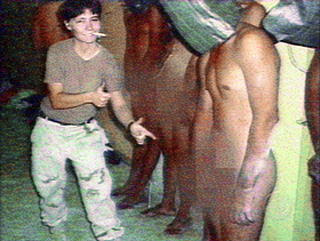
abu+grahib+photo+4To be sure films like Little Big Man and Dances With Wolves call attention to larger problems, but they also point to a way out which all too many Americans seem to have taken, the belief that the ugly side of American military can be laid at the feet of the occasional lunatic clad in buckskin.

Or perhaps to a cigarette puffing soldier who lost her moral compass somewhere along the way.

Because surely the problems don’t go any further than that!


Share this:

  • Tweet
  • Share on Tumblr
  • Click to print (Opens in new window) Print
  • Click to email a link to a friend (Opens in new window) Email
  • Click to share on Reddit (Opens in new window) Reddit
Like Loading...

An Uncommon Holiday Celebration

22 Monday Dec 2014

Posted by danielwalldammit in Alaska, History, Native American Themes

≈ 6 Comments

Tags

Alaaska Native Heritage Center, Alaska, Alaska Natives, Education, Indians, Native Americans, Schools, Thanksgiving, Yupiit

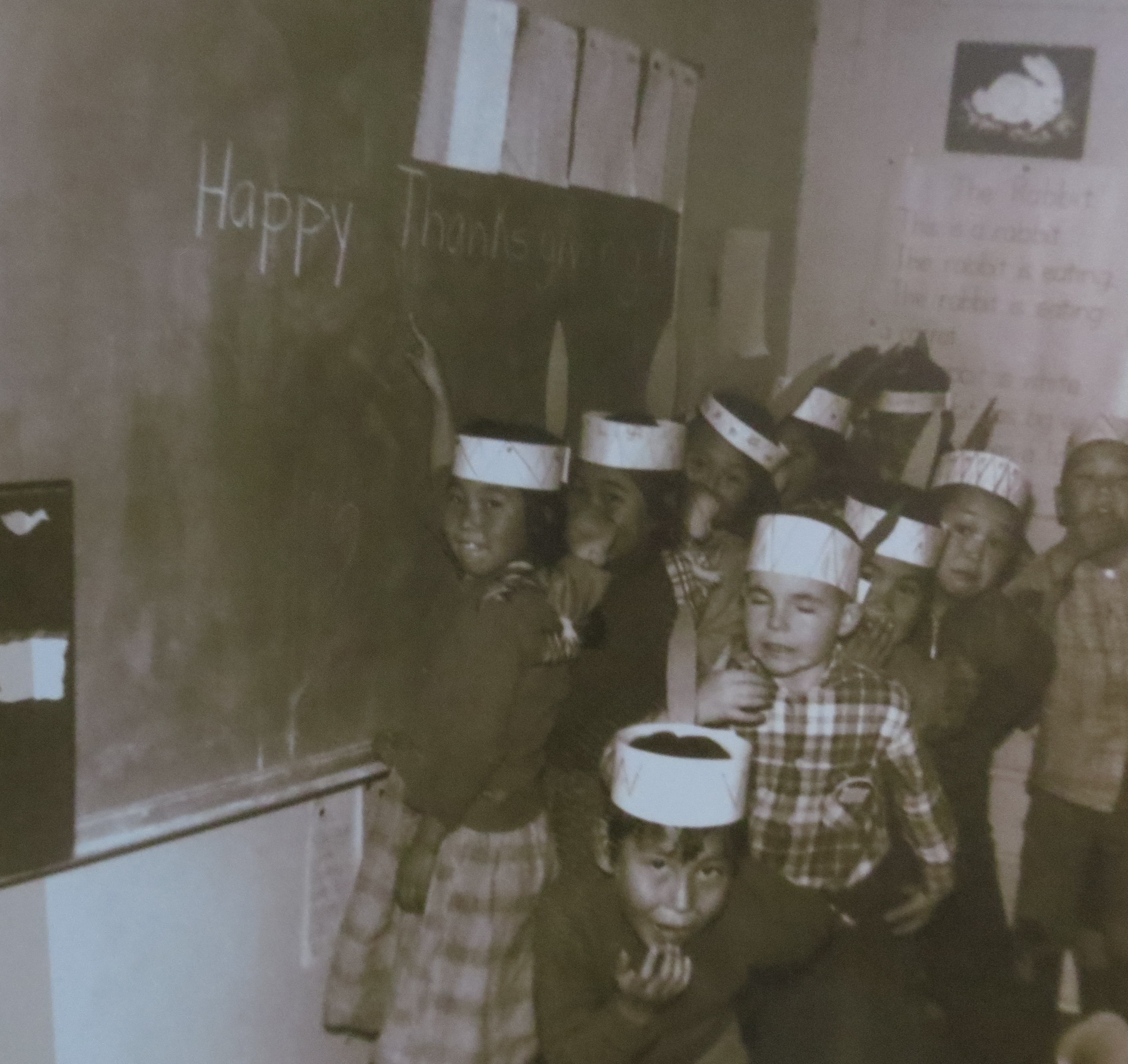
???????????????????????????????Take a look at this image from an old Thanksgiving celebration. It’s part of an exhibit at the Alaska Native Heritage Center (which is definitely worth a visit if you are ever in Anchorage).

These children are Alaska Natives, in this case Yupiit, which would have placed them a long way from New England during the mythic days of the first Thanksgiving celebrations. Still, I can’t help but shake my head at the notion that someone thought to costume these ‘Eskimos’ as ‘Indians’ for Thanksgiving.

So yeah, that happened.

Share this:

  • Tweet
  • Share on Tumblr
  • Click to print (Opens in new window) Print
  • Click to email a link to a friend (Opens in new window) Email
  • Click to share on Reddit (Opens in new window) Reddit
Like Loading...

What are the Necessities of Life?

20 Saturday Dec 2014

Posted by danielwalldammit in Movies, Native American Themes

≈ 4 Comments

Tags

Canada, Eskimo, Film, Foraging, History, Inuit, Movies, Progress, The Necessities of Life

The_Necessities_of_LifeWhat are the Necessities of Life?

We meet the protagonist of this 2008 Canadian film in Baffin Island of the 1950s. Tiivii (played by Natar Ungalaaq) struggles for breath as he ascends a small hill in search of geese, his wife and children are just waking in their tent below. Upon seeing a boat on the half-frozen ocean, Tiivii sets aside the hunt and takes his family aboard for a series of medical tests. As the boat prepares to leave, Tiivii is told he must remain aboard, leaving his wife and children to fend for themselves while he undergoes treatment for tuberculosis.

When next we see Tiivii, he is soon staring at a tree at the hospital in Quebec City, amazed at his new surroundings and quite unprepared for the coming hardships that await him. He does not fully understand his illness, nor does he realize how long it will take him to recover. He also has no idea how his family will fair without him.

An Inuit lost in civilizations? It’s an interesting twist on a familiar theme, that of a stranger in a strange land. The point is soon driven home as we see Tiivii struggle to master the use of a fork and spoon while the other hospital patients consume platefuls of pasta. He figures it out, but not before earning the derision of his roommates.

Through the story, we are invited to see the hospital and western civilization through Tiivii’s eyes, to see common utensils from the perspective of one who has never used them before and to imagine a common meal from the standpoint of someone has never eaten anything like it. We can also imagine his confusion at the sterile bathroom with its flush toilet; his longing for someone to talk to makes perfect sense; as does his desire to eat familiar food.

the-necessities-of-lifeWe’ve seen this storyline before, a person completely out of his element. It is often used to explore the differences between civilization and savagery. This was the premise for Dances With Wolves, and before that with Little Big-Man and A Man Called Horse. It’s a common enough theme in arctic films as well, being found in White Dawn and Snow Walker among others. What makes this film different is the trajectory of the stranger in this case; he has left a world unfamiliar to most of us, to enter one most of us will find rather familiar. We are used to seeing the story go the other way. Still Tiivii’s journey is compelling. Through his eyes, the western world becomes strange, unreasonable, and quite insane.

This particular twist on the stranger in a strange land contains an element of nuance, however, that would be easy to miss. Audiences may think they know what it means for an emissary of modern western society to live amongst primitives, but what does it mean for such an individual to come live amongst us, or at least the 1950s variation thereof? It would be easy to think that Tiivii spends the entire story marveling at the wealth and richness of the city. In the space of a few opening scenes he has made a transition from the life of a forager scratching out a meager existence on the tundra to a cosmopolitan center with all the wonders of contemporary society. Tiivii may see this world from the shelter of a hospital bed, but he does see it just the same. How could he possibly understand the complexities which have put food on his plate in that hospital, or those that enable him to flush that same food away in the porcelain toilet? It would be awfully easy to think of this as the story of a simple man lost in the wealth of the modern world
…except that would not explain the title of the movie.

necThe title comes to us in a scene near the end of the film, one in which Tiivii explains to a young patient named Kaki (Paul-André Brasseur) what it is like to be out on the tundra. Although Inuit himself, Kaki, has spent his formative years in the hospitals. He does not understand the kind of life his own people have led. Asked what his homeland is like, Tiivii explains:

Beautiful. Lots of mountains. From the top you can see everything. You can see exactly where you are going. Not like here, where there are trees everywhere and you can’t see ahead. There’s a huge island. It takes many days to travel around it. There’s everything you need, all the necessities of life. Seals. Caribou. Geese.

Tiivii’s face lights up with each point of his speech, but the point of the scene would be missed entirely if this was thought to be nostalgia. Tiivii’s speech provides the strongest hint in the movie as to just how he sees the world around him. It is not a world of abundance at all; it is one in which he cannot see the materials out of which to make his clothes much to less to build a home. It is a world in which he cannot see food or medicine. All of these things must be brought to him. If this is mysterious, it is not the mystery of a miracle so much as a perverse trickery, one which hides the means of life from him while doling out the necessities a little at a time. Far from marveling at the wealth of civilization, Tiivii has been lost in the desert the whole time. He doesn’t see modern miracles in plumbing or cutlery. Instead he sees a world of mostly useless materials.

I think this is the real genius of Necessities of Life, that it actually flies in the face of conventional notions of the difference between foragers and civilized folks. Ever since Nanook of the North, mainstream film-makers have marveled at the struggle of arctic hunters against hunger and the elements. Time and again, Hollywood’s ‘Eskimos’ have been portrayed as dwelling on the edge of starvation, and it would be awfully easy to see in Tiivii’s story just another chapter in that narrative, one in which one of these primitives actually gets to experience the wealth of modernity. And yet, what Tiivii actually tells us is just the opposite; wealth is waiting for him back home on Baffin Island, and he cannot wait to leave the extreme poverty of the modern world behind.

Share this:

  • Tweet
  • Share on Tumblr
  • Click to print (Opens in new window) Print
  • Click to email a link to a friend (Opens in new window) Email
  • Click to share on Reddit (Opens in new window) Reddit
Like Loading...

A Troubled Tale of Two Racisms and the Floundering Efforts to Oppose Them

12 Thursday Jun 2014

Posted by danielwalldammit in Justice, Native American Themes

≈ 17 Comments

Tags

discrimination, Frybread, Power, prejudice, Privilege, Racism, Reverse Racism, Rhetoric, Social Constructivism

lThis wasn’t the first time I felt unwelcome at the mutton stand. In fact, it was the second time this server had ignored me while serving other customers. Just like the first instance, I initially assumed it was an accident, or at least that she had some other reasons for avoiding me, but slowly I started to wonder if it was my color. White people were not entirely foreign to these markets, but the vast majority of folks frequenting these stands were certainly Navajo. And it was beginning to look increasingly like this particular woman had no intention of doing business with me at all.

…which really sucked, because these guys made the best roast mutton in Window Rock!

What to do about it? In my younger days, my social tool kit was long on hammers and short on other options. I had enough sense to realize vocal complaints about unfair treatment of a bilagáana might go down poorly, but not enough subtlety to think of alternative ways to address the matter. As it happens, I didn’t need to think of anything to say. The other customers did it for me. A chorus of “He’s next!” greeted the woman’s next efforts to pass me by, some of their voices tinged with a sense of real irritation. I got my roast mutton that day. More than that, I felt a sense of reassurance. Although resentment of whites could be found in many varieties out on the Navajo Nation, so could a certain sense of fairness. On this day that sense of fairness won out and I got my mutton.

***

Let me start by admitting up front that I could have been wrong about the motivations of the woman who didn’t seem to want to serve me. Perhaps I read the whole thing wrong, and maybe my own behavior had somehow triggered her actions. Hell, maybe I really shouldn’t have been eating there in the first place. All this is quite possible, but I am going to ask you, dear reader, to accept for purposes of argument, that this was an instance of a Navajo woman treating me different (a little bit badly) because of my ethnicity. I think it is also an instance in which the members of her own community found this to be unacceptable behavior.

So here is the question, did I experience racism?

No, that’s not the question.

My real question is how do you go about answering that first question?

It seems to me that at least two radically different approaches to answering that question have become rather common these days, and it is getting more and more difficult for people using these different approaches to talk to each other about the matter. One way of going about it, which I will call the conventional approach (perhaps for no better reason than that it is the approach I grew up with) would be to raise questions about the motives and attitude of the woman who didn’t seem to want to serve me. Granting a certain range of answers about what she had in mind, someone taking this approach would say ‘yes’ I had been subject to racism. Another approach (let’s call it the social constructivist approach) is more common these days in academia and left wing politics in general. From this standpoint, it is best to inquire into the social power of the parties involved and then see how they use that power in respect of one another. Those adopting this approach might also want to expand consideration beyond the mutton stand to the larger patterns of history and contemporary politics. In most cases this approach would lead to an answer of ‘no’ to my first question, or even a ‘hell no’, perhaps with an additional lecture on the privilege of living in a world where slow service at a mutton stand is a moral outrage worthy of remembering nearly two decades later.

***

Okay, so let’s do this…

In the conventional approach, racism is a question of personal judgement and motivation. Racism consists in treating someone different on account of their race, and since all manner of people can do this, anyone can clearly be racist. The possibility of ‘reverse racism’ as it is commonly called is obvious enough with the only real questions being about whether or not this or that particular event illustrates some variety of reverse discrimination. Using this approach (and assuming I wasn’t missing something important), it is quite possible to affirm that I was subjected to racism on that day.

On it’s face, the conventional approach seems a perfectly reasonable take on the subject. People often use it to advance a genuine sense of moral obligation regarding how one ought to treat others, and by people here I do mean all kinds of people. Folks from all sorts of different backgrounds can and do frequently advance the notion that one ought not to treat people differently (or at least badly) on account of their race. This does strike me as a good thing, but the question is whether or not this is an adequate response to the problem of racism.

First and I think foremost, the problem with this approach is that it flattens the significance of discriminatory behavior, putting the denial of a mutton sandwich in much the same boat with minstrel shows, segregated schools, legacy contracts, Japanese internment, involuntary sterilization, lynching. and even the Holocaust. Hell, I  felt a little nausea myself putting my mutton-stand story in the same sentence with all those things, but the absurdity of that comparison is precisely my point. Addressing racism as an issue of personal motivation doesn’t do much to help us understand the difference between petty gestures and genuine atrocities. It isn’t that people can’t understand that there is a difference, but this approach to countering racism creates a fashion of speaking about them which tends to put them all on equal footing, at least for a moment. If we then want to talk about the differences between a simple affront and something that genuinely oppresses whole groups of people, then that talk falls somewhere over and above the problem of racism.

Unfortunately, there is ample evidence that large numbers of people never get out of that fashion of speaking about racism, that large numbers of people never really get the difference between a lynching and an expression of petty personal bias. Indeed, some folks seem prepared to recognize racism only if it is first prefaced with ‘reverse’. Time and again, advocates of social justice find their concerns drowned out by talk of reverse racism and stories in which the under-privileged prove themselves ironically capable of being the bad guys too.

…and in the ultimate poetic injustice, being discriminated against too, becomes the exclusive cultural capital of the privileged.

Don’t laugh. A few pundits have become filthy rich working that very angle.

It is no wonder that persons of color and their political allies often want to do away with this fashion of speaking about racism altogether. The conventional approach to racism is, as many seem to suggest, a well far too poisoned with all this talk of reverse discrimination to be of any real use for understanding the larger issues of oppression and injustice  in the world today. So, many of those interested in such issues have chosen to define racism as something that requires not merely prejudice but the social capital to put that prejudice into play with real and devastating consequences. Racism is from this point of view an expression of power, not merely an individual act, whatever its motivation. This is what I mean by a Social Constructivist approach. It’s a clunky phrase, and a grad-school cliché, but what the hell!?! It works.

It isn’t that people advocating the social constructivist approach don’t think minorities can be jerks; but they don’t see the myriad stories minority jerkitry as a meaningful part of the story of racism. From this standpoint, my mutton-stand story is simple a non-starter. The problem isn’t just the scale of harm (or the lack thereof); such stories are from this point of view a genuine distraction from the central issues of oppression that should be the focus of concerns about racism. It’s easy enough to get the problem with such stories in this kind of loose narrative; the problem comes in when people start trying to explain why such stories are as a matter of principle unimportant to the issue of racism.

Often folks taking the constructivist approach will say something to the effect that racism is about power and since minorities don’t have the power, they can’t be racist. This has always struck me as a terrible oversimplification, and I could only wish it were a straw man, or that its use were limited to less educated circles. But it isn’t.

To me, the core problem here is that the argument uses an awfully ham-handed sense of social power. We can talk of people having more or less power, but the notion that whites have all the power and minorities absolutely none of it is bordering caricature. For one thing, it doesn’t take a lot of power to hurt someone, and it is one of the perversities of racism that it may from time to time offer those whom it keeps from real opportunity the consolation of petty revenge against some unlucky fellow. Whether it is a personal punch in the mouth, a petty decision by a  boss, or a politician playing to his own base, there are plenty of persons of color quite capable of harming those of another ethnicity. One must also consider the possibilities of scape-goating other minorities, or even minority groups within their own community. And finally, there is no reason to expect that racism must always mean hurting those belonging to the race that someone hates. Often as not resentments directed at whole groups of other people precedes a shot to one’s own foot, so to speak. The kind of social power which makes racism a problem simply doesn’t rest only at one end of the spectrum, even if acknowledging that fact let’s an unwelcome foot in the door. Acknowledging the possibility that someone other than a white person might have the means to hurt people on the basis of race should not be difficult, but in short-hand politics, it seems many are happy to simply discount that possibility.

…which is definitely taking liberties with the facts.

It isn’t that an emphasis on social power means abrogation of minority responsibility to others, and I don’t think many people mean to suggest that; it’s that one of the aims of an emphasis on the social construction of power is to put harm to the underprivileged back in the center-spot of opposition to racism.

***

All of this leaves us with one very big problem as I see it. Speaking of racism as something that is by definition an expression of the privileged cuts so far against conventional approaches to the subject that it amounts to quitting the field in a sense, abandoning the larger public discourse. Unless I am underestimating the extent to which social construction has reached the popular consciousness, that approach (with its complete disclaimer of the possibilities of minority racism) is a bit too foreign for most people to comprehend. The reasons for such an approach are well known in academia, and in many circles of left-wing politics, but they aren’t sufficiently well known to guide public perceptions. So while those adopting a social constructivist approach can talk in limited circles as though only the ignorant or malicious would even think of describing racism as something a minority could do, large parts of the public take it for granted that it most certainly is, and that lunacy or at least dishonesty are the only reasons anyone would deny it.

The notion that minorities simply cannot be racist leaves a silence in the space where one would normally raise questions about rude, cruel, or even genuinely harmful actions by minorities. Often, advocates of the social constructivist approach will concede that sundry examples of such behavior are terrible; they might even suggest alternative words to describe them. I hear it time and again, the notion that racism just isn’t the right word for it, but what that word would be isn’t so clear. So, the more reasonable folks taking the social constructivist approach are not really trying to insulate minorities from criticism, but they are working hard to ensure that criticism is divorced from an important source of moral value, opposition to racism. Arguably, what is lost in this approach is simply too valuable, and like it or not, there are legitimate reasons for addressing questions about racially motivated behavior by minorities, reasons that cannot be reduced to the effort to drown pro-minority politics in a deluge of petty complaints by the well privileged.

In the end, denying the possibility of minority racism does not just silence those milking the reverse-racism angle for more than its worth, it also silences people with real concerns and sincere questions about ethnic relations. All too often, the right wing pundits are happy to fill that silence with the suggestion that lefties are just bigots in their on right and that this whole fashion of speaking is just another attack on white people. That may seem a cop-out to many advocates of the constructivist approach, but unfortunately the cop-out is mutual. An awful lot of folks are finding more and more ways to avoid talk to each other about this subject, and even to find ways of speaking really loudly while not really talking to each other about it.

It is extremely important to make a strong case for the significance of social power in the history and politics of racism, but that case poorly served by word games. As certain voices work very hard to ensure the public can’t tell the difference between affirmative action and Jim Crow, a large part of the public is unsure what to make of the issues. The difference must be explained, and yes, perhaps explained again, because those working reverse-racism molehills into great mountains will go right on doing so. They aren’t the  least bit phased to find that lefty scholars have adopted a way of speaking about the issue that side-steps their own gambit.

Far from it.

***

So, was I exposed to racism on that day so many years ago? Meh, …who cares? My real point is that I hear and read people talking about such questions in two very different ways, and more and more I meet people who seem completely incapable of bridging the gap between those ways of speaking.

It’s a problem.

***

Roast Mutton provided by a review of Sacred Hogan.


Share this:

  • Tweet
  • Share on Tumblr
  • Click to print (Opens in new window) Print
  • Click to email a link to a friend (Opens in new window) Email
  • Click to share on Reddit (Opens in new window) Reddit
Like Loading...

Won’t Someone Please Think of the Dan Snyders?

04 Friday Apr 2014

Posted by danielwalldammit in Justice, Native American Themes

≈ 3 Comments

Tags

Charity, Dan Snyder, Football, Indians, Native Americans, notyourmascot, prejudice, Sports Mascots, Washington Reskins

DanSnyderSomeone really ought to take donations for the Washington Redskins. I hear they are in desperate need of team gear that isn’t racist or demeaning to Native Americans. Mind you, I say ‘Native Americans’ because I think that’s what Redskins owner Dan Snyder would want me to say. Dan clearly doesn’t think it prudent to go around calling real people ‘Redskins‘, but he does seem to think it’s appropriate to use that label for his football team. So, why on earth would Snyder continue using the name? I mean he cares, right? He cares enough to visit 26 tribes and start a charity for Native Americans, and he certainly cares enough not to call anyone this term to their face. So, why would he continue using the name for his team? I can only conclude that he and his organization can’t afford the costs incurred by the change of gear.

The conclusion is inescapable.

I know, I know, a lot of people might think rather poorly of Snyder at this point, but perhaps we are getting it all wrong. We don’t understand the scale of the problem Snyder faces. As Ross Tucker points out, the term ‘Redskins’ is so very divisive that the team name really must be kept. Hell, Tucker assures us that a lot of people would criticize Dan Snyder now regardless of any other consideration, just because he is Dan Snyder. Cause apparently there aren’t any real reasons to be concerned about Snyder’s team name or any of his efforts to defend that name in the public eye. People are just after Dan.

Man, that poor guy!

If Tucker’s point doesn’t show you just what a crazy pickle our poor man Dan has got himself into, then just consider the stories of Chief Dodson, Peter MacDonald, and now Gary Edwards, all figures Dan Snyder has promoted or honored through his organization. I mean Dan’s whole effort to establish relations with indigenous leaders seems to suffer from a bad case of fractal wrongness, because error raises its ugly head at every scale of the project. A more cynical person might suggest that Snyder has been cherry picking cooperative indigenous leaders for the purpose of misleading the public about indigenous support for his team. A more cynical person might suggest that Snyder’s charity was a straight forward bribe, and that he wasn’t all that serious about helping anyone. A really cynical person might even suggest that this kind of thing was part of a time-dishonored tradition of manipulating native leadership, and that such stunts could add real injury to the insult of the team name. A more cynical person might see in Dan Snyder’s efforts to sell his team name a message that he knows and cares even less about Native Americans than the simple racism of his actual team name would seem to suggest. But, well, that’s what a cynical person might think.

Bad cynical person!

For myself, I say the pattern here is obvious. Dan Snyder and his tiny understaffed organization are clearly struggling to keep up with events. Hell, they can hardly vet their people, and frankly, I think a few indigenous folks have taken advantage of Dan’s big heart. If that doesn’t bring a tear to your eye, then focus on the fact that struggling as they are Snyder has taken it upon himself to form a charity to help Native American communities. He and his charity even assisted with the purchase of a backhoe for Pete’s sake! A whole backh…, well part of a backhoe anyway! It’s a giving man that gives part of a backhoe when he can’t even properly vet a PR stunt.

Think about that and try not to get a great big old lump in your throat!

BYtx3CdIcAE8tVTWe know one thing for sure, and that’s that Dan Snyder understands just how insulting the term ‘Redskins’ really is. I think it’s safe to say that he would do something about this if he could. I did a whole fact finding mission about this sometime ago, or maybe I just thought about doing it, but anyway I’m pretty sure I know at least 26 Redskins fans that can live with a change of names. Hell, I’m quite certain I bought a burger for one of them, or at least assisted in its purchase. I’ll send Dan a postcard about all this and we’ll call the whole matter confirmed. It’s definitely time to change the name folks. But the Redskins need your help. They just can’t do this on their own. They can’t afford to change their stationary.

So, please folks, won’t you help Dan Snyder and his unfortunately named football franchise? Send them sports gear that doesn’t suck. Send them helmets, jerseys, shoes, and used mouthpieces. Hell, send them a hockey stick if that’s what you have. After all, it’s the thought that counts, isn’t it? I mean Dan has obviously put a lot of thought into his efforts to help others so it’s only fair that the rest of us ought to help him. So, seriously folks, just dig into that old closet or rifle through the boxes in your garage and see what’s left from your high school days. Somewhere in that dusty attic, you know you have what Dan Snyder and his people need. Send them pair of sensible socks if that’s what you have. Every little bit counts.

Please help Dan!

Please!


71.271549 -156.751450

Share this:

  • Tweet
  • Share on Tumblr
  • Click to print (Opens in new window) Print
  • Click to email a link to a friend (Opens in new window) Email
  • Click to share on Reddit (Opens in new window) Reddit
Like Loading...

An Uncommon Saint -Kateri Tekakwitha

10 Monday Feb 2014

Posted by danielwalldammit in Native American Themes, Uncommonday

≈ 15 Comments

Tags

American Indian, Catholic Curch, Catholicism, Kateri Tekakwitha, Native American, religion, Sainthood, Santa Fe, Sculpture

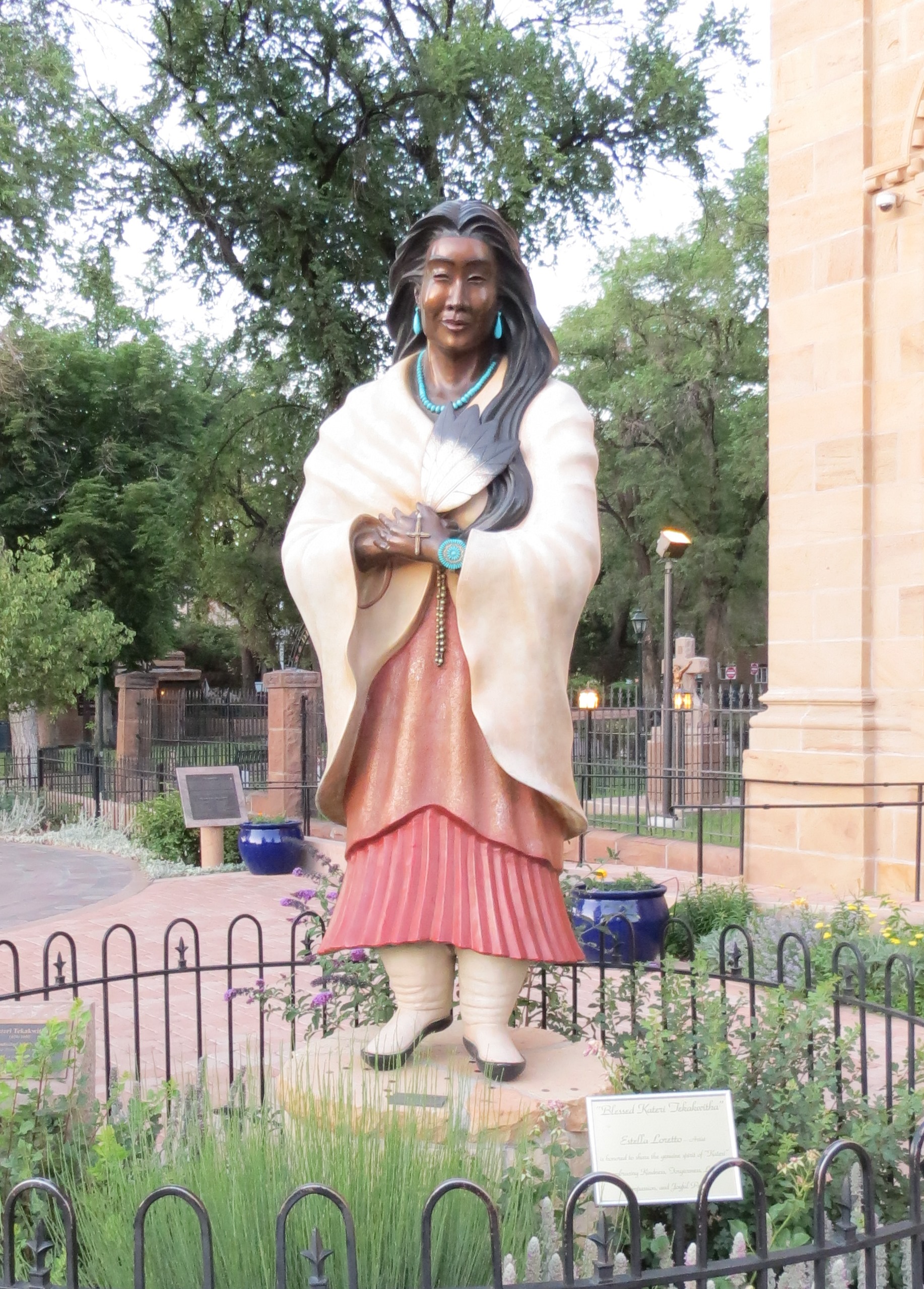
(Kateri)Meet Kateri Tekakwitha (1656-1680). She is Mohawk and Algonquin. She is also the first North American Indian be canonized by the Catholic Church. She is the fourth Native American to become a saint, having been preceded by three central American natives. You might think that is what makes her uncommon, or might have thought it unusual that I am taking time to plug a Catholic saint (which is certainly an uncommon thing for me to do), and fair enough on both points.

What really interests me here is Kateri’s attire. Standing as she is here in front of the Cathedral Basilica of St. Francis of Assisi in Santa Fe, I can’t tell if her attire is fitting or not. You see, she appears to be dressed as Pueblo, which is a little bit unusual (perhaps not fitting) for a Mohawk woman. How did she get so dressed? It might have something to do with the fact that Kateri’s sculptor in this instance was Estella Loretto of Jemez, which would make her attire fitting after all.

???????????????????????????????…but it’s still just a little odd.

Of course, for some of us ‘odd’ is good proxy for ‘interesting’.

Tekakwitha is portrayed in Iroquois dress inside the Cathedral itself. I would hardly have noticed that this was the same woman, and I have to thank my friend John for pointing this out to me. Just what to make of the changes in dress, I’m not entirely sure. A visit to a Catholic Church is certainly an uncommon experience for me.

In any event, it is a beautiful sculpture.

71.271549 -156.751450

Share this:

  • Tweet
  • Share on Tumblr
  • Click to print (Opens in new window) Print
  • Click to email a link to a friend (Opens in new window) Email
  • Click to share on Reddit (Opens in new window) Reddit
Like Loading...
← Older posts
Newer posts →

Top Posts & Pages

  • I'll Just Leave This Here
    I'll Just Leave This Here
  • Ten Little White Indians, Volume II (Spoilers Abound!)
    Ten Little White Indians, Volume II (Spoilers Abound!)
  • Recollections of WIPCE 2014
    Recollections of WIPCE 2014
  • An American Flag as a Weapon, Redux.
    An American Flag as a Weapon, Redux.
  • An Irritation Meditation: The Majority Rules Meme
    An Irritation Meditation: The Majority Rules Meme
  • Fake Patriots and Fake George Washington Quotes
    Fake Patriots and Fake George Washington Quotes
  • When Sex Falls Out of the Performance
    When Sex Falls Out of the Performance
  • Movie Review: The Orator
    Movie Review: The Orator
  • An Uncommon Security Guard: Dave Eshelman, AKA 'John Wayne'
    An Uncommon Security Guard: Dave Eshelman, AKA 'John Wayne'
  • Paul Newman IS Homo Economicus: A Spoiler-Filled Review of Hud.
    Paul Newman IS Homo Economicus: A Spoiler-Filled Review of Hud.

Topics

  • Alaska
  • Animals
  • Anthropology
  • atheism
  • Bad Photography
  • Books
  • Childhood
  • Education
  • Gaming
  • General
  • History
  • Irritation Meditation
  • Justice
  • Las Vegas
  • Minis
  • Movie Villainy
  • Movies
  • Museums
  • Music
  • Narrative VIolence
  • Native American Themes
  • Philosophy
  • Politics
  • Public History
  • Re-Creations
  • Religion
  • Street Art
  • The Bullet Point Mind
  • Travel
  • Uncategorized
  • Uncommonday
  • White Indians
  • Write Drunk, Edit Stoned

Blogroll

  • American Creation
  • An Historian Goes to the Movies
  • Aunt Phil's Trunk
  • Bob's Blog
  • Dr. Gerald Stein
  • Hinterlogics
  • Ignorance WIthout Arrogance
  • Im-North
  • Insta-North
  • Just a Girl from Homer
  • Multo (Ghost)
  • Native America
  • Norbert Haupt
  • Northwest History
  • Northy Pins
  • Northy-Tok
  • Nunawhaa
  • Religion in American History
  • The History Blog
  • The History Chicks
  • What Do I Know?

Archives

  • December 2023
  • November 2023
  • June 2023
  • April 2023
  • February 2023
  • December 2022
  • November 2022
  • October 2022
  • September 2022
  • August 2022
  • July 2022
  • June 2022
  • April 2022
  • January 2022
  • December 2021
  • November 2021
  • October 2021
  • September 2021
  • August 2021
  • June 2021
  • May 2021
  • March 2021
  • February 2021
  • January 2021
  • December 2020
  • November 2020
  • October 2020
  • September 2020
  • June 2020
  • May 2020
  • March 2020
  • February 2020
  • January 2020
  • December 2019
  • November 2019
  • September 2019
  • August 2019
  • July 2019
  • June 2019
  • May 2019
  • April 2019
  • January 2019
  • December 2018
  • November 2018
  • October 2018
  • September 2018
  • August 2018
  • July 2018
  • June 2018
  • May 2018
  • April 2018
  • March 2018
  • February 2018
  • January 2018
  • December 2017
  • November 2017
  • October 2017
  • September 2017
  • August 2017
  • July 2017
  • June 2017
  • May 2017
  • April 2017
  • March 2017
  • January 2017
  • December 2016
  • November 2016
  • October 2016
  • September 2016
  • August 2016
  • July 2016
  • June 2016
  • May 2016
  • April 2016
  • March 2016
  • February 2016
  • January 2016
  • December 2015
  • November 2015
  • October 2015
  • September 2015
  • August 2015
  • July 2015
  • June 2015
  • May 2015
  • April 2015
  • March 2015
  • January 2015
  • December 2014
  • November 2014
  • October 2014
  • July 2014
  • June 2014
  • May 2014
  • April 2014
  • March 2014
  • February 2014
  • January 2014
  • December 2013
  • November 2013
  • October 2013
  • September 2013
  • August 2013
  • July 2013
  • June 2013
  • May 2013
  • April 2013
  • March 2013
  • February 2013
  • January 2013
  • December 2012
  • November 2012
  • October 2012
  • September 2012
  • August 2012
  • July 2012
  • June 2012
  • May 2012
  • April 2012
  • March 2012
  • January 2012
  • December 2011
  • November 2011
  • October 2011

My Twitter Feed

Follow @Brimshack

RSS Feed

  • RSS - Posts
  • RSS - Comments

Enter your email address to follow this blog and receive notifications of new posts by email.

Join 8,075 other subscribers

Blog at WordPress.com.

  • Subscribe Subscribed
    • northierthanthou
    • Join 8,075 other subscribers
    • Already have a WordPress.com account? Log in now.
    • northierthanthou
    • Subscribe Subscribed
    • Sign up
    • Log in
    • Report this content
    • View site in Reader
    • Manage subscriptions
    • Collapse this bar
 

Loading Comments...
 

    %d