• About

northierthanthou

northierthanthou

Category Archives: Native American Themes

This is where I talk about Native American themes. No, I’m not Native; I’m just your generic white guy. That said, I have lived and worked in indigenous communities for a significant portion of my life, so I have a few thoughts on the subject. Whether or not they are worth considering depends on who you ask.

Tears of an Uncommon Indian

27 Monday Jan 2014

Posted by danielwalldammit in Native American Themes, Uncommonday, White Indians

≈ 13 Comments

Tags

Authenticity, Commercials, Crying Indian, Environmentalism, Indian, Iron Eyes Cody, Mother Night, Pollution, White Indians

ironeyes_codyFew commercials have been as memorable as the ‘crying Indian’ from the seventies, and I reckon few commercials have had more impact on people’s behavior. The crying Indian left quite a mark on American popular culture.

I was a kid when I first saw that image, and I distinctly recall the sense of shame I felt upon watching it. It wasn’t just that I’d seen people littering like that, I’d done it myself. In fact, littering was pretty damned common back in those days, hence the commercial! I don’t think it’s a stretch to suggest the image of that crying Indian moved a lot of people to rethink their behavior.

Some of it anyway.

So, I was pretty damned surprised to learn many years later that the crying Indian belonged to a rather unusual tribe. He was Italian. ‘Iron Eyes Cody’ was born Espera Oscar de Corti. He had been playing Indian parts in the movies ever since the 1930s. Cody claimed Cherokee and Cree ancestry during much of that time, but this appears to have been a fabrication.

It’s tempting to think of Cody as an outright fraud, but that doesn’t begin to cover the facts of the matter. By all accounts, he seems to have actually lived the life he proclaimed. Cody married a native woman and adopted native children. He assumed a Native American identity on and off-screen, supported native causes, and essentially became the role he played in real life. Just what the process might have been in his own mind is something of an open question at this point, albeit one that most of us will never have an answer to. He is a rather successful example of a white Indian, a non-Indian who went native, so to speak.

One could well wish the ‘crying Indian’ had been a ‘real Indian’, and it’s hard not to feel a little betrayed to learn the truth of Cody’s ancestry, and yet he still remains a sympathetic figure. It’s tough to let him off the hook entirely for his self-presentation, but it’s also tough to be too hard on him for it. His story reminds me of an old line from Kurt Vonnegut’s book Mother Night; “We are what we pretend to be, so we must be careful about what we pretend to be.”

By that standard I’d say Cody did pretty well in life.

***

The photo above was taken from Cody’s obituary in the Los Angeles Times. Cody has his own Snopes page of course, and the Wiki article on him isn’t bad. Findagrave also has a decent write-up.  It’s interesting to note that these sources provide different times and dates for Cody’s birth, with the L.A. Times piece coming in as the outlier with 1916 and Fort Gibson, Oklahoma. The others tell us Cody was born in Louisiana, and in 1904. Cody also features prominently in the documentary, Reel Injun, which is definitely worth a watch.

71.271549 -156.751450

Share this:

  • Tweet
  • Share on Tumblr
  • Click to print (Opens in new window) Print
  • Click to email a link to a friend (Opens in new window) Email
  • Click to share on Reddit (Opens in new window) Reddit
Like Loading...

A Little Monday Mischief

23 Monday Dec 2013

Posted by danielwalldammit in Native American Themes, Uncommonday

≈ 8 Comments

Tags

Chiefs, High Scool, Humor, Metlakatla, Miss Chiefs, School, Sports, Sports teams

GetImage

When I brought up the Fighting Whities, a colleague of mine mentioned this little gem of a women’s basketball team here. You see in Metlakatla, the high school sports teams go by the ‘Chiefs’, at least the men’s teams do. The women go by the Miss Chiefs.

🙂

71.271549 -156.751450

Share this:

  • Tweet
  • Share on Tumblr
  • Click to print (Opens in new window) Print
  • Click to email a link to a friend (Opens in new window) Email
  • Click to share on Reddit (Opens in new window) Reddit
Like Loading...

Uncommonday Morning News – Shaka May Have a Patent-Suit Against Sitting Bull

02 Monday Dec 2013

Posted by danielwalldammit in History, Native American Themes, Uncommonday

≈ 13 Comments

Tags

American Indians, Anheuser-Busch, Cassilly Adams, Custer's Last Fight, Custer's Last Stand, George Armstrong Custer, History, Little Big Horn, Native Americans, Sioux

62300

(Click to embiggen)

This painting is one of the reasons Custer is still remembered as a hero in some quarters. To quote a fellow-blogger:

In 1884, eight years after George Armstrong Custer’s death, the Anheuser-Busch brewing company commissioned an original oil painting, Custer’s Last Fight, by Cassilly Adams.  It was reproduced as a lithograph by F. Otto Becker in 1889 and distributed as an advertising poster by Anheuser-Busch.  This depiction of the Battle Of the Little Bighorn undoubtedly hung in more saloons than any image before or since, and fixed the iconography of Custer’s last moments in the national imagination.

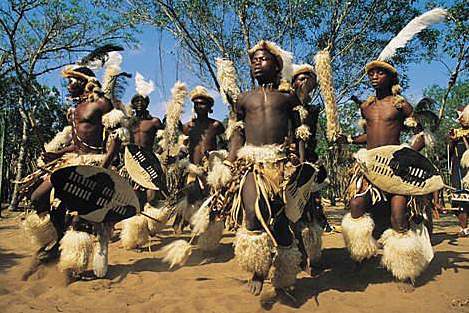
I am told the image represents the terrain at Little Big Horn reasonably well, though some question its depiction of the soldier’s uniforms, the lack of guns among the Sioux, and of course Custer’s heroic posture in those final moments is open to more than a little doubt. What makes this image a truly golden bit of absurdity, however, would have to be the Indian shields.

…just a little off.

???????????????????????????????????????????????????????????????????????????????????????????????????????????????????????????????????????????????????????????????????????????????????????????????????????????????????

hm…

???????????????????????????????????????????????????????????????????????????????????????????????????????????????????????????????????????????????????????????????????????????????????????????????????????????????????

hmmm again!

shakazulu4

Ahem!

71.271549 -156.751450

Share this:

  • Tweet
  • Share on Tumblr
  • Click to print (Opens in new window) Print
  • Click to email a link to a friend (Opens in new window) Email
  • Click to share on Reddit (Opens in new window) Reddit
Like Loading...

Unommonday – The Fightin’ Whities!

11 Monday Nov 2013

Posted by danielwalldammit in Native American Themes, Uncommonday

≈ 3 Comments

Tags

American Indians, Basketball, Native Americans, Sports, Sports Mascots, The Fighting Whites, The Fighting Whities, University of Northern Colorado

fightinwhitesSince sports mascots are on the public mind once again, I thought it might be a good time to post my all-time favorite team. Mind you, I don’t follow sports. When people talk about sports, to me it sounds a lot like the adults in a Peanuts cartoon. When a game is on the tube, I just see a blue screen. And I must say that I have never seen these guys play, nor do I know anything about their record. I just know the name of the mascot for an intramural basketball team at the University of Northern Colorado: It’s ‘The Fightin’ Whites’, or the ‘fightin’ whities’ as they were more popularly known. Their motto was “Every thang’s gonna be all white.” And just in case the ironic tone isn’t clear, let me point out that the school used sales of team merchandise to fund an excellent scholarship program for Native American Students.

71.271549 -156.751450

Share this:

  • Tweet
  • Share on Tumblr
  • Click to print (Opens in new window) Print
  • Click to email a link to a friend (Opens in new window) Email
  • Click to share on Reddit (Opens in new window) Reddit
Like Loading...

Uncommonday Number 2: A Bit of Juxtaposition

28 Monday Oct 2013

Posted by danielwalldammit in Museums, Native American Themes, Uncommonday

≈ 10 Comments

Tags

Anchorage, Anchorage Museum, Art, Hopi, Juxtaposition, Native American, Nicholas Galanin, Photography, Star Wars

Leia-Hopi croppedI seriously wonder what the folks out on the Hopi Mesas must have thought of Star Wars. I’ll leave the commentary at that, because I think the photo here speaks for itself. This piece was produced by the artist Nicolas Galanin. It was part of an exhibit at the Anchorage Museum.

71.271549 -156.751450

Share this:

  • Tweet
  • Share on Tumblr
  • Click to print (Opens in new window) Print
  • Click to email a link to a friend (Opens in new window) Email
  • Click to share on Reddit (Opens in new window) Reddit
Like Loading...

Geronimo: A Manly Legend, No Women Allowed!

25 Friday Oct 2013

Posted by danielwalldammit in History, Movies, Native American Themes

≈ 25 Comments

Tags

Dahteste, Film, Gender, Geronimo, Gouyen, Lozen, Movies, Wes Studi, Women

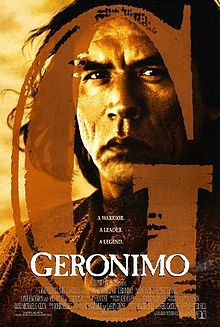
220px-Geronimo_filmIt’s been a number of years since I first watched Geronimo, An American Legend. But it just arrived in my latest shipment from Amazon, along with some chili paste. So, a good meal and a good movie go together like kids with crayons and a clean white wall.

Yes, I do enjoy this movie. The cast is first rate, and all of them turn in fine performances. Wes Studi is at his bad-ass best playing Geronimo. I have enjoyed watching this movie in the past, and I’m sure I will do so again (like when it hits 30 below this winter and stays there). I do like this movie, but…

Like most films about real historical events, this one does take some liberties with its subject matter. The central focus of this movie would seem to be efforts by key military personnel to secure Geronimo’s surrender. We see as much diplomacy in this film as we do fighting, albeit under duress and always with the possibility of violence mere moments away. If I understand the history correctly, the sequence of events in the movie is a bit off, the significance of a key leader Naiche is minimized, and General Crook’s reaction to Geronimo’s escape is played up a bit much. I may be missing something, but I can live with most of these deviations from the facts. But right now one of those little simplifications is crawling up my pant leg and biting my ass just like the proverbial rainbow in that first season of Southpark. I mean this one little twist is really bugging me. The problem is this.

Where are the women?

I’m not normally one to criticize people for the movie they didn’t make, or the book they didn’t write, but well, that’s exactly what I’m gonna do here.

Yep!

A number of Apache women do appear on screen during the course of this movie. They are pictured running away from the U.S. soldiers, living on the reservation or in camp, and they even appear on the train taking Geronimo to Florida. We also have some discussion of the atrocities committed against women on various sides in the conflicts at hand. The film stops short of showing us the full extent of those atrocities, not the least of reasons being (I suspect) that it would make it a lot harder to identify with the men committing them. Geronimo in particular must be intimidating, but not so much so that we cannot care about his fate. The movie makers didn’t quite have the courage to actually show us how bloody this war got, so they let the characters tell us about it instead.

Okay, so that’s all well and good, but here is the thing; some really interesting women were involved in the events portrayed in this film. You wouldn’t know it unless you dug a little into the history at hand (I’m still getting started myself on this one), and you certainly wouldn’t expect a prominent role for women in the imaginary world of most fiction of the American West. Okay, we always have room for a prostitute with a heart of gold, or a damsel in distress, but genuinely strong women’s roles aren’t exactly common fare in the genre. And of course this is a film about warfare, so we wouldn’t expect women to play much of a role in that.

But here they are!
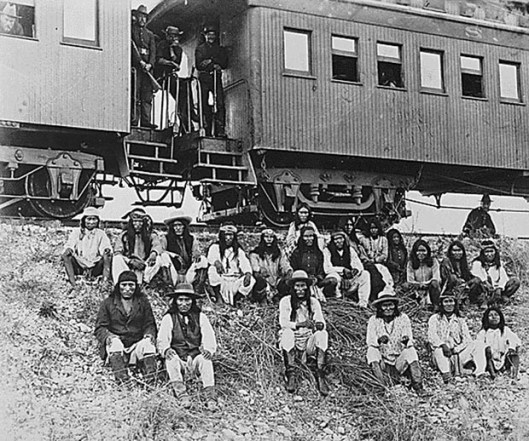
APACHE EPICYou can see a few women who rode with Geronimo and Naiche in this picture as they await deportation to Florida. Two of them are of particular importance, the 5th and 6th figures from the right on the top row. There are several reasons to be interested in these women, but a couple of them in particular should have been of interest to the folks behind the movie, Geronimo; both were actively involved in the fighting as well as the negotiations for Geronimo’s surrender. These women were not simply traveling with him; each played a significant role in the actual story on which the movie is based.
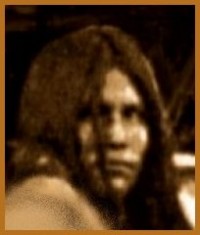
Lozen04-e1333817881283The Sixth figure on the right of the top row is Lozen, sister of Victorio. She cuts an interesting figure in this image, barely facing the camera. One might not take her for a woman at first sight, which is actually rather appropriate. She seems to have dressed as a man for balance of her adult life, and she certainly seems to have taken on the role of a man when it came to warfare. This kind of gender-bending isn’t entirely unusual in Native American communities, but I don’t want to be too quick to draw conclusions about her own role in Apache society.

Lozen is credited with taking special precautions to protect women and children during her brother’s campaigns. Various sources have her escorting women and children across a river to safety before rejoining the men before a fight. In another instance she is said to have escorted a woman to the safety of a reservation, stealing horses for the both of them in the process. Seriously, her actions during Victorio’s campaigns alone are the stuff of legend. During Geronimo’s campaigns, she seems to have added the powers of a shaman to her reputation.

Why no-one has made a movie about Lozen is beyond me, though I understand someone wrote her into a sort of Romance novel. I haven’t read it, so I should with-hold judgement, but I must say that the idea fills me with dread. A segment in Apache Chronicle seems much more promising.

Following Geronimo’s surrender, Lozen was shipped East to Florida along with the others. She died of tuberculosis while in captivity.
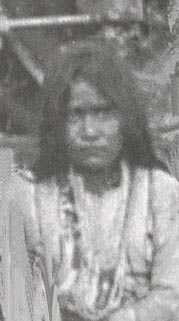
dahtesteSitting next to Lozen is Dahteste, and yes, it is significant that they are together. It’s difficult to know the exact nature of their relationship, but the two were certainly close associates throughout Geronimo’s campaign.

Dahteste figures a little less prominently than Lozen in the folklore of the time, but she is also credited with significant fighting skills and there is little reason to believe she could have acquired that reputation without using those very skills in action. More to the point, Dahteste’s fluency in English made her a valuable intermediary between ‘hostile’ Apache and the U.S. Army, which would have put her right at the heart of the story in Geronimo.

She too was taken into custody following Geronimo’s surrender, and shipped back East. She lived long enough to finish her life on the San Carlos Apache reservation.

***

What of it?

Both of these women certainly could have been portrayed in the film, Geronimo. At the very least their inclusion would have added color to the story. More than that, their role in negotiations for surrender would have put these two women right in the central plot-line of the movie. They had to be written out of the story, and in writing them out the story, the film-makers delivered narrative that was much more masculine and much more hetero-normative than the one they could have told, or would have told, had they had the balls to do so.

If there are specific historical reasons for dropping Lozen and Dahteste from this legend, I do not know what they would be, but I suspect the actual reason for this would be a failure of the imagination. Warfare in the old west is, as far as the typical America can envision it, a distinctively masculine enterprise. Women may from time to time fall victim to it, and the occasional female character can show her spirit by picking up a gun when necessary. They were not merely caught up in the action, and they did a Hell of a lot more than show a little spirit when it was absolutely necessary. These weren’t damsels in distress; they were distress in their own right. I sincerely doubt that the folks making this film knew what to do with them.

…which is a damned shame.

Don’t get me wrong; I don’t really see the inclusion of these two in Geronimo’s story as a question of justice (no more than I worry about the omission of Naiche). Neither historians nor film-makers, nor anyone else for that matter, can grant justice to those long dead and gone. This is a question of story-telling. It’s hard to get this across to people who don’t study history. The real thing is consistently more interesting, more convoluted, and more difficult to imagine than the stories Hollywood typically gives us. The liberties they take with historical subject matter rarely add much to the story; they consistently leave that story impoverished.

This American Legend (cool as it is) would have been that much more interesting had they found a place for these two Apache legends.

***

2010218153724_GouyenNot pictured above would be a woman named Gouyen, a bad-ass in her own right. She too was captured at the end of Geronimo’s campaign and transported to Florida, but not before accomplishing a few impressive feats of her own.

I haven’t learned what role (if any) she may have played in events leading up to Geronimo’s surrender, but her martial feats are impressive enough in their own right. When her first husband was killed in a Comanche raid, she is said to have tracked down the man who did it and returned home with his scalp.

She did this alone.

During Geronimo’s earlier campaigns, so the story goes, Gouyen actually saved her second husband’s life.

Gouyen died at Fort Sill, Oklahoma in 1903.

71.271549 -156.751450

Share this:

  • Tweet
  • Share on Tumblr
  • Click to print (Opens in new window) Print
  • Click to email a link to a friend (Opens in new window) Email
  • Click to share on Reddit (Opens in new window) Reddit
Like Loading...

Finding Your Inner Southitude: The Adventures of Lobster-Boy and His Poor Companions

03 Saturday Aug 2013

Posted by danielwalldammit in Bad Photography, Museums, Native American Themes, Write Drunk, Edit Stoned

≈ 10 Comments

Tags

Art, Institute for American Indian Arts, Santa Ana Pueblo, Sata Fe, School, Southwest, Street Art, Taos Pueblo, Travel

Looking up at the Institute of American Indian Arts

Looking up at the Institute of American Indian Arts

Sleep done left me now on accounta the kids. Not my kids, but they stare at me all day now and mostly frown. I do my best to inflict knowledge upon them, but my evil plans are often foiled by the mysteries of the modern world, …or at least the iphone.

It fills and protects their minds even when it stays in the room!

Some might call it a field trip; I call it a collective loss of Northitude. Alternatively, we could call it turning the heat up on the ice people. It’s also called visiting some folks I happen to think a lot of, but let us save sense and seriositude for another day.

Haven’t traveled with teens since I was one. Its an experience…

“When do we board?”

God may not exist but middle seats are pretty close to proof that the Devil is alive and busy issuing boarding passes. I think he also designs the help pages for Microsoft!

I miss the gargle-bunkies and my bloggetry has gotten sloppy. Classes need work and my ecological footprint is a big boot stomp on everything I love. For now, I am Southward, …and I have hostages!

“Hey, shouldn’t we be boarding soon?”

The rules are as follows:

1) Control of musical decisions belongs to the teenagers in the vehicle. Volume is negotiable.

2) Sarcasm is a given.

3) “Family” doesn’t mean what I think it means.

4) Failure to follow rule 1 is the first step to tears and fears, but no beers, not even one.

What the Hell? Hostages aren’t supposed to make the rules! One of the kids decides to throw me a bone and plays Madonna, (cause I’m old). This does NOT make me feel shiny and new.

Precedent argues strongly for the use of a scowl in conjunction with a stern ‘No’, all of which is best delivered in response to a perfectly reasonable question. I am apparently a bad influence, and I’m almost sorry about that.

“So what time do we board?”

Santa Fe is a wonderful place to visit. Taos Pueblo and the Institute for American Indian Arts are always beautiful places. Watching my students eat Frito pies for the very first time in the front yard of our host and guide brings the beauty up a notch for me. Knowing they aren’t used to the spice is pure joy. …Yes, I’m a bad man.

“Are we boarding soon?”

Seriously, I can’t believe I am driving by so many public murals without even getting my camera out. …I got a couple of them, though, yes, I did.

The doc says I gotta eat more bananas, and my friend owes me a beer, but never mind the beer and the friend, doc says what? She tells me all about the changes in my near future as I look down at my dinner and realize that I am presently eating about the only meal in a month that might pass muster. …except for the noodles, of course.

“Seriously, when are we gonna get on the plane?”

Project Runway aside, it’s probably best to leave the gay bar off the agenda. Angry parents sound like Jaws music. The Elvis Shrine is a big can-do, and Goose is the coolest!

…and the whole thing leads us to old Santa Ana Pueblo, fittingly, during the Feast of St. Anne. So, there we find ourselves sitting at the dining table of a wonderful host, looking over more dishes than any one of us could possibly sample. It wasn’t a week ago that I found myself eating Ugruk (seal) at Nalukataq (the Spring Whaling Festival). Now I am sitting here finishing off a bowl of red chili that proved a bit too much for one of my students, and thinking how wonderful this is. Some days (and especially feast days) it’s a good day to know indigenous people. I can only hope our little trip to the sun and the spicy food finds its way into the “worthwhile” bin amongst the learning lessons of my students. …and that there is more chili to be had.

It is a bit hot outside, and my students are holding the car keys hostage in the hopes that I will show mercy.

“There will be no more ice people if you melt us!”

I can’t help but laugh.

“Has the flight been delayed; when are we gonna board?”

I’m bringing back one demon girl, but another now knows how to feed a hundred Indians with 50 pieces of Fry-bread. Empirical proof of the former is confirmed, but we are still waiting on the latter.

“Seriously, when are we gonna board?”

…and Northitude returns with sleep soon to follow.

***

The Museum of Contemporary Native American Arts

Entryway Statue
Princesses
Abstract

Interesting
Yes, those are basketballs

***

The New Mexico Museum of Art (with a fantastic exhibition by Peter Sarkisian).


***

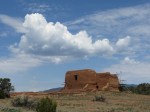
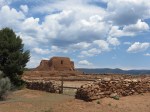
The Pecos Historical Park

The Church at Old Pecos Pueblo
One neat thing about this church…
It has been abandoned for close to 200 years…

The result of a Comanche raid, I believe.
But the descendants of those that lived here…
…will hold service in this place once a year.

…right under the stars.

***

Random Murals

Handball Court
Close-Up …thanks to Diane for helping me think about these sorts of things.
Just a cool wall mural.

PSA mural
Red and White on black.
Smoking Face

Hey that looks like a Shepard Fairey …oh, not without good cause apparently…

***

Unhumorous Point of Partial Clarification: I generally don’t show pictures of students, colleagues, etc. This is just a matter of personal respect. They have signed up for work or study with the school, not a command appearance in my personal blog. …also, I have no pictures from Santa Ana or Taos Pueblo. Those would not be appropriate for an entirely different set of reasons.

Yes, I wore sunscreen

Yes, I wore sunscreen

Hats and umbrellas are frowned upon during the Feast of St. Anne. Oddly enough 4 Alaskan Natives and a Tongan don’t burn as easily as a balding white guy who normally wears a hat.

Who’da thunk it?

Share this:

  • Tweet
  • Share on Tumblr
  • Click to print (Opens in new window) Print
  • Click to email a link to a friend (Opens in new window) Email
  • Click to share on Reddit (Opens in new window) Reddit
Like Loading...

Time Heals All Wounds …Unless it Doesn’t

10 Monday Jun 2013

Posted by danielwalldammit in History, Narrative VIolence, Native American Themes

≈ 40 Comments

Tags

Accidental Racist, American Indians, History, Holocaust, Memory, Native Americans, The Long Walk, Time, Tragedy

http://www.newmexicohistory.org/filedetails.php?fileID=494

http://www.newmexicohistory.org

A career in Native American studies makes you the grammatical equivalent of a time machine. No sooner do people learn where you work, what you study, or what specific things you happen to be working on than they suddenly switch to past tense. Often this will be accompanied by sad tones and slightly downcast eyes. Seriously, I’ve lost track of the number of times a few comments from me have led people to great moments of reflection about “what we have done to them.”

These moments of introspective time-travel usually leave me with a bit of motion sickness. See, the thing is that people go back to the past like this when I am actually talking about perfectly contemporary issues. When I worked on the Navajo Nation, simply telling folks what I do for a living was often enough to send their souls searching through history for resolution of collective sins, real or imagined. In most cases I don’t think folks had any real sense of the specifics in question, no real idea of just what Anglos had done to Navajos, for example. In most cases, I suspect the sudden trip to the past tense was filled with thoughts of generic cowboys and even more generic Indians, …who probably looked more like Lakota than Navajos anyway. In any event, the problem is simple enough; for far too many people Native Americans simply belong in the past.

…and yes, I do wonder just how often Native Americans get this? Perhaps it’s a white thing after all. I don’t remember getting this effect in the presence of natives, just when it’s me talking to my own, so to speak.

Anyway, I figure it makes it a Hell of a lot easier to be sorry about something if it happened a few generations back. Try to talk to people about issues such as uranium poisoning, forced relocation, or any number of contemporary issues, and they are less certain that what ‘we’ are doing to ‘them’ isn’t somehow justified, or at least necessary, or at least.

But folks are happy to talk about Custer.

Wasn’t he a bastard!?!

Rarely do I get the sense that this sort of time warp is meant to provide historical perspective; often it strikes me as just one more way of changing the subject.

Of course somber regrets for crimes long forgotten are only the nice-guy half of this coin. Flip the quarter over and you get a range of narratives effectively using time to disclaim responsibility for these same crimes, perhaps even a comment to the effect that it’s best for Native Americans to put the past behind them. Occasionally people will actually tell me that reservations or casinos, etc. are attempts to pay for what ‘our ancestors’ did, and of course the point is always to suggest that such concessions are unfair to the rest of us here in the present.

And no, this time-to-forget theme is not limited to Native Americans. One has only to suffer his way through “The Accidental Racist” to hear Brad Paisley play precisely this shell game with history. I don’t have the stomach to parse the details of this terrible tune, but let’s just say that Brad is apparently paying for the mistakes of a southern past, and L.L. Cool Jay is happy to let bygones be bygones.

…Seriously, both of them should have known better.

It’s funny those who support the rebel flag are always prepared to discuss its significance in the civil war. Rarely do they want to comment on its use in opposition to the civil rights movement.  History textbooks probably don’t make this much easier, telling us that slavery ended with the close of the civil war. Sure they note the existence of debt peonage and Jim Crow Laws, etc., but that is a more complex story. The morality tale for most people ends at Appomattox. I suspect it is the story of slavery that many will imagine when they ask why African-Americans have trouble putting the past behind them. The notion that some folks can still remember when there was real danger in looking a white person in the eye just seems to escape a lot of people.

…most of them white.

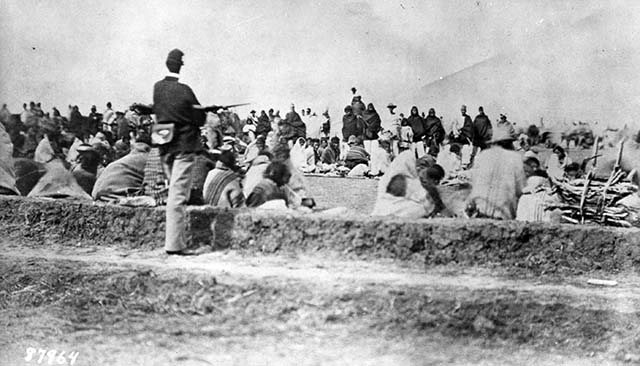
But what’s past isn’t equally past for all people. I learned this very clearly out in Navajo country. The nadir or their historical narratives begins with the story of the Long Walk. In 1864 Kit Carson burned marched through Navajo country, burned their crops and destroyed their homes. He then waited for winter to bring them to him.

It worked.

The result was 4 years of internment at a place called Fort Sumner in Southeastern New Mexico. Many of those who started the “Long Walk” to Fort Sumner didn’t make it to the end.

When my friends, students, and coworkers told me their stories about the long walk, what struck me most about their narratives was the way they always began.  They almost always began with a clear reference to some family member. These weren’t simply stories about something that happened to their ancestors; they were stories about the death of a Great Aunt or the trials of a Great Great Grandmother. People telling me these stories consistently anchored narratives of the long walk in their own relationship to one of those who had been through it. These were not stories about an event over a hundred years ago; they were intensely personal stories of family tragedy.

I’ve heard similar stories, …from my high school history teacher, for example. A native of Georgia, her account of Sherman’s march included a great grandmother’s efforts to save a family heirloom (she stuck it on a wall in the hopes Union troops wouldn’t notice). When I taught briefly at a Jewish private school in Houston, I heard such stories from survivors of the Holocaust. More importantly, my students heard those stories. They hear them every year, directly from the survivors, and in countless other contexts throughout the year. I’ve heard such tragic narratives from Inupiat speaking about the horrors of influenza epidemics brought by whalers and the trials of the boarding schools. Exposure to virgin soil epidemics is hardly ancient history on the North slope, and most any native can tell you about some elder who was punished for speaking her own language at the schools. What all these narratives have in common isn’t simply tragedy; it’s direct personal connection to the suffering.

Of course, the suffering in some of those stories is greater than that in others.

People don’t just forget these sorts of events. They keep them alive; they keep them personal. The suffering becomes part of the meaning of history, and part of the personal identity of those that have been through it, of their children, and their children’s children.

Whether or not such stories should be kept alive in that way is a whole other question, and a rather ironic one at that. The suggestion that people subjected to injustice ought somehow to simply move on has more than a trace of might-makes-right in it. It is an attempt to suggest that certain horrors are simply an accomplished fact, as are the long-term consequences of those horrors; land lost, buildings and nations built for the benefit of someone else, and whole scores of missing family – aunts and uncles not present and cousins never born, all of it, so the argument goes is just a done deal. Yet some people say that it would be best to just move on; accept all of this and focus on the future.

Best for whom?

Your land is ours now, but let’s not dwell on how that happened. Your grandmother’s language is gone now, but let’s not think too much about that. Cities wrecked? Whole populations wiped out? What’s past is past, so some say; let’s look to the future.
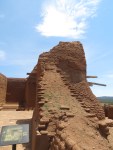
But if the long-term consequences of such atrocities might be thought an accomplished fact, then so are the bitter narratives.

…and the bitterness itself.

It seems those with such tragedy in their past rarely (if ever) take such advice. They remember! They remember with a passion. Here we have at least a trace of poetic justice. It seems to me quite fitting that those hoping the descendants of tragedy would accept the consequences and simply move on should run square up against one other uncomfortable and very stubborn fact, namely that folks just don’t forget such things.


They really don’t.

71.271549 -156.751450

Share this:

  • Tweet
  • Share on Tumblr
  • Click to print (Opens in new window) Print
  • Click to email a link to a friend (Opens in new window) Email
  • Click to share on Reddit (Opens in new window) Reddit
Like Loading...

Kivgiq II: The Box Drum Dance

05 Sunday May 2013

Posted by danielwalldammit in Alaska, Native American Themes

≈ 6 Comments

Tags

Alaska, Barrow, Celebration, Dance, Drumming, Festival, Inupiat, Kivgiq, New year

As I mentioned in the last post, my favorite dance at Kivgiq is the Box Drum Dance. As it happens, I got a decent set of videos from a performance of the Barrow Dancers. By ‘decent’ I of course mean for a random guy sitting in the stands with an okay sorta camera. This stuff ain’t gonna make the Home Video Hall of fame. But the subject speaks for itself. The first video is the Box Drum Dance. Unfortunately, I botched the second film, so one key dance is missing. It’s a damned shame too, because it’s an interesting dance. But immediately following that missing dance, there are usually a series of performances usually described as fun dances. I got those.

I wouldn’t pretend to know enough about this dance to describe it accurately. So, I will instead include a link to a wonderful page on the topic.

http://www.nativetech.org/inupiat/pullinginnewyearbody.html

Anyway, here are the videos.

.

100

100

.

101

101

.

102

102

.

103

103

.

104

104

.

105

105

.

108

108

71.271549 -156.751450

Share this:

  • Tweet
  • Share on Tumblr
  • Click to print (Opens in new window) Print
  • Click to email a link to a friend (Opens in new window) Email
  • Click to share on Reddit (Opens in new window) Reddit
Like Loading...

Kivgiq!!!

02 Thursday May 2013

Posted by danielwalldammit in Alaska, Anthropology, History, Native American Themes

≈ 14 Comments

Tags

Alaska, Barrow, Celebration, Charles Brower Sr., Dance, David Graeber, Inupiat, Kivgiq, Messenger Feast

Canadian Guests

Canadian Guests

Oh my, how time does fly!

It’s been over two months since Kivgiq. I’ve been meaning to write something about that since, well, …since two months ago. I’ve also been putting it off while catching up on other things. But you never do catch up, do you? And Kivgiq is worth a moment of bloggetry, so here goes!

So, what the Hell am I talking about? I’m talking about the Messenger Feast! At this point, it’s a biennial celebration taking place in February here in the North Slope. All the other villages of the North Slope are invited to several days of singing and dancing, and of course to a grand feast. Mostly, it means Iñupiat dance troops from all over the place. Sometimes folks even come in from Canada.

February is a special time of year in the North Slope, owing to the rapid return of the sun. It’d difficult to convey just how much that means to folks. After two months of polar midnight, people are ready for it. More than ready for it! And it’s return is spectacular. By February, we are starting to have something resembling an actual day here in Barrow, and yes, this is one more thing to celebrate.

Having recently picked up David Graeber’s chapter on the Myth of barter in Debt: The First 5,000 Years I was particularly interested in the role this feast may have played in the traditional economies of the region. One of the most interesting chapters in Graeber’s work details the absence of barter within small-scale small scale communities (this despite all the efforts of economists to put it there via thought experimentation). What happens in such communities, according to Graeber? Well people share the resources within their own community; they barter with outsiders, particularly those with whom they might be as likely to fight as to trade. Graeber further notes that the possibility of violence is often worked into the symbolism of the exchange.

To see the cooperative economics of the native community in Barrow, one needs only look at the whaling activities and subsequent distribution of muktuk throughout the community, though I suppose if you were looking for a ritual that enshrines this practice it would be Nalukataq in mid to late June. To see the tradition of bartering with neighbors? Well, now that would be Kivgiq, at least as it was initially practiced.

Charles Brower Sr., a town patriarch of sorts, provided a description of a Messenger Feast from the early twentieth-century which is particularly striking. Two messengers had been sent out to other villages, returning with the guests in July. The feast began as it does today with a footrace. Afterwards…

The main body of visitors followed, two hundred or more stretching out in a long line. Some bore mysterious packages on their backs, others dragged sleds piled high with skins. Everyone was dressed in his worst. I never saw a more disreputable looking crowd – nor one whose tatters covered more suppressed excitement.

Just above the station they were met by a picked up group of village men, naked to the waist. Each wore a loonskin on his head and carried a few arrows and a bow. Suddenly they gave a yell and started shooting over the heads of the strangers. Their arrows gone, they then retreated to the dance house where the rest of the crowd was congregated, still a bit put out over the results of the foot race (the local participants from the village of Utkiagvik had been soundly beaten).

At this time our messengers who had supposedly returned with the guests were nowhere to be seen. They’d have a hard time sneaking in the dance house now, I thought unless they too had dressed in old clothes, hoping to mingle with the guests and escape detection.

I was scanning the crowd with this in mind when a riot broke out in the doorway. A group of visitors laden with rolls of deer-skins, were demanding entrance, the guards steadfastly refusing to let them through. Higher and higher rose angry voices until, with final protesting shrieks, the guests were forced to unroll their deer-skins, and there inside lay our messengers, nearly smothered by heat and stifled laughter.

Mungie came by, grinning broadly. an old trick, he said.these inland people must have thought we’d never heard of it.

Our ‘home folks’ furnished the music that first day, visitors doing the dancing. A man and a woman would enter and dance, then loudly announce what they had brought for the one who had invited them. After which the recipient joined in and all three danced together.

Later the women disappeared to make ready the feast – mostly whale meat and seal. Many of the inland people, unfamiliar with such delicacies, couldn’t get the stuff down. Lucky for me that I’d learned to take my muctuc like any coast native, for this enabled me to join the crowd in making fun of our visitors. Their only comeback was to hint broadly at what they expected in return for their presents.

Since it was a matter of tribal pride that visitors be satisfied or else given back their own presents – a most humiliating procedure, our people went to ridiculous lengths to meet the demands. Many sold their whalebone to provide needed funds. A few of the poorest even asked for additional credit at the station. Anything to uphold the reputation of Utkiavie. It was silly – and a little touching.

I hadn’t yet seen our visitors at their best, for all this time they had been wearing their most ragged clothing. But when they took over the drums the second day while our crowd danced it was like the transformation of cocoons into butterflies. Decked in all the finery they had brought in bundles, they certainly were a fine looking lot of people. Many of the men were six feet tall. Even their women seemed larger and better looking than average Eskimos.

The third and last day was given over to the actual exchange of presents. I say ‘exchange.’ In reality it turned into one grand bargain-driving spree. If a gift fell below expectations, the owner kept adding to it until he had nothing more to offer. And when this failed to satisfy, the other par6ty demanded his present back even though he often sold it later for whatever it would bring.

I’ll end the narrative there, both because that is the relevant portion and because the whole story soon takes a tragic turn. After trading with non-native whaling crews, the guests contracted a disease, Brower figured it to be a kind of flu. Severely weakened from the flu, they elected to return home. For some time, the bodies could be found scattered along the river way headed inland, Brower doubts that any made it home.

What Brower saw was one of the last celebrations of the Messenger Feast held in the early twentieth-century. By the 1920s, natives had stopped holding this feast entirely. It would not be revived until 1988 when North Slope Borough leadership held the first Messenger Feast in roughly 80 years.

The Messenger Feast still retains many of the same themes present in Brower’s description, though specific details vary considerably. If I had dragged my butt out of bed early enough to catch the race, I could tell you all about that, but well, …I suck.

Seriously, I do.

The tradition of gift giving is still present, though it is less central to the ritual. People give a broad range of gifts to others (though items with a distinctively Iñupiat cultural significance seem to figure prominently in these events). One often sees the gifts sitting on the floor of selected open dances (in which any in the audience are invited to participate). Special gifts sometimes merit a moment in the spotlight for those involved. Either way the giver and the recipient will be out there for at least one dance.

I have asked a number of people whether or not reciprocation is expected, and or how that might be structures. The range of answers I’ve collected so far defies my ability to interpret all the variations. I most definitely did not see haggling, or heated exchanges over the value of the items in question. And if the significance of this theme has faded a bit, I would suggest that is at least partly due to the changing local economy. Gone are the days when inland and coastal peoples would have provided distinct contributions, much less the days when an event such as this could have presented a truly unique opportunity to get exotic foods or products. What remains is a symbol of generosity, albeit one with a very interesting history.

My favorite event in Kivgiq would have to be the box-drum dance, but I’ll save that material for a follow-up post. I wasn’t that happy with my pictures this year, but I think a few of them are worth sharing. If you click the pictures they will of course embiggen.

Entertainment during a massive potluck. …yes, it was bluegrass.
Banners
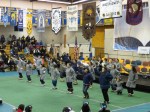
Dancing 1

Elder and child dancing together
Box Drum
Canadian Guests

It ain’t all serious.
Looks like an open dance, these come at the end of a performance.
The follow up to a Box Drum Dance.

Look at the crowd!
Yep, she dances.
Box drum preparations.

Note the gift on the floor
Event staff and security was called up for this dance.

I just have one video here that I will include in this batch. It stands out for me, because it illustrates so wonderfully the role of children at these events. Planned or unplanned, they are seemingly always involved in the performances. And if that lends a little chaos to a dance, then so much the better.

child

child

71.271549 -156.751450

Share this:

  • Tweet
  • Share on Tumblr
  • Click to print (Opens in new window) Print
  • Click to email a link to a friend (Opens in new window) Email
  • Click to share on Reddit (Opens in new window) Reddit
Like Loading...
← Older posts
Newer posts →

Top Posts & Pages

  • I'll Just Leave This Here
    I'll Just Leave This Here
  • Ten Little White Indians, Volume II (Spoilers Abound!)
    Ten Little White Indians, Volume II (Spoilers Abound!)
  • Recollections of WIPCE 2014
    Recollections of WIPCE 2014
  • Movie Review: The Orator
    Movie Review: The Orator
  • An Uncommon Security Guard: Dave Eshelman, AKA 'John Wayne'
    An Uncommon Security Guard: Dave Eshelman, AKA 'John Wayne'
  • Paul Newman IS Homo Economicus: A Spoiler-Filled Review of Hud.
    Paul Newman IS Homo Economicus: A Spoiler-Filled Review of Hud.
  • An American Flag as a Weapon, Redux.
    An American Flag as a Weapon, Redux.
  • An Irritation Meditation: The Majority Rules Meme
    An Irritation Meditation: The Majority Rules Meme
  • Fake Patriots and Fake George Washington Quotes
    Fake Patriots and Fake George Washington Quotes
  • When Sex Falls Out of the Performance
    When Sex Falls Out of the Performance

Topics

  • Alaska
  • Animals
  • Anthropology
  • atheism
  • Bad Photography
  • Books
  • Childhood
  • Education
  • Gaming
  • General
  • History
  • Irritation Meditation
  • Justice
  • Las Vegas
  • Minis
  • Movie Villainy
  • Movies
  • Museums
  • Music
  • Narrative VIolence
  • Native American Themes
  • Philosophy
  • Politics
  • Public History
  • Re-Creations
  • Religion
  • Street Art
  • The Bullet Point Mind
  • Travel
  • Uncategorized
  • Uncommonday
  • White Indians
  • Write Drunk, Edit Stoned

Blogroll

  • American Creation
  • An Historian Goes to the Movies
  • Aunt Phil's Trunk
  • Bob's Blog
  • Dr. Gerald Stein
  • Hinterlogics
  • Ignorance WIthout Arrogance
  • Im-North
  • Insta-North
  • Just a Girl from Homer
  • Multo (Ghost)
  • Native America
  • Norbert Haupt
  • Northwest History
  • Northy Pins
  • Northy-Tok
  • Nunawhaa
  • Religion in American History
  • The History Blog
  • The History Chicks
  • What Do I Know?

Archives

  • December 2023
  • November 2023
  • June 2023
  • April 2023
  • February 2023
  • December 2022
  • November 2022
  • October 2022
  • September 2022
  • August 2022
  • July 2022
  • June 2022
  • April 2022
  • January 2022
  • December 2021
  • November 2021
  • October 2021
  • September 2021
  • August 2021
  • June 2021
  • May 2021
  • March 2021
  • February 2021
  • January 2021
  • December 2020
  • November 2020
  • October 2020
  • September 2020
  • June 2020
  • May 2020
  • March 2020
  • February 2020
  • January 2020
  • December 2019
  • November 2019
  • September 2019
  • August 2019
  • July 2019
  • June 2019
  • May 2019
  • April 2019
  • January 2019
  • December 2018
  • November 2018
  • October 2018
  • September 2018
  • August 2018
  • July 2018
  • June 2018
  • May 2018
  • April 2018
  • March 2018
  • February 2018
  • January 2018
  • December 2017
  • November 2017
  • October 2017
  • September 2017
  • August 2017
  • July 2017
  • June 2017
  • May 2017
  • April 2017
  • March 2017
  • January 2017
  • December 2016
  • November 2016
  • October 2016
  • September 2016
  • August 2016
  • July 2016
  • June 2016
  • May 2016
  • April 2016
  • March 2016
  • February 2016
  • January 2016
  • December 2015
  • November 2015
  • October 2015
  • September 2015
  • August 2015
  • July 2015
  • June 2015
  • May 2015
  • April 2015
  • March 2015
  • January 2015
  • December 2014
  • November 2014
  • October 2014
  • July 2014
  • June 2014
  • May 2014
  • April 2014
  • March 2014
  • February 2014
  • January 2014
  • December 2013
  • November 2013
  • October 2013
  • September 2013
  • August 2013
  • July 2013
  • June 2013
  • May 2013
  • April 2013
  • March 2013
  • February 2013
  • January 2013
  • December 2012
  • November 2012
  • October 2012
  • September 2012
  • August 2012
  • July 2012
  • June 2012
  • May 2012
  • April 2012
  • March 2012
  • January 2012
  • December 2011
  • November 2011
  • October 2011

My Twitter Feed

Follow @Brimshack

RSS Feed

  • RSS - Posts
  • RSS - Comments

Enter your email address to follow this blog and receive notifications of new posts by email.

Join 8,075 other subscribers

Blog at WordPress.com.

  • Subscribe Subscribed
    • northierthanthou
    • Join 8,075 other subscribers
    • Already have a WordPress.com account? Log in now.
    • northierthanthou
    • Subscribe Subscribed
    • Sign up
    • Log in
    • Report this content
    • View site in Reader
    • Manage subscriptions
    • Collapse this bar
 

Loading Comments...
 

    %d