• About

northierthanthou

northierthanthou

Category Archives: Politics

Move Over Charlie Sheen; Rand Paul is the Vatican Assassin Now

04 Friday Oct 2013

Posted by danielwalldammit in Politics, Write Drunk, Edit Stoned

≈ 11 Comments

Tags

Charlie Sheen, GOP, Government Shut-down, Hypocrisy, Obamacare, Politics, Rand Paul, Randy Neugebauer, Todd Rokita

Official PortraitThat’s right Charlie, you’ve been replaced by the great Libertarian Hope, Rand Paul. Sources have it that Paul is working on bringing the parties together and working out a deal on the government shutdown thing. I know, I know, this shutdown hasn’t personally hurt Sean Hannity or Rush Limbaugh, so it’s all canned corn on a Tuesday, but bear with me here, because I herar that somebody somewhere might actually be a little more month-to-month than a highly successful carnival barker. So, give peace a chance eh?

Course Paul is also looking forward to winning the whole conflict.

Hm…

Now ordinary folks might think that was a contradiction of sorts, or at least an ill-timed loss of good publicity, from Politico no less! You might think the devil is in the details here, something about which parties Paul was trying to bring together, but folks only get that impression because they are using the wrong kinda logic. If you think about it, making peace with your enemies and beating them at the same time is pure fricking win! Seriously, how on earth do you beat that? Making peace and vanquishing your enemies at one and the same time. It’s absolutely win, I tell you. In fact it’s the kind of win worthy of you know who?

charlie-sheen-sfSpanBut only when he’s in his manic phase.

Which is sorta where some people have been for a long time now, Just ask Michelle, Glenn, and Sarah. These folks will find their depressive moments in another life, or lives, so to speak. …preferably those of other people. But seriously, I’m not even sure that the Sheen-meister himself could wrap his mind around the full genius of the tea-minded people and their leaderlings, at least not without a good supply of coke and a few hot girlfriends. He might just have to take drastic measures to help us find a wisp of wisdom in this cloud of swamp gas.

But Hell, Randy Neugebauer can dig it right now. Neugebauer can take a rainbow, mix it up with love and make the whole world take the blame. …or at least one low-level employee.

I know what you’re thinking; it’s politics right? And politics ain’t fun, and politics means everyone is dirty, or at least all of them folks that do politics, ad care about politics, and certainly those idiots that think it matters what side you are on, because who can be damned if it’s worth sorting Jack from Jill or pie from a pill? Cause screw the lot of them right?

Y’all just don’t appreciate genuine super-hero powers when you see them. A man of Neugebauer’s brilliance could wash his hands of anything. Hell, he could probably fix Fukashima. Radiation? Bah! Let him hold a press-conference in an arcade, and the the whole world’s goat will be good and scaped at the price of a few glow-in-the-dark teenagers.

Damned kids anyway!

That’s two Vatican Assassins if you’re counting, and no, Charlie ain’t one of them, not right now, or so I’m told. He ain’t two either, but I hear tell he might be better than bunting on a good gumbo day. You just gotta know how to listen with your nose, I tell you. The whole tune sounds just like apple pie cooling in a window, at least it would if you talk to the right red district representative. So, don’t be discouraged folks. Just let this good bunko-billy mansplain it to ya!

Still don’t understand?

Well you’re very pretty, but honey, you just ain’t a Vatican Assassin.

We are in desperate need of you Charlie.

Please help us to understand!

71.271549 -156.751450

Share this:

  • Tweet
  • Share on Tumblr
  • Print (Opens in new window) Print
  • Email a link to a friend (Opens in new window) Email
  • Share on Reddit (Opens in new window) Reddit
Like Loading...

Irritation Meditation Number Whatever: I Love the Smell of New Propaganda in the Morning!

02 Monday Sep 2013

Posted by danielwalldammit in Irritation Meditation, Politics

≈ 14 Comments

Tags

Capital Day, Capitalism., Economics, Foundation for Economic Education, Justice, Labor Day, Larry Reed, Libertarianism, Politics, Propagada

tumblr_msikmn9yWU1saikk3o1_500So, here I am surfing along the wifi challenged net of my lovely hotel room and what do I find in between 404 notices? Well it appears to be the latest talking point from the right wing echo chamber; a snappy little infographic promoting the virtues of a national day devoted to the celebration of Capital!

It seems that labor and capital both need each other, at least according to this catchy little visual. So, in the interests of fairness, we really ought to have a national Capital Day, at least if we are going to have a national Labor Day. And if we can’t have that, well then we should at least celebrate them together.

I mean it’s only fair!

I found this on Tumblr, a account for The Bill of Rights Institute, … so, Koch Brothers, yep! The visual has the stamp of FEE on it, which leads us easily enough to the Foundation for Economic Education, an unsurprisingly Libertarian bastion of economic chatter, and once there it doesn’t take long to find a whole article (penned by none other than the President of the foundation, Lawrence Reed)  touting this movement to counter-balance the celebration of labor with that of capital.

Now to be fair, Lawrence does tell us he will be celebrating Labor Day. Apparently, that’s okay, just as long as we don’t dip into any lefty labor union kinda thinking. Good workers know their place, and their place is working for capital! …without complaints and collective bargaining power. And of course Reed does want to reassure us that he is NOT engaging in class warfare, no. He loves labor. Hell, workers too can become capitalists if they save and invest.

I wonder what Reed thinks the average worker has to invest in today’s climate?

Apparently, we aren’t supposed to think of capital as something deployed only by bankers, because of course workers COULD invest in stock themselves. And in the classic tone-deaf stylings that have become the hallmark of libertarian thought, that little bit of formal equivalence is supposed to help us forget the massive difference between the economic power of the investing classes and those who might have a chunk of their fragile retirement fund riding on the fate of a corporation or two.

I could wonder a lot of things about the fairy-tale land of free market fundamentalism this preacher sells from his think-tank pulpit, but for the present it is enough to meditate on the vision of fairness he has in mind here. It is somehow unfair, he and the folks at FEE seem to be suggesting, that Americans should think about labor and not give a happy nod to capital as well. I wonder where that sense of fairness can be found when paychecks are measured against dividends, personal bankruptcies to corporate bailouts, and second homes to rental properties? I wonder where that sense of fairness is when people like Donald Trump talk about building this or that casino with hardly a nod to those who actually did the dirty work? I wonder where that emphasis on interdependence can be found when folks talk about ‘job creators’ as though they were the unmoved movers of the economic world? And I wonder where all this painfully important need for balanced credit falls when we measure the access of workers to the ear of public officials against that of capitalists? Today, it seems we must be reminded that workers and capitalists work hand-in-hand; on most days that same vision of cooperation is deemed to mean every-man-for-himself, and shame on those who fall short at the end of the month.

No doubt the fine folks at FEE will protest (as Libertarians often do) that they are against sundry special treatments for big business as well. And I suppose, one can indeed imagine a world in which the libertarian scheme of things offers a fair chance to everyone and a better more efficient economy for all. That world is every bit as real as the communist state. In the world we live in though, Libertarian intervention always seems so much more focused on the denial of benefits to the lower classes. Bail out a corporation and they will tell you that sucks and things are not supposed to work that way. Offer health care to the working poor and they will burn the country down around our ears if that’s what it takes to stop you.

And just as a small petty footnote in economic history, they may even find a way to begrudge working men and women a single day of acknowledgement.

71.271549 -156.751450

Share this:

  • Tweet
  • Share on Tumblr
  • Print (Opens in new window) Print
  • Email a link to a friend (Opens in new window) Email
  • Share on Reddit (Opens in new window) Reddit
Like Loading...

Lefty Love of Country: A Few Self-Indulgent Comments

04 Thursday Jul 2013

Posted by danielwalldammit in Politics

≈ 9 Comments

Tags

Ambivalence, America, Jingosim, July 4th, Nationalism, Patriotism, United States

036Do you love your country?

For some folks that must be an easy one to answer. For at least a few of us it is a bit more difficult, not the least of reasons for this being the hint of blackmail in the question. Few things will chase off ones affections quite so effectively as the feeling that one is being bullied into it.

It hasn’t always been that difficult.

I remember a particular July 4th (1980, I think) when it was particularly easy for me to say how I felt about my country. I and my rifle team were representing the state of Wyoming at the Daisy International BB-Gun championships in Bowling Green, Kentucky. (As I recall, teams came from 48 states plus Mexico and Japan, …hence the “International” part of a primarily American contest.)

Those that have read my comments about the rights of gun-owners (or at least about some of the crap–rhetoric produced in support of those rights), might wonder just what I was doing at such an event, let me just say that I was a very different person at 14. I should add that the NRA was also a very different organization at the time.

If your guessing that a double-dose of God and country were part of that ideology, then you are guessing right. With the whole shooting contest falling on Independence Day, you can imagine what the night’s festivities were like. The fireworks were spectacular, and spectacularly close. Bits and pieces fell on us as we looked up in the sky. But long before that bit came the Star Spangled Banner. Standing there, with my hand on my heart, representing my state, I couldn’t have loved my country anymore without causing something to pop.

That was many years before college, before reading certain books, before meeting certain people, before I developed a grasp of the news, and well before I had come to see Ronald Reagan as anything but the best damned President ever to eat a jelly bean in the Oval Office.

It was also well before anyone had ever suggested that a dirty commie like me ought to go live in someplace like China.

Faced with that one, I always wanted to respond with something along these lines; “I live in a Constitutional Democracy where I get to say what I want about m government; if that doesn’t sit well with you, then why don’t you leave!?!” That probably wouldn’t have been the most constructive thing to say, but it would have felt good. …I honestly don’t remember if I ever actually said that, or even if I had many real chances to. I just remember that it was always the response that jumped to mind in the face of the love-it-or-leave-it gambit.

What my pet response does reveal is a conventionally liberal sense of patriotism, a notion that for all it’s problems, American government embodies some principles worth keeping, principles that may help us sort the problems for that matter. The point of this line of thinking was at least partly to take (or perhaps to take back) ownership of the values turned against me (and others) in such rhetoric. It was also, at least partly the emotional response of someone who actually did love his country, perhaps even enough to simply lash out when called on the issue.

***

Which reminds me, somewhere the Lakota writer, Vine Deloria Jr. once wrote that one of the ironies of American patriotism was that it could be expressed both by waving a flag and by burning it. …Deloria could be a very wise man, indeed.

***

I don’t know that I fully embrace that conventional liberal account of this country anymore. The classic themes of liberal politics now compete with criticisms far more sweeping than that, a sense that some of our nation’s problems are beyond the scope of its present virtues. This is perhaps one reason why my July 4th posts are typically filled with self-reflection rather than unabashed celebration.

…although I really just don’t do unabashed celebration.

In the end, I would have to say that I do love my country. I love my country in much the same way that I love my family. Growing up, it is easy to believe in the exceptionalism of one’s own kin, to think of them as standing a head taller than others in one form or another. When you are a child, it is easy to think of the differences between other families one’s own as confessions of sorts on their, each deviance from one’s own model being a flaw in the make-up of other families.

There comes a day (let us hope) when the illusion falls away and one comes to realize that his own father is not necessarily the wisest, bravest, and strongest man that ever lived, that Mother’s love is not quite as pure as a field of fresh snow, and that one’s siblings are not truly unique in their virtues. There comes a time, when one learns to see in the flaws and personal squabbles of his family a fatal case against its superiority. Each of your kin has their merits and their flaws, but what neither you nor any member of your family can really claim is an exalted place above the world of others. And for most of us (again, …let us hope) one goes on loving his family long after realizing this.

You go on loving your family, not because you are deluded about their special qualities, but because they are yours. You feel their heartaches in your own chest, their victories in your own smile, and their frustrations in your own pulse. So too with one’s country. Much as a running feud with a sibling, complaints against your country become yet another source of connection to it, and if you allow this to happen, one which ties your aspirations to the welfare of the nation.

I should add I don’t see anything particularly noble in this sense of affection. I certainly don’t see it as obligatory, and bear no ill-will against those that don’t feel it. I won’t be sneering at those for whom this ambling excuse for a post doesn’t resonate. It’s just my own sense of how I feel about my country. I do love it, not because I think it’s exceptional, but because it is mine.

71.271549 -156.751450

Share this:

  • Tweet
  • Share on Tumblr
  • Print (Opens in new window) Print
  • Email a link to a friend (Opens in new window) Email
  • Share on Reddit (Opens in new window) Reddit
Like Loading...

Tu Quoque as a Modus Operandi: Rush Limbaugh Doing What He Does Best

12 Sunday May 2013

Posted by danielwalldammit in Politics

≈ 22 Comments

Tags

Deceit, Hawaii 5-0, Hypocrisy, Kidnapping, Narrative, Politics, Propaganda, Rush Limbaugh

rushcigarWhen you catch the other guy doing something wrong, most folks would say that’s an opportunity of sorts, an opportunity to correct them. For some though, it’s license. This is the basis for much of Rush Limbaugh’s schtick. His narratives rarely stray far from the Libs-do-it-too theme. He is particularly fond of saying that he is only “illustrating absurdity with the absurd”, which is a fancy way of saying that his cheap shots are really attempts to undermine some parallel logic on the part of his political enemies. Were such moments carefully tacked to some particular piece of liberal rhetoric, this might be a plausible angle, but this just isn’t generally the case.

If Rush Limbaugh is satire, then it is a particularly adolescent form of satire. Whether or not he is just kidding depends a lot on how much backlash he gets, and whether or not he and his fans feel like distancing themselves from a given comment. All to often, his cheap shots become gospel to a significant segment of the pseudo-conservative public. His game becomes satire precisely when Limbaugh is forced to deal with the absence of a rational case for his position.

Case in point, many people still seem to think Sandra Fluke testified about her own sexual activities and/or that she wanted the public to pay for her contraceptives. She didn’t.

But that’s a different rant. What has my attention today is a rather different gambit, Limbaugh’s efforts to spin the captivity and sexual abuse of three young women in Cleveland Ohio into a diatribe against the welfare state. Media Matters ran a story about Limbaugh’s comments here. The audio is painful to anyone with an ounce of sense, but it’s what I will be commenting on, so my apologies…

Limbaugh’s narrative is slick as Hell. He doesn’t assert that the Cleveland kidnapping has anything directly to do with welfare opportunism; he simply uses the coincidence of an episode of Hawaii 5-0 to field the story. The potential effectiveness of this meme is readily apparent, welfare as a subsidy for kidnappers, the mere thought of it may do more to combat aid to the poor than a thousand stories about the dreaded welfare mother. Limbaugh doesn’t need to assert the truth of his narrative; it is enough to generate the association. Much as he has done with one outrageous suggestion after another, Limbaugh settles for insinuation.

Limbaugh will of course cry foul (or ‘drive-by media’) if people call him on the claim, because of course he never quite made it. But that is a skillful propagandist for you. Long after his audience has forgotten the details of his particular presentation, they will remember the narrative he presented for them. The power of that narrative is what will matter in the long run, and neither the facts of the case, nor the logic of Limbaugh’s half-assed argument will matter in the long run.

But what really interests me is the disclaimer; “I couldn’t help but make the connection. I mean if everybody else in the low-information crowd is gonna use what happens on TV for reality, why can’t I?”

‘Low-information crowd’ is of course a reference to ‘low information voters’ which is how the right wing echo-chamber has taken to referring to liberals. That this summary judgement is utter nonsense has little to do with its value in pseudo-conservative rhetoric, and Limbaugh must know that his own less-than-impressive fan-base will love to think of their enemies as ill-informed. Of course this remark adds another ingredient to that theme, suggesting that liberals rely too much on TV for their information. He doesn’t need a reason to believe this is true, and neither will his fans. It is enough to assert it.

But all of this is the powdered sugar on the brownie, so to peak. The real work of this disclaimer is the suggestion that if there is anything wrong with using a TV show to interpret a news story about which Limbaugh admits himself to be ignorant, well then that fault lies with his liberal opponents. They are the ones who do this for real, Limbaugh is merely showing us how silly they are. This gambit is a tu quoque fallacy at best, or in terms with a little more widespread usage, it is two-wrongs-make-a-right. I think teh average third grader can understand the problem with this gambit, but it’s pretty much standard operational procedure for Limbaugh.

The particular particular utility of this you-do-it-too gambit lies in its conjunction with the inability to field a hard claim in this instance (and so many others). Limbaugh has no evidence that this kidnapping is a welfare scam; he just wants people to associate the two themes, preferably without thinking too much about the details. A quick they-do-it-too serves both to relieve him of responsibility for checking the facts before spouting off about them, and to shift responsibility for his own sleazy gambit to others. If it is shocking that Limbaugh would make (or almost make) such a wildly outrageous claim without any evidence, well then that is all the fault of liberals, because Limbaugh is only satirizing their behavior.

…except it isn’t.

This is Limbaugh advancing a narrative, and past experience has shown it is an effective strategy. Time and again Limbaugh’s fans have adopted his narratives as gospel truth long after the facts should have led any reasonable person to conclude otherwise. There is no satire in the successful propagation of such lies. The tu quoque gambit is there simply to cover his tracks in the event that the backlash proves too strong. When the public tires of answering this kind of idiocy, Rush and his fans stick to their guns.

This is not mere entertainment, and it is not satire. It is a propagandist doing what he does best, which is to deceive the public. The man has made quite a career out of it.

It is the career of a con artist.

71.271549 -156.751450

Share this:

  • Tweet
  • Share on Tumblr
  • Print (Opens in new window) Print
  • Email a link to a friend (Opens in new window) Email
  • Share on Reddit (Opens in new window) Reddit
Like Loading...

It’s the Sub-Deduction Stupid: Scalia’s Thoughts on Absurdity and Gay Rights

30 Saturday Mar 2013

Posted by danielwalldammit in Justice, Politics

≈ 17 Comments

Tags

Critical Thinking, Gay Marriage, Hollingsworth v. Perry, Homosexuality, Lawrence v. Texas, Marriage, Reductio Ad Absurdum, United States v. Windsor

Justice Scalia testifies on Capitol Hill in WashingtonTime was when Antonin Scalia seemed fairly dedicated to the pretense of Judicial restraint. These days he appears content to be known as a political lobbyist for the right wing echo chamber. We can see this in the increasing number of public statements he has made on a range of political issues, effectively tipping his hand to those weighing their prospects in the legal arena.

…all of which makes Scalia’s role in the gay rights cases recently argued before the Supreme Court (Hollingsworth v. Perry and United States v. Windsor) that much more disturbing. Not surprisingly, the subject has come up in his extra-judicial engagements. Asked to defend his equation between homosexuality and sundry horribles such as incest, bestiality, and child pornography (among other things) in Lawrence v. Texas, Scalia made the following remarks at Princeton University:

It’s a form of argument that I thought you would have known, which is called the ‘reduction to the absurd,'” Scalia told [freshman Duncan] Hosie of San Francisco during the question-and-answer period. “If we cannot have moral feelings against homosexuality, can we have it against murder? Can we have it against other things?

Condescension aside, what Scalia is saying is basically Freshman Logic material. In his Dissenting opinion for Lawrence, Scalia had indeed used the standard argument form of a reductio ad absurdum against the position taken by the majority (holding that a Texas law banning sodomy was in violation of the Due Process Clause of the 14th Amendment). A reductio ad absurdum essentially consists of an attempt to derive an absurd conclusion from a given claim as a means of refuting it. If a given assertion can be shown to lead to absurd implications, so the logic goes, then one ought to reject it. In this case, the claim at stake would be something along the lines of a restriction on judgements (or laws) against homosexual activity. Scalia hopes to show that this holding will lead to an intolerable list of absurdities.

I sincerely doubt that Hosie failed to recognize the argument form, and Scalia’s response does little to shed light on the logic of his argument. The question in this case is more properly, whether or not Scalia’s had successfully shown that the claim made by the majority in Lawrence was actually absurd. In essence, the question is whether or not Scalia had successfully negotiated the transition from the claim he wished to refute to the absurdity he wished to assert in his argument. That transition is sometimes described as the ‘Sub-deduction’ of the argument. That is, in this instance, where the real argument lies.

And here is where the story gets interesting.

The sub-deduction of Scalia’s argument comes in a weak and a ‘strong’ version. By ‘weak’, I mean ‘truly shitty’ and by ‘strong’ I mean rather heartless’, but allow me to demonstrate…

Sub-Deductions in Need of a Workout: Sundry net warriors will be familiar with the weak version, because we’ve heard it from conservative Christians for years. It is essentially an argument against moral relativism, or at least a certain straw rendering thereof. We heard it a little more in the wake of Lawrence, and frankly, Scalia’s remarks in this instance tended toward the weak version, if only because their brevity does little to shed light on the logic of his original argument on the subject. Rick Santorum gifted us with one of the best examples of this tripe in an interview with USA Today back in 2003:

You have the problem within the church. Again, it goes back to this moral relativism, which is very accepting of a variety of different lifestyles. And if you make the case that if you can do whatever you want to do, as long as it’s in the privacy of your own home, this “right to privacy,” then why be surprised that people are doing things that are deviant within their own home? If you say, there is no deviant as long as it’s private, as long as it’s consensual, then don’t be surprised what you get. You’re going to get a lot of things that you’re sending signals that as long as you do it privately and consensually, we don’t really care what you do. And that leads to a culture that is not one that is nurturing and necessarily healthy. I would make the argument in areas where you have that as an accepted lifestyle, don’t be surprised that you get more of it.

Here, Santorum treats the right to privacy as an abandonment of moral principles altogether, arguing that if we can’t condemn homosexuality, then we can’t condemn anything. We can’t stop people from molesting children; we can’t stop polygamy; we can’t stop any number of horribles from happening. It’s worth noting that in this instance Santorum was arguing that the sex abuse scandals of the catholic Church were essentially a problem of homosexuality, which is in itself a pathetically ignorant position to have taken. But I suppose it’s fitting that someone facing what he takes to be the obliteration of moral judgement would respond to that by abandoning any honest effort to address the actual claims at stake in the issue.

Yes, Rick Santorum lives in a special place where ignorance and dishonesty come together and start a family, but sadly, he has a lot of neighbors in the land of ignorance which is the weak version of this argument. A large number of conservative Christians have approached the notion of a right to privacy in precisely these terms.

Setting aside the folk-demon of relativism, the problem with this take on right to privacy is it ignores the essential balancing tests by means of which that right enters into the American legal system. The point of a right to privacy has never been that you actually get to do anything you want so long as it’s in the privacy of your bed-room, but rather that government interest in stopping you must be weighed against the right to privacy. In simple terms, if the government has a legitimate interest in doing so (say if you are hurting a child), then the right to privacy folds and the government wins. If no such government interest is present, or if that interest pales in significance to the cost to others, then the right to privacy wins.

Here the sub-deduction fails for precisely the same reason that moral opportunists find it attractive in the first place. They hope to refute the notion of a right to privacy by connecting it to a range of genuinely harmful activities. Faced with a choice between condemning homosexuality and allowing child abuse, practitioners of this stratagem hope that most of us will throw the gay folks under the bus. But when real harms can be shown, the right to privacy would not prevail, and the sub-deduction fails.

The courts have never presented the right ti privacy as an absolute boundary to government regulation; it is if anything a sort of raising of the ante, a provision that requires government officials to show they have a good reason for what they are doing. Rick Santorum and Christian net-warriors all over the land don’t seem to understand this.

Scalia does, at least when he needs to.

Mach-Macho-Subdeductions: Now we come to the strong version of Scalia’s argument which is a rejection of the balancing tests themselves, at least as applied in Lawrence. In this case, Scalia isn’t making a broad point about the value of moral judgements. His point isn’t that granting a right to privacy leads to the destruction of western civilization, or that it will lead us to turn our children over to the nearest sexual predator. No, in Lawrence, Scalia was saying that the courts should not be the ones to weigh the benefits of legislation against the costs to people’s privacy, or at least that the court had failed to articulate a principle in that case which would enable it to make a sound distinction between issues like homosexuality and those likely to be regarded as more abhorrent, even to those in favor of gay rights. Absent a clear and coherent principle on which to make a decision, Scalia suggested that the court was making just the sort of judgement call that legislators ought to be doing, not judges. Such judgement calls are intrinsically political, and ought in Scalia’s view to be left to those branches of government best suited to making political judgements. It is in other words a variant of his oft-repeated call to Judicial restraint. Hence, the following remarks from Scalia’s dissent in Lawrence (at 603-4):

Let me be clear that I have nothing against homosexuals, or any other group, promoting their agenda through normal democratic means. Social perceptions of sexual and other morality change over time, and every group has the right to persuade its fellow citizens that its view of such matters is the best. That homosexuals have achieved some success in that enterprise is attested to by the fact that Texas is one of the few remaining States that criminalize private, consensual homosexual acts. But persuading one’s fellow citizens is one thing, and imposing one’s views in absence of democratic majority will is something else. I would no more require a State to criminalize homosexual acts-or, for that matter, display any moral disapprobation of them-than I would forbid it to do so. What Texas has chosen to do is well within the range of traditional democratic action, and its hand should not be stayed through the invention of a brand-new “constitutional right” by a Court that is impatient of democratic change. It is indeed true that “later generations can see that laws once thought necessary and proper in fact serve only to oppress,” ante, at 579; and when that happens, later generations can repeal those laws. But it is the premise of our system that those judgments are to be made by the people, and not imposed by a governing caste that knows best.

There is in the strong version of Scalia’s argument a logical consistency which is entirely lacking in the pop-Christian variants of this same position as articulated by Santorum and legions of faith-bigots happy to explain why homosexuality is wrong. Where Scalia was actually making a point about the nature of Judicial reasoning, various cultural conservatives have carried forward that argument in the form of a simplistic claim that if we can’t condemn homosexuality, then we can’t condemn anything.

In the babblerized version of the reductio ad absurdum, the sub-deduction simply does not follow. In scalia’s, it is at least plausible.

Balancing the Unbalanced: But where does that leave us? Scalia would say that that it leaves us with a better balance of powers and a stronger system of checks and balances. Yet, one can see in Scalia’s own writing and comments hints at the costs of such an approach. Regarding the prospect of overturning Roe v. Wade, for example, Scalia offers the following:

Many States would unquestionably have declined to prohibit abortion, and others would not have prohibited it within six months (after which the most significant reliance interests would have expired). Even for persons in States other than these, the choice would not have been between abortion and childbirth, but between abortion nearby and abortion in a neighboring State.

Here Scalia makes an interesting point, that removing the precedent of Roe v. Wade would not necessarily have meant an immediate ban on abortions everywhere, but rather the creation of legislative options which some states would take and others would not. The actual choices presented to women with unwanted pregnancies would then be a question of travel (at least for those in geographically unfortunate circumstances). It’s an interesting scenario, and one in which the right to have an abortion does not die with Roe v. Wade, but that scenario would of course be cold comfort for those women unable to travel. The right to an abortion now enjoyed under Roe would translate through this scenario into an option more or less available, depending on one’s finances and/or family obligations.

The right thus becomes a privilege, and that privilege then falls beyond the reach of many that need it most.

One imagines that the right to engage in homosexual acts (or any number of proscribed sexual practices) would translate into a similar choice under Scalia’s approach, and residence might soon become a function of sexual proclivities. Do you want the right to have sex with your own gender? Better then to move out of a red state under this approach. And we can only imagine just how much more heartache this will cause in some instances, and how many lives lived through deception in others.

Apparently, this is an acceptable outcome in Scalia’s view.

It may well be that the right to vote as a minority could also become a function of where one lives if we are to give up the ‘racial entitlements‘ included in the present voting rights act, as Scalia terms them. Granted the issue there is a technical one, pre-clearance of voting procedures for selected states, but the language of Scalia’s recent questions in reference to the Voting Rights Act is more than a little disconcerting.

Or consider Scalia’s remarks in Oregon v. Smith, 1990. In the majority opinion for that case he argued that the free exercise clause of the First Amendment did not provide members of the Native American Church with a valid reason for exemption from generally applicable state laws banning use of peyote.  Scalia then moved on to suggest that while states might allow for such an exemption, it was not required of them, hence leaving the rights of religious freedom for the Native American Church open to the political process. What Scalia wrote next has always struck me as one of the most telling features of his approach to jurisprudence.

It may fairly be said that leaving accommodation to the political process will place at a relative disadvantage those religious practices that are not widely engaged in; but that unavoidable consequence of democratic government must be preferred to a system in which each conscience is a law unto itself or in which judges weigh the social importance of all laws against the centrality of all religious beliefs.

Here Scalia has essentially conceded to the tenuous status of minority rights under his approach (though perhaps he would say that they are not rights, as such). Those with less leverage over the political process must simply accept a reduced set of options? What are the benefits? The court will behaving as it ought to under Scalia’s view, showing proper restraint and deference to the legislative branch of government.

The problem in this instance is not as simple as the utter foolishness seen in remarks like those of Santorum, or even that of Scalia’s answer to Hosie; Scalia’s argument in Lawrence seems plausible to me, at least on the face of it.  The problem is that the value which is central to Scalia’s argument in this instance (the strong version of the sub-deduction) is awfully hollow in comparison to the conceded costs of its adoption. What Scalia offers us is a narrative in which every part of government rests in its proper place. What he is willing to sacrifice in order to get that value is the actual liberty of countless minorities seeking only the enjoyment of options fully available to the rest of us. The absurdity to which Scalia points us is one in which judges behave a little less like judges, and quite frankly some of us find that a little less absurd than the notion that liberty is best preserved by leaving this and so many other issues central to the happiness of many at the mercy of a political process which has proven time and again that it is inadequate to ensure.

Irony of Ironies: It is worth noting that the strong version of Scalia’s argument empowers the weak version. Whatever else he is saying, Scalia is also saying that if enough people seem to think that the only way to save our children from a list of horribles too awful to bear is to deny those of homosexual orientation the liberty to conduct themselves as they see fit, then they are within their rights to pass all manner of laws restricting gay rights. No effort to show that homosexual conduct really will hurt anybody would be needed in Scalia’s approach, at least not i the courtroom.

And in the legislatures and the court of political opinion, flippant remarks like those Scalia gave to Hosie, and patently offensive rhetoric like that of Santorum will be all that is needed to consign some people to lives lived without the benefit of meaningful liberty.

Absurd, indeed.

71.271549 -156.751450

Share this:

  • Tweet
  • Share on Tumblr
  • Print (Opens in new window) Print
  • Email a link to a friend (Opens in new window) Email
  • Share on Reddit (Opens in new window) Reddit
Like Loading...

Hold Your Nose; I’m Going to Talk About ‘#LiberalTips2AvoidRape’

20 Wednesday Feb 2013

Posted by danielwalldammit in Politics

≈ 9 Comments

Tags

Academia, Education, Gun COntrol, Gun Rights, Guns, Joe Salazar, rape, Rhetoric, Twitter

20130219_121710_cd18joe_salazar_200

Joe Salazar
(Image from Denver Post)

Okay, so this hashtag, #LiberalTips2AvoidRape, stood as the top trend on Twitter for much of today. Last I checked, the twitter page for this one contains a mixed bag of comments intended to illustrate the absurdity of Colorado Congressman, Joe, Salazar’s comments on the prospect of allowing guns on college campuses. Net dust-ups being what they are, quite a few folks are happy to fold any manner of insulting reference to liberals in there, and quite a few more folks have revealed (perhaps unintentionally) a trace of a tendency to blame the victim of rape in their approach to the subject. It’s an ugly chapter in a full book of ugly twitterage; y’all can see for yourself if you like:

https://twitter.com/search?q=%23LiberalTips2AvoidRape&src=hash

Yes, those of us on the left have weighed in on the subject as well, not just at Twitter, but also in the mainstream media. The Huffington Post produced a piece on this, and MSNBC couldn’t help noting the irony that a Democrat had just put his foot in his mouth over the topic of rape.

What fascinates me about this issue isn’t the repugnant nature of the humor, or even the views expressed in some of the worst jokes; it’s the degree to which outrage over Salazar’s comments facilitates an interesting shift in the politics of common sense.

College campuses have traditionally been gun-free zones. (I remember this from my old freshman informative speech, which was on gun safety. I was allowed to bring a gun-stalk into class for a prop, just so long as I left the barrel at home.) It does appear that the law in question is a new development in Colorado, but access to guns on campus is definitely not the norm. Much of the American public and much more of us on the left (including a rather large number of folks in academia) see this as a basic common sense policy. Whatever the (de-)merits of gun ownership in the rest of the public, the conventional wisdom has been to keep guns off our campuses. Hell, we don’t even allow them at my college, polar bear alerts notwithstanding.

Okay, so conservatives want to see these policies changed, and many on the right side of the political spectrum have come to see gun-free zones as a terrible sort of policy. It is for them common sense that taking guns away from students, staff, and faculty makes college a more dangerous place. This is for folks on the right simply a common sense issue.

The gun lobby has even produced some reasonable arguments on the topic of safe-zones, in effect showing that a pocket of unarmed citizens in the context of a larger community full of weapons creates unfortunate unintended consequences. But of course much of this argument has focused on K-12 schools, which are smaller, and in many cases lack armed security. Colleges on the other hand typically employ security forces of their own along with a variety of measures such as call-boxes, whistles, etc. So, with or without a personal weapon, a college is not normally the kind of soft target one sees in a public school. Add to this genuine fears about the sorts of dangers armed students may themselves pose to a campus population (just think about well-armed frat brothers!) and you have a range of variables to look at. There is a genuine empirical question as to how all of these considerations stack up.

Are we safer with guns on campus or without them?

That is a fair question, and I can actually see reasonable and honest people coming down on either side of the answer to it. That is also the question Salazar was trying to answer in his speech, trying anyway. Frankly, it looks like he lost his train of thought and kept talking anyway, which was a bad idea. So, he ends up suggesting that safe zones were created to protect women (which is from the standpoint of a woman who wants to protect herself with a gun, …well, getting the problem backwards). Salazar’s argument that a woman might accidentally kill someone who isn’t attacking her is misplaced at best. Concerns over accidental gunfire, mistaken shootings, or crimes of passion, etc. require a much larger scope of considerations. Putting them all on the shoulders of a single woman (hypothetical or otherwise), particularly one in fear of genuine harm is foolishness taken to 11. And to hear Salazar  making this entire case while using a universal ‘you’  throughout the speech (as if he spoke from experience) lends the whole thing a real fingernails-on-chalkboard experience.

All in all, it’s a thoroughly mockable performance. Apparently, the University of Colorado didn’t help matters by publishing some truly awful advice to rape victims on its website. And of course the point of the #LiberalTips2AvoidRape hashtag is to mock Salazar’s performance (and that of the University). …and of course to cash in on the mockery so as to finesse a number of tough questions.

Many of the tweets mocking Salazar seem to miss the basic context of the debate itself, suggesting that he thinks whistles will work most anyplace. He wasn’t. He was talking about whistles on and around a college campus. Others suggest that Salazar wants to disarm women in general, which is just a blatant misrepresentation of Salazar’s actual comments. Salazar’s suggestion that women might not know if they are about to be attacked has been taken as a suggestion that they will not know when they are actually being raped. It would seem that Salazar’s own foolishness makes a good license to add to it with a range of subtle (and not-so-subtle) misrepresentations.

The hashtag serves as an excellent vehicle for abstracting the larger question, and enabling right wing net-warriors to present their own values as the default judgement. Instead of making a case that women would be safer on campus with a gun than simply relying on all the other devices available on campus, one can simply mock Salazar (and liberals in general) for believing that a whistle could stop a rapist.  And if folks would prefer to think of this in terms of an imaginary scenario where no-one else is around, well then, how many folks would check them on the fact. (It doesn’t help that Twitter tends t suspend accounts that engage in direct debate, so mistakes or distortions of this kind typically go unchallenged.) Perhaps this is one of the means by which social media seem to facilitate polarization of the issues. What can you say in a hundred and forty characters that won’t be some variety of ‘y’all suck!’

No, I’m not concerned about about netiquette here. Some people do suck, and I have no problem when folks want to call them out for it. What does concern me is the degree to which this new whipping boy for the right seems to be serving as a short-cut right through an interesting discussion about whether or not we (as a nation) want to open up a variety of safe zones to gun owners. I’m also fascinated by the degree to which the status quo for college campuses has, at least in the minds of the right wing, become a form of lunacy. Why make the case for your own policy preferences when you can simply point at Joe Salazar and watch the left squirm? And through all of this, the bulk of the public will never hear a solid case for the net-effect of changing gun-laws on college campuses.

The prospects for a reasonable discussion of gun-control have never been very good.

Today, they just got a little worse.

71.271549 -156.751450

Share this:

  • Tweet
  • Share on Tumblr
  • Print (Opens in new window) Print
  • Email a link to a friend (Opens in new window) Email
  • Share on Reddit (Opens in new window) Reddit
Like Loading...

Not All Umpty-Bummos are Bammagoons, but all Bammagoons are Surely Gummatistas!

06 Wednesday Feb 2013

Posted by danielwalldammit in Irritation Meditation, Politics, Write Drunk, Edit Stoned

≈ 15 Comments

Tags

Bigotry, Critical Thinking, Gummatistas, Islam, Memes, prejudice, Rhetoric, Terrorism, Umpty-Bummos

3qdrc4Do you remember the first time you heard this little Gem? If you’re like me, you might even remember going on a little mental roller-coaster ride from “Okay, good” to “I guess that’s reasonable” to “no it’s not” to “not even close actually” and then on to “fuck you asshole for saying that shit!” all in the space of less than a second.

Okay, so I take that particular roller coaster ride all the time, but let’s not dwell on that! The point is that this particular line of reasoning has a certain seductive quality to it. If you are lucky, you escape its wiles within a moment; if you are a Fox News Fan, you probably still think it’s gospel.

…which reminds me of a certain meme with temptations of its own. er, cough! cough! It is tempting, …oh so tempting.conservatives

And yet, I hear the voice of Nietzsche calling back to me, reminding me of the dangers of staring into a void, and suddenly I feel naked, and I want to say; “you stop staring back at me you damned void. You just stop that right now!”

And I somehow manage to squirm free.

It was John Stuart Mill, and he did say ‘most’ rather than ‘all’ in that last part, and he definitely meant something different by ‘Conservative’ than I was thinking when I started down this route. …and I’m really not sure if all those caveats help or hurt my case, so we are just moving on now.

Hell, I’m not even sure if the quotation is all that accurate.

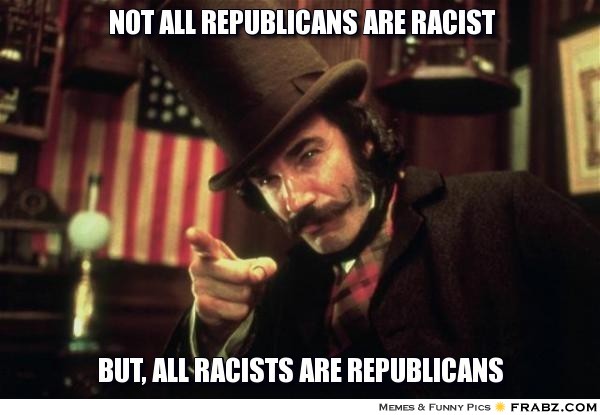
frabz-Not-all-republicans-are-racist-but-all-racists-are-republicans-17a2b9Does this help?

No?

Okay, this post is getting to be a guilty pleasure, I know. But the point is that we can turn this logic around and apply it in all sorts of different directions. If it hasn’t escaped you that I have failed to apply it to my own political camp, well then let’s just treat that as an object lesson in how this particular gambit works. You apply it to your enemies, silly, not your friends.

It does get sillier!

64feda52-bbf8-409a-83db-ddc818661e1fIs this a good question? Um, …no.

Seriously, do I have to provide links to the American Nazi party? Cause I’m not gonna.

No.

Nuh-uh!

You’re just going to have to get the point. And you know, it’s entirely possible that is even the point of this meme (or even the last one), because that damned Nathan Poe dogs my every judgement.

Besides everything else, this one is completely out of date, but what else can you expect from a thinking dinosaur. Not all anachronisms are philosophical lizards, but all… nevermind!

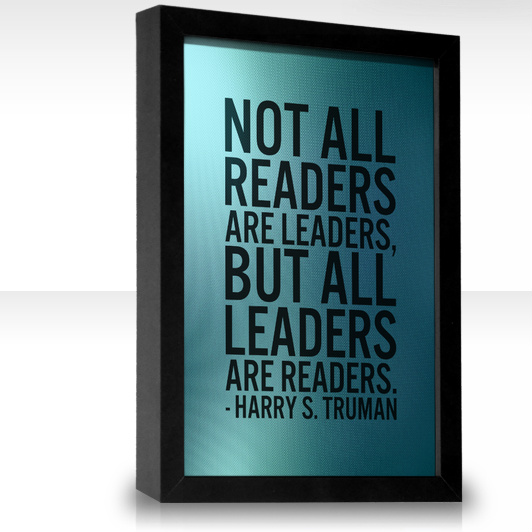
4OLOF57GB5NKD_U1FK00_IL_P_LSMaybe we could take this quotation in a positive direction? This sounds wonderful and warm and smart, and …well I should probably verify the quotation and discern it’s context and what not, but that would take time away from basking in the glow if literositude that this one kindles in my heart. I just want to sit here and think about how leading and reading go together like carrots and cake.

Or Christmas and BB Guns. Or lingerie and a live wallaby.

…I’ve said too much.

25989_482098188503425_1116285728_nBut hey, let’s get even more positive. Boy you just read this one and you can’t help but feel the love. Doesn’t it just make you want to reach down inside your soul and let the good stuff out for a walk in a park called Success.

Seriously folks, you just gotta let your awesome blossom!

That’s all I’m sayin’.

And who the Hell is Mark Gorman?

Okay kids, that was a rhetorical question. I just googled him and the only thing I learned is that I really don’t want to know anything more about him at all. We are moving on again.

MjAxMi04ZGY1ZmQ0ZWEwMTcwMjk5_50cfdcef8a5dcDid I mention that it gets sillier?

No really, it does.

Honestly, I’m not sure what to do with this one. It’s actually rather clever. I might even like it. But I don’t know much about Hentai, or porn, …or one of those anyway.

Not me! Huh uh!

er, not all men watch porn, but… nevermind!

28639618It also gets ickier. Much ickier!

Okay, that one doesn’t even begin to make sense, and I probably should have left  it out. But you know, you turn over a rock and see something gross underneath…

…so, you post it on the internets for all your friends to see,

…and to feel just a little creeped out by the whole thing.

Which is fine with me, actually, I believe in sharing the misery.

…in case you hadn’t noticed.

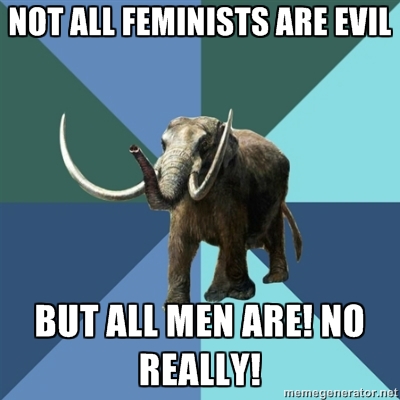
30448069Alright, this one might be real. At least I can’t think of a counter-example. Seriously, I’ve been trying.

But part of what makes this so fun is that it breaks the mold a little; gender politics aside, this is a nice little exercise in creating an expectation and then violating it. …which is very cool in a joke-I-just-killed-by-explaining-it kinda way, but the point is that the whole meme rests on a manipulation of expectations. You start by repudiating a generalization, thus leading people to expect a smarter wiser replacement and hope they won’t notice that you left them with a whole new pile of dumbitude sitting there in place of the one you repudiated. This one just takes that approach and drives it to Hawaii.

…Yes, I said drives.

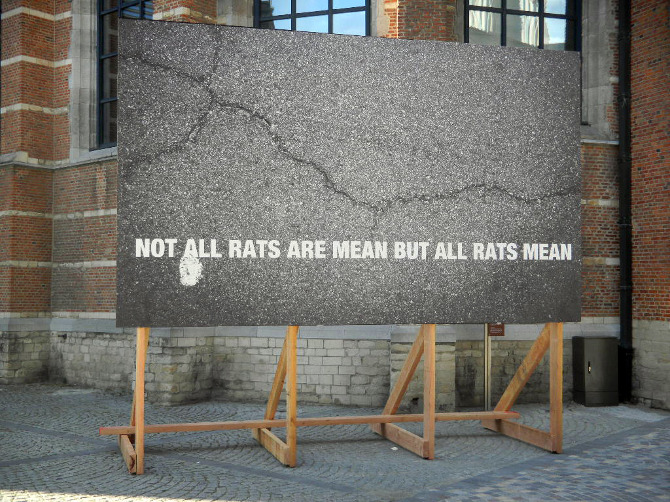
rats1I’m not sure what to make of this one, but I think I might love it.

So anyway, I guess you can file all of this under the category of, “Shit we oughtta know better”

71.271549 -156.751450

Share this:

  • Tweet
  • Share on Tumblr
  • Print (Opens in new window) Print
  • Email a link to a friend (Opens in new window) Email
  • Share on Reddit (Opens in new window) Reddit
Like Loading...

Allegiance to God and Country, …and to Anachronisms Aplenty!

16 Wednesday Jan 2013

Posted by danielwalldammit in Politics, Religion

≈ 5 Comments

Tags

America, Anachronism, Aristocracy, Christianity, Civil Religion, Democracy, Metaphors, Politics, religion

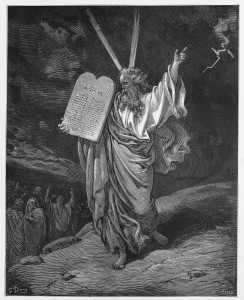
Moses1-244x300One hears it all the time; the notion that religion ought to be kept out of politics. I’m torn by the suggestion, because it is commonly used in response to the politics of conservative Christians, …and I have little sympathy for their politics. But the fact is, that just isn’t where I would draw the battle lines. If most people frown at the likes of Pat Robertson or Rick Warren, I suspect they are frowning for reasons that differ significantly from my own.

Religion IS politics as far as I am concerned; it’s bad politics, but politics just the same. I don’t quite mean to suggest that religion is simply a crass tool by which some folks seek to enhance their own power and influence.

….seriously, I don’t QUITE mean to say that.

…at least not as a general rule.

No. What I am suggesting is that religion consistently presents folks with a vision of order in the cosmos. That vision answers questions about how one ought to behave, yes, but it also contains answers to questions about the nature of authority and the social expectations that go with it. These traditions may tell us about Heaven and Hell, Karma, etc. all visions of a cosmic order, but they also tell us a little about how one ought to treat others, assess other people’s character, and what we may fairly do in response to the virtues or vices of those around us. The notion that all of this is supposed to stop short of addressing real political questions strikes me as a rather improbable.

…it’s also unreasonable.

To put it in more concrete terms, it makes sense to me that someone who believes in the Ten Commandments would (when stepping into the voting booth) bear in mind the likelihood that a political candidate was going to follow them as well. It makes sense to me that folks would bear such things in mind when making in countless other decisions of a political nature.

Which is part of what makes the role of religion in American government (and perhaps other settings as well) so completely absurd. On the one hand, religious teachings are all about precisely the sort of questions that one must address in politics; on the other, it is separate from and distinct from those institutions, limited in some respect by the establishment clause and re-enforced by the free exercise clause. Religion has a potentially absolute absolute claim on every aspect of life, and yet while protecting the rights of believers, we expect them to stop short of weighing in on the most important questions of the day. The whole situation is at least a little odd, to say the least.

Far from the natural order of things, this feature of American politics rests in our Constitution and popular culture like a fault line running through a population trying its best to ignore it and get on with life.

…which I think is the real reason people want to keep religion out of politics. If they can keep folks from putting the two topics together in the same conversation, then they can avoid dealing with a mountain of contradictions even Mohammed would be hard pressed to move about.

The history of religion certainly doesn’t teach us to expect its proponents to stop short of political commentary. The God of Abraham in particular has played an overtly political role in each of his major religions. It is only with the decline of ancient empires that Christianity and Islam have come to be defined as something distinct from politics. Each of these traditions became mere ‘religions’ when the moral order they espoused lost its connections to the political order in which they once flourished. Institutions that we think of today as religion were once unashamedly political. Few if any thought twice about it.

What distinguishes religious traditions from those of modern politics is less of an ontological divide than a range of social conventions, not the least of them being a clear discordance between the visions of authority contained in each. Indeed, the notions are so far apart that people often fail to recognize them as different answers to the same question. The end result is a rather marked failure to notice something very interesting about the relationship between religion and politics in modern life. You see, there is something highly ironic (and more than a little tragic) about the sensibilities of those who speak of a Lord in world wherein we elect a President (or, for that matter, a Congressman or a Parliamentian).

And this is what I mean by a fault line that the public does its damnedest to ignore. Most people don’t even pause to think about this, but the notion of a ‘Lord’ has not always been so divorced from the social order. The language about which one spoke of God was not always so completely severed from the language about which one thought about their own government. There was a time when that term, ‘Lord’, would have pointed not merely to a benign old man in the sky, but also to the nobility of Europe. The implication was neither accidental, nor trivial. Indeed, the point of such language was to draw a clear parallel between the loyalties that men owed to each other (or more to the point, that commoners owed to the aristocracy) and those that they owed to the keeper of cosmic justice. A reference to the ‘Lord’ would have meant for many in past times a role reflected in both their religious discourse and in the social realities of their daily lives.

How weird it must be to live in a world in which one answers to a Lord in Heaven but votes for politicians down here! At least it would be weird if we paid more attention to the way either of these institutions actually handle questions about how people ought to behave.

But of course the problem is not merely a function of this one word. When Conservative Christians speak of power, they almost invariably invoke a range of metaphors ill-fitted to the realities of a republican style government. They speak of God as a sovereign, all the while operating in a public life wherein the people are assumed to be sovereign. They speak of the Ten Commandments in a world wherein laws are deemed in some sense to be created by the people (albeit indirectly). And how strange that we (and by ‘we’ I mean mainly Christians) want Children to pledge allegiance to one nation (under God or not), as if such an oath had much bearing on modern notions of citizenship! It cannot mean nothing that people who live in a participatory democracy envision so much of their lives through the language of aristocracy.

Does this mean that Conservative Christians do not understand democracy?

No it doesn’t.

…at least  not in principle, but I can think of a few folks!

It does suggest a certain tension between the nature of authority some folks encounter on Sunday and those they are called upon to use in the voting booth. This sort of tension might even have some positive benefits, though I suspect that would require people to be more aware of the difference than they generally seem to be. It probably should not surprise us too much when the language of one sphere creeps into that of another. I think we can see this in the way that many conservative Christians speak of the founding fathers in reference to a broad range of constitutional questions. So much the more so on litmus test politics such as gay rights which so many use to discern the loyalties of those around us.

I could field a number of polemics at this point, but perhaps that is not really where I want to go with this. The divergence between modern visions of political authority and the archaic language with which conservative Christians approach that same subject is an interesting point in itself. What to make of it is another question. And of course this returns us to the original question of whether or not one can reasonably expect religious leaders to keep their noses out of politics.

If I am reading the popular culture correctly, I think most people expect a natural division between these spheres of social (and political) life, as if some great natural boundary separates them. For my own part, I think it’s little other than history. Indeed, I don’t think the term ‘religion’ denotes a clear and well defined body of institutions, beliefs, or practices, certainly not any that fall neatly outside the boundaries of political life. As it happens, the modern world has developed a range of political expectations which simply differ from those of the institutions we now call religion. That difference does not lie in the nature of the institutions in questions, it lies in the particular approach that each takes to the deeper moral questions of social life.

What keeps conservative Christianity from enjoying a more direct role in American political life is its political anachronism. It’s vision of authority is not (thankfully) that of our own government.

71.271549 -156.751450

Share this:

  • Tweet
  • Share on Tumblr
  • Print (Opens in new window) Print
  • Email a link to a friend (Opens in new window) Email
  • Share on Reddit (Opens in new window) Reddit
Like Loading...

Irritation Meditation Number 2: The Second Amendment and Japanese Internment

14 Monday Jan 2013

Posted by danielwalldammit in Irritation Meditation, Justice, Politics

≈ 24 Comments

Tags

civil Rights, Gun COntrol, Internment Camps, Japanese Internment, Justice, Memes, Politics, Second Amendment, The National Rifle Association

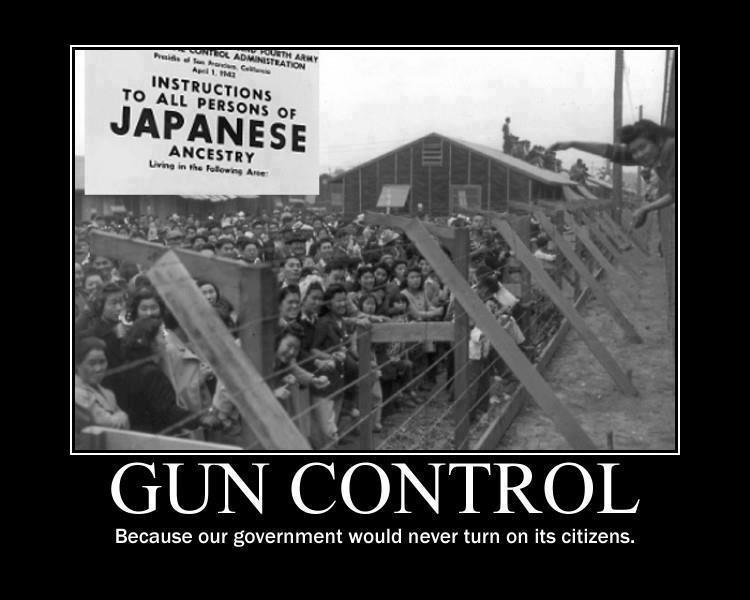
580694_475788705791155_2127648074_nI suppose it is too much to ask that folks distinguish the varieties of gun control from an outright ban. The way the gun rights crowd raises the specter of a completely disarmed populace when speaking about any variety lesser measures smacks of dishonesty.

It would hardly give away the farm to distinguish such things from one another. There are plenty of legitimate questions about the efficacy of lesser gun control measures, especially when applied to a population already so well armed as we are here in the U.S. But that is an interesting and well focused discussion some folks don’t seem to want to risk.

But what is really fascinating about memes like this is the slippage between a right to bear arms and a prescription for doing so. The second Amendment was alive and well when the internment of Japanese occurred in the first place. So, that right and that right alone simply is not a cure for the evil that this pic wants us to think about. The meme only works if we are to imagine a population which is not merely in possession of the right to bear arms, but which actively uses that right even to the point of preparing for war against its own government.

And can anyone really imagine Japanese immigrant population of the west coast doing this in the years leading up to World War II? Can anyone imagine the response from their neighbors?

This is not merely a defense of the Second Amendment, it is an argument for the expansion of private gun ownership well beyond anything previously imagined in American history. To make this argument work, we need more than just the right to bear arms, we all need to have the arms, the training to use them, and enough firepower to make them an effective counter to the powers of the United States Government.

Is the author suggesting that gun owners could stop such a thing as internment? Perhaps, but would they?

It’s a pretty common claim from the gun rights crowd, the notion that the Second Amendment puts the teeth in the rest of our civil rights. It is through gun ownership, so the argument goes, that people are protected from abuse by government officials. It is the most important means by which our rights are protected.

Pardon me, …from ‘thuh government.’

But gun owners did not stop the internment of Japanese.

Or of Aleuts during the same war.

Neither did they stop lynching of blacks.

Nor did gun owners secure the right to vote for African Americans.

…or for women.

…or Native Americans.

Gun owners did not stop the Federal Government from kidnapping Native American children to be taken to schools far from their families.

They didn’t stop police harassment of homosexuals.

They didn’t improve treatment of the mentally ill.

They didn’t stop the Zoot Suit Riots.

…or legacy provisions precluding Jews from owning homes in some neighborhoods.

Gun Ownership didn’t stop Jim Crow laws.

It was not gun owners that secured for any number of minorities the right to an education or any other protections by states or the federal government.

In each of these instances, the rights in question were won by protestors, and lawyers, and people who talked a hell of a lot, even if their main opponents didn’t. In many of these instances gun owners were actively involved in the very repression suffered by those in question. Since the founding of the country, Gun violence has played a far greater role in the repression of civil rights than it has in protecting them. There are exceptions to be sure, but this narrative is not built on the exceptions. It is built on a fantasy that skips any active consideration of how these things actually work.

Herein lies the biggest problem with this fantasy scenario; it presents us with the image of a government acting on its own, independent of the public will. That could happen, I suppose, but is far less likely than the countless times in which government policies actually have facilitated repressive measures popular with the American people, or at least a large segment of it. And in such moments, the victims of repression have rarely been sufficiently well armed to make an effective stand against those who wanted a piece of their liberty.

In real world history, those who have suffered the greatest deprivations did not merely face the threat of Federal Authority; they also have had to contend with the prejudice of an American population content to have them suffer.

…one that sometimes even demanded it.

We can imagine the victims of repression better armed, yes, but only if we also imagine the majority better armed as well. This is hardly a story which leads to a successful defense of liberty. I would call the scenario anarchy, but I don’t wish to sully the term ‘anarchy’ with such a vision of violence and destruction.

It’s damned hard to read these self-indulgent fantsies when considering the actual history of people struggling for their rights. It’s hard to give credence to this juvenile narrative, knowing what it took for the people in these camps to survive, what it took the Freedom Riders to earn rights enjoyed by gun-toting whites in the South. And it is especially hard to hear such arguments from those with so little to say about such things as Guantanamo Bay or the countless encroachments on Fourth Amendment Rights we’ve seen over the last few decades.

What pisses me off about this argument isn’t the defense of gun ownership, or even opposition to gun control. Frankly I don’t think this kind of crap even touches either one of those issues. It sheds no light on those issues whatsoever, and leave us with a whole different discussion to have if we can ever get clear of noise like this. What bothers me about this stuff is the scorched-earth tactics; the vision of politics as warfare and questions about rights as an invitation to shoot at one another. It’s a vision of government as a faceless evil empire in opposition to private citizens, and begging for opposition from heroic gun-owners everywhere. Folks telling this yarn have no sense of how such things actually happen. But they are happy to tell stories of gun-toting heroes squaring off against a government turned inexplicably on its own population. How that will work is a Hell we can only hope we will never see.

And it’s a Hell as likely to be brought about by gun-owners defending their own rights (as they define them) as anything done by a corrupt and tyrannical government.

While others have struggled and died for some of the most basic human rights imaginable, so many in the gun crowd openly fantasize about acts of violence over basic policy disagreements and the possibility of restricted access to a commodity. The pretense that this commodity is the key to civil rights plays a big role in these fantasies. The end result is a tantrum born of paranoia and privilege and a gun culture increasingly dangerous to the rest of us.

No. I’m not talking about the weapons. I am talking about the mindset of people who produce memes like the one above. People who make such arguments are not interested in protecting anyone under serious threat of government repression. The gun rights crowd did not protect the Japanese during World War II, and I for one don’t believe they will be there the next time someone decides to create camps like this.

…unless of course it is to close and lock the gates.

71.271549 -156.751450

Share this:

  • Tweet
  • Share on Tumblr
  • Print (Opens in new window) Print
  • Email a link to a friend (Opens in new window) Email
  • Share on Reddit (Opens in new window) Reddit
Like Loading...

Sweatshops and the Invisible Hand of Satan: A Few Thoughts on Some Not-So-Invisible Fires

03 Monday Dec 2012

Posted by danielwalldammit in History, Politics

≈ 32 Comments

Tags

Adam Smith, Bangladesh, Diplomacy, Economics, Free Market, Sweatshops, Tazreen, Triangle Shirtwaist Fire, Walmart

MK-BZ106_SOURCI_G_20121129204437A hundred and twelve people died horribly last weekend. They died so that you and I can look fabulous.

…at a discount.

I am of course talking about the fire that broke out in Tazreen Fashion Factory in Bangladesh on Saturday, November 24th. Employees were hard at work in the factory, making clothes for Walmart, Disney, and perhaps other American labels when the fire broke out. Under normal circumstances, these people face working conditions unheard of in the contemporary U.S. According to one source, they earn 18 to 26 cents an hour and put in 72-81 hours a week, experiencing physical and mental abuse from managers on a regular basis. But of course last Saturday, all that ended, at least for 112 of them.

So, is it fair to suggest that these people died for you and I? After all, you probably didn’t decide their hours or their wages, much less pick their managers, lock an exit, or order them back to work when word first broke out of a fire. Neither did I. Someone else did all of that. You and I merely chose what clothes to wear; we were not consulted on the conditions under which they were made.

But of course that is precisely the point.

Events such as the Tazreen fire, or the horrible working conditions which preceded it, do not occur because any malevolent human being wills them to happen. They are the outcome of countless individual decisions made by perfectly reasonable human beings. You and I want quality clothing at a reasonable price. The retailers wants to make a profit, as do the distributors, and so on. All these seemingly innocent decisions combine to create a market for labor manufactured under conditions which constitute a living Hell for the workers in those factories. Last Saturday the fires of that Hell claimed the lives of people condemned not by the conscious choice of any living person, but by the invisible hand of the marketplace.

Just to be clear, I do not wish to deny the other, more familiar, metaphor of the invisible hand. At least I do not mean to deny the realities which Adam Smith used the metaphor to describe, the process by which individuals pursuing their own self interest may indeed contribute to the common good. I do not deny that such things happen. I deny that they are always the case, and I assert that they occur right alongside a process that is far more insidious than the common metaphor suggests. If the market may be thought a God, that God is a Janus-faced deity at best, content to restore market equilibrium regardless of the human cost. Market Equilibrium is simply not a standard of moral value; it may be achieved with tears as easily as it does with a smile.

Or worse.

What happened in Bangladesh is hardly a new story. A sweatshop full of workers, locked inside, people burning, others jumping to their deaths. Last week’s tragedy recalls the events of the Triangle Shirtwaist Fire of 1911. Then it was primarily Jewish immigrants plunging to their death, or burning in the flames. Last week it was foreigners living in their own country. Either way, it is people without much say over the workings of American government laboring to supply goods for the American public (and other nations to be sure). Separated by half the globe and a hundred years, the stories could hardly be more similar if an evil genius had produced them as a message for all mankind to see.

287px-Image_of_Triangle_Shirtwaist_Factory_fire_on_March_25_-_1911But who would see it now that couldn’t have seen it before the fire happened? The dynamics at stake in this fire have been clear for the better part of a century, if not longer still. It is a question of political boundaries, and the way those boundaries limit government response to exploitive working conditions.

In the wake of the Triangle Shirtwaist Fire, America has seen countless reforms aimed at protecting the rights and safety of workers. Quite a number of these have carried the force of Federal Law under the Commerce Clause of the U.S. Constitution. The rationale for laws protecting workers remains simple enough. They exist to protect workers from conditions deemed unacceptable by the public at large (and one is tempted to say by decent folk anywhere).

Some would maintain that the nature of a free labor contract requires no such regulations, nor tolerance of unions. Workers are free to decline the contract, so the argument goes; is that not enough? Such arguments ignore the realities of job conditions like those in Tazreen or the Triangle Shirtwaist Factory. But the problem with such an approach is less that it fails to deal with the inequalities of labor contracts than it is a willful dismissal of the lives of workers who end up in such places. It is less an approach that fails to account for the limitations of the market than it is an approach that sees in the lives of people working themselves to death little other than a unit of value in a mathematical equation.

Thankfully that argument has been defeated in every Federal Law regulating maximum hours, child labor, workplace safety, and a host of other protections, however inadequate they may sometimes prove to be. But why do such laws need to be made at the Federal level? The Supreme Court nailed the answer to this question damned well in United States v. Darby, 1941.

…interstate commerce should not be made the instrument of competition in the distribution of goods produced under substandard labor conditions which competition is injurious to the commerce and to the states from and to which the commerce flows.

Simply put, if we are to leave the protection of workers to the states, then the end result will be a race to the bottom, with that state granting the least protections becoming a magnet for factory work, all at the expense of workers in that state. And in the long run no state could long hold to high standards in the treatment of workers without risking a good deal of lost commerce. In the end, the only plausible hope of resolving the problems of exploitative (or even dangerous) working conditions lies in the prospect of Federal laws preventing trade in products made under those conditions.

We still have those laws in America, and American workers are (at least in theory, and commonly in practice) relatively safe from the scale of exploitation leading to events such as the fire of 1911. But of course many of the world’s developing nations do not, and that is precisely what many large scale corporations like about them. Several generations of American political leadership (Democrat as well as Republican) have done very little to protect American markets from competition with the products of such factories. We’ve already seen the deleterious effects of that process in the slow drain of jobs outsourced to other nations. And last weekend we saw the harmful effects on people now getting those jobs.

In effect, the free market as American diplomacy has envisioned it has opened up opportunities for exploitation on a scale most Americans can now hardly imagine. And of course we don’t have to, because it happens so far away to people we will never know. We notice the scarcity of jobs; we do not notice the lives wasted doing the work that has left our shores, at least not until events like this. But this is the cost of a global market wandering freely across the political boundaries of nations.

Simply put, there is a link between the difficulties American workers have in finding jobs and the difficulties of workers like those in Bangladesh have in finding a working exit from their own jobs.

The public is hardly capable of stopping such events as public pressure is always behind the curve. We learn about such working conditions through disasters, but not in time to stop them. The self policing efforts of companies like Walmart are hardly sufficient, and their conflict of interest should be perfectly apparent to anyone capable of reading the price tag on a shirt or a skirt. But then we pay the price in lost jobs all the while wage slavery flourishes in other parts of the world, driven by demands shaped here, at least while what’s left of the middle class still has money to spend.

I’m not arguing for any particular solution to this sort of problem, but I am increasingly impatient with those who don’t see this sort of thing as a problem at all, with those who see in the workings of the market a uniformly benevolent force, those who would pretend that all will be well, or as well as it could be, if we just keep governments from interfering with business.

If we just let the market run its course, some would say, the world will in the long run be a better place.

Last weekend the market ran its course.

It consumed a hundred and twelve people.

71.271549 -156.751450

Share this:

  • Tweet
  • Share on Tumblr
  • Print (Opens in new window) Print
  • Email a link to a friend (Opens in new window) Email
  • Share on Reddit (Opens in new window) Reddit
Like Loading...
← Older posts
Newer posts →

Top Posts & Pages

  • Movie Review: The Orator
    Movie Review: The Orator
  • An Uncommon Security Guard: Dave Eshelman, AKA 'John Wayne'
    An Uncommon Security Guard: Dave Eshelman, AKA 'John Wayne'
  • When Sex Falls Out of the Performance
    When Sex Falls Out of the Performance
  • Hostiles and Spoilers: A Magic Studi
    Hostiles and Spoilers: A Magic Studi
  • The Erotic Heritage Museum in Las Vegas: A Very NSFW Review
    The Erotic Heritage Museum in Las Vegas: A Very NSFW Review
  • Southern Paiutes as Portrayed in Las Vegas Area Museums.
    Southern Paiutes as Portrayed in Las Vegas Area Museums.
  • Barrow on the Big Screen, A Little at a Time
    Barrow on the Big Screen, A Little at a Time
  • Uncommonday Morning Blues - Ian Anderson Learns to Play the Flute
    Uncommonday Morning Blues - Ian Anderson Learns to Play the Flute
  • On Chick Tracts
    On Chick Tracts
  • When Culture Appropriates You
    When Culture Appropriates You

Topics

  • Alaska
  • Animals
  • Anthropology
  • atheism
  • Bad Photography
  • Books
  • Childhood
  • Education
  • Gaming
  • General
  • History
  • Irritation Meditation
  • Justice
  • Las Vegas
  • Minis
  • Movie Villainy
  • Movies
  • Museums
  • Music
  • Narrative VIolence
  • Native American Themes
  • Philosophy
  • Politics
  • Public History
  • Re-Creations
  • Religion
  • Street Art
  • The Bullet Point Mind
  • Travel
  • Uncategorized
  • Uncommonday
  • White Indians
  • Write Drunk, Edit Stoned

Blogroll

  • American Creation
  • An Historian Goes to the Movies
  • Aunt Phil's Trunk
  • Bob's Blog
  • Dr. Gerald Stein
  • Hinterlogics
  • Ignorance WIthout Arrogance
  • Im-North
  • Insta-North
  • Just a Girl from Homer
  • Multo (Ghost)
  • Native America
  • Norbert Haupt
  • Northwest History
  • Northy Pins
  • Northy-Tok
  • Nunawhaa
  • Religion in American History
  • The History Blog
  • The History Chicks
  • What Do I Know?

Archives

  • December 2023
  • November 2023
  • June 2023
  • April 2023
  • February 2023
  • December 2022
  • November 2022
  • October 2022
  • September 2022
  • August 2022
  • July 2022
  • June 2022
  • April 2022
  • January 2022
  • December 2021
  • November 2021
  • October 2021
  • September 2021
  • August 2021
  • June 2021
  • May 2021
  • March 2021
  • February 2021
  • January 2021
  • December 2020
  • November 2020
  • October 2020
  • September 2020
  • June 2020
  • May 2020
  • March 2020
  • February 2020
  • January 2020
  • December 2019
  • November 2019
  • September 2019
  • August 2019
  • July 2019
  • June 2019
  • May 2019
  • April 2019
  • January 2019
  • December 2018
  • November 2018
  • October 2018
  • September 2018
  • August 2018
  • July 2018
  • June 2018
  • May 2018
  • April 2018
  • March 2018
  • February 2018
  • January 2018
  • December 2017
  • November 2017
  • October 2017
  • September 2017
  • August 2017
  • July 2017
  • June 2017
  • May 2017
  • April 2017
  • March 2017
  • January 2017
  • December 2016
  • November 2016
  • October 2016
  • September 2016
  • August 2016
  • July 2016
  • June 2016
  • May 2016
  • April 2016
  • March 2016
  • February 2016
  • January 2016
  • December 2015
  • November 2015
  • October 2015
  • September 2015
  • August 2015
  • July 2015
  • June 2015
  • May 2015
  • April 2015
  • March 2015
  • January 2015
  • December 2014
  • November 2014
  • October 2014
  • July 2014
  • June 2014
  • May 2014
  • April 2014
  • March 2014
  • February 2014
  • January 2014
  • December 2013
  • November 2013
  • October 2013
  • September 2013
  • August 2013
  • July 2013
  • June 2013
  • May 2013
  • April 2013
  • March 2013
  • February 2013
  • January 2013
  • December 2012
  • November 2012
  • October 2012
  • September 2012
  • August 2012
  • July 2012
  • June 2012
  • May 2012
  • April 2012
  • March 2012
  • January 2012
  • December 2011
  • November 2011
  • October 2011

My Twitter Feed

Follow @Brimshack

RSS Feed

  • RSS - Posts
  • RSS - Comments

Enter your email address to follow this blog and receive notifications of new posts by email.

Join 8,070 other subscribers

Blog at WordPress.com.

  • Subscribe Subscribed
    • northierthanthou
    • Join 8,070 other subscribers
    • Already have a WordPress.com account? Log in now.
    • northierthanthou
    • Subscribe Subscribed
    • Sign up
    • Log in
    • Report this content
    • View site in Reader
    • Manage subscriptions
    • Collapse this bar
 

Loading Comments...
 

    %d