Go to the Moon, Young Man. Go to the Moon!

Tags

, , , , , , , ,

In 1893, Frederick Jackson Turner published his famous paper, “The Significance of the Frontier in American history.” In it, Turner bucked the prevailing historical wisdom of the day to say that American history was in fact quite distinct from that of Europe, and that this was due to the existence of the frontier. The opportunity to move freely into unoccupied land, and the struggle with nature to carve civilization out of that land, that wilderness, gave America and Americans a unique character.

…according to Turner, at any rate.

Suffice to say, the Turner thesis caught on, not just in the historical professions, but also throughout American popular culture. One can hardly imagine western fiction without it, or even the lyrics of mainstream country music. So, when I say, according to Turner, I of course mean, “and a whole lot of other people right along with him.” The Turner thesis has become so ubiquitous it would be hard to find a single genre of artistic expression or a vein of American politics it has not influenced, or for that matter a person who doesn’t invoke its themes from time to time.

To say that all of this is problematic is putting it rather mildly, and countless books have been written exploring the many problems of the frontier thesis, just as countless books have been written applying it to various aspects of American history.

Needless to say, Native Americans have come up a few times, particularly in reference to that notion of free and unoccupied land so central to the frontier thesis. We’ll save that for another post.

…or maybe 10 other posts.

One of the most interesting problems with the frontier thesis has to do with the timing. See, most people would reckon that the frontier was basically closed by 1893, not too long before that, to be sure, but by most accounts, it was certainly closed by 1893. So, if that frontier is what makes America and Americans unique, then what do we make of everything that comes after its closure? If the frontier was the driving force in American history, then what is significant about America and Americans long after the became an ex frontier?

To raise the question in a more practical tone; if the original is already gone, then can we find another? What is the new frontier?

Yes, that question has been asked many times by many people.

Various answers have been offered.

Of course.

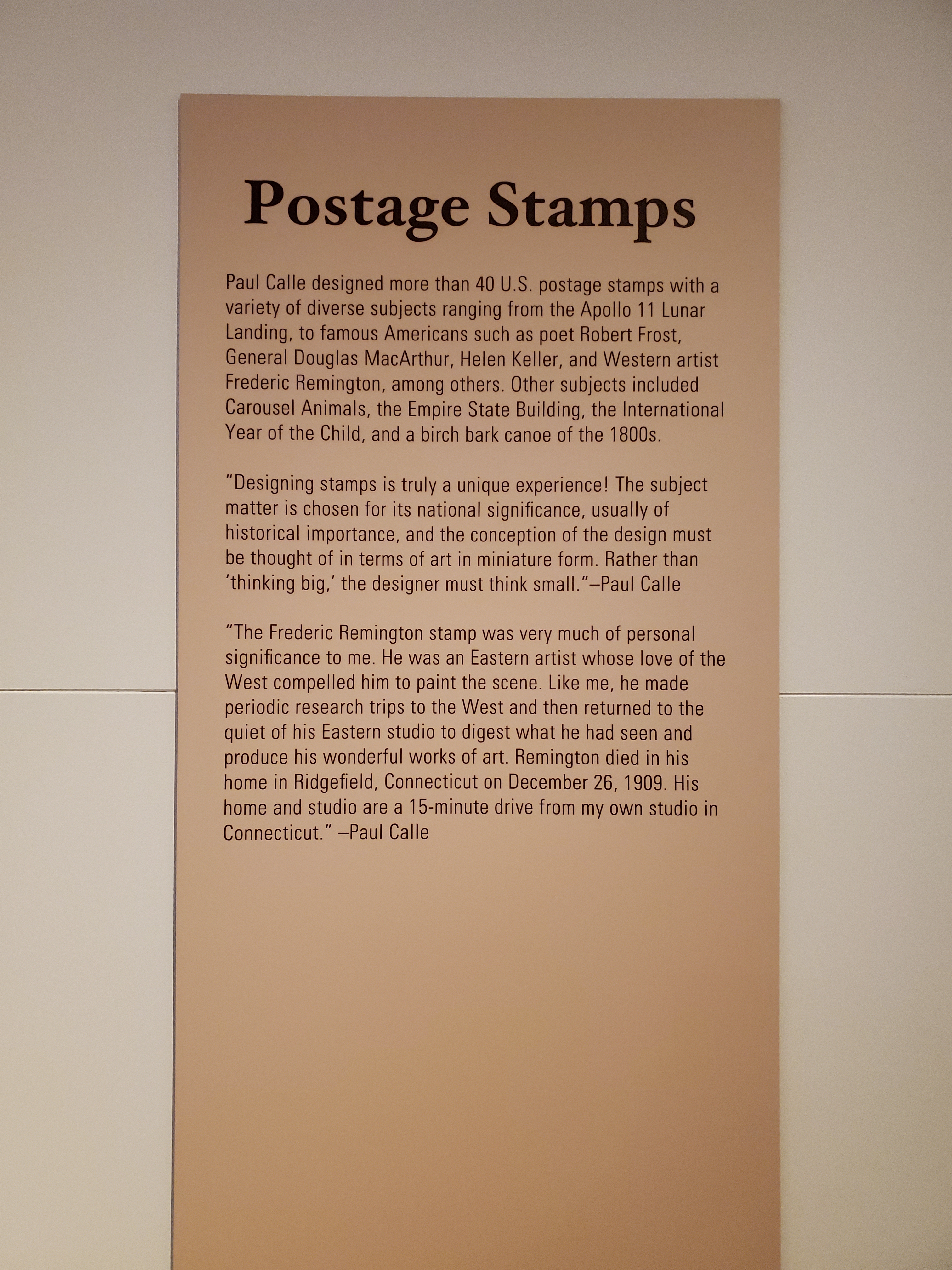
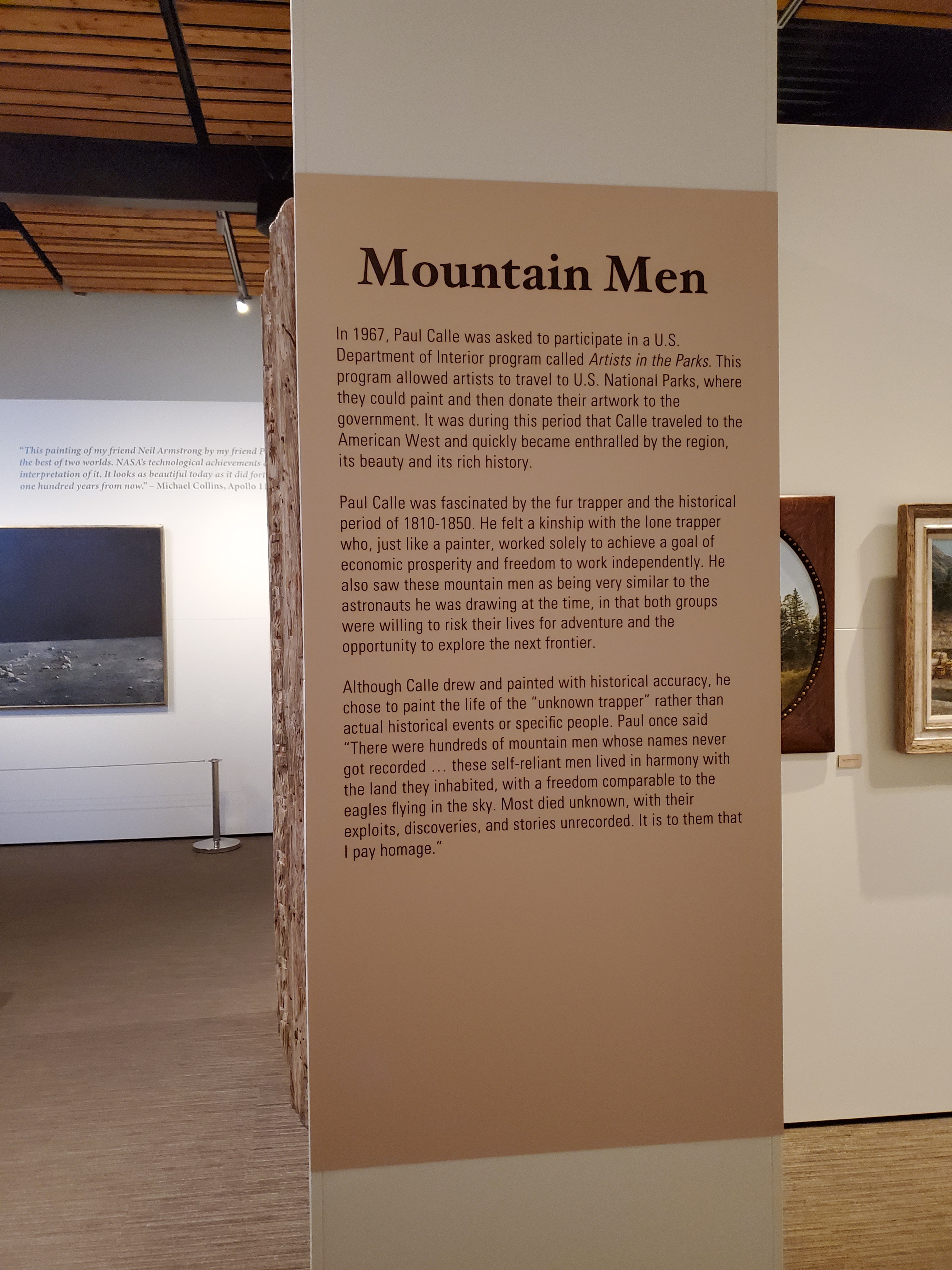
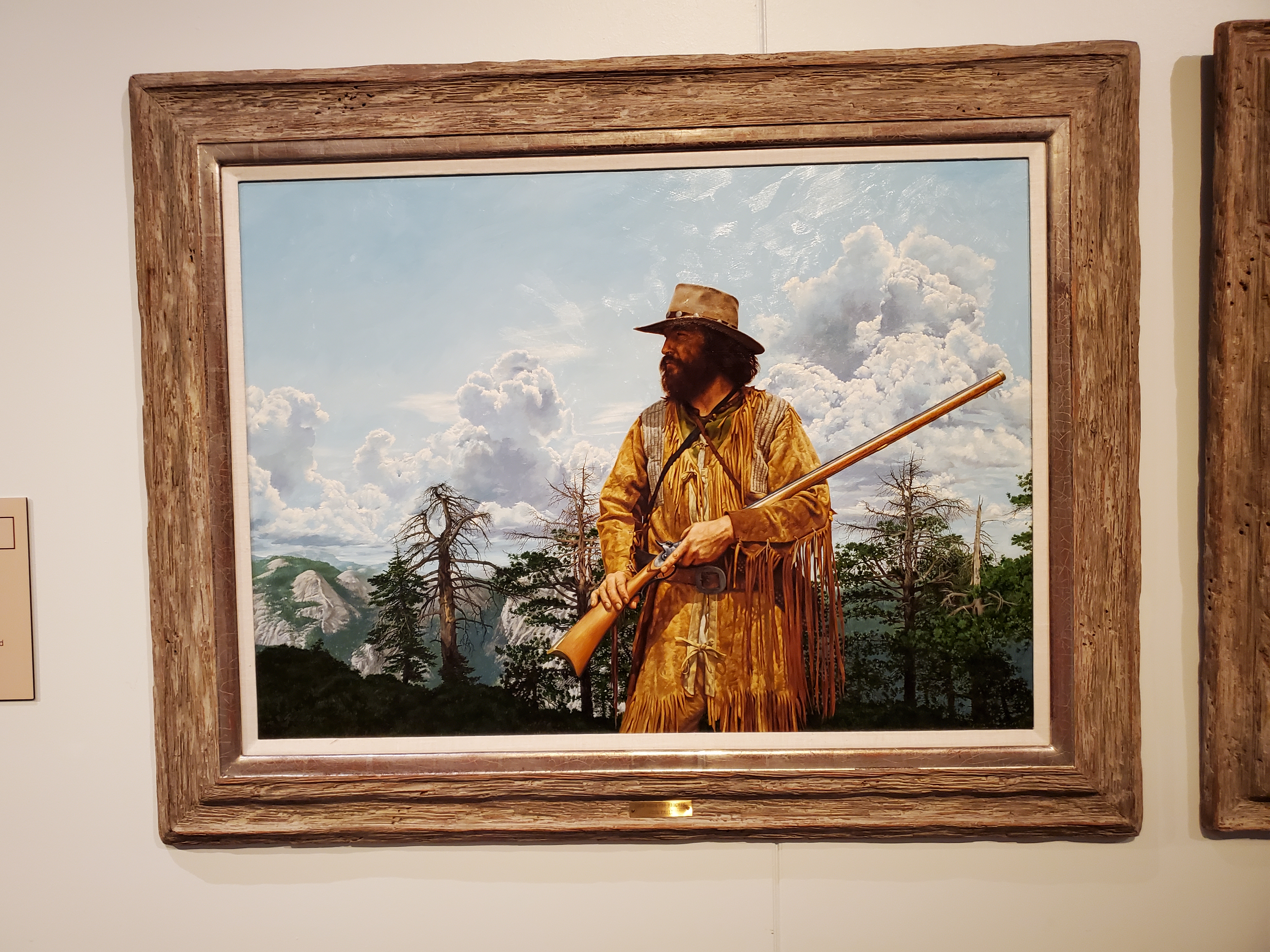
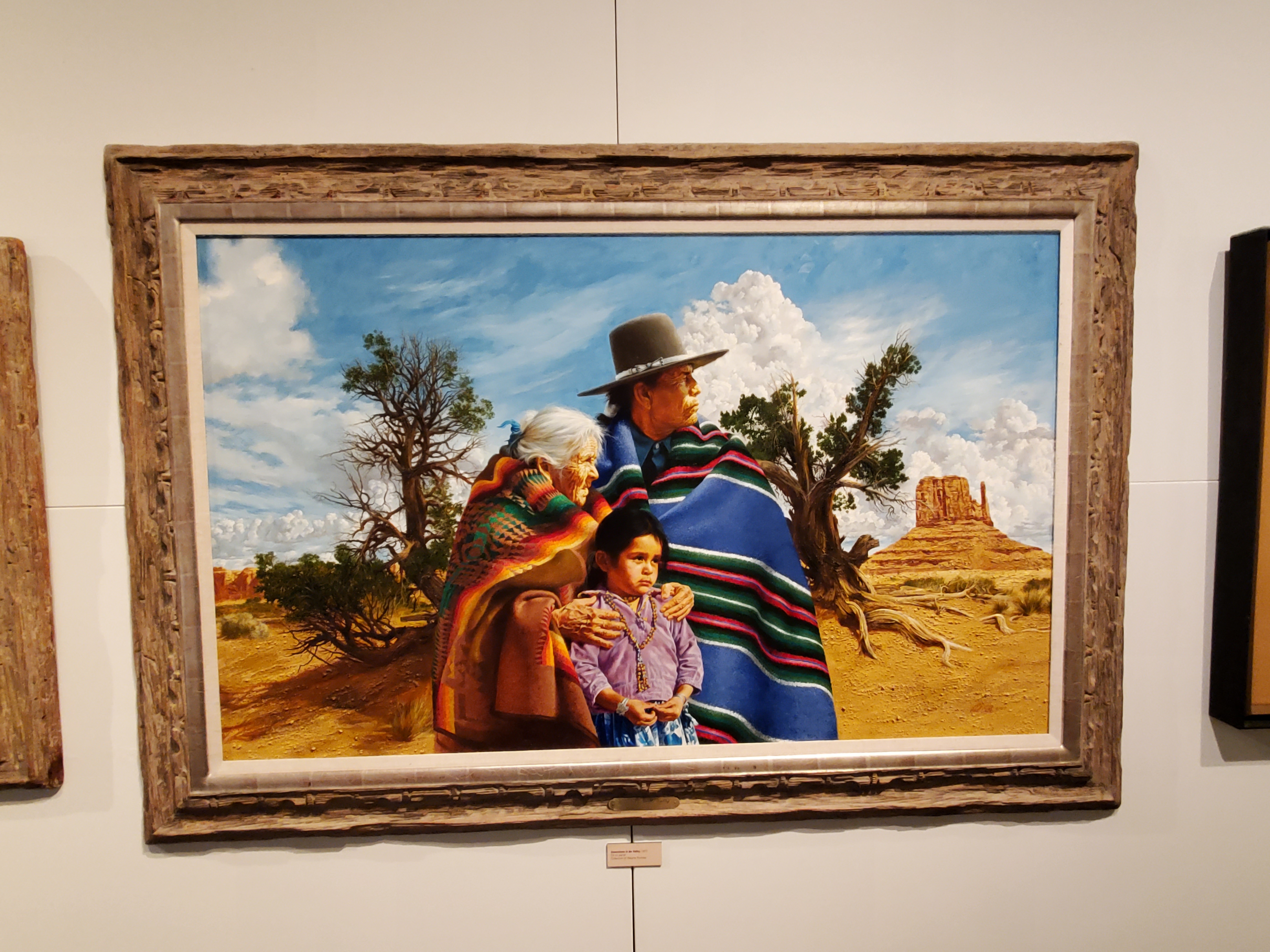
What has me thinking about all this today is a recent visit to a museum, The Spirit of the West Museum in Scottsdale, Arizona. More specifically, I am thinking of one of the exhibits on the second floor of this museum. It is entitled, “From the Mountains to the Moon,” exploring the life work of the artist Paul Calle. The man was an amazing artist, and the exhibit carries a good deal of his work, much of which deals with themes quite closely connected to the frontier, but what specifically gives the exhibit its title is the contrast between his many paintings of mountain men, and his depiction of the Astronaut, Neil Armstrong, taking man’s first step onto the moon. This might seem a Hell of a leap, from Mountain Men to the moon, but of course, there are certain elements of continuity.

You can see these traces of continuity in at least two of the paintings in this exhibit, along with the narratives attached to them. The first of these is entitled “The Great Moment.” It is most remarkable for its presence in an exhibit otherwise filled with western Americana (and a few other things to be sure), but the mere presence of this great painting alongside so many depictions of mountain men, Indians, and western landscape creates an interesting juxtaposition. It is enough to get someone asking, how and why did this piece get here?

“The Great Moment”

“This painting of my friend Neil Armstrong by my friend Paul Calle combines for me the best of two worlds. NASA’s technological achievements and an artist’s exquisite interpretation of it. It looks as beautiful today as it did forty years ago, and it will one hundred years from now.” – Michael Collins, Apollo 11, Command Module Pilot

So, how and why did that painting get here?

Well, the best explanation can be found alongside one of Calle’s more typical pieces.

John Colter

“I have always liked the image of mountain man John Colter his moccassin clad foot first stepping on the newly fallen snow of the Yellowstone Valley to the Moon boot of Neil Armstrong stepping in the dust of the Moon’s surface at the Sea of Tranquility. Two worlds apart, yet each of a new frontier. – Paul Calle

Captain Kirk could not have said it better himself.

A few extras (click to embiggen!)

Things You Learn When Dating a Mexican Woman

Tags

, , , , , , , ,

270296412_10160437607328488_1882011151292854340_n

It’s rather surprising to find out just how often a U.S. citizen can be told to go home or asked about where she (really) comes from.

It’s also infuriating

***

Contrary to popular opinion, a word doesn’t become Spanish by adding an [-o] to it. Using this construction does however make most any word irritating to her.

This can be useful, amusing, or painful to you, depending on the details.

***

Rolling your Rs can be damned difficult.

***

A speedy-Gonzalez voice is not funny. (She told me to add that it’s also kind of racist.)

***

Taking a Mexican girl to a Mexican restaurant is not likely to impress her. You may hear comments such as “rice doesn’t really go with this” or “why would you put lettuce on that?” Also, don’t be surprised if she prefers Italian food, Shabu Shabu, or Korean BBQ.

Date her long enough and you may find yourself ruined for an awful lot of Mexican restaurants.

Thanks Moni!

***

Oh yeah! Yellow cheese is a great big old red flag. She may not walk out of the restaurant, but her final verdict is ready the minute she sees it.

***

It turns out that an awful lot of famous Mexicans are actually Spaniards, and apparently that makes a difference.

***

What a lot of us assume to be Mexican accents are actually northern Mexican accents. And apparently, this too matters.

***

Anything you say about Mexico, Mexicans, or Mexican culture is racist. Anything she says about white people isn’t. This is how girlfriend privilege trumps white privilege.

…and it does.

***

Don’t be surprised if music you think of as Mexican strikes her as redneck country music, or at least the south of the border equivalent thereof.

***

Christmas is celebrated on Christmas Eve.

Because of course it is.

***

Virtually every western you’ve ever loved has some Mexican character vamping up the stereotypes to the point of personal embarrassment.

She will feel that embarrassment first.

Then you will feel it more.

***

You will probably pay dearly for every tongue-in-cheek comment you make in this post.

An Oddly Spangled Banner

Tags

, , , , , , , ,

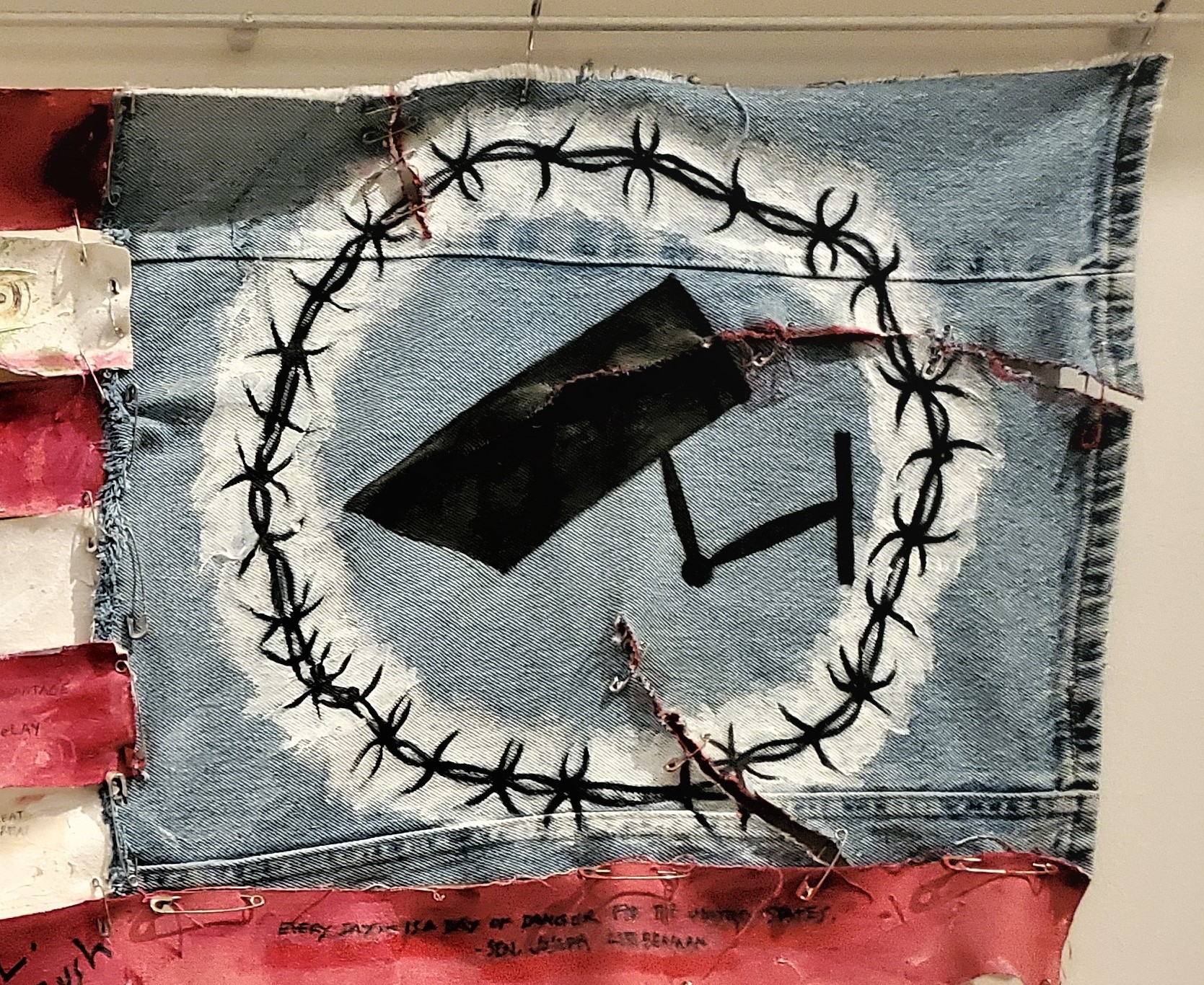
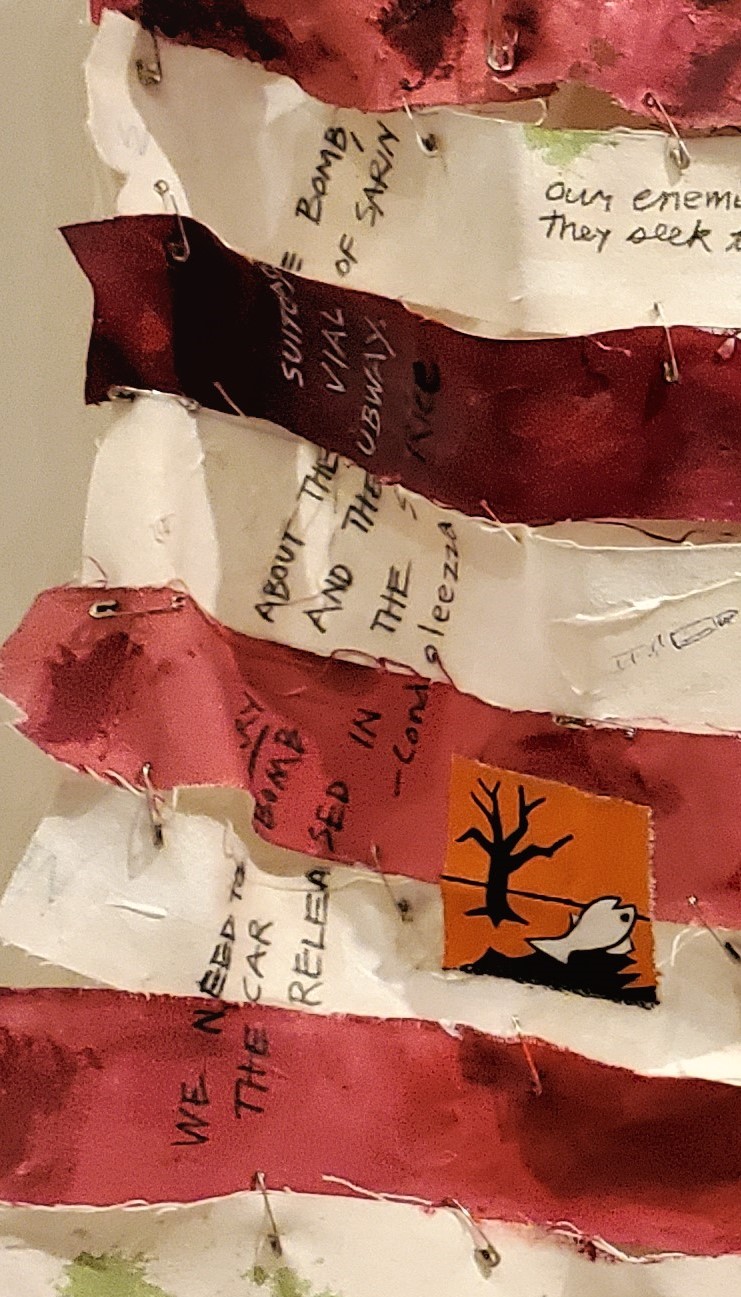
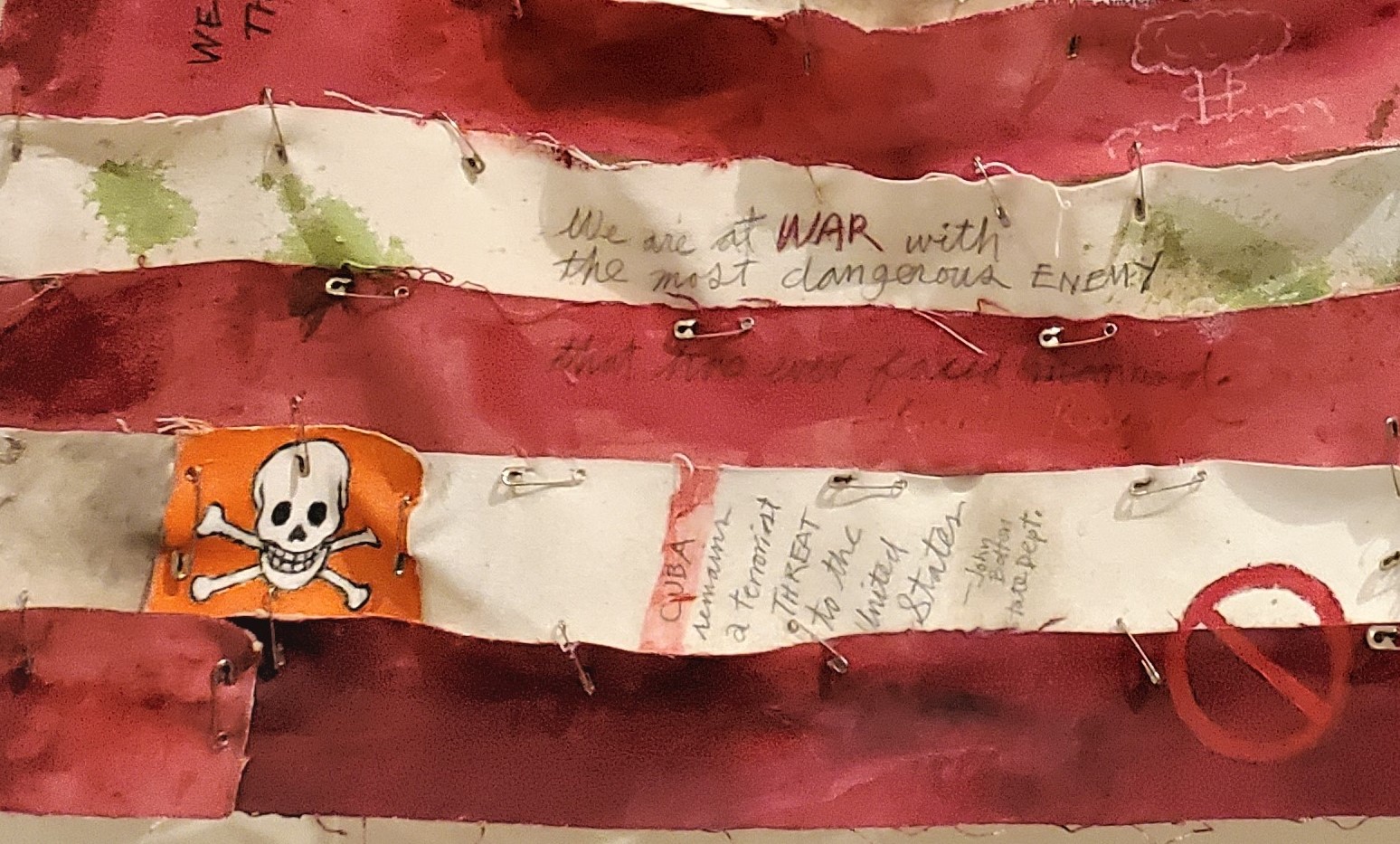
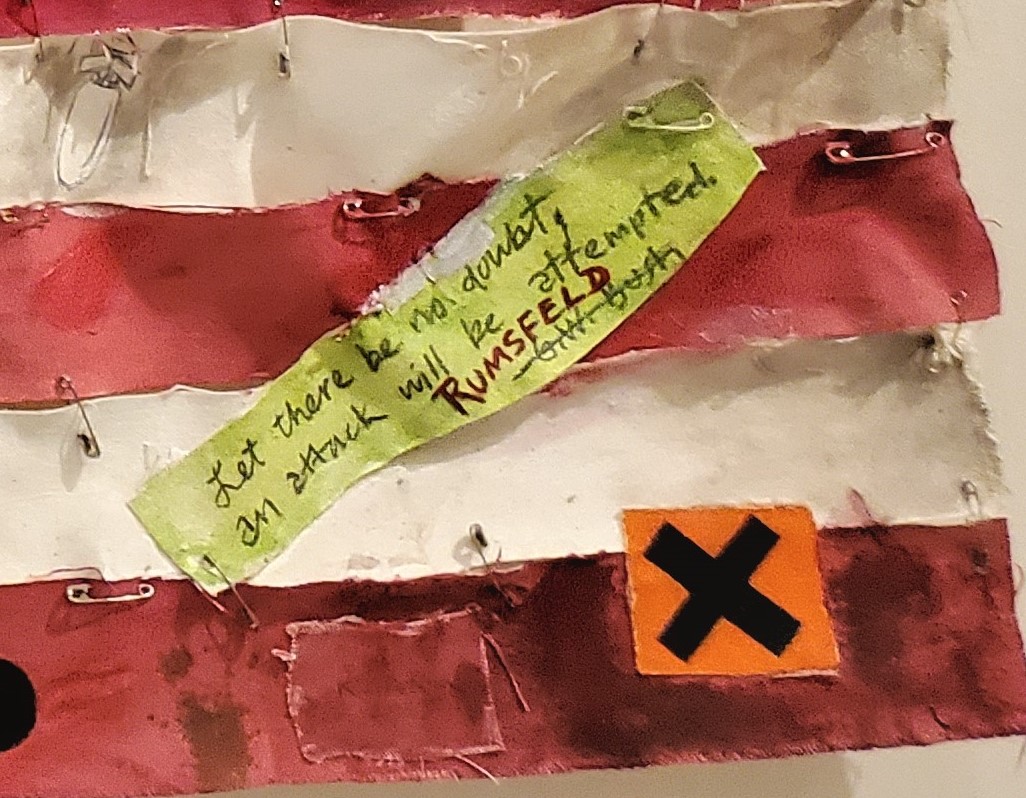
Came across this piece in the Museum of the North at the University of Alaska, Fairbanks. It was made by the artist Ken DeRoux. and displayed along with a piece of commentary by Mark Hamilton, a former president of UAF.

The text reads as follows:

Be Afraid, 2005

Acrylic and mixed media on canvas

Ken DeRoux

UA2005-004-001

“When I first viewed Ken DeRoux’s ‘Be Afraid,’ it was wrapped up around a cardboard cylinder with bubble wrap, evoking the qualities of both protection and vulnerability I associate with art. As I watched it unfurl, I saw each ‘stripe’ with its symbols or partial quotation revealed as carefully as it was doubtlessly assembled.

“You are seeing it suspended, specifically by safety pins. From an artist who devotes himself to the language of representation – light, shadow, horizon, perspective – I assume purpose for each element of this work.

“Suspend your evaluation for a moment while we look at the language of representation. This is not a flag, it is a banner. Specifically, it is a confederation of ‘banners’ in the newspaper sense of lead quotations. This is cloth, not tapestry. There is no weaving or even binding of the images; they are held together in loose collage by the beautifully ironic safety pins.

“The left edge of the banner is significantly more irregular than the right, suggesting the effects that wind has on a deployed banner. That, in conjunction with the purposeful irregularities in the body of the banner, is effective in portraying an image of embattlement.

“I don’t look at art to ‘figure it out.’ So I don’t pretend that subtle observations were intended by the artist except to the extent that he certainly expected observations. Here are a few observations. The largest quotation, and one of the two written bottom to top as opposed to left to right, is from Condolezza Rice. I suspect the reason for her prominence is that her quote is far more specific in items to fear than the generalized warnings of the other figures. In that sense, her observation has the stark qualities of a symbol, most of which appear at the periphery of the banner. By the way, the only other citation written vertically is also from the State Department. Is this because the execution of foreign policy must take a different, more specific direction than the more generalized ‘slogans’ of elected officials?

I am fascinated by the safety pins. Is our ‘safety’ only possible by considering the compilation of these warnings and symbols? Is our ‘safety’ the coming together symbolized by the clear visual reference to the American flag – the symbol of our Union? On the other hand, do the safety pins represent the current status of our union as a people, as in ‘only held together by safety pins?’

“Despite the title of the work, the symbols do not appear to be aimed at fear. They seem almost cartoon like, as does the sole terrorist figure. It seems to be more a work of inquiry than intimidation, to the point that the title ‘Be Afraid’ could as easily be “Be Aware.’

“The prediction is that this work will be controversial. I think it will be conversational if we enjoin one another to hold our evaluation until we are done thinking.”

Mark Hamilton,

University president, retired

Retired General

(Click to embiggen)

Sitka Whalefest, 2021

Tags

, , , , , , , ,

The occasion was Whalefest, which was held at the beginning of this November. My colleague, Linda Nicholas-Figuroa, turned me on to this gathering a couple years ago, and I found the event both enjoyable and instructive. So, I was excited to hear that the conference was back on for this year.,

We attended most of the regular conference panels by zoom, but they still had a few in-person events, hands-on stuff (necropsy goodness!) and out-doors (whale-watching). I love the area. So, my baby and I packed our cameras and headed down there with a colleague and a couple students.

Definitely worth the trip!

(Click to embiggen!)
Racism and Moral Exceptionalism at the Game Table

Tags

, , , , , , , ,

Island Gobbo by Jason Wiebe

I just watched an interesting presentation by Antero Garcia called; “Dungeons & Dragons in an Era of Terror, Nationalism, and Gamergate.” Academic discussions of role-playing games (RPGs) interest me for several reasons. It’s a chance to connect interests that I normally experience in different parts of my life (gaming and scholarship on the one hand, and storytelling in gaming and storytelling in other contexts on the other). So, I was excited to see a new source on the topic.

A copy of one of Antero’s books is on the way, but in the meantime…

This talk is a bit of an intellectual shotgun blast. Antero is busy introducing a broad range of themes and analytic tools for much of the presentation, so much so that his main point is barely taking shape at the end of the video here. Still that point, namely that race and gender politics (among other things) are very much a part of the gaming experience is a good one. I wish he had spent a little less time introducing his key terms and more time developing this main theme, because it’s definitely worth considering.

Anyway…

One thing that struck me about this presentation is a point that Antero makes a couple of times in here. He says that players are “supposed to enact racial practices” in games like Dungeons and Dragons. Take for example the following section of the Youtube transcript which starts at the 41 minute mark:

“Oftentimes when I had sit at the table play with other people if someone was a dwarf they would see an elf who’s play who is at their table and say I don’t like elves right and you were supposed to enact racist practices towards other races within the game right if you’re a human you’re skeptical of orcs right if you’re an elf you don’t like dwarves there is there is racism built into the system in terms of the attitudes you’re supposed to carry with other people”

Here we have the basic case for taking fantasy racism seriously. I am amazed at the number of players who don’t see this connection, but perhaps some folks are just being a little too defensive here. We don’t have to give up our dice or even our magical axe of kobald-slaying, but perhaps we could be asked to entertain the idea here that it matters when we choose to tell stories, interactive stories, set in a world where race and racism are built into the setting.

***

What struck me most about Antero’s presentation is that the norm here strikes me as significantly less obvious than Antero suggests. It may be that he oversimplified the matter in a hasty delivery, and I do think his point is essentially sound, but as presented, this does strike me as an oversimplification.

I don’t know that players in an RPG feel an obligation to play their characters as expressing racist attitudes towards other fantasy races within a given setting. Players are often expected to run their characters on the assumption that such attitudes are pervasive in the worlds where they live, and the significance of such beliefs are serious boosted by a degree of objective differences between the races which is often hard-wired into the games (orcs get a bonus to strength, dwarves to constitution, etc.), but despite all this, players are normally free to shape their own character’s attitudes within such a world as they see fit.

Simply put; players are free to buck the racist world in which their characters live.

To put it another way: Players are free to emulate the heartwarming story of Gimli and Legolas, a dwarf and an elf who somehow find it within themselves to become friends despite the widespread enmity between their races.

But does this happen often, you may well ask?

Yes, it does.

In fact it happens so often it gets a little tiresome. I recall once seeing a satirical bit on some gaming site in which the author complained that not all drow needed to be chaotic good rangers. Misunderstood orcs abound, and odd friendships are outpaced if anything by unlikely romantic couplings. It is sometimes a problem to see just how often and how easily players set aside the stereotypes built into fantasy races and rise above racist attitudes with an ease that belies even the social realities of the fantasy setting (let alone the hardwired elements of racial character built into the game). Sure, people sometimes play the stereotype. That does happen. But they also play against it. That happens too. So, it doesn’t really work to say of any given dwarf and any given elf inhabiting the same campaign setting that the players running them are supposed to enact racist attitudes towards each other. It’s at least a little more complicated than that.

One way of thinking about it might be to suggest that the issue enters the discourse in the form of a presupposition rather than a normative principle. The players are expected to act as if their characters are immersed in a world within which elves and dwarves are likely to hate one another. What they are to do about it is another matter. Moreover, players are usually free to imagine the specific history of their own characters as they see fit, which means in practice, they can easily come up with reasons to make themselves the exception. “…oh yes, I’m a dwarf, but I was raised by a kind elven lady who took me in after I was orphaned in the last orc war.”

You get the idea.

Players are not necessarily expected to run their characters as racists; they are supposed to run them as characters living in a world saturated with racism. That this is a world in which race is also assumed to be real certainly does complicate any efforts to buck the system, but the reality is easier to ignore in role play than Antero suggests.

***

So, does this solve the problem?

Are we in the clear now?

No guilt here?

Roll a die 20!

***

Unfortunately, no, this does not settle the issue. It just makes it more interesting. The problem now is what do we get out of the various performances people enact in role-play? Is a player who imagines his character as the exception to fantasy bigotry really delivering a kill shot to the influence of racism in his life or that of the other players at his game table? Or is he just enjoying a catharsis, perhaps even building up some cheap moral licensing credentials? Will his performance help the other players to see through racism in their own lives, or will they all emerge from the game a little more comfortable with their own prejudices?

The answer to these questions aren’t clear to me, and I suspect the answer varies within the details. Hell, I don’t even want to suggest that the answer varies between one player and another or one campaign and another; I mean, the answer may vary between one moment and the next in a single game. It might well be that a player running a fantasy half-orc expresses some genuine social awareness in her decision to spare the elven prisoners in the wake of a hostile encounter …only to give vent to some real malice when she BBQs a hobbit later that evening. The relationship between the players at a game table and the characters on that table and within the game universe is always complex, and real world issues cannot be mapped directly from one to the other, but neither can we say that what happens in game stays in game, so to speak.

It matters that race is built into so many game systems, and yes, we should be concerned about that, but we can’t say once and for all that a player running an elf-loving dwarf is any more enlightened than a player reveling in the chance to commit fantasy genocide with his Paladin heading off to slaughter every last goblin from the dark swampland..

Okay, maybe we can draw some judgements about the guy running that Paladin.

Maybe.

In the long run, I suppose the real question is what does it mean that a significant portion of the gaming public regularly chooses to interact with each other on the basis of fantasies in which race is real and racism is pervasive? That’s a damned good question. The question is at least a little more interesting when we acknowledge that these people are free to shape their own attitudes towards the issues of race and racism within these fantasy worlds.

We Live in the Dumbest of All Possible Timelines.

Tags

, , , , , , , ,

There is a reason idiots like Dave Bronson get into positions of power. It sure as Hell isn’t because people they can make a public apology after equating mask mandates to the Holocaust. It’s because they make such comparisons in the first place. It’s because they are happy to pander to the first thoughts of countless morons who learn about everything from medicine to history from Fox News and the half-remembered headlines their buddies regurgitate three beers into a Friday night. It’s because they give voice to the willfully obtuse, the unteachable, and the truly deplorable among us. Those people will celebrate Bronson’s idiotic speech long after his subsequent apology has been completely forgotten.

…and the lives lost while shameless opportunists play games like this instead of instituting responsible policies will never come back, not even when some of these fools finally come around.

Yes, that’s right. The present mayor of Anchorage defended use of the Star of David by anti-maskers in a public hearing. His argument went like this:

“We’ve referenced the Star of David quite a bit here tonight, but there was a formal message that came out within Jewish culture about that and the message was, ‘Never again.’ That’s an ethos. And that’s what that star really means is, ‘We will not forget. This will never happen again.’ And I think us borrowing that from them is actually a credit to them.”

Notice also that he explicitly identifies himself with those equating the two things.

I suppose I could explain why that is such an incredibly foolish thing to do, and a terribly stupid argument to make, but frankly, I think that should be obvious enough to anyone with any sense at all.

Sadly, that excludes more Republicans with each passing day.

@thebluealaskan

Anchorage Mayor David Bronson defends the use of the Star of David by #antivaxxer and #antimaskers at meetings of the #anchorage assembly. The faux Stars of David read “We do not consent.” #covid19 #antisemitism

♬ original sound – TheBlueAlaskan

Not One of the Biggest Marches for Women’s Reproductive Rights…

Tags

, , , , , , ,

…but probably one of the coldest.

and definitely the northiest.

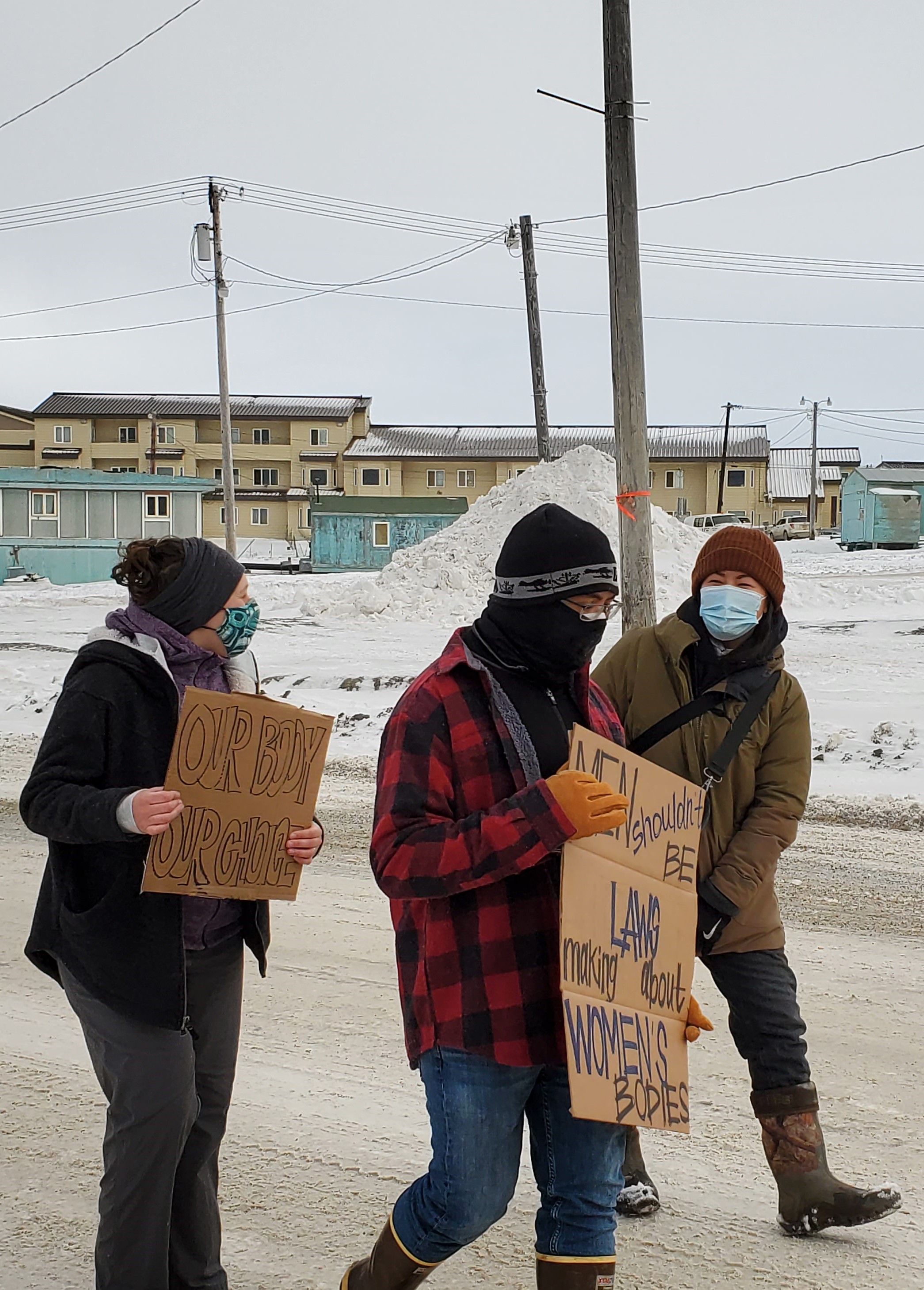
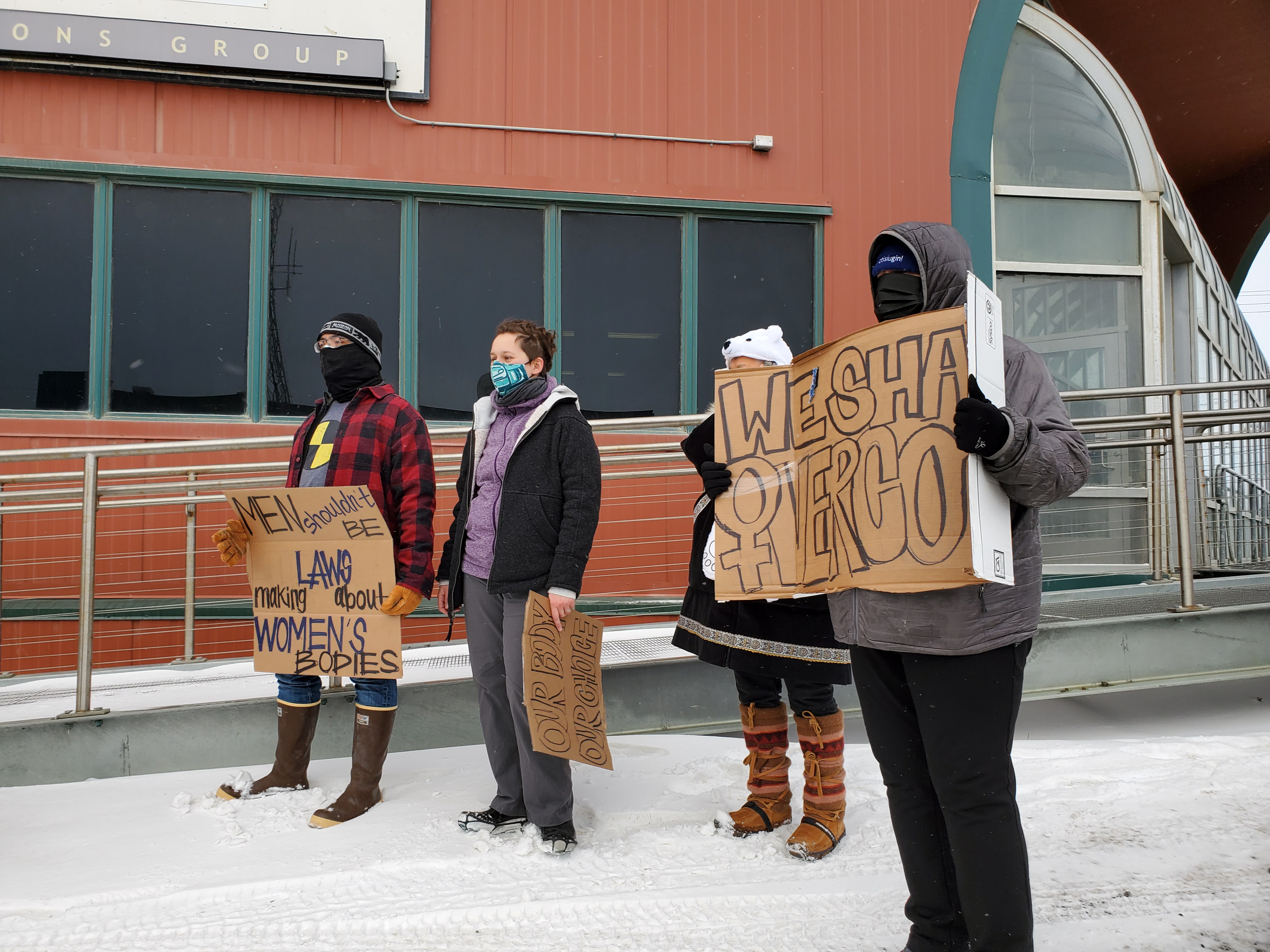
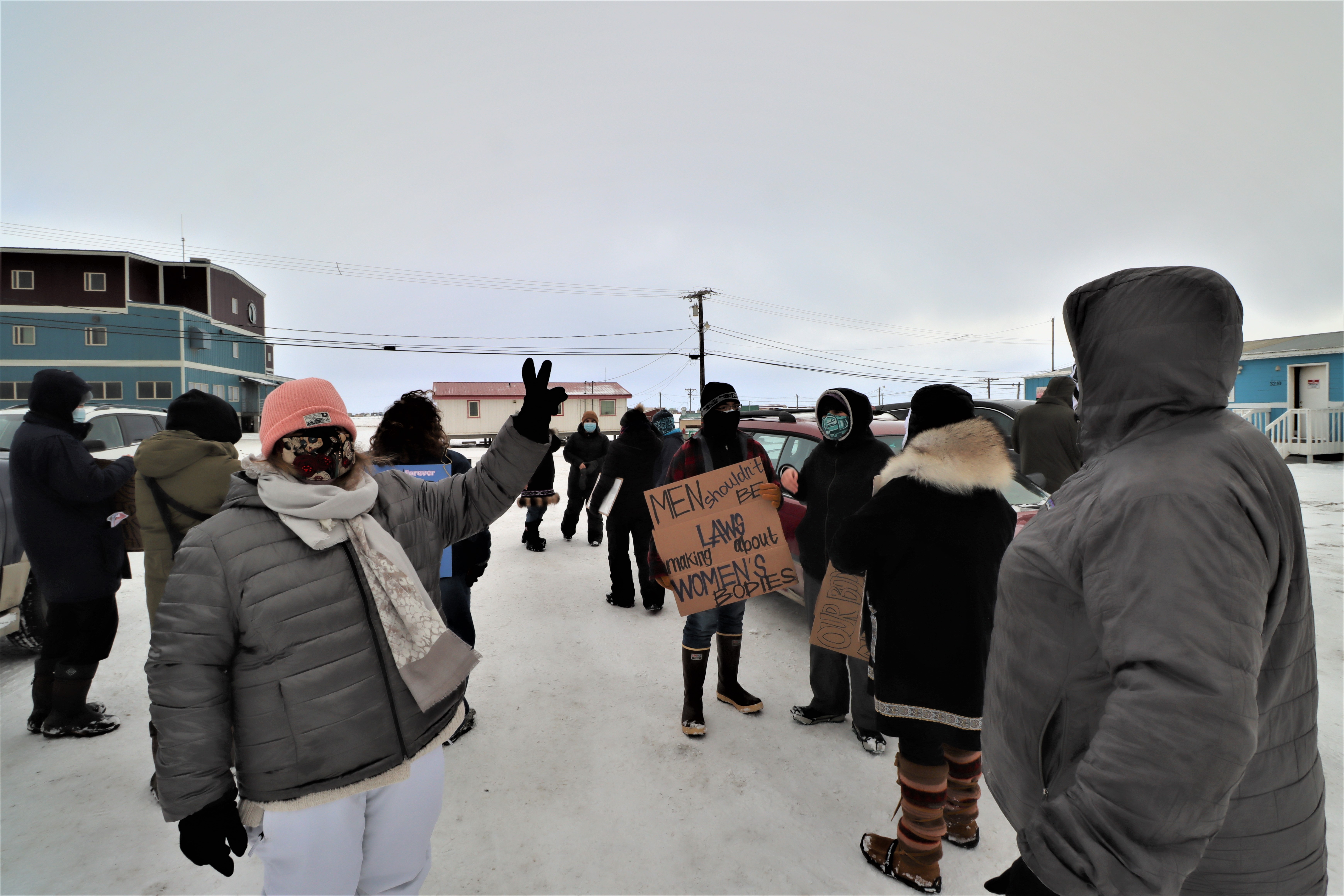
Utqiagvik joined the list of communities throughout the U.S. that saw demonstrations in support of women’s reproductive rights today. About a dozen folks participated in this event, encouraged by occasional honks and waves from passing drivers. They gathered at the Barrow Whalebone Arch and marched out to the front of the bank building where, a few of the organizers gave speeches before the event came to a close.

This is a small voice from a distant corner of the nation, but it’s nice to hear it just the same. I can only hope it joins a chorus loud enough to be heard in all the right places.

(Click to embiggen)

Polar Bears Happen

Tags

, , , , , , , ,

Way back when I first saw the ad for a social science professor at Iḷisaġvik College, I remember pulling up the college website to fight a polar bear alert on the front page. Now some might have found this a bug, but I can assure you that for me this was a definite feature. I really wanted to see this place. As it happens, polar bears don’t show up that often, and when they do, it seems that I’m always busy. Don’t get me wrong. I don’t want to get up close and personal with one of these guys; I just enjoy seeing them from time to time, and especially when I have a camera handy.

So, I’m sitting in the cafeteria during the orientation for this semester when a notice goes out telling us there is a polar bear on the beach, just across from our buildings. The point of the alert is of course to let us know that we shouldn’t wander out that way (at least not on foot), but they do sometimes have an ironic effect. I desperately wanted to take a really long bathroom break right then and then, but I managed to hold myself together long enough to take advantage of a legitimate lunch break.

…and then the bear stuck around for a couple of days. Apparently, a walrus carcass had washed ashore nearby and he was munching on that in between naps on the beach and out on the ice. Eventually the local Wildlife department moved the carcass, but not before I and half the town got plenty of pictures.

So, yeah! Polar bears do happen!

he had just woke up from a nap

Click to embiggen!

Of course Moni got the best pics!

Language in Schizopolis

Tags

, , , , , , ,

For me, Schizopolis is nearly entirely a personal pleasure. Almost nobody I know has seen it, and still fewer people seem to have liked it. Still it’s my all-time favorite Soderbergh film.

What is it about?

Well, I could tell you, but that’s hardly in keeping with the spirit of the whole thing. Really, Soderbergh says it all quite clearly at the beginning of the film; if you don’t understand it, you must watch the film over and over until you do, and you must pay full price for the ticket at a genuine movie theater. Nothing else will do!

Suffice to say that the movie is well-named.

What I do want to talk about here, for a paragraph or two anyway, is some of the language games Soderbergh plays around with in this film. At first these games appear to be just so much nonsense, part of the chaos at which the name of the film barely hints. In time, though, I can’t help thinking that Soderbergh managed to say something interesting through these games, something about the relationship between the meaning of words and the nature of human human relationships.

What do I mean?

One of my favorite sequences consists of an assignment given to the main character at work. He is to write a speech for a motivational speaker. The instructions for this speech would be a great take-down of the entire genre. What should be red flags in view of basic critical thinking skills turns out to be the very means by which some of these people will make connections to an audience full of vulnerable people. The next time someone asks me why I hate motivational speakers so much I should just link them to this video.

My favorite language games from this movie are those involving romantic connections, or the lack thereof. There are two main story-lines for this theme; one involving a womanizing exterminator, named Elmo Oxygen, and other another involving a couple whose marriage has clearly taken a turn for the worse.

Elmo Oxygen is an id in a jump suit. He does what he wants in people’s houses, and for the most part he does who he wants as well, because all the housewives seem to fall for him. (Really, it’s why they call for him in the first place.) What Elmo doesn’t do is speak in meaningful sentences, not for most of the film anyway. His flirtations always take place in a kind of code. He knows the code. The women know the code. We the audience, don’t even recognize that it is a code for a little while. It just sounds like nonsense, and then we start piecing it together. As I recall “Nose army” means “yes.” (Elmo hears this phrase a lot.) About the time, we can start to follow these conversations the story-line takes us someplace else, someplace just as odd, I can assure you. For a time anyway, the Elmo Oxygen story-line treats us to a delicious jumble of utter nonsense which actually turns out to make perfect sense. What is said in flirtation between Elmo and his lust-interests never really amounts to anything but the flirtation, and if that’s going well, one may as well say ‘nose army” as ‘yes.”

…the same goes, if it’s not.

For their part, the couple spend much of the film speaking in metapragmatic descriptors. Instead of using normal words to communicate; they describe what they are doing in the conversation. Instead of saying ‘hello’, they greet each other with words like “generic greeting.” Instead of saying “I’m sorry,” they say “sincere apology.” Their communication is always meta-communication, and that meta-communication remains disingenuous throughout their first few scenes in the movie. The only exception to this occurs when the husband turns to his daughter and suddenly speaks to her like a normal father would. When he turns back to his wife, he is once again going through the motions, or rather calling out his motions, because the content no longer means anything anyway. He and his wife do this for awhile.

…and then one of them starts speaking a foreign language.

This word-play alone was enough to sell me on the film. It’s an excellent commentary on the nature of romance, or the lack of it. What the Elmo Oxygen story-line and that of the couple have in common is the absence of substance in communication. What’s different is the reason for it. Elmo and his lovely companions don’t really say anything because they don’t have to. Whatever they have between them is working and the words themselves just don’t matter. Of course e could ask whether or not the shallow code that works so well for Elmo might also be devoid of substance because he really isn’t connecting after all, not in any meaningful sense, but he would surely be unimpressed with such vapid nonsense. In fact, the character would probably be off to some new conquest before we could finish asking the question. For their part, the couple no longer have anything to say to one another, and so they call out their moves instead of talking to each other, because these empty moves are the only thing that matters at that stage in their relationship.

Or in their break-up, anyway.

Oh yeah, …spoilers!

Dammit!

Tags

“You’re not a dildo!”

This was the worst insult my friend, Dan Bunin ever leveled at me.

At least it was part of it.

Of course, he said this after having just called me a dildo in the first place. We were playing a game of D&D back in college, and zingers were par for the course. So was a certain degree of genuine bickering over details long since forgotten. Still, this comment seemed a bit much. Dan was genuinely frustrated at me at that moment, and the awkward silence that filled the room suggested I wasn’t the only one who noticed. I had just resolved to just move on when Dan announced his change of heart, and told me I wasn’t a dildo after all.

I knew better than to think I was totally off the hook here, so I just waited for the punch line.

“If you were a dildo, women would like you!”

…and the whole room burst out in laughter.

I couldn’t stay mad of course. I was too busy laughing right along with the others, but the joke served its purpose. Dan broke the tension even as he got in one more shot. Fair enough, I thought, and we enjoyed the rest of the game.

This was over thirty years ago, and I still chuckle every time I think of it. It was typical of Dan’s wit, and his humor. It’s also typical of the other memories he brings to mind.

I remember once shutting a door in Dan’s face for no reason whatsoever. He opened the door back up a moment later with a very confused look on his face. I really couldn’t think of a good way to follow that up, so I asked if I could borrow five bucks. Dan just laughed and fished the money out of his wallet. I remember once coming out of the library at UNLV and wondering what all the shouting was about down at the student union. Turns out Dan had just about picked a literal fight with the entire fraternity community. (All of them!) I remember countless dinners at Korean BBQs where the running debate was about whether to order two meals for every one person or just the usual three meals for every two people. I remember playing straight pool with Dan and his brothers at the Q-Club. Back then, making a really great shot was as likely to earn you an insult as it was to get you a compliment. Suffice to say, Dan gave plenty of cause to call him an ‘asshole’ during those games. I remember attending a few wild parties at Dan’s on New Years Eve, and I remember noticing when those wild parties had dwindled to a table full of old guys complaining about the state of the world. I also remember that a good portion of the open questions we came up with sitting around that table seemed to get deferred to Dan. In a room full of smart people who didn’t normally hesitate to study-up on a good question, we had somehow gotten used to the idea that Dan was the one who would actually know the answer.

Back when we were both college freshmen, I remember Dan once turning to me in frustration as someone else was talking and saying the guy was wrong, but he just didn’t know how to explain it. I didn’t realize it at the time, but this sort of problem wasn’t going to plague Dan for long. His career as a successful trial lawyer has long since put to rest any lingering doubts as to his ability to explain why somebody was wrong.

I also remember speaking to Dan at the end of an online gathering a couple Friday’s back. He was excited for his coming vacation, and I couldn’t help but be happy for him. He and some other friends had been planning this trip all summer. I figured we’d talk again this coming week. I’d see him smoking a cigar with a drink in his hand, his partner Violet sitting beside him, and Dan and the others would tell the rest of us all about their adventures. I figured we would still be hearing the stories all the way till Christmas!

We won’t be having those conversations after all, not with Dan. To say that I am heartbroken doesn’t even begin to tell the story.

I was going to end this with a platitude about cherishing your friends while you have them, but that kind of schlock seems unworthy of Dan’s memory. I doubt anything I just wrote is worthy of that memory, really, but I’m trying not to make it worse here at the end. The truth is that Dan Bunin will be very sorely missed by an awful lot of people. The world always got a little smarter when he entered the room. It got more interesting, and it got a lot more fun. In his departure, Dan takes an awful lot to smile about with him. I can’t help thinking the world has just become a much more tiresome place.

Dammit anyhow!