• About

northierthanthou

northierthanthou

Tag Archives: Movies

Barrow on the Big Screen, A Little at a Time

06 Wednesday Nov 2013

Posted by danielwalldammit in Alaska, Movies

≈ 7 Comments

Tags

Alaska, Barrow, Ethnicity, Film, Film Reviews, Movies, On the Ice, The Big Miracle, Thirty Days of Night

38483_1544951388794_3220306_nOne thing about coming to Barrow, it has made conversation much easier, at least in the lower 48. All I have to do is tell people I am from Alaska and the conversation is well on its way. They will ask more questions than I could possibly answer, and once I start telling them about Barrow I can generally be assured of willing and sympathetic audience. I’m a socially awkward kinda guy, so yes, this is a good thing. Anyway, I’m happy to talk about my new home. Barrow can be damned interesting!

…so I suppose it should come as no surprise that this town has made its way into the occasional television show or movie production. Three particular movies about Barrow seem to have made it into the popular culture to one degree or another. These films couldn’t be more different from one another. Each tells a different kind of story to a completely different audience, and each portrays the community of Barrow in a very different way. I’m always fascinated to see the community change its shape in order to meet the needs of the film-makers behind these project.

…fascinated enough to write a post about it anyway!

***
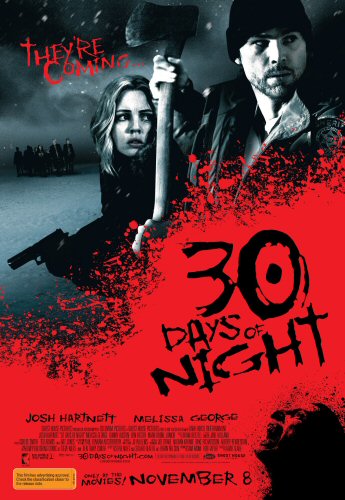
30-days-of-night-poster-1_6599Barrow as Darkness: Thirty Days of Night is of course the most well known movie about Barrow. In this film based on a graphic novel) vampires descend upon the town at the outset of Polar Midnight in order to enjoy a month-long feast in the safety of a season without sun. Thirty Days of Night wasn’t filmed here; it was filmed in New Zealand. Still, the central premise of the film is very much about Barrow and the dramatic significance of a long polar night.

The small hills and valleys of the movie’s opening sequences were about all it took to shake my sense that this film had much to do with the Barrow in which I live. The exaggerated sense of polar midnight didn’t help either. Once it goes dark in this film, it stays dark, …completely dark. What a lot of people don’t realize (and what the film-makers didn’t seem to find interesting) is the fact that we get a kind of fake sunrise here. If you can imagine the moment before the sun actually rises, that’s what we get in the midst of polar midnight, only it isn’t followed by an actual sunrise. You could swear the big ball of warmth was just about to pop over that horizon, and then the light just starts to fade.

…yes, it can be a little disappointing.

…kinda like Thirty Days of Night.

30DaysofNight_6lgBut perhaps I am being too harsh. Barrow does one thing only for this film and that is to provide the central premise, a vampire paradise. So, it should come as no surprise that the movie makes no attempt to convey anything meaningful about the people of this community. Still, you would think the directors would be kind enough to give their villainous horde of undead a bit of variety in their diet? Nope. The  Barrow of this film is a lily white community if ever I saw one before. As I recall, a token native does make an appearance in the living feast that is Barrow’s population for this film. Other than that, the menu is white meat only.

This is a fun film in its own right, but it is definitely, not the Barrow I know.

***

bigmiracleartworkpic1Barrow as a Big Warm Hug: Hollywood has made one popular film here in Barrow, and they did it since I arrived, The Big Miracle. At least it was about Barrow, and they did shoot some film up here. Some residents even made it into the movie, as did natives from other parts of Alaska. With a cast featuring Drew Barrymore and Ted Danson, this film recounts a real event in the history of this community. In 1988, three grey whales became trapped in the ice not far from here. The entire town as well as a number of outsiders (including a Russian icebreaker) worked hard to break them free.

The ironic thing about this movie is that it was based on a rather cynical book, ‘Everyone Loves Whales’. I gather the original script may even have had a little bite to it, but the final cut of this film is a feel-good celebration of compassion, humanity, and …whales! By the end of the film, the plot is fully focused on efforts to save the big lugs of the sea, but the early scenes focus on political questions about whether or not anyone will help them. One of those questions was apparently whether or not to eat the whales instead of saving them. The Iñupiat community of the north slope harvests Bowhead whales every year, so that possibility could hardly be described as a stretch. This plot point is eventually resolved when the whaling captains of the town decide instead to help free the whales.

(Big sigh folks!)
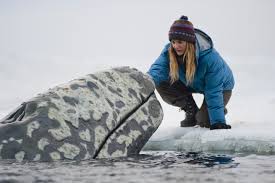
images (2)The eat-or-save sub-theme provides The Big Miracle with its main window into the community up here. Unlike Thirty Days of Night, this film actually finds a place for the Iñupiat community of Barrow in its storyline. They start out as potential villains and end up being god guys in the end.

…kinda like Clint Eastwood, only with chainsaws and snow-machines instead of Colt Walkers and a horse. (Let’s not talk about the harpoons.)

Folks up here are of mixed minds about how whether or not the film does justice to Iñupiat community of Barrow. Drew Barrymore (who plays a Greenpeace activist in the film) gives a pretty brutal speech about the native community and its whaling practices, and its hard to shake the sense that some of her points in that speech might have served as the voice of the film-makers. Later attempts to show the native community in a more positive light may or may not be enough to settle concerns about the politics of the movie, and for those here still very much committed to whaling, the major theme of the movie itself may be a little discomfitting. Barrow’s native community gets some love here precisely to the extent that their actions do not reflect what natives of the North Slope normally do with whales. It’s a conditional kind of love, and I can’t blame folks for being wary of the conditions.

For what it’s worth, this movie at least knows that natives exist in Barrow. It even kind-of likes them, so long as they aren’t eating muktuk.

***
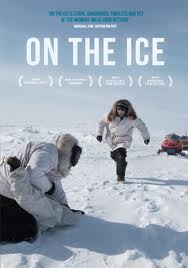
imagesBarrow as Native Youth: I can think of one REALLY good film set in Barrow, and that is On the Ice by Andrew Okpeaha MacLean. MacLean is from Barrow, and he uses the film quite deliberately to tell us something about life here at the top of the world. On the Ice tells the story of two young Iñupiat men with a secret they’ve been concealing from the rest of the community. And while this main story plays out, the film does a wonderful job of revealing the interplay between indigenous values and outside cultural influence in the native youth of this community.

On the Ice is a tense drama, and one which portrays the native community with a deliberate sense of realism. This film was shot in Barrow, and it features a number of residents in the supporting cast. It’s both amusing and a little disconcerting to see scenes on street corners I pass regularly, and even more so to see people I know in various scenes, but that is definitely one of the film’s charms. If the other films are set in Barrow (or at least an imaginary version thereof), the real Barrow jumps right out at you from this film.

…at least it does for me.
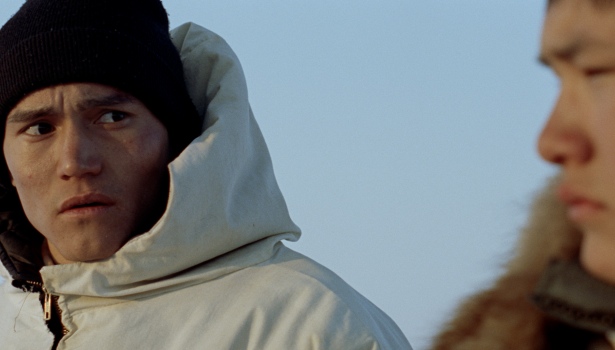
On-the-ice-premieresWhat’s missing from On the Ice is everyone else! …besides the Iñupiat community, I mean. Every once in awhile you can catch a glimpse of a non-native somewhere onscreen in this film, but that is definitely the exception. For the most part this film has eyes only for the native population. Gone are the white folks, yes, but so are the Koreans, the Thais, the Tongans, the Samoans, and the Filipinos, each of whom has a substantial place in this town.

On one level, fair enough. This movie is about native youth not the rest of us. On another, it’s a simplification, perhaps even an over-simplification. I can’t help but think it makes a difference that the outside influences (and the people who represent them) are present here in Barrow itself, and I would think that would be part of the story of native youth, at least if that story is to be a realistic portrayal (perhaps it is not). It would have been interesting to see how these characters dealt with ethnic relations over the course of the story. Leaving out all the sub-communities from the town simplifies the storyline and that is the one thing that jars me a bit when I watch it. But seriously, I mean to praise the film with faint damn. Because what this film does, it does well.

If you want to watch a movie about Barrow, this is the one.

***

So there it is. The community in which I live takes on radically different forms whenever a camera is pointed at it. It is darkness for those seeking a fright, a reluctant helper for those seeking a heart-warming smile, and in it’s best incarnation to date, it is an all-native community. The full community of Barrow never seems to make it into these stories, and the interplay between all the ethnicities of this town has yet to make it onto the big screen.

Ah well, goodnight.

71.271549 -156.751450

Share this:

  • Tweet
  • Share on Tumblr
  • Click to print (Opens in new window) Print
  • Click to email a link to a friend (Opens in new window) Email
  • Click to share on Reddit (Opens in new window) Reddit
Like Loading...

Geronimo: A Manly Legend, No Women Allowed!

25 Friday Oct 2013

Posted by danielwalldammit in History, Movies, Native American Themes

≈ 25 Comments

Tags

Dahteste, Film, Gender, Geronimo, Gouyen, Lozen, Movies, Wes Studi, Women

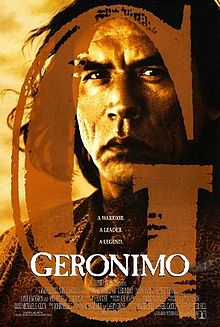
220px-Geronimo_filmIt’s been a number of years since I first watched Geronimo, An American Legend. But it just arrived in my latest shipment from Amazon, along with some chili paste. So, a good meal and a good movie go together like kids with crayons and a clean white wall.

Yes, I do enjoy this movie. The cast is first rate, and all of them turn in fine performances. Wes Studi is at his bad-ass best playing Geronimo. I have enjoyed watching this movie in the past, and I’m sure I will do so again (like when it hits 30 below this winter and stays there). I do like this movie, but…

Like most films about real historical events, this one does take some liberties with its subject matter. The central focus of this movie would seem to be efforts by key military personnel to secure Geronimo’s surrender. We see as much diplomacy in this film as we do fighting, albeit under duress and always with the possibility of violence mere moments away. If I understand the history correctly, the sequence of events in the movie is a bit off, the significance of a key leader Naiche is minimized, and General Crook’s reaction to Geronimo’s escape is played up a bit much. I may be missing something, but I can live with most of these deviations from the facts. But right now one of those little simplifications is crawling up my pant leg and biting my ass just like the proverbial rainbow in that first season of Southpark. I mean this one little twist is really bugging me. The problem is this.

Where are the women?

I’m not normally one to criticize people for the movie they didn’t make, or the book they didn’t write, but well, that’s exactly what I’m gonna do here.

Yep!

A number of Apache women do appear on screen during the course of this movie. They are pictured running away from the U.S. soldiers, living on the reservation or in camp, and they even appear on the train taking Geronimo to Florida. We also have some discussion of the atrocities committed against women on various sides in the conflicts at hand. The film stops short of showing us the full extent of those atrocities, not the least of reasons being (I suspect) that it would make it a lot harder to identify with the men committing them. Geronimo in particular must be intimidating, but not so much so that we cannot care about his fate. The movie makers didn’t quite have the courage to actually show us how bloody this war got, so they let the characters tell us about it instead.

Okay, so that’s all well and good, but here is the thing; some really interesting women were involved in the events portrayed in this film. You wouldn’t know it unless you dug a little into the history at hand (I’m still getting started myself on this one), and you certainly wouldn’t expect a prominent role for women in the imaginary world of most fiction of the American West. Okay, we always have room for a prostitute with a heart of gold, or a damsel in distress, but genuinely strong women’s roles aren’t exactly common fare in the genre. And of course this is a film about warfare, so we wouldn’t expect women to play much of a role in that.

But here they are!

APACHE EPICYou can see a few women who rode with Geronimo and Naiche in this picture as they await deportation to Florida. Two of them are of particular importance, the 5th and 6th figures from the right on the top row. There are several reasons to be interested in these women, but a couple of them in particular should have been of interest to the folks behind the movie, Geronimo; both were actively involved in the fighting as well as the negotiations for Geronimo’s surrender. These women were not simply traveling with him; each played a significant role in the actual story on which the movie is based.

Lozen04-e1333817881283The Sixth figure on the right of the top row is Lozen, sister of Victorio. She cuts an interesting figure in this image, barely facing the camera. One might not take her for a woman at first sight, which is actually rather appropriate. She seems to have dressed as a man for balance of her adult life, and she certainly seems to have taken on the role of a man when it came to warfare. This kind of gender-bending isn’t entirely unusual in Native American communities, but I don’t want to be too quick to draw conclusions about her own role in Apache society.

Lozen is credited with taking special precautions to protect women and children during her brother’s campaigns. Various sources have her escorting women and children across a river to safety before rejoining the men before a fight. In another instance she is said to have escorted a woman to the safety of a reservation, stealing horses for the both of them in the process. Seriously, her actions during Victorio’s campaigns alone are the stuff of legend. During Geronimo’s campaigns, she seems to have added the powers of a shaman to her reputation.

Why no-one has made a movie about Lozen is beyond me, though I understand someone wrote her into a sort of Romance novel. I haven’t read it, so I should with-hold judgement, but I must say that the idea fills me with dread. A segment in Apache Chronicle seems much more promising.

Following Geronimo’s surrender, Lozen was shipped East to Florida along with the others. She died of tuberculosis while in captivity.

dahtesteSitting next to Lozen is Dahteste, and yes, it is significant that they are together. It’s difficult to know the exact nature of their relationship, but the two were certainly close associates throughout Geronimo’s campaign.

Dahteste figures a little less prominently than Lozen in the folklore of the time, but she is also credited with significant fighting skills and there is little reason to believe she could have acquired that reputation without using those very skills in action. More to the point, Dahteste’s fluency in English made her a valuable intermediary between ‘hostile’ Apache and the U.S. Army, which would have put her right at the heart of the story in Geronimo.

She too was taken into custody following Geronimo’s surrender, and shipped back East. She lived long enough to finish her life on the San Carlos Apache reservation.

***

What of it?

Both of these women certainly could have been portrayed in the film, Geronimo. At the very least their inclusion would have added color to the story. More than that, their role in negotiations for surrender would have put these two women right in the central plot-line of the movie. They had to be written out of the story, and in writing them out the story, the film-makers delivered narrative that was much more masculine and much more hetero-normative than the one they could have told, or would have told, had they had the balls to do so.

If there are specific historical reasons for dropping Lozen and Dahteste from this legend, I do not know what they would be, but I suspect the actual reason for this would be a failure of the imagination. Warfare in the old west is, as far as the typical America can envision it, a distinctively masculine enterprise. Women may from time to time fall victim to it, and the occasional female character can show her spirit by picking up a gun when necessary. They were not merely caught up in the action, and they did a Hell of a lot more than show a little spirit when it was absolutely necessary. These weren’t damsels in distress; they were distress in their own right. I sincerely doubt that the folks making this film knew what to do with them.

…which is a damned shame.

Don’t get me wrong; I don’t really see the inclusion of these two in Geronimo’s story as a question of justice (no more than I worry about the omission of Naiche). Neither historians nor film-makers, nor anyone else for that matter, can grant justice to those long dead and gone. This is a question of story-telling. It’s hard to get this across to people who don’t study history. The real thing is consistently more interesting, more convoluted, and more difficult to imagine than the stories Hollywood typically gives us. The liberties they take with historical subject matter rarely add much to the story; they consistently leave that story impoverished.

This American Legend (cool as it is) would have been that much more interesting had they found a place for these two Apache legends.

***

2010218153724_GouyenNot pictured above would be a woman named Gouyen, a bad-ass in her own right. She too was captured at the end of Geronimo’s campaign and transported to Florida, but not before accomplishing a few impressive feats of her own.

I haven’t learned what role (if any) she may have played in events leading up to Geronimo’s surrender, but her martial feats are impressive enough in their own right. When her first husband was killed in a Comanche raid, she is said to have tracked down the man who did it and returned home with his scalp.

She did this alone.

During Geronimo’s earlier campaigns, so the story goes, Gouyen actually saved her second husband’s life.

Gouyen died at Fort Sill, Oklahoma in 1903.

71.271549 -156.751450

Share this:

  • Tweet
  • Share on Tumblr
  • Click to print (Opens in new window) Print
  • Click to email a link to a friend (Opens in new window) Email
  • Click to share on Reddit (Opens in new window) Reddit
Like Loading...

Slavery: Still Sexy After All These Years! (Or Yes Quentin, There is a Reason it’s Called an ‘Exploitation’ Flick)

23 Thursday May 2013

Posted by danielwalldammit in History, Movies

≈ 16 Comments

Tags

Django Unchained, Fiction, Film, History, Movies, Quentin Tarantino, Race, Sex, Slavery

imagesJust what is the relationship between the events occurring inside a film and those occurring the world in which we live? I will not say the ‘real world’, because of course part of the problem here is that the ‘worlds’ in which we live are saturated by myriad narratives, preconceptions, and cultural artifacts which shape our understanding of events in ways few of us can fully understand. So, when we see something happening in a movie, it is important to grasp that this too is one more of those narratives, one more thing that shapes the meaning of events in own own lives. Just how it does that, well now that is a tricky question.

It’s a difficult question with a number of plausible answers, but I think we can rule out one answer at least, the one that says; ‘nothing’. Quentin Tarantino would seem to disagree, at least he does when he’s angry and dodging interesting interview questions. In a now infamous rant, Tarantino took the position that there was no relationship between on-screen violence and real world violence, refusing even to elaborate on this position or to explain his reasons for taking it.

(Oh yeah, SPOILERS!)

To be fair, it was the interviewer, Krishnan Guru-Murthy, that fielded the stance in a sort of complex question (at 4:30 in the clip below), but for all his belligerence Tarantino does not disavow the position attributed to him. Guru-Murthy claims that his own research has produced little in the way of an explanation from Tarantino, just a consistent repetition of this stance. It’s a common enough claim in any event, often serving as a defense mechanism, both for those that create guilty pleasures and those of us who enjoy them (and yes, I do count myself among the guilty). So long as there is no relationship between fantasy violence and real-world violence, one is free to explore the one while taking no responsibility for the other.

But of course the world isn’t that simple, and as Guru-Murthy also points out, Tarantino was happy to link his latest film to the serious issues of slavery, even taking taking credit for starting a dialogue about that subject. He also takes credit for the cathartic violence he puts on screen, but has little to say about the ‘real’ violence perpetrated by the villains against their slaves on that very same screen. But are we really to believe Tarantino means us to feel emotional investment for Django’s acts of revenge while sitting guiltless through the torture and slaughter of innocents throughout the film? Does the elaborate detail of ‘Mandingo fighting’, the ‘hot box’, and the vicious execution of a slave torn apart by dogs leave the viewer without any sense of complicity for the “brutality of the violence of the day?”

Tarantino’s own writing belies this approach. His villains are too clever, their speeches too fascinating, their point of view far too prominent in these moments to dismiss. The victims of this violence remain largely silent. We know that the Mandingo fighters suffer and regret what they are forced to do, we know that Django’s love interest is defiant, and that she suffered greatly for it, and we know that the man torn apart by dogs could not bear to fight again; none of these characters really say much in the movie. They do not introduce interesting plot twists; they do not dazzle us with fascinating speeches. They suffer just as we would expect them to, providing us with no insights at all into the world in which they live.

Those that inform us about this movie are the killers. DiCaprio’s Calvin Candie explains quite clearly what he expects of his slaves before setting the dogs loose. Dr. King Schultz (played brilliantly by Christoph Waltz) introduces us to the fascinating world of bounty hunter, one who would see a man shot in front of his child but who balks at seeing another torn apart by dogs. And of course we understand Django’s motives; his goals are the driving force of the movie; it is his killings which provide us with the final pay-off, the glorious conclusion of the film.

It is consistently the logic of those enacting violence which Tarantino fleshes out for us in this film, and as always, he does it ever so well. The victims are there to suffer, and to provide a pretext for the ‘cathartic’ violence that is to come. In short, Django consistently draws us into the viewpoint of the killer; the movie does this when the killer is a villain, and it does it again when he is a hero. This is the myth of redemptive violence presented in a special way that allows us to have our cake and eat it too. We can enjoy Dicaprio’s sadism just as we will enjoy his downfall. If there is a moment of regret in a scene, or a brief period in which we might wish for the suffering to simply stop, well that moment passes in due time, transformed as it were into the rationale for yet another killing. In Django, we understand the killers, the victims are simply silent.

But villains gotta be villainous, don’t they?

Of course they do, but what is lacking in Django is a genuine counter-balance, any real sense of what is at stake in this story for anyone who is not a killer. When our principal reward at the end of the story is the death of the bad guy (DiCaprio or Jackson, …or so many others), we are never far from the mindset of the killer. In the end, Django leaves a wanted man, accepting this fate without so much as the blink of an eye, his wife drawing a rifle as they ride off from the scene. Two lives now wholly engulfed in violence. If this is a victory, it is at least partially a victory for the world of villainy.

…which brings us back to the initial question, just how does this story relate to the realities of violence in everyday life? I honestly enjoyed much of this movie, as I did with Inglorious Bastards. (Yeah, I know about the spelling, take that Quentin!) But I always feel a little uncomfortable with Tarantino films, precisely because I can’t escape the feeling that I am witnessing something a little creepy; it’s a bit like watching a teenager doing something truly inappropriate in public. Whether it is sheer joy with which Tarantino employs the n-word just a little more than his faux-realism rationale would warrant, or the raw celebration of violence which is present in every film he makes, I cannot help but to think the limitations of Tarantino’s stories are the limitations of the world in which he lives, the world of narratives informing his sense of sense of the world off-screen. And I cannot help but think he is inviting us to normalize those limitations and accept a world of cartoonish violence as a moral standard of sorts.

It is not as though the world lacks for people who think this way off-screen.

One can see it in that interview above as well, when Tarantino tells us that Django deals with the ‘Auschwitzian’ characteristics of slavery. (I guess it’s a word now, …why not?) Honestly, I don’t know what he meant by saying that Americans have dealt with the Native American holocaust, but he clearly seems to think this movie is saying something about the realities of slavery, so much so that when people talk about the film, Tarantino takes that in itself to be a meaningful dialogue about slavery. And yet there is little about this film that could shed light on the nature of slavery as an historical institution.

Tarantino’s choice of comparison is telling, because the story of Auschwitz is largely the story of cruelty for the sake of cruelty, and this is Tarantino’s vision of slavery itself. In one of the most interesting (and insightful) speeches of the film, Dr. Shultz tells us quite frankly that he deals in dead bodies while slavers deal in live bodies; bother are economic institutions. So, why then do slaves first make an appearance in this film walking a great distance barefoot in the cold? Sure, one could probably come up with a plausible explanation based on historical possibilities. But the more plausible answer is that Tarantino wanted to show us the raw cruelty of the institution. More to the point, he did not wish so much to tel us something about slavery as to use slavery as a pretext for telling us something about cruelty. Tarantino presents this story of raw cruelty for us again in the sadistic foremen whom Django will kill part way through the movie, and again in the institution of Mandingo fighting. He presents it in virtually everything that DiCaprio’s character and Samuel Jackson’s character say and do. In this film slavery is not an economic enterprise, it is the conspicuous consumption of sadists, an extravagance of cruelty for the sake of cruelty.

One should add that it is a highly sexualized cruelty that one sees in this film. While Tarantino denies that rape appears in the film, its presence in the narrative is prominent. Django is quick to tell us that his wife will be used as a comfort woman, a prospect apparently confirmed by the words of another villain later in the film. Throughout the plantations in this film, black women appear in full southern dress, lounging about, the clear implication being that they are there for the pleasure of the owners. And of course when Django is captured, it is his genitalia which first get the attention of his would-be tormenters. The slaves portrayed in this film exist largely for the purpose of providing the villains with cheap thrills. And while this sort of thing was certainly not absent in the real history, its significance has completely eclipsed those of plantation agriculture in Tarantino’s narrative.

Slavery insofar as it appears in this movie, is little other than a sadistic fantasy. It is a source of pleasure for the villains, and fleeting moments of pain for the victims about whom we learn so very little. And perhaps we could sweep all of this under the rug and just call it entertainment were it not for one thing; Tarantino himself wants to tell us this movie is about slavery.

A part of me wants to say that it simply isn’t.

But of course that too would be inaccurate. The movie is about a vision of slavery bearing little resemblance to the actual institution, but perhaps one with a disturbing resemblance to Tarantino’s own thoughts about race, violence and sexuality. More disturbing still is the very real possibility that this film tells us still more about the general public’s understanding of the relationship between these features of American society.

***

I suppose all of this brings us full circle to the cathartic violence that Tarantino is talking about. On one level, that would be cathartic violence against the perpetrators of slavery as Tarantino envisions it. On another level, if I am right that Tarantino is getting off on the sadistic possibilities available in a world of slavery, that he is inviting his audience to enjoy the same possibilities, then the catharsis is perhaps a bit more personal. It is the moment in which one erases his or her investment in the sadistic themes presented here through the actions and words of the villains. It is a moment in which one finally rejects the villain despite his cleverness, and perhaps it is a moment in which one rejects one of the ills of history (at least insofar as it is almost dealt with in the form of that villain). The destruction of the villain thus becomes our own ritual purification.

I have my doubts as to where that leaves us in the end.

71.271549 -156.751450

Share this:

  • Tweet
  • Share on Tumblr
  • Click to print (Opens in new window) Print
  • Click to email a link to a friend (Opens in new window) Email
  • Click to share on Reddit (Opens in new window) Reddit
Like Loading...

Metaphors that Miss and Tropes that Trip: Mental Musings and, Hey Look a Cow!

06 Wednesday Mar 2013

Posted by danielwalldammit in Philosophy, Write Drunk, Edit Stoned

≈ 17 Comments

Tags

Beauty Pageants, Cognitive Theory, Inner Beauty, Metaphors, Mind, Movies, Mr. Frost, Power of the Mind

Maybe the mind is like a lake in the morning?

Maybe the mind is like a calm river in the morning, full of napalm and watermelon seeds.

The mind is a strange place.

Unless it’s not a place at all; maybe it’s a cabbage.

I don’t mean that it has wings or anything, but maybe it’s filled with pretty little guppies. Vampires, I mean. Vampire guppies! Yes, the mind is filled with vampire guppies. In that respect, it is very like a cabbage.

George Lakoff says it’s a container of sorts. That’s not exactly what Lakoff says, or even remotely like what he says, really, but I’m feeling a little left of my own mind today, so that’s the best that bastard is going to get from me right now.

Unless it isn’t.

I get confused sometimes.

What do any of us know about that sort of thing? It’s all cabbages and containers anyway, and sometimes a pill bug in a pear tree.

Don’t look at me like that; you have your tropes and I have mine!

Puts the term objectification in a new dark, doesn’t it? Cause sometimes you have to reinvent your subject in order to talk about it, which seems to be what most of us do when we want to get mental. That’s when we dip in the metaphor closet and bring back a fishing hook.

Or something.

But sometimes these metaphors of the mind take us downtown when we are trying to head out to the lake.

Like when people start talking about ‘inner beauty‘ and such. Folks fiddling out that tune are usually trying to tell us they care more about mental stuff than they do a pretty smile or a chiseled chin. For my part, I usually figure it means they can’t value a thought until they’ve imagined it in the form of a pretty face.

Failure, thou art ugly to the bone!

Course there is always the ‘power of the mind,’ which passes for praise in some circles. What’s so good about the mind, you may ask? Well apparently, it’s so good it can almost do what we normally do with a muscle. Think Uri Geller with a spoon, or better yet think of any range of movies where a character begins to impress us with his brilliance, and then (because some of us are too dim to be impressed by impressive reasoning skills) they start moving the physical world about with their great mental powers. Then we go ‘ooh’ and ‘ah’, because that’s a really cool mind that can move things all on it’s own. Way cooler than one that just does damned cool mental stuff.

Remember the movies Powder and Phenomenon? Neither one of the main characters in those movies would have been quite so interesting without telekinetic powers?

…Unless they would have.

Or think of Mr. Frost, another movie improved by the powers of the mind. The premise? A guy in a Lunatic Asylum says he is Satan; says he has an evil plan involving his Doctor. Something about an act of faith, or at least a crime of faith. But is he really Satan? Damned smart, that he is; knows things he shouldn’t. I mean, he really shouldn’t know that stuff, and that’s damned creepy. Could this evil genius really be who he claims to be? It’s damned mysterious!

…until supernatural powers make an appearance.

See, Satan’s mind can make things happen without the help of a body; it just has that much force. And that makes the movie much more interesting.

Just like mayonnaise on wonder bread.

Yep!

But seriously, how cool is that? The mind is so damned impressive that sometimes it can do, …um, what a body does.

That’s a damned good cabbage! Unless of course it’s more like an axe, or an axe stuck in a cabbage, but that image really only applies on Mondays, or on that odd day we get on leap years.

…if you go swimming I mean.

Can you dig it?

Cause sometimes mental stuff is deep, which is better than those days when it’s shallow, and you know damned well that means deeper is more mental. So, maybe the mind is a bit like a ditch; and a really impressive mind is like a great big hole in the ground. which brings us back to those container metaphors Lakoff writes about.

Or maybe deep thoughts really mean super high water pressure?

Speaking of water polo, does anyone else love beauty pageants?

Yeah, not me either.

But what I really don’t love is the question and answer parts of them. You know, 60 seconds or so to wax philosophical on one of the world’s great problems? Just once I’d like to hear one of these girls respond with “Get real!”

“Grow up!” would also work.

Sometimes a mind is a wonderful accessory.

It’s a fine line between smart and cute. At least it is within one hour of a bathing suit c0mpetition.

Anyway, it’s like I said. The mind is a terrible thing to paste.

I didn’t actually say that of course, but I wouldn’t have anyway, and it’s beside the line. The plane truth is that this mind is a thing (or more like a non-thing) that folks have a hard time describing. So, we trope it up one side and down the other, just like a long bow or a fish made of pasta. We do this for all sorts of reasons, and sometimes we do it to show how much we love this non-thing of a guppy-filled cabbage.

And sometimes we just end up showing how we really don’t love the mind at all.

71.271549 -156.751450

Share this:

  • Tweet
  • Share on Tumblr
  • Click to print (Opens in new window) Print
  • Click to email a link to a friend (Opens in new window) Email
  • Click to share on Reddit (Opens in new window) Reddit
Like Loading...

Movie Review: The Orator

28 Monday Jan 2013

Posted by danielwalldammit in Movies

≈ 11 Comments

Tags

Barrow, Film, Movies, Pacific Islands, Polynesia, Samoa, The Orator, Tusi Tamasese

TheOrator_A5flyer_cover_1It wasn’t easy to get a copy of the Orator, but it was well worth it. Filmed in Samoa, using Samoan actors who speak Samoan throughout the film, it is a wonderful peek into a world far from the icy tundra outside my window. It is also a chance to glimpse something of the world from which quite a few local residents have come. People are often surprised to find that the community of Barrow, Alaska, has a significant number residents from the Pacific Islands, but we do. Watching the Orator was a chance to escape to a world of warm green vegetation, land perhaps to learn a thing or two about the place a few friends and coworkers might call home.

My knowledge of Samoan politics is scant – mostly it’s the stuff of textbooks – so I must admit that some of the more nuanced details of this film have escaped me. And yet, elements of the story seem quite familiar. They could almost have been written about Barrow.

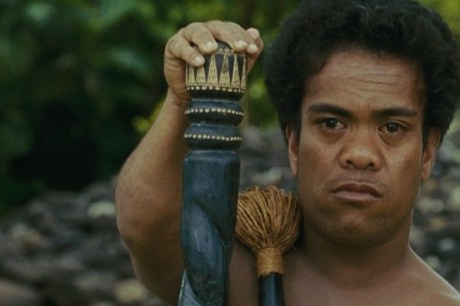
This film tells the story of Saili (played by Fa’afiaula Sagote) and his attempts to resolve a number of quarrels threatening the well-being of his family. He lives with his wife, Vaaiga (Tausili Pushparaj), and her daughter, Litia (Salamasina Mataia). It is a small family, but each of them has a quarrel with someone outside the household, and each of those quarrels would be more than enough to provide all the drama needed for one film.

Saili’s problem appears simple enough at first. He is the son of a chief, and by all rights he should rise to the title himself. But Saili is also a dwarf, and his eyes as well as those around him that is a problem. How can he rise to a position of leadership when he cannot command the respect of those around him. He can hardly chase people away from the store where he works as a night watchman; others are planting taro root around the graves of his parents; and he cannot bring himself even to face his in-laws when they arrive to speak with Vaaiga. It isn’t simply that others fail to respect Saili because of his stature; his own lack of self-respect is palpable throughout the film. This is a man with more problems than most, and chief among them is his own inability to deal with any of them.

We learn quite early in the film that Vaaiga (Tausili Pushparaj) has been living in exile for 17 years, about the age of her daughter, Litia. She has been living with Saili ever since she was banished from her own village all those years back. Now her brother wants her to return with him. How they will deal with her banishment remains an open question. But he is quite insistent, returning with additional family members to pressure Vaaiga into changing her mind.

For her own part, Litia is having an affair with a married man, a fact which is rapidly becoming common knowledge throughout the village.

What one must understand about each of these conflicts is that resolving them is not entirely a question of establishing who is in the right. Whatever the outcome of each of the running battles that plague his family, Saili must find a solution that will enable him and his kin to live peacefully with those around them. The characters do not live a metropolis; they will not have the luxury of melting into the larger community after some judge has pronounced a verdict on the conflicts which divide them. They will not have the option to forget about each other in the wake of some legal solution. Each of the conflicts driving this story are as much about future relations with family and neighbors as they are about the propriety of past actions. And none of these conflicts will be resolved until the parties can find a way to live with each other in peace.

But is Saili up to the challenge?

Clearly the High Chief of Saili’s own village does not appear to think so. In an effort to secure his rights to the land wherein his father is buried, Saili seeks to claim the title which is his birthright. Instead he receives an object lesson in bravery. A chief must have the courage to bare his heart and soul before others, but the high chief isn’t sure that Saili has the balls to do the job; so he asks Saili to prove that he does, literally and metaphorically by baring himself on the spot.

Saili was not up to the task.

As events unfold, each of the three major conflicts intersect with one another and spiral out of control. Litia’s affair brings trouble directly into the home, and Vaaiga soon adds a life-threatening illness to her own troubles. For his own part, Saili’s efforts at using brute force to solve his problems by engaging in a rock fight do not end well.

theoratorfilmBut of course it isn’t really physical force that is required of Saili, which is precisely the point of the High Chief’s lesson. Saili’s adversaries are not evil, but he must find it within himself to earn their respect. It is not rocks that are required of Saili, but words.

And here I am close to saying all that I wish to say about this movie, other than that you should watch it. But I would suggest that the superficial morality tale I have outlined above does not even begin to reveal the richness of this film. It isn’t simply that Saili must learn how to speak up for himself, the lessons of his High Chief extend to the kind of words that he will need to use, and to the manner of his self-presentation.

But of course, his lesson is also about more than that.

71.271549 -156.751450

Share this:

  • Tweet
  • Share on Tumblr
  • Click to print (Opens in new window) Print
  • Click to email a link to a friend (Opens in new window) Email
  • Click to share on Reddit (Opens in new window) Reddit
Like Loading...

Thirty Days of Night: Vampires Come to Barrow and it Ain’t Pretty

20 Tuesday Nov 2012

Posted by danielwalldammit in Alaska, Movies

≈ 10 Comments

Tags

Alaska, Barrow, Ecology, Film, Horror, Malthus, Movies, Thirty Days of Night, Undead

It is certainly a memorable scene. Vampires chasing down the residents of a small town on the frozen tundra. Its residents cannot leave, they cannot contact the outside world, and the sun will not return for 30 days. The town-folk are powerless against their assailants. And the vampires run rampant through the town, slaughtering the residents at will and completely without mercy.

Shot from above, the figures run this way and that across the blood splattered snow. Which is vampire and which is victim? You can just make it out in some instances, mostly when one of them dies. Horribly!

This is classic horror, is it not?

No. It’s the Tragedy of the Commons.

You see the real tragedy in this story is not the loss of human life. That story is so old it hardly merits mention. Yeah, yeah, there is a couple, an adorable grandma, a spunky teen, and even a weird uncle-like character who will do some good before he dies. We even get a token minority, and of course we wonder which will live and which won’t.

All been done before.

What makes this film truly original, what separates it from the rank and file horror-flicks, what makes this high art, is the fact that this movie explores the economic ramifications of a completely unique ecosystem. Sadly, the movie seems to suggest that vampires just don’t get it either. Immortal though they may be, they too are doomed to experience the miseries of a Malthusian nightmare. They too will exhaust their food supply.

In this case, it is entirely unnecessary.

You see, the Barrow in Alaska of Thirty Days of Night is a vampire’s Utopian dream. Easily cut off from the outside world, and subject to 30 full days of darkness, what blood sucking undead would not regard it as the ultimate dinner banquet, just waiting for an RSVP? And with a little over a hundred and fifty people remaining in town for the winter, there should be plenty of food to go around.

Right?

Of course, if a vampire was paying attention, he would have noticed that Barrow actually has about 5,000 people and 2 months of night (or 40-something days of it, depending on what counts as a day without sun). So, Barrow is even more plentiful than the fellows in this movie could possibly have imagined.

Even better!

So, you would THINK that a small hoard of vampires accustomed to long drawn-out plot lines just to get a single meal in before the second act would be able to make the most of this opportunity. Well perhaps if they had read their Garrett Hardin! …or if they had implemented a proper system of human resource management. If they had even auctioned the mortals off as private property, things might still have gone better. With proper incentives, each of the undead could have had food enough to last for the entire winter.

But no.

The greedy vampires regard the entire population of Barrow as common property and so each sets about slaughtering as many town-folk as he can, thus reaping the benefits of extra blood consumed individually while imposing the costs of a rapidly diminishing food supply on the entire vampire hoard. Even at the cost of diminishing returns, this approach grants to each rampaging vampire a greater share of the blood gushing from the necks of his victims than he would get by patiently consuming his fair share. And each does just this until there is nothing left for anyone to eat. That is simply what happens when property, even human property, is held in common, and without a mechanism for properly managing the finite resources of the town’s residents.

It doesn’t help that these wasteful buffoons leave large quantities of their meal to spill out over the frozen snow. But that really is beside the point. What matters most is that they never really did establish a viable means of managing the cornucopia that lay helpless before them. As a direct result, they run through their food supply very quickly and spend the rest of the movie working hard to track down the few remaining humans smart enough to make themselves central characters in the movie.

It really is a damned shame.

You can see the results toward the end of the film as a whole town full of vampires tries to make do with a single teen-aged girl. There really isn’t enough of her to go around. Oh they toy with her; they even say some scary things at her, but let’s face it, nobody is all that impressed when you play with your food. And all that sadistic pleasure taken in tormenting the poor girl doesn’t change the fact that, she was the last meal any one of the gluttonous night fiends was going to eat for a long while. This wasn’t scary; it was pathetic.

The hunger of the poor starving vampires leads to still worse events when some of the mortals manage to fight back. Don’t even try to tell me that would have happened if the vampire hoard had not gone hungry in the wake of their wasteful banquet. These guys were bad-ass at the beginning of the film. Bad-ass! In the end, well let’s just say that even the alpha-pire turns out to have a glass jaw. All of that could have been avoided if the vampires had simply instituted some mechanism by which individuals could be held accountable for using up the common resources of the community.

There really is no excuse for any of this. These guys could have ruled the longest night in movie-making history, released a satisfying belch and rode off into the moon-set.

If only they had had a plan.

***

We are just now entering into Polar Midnight here in Barrow, and as always, some of us are a little worried about the whole thing. I mean it’s just a movie, yeah, we all know. But all that darkness does get a little spooky, and I think I saw something out on the tundra last night. Or maybe it was this morning. Hard to tell.

CAUSE IT’S DARK!

Anyway, I have no idea if the vampires will actually come this time. But if they do, then I certainly hope my life and that of my friends and neighbors will not be wasted frivolously by some foolish fiend who doesn’t finish his plate.

After all.

Lycanthropic children are starving in Bulgaria!

71.271549 -156.751450

Share this:

  • Tweet
  • Share on Tumblr
  • Click to print (Opens in new window) Print
  • Click to email a link to a friend (Opens in new window) Email
  • Click to share on Reddit (Opens in new window) Reddit
Like Loading...

Great Movie Villains, Volume X: The Troll Hunter!

15 Thursday Nov 2012

Posted by danielwalldammit in Movie Villainy, Movies

≈ 8 Comments

Tags

Film, Irony, Movies, Norway, Story-Telling, Troll Hunter, Trolls, Villainy

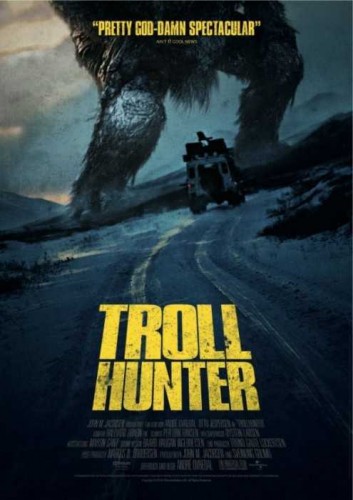
We can breathe a little easier here in America, because you won’t find this filthy bastard on our shores. His name is Hans, and he was last seen haunting the frozen fjords of Norway. It’s a good thing too. Let the vikings have him! We don’t want that kind of trouble here.

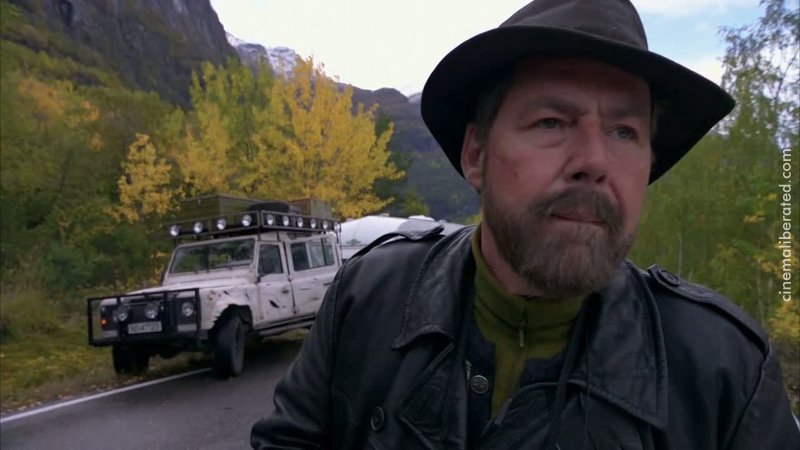
Don’t be fooled by clever disguises. It ain’t bears this man is hunting (though that is what he would have us believe). No, it’s trolls. That’s, right. Hans hunts trolls.

Now you might have thought, as I did, that trolls don’t actually exist. And that is just what the documentary film crew that made this movie thought too. But they found out for themselves just how wrong they could be. These things actually do exist, and they live in the mountains and forests of Norway.

And this dirty son-of-a-bitch kills them.

Now you would think a species so rare as to be regarded by most folks as mythical would be something you’d want to preserve and protect, but no, not this man, nor the Norwegian Troll Security Service (TSS). It seems the government of Norway hires him to slay any trolls that venture near civilization. Sometimes they even send him into troll territory where Hans engages in murder on a scale worthy of a war crimes trial.

All of this is top secret of course.

So, how do we know about it? Hans lured a team of college film students into joining him on his quest to commit cryptocidal atrocities. Oh he pretended that he didn’t want them to follow him at first, but at a critical moment Hans shouted the word ‘troll’ and ran away.He then let the poor innocent babes wheedle the truth out of him. It isn’t often that such violent men resort to passive aggressive manipulation, but apparently Hans knows no shame, not even that of a serial murderer.

This is Hans

As with so many violent criminals, it seems that Hans longs to share the guilt of his awful deeds. Like a master assassin teaching his tricks to apprentice killers, Hans shows the college kids how to track trolls, find them in their lairs, and even kill them. Hans even takes care to introduce them to a scientist who explains in excruciating detail just how painful the troll hunter’s murderous methods really can be. Everyone knows that light kills trolls. What they don’t know is just how much the troll suffers when it hits him. At least until this terrible man, Hans, shares the insight with his chosen band of accomplices.

Of course there is flaw in Hans’ plan.

The government of Norway doesn’t want anyone filming trolls, much less its hired thug doing their dirty work for them. What exactly happened to the film crew, no-one will ever know. You see the video tape of their documentary just showed up, but no-one really knows what happened to the college kids who made it.

Nor does anyone really know the current whereabouts of Hans.

Now some might say that this film bears a striking resemblance to the Blair Witch Project, and some might even say that film was fake. But then again some people serve mild salsa to dinner guests or sell crack to innocent children. Remember that when some pimply faced snot-fer-brained kid tries to wax skeptical on you about this film. Some folks don’t even think jackalopes are real. Try telling that to any small game hunter in Wyoming!

Anyway, the point is that this isn’t just any movie. It’s just the tip of the mixed metaphor, and the truth is staring us all right in the face. It’s out there somewhere dammit.

…armed with UV rays.

So, I take back what I wrote earlier; we are not really all that safe here in America.  People everywhere should be afraid of this terrible bastard. Hans could be anywhere at this point, and who knows how many people he has with him now. I think everyone should watch this documentary and take good care to commit this man’s face to memory. Lean his tactics and his habits, and be on the look-out.

The fate of Chupacabra and the Jersey Devil may well depend on it.

71.271549 -156.751450

Share this:

  • Tweet
  • Share on Tumblr
  • Click to print (Opens in new window) Print
  • Click to email a link to a friend (Opens in new window) Email
  • Click to share on Reddit (Opens in new window) Reddit
Like Loading...

Meeting Your Maker in a Ridley Scott Movie: Once Again As Farce (Spoilers)

12 Tuesday Jun 2012

Posted by danielwalldammit in Movies, Religion

≈ 16 Comments

Tags

Blade Runner, Faith, Film, God, Movies, Origins, Prometheus, religion, Ridley Scott, Science

Prometheus

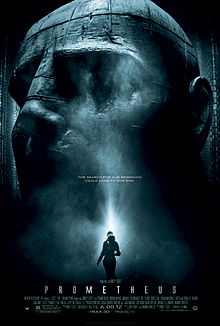
Prometheus opens with great promise delivered on a grand scale. It is a quest to find the origins of life on earth, a journey to meet our makers. I had entered the theater primed with expectation (the promos for this film were brilliant), and upon learning where the story would take us, I smiled and settled into my seat. Seriously, I couldn’t wait to see what new directions Ridley Scott might take with this wonderful theme.

Sadly, the answer was right into the ground.

Because the big crash of a spaceship at the end of this flick was the perfect metaphor for the movie as a whole. It was just one big train space-ship wreck.

…complete with main characters running directly away from the rolling wheel-like space ship instead of jumping to the side. Yes, they actually did that. Seriously, how does a movie studio spend so many millions of dollars on special effects and star power only to miss the fact that they put a Loony Tunes gag in the middle of the dramatic climax of the story? Or do they just think we are that stupid?

Maybe we are. …Damn!

Don’t get me wrong. I like really cool special effects as much as the next guy. But I also like an interesting story. Is it really too much to ask that they appear in the same film?

Ridley Scott has produced such films! Alien was such a film. More to the point, Blade Runner was such a film. And one of the best things about Blade Runner was its use of the very same theme.

Blade Runner

Blade Runner was a classic Philip K. Dick story. Few authors could make something so fantastic speak to people in such personal ways, and Ridley Scott transmitted that to the screen brilliantly. Do you remember Roy’s encounter with his maker? Do you remember watching as this replicant interrogates his very creator, trying desperately to wheedle extra time out of the very man who had chosen to the hour of Roy’s demise? And do you remember how easily the story acquired its deeper significance, that moment when a simple plot point about a creature trying to extend its life acquired philosophical significance?

For all his artificial nature, Roy stood before his maker asking questions about the very meaning of mortality. They were questions we could all recognize. Questions that touched deeply on what it means to be human, what it means to live for only a little while.

And in that moment when the character of Roy stands before his maker and demands to know the reason for his imminent death, he became so very human.

…still more so in the moment of his passing:

What makes Roy’s story so compelling is not merely that we can see the metaphor, but that the metaphor is used to tell us something about our own humanity. It is not merely the loss of personal life that Roy mourns. It is also the passing of his experiences into oblivion, experiences that could be of real value to someone. He is a remarkable character, to be sure, and the world will lose something as he passes.

…just as it does with the passing of each of our loved ones.

…just as it will for each and every one of us.

Roy

Roy meets his maker to confront his own mortality, and he takes us along for the ride. We are there, not just to witness the action, but to share in the meaning of that encounter. …perhaps even to share in the crime of deicide when Roy executes his own verdict on his maker.

And what of Prometheus?

Grandfather?

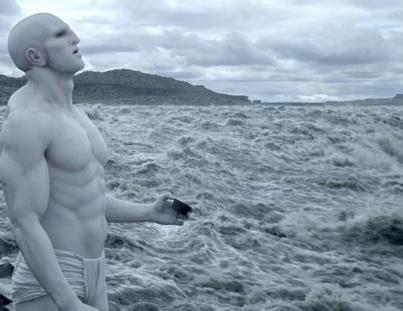
As Roger Ebert tells us, Prometheus raises questions about the origin of human life, presenting us with a version of the panspermia hypothesis in which all of life on earth is begun through the apparent suicide of a pale muscular alien. In the opening scenes that alien appears alone on a barren plant, his spaceship leaving without him. With all the solemnity of a priest performing a great ritual, the alien consumes a mysterious substance, and it ravishes his body. As the mysterious alien falls into a rushing river, his body disintegrates, releasing the seeds of life into a new world.

Was this earth, as Roger Ebert suggests? Ridley Scott tells us that it could be any planet, but of course the point of the scene is to raise the possibility. This might have been how life on earth started, so we are asked to believe. More to the point, it may well be how life on planet earth will begin anew, if the “engineers” as these aliens are called, should choose to return.

That is the possibility uncovered by our main characters in Prometheus. They set out in a quest to find the engineers, to speak with our very creators only to find them bent on our destruction. And thus the a question about the origin of life on earth transforms into a question about the possibility of its imminent demise. The two questions are really the same, because each is essentially a question about the motives of the engineers.

Why?

Shaw

This SHOULD have been a brilliant movie. What makes it so sad is the inattention to narrative detail. The scientists do not act like scientists, especially the geologist who’s rabid anti-intellectualism belies his choice of career. Seriously, didn’t someone on set know that geology is a science? But of course this is a side character, and his flaws are forgivable. What of the main characters?

Three people drive the quest to find the engineers in Prometheus. Two archaeologists, Elizabeth Shaw and Charlie Holloway (played by Noomi Rapace and Logan Marshall Green) initiate the quest to find the engineers as a result of the result of their own findings. Holloway is so intent on speaking with the engineers that he engages in reckless actions upon landing. Believing the engineers to be dead, he drowns his sorrows in a bottle. I suppose we are meant to appreciate the irony of a scholar lamenting the greatest archeological find in the history of the field, but I for one could not get past the absurdity of it. Shaw could almost have served as a voice of reason were it not for her complete irrelevance in the lead-up to the final conflict. No-one listens to her (least of all her husband and partner Holloway), right up until she ends up as the sole human survivor of the expedition.

…which is to say that no-one ever listens to her.

And then of course there is Peter Weyland (played by Guy Pearce). A wealthy old man facing the end of his own life, Weyland funds the expedition for the sole purpose of extending his life. How he came to the conclusion that the engineers would extend his life is beyond me? I think it was beyond the writers themselves? Whatever its origins, Weyland holds onto this assumption despite all evidence to the contrary. Long after it has been made clear that the engineers bear no goodwill towards their creation, Weyland chooses to speak with one of them. It was a foolish mistake.

…and it was his last one.

And here we have the crux of the problem.This movie doesn’t really raise any questions about the origins of life at all. The prospect that life on earth might have its origins in the stars is simply a premise designed to kick-start the action. Nothing about the unfolding action sheds any light on the significance of that premise, nor does it begin share that significance with anyone in the audience.

Space Lab

The central meaning of the encounter with the engineers rests on the irrational presuppositions of Holloway, Shaw, and Weyland. Each of them has loaded the event with significance particular to their own stories, their reasons for doing so barely explored in the course of the film. This sort of approach might have worked with some earnest character development, but Prometheus was too busy wowing us with majestic visuals and sudden moments of terror. In the end, this film attaches no genuine meaning to the event at all.

And so the encounter with the makers of humanity does not quite resonate the way it could have. The encounter with the engineers is an intrinsically interesting moment, one spoiled terribly by the lack of a meaningful storyline to carry us through it. Unlike Roy, these characters bring no great questions to their creator; seeking instead to learn whatever he chooses tell them. But he tells them nothing, electing instead to begin smashing up its creation.

…which actually sums up this movie pretty well.

***

I have to thank my friend Michael Kucan for helping me to remember some of the more irritating details of this movie. I would also like to recommend aknittysociety blog, which contains a wonderful analysis of race and gender in Prometheus. I should also say that in my thoughts about Blade Runner were rather strongly influenced by entry in Roger Ebert’s Journal, I Remember You.

71.271549 -156.751450

Share this:

  • Tweet
  • Share on Tumblr
  • Click to print (Opens in new window) Print
  • Click to email a link to a friend (Opens in new window) Email
  • Click to share on Reddit (Opens in new window) Reddit
Like Loading...

Great Movie Villains, Volume IX: That Witch With a Bow!

30 Wednesday May 2012

Posted by danielwalldammit in Movie Villainy, Movies

≈ 11 Comments

Tags

Film, Hunger games, Jennifer Lawrence, Movies, Satire, Sports, Suzanne Collins, Villainy

Katniss Everdeen
(Avoid at all costs!)

Now some of you may think the title to this piece is a little harsh, maybe even disrespectful. But I’m telling you, if you had seen the movie I just saw, you might be calling her something a little to the left of the term I actually used.

There is a word for her kind, and it rhymes with itch!

I’ve been hearing about this movie for months, and I was really looking forward to it. The title alone had me sold from the beginning. It sounded like a nice sports flick, maybe with a bit of a charity angle worked in. How can you not love a movie with sports and philanthropy? I was really looking forward to this.

I missed a minute or two at the beginning, but as I understand it, there were supposed to be 24 kids in this contest; it’s winner take all. Great! I love a nice high-stakes contest. So, I can’t wait to learn how the games are played and watch our hero develop character and depth on the way to becoming a true champion.

What followed was the most vulgar display of brutality and poor sportsmanship that I have ever seen.

Ever!

Run!!!

You see, the lead actress is not down with the plan. Katniss Everdeen (played by Jennifer Shrader Lawrence) doesn’t even want to hold her team-mates hand in the opening ceremonies. With all the people from her home town pulling for the two of them, she has to be talked into this simple gesture of solidarity.

As if that wasn’t enough, you should see what this spoiled little princess does when some television executives don’t give her enough attention. All I can say is you better stay away from the orchard fruit when this girl wakes up on the wrong side of the bed.

I mean seriously, …sounds a bit like glitch!

Katniss doesn’t even stick around for the start of the game. When the pepper meats the paprika, this spoil-sport takes off and runs the opposite direction. It works out in her favor though, because some sort of disaster befalls the other contestants. I really couldn’t figure out what it was that happened, because the cameraman was awfully shaken up by the whole thing. That sequence was really hard to follow, but the one thing that I know about the opening sequence to the games is that while other athletes were playing and dying, our main character was doing her damnedest to get the hell out of Town.

Cowardly stitch!

The people who run the games had to trick little Katniss back out onto the game field, and even then she spent most of her time hiding in the trees. When some of the other boys and girls came to welcome our wayward girl back to the contest, she wouldn’t even come down to meet them. Worse than that, Katniss soon proved just how far she was willing to go to prove herself the worst sport ever to disgrace any game ever. She knocked a big nest of wasps down onto her fellow contestants as they slept below her.

It was awful. One of the girls died. I can only assume the poor girl was allergic or something. That’s right, Katniss killed one of the other contestants. I don’t even think she was sorry.

Knows a guy named Mitch!

In fact, Little Miss spoil-sport was just getting started with the wasp nest. Next, she blew-up the food stores for all the contestants (apparently the games had an endurance element to them). Katniss followed that up by killing yet another of the other contestants just as her new best friend falls prey to some terrible accident. That’s right, while the innocent little girl dies an unfortunate death (the cause of which I never quite understood), our girl Katniss was busy shooting another contestant with an arrow.

Yes, it was fatal.

Rue (Died of an Unfortunate Coincidence)

Up to this point, you could perhaps have given Katniss the benefit of the doubt. She had no way of knowing about the one girl’s allergies, and her friend, Rue? Well Katniss can’t really be blamed for that, …I don’t think. I don’t even think you can blame her for disaster that befell the other contestants. But when you shoot a guy with an arrow, there just isn’t much doubting your intent. By this point it’s damned clear. Our girl Katniss is a damned murderer.

An itchy murderer!

I can only guess as to the intended nature of the games, but what difference could that possibly make? When you invite this girl to the party, it turns into a war of attrition.

The whole thing comes to a head when one of the contest finalists falls prey to a pack of wolves. Guess how our hero helps out!

Go-one guess!

She kills the guy. I mean how cold do you have to be to refuse help to a man being eaten by wolves?

Cold! I tell you. Stone cold pitch!

So, after all the murder and mayhem, the game officials make one very simple request, that our girl and the one person she hadn’t put under the turf should actually play off one final round. You would think the least she could have done is to grant this one simple request, what with a whole nation watching and the fate of the hungry poor hanging in the balance!

How does little miss Ever-mean react? She threatens to poison herself instead.

You have to wonder, what the hell is she afraid of? It’s just a contest! Can’t she just play one round of this game after all that’s happened? Couldn’t she just give the audience just a little taste of the contest they were supposed to be watching all along?

You would think that wouldn’t be too much to ask. But no. With a single injured opponent, this girl STILL wouldn’t step up and give it a go. Instead, she gets out some poison berries, cons the other contestant into some sort of suicide pact, and gets ready to Jim Jones the whole affair.

The Hungry are Still Hungry
Bet on it!

And do you know how the people behind the games respond to this pathetic display of passive-aggressive manipulation? They give-in. they totally give-in! In some typical lefty-liberal display of everybody-wins nonsense, the fools declare a shared victory, thus depriving a whole nation of viewers of the chance to watch even one, JUST ONE, actual game.

I can only assume the hungry didn’t get their donations!

Damned Dirty Ditch!

71.271549 -156.751450

Share this:

  • Tweet
  • Share on Tumblr
  • Click to print (Opens in new window) Print
  • Click to email a link to a friend (Opens in new window) Email
  • Click to share on Reddit (Opens in new window) Reddit
Like Loading...

Happy Juzo Day, And Damn You to Hell if you Don’t Know What I’m Talking About!

15 Tuesday May 2012

Posted by danielwalldammit in Movies

≈ 19 Comments

Tags

A Taxing Woman, Film, Japan, Juzo Itami, Minbo, Movies, Satire, Tampopo, the Funeral

Juzo Itami

Juzo Itami’s mother inflicted him on the world on May 15th, 1933. Sadly, he chose to show mercy upon that world on December 20, 1997. In the interim, Juzo Itami directed some of the most biting satire ever to hit the movie screen. He was wonderful! Shall we describe a few of his better films?

(Damn right, there are gonna be spoilers!)

***

In Itami’s first film, Chizuko (played by, Nobuko Miyamoto) and her husband Wabisuke (Tsutomu Yamazaki) must hold a services for her recently departed father. THE FUNERAL (1984) takes us through the next three days in the life of this couple and their family. The Shinto traditions may seem strange to those of us unfamiliar with Japanese custom. The experience of loss and the awkwardness of dealing with it in public will not.

The Funeral

The first obstacle Chizuko and Wabisake face certainly rings true for me. Amidst their sadness and loss, our lovely couple must learn quickly what is expected of them during the coming funeral. Luckily, they have a tape which provides plenty of good advice on what to say to guests. With wooden precision, the couple practice their lines, adding a trace of performance anxiety to their grief. The first guests to arrive express their condolences fittingly enough in language perfectly matching the suggestions of the tape.

Itami captures the emotional cycles of a funeral with marvelous sensitivity. One does not stay sad for three days. So when those first guests arrive, the family is in the midst of fond remembrances, laughing and smiling at stories of the departed. then suddenly there they are, outsiders who have themselves screwed up the courage to come and be part of this terrible event, …and suddenly the smiles seem out of place. In but a moment, grief returns to the family and the chain of events continues as one might expect.

…well, for the most part.

This is a slow moving film, one which invites you to linger on the details. In one of my favorite scenes, the whole family kneels down in prayer. As incense burn and a priest chants, the camera pans slowly across the backside of the grieving family members. Moving from character to character, this simple shot provides us with a wonderful study in discipline and loss of cultural knowledge. The elderly are perfectly still, their feet tucked neatly behind them. The middle-aged get by with a little fidgeting here and there. The children? Their posture is a train wreck. (A Japanese high-speed train wreck.) And the whole scene gets comes to a climax when the phone rings in the midst of this solemn ritual. It just keeps ringing. When a family friend finally gets up to answer, he quickly finds that his legs have fallen asleep, and, ….well, it’s just a little awkward.

As a side note: I should mention that I have shown this movie to my students back in Chinle a couple of times. I should say that Navajo ceremonies are all-night affairs during which people are expected to sit cross-legged with their back against the wall of a Hogan. This scene always earned a lot of laughter, and more than a few knowing smiles.

Alright, I’ve ruined enough of this movie for those who haven’t seen it yet. If you want to know more, then you shall have to watch it yourself!

***

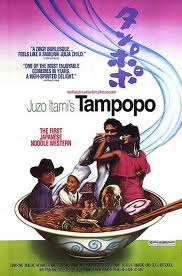
Tampopo

Itami’s second movie is TAMPOPO (1985), which has been described aptly enough as “the first noodle western.” The connection is firmly established as we are introduced to Goro (Tsutomu Yamazaki again), a truck driver in a cowboy hat, his big-rig sporting a set of steer horns. When Goro and his side-kick stop at an isolated noodle stand for dinner, he gets in a fight with a number of locals. Goro awakens to find himself sleeping the damage off at the home of the shop owner Tampopo (Nobuko Miyamoto).

Yes, it’s the same couple playing the leads here. The lovely Miyamoto was in fact Itami’s wife. As to Yamazaki, I should think the wisdom of casting him in a lead role speaks for itself.

Let us get back to this wonderful movie!

When Tampopo asks Goro how he likes her noodles, our straight-shooting hero cannot tell a lie. His critique is as thorough as it is devastating, and with that he establishes not only her failure as a cook, but his own mastery of the subject. Ashamed and impressed, Tampopo begs Goro to teach her how to make a proper bowl of ramen. Reluctantly, he accepts to task of teaching her.

What follows is a perfect parody of a movie theme familiar in both westerns and samurai films, the process by which a true master trains a promising young student. Goro does not merely teach Tampopo how to cook, he subjects her to strenuous exercise, helps to her to put together the perfect recipe, and (with the help of another character) redesigns her whole shop. The two of them will use bribery, espionage, and outright heroism in the effort to get everything just right. At the films end, Goro and his sidekick leave Tampopo with her newly renovated shop full of well-earned and very happy customers, driving their big-rig into the sunset.

Gozo and Tampopo

I am going to resist the temptation to describe any of the scenes here in great detail, but I must say that it is the details that make this movie wonderful. Food does not simply supply the central plot; it serves as the central focus of every single scene. If the characters are not talking about food, they are preparing it, or they are eating it. Most scenes in this film manage to do include all of the above.

If you watch this film, you will hungry when it’s over. Don’t try to fight it! You could stuff yourself full with a feast and watch this movie afterwards. You WILL be hungry again at its conclusion.

It really is in the details of each individual scene that Itami’s humor takes on its biting edge. Itami wanders off of the central plot several times during the course of Tampopo. In some cases the camera literally veers off and follows an apparent extra into the next scene. And in those scenes, everything from the culture of Connoisseurship, to proper etiquette, and even the sanctity of motherhood fall prey to Itami’s ironic treatment. If his main plot-line is a gentle ode to the genres of Samurai films and American westerns, many of these particular scenes are brutally satirically send-ups of Japanese society. Note a few of those send-ups will ring true for the rest of us as well.

Most people do seem to remember the sex scenes (and no I am not telling you why). You may call me a bastard if you wish. I don’t mind.

Tampopo is easily my favorite film of all time. It stole that spot from A Clockwork orange the day I saw it well over two decades past; it has remained there ever since.

***

A Taxing Woman

As one might expect, the lovely Miyomoto plays the lead in Itami’s next film as well, A TAXING WOMAN (1987). As a relentless tax inspector in a land where cheating on one’s taxes is expected, Ryōko Itakura (Miyomoto) has her work cut out for her when she goes after Hideki Gondō (played by… Do I really need to say it? Come on, pay attention!). Gondo owns a string of unsavory hotels, and Itakura is suspicious that he is not paying his full share of the tax rate. So, the stage is set for a showdown.

Itakura initially fails to turn up any evidence of tax evasion, a fact which is almost suspicious in itself. …okay, let’s just drop the ‘almost’; it just is. Naturally, she redoubles her efforts. In time, she and Gondo will develop a grudging respect for one another, treating their conflict as though it were a strategy game and each of them a master in their own right.

I will not tell you who wins.

Ha!

I must admit that I have not seen the sequel to this film, A Taxing Woman’s Return. I think that shall have to go on my list of summer projects.

***

Minbo

One could hardly describe MINBO NO ONNA (THE GENTLE ART OF JAPANESE EXTORTION) (1992) as Itami’s greatest film, but it is an amazing accomplishment in its own right. This time, Itami’s target proved to be none other than the Japanese mob. Miyomoto plays a lawyer, Mahiru Inoue. Inoue leads a small team of inexperienced employees in a campaign to thwart a gang of yakuza in its efforts to extort money from a large hotel. It is a long and difficult battle, but she emerges victorious.

What is most striking about this movie is the portrayal of yakuza. Gone are the pretensions to honor and nobility. Forgotten are the images of modern-day samurai or highly-skilled ninjas. These men are simply thugs, brutal, vicious, cruel, and cowardly. Indeed, the yakuza of this film carry little or no redeeming qualities. The one-dimensionality of these villains would normally strike me as a real flaw, and perhaps it is. But set against the backdrop of countless movies depicting mobsters (yakuza among them) in glowing terms, I could not help feeling proud to see someone who had the courage to portray them without all the flattery that usually accompanies the subject. It is a portrayal that took great courage to put on the screen.

Sadly, I do not think Hollywood will be doing anything like this in the near future. The whole of American cinema seems to have a big old girlie-crush on the mob, and it won’t be growing out of it soon.

Sadder still, Itami seems to have paid the price for his courage. He was attacked, beaten and slashed in retaliation for making Minbo. As Itami lay in the hospital recovering from his wounds, the public outcry led to crackdown on criminal activities associated with the yakuza. Rumors that his death by apparent suicide may actually have been a murder circulate to this day. The facts surrounding Itami’s death are something of a mystery at this point. The only thing for certain about it is that it came way to soon, except perhaps for the yakuza.

But of course today is not Itami’s Death Day. It is his birthday. And it is a damned good day to celebrate the work of this incredibly brilliant film-maker.

***

Treat yourself to something brilliant today and watch Tampopo.

Be sure to leave room for desert.

71.271549 -156.751450

Share this:

  • Tweet
  • Share on Tumblr
  • Click to print (Opens in new window) Print
  • Click to email a link to a friend (Opens in new window) Email
  • Click to share on Reddit (Opens in new window) Reddit
Like Loading...
← Older posts
Newer posts →

Top Posts & Pages

  • Hostiles and Spoilers: A Magic Studi
    Hostiles and Spoilers: A Magic Studi
  • I'll Just Leave This Here
    I'll Just Leave This Here
  • When Sex Falls Out of the Performance
    When Sex Falls Out of the Performance
  • The Erotic Heritage Museum in Las Vegas: A Very NSFW Review
    The Erotic Heritage Museum in Las Vegas: A Very NSFW Review
  • A Godless Reason for the Season
    A Godless Reason for the Season
  • Dancing for the Dead - Movie Review
    Dancing for the Dead - Movie Review
  • An Uncommon Security Guard: Dave Eshelman, AKA 'John Wayne'
    An Uncommon Security Guard: Dave Eshelman, AKA 'John Wayne'
  • Southern Paiutes as Portrayed in Las Vegas Area Museums.
    Southern Paiutes as Portrayed in Las Vegas Area Museums.
  • Race Card Recursion: A Game of Social (In-)Justice
    Race Card Recursion: A Game of Social (In-)Justice
  • The CSS Shenandoah
    The CSS Shenandoah

Topics

  • Alaska
  • Animals
  • Anthropology
  • atheism
  • Bad Photography
  • Books
  • Childhood
  • Education
  • Gaming
  • General
  • History
  • Irritation Meditation
  • Justice
  • Las Vegas
  • Minis
  • Movie Villainy
  • Movies
  • Museums
  • Music
  • Narrative VIolence
  • Native American Themes
  • Philosophy
  • Politics
  • Public History
  • Re-Creations
  • Religion
  • Street Art
  • The Bullet Point Mind
  • Travel
  • Uncategorized
  • Uncommonday
  • White Indians
  • Write Drunk, Edit Stoned

Blogroll

  • American Creation
  • An Historian Goes to the Movies
  • Aunt Phil's Trunk
  • Bob's Blog
  • Dr. Gerald Stein
  • Hinterlogics
  • Ignorance WIthout Arrogance
  • Im-North
  • Insta-North
  • Just a Girl from Homer
  • Multo (Ghost)
  • Native America
  • Norbert Haupt
  • Northwest History
  • Northy Pins
  • Northy-Tok
  • Nunawhaa
  • Religion in American History
  • The History Blog
  • The History Chicks
  • What Do I Know?

Archives

  • December 2023
  • November 2023
  • June 2023
  • April 2023
  • February 2023
  • December 2022
  • November 2022
  • October 2022
  • September 2022
  • August 2022
  • July 2022
  • June 2022
  • April 2022
  • January 2022
  • December 2021
  • November 2021
  • October 2021
  • September 2021
  • August 2021
  • June 2021
  • May 2021
  • March 2021
  • February 2021
  • January 2021
  • December 2020
  • November 2020
  • October 2020
  • September 2020
  • June 2020
  • May 2020
  • March 2020
  • February 2020
  • January 2020
  • December 2019
  • November 2019
  • September 2019
  • August 2019
  • July 2019
  • June 2019
  • May 2019
  • April 2019
  • January 2019
  • December 2018
  • November 2018
  • October 2018
  • September 2018
  • August 2018
  • July 2018
  • June 2018
  • May 2018
  • April 2018
  • March 2018
  • February 2018
  • January 2018
  • December 2017
  • November 2017
  • October 2017
  • September 2017
  • August 2017
  • July 2017
  • June 2017
  • May 2017
  • April 2017
  • March 2017
  • January 2017
  • December 2016
  • November 2016
  • October 2016
  • September 2016
  • August 2016
  • July 2016
  • June 2016
  • May 2016
  • April 2016
  • March 2016
  • February 2016
  • January 2016
  • December 2015
  • November 2015
  • October 2015
  • September 2015
  • August 2015
  • July 2015
  • June 2015
  • May 2015
  • April 2015
  • March 2015
  • January 2015
  • December 2014
  • November 2014
  • October 2014
  • July 2014
  • June 2014
  • May 2014
  • April 2014
  • March 2014
  • February 2014
  • January 2014
  • December 2013
  • November 2013
  • October 2013
  • September 2013
  • August 2013
  • July 2013
  • June 2013
  • May 2013
  • April 2013
  • March 2013
  • February 2013
  • January 2013
  • December 2012
  • November 2012
  • October 2012
  • September 2012
  • August 2012
  • July 2012
  • June 2012
  • May 2012
  • April 2012
  • March 2012
  • January 2012
  • December 2011
  • November 2011
  • October 2011

My Twitter Feed

Follow @Brimshack

RSS Feed

  • RSS - Posts
  • RSS - Comments

Enter your email address to follow this blog and receive notifications of new posts by email.

Join 8,075 other subscribers

Blog at WordPress.com.

  • Subscribe Subscribed
    • northierthanthou
    • Join 8,075 other subscribers
    • Already have a WordPress.com account? Log in now.
    • northierthanthou
    • Subscribe Subscribed
    • Sign up
    • Log in
    • Report this content
    • View site in Reader
    • Manage subscriptions
    • Collapse this bar
 

Loading Comments...
 

    %d