I’m often amused at the things that people say in defense of Donald Trump and his supporters. Okay, I’m as likely to be outraged as I am amused, and often I manage to be both, but for the moment, let’s concentrate on the amusing part.
Plenty of time to be outraged later. We get new reasons with each passing moment of the Orange Reich!
One of the most amusing twists in the defending-Donald game has always been the angle many deplorables took on the Serge Kovaleski incident. This would be the disabled reporter that Donald Trump once mocked at one of his rallies. Trump supporters have long since settled on a standard line of defense against this criticism. They will say that Trump’s decision to effect the speech and physical demeanor of a disabled person is actually a common bit that he runs on lots of people. They can even provide evidence for this in the form of several video clips in which Donald Trump mocks a variety of people in a similar way. So, the argument runs that Trump was not really mocking Kovaleski for being handicapped, because he actually mocks lots of people (including those who don’t appear to be handicapped) by pretending that they are handicapped.
…which would of course make him as juvenile as he is cruel.
This whole line of reasoning is a REALLY fascinating defense of Trump, because it amounts to the claim that Donald Trump actually makes fun of disabled people all the time. How this is supposed to prove he wasn’t mocking the particular individual, Serge Kovaleski, for being disabled is beyond me, though perhaps the notion here is that Donald Trump wasn’t consciously making fun of Serge for being disabled, because Donald Trump wouldn’t have been happy to mock him in the same way whether he was disabled or not.
It’s a particularly damning defense.
Seriously, how pathetic is that? That the best thing you can think to say about a man is that he wasn’t making fun of a particular disabled person, because he actually does that all the time.
…also, there is the whole matter of Donald telling us we should see the man before embarking on the whole charade. A reasonable person might take that as an indication that the coming display was a bit more than a coincidence, that it was perhaps meant to illustrate something about his actual demeanor of the person in question. A reasonable person might take it that way.
Not a deplorable.
But anyway, I really do think the most amusing thing about this really is the notion that it’s somehow better if this is a standard act in Trump’s bag of tricks. Of course this is also one of the most sad things about Trump and the politics of trumpetry; the normalization of things that ought to be outrageous. This particular defense doesn’t just ask us to let the whole thing go, it asks us to think of it as a normal thing, an acceptable mode of public engagement for a major politician.
…and thus the movement to make America great again serves in practice to make it a more pathetic place.
***
The nation recently got a whole new dose of that pathetic quality from Roseanne Barr, who, as we all know by now, recently chose to mock an advisor from the Obama administration in racist terms. Valerie Jarrett had her time in the cross-hairs of right wing hacks quite some time ago, and apparently, she is still a favorite target abuse among those whose pornography consists of mocking all things connected to Obama. At any rate, Roseanne chose to suggest that Jarrett was the product of a union between the Planet of the Apes and the Muslim Brotherhood.
There is of course a lot wrong with Roseanne’s joke, but the thing that most seem to have focused on was the racist imagery. The equation of African-Americans with apes has long been one of the major themes of racism, and that theme flourished in political-pornography aimed at the Obama family. Given Jarrett’s own African-American ancestry, it’s not hard to see where Roseanne was going with this.
We all know the fall-out by now. Barr’s show has been cancelled. She apologized. She also made excuses, and she now seems to believe she’s been mistreated. And so on…
One of the more pathetic angles in this already pathetic story is the effort to equate Roseanne’s behavior with that of various left-wing personalities. Much like the right wing response to the Kovaleski incident, those attempting to defend Roseanne show little but their own lack of concern with the very themes in question.
Several have tried pointing to Cathy Griffin, asking why the left didn’t condemn her for posing with a fake severed head. Why doesn’t this work? Among other things, because a lot of people on the left really did condemn Griffin’s gag. Right wingers keep pretending this isn’t so, but it is.
Then of course, there are a variety of people (among them Bill Maher, Keith Olbermann, and Joy Behar) who have said horribly mean things about Donald Trump over the years. Bill Maher, in particular, has been singled out, because he has apparently compared Donald Trump to an Orangutan. No matter how you slice this, it still comes up as pathetic whataboutism, but what’s particularly pathetic about this argument is that it misses the point. Calling someone an orangutan is rude, but calling an African-American woman an ape carries specific racist overtones. Does that seem like a double standard? Perhaps it does if you just ignore the entire history of racism. At the end the day, this argument proves little except that Roseanne’s defenders (who are at this point essentially Trump’s defenders) do not see racism as a problem. To them, Roseanne’s gaff was simply rudeness, nothing more.
Now add Samantha Bee into this mix. What did she do? She called Ivanka Trump a ‘c*nt’. This is at least a little bit more of a concern insofar as that particular term is perhaps the most derogatory insult you can use in American English, and that fact alone suggests use of the term may not be the most helpful thing someone can do if they care about the status of women in American society. Still, does it rise to the level of toxicity one finds in racial stereotypes equating African-Americans with apes? No. Not even close. Once again, the argument proves very little, other than that those fielding it don’t really have a problem with racist imagery at all. To them, this is a battle over rudeness, which is why the efforts they keep making to field a charge of hypocrisy against those on the left focus on rudeness more than social justice. They keep trying to accuse the left of violating its own principles, but they consistently mistake what those princples happen to be.
Of course this is just another example of the meta-hypocrisy shuffle. The right wing is fielding the charge of hypocrisy in order to cover up their own hypocrisy. While we debate whether or not any particular comic can say this or that rude thing, Trump’s defenders celebrate him for that very quality.
…but perhaps, this is fitting after all.
The king (and that is what Trump is to his supporters, not a President, a king) is entitled to certain privileges. Perhaps being able to insult people as he sees fit is, in the mind of the deplorables, simply one of the great privileges to which a man of his stature is entitled. What makes Donald Trump great in their eyes is precisely what would make anyone else terrible.
There are many reasons to reject the kind of rhetoric, not the least of them being the obvious foibles of what aboutism, or false equivalence, or the tu quoque fallacy, or any number of idiotic twists in this hollow game. Yet, the most disturbing thing about these arguments would remain just how little appreciation those making these arguments seem to show for the toxic impact of racism in America. Each of these defenses shows us mainly that those making them do NOT see racism as a serious problem.
…which is why I say this is a damning defense of Roseanne.
Of course the real question here is who will be damned by it? Those making these arguments reveal their own racism in making them, but if they succeed in transforming the issue into one of mere rudeness, then the public at large loses. If these idiots succeed, then we damn ourselves to a world in which Roseanne’s joke is just another form of edgy comedy.
It’s always been odd to me, seeing how the history of American slavery makes some of my fellow white people uncomfortable. You can see their discomfort in the various ways folks try to minimize the significance of slavery. Sometimes, it’s enough to put slavery in the past, to grant that it was an horrible crime, but to imagine that crime taking place so far in the remote past and so completely resolved with the official end of slavery in that remote past as to be completely free of any political implications today. It’s a bit like the gambit, folks often play with the history of Indian-white relations – all the horrors of the past can be acknowledged, at least in the abstract, so long as you can contain their significance within the history books (and preferably kept well away from any of the more recent chapters). At other times, folks seem to come up with more elaborate schemes to pare down the topic of slavery until it fits into their personal comfort zones.
When I was in college, this kind of pop-racism generally took the form of an argument that Africans started slavery. They did it too, maybe even first, so the argument would go, and of course there was (and is) an element of truth to these claims, but it’s a truth poorly served by its rhetorical packaging. It would be fair to say that slavery existed in Africa (as it did Europe, and indeed most of the world) prior to the founding of the Trans-Atlantic slave trade. Just how much those prior-forms of slavery explain the booming industry that would come is another question. All too often I used to hear people pushing this narrative and think they wanted far too much from the point than it would bear. What they wanted was a kind of absolution, a story that diminished the responsibility of Euro-American peoples for the tragedy of the slave trade. At the very least, they wanted to share the blame with some other groups.
And I always wondered why some of these people seemed to feel personally implicated in the matter? What do you get out of this, I would find myself asking? How does it help you if this story goes to the discredit of someone else’s ancestors? The answer, I think, is (predictably enough) racism. For those who see the world through the lens of race, the disgrace of their ancestors is a disgrace to them personally, and a case against the moral character of their own kind is a direct personal attack. I think this is also the key to common refrains about ‘white guilt’ and ‘liberal guilt’. I’ve never seen liberal politics as an expression of personal shame, but I do think some of our critics are incapable of seeing liberal politics in any other terms. Such people cannot right the wrongs of the past or work to overcome inequalities in the present; they must instead demolish their own consciousness of those wrongs and rationalize any inequalities they see in the present. It’s the just world hypothesis at work in a racist mind.
In recent years, the pop-racist response to the history of American slavery seems to have evolved a bit. The latest trend seems to be countering stories about the enslavement of Africans with those about the enslavement of Irish men and women, but I should say the trend isn’t even that focused. Time and again you can see people show up with stories about Irish slavery in response to contemporary concerns about African-Americans. Write a blog post or tweet a quick message about police abuse of African-Americans in the present-day and somebody may well just show up to tell you about the history of Irish slavery. It’s as if the prospect of Irish slavery isn’t just a stock answer to any questions about the enslavement of Africans; some folks find it useful as an answer to questions about literally any injustice experienced by African-Americans today. Once again, there is a grain of truth to the narrative, and once again, those producing it clearly want more from the story than the facts of the matter will furnish them.
What proponents of the Irish slavery narratives are talking about is the practice of sending Irish men and women to the Americas under terms imposing temporary servitude upon them. Most of these were indentured servants who agreed to a term of service in exchange for passage, but at least some were prisoners whose terms of service were imposed upon them as a means of punishment.
Okay, so we know all this.
There was a time when perfectly liberal college professors were happy to spell out the horrible conditions of indentured servitude, along with the abuse of Irish in this and other contexts. I used to work with a professor who made quite a point to ensure students learned just how terribly indentured servants could be treated. None of this was part of a racist agenda, and none of it was leveraged against the history of the trans-Atlantic slave trade. Far from fielding a rationale for minimizing the horrors of that slave trade, this was like the opening chapter of a long sequence on the horrors of the full slave trade that would come. Acknowledging both horrors (and many others) used to work just fine.
But that was then, this is now.
What is new? On the surface, what is new here is the use of the word ‘slavery’ to describe what was done to the Irish, but here as always the devil resides in the details. No, I am not linking to any of this literature, but proponents of the Irish slave narrative have worked hard to embellish every embelishible point; inflating numbers, adding stories about the defilement of white women forced to breed with African men, and of course complaining that liberals have hidden the trials of the Irish while pushing the trans-Atlantic narrative in order to keep African-Americans at the forefront of identity politics. With support from racist corners of the internet, some maintain the Irish story is greater in all respects. Who would deny it? Only a liberal, right?
Okay, I deny it.
More importantly, so do vast majority of historians doing work on the subject. Scholars have questioned many of the details put forward in the Irish slave narrative, but the central theme seems to be this, that at its heart, the Irish story really is a story about indentured servitude. Indentured servitude was by no means a benign institution, but it simply isn’t comparable to the chattel slavery associated with the trans-Atlantic slave trade. Most simply would not use the term ‘slavery’ at all to describe indentured servitude, even when it is imposed as a criminal sanction. And of course a good deal of the push-back of these narratives consists of efforts to unmask the clearly racist agendas of key proponents. This isn’t just a mistake, it’s a mistake a lot of committed white racists want people to make.
…which leaves me feeling all somehow.
I’m happy as Hell to see the comparison between indentured servitude and the trans-Atlantic slave trade shredded, and then shredded again. What does somewhat concern me is the equation of ‘slavery’ with the specific form of chattel slavery that took place in the trans-Atlantic trade. Simply put, we do commonly use the word ‘slavery’ in contexts that do not compare in the numbers or the horrors of that specific history. History books often speak of slaves in ancient civilizations many of which fell into that status through financial ruin, or debt. The literature on Indian-white relations is full of stories of ‘slaves’ captured and trade about through raiding practices, and of course the Spanish systems of the encomienda were never described as slavery. When in 1850 California passed a law enabling others to press California Natives into forced labor, that law was actually written up as if it were meant to protect those very Natives. And of course the system of debt peonage found in the post-war south (among many other places) could in practice pass for slavery.
Hell, that was often the point!
…to say nothing of the use of prison systems for purposes of reducing free blacks to forced laborers under the pretext of punishment for crimes, real or imagined.
The subject of slavery has always been broader than the specific history of the trans-Atlantic slave trade. We should not allow malicious people to equate every instance of forced labor with the scale of atrocity behind that trade, but neither should we restrict our own use of the word ‘slavery’ to that very trade. Abusive labor practices shade easily into forced labor, and once that threshold is crossed, real atrocities become much easier.
What specifically doesn’t work about Irish slave narratives is the direct comparison with the trans-Atlantic slave trade. It doesn’t match the scale of atrocity in that trade, either in numbers, or in the quality of treatment for the majority of those involved. This doesn’t mean that indentured servants, Irish or otherwise, were treated well, and it certainly doesn’t mean that people captured or pressed into forced labor in other times and places shouldn’t be a concern. What it does mean is that we shouldn’t let people use the suffering of their own ancestors as a means of diverting attention from that of others.
My title may seem like an oddly partisan blessing, but it’s more of a partisan curse. It’s not the worst form of damnation you could wish upon a person, but for some folks it oughtta be bad enough.
The curse is real though.
This happens.
Civil Rights activists must have felt the sting of this curse this last weekend as right wing America did its best to distinguish Colin Kaepernick from Martin Luther King, Jr. It seems, their efforts had been necessitated by publican of an image linking Kaepernick, Michael Bennett and Martin Luther King, all kneeling together. Outraged to see Kaepernick and MLK connected, plenty of folks took to the net to tell us Bennet and Kaepernick shouldn’t be put on the same level as MLK. Beyond that, cultural conservatives assured us that MLK was selfless and that Kaepernick is simply out for himself, that King was a patriot whereas Kaepernick hates America, and that MLK preached unity whereas Kaepernick is being deliberately divisive.
Heard that last one a lot this weekend.
I’m not old enough to remember MLK’s activism in its day, but I am old enough to remember cultural conservatives attitudes towards him before he became a national holiday, before you could find roads named after him all over America, before admiration or MLK became a forgone conclusion. And of course before conservatives began to claim him as one of their own. We heard many of the same things about Martin Luther King back then that are said of Colin Kaepernick today. Lots of folks were not so impressed with his patriotism. As to divisiveness? Hell, he could be so lucky as to be described as merely divisive! I grew up hearing stories about how MLK and other civil rights leaders were just trying to cause trouble, simply drawing attention to themselves. Things were getting better, plenty of people assured me. Those activists were simply making things so much worse. Divisive? Hell, MLK that would have been an improvement over the things said of him at some of the dinner tables I’ve attended.
It’s a poetic injustice, really, seeing Martin Luther King transformed into a means of silencing black activists. He’s been held over the heads of the Black Lives Matter movement for some time now, and thrown in the face of just about any African-American deemed a little too disruptive by conservatives, especially by those conservatives moderate enough to think of they’ve learned the lessons of the civil rights movement. Gone are the days when cultural conservatives would spit ‘commie’ after hearing the name of Martin Luther King. Now, being more comfortable with his legacy, they spit his name at any black activists they find more threatening today.
That’s gotta be a special kind of Hell, to be used against those who carry on your legacy? If so, it’s a special Hell reserved for people who’ve earned a lot better.
What I think a lot of moderate conservatives and a good deal of middle-of-the-road America likes about MLK is the notion that we should be color blind. Some folks may even mean it. Others just like the prospects of using this principle against social justice warriors, affirmative action programs, and any number of left wing causes that ask us to take difference into account. Yet, the message of equality changes a great deal when it’s employed in this manner. When King delivered his “I have a dream” message, equality was message flying in the face of white privilege. If you’ll pardon the cliche, it really was a way of speaking truth to power. Today that message is used to speak power to truth. It is a call to ignore real differences in opportunity, to silence those in need of help, and to preemptively dismiss any political agenda aimed at helping the underprivileged. There is something genuinely vicious about the way cultural conservatives have turned King’s message on its head and turned him into a weapon well-suited to re-enforcing comfort and privilege.
It’s enough to make you lose your lunch.
***
Sadly, this isn’t an uncommon thing. It seems that those leaning to the right have a general tendency to remember some lefty figures fondly, but only after forgetting the lefty part. How many people have complained about the politics in Roger Waters concerts over the years? Some folks may have specific complaints about aspects of Waters’ politics, but a fair number seem genuinely shocked to find political content in Animals or The Wall.
Maybe they were just too stoned to listen the first time.
I know. Pink Floyd lyrics may not warrant the same admiration as the life of Martin Luther King, but in a sense that impression too illustrates the point. Just as with Kaepernick and questions about whether he should be on the same par as MLK, the veneration of MLK here misses the mark. When someone advocates on behalf of those in need, or confronts those who abuse power, should we really be all that concerned about how they compare to other heroes? Or should we be more concerned about how their politics contributes to something of value?
Yes, that was a rhetorical question.
***
And then of course, there were those people shocked and outraged to find Coretta Scott King. As George W. Bush attended her funeral, some thought it inappropriate for those honoring her legacy to speak out against the Iraq. And thus his decision to honor her, became her limitation, or rather the limitation on what could be said in her honor while he was present. I get it. It’s a little rude to criticize the President when he’s sitting right there, especially knowing that he doesn’t have to be. But you know what’s more rude? Expecting the funeral of an activist with a life-long commitment to non-violence to pass by without any comments on the greatest war of the day.
In America, even our conservatives are happy to celebrate liberal activists.
Once they and their own learn to be quiet about it.
If white privilege is a problem, then it stands to reason that I can only see that problem through the lens of white privilege, and if whitesplaining is a problem, then any account I might give of it carries a real danger of becoming yet another instance of whitesplaining. I don’t always handle these issues well. (Seriously, I think about some of my past comments and cringe.) It’s a tricky issue. Still, I don’t think it’s one I can avoid any more than the next guy or gal with a keyboard and a penchant for social commentary, and I will make one (possibly gratuitous) assumption here, which is that there must be some reasonable way for a guy like me to approach the subject. Whether or not I find that approach in this post?
Well, let’s see…
What has me thinking about this? Well I just happened upon a Youtube clip from another white guy who took it upon himself to present a reasonable approach to this issue. Suffice to say, that I don’t think he managed it, and again, I don’t know that I’ll do much better myself. Still, I think the problems with his approach make a nice springboard for tackling the issue.
…or at least for addressing some of the problems frequently arising when those of us on the pale end of the privilege spectrum try to address the issue.
The video in question was produced by Eric Post, a military veteran also famous for this response to a flag burning protest. He has other posts, but these two seem to particularly resonate with the sentiments of quite a few people. In both cases, Post adopts what seems to be a fairly reasonable response to a (probably left-wing) challenge to the social order. In both cases, Post seems to dismiss the challenge altogether. He prefers constructive engagement to insults and (thankfully) violence, but the impact of both these videos would seem to be a clear rejection of the concerns and problems in question. It’s tempting to see his approach as positive, given the man’s general tone, but I think the most important thing here is to pay attention to the story he is telling. In both cases, he generates a rather one-sided narrative, and in both cases the appearance of reasonability provides him with a moral high ground denied to those he claims to be responding to.
Anyway, here is the video:
The first thing I want address here is the way Post frames the problem, the context he generates within which to discuss the issue. We don’t encounter the case for white privilege here in any direct sense. What we get in the video is Post telling us a story about a black guy who said something to him about ‘white privilege’. What we learn of the black man’s thoughts on the subject is what Post chooses to tell us. So, his own white privilege here gets a solid boost from the privilege he acquires as the narrator of this story. But how reliable is Post as a narrator? For all we know, he made the whole thing up, though I think it more likely he is taking more subtle liberties with the story-line.
As Post would have it, this is the story of him setting a man straight on the issue before they hug it out and wind up with a hopeful ending. That’s the kind of ending I would expect from a Disney movie or a television sitcom. Most verbal confrontations don’t follow such a neat pattern. People interrupt each other. In the rush of rapidly phrased arguments, points don’t quite get made the way you would want to make them. The other guy scores a good point or three as well, and some really important stuff just gets dropped while tangents take people into all manner of foolish places. Moreover, there is always a genuine prospect that each side in an argument will just end up talking past the other without engaging them in any meaningful way. The prospect that Post really did just have a nice conversation with a guy who took all his points with grace, and without rejoinder, before agreeing with him in the end strikes me as about as likely as any other happily-ever-after ending in any other story. Suffice to say that he’s asking his viewers to take an awful lot on faith.
It’s a bit much to ask.
More to the point, consider the nature of the encounter. This began at least as a petty insult, followed by at least the beginnings of a pissing contest (Post does tell us he got in the guy’s face). So, right away, the case for the existence of white privilege gets off to poor footing in this video. It enters the story as petty insult, an expression of personal animosity cast at a complete stranger. In effect, the issue emerges here as a sort of game piece played in a petty conflict over personal status.
Social justice, this ain’t.
Now, I have no doubt there are people who would do that, people for whom ‘white privilege’ is little more than an insult to be thrown at random white people, or at least those of us who get in their way. Whether or not Post’s account of the man’s behavior is accurate is one thing, but I think I’ve met a few people like that myself. The thing is that I’ve also met folks for whom this issue is NOT about humiliating anybody, and for whom this issue is an important obstacle to social justice.
… or as I like to call it, justice.
The notion of ‘white privilege’ connects to a broad range of other controversial topics associated with social justice, inequality, and all manner of things deep and divisive. I probably won’t be solving any of them in this blog post, and wouldn’t expect Post to solve them in his short video, but perhaps, that’s the problem. Post does solve these issues, or at least he pretends to solve them insofar as he explains them away and replaces the whole issue with a quick motivational lesson shaped for the benefit of black people and liberals everywhere. This would be an impressive accomplishment, but it isn’t, because the problems he pretend to solve never amount to much more than a dirty story about an asshole he met on the street. If this isn’t a straw man, it’s certainly a whipping boy. Just an easy set up easily smacked down, and narrative easily applied to all those complex issues Post hasn’t really addressed at all.
The problem here isn’t entirely contained in the video. If folks would treat this as a random encounter with a random jerk whose particular flavor of jerkitude just happened to be racial politics, then perhaps we could file the whole thing under guilty pleasures of little or no consequence. But that isn’t happening. No, this is one of many videos out there which circulate around the net under the guise of substantive commentary about the notion of white privilege. A white guy whitesplains away the whole issue through a dirty story about an asshole he met on the street and a good chunk of the internet says ‘huzzah’!
This isn’t solution. It’s avoidance.
So, how does Post dispense with the issue? He begins by telling us he has had some problems of his own in life, and yes, these do seem like serious problems. He goes on to lecture the man from his story on the need to be realistic about his job prospects and to educate himself properly for the kind of job he hopes to do. In effect, Post is saying that white privilege is a myth, and that the difference between a successful person and an unsuccessful one is a function of the effort they put into life.
As an answer to the problem of white privilege, this seems to be equal parts straw man and false dichotomy. Simply put, success isn’t either race or effort. It’s a function of both (and a lot of other things). If the black man in Post’s story is wrong, then so is Post, bearing in mind, of course that this whole thing is Post’s story. In effect, it is a story about the choice between two different kinds of mistake, and that is all that Post seems capable of understanding about the matter.
This brings us back to the concept of ‘white privilege’ itself. What does the phrase mean? I’ve heard people use it in at least three different ways. Some clearly use the phrase to suggest that white people are categorically better off than others, that we all have a better shot at success (through no credit of our own) simply by being white. This approach would seem to dismiss the significance of any mere white-people-problems and sweep any advantages enjoyed by any particular non-whites under the rug. If mileage may vary, this way of talking about white privilege doesn’t acknowledge any variance outside the boundaries of a clear case that some people (white ones) have it better than all the others. I don’t think this way of talking about the issue stands up to scrutiny all that well, but it’s a sense of the phrase that is well suited to insult contests and generally morbid reflections about personal status, hence it’s appearance in Post’s story, and hence the ease with which he dispatches it.
A second approach would be to suggest that white people enjoy an advantage on account of being white. How this particular privilege stacks up against the other advantages and disadvantages that individuals experience in life is another question altogether. One needn’t deny that white people have our own problems or that some individual minorities may have some clear benefits in their own personal lives. Hell, we don’t even need to deny that there may be contexts in which being a member of a minority could actually be an advantage. It is enough to say that being white can help out in some ways. This approach seems more reasonable, but it achieves the reasonability at the expense of weakening the proposition quite a bit. It’s particularly attractive to white liberals such as myself, who may want to acknowledge privilege while minimizing its importance in our lives. “…yeah, I caught a break by being white, but let me tell you about this other personal hardship, and look at you, you got all this.”
…which is why most who talk about white privilege would step the whole thing up a notch and insist that in the grand scheme of things whiteness weighs rather heavily against those other factors. It still may be that particular white people have real problems and particular non-white people may have real privileges of their own, but in the grand scheme of things race is more likely than not to play a significant role in determining one’s status in life. In other words, whiteness may be one of many variables, but it is often the decisive variable in getting a job, getting a house, talking to a police officer, or any number of things that affect peoples wealth and well-being (not to mention their lives). This third approach is, I think the more serious of the three. It isn’t really all that different from the second approach, except insofar as it insists on the relative importance of whiteness in relation to other variables.
Suffice to say that Post’s argument wouldn’t touch either of the last two approaches to the subject of ‘white privilege’. Whether real or imagined, his adversary in the story isn’t up to the task of clarifying the issue, or if the real person did do that, suffice to say that it didn’t make it into Post’s own version of the story. It couldn’t, because Post’s story was always a story about a pissing contest, about a conflict over personal dignity. The antagonist in Post’s story was never going to accomplish anything more than gain a smug sense of satisfaction out of his insult, and so nothing rides on the ‘white privilege’ message but personal vindictiveness. Post is the only one with a dignified goal in the story, and that is true regardless of the (de-)merits of anyone’s thoughts about white privilege.
The reasonability with which Post approaches the issue is illusory; it’s simply a function of the story-line. Notice how he takes it upon himself to lecture the other man about the nature of taxes. Because of course the man he is talking to wouldn’t understand that his government check is paid for by private citizens. This is a common theme among ‘conservatives’ and radical right wingers these days. They like to imagine liberals and minorities in the form of the unemployed demanding government aid. The prospect that a gainfully employed person might advocate the social safety net is a possibility increasingly escaping their own narratives about government and economics. This story facilitates that trend by telling us about an individual who literally occupies that very place in life, and of course it compounds that narrative by enabling Post to explain the nature of taxes to the man as though he’d never thought about it himself. Post is reasonable in the story, because that’s how he tells the story, but in effect it is a story about a black man who doesn’t understand his own situation at all. The cherry on top of this condescending pie is the fact that it’s a white guy explaining it all; in effect whitesplaining white privilege to the clueless minority who hasn’t the faintest idea how to take care of himself.
Of course it is possible that the whole encounter is real and that Post’s account of it is essentially accurate, but once again we have to consider the larger presentation. What makes this video powerful is precisely the way it fits in with the larger narratives of right politics in America. Post winds up the theme by telling the man (or telling us that he told the man) to stop lying to himself. In telling the narrated man to stop lying to himself about his own welfare, Post is effectively telling anyone who supports aid to the poor and/or concerns about social justice to stop lying to ourselves. In effect, this is but another story about lazy minorities who blame others for their own lack of effort along with the foolishness of anyone who would humor them. Reasonable tone aside, Post is pushing an explicitly racist message here.
Which brings me to another point, a larger one about the nature of privilege. One of the reasons the notion of ‘white privilege’ is so threatening to so many is because it undermines the meaning of success in a meritocracy. It runs contrary to the norms about success and failure in both mainstream liberalism and conservatism Whatever any of us has in America, we typically want to believe we have earned it. That goes without saying. It’s what the money in our bank accounts a little more meaningful than they would be for practical reasons. It’s what makes the houses we live in personal statements and the televisions we watch measures of personal merit. We have these things because we earned them.
But what if we haven’t?
What if our success (in whatever way we define it) is due in part to some break we didn’t earn? That’s a damning prospect. It stings a little, even for hose not so very adverse to messages about social justice. But for the true believers in their own success, for the fundamentalists of the free market this is outright heresy. We cannot admit of anything like white privilege or any number of social factors that might play a significant role in determining our lot in life. For the true believers amongst us, that way lies madness! Hence, the initial problem of this story!
…not the insult.
…the car.
Post begins this story, sitting (as many of his posts do) in a car, telling us about his favorite car. Presumably, he is proud of his seat in this car. Presumably, he feels he has earned that seat. I don’t think that’s an accident. Whatever the significance of white privilege for African-Americans or any other minority, in this story, it is the threat to the moral significance of a nice car that is really at stake.
This is the real threat to acknowledging white privilege. for Post. It could mean, he hasn’t really earned that car, or perhaps anything else in life.The issue isn’t whether or not white privilege can explain any measure of social inequality, it is whether or not it leaves intact the moral value of consumer products.
So, it’s rather fitting that Post takes time to provide the man in his story with a kind of motivational lesson. According to Post, the central lie that both he and the man in his story were told (by whom he doesn’t say) is the notion that one must work to achieve happiness. The truth, he says is just the reverse. In this respect, he isn’t all that far from the Puritans of old, worrying about the apparent elect (also a class defined in part by worldly possessions in elation to some imagined moral characteristic). Post is just one among many to suggest that wealth is somehow a function of character.
The problem of course is that it’s not that simple. Personal resilience can explain a lot, but it doesn’t explain everything. Time and again, studies have shown that minorities and women (among other groups) face real obstacles to success in the work place, the housing market, and any number of contexts affecting their economic well-being. Some flourish anyway, and that’s a damned good things. But it’s an insidious logic that turns this into an argument to be used against those that don’t. It’s all well and good to tell people they should do whatever it takes to overcome those obstacles in their personal lives (although doing so often assumes an air of unearned authority on the topic), but I can’t help feeling that one of the many things people ought to do toward overcoming those obstacles is address them on a larger scale. This doesn’t mean spitting insults at white people who drive nice cars, but it does mean challenging white privilege as it plays out in various contexts of modern life.
And no, that doesn’t mean anybody should be ashamed of any privilege they may enjoy in life. It does mean we ought to be careful how we use it. If Post, for example, really does help an unemployed black man get ahead in life, I’d say that’s a damned good use of his own position. Putting out a video demeaning to the status of minorities for the benefit of right-wing consumers isn’t. I’m not suggesting that those of us born into any kind of privilege ought to spend every moment of every waking day trying to figure out how to make it right for others, but we ought to be open at least to the prospect that there are real problems with the way identity shapes the prospects for success in life. Perhaps, we ought also to look for ways to change that.
It isn’t the universe, as Post suggests, whose justice is at stake; it is the communities in which we live. The universe may not owe anyone, but for those of us living in societies committed at least to equality in rights (if not wealth), I reckon we do owe others an even chance at earning a living.
Far from denying the importance of hard work and honest sweat; the point is to ensure that such things really do matter.
Institute of American Indian Arts (Photo compliments of Moni)
Not everyone really appreciates just how powerful the ritual of standing for the National Anthem really can be. I got a real sense of this when I was 14. My Jr. rifle team won the Wyoming-state BB-Gun finals, which earned our way to the International BB-Gun Championship in Bowling Green, Kentucky. …on July 4th. As the child of a career military officer, I was always happy to stand for the Star-Spangled Banner or to recite the Pledge of Allegiance, but standing there during the final ceremonies, the whole thing took on a whole new layer of meaning for me. That time, I had my heart in my throat. That time, the whole ritual moved me nearly to tears. I loved my country so much, and at that moment, putting my hand over my heart for that beautiful song was absolutely the most perfectly meaningful expression of that love I could possibly imagine doing.
There was something extra meaningful about the whole experience that came with doing it in the context of a sporting event. Granted the International BB-Gun Championships were really more of a national contest with Mexico and Canada thrown into the bargain, but being 14 and all, I was happy to go along with the rationale. In some sense, I was representing the country whose National Anthem we stood for. That gave the whole thing so much more power. The ritual lent extra meaning to the contest, and the contest gave more meaning to the ritual. On that day, for me anyway, the National Anthem was a deeply spiritual act. So, I can definitely understand the power that ritual must carry for many as it is done in sporting events all across the nation.
I can only imagine what the Anthem must mean for professional athletes who stand for the anthem before great audiences in the course of their career, but I do imagine the sense must be a little bit like the one I had at 14. I really cannot imagine what it must mean for servicemen who stand for the Anthem in the service of our country. Full stop. I really cannot imagine what it must mean to them. It must be a very powerful experience. What could one possibly do that would express their love of country more than standing for the Anthem?
…except perhaps taking a knee for it instead.
Seriously! Is it just me? Am I the only one who finds the whole protest oddly dignified, almost deliberate in its respect? Taking a knee could as easily be a gesture of fealty as one of protest. I can think of way more vile ways to disrespect the flag than kneeling respectfully and waiting patiently for the the completion of the Anthem. This protest almost seems like a gesture of respect in itself. Watching Colin Kaepernick and the others take a knee instead of standing, I always get strange sense that this supposedly anti-American gesture of contempt for America is at least a little bit like a gesture of love in itself.
But that’s just my sense of the gesture. Neither the iconography of the protest, nor the love of country are really the point of course, but the real point is hardly one that ought to threaten anyone’s sense of patriotism. Hell, I don’t see any reason why those standing with their hands over their hearts should be the least bit ashamed to do so beside someone who was taking a knee.
Unless of course they chose to ignore the reasons for taking a knee in the first place.
It’s not as though Kaepernick has been silent about his reasons for doing this. It’s not as though he has been just trolling the nation along with those who love it. I don’t see the man laughing at our collective discomfort. This same is true of others who’ve taken up the practice in his absence.
This protest was always about police violence, about the unnecessary deaths of black men at the hands of police, and that’s as good a reason to protest as any that I can think of. It’s the sort of thing people ought to care about, and those who choose to ignore it are far from proving their patriotism. With or without a hand over their hearts, those who insist we ignore the issue demonstrate little love for their nation at all.
It’s important to realize that those who insist on treating the protest as an insult to the nation are far from showing healthy love for it themselves. The likes of Tomi Lahren or the Manchurian Cheeto castigating the protesters for disrespecting the country do little but show how easily love can be confused with abuse. Right wing nationalists love their country in much the same way that an abusive husband loves his wife. Their professions of love always come in the form of demands, demands that others do their bidding. Those talking about how ungrateful (black) celebrities are when they protest demonstrate little but their contempt for the actual successful of African-Americans who have worked every bit as hard for that success as anyone else. And there is something perfectly appropriate about the pledge as they understand it. It is an obligation to the underprivileged among us to shut up and love the nation without complaint. This is not patriotism. It is abuse.
And abuse wrapped in a flag is still abuse.
I am well aware that folks have good reason to be skeptical of those who’ve brought the issue of police violence against minorities to public attention in recent years. Some terrible things have been done in the name of Black Lives Matter and other left wing protesters. I also expect that some of the cases of alleged police abuse reflect instances in which the police in question were doing their job as best they can, their very difficult and very dangerous job. I can definitely understand a desire to support police against undue attacks from radical protests. And yet, I keep coming back to this one question; with all the footage and news reports of various cop shootings, beatings, etc., are there none that merit genuine concern? Are there no instances in which the actions of the police seem excessive? Even when the decision to pull the trigger seems justified in the heat of the moment, are there no questions about how it got to that point? Are none of these worthy of reconsideration? No police practices or policies worthy of reconsideration?
None?
I expect most of us can think of at least a few instances in which the actions of police officers on the street or correctional officers in the prison system are indeed questionable. It is precisely those instances which the right wing response to Black Lives Matter and/or protests like that of Colin Kaepernick are intended to keep from public scrutiny. Th right wing leaders are not saying that we should take care to distinguish actual police abuse from sensationalized instances of cops doing what cops do. What the right wing echo chamber has consistently done throughout the media curve on this issue is to demonize the protesters and insist that we support the police, categorically, across the board, with no damned exceptions. In effect, the likes of Sheriff Clark, Joe Arpaio, or the pathetic traitor who now disrespects the White House with his every breath are demanding that we refuse to distinguish actual police violence from proper execution of the job. These people are not defending good cops. They are defending bad cops. And they have been doing everything in their power to make sure that the rest of us cannot tell the difference.
It’s not a coincidence that the same people who don’t want us to put much scrutiny into the actions of cops on the beat are also big fans of civil asset forfeiture and private prisons. By means of the first, police steal from private citizens. Let me repeat that, by means of civil asset forfeiture, the police steal from private citizens. By means of the second, government cronies steal from the rest of us to line the pockets of those manning these prisons, the same prisons holding countless people on unnecessary drug offenses. Hell, these are the same people who want to arm more of the police with military grade weapons. This too costs money, money spent on both serious crime and frivolous crime (which are often much easier to prosecute). The police state is big business. And Americas right wing hacks do NOT want the rest of us messing that business up. They don’t want the public to sort their crimes from the actions of law enforcement genuinely serving the public interests. They want the public to buy their policies and fund their budgets in the heat of a fever, Hell-bent on getting more law-enforcement, law-enforcement of any kind.
This is why the right wing wants to silence the protesters. This is why the wanna-be dictator in chief is demanding the NFL do something about those taking a knee. It isn’t because those taking a knee at a ball game are unpatriotic. It’s because those demanding their silence are themselves without a public conscience. It is because they are working very hard to make this country more dangerous for all of us, starting those of darker skin.
The right wing response to these protests has been a calculated attempt to turn those standing with their hands over their hearts against those taking a knee. They want those feeling the surge of straight-laced patriotism in all it’s apple-pie glory to mistake public conscience of those those taking a knee for something sinister and disloyal. It is a perversely ironic response to the protests. It simply isn’t those taking a knee here that betray their country.
Okay, I don’t guess there is much mystery as to the meaning of the phrase ‘race card’. It’s consistently employed as an accusation that someone has used the prospect of racism cynically to their own advantage. Maybe they have accused someone of discrimination who didn’t deserve it, or maybe they are just complaining about some general sense of inequity when (so the thinking goes) they ought to stop playing the victim and do what it takes to succeed in life. Either way, to say that someone has played the ‘race card’ means that they’ve raised the prospective of racial disparity on spurious grounds. It’s as if someone has raised the issue simply because they can.
…a bit like playing a card simply because it’s in your hand.
Okay, so I can certainly think of some times when I believe people have raised the accusation of racial injustice without just cause. I can think of instances in which people I’ve known in real life (or famous people I’ve known about from various media) seem to field the accusation without substantial cause. Of course, it is entirely possible that I may have missed a few things. Being a white guy, raised in lily-white neighborhoods, I lack the immediate personal experience to see a lot of this without reflection (or a patient person willing to explain it to me). Still I can’t help thinking, at least some of the accusations of racism leveled at various parties are indeed unwarranted, More than that, I suspect at least some of them have been made in bad faith, not merely as an error, but a lie.
I reckon this phrase ‘race card’ is as good a way to call attention to that sort of problem as any, at least any that willy fit into a 140 character tweet, (or at least 140 character mind).
Okay…
But if there is a race card, so to speak, then there is also a race card
…card.
Hell, the race card card works as easily as the race card. The mere existence of a body of concerns about race is enough to empower the race card. Recourse to the accusation of racism is enough to give that card all sorts of power. It’s enough to help shameless people exploit the topic. The race card card is no less convenient or easy to use. So long as people have concerns about the credibility of other people’s concerns about racism, cynical abuse of those meta-concerns will always carry a degree of weight And of course the existence of a short-hand phrase to communicate the message makes it all that much easier.
Indeed, a quick trip around the net reveals a number of people who believe (or at least maintain) that the subject of racism can be reduced entirely to cynical use of the race card. The mere mention of the word ‘race card’ seems, to some anyway, sufficient to answer a history of slavery, Indian removal, Chinese exclusion, manifest destiny, segregation, and countless comparable institutions and practices. Whether we are to believe, these things were never really about racism to begin with, or that all this history has been neatly contained somewhere in the past varies from source to source, but the theme is ubiquitous. Countless cultural conservatives would love us to believe that the subject of racism is (now at any rate) simply a liberal contrivance.
If I can agree that people sometimes use the prospect of racial discrimination to gain unwarranted advantages, then I must also insist that people sometimes use the prospect of such a ploy to dismiss legitimate concerns about racial disparities out of hand. You can use the race card to make people think you have been treated unfairly on account of your race, even if you haven’t. But you can also use the prospect of a ‘race card’ to to dismiss perfectly serious concerns about real social inequities. Both ploys seem to work. They seem to work best for different audiences, to be sure, but under the right circumstances, each can be a very effective means of getting undue leverage over others.
So, what sort of card game is this anyway? It ain’t poker! Honestly, I don’t think it’s any game you would play with a conventional deck of cards. I can’t help thinking this is a collectable card game of sorts. I can just imagine the race card saying something like: “+1 versus liberal sympathies. Triggers outrage checks versus conservatives.” As to the race card card, it probably just says it will counter the race card, “but only when used in combination with white privilege.”
The white privilege card doesn’t say anything.
It doesn’t have to.
It goes without saying that similar cards and counter cards exist for gender, religion, sexual preference, and …well, for gender again, and again. Similar cards should probably exist for class and geographical region, but we rarely see them. The ‘Class warfare’ card is a definite exception. It’s perfectly suited to eliminate any defense against assaults by the upper classes. Just put the class warfare card on the table, and you can screw the middle and working classes without any scrutiny, or even to torment the unemployed with a free conscience.
I don’t reckon there is much hope of getting rid of spurious political card games. None of these gambits are going away any time soon. In any event, people talk about the ‘race card’ a lot. By ‘people’ I of course mean ‘social conservatives’. People don’t talk much about the race card card.
Prejudice Paints in broad strokes, but its defense is typically written in fine print. So very often the same person who begins with broad generalizations will find all manner of fine-tuned distinctions to make in support of them. Hatred of Muslims gives us not just one but two of these games. In the first, people worry over whether or not Islamophobia is a word. In the second they reassure us that Islam is not a race.
By people, I suppose I mean Richard Dawkins.
I also mean a lot of other people too, but we’ll start with Dawkins. He just happens to have given us a couple of good examples of the sort of games people play on this subject. The first occurred in a discussion of Ahmed Mohamed (the Muslim boy who’s clock earned him national attention awhile back. Accused of Islamophobia in his comments on the subject, Dawkins dismissed this as a non-word. The second appears on his Twitter stream on December 8th:
What both of these examples have in common is a flippant response to concerns about hatred and fear of Islam and/or Muslims. The issue is far from limited to Dawkins or his critics. Trump and his fans have provided countless examples of these games over the last few months. Let’s take each of these issues in turn.
***
Is Islamophobia a word? Yes, it is. Whether or not that word can be used to communicate something useful is a more serious question. We’ll pursue that one here.
I’ve spoken with some folks who oppose the use of the word to describe attacks on Muslims.They interpret the word as applying only to attacks on Islam itself which ought in their view to be fair game for reasonable criticism (as opposed to attacks on actual Muslims). It’s an interesting distinction to make, but there are at least 2 problems with it, no 3.
1) While it may be true (and I certainly think it is) that there are perfectly reasonable criticisms of Islam itself, it is also true that there are unreasonable and highly biased criticisms of Islam. So, restricting our concerns about unfair criticism to actual people doesn’t do much to ensure responsible dialogue.
2) Actual prejudice simply isn’t limited to such neat distinctions. Unreasonable and biased criticism of Islam itself is indeed one of the many ways that someone seeking to spread hatred of Muslims may communicate his or her prejudice.
3) There are serious questions about the social footing in which even a sound rational criticism of Islam will take place today. Sure, we can put a reasonable Muslim in a room with a reasonable critic and ask them to hold a reasonable debate, but in the present political climate, the comments flying back and forth across various media bleed far too much into other topics such as terrorism, war, and national policy. Whn issues such as misogyny and homophobia are used, as they often are to explain what is wrong with Islam, it becomes that much easier to justify military action against Islamic countries. But bombs fall on women and those of homosexual orientation, just as they do straight men. And the poetic injustice reaches its final flourish when women and children in flight from ISIS are denied refuge because so many in the west can imagine Islam only in context of its horrors. In this context, it’s at least a little difficult to take the notion of reasonable criticism at face value.
As another way of putting this last point, I would say that a reasonable criticism is not simply one rooted in sound reasoning; it is one made in a context wherein constructive dialogue may actually take place. When that context is not present, many arguments that mihght at face value seem quite reasonable can often do more to spread hatred than to address real problems in a rational way.
This doesn’t resolve every question about Islamophobia, to be sure. The term may be directed at those with legitimate concerns about Islam or its adherents. Then again, words don’t come with guarantees about their own usage. Excessive and irresponsible criticisms of Islam and its adherents do happen, and concerns about such issues ought not to be dismissed with a quip about voicabulary.
***
For my own part, I shall continue to use the word, Islamophobia. I shall use it to describe what I take to be irrational prejudice against Islam, Muslims, or Muslim entities (Mosques, charitable organizations, states, etc.). I will distinguish it from criticisms that I do regard to be rational. I’m open to debate as to which is which, but I shall regard preemptive dismissal (such as that of Dawkins) as a sign of bad faith.
***
The notion that Islamophobia is a form of racism is itself interesting on a number of levels. To be sure, there are times when I am tempted to say that some other term might be more appropriate than ‘racism’, but when someone points out a prejudice, a discussion of whether or not that prejudice is about race, religion, nationality, or some other category can be pretty damned underwhelming. It’s well enough to dot your Is and cross your Ts, but that sort of quest shouldn’t be used to obscure the larger point that some form of prejudice is at stake in the issue.
As to the specific notion that critics of Islamophobia think Islam is a race, well it’s tough to decide whether or not that ‘s a straw man or a red herring. Perhaps it’s a straw herring.
I imagine someone out there may well think that Islam is a race, though I have yet to encounter the fellow. The vast majority of those asserting that Islamophobia is a form of racism are not, however, asserting any such thing. The notion that Islamophobia is a form of racism can be argued in a variety of ways:
1) In some cases the argument is essentially analogical reasoning. Islamophobia shares enough of the traits of racism that some feel justified in using the term on that basis alone. Some may not find this particularly convincing, but even so the denial just leaves us in search of a different word for the prejudice, and in no case does it involve mythical ideas of a Muslim race.
Trump’s milkshake brings all the White Supremacists to the yard!
2) Others emphasize the role of racial motivation in support for attacks against Islam. White Supremacists can and do criticize Islam as a way of attacking other ethnic groups. Because Islam is associated with specific demographic populations, criticism of Islam is an effective way of criticizing those groups. You can see this for example in the white racist memes often posted as replies in support of Trump these days. You can also see this in the number of crimes and attacks on others such as Sikhs commonly mistaken for Muslim, or in criticisms that oddly take practices from one Islamic region as arguments against people from another one (see my last post). When folks describe Syrian refugees in mass as terrorists, then no, this is not a criticism of any religion, and no, specific security concerns about the possibility that terrorists COULD come into the country as refugees do nothing to justify the sweeping generalizations often made against these refugees. In these and countless other ways, the religious nature of Islam is confounded with issues of ethnic identity and nationality.
…which is incidentally just what one would normally expect from racists.
Simply put, the question here is not whether those serving as the object of purportedly racist attacks really constitute a race (as if ‘race’ were real to begin with); it’s whether or not racism plays a role in the motivations of those launching the attacks.
3) Perhaps the most substantial argument in favor of the notion that Islamophobia is a form of aracism lies in the notion that attacks on Islam actually serve to re-enforce some of the same institutional inequalities once promoted through racism. Where previous generations may have justified colonialism and discrimination in the name of the ‘white man’s burden’, we now bomb Islamic nations with disturbing regularity and debate whether or not to take in their refugees through reference to Islam and Islamism. In effect, one might suggest that Islam is just the latest label used to perpetuate regional aggression as well as individual acts of discrimination. The vocabulary of racism may have changed, but it’s not terribly precise to begin with, and its effects remain largely the same.
***
Whatever the basis for describing Islamophobia as a form of racism, the notion that Islam is literally a race simply isn’t among them. That is little more than a flippant excuse for dismissing serious concerns. That’s definitely not helpful.
Please accept my apologies for posting this piece of filth
So this morning I’m surfing the hashtags on Twitter, cause I have plenty better to do of course, but anyway…
…and I come across the image to your left. It’s just one of many memes produced every day by the right wing hate machine. This one in particular happens to have been retweeted by professional bigot Ann Coulter.
I look at this image and I can’t help but think of the words ‘nits make lice.’ the saying is popularly attributed to Colonel John Chivington, another of history’s great war-mongers who didn’t care to distinguish children from enemies. Ostensibly charged with protecting the people of Colorado from Cheyenne and Arapaho, Chivington wasn’t much good at fighting real warriors, but he sure knew how to kill women and children, and on November 29th, 1864, he knew exactly where to find a band of Cheyenne who weren’t going anywhere. They weren’t going anywhere, because they’d already been placed under the protection of the army at Fort Lyon. Chivington didn’t care.
Neither do people who produce images like this.
Sadly such folk are not such a fringe group in America, or in other parts of the western world. Today the net is also abuzz with talk of plans from Narcissa Trump to force Muslims to register all across the nation so we can keep track of them. We’re still hearing the echoes of a Jeb Bush plan to admit only Christian refugees to America. And of course calls abound to reject all Syrian refugees out of some generalized fears about terrorism. Some are concerned about the possibility of terrorists inserting themselves into the refugee population. Many more simply refuse to think of any Muslims, or those coming from Muslim regions, as anything but terrorists.
Because of course what some Afghans do is the best argument against helping Syrians in distress
I find myself waxing nostalgic for the days after 9-11 when President Bush carefully made it clear that our nation is not at war with Islam. I’ve never been a fan of Bush, but in this regard he at least held the rising tide of right wing malice to within certain degrees of sanity. In the intervening years, pseudo-conservative culture warriors have been working damned hard to overcome that limitation, and they have made great progress. They want a general war between the west (and Christendom) and Islam itself. Sometimes folks will qualify this by saying we are at war with ‘radical Islam’ as if ‘radical’ were ever enough to clarify the difference. These people want desperately for America to commit to general war against proponents of Islam all over the world.
And in this respect, they want very much the same thing that terrorists want. It’s as fascinating as it is disturbing to the dance of dangerous men and their couch-bound cheerleaders. Nothing brings the bigots out from under the rocks that hide them in America quite like events such as Paris. They find in terrorist acts a real source of empowerment, and they use that empowerment as much to attack moderates here in the west as any radicals abroad.
What is the worst thing about Isis? To so many right wingers, that would be Obama.
…or liberals in general.
What these war-mongers want doesn’t have much to do with ending terrorism or defeating actual terrorists, but they will make life miserable for those who happen to live near terrorists, who happen to look like terrorists, or (in the case of Syrian refugees) who happen to have already been hurt themselves by such terrorists. They would have been right at home with Chivington and the Colorado 3rd.
Each act of terrorism is an opportunity for right wingers to push aside the rest of us, to finally defeat their own domestic enemies and set the nation and the world at large on a violent course. They see in Paris and every act by the terrorists proof positive that their own violent worldview is the correct one, and that our nations must ever more place warfare at the center of public policy. That our own war efforts may have similar effects in far regions of the world could hardly be an objection to such a mind-set. It is synergy in action, the benefits of an ever escalating rhetoric of violence. As much as these people hate each other, they hate the rest of us more.
Its tough not to see a measure of alliance between terrorists and those who would reduce of American policy to a war against them, and against all of Islam. In some cases, this connection would be concrete, because you can bet the KKK and everyone at Storm Front are among the voices flooding social media this last week. In other cases the connection takes more thought. But each act of violence brings both forth cries for more of the same. These messages come ostensibly from enemies, and yet they coalesce into an odd sort of harmony.
The mating calls of violent men!
These violent men only have eyes for each other. And if they have their way, the world at large will soon be nothing but a battle ground between such people.
It will also be a dance hall for the morbidly obsessed.
We’ve all heard about the alibi buddy. He’s that gay guy whose best friends with the man telling you he’s against gay rights. He’s also the black guy who hangs out with the fellow bashing African-Americans. He’s the Muslim who totally agrees with all of someone’s generalizations about Muslims, Arabs, and even Sikhs, cause that’s close enough, right? And of course he’s the Mexican drinking buddy to the guy telling you all about those damned immigrants, …er illegal immigrants, just the illegal ones, I mean. Cause we all know that people who bash immigrants are very precise about their concerns, and they never-ever cap on legal immigrants in any way! (Alibi buddy would probably tell us that if he were here.)
Does anybody else have any questions about this buddy, the one we never seem to meet? For that, matter, does anyone have questions for him? Who is he? Where does he live? Or does he really exist when the conversation is over? He might just be a kind of Berkleyian presence, only there when you’re in the room. I can’t be the only person to question if his reality outlives the moment. You gotta wonder if his friend even remembers him when the conversation is over and he doesn’t need an alibi anymore.
But it’s worse than that, I reckon, cause the alibi buddy ain’t there when you’re in the room either. So, this alibi guy is really weird, you know. He is and he ain’t, but he’s both of these (and neither) only when you’re in the room talking to the guy who has something bad to say about some group which totally includes the alibi buddy.
Which is confusing, I know.
Is or ain’t though, I’m convinced the alibi buddy is a singularity. I know, I know, the empirical evidence doesn’t say one way or another. It could be that all these people are talking about a whole bunch of different guys. It could even be that each community has its own ur-alibi, so to speak, a kind of minority spirit-keeper. There could be just that one guy who is friends with all the people capping on African-Americans, another one for Asians, and of course one sinister bastard for all the left-handed people. I mean it could well be that each disenfranchised group has its own alibi spirit who exists for the sole purpose of licensing friends to talk bad about them. On the face of it, this is at least possible.
…as is the existence of vast hoards of minorities living somewhere else, all of whom sent their trusted friends to say bad things about them.
…in good faith.
Still, the alibi buddy is just too perfect isn’t he? Always friends with someone who needs him, but never really there to answer any serious questions. Can that kind of perfection really be divisible. I think not. So, I really do think there is just one alibi-buddy for all the trash-talking not-really-bigots out there. You know it makes sense. There is just one alibi-buddy, one gay-Jewish-Afro-Asiatic Mexi-black man with a lisp. The alibi-buddy is is no Doubt a number of other things besides that, but really, he can only not be in the room for just so many reasons. So, we can probably rule out a few things. Alibi buddy isn’t white; I think we can all agree on that. He also isn’t straight. I would say that he isn’t a guy, but I can’t help thinking a woman would have the good sense to show up to set us straight.
The alibi buddy never does that, does he? No.
There is just one alibi buddy for all the people talking about him, and he is never really here to tell us how he feels about the issues. Evidently, he has a number of friends and they are all strikingly adversarial to the poor alibi buddy and his kin, but apparently he loves them anyway. Alibi buddy must be a very patient guy.
I say that, but I don’t really know for certain, which is frustrating, because I really would like to ask him something. I’d like to ask him if he knows how his friends are talking about him? Does he know that his friend wants to make sure he can’t get married? Does he know his other friend wants him to go home (and I don’t mean Ohio)? That his drinking buddy thinks he’s unqualified and terrible at his job? I mean seriously, if his friends are any measure of alibi-buddy’s life, that poor guy doesn’t need anymore enemies!
Now I ask you; is this anyway to treat a singular entity capable of such miraculous patience? His friends always seem to want us to care about what alibi buddy thinks, …of them anyway. Just once, I wish someone would think of him and his feelings. As much as I’d like to know what he really has to say about all this, the question has always really been just what do his friends say about him.
…and the answer to that question is never all that pretty.
Note: My friend Monica had some experience with the children bused in at Murrieta California. I asked her to write something about the events as she remembered them, and thankfully she sent the following. I’ve edited it a bit, but for the most part I’ve tried to preserve the tone of her own writing. I think she has a very interesting story to tell.
I hope you agree.
* * * * *
It’s been a year since America, and the rest of the world, got to know Murrieta, CA. It wasn’t a pretty sight.
In the months prior, the United States had been overwhelmed with a tide of Central American children and minors entering illegally. Parents desperate enough were sending their children alone to the US in the hopes they would be granted asylum. Encouraged by false promises from smugglers who painted these amazing stories of how in North America they keep the kids and help them build a better life.
There is a glitch in America’s immigration system that makes staying in the USA rather easy. Smugglers knew about it. When the United States gets Mexican immigrants trying to cross the border illegally, they get deported almost immediately. The same can not be done with Central American immigrants who get detained, processed and eventually released in the US, sometimes with family members, friends, etc. After that, they get a month notice to appear at an immigration office. This almost never actually happens and immigrants simply start a living without documents in the US. This is the source of the chaos we all saw last year.
Most of these little immigrants were detained in Texas, but their facilities were just overloaded. Texas needed help from other states in processing the rising number of minors. One of the States that were willing to help was California and the kids were sent in buses to different counties to be processed.
Enter Murrieta.
Word got out that kids were being transported there and a group of people started organizing to make sure “illegal aliens” were turned away. Sadly, the whole world got to know Murrieta through the protests. When the buses arrived, the protesters blocked the way screaming at the buses full of kids who didn’t quite understand what was going on. People held nasty signs and kept screaming at the kids. I got to watch all of this on TV, I could see the kids’ faces full of terror, and crying and it broke my heart. I can’t understand how people can be that vile to children. When some of the protesters were interviewed, it was clear to me that they didn’t really understand why the kids were there. They wanted them out of town.
I went to bed that night and all I could think of was the kids’ faces looking through the window at the people shouting; “DEPORT, DEPORT !” Some of the protesters kept screaming that they wanted an America without people coming over and take away their rights. It wasn’t clear to me which rights they were referring to, or how children were taking them. These kids just needed to be processed and, sadly, send back to their crime ridden country.
The next morning I woke up and I started searching for more news about this. The buses had been turned around and redirected to different places. I went to work and while I was driving, I kept thinking how the kids must feel. They were alone, their parents had left them by themselves and I was sure they were scared. When I got to work, the news kept showing the confrontation between angry protesters and pro-immigration activists. Ironically, by blocking the entrance to the town, the protesters effectively delayed the deportation process and obstructed law enforcement (a crime in itself).
I found out some of these kids had been abused by drug criminals/thugs in their own country. Most of these crimes never get reported for the fear of retaliation. I found out the majority of these kids were from Honduras, a country that has the world’s highest murder rate. Others were from some of the poorer rural areas of Guatemala and El Salvador.
Their story touched me.
I have been living in the USA for 27 yrs but I haven’t lost my accent, so I have encountered racism quite a few times. I imagined how the kids must have felt after seeing people shout and spit at them (people were spitting at the buses).
Local municipalities and churches sent word requesting the public’s help. Families that could host some of these kids for a few days while they were being processed, mostly seeking bilingual people so that it could help the kids feel at ease. I called the place where they had a group of these kids in Fontana, CA. and offered my house to a couple of children. They took my number down and they called me the next day. They had 3 siblings from Honduras who they didn’t want to separate and wanted to see if we were willing to take them. I said yes immediately. Even though I wasn’t sure if I was able to afford it, I thought since my family is big as it is 3 little kids wouldn’t make much of a difference.
The next day, my son and I went to pick up the children. When I saw the kids I broke down crying. They look exhausted, hungry, and scared. At first they were hesitant when I started talking to them, so we stayed around the place a little longer until they seemed a bit more comfortable with us. We have a spare room, so they were going to be able to sleep together. The kids’ ages were 4, 6 and 7. The little girl was the oldest.
That day we got home, we fed them and showered them. The next day we took them to the park where they, being kids, enjoyed running up and down a little hill. The 4 yr old kept asking me when he was going to see his mom. You could see his little face getting sad every time he talked about her. I told him; “soon.” Then he hugged me with a very tight embrace. It was so hard for me to hold back my tears. I didn’t want him to see me cry. I watched them in awe holding hands, the little girl acting protective with their younger siblings. When we got home, she began to feel more comfortable with us, so she started sharing stories of her town. She talked about how at night, they are supposed to lock all the windows with a big pole, so no one is able to open them from the outside. She also talked about food. She kept telling us how she felt so full now and that sometimes the 4 year old is the only one who eats a second meal a day because he needs it, so he can grow tall and strong. You could see the 4 year old’s face blushing as if feeling ashamed he has to eat a bit more than his siblings.
The 6 year old wasn’t talking as much as his sister. Out of the 3, he looked more frail. I knew he needed more time to feel comfortable at my house. I spared them from any type of images on the TV about the nasty confrontations still going on between activists and protesters.
That night, I asked the kids if they wanted to do something in particular, since I had to take a week off from work I was able to spend more time with them. The 7 year old looked at me and with the reddest face possible she asked if we could drive by Disneyland, they wanted to find out how it looked. That comment touched me so deeply. I knew even though she was so young, she was aware that it would cost money they didn’t have. So she was settling for just the option to look at Disneyland from the outside. I told them we could, as long as they were able to go to bed earlier. The 6 year old jumped and went straight to my son and hugged him so hard and said; “thank you.” It was hard to keep our eyes dry in front of them.
The next morning the subtle noises from their bedroom woke me up, it was only 7am and the 7 y/o had already made their bed and was trying to comb her little brother’s hair. I just didn’t know how to react, I’m not used to kids being that independent at such a young age, so I told her I would finish it. The 6 year old was particularly chatty this time, and he was telling us he is used to get up at 5am every day to go with his dad to get fresh made bread so his mom can prepare some sort of sandwiches that she sells in the corner. And by the time they get back, it’s time for them to go school.
I just didn’t know what to say. I finished combing his brother’s hair and I asked them if I could hug the 3 of them and they answered me with a big hug. I was able to score tickets for them for Disneyland and they were laughing in excitement. I would never forget the look on their little faces as they were handed their entry ticket. Needless to say it was a long day for me, but the perfect day for them. We exited the park around 10 pm, and we had to make a short walk to the car. My son took us through a short cut across the parking lot, and I noticed the 7 year old stopped cold. I asked what was wrong and she pointed at some tourist buses parked in the front. She asked me if I was going to leave them there. I assured her we were not and they looked at me and smile and held my hand tighter.
On our way back, the 3 of them were trying to sing different Disney songs and kept talking about every single thing they got to see. I only kept thinking how difficult it would be for them the day they had to leave. That thought almost made me regret having signed up for this.
The next day the children woke up later than usual and went down to have breakfast. I just kept admiring that little 7 year old acting like a little mother to her 4 year old brother. It’s difficult to imagine all the things they have seen in their short lives. As breakfast progressed, they kept getting more and more comfortable, so much so that the 6 year old started talking about the day they were in the bus. He told us people kept hitting the bus and throwing things at it. One of the officers inside told them to sing songs, but his little brother at some point got so scared that he peed on his pants. The 4 year old got really offended and started to cry out of embarrassment. I told him it was normal to be scared once in a while and hugged him. The 7 year old kept quiet but got up to hug his little brother. I asked her if she had been scared too and she said that they were sitting down resting their heads on their laps, but the shouting and the hitting on the bus made most of them cry. The 6 year old told us that when they got down from the bus, they had to cover their heads with a little blanket so the mean people would not see them. The 4 year old kept hugging me but started asking for his mom. I promised him they would see her soon. In the meantime, I was trying my best not to cry with them.
I tried to change the subject because I wanted them to just be happy at the moment and forget about the atrocities going on, but the 6 year old kept talking. He was telling me that a friend of the family had this magazine with him one day, and that is where they saw pictures of Disneyland. He said that when the friend left the magazine unattended, he ripped the page that featured the Castle and placed it under one of the beds in their little house. The 7 year old interrupted him saying that it was that day when they went outside to play ball in front of the house, when a car pulled over across he street. Their parents had taught them to come inside the house or to hide under a parked car when they thought something bad was happening. So when they saw the car coming to a screeching halt, they instinctively dropped to the ground and moved to the nearest parked car for cover. She said she was holding the 4 year old’s hand but she decided to cover his eyes instead. A guy jumped from the car holding some sort of a rifle and went inside the little house, it didn’t take long when he came out dragging a young man, who according to the 7 year old, was about 17/18 years old. Outside they kept shouting at each other while the siblings were moving underneath the car, when all of a sudden the teen tried to run away and the guy with the rifle just shot him. the shooter went to say something to him and started to kick him. Then, he just got into his car and drove away leaving the young man there dying. Neighbors started gathering and called an ambulance, but she says they sometimes don’t even come and people have to ask around for help. Their mother had already run outside looking for them and when she saw them, she took them inside the house. She told me that while they were hiding, all that she could think about was the magazine with the pictures of the Castle and people smiling. That is why when their parents told them they were gonna send them to America, they thought about Disneyland.
My son asked if the children knew if any of their friends had been sent to America as well, and the 6 year old said that he didn’t think so, because in order to come you have to work really hard to save money. The 7 year old said she used to help cleaning a house for some lady who owns a store next to the school. I asked her about her house-cleaning duties because I couldn’t think of a 7 year old working as a maid. It was just too much. She said that she had to sweep the whole house, make the beds and gather all the dirty clothes and put them inside a tub with soapy water. But that was only after school, because before school she helps her mom making the sandwiches she sells in the corner.
I just had to ask them how was the trip coming to America. They said they took a bus for days, and that a lady had been with them all the way until they arrived to Mexico. Once they got to Mexico, the smugglers moved them to a van with another group of people and left them at a warehouse for a few days. The 4 year old was quick to point out he didn’t like that, the warehouse had roaches that would crawled on top of them at night and also, they forgot to bring food one whole day so they decided to sleep most of the day instead. The 7 year old said she felt like crying most of the time, but she didn’t want to make her siblings cry more, because they were scared.
All I could think of was the people from Murrieta, how deplorable that adults would willingly scare these little kids that have been through enough, they’ve suffered enough trauma.
The smuggler came back the next morning and took one group to a van and they had to wait a little bit for him to come back for them, when he came back he had sandwiches and juices, he gave them to them and told them to be ready because they were the next group to leave. They devoured the sandwiches and grabbed the bag with clothes, then walked with the smuggler to the van.
In the van, the smuggler kept giving them instructions. He told them that once they crossed to America, a border patrol would find them and they would help them. The 6 year old kept complaining with his sister about being warm, they had to wear two layers of clothing because they weren’t allowed to carry much inside their bags.
The smuggler took them to the edge of a river (which I’m assuming is the Rio Grande) and told them he had a raft hidden there that would take them across. So they got into the raft and in no time were across the river where another guy helped them get out and told them which path to follow. He said they shouldn’t worry because the border patrol would look for them and help them. The children told me they walked quite a bit until a border patrol saw them and the kids ran towards it. They said it was much better after the patrol took them to the building because they weren’t cold or hungry. They were able to take a shower and change clothes. The next day the officials explained they would load the children into a bus because they were going to California (Murrieta).
I asked the kids if they had any family here because I found it more troublesome that their parents would just send them without any adults waiting for them. They said they had an uncle here, but they don’t remember his address. They only had his phone number, which the border patrol took away. The patrol assured the kids they were contacting him.
After this, I decided to take the children to a park, that whole conversation had left me flabbergasted. I got to keep them for 2 more days before I had to report back with them, it was extremely difficult saying goodbye to them. They all cried while we were hugging.
I wasn’t allowed to keep any personal information from them, so after I left them there, I had no way to contact them again. I’d like to think that they made it to his uncle and that they are receiving all the help they desperately need.
All this situation is disgraceful. These are tiny people who depend on us, adults, to take care of them. It’s unbelievable to think that people would turn their backs on the children and also intimidate them so much. Kids don’t understand about borders laws; deportation. All they know is that they are going to a safer place where they don’t have to worry about being hurt. Apathy is going to hurt us more than we think.
About a month after they left, I read about a group of kids being murdered after they had been sent back to Honduras. My heart sunk. I just wish we’d lived in a world where kids didn’t have to suffer like this.


 My title may seem like an oddly partisan blessing, but it’s more of a partisan curse. It’s not the worst form of damnation you could wish upon a person, but for some folks it oughtta be bad enough.


 What is the race card?
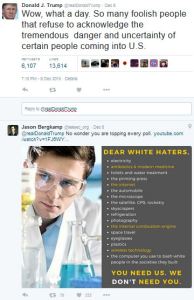
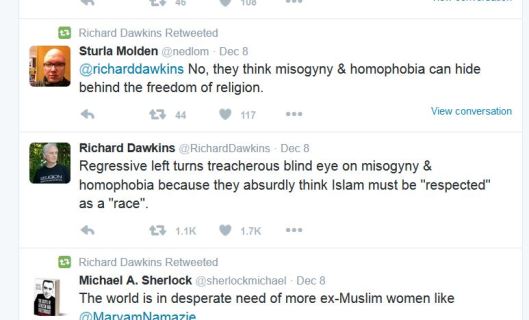


 northierthanthou