• About

northierthanthou

northierthanthou

Tag Archives: religion

Jesus is the Homunculus of Human Suffering

04 Thursday Oct 2012

Posted by danielwalldammit in atheism, Philosophy, Religion

≈ 23 Comments

Tags

atheism, Catholicism, Homunculus, Jesus, Meaning, Philosophy, religion, suffering, Theodicy

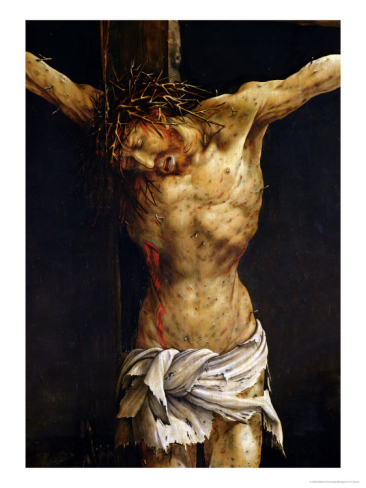
Crucified Christ by
Matthias Grünewald

Sometimes texts and utterances become what they purport to describe. Case in point? This little meditation on the spiritual meaning of suffering, An Attempt to Explain Christianity to Atheists In a Manner That Might Not Freak Them Out by The Bad Catholic at Patheos.com. Well, it certainly became a source of suffering for me (and apparently for P.Z. Myers of Pharyngula), and I suspect not a few others trying to sift through the article for one reason or another. Whether or not the article succeeds in becoming meaningful is another question.

Honestly, the whole thing is a Gish Gallop for me, from the scholastic presentation to the major assumptions of the argument and the vocabulary its author uses. Were I to attempt a refutation, I wouldn’t know where to start. If this was an attempt (as the author suggests) to speak to atheists, I can’t help but think it is an utter failure (or perhaps an ironic joke). If its author ever seriously had an unbelieving audience in mind, then he has done just about as much as he could to avoid communicating with that audience.

There is however one thing about this piece that does catch my attention; its final paragraph (emphasis added):

This changes everything: To see the child with leukemia is to see Christ suffering in that child, suffering to bring the world back to Perfection. To experience agony is to cry out with the strain of lifting this fallen world to Paradise. We are called to recognize this, and to actualize this. This is why I am a Christian.

I say this bit catches my attention, because I find it genuinely disturbing. I also recognize it (or something like it) from a number of previous conversations with believers, many of whom have advanced the argument that life is somehow less meaningful without God. They don’t always state their position in such stark terms, but I do think the view is common enough to rise above the idiosyncracies of this particular article. So, it is perhaps worth a comment or two.

Kitch-Christ: The true meaning of suffering?

The claim that Bad Catholic makes, that to see a child suffering is to see Christ suffering within her is thoroughly dehumanizing, because it relegates the suffering of the child to a secondary role. What is moving about the suffering of a child is not her own suffering but that of Christ. The meaning of suffering has, according to Bad Catholic, less to do with the pain of particular persons than the cosmic struggle of a heroic Jesus trying to lift the fallen world into paradise. I am not even sure if it is the crucified Christ we are supposed to see in this girl. Rather, I think we are supposed to see in the eyes of a child suffering the muscular Jesus of the Lord’s Gym lifting his heavy cross up to save the world. Her suffering is meaningful precisely because of the meaning that Christ gives it.

No.

Not just ‘no’, but Hell no!

And if you want to write about a deficiency of meaning in the world then you have one right there. Never mind a world without God; how about one in which you cannot see the most compelling moments of human suffering because of the big giant Jesus standing in your way!

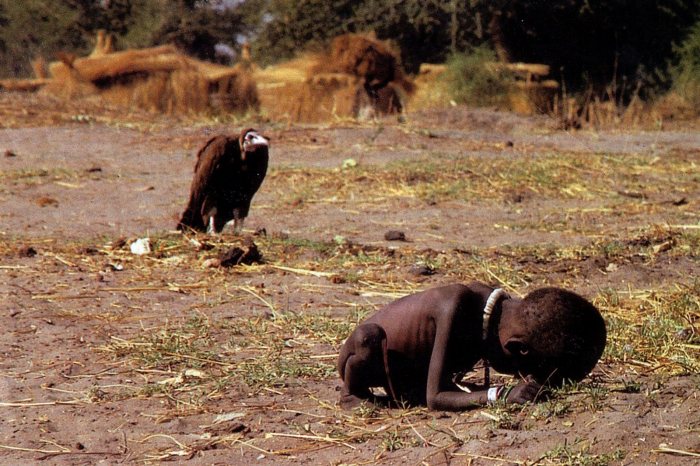
If the suffering of people right in front of you requires a theory making it about something else altogether, or rather someone else, then your faith does not augment the meaning of suffering; it detracts from it. And the theory that was supposed to deepen our understanding of suffering has instead blunted its very force. It is not the suffering of the little girl that matters; it is not her loss of hope, or her agony, or her tears; it is that of someone else.

As I read this utter crap, I can’t help but to be struck by a quote the Bad Catholic keeps at the top of his webpage. It is attributed to G.K. Chesterton; “Let your religion be less of a theory and more of a love affair.” I can’t help but think this wonderful little quote might well have forestalled this miserable exercise in tortured logic and pathetic indifference to the actual condition of suffering in another living being.

Perhaps one ought to let his sense of other living things be less a theory and more of a love affair.

The meaning of human suffering is immediate. This is no less true of others than it is for ourselves. I for one do not need to see Jesus Christ or any other supernatural entity to give a damn about the suffering of another human being, or even that of an animal.

Do you?

Photo by Kevin Carter

71.271549 -156.751450

Share this:

  • Tweet
  • Share on Tumblr
  • Print (Opens in new window) Print
  • Email a link to a friend (Opens in new window) Email
  • Share on Reddit (Opens in new window) Reddit
Like Loading...

Meeting Your Maker in a Ridley Scott Movie: Once Again As Farce (Spoilers)

12 Tuesday Jun 2012

Posted by danielwalldammit in Movies, Religion

≈ 16 Comments

Tags

Blade Runner, Faith, Film, God, Movies, Origins, Prometheus, religion, Ridley Scott, Science

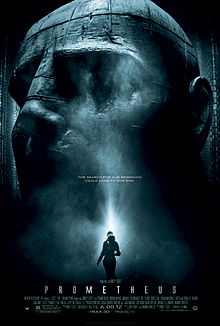
Prometheus

Prometheus opens with great promise delivered on a grand scale. It is a quest to find the origins of life on earth, a journey to meet our makers. I had entered the theater primed with expectation (the promos for this film were brilliant), and upon learning where the story would take us, I smiled and settled into my seat. Seriously, I couldn’t wait to see what new directions Ridley Scott might take with this wonderful theme.

Sadly, the answer was right into the ground.

Because the big crash of a spaceship at the end of this flick was the perfect metaphor for the movie as a whole. It was just one big train space-ship wreck.

…complete with main characters running directly away from the rolling wheel-like space ship instead of jumping to the side. Yes, they actually did that. Seriously, how does a movie studio spend so many millions of dollars on special effects and star power only to miss the fact that they put a Loony Tunes gag in the middle of the dramatic climax of the story? Or do they just think we are that stupid?

Maybe we are. …Damn!

Don’t get me wrong. I like really cool special effects as much as the next guy. But I also like an interesting story. Is it really too much to ask that they appear in the same film?

Ridley Scott has produced such films! Alien was such a film. More to the point, Blade Runner was such a film. And one of the best things about Blade Runner was its use of the very same theme.

Blade Runner

Blade Runner was a classic Philip K. Dick story. Few authors could make something so fantastic speak to people in such personal ways, and Ridley Scott transmitted that to the screen brilliantly. Do you remember Roy’s encounter with his maker? Do you remember watching as this replicant interrogates his very creator, trying desperately to wheedle extra time out of the very man who had chosen to the hour of Roy’s demise? And do you remember how easily the story acquired its deeper significance, that moment when a simple plot point about a creature trying to extend its life acquired philosophical significance?

For all his artificial nature, Roy stood before his maker asking questions about the very meaning of mortality. They were questions we could all recognize. Questions that touched deeply on what it means to be human, what it means to live for only a little while.

And in that moment when the character of Roy stands before his maker and demands to know the reason for his imminent death, he became so very human.

…still more so in the moment of his passing:

What makes Roy’s story so compelling is not merely that we can see the metaphor, but that the metaphor is used to tell us something about our own humanity. It is not merely the loss of personal life that Roy mourns. It is also the passing of his experiences into oblivion, experiences that could be of real value to someone. He is a remarkable character, to be sure, and the world will lose something as he passes.

…just as it does with the passing of each of our loved ones.

…just as it will for each and every one of us.

Roy

Roy meets his maker to confront his own mortality, and he takes us along for the ride. We are there, not just to witness the action, but to share in the meaning of that encounter. …perhaps even to share in the crime of deicide when Roy executes his own verdict on his maker.

And what of Prometheus?

Grandfather?

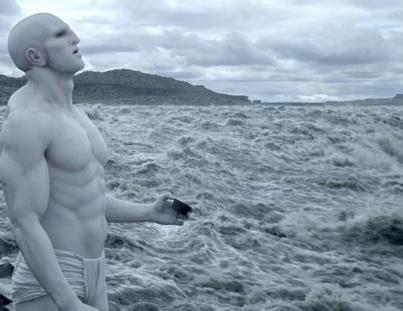
As Roger Ebert tells us, Prometheus raises questions about the origin of human life, presenting us with a version of the panspermia hypothesis in which all of life on earth is begun through the apparent suicide of a pale muscular alien. In the opening scenes that alien appears alone on a barren plant, his spaceship leaving without him. With all the solemnity of a priest performing a great ritual, the alien consumes a mysterious substance, and it ravishes his body. As the mysterious alien falls into a rushing river, his body disintegrates, releasing the seeds of life into a new world.

Was this earth, as Roger Ebert suggests? Ridley Scott tells us that it could be any planet, but of course the point of the scene is to raise the possibility. This might have been how life on earth started, so we are asked to believe. More to the point, it may well be how life on planet earth will begin anew, if the “engineers” as these aliens are called, should choose to return.

That is the possibility uncovered by our main characters in Prometheus. They set out in a quest to find the engineers, to speak with our very creators only to find them bent on our destruction. And thus the a question about the origin of life on earth transforms into a question about the possibility of its imminent demise. The two questions are really the same, because each is essentially a question about the motives of the engineers.

Why?

Shaw

This SHOULD have been a brilliant movie. What makes it so sad is the inattention to narrative detail. The scientists do not act like scientists, especially the geologist who’s rabid anti-intellectualism belies his choice of career. Seriously, didn’t someone on set know that geology is a science? But of course this is a side character, and his flaws are forgivable. What of the main characters?

Three people drive the quest to find the engineers in Prometheus. Two archaeologists, Elizabeth Shaw and Charlie Holloway (played by Noomi Rapace and Logan Marshall Green) initiate the quest to find the engineers as a result of the result of their own findings. Holloway is so intent on speaking with the engineers that he engages in reckless actions upon landing. Believing the engineers to be dead, he drowns his sorrows in a bottle. I suppose we are meant to appreciate the irony of a scholar lamenting the greatest archeological find in the history of the field, but I for one could not get past the absurdity of it. Shaw could almost have served as a voice of reason were it not for her complete irrelevance in the lead-up to the final conflict. No-one listens to her (least of all her husband and partner Holloway), right up until she ends up as the sole human survivor of the expedition.

…which is to say that no-one ever listens to her.

And then of course there is Peter Weyland (played by Guy Pearce). A wealthy old man facing the end of his own life, Weyland funds the expedition for the sole purpose of extending his life. How he came to the conclusion that the engineers would extend his life is beyond me? I think it was beyond the writers themselves? Whatever its origins, Weyland holds onto this assumption despite all evidence to the contrary. Long after it has been made clear that the engineers bear no goodwill towards their creation, Weyland chooses to speak with one of them. It was a foolish mistake.

…and it was his last one.

And here we have the crux of the problem.This movie doesn’t really raise any questions about the origins of life at all. The prospect that life on earth might have its origins in the stars is simply a premise designed to kick-start the action. Nothing about the unfolding action sheds any light on the significance of that premise, nor does it begin share that significance with anyone in the audience.

Space Lab

The central meaning of the encounter with the engineers rests on the irrational presuppositions of Holloway, Shaw, and Weyland. Each of them has loaded the event with significance particular to their own stories, their reasons for doing so barely explored in the course of the film. This sort of approach might have worked with some earnest character development, but Prometheus was too busy wowing us with majestic visuals and sudden moments of terror. In the end, this film attaches no genuine meaning to the event at all.

And so the encounter with the makers of humanity does not quite resonate the way it could have. The encounter with the engineers is an intrinsically interesting moment, one spoiled terribly by the lack of a meaningful storyline to carry us through it. Unlike Roy, these characters bring no great questions to their creator; seeking instead to learn whatever he chooses tell them. But he tells them nothing, electing instead to begin smashing up its creation.

…which actually sums up this movie pretty well.

***

I have to thank my friend Michael Kucan for helping me to remember some of the more irritating details of this movie. I would also like to recommend aknittysociety blog, which contains a wonderful analysis of race and gender in Prometheus. I should also say that in my thoughts about Blade Runner were rather strongly influenced by entry in Roger Ebert’s Journal, I Remember You.

71.271549 -156.751450

Share this:

  • Tweet
  • Share on Tumblr
  • Print (Opens in new window) Print
  • Email a link to a friend (Opens in new window) Email
  • Share on Reddit (Opens in new window) Reddit
Like Loading...

The Spirit Always Grows Deeper On the Other Side of the Fence

23 Wednesday May 2012

Posted by danielwalldammit in Native American Themes, Religion

≈ 15 Comments

Tags

American Indian, Indian, Native American, Navajo, New Age, religion, Spirituality, Tourism

Canyon de Chelly national Monument (Chinle)

It had been a very long drive into work that week, not the least of reasons being a heavy snow storm that descended upon the central Navajo Nation just as I got into the area. I didn’t expect to see my landlady in the office, but there she was. She and I normally passed each other going both ways of our weekly commutes, and upon seeing her I assumed she had been trapped in town by the snowstorm. Would I be on the floor that night? …or asleep in the office? Not to worry, my landlady and her 4-wheel drive were on the way out of town, but she wanted me to know that I would have company that night after all.

I cocked an eyebrow and waited to learn more.

It turns out she had picked up a guy on the side of the road near Chinle. She didn’t know much about him, except that he was a bilagáana (a white guy) and he had come out to the reservation looking for native wisdom. She had blessed him with his first taste of that wisdom by getting him in out of the cold. She added that she thought he was sick. So, I taught my class that evening and headed over to the house wondering what (or rather whom) I would find.

I’ve long since forgotten the man’s name, but he was indeed sick. A doctor had apparently told my guest that his Prostate Cancer could not be treated. So, he had come to Navajo country in the hopes that a Medicine Man could accomplish something that modern science could not. My guest didn’t elaborate much on his condition, though his frequent trips to the bathroom might have testified in some sense to the diagnosis. He was French, as I recall. I don’t think he ate at all that night, nor did he accept an invitation to breakfast.

The house contained two quite decent beds, but no central heating. So, my guest slept on the floor that night and I slept on the couch, thus putting us both near the coal-burning stove. In the morning, he pulled out his tarot cards and tried to get a sense of what the day had in store for him. The man offered to do a reading for me, but I declined. It had been a long time since I had left that sort of thing behind, and I didn’t want it back in my life, not even as a sort of social experiment. Instead, the man explained what each card meant as he drew it during his own reading. There was some good and some bad, and as one might expect, a lot of wiggle room on the particulars.

Although I asked, the man never really told me whether or not he was looking for someone in particular. I suspect he thought the practical problem of finding a Medicine Man willing to help him would resolve itself, perhaps with the aid of his cards or some comparable means of divination.

I don’t think my guest ever asked me for anything, nor did he accept anything I offered. The storm had broken late that evening, and his reading had been promising. So, the man opened the door to find a truly beautiful morning. Soon, he was on his way.

***

It is hard to explain just how out-of-place my guest for the evening had been. The man would have had far more luck turning south and heading into Sedona. Perhaps one of the more shady medicine-men would have sold him a quick Blessing-Way, but the real thing, so to speak, is a family affair. It would take friends and relatives to put together the resources, to aid in the ceremonies, and to help in the long rites. The proper healing from a local perspective might have taken several nights on end with several participants needed to make all this work. The logic of the system is as much social as it is metaphysical. Repayment for all of this effort would take the form of similar service when those same people needed help in various forms over the course of their lives.

This man didn’t really fit into the scenario he was trying to bring about. It wasn’t just the clumsy eclecticism of tarot cards and native healers that seemed off to me. On a much more profound level, my guest had come seeking a personal experience; its social implications were simply beyond him. With enough goodwill, folks could of course devise a work-around, but how likely was it that anyone would give him the chance? To say nothing of the odds that any of it would work!

Who knows?

I could easily hope that my guest for that evening found what he was looking for and flourishes today, living evidence that my sense of both metaphysics and indigenous culture are dead wrong on all counts.

It was desperation, not malice, that brought this man to Navajo country, and yet his failure to appreciate the social setting was part of a much larger problem. I often wonder just what is it about other people’s rituals and beliefs that makes them so attractive to those on a spiritual quest, even with personal health hanging in the balance? Among other things, this question always comes to mind when I think of that particular night in Chinle. Once that question takes hold of my thoughts, I cannot help but to want to follow it down a few similar paths.

***

I’m not altogether unfamiliar with the sort of thinking my guest brought with him that night. I remember reading about the ascended spiritual masters (Kuthumi, Maitreya, St. Germaine, etc.) in my grandmother’s old Theosophy books. The masters dwelt on this earth, at least when they wanted to, or so I read. The home of the masters, so the story goes, rested in the remotest parts of Tibet. I suppose that when the books had been written, this seemed an adequate explanation for the seeming impossibility of finding the masters by normal means. It took meditation to bridge the distance.

I remember sitting in on a séance as a child in the early 70s, one in which I and several family members received the names of our spirit guides. I remember the name of my “Indian guide.” It was “White Thumb.” With the name of “Wee One,” my “Joy Guide” also seemed to bring to mind an Indian, albeit a little one, perhaps an invisible playmate, …very useful to a kid living on a ranch inconveniently far from my classmates. I wasn’t half as interested in any of my other guides as I was in these two.

I also remember that the name of my father’s Indian guide had been of the South Asian variety. I cringe at the explanation, …this was a higher form of Indian guide, so he was told. I cringed again many years later when a family friend dismissed questions about the authenticity of sweat baths run by non-Indian practitioners. She assured me that she and her spiritual mentors were engaged in practices far more advanced than anything Native Americans had actually done. And of course I thought about all of this when I learned about the tragedy of a sweat bath lead by James Arther Ray. I wonder if he too was engaged in practices far more advanced than those of the Indian peoples from whom he borrowed piecemeal?

I remember a woman at a Native American Studies conference who once asked me if I was following the “Red Road,” a question so loaded with cultural baggage I couldn’t begin to unpack it in time to give an adequate response. I expect the woman must have found me quite a disappointment.

But Spiritual appropriation isn’t just limited to Native American traditions. I recall with great pleasure reading Karma Cola long before I headed out to the rez. Gita Mehta’s brutal observations on the antics of spiritual tourists in India touch upon issues quite familiar to those observing how Native traditions fare in New Age circles. Many of the characters she describes in Karma Cola appear quite as hapless as my guest sitting there reading tarot cards on his way to find a Medicine Man. Few seem quite so innocent or nearly as sympathetic.

Mehta has been rightly criticized for focusing on the negatives. So many claim to have found something of value in Eastern traditions. What personal pettiness it must take to deny or to minimize this! And yet the specter of people on a personal quest, proceeding oblivious to the social context in which they operate rings true for me. Whatever folks may have found in these strange, foreign, traditions, it seems a safe bet to suggest that they commonly miss much more.

What bothers me most is that the part spiritual tourists miss may well be the most important piece of the story, the part which anchors all that spiritual talk to an established community. I cannot help but wonder if the quest to learn someone else’s spirituality isn’t rather commonly an effort to escape that very thing!

Those traveling (literally or metaphorically) through another people universe are freed from much of the social context in which the symbols and ideas they seek to learn acquire meaning. They can learn how to perform a ritual, or even what it’s iconography means in some idealized sense, but they are freed from the tedium by which that ritual is connected to countless aspects of daily existence. Most importantly, spiritual tourists are free to fill in the gaps of their understanding as they see fit, unencumbered by multiple sources of information, some of which will surely disagree. What spiritual tourists acquire is a radically simplified version of some other world view, all the easier to tweak it to their own tastes. Perhaps some people need this; perhaps some even do great things with the opportunity. Either way, the point stands. Something highly important is lost in translation.

For some at least, the chance to strip a practice of its social context and rebuild it as they see fit is precisely the pay-off for embarking on a trip into unknown spiritual territory. There may be good reasons for doing that, but how often do people even realize that is what they are doing?

71.271549 -156.751450

Share this:

  • Tweet
  • Share on Tumblr
  • Print (Opens in new window) Print
  • Email a link to a friend (Opens in new window) Email
  • Share on Reddit (Opens in new window) Reddit
Like Loading...

Auto-Kitty Says ‘Meow’: What she Means is that Belief is not a Choice

16 Wednesday May 2012

Posted by danielwalldammit in atheism, Religion

≈ 39 Comments

Tags

Agnosticism, Animals, atheism, Belief, epistemology, God, Kitty, Philosophy, religion, The Rugburns

Auto-Kitty
(not a Siamese)

Is belief a choice?

I don’t think so.

It is certainly common enough to speak of belief as a choice, but could I choose to believe that I was not sitting in a chair right now? (I am.) Could I choose to believe that the music playing at this moment (Sky-Fucking-Line-of-Toronto) had been recorded by The Kinks? (It was The Rugburns.) Could I choose to believe that my cat, Auto-Kitty (pictured to the left) is a Siamese? (She is of course a Tortie.)

Mind you, I am not asking if I could tell you that Auto-Kitty is a Siamese. I most certainly could. I am not asking if I could play some special word-game in approaching the subject and define ‘Siamese’ in such a manner as to include cats with a tortoise-shell coat. I am not even asking whether or not I could embark on some long-term project to convince myself that my little Auto-Kitty was really a Siamese. …though I really don’t think I could do that either. No, I am asking whether or not I could choose to believe, right here and now, that a cat I know to be something other than a Siamese was in fact (using a conventional understanding of the term) actually a Siamese?

The answer is ‘no’.

I think it is safe to say, dear reader, that we could come up with a range of similar propositions for you, claims that you could not choose to believe, at least not without a complex long-term brain-washing process to get you there. You could probably assert these claims, but you could not actually believe them.

So, there is at least one respect in which belief appears to present a limit to our choices. Somewhere in the question of what one believes, we all encounter an emergent property which is beyond the control of our immediate will. …Okay, at least the vast majority of us do.

No, it is not my intention to suggest that we have no choice at all with respect to beliefs, but rather to suggest that the choices must in some respect live with this emergent property, the one which defies our power to shape it at will. Truth be told I think we could probably put a range of different propositions on a scale of sorts. Auto-Kitty’s non-Siamese status is, for me at least at maximum (or near maximum) resistance to the whims of my personal belief. For you, perhaps, taking my word for it, there is perhaps cause for doubt about the matter, and it might be reasonable to say that one’s response to doubt involves a degree of choice.

More to the point at hand, we could perhaps find a range of propositions about subjects inherently difficult to resolve, full of ambiguity, and perhaps even loaded with more heuristic than factual value. One might get to say that he or she has a bit more choice in such matters. But I still think it is worth knowing that somewhere in our mental landscape, we normally encounter a limitation, a point of resistance to the free play of our choices.

I should add that I do think personality is another variable. Some people seem far more capable of choosing what to believe than others. I should also add that in at least one respect this is far from a virtue.

So what?

Well, what I am getting at is a trace of the larger question of Beliefs with a capital B. I don’t mean beliefs such as; What color is the chair? What kind of cat is that? or Is there too much chili paste in the chicken red curry? No, I mean questions like; Do you believe in God? How about reincarnation? karma? …The Holy Trinity? …you get the idea. Because people often speak of these beliefs as a choice.

The notion that belief in god is a choice is a particularly common fashion of speaking, and that fashion of speaking can be very misleading. It makes of belief a moral decision, and side-steps the epistemological questions about that belief in favor of arguments from consequantialism. One must, according to this approach, choose whether or not to accept or reject God, all of which actually begs the question of whether or not She actually exists.

But I don’t wish to go too far down this particular road at the moment. I am more interested in fleshing out how the issue affects self-presentation in matters of belief.

Okay, I am thinking about how this affects me!

You see, I often think back to these days of my own deconversion, and I realize that I have become accustomed to speaking of the process in unnecessarily mystical terms. I sometimes say that “I lost belief in God at around the age of 18,” or I may explain that “I chose to reject religion at that age.” Perhaps I will say that “I lost my faith,” and so on.

I don’t think this language is at all unusual, but the more I think about it the more I realize that they are not accurate descriptions of what happened at that time in my life at all. It would be far closer to the truth to say that I never really had faith at all. It would be more precise to say that I could find no aspect of my thought process which has ever answered to the concept of ‘faith’ as it is normally used in connection to belief in God.

Still further, I think it would be more accurate to say that I never really believed in God. Oh, I wanted to! As a young teen I REALLY wanted God in my life. I read. I prayed. I meditated. I studied. I did everything I could to ‘find God’ as they say, and the truth is that I just never did. I found a great deal of speech about him, but that speech never resonated with me on any personal level, nor did it point to anything in the objective world that struck me as a good candidate for a deity. When the day came that I finally came to see myself as an unbeliever, it was less a rejection of some viable notion than it was a concession that no such concept could be found in my mental landscape.

It was less a choice to reject belief than an acknowledgement of a mental state over which I did not really have a choice.

This was about the age of 18 or 19, and by that time I had come to know a number of approaches to the subject of God and religion. But these were always bracketed concepts in my own mind. They were ideas that someone else believed in, definitions of God that fit someone else’s beliefs, …or at least their claims. When I embraced my role as an unbeliever, the decision changed absolutely nothing about my beliefs. It was a change in my self-presentation, a decision about how best to describe the beliefs (or the lack thereof) that I already had.

For me at least, I could no more choose to believe in God than I could choose to believe that Auto-Kitty is a Siamese. I could say that God exists of course, but short of equivocation, I could not mean it.

I could deflect the question and say that I do not know whether or not God exists. Better yet, I could grunt and change the subject.

I could choose to put forward a variety of labels for my thoughts on the subject. So, for example, I could probably describe myself as either an ‘atheist’, an ‘agnostic’, or even an ‘agnostic atheist’. I could add the qualifiers ‘weak’ before ‘atheist’ or ‘soft’ before ‘agnostic’, or I could leave them off according to taste. Any of these approaches would be an equally accurate description of my take on the matter of God. I am somewhat inclined to believe that the label ‘non-cognitivism’ would work as well, though I would have to read-up a bit more on that approach to the issue before deciding once and for all on the label. But let us be clear, what I am choosing here is a label and a certain amount of baggage that goes with that label. What I am not choosing is what I will or won’t actually believe.

I have a little more wiggle room on the issue of surety. I could say that I am certain on the matter or that I am open to the possibility that a god does exist. The cognitive hazards of container metaphors aside, both of these could be a reasonably accurate description of my attitude on any given day.  Choosing one or the other term would in a sense help to make the issue normative; it would give me an incentive to try for the attitude I had adopted as a self-description, and to avoid the other. Either way, I do feel like I have a little more choice in the degree of certainty I wish present my approach to this issue to others.

Indeed, I have lots of choices about the way I package my lack of belief and explain it to others. I also have lots of choices about what my (non-)beliefs mean to me and how they will shape my actions in the future.

What I do not have a choice about is what I actually believe on the subject. Somewhere in there, the power of choice simply escapes me.

***

Okay, I lied about what Auto-Kitty was trying to say in the title. What she was actually trying to tell you with that little meow of hers is that in the picture above, she is more comfortable than you or I or any other person in the whole of human history will ever be. She just wanted you to know that.

71.271549 -156.751450

Share this:

  • Tweet
  • Share on Tumblr
  • Print (Opens in new window) Print
  • Email a link to a friend (Opens in new window) Email
  • Share on Reddit (Opens in new window) Reddit
Like Loading...

Native American Ceremonies and the Meaning of ‘Religion’: Unpacking the Semantic Baggage, …Well at Least the Carry-On

03 Thursday May 2012

Posted by danielwalldammit in atheism, Native American Themes, Religion

≈ 37 Comments

Tags

atheism, Belief, Ceremonialism, Christian Forums, History, Indian, Native American, Navajo, religion, Semantics

Hogan

Not everyone has a religion!

More to the point at hand, the term seems to be an awfully bad fit for a lot of the things it is commonly used to describe.

When I was teaching on the Navajo Nation, I used to illustrate this by asking my students; when you hold a healing ceremony, who comes? The answer was always something to the effect of the community itself, friends, relatives, etc. What happens if you don’t believe in the effectiveness of the ceremony? Frankly, I don’t think the question came up very often, at least not in the context of deciding who belonged at the ceremony, but I did once meet a woman who had effectively answered it. A born again Christian, she stayed at the main house during the chants and entered the Hogan to help serve food during the breaks. She thus met her family obligations without implicating herself in a ceremony that was anathema to her own beliefs.

When I asked my students who goes to a church, the answer was invariably something along the lines of its members, believers, etc. Catholics go to a Catholic Church, Baptists to a Baptist Church, and so on. Of course this doesn’t mean that others aren’t welcome at a given church, but there is a distinct sense that the church exists for those that adhere to its doctrines. Those testing the waters will be expected to make a choice at some time.

Which brings me to another point, a religion can be modeled as a debate stance. Who belongs to a church? In many cases, we can literally trot out a range of statements and ask people whether or not they will vouch for the truth of those claims. “God Exists.” “Jesus rose from the dead.” You get the idea. Say ‘yes’ to the right statements, affirm one’s beliefs that they are true, and you are in the club. Say no, and you are out. Whatever else is happening here, it is a process of segregating folks according to an imagined argument within a larger community.

Sandpainting

When I used to post on christianforums.com (CF), this was explicit policy for many years. Those who affirmed the Nicene Creed (or perhaps the Apostle’s Creed) could count themselves as Christian and post in the Christians-only sections. Those of us who could not were asked to restrict our posts to the open-debate areas. The policy varied in its details from time to time, and as I recall it changed rather dramatically a few years back, but when I was there at least CF policy fits the model I am proposing, membership in the faith, as it was defined on CF could be determined by one’s willingness to back a series of truth-claims.

So, what is the difference?

I’m about to paint it in pretty broad strokes, but I’ll warrant the paint gets more or less within the proper lines.

A religion is defined in terms of beliefs which consist of the willingness to vouch for the truth of a claim. A native ceremonial system is defined in terms of community membership and participation. Of course there is considerable overlap between the two. People expressed a number of beliefs connected with Navajo ceremonies, and churches can be remarkable community institutions. But as with any other questions of value, it is the priorities that count. Failure to vouch for essential doctrine gets you out of a church. It doesn’t get you out of a Navajo ceremony, at least it didn’t when I was there.

So, what is going on here? I would suggest, the point of the ceremony is at least partly to unite the community, to get them all involved in something of great importance to the community at large (the health of its members in the Navajo case). What is the point of the religion? Well it is at least partly to distinguish a select membership from some larger community. A religion isn’t simply about what group you belong to; it is about what separates you from those others. What a native ceremonial system unites, a religion divides.

Some might find that shocking, or at least counter-intuitive. Often when religious debates get rather heated, someone will lament the divisiveness of the issue and give a variant of the “can’t we all just get along” speech. The sentiments are noble enough, but I often wonder how many times people can see the process of division before it sinks in; that is what is SUPPOSED to happen.

Rainbow Bridge (Sacred Site)

Of course both ceremonial systems and religions unite as well as divide, but they do so on different parameters. The ceremonial system unites people along the lines of an established community, it gives people who share in a range of political and economic interactions a means of emphasizing their connections. A religion carves off a notch of those people and sets them in ideological opposition to others in their community.

So, this is my particular take on a running theme in Native American studies, the unfitness of “religion” to the understanding of Native American practices commonly described using precisely that term. The problem was particularly critical to the workings of a Federal law passed in 1978, The American Indian Religious Freedom Act, which I happened to study for a bit. The law had a rocky history from the start, and at least in the early 90s (when I studied the matter) an awful lot of people were disappointed in its application to real life.

It was easy enough to say that various indigenous practices raised a lot of First Amendment issues. (Well at least it was in 1978; the prior history of willful abuse is dismal, and a topic for another post.) But actually extending Free Exercise protections to Native American “religious” practices proved very difficult. How do you protect the right to prayer when that might mean a lot more than a moment of silence or even a few words spoken in a certain posture? What do you do about ritual paraphernalia at border crossings? How about odd dress in schools or prisons? How do you deal with strange substances? Nevermind peyote; a simple smudge-pot can really screw up a paradigm! …and (this was the real sticking point) what do you do about access to sacred sites on public lands, especially sites that might not be so sacred anymore if someone builds a road or a fast food restaurant in the vicinity?

See, the problem was that native “religious” practices simply didn’t fit into the niche already carved out for religions within the American political economy. So, time and again, when Native Americans sought to enjoy their religious freedom, they found some official or judge who couldn’t (or wouldn’t) grant that protection. The necessary relief always seemed to be too much to ask, and the resulting case-law was dismal to say the least.

So, what was the problem? At least some folks figured it lay with the key term “religion.” It just didn’t fit. The practices in question may have included enough of what people call ‘religion’ to get the issue on the table, but they weren’t restricted to quite the semantic domain one normally expects of things described using that term. The contents Native American “religions” thus tended to spill over into other social terrain. Where western religions had learned to reside in the spaces between other public matters, their Native American analogs didn’t even come close.

So, if the term “religion” doesn’t fit, what does?

It really is difficult to answer that question. We can of course use the term “religion” anyway, but the warrant for its use is analogical, and my point is the analogy breaks down, often in really inconvenient ways. A common practice is to talk about native “spirituality,” but the chief benefits of “spirituality” seem to be that the term means just about anything you want it to mean, which is not an argument in its favor.

My own solution is to focus on the ceremonial practices. As the community-building functions of those ceremonies take priority over the argument-framing functions, those practices naturally stretch into social interactions well beyond those of religions. Of course this way of talking about the issue involves a judgement about priorities; it is a claim about what matters most. So, I won’t be too offended if someone opts to go another route.

Yes, I will. Let’s fight about it!

Anyway, what interests me about this is that it is the other half of a coin to my own situation when it comes to the subject. Religion obviously doesn’t do much for me, and as my last post ought to have established, I obviously think there is something about religion that is NOT part of my life and thinking. What that is, is another question, and admittedly a satirical post isn’t really going to nail it down. So, I am trying think my way through that issue (for the umpteenth time) by looking at people who may have a similar problem.

…and by “similar” I probably mean “opposite.”

If I as an atheist lack something falling under the heading of ‘religion’, the people I am talking about seem to have a surplus of it. Where the term denotes something I don’t want in my life, it denotes something that falls well short of what they want in their own lives. Where use of the word “religion” commits me to too much, it commits them to too little.

Either way, we have a problem.

***

The Hogan picture comes from the website, Virtual Tourist. It is part of the Navajo Museum and Visitor’s center in Window Rock, AZ. The sandpainting is from navajopeople.org which includes a nice description of its symbolism and ritual significance. The picture of Rainbow Bridge comes from Destination360. It was the subject of sacred site litigation in Badoni v. Higginson, one of many sacred sites litigated in the 70s and 80s.

71.271549 -156.751450

Share this:

  • Tweet
  • Share on Tumblr
  • Print (Opens in new window) Print
  • Email a link to a friend (Opens in new window) Email
  • Share on Reddit (Opens in new window) Reddit
Like Loading...

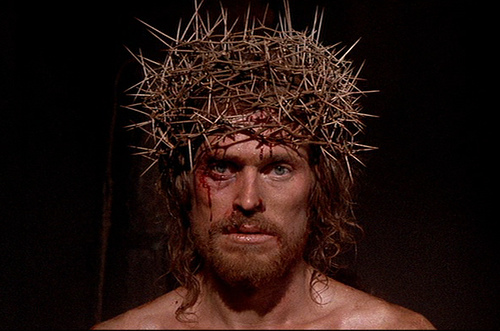
Special Easter Edition Movie Villain: Jesus Christ!

08 Sunday Apr 2012

Posted by danielwalldammit in Movie Villainy, Movies, Religion

≈ 20 Comments

Tags

Blasphemy, Easter, Film, Jesus Christ, Jesus Christ Superstar, Movie Villainy, Movies, religion, The Greatest Story Ever Told, The Passion

Can you see it my Brothers?

Can you see the truth of what I am saying?

Because not everyone can see this. Some consider the topic just too boring to bother with. They’d rather watch a slasher flick. Others are too busy with their prayers. Jesus is too beautiful to them, too noble, too good, too strong, too gentle, too much of a blank check upon the bank account of all things warm and wonderful.

They cannot see it. But Jesus can be downright terrifying.

The Prince of Peace makes an awesome movie villain.

Just ask the merchants in the temple! Yes, that would be the one Jesus trashed, because apparently commerce is supposed to be a bad thing. Just a temper tantrum, you say? Well tell that to someone whose entire livelihood has just been trashed by a madman. A madman who threatens to destroy the very temple of God Himself.

Do not think, he didn’t warn us my friends. Jesus told everyone about his nefarious plans. He told us that he came bringing a sword. He told us that he came to destroy our families. He told us that we would have to forsake everything we know and love to join his kingdom.

And I ask you, what sort of dark kingdom begins with the abandonment of one’s own family?

Let us not even mention the practice of necromancy! Well, okay, yes, let’s go there. Do not imagine that little girl was the only time this fisher of men came to practice the dark arts. On this matter (and many others), the dear Lord is definitely a repeat offender. Seriously, when in the Hell does someone raise the dead and NOT end up as the principle villain of the story? Oh I’m not talking about accidentally awakening a Mummy. That gets you an hour of running and a hero status when you finally beat the bad guy back into the ground. No, I am talking about the deliberate act of pulling a dead man out of the grave and setting him back to walking about the earth. And Jesus did it at least twice!

There is a reason the name of Frankenstein fills us with terror, but Jesus gets a free pass on this one, does he?

And then of course of course there is his skillful use and disposal of Judas. Even as the man betrays Jesus with a kiss, Jesus himself has willed the whole thing to happen, …from the moment of creation, so some folks say. And thus does Judas play into the great cosmic scheme, a lamb for the sins of man. But who is the real sacrifice here? And how wicked is the villain that has chosen a single man for the greatest crime of all history? How wicked is the puppet-master who could bring his chosen victim to accept eternal damnation …with a kiss?

How did he do it? Well great movie villains work in mysterious ways.

Not even the Cylons of the new Battlestar Gallactica series could manipulate humans with such ease and skill. Neither Darth Vader, nor Sauron, nor Scorpius from Farscape have ever had such an elusive evil plan! Professor Moriarty could only dream of such eloquence. Christopher Walken was never so creepy in all his career! And the Devil in all his movie incarnations has never, NEVER, been so menacing.

The question you have to ask is just why everyone found this fellow so frightening to begin with? Why is that this Jesus must die?

Must die!

Must die!

Must die!

The Romans, The Pharisees, even apparently the average man on the street came to call for the blood of the lamb.

So we are told anyway!

But were they really so short-sighted, so bloodthirsty as to want the death of a miracle worker and healer? Or did they know something the rest of us seem to have forgotten? Did they see into the depths of the darkness? Did they know just how terrible this villain really was?

It’s a damn good question, I tell you.

Note: The original version of this post included a lot of links to various movies. I really was talking about Jesus as a movie character and using the videos to illustrate the point. Anyway, dead links happen. So, I took most of them down. Left up Judas, cause, yeah.


71.271549 -156.751450

Share this:

  • Tweet
  • Share on Tumblr
  • Print (Opens in new window) Print
  • Email a link to a friend (Opens in new window) Email
  • Share on Reddit (Opens in new window) Reddit
Like Loading...

Jesus and Religion: A Distinction in Search of a Difference

21 Wednesday Mar 2012

Posted by danielwalldammit in Religion

≈ 19 Comments

Tags

Circular Reasoning, Distinction, Faith, Jesus, Jesus versus Religion, religion, Spirituality

This poet (whose name is apparently Jefferson Bethke) loves Jesus and hates religion. In fact, he literally resents it.

(Sigh!)

Okay, so how do you tell the two apart, Jesus and religion? That is a tricky question, all the more so because the terms normally seem to travel in each others’ company, so to speak.

Luckily, the poet offers the helpful suggestion that:

One is the work of God, the one is a man-made invention.

One is the cure, the other is the infection.

Religion says “do.” Jesus says “done.”

Religion says “slave.” Jesus says “son.”

Religion puts you in bondage, but Jesus sets you free.

Religion makes you blind, but Jesus makes you see.

And that is why religion and Jesus are two different clans.

Religion is man searching for God, Christianity is God searching for man.

Listening to the poet rattle through these distinctions, one cannot help but think that a lot is riding on the matter. But of course all of these individual distinctions assume we already know the difference between the two; they comment on the difference as though it were already clear.

The poet is talking about things that seem to go together in the collective understanding of “religion.” One might, for example, describe as religious some of the arguments once made in favor of slavery as well as those advanced by Abolitionists against it, thus putting the “religion” of common parlance on both sides of the poets juxtaposition. Likewise, talk of Jesus is normally expected from those engaged in one particular religion.

But of course the poet here assures us that these are really two different things, even that talk of Jesus is (or at least should be) wholly different from religion. He divvies up a range of themes normally associated with religion, carefully placing them in different piles, so to speak. All the good themes that make us smile go in the “Jesus” pile and the bad ones end up in the “religion” pile. Yet, he provides no independent means of telling us which goes where. At the end of the day, the difference between the two is little more than the collective contents of the two piles.

To say that this is circular reasoning is putting it mildly. Who wouldn’t prefer the Jesus of this video to the religion?

Seriously, who would not prefer freedom to bondage, son to slave, sight to blindness, or a cure to an infection?

And if the answer is “no-one” or even “almost no-one,” then who keeps producing all the bad things, the ones that seem to go in the “religion” pile? Does the poet in this video imagine that it is people who have consciously chosen them?

Or is it just possible that it is people who thought they were actually choosing Jesus?

The internal logic of this kind of rhetoric always fascinates me. Some of the poets distinctions (such as that between man looking for God and God looking for man) are too fantastic to construe in terms of a specific moral choice. Others are downright intuitive. The notion for example that religion makes you blind whereas Jesus makes you see is wonderfully vivid.

On hearing the claim that religion makes you blind, one cannot help but to imagine some form of religiously motivated bigotry. We want to say, “Yes, I know exactly what you mean!” The second phrase must arouse similarly vivid thoughts for most believers. How easily might one imagine a moment when thoughts of Jesus could have inspired one to overcome a prejudice! That particular pair of options must arouse thoughts of a real difference.But of course the important question is whether or not there is anything about Jesus (or more importantly references to, thoughts about, belief or faith in…Jesus) that guarantee the one and precludes the other.

It’s a valiant effort.

It is tempting to go along with the poet on all of this. When I see him separating the good from the bad, I could almost choose to join in, to help sort everything into the right piles. It would be lovely to affirm the wisdom of this poet and all the others who assure us that “religion” is distinct from faith in God or a personal relationship with Jesus. I could almost stand with those who say they are “spiritual but not religious.” Hell, even without faith in God I can affirm the value of many things associated with Jesus’ name. Wouldn’t it be wonderful if those good things really were of a wholly different order than those bad ones. …if the difference between Martin Luther King and Fred Phelps were as easy as telling the difference between which of two words to use, “religion” or any of its better dressed counter-parts.

And yet the question remains, when people talk of Jesus, what distinguishes the good from the bad?

This poet offers no answer to that question, though he seems to think otherwise. And in that respect, he has one foot firmly planted in the “religion” pile.

71.271549 -156.751450

Share this:

  • Tweet
  • Share on Tumblr
  • Print (Opens in new window) Print
  • Email a link to a friend (Opens in new window) Email
  • Share on Reddit (Opens in new window) Reddit
Like Loading...

Reification is Forever!!!

28 Wednesday Dec 2011

Posted by danielwalldammit in atheism, Religion

≈ 9 Comments

Tags

atheism, complex question fallacy, misplaced concretism, reification, religion, soul

“Where do you go when you die?”

“What happens to you when you die?”

“Where do you go when you die?”

All very familiar questions.

I have a better one (two actually).

What happens to the flame when a cande burns out? Where does that flame go?

71.271549 -156.751450

Share this:

  • Tweet
  • Share on Tumblr
  • Print (Opens in new window) Print
  • Email a link to a friend (Opens in new window) Email
  • Share on Reddit (Opens in new window) Reddit
Like Loading...
Newer posts →

Top Posts & Pages

  • An Uncommon Security Guard: Dave Eshelman, AKA 'John Wayne'
    An Uncommon Security Guard: Dave Eshelman, AKA 'John Wayne'
  • Arts District, Los Angeles
    Arts District, Los Angeles
  • Time Heals All Wounds ...Unless it Doesn't
    Time Heals All Wounds ...Unless it Doesn't
  • A Little Monday Mischief
    A Little Monday Mischief
  • Murals and More in Anchorage
    Murals and More in Anchorage
  • Monument Valley
    Monument Valley
  • Oh Hello Dere!
    Oh Hello Dere!
  • The Message in Itself
    The Message in Itself
  • Barter Island ...Includes Bears
    Barter Island ...Includes Bears
  • The Village of Wainwright, Alaska
    The Village of Wainwright, Alaska

Topics

  • Alaska
  • Animals
  • Anthropology
  • atheism
  • Bad Photography
  • Books
  • Childhood
  • Education
  • Gaming
  • General
  • History
  • Irritation Meditation
  • Justice
  • Las Vegas
  • Minis
  • Movie Villainy
  • Movies
  • Museums
  • Music
  • Narrative VIolence
  • Native American Themes
  • Philosophy
  • Politics
  • Public History
  • Re-Creations
  • Religion
  • Street Art
  • The Bullet Point Mind
  • Travel
  • Uncategorized
  • Uncommonday
  • White Indians
  • Write Drunk, Edit Stoned

Blogroll

  • American Creation
  • An Historian Goes to the Movies
  • Aunt Phil's Trunk
  • Bob's Blog
  • Dr. Gerald Stein
  • Hinterlogics
  • Ignorance WIthout Arrogance
  • Im-North
  • Insta-North
  • Just a Girl from Homer
  • Multo (Ghost)
  • Native America
  • Norbert Haupt
  • Northwest History
  • Northy Pins
  • Northy-Tok
  • Nunawhaa
  • Religion in American History
  • The History Blog
  • The History Chicks
  • What Do I Know?

Archives

  • December 2023
  • November 2023
  • June 2023
  • April 2023
  • February 2023
  • December 2022
  • November 2022
  • October 2022
  • September 2022
  • August 2022
  • July 2022
  • June 2022
  • April 2022
  • January 2022
  • December 2021
  • November 2021
  • October 2021
  • September 2021
  • August 2021
  • June 2021
  • May 2021
  • March 2021
  • February 2021
  • January 2021
  • December 2020
  • November 2020
  • October 2020
  • September 2020
  • June 2020
  • May 2020
  • March 2020
  • February 2020
  • January 2020
  • December 2019
  • November 2019
  • September 2019
  • August 2019
  • July 2019
  • June 2019
  • May 2019
  • April 2019
  • January 2019
  • December 2018
  • November 2018
  • October 2018
  • September 2018
  • August 2018
  • July 2018
  • June 2018
  • May 2018
  • April 2018
  • March 2018
  • February 2018
  • January 2018
  • December 2017
  • November 2017
  • October 2017
  • September 2017
  • August 2017
  • July 2017
  • June 2017
  • May 2017
  • April 2017
  • March 2017
  • January 2017
  • December 2016
  • November 2016
  • October 2016
  • September 2016
  • August 2016
  • July 2016
  • June 2016
  • May 2016
  • April 2016
  • March 2016
  • February 2016
  • January 2016
  • December 2015
  • November 2015
  • October 2015
  • September 2015
  • August 2015
  • July 2015
  • June 2015
  • May 2015
  • April 2015
  • March 2015
  • January 2015
  • December 2014
  • November 2014
  • October 2014
  • July 2014
  • June 2014
  • May 2014
  • April 2014
  • March 2014
  • February 2014
  • January 2014
  • December 2013
  • November 2013
  • October 2013
  • September 2013
  • August 2013
  • July 2013
  • June 2013
  • May 2013
  • April 2013
  • March 2013
  • February 2013
  • January 2013
  • December 2012
  • November 2012
  • October 2012
  • September 2012
  • August 2012
  • July 2012
  • June 2012
  • May 2012
  • April 2012
  • March 2012
  • January 2012
  • December 2011
  • November 2011
  • October 2011

My Twitter Feed

Follow @Brimshack

RSS Feed

  • RSS - Posts
  • RSS - Comments

Enter your email address to follow this blog and receive notifications of new posts by email.

Join 8,069 other subscribers

Blog at WordPress.com.

  • Subscribe Subscribed
    • northierthanthou
    • Join 8,069 other subscribers
    • Already have a WordPress.com account? Log in now.
    • northierthanthou
    • Subscribe Subscribed
    • Sign up
    • Log in
    • Report this content
    • View site in Reader
    • Manage subscriptions
    • Collapse this bar
 

Loading Comments...
 

    %d