• About

northierthanthou

northierthanthou

Author Archives: danielwalldammit

Please Make a Note of it

20 Wednesday Nov 2013

Posted by danielwalldammit in Politics

≈ 4 Comments

Tags

Aphorisms, Arrogance, Assumptions, Condescension, Fishing, Hunger, Poverty, Undeserving Poor

???????????????????????????????

.

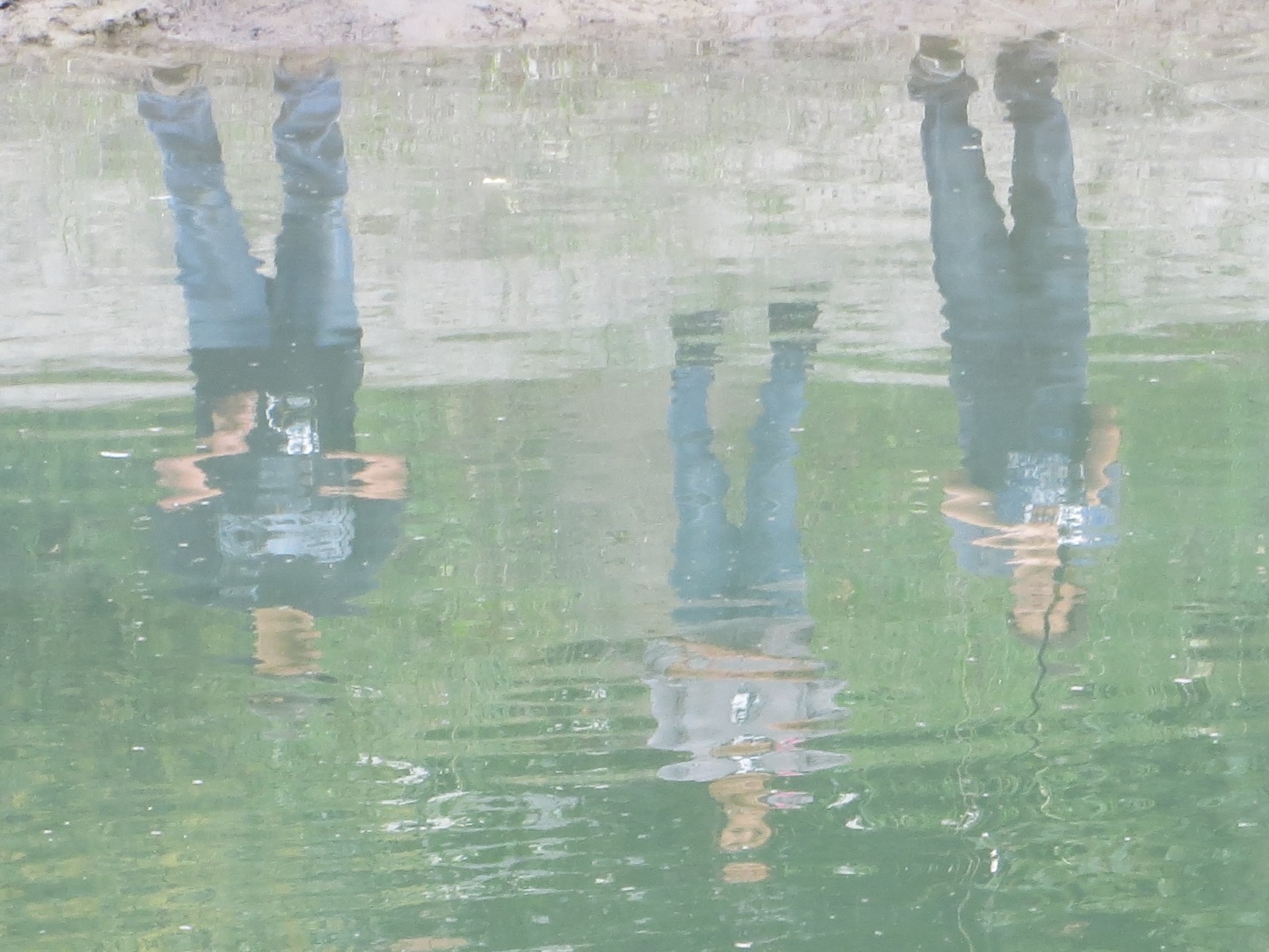
Just because a man is hungry doesn’t mean he knows any less about fishing than you do.

71.271549 -156.751450

Share this:

  • Tweet
  • Share on Tumblr
  • Print (Opens in new window) Print
  • Email a link to a friend (Opens in new window) Email
  • Share on Reddit (Opens in new window) Reddit
Like Loading...

Uncommonday – An Overly Honest Funeral Sermon

18 Monday Nov 2013

Posted by danielwalldammit in Movies, Uncommonday

≈ 9 Comments

Tags

Ambivalence, Death, Funeral, Humor, Irony, Schizopolis, sermon, Steven Soderbergh

Awhile back I posted a film clip featuring a wonderful wedding sermon. Today, I thought I’d post my favorite funeral sermon. This scene is from the movie Schizopolis, one of Soderbergh’s lesser known films. If you’re feeling a little left of your own mind, let me assure you the rest of the film is no closer to normal than this scene.

* By ‘Honest’ I might mean ‘cynical’ in which case I think we can dispense with the ‘Overly’ part of the title.

71.271549 -156.751450

Share this:

  • Tweet
  • Share on Tumblr
  • Print (Opens in new window) Print
  • Email a link to a friend (Opens in new window) Email
  • Share on Reddit (Opens in new window) Reddit
Like Loading...

A Bullet Point Mind

17 Sunday Nov 2013

Posted by danielwalldammit in Education, The Bullet Point Mind

≈ 13 Comments

Tags

Communications, Critical Thinking, Education, Power Point, Public Speaking, Slideshows, Speech, Visual Presentations, What not to do

Irrelevant Image! ...or is it?

Relevancy – Perhaps Paradoxical

I still remember the first day I learned to dread the power point presentation. Don’t get me wrong; I’ve seen good ones. I have at times been well pleased to take in a well designed power point presentation. If only I could have more of those days, and fewer of the kind that I have so often grown to expect.

Anyway…

I was sitting in a lecture hall many years ago listening to a colleague do a training for the rest of the faulty at our college. She was trying to teach us something about assessment techniques for accreditation, but the fact is that this particular colleague had nothing to say about the topic, and she was painfully slow in the way she was not saying it. The overall effect was a lot like a sedative and one of Pink Floyd’s longer and slower songs. Every point this woman made began with a new slide that added a phrase or quick sentence. She would stop talking, click a button, wait to see the new phrase appear and then pause long enough for us to read the phrase ourselves (twice). She would then read the phrase and give us a little more time to let it sink in. In a rare moment of personal empowerment, our illustrious lecturer would add a comment or two about the phrase before moving onto the next one. Mostly, she just let us take in the power of each individual bullet point. So, I’m sitting there watching this and trying desperately not run screaming from the room as I study the slide-show and wonder why I hated it so much. Of course training days are often a painful experience, but this was a special kind of heck, and the source of my particular sorrow on that day wasn’t immediately apparent. Eventually, I come to a realization.

It’s her outline!

What my colleague had chosen to pass off as a power-point presentation was nothing more than the outline for her speech, exactly the sort of outline we had all learned to write in our Freshmen Composition and Speech classes. There it was, unfolding there on the screen, one line at a time, as if it were some sad librarian’s version of dramatic tension.

Far from enhancing the presentation, this visual was slowing the speaker down and enabling her to avoid the responsibility even to explain the connections between the points of her talk. The speaker didn’t need to decide how each individual bullet point related to the major themes of her discussion; all she needed to do was read them at us. The visual served to occupy our attention and help us to forget that she had crammed a whole 5 minutes of information into an hour-long presentation. In effect, the presenter had looked into the heart of her software and found a new and improved means of bluffing.

…Would that this was a unique experience!

This technique also seemed to lend an ontological claim to the individual bullet points. Things that a person might just say offhand, or as part of a larger argument often seem to acquire a objectivity all their own, standing up there on a screen. A list of bullet points might contain causes, effects, and side comments to a larger heading, all quite unmarked in the visual. The verbal presentation did nothing to clarify matters. I grew slowly to realize the presenter did not herself know exactly how each sub-point of her presentation related to the main themes. She knew only that the topics traveled in a pack together, so to speak, and she wanted us to know that too. The visual solved this problem by telling us exactly how each point related to the next.

…mainly vertically.

This was the secret of the power-point visual, it lent the illusion of mystic substance to each individual point while undermining the need to explore rational connections between the. Each individual point on the screen in front of us looked terribly important in its own right, certainly more important than the explanations that connect each point to the others. Those connections didn’t appear on the screen. the bullet points did. They mattered more.

…and critical thinking wept!

71.271549 -156.751450

Share this:

  • Tweet
  • Share on Tumblr
  • Print (Opens in new window) Print
  • Email a link to a friend (Opens in new window) Email
  • Share on Reddit (Opens in new window) Reddit
Like Loading...

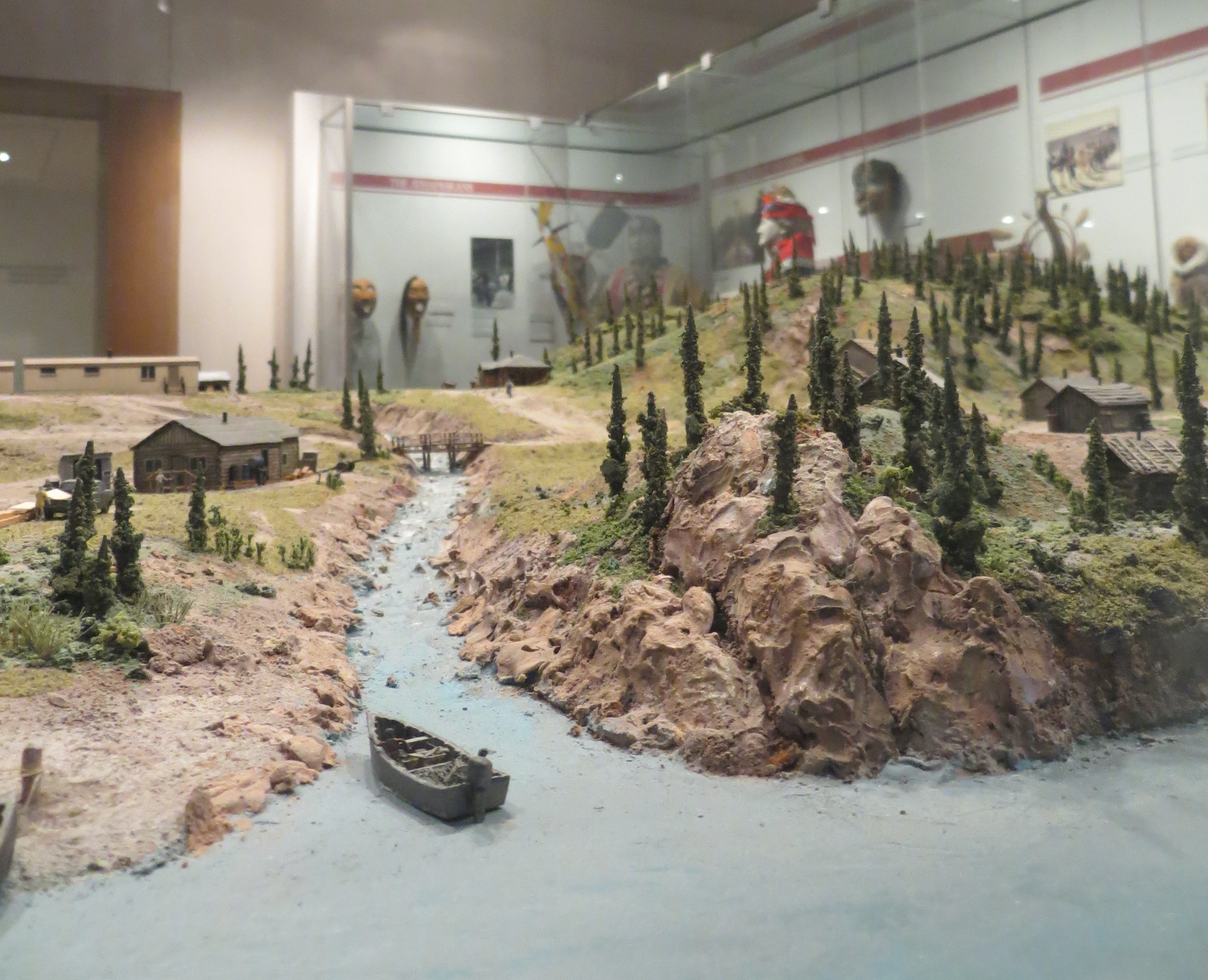
Damn the Science Exhibit; We’re Looking at Dioramas!
15 Friday Nov 2013

Posted by danielwalldammit in Alaska, Museums

≈ 5 Comments

Tags

Alaska Natives, Aleutians, Anchorage, Anchorage Museum, Athabaskan, Dioramas, Haida, Inupiat, Museums, Tlingit

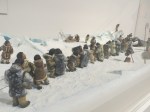
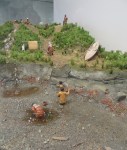
I'm not sure what community this represents, but I really like the scene.

A small community on the coast.

A couple of months back I found myself in Anchorage without too much to do. On my last day down there the devil that sits on my shoulder lost a debate with the nerdy bookworm that sometimes passes for my angelic adviser, and so I actually chose to do something instructive and educational. I went to the Anchorage Museum.

Don’t be too disappointed; it was actually kinda cool. My favorite part of the museum was actually the science exhibit, much of which was interactive. sadly, I don’t think my pictures and videos did much to capture the brilliance which was that particular part of the museum. Being a museum, the place was of course full of wonderful artifacts and displays casting light on all manner of things Alaskan. Being a cruel fellow, I am not going to show you much of that.

…at least not today.

No.

Today, we are looking at dioramas. A number of these were strewn about the museum, and I managed to get few decent pictures of some. I won’t pretend that this is a complete set, so to speak, as I am pretty sure that a few of thee exhibits told my camera to screw off and I completely neglected to right those wrongs, but at any rate, these are the pics I got. Both my devil-advisor and my nerdy-near-angel hope you enjoy them.

Quick Note: rather predictably, the scenes depicting Alaska Natives seem to have got most of my attention here. Depending on how broad you want your paint strokes to be we can bundle the Native Alaska population into 3, 5, or lots of general groups. I would normally go with 5; the natives of the outer Aleutian Islands (Aleutian or Unangan, depending on who you ask);  the Alutiiq (or Sugpiak) of the Eastern Aleutians parts of the Southwest coastal region; Yupiit of the Western coast, Inupiat of the Northern coasts, and Athabaskans who occupied interior Alaska. For those wondering, the Yupiit and Inupiat are the natives once commonly referred to as ‘Eskimos’, but we aren’t going to do that here. …oh, and let’s not forget the Northwest Coastal natives, who are ironically located in Southeast Alaska. When I say “Northwest Coast natives” I am referring to a common classification used by anthropologists to break the Native American population into about 10 distinct culture areas. So, ironically enough, Alaska’s Northwest Coastal natives are in the Southeast. …and if that manner of speaking seems weird, then the devil on my shoulder is well pleased.

I don’t seem to have pictures (even bad ones) for Yupiit or Alutiiq populations. I don’t know if Missed an exhibit or if I just wasn’t in a button pressing mood when I happened upon them. So, we have here representations of 3 native populations (depicted more or less as they might have lived prior to contact). I also have a few other pieces on the Alaskan Railroad, the Aleutian Campaign of World War II, and one beautiful scene of a community that I failed to identify (cause I’m a bad man).

A small community on the coast.
This piece represents Northwest Coastal natives.
The Northwest Coastal Natives (mainly Tlingit and Haida)

This part of Alaska is about as far from Barrow as Orlando is from New York.
Elder Native.
Elder from another angle.

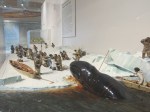
Inupiat hauling up a Bowhead Whale
Lots of mini muktuk for the mini villagers!
Yes, they still do this. Add a few modern tools to the diorama, and this could be a Spring hunt today.

These are the railroad shops of about 1919.
The shops are of course where railroady stuff got fixed.
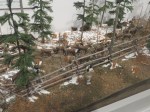
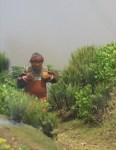
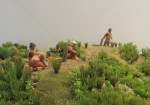
This represented an Athabaskan community hunting caribou.

Definitely not the best picture, but this is another pic of the Athabaskan village.
Aleutian village.
Aleutian Villager.

Aleutian Home haunted by a reflection from some other exhibit.
Aleut Village Again.
Moar Aleutian Goodness!

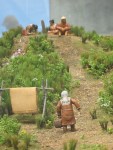
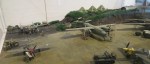
This depicts the Aleutian Campaign in World War II.
More from the Aleutian Campaign
The weather was probably as much trouble in the Aleutian campaign as the Japanese

71.271549 -156.751450

Share this:

  • Tweet
  • Share on Tumblr
  • Print (Opens in new window) Print
  • Email a link to a friend (Opens in new window) Email
  • Share on Reddit (Opens in new window) Reddit
Like Loading...

Unommonday – The Fightin’ Whities!

11 Monday Nov 2013

Posted by danielwalldammit in Native American Themes, Uncommonday

≈ 3 Comments

Tags

American Indians, Basketball, Native Americans, Sports, Sports Mascots, The Fighting Whites, The Fighting Whities, University of Northern Colorado

fightinwhitesSince sports mascots are on the public mind once again, I thought it might be a good time to post my all-time favorite team. Mind you, I don’t follow sports. When people talk about sports, to me it sounds a lot like the adults in a Peanuts cartoon. When a game is on the tube, I just see a blue screen. And I must say that I have never seen these guys play, nor do I know anything about their record. I just know the name of the mascot for an intramural basketball team at the University of Northern Colorado: It’s ‘The Fightin’ Whites’, or the ‘fightin’ whities’ as they were more popularly known. Their motto was “Every thang’s gonna be all white.” And just in case the ironic tone isn’t clear, let me point out that the school used sales of team merchandise to fund an excellent scholarship program for Native American Students.

71.271549 -156.751450

Share this:

  • Tweet
  • Share on Tumblr
  • Print (Opens in new window) Print
  • Email a link to a friend (Opens in new window) Email
  • Share on Reddit (Opens in new window) Reddit
Like Loading...

Barrow on the Big Screen, A Little at a Time

06 Wednesday Nov 2013

Posted by danielwalldammit in Alaska, Movies

≈ 7 Comments

Tags

Alaska, Barrow, Ethnicity, Film, Film Reviews, Movies, On the Ice, The Big Miracle, Thirty Days of Night

38483_1544951388794_3220306_nOne thing about coming to Barrow, it has made conversation much easier, at least in the lower 48. All I have to do is tell people I am from Alaska and the conversation is well on its way. They will ask more questions than I could possibly answer, and once I start telling them about Barrow I can generally be assured of willing and sympathetic audience. I’m a socially awkward kinda guy, so yes, this is a good thing. Anyway, I’m happy to talk about my new home. Barrow can be damned interesting!

…so I suppose it should come as no surprise that this town has made its way into the occasional television show or movie production. Three particular movies about Barrow seem to have made it into the popular culture to one degree or another. These films couldn’t be more different from one another. Each tells a different kind of story to a completely different audience, and each portrays the community of Barrow in a very different way. I’m always fascinated to see the community change its shape in order to meet the needs of the film-makers behind these project.

…fascinated enough to write a post about it anyway!

***

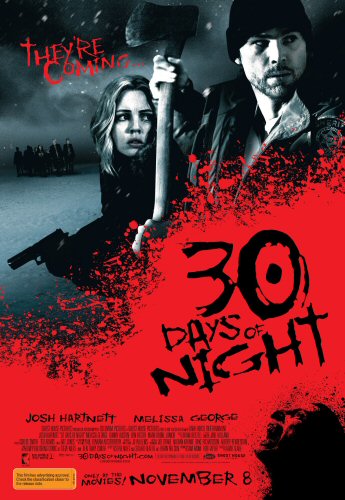
30-days-of-night-poster-1_6599Barrow as Darkness: Thirty Days of Night is of course the most well known movie about Barrow. In this film based on a graphic novel) vampires descend upon the town at the outset of Polar Midnight in order to enjoy a month-long feast in the safety of a season without sun. Thirty Days of Night wasn’t filmed here; it was filmed in New Zealand. Still, the central premise of the film is very much about Barrow and the dramatic significance of a long polar night.

The small hills and valleys of the movie’s opening sequences were about all it took to shake my sense that this film had much to do with the Barrow in which I live. The exaggerated sense of polar midnight didn’t help either. Once it goes dark in this film, it stays dark, …completely dark. What a lot of people don’t realize (and what the film-makers didn’t seem to find interesting) is the fact that we get a kind of fake sunrise here. If you can imagine the moment before the sun actually rises, that’s what we get in the midst of polar midnight, only it isn’t followed by an actual sunrise. You could swear the big ball of warmth was just about to pop over that horizon, and then the light just starts to fade.

…yes, it can be a little disappointing.

…kinda like Thirty Days of Night.

30DaysofNight_6lgBut perhaps I am being too harsh. Barrow does one thing only for this film and that is to provide the central premise, a vampire paradise. So, it should come as no surprise that the movie makes no attempt to convey anything meaningful about the people of this community. Still, you would think the directors would be kind enough to give their villainous horde of undead a bit of variety in their diet? Nope. The  Barrow of this film is a lily white community if ever I saw one before. As I recall, a token native does make an appearance in the living feast that is Barrow’s population for this film. Other than that, the menu is white meat only.

This is a fun film in its own right, but it is definitely, not the Barrow I know.

***

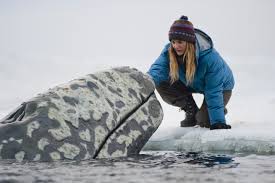
bigmiracleartworkpic1Barrow as a Big Warm Hug: Hollywood has made one popular film here in Barrow, and they did it since I arrived, The Big Miracle. At least it was about Barrow, and they did shoot some film up here. Some residents even made it into the movie, as did natives from other parts of Alaska. With a cast featuring Drew Barrymore and Ted Danson, this film recounts a real event in the history of this community. In 1988, three grey whales became trapped in the ice not far from here. The entire town as well as a number of outsiders (including a Russian icebreaker) worked hard to break them free.

The ironic thing about this movie is that it was based on a rather cynical book, ‘Everyone Loves Whales’. I gather the original script may even have had a little bite to it, but the final cut of this film is a feel-good celebration of compassion, humanity, and …whales! By the end of the film, the plot is fully focused on efforts to save the big lugs of the sea, but the early scenes focus on political questions about whether or not anyone will help them. One of those questions was apparently whether or not to eat the whales instead of saving them. The Iñupiat community of the north slope harvests Bowhead whales every year, so that possibility could hardly be described as a stretch. This plot point is eventually resolved when the whaling captains of the town decide instead to help free the whales.

(Big sigh folks!)

images (2)The eat-or-save sub-theme provides The Big Miracle with its main window into the community up here. Unlike Thirty Days of Night, this film actually finds a place for the Iñupiat community of Barrow in its storyline. They start out as potential villains and end up being god guys in the end.

…kinda like Clint Eastwood, only with chainsaws and snow-machines instead of Colt Walkers and a horse. (Let’s not talk about the harpoons.)

Folks up here are of mixed minds about how whether or not the film does justice to Iñupiat community of Barrow. Drew Barrymore (who plays a Greenpeace activist in the film) gives a pretty brutal speech about the native community and its whaling practices, and its hard to shake the sense that some of her points in that speech might have served as the voice of the film-makers. Later attempts to show the native community in a more positive light may or may not be enough to settle concerns about the politics of the movie, and for those here still very much committed to whaling, the major theme of the movie itself may be a little discomfitting. Barrow’s native community gets some love here precisely to the extent that their actions do not reflect what natives of the North Slope normally do with whales. It’s a conditional kind of love, and I can’t blame folks for being wary of the conditions.

For what it’s worth, this movie at least knows that natives exist in Barrow. It even kind-of likes them, so long as they aren’t eating muktuk.

***

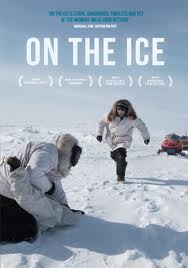
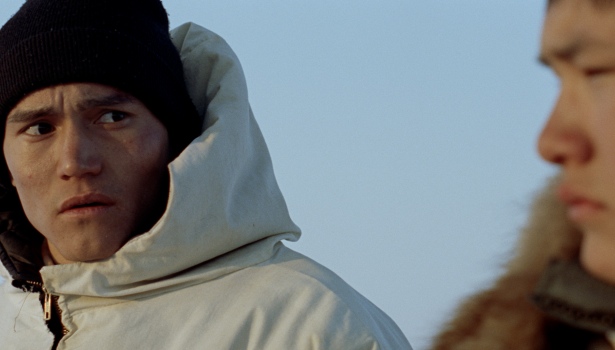
imagesBarrow as Native Youth: I can think of one REALLY good film set in Barrow, and that is On the Ice by Andrew Okpeaha MacLean. MacLean is from Barrow, and he uses the film quite deliberately to tell us something about life here at the top of the world. On the Ice tells the story of two young Iñupiat men with a secret they’ve been concealing from the rest of the community. And while this main story plays out, the film does a wonderful job of revealing the interplay between indigenous values and outside cultural influence in the native youth of this community.

On the Ice is a tense drama, and one which portrays the native community with a deliberate sense of realism. This film was shot in Barrow, and it features a number of residents in the supporting cast. It’s both amusing and a little disconcerting to see scenes on street corners I pass regularly, and even more so to see people I know in various scenes, but that is definitely one of the film’s charms. If the other films are set in Barrow (or at least an imaginary version thereof), the real Barrow jumps right out at you from this film.

…at least it does for me.

On-the-ice-premieresWhat’s missing from On the Ice is everyone else! …besides the Iñupiat community, I mean. Every once in awhile you can catch a glimpse of a non-native somewhere onscreen in this film, but that is definitely the exception. For the most part this film has eyes only for the native population. Gone are the white folks, yes, but so are the Koreans, the Thais, the Tongans, the Samoans, and the Filipinos, each of whom has a substantial place in this town.

On one level, fair enough. This movie is about native youth not the rest of us. On another, it’s a simplification, perhaps even an over-simplification. I can’t help but think it makes a difference that the outside influences (and the people who represent them) are present here in Barrow itself, and I would think that would be part of the story of native youth, at least if that story is to be a realistic portrayal (perhaps it is not). It would have been interesting to see how these characters dealt with ethnic relations over the course of the story. Leaving out all the sub-communities from the town simplifies the storyline and that is the one thing that jars me a bit when I watch it. But seriously, I mean to praise the film with faint damn. Because what this film does, it does well.

If you want to watch a movie about Barrow, this is the one.

***

So there it is. The community in which I live takes on radically different forms whenever a camera is pointed at it. It is darkness for those seeking a fright, a reluctant helper for those seeking a heart-warming smile, and in it’s best incarnation to date, it is an all-native community. The full community of Barrow never seems to make it into these stories, and the interplay between all the ethnicities of this town has yet to make it onto the big screen.

Ah well, goodnight.

71.271549 -156.751450

Share this:

  • Tweet
  • Share on Tumblr
  • Print (Opens in new window) Print
  • Email a link to a friend (Opens in new window) Email
  • Share on Reddit (Opens in new window) Reddit
Like Loading...

Uncommonday: Great Show, but Who is the Drummer?

04 Monday Nov 2013

Posted by danielwalldammit in Music, Uncommonday

≈ 5 Comments

Tags

Impromptu Performance, Pete Townsend, Quadraphenia, Rock&Roll, San Francisco, Scot Halpin, The who

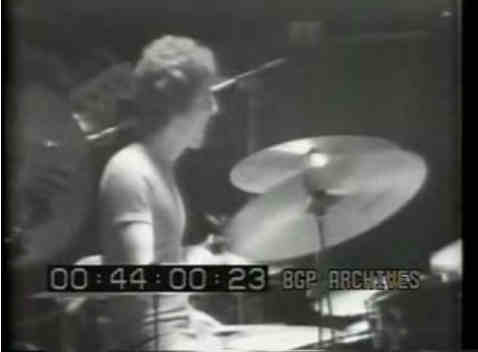
Scot+Halpin“Can anybody play the drums? Can anybody play the drums? I mean somebody good.”

These aren’t the words one would expect to hear at a major rock concert, but that is exactly what Pete Townsend asked the crowd at The Cow Palace in San Francisco on November 20th, 1973.

It was the opening date for the start of the Quadraphenia tour, which is to say that this was one of the biggest bands out there at the peak of their popularity. Drummer Keith Moon had just passed out for the second time that evening, and apparently there was no reviving him. So, in what has to be one of the greatest rock&roll moments in all of history, Townsend turned to the audience and asked for a volunteer. What they got was Scot Halpin, a recent high school graduate who hadn’t played the drums in a year.

Halpin played three songs with The Who that night and closed the show.

(Short version, skips the songs)

(Full Concert)

71.271549 -156.751450

Share this:

  • Tweet
  • Share on Tumblr
  • Print (Opens in new window) Print
  • Email a link to a friend (Opens in new window) Email
  • Share on Reddit (Opens in new window) Reddit
Like Loading...

Uncommonday Number 2: A Bit of Juxtaposition

28 Monday Oct 2013

Posted by danielwalldammit in Museums, Native American Themes, Uncommonday

≈ 10 Comments

Tags

Anchorage, Anchorage Museum, Art, Hopi, Juxtaposition, Native American, Nicholas Galanin, Photography, Star Wars

Leia-Hopi croppedI seriously wonder what the folks out on the Hopi Mesas must have thought of Star Wars. I’ll leave the commentary at that, because I think the photo here speaks for itself. This piece was produced by the artist Nicolas Galanin. It was part of an exhibit at the Anchorage Museum.

71.271549 -156.751450

Share this:

  • Tweet
  • Share on Tumblr
  • Print (Opens in new window) Print
  • Email a link to a friend (Opens in new window) Email
  • Share on Reddit (Opens in new window) Reddit
Like Loading...

Geronimo: A Manly Legend, No Women Allowed!

25 Friday Oct 2013

Posted by danielwalldammit in History, Movies, Native American Themes

≈ 25 Comments

Tags

Dahteste, Film, Gender, Geronimo, Gouyen, Lozen, Movies, Wes Studi, Women

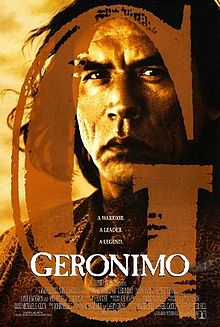
220px-Geronimo_filmIt’s been a number of years since I first watched Geronimo, An American Legend. But it just arrived in my latest shipment from Amazon, along with some chili paste. So, a good meal and a good movie go together like kids with crayons and a clean white wall.

Yes, I do enjoy this movie. The cast is first rate, and all of them turn in fine performances. Wes Studi is at his bad-ass best playing Geronimo. I have enjoyed watching this movie in the past, and I’m sure I will do so again (like when it hits 30 below this winter and stays there). I do like this movie, but…

Like most films about real historical events, this one does take some liberties with its subject matter. The central focus of this movie would seem to be efforts by key military personnel to secure Geronimo’s surrender. We see as much diplomacy in this film as we do fighting, albeit under duress and always with the possibility of violence mere moments away. If I understand the history correctly, the sequence of events in the movie is a bit off, the significance of a key leader Naiche is minimized, and General Crook’s reaction to Geronimo’s escape is played up a bit much. I may be missing something, but I can live with most of these deviations from the facts. But right now one of those little simplifications is crawling up my pant leg and biting my ass just like the proverbial rainbow in that first season of Southpark. I mean this one little twist is really bugging me. The problem is this.

Where are the women?

I’m not normally one to criticize people for the movie they didn’t make, or the book they didn’t write, but well, that’s exactly what I’m gonna do here.

Yep!

A number of Apache women do appear on screen during the course of this movie. They are pictured running away from the U.S. soldiers, living on the reservation or in camp, and they even appear on the train taking Geronimo to Florida. We also have some discussion of the atrocities committed against women on various sides in the conflicts at hand. The film stops short of showing us the full extent of those atrocities, not the least of reasons being (I suspect) that it would make it a lot harder to identify with the men committing them. Geronimo in particular must be intimidating, but not so much so that we cannot care about his fate. The movie makers didn’t quite have the courage to actually show us how bloody this war got, so they let the characters tell us about it instead.

Okay, so that’s all well and good, but here is the thing; some really interesting women were involved in the events portrayed in this film. You wouldn’t know it unless you dug a little into the history at hand (I’m still getting started myself on this one), and you certainly wouldn’t expect a prominent role for women in the imaginary world of most fiction of the American West. Okay, we always have room for a prostitute with a heart of gold, or a damsel in distress, but genuinely strong women’s roles aren’t exactly common fare in the genre. And of course this is a film about warfare, so we wouldn’t expect women to play much of a role in that.

But here they are!

APACHE EPICYou can see a few women who rode with Geronimo and Naiche in this picture as they await deportation to Florida. Two of them are of particular importance, the 5th and 6th figures from the right on the top row. There are several reasons to be interested in these women, but a couple of them in particular should have been of interest to the folks behind the movie, Geronimo; both were actively involved in the fighting as well as the negotiations for Geronimo’s surrender. These women were not simply traveling with him; each played a significant role in the actual story on which the movie is based.

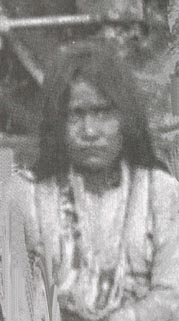
Lozen04-e1333817881283The Sixth figure on the right of the top row is Lozen, sister of Victorio. She cuts an interesting figure in this image, barely facing the camera. One might not take her for a woman at first sight, which is actually rather appropriate. She seems to have dressed as a man for balance of her adult life, and she certainly seems to have taken on the role of a man when it came to warfare. This kind of gender-bending isn’t entirely unusual in Native American communities, but I don’t want to be too quick to draw conclusions about her own role in Apache society.

Lozen is credited with taking special precautions to protect women and children during her brother’s campaigns. Various sources have her escorting women and children across a river to safety before rejoining the men before a fight. In another instance she is said to have escorted a woman to the safety of a reservation, stealing horses for the both of them in the process. Seriously, her actions during Victorio’s campaigns alone are the stuff of legend. During Geronimo’s campaigns, she seems to have added the powers of a shaman to her reputation.

Why no-one has made a movie about Lozen is beyond me, though I understand someone wrote her into a sort of Romance novel. I haven’t read it, so I should with-hold judgement, but I must say that the idea fills me with dread. A segment in Apache Chronicle seems much more promising.

Following Geronimo’s surrender, Lozen was shipped East to Florida along with the others. She died of tuberculosis while in captivity.

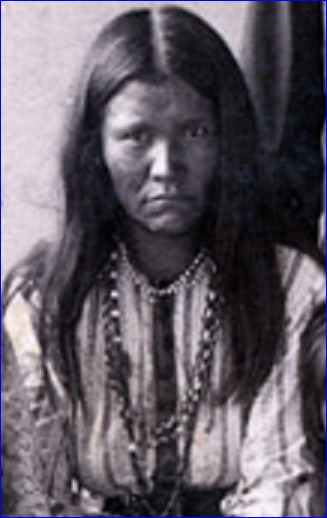
dahtesteSitting next to Lozen is Dahteste, and yes, it is significant that they are together. It’s difficult to know the exact nature of their relationship, but the two were certainly close associates throughout Geronimo’s campaign.

Dahteste figures a little less prominently than Lozen in the folklore of the time, but she is also credited with significant fighting skills and there is little reason to believe she could have acquired that reputation without using those very skills in action. More to the point, Dahteste’s fluency in English made her a valuable intermediary between ‘hostile’ Apache and the U.S. Army, which would have put her right at the heart of the story in Geronimo.

She too was taken into custody following Geronimo’s surrender, and shipped back East. She lived long enough to finish her life on the San Carlos Apache reservation.

***

What of it?

Both of these women certainly could have been portrayed in the film, Geronimo. At the very least their inclusion would have added color to the story. More than that, their role in negotiations for surrender would have put these two women right in the central plot-line of the movie. They had to be written out of the story, and in writing them out the story, the film-makers delivered narrative that was much more masculine and much more hetero-normative than the one they could have told, or would have told, had they had the balls to do so.

If there are specific historical reasons for dropping Lozen and Dahteste from this legend, I do not know what they would be, but I suspect the actual reason for this would be a failure of the imagination. Warfare in the old west is, as far as the typical America can envision it, a distinctively masculine enterprise. Women may from time to time fall victim to it, and the occasional female character can show her spirit by picking up a gun when necessary. They were not merely caught up in the action, and they did a Hell of a lot more than show a little spirit when it was absolutely necessary. These weren’t damsels in distress; they were distress in their own right. I sincerely doubt that the folks making this film knew what to do with them.

…which is a damned shame.

Don’t get me wrong; I don’t really see the inclusion of these two in Geronimo’s story as a question of justice (no more than I worry about the omission of Naiche). Neither historians nor film-makers, nor anyone else for that matter, can grant justice to those long dead and gone. This is a question of story-telling. It’s hard to get this across to people who don’t study history. The real thing is consistently more interesting, more convoluted, and more difficult to imagine than the stories Hollywood typically gives us. The liberties they take with historical subject matter rarely add much to the story; they consistently leave that story impoverished.

This American Legend (cool as it is) would have been that much more interesting had they found a place for these two Apache legends.

***

2010218153724_GouyenNot pictured above would be a woman named Gouyen, a bad-ass in her own right. She too was captured at the end of Geronimo’s campaign and transported to Florida, but not before accomplishing a few impressive feats of her own.

I haven’t learned what role (if any) she may have played in events leading up to Geronimo’s surrender, but her martial feats are impressive enough in their own right. When her first husband was killed in a Comanche raid, she is said to have tracked down the man who did it and returned home with his scalp.

She did this alone.

During Geronimo’s earlier campaigns, so the story goes, Gouyen actually saved her second husband’s life.

Gouyen died at Fort Sill, Oklahoma in 1903.

71.271549 -156.751450

Share this:

  • Tweet
  • Share on Tumblr
  • Print (Opens in new window) Print
  • Email a link to a friend (Opens in new window) Email
  • Share on Reddit (Opens in new window) Reddit
Like Loading...

Uncommonday Number 1: Heh-heh, …Toilet Humor!

21 Monday Oct 2013

Posted by danielwalldammit in Uncommonday

≈ 12 Comments

Tags

Alaska, Anchorage, Beavis, Beavis&Butthead, Cornholio, Humor, Monday, Odd, Toilet Humor

419I am totally off my game here, so I’ve decided to try and jump start my blog with a new weekly feature. I’m calling these ‘Uncommondays’. I thought about calling them ‘Queered Quickies’, but that isn’t really my cultural capital. Angstie Mondays? Yeah, those I can relate to, and I’m guessing most of you can too. So, I thought it might be fun to throw a little curve-ball at the start of the work week.

Well, fun or not, I’m gonna!

…and I thought I would start this off with a picture I took in early September. Who would have thought I would have met this character in a bathroom in Alaska. Oh the bathroom part makes sense, but I didn’t expect to see him this far North. I mean, Anchorage is a long way from Lake Titicaca. I can only hope the poor guy found some Cappuccino!

…and perhaps a little TP.

71.271549 -156.751450

Share this:

  • Tweet
  • Share on Tumblr
  • Print (Opens in new window) Print
  • Email a link to a friend (Opens in new window) Email
  • Share on Reddit (Opens in new window) Reddit
Like Loading...
← Older posts
Newer posts →

Top Posts & Pages

  • Uncommonday Morning Blues - Ian Anderson Learns to Play the Flute
    Uncommonday Morning Blues - Ian Anderson Learns to Play the Flute
  • An Uncommon Security Guard: Dave Eshelman, AKA 'John Wayne'
    An Uncommon Security Guard: Dave Eshelman, AKA 'John Wayne'
  • Hostiles and Spoilers: A Magic Studi
    Hostiles and Spoilers: A Magic Studi
  • The Village of Wainwright, Alaska
    The Village of Wainwright, Alaska
  • A Joke from a Bygone Era
    A Joke from a Bygone Era
  • Arms Across the Keyboard: Teaching Computer Skills in South Africa
    Arms Across the Keyboard: Teaching Computer Skills in South Africa
  • A Brief Lapse in Sarcasm and a Moment of Unabashed Provincialism
    A Brief Lapse in Sarcasm and a Moment of Unabashed Provincialism
  • Southern Paiutes as Portrayed in Las Vegas Area Museums.
    Southern Paiutes as Portrayed in Las Vegas Area Museums.
  • It's the End of the World as we Know it!
    It's the End of the World as we Know it!
  • All Your Norths are Belong to Me!!!
    All Your Norths are Belong to Me!!!

Topics

  • Alaska
  • Animals
  • Anthropology
  • atheism
  • Bad Photography
  • Books
  • Childhood
  • Education
  • Gaming
  • General
  • History
  • Irritation Meditation
  • Justice
  • Las Vegas
  • Minis
  • Movie Villainy
  • Movies
  • Museums
  • Music
  • Narrative VIolence
  • Native American Themes
  • Philosophy
  • Politics
  • Public History
  • Re-Creations
  • Religion
  • Street Art
  • The Bullet Point Mind
  • Travel
  • Uncategorized
  • Uncommonday
  • White Indians
  • Write Drunk, Edit Stoned

Blogroll

  • American Creation
  • An Historian Goes to the Movies
  • Aunt Phil's Trunk
  • Bob's Blog
  • Dr. Gerald Stein
  • Hinterlogics
  • Ignorance WIthout Arrogance
  • Im-North
  • Insta-North
  • Just a Girl from Homer
  • Multo (Ghost)
  • Native America
  • Norbert Haupt
  • Northwest History
  • Northy Pins
  • Northy-Tok
  • Nunawhaa
  • Religion in American History
  • The History Blog
  • The History Chicks
  • What Do I Know?

Archives

  • December 2023
  • November 2023
  • June 2023
  • April 2023
  • February 2023
  • December 2022
  • November 2022
  • October 2022
  • September 2022
  • August 2022
  • July 2022
  • June 2022
  • April 2022
  • January 2022
  • December 2021
  • November 2021
  • October 2021
  • September 2021
  • August 2021
  • June 2021
  • May 2021
  • March 2021
  • February 2021
  • January 2021
  • December 2020
  • November 2020
  • October 2020
  • September 2020
  • June 2020
  • May 2020
  • March 2020
  • February 2020
  • January 2020
  • December 2019
  • November 2019
  • September 2019
  • August 2019
  • July 2019
  • June 2019
  • May 2019
  • April 2019
  • January 2019
  • December 2018
  • November 2018
  • October 2018
  • September 2018
  • August 2018
  • July 2018
  • June 2018
  • May 2018
  • April 2018
  • March 2018
  • February 2018
  • January 2018
  • December 2017
  • November 2017
  • October 2017
  • September 2017
  • August 2017
  • July 2017
  • June 2017
  • May 2017
  • April 2017
  • March 2017
  • January 2017
  • December 2016
  • November 2016
  • October 2016
  • September 2016
  • August 2016
  • July 2016
  • June 2016
  • May 2016
  • April 2016
  • March 2016
  • February 2016
  • January 2016
  • December 2015
  • November 2015
  • October 2015
  • September 2015
  • August 2015
  • July 2015
  • June 2015
  • May 2015
  • April 2015
  • March 2015
  • January 2015
  • December 2014
  • November 2014
  • October 2014
  • July 2014
  • June 2014
  • May 2014
  • April 2014
  • March 2014
  • February 2014
  • January 2014
  • December 2013
  • November 2013
  • October 2013
  • September 2013
  • August 2013
  • July 2013
  • June 2013
  • May 2013
  • April 2013
  • March 2013
  • February 2013
  • January 2013
  • December 2012
  • November 2012
  • October 2012
  • September 2012
  • August 2012
  • July 2012
  • June 2012
  • May 2012
  • April 2012
  • March 2012
  • January 2012
  • December 2011
  • November 2011
  • October 2011

My Twitter Feed

Follow @Brimshack

RSS Feed

  • RSS - Posts
  • RSS - Comments

Enter your email address to follow this blog and receive notifications of new posts by email.

Join 8,072 other subscribers

Blog at WordPress.com.

  • Subscribe Subscribed
    • northierthanthou
    • Join 8,072 other subscribers
    • Already have a WordPress.com account? Log in now.
    • northierthanthou
    • Subscribe Subscribed
    • Sign up
    • Log in
    • Report this content
    • View site in Reader
    • Manage subscriptions
    • Collapse this bar
 

Loading Comments...
 

    %d