• About

northierthanthou

northierthanthou

Category Archives: History

Yep! This is where I put the stuff that pertains to history. Take notes, because there will be a test.

An Uncommon Pitch Line

20 Monday Oct 2014

Posted by danielwalldammit in History, Movies, Uncommonday

≈ 4 Comments

Tags

Advertising, Film, Mental health, Misrepresentation, Movies, Psychiatry, Siegfried Sassoon, War, World War I

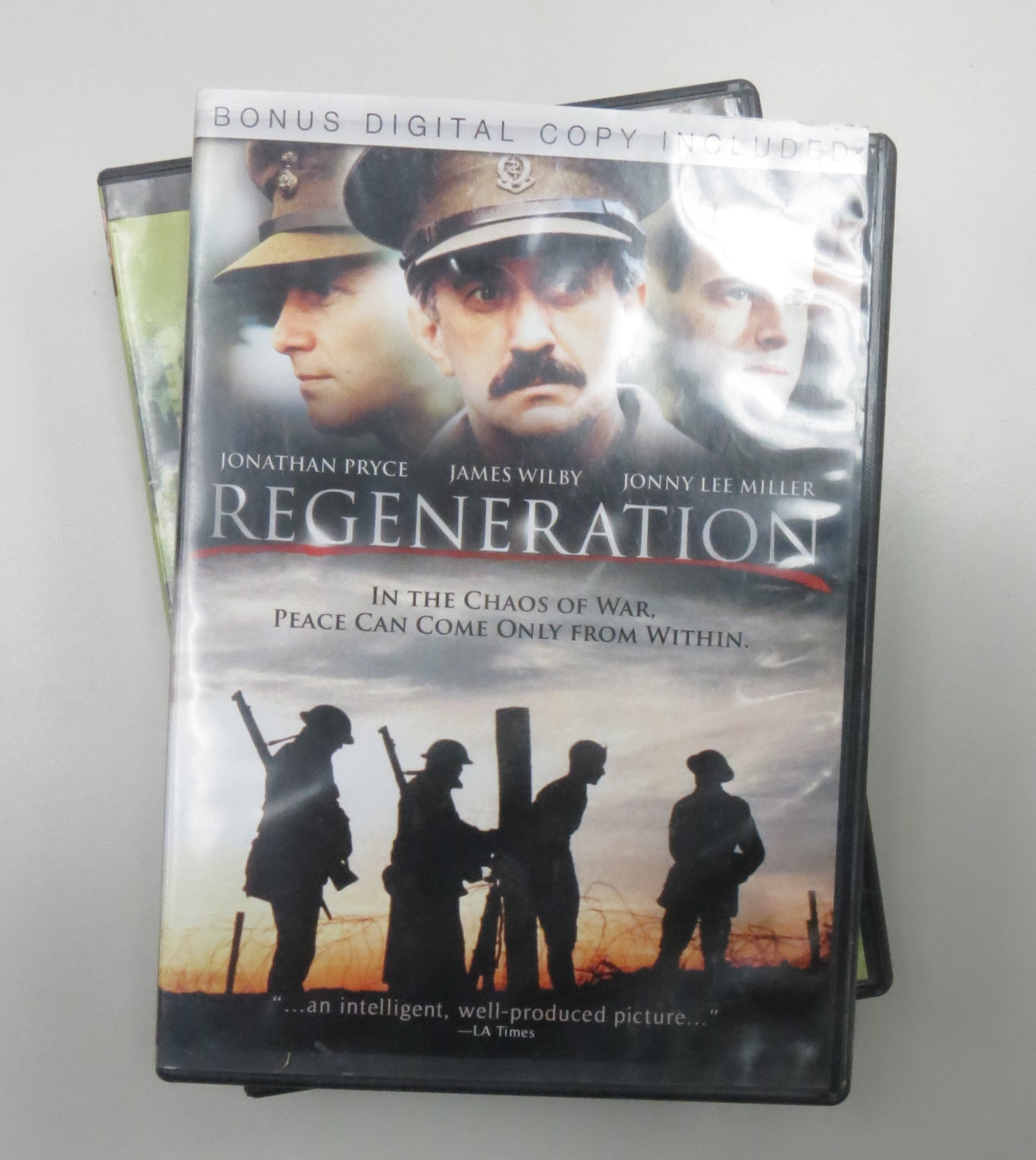
???????????????????????????????Have a look at the pitch line on this movie. “In the chaos of war, peace can only come from within.” What’s odd about that, you may ask? It is after all a story about a soldier and the psychiatrist who has been assigned to help him recover from Shell Shock. So, the line makes a lot of sense right? Well, yes it does.

Unless of course, you’ve seen the movie.

Because if you’ve seen the movie, then you will likely realize that the premise of the film is actually that the soldier, Sigfried Sassoon is NOT actually suffering from Shell Shock. (Sassoon was in fact a real historical figure, by the way, one well worth knowing about.) He had in fact published an open letter in opposition to the war. As the man was already a highly celebrated war hero and a recipient of the military cross, this posed a bit of an unusual problem for the British high command. You can’t just put a hero in front of a firing squad, can you? So, the British military wasn’t quite sure what to do about this. The solution was to declare him ill and assign a psychiatrist to treat him. By ‘treat’ in this case we mean of course that the psychiatrist in the film was expected to talk Sassoon into going back out to join the fighting. Far from a movie about finding inner peace, this is a film about the misuse of medical science in the politics of war. It is in fact a very bitter tale of a medical practice that wasn’t about finding peace of any kind.

But, hey ad guys! Don’t let that stop you from putting a perfectly vapid cliché on the cover of this wonderful film. Better yet, why don’t you pick a theme that carries forward the very hypocrisy addressed in the movie itself.

Share this:

  • Tweet
  • Share on Tumblr
  • Print (Opens in new window) Print
  • Email a link to a friend (Opens in new window) Email
  • Share on Reddit (Opens in new window) Reddit
Like Loading...

An Uncommon Holy Relic: Sheela-Na-Gig!

20 Monday Jan 2014

Posted by danielwalldammit in History, Religion, Uncommonday

≈ 9 Comments

Tags

Archaeology, Christianity, Churches, Femininity, Gender, Sculpture, Sex, Sheela-Na-Gig, Stone-Work

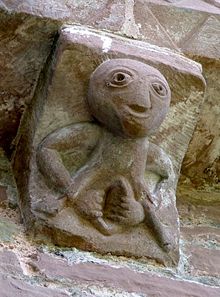
220px-SheelaWikiOkay, now I know what you are thinking; “Dan is posting porn again! Will someone please keep him away from that damned erotic heritage place!?!” But no. I tell you I didn’t find this in a red light district, smut shop, or even a kinky museum. This naughty little lady was found at a church. Her name is Sheela, or at least that’s what folks call her and a vast array of figures like her. She and her sisters go by the full name of ‘Sheela-na-Gigs’, and you can find them on churches throughout the United Kingdom. Yes, that’s right, it appears that one can find images of grotesque women spreading their labia can be found at old churches throughout the United Kingdom.

Why, you may ask. Well it’s a fair question, but the answer appears to be difficult to nail down. There are a couple theories as to the origins of the term, Sheela-Na-gig, just as there are a few theories as to the reason such images could be found in old churches. Is she a relic of past paganism, an omen about the temptations of sin, or possibly just an erotic gargoyle of sorts. It really depends on who you ask. As I recall, an archaeologist once suggested that she was a symbol of Jesus himself, but I can’t find a written source on that. Presumably, that theory didn’t get very far. Anyway, the whole thing is a little too far outside my own areas for me to weigh in on the controversies with confidence, but I think we can safely draw one conclusion from it; the history of Christianity is far more complex and interesting than you would gather from your local neighborhood church (unless perhaps you are in England).

Of course most history is more complex than folks would gather from the world as it is now, but it doesn’t hurt to remind people of the full range of human possibility from time to time.

That’s what Sheela is here for.

***

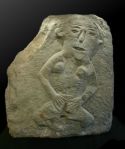
The image above is on Kilpeck Church. I have included a few others below, most of which I drew from a website called The SheelaNaGig Project. Also included are images from Chloran, Moulton, Fiddington, Binstead, Oxford, and Llandrindod. You may click to embiggen (if you dare), but a visit to the almighty wiki or the SheelanaGig Project is well worth the time it takes to read about these figures.

Chloran (Got this one from the British Museum website)
Binstead
Llandrindod

The Moulton Pair
Fiddington
Oxford

71.271549 -156.751450

Share this:

  • Tweet
  • Share on Tumblr
  • Print (Opens in new window) Print
  • Email a link to a friend (Opens in new window) Email
  • Share on Reddit (Opens in new window) Reddit
Like Loading...

Uncommonday Morning News – Shaka May Have a Patent-Suit Against Sitting Bull

02 Monday Dec 2013

Posted by danielwalldammit in History, Native American Themes, Uncommonday

≈ 13 Comments

Tags

American Indians, Anheuser-Busch, Cassilly Adams, Custer's Last Fight, Custer's Last Stand, George Armstrong Custer, History, Little Big Horn, Native Americans, Sioux

62300

(Click to embiggen)

This painting is one of the reasons Custer is still remembered as a hero in some quarters. To quote a fellow-blogger:

In 1884, eight years after George Armstrong Custer’s death, the Anheuser-Busch brewing company commissioned an original oil painting, Custer’s Last Fight, by Cassilly Adams.  It was reproduced as a lithograph by F. Otto Becker in 1889 and distributed as an advertising poster by Anheuser-Busch.  This depiction of the Battle Of the Little Bighorn undoubtedly hung in more saloons than any image before or since, and fixed the iconography of Custer’s last moments in the national imagination.

I am told the image represents the terrain at Little Big Horn reasonably well, though some question its depiction of the soldier’s uniforms, the lack of guns among the Sioux, and of course Custer’s heroic posture in those final moments is open to more than a little doubt. What makes this image a truly golden bit of absurdity, however, would have to be the Indian shields.

…just a little off.

???????????????????????????????????????????????????????????????????????????????????????????????????????????????????????????????????????????????????????????????????????????????????????????????????????????????????

hm…

???????????????????????????????????????????????????????????????????????????????????????????????????????????????????????????????????????????????????????????????????????????????????????????????????????????????????

hmmm again!

shakazulu4

Ahem!

71.271549 -156.751450

Share this:

  • Tweet
  • Share on Tumblr
  • Print (Opens in new window) Print
  • Email a link to a friend (Opens in new window) Email
  • Share on Reddit (Opens in new window) Reddit
Like Loading...

Sometimes the Story Tells You! A Few Comments on Narrative Scope and Survey Sedatives.

22 Friday Nov 2013

Posted by danielwalldammit in Education, History

≈ 15 Comments

Tags

American Indians, College, Dakota, Native Americans, Santee, Sioux Uprising, Story-Telling, Survey Texts, The Dakota Sioux Uprising

006When people introduce a given piece of information as “something you don’t learn in the history books” or “something they don’t teach in history class” I often find myself wondering if the individual in question really has read any history books lately?

I think these are comments that just roll off the tongue while someone thinks about what they are going to say next. When I hear what they do say next, as often as not I find myself thinking; “well I teach that,” or even “Hell, that’s right in my textbook!” Sometimes I even find myself thinking; “Every teacher I’ve ever had and every textbook I’ve ever used teach that very thing you numbskull!”

Just kidding; I don’t actually use the word ‘numbskull’ in my internal monologues.

The kind of history-bashing that I am talking about almost always involves old yarns long since unraveled by the majority of historians out there. Just to provide one example, most of the myths about Columbus fall under this heading. I don’t think I’ve ever had a teacher present the classic myth of Columbus discovering America or proving the world is round, at least not without including some form of ironic commentary. I can think of numerous instances where the critique didn’t go far enough, but even my second grade teacher in a conservative lily-white community way back in the 70s made a real effort to debunk some of the standard Columbian themes. My American history textbooks don’t present the classic Columbus myths and my world history textbook even has a small section about the invention of those very myths. Yet, I still hear people preface the standard critique of Columbus with the pretense that we are about to take on the entire history profession just by listening to them.

I get a little tired of it.

***

This isn’t to say that I don’t have my own complaints about the state of the art in teaching history, and especially about textbooks. It’s a rare day that an encounter with any given survey text doesn’t leave me in tears, or at least put me to sleep, and I regard it as poetic justice that I will forever be teaching introductory classes where these instruments of torture seem to be a staple crop.

The problems that plague survey texts are generally a bit more subtle than Sunday morning historians would have it, however, and those problems are often difficult to resolve without asking students to do more than most wish to. The inaccuracies of history texts aren’t always due to fundamental misunderstanding; they often seem to be the result of narrative choices, choices often dictated by the nature of survey-text sedatives.

Case in point?

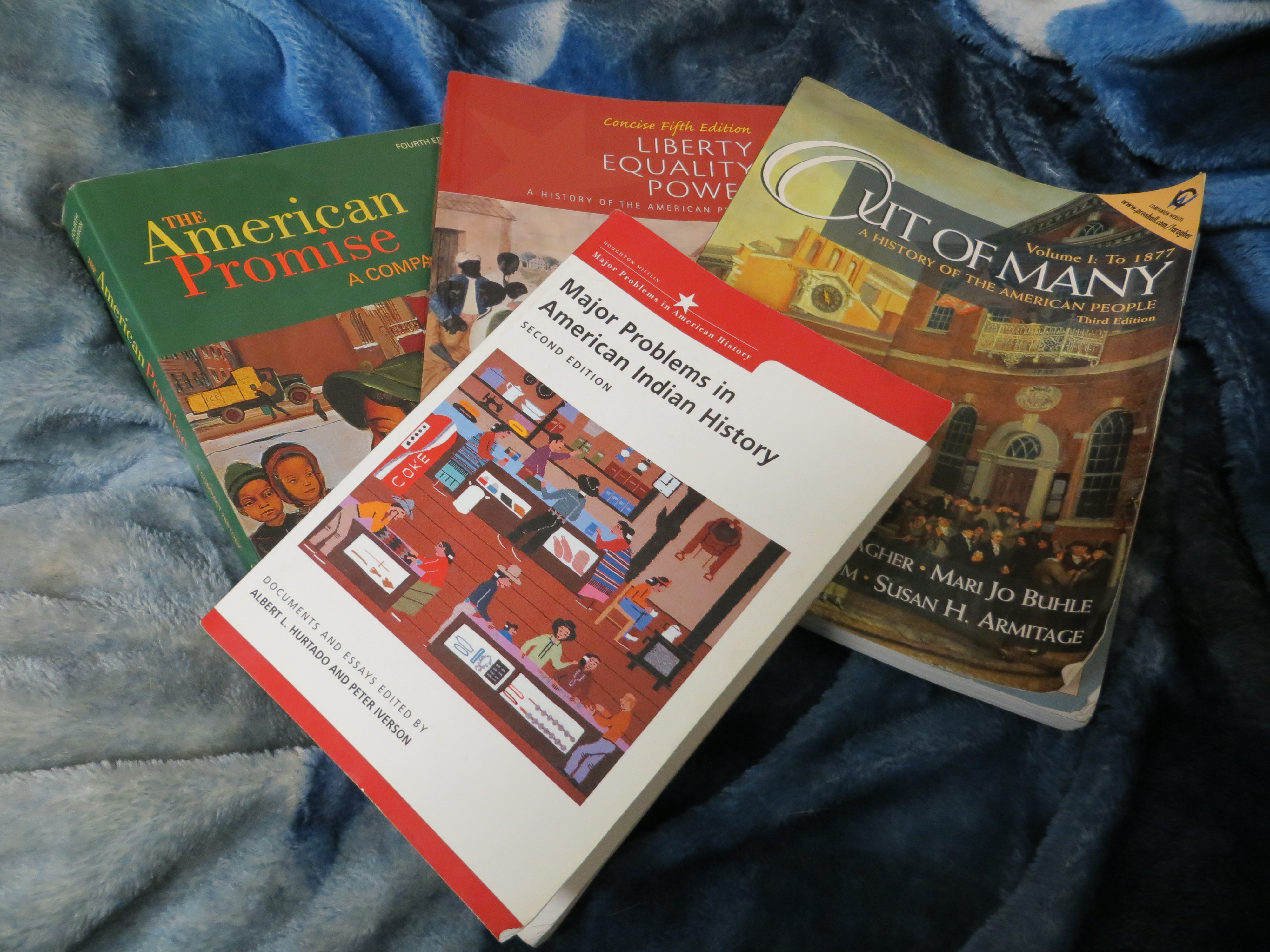
I use a reader for my Native American History class, Major Problems in American Indian History. It contains both primary documents (those produced by actual participants and witnesses in various stages of history) and interpretive essays. One of those essays in this text, “The Dakota Sioux Uprising, 1862” by Gary Clayton Anderson, presents a wonderful glimpse into the internal conflicts associated with this event. In this article Anderson takes on a terrible event in the history of Indian-white relations, one in which a number of atrocities were committed against non-native civilians, including women and children. If one were of a mind to tell such stories, this event could easily be the classic ‘Indian massacre’ that haunts the background of virtually the entire western genre in both film and literature. The uprising certainly contains enough frightful particulars to transform any narrative into a genuine nightmare. In fact Stan Hoig makes a point to suggest fears of a similar outbreak helped to explain the actions of officials in Colorado during the events prior to Sand Creek.

Note: I said prior to Sand Creek; Chivington and his men are a special kind of evil, but that’s a rant for another day.

In Anderson’s view, the uprising is a complex story in which various factions within the Dakota (otherwise known as Santee Sioux) square off against various factions of outsiders. As hunting became impossible, and rations promised by the U.S. government failed to appear, the prospect of starvation became inextricably mixed with questions about ways of living (farming versus hunting) and relations with outsiders. Some Santee had taken up farming; others wanted to resume (or take up) hunting as a primary means of subsistence. Significantly, many of those who had taken up farming had established connections (even marital relations) with local whites. So, the Santee population included a substantial ‘mixed blood’ population, and the local whites included many who had established ties to the tribe, some of which rose to the level of fictive (adoptive) kin ties.

Without going too much further down this rabbit hole (interesting as it is), Anderson does an excellent job of putting the violence of the outbreak in the context of all these factions. He argues that those perpetuating the violence were trying to pull their own community towards hunting as a way of life while punishing those whites they regarded as responsible for their own situation. Mixed bloods and whites with clear ties to Santee were generally spared (with some Santee going to great lengths to protect such people), and significant factions of the Santee pressed to end the fighting. Rivalries between those pressing the fight (which included a conflict over the question of whether to attack civilians or focus on military targets) and those seeking to end the fighting rose to the scale of potential intra-tribal warfare. Indeed, the actions of Santee opposed to the fighting helped to bring an end to the fighting.

One read through this article, and the simple narratives for this uprising go right out the window.

***

So, what do the survey texts in American History classes have to say about all this? Well let’s look at a couple of them…

I used to use a textbook called Out of Many: A History of the American People by John Mack Faragher, et. al. The third edition of this book has the following to say about these events:

Elsewhere in the West, other groups of Indians found themselves caught up in a wider war. An uprising by the Santee Sioux in Minnesota occurred in August of 1862, just as McClellan conceded defeat in the Penninsular campaign in Virginia. Alarmed whites, certain that the uprising was a Confederate plot, ignored legitimate Sioux grievances and responded in kind to Sioux ferocity. In little more than a month 500-800 white settlers and an even greater number of Sioux were killed.  Thirty-eight Indians were hanged in a mass execution in Mankado on December 26, 1862, and subsequently all Sioux were expelled from Minnesota. In 1863, U.S. Army Colonel Kit Carson invaded Navajo country in Arizona…

Let’s look at another text called Liberty, Equality, Power: A History of the American People (Concise Fifth Edition) by John M. Murrin, et.al. This book has the following to say on the subject:

The civil war set in motion a generation of Indian warfare that was more violent and widespread than anything since the 17th century. Herded onto reservations along the Minnesota River by the Treaty of Traverse des Sioux in 1851, the Santee Sioux were angry in the summer of 1862 that annuity payments did not arrive, threatening them with starvation. Young warriors began to speak openly of reclaiming ancestral hunting grounds. Then on August 17, a robbery in which five white settlers were murdered opened the floodgates. The warriors persuaded Chief Little Crow to take them on the warpath, and over the next few weeks at least 500 white Minnesotans were massacred.

Hastily mobilized militia and army units finally suppressed the uprising. A military court convicted 319 Indians of murder and atrocities and sentenced 303 of them to death. Appalled, Lincoln personally reviewed the trial transcripts and reduced the number of executions to 38, the largest act of executive clemency in American history. The government evicted the remaining Sioux from Minnesota to Dakota Territory.

My current textbook, The American Promise: A Compact History, Fourth Edition by James L. Roarke, et. al. has the following passage on the uprising:

The Indian wars in the West marked the last resistance of a Native American population devastated by disease and demoralized by the removal policy pursued by the federal government. More accurately called ‘settlers’ wars’ (since they began with ‘peaceful settlers,’ often miners, overrunning Native American land, the wars flared up again only a few years after the signing of the Fort Laramie treaty. The Dakota Sioux in Minnesota went to war in 1862. For years, under the leadership of Chief Little Crow, the Dakota, also known as the Santee, had pursued a policy of accommodation, ceding land in return for the promise of annuities. But with his people on the verge of starvation (the local Indian agent told the hungry Dakota, ‘Go and eat grass’), Little Crow reluctantly led his angry warriors in a desperate campaign against the intruders, killing more than 1,000 settlers. American troops quelled what was called the Great Sioux Uprising (also called the Santee Uprising) and marched 1,700 Sioux to Fort Snelling where 400 Indians were put on trial for murder and 38 died in the largest mass execution in American history.

Anyway, that’s three texts. I have a couple more that don’t even mention this event, which is a little disturbing.

***

So, what do we get out of all this?

Well, first, you gotta love the way one book describes the event as the largest use of executive clemency in history and another describes it as the largest mass execution in American history. There is probably an interesting lesson in fact selection there, but the most interesting thing about that little point may well be that both facts seem to be part of the same story. In one text, that is a story of great mercy, and in the other it’s a story of slaughter, and neither story is contradicted by the facts (at least not at this level of detail).

Ah well, moving on…

The first thing that I would say here is that none of these texts paints the natives in an overtly negative light. These were not written with the intention of slandering the Santee and pleading the cause of manifest destiny after the fact, so to speak. Such narratives do exist, but I didn’t find them in my stack of survey sedatives. If anything, each of these narratives seems almost painfully to be pleading the Sioux’s case and working hard to ensure the reader understand they had their reasons, so to speak.

The distortions here are a little more subtle; most of them being a function of basic story telling technique. Simply put, the question here is one of peopling the story-line. Where Anderson talks about multiple factions in and around the Santee community, each of these authors is telling a story about whites and natives. When they choose to break that down a little, we get references to ‘warriors’ and to Chief Little crow. Gone is the conflict within the tribe between pro-war and pro-peace factions, the entire existence of mixed bloods, arguments about who should and who should not be killed, and especially the active opposition of some villages to participation in the fighting. The decision to spare some whites while killing others is nowhere on the horizon here. And of course the notion that Little Crow simply led his people ‘on the warpath’ (reluctantly or otherwise) simplifies the nature of his leadership as well as the politics of the uprising itself. None of these sub-themes can be worked into the narrative (or even envisioned within it), because the characters are not even in the cast. There is simply no place for them.

So, what do I expect? Pretty much this, actually. These are survey texts, and the authors are struggling here to get a complex story into a paragraph or two. This means simplification, even oversimplification. It seems to me that in each of these cases, the author has made choices based at least partly on the larger narratives in which this story fits. Where Anderson is telling the story of a specific event, each of the survey text authors is treating this as a moment in a larger narrative about Indian-white relations in the west. They identify the participants in the Santee Sioux uprising based on the characters already filling that larger narrative.

Of course one of the central ironies here is that having put an insufficient number of players on the stage, so to speak, each of the survey authors is then at pains to make understandable the actions of the fictional Santee tribe which has become responsible for these events. Unable to assign specific actions to specific agents in the story, these authors must then work to keep us from walking away with a great big anti-Santee bottom line. But that bottom line is precisely a function of the narrative decisions they have already made. If we knew more about who was doing what and why, that impression would have no place to creep into the story, but we don’t. In the end, I suspect that anti-Santee bottom line will be the take-away for so many students, no matter how many sympathetic comments an author works into the text. In the larger story of American growth, the Santee can’t help but appear as an obstacle to that growth. You can make them sympathetic, but the only way to make them something other than an antagonist is to change the larger story altogether. Nothing done within the space of a couple paragraphs is going to work.

But a couple paragraphs are all the Santee uprising are going to get in the average textbook.

Now, just imagine that same kind of trade-off in every paragraph of virtually every page (side-bars excepted) of every history text out there. So, you see, this isn’t a problem of what is and isn’t taught; it’s a problem of how it’s taught. Many of these stories are just begging to be forgotten. You can see it in the way they are written.

Enjoy your reading kids!

71.271549 -156.751450

Share this:

  • Tweet
  • Share on Tumblr
  • Print (Opens in new window) Print
  • Email a link to a friend (Opens in new window) Email
  • Share on Reddit (Opens in new window) Reddit
Like Loading...

Geronimo: A Manly Legend, No Women Allowed!

25 Friday Oct 2013

Posted by danielwalldammit in History, Movies, Native American Themes

≈ 25 Comments

Tags

Dahteste, Film, Gender, Geronimo, Gouyen, Lozen, Movies, Wes Studi, Women

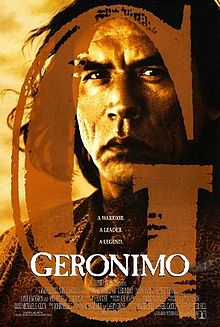
220px-Geronimo_filmIt’s been a number of years since I first watched Geronimo, An American Legend. But it just arrived in my latest shipment from Amazon, along with some chili paste. So, a good meal and a good movie go together like kids with crayons and a clean white wall.

Yes, I do enjoy this movie. The cast is first rate, and all of them turn in fine performances. Wes Studi is at his bad-ass best playing Geronimo. I have enjoyed watching this movie in the past, and I’m sure I will do so again (like when it hits 30 below this winter and stays there). I do like this movie, but…

Like most films about real historical events, this one does take some liberties with its subject matter. The central focus of this movie would seem to be efforts by key military personnel to secure Geronimo’s surrender. We see as much diplomacy in this film as we do fighting, albeit under duress and always with the possibility of violence mere moments away. If I understand the history correctly, the sequence of events in the movie is a bit off, the significance of a key leader Naiche is minimized, and General Crook’s reaction to Geronimo’s escape is played up a bit much. I may be missing something, but I can live with most of these deviations from the facts. But right now one of those little simplifications is crawling up my pant leg and biting my ass just like the proverbial rainbow in that first season of Southpark. I mean this one little twist is really bugging me. The problem is this.

Where are the women?

I’m not normally one to criticize people for the movie they didn’t make, or the book they didn’t write, but well, that’s exactly what I’m gonna do here.

Yep!

A number of Apache women do appear on screen during the course of this movie. They are pictured running away from the U.S. soldiers, living on the reservation or in camp, and they even appear on the train taking Geronimo to Florida. We also have some discussion of the atrocities committed against women on various sides in the conflicts at hand. The film stops short of showing us the full extent of those atrocities, not the least of reasons being (I suspect) that it would make it a lot harder to identify with the men committing them. Geronimo in particular must be intimidating, but not so much so that we cannot care about his fate. The movie makers didn’t quite have the courage to actually show us how bloody this war got, so they let the characters tell us about it instead.

Okay, so that’s all well and good, but here is the thing; some really interesting women were involved in the events portrayed in this film. You wouldn’t know it unless you dug a little into the history at hand (I’m still getting started myself on this one), and you certainly wouldn’t expect a prominent role for women in the imaginary world of most fiction of the American West. Okay, we always have room for a prostitute with a heart of gold, or a damsel in distress, but genuinely strong women’s roles aren’t exactly common fare in the genre. And of course this is a film about warfare, so we wouldn’t expect women to play much of a role in that.

But here they are!

APACHE EPICYou can see a few women who rode with Geronimo and Naiche in this picture as they await deportation to Florida. Two of them are of particular importance, the 5th and 6th figures from the right on the top row. There are several reasons to be interested in these women, but a couple of them in particular should have been of interest to the folks behind the movie, Geronimo; both were actively involved in the fighting as well as the negotiations for Geronimo’s surrender. These women were not simply traveling with him; each played a significant role in the actual story on which the movie is based.

Lozen04-e1333817881283The Sixth figure on the right of the top row is Lozen, sister of Victorio. She cuts an interesting figure in this image, barely facing the camera. One might not take her for a woman at first sight, which is actually rather appropriate. She seems to have dressed as a man for balance of her adult life, and she certainly seems to have taken on the role of a man when it came to warfare. This kind of gender-bending isn’t entirely unusual in Native American communities, but I don’t want to be too quick to draw conclusions about her own role in Apache society.

Lozen is credited with taking special precautions to protect women and children during her brother’s campaigns. Various sources have her escorting women and children across a river to safety before rejoining the men before a fight. In another instance she is said to have escorted a woman to the safety of a reservation, stealing horses for the both of them in the process. Seriously, her actions during Victorio’s campaigns alone are the stuff of legend. During Geronimo’s campaigns, she seems to have added the powers of a shaman to her reputation.

Why no-one has made a movie about Lozen is beyond me, though I understand someone wrote her into a sort of Romance novel. I haven’t read it, so I should with-hold judgement, but I must say that the idea fills me with dread. A segment in Apache Chronicle seems much more promising.

Following Geronimo’s surrender, Lozen was shipped East to Florida along with the others. She died of tuberculosis while in captivity.

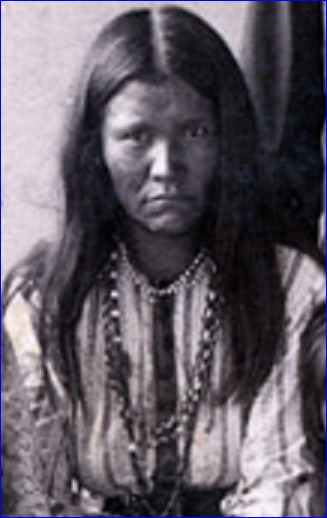
dahtesteSitting next to Lozen is Dahteste, and yes, it is significant that they are together. It’s difficult to know the exact nature of their relationship, but the two were certainly close associates throughout Geronimo’s campaign.

Dahteste figures a little less prominently than Lozen in the folklore of the time, but she is also credited with significant fighting skills and there is little reason to believe she could have acquired that reputation without using those very skills in action. More to the point, Dahteste’s fluency in English made her a valuable intermediary between ‘hostile’ Apache and the U.S. Army, which would have put her right at the heart of the story in Geronimo.

She too was taken into custody following Geronimo’s surrender, and shipped back East. She lived long enough to finish her life on the San Carlos Apache reservation.

***

What of it?

Both of these women certainly could have been portrayed in the film, Geronimo. At the very least their inclusion would have added color to the story. More than that, their role in negotiations for surrender would have put these two women right in the central plot-line of the movie. They had to be written out of the story, and in writing them out the story, the film-makers delivered narrative that was much more masculine and much more hetero-normative than the one they could have told, or would have told, had they had the balls to do so.

If there are specific historical reasons for dropping Lozen and Dahteste from this legend, I do not know what they would be, but I suspect the actual reason for this would be a failure of the imagination. Warfare in the old west is, as far as the typical America can envision it, a distinctively masculine enterprise. Women may from time to time fall victim to it, and the occasional female character can show her spirit by picking up a gun when necessary. They were not merely caught up in the action, and they did a Hell of a lot more than show a little spirit when it was absolutely necessary. These weren’t damsels in distress; they were distress in their own right. I sincerely doubt that the folks making this film knew what to do with them.

…which is a damned shame.

Don’t get me wrong; I don’t really see the inclusion of these two in Geronimo’s story as a question of justice (no more than I worry about the omission of Naiche). Neither historians nor film-makers, nor anyone else for that matter, can grant justice to those long dead and gone. This is a question of story-telling. It’s hard to get this across to people who don’t study history. The real thing is consistently more interesting, more convoluted, and more difficult to imagine than the stories Hollywood typically gives us. The liberties they take with historical subject matter rarely add much to the story; they consistently leave that story impoverished.

This American Legend (cool as it is) would have been that much more interesting had they found a place for these two Apache legends.

***

2010218153724_GouyenNot pictured above would be a woman named Gouyen, a bad-ass in her own right. She too was captured at the end of Geronimo’s campaign and transported to Florida, but not before accomplishing a few impressive feats of her own.

I haven’t learned what role (if any) she may have played in events leading up to Geronimo’s surrender, but her martial feats are impressive enough in their own right. When her first husband was killed in a Comanche raid, she is said to have tracked down the man who did it and returned home with his scalp.

She did this alone.

During Geronimo’s earlier campaigns, so the story goes, Gouyen actually saved her second husband’s life.

Gouyen died at Fort Sill, Oklahoma in 1903.

71.271549 -156.751450

Share this:

  • Tweet
  • Share on Tumblr
  • Print (Opens in new window) Print
  • Email a link to a friend (Opens in new window) Email
  • Share on Reddit (Opens in new window) Reddit
Like Loading...

Jesus H. Attitude-Dancing Christ, MSN News Blurbs Can Be Damned Irritating!

01 Thursday Aug 2013

Posted by danielwalldammit in History, Irritation Meditation, Religion

≈ 15 Comments

Tags

Bullshit, Jesus, Jesus Christ, Journalism, MSNBC, News, Skepticism, The Cross

JesusDon’t the folks at MSN know that I’m busy? Don’t they realize I have better things to do than rant about the slippage between their storylines and their headlines? Or is it some kinda clever plot to drive me bonkle-wozzies before the end of summer?

I mean, seriously, take a look at the teaser line for that story on MSN. Isn’t that amazing? No, not Zimmerman, silly, or the guy whose face I deliberately cut in half with the cropping tool (I’m in a bad mood); I mean the lady in the funny hat. Check out the line underneath it.

Seriously?

Somebody has reason to think they actually found a piece of the cross to which our dear and fluffy bamble-hussy was nailed in the way back when. And if that is true, then maybe a few other claims about that old carpenter’s cat might be true too, and damn! If that’s true, I guess I better re-evaluate a few things, not the least of them being the way I talk about our Lord and Savior.

Seriously, …uh oh!

Okay, I know it’s not really alleging proof of a miracle, but what the lie does suggest is that they have serious reason to believe a piece of wood actually dates back to the historical event of Christ’s crucifiction, and THAT would be a Hell of a piece of research to produce. It really would.

Jesus2But wait a minute, the actual headline on NBC News doesn’t have quite the same force as the front page teaser on MSN. The teaser is just the sort of phrasing you would use to put a claim on the table; the actual headline could as easily be used to suggest you were getting ready to throw the claim in the trash. This whole thing just got less interesting with a single click of the mouse. Still, I wonder what the Hell this is all about.

Guess I’ll have to read the article…

Oh well, it’s right here in the first paragraph.

Turkish archaeologists say they have found a stone chest in a 1,350-year-old church that appears to contain a relic venerated as a piece of Jesus’ cross.

It turns out that what MSNBC meant was little more than that they unearthed a artifact that WAS venerated as a piece of the old bad bark by a particular people in a particular time and place. The rest of the article discusses some of the comments thrown back and forth about such artifacts in centuries past, all of which is actually quite interesting, but what this piece does NOT contain is any reason to believe that it really is a piece of the most famous chunk of wood in human and (Divine) history.

Speaking of Icons, there is definitely an iconic relationship between the marketing of this article and its informative content, one that probably shouldn’t be there. Seriously MSN-NBCNews guys, it’s one thing to tell us about holy relic hyping; it’s quite another to hype a relic yourselves. …or at least those SHOULD be two-different things. The problem is at least partly a matter of slippage between the various stages of publication and promotion, but somewhere in there a potentially interesting story has been transformed into the rhetoric of carnival barking.

So, I guess this isn’t really the journalism-as-apologetics piece that the original teaser seemed to suggest it would be. Don’t get me wrong; this is actually kind of neat – in a perfectly-sober-professional-archaeologist-doing-what-those-guys-do sorta way, maybe even in a cool-find-and-high-fives-all-around-kinda-way, but definitely not in holy-carble-monkeys-you-has-found-the-holy-of-holies kinda way.

…one of these days I’ll go back to using real words in my posts.

But not today.

Today I am just blowing raspberries at the whole damned thing.

Speaking of absolutely bunk, let’s try an online poll. This oughtta be about as meaningful as all the other junk polls you get with news stories. I only regret that it will probably fail to find it’s way into anybodies talking points.

Dammit!

.

CORRECTION: I took a second look at this and changed a few things (including the title) on accounta I still think it’s June of 2012. Thanks to John for catching my mistake.

71.271549 -156.751450

Share this:

  • Tweet
  • Share on Tumblr
  • Print (Opens in new window) Print
  • Email a link to a friend (Opens in new window) Email
  • Share on Reddit (Opens in new window) Reddit
Like Loading...

Time Heals All Wounds …Unless it Doesn’t

10 Monday Jun 2013

Posted by danielwalldammit in History, Narrative VIolence, Native American Themes

≈ 40 Comments

Tags

Accidental Racist, American Indians, History, Holocaust, Memory, Native Americans, The Long Walk, Time, Tragedy

http://www.newmexicohistory.org/filedetails.php?fileID=494

http://www.newmexicohistory.org

A career in Native American studies makes you the grammatical equivalent of a time machine. No sooner do people learn where you work, what you study, or what specific things you happen to be working on than they suddenly switch to past tense. Often this will be accompanied by sad tones and slightly downcast eyes. Seriously, I’ve lost track of the number of times a few comments from me have led people to great moments of reflection about “what we have done to them.”

These moments of introspective time-travel usually leave me with a bit of motion sickness. See, the thing is that people go back to the past like this when I am actually talking about perfectly contemporary issues. When I worked on the Navajo Nation, simply telling folks what I do for a living was often enough to send their souls searching through history for resolution of collective sins, real or imagined. In most cases I don’t think folks had any real sense of the specifics in question, no real idea of just what Anglos had done to Navajos, for example. In most cases, I suspect the sudden trip to the past tense was filled with thoughts of generic cowboys and even more generic Indians, …who probably looked more like Lakota than Navajos anyway. In any event, the problem is simple enough; for far too many people Native Americans simply belong in the past.

…and yes, I do wonder just how often Native Americans get this? Perhaps it’s a white thing after all. I don’t remember getting this effect in the presence of natives, just when it’s me talking to my own, so to speak.

Anyway, I figure it makes it a Hell of a lot easier to be sorry about something if it happened a few generations back. Try to talk to people about issues such as uranium poisoning, forced relocation, or any number of contemporary issues, and they are less certain that what ‘we’ are doing to ‘them’ isn’t somehow justified, or at least necessary, or at least.

But folks are happy to talk about Custer.

Wasn’t he a bastard!?!

Rarely do I get the sense that this sort of time warp is meant to provide historical perspective; often it strikes me as just one more way of changing the subject.

Of course somber regrets for crimes long forgotten are only the nice-guy half of this coin. Flip the quarter over and you get a range of narratives effectively using time to disclaim responsibility for these same crimes, perhaps even a comment to the effect that it’s best for Native Americans to put the past behind them. Occasionally people will actually tell me that reservations or casinos, etc. are attempts to pay for what ‘our ancestors’ did, and of course the point is always to suggest that such concessions are unfair to the rest of us here in the present.

And no, this time-to-forget theme is not limited to Native Americans. One has only to suffer his way through “The Accidental Racist” to hear Brad Paisley play precisely this shell game with history. I don’t have the stomach to parse the details of this terrible tune, but let’s just say that Brad is apparently paying for the mistakes of a southern past, and L.L. Cool Jay is happy to let bygones be bygones.

…Seriously, both of them should have known better.

It’s funny those who support the rebel flag are always prepared to discuss its significance in the civil war. Rarely do they want to comment on its use in opposition to the civil rights movement.  History textbooks probably don’t make this much easier, telling us that slavery ended with the close of the civil war. Sure they note the existence of debt peonage and Jim Crow Laws, etc., but that is a more complex story. The morality tale for most people ends at Appomattox. I suspect it is the story of slavery that many will imagine when they ask why African-Americans have trouble putting the past behind them. The notion that some folks can still remember when there was real danger in looking a white person in the eye just seems to escape a lot of people.

…most of them white.

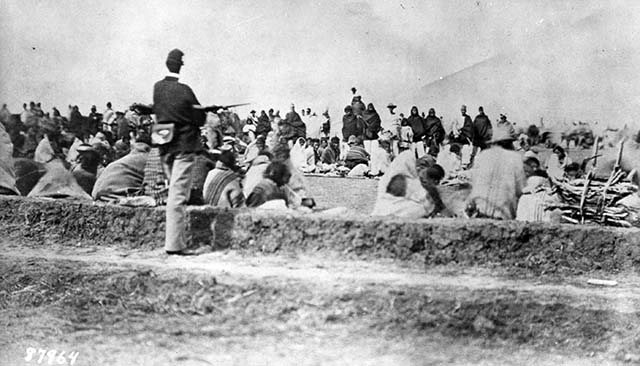
But what’s past isn’t equally past for all people. I learned this very clearly out in Navajo country. The nadir or their historical narratives begins with the story of the Long Walk. In 1864 Kit Carson burned marched through Navajo country, burned their crops and destroyed their homes. He then waited for winter to bring them to him.

It worked.

The result was 4 years of internment at a place called Fort Sumner in Southeastern New Mexico. Many of those who started the “Long Walk” to Fort Sumner didn’t make it to the end.

When my friends, students, and coworkers told me their stories about the long walk, what struck me most about their narratives was the way they always began.  They almost always began with a clear reference to some family member. These weren’t simply stories about something that happened to their ancestors; they were stories about the death of a Great Aunt or the trials of a Great Great Grandmother. People telling me these stories consistently anchored narratives of the long walk in their own relationship to one of those who had been through it. These were not stories about an event over a hundred years ago; they were intensely personal stories of family tragedy.

I’ve heard similar stories, …from my high school history teacher, for example. A native of Georgia, her account of Sherman’s march included a great grandmother’s efforts to save a family heirloom (she stuck it on a wall in the hopes Union troops wouldn’t notice). When I taught briefly at a Jewish private school in Houston, I heard such stories from survivors of the Holocaust. More importantly, my students heard those stories. They hear them every year, directly from the survivors, and in countless other contexts throughout the year. I’ve heard such tragic narratives from Inupiat speaking about the horrors of influenza epidemics brought by whalers and the trials of the boarding schools. Exposure to virgin soil epidemics is hardly ancient history on the North slope, and most any native can tell you about some elder who was punished for speaking her own language at the schools. What all these narratives have in common isn’t simply tragedy; it’s direct personal connection to the suffering.

Of course, the suffering in some of those stories is greater than that in others.

People don’t just forget these sorts of events. They keep them alive; they keep them personal. The suffering becomes part of the meaning of history, and part of the personal identity of those that have been through it, of their children, and their children’s children.

Whether or not such stories should be kept alive in that way is a whole other question, and a rather ironic one at that. The suggestion that people subjected to injustice ought somehow to simply move on has more than a trace of might-makes-right in it. It is an attempt to suggest that certain horrors are simply an accomplished fact, as are the long-term consequences of those horrors; land lost, buildings and nations built for the benefit of someone else, and whole scores of missing family – aunts and uncles not present and cousins never born, all of it, so the argument goes is just a done deal. Yet some people say that it would be best to just move on; accept all of this and focus on the future.

Best for whom?

Your land is ours now, but let’s not dwell on how that happened. Your grandmother’s language is gone now, but let’s not think too much about that. Cities wrecked? Whole populations wiped out? What’s past is past, so some say; let’s look to the future.

But if the long-term consequences of such atrocities might be thought an accomplished fact, then so are the bitter narratives.

…and the bitterness itself.

It seems those with such tragedy in their past rarely (if ever) take such advice. They remember! They remember with a passion. Here we have at least a trace of poetic justice. It seems to me quite fitting that those hoping the descendants of tragedy would accept the consequences and simply move on should run square up against one other uncomfortable and very stubborn fact, namely that folks just don’t forget such things.

They really don’t.

71.271549 -156.751450

Share this:

  • Tweet
  • Share on Tumblr
  • Print (Opens in new window) Print
  • Email a link to a friend (Opens in new window) Email
  • Share on Reddit (Opens in new window) Reddit
Like Loading...

Slavery: Still Sexy After All These Years! (Or Yes Quentin, There is a Reason it’s Called an ‘Exploitation’ Flick)

23 Thursday May 2013

Posted by danielwalldammit in History, Movies

≈ 16 Comments

Tags

Django Unchained, Fiction, Film, History, Movies, Quentin Tarantino, Race, Sex, Slavery

imagesJust what is the relationship between the events occurring inside a film and those occurring the world in which we live? I will not say the ‘real world’, because of course part of the problem here is that the ‘worlds’ in which we live are saturated by myriad narratives, preconceptions, and cultural artifacts which shape our understanding of events in ways few of us can fully understand. So, when we see something happening in a movie, it is important to grasp that this too is one more of those narratives, one more thing that shapes the meaning of events in own own lives. Just how it does that, well now that is a tricky question.

It’s a difficult question with a number of plausible answers, but I think we can rule out one answer at least, the one that says; ‘nothing’. Quentin Tarantino would seem to disagree, at least he does when he’s angry and dodging interesting interview questions. In a now infamous rant, Tarantino took the position that there was no relationship between on-screen violence and real world violence, refusing even to elaborate on this position or to explain his reasons for taking it.

(Oh yeah, SPOILERS!)

To be fair, it was the interviewer, Krishnan Guru-Murthy, that fielded the stance in a sort of complex question (at 4:30 in the clip below), but for all his belligerence Tarantino does not disavow the position attributed to him. Guru-Murthy claims that his own research has produced little in the way of an explanation from Tarantino, just a consistent repetition of this stance. It’s a common enough claim in any event, often serving as a defense mechanism, both for those that create guilty pleasures and those of us who enjoy them (and yes, I do count myself among the guilty). So long as there is no relationship between fantasy violence and real-world violence, one is free to explore the one while taking no responsibility for the other.

But of course the world isn’t that simple, and as Guru-Murthy also points out, Tarantino was happy to link his latest film to the serious issues of slavery, even taking taking credit for starting a dialogue about that subject. He also takes credit for the cathartic violence he puts on screen, but has little to say about the ‘real’ violence perpetrated by the villains against their slaves on that very same screen. But are we really to believe Tarantino means us to feel emotional investment for Django’s acts of revenge while sitting guiltless through the torture and slaughter of innocents throughout the film? Does the elaborate detail of ‘Mandingo fighting’, the ‘hot box’, and the vicious execution of a slave torn apart by dogs leave the viewer without any sense of complicity for the “brutality of the violence of the day?”

Tarantino’s own writing belies this approach. His villains are too clever, their speeches too fascinating, their point of view far too prominent in these moments to dismiss. The victims of this violence remain largely silent. We know that the Mandingo fighters suffer and regret what they are forced to do, we know that Django’s love interest is defiant, and that she suffered greatly for it, and we know that the man torn apart by dogs could not bear to fight again; none of these characters really say much in the movie. They do not introduce interesting plot twists; they do not dazzle us with fascinating speeches. They suffer just as we would expect them to, providing us with no insights at all into the world in which they live.

Those that inform us about this movie are the killers. DiCaprio’s Calvin Candie explains quite clearly what he expects of his slaves before setting the dogs loose. Dr. King Schultz (played brilliantly by Christoph Waltz) introduces us to the fascinating world of bounty hunter, one who would see a man shot in front of his child but who balks at seeing another torn apart by dogs. And of course we understand Django’s motives; his goals are the driving force of the movie; it is his killings which provide us with the final pay-off, the glorious conclusion of the film.

It is consistently the logic of those enacting violence which Tarantino fleshes out for us in this film, and as always, he does it ever so well. The victims are there to suffer, and to provide a pretext for the ‘cathartic’ violence that is to come. In short, Django consistently draws us into the viewpoint of the killer; the movie does this when the killer is a villain, and it does it again when he is a hero. This is the myth of redemptive violence presented in a special way that allows us to have our cake and eat it too. We can enjoy Dicaprio’s sadism just as we will enjoy his downfall. If there is a moment of regret in a scene, or a brief period in which we might wish for the suffering to simply stop, well that moment passes in due time, transformed as it were into the rationale for yet another killing. In Django, we understand the killers, the victims are simply silent.

But villains gotta be villainous, don’t they?

Of course they do, but what is lacking in Django is a genuine counter-balance, any real sense of what is at stake in this story for anyone who is not a killer. When our principal reward at the end of the story is the death of the bad guy (DiCaprio or Jackson, …or so many others), we are never far from the mindset of the killer. In the end, Django leaves a wanted man, accepting this fate without so much as the blink of an eye, his wife drawing a rifle as they ride off from the scene. Two lives now wholly engulfed in violence. If this is a victory, it is at least partially a victory for the world of villainy.

…which brings us back to the initial question, just how does this story relate to the realities of violence in everyday life? I honestly enjoyed much of this movie, as I did with Inglorious Bastards. (Yeah, I know about the spelling, take that Quentin!) But I always feel a little uncomfortable with Tarantino films, precisely because I can’t escape the feeling that I am witnessing something a little creepy; it’s a bit like watching a teenager doing something truly inappropriate in public. Whether it is sheer joy with which Tarantino employs the n-word just a little more than his faux-realism rationale would warrant, or the raw celebration of violence which is present in every film he makes, I cannot help but to think the limitations of Tarantino’s stories are the limitations of the world in which he lives, the world of narratives informing his sense of sense of the world off-screen. And I cannot help but think he is inviting us to normalize those limitations and accept a world of cartoonish violence as a moral standard of sorts.

It is not as though the world lacks for people who think this way off-screen.

One can see it in that interview above as well, when Tarantino tells us that Django deals with the ‘Auschwitzian’ characteristics of slavery. (I guess it’s a word now, …why not?) Honestly, I don’t know what he meant by saying that Americans have dealt with the Native American holocaust, but he clearly seems to think this movie is saying something about the realities of slavery, so much so that when people talk about the film, Tarantino takes that in itself to be a meaningful dialogue about slavery. And yet there is little about this film that could shed light on the nature of slavery as an historical institution.

Tarantino’s choice of comparison is telling, because the story of Auschwitz is largely the story of cruelty for the sake of cruelty, and this is Tarantino’s vision of slavery itself. In one of the most interesting (and insightful) speeches of the film, Dr. Shultz tells us quite frankly that he deals in dead bodies while slavers deal in live bodies; bother are economic institutions. So, why then do slaves first make an appearance in this film walking a great distance barefoot in the cold? Sure, one could probably come up with a plausible explanation based on historical possibilities. But the more plausible answer is that Tarantino wanted to show us the raw cruelty of the institution. More to the point, he did not wish so much to tel us something about slavery as to use slavery as a pretext for telling us something about cruelty. Tarantino presents this story of raw cruelty for us again in the sadistic foremen whom Django will kill part way through the movie, and again in the institution of Mandingo fighting. He presents it in virtually everything that DiCaprio’s character and Samuel Jackson’s character say and do. In this film slavery is not an economic enterprise, it is the conspicuous consumption of sadists, an extravagance of cruelty for the sake of cruelty.

One should add that it is a highly sexualized cruelty that one sees in this film. While Tarantino denies that rape appears in the film, its presence in the narrative is prominent. Django is quick to tell us that his wife will be used as a comfort woman, a prospect apparently confirmed by the words of another villain later in the film. Throughout the plantations in this film, black women appear in full southern dress, lounging about, the clear implication being that they are there for the pleasure of the owners. And of course when Django is captured, it is his genitalia which first get the attention of his would-be tormenters. The slaves portrayed in this film exist largely for the purpose of providing the villains with cheap thrills. And while this sort of thing was certainly not absent in the real history, its significance has completely eclipsed those of plantation agriculture in Tarantino’s narrative.

Slavery insofar as it appears in this movie, is little other than a sadistic fantasy. It is a source of pleasure for the villains, and fleeting moments of pain for the victims about whom we learn so very little. And perhaps we could sweep all of this under the rug and just call it entertainment were it not for one thing; Tarantino himself wants to tell us this movie is about slavery.

A part of me wants to say that it simply isn’t.

But of course that too would be inaccurate. The movie is about a vision of slavery bearing little resemblance to the actual institution, but perhaps one with a disturbing resemblance to Tarantino’s own thoughts about race, violence and sexuality. More disturbing still is the very real possibility that this film tells us still more about the general public’s understanding of the relationship between these features of American society.

***

I suppose all of this brings us full circle to the cathartic violence that Tarantino is talking about. On one level, that would be cathartic violence against the perpetrators of slavery as Tarantino envisions it. On another level, if I am right that Tarantino is getting off on the sadistic possibilities available in a world of slavery, that he is inviting his audience to enjoy the same possibilities, then the catharsis is perhaps a bit more personal. It is the moment in which one erases his or her investment in the sadistic themes presented here through the actions and words of the villains. It is a moment in which one finally rejects the villain despite his cleverness, and perhaps it is a moment in which one rejects one of the ills of history (at least insofar as it is almost dealt with in the form of that villain). The destruction of the villain thus becomes our own ritual purification.

I have my doubts as to where that leaves us in the end.

71.271549 -156.751450

Share this:

  • Tweet
  • Share on Tumblr
  • Print (Opens in new window) Print
  • Email a link to a friend (Opens in new window) Email
  • Share on Reddit (Opens in new window) Reddit
Like Loading...

Kivgiq!!!

02 Thursday May 2013

Posted by danielwalldammit in Alaska, Anthropology, History, Native American Themes

≈ 14 Comments

Tags

Alaska, Barrow, Celebration, Charles Brower Sr., Dance, David Graeber, Inupiat, Kivgiq, Messenger Feast

Canadian Guests

Canadian Guests

Oh my, how time does fly!

It’s been over two months since Kivgiq. I’ve been meaning to write something about that since, well, …since two months ago. I’ve also been putting it off while catching up on other things. But you never do catch up, do you? And Kivgiq is worth a moment of bloggetry, so here goes!

So, what the Hell am I talking about? I’m talking about the Messenger Feast! At this point, it’s a biennial celebration taking place in February here in the North Slope. All the other villages of the North Slope are invited to several days of singing and dancing, and of course to a grand feast. Mostly, it means Iñupiat dance troops from all over the place. Sometimes folks even come in from Canada.

February is a special time of year in the North Slope, owing to the rapid return of the sun. It’d difficult to convey just how much that means to folks. After two months of polar midnight, people are ready for it. More than ready for it! And it’s return is spectacular. By February, we are starting to have something resembling an actual day here in Barrow, and yes, this is one more thing to celebrate.

Having recently picked up David Graeber’s chapter on the Myth of barter in Debt: The First 5,000 Years I was particularly interested in the role this feast may have played in the traditional economies of the region. One of the most interesting chapters in Graeber’s work details the absence of barter within small-scale small scale communities (this despite all the efforts of economists to put it there via thought experimentation). What happens in such communities, according to Graeber? Well people share the resources within their own community; they barter with outsiders, particularly those with whom they might be as likely to fight as to trade. Graeber further notes that the possibility of violence is often worked into the symbolism of the exchange.

To see the cooperative economics of the native community in Barrow, one needs only look at the whaling activities and subsequent distribution of muktuk throughout the community, though I suppose if you were looking for a ritual that enshrines this practice it would be Nalukataq in mid to late June. To see the tradition of bartering with neighbors? Well, now that would be Kivgiq, at least as it was initially practiced.

Charles Brower Sr., a town patriarch of sorts, provided a description of a Messenger Feast from the early twentieth-century which is particularly striking. Two messengers had been sent out to other villages, returning with the guests in July. The feast began as it does today with a footrace. Afterwards…

The main body of visitors followed, two hundred or more stretching out in a long line. Some bore mysterious packages on their backs, others dragged sleds piled high with skins. Everyone was dressed in his worst. I never saw a more disreputable looking crowd – nor one whose tatters covered more suppressed excitement.

Just above the station they were met by a picked up group of village men, naked to the waist. Each wore a loonskin on his head and carried a few arrows and a bow. Suddenly they gave a yell and started shooting over the heads of the strangers. Their arrows gone, they then retreated to the dance house where the rest of the crowd was congregated, still a bit put out over the results of the foot race (the local participants from the village of Utkiagvik had been soundly beaten).

At this time our messengers who had supposedly returned with the guests were nowhere to be seen. They’d have a hard time sneaking in the dance house now, I thought unless they too had dressed in old clothes, hoping to mingle with the guests and escape detection.

I was scanning the crowd with this in mind when a riot broke out in the doorway. A group of visitors laden with rolls of deer-skins, were demanding entrance, the guards steadfastly refusing to let them through. Higher and higher rose angry voices until, with final protesting shrieks, the guests were forced to unroll their deer-skins, and there inside lay our messengers, nearly smothered by heat and stifled laughter.

Mungie came by, grinning broadly. an old trick, he said.these inland people must have thought we’d never heard of it.

Our ‘home folks’ furnished the music that first day, visitors doing the dancing. A man and a woman would enter and dance, then loudly announce what they had brought for the one who had invited them. After which the recipient joined in and all three danced together.

Later the women disappeared to make ready the feast – mostly whale meat and seal. Many of the inland people, unfamiliar with such delicacies, couldn’t get the stuff down. Lucky for me that I’d learned to take my muctuc like any coast native, for this enabled me to join the crowd in making fun of our visitors. Their only comeback was to hint broadly at what they expected in return for their presents.

Since it was a matter of tribal pride that visitors be satisfied or else given back their own presents – a most humiliating procedure, our people went to ridiculous lengths to meet the demands. Many sold their whalebone to provide needed funds. A few of the poorest even asked for additional credit at the station. Anything to uphold the reputation of Utkiavie. It was silly – and a little touching.

I hadn’t yet seen our visitors at their best, for all this time they had been wearing their most ragged clothing. But when they took over the drums the second day while our crowd danced it was like the transformation of cocoons into butterflies. Decked in all the finery they had brought in bundles, they certainly were a fine looking lot of people. Many of the men were six feet tall. Even their women seemed larger and better looking than average Eskimos.

The third and last day was given over to the actual exchange of presents. I say ‘exchange.’ In reality it turned into one grand bargain-driving spree. If a gift fell below expectations, the owner kept adding to it until he had nothing more to offer. And when this failed to satisfy, the other par6ty demanded his present back even though he often sold it later for whatever it would bring.

I’ll end the narrative there, both because that is the relevant portion and because the whole story soon takes a tragic turn. After trading with non-native whaling crews, the guests contracted a disease, Brower figured it to be a kind of flu. Severely weakened from the flu, they elected to return home. For some time, the bodies could be found scattered along the river way headed inland, Brower doubts that any made it home.

What Brower saw was one of the last celebrations of the Messenger Feast held in the early twentieth-century. By the 1920s, natives had stopped holding this feast entirely. It would not be revived until 1988 when North Slope Borough leadership held the first Messenger Feast in roughly 80 years.

The Messenger Feast still retains many of the same themes present in Brower’s description, though specific details vary considerably. If I had dragged my butt out of bed early enough to catch the race, I could tell you all about that, but well, …I suck.

Seriously, I do.

The tradition of gift giving is still present, though it is less central to the ritual. People give a broad range of gifts to others (though items with a distinctively Iñupiat cultural significance seem to figure prominently in these events). One often sees the gifts sitting on the floor of selected open dances (in which any in the audience are invited to participate). Special gifts sometimes merit a moment in the spotlight for those involved. Either way the giver and the recipient will be out there for at least one dance.

I have asked a number of people whether or not reciprocation is expected, and or how that might be structures. The range of answers I’ve collected so far defies my ability to interpret all the variations. I most definitely did not see haggling, or heated exchanges over the value of the items in question. And if the significance of this theme has faded a bit, I would suggest that is at least partly due to the changing local economy. Gone are the days when inland and coastal peoples would have provided distinct contributions, much less the days when an event such as this could have presented a truly unique opportunity to get exotic foods or products. What remains is a symbol of generosity, albeit one with a very interesting history.

My favorite event in Kivgiq would have to be the box-drum dance, but I’ll save that material for a follow-up post. I wasn’t that happy with my pictures this year, but I think a few of them are worth sharing. If you click the pictures they will of course embiggen.

Entertainment during a massive potluck. …yes, it was bluegrass.
Banners
Dancing 1

Elder and child dancing together
Box Drum
Canadian Guests

It ain’t all serious.
Looks like an open dance, these come at the end of a performance.
The follow up to a Box Drum Dance.

Look at the crowd!
Yep, she dances.
Box drum preparations.

Note the gift on the floor
Event staff and security was called up for this dance.

I just have one video here that I will include in this batch. It stands out for me, because it illustrates so wonderfully the role of children at these events. Planned or unplanned, they are seemingly always involved in the performances. And if that lends a little chaos to a dance, then so much the better.

child

child

71.271549 -156.751450

Share this:

  • Tweet
  • Share on Tumblr
  • Print (Opens in new window) Print
  • Email a link to a friend (Opens in new window) Email
  • Share on Reddit (Opens in new window) Reddit
Like Loading...

Thoughts on the Cherokee Blood-Feud, or Anthropology is Only Fun Till Someone Puts an Eye Out!

26 Friday Apr 2013

Posted by danielwalldammit in Anthropology, Education, History, Native American Themes

≈ 22 Comments

Tags

Blood Feud, Cherokee, Collectivism, Conflict Resolution, Ethnography, History, Justice, Navajo, War

Three Cherokee

Three Cherokee

…and of course that is when it gets really interesting.

By poking an eye out, I am of course talking about a special sort of moment one gets from time to time in the study of anthropology, at least I do. It’s the sort of moment when some cultural practice causes the hair on the back of your neck stand up and your stomach tries to dig its way to China (or Antarctica, as would be the case here in Barrow). I’m talking about that kind of moment when you encounter something in an ethnography that just seems like too much. So, you sit there and ask yourself, “How in the Hell could that be anything but wrong?” And for a little while anyway, your mind just doesn’t want to travel down that road, the one that leads to understanding the practice in its own context. You’d rather just say ‘no’. Hell, you’d rather shout it at them across the waters, over the mountains, and even if need be through the ages, cause someone needs to say it somehow, “This is just wrong!”

For the students in one of my classes this semester that moment came courtesy of the Cherokee blood feud, and the sticking point was very clearly collective responsibility for murder. Simply put, the feud enabled the clan of a murdered individual to claim revenge against any member of the clan to which the offending party belonged. More than that, the terms of this blood feud obligate people to do so.

But I said ‘murdered’ didn’t I?
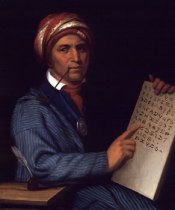
Sequoyah

Sequoyah

That’s not quite right. In the old way, any individual responsible for killing another Cherokee could initiate the obligation to exact revenge, even if the killing was an accident. As our reading described it, a horse borrowed for the day could start trouble by bucking its rider off, thus triggering a feud between the clan of its owner and that of the deceased rider. So pretending for this paragraph anyway that I am Cherokee – I’m not, …not even the ubiquitous Cherokee grandmother every other white guy seems to have been blessed with – but let’s just pretend for a moment. If my brother’s horse spooks and kills a rider, I could be killed in revenge for this event. They do not need to take the offending party (if there even is such a person in this example); they might prefer to kill a different member of my brother’s clan (someone like ME, perhaps). So, I could die because of something my brother did, …even if that was an accident. The article we read even contained an instance in which a killer talked the avenging parties into killing someone else from his own clan.

And yes, this bothered my students. I can’t really blame them, because I can remember my own feelings years ago as I came to grips with this kind of dispute-system. It violates my sense of justice too, or at least the master metaphors through which I and my students typically process this kind of information.

But it’s worse than that!

You see, the point here isn’t merely that people do this, but that this system is actually normative. In a certain time and place, according to a certain cultural order, this is what was SUPPOSED to happen. This is what’s right, at least as the Cherokee once defined it, and that proved more than a little disturbing to my students this semester.

Proper verdicts thunder!

Proper verdicts thunder!

I’m inclined to think the sticking point is an intuitive sense that guilt is an individual responsibility, at least for myself and the students in my classroom last week. Guilt is the medium through which we seem to want to look at deviant behavior, and that concept does not seem to want to travel in large groups; it resides in the soul of a single individual.

Heh, …I said soul, didn’t I?

It is perhaps part of the legacy of historical Christianity under which all moral failings could at one time be construed as defiance of the Lord. Whether one had committed murder, taken to drink, or charged interest on a loan, all of these crimes and others were testimony to personal defiance of the Lord. And of course, much like Santa Clause, He would know!

I’m inclined to think the projection of an omniscient judge and jury played an important role in shaping the concepts of guilt so familiar to people today. One can even see a trace of this mythic imaginary in secularized notions such as crimes against the state (or against society as a whole). Guilt is personal, it is absolute, and it obtains even when the social facts proceed on without taking notice of it. Even the medicalized notions of deviance stemming from the mid to late twentieth-century seem to be largely focused on the individual. The insanity defense is about the capacity of an individual to grasp right or wrong, and it is one individual after another whose failures in life can be described as due to this or that syndrome. When we withhold the pronouncement of guilt on an individual, it is rather often to pronounce sickness upon him instead. Either way, we do not typically assign counseling as a condition of probation for all the members of his extended family.

In short, we care who dunnit. We really care!

Adam and Eve Hide from God

Adam and Eve Hide from God

That of course has less to do with anything inherently wrong with clan-based blood-feuds than it does the cultural logic of western traditions. What pokes my students and I in the eye as we study this custom has less to do with has less to do with Cherokee society than our moral sensibilities. We just can’t fit their approach into our own world, not without feeling a little violated when doing it.

I’ve learned to regard that feeling as evidence that I have just found something worth studying. For some of my students, the problem was collective responsibility, but the real irony here is that we are not really strangers to collective responsibility. Not by a long shot.

It probably won’t help matters much to mention gangs in this regard, though the logic of a gang hit is certainly comparable in some respects (one needn’t get the original culprit, just one of his home-boys). But of course gang members are hardly the only people in modern America to engage in disputation at the level of collective responsibility. We may have fought a war against Saddam Hussein, but in real-world terms that meant killing a lot of Iraqis. The same can be said of the Taliban whose principal cause of war appears to have been sheltering Bin Laden. The story will not change much for any given war; war is by definition a conflict between collective entities. Either way someone is dying because of what some other bastard did, and folks may be sad about it, we might even make a regretful movie or sing a sad song about it, but such is war.

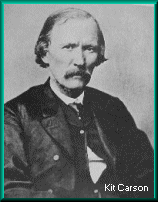
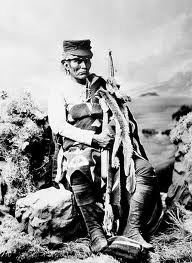
kcarson2In some cases the absurdity of this collective logic creeps through the practice of war more than others. When I used to teach Navajo history, I used to despair that the first of my two textbooks spent far too much time detailing a pattern of raid and retribution between Navajos and the Spanish. Time and again, the book would describe a raid conducted by Navajos followed by a punitive expedition carried out by the Spanish. It’s a pattern that continued clear up through the Mexican period in the Southwest, and further still into the early years of American occupation. And in all these punitive actions, no-one seems to have bothered to ask if the Navajo communities bearing the brunt of the attack had much to do with those who had been doing the raiding. Collective responsibility was simply assumed.

It should be added that Navajos seem to have taken the brunt of the blame for a pattern of raiding that was fairly ubiquitous in the Southwest. They were certainly not the only group conducting such raids, but that is a gripe for another day.
imagesFor their own part Navajos developed an oral tradition describing a very different allocation of responsibility to the specific raiding parties, viewed as irresponsible young men bringing trouble to their own people. This point becomes that much more clear in the wake of the Long Walk and internment at Fort Sumner. This event marks the nadir of most stories about Navajo history, it is story in which Kit Carson ’rounded up’ the vast majority of the Navajo people and took them to a small reservation in Southeastern New Mexico. The next four years (1864-68) were difficult to say the least for Navajos and damned expensive for the U.S. government. In the end they were allowed to return home.

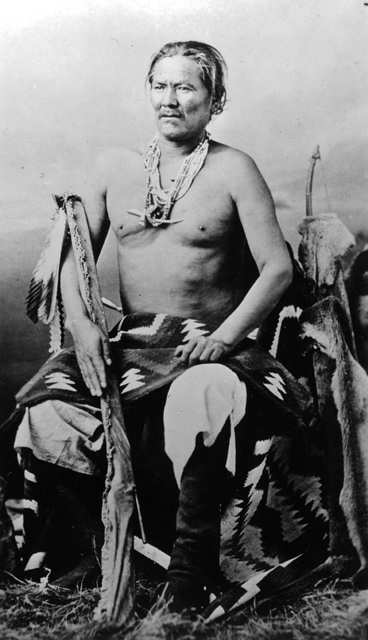
ManuelitoSome have defended Carson’s actions on the grounds that it had at least ended the raiding patterns of the past centuries. What these historians consistently missed was that the raiding patterns continued in the years after fort Sumner. After Fort Sumner, a raid brought Federal troops who went straight to the Navajo police under the leadership of Ganado Mucho or Manuelito. The Navajo police then brought back whatever livestock had been stolen. Before Fort Sumner a Navajo raid was an act of war with collective responsibility applying to the Navajo people as a whole; after Fort Sumner it was a criminal act, the responsibility for which fell on individual shoulders. The difference that makes this distinction had less to do with actions than understandings.

…and in this case that was all the difference in the world.

Perhaps the logic of warfare is too remote for the majority of us in modern America, but there is one respect in which the notion of collective responsibility is absolutely a part of our every day lives, the business of corporations. As some would describe it, the very point of forming a corporation is to re-allocate responsibility for the actions associated with a business concern. Once a source of great controversy, the existence of these collective entities in American business (and that of the world at large) is easily accepted as an accomplished fact.

It is just the way the world works, so common wisdom would have it. We accept that we will not get to talk to the bastard (or bastards) at Bank of America, Wells Fargo, or any other major bank who decided they could reorder your checks from the biggest to the smallest in the event of an overdraft and charge extra fees in the process. We accept that the poor agent who answers our call will be the one to hear whatever we have to say about such an outrage. We accept that CEOs in charge of failing corporations may travel freely on to the next chapter in their bright shining futures, leaving countless lives ruined in their wake. And we accept that (with rare exceptions) lives lost or immiserated by corporations will never result in punishment of those specifically responsible for polluting this river or putting that firebomb of a vehicle on the market.

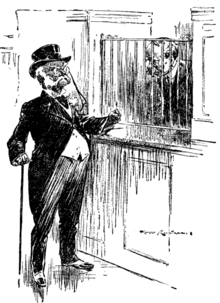
"I warn you, Sir! The discourtesy of this bank is beyond all limits. One word more and I — I withdraw my overdraft!"

“I warn you, Sir! The discourtesy of this bank is beyond all limits. One word more and I — I withdraw my overdraft!”

Of course, there are circumstances in which charges of criminal fraud or negligence may occur, but this would seem to be the rare exception (except perhaps in Island where they actually have the balls to hold white collar criminals accountable for wrecking a national economy) Under normal circumstances, these giant entities screw customers and maim communities with impunity, and there is little one can do about it. The most one might hope to see in the way of justice from such practices will take the form of financial compensation from a corporate entity, the loss shared out through its stock-holders. Those directly responsible for terrible decisions will in most cases never see any significant retribution for the harm they cause to others.

…and the more I think about it, the more this one starts to feel like another poke in the eye.

If collective responsibility is the sticking point in accepting the justice of a clan-based feud system, it is not because collective responsibility escapes us, or perhaps it is because it escapes us when we actually use such an approach in our own lives. The real question is just why do we allow for collective responsibility in warfare and corporate business activities while insisting on individual responsibility for ‘crimes’? I and my students didn’t follow this question, because of course that wasn’t the task at hand, but it’s the sort of thing I hope will hang in their minds long after they have hit send on their final papers. If it’s done right, a good anthropology course should leave students with more than a collection of facts about other people in other times and places, it should also leave them with a new sense of the communities in which they themselves live.

The cognitive poke in the eye is on the house.

***

Three Cherokee are from here. The image of Sequoyah is from the Smithsonian Institution. The image of Kit Carson is from the Kit Carson Museum. Ganado Mucho comes from Navajo People.org. Adam and Eve hiding from God comes from an old engraving by Julius Schnorr von Carolsfeld. I got it from istockphoto. Manuelito comes from a class at ASU. The gavel is from Sara Marberry’s Blog. The Bank Cartoon comes origonally from an entry of Punch Magazine published in 1917, but I got it from Wikipedia.

71.271549 -156.751450

Share this:

  • Tweet
  • Share on Tumblr
  • Print (Opens in new window) Print
  • Email a link to a friend (Opens in new window) Email
  • Share on Reddit (Opens in new window) Reddit
Like Loading...
← Older posts
Newer posts →

Top Posts & Pages

  • An Uncommon Security Guard: Dave Eshelman, AKA 'John Wayne'
    An Uncommon Security Guard: Dave Eshelman, AKA 'John Wayne'
  • Hostiles and Spoilers: A Magic Studi
    Hostiles and Spoilers: A Magic Studi
  • Map Ain't Time Either.
    Map Ain't Time Either.
  • Remember Kids! False Equivalence is a Way of Life
    Remember Kids! False Equivalence is a Way of Life
  • The North Pacific Fur Fish
    The North Pacific Fur Fish
  • Happy Juzo Day, And Damn You to Hell if you Don't Know What I'm Talking About!
    Happy Juzo Day, And Damn You to Hell if you Don't Know What I'm Talking About!
  • Spurious Hitler Spuriates Furiously About Guns!
    Spurious Hitler Spuriates Furiously About Guns!
  • The Village of Wainwright, Alaska
    The Village of Wainwright, Alaska
  • Master and Commander Kinda Queered
    Master and Commander Kinda Queered
  • When Sex Falls Out of the Performance
    When Sex Falls Out of the Performance

Topics

  • Alaska
  • Animals
  • Anthropology
  • atheism
  • Bad Photography
  • Books
  • Childhood
  • Education
  • Gaming
  • General
  • History
  • Irritation Meditation
  • Justice
  • Las Vegas
  • Minis
  • Movie Villainy
  • Movies
  • Museums
  • Music
  • Narrative VIolence
  • Native American Themes
  • Philosophy
  • Politics
  • Public History
  • Re-Creations
  • Religion
  • Street Art
  • The Bullet Point Mind
  • Travel
  • Uncategorized
  • Uncommonday
  • White Indians
  • Write Drunk, Edit Stoned

Blogroll

  • American Creation
  • An Historian Goes to the Movies
  • Aunt Phil's Trunk
  • Bob's Blog
  • Dr. Gerald Stein
  • Hinterlogics
  • Ignorance WIthout Arrogance
  • Im-North
  • Insta-North
  • Just a Girl from Homer
  • Multo (Ghost)
  • Native America
  • Norbert Haupt
  • Northwest History
  • Northy Pins
  • Northy-Tok
  • Nunawhaa
  • Religion in American History
  • The History Blog
  • The History Chicks
  • What Do I Know?

Archives

  • December 2023
  • November 2023
  • June 2023
  • April 2023
  • February 2023
  • December 2022
  • November 2022
  • October 2022
  • September 2022
  • August 2022
  • July 2022
  • June 2022
  • April 2022
  • January 2022
  • December 2021
  • November 2021
  • October 2021
  • September 2021
  • August 2021
  • June 2021
  • May 2021
  • March 2021
  • February 2021
  • January 2021
  • December 2020
  • November 2020
  • October 2020
  • September 2020
  • June 2020
  • May 2020
  • March 2020
  • February 2020
  • January 2020
  • December 2019
  • November 2019
  • September 2019
  • August 2019
  • July 2019
  • June 2019
  • May 2019
  • April 2019
  • January 2019
  • December 2018
  • November 2018
  • October 2018
  • September 2018
  • August 2018
  • July 2018
  • June 2018
  • May 2018
  • April 2018
  • March 2018
  • February 2018
  • January 2018
  • December 2017
  • November 2017
  • October 2017
  • September 2017
  • August 2017
  • July 2017
  • June 2017
  • May 2017
  • April 2017
  • March 2017
  • January 2017
  • December 2016
  • November 2016
  • October 2016
  • September 2016
  • August 2016
  • July 2016
  • June 2016
  • May 2016
  • April 2016
  • March 2016
  • February 2016
  • January 2016
  • December 2015
  • November 2015
  • October 2015
  • September 2015
  • August 2015
  • July 2015
  • June 2015
  • May 2015
  • April 2015
  • March 2015
  • January 2015
  • December 2014
  • November 2014
  • October 2014
  • July 2014
  • June 2014
  • May 2014
  • April 2014
  • March 2014
  • February 2014
  • January 2014
  • December 2013
  • November 2013
  • October 2013
  • September 2013
  • August 2013
  • July 2013
  • June 2013
  • May 2013
  • April 2013
  • March 2013
  • February 2013
  • January 2013
  • December 2012
  • November 2012
  • October 2012
  • September 2012
  • August 2012
  • July 2012
  • June 2012
  • May 2012
  • April 2012
  • March 2012
  • January 2012
  • December 2011
  • November 2011
  • October 2011

My Twitter Feed

Follow @Brimshack

RSS Feed

  • RSS - Posts
  • RSS - Comments

Enter your email address to follow this blog and receive notifications of new posts by email.

Join 8,072 other subscribers

Blog at WordPress.com.

  • Subscribe Subscribed
    • northierthanthou
    • Join 8,072 other subscribers
    • Already have a WordPress.com account? Log in now.
    • northierthanthou
    • Subscribe Subscribed
    • Sign up
    • Log in
    • Report this content
    • View site in Reader
    • Manage subscriptions
    • Collapse this bar
 

Loading Comments...
 

    %d