• About

northierthanthou

northierthanthou

Category Archives: Uncategorized

That Time I Got High

10 Sunday Dec 2023

Posted by danielwalldammit in General, Uncategorized

≈ 3 Comments

Tags

Decorum, Drugs, Gangs, Getting Stoned, Marijuana, Oops, Pot, Professionalism, Research

“Dude, do you know where I can score some pot?”
It wasn’t the first time a jock or a prep had asked where he could buy some marijuana. Neither was it the first time, I said, ‘no.’ It certainly wasn’t the first time, that answer got me a suspicious glare. If you could call somebody a liar with just a glance, these exchanges always seemed to end on exactly that kind of glance. He drove off with a disgusted look on his face.

Maybe it was the long hair or the Hevy Metal T-shirts, or my penchant for walking barefoot wherever I went. Maybe it was the fact that all my known friends were stoners, or maybe it was the fact that I was so completely disengaged from anything happening around me back in high school that chemical influence seemed an obvious explanation, at least to a number of people. In any event, most everyone seemed to assume I was heavily into drugs.

My stoner friends knew I was straight. They had offered many times, and I always said ‘no.’

I mean; “no, thank you.”

I always said ‘no, thank you.”

Cause it never hurts to be polite.

Of course, I could have offered to connect some of these straight-laced folks bringing surprise solicitations to some of my friends. I certainly did know someone who was dealing at any given time, but I didn’t really know which of my friends that was, much less what they had or how much they wanted for it. None of this was my business, and I meant to keep it that way.

I may have preferred the company of stoners, at least when I could tolerate company at all, but it certainly wasn’t the drugs that led me to those circles. No, I made it all the way through my teen years without catching more than a whiff or two of secondary smoke from those around me.

***

It was many years later that I actually got stoned, just that one time.

It was also quite by accident.

***

This was at the tail end of graduate school. I was employed in a research project dealing with youth gangs on the Navajo Nation. Usually, I talked to teachers, cops, social workers, etc., but my coworker couldn’t really move safely in this one community. So, it was up to me to get the gang interviews for that particular location. The “OG” for this set was my connection to these guys. We paid him a small fee for each interview he set up, so he was happy to help out. On the final day of my visit, he introduced me to his younger brothers. Their parents were out of town, so it was just them and a number of their friends hanging around the house. They reminded me a lot of my teenage friends, but this was the same set that had rattled the prosecutors trailer one night and burned down the local courthouse. It was a peaceful moment in their lives, but this group was not always so peaceful, a fact I had been made well aware of before ever meeting them.

A couple things became quite clear to me as we set up to do the interview. The first was that I was talking to both of the brothers at the same time. The second was that they were smoking as we talked. They had draped a throw rug over the window, just like my old high-school buddies had done, and they would sometimes pull it aside just enough to blow smoke outside. But they were definitely smoking as we talked.

I could do the interview while they got stoned, or I could accept that we weren’t doing an interview all.

I set up two interview sheets and alternated between them. Both subjects were forthcoming and thoughtful, and also quite friendly. I soon relaxed and settled into the flow of the conversation.

***

At some point, I remember noticing a purple box on one of three beds in the room. It was covered in writing. The words that stood out to me most were “Michael you’re going to die.” The rest of the box was filled with additional violent thoughts about someone named Michael.

I couldn’t help but ask.

“Oh yeah, that’s our sister’s box. She really hates Michael Jordan.”

Mystery solved!

…Sort of.

***

At some point, I remember cracking a joke at the expense of one of the interview subjects. He laughed. He Laughed just as I came to realize how stupid my joke was. He could just as easily have taken offense, and I didn’t know this person well enough to know his personal boundaries. So, I was relieved that he laughed even as I kicked myself for telling the joke. The atmosphere at the moment was friendly, but these were not my friends. These were the same people the cops and prosecutors were working hard to put away for as long as possible. One of them had tried to gouge his girlfriend’s eye out with a screwdriver the night before, so I was told. If they were young and scrawny, I was at least as scrawny, and of course they had their friends outside. No doubt, they also had plenty of weapons at their disposal. Were something to happen to me, near as I could tell, the worst punishment they would face would be about 6 months of probation. This would have been a good time to mind my own manners, and I damned well knew it.

Beyond the issue of safety, I remember thinking that was just completely unprofessional of me. Sure, the interview was casual, but that was no excuse for taking liberties. I shouldn’t have been acting like that during any interview, and I wasn’t sure what had gotten into me. I remember thinking, I’m normally smarter than this. What the hell is wrong with me!?!

And I realized, I felt a little strange, possibly light-headed.

Why?

As one of them lit up his pipe again, I looked around the room and saw a thick haze of smoke hanging in the air around us.

Oooooooooh!

I made a mental note to stay focused and get through the interview. It went well, and I soon said goodbye to all of them before driving back to the hotel. I had just enough time outside to catch a little fresh air and get my head in order.

***

Aside from a few medical treatments, that remains the only time I have ever gotten stoned.

***

On a side note, I remember a disturbing thought occurred to me on the way back to Window Rock the next day. I went straight to the business office and talked to the head of the department, telling him that I was about to file some requests for checks to be sent off to a third party. I remember telling him that if the checks took as long to get to this party as they had to reach others in the past, there was a decent chance I would be dead before they got paid.

That was a bit dramatic, but I wasn’t entirely joking.

This once, the check was sent in a timely manner.

Share this:

  • Tweet
  • Share on Tumblr
  • Click to print (Opens in new window) Print
  • Click to email a link to a friend (Opens in new window) Email
  • Click to share on Reddit (Opens in new window) Reddit
Like Loading...

An Ironic Beating

22 Wednesday Nov 2023

Posted by danielwalldammit in Childhood, Uncategorized

≈ 7 Comments

Tags

Childhood, Corporal Punishment, Discipline, Memories, Punishment, School, School Days, Spanking, Tough

I don’t know what he had done this time, but little Scotty McNameRedacted was always in trouble. He really didn’t get along with any of his teachers. At this particular moment, it was a long-term substitute for our first grade teacher that had lost all patience for Scotty. Why, I didn’t know, but this time, she got the paddle out. And there in front of all of us, she bent Scotty over her knee and began to paddle him.

Scotty made no sound as the paddle struck. In fact, he barely flinched. I remember looking up at the face of the substitute, and watched as an expression of frustration crossed her face. Seeing no signs that her punishment had made an impression, she began to put some real muscle into it. I realized with some degree of horror that she was actually striking Scotty as hard as she possibly could, straining to hit him hard enough to teach him a lesson, so to speak.

…and she got nothing.

If I had looked forward to seeing someone I took to be our class bully get a comeuppance, that feeling was now completely gone. I was shocked to see just how hard the substitute was beating him, and more so to see just how little impact the spankings seemed to have on him. I reckon Scotty had taken more spankings than the rest of us put together, so I might have expected him to handle it better than I could. Still! This was a level of courage I could not have imagined.

And just like that the spanking stopped. I wasn’t entirely sure why. Had the substitute reached some magic number of blows? Did she realize she had gone too far? Or had she simply given up? I couldn’t tell what led to her decision to stop. I just watched along with the rest of the class as Scotty got off of her lap.

Scotty walked back to his desk and sat down without a trace of a tear on his face, not even a wince as his butt hit the chair. He looked around at the rest of us, maybe a little embarrassed and perhaps a little confused, but he showed absolutely no signs of surrender, no regret, and no reform.

For her own part, the substitute appeared to be totally drained.

…and utterly beaten.

I’ve heard a lot of things about corporal punishment as a means of dealing with children. Having no children, myself, I don’t have any real commitments on the matter one way or another, but whenever the topic arises, I cannot help but think of this memory.

Scotty may have taken the hits on that day, but there has never been any doubt in my mind.

On that day, at least.

Scotty won.

Share this:

  • Tweet
  • Share on Tumblr
  • Click to print (Opens in new window) Print
  • Click to email a link to a friend (Opens in new window) Email
  • Click to share on Reddit (Opens in new window) Reddit
Like Loading...

What is an Insincere Question?

03 Saturday Jun 2023

Posted by danielwalldammit in Politics, Uncategorized

≈ 3 Comments

Tags

Culture Wars, Documetary, Gender, Identity, Matt Walsh, Politics, Sex, What is a Woman, Women

The film “What is a Woman” begins with Matt Walsh reflecting on gender within his own family. So, it’s appropriate that the film ends on a conversation with his wife. Okay, maybe it would have been more appropriate to go the other way around, but the point is that Walsh’s family bookends the whole performance. This is particularly fitting, because it facilitates one of the central features of the film, namely the consistently personal framing of the inquiry. Walsh isn’t just exploring the topic in general; he consistently frames his questions in terms of his own identity and that of his family.

Walsh wants an objective answer to his question, but he consistently frames his questions in personal terms. He is asking these questions in response to progressive ideas about gender fluidity and the social construction of gender identity. Anyone familiar with Walsh knows that he thinks this is all nonsense, but that doesn’t stop him from framing the issues as if he was personally implicated in the possibilities. It isn’t enough to know what being a woman might mean to someone else; as he frames the issues, Walsh wants to know what it would mean to him and his own family. So, he sets out to answer the question of what is a woman? He asks this question as though his own identity were at issue.

Walsh also seems to assume the answer will be universal, and that it will be normative. He wants to have his is and ought it too. Whatever the nature of women, there is little doubt that Walsh knows what this should mean for both men and women.

One has only to see the color-coded dress of his children to know just how rigid Walsh may be in response to this issue.

Walsh spends the first half of the film interrogating progressives, many of them professionals working in medical and mental health fields, asking them what a woman is. He is never happy with their answers. To be fair, the answers he gets here really are less than impressive, but also to be fair, the answers these people actually use in their daily work are simply non-starters for Walsh. When he asks what a woman is, Walsh is looking for a firm biological answer, but he is talking to people deeply entrenched in the world of social constructivism. He knows these people are not going to give him that kind of answer, and so he skates right past the answers they actually do give him.

It’s frustrating to watch this performance. Many of these people seem to have grown so accustomed to constructivist paradigms that they have no idea how to talk to the Matt Walshes the world. He isn’t helping them, of course. His goal is to make them look foolish. They are less interview subjects than marks who have been conned into a discussion with someone who isn’t really interested in what they have to say. And so we get a battle of the just-so narratives. For Walsh’s marks, gender is a social construction, because it just is; for Walsh it certainly isn’t, because it just ain’t.

One of the themes Walsh hits rather hard in this part of the movie is the problem of circular definitions. Using a word to define itself is a problem; it really is, but that problem keeps popping up here for a reason. The social constructivists Walsh is talking to do not wish to define a woman in biological terms, so they keep talking about socially constructed roles and self-perceptions. This leads to a common refrain; they tell him a woman is someone who “identifies as a woman.” There are variations, to be sure, but all these answers lead back to the same question, what is a woman in the first place? If someone identifies as a woman, then what do they think that identity means? Walsh doesn’t get a good answer from any of those he talks to in the first half of the film, and of course he never wanted good definitions from them in the first place.

By the middle of the film, Walsh has concluded that those he has been talking to have no idea what a woman is, none at all.

Much of the second half of the film is spent talking to critics of trans-gendered identity (and in particular, the medical establishment supporting various treatments and legal accommodations for trans-gendered persons. Those talking to Walsh in this part of the film get to make their own points; they get to define their own concerns and elaborate on them in concrete ways. This part of the series is interesting, at least. How many of the claims made here would hold up to scrutiny is an interesting question, but the issues discussed here are a good deal more substantive. This half of the film would have benefited from a sincere exploration of the reasons for these practices in the first place, but it was of course never Walsh’s goal to help us understand the issues. Having made the progressives look like fools in the first half of his film, the second half is spent making them look positively evil.

Walsh begins to claim some of his victories in the second half of the film. He parrots progressive themes with glee in the face of people who will have none of it, effectively setting them for a slam dunk response. Walsh relishes the chance to affirm biological differences between men and women in this half of the film, and to tell horror stories about the consequences of failure to accept these differences. All of these horrors, stem from the failure of progressives to acknowledge the underlying reality of sex, which Walsh clearly expects to be defined in biological terms.

Nothing less will count as truth to Walsh.

Somewhere near the end, Walsh asks Jordan Peterson what a woman is. Peterson tells him to marry one and find out. So, Walsh goes back home and asks his own wife what a woman is.

She tells him a woman is “an adult human female…”

And I wonder how many who watch this realize that this too is a cicular definition?

As was that of Peterson!

These are the final answer to the question Walsh has been asking throughout his film, but it is no more substantive than those answers he was given in the beginning segments. They are just as circular as the answers he rejected throughout the first half of the film! Peterson’s answer tells him to marry one to find out, which begs the question of who would he need to marry to accomplish this. His wife’s answer assumes we are talking about a female, but that isn’t far off being a woman in the first place. Neither of these answers gets Walsh any closer to a substantive understanding of the issue.

The answers given by Peterson and Walsh’s wife are satisfactory to Walsh, and to his target market, but much of that is a function of context. If the answer given by Walsh’s wife isn’t all that theoretically robust, it is clothed in the confidence of a warm kitchen where two people seem to know exactly how to behave.

In fact, the answer Walsh’s wife gives him is rather constructivist in its own right. She actually tells him that a woman is; “an adult human female, who needs help opening (a jar)”

Walsh and his fans might see in this a story about a biological female who knows who she is and a biological male who knows what he is, but social constructivists would hardly find it surprising to see a middle class American woman cooking for her husband.

…and of course letting her man to do some of the muscle work.

Share this:

  • Tweet
  • Share on Tumblr
  • Click to print (Opens in new window) Print
  • Click to email a link to a friend (Opens in new window) Email
  • Click to share on Reddit (Opens in new window) Reddit
Like Loading...

A Park Under a Bridge

21 Sunday Aug 2022

Posted by danielwalldammit in Uncategorized

≈ 9 Comments

Tags

Art, California, Chicano Park, Latino, Mexican Americans, Murals, San Diego, Street Art, Travel

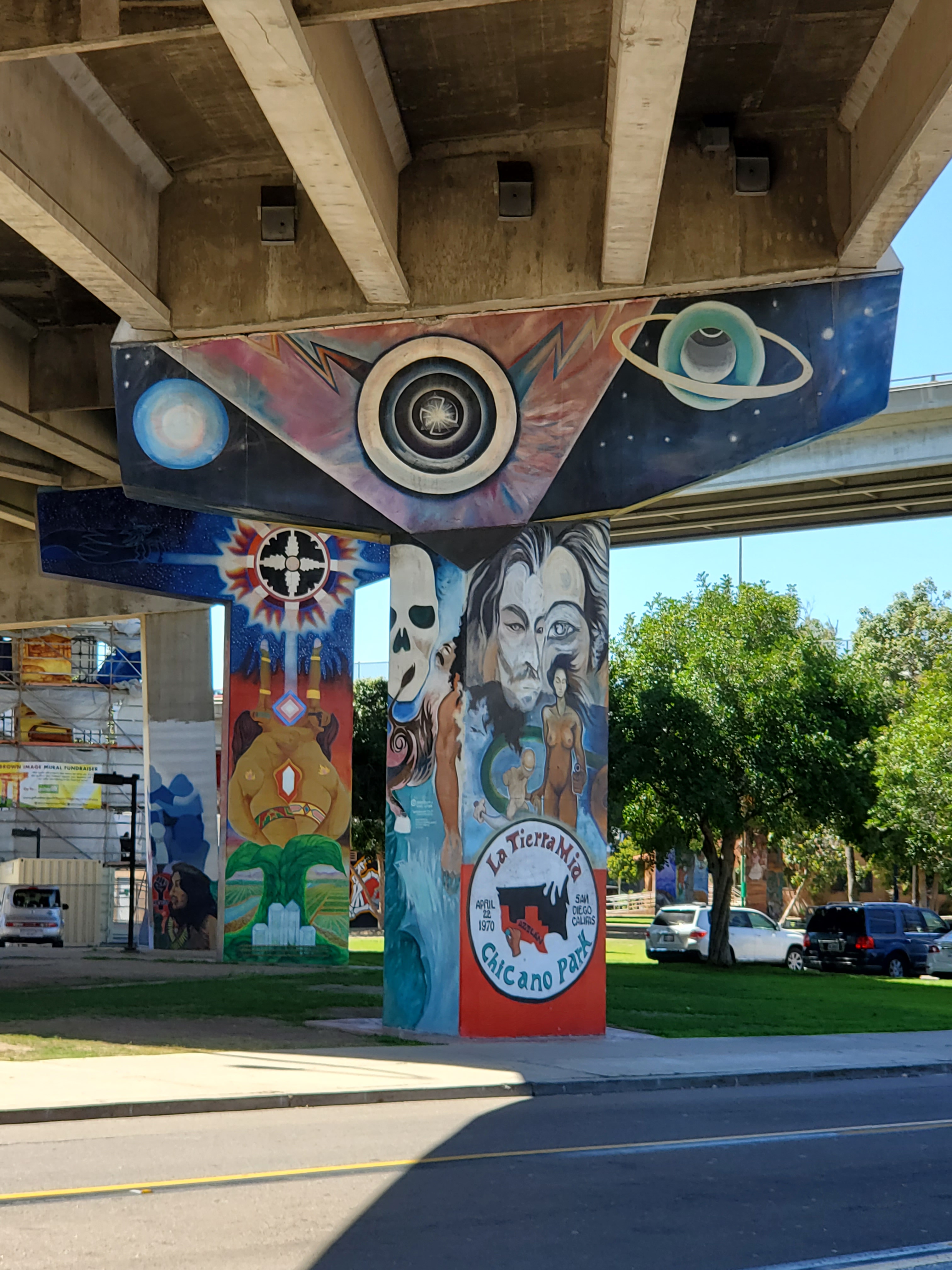
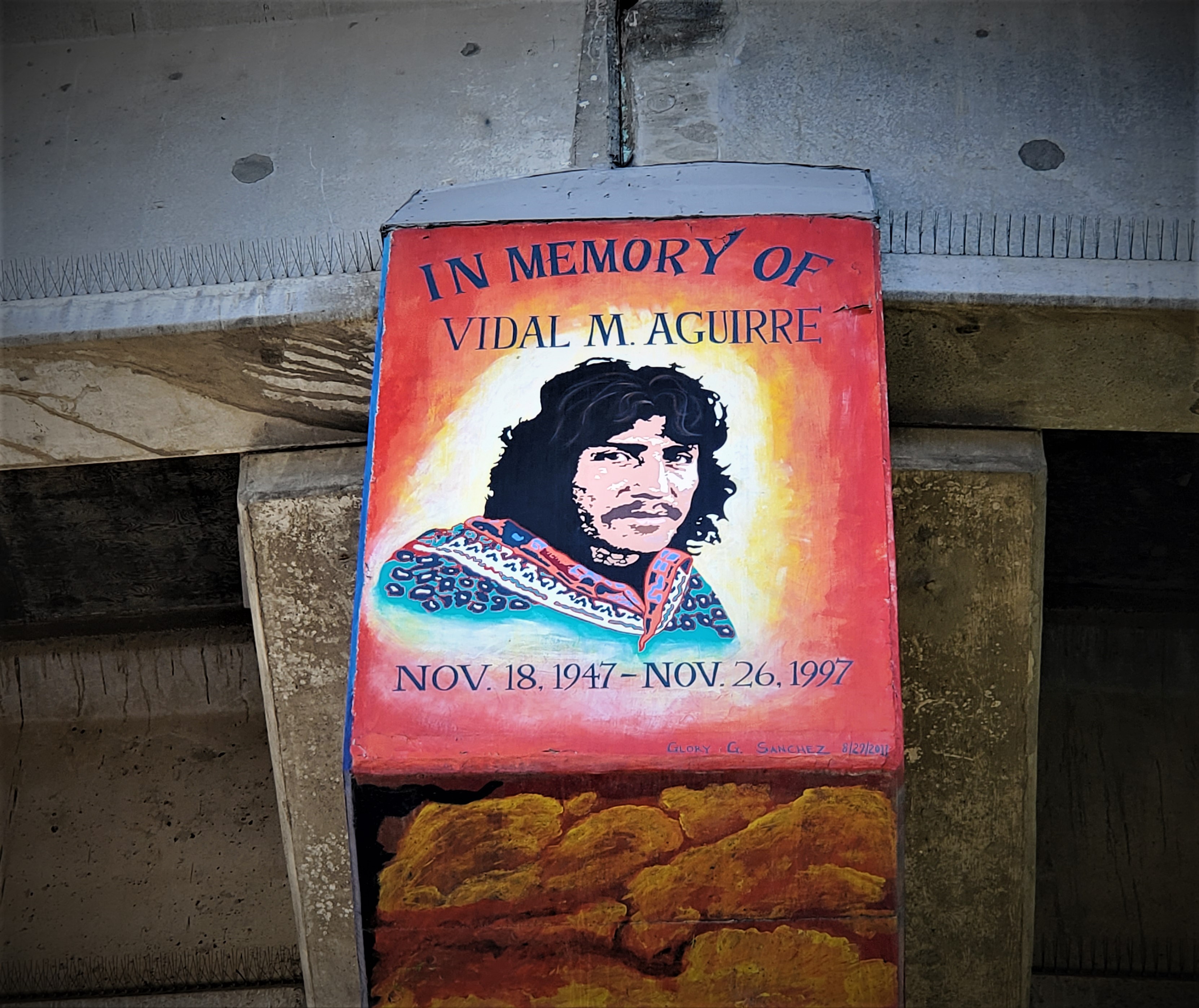
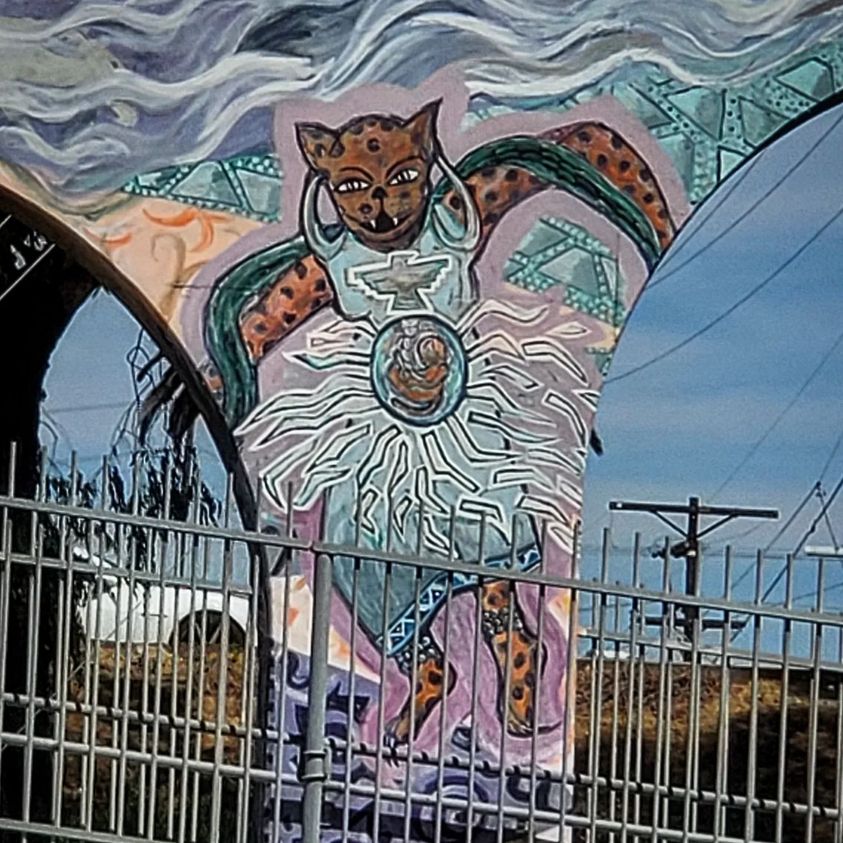
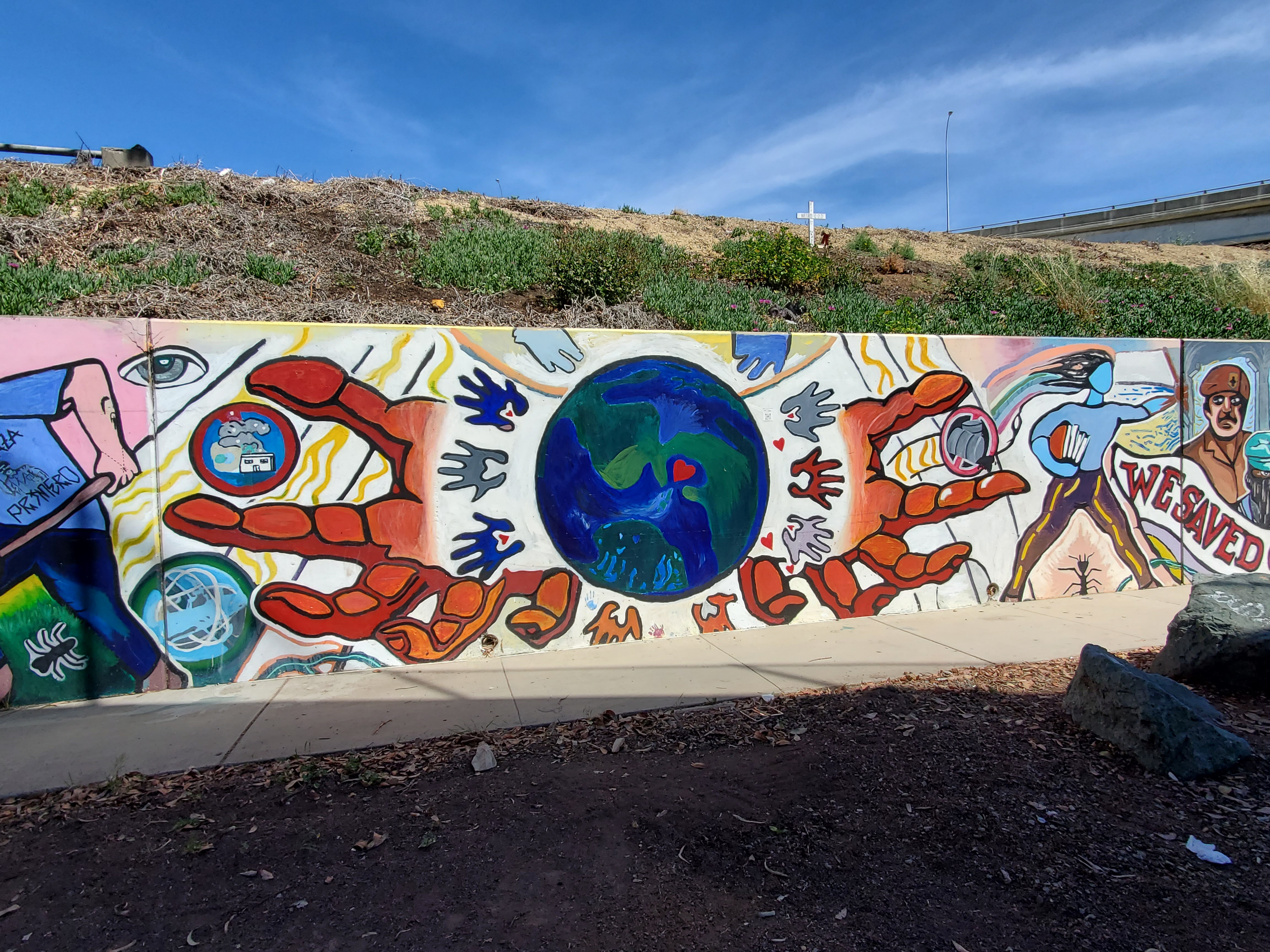
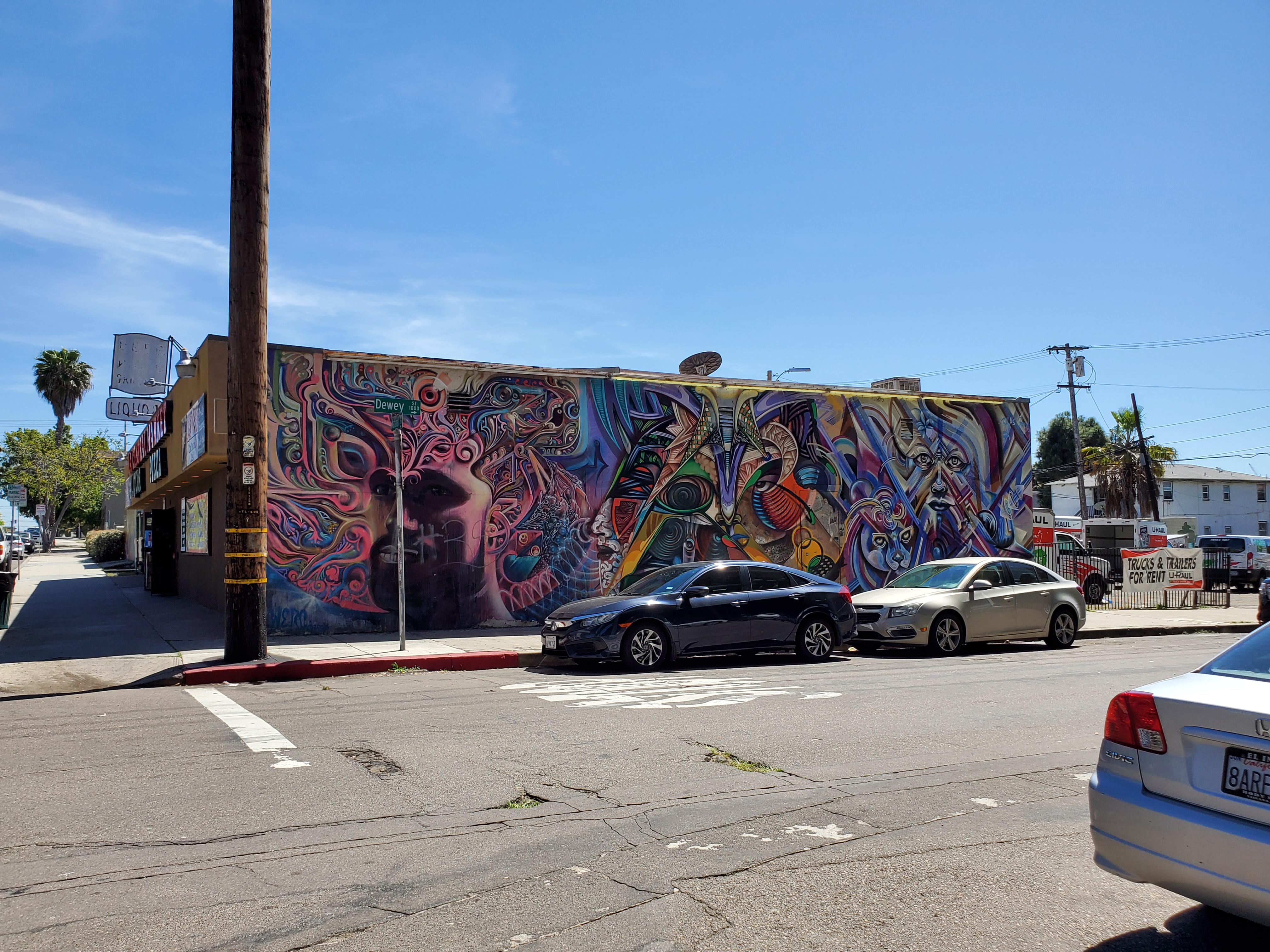
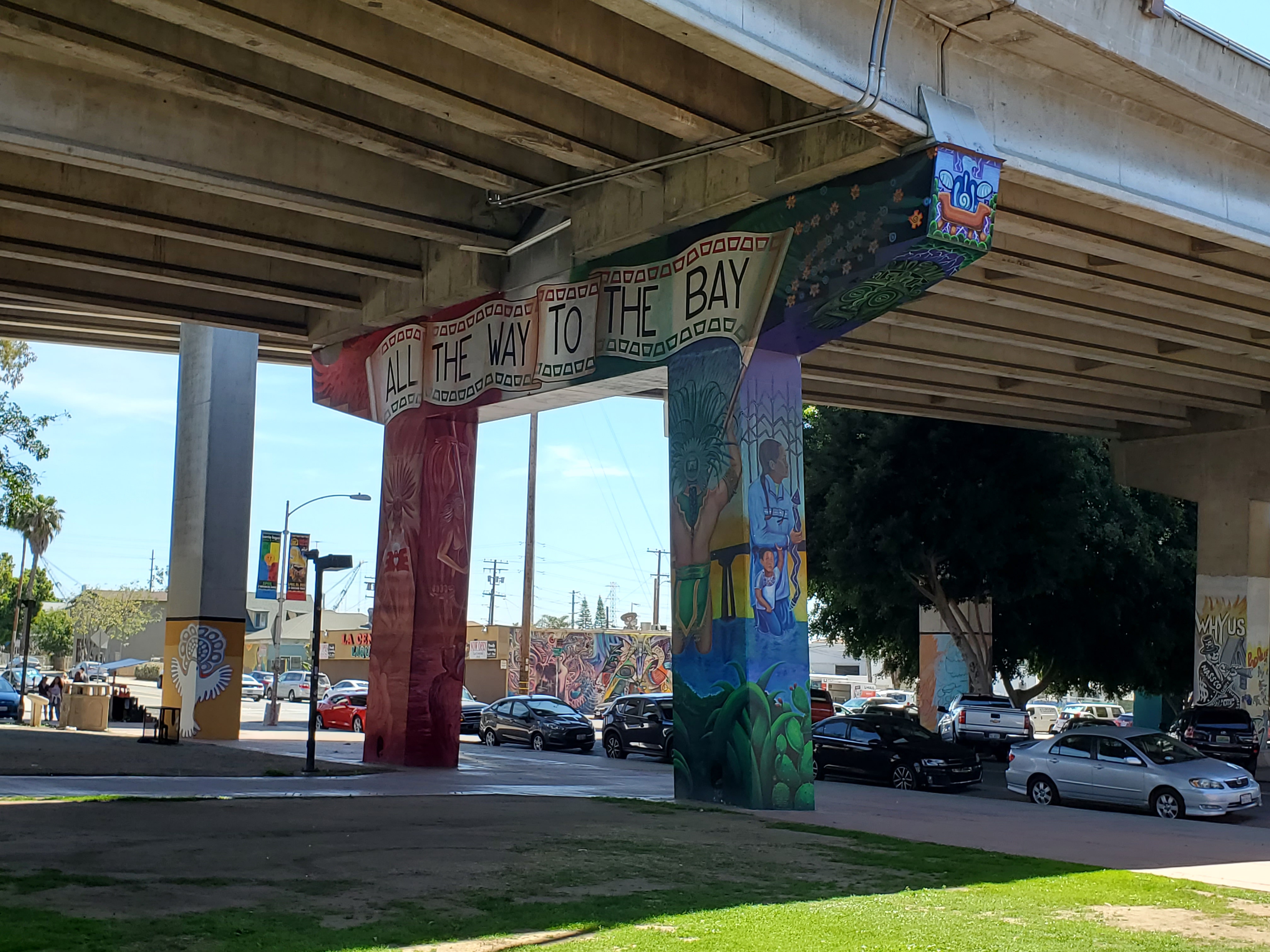
As I mentioned in a previous post, I recently spent some time in San Diego. Whenever I get down to civilization, I tend to look for street art. San Diego had plenty of it. One location in particular stands out, Chicano Park. Many of the murals express explicit historical commentary, a fact all the more significant in light of the history of the park itself. It is the product of local unrest, a local community outraged at a series of developments diminishing the quality of life for its residents. The community had been separated from the waterfront by Naval installations, bisected by freeways and zoned in a manner hardly conducive to residential living. Plans to develop a highway patrol station seem to have been the final straw. It took an occupation to create the park as it presently exists.

And more of course!

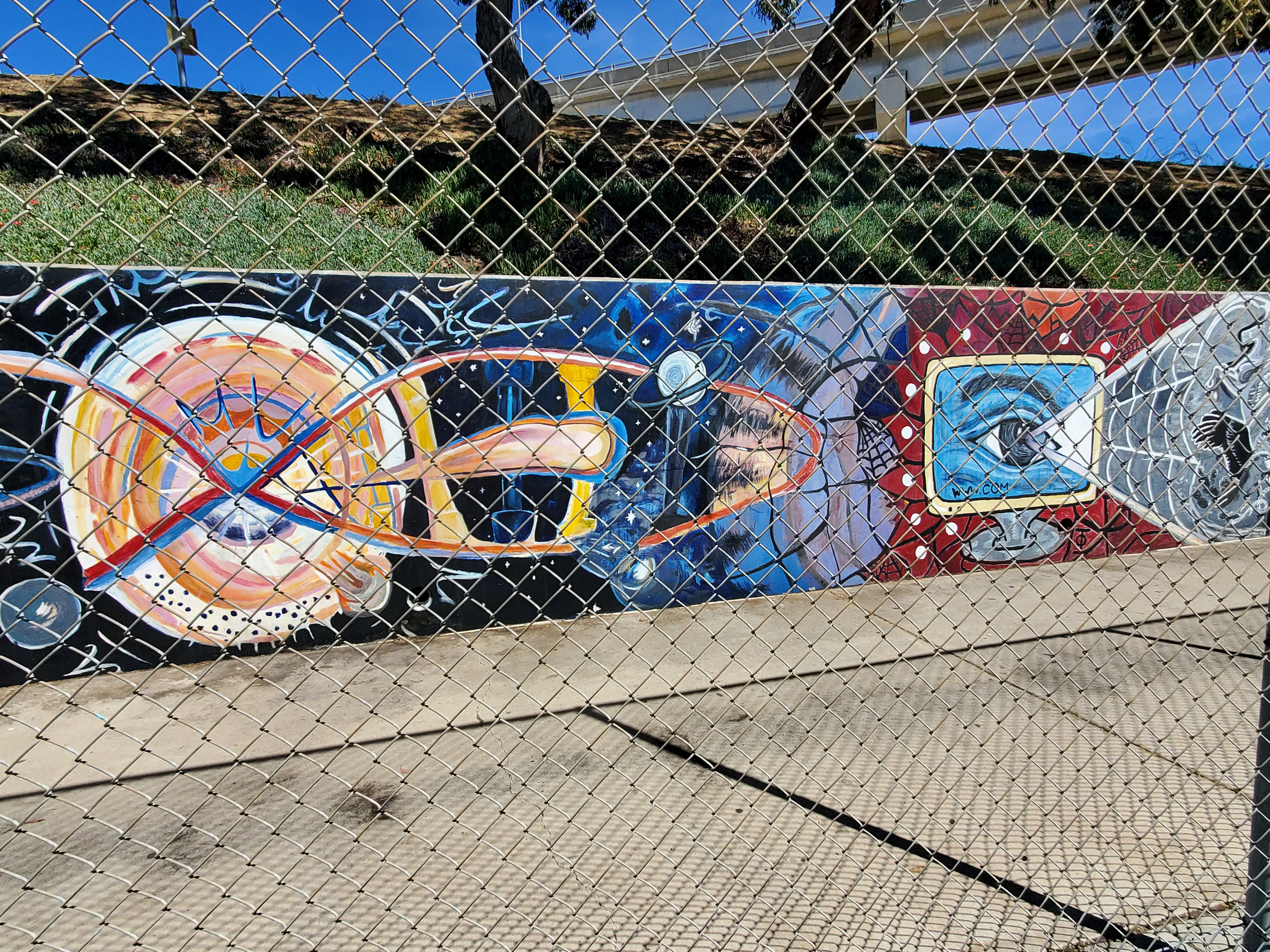
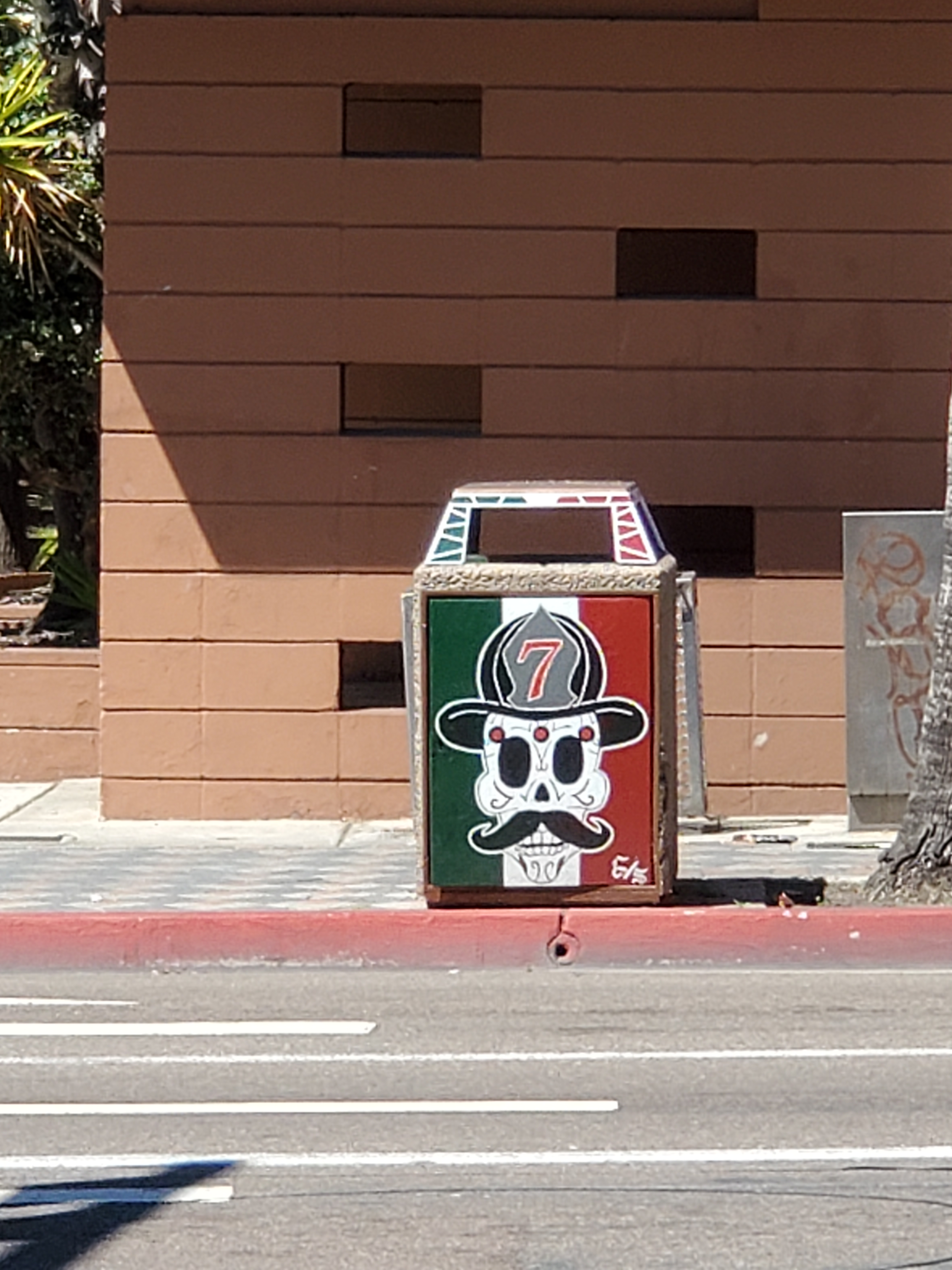
Honestly, the stories I found here are a bit beyond me. So, I’ll let the pictures speak for themselves. That, and perhaps a link or two.

(click to embiggen)

A few more from around the neighborhood.

And some small pieces in the area.

Share this:

  • Tweet
  • Share on Tumblr
  • Click to print (Opens in new window) Print
  • Click to email a link to a friend (Opens in new window) Email
  • Click to share on Reddit (Opens in new window) Reddit
Like Loading...

A Republic of Obligatory Anachronism!

21 Thursday Jul 2022

Posted by danielwalldammit in Uncategorized

≈ 6 Comments

It has become a common gambit to tell people the United States of America is not a democracy; it is a republic. This argument seems to be coming from right wing circles, for the most part anyway. It gets a lot of its force from the fact that so many on left and even in the middle ground of our nation’s politics commonly refer to the United States as a ‘democracy.’ It gets a lot more force from the fact that at least some of the nation’s founding fathers expressed reservations about democracy. So, anyone casually referring to the nation as a ‘democracy’ becomes low hanging fruit for a quick lecture by shameless opportunists. And of course the Republican party gets a little pay-off out of nudging our vocabulary in the direction of their own party moniker.

Fake quotes from America’s founders help to exaggerate the contrast even to the point of caricature (e.g. Not-Jefferson on Democracy, Two Wolves and a Franklin). It is also common to find those making the correction suggesting that anyone who refers to America as a ‘democracy’ must be advocating the very horribles imagined in such spurious quotations.

People do this all the time.

But are they really doing something?

(When they do, this I mean.)

Are people really doing something when they do this?

Yes! They are indeed doing something.

What they are doing is semantics.

That’s right! At bottom, this is a word game, nothing more. What’s more, it’s not a particularly helpful word game, owing to a deceptive shift in meaning over the course of the argument. Folks who make this argument aren’t helping u to understand anything; they are confounding real issues about how to design a government with minor shifts in vocabulary.

***

I’m not normally a fan of argumentum ad dictionary, but this topic is all about definitions, so let’s take a moment to cover a few options.

Democracy: We’ll go with Merriam Webster Online…

1a: government by the people especially : rule of the majority

b: a government in which the supreme power is vested in the people and exercised by them directly or indirectly through a system of representation usually involving periodically held free elections

2: a political unit that has a democratic government

3 capitalized : the principles and policies of the Democratic party in the U.S. from emancipation Republicanism to New Deal Democracy— C. M. Roberts

4: the common people especially when constituting the source of political authority

5: the absence of hereditary or arbitrary class distinctions or privileges

Republic: Also using Merriam Webster…

1a(1): a government having a chief of state who is not a monarch and who in modern times is usually a president

(2): a political unit (such as a nation) having such a form of government

b(1): a government in which supreme power resides in a body of citizens entitled to vote and is exercised by elected officers and representatives responsible to them and governing according to law

(2): a political unit (such as a nation) having such a form of government

c: a usually specified republican government of a political unit the French Fourth Republic

2: a body of persons freely engaged in a specified activity the republic of letters

3: a constituent political and territorial unit of the former nations of Czechoslovakia, the Soviet Union, or Yugoslavia

Of course, there are plenty of other dictionaries out there, but the better ones are going to have MORE rather than less options for the meaning of the terms in question, and those up above are pretty representative of the options you’ll find in other dictionaries (though the specific examples mentioned are likely to vary). So, I am going with this.

***

What I want to note right off the bat here is the fact that government outlined in the U.S. Constitution, with its system of elected representatives, would match definition 1b for ‘Democracy’ above, and also definition 1b for ‘Republic’ above. I used to use a government textbook that spoke of the U.S. as a ‘representative democracy’ or an ‘indirect democracy’ as well, both phrases quite synonymous with common uses of the term ‘republic’ or ‘republican government.” In my experience, these are common ways of talking about the subject. In fact, I’ll wager that that is what people generally have in mind when they refer to the United States as a ‘democracy.’ They would be quite surprised to find that they are referring to a direct democracy with no constitutional restrictions on government authority (as those using the not-a-democracy gambit typically suggest).

Simply put; there is, in every day usage, considerable range of overlap between the meaning of ‘democracy’ and the meaning of ‘republic.’ The two words are commonly used to refer to the same thing.

***

Okay, so where do people get the idea that they are different? They do so because America’s founding fathers were openly skeptical of democracy. Sometimes the founders expressed this in terms of a need check extreme forms of democracy and sometimes they voiced opposition to democracy altogether. And yet, their comments on the subject were not uniformly negative. It says something that the Jefferson and Madison faction of post-Constitution politics was (and is) known as the Democratic-Republicans. If democracy and republicanism could be juxtaposed in opposition to one another, they could also be seen as complementary. Those snarking about how the United states is a ‘republic’ and not a ‘democracy’ take notice of the one theme while seeking to hide the other.

Perhaps the most strident diatribe against a democracy in the founding era comes from Federalist 10, written by James Madison. The relevant passages begin…

From this view of the subject, it may be concluded that a pure democracy, by which I mean a society, consisting of a small number of citizens, who assemble and administer the government in person, can admit of no cure for the mischiefs of faction.

It’s worth noting the hedge in Madison’s comments at this point in the article; he is speaking of “pure democracy,” which seems to leave open the possibility of other not-so-pure democracies. Also, it’s worth noting that he attributes two separate features to this pure democracy; small size and direct participation. The former is a direct function of the purpose of the Federalist papers; they are an effort to sell the Constitution to the public, and along with the Constitution, a much larger and stronger central government. Madison is making a case for a larger government by telling us that smaller governments are more prone to corruption by factional interests. That is part of what he means when he contrasts ‘democracy’ with ‘republic.’ Significantly, this theme runs quite counter to the politics of the Republican Party with its current penchant for bashing big-gov. So, it should be no surprise that those insisting America is a republic would not take up this aspect of Madison’s thinking. The second theme, that direct democracy is a problem (i.e. that letting the people as a whole make decisions about government themselves) makes more of an appearance in their rhetoric. At least some of those telling us the USA is not a democracy will call attention to the representative nature of our legislative process. A lot of educational materials will put that closer to the center of a discussion on the topic. So, did Madison.

A republic, by which I mean a government in which the scheme of representation takes place, opens a different prospect, and promises the cure for which we are seeking. Let us examine the points in which it varies from pure democracy, and we shall comprehend both the nature of the cure, and the efficacy which it must derive from the union.

The two great points of difference between a democracy and a republic, are first, the delegation of the government, in the latter, to a small number of citizens elected by the rest; secondly, the greater number of citizens, and greater sphere of country, over which the latter may be extended.

Note that Madison describes the U.S. model of government in terms of elected representatives which would put it squarely in the domain found in definitions 1b above for both ‘democracy’ and ‘republic’ found in the dictionary above. That Madison refers to this as a republican model of government in contrast to a ‘pure democracy’ does not change the fact that today, people use the word ‘democracy in a manner that is precisely consistent with his own use of ‘republic.’ The point he is making is about the virtues of elected representatives, and there is absolutely no reason to believe this point – or would be – lost on those who refer to the present government of the United States as a ‘democracy.’ There is no reason to suppose that modern usage of the word ‘democracy’ (particularly in reference to the U.S. Government) is meant to apply strictly to direct democracies as Madison does in Federalist 10.

By the end of Federalist 10, Madison has dropped his hedge, and the contrast is simply between a democracy and a republic. The fact remains, however, that Madison’s use of the term is significantly more narrow than that of modern usage in which the word ‘democracy’ is commonly taken to include representative government or indirect democracy. If Madison (or any other founder restricting the term to a comparably narrow range of meaning) rejects democracy, then what stands between them and those Americans who think they live in a democracy is a question of semantics, NOT factual or practical matters. Those producing this sophomoric correction never account for the shift in meaning. They would prefer to pretend that they are weighing in on a matter of great substance.

***

Note: Another way of distinguishing a ‘republic’ from a ‘democracy’ is to talk about the role of a constitution as a document defining the terms of government authority and restricting that authority to specific contexts of application. This is particularly, important, some would suggest, insofar as a constitutional republic (theoretically) prevents the majority from voting away the rights of a minority. This too is deceptive. Those referring to the USA as a ‘democracy’ are not ignorant of the Constitution or the Bill of Rights, nor are they talking about government in a way that negates the significance of either. In college, the distinction is often made between a “strict majoritarian democracy” and a government limited by the terms of a Constitution. It could be added that such provisions are still part of a democratic process, because even constitutions can be modified (albeit usually by the higher standard of a supermajority vote) and in the U.S. at least, our legislative representatives are still elected to office. People who call the U.S. a ‘democracy’ know this, and they certainly aren’t suggesting in such references that the Bill of rights or the proscriptions on government authority in Article 8 section 9 should be set aside.

***

I should add that the matter is not entirely trivial. The Constitution incorporates democratic principles into government in a variety of ways, balancing them off against measures concentrating power in elite circles. We can ask legitimate questions about how well these serve the people (or even whether or not they were ever meant to serve the people), but any questions about what we should do are poorly served by this simple either-or distinction. Recent efforts to subvert the democratic elements of U.S. government (such as the independent state legislature theory) pose a real threat to the integrity of American government.

Not to mention, a flagrant attempt to subvert the result of an election!

There are those who would genuinely prefer it if America were less democratic. This gambit gives them a cheap shortcut to an agenda they might find more difficult to articulate in responsible terms.

***

Semantic discussion should help us clarify meaning, not obscure it in the immediate partisan interests of those seeking to gain the rhetorical upper hand. There is a legitimate point to be made here, that America’s founding fathers had their concerns about democratic government. That point is not well made by opportunistic gotcha games like the notion that our nation is not a democracy because it is actually a constitutional republic. The United States of America is both.

Share this:

  • Tweet
  • Share on Tumblr
  • Click to print (Opens in new window) Print
  • Click to email a link to a friend (Opens in new window) Email
  • Click to share on Reddit (Opens in new window) Reddit
Like Loading...

Dave and the Doctor

04 Thursday Mar 2021

Posted by danielwalldammit in Uncategorized

≈ 18 Comments

Pandering pays!

Just ask Dave Rubin.

What am I talking about?

I am talking about one of the many wannabe-Rush-Limbaughs currently working the right wing ‘satire’ game for all of it’s worth. Rubin describes himself as a ‘classic liberal,’ and apparently holds some left-ish views, but none of them are important enough to prevent him from pandering to right wing extremists on his show, The Rubin Report. As with so many who feign political neutrality, Rubin’s right wing agenda grows ever more obvious.

I saw Dave Rubin at a comedy event hosted by John Fugelsang back during the 2016 campaign. One of the themes of the night was the mainstream news media pandering to Donald Trump by giving him more airplay (and more favorable narratives) than he deserved. It was Dave Rubin who noted, quite reasonably, that the comedians present that night were also giving Trump the limelight, just as others did. It was also Dave that stated quite clearly that his own show got more attention when he referenced Trump than when he didn’t, which is why he, and the comedians present, and the whole of mainstream media kept helping Trump by giving him more airtime than he deserved. I thought Rubin was right on target with those comments. What I didn’t realize at the time was just how prophetic these remarks would prove to be. Like Candace Owens or Diamond and Silk, Dave has discovered that right wing punditry pays more than any comparable options on the left, so he has drifted further and further to the right over the last few years. It’s a move seems to have been good for him.

Pandering pays!

***

What has me thinking about Rubin just now?

The Cat in the hat does.

Well, Dr. Seuss anyway.

Yesterday, Dr. Seuss Enterprises announced that they would cease publication of 6 titles from Dr. Seuss over concerns about racial stereotypes contained in them. The works are; And to Think That I Saw It on Mulberry Street, If I Ran the Zoo, McElligot’s Pool, On Beyond Zebra!, Scrambled Eggs Super!, and The Cat’s Quizzer.  Dr. Seuss Enterprises stated had consulted with a number of experts over concerns about a number of his books, and concluded that these 6 books would be best left unpublished from this point forward. As they put it; “These books portray people in ways that are hurtful and wrong.”

So, naturally the echo-chamber burst out bubbling mad!

Dave Rubin is just one of the many right wing hacks to weigh in on this decision. Apparently, Glenn Beck thinks it’s all fascism, but then again Glenn Beck thinks compassion is the first step to fascism. …which is probably giving Glenn Beck too much credit, because I have yet to see a shred of evidence that Beck thinks at all. …about anything! Dave Rubin? Well, Dave should know better. He really should have.

Still, Rubin came out against the decision.

…because of course he did.

From about the :44 to the 7:20 mark on this episode of The Rubin Report, Dave Rubin weighs in on Dr. Seuss. What fascinates me about this is the way that Rubin talks about the controversy without ever addressing any of the concerns about the books in question. (You may read about the actual concerns here, here, here, and here. A defense of Dr. Seuss from his stepdaughter may be found here.)

Early, in the segment, Dave names each of the 6 books in question, making up a few faux-criticisms (highlighted in red) as he goes. Here is a transcript of the segment from Youtube;

i’ve got all 02:18 six of them for you here 02:19 scary titles each one of them 1937’s 02:23 mulberry street nano getting rid of that 02:25 one 02:26 in 1947 he published mick elgat’s 02:29 pool we’re getting rid of that mick 02:32 elegance pool i suppose that is 02:34 1950s if i ran the zoo you can only 02:37 imagine what racist stuff was happening 02:39 there over at the zoo 02:40 uh 1953 he had scrambled egg 02:43 super where did the eggs come from who 02:46 what how many villages did you have to 02:48 destroy to get those eggs 02:49 this one is fairly obvious why they had 02:51 to get rid of it 02:52 1955’s on beyond zebra 02:56 you can imagine with the black and the 02:57 white with the zebra something something 02:59 wasn’t right 03:00 and of course in 1976 his truly racist 03:04 manifesto 03:05 the cats quizzer these will no longer 03:09 be published by random house children’s 03:12 books 03:13 anymore uh because you know 03:16 tolerance and stuff because we’re 03:18 becoming so evolved 03:20 in 2021 that we’re erasing books of 03:23 1937. 03:24 duh

Just to be clear, not one of the faux arguments Rubin attributes to Dr. Seuss Enterprises comes from Dr. Seuss Enterprises or the people they consulted with. Each is a flippant remark made up by Dave Rubin himself in order to make fun of their decision. To be fair, Rubin doesn’t really suggest that these are real arguments, but also to be fair, he makes no effort whatsoever to address any of the actual concerns anyone has raised about Dr. Seuss. This kind of sarcasm is all you get, leaving the entire segment devoid of any effort to engage the actual substance of the issue in any way.

Rubin moves on to read passages from; “Oh, the Places You Will Go.” He tells us this volume is far worse than the others, because it advances the notion of individual empowerment which the social justice cowd will surely want to censor. Finally, Rubin adds that the book has no page numbers which lefties would love because apparently we hate math. Thus, Rubin alludes to two completely different elements of the culture wats, neither of which has a damned thing to do with the concerns over Dr. Seuss. In both cases, his narrative is gratuitous in the extreme, enabling Rubin to present himself and his fans as proponents of self-reliance, and math, which his political enemies (and those of Dr. Seuss) evidently oppose.

In the end, Dave’s criticism of Dr. Seuss Enterprises fails to address ANY of the actual controversies associated with the Dr. Seuss Books. What he does instead is to present social justice criticisms in caricature while advancing a narrative having nothing to with the decision in question. Of course, the sarcastic tone enables him to do this without actually making making any false claims about Dr. Seuss. So, it’s all sarcasm, right?

Or satire?

This juvenile approach to the subject enables Rubin to bypass the actual issues entirely while generating a narrative flattering to his own audience, and to the politics they support. Add Rubin to the chorus of other right wing hacks howling about this and you have the echo chamber re-enforcing a message that condemns Dr. Seuss Enterprises without ever addressing the actual reasoning behind this decision in any meaningful way. You have a deceitful narrative that invites bigots and bullies to fancy themselves defenders of free thought and free markets, and even math. That sounds a lot better than describing them as people who insist that children’s books promoting racial stereotypes continue to be published, even over the objections of the objections of the man’s own estate.

***

Dave Rubin could have raised questions about the standards used to make this decision. He could have suggested alternatives to discontinuation. He could have addressed inconsistencies such as the fact that “Cat in the Hat” is still in publication despite also being the subject of similar concerns about its content. If Dave Rubin objects to the decision by Dr. Seuss Enterprises, he could have addressed the issues squarely on his show. Instead, he chose to make snide remarks and tell stories he knows his ever more deplorable audience audience will love to hear.

Pandering pays!

Share this:

  • Tweet
  • Share on Tumblr
  • Click to print (Opens in new window) Print
  • Click to email a link to a friend (Opens in new window) Email
  • Click to share on Reddit (Opens in new window) Reddit
Like Loading...

Master and Commander Kinda Queered

16 Friday Oct 2020

Posted by danielwalldammit in Uncategorized

≈ 8 Comments

Today, I want to talk about my all-time favorite relationship movie.

No, I’m not talking about Pretty Woman, nor Titanic. (Blech!)

Not Leaving Las Vegas either!

I’m not even talking about that flick about a cabin on a lake or the one where somebody in Portland or thereabouts has a bad case of insomnia. I don’t even care when Harry met Sally, not at all! (Okay, maybe a little in that case.)

No.

I like Master and Commander.

Yes, that’s right.

My favorite relationship movie is a war movie.

Don’t get me wrong. This film has everything you would want in a war movie. The battle scenes in Master and Commander are intense as Hell! During the very first engagement I was seriously afraid I would get hit by grape shot, or that some debris from the ship would come flying out of the screen and leave me with a terrible scar. I could even imagine telling the story later. If I survived! Anyway, the point is that this movie doesn’t scrimp on the battle scenes. Master and Commander definitely makes a good war movie.

It also makes for an excellent relationship movie.

The central story line of the film is a quest to sink or capture a French privateer that was playing havoc with British commerce during the Napoleanic Wars. So the main question in this film is whether or not Captain Jack Aubrey of the Royal British Navy (played by Russell Crowe) will succeed in finding and defeating this offending French commerce raider, the Acheron. To say that the Acheron will prove a challenge is putting it mildly. The vessel has superior a design and its Captain clearly knows what he is doing. Aubry’s own ship, the Surprise, is badly damaged in their first engagement and his own officers quickly come to the conclusion that they should abandon the chase and limp back to England.

Aubrey of course will have none of it!

Aubrey makes plans for repairing the ship of the coast of South America and giving chase to the vessell that clearly outclasses them just as soon as he possibly can. And of course Aubrey is the Captain, so he can do that.

The rest will have to do as he says.

While hunting the Acheron, Aubrey falls into conflict with his close friend, the ships doctor, Stephen Maturin (played by Paul Bethany). Maturin thinks Aubrey’s pursuit of the Achoron is reckless, and says so. (Big mistake!) When they end up on the Galapagos Islands, Maturin has an opportunity to learn a thing or two and possibly advance the science of biology. The film hints at the possibility that Maturin might have, with sufficient time and support, played a role in history comparable to that of Darwin, but of course the Ancheron calls and Aubrey if of course eager to answer. So, the two end up losing their trust in each other even as they find themselves at odds over their best course of action. Maturin really wants to stay and study and Aurbey really wants to go and find the ship that’s probably going to kill them all when he does.

This conflict between Aubrey and Maturin over their respective priorities threatens to break their friendship apart just as Aubrey’s own priorities threaten to tear the ship apart in the pursuit of a vessel clearly out of their own league. So, there we have it! A nice tight little story about a relationship sitting smack dab in the middle of a story about fighting a war and defeating the big bad evil guy in battle.

This relationship between Aubrey and Maturin follows much the same course as your average romance story. The man in this relationship is clearly Aubrey as he places the pursuit of war at the top of his priorities which of course makes him a manly man at his manliest. (Stereotypes happen!) Maturin’s own interest in the study of bugs, and birds, and what not clearly feminizes him in relationship to his more belligerent friend. (Next to a poet or a literary scholar, maybe Maturin would prove the man in the relationship, but next to Captain Jack Aubrey, Maturin clearly occupies the role of a woman. The question of whether to stay on the Galapagos and study the wildlife or go out in search of a battle they are likely to lose threatens to tear this happy couple apart. It provides the obstacle to their relationship which is of course a staple in such stories.

So, can our lovely couple overcome that obstacle and regain the bliss they once found in each other’s company, or will go their separate ways once and for all in the end?

All of this of course assumes our star-crossed lovers survive the war in the first place, because that pesky war-movie intrudes upon the love-story whenever it wishes, as one might expect of a war movie forced to share the screen with a softer narrative like this. The larger plot here can be such a bully!

This of course bothers Maturin more than it does Aubrey.

***

Okay, so tongue-in-cheek humor aside, this isn’t really some homo-erotic love story. Far from it! My point is simply that the story line actually does make use of some of the same mechanics we are used to seeing in relationship movies. It even evokes much of the gender-based stereotypes that guide so many relationship movies, not because there is anythig about the film which deliberately plays to these stereotypes, but because patterns of significance have a way of intruding even where they are not wanted. Once you see it in this film, the sense that you are really watching a romance is hard to avoid. We end up with two serious questions in this film, one about whether or not these two will somehow repair the damage to their friendship and one about whether they will win the battle. What makes it a great film is just how well these two questions are bundled up together in the overall story.

***

WARNING: Half-spoiled spoilers ahead!

***

The actual resolution of the conflict works just fine for me, at least when the question is do I enjoy the story. It also leaves me wondering about the ultimate significance of the story line. Once you see the gendered themes in the film, it’s tough not to read the relationship in those terms, not because anybody is playing their role with a limp wrist, but because warfare is typically thought of as a manly pursuit, and because the doctor’s priorities align more closely with what would be those of the woman in just about most any other relationship movie. Of course the decisions each will make are set in the background of a story line rendering each of their actions quite plausible, and the ultimate resolution of the conflict certainly makes sense on that level. But this leaves me with a lingering fear over what priorities we are to take away from the film itself. Which, in the end, really does matter more?

Science or warfare?

Perhaps without intending to, I cant help thinking this film answers that question. It does so by answering another question, one about how out lovely couple resolves their own conflicts?

Who gives up more for the relationship?

Share this:

  • Tweet
  • Share on Tumblr
  • Click to print (Opens in new window) Print
  • Click to email a link to a friend (Opens in new window) Email
  • Click to share on Reddit (Opens in new window) Reddit
Like Loading...

STOP!

27 Wednesday May 2020

Posted by danielwalldammit in Bad Photography, Uncategorized

≈ 2 Comments

Tags

Alaska, Frost, Graffiti, Signs, Snow, Stop, Stop SIgns, Street Signs, Winter

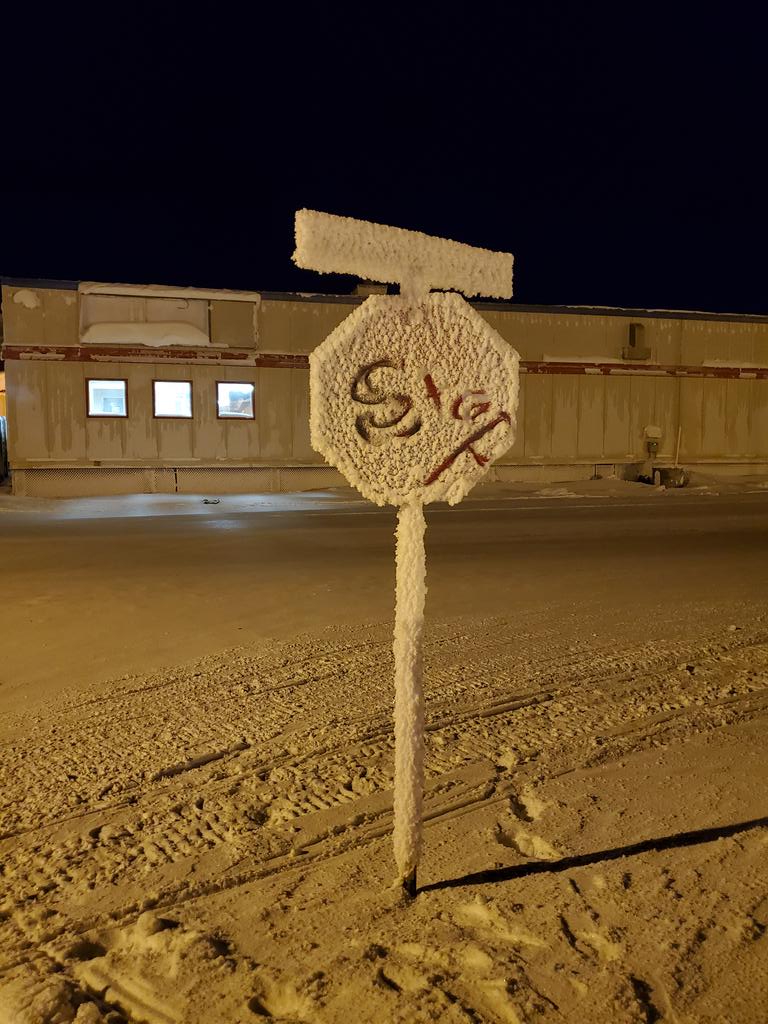
EN-E1CxUYAAwfv7

…cause even a street sign sometimes needs a helping hand.


Share this:

  • Tweet
  • Share on Tumblr
  • Click to print (Opens in new window) Print
  • Click to email a link to a friend (Opens in new window) Email
  • Click to share on Reddit (Opens in new window) Reddit
Like Loading...

Happy Seward’s Day!

30 Monday Mar 2020

Posted by danielwalldammit in Alaska, History, Native American Themes, Public History, Uncategorized

≈ 3 Comments

Tags

Alaska, Art, History, Ketchikan, Saxman Park, Seward Shaming Pole, Totem Pole, William Seward, Wood Carving

Not to be sarcastic or anything, but I’ll just leave this here.

31280051_10216222128450975_6457664555075357310_n

Share this:

  • Tweet
  • Share on Tumblr
  • Click to print (Opens in new window) Print
  • Click to email a link to a friend (Opens in new window) Email
  • Click to share on Reddit (Opens in new window) Reddit
Like Loading...

A Happy Memory

28 Saturday Sep 2019

Posted by danielwalldammit in Gaming, Uncategorized

≈ 1 Comment

Andy at Majestic Mold Making

Andy at Majestic Mold Making

The campaign itself was beyond epic. Twenty-plus years of First Edition AD&D, all played in the same imagined world involving mostly the same group of players had left us with quite a cast of recurrent characters. By now, each of us had some that were old enough to get a driver’s license. My old high school friend, Andy, and I each had characters old enough to buy beer …legally. It was a rich world we had built up over the years. Somewhere in there, we had the idea to round up our biggest and best bad-ass characters and run the campaign to end all campaigns with them.

Each of us chose a bunch of our favorites to add into the small army we would be using and we decided to alternate the job of running the game. Each game would essentially be a one-off which we would loosely fold into a larger plot ending with some scale of bad-assery we had never gamed before.

The whole thing fizzled of course, as campaigns often do, but not before furnishing us with a few great sessions.

***

Andy ran this particular session. He set up the scenario as we put together a take-out order and someone set up the stereo with a couple choice CDs. We began placing our characters in the setting and getting ready for the challenge. Straight to initiative! Andy wasn’t messing around, but just before we began the hack & slash, he announced an odd twist. There would be a single modifier of -5 to +5 on all die rolls that would apply to each of the characters belonging to one player for an indefinite time during the course of the game. Andy would assign the modifier whenever it proved appropriate. We received no explanation, and that was that.

Okay, sounds like fun!

I think Mike got the first modifier. It was a small bonus of +2 or +3, and it helped him a bit with whatever challenge we had for the day. Soon, the modifier changed and I received a -1. Then my penalty was upped to -3 or so. Later Mike got a penalty, and then I got a bonus of +3, followed by a penalty of -5. (That hurt!)

…and we had no idea where this was coming from.

Generally speaking, Mike was doing better than me. He got mostly benefits. Chuck had few modifiers (mostly small penalties), and this modifier never seemed to apply to Andy’s characters at all. I think we once went an hour or so with no modifier to anyone. I was the only player in the entire game to receive the maximum penalty.

The timing wasn’t consistent. It changed at close to an hour, but not quite, and not always at the same time interval anyway. It fell almost in between rounds, but not quite. On an exceptionally long round (we had lots of characters on the table), it might change half way through, but at least once it had lasted 2 rounds, and we even checked. Andy insisted that it wasn’t time to change the modifier.

We thought about actions taken by different players. Was it a response to certain specific spells? Success or failure in attacks? Something to do with alignment? Could it be the enemy? Was there some object on the table that made the difference? Perhaps movement of characters into different parts of the game surface? There were moments when we thought we might have seen a pattern, but then something always happened to debunk our thoughts on the subject. We played the entire game without figuring it out, and it was a very long game, long enough to get a call from another friend’s wife wondering when he was coming home. Not till it’s over (of course!), but we never did figure out the basis for the modifier. The whole challenge ended without resolving that one troublesome question.

I remember this had been a particularly satisfying game. We were still laughing and smiling as we packed. Andy had run a great scenario, enough that we actually said so. Compliments were a rarity in this crowd (except for the back-handed kind of course). Oh there was the occasional ‘fuck you!’ or ‘asshole!’ delivered right after someone did something exceptionally well. That was what usually counted as praise in our circle. But ‘good game’ and ‘I enjoyed this’ were not phrases that rolled often off of our tongues. Still, Andy got a couple of those remarks at the end of the session.

And then we asked.

“The modifier? What was it?”

“Oh, it was based on the music. I gave bonuses if I liked the disc you put on and penalties if I didn’t.”

(The hour with no modifier to anyone had been the one time Andy put on a disk himself. It was The Reverend Horton Heat, as I recall, that earned me the full penalty of -5.)

I don’t think I ever stopped laughing about that.

***

Andy Sneed introduced me to RPGs way back in our freshman year of high school. He asked me if I’d ever payed Tunnels and Trolls before, and after hearing me say ‘no’, Andy promptly informed me that I was playing the game with him and his brother that coming Saturday. ‘Who the Hell is this guy’ I wondered? But I agreed to come try it. To say that I was hooked from the first game session would be putting it mildly. It was the beginning of a lifelong interest and a long-standing friendship.

Andy and I lost touch with each other in recent years, but I had always hoped we would one day end up back in the same room, tossing playful insults back and forth at each other and fighting over what music we’d listen to as we slew another dragon.

…probably in some old folk’s home!

Sadly, no.

Andy’s funeral was yesterday. His passing has me thinking of this story and countless others like it. I will miss my friend.

Rest in Peace, Andy.

Share this:

  • Tweet
  • Share on Tumblr
  • Click to print (Opens in new window) Print
  • Click to email a link to a friend (Opens in new window) Email
  • Click to share on Reddit (Opens in new window) Reddit
Like Loading...
← Older posts

Top Posts & Pages

  • Uncommonday Morning Blues - Ian Anderson Learns to Play the Flute
    Uncommonday Morning Blues - Ian Anderson Learns to Play the Flute
  • Master and Commander Kinda Queered
    Master and Commander Kinda Queered
  • The Erotic Heritage Museum in Las Vegas: A Very NSFW Review
    The Erotic Heritage Museum in Las Vegas: A Very NSFW Review
  • An Uncommon Security Guard: Dave Eshelman, AKA 'John Wayne'
    An Uncommon Security Guard: Dave Eshelman, AKA 'John Wayne'
  • Uncommonly Slow on the Uptake
    Uncommonly Slow on the Uptake
  • A Joke from a Bygone Era
    A Joke from a Bygone Era
  • Great Movie Villains, Volume VIII: Your Mother!!!!
    Great Movie Villains, Volume VIII: Your Mother!!!!
  • Too Much Zoom for the Room!
    Too Much Zoom for the Room!
  • A Certain Value of 'Greatness'
    A Certain Value of 'Greatness'
  • Irritation Meditation # 5: Persecution Ain't a Fricking Contest!
    Irritation Meditation # 5: Persecution Ain't a Fricking Contest!

Topics

  • Alaska
  • Animals
  • Anthropology
  • atheism
  • Bad Photography
  • Books
  • Childhood
  • Education
  • Gaming
  • General
  • History
  • Irritation Meditation
  • Justice
  • Las Vegas
  • Minis
  • Movie Villainy
  • Movies
  • Museums
  • Music
  • Narrative VIolence
  • Native American Themes
  • Philosophy
  • Politics
  • Public History
  • Re-Creations
  • Religion
  • Street Art
  • The Bullet Point Mind
  • Travel
  • Uncategorized
  • Uncommonday
  • White Indians
  • Write Drunk, Edit Stoned

Blogroll

  • American Creation
  • An Historian Goes to the Movies
  • Aunt Phil's Trunk
  • Bob's Blog
  • Dr. Gerald Stein
  • Hinterlogics
  • Ignorance WIthout Arrogance
  • Im-North
  • Insta-North
  • Just a Girl from Homer
  • Multo (Ghost)
  • Native America
  • Norbert Haupt
  • Northwest History
  • Northy Pins
  • Northy-Tok
  • Nunawhaa
  • Religion in American History
  • The History Blog
  • The History Chicks
  • What Do I Know?

Archives

  • December 2023
  • November 2023
  • June 2023
  • April 2023
  • February 2023
  • December 2022
  • November 2022
  • October 2022
  • September 2022
  • August 2022
  • July 2022
  • June 2022
  • April 2022
  • January 2022
  • December 2021
  • November 2021
  • October 2021
  • September 2021
  • August 2021
  • June 2021
  • May 2021
  • March 2021
  • February 2021
  • January 2021
  • December 2020
  • November 2020
  • October 2020
  • September 2020
  • June 2020
  • May 2020
  • March 2020
  • February 2020
  • January 2020
  • December 2019
  • November 2019
  • September 2019
  • August 2019
  • July 2019
  • June 2019
  • May 2019
  • April 2019
  • January 2019
  • December 2018
  • November 2018
  • October 2018
  • September 2018
  • August 2018
  • July 2018
  • June 2018
  • May 2018
  • April 2018
  • March 2018
  • February 2018
  • January 2018
  • December 2017
  • November 2017
  • October 2017
  • September 2017
  • August 2017
  • July 2017
  • June 2017
  • May 2017
  • April 2017
  • March 2017
  • January 2017
  • December 2016
  • November 2016
  • October 2016
  • September 2016
  • August 2016
  • July 2016
  • June 2016
  • May 2016
  • April 2016
  • March 2016
  • February 2016
  • January 2016
  • December 2015
  • November 2015
  • October 2015
  • September 2015
  • August 2015
  • July 2015
  • June 2015
  • May 2015
  • April 2015
  • March 2015
  • January 2015
  • December 2014
  • November 2014
  • October 2014
  • July 2014
  • June 2014
  • May 2014
  • April 2014
  • March 2014
  • February 2014
  • January 2014
  • December 2013
  • November 2013
  • October 2013
  • September 2013
  • August 2013
  • July 2013
  • June 2013
  • May 2013
  • April 2013
  • March 2013
  • February 2013
  • January 2013
  • December 2012
  • November 2012
  • October 2012
  • September 2012
  • August 2012
  • July 2012
  • June 2012
  • May 2012
  • April 2012
  • March 2012
  • January 2012
  • December 2011
  • November 2011
  • October 2011

My Twitter Feed

Follow @Brimshack

RSS Feed

  • RSS - Posts
  • RSS - Comments

Enter your email address to follow this blog and receive notifications of new posts by email.

Join 8,076 other subscribers

Blog at WordPress.com.

  • Subscribe Subscribed
    • northierthanthou
    • Join 8,076 other subscribers
    • Already have a WordPress.com account? Log in now.
    • northierthanthou
    • Subscribe Subscribed
    • Sign up
    • Log in
    • Report this content
    • View site in Reader
    • Manage subscriptions
    • Collapse this bar
 

Loading Comments...
 

    %d