The Fog of Hedges

Tags

, , , , , , , ,

thumb_624_default_bigFor me, The Fog of War (2003) is absolutely the gift that keeps on giving. I get more fascinated every time I watch this film. There are so many angles to it, so many sub-themes to explore. Lately, I find myself more and more interested in its language. The Fog of War was directed by Errol Morris (of the Thin Blue Line). It consists of a series of interviews with Robert S. McNamara, a man at the center of conflict throughout much of the twentieth-century. Few people could have provided more direct insight into the thinking behind some of the most terrible decisions of that era. By ‘terrible decisions’ I don’t mean poor choices so much as decisions with so much at stake, one can’t help tremble at the thought of them. That many of these decisions were also (arguably) also poor choices in the other sense, choices that cost the lives of countless people is also a big part of this story.

A lesser man might not struggle with such questions at all, resting certain in whatever rationalizations suited him best. But there McNamara is in the Fog of War, right on screen talking about those very decisions, and trembling at the thought of them, right in front of the camera. For a man with blood on his hands (and frankly, enormous quantities of it), McNamara is remarkably candid. Also remarkably thoughtful. Still, there are moments when his honesty fails him. Limits he doesn’t seem quite willing to cross, and possibilities he clearly doesn’t want to explore. In those moments, the hesitation is all over his language.

It begins in some of the first frames of the movie. McNamara tells us that in the course of his life he has been “part of wars.” Fair enough, one might say, but more fairly still he has been more than part of wars. He has been a driving force in wars, perhaps in some cases against his better judgement, but he has certainly been more than part of wars. The wording is mild, perhaps a simple lead-in, but the phrase just doesn’t do justice to the facts that will follow.

***

The film is punctuated with lessons drawn from McNamara’s experiences. It is Morris that pulls the lessons out of the narrative and presents them as bullet points for our benefit. The first lesson begins with the importance of empathy, not simply as a source of human kindness, but as a method of survival, a means of understanding adversaries. This alone saved the world from total devastation during the Cuban Missile Crisis, according to McNamara. Morris interrupts him to suggest that McNamara left out a few things in his account of the Russian motivations. Perhaps he didn’t like being interrupted. Perhaps, he wasn’t prepared to acknowledge some of the facts at issue. McNamara is reluctant to get into the issue of genuine Russian grievances, but rallies so to speak, even going so far as to add a few facts in their favor. Still, he wavers at the end, not quite able to come clean on his own role in some of those grievances.

Morris: “Also, we had attempted to invade Cuba.

McNamara: Well, with the Bay of Pigs, that undoubtedly influenced their thinking. I think that’s correct, but more importantly, from a Cuban and a Russian point of view, they knew, what in a sense I really didn’t know. We had attempted to assassinate Castro under Eisenhower and under Kennedy, and later under Johnson, and in addition to that, major voices in the U.S. were calling for invasion.

Every time I watch this film, I wonder what that means. In what sense is it that McNamara didn’t know that the U.S. had tried to assassinate Castro? Is this a fatal failure moral courage? Is McNamara simply unable to admit what he knew? Or is this a key to understanding the (dis-)organization of American diplomacy? Is it possible that he was the left hand, only dimly aware of what the right one was up to? Don’t know, but seriously, that’s a Hell of a hedge coming through an otherwise brilliant narrative.

***

McNamara served in the U.S. Air Forces during World War II, serving under General Curtis LeMay. He provided statistical analysis of U.S. bombing missions. I know paperwork, right? But sometimes the pen really is mightier than the sword, or even the canon. Clearly, McNamara’s reports were not simply filed…

McNamara: I was on the island of Guam, in his command, in March of 1945. In that single night, we burned to death a hundred thousand Japanese civilians in Tokyo. Men, Women, and children.

Morris: Were you aware this was going to happen?

McNamara: Well, I was…, I was part of a mechanism that in a sense recommended it.

I analyzed bombing operations and how to make them more efficient, i.e. not more efficient in the sense of killing more, but more efficient in the sense of weakening the adversary. I wrote one report analyzing the efficiency of the B-29 operations. The B-29 could get above the fighter aircraft, and above the air defense, so the loss rate would be much less. The problem was the accuracy was also much less. Now I don’t want to suggest that it was my report that led to, I’ll call it the firebombing. It isn’t that I’m trying to absolve myself of blame for the firebombing. I don’t want to suggest that it was I that put in LeMay’s mind that his operations were totally inefficient and had to be drastically changed, but anyway that’s what he did. He took the B-29s down to 5,000 feet, and he decided to bomb with firebombs.

The first phrasing of interest here is the recommendation. This is a double hedge. McNamara doesn’t take personal responsibility in this statement. He submerges himself in a larger “mechanism,” but that isn’t enough, because that mechanism only recommends the firebombing “in a sense.” McNamara thus starts his answer to Morris two full shields removed from personal responsibility for the firebombings. He then goes onto assure us that the measure of efficiency he used was not simply the number of people killed but the effectiveness of the bombing in weakening the enemy. It is an interesting distinction, albeit one perhaps lost at the moment when the fires reached their victims. That McNamara struggles with this is clear enough throughout this and many other segments of the film. I don’t mean to suggest he is insensitive to the topic. Rather, his struggle seems to suggest the opposite. McNamara hasn’t quite explained his own role adequately to himself, and the result is the final mess of hedging about the question of personal responsibility. He denies it, but he also denies that he denies it. It’s easy enough to point to LeMay, and with good reason; it was LeMay’s decision. Still, I can’t help thinking that answer wasn’t even sufficient for McNamara.

***

Morris: The choice of incendiary bombs, where did that come from?

McNamara: I think the issue is not so much incendiary bombs. I think the issue is in order to win a war should you kill a hundred thousand people in one night, by firebombing or any other way. LeMay’s answer would be clearly ‘yes’. McNamara do you mean to say that instead of killing a hundred thousand, burning to death of a hundred thousand Japanese civilians in that one night, we should have burned to death a lesser number, or none, and then had our soldiers cross the beaches in Tokyo and been slaughtered in the tens of thousands? Is that what you’re proposing? Is that moral? Is that wise?

Why was it necessary to drop the nuclear bomb if LeMay was burning up Japan? And he went on from Tokyo to firebomb other cities. 58% of Yokohama. Yokohama is roughly the size of Cleveland. 58% of Cleveland destroyed. Tokyo is roughly the size of New York. 51% percent of New York destroyed. 99% of the equivalent of Chattanooga, which was Toyama. 40% of the equivalent of Los Angeles, which was Nagoya. This was all done before the dropping of the nuclear bomb, which by the way was dropped by LeMay’s command. Proportionality should be a guideline in war. Killing 50% to 90% of the people of 67 Japanese cities and then bombing them with two nuclear bombs is not proportional, in the minds of some people, to the objectives we were trying to achieve. I don’t fault Truman for dropping the nuclear bomb. The U.S. Japanese war was one of the most brutal wars in all of human history; kamikaze pilots, suicide, unbelievable. What one can criticize is that the human race, prior to that time, and today, has not really grappled with what are, I’ll call it the rules of war. Was there a rule then that said you shouldn’t bomb, shouldn’t kill, shouldn’t burn to death a hundred thousand civilians in a night. LeMay said, if we’d lost the war, we’d all have been prosecuted as war criminals. And I think he’s right. He, and I’d say  I were behaving as war criminals.  LeMay recognized that what he was doing would be thought immoral if his side had lost. But what makes it immoral if your lose and not immoral if you win?

This one of the most fascinating monologues I have yet seen in a film. McNamara seems determined to ensure we understand the full gravity of the situation, almost urging the case against himself and others. He wants us to know this was a terrible decision, perhaps even a crime. And yet, he builds a kind of defense into the narrative. It begins with his refusal to answer the question. He had been asked who was responsible for the decision to use incendiary bombs, thus generating more civilian deaths than conventional ordinance might have. Whatever else, McNamara’s speech here gives us, it does not give us a direct answer to that question.

The narrative also serves to shape questions about McNamara’s own role in the affair in terms of his relationship to his commander. It is LeMay’s thoughts on the subject which control McNamara’s story-line. His own decisions are thus framed in terms of what LeMay might have said in response to any argument against the decision to firebomb the Japanese cities. If McNamara himself might have objected, this story suggests, his concerns would have been simply overruled.

Lastly, McNamara deflects the moral questions onto humanity itself. Nevermind who was responsible for this particular decision. The real question is one that falls to humanity itself. How might humanity have handled such an issue? McNamara seems to suggest, the answer would take the form of a rule of war. The specific feasibility of such rules at that time (or any other) is not so clear, but seems to be how he wants to address the issue. And in the end, this means NOT addressing the issue of just who is responsible for burning all those women and children up during World War II. McNamara wants us to understand it’s a serious issue, but he is at great pains to avoid dealing with it too directly.

***

This may seem like a side-issue, but I can’t help thinking it points to a Hell of a drama in its own right. McNamara’s thoughts on his own family and the impact of his service as Secretary of Defense under President Kennedy contain some interesting hedges of their own.

That’s the way it (his role as Secretary of State) began. You know, there was a traumatic period. My wife probably got ulcers from it, may have even ultimately have died from the stress. My son got ulcers; it was a very traumatic, but they were some of the best years of our lives, and all the members of my family benefited from it. It was terrific.

I can’t help wondering how McNamara could say that his service benefited all members of his family while telling us the job may well have killed his wife. It seems cruel to me, even to point this out, and yet, it seems an important fact. Among the many who suffered through this man’s career, one may well count members of his own family. No doubt, this too has its reasons, reasons he doesn’t owe us, but as much as he gives is damned disturbing. And I wonder if that sort of story isn’t a bit more common than one might suspect.

***

Regarding the build-up of the Vietnam War…

There was a coup in South Vietnam. Diem was overthrown, and he and his brother were killed. I was present with the President when together we received information of that coup. I have never seem him more upset. He totally blanched. President Kennedy and I had tremendous problems with Diem, but My God! He was the authority, he was the head of state, and he was overthrown by a military coup, and Kennedy knew, and I knew, that to some degree the U.S. Government was responsible for that.

Here again, one seems to see McNamara posing as the left hand struggling to understand what the right hand was doing. Government is complex, sure, but I can’t help wondering; if I were in a more polemic mood, might I start a criticism of this war by asking just how in the Hell the CIA could give it’s blessings to a coup the President and his Secretary of Defence didn’t support?

***

Speaking of Vietnam, there is a fascinating moment covering the Gulf of Tonkin incident. Twice in August of 1964, the Destroyer USS Maddox reported attacks from North Vietnamese forces. These attacks have long been disputed, but nevertheless, they provided the rational for a resolution authorizing use of greater force by Lyndon Johnson. McNamara provides his own take on the details. One of the more interesting gems here is an audio-taped recording of a man on the Maddox reporting the attacks. Asked if he is sure that a torpedo had been fired at the ship, he replies in the affirmative; “No doubt about that, …I think.”

***

“What I’m doing is thinking it through with hindsight, but you don’t have hindsight available at the time. I’m very proud of my accomplishments, and I’m very sorry that in the process of accomplishing things, I’ve made errors.”

This line comes toward the end of the film as McNamara is beginning to summarize the whole thing. One might question whether or not ‘errors’ would be the most appropriate word to use for the sense of moral transgression that haunts this film. Perhaps, this may seem unfair. McNamara and those he served with had responsibilities some of us will thankfully never know. Had he done too little, he might well have faced similarly questions about the loss of American lives due to failure of nerve. So, does this render the whole issue a kind of practical calculation, a simple cost-benefit analysis? McNamara seems to have been well trained in such accounting. This might well be his honest sense of the issues. Sill,  one has to wonder at the use of ‘error’ to describe the moral significance of lives lost wasted.

***

What is morally appropriate in a wartime environment? Let me give you an illustration. While I was Secretary, we used what’s called “Agent Orange” in Vietnam, a chemical that strips leaves off of trees. After the war, it is claimed that that was a toxic chemical, and it killed many individuals, soldiers and civilians exposed to it. Were those who issued the approval to use Agent Orange criminals? Were they committing a crime against humanity? Let’s look at the law. Now what kind of law do we have that says these chemicals are acceptable for use in war and these chemicals are not. We don’t have clear definitions of that kind. I never in the world would have authorized an illegal action. I’m not really sure I authorized Agent Orange. I don’t remember it, but it certainly occurred, the use of it occurred while I was Secretary.

What is most striking about this passage is the distance between McNamara and a decision for which he was clearly responsible. McNamara does acknowledge this happened on his watch. And yet he discusses the issue for the most part as though the responsibility must fall on the shoulders of someone else. Again, McNamara seems to look to the laws for answers to these questions, but that too seems to be a bit of a dodge. Does he really need a law to tell him not to poison people?

…also noteworthy here would be the sense that something is odd about the claim that a chemical that strips leaves from plants might be harmful humans. McNamara doesn’t quite acknowledge that it is harmful. He is content to tell us that “it is claimed…”

***

Near the end of the film, McNamara relates the story of a protester. His account here is fascinating in many ways. What interests me about it at present is the way he frames the moral questions again in terms of humanity itself. This was a protester who died trying to communicate something to McNamara himself, but McNamara saw the significance of his death in the language of the man’s wife, as a question for all of humanity. Perhaps such questions are well asked of all of humanity, and yet I can’t help thinking that a question asked of all of humanity isn’t really asked of any particular person.

…or perhaps, more to the point, a person weary of answering such questions in his own life, weary of his own answers and the consequences of the answers he has given, might well prefer to have humanity itself grapple with those questions.

Anyway, we’ll leave it with this last quote.

Norman Morrison was a Quaker. He was opposed to war, the violence of war, the killing. He came to the Pentagon, doused himself with gasoline. Burned himself to death below my office. He held a child in his arms, his daughter. Passersby shouted, “Save the child!” He threw the child out of his arms, and the child lived, and is alive today. His wife issued a very moving statement, uh; ‘Human beings must stop killing other human beings.’ And that’s a belief that I shared. I shared it then and I believe it even more strongly today. How much evil must we do in order to do good? We have certain ideals, certain responsibilities. Recognize that at times you will have to engage in evil, but minimize it.

Eight Tips for Writing an Eight-Tip Advice Post (Crazy Uncle of A Bullet Point Mind)

Tags

, , , , , , , ,

IMG_20160215_142830

If you make sense to people, they will only make sense back at you!

The internet is full of pages providing us with numbers.

Numbers and tips!

Numbers OF tips.

That’s right. The internet is full of posts containing a designated number of little advisatory gems. I don’t know how much use there is in reading these lists, but I’m convinced there must be a point to writing them. I reckon the wisdom must reside in the numbers. So, the secret to providing advice online must be to put the advice in the form of a list of useful tips. Most importantly, you have to number them. Then put the number in the title. Netizens love numbers. They will read all the tips you want to give them as long as you put them in a well-numbered list.

…I think.

Anyway, I’m gonna give it a try. I do have a list of my own. It’s totally full of good advisings too. At least I will have such a list when I type out a bit more of this post. Here are my tips! My, …um, [INSERT NUMBER HERE)-point list of how to do [REPEAT NUMBER]-point lists. Yeah, that’s right. I don’t even know the number of points on my list, but I will have a number when I’m done writing my list, and you’re gonna read it to.

The number anyway. You’ll probably skip the rest. Dog knows, I would. Anyway, here goes…

OneFirst! Number one! The main, first-most, and totally beginning number on my list list of numbered things on the list that is totally numbered. The point of that number is to, …um …Number you tips! Yep. You gotta totally number them. Otherwise people won’t know the count, or maybe they will forget your advice as they read through it. Plus, it might be that your advice really sucks, but at least the numbers will make sense, so if you give bad advice, you can at least give good numbers. That’s why you gotta make sure you give people tips and make sure you number them so people can count as they read your tips.

And anyway, numbering your tips makes them way more important.

“Look before you cross the street?” …Meh!

“Number 1: Look before you cross the street.” …Dude, that is so totally profound!

Trust me, numbers profundify the lamest advice, and if that isn’t enough for you, then I just don’t know what else to say. Just fricking number your tips, okay dude!?!

TwoTwo: At least half your advice can be totally obvious or completely meaningless. In fact, it’s probably better that way, because it leaves less for people to disagree with. You just have to use the right words. If you are giving advice on how to do a bang up blog, for example, then be sure to tell people they should produce ‘quality content’. That may sound to you like an obvious call to write good stuff, but that’s because you haven’t grasped the full nuance. See, words like “quality content” are just so qualitative, they will make people feel all somehow, and then they will think you’ve actually said something, and they will respect you more. Plus, think how important that advice really is. Your readers were probably planning to write something that sucked, but you totally steered them in the right direction with that advice. Isn’t that cool?

Oh, what do you care? It’s a hit to your website one way or another!

IMG_20160223_143321Drei: Use your advice to drag people by the nose through your website. This isn’t hard to do. You just add all sorts of links to each piece of advice, hinting each time that they can learn more about whatever they’ve just read if they click the link. This way the vacuous nature of your not-so-helpful advice will work to your advantage. People will think; “Oh, I just haven’t found the real information yet. I have to go to that link where I will learn everything I need to know about this and it will finally make sense.”

If you’ve figured out that nothing at the link has to actually make sense, then you are catching on. The point is that this practice will generate extra hits on your website, which will totally drive up your search rankings. Your readers won’t learn a damned thing, but fuck them anyway, right? Your advice is good because it’s good for you, good for your rankings, and good for your blog. It’s probably also good for Jesus, all of your fellow countrymen, and if you can swing the suggestion, starving children somewhere in Africa.

…don’t forget to shed a tear as you write that last one. Also finish your dinner.

SusieQuatroQuatro: Try to include at least one useful piece of information. It doesn’t have to be original. It doesn’t really even have to be all that relevant. Hell, you can steal it shamelessly from someone wiser than yourself. The point is that you want your reader to have something to hold on to. That way when they remember your post and can’t remember all the other stuff you said, because – CAN THE CAN, HONEY – after all you really didn’t say anything in most of your advice post, but when they think about that, they will hopefully remember that one thing, which probably didn’t come from you anyway, but they’ll remember it just the same. Then when their buddies ask why anyone should go visit your site, they’ll say; “Oh I learned that one cool thing and some other stuff. If you go to the site, you’ll see that one thing and all the other stuff too, and then you can remind me about all the stuff I forgot.” …which is of course totally cool for you, especially if their friends start following the links. No-one will remember the useless non-advice, but they’ll remember the one good point and think there were others that they forgot. If your lucky, they will even come back to check.

I know, I know. You’re worried that you may not have any really good advice to give, right? Don’t worry about it. All you have to do is find someone else who is worth listening to and use them as a source. The advice they give will be the one that matters. So, just pick something that seems superficially relevant to the topic. Don’t worry. It doesn’t have to be actually relevant, just as long as it doesn’t stick out like a sore thumb and make people think it doesn’t belong in your post at all. Then you’re sunk.

Ashdla’: Be sure to write in short sentences. Also make sure that your grammar is nice and standard. It’s best to avoid run-on sentences. For instance, most of what I wrote in bullet point Suzi needs a red pen. That kind of writing is right out! (Seriously, don’t write like I do. It’s bad for the economy.)

Now you might think that the point here is to communicate more effectively, but you would be wrong to think that. The real reason is that your 8th-grade English teacher will haunt your fricking dreams if you don’t follow this advice. You don’t want that, now do you? I know I don’t. Seriously, Just leave me alone Mrs. Lawrence, will you please just leave me alone!

20160331_1311305) Some bullet points can be really brief. People won’t mind the break. Reading is hard.

…dammit!

20160331_131502Tallimat) Oh, brevity? That’s a good one! Reading is hard. Remember that point when you write stuff. People don’t like to read, which is one of the reasons that writing is hard. Writing is hard, because reading is hard. Maybe writing is actually hard, because reading seems hard, or maybe there is a lesson about laziness here, but the point is writing is really rude. I don’t know about the rest of this paragraph, but I am totally serious about this point. Writing is definitely rude. When you write something, you are asking someone to read it, and no-one wants to do that. So, don’t write anything, you rude mother-fucker!

…Alternatively, remember that whatever you write, your readers are just waiting for an excuse to stop reading. Why they started reading in the first place is a mystery to me and to you, and probably to them as well, but they are just waiting to bust away from your damned blog post and go do something fun. So you have to keep it brief, and you have to do stuff to keep their attention. Words like ‘fucker’ help with the last part. When I figure out how to keep it brief, I’ll write another post to let you know. I’ll probably even add it as a link to this post.

Seven SamuraiVII: Promise them money. I don’t mean that you should offer to pay your readers, though that might work. …No, it wouldn’t. (No-one wants to read.) Anyway, my point is that you should allude to financial success. Hint that people will earn a lot of money if they just follow your advice. Ideally, you should get that hint into your title as well, and into every other bullet point. In fact, you should probably get it into every bullet point, just to be on the safe side. Just keep suggesting that you’re offering people the keys to a successful career in whatever, and you’ll be fine.

Now you might think the point of this advice is to get readers to think they can make money by following your advice, but that is totally not the point. Seriously, no-one is that stupid! The point of doing this is to convince other internet advice-bloggers to think that you are in the same business they are, and hopefully that you are really good at it. If you can sell that image to them, then those guys are totally gonna start coming to your blog, commenting, and hopefully referencing you on their own blogs. That will totally drive your hint count up, at least as long as you do the same for them. You won’t make any money off any of this, but it’ll be a gas to think that people came to your blog, even if most of them only did so in the hopes of getting you to come to theirs. They didn’t read your posts. Don’t forget that. No-one reads blog posts. But they will count as hits, and that’s cool.

See, no-one really believes advice on how to make money online, but some people evidently believe that others believe you can make money online. THAT, my friend, is your target readership!

20160331_133916восьмой: Wrap it up and hit the ‘Publish’ button. Seriously, just get on with it!

No seriously, just hit the damned button.

***

***

…No fair, using this advice for 10-point lists. It’s only meant for 8.

Libertarian Josey Whales

Tags

, , , , , , , ,

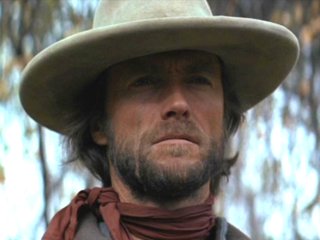
JoseyWDon’t get me wrong. I owe countless hours of entertainment, and many profound lessons learned to Clint Eastwood and his lifetime of utter brilliance. In this post, I will of course repay him by attacking his work on one of my all-time favorite films.

I guess I am feeling lucky.

…or maybe it’s just a blog post, but anyway, that’s not the film I mean to ramble about. I’m thinking about Josey Whales. There is one scene in this film that really bothers me. Maybe it’s meant to. Hell, probably, it’s meant to, but in this case the bother skips out of the bounds of the movie itself and starts to become a real-world bothertation.

I am talking about a scene in which Josey enters a trading post to find two men raping a young Navajo woman right there in the building. He grimaces a bit, and we get the impression he doesn’t really approve, and of course he does what so many of Eastwood’s characters do in this film; he goes on about his business, at least until the men become his business. This character is a reluctant hero after all, not some white-hat good-guy. When the rapists decide to try and take him prisoner, Josey, …uh, …SPOILER ALERT, …shoots them both dead, thus effectively saving the woman from sexual assault even as he saves his own life.

It’s great drama, and one of the things that makes it great is the moral ambiguity of its main character. Would he have helped the young woman if the two men hadn’t gone after him? We might hope so, but the film itself gives us no reason to suspect he would have. What we do know is that he walked right past them, and right past his first chance to help her. The whole scene ends with a disconcerting sense that Josey has put a stop to a number of bad things without ever really making a decision to do so.

It’s good storytelling. Hell, it’s great story-telling. So what’s the problem?

I think of this scene every time I hear of Clint Eastwood’s approach to libertarianism. His take on the subject is often described as “everyone leaves everyone alone” or some variant thereof. I actually rather like this expression, at least for a moment or two whenever I hear it. I can just imagine it being directed at some fussy bastard whose getting into other people’s business, in effect telling them to mind their own. I can get behind that sort of thing, sure I can. But then I find myself thinking that’s not really where this message is going, is it? Not in the grand scheme of things.

Time and again, we see libertarians in league with mainstream conservatives. On the topics of government aid to the poor and interference with the economy their messages are synchronous. On the topic of gender politics, their views clash, and near as I can tell the mainstream conservative themes win-out just about every time. This tells us a lot about the priorities at stake here, and I get damned tired of hearing a message that promises respect for individuals across the board only to see that message work consistently to the benefit of those already powerful at the expense of those struggling just to survive.

…which of course brings us right back to that scene from Josey Whales.

You could think of “everyone leave everyone alone” as a rule that might stop the rapists, albeit, it’s damned weak wording for a crime such as that. More to the point, I can’t help thinking it has more to do with Josey’s initial decision to go about his business, leaving the men free to hurt a young woman in his presence. I can’t help thinking that in that moment, Josey was minding his own business, just as the real Clint Eastwood seems to suggest we should all do.

Of course things work out in the end with Josey Whales, but they work out in the end because that’s the way the story is written. The bad guys go one step too far, thus triggering Josey’s own trigger, and it doesn’t hurt that they are foolish enough to let him get the best of them, just as all the other bad guys in that story do. Evil is vanquished in Josey Whales, but not because anyone has made a conscious choice to oppose it. Indeed, the movie seems rather set against the wisdom of such choices. No, the good that happens in this movie happens as if by accident, as Josey and his companions go about their daily lives, just trying to survive. And so the invisible hand of the writer seems to bring good  things from morally ambiguous behavior, much as the invisible hand of God in free market folklore.

It’s good storytelling, yes, but it’s piss-poor politics.

Pedagogical Metaphors From Half-Baked to Totally Stale

Tags

, , , , , , , ,

20160105_233707Pedagogical metaphors are like a sober friend on your way out an especially good party. You can lean on him a bit. If he’s a good friend, you can lean a little more. Lean too much and you both fall in the gutter and he’s not gonna wanna party with you any more.

I was thinking about this as a medical professional gave a presentation on HIV awareness to my students this week. She came to a few of my class, and each time she made a point to tell us about macrophages, a kind of white blood cell that engulf and consume debris in our blood stream. Every time she got to this topic, she made a point to ask the students if they’d ever played Pacman.

This was a particularly dated metaphor, but oddly enough it seemed to work as almost all of the students had played this old game at some point in their lives. So, they got her point. Still I thought this an odd artifact of sorts. If it worked today, it must have worked so much better a couple decades back when Pacman was a common presence in just about everyone’s daily life. People might have walked by the machine back then (I did, right on to Asteroids), but they saw it, they knew it, and most had dropped a quarter or three in a Pacman at some point in their lives.

020

I want an Asteroids-themed lesson!

I couldn’t help wondering if this metaphor wasn’t more important to her own thinking than it was for the students. …if it wasn’t less a means of communicating with them than it was an essential crutch propping up her own approach to the topic. Then I remembered how much I love my soda wars (Coke and Pepsi) analogy when I talk about the Cold War. I know damned well the students don’t remember the cola wars. Most of them weren’t even alive when Pepsi set fire to Michael Jackson’s hair. But the metaphor just seems so perfect for me that I can’t resist using it, even if I have to teach the students about the cola wars in order to then use this to teach them about the cold war. (The punch line here, for those with enough morbid curiosity to damn a give, is that third parties were the real losers in the conflict). I use that metaphor a lot, but it’s probably more compulsive behavior than focused and well designed pedagogy. So, that’s at least one conceptual party-buddy that I’ve squashed on the curb in return for his patient efforts to guide my clumsy ass through a topic.

As to dated material, you can ask any student about my many pop-culture references, most of which haven’t made sense to young folks for at least a couple decades. I suspect the bottom line is that most teachers have a few of these tropes in our tool-box, little analogies that work for us more than they do for our students.

As my guest speaker moved on to discuss other things, I found my own mind wandering over the range of metaphors we teachers use in our lesson plans, wondering how many really help the students and how many get used for our own benefit.

IMG_20151116_123201

IAIA

I can think of at least one really great metaphor a friend of mine used to work into a first year seminar to teach the students at The Institute of American Indian Arts. She likened the educational process to flying a plane, and the steps necessary to learn a subject and pass a course to prepping for a flight. What made this metaphor work, mind you, was the part where the students actually got to fly a plane toward the end of the semester. Most metaphors stand or fall in words spoken, dribbled on a page, or splattered on a screen. Her metaphor literally took off, and it did so in the hands of her students.

You can’t get more cool than that!

We tried something similar here at Iḷisaġvik, comparing the educational process to whaling. That may seem odd to some folks, but the Inupiat community of the North Slope does engage in whaling and we are a tribal college, so this fit right in line with promoting the indigenous practices central to our own mission. That said, results were mixed, I think. Whether or not students liked the course, I don’t think that master-metaphor  was one of its major selling points. I was never entirely sold on the value of a master-metaphor in a class like that. The one they used at IAIA worked, yes, but I suspect it worked because it was linked to a uniquely personal experience.

It’s hard to compete with flying a plane, yes it is.

I expect the argument-as-warfare meme is all over my logic class. Ah well! For a borderline peacenik, I’m a veritable war-monger when it comes to syllogisms. But this is hardly novel, or even that interesting. Talking about arguments without using violent metaphors? Now that would be interesting. Hey look now, all I am saying is give peace a chance!

…okay someday, maybe I’ll take my own advice on that.

Other metaphors come and go. A topic may yield a race of some sort. An essay can become a veritable construction project. An idea may become rich (in sugar or money, I sometimes wonder). A fact or a sub-theme may become central to a topic. An event may serve as a trigger (World War I anybody?). We can meditate on a topic when we are really just talking about it, and a certain kind of speculation quickly becomes an experiment, or at least a ‘thought experiment’, when we want to endow it with a sense of the sciencey. Half-conscious tropes abound! Most of the time we don’t even think about these things.

Sometimes a student finds their own metaphors, and sometimes they even tell us about them. And sometimes those metaphors turn out to be gold, but I have to admit I’m a tough sell. I often grumble a little inside when I hear these things. Student generated metaphors often strike me as evidence the students have missed the point. I grumble! Perhaps these metaphors would be better thought of as evidence the student has a point of their own. Nah! That approach is just way too wholesome, and we’ll have none of that kinda thinking on this blog dammit!

Coming back to my, …um, …central metaphor in this post, I am wondering if a pedagogical metaphor might be better thought of as your drunk friend who invited you to the party in the first place. He’s the one that’s already three drinks on the road to happy-happy, and if you take the beer he’s offering you, then maybe it’ll be a pleasant evening (and a rich conversation), but you should always find your limit a little before he does. After all, there is a reason this guy is more dialed-in to the party scene than you are. So, it’s less a question of how hard you want to lean on your metaphorical friend than it is a matter of realizing he’s always going to want to do that one more shot that’s gonna totally do you in. Then you just have to say; “No metaphor! No more booze for me. I’m done for now.” …which is of course a metaphor for backing out of metaphorical implications that seem a little silly.

…and on that count alone this last paragraph is a total failure.

What the Hell would I know about parties anyway!?!


Landing in Barrow

Tags

, , , , , , , , , ,

Just flew in yesterday from a trip to Minnesota. The plane usually approaches Barrow from the ocean-side, and this time of year that can be rather cool. I was seated in the aisle, so this could definitely have been better. Still, I think it’s kinda neat. I reckon the plane finally crosses over land at about the 1:06 mark. If you look closely, you can see shoreline. The Snow gets smoother.

Couple pics from the trip (click to embiggen):


Northiness Finds a Photo Filter

Tags

, , , , , , , ,

IMG_20151012_115503There is a reason I put my picture posts for this blog in the category of “Bad Photography.” I really don’t know what I’m doing. I started taking pictures when I realized I lived in a place full of amazing sights I am very lucky to witness. As I’ve traveled more, I’ve found even more reasons to take pictures. What I haven’t done is learn enough about the settings on my cameras to make any intelligent use of them. Neither have I made much use of post-production technologies. Most of the pictures on this website are thus straight out of the camera using the most basic settings available. This summer, I began using Instagram, however, and with a little badgering from Moni, I finally starting using some of the filters available on that service. It’s still bad photography, of course, I wouldn’t produce anything else. (I do have principles, you know!) But I do think a few of these images are an improvement, so I thought I’d share a few of the Alaska-themed pics in a new post.

…er, this is that post.

(Click a pic to embiggen it. You know you wanna!)


The City & The City …Just One Review

Tags

, , , , , , , ,

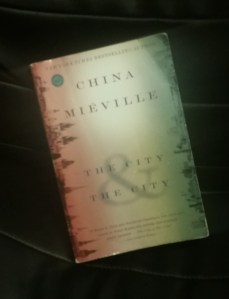
The CityIt was quite sometime ago that a friend of mine passed along a copy of China Miéville’s book, The City & The City. As with an awful lot of fiction, no sooner had I decided it looked interesting than I set it aside in pursuit of other (probably less interesting) things. Anyway, I finally dug it out awhile back and for a time I set a few other things aside in order to pursue its own story. I had to unsee some work to read this book, so to speak, but that’s a sub-reference you (my own reader) won’t get for a few more paragraphs. Just keep reading and I’ll pretend I didn’t notice.

***

I’ll try to keep the spoilers to a minimum, though you may pick up a thing or two. I’m almost sorry about that.

***

This is a detective story. I hate detective stories, but I love the premise behind this one, and I can think of no better genre to explore that premise. The City & The City is definitely worth a read.

This book is narrated by Inspector Tyador Borlú as he investigates the murder of a young woman. Borlú is reasonably reliable as far as narrators go, but there is a lot he doesn’t understand, and a few things he’s really not allowed to understand, or at least to acknowledge, which of course limits his ability to communicate with us in the novel.  It isn’t that Borlú is consciously deceptive or even outright deluded, at least I don’t think so. But he he operates under extraordinary constraints.

His constraints are of course our own, at least until we put the book down and resume our interest in other things.

The central problem of this story is that Borlú lives in a world that is only partially available to him, and to the others in that world. Our detective lives in the city of Besźel, an Eastern European city in the modern world. At it happens, the streets of Besźel are interwoven with those of another city, Ul Quoma. You might think this is a quaint way of talking about the neighborhoods of a single community, but if you thought that, you would most certainly be very wrong. These are two very different communities, nestled right in together in the same physical space. The difference between them is maintained by the most stringent expectations about what one may or may not recognize, who one may speak with and who one may not. To see the wrong person is in fact a terrible crime in this world. To speak to the wrong people – unthinkable. And thus the cities are parted, not by physical space, but by social space maintained and enforced by an arcane set of expectations which Borlú and the others in this story accept at face value. This is simply how their world works, and the practice of discriminating between those one can acknowledge and those one cannot are, to the best of their knowledge and ours, absolutely inescapable

Borlú lives in Besźel, and the body of the young woman was found in Besźel as well, and so we begin the narrative in his half of this bifurcated universe. If you have begun to suspect the plot will wander over the boundaries of this world and into the City of Ul Quoma, then you are catching on. And if you were thinking that poses a problem for Inspector Borlú, then you are definitely on target here. It doesn’t help that the murder victim had been conducting research that threatens the boundaries between these communities, or that someone with power in both would seem to be manipulating the details of the investigation. Our narrator is thus caught between two worlds, allowed only to see one of them, even as his case spills out and over the boundaries between them. We (his readers) have only to follow along in the hopes that he will negotiate the boundaries between Besźel and Ul Quoma and find the truth of the matter before it destroys him.

It’s a rich story, and I’m not even going to attempt to capture its full impact. What most fascinates me about this book is Miéville’s sense of the boundary maintenance between the two communities. Physically contiguous, they are separated only by social artifice. How does one unsee people even as he passes them on the street? Is it a choice? A habit? Perhaps, even a pathos of sorts?

People in this world do actually see each other, of course, and if they didn’t, they would literally trip over each other (and worse), but they must not be seen to acknowledge each other. And so they carry out their lives according to an elaborate set of expectations governing just how one goes about unseeing what is literally right in front of them, and all around them, to be sure. Miéville put a lot of thought into how this works. His treatment of the subject is both fascinating and compelling.

What doesn’t work for me is the murder mystery itself, but then again, they never do. I always feel pulled along by such stories, teased by the obligation to try and resolve the central mystery, knowing full well that I will do so at precisely the moment the author finally decides to tell me what I really need to know. It’s not a game I enjoy, and unfortunately The City & The City is no different on this account. I wish I could say otherwise, but that’s how I feel about the central crime drama here.

The mystery of the crime itself is of course interwoven with that of the differences between the two cities. The one draws us (along with Inspector Borlú) into the other, gives us a reason to cross the boundaries, to explore regions we ought not even to see, and to learn a bit about just how these cities work. As I read the book, I must admit, it is the conventions of the city and the practice of seeing some things and not others that interests me. In effect, it is this premise of the story that provides the actual dramatic tension I feel in reading the book. I am never quite as invested in solving the crime as I am in learning how the cities work. So, the murder mystery leaves me a bit ambivalent. It’s not what interests me about the book.

I suppose we could explore the same theme with something a bit more like a high fantasy theme or a conscious exploration of mysticism, but that would have shed way too much trite all over the story. The theme of a detective novel lends the whole thing a pedestrian quality that keeps us focused on the perfectly  human, even mundane, parts of this world. I can’t help thinking that’s critical to the full concept. This isn’t a story of mystical realization. It is a story about perfectly normal people struggling against perfectly mundane limitations to learn something that ought to be plainly visible to all. That this knowledge isn’t visible is uncanny, infuriating, and intensely interesting.

That which is unseen is, after all, right there!

But so is the act of unseeing.

When Arguendo Argues Itself Into a Somehow

Tags

, , , , , , , ,

Pop-apologists love to tell stories about how much atheists hate God. It’s a powerful claim, not because it’s accurate, but because it’s a bit like wishing us into the cornfields. All at once everything we say and everything we think is effectively removed from consideration and we sit mute despite our best efforts well beyond the eyes and ears of the one who put us there. You can try to reason with people who make this argument, but to them you might as well be out in the cornfield after all. They put you there with this story, and you can’t get out.

The pretext for putting us in that cornfield is often our commentary about moral qualities of God’s character. We tend to be critical of the big guy. These are themes well known by now to both atheists and religious apologists, as well as any number of people in between or off to the sides. That such comments are made for the purpose of argument seems obvious enough to me, but arguendo would seem to escape some folks, and so a comment or two on some of ‘God’s’ more unsavory activities quickly becomes evidence that those making the comments know very well that God is real and simply hate him.

And that’s the trouble with quote marks. Sometimes they disappear!!!

Anyway…

Maybe the whole argument is like a silence spell in a game of Dungeons&Dragons. All your thoughts about epistemology and metaphysics, logic, reasoning, the history of science or religion; all of these are suddenly translated into a single simple theme, the expression of brute rage. No matter what we actually say, or how we actually feel while talking about the subject, this notion that atheists just hate God translates the whole thing into rage. I can’t help thinking some apologists do it for just that very reason. Whatever the logic of it, the claim that atheists just hate God is a damned good way to end the discussion.

…even if one really means to continue talking about it anyway.

There is of course a self-fulfilling quality to all of this. No-one wants to be wished into the cornfields, metaphorically or otherwise. So, if you weren’t mad at God at the beginning of such a conversation, you may well find yourself mad at the person who said you were. Hopefully, this doesn’t rise to the level of brute rage, but it can certainly be frustrating. It’s at least enough to make a man brute miffed, stark-raving irritated, or even amused off at the source of the claim. Show that irritation, and you may well have the source claiming this is proof he was right about your motives all along.

I suppose it’s probably best to just go on about your life in such cases, really. It’s only a cornfield-banishment if you let yourself care about the brat who put you there. Otherwise, the demon kid is just an adult-child with his hands over his ears and you have a whole world in which to wander and explore. Who know? You may even find some corn to cook!

As often as not, we try anyway.

…to talk to the brat, I mean.

As often as not, when we try, the stratagem of choice will be to work our end of the dueling petitio. It seems obvious enough, so the thinking goes, that the person putting us into the apologetic cornfield construes our rejection of God in terms of an implicit assumption that He (God) must exist and that we must really know that after all. Since that is the point of explicit disagreement, this whole angle is a question good and begged. “Okay fucker,” so our inner monologue goes, “I can play that game too!” And out comes an argument in the form of an impatient reminder; “I don’t hate God; I simply don’t believe in him.” A frequent variation of this argument takes the form of an argument to the effect that one cannot hate someone or something one doesn’t believe in.

art-thrones-joffrey-620x349I used to think that made sense, but then Joffrey happened, and I learned very clearly that I can indeed hate someone I don’t believe in. Seriously, I have spent more time hating that little bastard than I ever spent on any real person. Neither Adolf Hitler nor John Chivington from actual history have been given nearly so many fucks from me as that perfectly fictional little piss-ant. Neither my old playground Nemesis, Scotty, nor the bastard who embezzled money from my Dad’s business when I was a teenager ever got my goat quite so effectively as that perfectly pathetic little bit of unreal royalty has. (Admittedly, Jofrrey has the advantage of being a recent pebble in my viewing-shoe, but presently anyway, he rouses more irkitude than any other.) So, yes, the bottom line here is simple. I can hate a person that doesn’t exist. I really can.

Oh geez! I hope I’m not the only one.

Well, I reckon I’m not. A quick look around the net seems to confirm that little creep got under a a good many people’s skins. It may be a charitable (or at least a convenient) assumption on my part, but I don’t think all the Joffrey-haters are under the delusion that he’s real. My capacity to hate people who aren’t real does not appear to be a super-power. Others too have this ability.

So is Joffrey unique? Could he be a sort of fictional singularity of hatred-arousing super-villainy? I mean, I don’t really hate Darth Vader. Never did. (The way he choked that guy with the force was actually kinda cool.) Snape and Voldomort hold my attention long enough to enjoy the story, but neither really makes the hair stand-up on the back of my neck. Angel Eyes from the Good the Bad and the Ugly? I kinda like him. Actually, I like a lot of villains. (Maybe that’s a problem.) Even Sauron is hard to really hate. That guy is more like a force of nature. He has to be contended with, but he isn’t human enough to be all that mad about him. You want him defeated, yes, but you don’t find your face screwing up with rage at the mere mention of his name.

See, …Sauron. You didn’t cringe, now did you?

Felix UngerThen again, there is Felix Unger. I know that’s probably one for the over-40 crowd, but seriously, you kids need to get off my lawn anyway, so I’m using him. He’s not quite a villain I know, but man could that character set me to gnashing my teeth. Don’t get me wrong, Tony Randall was great, and he was particularly great at making me hate that fricking Felix Unger. Also there is Frank Burns from Mash. Wasn’t that guy’s mere presence in a scene just like fingernails on a chalk-board? (Which brings me to a question; do young people understand how bad that chalk-board sound was? I haven’t heard it in well over a decade and I still hate it. Almost as much as I hated Frank Burns. I expect some folks have escaped this sound entirely, and maybe I should find a more current metaphor for a truly cringe-worthy event. …maybe something like Joffrey.) Anyway, the point is that you can hate fictional characters.

Definitely possible.

So does that count as a point for God’s apologists? No. It just means the world is, as usual, more complicated than we often imagine it to be. It is PARTICULARLY more complicated than we imagine it to be when we go to war with people who think wrong things (especially if they are doing it on the internet. …those fuckers!) To put it another way, if God was created by man, as some of us believe him to be, then perhaps He is the original Satan, because He has definitely rebelled against his creators. He keeps doing things we don’t want Him to, and when some of us want Him to just go away, he keeps popping up, in our dreams and stories anyway. No, not because He’s real, but because our own stories have endowed Him with with far more meaning than we can effectively dispatch in a single saying of the nay.

Just to be clear. I’m not really talking about God. I’m talking about ‘God’.

Polemic games aside, I do think this touches on a larger issue, maybe even a couple of them. There is something in the power of stories. I don’t mean some mystical force that bends steel or shoots mind bullets at people who piss you off. I mean that stories have a way of holding our attention more than we sometimes want them to. This is why people watch soap-operas. It’s the reason why any reality shows last more than  the time it takes to pitch them. And its the reason why every single one of the dark-violent soap operas now filling cable television will replace every resolved plot point with a new cliff-hanger, and they will do it every fricking time! (I’m convinced Joffrey is behind the lot of them. Seriously, what IS that kid doing now that his character is gone? Has anyone checked? Oh! Well, nevermind.) My point is that you will come back to watch a story (even a story that sucks) if it presents you with an open question. That bit of suspense keeps us coming back to great shows like the one that formerly bothered us with Joffrey. It will also have us watching 5 separate episodes of MTV’s real world after getting home from work, and grumbling the whole time.

“What could be dumber than this damned show?”

(Looks around the room.)

“Oh!”

burnsAll of which brings me back to the uncomfortable curve of the matter. I think an awful lot of unbelievers struggle with the hold that religious narratives have on our imaginations. I know my own religious sentiments stuck with me for years after I ceased vouching for their truth. This bothered me sometimes, but I began as a reluctant atheist anyway, so perhaps it didn’t bother me too much. I don’t know when, but sometime in the last couple decades many of my old religious thoughts fell away. Just the same, I remember what it was like to disbelieve and yet to feel moved by the same old religious narratives.
It doesn’t help of course that these narratives are still told in our presence, that others press upon us the need to vouch for the truth of those stories, and some even see fit to damn us for not believing them, but if you take all that away, it doesn’t necessarily mean we are free to skip our way on down to the god-free world to secular smiles and gooey gumdrops. Those stories are all over our minds, and they don’t go away just because their most flat-footed story-tellers are in the other room.

This fact may be more true for those of us that grew up in religious households, but I don’t reckon it’s untrue of others either. Religion provides so many recurrent themes to the cultural landscape around us that you just can’t escape it. And some of these are pretty good stories. Some are shitty-stories (e.g. God is not Dead), yes, but some are pretty damned moving, even to a non-believer (e.g. Amazing Grace). We may object to some of the implications. But that doesn’t mean the stories aren’t compelling, that we don’t feel the dramatic tension when the stories are well told, or that we won’t find ourselves rehashing a theme or two borrowed (perhaps without our realizing it) from religious circles.

Just as with fiction, religious themes may well hold someone’s interest without any literal belief in the characters and events described in them.

I should add that it isn’t entirely clear that atheists hate God, even as a concept. I’ve been focusing so far on villainous themes, because creeps and bastards are uniquely compelling (even godly ones). But of course, characters in a story move us in other ways too, and this is as true of divine stories as it is of sit-com plots. In the argument from evil, God is a downright bastard, to be sure, and I think sufficiently bastard-like to merit a conclusion or two about his character. Still, the peace-love-dove version of Jesus still evokes a warm and fuzzy something or other deep down in my non-soul. I don’t believe in either of these gods, of course, but the point is that each is moving in its own way. The gods of Greece and Rome can still get my interest, as can those of the Vikings. The shear inscrutability of Krishna can draw my attention as well as anything. All of these figures have compelling attributes, not because they are real, but because they are at times part of stories told really well.

Simply put, religious themes do not cease to occupy our attention simply because we stop believing in them. Our attention may be drawn to them by others, but our own thoughts will frequently come back to those themes without any external prompts. They occupy too much of the thought-world around each of us to be simply banished to the cornfields. In that respect, gods may have an advantage on atheists. We can be put in that cornfield by anyone malicious enough to go for the debate equivalent to a quick fix. Gods can’t. You put them out of your metaphysics, and they pop up in your poetry. Kick them out of your ethics and they sneak back into your favorite morality tales. Some may find in all of this an opportunity for a gotcha game, a chance to declare a debate victory of sorts, but that’s a scene closer to the spirit of Frank Burns than a Matlockesque moment of truth. (Yes, I wrote Matlockesque. Deal with it!) Still, we shouldn’t let the faux-apologetics cause us to lose site of something very human here; we don’t have to believe stories to be moved by them. I reckon those theists whose thoughts I value can see this as well as any atheist. As for those who continue to play the you-just-hate-God game, perhaps I shall put them in a cornfield of my own.

…better yet, rye.

Apologists keep telling us that God doesn’t go away when we cease to believe in him. I think its closer to the truth that ‘God’ doesn’t go away when we cease to believe in him. Some people will never notice the difference.

At this point, I reckon that really just shouldn’t surprise anyone.


Argumentation and its Narrative Payoff

Tags

, , , , , , , ,

ARnold ConanIt’s been a long time since I read Lakoff and Johnson’s book Metaphors We Live By, but I was recently thinking the internet has surely added a lot of good material for some of its central themes. The the notion of argumentation as warfare comes to mind. In that book, they advanced the notion that a lot of the metaphors people use for argumentation are those associated with warfare and violence in general. This is certainly born out by a number of things you can see on the net.

To see what people say about argumentation on the internet, it would seem that the world of debate is tremendously violent. Everywhere one looks, one finds destruction in the wake of a rhetorical flourish. Case in point? “Pres Obama Brilliantly Destroys a Loaded FOXNews Question” in this clip. Go Bama! But wait a minute? Is that an accomplishment? How do you destroy a question anyway? Loaded or unloaded, do you bash them? Crush them? Hit them with a mega-devestating incinerator photon torpedawhomper Bomb? Not to worry, cause our man Obama gets some here. He totally destroys Trump in this speech. In this video a “60 Minutes Host Destroys Barack Obama On Syria.” “Dawkins destroys Muslim Morality” in this video. But don’t look now! “Rupert Sheldrake Destroys Dawkins Dillusion in Banned TED-x Talk.” …er (sic). Apparently the author of this book is content to merely “refute” him. (Merciful soul!) Bill Nye destroyed Ken Ham. Ken Ham took the Science guy down with him. …totally destroyed. Sam Harris kicks ass here. Ben Carson “demolishes liberalism entirely in this clip from The View.   Hillary Clinton destroys things too! Oh no, Rand Paul destroyed her! He destroyed Donald Trump too! But wait a minute! Donald Trump destroyed Paul. Mutual destruction, just what I like to see in the GOP.

But wait!

Hold the phone.

In this video Cenk Uygur “destroys, degrades, demolishes, desecrates Antonin Scalia.”

Destruction, degradation, demolition, AND  desecration? That’s it. Uyguyr wins the prize. he can just drop the mic now. He totally wins the violence as war meme for the day. Apparently the man is a veritable engine of rhetorical terror. Behold his verbal prowess and tremble!

***

Okay, so I know how to belabor a point, right? Well, I’m just getting started really, so please bear with me. The point here is NOT that argumentation is really a form of warfare, but rather that many of the ideas we attach to argumentation are derived from the world of violence. The metaphors we use when talking about argumentation are, as Lakoff and Johnson pointed out, borrowed from the world of war. We could use other metaphors, and sometimes we do, but when we approach this subject for some reason or another violence just keeps pushing its way to the front of our tropic tool-kit. And really, what else would we expect Violence to do? He’s a pushy bastard. That’s why we call him Violence.

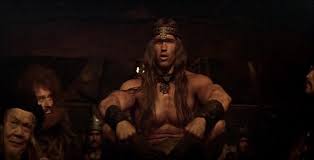
What has me thinking about this today isn’t really the metaphors, per se; it’s the stories used in this case to convey them. Each of the links above provides a little mini narrative describing some argument as though it were a decisive victory in battle. Reading the links in question, we can practically hear the words of Arnold Schwarzenegger as Conan echoing in the background.

To crush your enemies, to see them driven before you, and to hear the lamentations of their women.

Is this what every arguing argutizer really has in mind all along, an effort to achieve a victory so complete he can hear the lamentations of the women mourning his poor vanquished victim?

Perhaps.

But of course we want other things too. We want to show that we are smart. We want others to see our point, perhaps even to accept some truth that we regard as important. Sometimes we may want to learn ourselves, perhaps fleshing out our ideas in the effort to present them to others. We might even hope to learn more from another party by pushing them a little, getting them out of their comfort zone in the hopes that what they then tell us will be a little more worth listening to than what they say when the world feels like a warm moist hug.

Sometimes an argument leaves us with a narrative about conquest and destruction. That’s fair to say. But sometimes it leaves us with narratives about personal transformation, mural respect, learning, realization, …and, oh the fluffy! It burns!!! I’m really uncomfortable pleading the merits of such wholesome and earnest values, but honestly, they too play a large role in the construction of argumentation. Often these values are the more serious reasons for engaging in argumentation. Officially they are the reason we produce arguments in the classroom, for example, though someone might be excused for thinking the real reasons may at times be closer to those of argumentation as warfare. (I’m reminded of references to the ‘silverbacks’ in scholarly halls, people who contribute great thoughts to be sure, but also folks who are prone to pounding their chests and roaring at others whenever they feel the need.) One often feels a certain tension between these motivations, at least I do.

Increasingly I am inclined to think of the tension between different rhetorical styles in terms of the narratives folks hope to tell about the arguments in question. Whether successful or not, at some point an argument passes into discursive history. It then rests in the background of subsequent discourse, taking on the form of the texts, ideas, quotes, and general resources others may use to communicate. They may recount an argument (or perhaps resurrect it in dead horse form just for the purpose of kicketation). As often as not, arguments make their appearance in later discourse in the form of stories like those referenced above. We talk about how Chomsky blew Skinner away on the nature of language (or perhaps he didn’t). We speak of the conflict (‘shedding more heat than light’ as one of my professors put it) between Masrahl Sahlins and Gananath Obeyesekere. Sometimes we simply say that one theory replaced another or that a given approach has become the standard in the field. Whatever else happens in such commentary, it transforms the point of an argument into a moment in a narrative. In many cases, I’ll warrant, this is hoped-for pay-off in producing an argument, that it will pass into the positive themes of a story. Maybe that story will be about how Bob kicked Joey’s ass on a random topic, or maybe it will be a story about how this or that idea came to be the dominant approach to a given subject.

Dominant? I’m back in the language of violence again. er, …perhaps the received wisdom in a given field? Anyway…

My point is that much of what people do in the course of pursuing an argument can be thought of as an effort, not simply to prove the truth of a claim as logicians might tell us, but to lay the groundwork for any number of stories one would hope to see told at some later time. Why do I think this is important? Not so much because it helps us understand the production of any particular argument, and certainly not because it helps us grasp the nature of academic argumentation (or any argumentation conforming to the normative ideals of my logic texts). What strikes me as important about this is that it helps to understand conflict with argumentative styles falling outside those norms. It helps precisely because it denies the centrality of those norms and reminds us that the effort to provide an objective case for the truth of a claim is just one of the many reasons someone might field an argument. He could also do so because he wants to hear the lamentations of your women.

I’m still belaboring the point, aren’t I? Thus far, it feels like I am painting too much in broad strokes, but wait! Oh! There’s another good metaphor for argumentation. Painting!!! Wouldn’t rhetoric be that much more colorful and that much less painful if we could construe arguments in terms of visual media? To make it work though, it needs to be generative. We need to be able to spell out the details of argumentation in painterly terms. Perhaps we could a prepare the canvas in reference to issues of context or outline a theory. Hey! We do ‘outline’ theories. We also sketch out the details of a position, make too fine a point of some things, and even speak of prevarication as erasure. Argumentation as art works. …but apparently not as often as warfare.

Artsy asides notwithstanding, what has me up at this undogly hour is the prospect of looking at the transition from an argument to a narrative in more detail. What happens when a genre defined in terms of premises and conclusions passes into the form of a genre defined by characters, plots, and events? What happens when relevance and logical support is transformed into dramatic tension? Are there regular patterns? If so, can they help us understand some of the details happening on either end of that transition?

There is plenty of interesting material out there. Election year political debates are a great example of this. Candidates do not approach these debates as an academic might. They are not trying to prove a point so much as provide an audience with a reason to vote in a certain way. The candidate with the most compelling argument for a given policy may not be the one who impresses voters the most. A large part of what determines this will be the way the arguments play in subsequent speech. A candidate, for example, who handles the details of a legal issue thoroughly may find himself resonating far less effectively than one who fielded a better sound bite in the same debate.

Obvious example is obvious.

Less obvious material? Internet trolls could perhaps provide us with a fair number of examples, but I think pure trolling is just the tip of the ice-berg. That kid who was too busy laughing at your avatar pic to care that your argument was sound will probably be as proud to tell the story of the encounter as you are, perhaps more so. Likewise the old fart who, hey that’s me! (Nevermind that example, we’re moving on…) If I’m ever tempted to use the phrase ‘social justice warrior’ in contempt it’s when I meet someone who seems more intent on claiming moral high ground over certain issues than addressing any number of objective concerns. You could absolutely prove a point to such a person and the only story they will tell about you is that you proved yourself to be a bad person for doing it. But of course one also encounters plenty of people happy to sneer and smirk at the the discomfort of others, especially anyone stupid enough to give a damn about the underprivileged. To let such a person know that you care about any given issue is little other than to tell them how to hurt you. They too will tell a tale about any argument you have with them. Your own tears (real or imagined) will figure prominently in the stories they hope to tell about you.

Such games aren’t limited to the net, of course, but the anonymity of online discussion seems to bring it all out so much more. It’s part of a general pattern of behavior one sees in public disagreements, especially those involving people from very different walks of life. All too often both parties in an argument will come away thinking they have won. In each case, what they actually come away with is a story that relates their victory. It would be easy to think this is because people simply don’t see their own errors, to think that only one of the stories about a given argument would be authentic, but that’s not usually the case. As often as not, the difference occurs because each side had a different sense of the win-loss conditions to begin with.

Yes, the notion of ‘winning’ an argument is already a problem.

The problem isn’t always that other speaking styles compete with those we might think of as more sound argumentative practice. Sometimes the alternative approaches are genuinely interesting in themselves. For example, sometimes an argument is encased in a legendary narrative, which of course makes possible a kind of indirection or an argument by allusion. One may simply refer to the story as a means of suggesting an argument about real world matters. My favorite example of this remains the separation of men and women in Navajo lore, though I suppose one can also see it in conventions of scriptural quotation among Christians (where it almost always takes on the quality of an authority argument). In each of these cases, the significance of an argument appears to be filtered through the significance of a set narrative that defines and shapes its meaning in ways you couldn’t get from a direct analysis of the argument itself. That argument appears as a brief moment in a stream of storytelling, and for some at least its possible significance will always be tied to that very narrative.

When I used to post on Christian Forums, I recall a number of instances in which the arguments of atheists were described in terms of malevolent supernatural power. Realizing I was among the demons described in these narratives, I couldn’t help but feel a sense of anger and irritation. I also found it fascinating. These were people who measured arguments in terms of spiritual warfare. They measured such arguments in terms of powers not premises and faith instead of relevance. This is argumentation as war, to be sure, but in this case, it’s a war between demons and angels. Where I might havedescribed an argument on that forum in terms of proof and evidence, to the practitioners of spiritual warfare those same arguments became stories of a struggle with evil. In the abstract, that isn’t really too surprising, but I must say that it was odd to see just how that general theme played out in the details.

The Storify app would seem to be relevant to my thoughts at the moment? …Still not gonna use it!

Comedy strikes me as a particularly perplexing example of this problem. Stand-up comics produce arguments all the time, but of course their primary job is still to make people laugh. Often we laugh because the argument seems to make a good point in a clever and interesting way. At other times we may laugh because the argument is clearly absurd or irrelevant. The shear audacity of an obvious fallacy can be damned humorous if one isn’t expected to take it seriously. In such performances, our priorities shift and we may approve arguments which might otherwise seem foolish or genuinely asinine.

My tendency in such cases has always been to assume the comic doesn’t really mean it, but as I get older (and as some of my favorite comics do the same) I find at times these jokes are meant more seriously than I might have hoped. Victoria Jackson would be one particularly morbid example of this problem. What might have been a funny act, at least to some, appears less an less to be an act at all. Honestly, I think the same of Ted Nugent. I know he’s not a comic, but in his old television appearances I can’t help thinking his tone was tongue in cheek, that he at least realized he was taking some liberties with reason. I don’t see that when he speaks anymore. I see the same reckless leaps of lack-logic in Nugent’s speech, but he no longer seems to be in on his own joke. Its as if his reasoning has become so committed to the service of a personal narrative that it couldn’t matter anymore when he is wrong, not even enough for a wink.

How did I get onto Nugent?

Nevermind that!

My point is that in comedy argumentation and jokes are bound up together in interesting ways. Which takes priority over which just isn’t always that clear. Sometimes the strength of an argument carries the joke itself, and sometimes it’s the lack of that strength that makes us laugh. So, which is it in any given case? That’s not easy to tell. The guy laughing beside you may be thinking ‘that is so true’ even as you are busting a gut because it’s completely ridiculous. In either event, we are less likely to evaluate the work of a comedian in terms of the cogency of his reasoning or the truth of his assumptions than the cleverness of his words, his timing, projection, etc. With some clear exceptions, we can see this in the stories people tell about the work of comics.

On the other hand, the work of a good comic does bring us back to the argument as war metaphor. If an act is done right, we might well say of the comic that he killed it! I wonder if stand-up comics ever want to crush their audiences, to see those who came to a show driven before them, and to hear the lamentations of their women?

I’ve probably overdone that line, haven’t I?

Yes, I have.


Sometimes the Ocean Takes Liquid Form

Tags

, , , , , , , ,

DSC04626

The Ocean through Moni’s Lens

This last December, I underwent a brief bout of Southyness. One of my favorite moments came when my gal took me to Newport Beach.

The thing about the beaches in California is you can actually swim in the water. I mean, I didn’t, but other people did and I saw it with my own two eyes. You can actually swim on those beaches. Right now, you can swim right in that water. Totally true story!

Right now, we can walk on our water.

No miracles necessary.

(Click to embiggen.)

I think Moni took the big orange shot of the beach with my phone while I zoned out with the camera. I must have snapped over a hundred pictures of that silhouette family. Presumably, they have full bodies in a different light scheme. The mother kept taking pictures of her child and I just kept taking pictures of her doing it. Hopefully, she doesn’t mind.

…and hopefully, she isn’t really a shade, because then I’d be in big trouble.

All in all, it was a beautiful evening.