Happy Juzo Day, And Damn You to Hell if you Don’t Know What I’m Talking About!

Tags

, , , , , , , ,

Juzo Itami

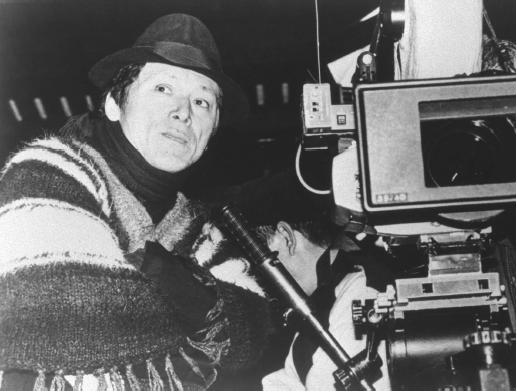
Juzo Itami’s mother inflicted him on the world on May 15th, 1933. Sadly, he chose to show mercy upon that world on December 20, 1997. In the interim, Juzo Itami directed some of the most biting satire ever to hit the movie screen. He was wonderful! Shall we describe a few of his better films?

(Damn right, there are gonna be spoilers!)

***

In Itami’s first film, Chizuko (played by, Nobuko Miyamoto) and her husband Wabisuke (Tsutomu Yamazaki) must hold a services for her recently departed father. THE FUNERAL (1984) takes us through the next three days in the life of this couple and their family. The Shinto traditions may seem strange to those of us unfamiliar with Japanese custom. The experience of loss and the awkwardness of dealing with it in public will not.

The Funeral

The first obstacle Chizuko and Wabisake face certainly rings true for me. Amidst their sadness and loss, our lovely couple must learn quickly what is expected of them during the coming funeral. Luckily, they have a tape which provides plenty of good advice on what to say to guests. With wooden precision, the couple practice their lines, adding a trace of performance anxiety to their grief. The first guests to arrive express their condolences fittingly enough in language perfectly matching the suggestions of the tape.

Itami captures the emotional cycles of a funeral with marvelous sensitivity. One does not stay sad for three days. So when those first guests arrive, the family is in the midst of fond remembrances, laughing and smiling at stories of the departed. then suddenly there they are, outsiders who have themselves screwed up the courage to come and be part of this terrible event, …and suddenly the smiles seem out of place. In but a moment, grief returns to the family and the chain of events continues as one might expect.

…well, for the most part.

This is a slow moving film, one which invites you to linger on the details. In one of my favorite scenes, the whole family kneels down in prayer. As incense burn and a priest chants, the camera pans slowly across the backside of the grieving family members. Moving from character to character, this simple shot provides us with a wonderful study in discipline and loss of cultural knowledge. The elderly are perfectly still, their feet tucked neatly behind them. The middle-aged get by with a little fidgeting here and there. The children? Their posture is a train wreck. (A Japanese high-speed train wreck.) And the whole scene gets comes to a climax when the phone rings in the midst of this solemn ritual. It just keeps ringing. When a family friend finally gets up to answer, he quickly finds that his legs have fallen asleep, and, ….well, it’s just a little awkward.

As a side note: I should mention that I have shown this movie to my students back in Chinle a couple of times. I should say that Navajo ceremonies are all-night affairs during which people are expected to sit cross-legged with their back against the wall of a Hogan. This scene always earned a lot of laughter, and more than a few knowing smiles.

Alright, I’ve ruined enough of this movie for those who haven’t seen it yet. If you want to know more, then you shall have to watch it yourself!

***
Tampopo

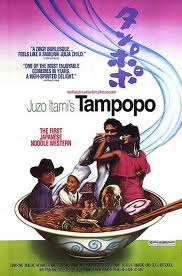
Itami’s second movie is TAMPOPO (1985), which has been described aptly enough as “the first noodle western.” The connection is firmly established as we are introduced to Goro (Tsutomu Yamazaki again), a truck driver in a cowboy hat, his big-rig sporting a set of steer horns. When Goro and his side-kick stop at an isolated noodle stand for dinner, he gets in a fight with a number of locals. Goro awakens to find himself sleeping the damage off at the home of the shop owner Tampopo (Nobuko Miyamoto).

Yes, it’s the same couple playing the leads here. The lovely Miyamoto was in fact Itami’s wife. As to Yamazaki, I should think the wisdom of casting him in a lead role speaks for itself.

Let us get back to this wonderful movie!

When Tampopo asks Goro how he likes her noodles, our straight-shooting hero cannot tell a lie. His critique is as thorough as it is devastating, and with that he establishes not only her failure as a cook, but his own mastery of the subject. Ashamed and impressed, Tampopo begs Goro to teach her how to make a proper bowl of ramen. Reluctantly, he accepts to task of teaching her.

What follows is a perfect parody of a movie theme familiar in both westerns and samurai films, the process by which a true master trains a promising young student. Goro does not merely teach Tampopo how to cook, he subjects her to strenuous exercise, helps to her to put together the perfect recipe, and (with the help of another character) redesigns her whole shop. The two of them will use bribery, espionage, and outright heroism in the effort to get everything just right. At the films end, Goro and his sidekick leave Tampopo with her newly renovated shop full of well-earned and very happy customers, driving their big-rig into the sunset.

Gozo and Tampopo

I am going to resist the temptation to describe any of the scenes here in great detail, but I must say that it is the details that make this movie wonderful. Food does not simply supply the central plot; it serves as the central focus of every single scene. If the characters are not talking about food, they are preparing it, or they are eating it. Most scenes in this film manage to do include all of the above.

If you watch this film, you will hungry when it’s over. Don’t try to fight it! You could stuff yourself full with a feast and watch this movie afterwards. You WILL be hungry again at its conclusion.

It really is in the details of each individual scene that Itami’s humor takes on its biting edge. Itami wanders off of the central plot several times during the course of Tampopo. In some cases the camera literally veers off and follows an apparent extra into the next scene. And in those scenes, everything from the culture of Connoisseurship, to proper etiquette, and even the sanctity of motherhood fall prey to Itami’s ironic treatment. If his main plot-line is a gentle ode to the genres of Samurai films and American westerns, many of these particular scenes are brutally satirically send-ups of Japanese society. Note a few of those send-ups will ring true for the rest of us as well.

Most people do seem to remember the sex scenes (and no I am not telling you why). You may call me a bastard if you wish. I don’t mind.

Tampopo is easily my favorite film of all time. It stole that spot from A Clockwork orange the day I saw it well over two decades past; it has remained there ever since.

***

A Taxing Woman

As one might expect, the lovely Miyomoto plays the lead in Itami’s next film as well, A TAXING WOMAN (1987). As a relentless tax inspector in a land where cheating on one’s taxes is expected, Ryōko Itakura (Miyomoto) has her work cut out for her when she goes after Hideki Gondō (played by… Do I really need to say it? Come on, pay attention!). Gondo owns a string of unsavory hotels, and Itakura is suspicious that he is not paying his full share of the tax rate. So, the stage is set for a showdown.

Itakura initially fails to turn up any evidence of tax evasion, a fact which is almost suspicious in itself. …okay, let’s just drop the ‘almost’; it just is. Naturally, she redoubles her efforts. In time, she and Gondo will develop a grudging respect for one another, treating their conflict as though it were a strategy game and each of them a master in their own right.

I will not tell you who wins.

Ha!

I must admit that I have not seen the sequel to this film, A Taxing Woman’s Return. I think that shall have to go on my list of summer projects.

***

Minbo

One could hardly describe MINBO NO ONNA (THE GENTLE ART OF JAPANESE EXTORTION) (1992) as Itami’s greatest film, but it is an amazing accomplishment in its own right. This time, Itami’s target proved to be none other than the Japanese mob. Miyomoto plays a lawyer, Mahiru Inoue. Inoue leads a small team of inexperienced employees in a campaign to thwart a gang of yakuza in its efforts to extort money from a large hotel. It is a long and difficult battle, but she emerges victorious.

What is most striking about this movie is the portrayal of yakuza. Gone are the pretensions to honor and nobility. Forgotten are the images of modern-day samurai or highly-skilled ninjas. These men are simply thugs, brutal, vicious, cruel, and cowardly. Indeed, the yakuza of this film carry little or no redeeming qualities. The one-dimensionality of these villains would normally strike me as a real flaw, and perhaps it is. But set against the backdrop of countless movies depicting mobsters (yakuza among them) in glowing terms, I could not help feeling proud to see someone who had the courage to portray them without all the flattery that usually accompanies the subject. It is a portrayal that took great courage to put on the screen.

Sadly, I do not think Hollywood will be doing anything like this in the near future. The whole of American cinema seems to have a big old girlie-crush on the mob, and it won’t be growing out of it soon.

Sadder still, Itami seems to have paid the price for his courage. He was attacked, beaten and slashed in retaliation for making Minbo. As Itami lay in the hospital recovering from his wounds, the public outcry led to crackdown on criminal activities associated with the yakuza. Rumors that his death by apparent suicide may actually have been a murder circulate to this day. The facts surrounding Itami’s death are something of a mystery at this point. The only thing for certain about it is that it came way to soon, except perhaps for the yakuza.

But of course today is not Itami’s Death Day. It is his birthday. And it is a damned good day to celebrate the work of this incredibly brilliant film-maker.

***

Treat yourself to something brilliant today and watch Tampopo.

Be sure to leave room for desert.

Great Movie Villains, Volume VIII: Your Mother!!!!

Tags

, , , , , , , ,

Okay, maybe not your mother, but damned close! Today’s movie villain is that lovable every-Mom from A Christmas Story.

What?

I should wait for Christmas?

This villain isn’t Santa Clause! It’s Mother. And today is exactly the day to celebrate the most excellent movie villainy of Mom.

The Mom from A Christmas Story is the perfect Mom to be our movie villain of the day. From the very first scene you cannot help but fall in love with her. …which would only be your first mistake.

Don’t even try to tell me that you don’t see it, because we all know that you are right there with Ralphie on that Red Rider BB Gun thing. You want it for him. You want it for yourself. Even if you are a girl, you want the Red Rider BB Gun, or at least you’ve wanted something as badly as Ralphie wanted that Red Rider BB Gun. Your own Red Rider BB Gun might have been a Cabbage Patch Kid, a new bike or even a bullwhip, …mine was a bullwhip. Anyway, the point is that we’ve all had our Red Rider BB Gun. So, when Ralphie says he wants one for Christmas, he speaks for all of us. Hell, he is us!

And that makes his Mom, OUR Mom!

…at least for the balance of the movie.

And when Ralpie’s Mom says ‘no’ to that Red Rider, you all know damn well how it feels, because you heard it from your Mom too. If there was ever any doubt that his Mom was your Mom and my Mom, it vanished in that very moment. Right there and then Mother squashes your one true purpose in life. What on earth would possibly be better than a Red Rider BB Gun? Nothing! And she says ‘no’! It’s soul-crushing.

You know what I am talking about. You are right there in the scene with Ralphie and I right now, aren’t you? You are there.

And sure enough, there Mom is, telling you ‘no’. “You’ll shoot your eye out,” she says. It is the first of many times you will hear this terrible proclamation. And seriously, is Mother not acting as the true villain here? Is she not the central obstacle to fulfillment of our major ambition. How could Mother possibly be anything else but a villain while doing such a terrible thing?

Dad would understand. At least he would if it weren’t for Mom. She’ll talk to him and that will ruin everything.

Don’t try to say that it’s okay, because it’s not. At that moment Mother crushes the heart of hope itself. World Peace, the love of God and country, even the taste of really great candy; all these things fail when you hear those words; “You’ll shoot your eye out.” No movie villain has ever taken more away from a protagonist than Mom did in that moment when she first uttered those terrible words.

But that is not all. Let us not forget how skillfully Mother wielded the winter-clothing torture against our little brother! Let us not forget how he cried all the way to school, how he fell in the snow, and how we had to help him up! Let us not forget the vision of our poor dear brother crying as no child has ever cried before, all because Mom insisted on packing him into such a bundle of cloth. What villain could possibly have been more ruthless?

Let us not even speak of the lamp! …that beautiful lamp that father loved so much, the one she destroyed, thus proving her total domination of the household! No, let us not speak of these things. It is enough to remember them.

…and cry.

Yes, my friends, the mother of A Christmas Story is perhaps the most powerful movie villain ever. Who else could possibly block our greatest ambitions with a single phrase, bring our closest kin to tears, and destroy our father’s prize possessions? Who else but Mom? Worse still, who could do all that and make us love her for it? With her gentle strength and calm demeanor, the Mother of this story seeks to seduce us all, to help us find in her what we loved most about our own Mothers, all the while inflicting upon us that which we most feared in them. She beckons us to find reasons to thank her for every crime against our hopes. She insists that we learn to see it her way. There is no quarreling with this mother, no chance to fight back against her charms. She is relentless!

Who could make us love her even as she rules over us with a gentle but overwhelming smile?

Only Mother.

Best villain EVAR!

Old Pranks Don’t Matter, …Unless They Do.

Tags

, , , , , , , ,

Picture Courtesy of The New Civil Rights Movement

Until today, I haven’t thought of Mitt Romney as a cruel person.

Insensitive? Perhaps. Completely out of touch with the vast majority of working Americans? Definitely. Willing to serve the interests of malicious parties if that’s what it takes to get elected? Absolutely. I’ve thought all these things about the presumptive Republican candidate. But I have never really thought of the man as overtly cruel.

Until today.

Today, I have a new perspective on Mitt Romney, and it is not a flattering one. Perhaps you might think it was a recent story in the Washington Post that led me to rethink the issue of his character? According to the Post, Romney led a bullying incident in his youth. Apparently, Mitt Romney found the young man’s hair unacceptable. So, he took it upon himself to rally a number of classmates, tracked down the younger student, tackled him, and cut his hair while the young boy screamed for help.

That’s pretty cruel, isn’t it? You might think it was this story that has me rethinking the character of the presumptive Republican candidate.

Well not quite. See, I’m not in the habit of holding what middle-aged people did back in high school against them. Short of a dead body or a crashed car at least, I am generally willing to give folks the benefit of the doubt for their youthful conduct. …Hell, I can even forgive a crashed car. There is just too much ground between this incident and today’s politics to make this story a clear case against voting for Mitt Romney. I would normally have been willing to believe that Romney was no longer the sort of person to attack and humiliate an individual just because that person was gay, …or that he had weird hair.

Until, that is, the Romney camp opened their mouths and weighed in on the issue. In an interview with Fox News, Romney has said he doesn’t remember the incident. He and his wife have also taken to playing up the story that Romney was a bit of a prankster in his youth, all part of an obvious attempt to minimize the issue. Romney tells us he didn’t mean to hurt anyone, but if he has he is certainly sorry.

Great!

Mitt is hypothetically sorry for anyone he might have inadvertently hurt, but he assured us he didn’t mean to.

Which is utterly pathetic.

This response isn’t simply minimizing the damage to Romney’s campaign, it is minimizing the damage done by such incidents. I understand Romney’s desire to do the one, but the other is completely unacceptable. Hell, there are genuine questions about the accuracy of the Post article. Romney could reasonably quibble with a number of the specifics. I’m not entirely sold on some of the details in the Post article (the exact role of sexual orientation in this incident is certainly questionable). Instead, he seems to suggest that this sort of thing just doesn’t matter.

In this response, Mitt Romney has shown us the heartless little bastard who once attacked and humiliated a classmate over his hair is still with us. Is that too strong? Well then, he has certainly shown that such incidents don’t warrant a place in his memory, and that they count as little more than practical jokes in his book. But (you may ask) what if he really doesn’t remember? Well then I should think a little more surprise might be in order. He could at least acknowledge the gravity of the charge.

In likening this event to a harmless prank, Mitt Romney has shown us what such a thing would mean to him now, and that is not much. He hasn’t been accused of an overly raucous joke; he has been accused of an action clearly intended to leave a lasting, miserable, impression. He has lots of room to maneuver on this, at least he had, but what he came up with was as dismissive a response as any bully has ever given to the suffering of his victims.

Mitt Romney will be the spokesman for homophobia in the coming election, among other things to be sure, but that will clearly be part of his job. It is expected of Republican Presidential Candidates. Until today I had no idea just how well qualified Mitt Romney will be for this aspect of his coming task.

What Romney is accused of doing may have happened long ago, but we should all be able to address the question of whether or not it is acceptable in a straight-forward manner. As the accused party in this instance, Romney has a responsibility to own up to what he did, defend his actions, or apologize for them in clear terms. Whether or not you personally care about such things, well that is a decision we will all have to make for ourselves.

Mitt clearly doesn’t.

This is Really Gross: You Probably Shouldn’t Read It!

Tags

, , , , , , ,

Very Bad!

I may have mentioned in the ‘About’ section of this blog that I count an episode of projectile vomiting among my greatest accomplishments?

Okay, that’s gross right? Yeah, but it’s not going to stop me from giving you a long-winded and over-dramatic account of the whole thing. Best leave this post now if you have any sense whatsoever!

I dabbled in Speech and debate a little when I first got into college. My school had a great debate team at the time, all owing to the coach, but that coach was the absolute worst driver you ever met in your life. It was really amazing. If he wasn’t speeding up, he was slowing down (I mean foot on the break, because by then we were closing rapidly in on somebody’s rear bumper) and if he wasn’t drifting steadily left he was drifting steadily right. To make matters worse, the man had a very small vehicle, and he would often engage in serious discussion or coaching as he drove. So, while riding along you had to concentrate WHILE holding down your lunch and praying to the gods that you would make it to your actual destination.

It was awful!

Still Worse!

One day I had agreed to help in the tab room for a High School Debate Tournament. I caught a ride down to campus that Saturday morning and waited to get picked up for the trip out to the high school. I had some time to kill, so I ate breakfast, …well the sort of breakfast I ate back then. It was a Super Big Gulp of Pepsi and a row of donut gems from a 7-11. I horked them down in no time because I was suddenly very hungry. Along comes the coach and stuffs me in the back seat of his vehicle, then shoves a pile of paperwork into my lap and tells me to read names to another student in the front seat. The coach hadn’t done his preparation yet, and so he was trying to get things in order as we drove over to the tournament. …yes, reading in the car will normally do me in. Reading with that driver was bound to be REALLY BAD. And then it dawns on me that slamming a Super Big Gulp and a row of donut gems might have been a mistake.

…definitely was a mistake.

The Coach was in rare form. He read documents of his own while double checking the other student’s paperwork as he drove. We veered toward this wall and that car, screeched to a halt just before hitting that bumper, all the while checking paperwork.

And of course, the donut gems want to come back up pretty much whole at this point.

Then we started to smell gas. It was overwhelming! Turns out the guy directly ahead of us on the Freeway had some sort of a leak, so the coach decides to catch up to warn him. Now, his worse-than-usual driving was compounded by his impression of Starsky and Hutch, and the man still expected me to read names to the other student. The other driver seemed to be in a hurry, so the effort to catch him involved a lot of weaving through traffic. …with gas fumes coming into the vehicle, me turning very green, and “…uh, Jeremy Ditweiler, yeah that’s with an e i.”

(Okay, I made up the name, but you get the idea.)

About half way there I realize with absolute certainty that everything I slammed before getting picked up IS coming back up sooner or later, probably sooner. The donut gems are so determined that I feel sure they will find their way back to the wrapper and replace themselves on the shelf at the 7-11. All with the prospect of a full day’s work ahead of me.

…more names.

We never do catch the gas-spilling driver. It takes about 30 minutes total time on the road before we pull into the High School parking lot. It takes a couple more minutes to get out because we aren’t done yet with the paperwork. I could have killed to breathe fresh air, and the coach insisted we finish whatever the Hell task it was we were doing. The other student weighed at least 400 pounds (though I believe it was closer to 600, …honestly), and it took him forever to get out of the tiny car. Then we fumble with the broken seat and finally push it forward, all just so I could scramble out in a state of panic. For some reason I didn’t mention this to anyone, …but I was in my own little private Hell at that point.

(The story is just going to get worse from here folks, you really might want to click on one of those links in my Blogroll and go find an author with better taste than I have.)

So, I finally stepped out into the fresh air, and I got about 2 steps before the urge to purge overtook me. It wasn’t much. I was very discreet and I don’t think any of the many folks around us realized just why I leaned down next to that little bush.

(Note how I brag about my discretion at the time as if I had any credibility on the subject while telling THIS story. That’s called ‘irony’ folks. Can you say; ‘Irony’?)

I knew that little mini-purge was just a taste of things to come, …literally. I could feel the misery building within me as I debated what to do next. Out here would be better than on the floor in the building, but best of all would be in a garbage can or a bathroom stall. I stood there for a moment and assessed the situation. “It’s not coming yet,” I thought, “I may have a chance…”

I  power-walked into the High School, trying to hit that perfect balance that enhances speed without jarring things too much. I thought I was going to lose it with every fricking step. Every single step seemed to court disaster, and with enough witnesses to make it a truly humiliating experience. The walk seemed to take forever.

And then did it! I actually made it into the High School. I grew very nervous at this point because I didn’t want the upcoming event to occur on the carpet. But at least a final resting place for the donut gems ought to be on the horizon.I just kept dreaming about a trash can or a toilet stall.

So, why was this bathroom locked? That one too? And where are the others?

It turns out that all the bathrooms were locked AND all the garbage cans had been hauled off somewhere. That’s right; it was a Saturday, and someone forgot to tell the cleaning staff that there would be hundreds of people in the building this weekend. So, NONE of the bathrooms were open and the garbage cans were all GONE. I walked/ran from one bathroom to the other, and one after another they all proved to be locked. ALL OF THEM!

At this point I felt like I was dying, because I knew the food was coming back up any moment. I will never get back outside in time; the donut gems are coming back and they are bringing Hell with them.

Then I got lucky.

I tried the teacher’s bathroom door for the second time, and (praise be!) this time it was open. With an immense sigh of relief, I walked/ran into it. At last I could find a place to let go of my burdens. My ever so heavy burdens! Sweet Jesus, I have never been so happy to find a bathroom in all my life. I think I actually prayed for the damn thing, and at the time I must have counted it as proof positive that there is indeed a God in Heaven, because He had just provided me a bathroom in my moment of need.

But then…

With one foot in the door I experienced a violent spasm. It felt like my stomach had just lowered its shoulders and launched into my heart and lungs like the biggest lineman on your favorite football team. (I don’t do sports metaphors often so you have to cut me some slack with the imagery here.) Anyway, the point is that bad things were happening in my belly and I wasn’t going to get another step before seeing those donut gems one more time. The bathroom was empty, so I was okay there, but the obvious targets were closed to me. A single toilet rested behind a closed stall door to my left, and the garbage can was covered a few steps off to the right. No time to open it. Disappointment gripped my soul. All that effort and I was going to fail within sight of my goal. But then…

Hope!

A sink stood on the other side of the bathroom. Nothing between me and that beautiful, sparkling clean receptacle. One last chance to send my meal somewhere besides the floor, and believe me, I took it. I aimed the upcoming surge toward the sink, and I ran up on the back end of it as I went.

Success!

The launch literally began in the doorway across the room, but I’m telling you not one drop spilled on the floor. I got it all in the sink. I wouldn’t have believed it if I hadn’t done it myself. Right there on that very day!

Yeah that’s right. I am the projectile vomiting king of the world I tell ya! I could not have been more proud.

That was still a miserable day, cause I had the worst headache after that, and I remained dizzy for several hours. I do recall hearing gossip about the filthy sink in the teacher’s bathroom, but I saw no reason to enlighten anyone. I couldn’t even look at the debate coach, because that would have fallen far short of killing him, which is what the bastard deserved. Oh, but that one moment was glorious. I so narrowly avoided disaster and somehow managed the impossible. Heck a part of me wanted to go back and measure the distance as I felt quite certain it was some sort of record, an athletic accomplishment of sorts. It may have been a disgusting glory, but some days you just take what you can get.

***

My dear reader, did you actually stick with me through this entire abomination? That’s disgusting! You should be ashamed of yourself.

Temporary Loss of Northitude: In Which I Wax Photographic About Barrow

Tags

, , , , , , , ,

So I have “gone out,” as they say, and I will not see Alaska for a couple months. It’s a shame that I can only get out during the summer and Christmas. Those are the best times to be in Barrow.

So, I thought this might be an opportune moment to throw up some images of America’s northernmost city.

I will miss it.

My Chalet
(I think my brother has bigger walk-in closets)

Midnight Sun
(Actually, this was probably about 2:00am)

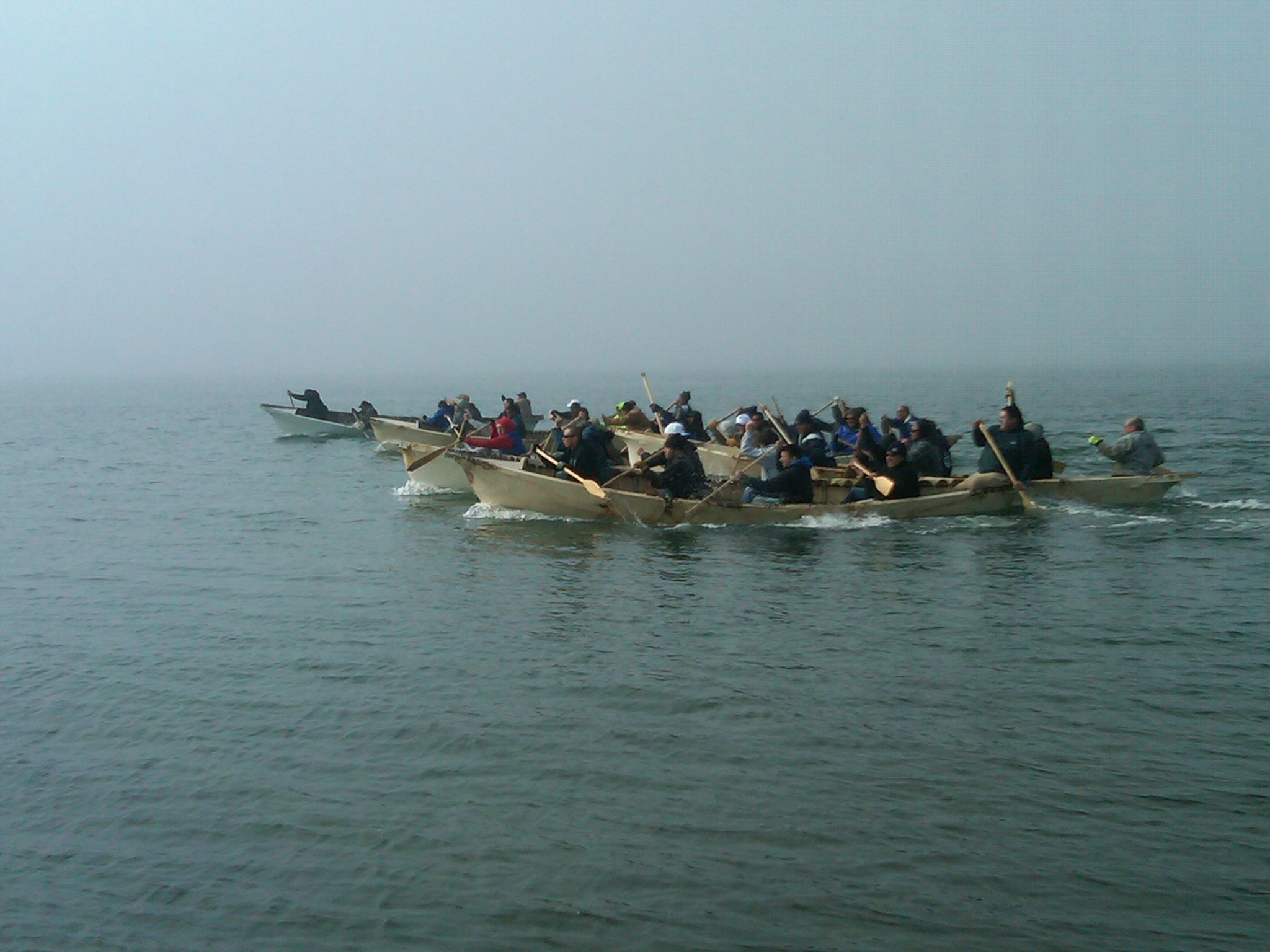
Umiaq Race During Independence Week Celebrations
(Cause Fireworks aren’t so keen in July)

Barrow at 2am in Late May
(Out for an evening walk)

The Ocean
(Can’t tell where it begins, can ya!)

Arctic Palm Trees

Ice Sculpture
(Modeled on bone sculptures)

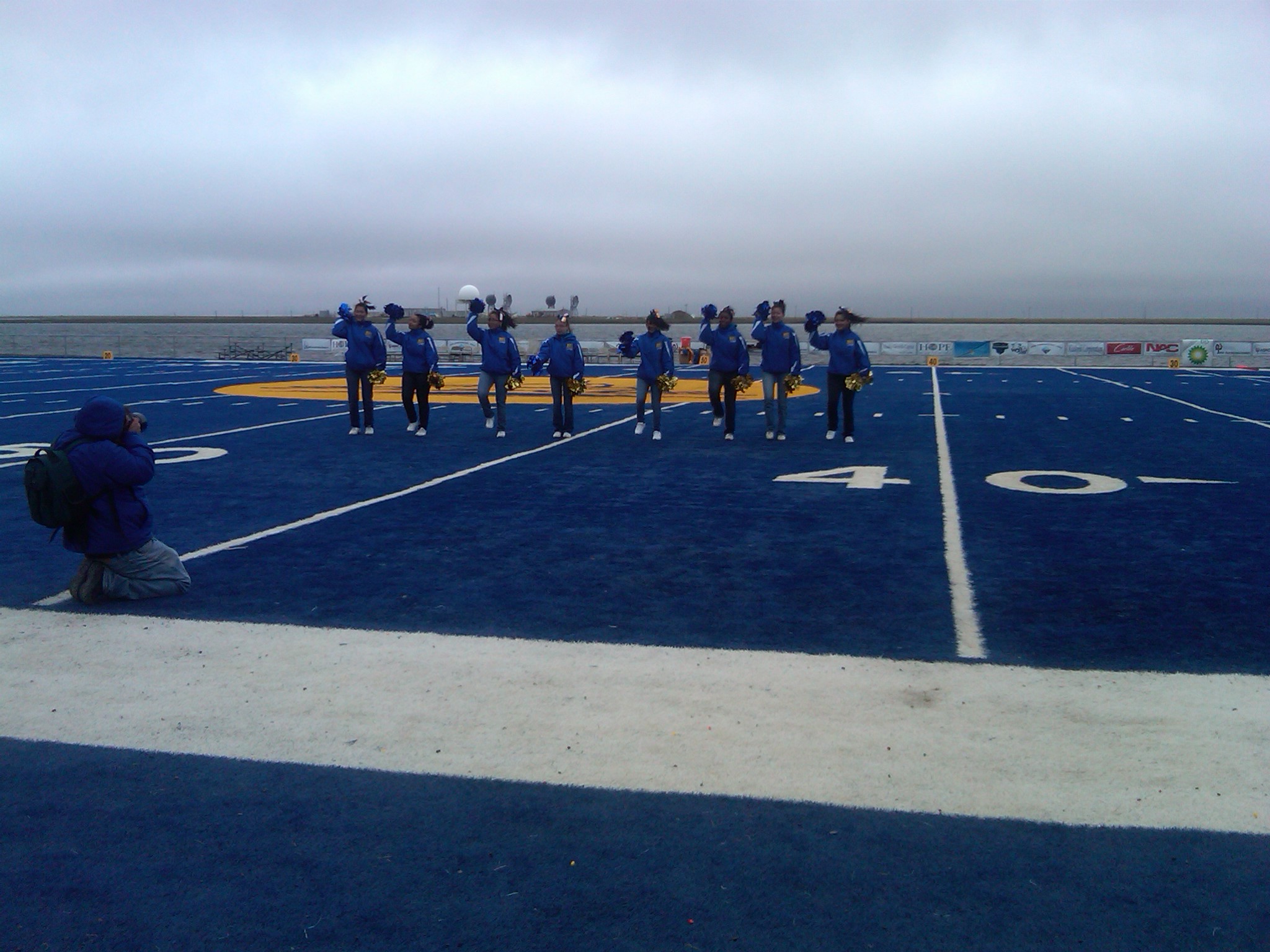
The Northernmost American-Style Football Field in the World
(I suck as a sports photographer, don’t I)

Cheerleaders!
(No skirts on these girls)

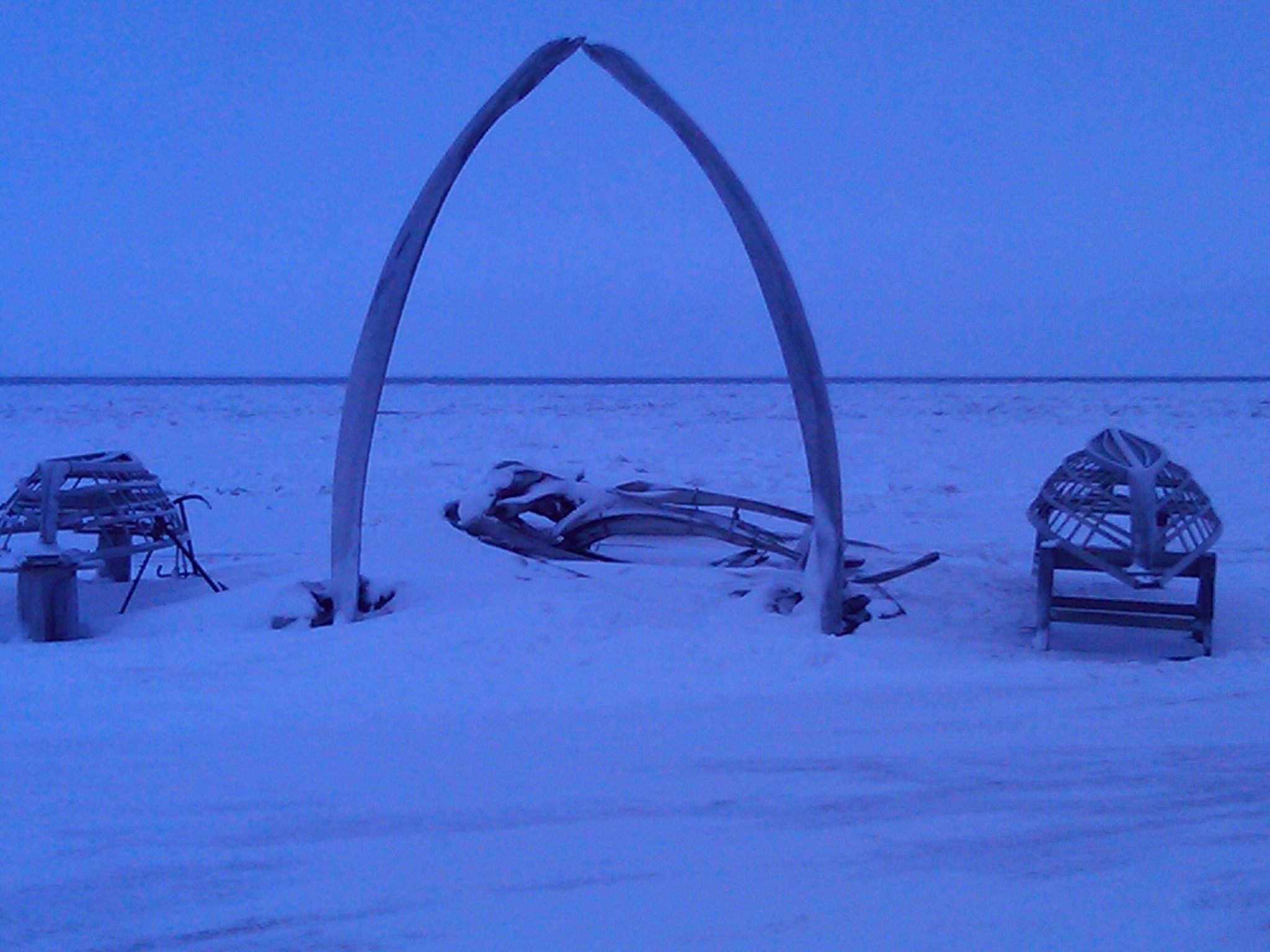
The Ocean as Seen from Barrow’s Cafe
(Whale jawbones and umiaq frames)

The Ocean from Outside Brower’s Cafe
(A little later in the Year)

Again!

Probably Returning from a Hunt

Arctic Fox
(Trying to steal muktuk from the back of that pick-up)

Nalukataq
(Spring Whaling Festival Held in June. It’s been a good whaling season, so this will be a great festival this year, …and I am going to miss it!)

Local Art
(Barrow has the best dumpsters!)

The College
(Whale skull in the foreground)

Will Rogers Memorial
(He died in a plane crash on his way to Barrow)

DEWLine Station
(Part of the early warning defense system)

Let’s See the Ocean Again!

Fido and Junkmail
(All packed and ready to go out)

A Moment in an Airport

Tags

,

So, I am sitting here waiting on my meal at the airport in Anchorage. I have an Alaskan Amber Ale sitting in a tall glass in front of me. The glass is narrow on the bottom and wide at the top. Light penetrates the bottom portion of the glass, but the top is a rich dark brown.

I notice something odd, a faint ring is rising up from the bottom of the glass, catching the light as it goes. For just a moment I have no idea what I am looking at, then I realize it is a thin layer of ice from the chilled glass. a bit like a ring of smoke, it moves slowly, dissipating as it rises into the darkness. Nothing reaches the top.

I wonder, have I ever seen that before?

I really need to drink beer more often.

Native American Ceremonies and the Meaning of ‘Religion’: Unpacking the Semantic Baggage, …Well at Least the Carry-On

Tags

, , , , , , , , ,

Hogan

Not everyone has a religion!

More to the point at hand, the term seems to be an awfully bad fit for a lot of the things it is commonly used to describe.

When I was teaching on the Navajo Nation, I used to illustrate this by asking my students; when you hold a healing ceremony, who comes? The answer was always something to the effect of the community itself, friends, relatives, etc. What happens if you don’t believe in the effectiveness of the ceremony? Frankly, I don’t think the question came up very often, at least not in the context of deciding who belonged at the ceremony, but I did once meet a woman who had effectively answered it. A born again Christian, she stayed at the main house during the chants and entered the Hogan to help serve food during the breaks. She thus met her family obligations without implicating herself in a ceremony that was anathema to her own beliefs.

When I asked my students who goes to a church, the answer was invariably something along the lines of its members, believers, etc. Catholics go to a Catholic Church, Baptists to a Baptist Church, and so on. Of course this doesn’t mean that others aren’t welcome at a given church, but there is a distinct sense that the church exists for those that adhere to its doctrines. Those testing the waters will be expected to make a choice at some time.

Which brings me to another point, a religion can be modeled as a debate stance. Who belongs to a church? In many cases, we can literally trot out a range of statements and ask people whether or not they will vouch for the truth of those claims. “God Exists.” “Jesus rose from the dead.” You get the idea. Say ‘yes’ to the right statements, affirm one’s beliefs that they are true, and you are in the club. Say no, and you are out. Whatever else is happening here, it is a process of segregating folks according to an imagined argument within a larger community.

Sandpainting

When I used to post on christianforums.com (CF), this was explicit policy for many years. Those who affirmed the Nicene Creed (or perhaps the Apostle’s Creed) could count themselves as Christian and post in the Christians-only sections. Those of us who could not were asked to restrict our posts to the open-debate areas. The policy varied in its details from time to time, and as I recall it changed rather dramatically a few years back, but when I was there at least CF policy fits the model I am proposing, membership in the faith, as it was defined on CF could be determined by one’s willingness to back a series of truth-claims.

So, what is the difference?

I’m about to paint it in pretty broad strokes, but I’ll warrant the paint gets more or less within the proper lines.

A religion is defined in terms of beliefs which consist of the willingness to vouch for the truth of a claim. A native ceremonial system is defined in terms of community membership and participation. Of course there is considerable overlap between the two. People expressed a number of beliefs connected with Navajo ceremonies, and churches can be remarkable community institutions. But as with any other questions of value, it is the priorities that count. Failure to vouch for essential doctrine gets you out of a church. It doesn’t get you out of a Navajo ceremony, at least it didn’t when I was there.

So, what is going on here? I would suggest, the point of the ceremony is at least partly to unite the community, to get them all involved in something of great importance to the community at large (the health of its members in the Navajo case). What is the point of the religion? Well it is at least partly to distinguish a select membership from some larger community. A religion isn’t simply about what group you belong to; it is about what separates you from those others. What a native ceremonial system unites, a religion divides.

Some might find that shocking, or at least counter-intuitive. Often when religious debates get rather heated, someone will lament the divisiveness of the issue and give a variant of the “can’t we all just get along” speech. The sentiments are noble enough, but I often wonder how many times people can see the process of division before it sinks in; that is what is SUPPOSED to happen.

Rainbow Bridge (Sacred Site)

Of course both ceremonial systems and religions unite as well as divide, but they do so on different parameters. The ceremonial system unites people along the lines of an established community, it gives people who share in a range of political and economic interactions a means of emphasizing their connections. A religion carves off a notch of those people and sets them in ideological opposition to others in their community.

So, this is my particular take on a running theme in Native American studies, the unfitness of “religion” to the understanding of Native American practices commonly described using precisely that term. The problem was particularly critical to the workings of a Federal law passed in 1978, The American Indian Religious Freedom Act, which I happened to study for a bit. The law had a rocky history from the start, and at least in the early 90s (when I studied the matter) an awful lot of people were disappointed in its application to real life.

It was easy enough to say that various indigenous practices raised a lot of First Amendment issues. (Well at least it was in 1978; the prior history of willful abuse is dismal, and a topic for another post.) But actually extending Free Exercise protections to Native American “religious” practices proved very difficult. How do you protect the right to prayer when that might mean a lot more than a moment of silence or even a few words spoken in a certain posture? What do you do about ritual paraphernalia at border crossings? How about odd dress in schools or prisons? How do you deal with strange substances? Nevermind peyote; a simple smudge-pot can really screw up a paradigm! …and (this was the real sticking point) what do you do about access to sacred sites on public lands, especially sites that might not be so sacred anymore if someone builds a road or a fast food restaurant in the vicinity?

See, the problem was that native “religious” practices simply didn’t fit into the niche already carved out for religions within the American political economy. So, time and again, when Native Americans sought to enjoy their religious freedom, they found some official or judge who couldn’t (or wouldn’t) grant that protection. The necessary relief always seemed to be too much to ask, and the resulting case-law was dismal to say the least.

So, what was the problem? At least some folks figured it lay with the key term “religion.” It just didn’t fit. The practices in question may have included enough of what people call ‘religion’ to get the issue on the table, but they weren’t restricted to quite the semantic domain one normally expects of things described using that term. The contents Native American “religions” thus tended to spill over into other social terrain. Where western religions had learned to reside in the spaces between other public matters, their Native American analogs didn’t even come close.

So, if the term “religion” doesn’t fit, what does?

It really is difficult to answer that question. We can of course use the term “religion” anyway, but the warrant for its use is analogical, and my point is the analogy breaks down, often in really inconvenient ways. A common practice is to talk about native “spirituality,” but the chief benefits of “spirituality” seem to be that the term means just about anything you want it to mean, which is not an argument in its favor.

My own solution is to focus on the ceremonial practices. As the community-building functions of those ceremonies take priority over the argument-framing functions, those practices naturally stretch into social interactions well beyond those of religions. Of course this way of talking about the issue involves a judgement about priorities; it is a claim about what matters most. So, I won’t be too offended if someone opts to go another route.

Yes, I will. Let’s fight about it!

Anyway, what interests me about this is that it is the other half of a coin to my own situation when it comes to the subject. Religion obviously doesn’t do much for me, and as my last post ought to have established, I obviously think there is something about religion that is NOT part of my life and thinking. What that is, is another question, and admittedly a satirical post isn’t really going to nail it down. So, I am trying think my way through that issue (for the umpteenth time) by looking at people who may have a similar problem.

…and by “similar” I probably mean “opposite.”

If I as an atheist lack something falling under the heading of ‘religion’, the people I am talking about seem to have a surplus of it. Where the term denotes something I don’t want in my life, it denotes something that falls well short of what they want in their own lives. Where use of the word “religion” commits me to too much, it commits them to too little.

Either way, we have a problem.

***

The Hogan picture comes from the website, Virtual Tourist. It is part of the Navajo Museum and Visitor’s center in Window Rock, AZ. The sandpainting is from navajopeople.org which includes a nice description of its symbolism and ritual significance. The picture of Rainbow Bridge comes from Destination360. It was the subject of sacred site litigation in Badoni v. Higginson, one of many sacred sites litigated in the 70s and 80s.

The Prayer of an Atheist

Tags

, , , , , , , ,

IPU

Okay, believers, you got us!

Atheism really is a religion after all. Yes, I know, some of us have been denying it for years, but I personally just can’t keep up the pretense. I am tired of living a lie, and I must confess to the true nature of my beliefs. I have to open up about my faith and let my spirit-flag fly!

I pray every night. Yes, I do! It goes something like this; “Oh Father who art not in Heaven…” On special days, I ask my non-God to give me a nothing, or maybe a pony. I ask it to confer its non-blessings on those whom I love, or at least I would do that if we atheists were capable of loving others. When I am really mad I say imprecatory prayers in those hopes that the nothingness will embrace my enemies in its nonitude.

Does that surprise you?

Well, we let me tell you about the scriptures! I read a passage from Dawkins every night. And then I meditate on it. (It used to be old Berti Russell, but I have come to see him as a false prophet.) The important thing to know here is that I do not merely think about Dawkins text, I meditate on it. I have to get in just the right frame of mind, and let the spirit of the nothing come upon me, and then it all comes clear.

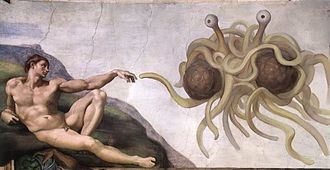
The Flying Spaghetti Monster

Those of you who do not carry the spirit of the nothing in your heart will never quite understand the writings of atheists, for it will close your eyes and lead you astray. Seriously, the nothing will take one of your socks (or maybe a pen) every time you approach it in a false spirit. You may think this is unfair. How could an unjust nothing be so cruel? But you have only yourselves to blame for rejecting the nullitude.

We atheists always keep our socks!

So, what do I do when I have to make a decision? Well, I used to address every moral dilemma by deducing he proper action from the non-existence of God, but in time I came to see this is a pointless theological exercise. Nowadays I simply ask myself “What would Chuck do?”

I can also go to one of several living authorities on the subject. American Atheists are always happy to provide spiritual guidance and direction. One does not simply speak to Dawkins or Harris on these matters, and the scientifically impure burst into flames when meeting PZ Myers in person. You have to go through intermediaries. I am always a little fearful when speaking with these ministers of the Non-God, because I do not wish to anger them and face ex-communication.

Her Hornyness!

I dabbled briefly in the cults of Pastafarianism and Her Hornyness, The Invisible Pink Unicorn, but through careful reading of scripture and some intense personal questioning (to say nothing of guidance by properly constituted non-believing authorities), I have come to realize that these are but cults leading those new in the faith (the “Baby-Atheists”) astray from the one true path.

To help me stay on course, I consult either the Positivist’s Creed or the Essential Doctrines of Existentialism.

Sometimes I go door to door with The Origin of Species. When people answer, I say; “Do you have a personal relationship with Charles?” If they will talk to me about it, I always ask if I can come into their environment and adapt with them.

Yes, all these things are true and more. We heathen don’t share these things with believers, because atheism is a gnostic faith after all. You have to go through at least 3 levels of initiation before you get your secret decoder ring. Only then will the prophesies of Nietzsche become clear to you.

It’s all true.

Atheism really is a religion.

***

I should also say that my favorite hobby really is not collecting stamps.

Dancing for the Dead – Movie Review

Tags

, , , , , , , , ,

See this is what I love about anthropology!

It usually begins with one of those WTF moments when you first encounter something so bizarre that you have no context for it, no place in your world where it could possibly fit. If it was fiction, you’d tell the writer to come up with something more plausible. But it isn’t fiction. It’s actually part of someone’s life, a piece of their world. And that fact means you can learn more about it.

…which is when things get interesting.

The last time I was blessed to get one of those WTF moments occurred when DANCING FOR THE DEAD showed up in a random web search on my computer screen. This documentary, produced by Marc Moskowitz of the University of South Carolina, explores the practice of hiring funeral strippers in Taiwan.

Yes, you read that right.

Funeral Strippers.

And if the very thought of hiring a stripper for a funeral has you standing a little left of your own mind, then you had the same reaction I did. Which is exactly what makes the process of learning about this all that much more interesting. One wonders (or at least I did), in what social context would this sort of practice become a common occurrence?

Dancing for the Dead

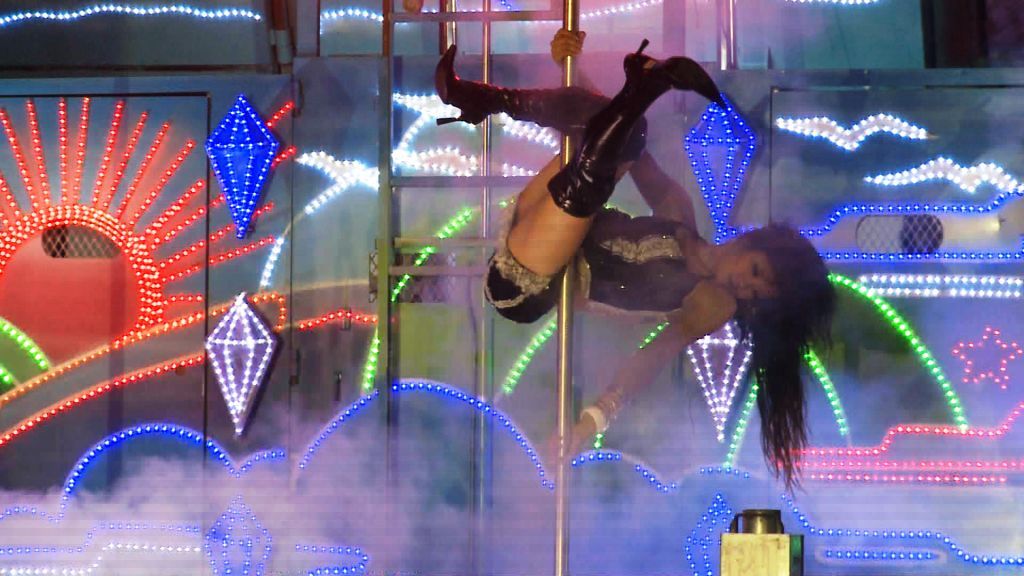
At 38 minutes, the film itself only begins to sketch out the contours of an answer to that question. It doesn’t much dwell on the lurid details of stripping (and the film does not feature actual topless performers or full nudity). Instead, Moskowitz uses a variety of interviews in combination with documentary footage to illustrate the role that stripping has come to play in Taiwanese communities.

As it happens, these performers fit rather well into an elaborate set of public funeral practices, the purpose of which includes entertainment for the dead and some lesser deities as well as relatives of the deceased. The performance may also convey a sense of tribute to the virility of the departed. As with other public events, a successful funeral in Taiwan must achieve a certain quality of intensity. They have a word for it, ‘renau’, which is commonly translated as ‘hot and loud’.  Relatives thus employ funeral strippers as part of a larger public presentation meant to honor the departed by helping to make their send-off hot and loud.

Dancing for the Dead

The women dance on special trucks, known as Electric Flower Cars (EFCs), which travel with the funeral processions. The walls and ceilings of an AFC fold out to become elaborate stages which can be found at a range celebrations including religious processions. Electric Flower Car performers are especially popular during Ghost Month, a period when the spirits of the deceased are said to mingle with the living.

Funeral strippers are not without their critics in Taiwan, and Electric Flower Car performances have been subjected to troublesome legal restrictions. But of course the condemnation of EFCs carries a familiar double standard. With sex pervasive throughout the advertizing world (in Taiwan as well as America and virtually the entire global market), the EFCs have somehow crossed a line not fully explicable in terms of their own performances.

Dancing for the Dead

But that is a post for another day. For now, let me just say how happy I am to have stumbled across this little gem. I may not have met any of them, much less seen a live performance, but my mental landscape now includes a place for Electric Flower Car performers.

…and I can’t help but to think that my world is a richer place for their inclusion within it.

***

I have to admit this subject is a little out of my area, so I’m trying to give it a light touch. Moskowitz tells the story far better than I ever could, and his film is available on Amazon.com. So, if by some chance, you feel the need to know more, …well then, you know what to do.

Still photos are from the official website for the film. For those interested, a very interesting interview with Moskowitz may be found here.

Ten Little White Indians, Final Volume! (Spoilers Already Spoiled!)

Tags

, , , , , , , , , ,

Bet y’all didn’t notice!

I am one short on my promise of 10 Little White Indians. Well, it turns out that my three-part series on White Indians has four parts, and there is surely a good Monty Python reference in there somewhere, but maybe we’ll save that for another day

***

Let us start with a brief consideration of the near misses.

Wind talkers

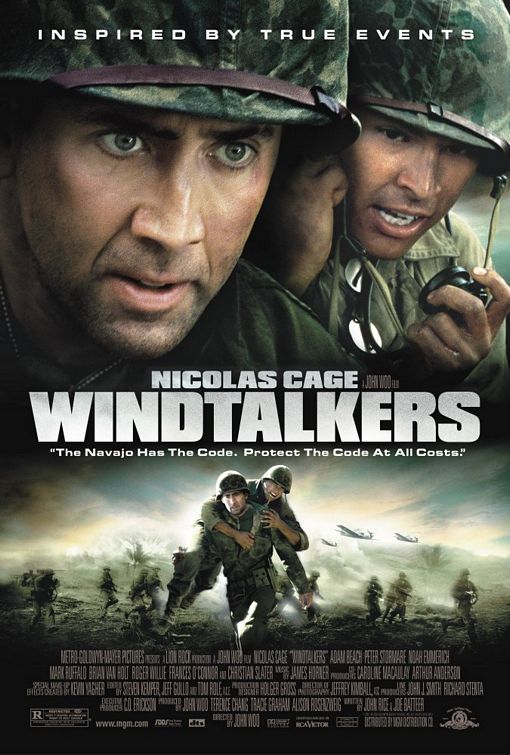
WIND TALKERS (2002): I remember when this movie was on its way to the theaters, rumor had it that the flick was about the Navajo Code Talkers. Working as I did then on the Navajo Nation, I was (like a lot of my students and colleagues) really excited to see this part of American history portrayed on screen. My enthusiasm waned considerably when I realized it wasn’t about a Code Talker so much as a white guy who might have to kill a Code Talker if things took a turn for the worse. I don’t think I was the only one who sank in my seat when I realized where this was going.

…not quite a white Indian, but definitely the same sort of bait&switch one normally gets with this theme.

The Last (White) Samurai

THE LAST SAMURAI (2003): Don’t act surprised. You know this movie is about a white Indian. I mean, the Indians are Japanese, but let’s not get too worked up about the details. It’s the same story, just transplanted to a different setting. Tom cruise goes to live with a strange and seemingly savage people. He comes to know their ways and love them. Finally, he leads them in a battle to revitalize the way of life that is so brilliant, it needs an outsider to save it.

What separates this from A Man Called Horse? Geography.

Avatar

AVATAR (2009): I owe this reference to simplycarola as she mentioned it in another discussion. But the story of a human who enters an alien world filled with nature-loving creatures is just too much to pass up. Jake Sully, our hero, in this film struggles to survive among these savages, finds them wonderful, and leads them in war against his own people. Yes, this is a white Indian on another planet. …and the ease with which ‘white’ transits into ‘human’ while the role normally reserved for Native Americans morphs into an altogether alien species, …well that takes icky to infinity!

***

Okay, so what about it? Why does it matter that Hollywood makes so many stories about white Indians?

Truth be told, I don’t see anything wrong with this kind of story. In fact, the subject of white Indians (or any other non-Indians going native) is fertile ground for storytelling. The problem lies rather in the way this persistent theme seems to marks an inability to venture into stories about Indians themselves, a sort of hesitance at the threshold of another interesting subject. We want to know about Lakota, about Cheyenne, about all of these people! But in the end it seems that they prove too strange, their world too foreign to deal with on its own terms, so we end up with a story about someone else, someone who knew them.

That is the problem; in at least some of these cases, the white Indian is a confession of sorts, an admission that certain movie-makers, and perhaps certain audiences are not quite up to the subject at hand.

Non-Natives seem to better appreciate film depictions of Native Americans if we get to see that depiction through the lens of another non-Native. That in itself certainly isn’t a crime, but it does skew the details of the story in odd ways. The frequency with which the white guy gets the red girl is a bit disturbing, as is the myopic celebration of a romance in the midst of a world that is rapidly falling apart around the fair Indian maiden. Are we really supposed to be happy for the hero that he gets the girl, devastated though she must be? And doesn’t the loss of her family and her people merit a little more than a brief moment of regret. Hell, I can’t help wondering if her story isn’t clearly the more dramatic one in every single one of these films. That the Indian maiden is so often portrayed as a kind of princess should drive the irony meter all the way to 11.

And then of course there are the men who come to lead their adopted native communities. It isn’t enough to imagine one’s white self as an Indian, one has to be their leader too! The characters have to out-Indian the Indians (or in the case of Tom Cruise’s, out-samurai the samurai). As far as self-indulgence goes, I have to admit this theme makes me a little ill.

It’s not that these movies are terrible. Okay, some are. (Pathfinder was dreadful!) Others are really quite wonderful.

And some are both at the same time.

***

Dances With Wolves

Which brings us to the 10th and final white Indian. You guessed it, DANCES WITH WOLVES (1990). The narrative is familiar to most by now. This is the story of a white Indian made larger than life and then some. Disturbed by his experiences in the Civil war, John J. Dunbar (Kevin Costner) asks for a post on the frontier and soon finds himself quite alone on the great plains.

In time, Dunbar will befriend a local band of Lakota. He will hunt buffalo with them, help to defend them against Pawnee raiders, and fall in love. His love interest (“Stands-with-a-Fist” played by Mary McDonnell) is herself a white woman, adopted by kicking Bird (Graham Greene), the village Medicine Man. Dunbar soon finds himself on the Indian side of hostilities with the U.S. Army. It is a role he embraces willingly.

There is no happy ending here. Realizing that his presence puts the people in danger, Dunbar leaves with Stands-with-a-Fist, and the movie ends with an epilogue telling us that the Sioux were subjugated 13 years later.

…ouch!

Kicking Bird Takes a Look

This movie has all the elements one might expect from a story about a white Indian, and it presents those elements in truly majestic fashion. The Buffalo-hunting scene alone is enough to warrant at least three viewings of this wonderful movie. And the Indian characters around Dunbar come through with a richness seldom seen in Hollywood productions. Greene proved himself to be especially brilliant.

But Dances With Wolves also has all the vices of a movie about white Indians. Dunbar’s girl is not quite an Indian princess. At least the facts of her life story seem to complicate that theme, but then again she is still the daughter of the most prominent Indian in the story, and Stands-with-a-Fist is fully assimilated when Dunbar finds her. White or not, she occupies the role of an Indian princess to a T (…or maybe a P), helping us to tread old ground in this awful movie.

Stands With a Fist

Do I need to comment on Dunbar’s role as a leader in the battle scenes? He never quite becomes a chief, but Dunbar rallies the troops (…pardon me, warriors) to great effect during a battle scene with the Pawnee. If he lacks a crown (or rather a feather), it is clear enough that Dunbar has already begun to assume the role of a war chief when the final plot twists interrupt his happy ending. As far as the out-Indianing-the-Indians theme goes, Dances With Wolves would have to be considered among the worst offenders.

But of course this magnificent film is best remembered for its nuanced treatment of Indian characters. The film rightfully received much praise for getting past stern warriors and stoic expressions to show us real people with complicated lives and rich personalities living in that Lakota camp. Dances With Wolves did a lot to dispel the Hollywood Stereotypes and introduce people to a fuller sense of the humanity in Indian peoples.

…unless, of course you are a Pawnee. If you are Pawnee, this movie takes all those stereotypes and dumps them right on your shoulders. Don’t get me wrong. Dances With Wolves does not make any overt statement that Pawnee are evil; it just consistently portrays them as the aggressors in every major conflict of the film. (The historical irony is, well a topic for another post.) It is Pawnee that orphaned Stands-with-a-Fist, and it is Pawnee that attack the Lakota village forcing Dunbar to become the white Indian hero that he was meant to be. The closest we get to any indication that Pawnee might not be a uniformly homicidal indigenous nation is a line from one Pawnee warrior questioning the wisdom of his aggressive leader. That one moment, aside, Pawnee appear largely to exist in this movie for the sole purpose of making other people miserable.

In its treatment of Pawnee, Dances With Wolves carries forward a Hollywood tradition. It seems that so many films sympathetic to Indians deal with Cheyenne or Lakota, indigenous peoples that went to war with the Pawnee. Not surprisingly, Pawnee come out bad in the resulting narratives. Even Jack Crabb didn’t have much use for them, as he told us. But if Little Big Man’s treatment of the subject was nuanced, qualified through use of an obvious frame, the treatment in Dances With Wolves seems flat-footed. One cannot help but to think that we are invited to think of Pawnee as the bad Indians in this awful movie just as its main character would.

After all, we do need some sort of villain don’t we?

And here is where I come to wonder about the real significance of Dances With Wolves. I remember the rave-reviews when it came out. I remember the gushing praise from folks happy to finally have a movie that portrays Indians in a positive light. And I wonder how the Hell so many people could have forgotten about Little Big Man? The stereotypes had already been kicked around quite a bit back in that old flick. So, why didn’t people remember the last time someone went out of their way to introduce us to the rich characters living in those tepees? Why did the stereotypes need a fresh thrashing in 1990?

Dances With Wolves

It might well be that those characters faded with time, and what we were left with was the story of the white guy who lived among them.

And therein lies the problem. However wonderful the part, a supporting role is still a supporting role. And that can be a wonderful thing. But one must remember the difference.

When done well, stories about white Indians may give us a glimpse of life in Native American communities, but that glimpse is always filtered through the significance of a character whose role in that world is tenuous at best. At their worst, such films celebrate Native themes only to subordinate them with a (hopefully unintended) message of white dominance. Even at their best, however, one should always remember the real subjects of the story-line are NOT the indigenous people. Whether the treatment of Native American subjects in such films is sympathetic or hostile, nuanced or  crass; either way the treatment is filtered through the eyes of the white characters.

The limitation is rather signifcicant.