• About

northierthanthou

northierthanthou

Tag Archives: Education

A Bullet Point Mind

17 Sunday Nov 2013

Posted by danielwalldammit in Education, The Bullet Point Mind

≈ 13 Comments

Tags

Communications, Critical Thinking, Education, Power Point, Public Speaking, Slideshows, Speech, Visual Presentations, What not to do

Irrelevant Image! ...or is it?

Relevancy – Perhaps Paradoxical

I still remember the first day I learned to dread the power point presentation. Don’t get me wrong; I’ve seen good ones. I have at times been well pleased to take in a well designed power point presentation. If only I could have more of those days, and fewer of the kind that I have so often grown to expect.

Anyway…

I was sitting in a lecture hall many years ago listening to a colleague do a training for the rest of the faulty at our college. She was trying to teach us something about assessment techniques for accreditation, but the fact is that this particular colleague had nothing to say about the topic, and she was painfully slow in the way she was not saying it. The overall effect was a lot like a sedative and one of Pink Floyd’s longer and slower songs. Every point this woman made began with a new slide that added a phrase or quick sentence. She would stop talking, click a button, wait to see the new phrase appear and then pause long enough for us to read the phrase ourselves (twice). She would then read the phrase and give us a little more time to let it sink in. In a rare moment of personal empowerment, our illustrious lecturer would add a comment or two about the phrase before moving onto the next one. Mostly, she just let us take in the power of each individual bullet point. So, I’m sitting there watching this and trying desperately not run screaming from the room as I study the slide-show and wonder why I hated it so much. Of course training days are often a painful experience, but this was a special kind of heck, and the source of my particular sorrow on that day wasn’t immediately apparent. Eventually, I come to a realization.

It’s her outline!

What my colleague had chosen to pass off as a power-point presentation was nothing more than the outline for her speech, exactly the sort of outline we had all learned to write in our Freshmen Composition and Speech classes. There it was, unfolding there on the screen, one line at a time, as if it were some sad librarian’s version of dramatic tension.

Far from enhancing the presentation, this visual was slowing the speaker down and enabling her to avoid the responsibility even to explain the connections between the points of her talk. The speaker didn’t need to decide how each individual bullet point related to the major themes of her discussion; all she needed to do was read them at us. The visual served to occupy our attention and help us to forget that she had crammed a whole 5 minutes of information into an hour-long presentation. In effect, the presenter had looked into the heart of her software and found a new and improved means of bluffing.

…Would that this was a unique experience!

This technique also seemed to lend an ontological claim to the individual bullet points. Things that a person might just say offhand, or as part of a larger argument often seem to acquire a objectivity all their own, standing up there on a screen. A list of bullet points might contain causes, effects, and side comments to a larger heading, all quite unmarked in the visual. The verbal presentation did nothing to clarify matters. I grew slowly to realize the presenter did not herself know exactly how each sub-point of her presentation related to the main themes. She knew only that the topics traveled in a pack together, so to speak, and she wanted us to know that too. The visual solved this problem by telling us exactly how each point related to the next.

…mainly vertically.

This was the secret of the power-point visual, it lent the illusion of mystic substance to each individual point while undermining the need to explore rational connections between the. Each individual point on the screen in front of us looked terribly important in its own right, certainly more important than the explanations that connect each point to the others. Those connections didn’t appear on the screen. the bullet points did. They mattered more.

…and critical thinking wept!

71.271549 -156.751450

Share this:

  • Tweet
  • Share on Tumblr
  • Print (Opens in new window) Print
  • Email a link to a friend (Opens in new window) Email
  • Share on Reddit (Opens in new window) Reddit
Like Loading...

The Erotic Heritage Museum in Las Vegas: A Very NSFW Review

29 Saturday Jun 2013

Posted by danielwalldammit in Las Vegas, Museums

≈ 24 Comments

Tags

Education, Erotic, Erotic Heritage Museum, Gender, Institute for the Advanced Study of Human sexualit, Las Vegas, Museums, Pornography, Sex

050There is a certain kind of pornography that presents itself as a documentary film. It’s been awhile since I’ve watched one of these mondo films, but let’s just say that I learned things about lesbians from that flick that would, …well, probably surprise a lot of lesbians.

…yep.

The Erotic Heritage Museum reminds me a bit of such movies. Oh, I didn’t notice any outright disinformation, but it has that same odd fusion of license and libido, the same sense that an excuse no longer necessary has been turned into its own kink. It’s not just sex, it’s education.

…only it isn’t.

It’s is a damned shame, because a serious effort would have been interesting.

Let’s just take a tour, shall we?

I first noticed the museum in my quest for street art, and I must say that I like a number of the murals on the buildings exterior. Here, at least I have to give the place props for creativity. It is interesting that they had to cover the nipples on a couple of these pieces, as if that would really reduce the funkination passers by will witness upon even the most casual viewing. But of course the letter of the law can be as dull as it is senseless, and the girls had to be covered. …a little.

(Embiggen, …if you dare!)

Couple murals near the back door. …or is it the front door?
Apt poster
Window Manikins

Interesting Mural
Quite the Promise
The Grope

Elegant Curves
Youngish
Creepy Sexy

Well Hung, but what is he?
Beautiful and faceless
Naked and shy, …yep!

censored
Kinda posty-porn
Diggin the dumpster wall

Bored Manikins

Once inside, things get a little more interesting, or perhaps a little less, depending on your sense of perspective. One enters into a gift shop, which itself contains two private library collections and an Erotic Wedding chapel. They haven’t quite worked out access to the libraries, so that’s an interesting though currently unfulfilling part of the experience. One might even call it tantalizing! The staff is friendly and helpful, and they seem prepared to emphasize either the educational or the titillating aspects of the museum, perhaps shifting their approach according to the tastes of the customers.

The museum is curated by the Institute for the Advanced Study of Human Sexuality, an unaccredited institution based in San Francisco, California.

According to the Museum’s “About us” page, it is the creation of the Rev. Ted McIlvenna and Harry Mohney, founder of Déjà Vu, a highly successful chain of strip clubs. Money is also a longtime friend and associate of Larry Flynt, of Hustler Magazine fame. His role in creating the museum helps to explain the degree to which ‘erotic heritage’ seems to mean ‘mainstream pornography’ in much of the museum’s presentation. In and of itself, this needn’t be a problem. Located as it is on Industrial Ave., the museum would be a fine fit with much of the adult businesses in the area. And why shouldn’t it be? The problem as I see it is the pretense to commenting on larger issues, only to deliver a sort of ode to the adult entertainment industry. Take for example the following quote from the Museum’s website:

The EHM houses more than 17,000 square feet of permanent and featured exhibits designed to preserve wonders of the erotic imagination as depicted through the artistic expression of acts of sex and love. It is dedicated to the belief that sexual pleasure and fun are natural aspects of the human experience, that such pleasure must be made available to all, and that our individual sexuality belongs to each of us.

The Museum is dedicated to the preservation of great erotic heritage that is typically undervalued, yet is of tremendous importance. The EHM is owned and managed by the Exodus Trust, a non-profit California Trust that has as its sole purpose to perform educational, scientific and literary functions relating to sexual, emotional, mental and physical health. Historical and contemporary erotic materials donated to the Exodus Trust are tax deductible as charitable donations in accordance with federal law. For more information regarding charitable donations, please visit our DONATE page.

What fascinates me about this text is tension between a vision of sexuality as a natural part of life and one which must be shared. …the latter part strikes me as a bit of a euphemism, because I don’t think they are talking about the kind of sharing between a man and a woman in their own bedroom, or even of a man and a man, or a woman and a woman, or two men with 4 women in front of twenty others for that matter. No, the point of the sharing is in this instance the creation of some medium by which this sexuality can be exchanged, and somewhere in here that in itself gives way to the commodification of sexuality. Hence, the broad beautiful mandate for sharing of sexual freedom becomes a function of market values, and the themes explored in that sexuality quickly become a function of ownership and corporate capital.

Of course such commodification happens all around, and I’m not particularly shocked to find it happening with sexuality. But let’s just say that a little self-awareness helps, and when folks promise a museum dedicated to sexuality at large, it is little irritating to find that they have little to say about sex occurring outside of a men’s magazine or a xxx movie theater.

That said, let’s have a look at the Gift Shop (Click to embiggen):

Wedding Chapel
Institute
The staff are not normally dressed like this.

Yep!
Actually digging this.
This reminds me of a story from Richard Drinnon’s book on the Metaphysics of Indian hating. It’s not a very pleasant story.

Okay, I know it’s an alarm, but after all that cognitive priming…
Pornalized Clothing!
Okay, I actually like some of these prints.

Poster
Inside the dicks!
Sacrilegious Supper

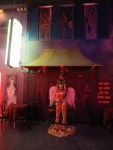
After paying a very reasonable $10.00 entrance fee, one moves through a simulated red light district on the way to the main gallery. The red light district falls completely flat for me. Simply put, a red light district is not a red light district without people. All the store fronts and simulated sex businesses in the world will never convey the sense of such a place, and so this part of the museum more than any other simply fails on all levels.

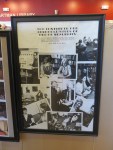
I would add that the big poster on First Amendment issues is simply too high to be read in the dark, at least by people without superior cat-eye magic-vision. So, that too is lost on the customer. It’s place in the museum is also at least a little odd. Of course the connection comes from the tension between erotic expression and censorship. This is not entirely limited to the porn industry, though they have played a key role in defending such expression. The bottom line here is that there is certainly a place for this content in a discussion of erotic expression, but one has to wonder if the context for it has been well framed, especially when posters like this one are just dropped into a collection that is otherwise on the surface at least a-political. One has to wonder if the rhetoric of free speech hasn’t become an essential part of sexuality for the museum’s curators and staff. …as opposed to a historically situated feature of sexuality as filtered through the conflict between the particular powers of the industrialized West.

In any event, this is the red light district:

He has a tie
Red Light
Neon Girl

Red Light again
Moar Red Light!
Red Light Again

Okay, this is funny.
First Amendment

The main room actually comes in two floors, both essentially arranged into one large round presentation floor. The top floor is a private collection, and I don’t have any pictures of its content. The bottom floor has an amazing quantity of interesting materials. Unfortunately, the arrangement leaves a lot to be desired. Many of the more exotic items are left almost entirely without explanation, while images associated with the mainstream porn industry and its political battles dominate the outer walls.

For example, we get very little information about sundry deflowering devices scattered throughout display cases, but the sections describing developments in pornography get much fuller treatment, as do numerous celebrity sex scandals. So, a practice that the average customer will not understand without some presentation to put it in context gets nothing in the way of an explanation while stories many of us have seen before get plenty of coverage. This works fine if the point of museum is to promote the pornography industry; it does not work at all when the declared point of the museum is something much broader and more enlightening.

And here, we have an interesting question, what does all the exotic cultural material mean to the average customer as opposed to those for whom these items were originally developed? Indeed, just how sexual is all this sexual memorabilia in its original context? How does a customer interpret an African deflowering device, for example, in the absence of any reason to believe it isn’t just another sex toy?  I can’t help but think that – presented as it is, with so little explanation – the sole lesson that many customers will take away from the ethnographic materials will be that other peoples are damned kinky. There just isn’t enough context to compete with the sexual background of the museum itself and the likely skewing off all things by an emergent narrative emphasizing sex and strangeness.

…it’s a bit like looking through old copies of national Geographic just to see pictures of the naked natives.

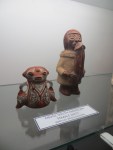
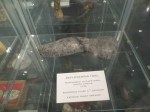
Note the uninformative caption
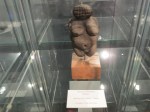
Statuette
Okay, this was all created by one guy, as I recall.

Erotic Art
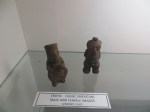
REALLY uninformative caption card.
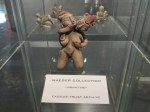
Interesting Statuettes

An Old Deflowering Device
Damned Disappointing

Could we be just a little more specific?
Red Tip
Forever fucking!

Interesting Barrels
Japanese Deflowering Instrument
Indian deflowering Instrument

More from Japan
Reproduction
Not sure what “primitive” means here, or what the scare quotes mean in this instance

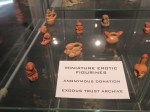
Sexy Figurines
African fan
Sex

Some of more the playful aspects of the exhibit are quite wonderful. The million penny penis is pure gold! …or, copper, really, but the point is, I approve! The bathroom with all its graffiti (pens are provided) is at least a little interesting, but honestly it looks like it’s time to paint it over and let people start again. Other amusing displays certainly can be found, but they are jammed together in such a haphazard fashion, and with so little explanation, that is can be really difficult to make heads or tails of what one is looking at.

Strangely, a number of displays are given to various sexual scandals, and the treatment is (ironically) quite punitive. It makes sense of course for those interested in free sexual expression to feel a little vindicated when various anti-porn crusaders or seemingly repressed right wing cultural warriors get caught with their pants down (sometimes quite literally), but some of the folks appearing on the wall of shame just don’t fit that most. More importantly, at least some level, one ought to appreciate that this is to be expected. Rather than ‘haha’ might one say “welcome back to humanity?”

In any event, the museum never does give us any context in which to elevate the “Wall of Shame” beyond the level of pointing and laughing. That doesn’t strike me as worthy of a museum, and if I am going to laugh, I would rather laugh at a penny penis than people proving themselves all-to-human, …even those who may have wished otherwise.

Wall of Shame
Clergy
Celebrity

Other

So, once again the museum presents an odd blending of politics and sexuality, one if which the curators seem to have let the one skew their sense of the other a bit too much in my estimation. In any event, here is the bulk of the first floor stuff (if you click on the pictures, they get bigger, …really!)

The Sister’s of Perpetual Indulgence are definitely worth a google.
Art and Larry Flynt
Free Speech Coalition

Hidden Narrative
I wish I could remember where this was, but it’s unfortunate.
Does the world really need another derivative decalog?

Chicken Ranch
Does anyone else remember that awful song?
Personally, I prefer… nevermind.

Y’all should go over to A Knitt Societ and ask Sarah if she has anymore pictures of this display.
Information Panels
They actually had quite a few gag-stills from movies

Okay, this is at least interesting
…alright
Flyntobelia

Erotic Art
Erotic Art II
Sundry Sexy Stuff

I wonder if the designer was aware of the torture device he was emulating?
Moar sex Stuff)
You might wonder what some of that stuff had to do with women’s health…

Ah here is the health content.
Just a little disturbing.
More venting about scandals

Hustler
Million Penny Penis
Stuff

Moar Stuff
All Hail Flynt!
Transgendered folks

Actually, I would have loved to have seen a lot of of this kind of stuff.
Old Devices
You needed a closer look, didn’t you?

They had a few more of these old devices, and the info. on them wasn’t terrible.
On the way to the bathroom
bathroom

Before signing off, I want to say thank you to Sarah from the blog, A Knitty Society. She and her husband accompanied me through the museum. I very much enjoyed discussing the materials with them, and I look forward to reading her own post on the museum. Y’all should definitely check out her blog.

And let’s finish with a bit of zoological interest:

Animal Penises)
Raccoon Penis
These are common sources of artwork up North

I suppose I should add that I actually think there is a lot of potential in this museum, which is what makes its present state all that much more disappointing. The staff certainly have a diverse range of talents, and they have a fantastic collection of interesting materials on display. What no-one seems to have done at the Erotic Heritage Museum is thought through the kind of effect the want to produce and just how much the museum is intended to promote education as opposed to titillation. Frankly, I think they could manage both a lot better than they presently have. One has only to get past the point where a momentary glimpse of things-sexual is enough to satisfy the mind and the libido all by itself. All of this stuff has context; the folks at this museum really ought to provide that.

71.271549 -156.751450

Share this:

  • Tweet
  • Share on Tumblr
  • Print (Opens in new window) Print
  • Email a link to a friend (Opens in new window) Email
  • Share on Reddit (Opens in new window) Reddit
Like Loading...

I’ll take Cold Tropes and War Analogies for $50, Alex!

19 Friday Apr 2013

Posted by danielwalldammit in Education, History

≈ 26 Comments

Tags

Analogies, Cold War, Communism, Education, History, Metaphors, Pokemon, teaching, Trops

coldwar_nike1It’s getting harder to explain the history of the cold war, at least insofar as students are less and less likely to relate to the era in any personal way. Gone are the days when the subject could elicit a visceral reaction from the under-thirty age-set. I distinctly recall that fear of the world ending with the push of a single button played a big role in my own teen angst, and I doubt I am special in that regard. Hell, I sorta figured it was actually going to happen at some point, all of us were going to die in one big final feud, but then again I’m fun like that. The point is that the subject hung like a cloud over the heads of some of us back in the day.

I suspect a lot of my students have trouble wrapping their minds around the whole thing. So, when you come to something like the Cuban Missile Crisis, it takes a little prep work to get across what would have seemed obvious to my own generation, that this little event, a paragraph or two in the average textbook, actually threatened all of life as we know it. Today, I usually just tell my students that none of us would have been born had things gone differently in that particular sequence of events.

I think they get it.

…sort of.

It’s not just the subject matter that is slipping away, so to speak; it’s also the imagery. This isn’t just true of the cold war. Many of my favorite pop-references are becoming less and less relevant to younger students as my youth passes further and further from the realm of things about which the kids at the cool table could be asked to give a damn.

cokeOne of my favorite teaching-gambits for the cold war has slowly faded into the realm of useless. For years I used to ask my students who lost the cola wars. This always got some funny looks, followed by suggestions of ‘Coke’ then ‘Pepsi’ both of which I would shoot down without the slightest hint of an explanation, …leaving them to give me more funny looks.

How could it be neither?

Sooner or later someone would suggest Shasta, Nehi, RC-Cola, or some other obscure brand of soda most likely consumed by cave men in the sad old days before Paula Abdul and Michael Jackson. This suggestion would then become a jumping off point for discussing the impact of the cold war on various third world nations forced to articulate their own interests in terms framed by the U.S. and Soviet Union.

imagesToday my students still give me blank stares, but they are not the blank stares of students struggling with a conundrum; they are the blank stares of students listening to someone try and explain a complicated issue by means of a metaphor that is no more accessible to them than the full story in itself. Sadly, it is time for me to move this metaphor to the back shelf and put some other theme in the specials section of my intellectual supermarket.

(See what I did there?)

Missionary colonial periodI once TAed for an instructor that used to compare the Cold War to the conflict between Protestants and Catholics in the colonial era, each bringing a vision of absolute truth to Native Americans, promising that truth was the key to liberation, demanding their loyalty, and taking everything they had in the process. (How’s that for a run-on sentence!) So, that professor seemed to be suggesting there was nothing new under the sun, just two new world powers playing the same old shell games with the rest of humanity. I like this analogy too, but it’s not so much a quick entry into the topic as a food-for-thought and what-does-it-all-mean kinda notion.

Today I was trying to explain the dynamics of proxy wars to a student when I could see the light go off over her head. A moment later she exclaimed that it was just like Pokémon. The other students quickly nodded, and after a brief moment in which I sort of wanted to cry, I thought actually that isn’t too bad.

PiakchuSo, here I sit, watching the next batch of students suffer their way through an exam and wondering if this is the wave of my pedagogical future? Will I soon find myself saying things like; “And then Nikita Kruschev said, ‘Fidel Castro, I choose you!'” Can I wrap my mind around the concept of West Germany as Picachu? Can I use this narrative without promoting anyone to the heroic status of Ash? Or should I just let John Wayne have that role? Can y’all imagine the Duke in his Green Beret uniform whipping out a pocket monster and saying; “have at ’em liddle pardner!” The imagery almost seems promising, but I just don’t know if I am up to the task. This isn’t my era, and I don’t know the game.

The whole project does have a certain amount of promise. I wonder if I can get faculty development funds for this? I wonder if the Dean of Instruction will give me money to go to the gym and develop my Pokédex?

Cause I really don’t think I can teach this subject without a fancy new gym badge!

71.271549 -156.751450

Share this:

  • Tweet
  • Share on Tumblr
  • Print (Opens in new window) Print
  • Email a link to a friend (Opens in new window) Email
  • Share on Reddit (Opens in new window) Reddit
Like Loading...

Also Apropos of Nothing, the Worst Thing I Ever Saw a Teacher do to a Student

22 Friday Mar 2013

Posted by danielwalldammit in Education

≈ 9 Comments

Tags

College, Cruelty, Education, Ethics, Grading, Intimidation, Jerk, Test-taking

coreSo, I am sitting down for the final exam in an upper division course. This was the last of 5 courses on the history of philosophy that I took as an undergraduate; its graded assignments consisted of two essay exams and a research project. My project has already been turned in. All I had to do was manage a few decent essays on this particular phase of intellectual history, and then I could go home and sleep.

I remember the scene rather well actually.

We are sitting around a conference table in a room adjoining the professor’s office, about half a dozen of us, furiously scribbling at our blue-books when the instructor walks into his office. He later emerges with a green apple and a single research paper in one of those plastic binders that teachers hate. (Seriously, I didn’t understand this until I started grading myself. Those are nothing but a pain in the ass.) Anyway, the professor frees the essay from its plastic binder with a slight sneer and takes a bite of the apple.

It is the beginning of a long and dramatic performance.

As I and the others were trying to wax brilliant on this and that subject, I think each of us gradually became aware of a couple things about the professor’s activities at the authoritative end of the table. The first thing I noticed was how thoroughly the professor was eating that apple. The man was truly voracious! I want to say that he ate the core, but that may be 20 years of memory rounding the corners of my original experience. What I can definitely say is that he came damned close to it. Drove me nuts, watching that; I wanted to tell him to stop and give the poor thing a break. It had long since done its duty by normal standards and what was left deserved a good Christian burial in the garbage can. He didn’t even look like he was enjoying the apple goodness all that much. It was just there, and that was apparently an unforgivable crime. I don’t think I have ever felt sorry for a piece of fruit before, but that poor apple had my sympathies.

And the paper?

Well let’s just say the professor couldn’t have put more red ink on that paper if he had opened up the pen and poured it out all over the he pages. I honestly think the prof. was putting down as much material as we were. He did this with grand gestures. You could see him drawing broad circles around some offending bit of text before proceeding with a straight line toward the margins where he then proceeded to write essays of his own, all no doubt about the utter stupidity of the poor paper’s author. That sneer got worse and worse. He shook he head as he wounded the pages of that poor term paper, and I could almost make out some of the cursing under his breath. Contempt oozed off of the prof. and slowly filled the room with a strange and rotten feeling as we struggled to produce our own candidates for the red ink of death.

I forced myself to concentrate on my own essay as I took in the drama happening just off to my left, and I wondered what poor Freshman from his intro class would soon be crying in his red cup full of already-watery beer. What the poor victim had done to earn his feedback-beating, I couldn’t imagine, but I told myself I would be fine. Just keep writing!

Finally, the instructor put down the paper, shook his head, stood up and gave a heavy sigh before walking back into his office and then out into the hall. One of my classmates put down his pen, and sat there a moment, obviously stressed. The guy looked around the room a bit. And we all looked back at him.

“Well, I gotta look.”

After learning he had just received a D- on his research paper, the graduating law-school candidate struggled a bit with his blue-book and eventually turned in his unfinished exam.

71.271549 -156.751450

Share this:

  • Tweet
  • Share on Tumblr
  • Print (Opens in new window) Print
  • Email a link to a friend (Opens in new window) Email
  • Share on Reddit (Opens in new window) Reddit
Like Loading...

Hold Your Nose; I’m Going to Talk About ‘#LiberalTips2AvoidRape’

20 Wednesday Feb 2013

Posted by danielwalldammit in Politics

≈ 9 Comments

Tags

Academia, Education, Gun COntrol, Gun Rights, Guns, Joe Salazar, rape, Rhetoric, Twitter

20130219_121710_cd18joe_salazar_200

Joe Salazar
(Image from Denver Post)

Okay, so this hashtag, #LiberalTips2AvoidRape, stood as the top trend on Twitter for much of today. Last I checked, the twitter page for this one contains a mixed bag of comments intended to illustrate the absurdity of Colorado Congressman, Joe, Salazar’s comments on the prospect of allowing guns on college campuses. Net dust-ups being what they are, quite a few folks are happy to fold any manner of insulting reference to liberals in there, and quite a few more folks have revealed (perhaps unintentionally) a trace of a tendency to blame the victim of rape in their approach to the subject. It’s an ugly chapter in a full book of ugly twitterage; y’all can see for yourself if you like:

https://twitter.com/search?q=%23LiberalTips2AvoidRape&src=hash

Yes, those of us on the left have weighed in on the subject as well, not just at Twitter, but also in the mainstream media. The Huffington Post produced a piece on this, and MSNBC couldn’t help noting the irony that a Democrat had just put his foot in his mouth over the topic of rape.

What fascinates me about this issue isn’t the repugnant nature of the humor, or even the views expressed in some of the worst jokes; it’s the degree to which outrage over Salazar’s comments facilitates an interesting shift in the politics of common sense.

College campuses have traditionally been gun-free zones. (I remember this from my old freshman informative speech, which was on gun safety. I was allowed to bring a gun-stalk into class for a prop, just so long as I left the barrel at home.) It does appear that the law in question is a new development in Colorado, but access to guns on campus is definitely not the norm. Much of the American public and much more of us on the left (including a rather large number of folks in academia) see this as a basic common sense policy. Whatever the (de-)merits of gun ownership in the rest of the public, the conventional wisdom has been to keep guns off our campuses. Hell, we don’t even allow them at my college, polar bear alerts notwithstanding.

Okay, so conservatives want to see these policies changed, and many on the right side of the political spectrum have come to see gun-free zones as a terrible sort of policy. It is for them common sense that taking guns away from students, staff, and faculty makes college a more dangerous place. This is for folks on the right simply a common sense issue.

The gun lobby has even produced some reasonable arguments on the topic of safe-zones, in effect showing that a pocket of unarmed citizens in the context of a larger community full of weapons creates unfortunate unintended consequences. But of course much of this argument has focused on K-12 schools, which are smaller, and in many cases lack armed security. Colleges on the other hand typically employ security forces of their own along with a variety of measures such as call-boxes, whistles, etc. So, with or without a personal weapon, a college is not normally the kind of soft target one sees in a public school. Add to this genuine fears about the sorts of dangers armed students may themselves pose to a campus population (just think about well-armed frat brothers!) and you have a range of variables to look at. There is a genuine empirical question as to how all of these considerations stack up.

Are we safer with guns on campus or without them?

That is a fair question, and I can actually see reasonable and honest people coming down on either side of the answer to it. That is also the question Salazar was trying to answer in his speech, trying anyway. Frankly, it looks like he lost his train of thought and kept talking anyway, which was a bad idea. So, he ends up suggesting that safe zones were created to protect women (which is from the standpoint of a woman who wants to protect herself with a gun, …well, getting the problem backwards). Salazar’s argument that a woman might accidentally kill someone who isn’t attacking her is misplaced at best. Concerns over accidental gunfire, mistaken shootings, or crimes of passion, etc. require a much larger scope of considerations. Putting them all on the shoulders of a single woman (hypothetical or otherwise), particularly one in fear of genuine harm is foolishness taken to 11. And to hear Salazar  making this entire case while using a universal ‘you’  throughout the speech (as if he spoke from experience) lends the whole thing a real fingernails-on-chalkboard experience.

All in all, it’s a thoroughly mockable performance. Apparently, the University of Colorado didn’t help matters by publishing some truly awful advice to rape victims on its website. And of course the point of the #LiberalTips2AvoidRape hashtag is to mock Salazar’s performance (and that of the University). …and of course to cash in on the mockery so as to finesse a number of tough questions.

Many of the tweets mocking Salazar seem to miss the basic context of the debate itself, suggesting that he thinks whistles will work most anyplace. He wasn’t. He was talking about whistles on and around a college campus. Others suggest that Salazar wants to disarm women in general, which is just a blatant misrepresentation of Salazar’s actual comments. Salazar’s suggestion that women might not know if they are about to be attacked has been taken as a suggestion that they will not know when they are actually being raped. It would seem that Salazar’s own foolishness makes a good license to add to it with a range of subtle (and not-so-subtle) misrepresentations.

The hashtag serves as an excellent vehicle for abstracting the larger question, and enabling right wing net-warriors to present their own values as the default judgement. Instead of making a case that women would be safer on campus with a gun than simply relying on all the other devices available on campus, one can simply mock Salazar (and liberals in general) for believing that a whistle could stop a rapist.  And if folks would prefer to think of this in terms of an imaginary scenario where no-one else is around, well then, how many folks would check them on the fact. (It doesn’t help that Twitter tends t suspend accounts that engage in direct debate, so mistakes or distortions of this kind typically go unchallenged.) Perhaps this is one of the means by which social media seem to facilitate polarization of the issues. What can you say in a hundred and forty characters that won’t be some variety of ‘y’all suck!’

No, I’m not concerned about about netiquette here. Some people do suck, and I have no problem when folks want to call them out for it. What does concern me is the degree to which this new whipping boy for the right seems to be serving as a short-cut right through an interesting discussion about whether or not we (as a nation) want to open up a variety of safe zones to gun owners. I’m also fascinated by the degree to which the status quo for college campuses has, at least in the minds of the right wing, become a form of lunacy. Why make the case for your own policy preferences when you can simply point at Joe Salazar and watch the left squirm? And through all of this, the bulk of the public will never hear a solid case for the net-effect of changing gun-laws on college campuses.

The prospects for a reasonable discussion of gun-control have never been very good.

Today, they just got a little worse.

71.271549 -156.751450

Share this:

  • Tweet
  • Share on Tumblr
  • Print (Opens in new window) Print
  • Email a link to a friend (Opens in new window) Email
  • Share on Reddit (Opens in new window) Reddit
Like Loading...

Apropos of Nothing, The Worst Lecture Ever to be Inflicted on My Delicate Ears

07 Wednesday Nov 2012

Posted by danielwalldammit in Education

≈ 11 Comments

Tags

College, Education, Euphemism, Homosexuality, Language, Linguistics, Race, Rhetoric, Semantics, Sophistry

I’m lucky.

I have very few classroom horror stories from my college days. Of course I remember a lot of petty behavior, some arguable decisions, and I witnessed at least one case of genuine abuse to a classmate, …okay two. But it was pretty rare that I personally felt any significant discomfort as a result of anything the teachers did in the classroom.

My statistics textbook took a Hell of a beating, but that’s a different issue. I liked that teacher. I just hated statistics.

But there was one really awful lecture that I remember in detail. Lucky you, dear reader, because I am going to share the misery.

It was my last semester in college and I was finishing up the credits for a second major, linguistics. In those days, the linguistics program at the University of Nevada, Las Vegas was interdisciplinary. So, I had taken plenty of classes in linguistic anthropology, sociolingistics, psycholinguistics, logic, philosophy of language, etc. …all really great stuff! I enjoyed every minute of it. But that did leave one really huge gap in the knowledge that a guy graduating with a degree in linguistics ought to have. I hadn’t yet taken a full course in grammar. I didn’t even need it to graduate, at least according to the degree requirements, but that didn’t sit right with me. How could I graduate with a degree in this subject without the benefit of a full course in grammar? I’d heard good things about the lady who taught grammar in the English Department, and so I signed up and prepared to get down and dirty in the realm of syntax.

I knew something was wrong when I found a middle-aged man standing at the head of the classroom on the first day. I do remember his name, but let’s just call him Mr. H. Mr. H. passed out index cards and asked all of us to fill in some personal information while he explained that the usual instructor was on sabbatical that semester. He would be teaching the grammar classes.

Okay.

For the next few minutes everything seemed pretty standard. No red flags went up as Mr. H. reviewed the syllabus, and I felt pretty confident I was going to learn a lot in his class. I grew even more pleased when he explained that he would sometimes venture outside the narrow bounds of grammar to discuss other aspects of language use.

It was as though he had promised to have strippers pass candy out during class.

I couldn’t wait for some of those discussions. Luckily I didn’t have to, as Mr. H. proudly announced his first slightly-off-topic lecture for the semester. He wanted to talk about euphemisms.

I was a happy guy.

He began by telling the story of his first job, working in a mom&pop grocery store somewhere in Texas. Mr. H. talked about the time some yankee had come in and asked for some jalapenos, (pronouncing the ‘j’ about like you would ‘jam’). His reply, as Mr. H. explained it was; “Sir I believe the Spanish call them jalapenos (pronouncing the ‘j’ like the ‘h’ in ham).” He then proceeded to explain that this was a terrible thing to do and that no-one should ever make fun of the way anyone else speaks, ever.

I wasn’t entirely sure that he had described an act of mockery, but that was a detail I could easily overlook. On the main point,  the man was preaching to the choir as far as I was concerned. I was really glad I had signed up for the class.

And that’s when things took a bad turn.

Within just a couple minutes of announcing this principle that one shouldn’t make fun of other people’s speech, Mr. H. began to tell us all about the decline of the English language as a result of recent trends. Mr. H. was quite concerned that folks had begun to water the English language down with a variety of euphemisms. It was a terrible situation as our great medium of communication had been harmed a great deal by this trend.

Mr. H. had quite a few examples, but the first one that I can remember was the term ‘African-American’. Mind you, this was 1990 and the battles over political correctness were picking up steam fast. This topic had not yet run its full course in the public sphere; it hadn’t yet bored everyone to tears. My classmates sat on the edge of their seats while Mr. H. proceeded to explain that he had nothing but love for all God’s people, but he didn’t believe in calling people by the wrong word. You had to call people what they were, not what they weren’t. I sat back just a little disappointed and waited for Mr. H. to explain that ‘black’ was the proper name for the people in question.

Instead he proceeded to tell the class that ‘negro’ was what ‘they’ were and that was what folks ought to call them. I sat back up. He had at least surprised me. I had to give him that, but did I hear the man right?

Had I heard correctly? Was he actually skipping right past the common usage I expected of conservatives and moderates to rescue a sordid vocabulary choice out of a distant era?  I listened on as Mr. H. insisted that he meant no disrespect by this term and that it had no insulting implications. ‘Negro” was the right word and nothing else would do. Those using the term ‘African-American’ were engaged in a full-scale assault on the English language, and she suffered terribly at their abusive treatment.

The rest of the class ate this message up. I mean they loved it! For my own part, I dropped right out of that choir he was preaching to.

My concern wasn’t entirely with the politics at hand. I was never fully on board with the PC approach to vocabulary, and I could think of reasonable concerns about a lot of the verbal practices at hand. But Mr. H. wasn’t producing reasonable arguments. In fact, he was demonstrating a level naïveté that I didn’t expect from someone who was about to teach a class in descriptive linguistics. Objections were crowding their way into my thoughts in such numbers I feared my mind might burst if I listened anymore.

– Mr. H’s assertion that there was a right word for this or any other topic and that anything else was poor use stood out like a sore thumb. By ‘sore thumb’, I mean a completely unsupported premise. Worse than that; this assumption flew in the face of pretty much everything lexicographers had to say about the subject. Words had multiple meanings, and topics could be referred to in a variety of different ways. Languages changes! You could argue pros and cons of different word choices, but Mr. H. just insisted there was a right word and the public wasn’t using it anymore. This was a bit like discovering your geography teacher was a flat earther.

– ‘Negro’? Seriously, ‘Negro’?

– Details aside, declensionist narratives about the state of a given language are tired and damned lame. Untold prophets have warned about the decline of English, each with a different sin on their minds, and each cherry-picking the evidence with all the shame of a child stealing fruit from a neighbors tree. In this case, there was the additional absurdity that Mr. H. wanted us to feel for the abuse of the English language even as he minimized concerns about the abuse of actual people. This was personification with an agenda, and that agenda had little room for concerns about folks who really could feel the effects of abuse.

– I really couldn’t square the entire theme of the lecture with the lesson Mr. H. had drawn from his first example. Were we not making fun of the way some folks talked? I suppose he was suggesting that advocates of politically correct speech were making fun of others, but he had gone well past correcting that and right into the realm of mocking their own vocabulary preferences.

– A bit depends on the presentation, but the notion that words like ‘African American’ are euphemisms contains at least one really ugly implication. If a euphemism is a word that makes something ugly sound better than it is, and that did seem to be the way Mr. H. defined it, then what did that say about his thoughts about the people this term was applied to? Was he not suggesting that the right word really did convey something bad. He denied this of course, but that really seemed to be the station to which his particular train of thought had been headed.

All of these thoughts and others crowded into my head and screamed for me to let them out. I couldn’t believe I was hearing this crap from a guy who studied language for a living.

I looked around and I saw over 20 students falling in love with this man.

It’s okay, I thought. I’m here for the lessons on grammar. This doesn’t have to matter. Who knows. Maybe, Mr. H. will respond well to challenging opinions. Should I say something now and see how he responds? But where to start? I thought about whether or not to field an objection as I just sat there and took in the horror show.

The straw that broke this camels back came when Mr. H. took up the use of the term ‘gay’.

Yep. He was against it.

Mr. H. told us that he would never use that word. He went on to explain that he would never condemn a man for being what God made him, but he believed in calling people what they really were. I thought surely that he was going to tell us the proper term was ‘homosexuals’.

But no.

What these people were, Mr. H. informed us was ‘faggots’.

No other word would do.

And Mr. H.’s fan club fell over themselves to show their appreciation for this point. It was quite the surreal experience for me, watching my classmates nod and stare lovingly at this performance. I thought surely I would soon be sick.

At this point, I felt like Mr. H. had enough rope. If I couldn’t hang him with it, I should at least be able to reign in the message a bit. And anyway, I really needed to see how he would respond to disagreement. So, up went my hand. Mr. H. called on me. And I proceeded to ask him if he didn’t think it more appropriate to consider ‘faggot’ a dysphemism (in retrospect, I should have just said ‘insult’). I went on to ask if he didn’t think the English language was growing new insults at about the same pace that it was growing euphemisms, or if he had specific reasons for thinking the one trend was outpacing the other. I think I managed to keep a respectful tone, but I definitely expressed my disagreement.

And the class grew silent.

The man literally scowled at me. In falling tones, Mr. H. asked me for my name. He then proceeded to dig the pile of index cards from the beginning of class out of his shirt pocket and slowly flip through the until he found mine. He then studied my card for a minute or two, all of this in utter silence. No-one said anything.

With a heavy sigh, Mr. H. finally placed the cards back in his pocket and looked back at me. “What I am trying to say is…” He then proceeded to restate his general thesis that English had been watered down through excessive euphemisms. He did this without responding to any of my points at all. It was amazing. There was no reference to anything I had just said, no answers whatsoever to my questions. No counterarguments. Nothing!

Mr. H. then asked me if that message was okay with me.

After a brief pause, I said ‘yes’.

By ‘yes’ I meant that I would be graduating without the benefit of a full course in grammar.

71.271549 -156.751450

Share this:

  • Tweet
  • Share on Tumblr
  • Print (Opens in new window) Print
  • Email a link to a friend (Opens in new window) Email
  • Share on Reddit (Opens in new window) Reddit
Like Loading...

Arms Across the Keyboard: Teaching Computer Skills in South Africa

22 Monday Oct 2012

Posted by danielwalldammit in Education

≈ 5 Comments

Tags

Africa, Ambiguity, Computers, Cross-Cultural Education, Culture, Education, Training, Translation, Vocabulary

Airedale on a Computer
(Nancy loves Airedales)

Today we have a Guest Post from a friend of mine, Nancy Sypniewski. I met Nancy when when she began doing volunteer work at an animal shelter where I served as PR, but calling her a volunteer doesn’t even come close to suggesting her full value to the shelter. She was amazing. And she was also amazing to talk to. I recently asked Nancy to share one of her stories for the Blog, and she has graciously agreed.

I don’t know if Nancy will have time to come back and answer any questions, but I wanted to include this story, because it deals with a subject I think about a great deal, teaching something in a cross-cultural setting. The story dates back to a training exercise from her days in the tech industry.

Nancy Sypniewski

We were working in South Africa. Our job was to implement a computer system that would automate the inventory of the power utility. This was back in the day of mainframe computers and big unfriendly user terminals. We first had to understand their business, determine the best method to automate their inventory, modify the “best fit” computer system, convert their existing data, thoroughly test both the modified system and converted data, develop and test customized training materials, and then finally train the people who would be using the system. These steps took thousands of man hours and multiple years.

We were finally ready to start developing our training materials. We were reminded that our audience would be tribesmen, mostly Zulu and Sutu. These men would arrive in the morning wearing a loin cloth and sandals, they would change into company provided blue jumpsuits and steel toe shoes, and then back into their tribal clothing before heading home at the end of the day. It was imperative that our training materials be full of simple language, pictures and diagrams, not because these men were of low intelligence, quite the contrary, the issue was language – English was often the 3rd, 4th or even 5th language they had learned.

Training day arrived. Our instructor had the students lay their arms across the keyboard and watch the letters appear on their terminal screen for every key they had touched. The room was filled with awe. The instructor then told the students to “Hit the key with C L E A R printed on it.” Each and every student did just that, they hit the key with the solid blast of their closed fist, causing many of the keys to pop off and fly all over the classroom. Needless to say, the students jumped up and frantically gathered the keys, now totally afraid of the new “machines” they had just destroyed. We assured them that all could be easily fixed and sent them into the break room for early tea and cookies.

Within about 20 minutes we had popped the keys back onto the keyboards and were ready to resume class. Since I had been with most of the students multiple times over the years and was a familiar face, it was decided that I would restart the class and give reassurances.

I asked that they restart the exercise by laying their arms across their keyboards while watching the letters appear as before. I then carefully said “Now, I want you to depress the key with C L E A R printed on it.” Everyone hesitated. Just then, a man in the front row raised his hand. I asked him what he wanted and he said, “Madame, I do not know what to say to make the key sad.” Luckily, everyone laughed and we had learned the lesson of careful word selection. After that, we always reminded one another to never use a $10 word when a $1 word would would do a better job.

71.271549 -156.751450

Share this:

  • Tweet
  • Share on Tumblr
  • Print (Opens in new window) Print
  • Email a link to a friend (Opens in new window) Email
  • Share on Reddit (Opens in new window) Reddit
Like Loading...

Myth-Busting For Fun and Frustration: A History Lesson that Just Didn’t Take

05 Wednesday Sep 2012

Posted by danielwalldammit in Education, History

≈ 12 Comments

Tags

America, American History, Cognitive Bias, Education, History, Myth, Myth-Busting, Note-taking, Puritans, Study-Habits, teaching

I still remember my first real object-lesson in teaching. I had just started as a teaching assistant and they had me working in a class on early American History. The professor spent a good deal of time on the Puritan colonists that semester. By “spent a good deal of time on” I mean he railed on about this particular subject for hours while we slowly fell behind the syllabus, …which was fine with me actually, but quite a few students balked at this approach.

The professor did his best to debunk one common misconception about the Puritans; the notion that they came to America for religious liberty. In his view, it would have been more fair to describe the Puritans as coming to America because their efforts to oppress others had been thwarted in England and Holland. He could go on in great detail about various things they did which were wholly inconsistent with the notion of religious freedom. The very idea was as foreign to them as it was to any of their supposed oppressors.

This message found its way into several lectures that semester. The textbook was a little less emphatic on the subject, but it certainly did nothing to undermine the message my Professor had been working so hard to get across. Whenever I had a chance to talk to the students I was right on the message. Hell I loved that argument, and I was happy to have a go at it whenever I got a chance. With three separate sources providing re-enforcement for the same message, I was pretty confident that it would get through. If the students in that course had learned nothing else, surely I thought they would have learned that the Puritans did not really come to America seeking anything we would recognize as religious liberty.

So, you can imagine my surprise when well over half the class turned in midterm exams with essays going on at length about how the Puritans had come here to find religious liberty and establish democracy!  I actually had to ask the instructor to go over the subject one more time, just for me, because I was convinced I must have misunderstood something. But no, his take on the subject was exactly as I had remembered it.

I looked for signs of conscious disagreement. Were these students showing spine? Could they be fighting back (I hoped)? No. I didn’t see that either; no-one fielded a counter to the specific points made in class. Not one essay fielded any new ideas or information. They were simply repeating the same platitudes the teacher had been at pains to refute as if they had no reason to suspect anything was wrong with those notions. Near as I could tell, these students were telling a story they simply took for granted, a story the truth of which they had no call to question at ll. It wasn’t absenteeism either; many of those hitting this theme had been present virtually every day of class. Judging by the essays, only a handful of the seventy or so students in that class had picked up on the actual lesson. Most were completely unaware that they were telling us the exact opposite of what we had been telling them for over a month.

Why?

It was a complete mystery to me, but I red-inked the Hell out of the tests, assigned grades with a touch of mercy, and we both set about explaining the subject one more time.

Over the next few weeks I came up with a theory. I never had a chance to test this explanation, but it remains my guess as to how the whole thing happened. I watched carefully to see how the students were taking notes, and in most cases the pattern was pretty clear. When the instructor announced the general topic for a stretch of his lectures, the students I could see wrote down down that topic and then sat back to listen to what he had to say about it (or perhaps to drift off to think of something else while appearing as though they were listening). As each each major sub-theme came down, they would write down a single word or phrase underneath the major topic and continue listening. The end-result was something that looked a lot like the outline for a speech or paper. So, when it came time to study for the midterm, a lot of the notebooks must have ended up with a section that looked something like this:

Puritans

– Religious Freedom

– Democracy

Assuming I am right about the note-taking, I can just see the students looking down at their notes when it came time to study for that exam and seeing a simple list of topics. Lacking any of the details from the actual lecture, the students must have simply filled in the gaps with their own preconceptions about the topic, preconceptions that had been re-enforced by years of K-12 lessons and countless pop-cultural references.

All the instructor had managed for all his railing against the notion was to underscore the importance of the very message he had set out to refute. All I had done was to help him underscore that very message.

I try keep this in mind whenever I feel like indulging in a spat of myth-busting.

71.271549 -156.751450

Share this:

  • Tweet
  • Share on Tumblr
  • Print (Opens in new window) Print
  • Email a link to a friend (Opens in new window) Email
  • Share on Reddit (Opens in new window) Reddit
Like Loading...

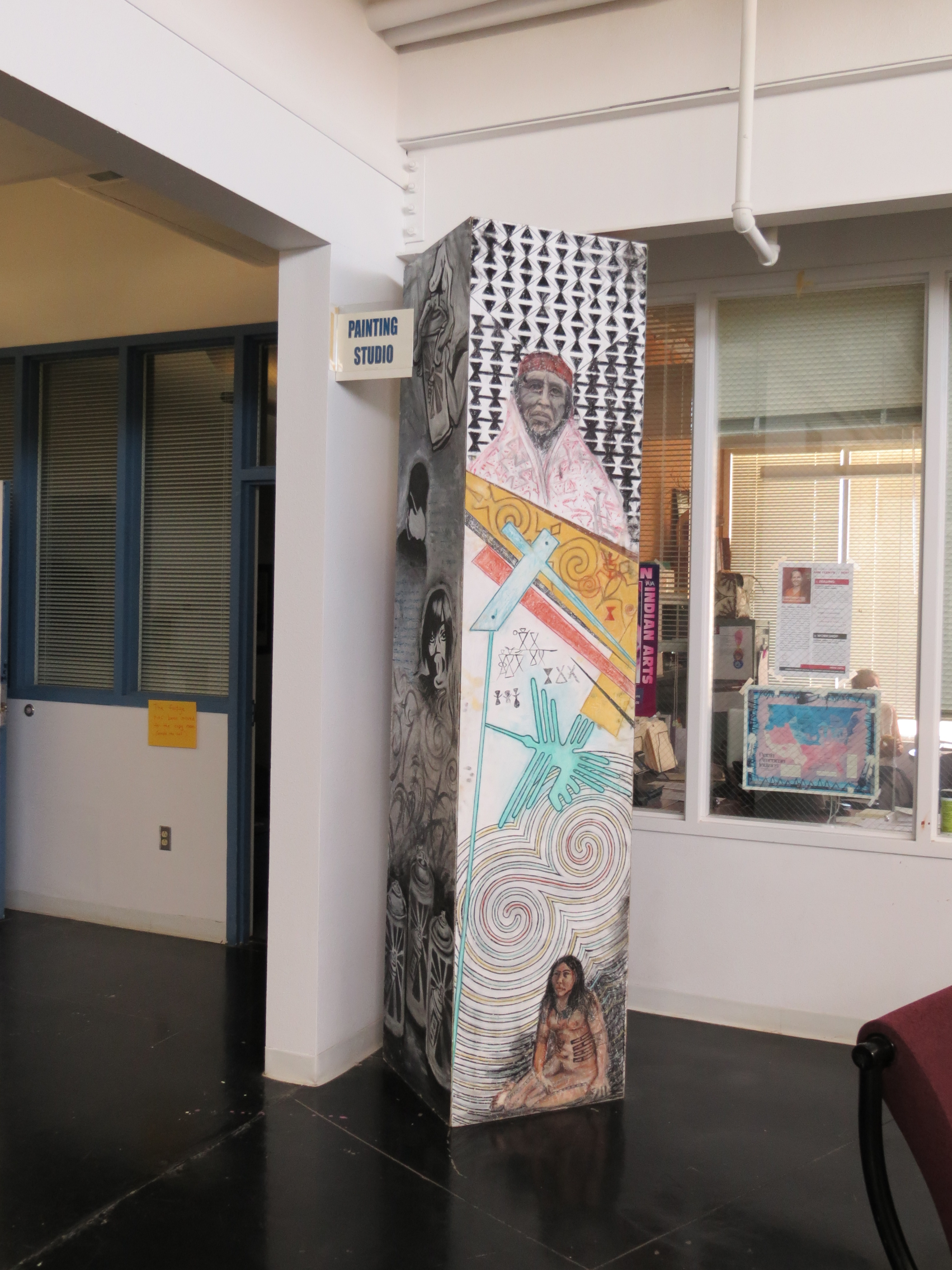
Gallery – Institute of American Indian Arts in Santa Fe, New Mexico

28 Thursday Jun 2012

Posted by danielwalldammit in Bad Photography, Education, Native American Themes, Street Art

≈ 28 Comments

Tags

American Indian, Art, Education, Institute of American Indian Arts, Native American, Photography, Photos, Santa Fe, Southwest

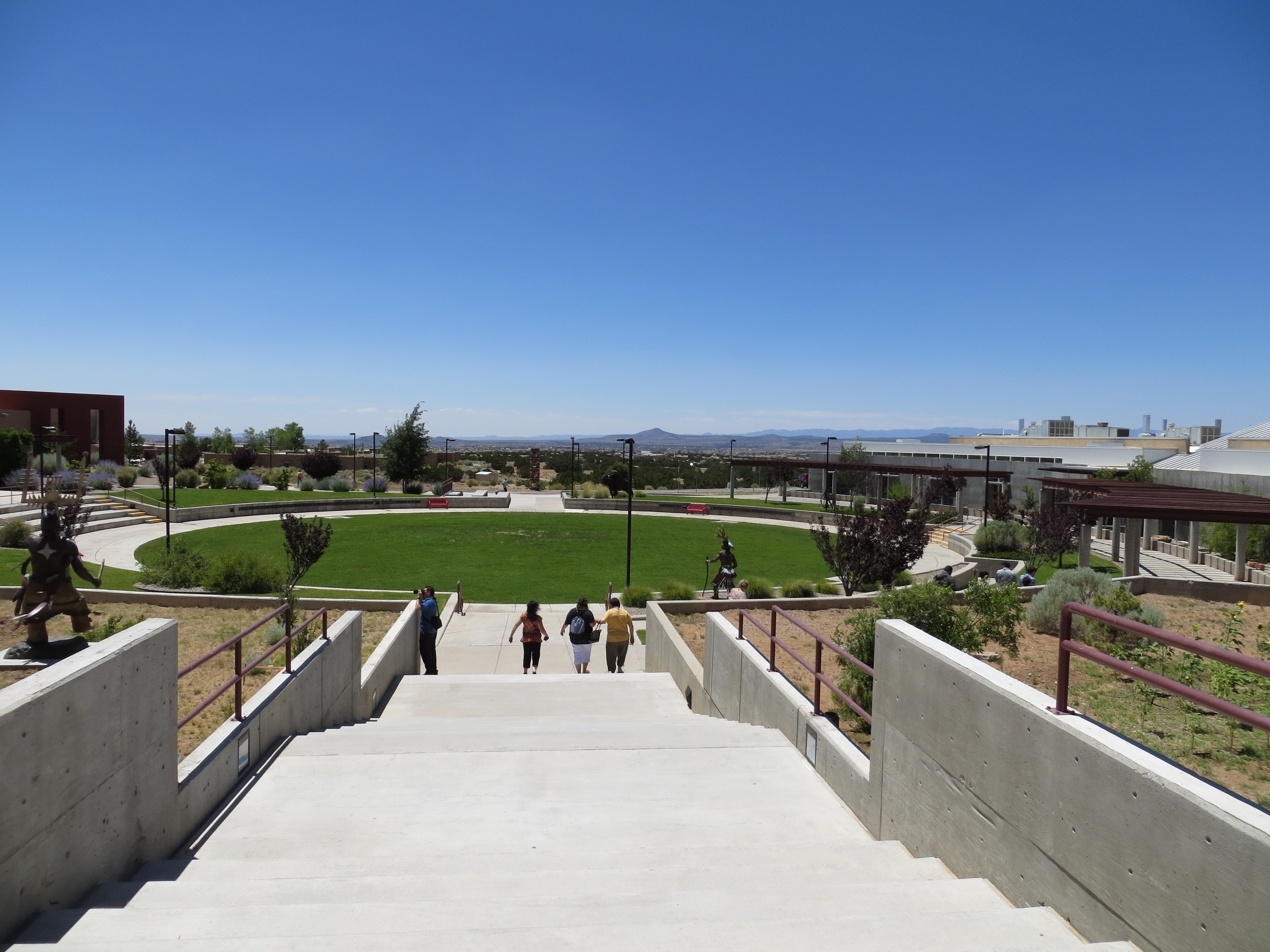
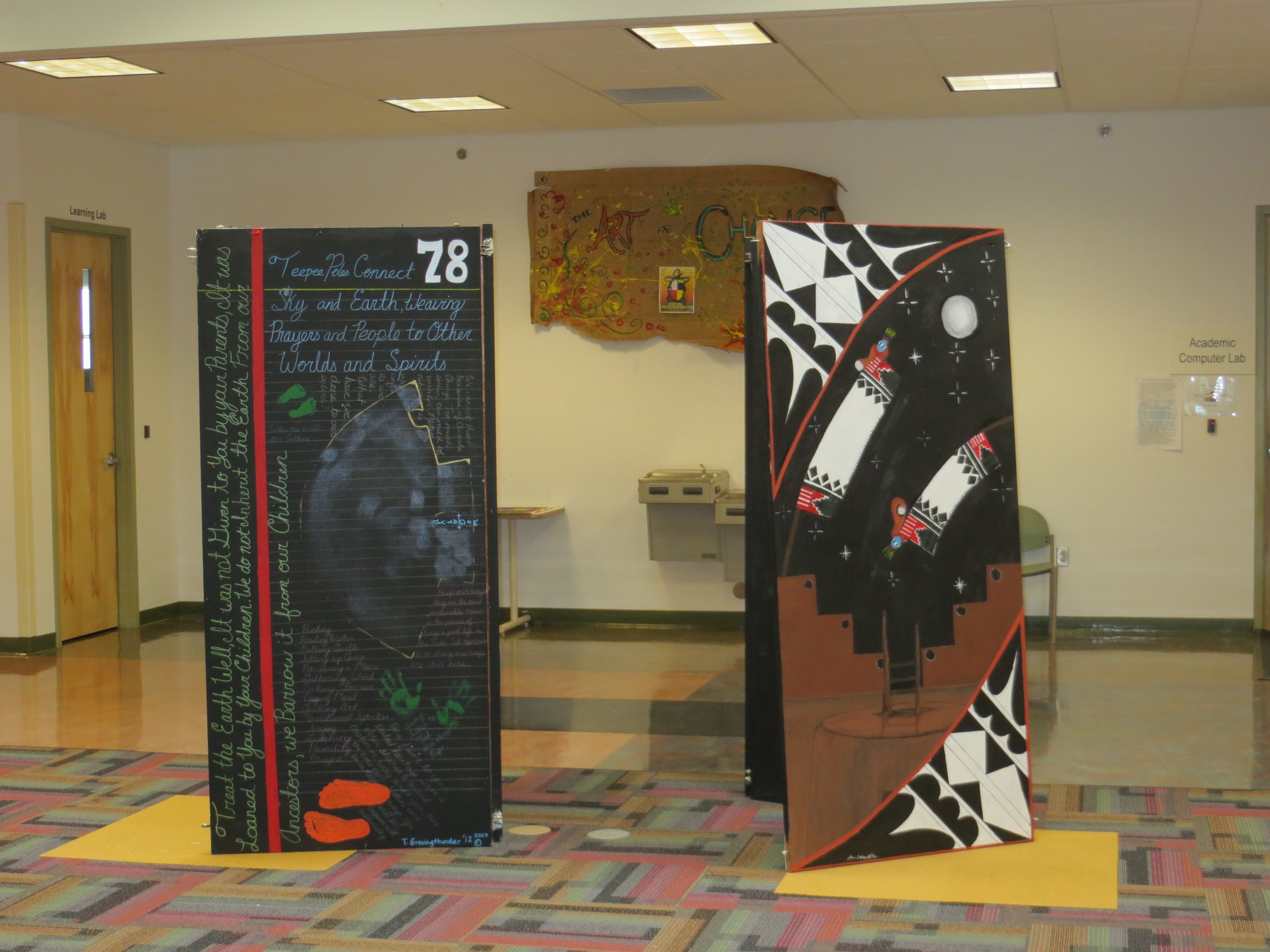
So, I just got back to Vegas after spending a few days in Santa Fe. I was there to visit the Institute of American Indian Arts (IAIA) along with some folks from my own institution and about 5 other tribal colleges. IAIA is a 4-year tribal college, and they have an awful lot going for them. The trip also included a visit to Taos Pueblo, several excursions into downtown, and a trip out to some interesting rock formations. For the present, I thought I would just put up a gallery of the lovely IAIA campus.

Students were gone for the summer, and a number of displays had been pulled down, but the campus still has an amazing variety of art projects. They also have a digital dome, the worlds only fully articulating dome. It hangs from four chains which can be raised or lowered to change the angle of the display. …and yes, students get to use it.

Seriously, there are few institutions in this world about which I can’t think of anything critical to say. In fact, right now I think the list may have one entry.

The Institute for American Indian Arts
Dance Circle, They hold various outdoor functions here (including a Powwow in May)
The IAIA Dance Circle from above.

IAIA Sculpture 1, Bison
IAIA Sculpture 2.
IAIA Windchimes

IAIA, Sculpture 4
IAIA, Sculpture 5

IAIA, Sculpture 6
I don’t know the story behind this one. Something tells me it’s a good one.
IAIA, Exterior Mural 1

IAIA, Exterior Mural 2
IAIA. The couches in the student Learning center beckon students to places where the can get help. …it’s a devious kindness that lies in wait here.
IAIA, Interior Mural 1

IAIA, Sundry art 1
IAIA, Sundry Art 2
IAIA, Sundry Art 3

IAIA, Interior Sculpture 1
IAIA, Display 1
IAIA, Interior Sculpture 2 (This appears to be a play on an old cliche, the image of a dying Indian)

IAIA, Decoration in an Office Window
IAIA, Interior Mural 2
IAIA, Interior Sculpture 2 (It’s a Headdress)

IAIA, Interior Mural 3
IAIA, Ethnobotany Display
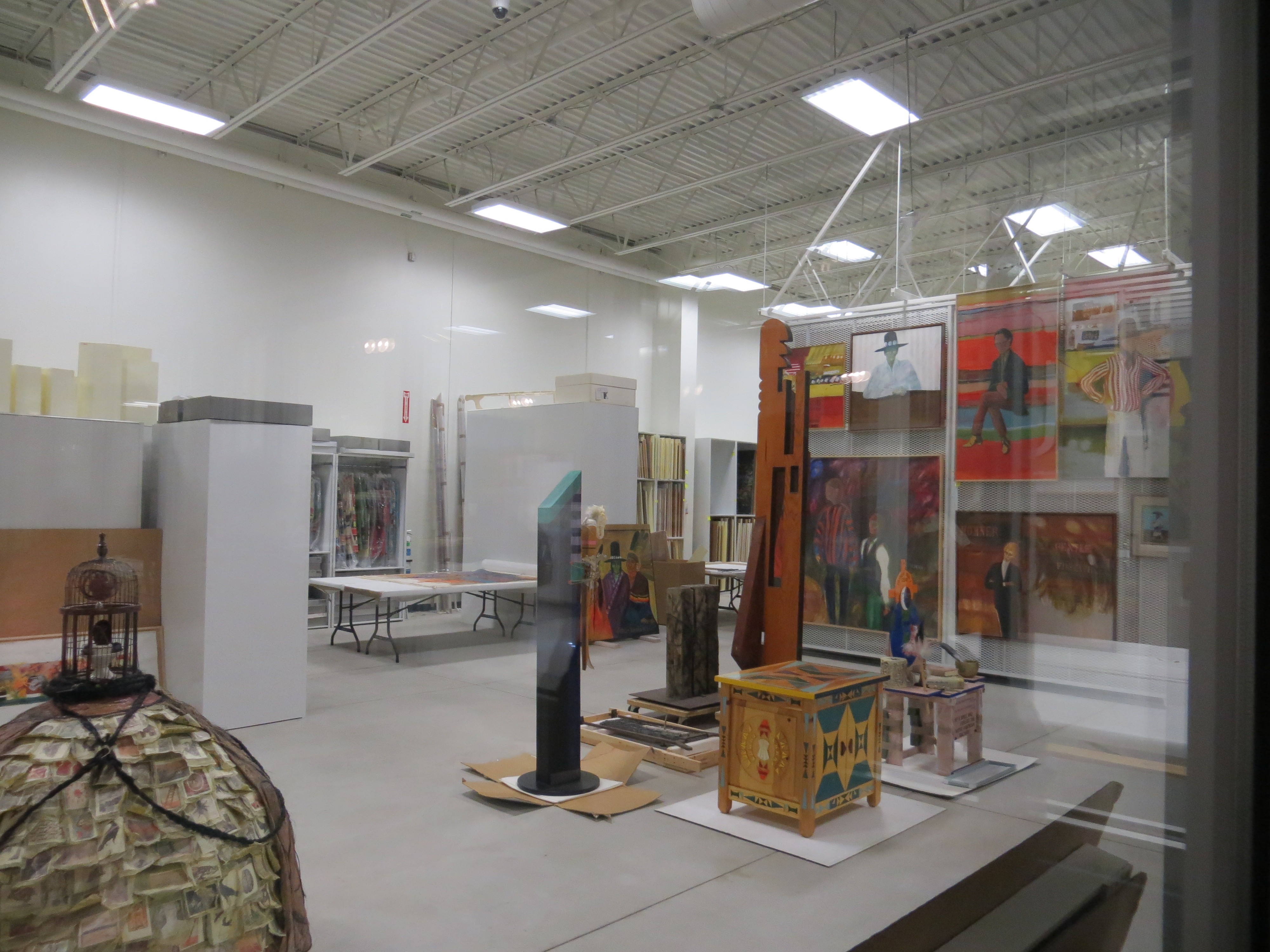
IAIA, Museum Collections 1 (Storage)

IAIA, Museum Collections 2 (Storage)
IAIA, Museum Collections 3 (Storage)
IAIA, Museum Collections 4 (Storage)

IAIA, Museum Collections 5 (Storage)
IAIA, Museum Collections 6 (Storage)
IAIA, Museum Display 1

IAIA, Museum Display 2
(Digital Dome
IAIA, Digital Dome
IAIA, We all have our battles

IAIA, Metalsmithing Teacher’s Office
IAIA, Sundry Art 4
IAIA, Sundry Art 5

IAIA Display 2
Corner Murals
IAIA, Interior Mural 4

IAIA, Exterior Sculpture 8
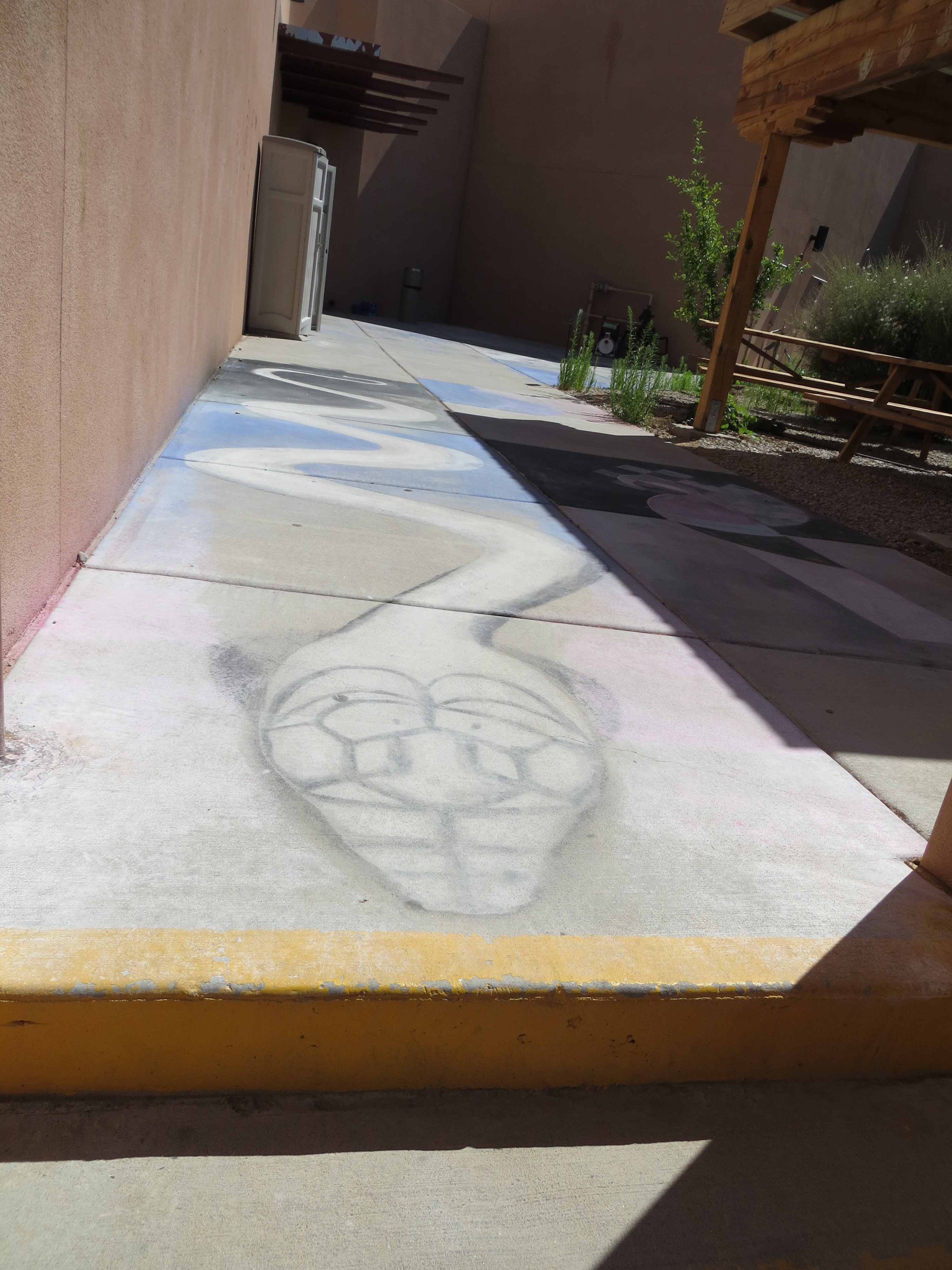
IAIA, Sidewalk Art
IAIA, Sidewalk Art 2

IAIA, Landscaping
IAIA, Just Cool!
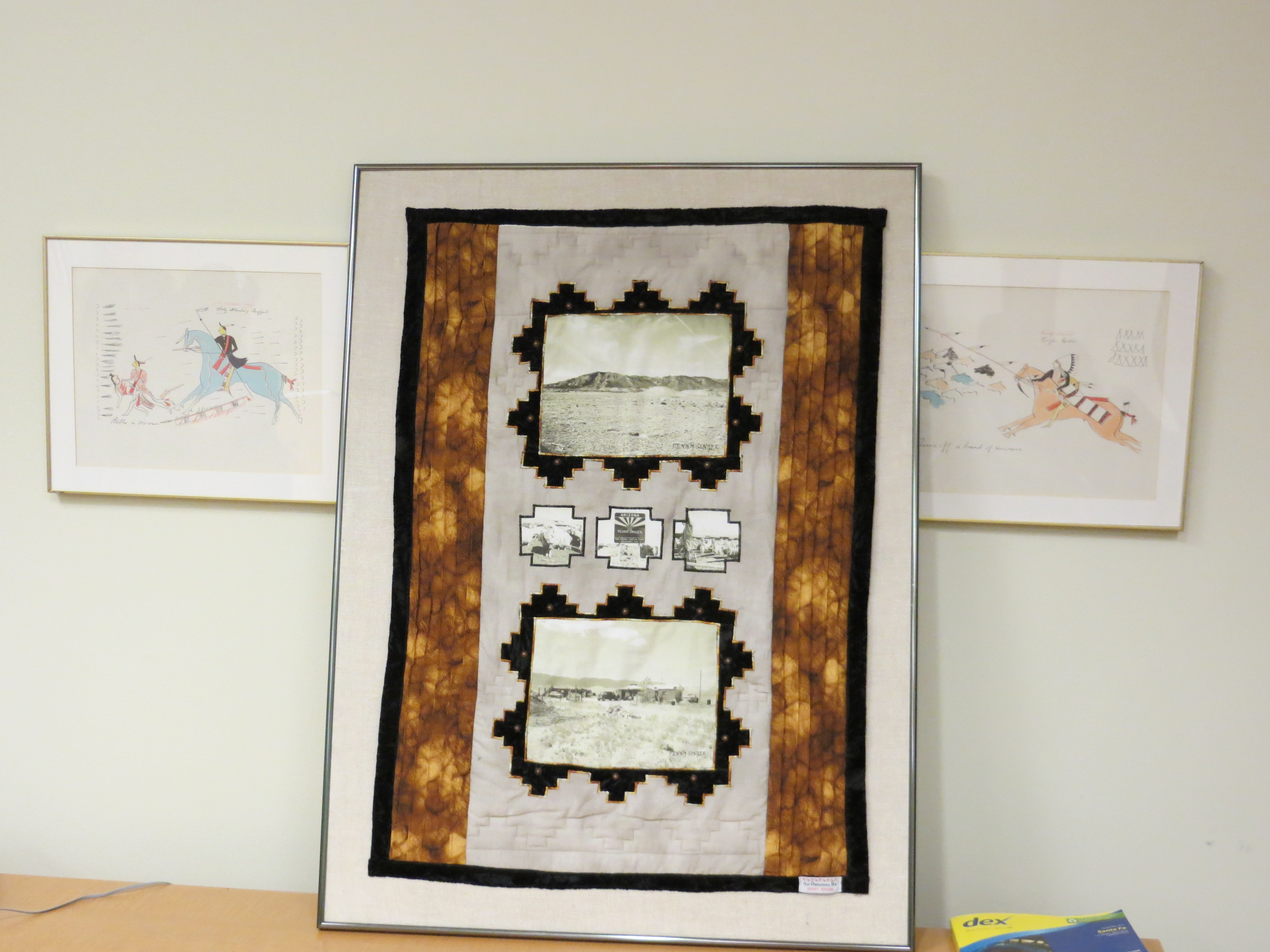
IAIA, Conference Room and Student Art 1

IAIA, Conference Room and Student Art 2
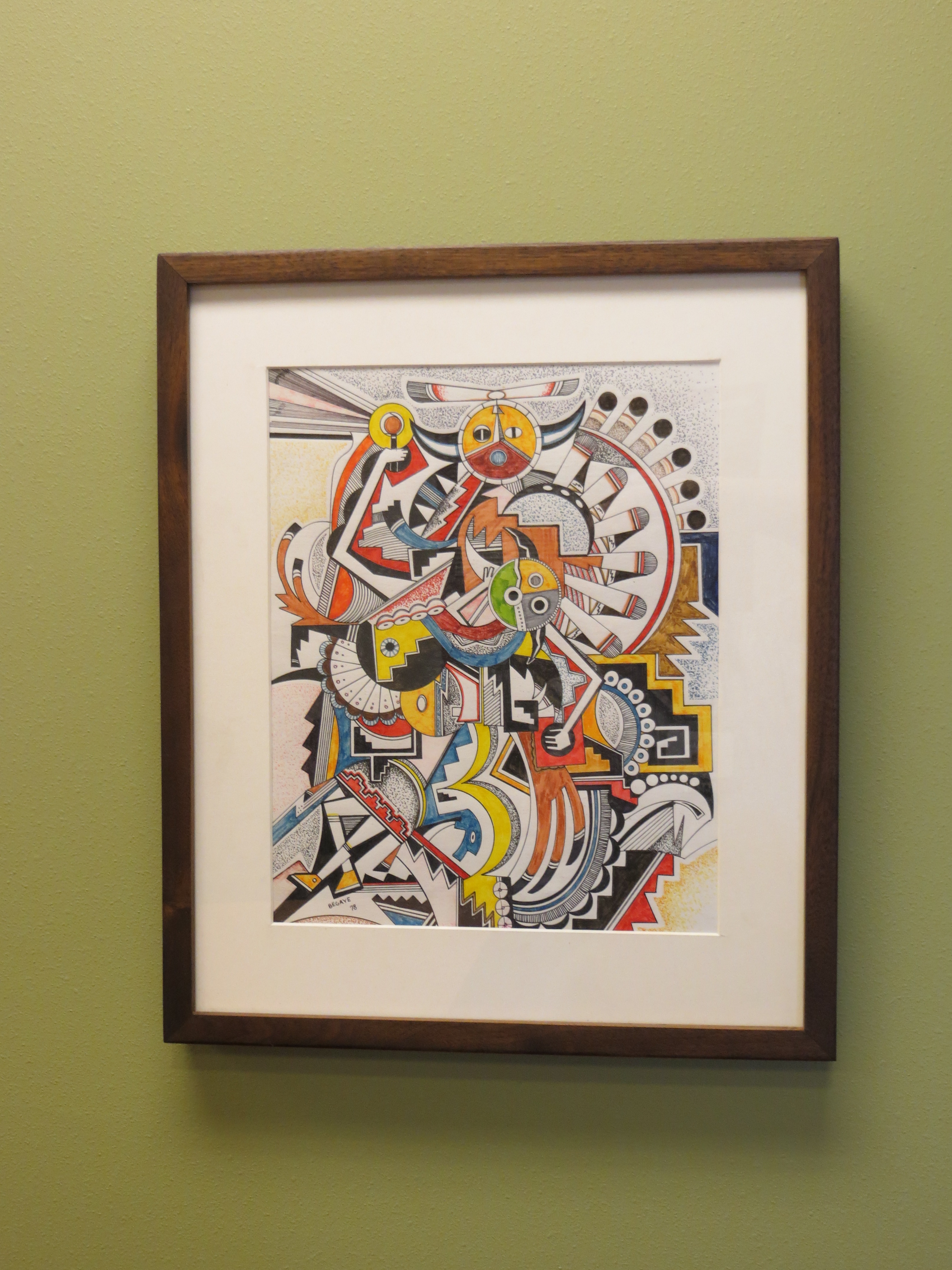
IAIA, Conference Room and Student Art 3
Conference Room and Student Art 4

Lobby
IAIA, The Garden. They use some of this in the cafeteria, which is by the way the most awesome food I have had in a college cafeteria.

71.271549 -156.751450

Share this:

  • Tweet
  • Share on Tumblr
  • Print (Opens in new window) Print
  • Email a link to a friend (Opens in new window) Email
  • Share on Reddit (Opens in new window) Reddit
Like Loading...

Old Gripes, New Tundra, and a Thin Ray of Hope.

10 Thursday Nov 2011

Posted by danielwalldammit in Alaska, Education, Native American Themes

≈ Leave a comment

Tags

Alaska, Arizona, College, Culture, Curriculum Development, Diné, Education, Indigenization, Inupiat, Native American, Navajo, North Slope

How do you adapt course material to the cultural context of a tribal college? I have had enough conversations about that topic in the last couple days to last me a little while. Whether any of them will help or not is of course an open question, but for the moment, I have a little time to reflect on the matter.

It feels like I am never on the same page with others when the topic comes up. Most of the cultural materials I have seen have been saturated with over-extended metaphors, clunky diagrams with over-simplified cultural motifs all over them, and deep philosophical discussions on the English gloss of some native term. When such materials show up, I always feel some trepidation. When such materials show up, I can’t help but want to step outside and get a breath of fresh air.

It’s no big deal, really. I get that feeling in most meetings sooner or later. Why should those aimed at indigenizing education be any different!

But seriously, before moving on I suppose I should say that my ‘exhibit A’ for how not to to an indigenous educational policy would be Diné Educational Philosophy, at least as it was taught when I was at Diné College. At the heart of this policy was a grand metaphor in which call lessons could be divided into four stages of learning, each of which corresponded to four stages of life development, which in turn corresponded to the four cardinal directions, and from there the metaphors multiplied as various aspects of Navajo cosmology could be mapped onto this four-part division. I should say that the whole thing always fascinated me, and there are a lot of interesting details about it that just are not going to make it into this blog piece. In practice, it was an awful clunky system.

Mind you, it was college policy that all classes had to incorporate a methodology based on this metaphor into each of our classes. New full-time instructors took classes in the subject (unless it conflicted with our schedules) and part-time instructors had a training day on it (or at least they were supposed to). So what most of us did was to draw a circle on the board, divide it into a four-piece pie, attach the requisite metaphors, and get on with what we would have been doing anyway. To say that this paint-by-numbers approach to an indigenous education was less than helpful would be putting it mildly. As often as not, it was the more “traditional” students who were displeased to see one  of those circles go up on the board at the beginning of a lesson.

So, leaving my past frustrations aside, how would I prefer to approach this? I’m still relatively new to the North slope, so my learning curve is still pretty steep. And tonight, I think I may have just had a mini epiphany, the kind that advances the process for me. It came while reading the blog, “Stop and Smell the Lichen,” written by Rainey Hopson, a woman living in Anaktuvuk pass.

A wonderful piece entitled, “A Good Person,” had the following observations about how one judges character in a small village:

In the village you know everyone, and everyone knows you. You know their secrets and their deeds of kindness. You know wether they are kind to the elder that needed help walking on slippery ice. You know every mean word that they ever said. You know the bad as well as the good. You always act as politely as you can, because you know you will have to deal with this person for the rest of your life, wether you like them or not. You know, after years of interaction and observing a persons actions wether they are good or not, wether you can trust them for certain things, wether or not this person speaks with authority and knowledge. We see each other as permanent beings in our life, and the job and the money and the physical objects as fleeting insubstantial things. A very different view. A different set of scales.”

There is a lot to think about in this piece, but what turned my head back to the subject of adapting lessons to the cultural context of teaching native students was the realization that this is a critical difference between the great city of Barrow (with its enormous population of around 4,000 people) and the smaller villages with populations in the low hundreds.

To someone living in a modern city, much less a metropolitan center, the difference must seem negligible. Living in a town of four thousand and isolated from any major cities by hundreds of miles of tundra must seem to pose many of the same challenges as living in one with a few hundred people. But there are critical differences.

Barrow does have a small town feel. But here it is still possible, even for long-time residents, to see people one does not yet know, or to choose whether one wishes to deal with at least some people. If the population is small, it is not so small as to render relationships entirely inevitable as the village relationships Mrs. Hopson describes in the passage above. Small wonder that our “village students” often seem to have trouble adapting to life in the big city of Barrow, or (more to the point, perhaps) to life away from home.

Thinking about this, I made a small connection to just one lesson in one of the classes that I teach, an introductory course on cultural anthropology. What part of my anthropology class did I connect to this piece? Well life in the Amazonian rainforest of course.My textbook for that class contains an extensive discussion of the limits of leadership by personal credibility. When leaders lack coercive authority, the ability to influence others depends on the ability to form direct personal relationships with them. Some anthropologists have attempted to put a number on the possibilities, an objective limit to the number of people whose actions you can guide without the ability to issue an order, point to a rule, or hand out a set punishment.

What is the magic number? Pssh! Don’t believe everything I tell you!

…Okay, if you insist. To say this is an oversimplification is an an understatement dipped in some damned weak sauce, but anyway, the limit is somewhere in the low hundreds.

It occurred to me that the difference between the smaller villages and Barrow falls somewhere in the vicinity of that same set of limitations. Whatever the number in question, the point is that there is some point at which a population becomes too big to ensure significant personal interactions with someone in any given household, and THAT means real differences in the social organization of the community. What Rainey Hopson described in her blog is a quality of social life that is present in the smaller of the North Slope. If the Amazonian specialists covered in my anthropology texts are to be believed, it also exists (or existed) in a number of Amazonian societies.

So, in reading Mrs. Hopson’s blog I had a little ‘aha!’ moment about a connection between something my students have not experienced at all (life in an Amazonian village) and something they with which they will most likely have some familiarity. Even those students who have not lived in the villages will likely be familiar with the difference. They will know there is a difference, and those that have lived here all their lives will have formed ideas about that difference. This means that I can use the comparison as a jumping off point for exploring a range of related issues. I can now use the bridge between these topics as a means of helping students understand he foreign topics of Amazonian villagers and in turn use the study of those Amazonian villages as a jumping off point for discussions of local living conditions.

So, now I have a link between something I will teach at least once a year (and the truth is it will come up in other classes). The question is what to do with it? Some might view this as an opportunity to create a lesson plan, some set exercise in which students will be invited to meditate on the linkage. And such a lesson may or may not be a good thing. To me, however, that is not really the point.

For myself, I will address this point in as many different ways as I can in my different classes, asking students a variety of questions, and working to see just how far I can push the connection, just how much it can explain, and where else might the topic lea.

The point is that I need more moments like that, more links between the familiar pieces of life here on the North Slope, and various strange topics that I cover in my classes (many of which are as foreign to my life experiences as to those of my students).

And that is where my revulsion at so much prefabricated cultural literacy comes in. It is a simple question of where you want to put your effort. If I’m a new teacher, just in from off-slope, I don’t need an exercise or a diagram that will draw this connection for me. …one that I can use in my classroom with or without understanding the point at hand myself. I don’t need a master mataphore in which to plug all my regular lessons. What I need to help me do my job is a venue wherein I can learn as much as possible about life here in this area, where I can talk to people from the local communities about things relevant to my teaching responsibilities. What I need is something that helps me form personal relationships with the right folks, learn the right information from them, and put that information into practice in my courses.

And here is where so many educators in this area miss the boat, because it is simply easier (and perhaps more effective when dealing with accreditation agencies) to produce formulaic educational materials than it is to build learning environments. It is easier to dictate cultural content to instructors than it is to facilitate learning that will enable an educator to draw connections between their subject and the cultural environment in which they work.

This is how I actually approached my classes at Diné College, and it is how I hope to approach them here; learning as much as I can about the cultural setting and engaging my native students in dialogue about the issues that affect their lives here.

If circles go on the board, hopefully, it won’t be because they have become a procedural requirement.

Note: The photo is a picture of the village of Wainwright, AK. The Anthropology text mentioned above is John H. Bodley. Cultural Anthropology: Tribes, States, and the Global System. Fourth Edition. (Boston: McGraw Hill) 2005. Rainey Hopson’s blog is called; “Stop and Smell the Lichen.”

http://www.salmonberryblood.blogspot.com/

71.271549 -156.751450

Share this:

  • Tweet
  • Share on Tumblr
  • Print (Opens in new window) Print
  • Email a link to a friend (Opens in new window) Email
  • Share on Reddit (Opens in new window) Reddit
Like Loading...
Newer posts →

Top Posts & Pages

  • An Uncommon Security Guard: Dave Eshelman, AKA 'John Wayne'
    An Uncommon Security Guard: Dave Eshelman, AKA 'John Wayne'
  • Movie Review: The Orator
    Movie Review: The Orator
  • Hostiles and Spoilers: A Magic Studi
    Hostiles and Spoilers: A Magic Studi
  • A Joke from a Bygone Era
    A Joke from a Bygone Era
  • When Sex Falls Out of the Performance
    When Sex Falls Out of the Performance
  • California Admitted as a Free State, ...Oh Wait!
    California Admitted as a Free State, ...Oh Wait!
  • God, This Movie is Awfully Damned Trite!
    God, This Movie is Awfully Damned Trite!
  • An Uncommon Request
    An Uncommon Request
  • Irritation Meditation Number Whatever: I Love the Smell of New Propaganda in the Morning!
    Irritation Meditation Number Whatever: I Love the Smell of New Propaganda in the Morning!
  • A Little Monday Sermon Called,  'Bales of Cocaine'
    A Little Monday Sermon Called, 'Bales of Cocaine'

Topics

  • Alaska
  • Animals
  • Anthropology
  • atheism
  • Bad Photography
  • Books
  • Childhood
  • Education
  • Gaming
  • General
  • History
  • Irritation Meditation
  • Justice
  • Las Vegas
  • Minis
  • Movie Villainy
  • Movies
  • Museums
  • Music
  • Narrative VIolence
  • Native American Themes
  • Philosophy
  • Politics
  • Public History
  • Re-Creations
  • Religion
  • Street Art
  • The Bullet Point Mind
  • Travel
  • Uncategorized
  • Uncommonday
  • White Indians
  • Write Drunk, Edit Stoned

Blogroll

  • American Creation
  • An Historian Goes to the Movies
  • Aunt Phil's Trunk
  • Bob's Blog
  • Dr. Gerald Stein
  • Hinterlogics
  • Ignorance WIthout Arrogance
  • Im-North
  • Insta-North
  • Just a Girl from Homer
  • Multo (Ghost)
  • Native America
  • Norbert Haupt
  • Northwest History
  • Northy Pins
  • Northy-Tok
  • Nunawhaa
  • Religion in American History
  • The History Blog
  • The History Chicks
  • What Do I Know?

Archives

  • December 2023
  • November 2023
  • June 2023
  • April 2023
  • February 2023
  • December 2022
  • November 2022
  • October 2022
  • September 2022
  • August 2022
  • July 2022
  • June 2022
  • April 2022
  • January 2022
  • December 2021
  • November 2021
  • October 2021
  • September 2021
  • August 2021
  • June 2021
  • May 2021
  • March 2021
  • February 2021
  • January 2021
  • December 2020

  • November 2020
  • October 2020
  • September 2020
  • June 2020
  • May 2020
  • March 2020
  • February 2020
  • January 2020
  • December 2019
  • November 2019
  • September 2019
  • August 2019
  • July 2019
  • June 2019
  • May 2019
  • April 2019
  • January 2019
  • December 2018
  • November 2018
  • October 2018
  • September 2018
  • August 2018
  • July 2018
  • June 2018
  • May 2018
  • April 2018
  • March 2018
  • February 2018
  • January 2018
  • December 2017
  • November 2017
  • October 2017
  • September 2017
  • August 2017
  • July 2017
  • June 2017
  • May 2017
  • April 2017
  • March 2017
  • January 2017
  • December 2016
  • November 2016
  • October 2016
  • September 2016
  • August 2016
  • July 2016
  • June 2016
  • May 2016
  • April 2016
  • March 2016
  • February 2016
  • January 2016
  • December 2015
  • November 2015
  • October 2015
  • September 2015
  • August 2015
  • July 2015
  • June 2015
  • May 2015
  • April 2015
  • March 2015
  • January 2015
  • December 2014
  • November 2014
  • October 2014
  • July 2014
  • June 2014
  • May 2014
  • April 2014
  • March 2014
  • February 2014
  • January 2014
  • December 2013
  • November 2013
  • October 2013
  • September 2013
  • August 2013
  • July 2013
  • June 2013
  • May 2013
  • April 2013
  • March 2013
  • February 2013
  • January 2013
  • December 2012
  • November 2012
  • October 2012
  • September 2012
  • August 2012
  • July 2012
  • June 2012
  • May 2012
  • April 2012
  • March 2012
  • January 2012
  • December 2011
  • November 2011
  • October 2011

My Twitter Feed

Follow @Brimshack

RSS Feed

  • RSS - Posts
  • RSS - Comments

Enter your email address to follow this blog and receive notifications of new posts by email.

Join 8,072 other subscribers

Blog at WordPress.com.

  • Subscribe Subscribed
    • northierthanthou
    • Join 8,072 other subscribers
    • Already have a WordPress.com account? Log in now.
    • northierthanthou
    • Subscribe Subscribed
    • Sign up
    • Log in
    • Report this content
    • View site in Reader
    • Manage subscriptions
    • Collapse this bar
 

Loading Comments...
 

    %d