• About

northierthanthou

northierthanthou

Tag Archives: religion

Argumentation and its Narrative Payoff

23 Tuesday Feb 2016

Posted by danielwalldammit in Philosophy

≈ 2 Comments

Tags

Argumentation, Comedy, Language, Logic, Myth, Politics, religion, Rhetoric, Speech Genres

ARnold ConanIt’s been a long time since I read Lakoff and Johnson’s book Metaphors We Live By, but I was recently thinking the internet has surely added a lot of good material for some of its central themes. The the notion of argumentation as warfare comes to mind. In that book, they advanced the notion that a lot of the metaphors people use for argumentation are those associated with warfare and violence in general. This is certainly born out by a number of things you can see on the net.

To see what people say about argumentation on the internet, it would seem that the world of debate is tremendously violent. Everywhere one looks, one finds destruction in the wake of a rhetorical flourish. Case in point? “Pres Obama Brilliantly Destroys a Loaded FOXNews Question” in this clip. Go Bama! But wait a minute? Is that an accomplishment? How do you destroy a question anyway? Loaded or unloaded, do you bash them? Crush them? Hit them with a mega-devestating incinerator photon torpedawhomper Bomb? Not to worry, cause our man Obama gets some here. He totally destroys Trump in this speech. In this video a “60 Minutes Host Destroys Barack Obama On Syria.” “Dawkins destroys Muslim Morality” in this video. But don’t look now! “Rupert Sheldrake Destroys Dawkins Dillusion in Banned TED-x Talk.” …er (sic). Apparently the author of this book is content to merely “refute” him. (Merciful soul!) Bill Nye destroyed Ken Ham. Ken Ham took the Science guy down with him. …totally destroyed. Sam Harris kicks ass here. Ben Carson “demolishes liberalism entirely in this clip from The View.   Hillary Clinton destroys things too! Oh no, Rand Paul destroyed her! He destroyed Donald Trump too! But wait a minute! Donald Trump destroyed Paul. Mutual destruction, just what I like to see in the GOP.

But wait!

Hold the phone.

In this video Cenk Uygur “destroys, degrades, demolishes, desecrates Antonin Scalia.”

Destruction, degradation, demolition, AND  desecration? That’s it. Uyguyr wins the prize. he can just drop the mic now. He totally wins the violence as war meme for the day. Apparently the man is a veritable engine of rhetorical terror. Behold his verbal prowess and tremble!

***

Okay, so I know how to belabor a point, right? Well, I’m just getting started really, so please bear with me. The point here is NOT that argumentation is really a form of warfare, but rather that many of the ideas we attach to argumentation are derived from the world of violence. The metaphors we use when talking about argumentation are, as Lakoff and Johnson pointed out, borrowed from the world of war. We could use other metaphors, and sometimes we do, but when we approach this subject for some reason or another violence just keeps pushing its way to the front of our tropic tool-kit. And really, what else would we expect Violence to do? He’s a pushy bastard. That’s why we call him Violence.

What has me thinking about this today isn’t really the metaphors, per se; it’s the stories used in this case to convey them. Each of the links above provides a little mini narrative describing some argument as though it were a decisive victory in battle. Reading the links in question, we can practically hear the words of Arnold Schwarzenegger as Conan echoing in the background.

To crush your enemies, to see them driven before you, and to hear the lamentations of their women.

Is this what every arguing argutizer really has in mind all along, an effort to achieve a victory so complete he can hear the lamentations of the women mourning his poor vanquished victim?

Perhaps.

But of course we want other things too. We want to show that we are smart. We want others to see our point, perhaps even to accept some truth that we regard as important. Sometimes we may want to learn ourselves, perhaps fleshing out our ideas in the effort to present them to others. We might even hope to learn more from another party by pushing them a little, getting them out of their comfort zone in the hopes that what they then tell us will be a little more worth listening to than what they say when the world feels like a warm moist hug.

Sometimes an argument leaves us with a narrative about conquest and destruction. That’s fair to say. But sometimes it leaves us with narratives about personal transformation, mural respect, learning, realization, …and, oh the fluffy! It burns!!! I’m really uncomfortable pleading the merits of such wholesome and earnest values, but honestly, they too play a large role in the construction of argumentation. Often these values are the more serious reasons for engaging in argumentation. Officially they are the reason we produce arguments in the classroom, for example, though someone might be excused for thinking the real reasons may at times be closer to those of argumentation as warfare. (I’m reminded of references to the ‘silverbacks’ in scholarly halls, people who contribute great thoughts to be sure, but also folks who are prone to pounding their chests and roaring at others whenever they feel the need.) One often feels a certain tension between these motivations, at least I do.

Increasingly I am inclined to think of the tension between different rhetorical styles in terms of the narratives folks hope to tell about the arguments in question. Whether successful or not, at some point an argument passes into discursive history. It then rests in the background of subsequent discourse, taking on the form of the texts, ideas, quotes, and general resources others may use to communicate. They may recount an argument (or perhaps resurrect it in dead horse form just for the purpose of kicketation). As often as not, arguments make their appearance in later discourse in the form of stories like those referenced above. We talk about how Chomsky blew Skinner away on the nature of language (or perhaps he didn’t). We speak of the conflict (‘shedding more heat than light’ as one of my professors put it) between Masrahl Sahlins and Gananath Obeyesekere. Sometimes we simply say that one theory replaced another or that a given approach has become the standard in the field. Whatever else happens in such commentary, it transforms the point of an argument into a moment in a narrative. In many cases, I’ll warrant, this is hoped-for pay-off in producing an argument, that it will pass into the positive themes of a story. Maybe that story will be about how Bob kicked Joey’s ass on a random topic, or maybe it will be a story about how this or that idea came to be the dominant approach to a given subject.

Dominant? I’m back in the language of violence again. er, …perhaps the received wisdom in a given field? Anyway…

My point is that much of what people do in the course of pursuing an argument can be thought of as an effort, not simply to prove the truth of a claim as logicians might tell us, but to lay the groundwork for any number of stories one would hope to see told at some later time. Why do I think this is important? Not so much because it helps us understand the production of any particular argument, and certainly not because it helps us grasp the nature of academic argumentation (or any argumentation conforming to the normative ideals of my logic texts). What strikes me as important about this is that it helps to understand conflict with argumentative styles falling outside those norms. It helps precisely because it denies the centrality of those norms and reminds us that the effort to provide an objective case for the truth of a claim is just one of the many reasons someone might field an argument. He could also do so because he wants to hear the lamentations of your women.

I’m still belaboring the point, aren’t I? Thus far, it feels like I am painting too much in broad strokes, but wait! Oh! There’s another good metaphor for argumentation. Painting!!! Wouldn’t rhetoric be that much more colorful and that much less painful if we could construe arguments in terms of visual media? To make it work though, it needs to be generative. We need to be able to spell out the details of argumentation in painterly terms. Perhaps we could a prepare the canvas in reference to issues of context or outline a theory. Hey! We do ‘outline’ theories. We also sketch out the details of a position, make too fine a point of some things, and even speak of prevarication as erasure. Argumentation as art works. …but apparently not as often as warfare.

Artsy asides notwithstanding, what has me up at this undogly hour is the prospect of looking at the transition from an argument to a narrative in more detail. What happens when a genre defined in terms of premises and conclusions passes into the form of a genre defined by characters, plots, and events? What happens when relevance and logical support is transformed into dramatic tension? Are there regular patterns? If so, can they help us understand some of the details happening on either end of that transition?

There is plenty of interesting material out there. Election year political debates are a great example of this. Candidates do not approach these debates as an academic might. They are not trying to prove a point so much as provide an audience with a reason to vote in a certain way. The candidate with the most compelling argument for a given policy may not be the one who impresses voters the most. A large part of what determines this will be the way the arguments play in subsequent speech. A candidate, for example, who handles the details of a legal issue thoroughly may find himself resonating far less effectively than one who fielded a better sound bite in the same debate.

Obvious example is obvious.

Less obvious material? Internet trolls could perhaps provide us with a fair number of examples, but I think pure trolling is just the tip of the ice-berg. That kid who was too busy laughing at your avatar pic to care that your argument was sound will probably be as proud to tell the story of the encounter as you are, perhaps more so. Likewise the old fart who, hey that’s me! (Nevermind that example, we’re moving on…) If I’m ever tempted to use the phrase ‘social justice warrior’ in contempt it’s when I meet someone who seems more intent on claiming moral high ground over certain issues than addressing any number of objective concerns. You could absolutely prove a point to such a person and the only story they will tell about you is that you proved yourself to be a bad person for doing it. But of course one also encounters plenty of people happy to sneer and smirk at the the discomfort of others, especially anyone stupid enough to give a damn about the underprivileged. To let such a person know that you care about any given issue is little other than to tell them how to hurt you. They too will tell a tale about any argument you have with them. Your own tears (real or imagined) will figure prominently in the stories they hope to tell about you.

Such games aren’t limited to the net, of course, but the anonymity of online discussion seems to bring it all out so much more. It’s part of a general pattern of behavior one sees in public disagreements, especially those involving people from very different walks of life. All too often both parties in an argument will come away thinking they have won. In each case, what they actually come away with is a story that relates their victory. It would be easy to think this is because people simply don’t see their own errors, to think that only one of the stories about a given argument would be authentic, but that’s not usually the case. As often as not, the difference occurs because each side had a different sense of the win-loss conditions to begin with.

Yes, the notion of ‘winning’ an argument is already a problem.

The problem isn’t always that other speaking styles compete with those we might think of as more sound argumentative practice. Sometimes the alternative approaches are genuinely interesting in themselves. For example, sometimes an argument is encased in a legendary narrative, which of course makes possible a kind of indirection or an argument by allusion. One may simply refer to the story as a means of suggesting an argument about real world matters. My favorite example of this remains the separation of men and women in Navajo lore, though I suppose one can also see it in conventions of scriptural quotation among Christians (where it almost always takes on the quality of an authority argument). In each of these cases, the significance of an argument appears to be filtered through the significance of a set narrative that defines and shapes its meaning in ways you couldn’t get from a direct analysis of the argument itself. That argument appears as a brief moment in a stream of storytelling, and for some at least its possible significance will always be tied to that very narrative.

When I used to post on Christian Forums, I recall a number of instances in which the arguments of atheists were described in terms of malevolent supernatural power. Realizing I was among the demons described in these narratives, I couldn’t help but feel a sense of anger and irritation. I also found it fascinating. These were people who measured arguments in terms of spiritual warfare. They measured such arguments in terms of powers not premises and faith instead of relevance. This is argumentation as war, to be sure, but in this case, it’s a war between demons and angels. Where I might havedescribed an argument on that forum in terms of proof and evidence, to the practitioners of spiritual warfare those same arguments became stories of a struggle with evil. In the abstract, that isn’t really too surprising, but I must say that it was odd to see just how that general theme played out in the details.

The Storify app would seem to be relevant to my thoughts at the moment? …Still not gonna use it!

Comedy strikes me as a particularly perplexing example of this problem. Stand-up comics produce arguments all the time, but of course their primary job is still to make people laugh. Often we laugh because the argument seems to make a good point in a clever and interesting way. At other times we may laugh because the argument is clearly absurd or irrelevant. The shear audacity of an obvious fallacy can be damned humorous if one isn’t expected to take it seriously. In such performances, our priorities shift and we may approve arguments which might otherwise seem foolish or genuinely asinine.

My tendency in such cases has always been to assume the comic doesn’t really mean it, but as I get older (and as some of my favorite comics do the same) I find at times these jokes are meant more seriously than I might have hoped. Victoria Jackson would be one particularly morbid example of this problem. What might have been a funny act, at least to some, appears less an less to be an act at all. Honestly, I think the same of Ted Nugent. I know he’s not a comic, but in his old television appearances I can’t help thinking his tone was tongue in cheek, that he at least realized he was taking some liberties with reason. I don’t see that when he speaks anymore. I see the same reckless leaps of lack-logic in Nugent’s speech, but he no longer seems to be in on his own joke. Its as if his reasoning has become so committed to the service of a personal narrative that it couldn’t matter anymore when he is wrong, not even enough for a wink.

How did I get onto Nugent?

Nevermind that!

My point is that in comedy argumentation and jokes are bound up together in interesting ways. Which takes priority over which just isn’t always that clear. Sometimes the strength of an argument carries the joke itself, and sometimes it’s the lack of that strength that makes us laugh. So, which is it in any given case? That’s not easy to tell. The guy laughing beside you may be thinking ‘that is so true’ even as you are busting a gut because it’s completely ridiculous. In either event, we are less likely to evaluate the work of a comedian in terms of the cogency of his reasoning or the truth of his assumptions than the cleverness of his words, his timing, projection, etc. With some clear exceptions, we can see this in the stories people tell about the work of comics.

On the other hand, the work of a good comic does bring us back to the argument as war metaphor. If an act is done right, we might well say of the comic that he killed it! I wonder if stand-up comics ever want to crush their audiences, to see those who came to a show driven before them, and to hear the lamentations of their women?

I’ve probably overdone that line, haven’t I?

Yes, I have.


Share this:

  • Tweet
  • Share on Tumblr
  • Click to print (Opens in new window) Print
  • Click to email a link to a friend (Opens in new window) Email
  • Click to share on Reddit (Opens in new window) Reddit
Like Loading...

Decalogic Schmecalogic!

08 Monday Feb 2016

Posted by danielwalldammit in atheism, Native American Themes, Philosophy, Write Drunk, Edit Stoned

≈ 6 Comments

Tags

atheism, Charlton Heston, Christianity, Decalogues., Memes, Morality, Native Americans, religion, Ten Commandments

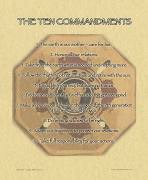
shoppingMaybe you’ve seen it yourself. One of the many pieces of spirit-kitch floating about the net these days is a little gem called The Native American Ten Commandments. It might as easily be labelled an Indian Ten Commandments, or even the Native American Indian Ten Commandments.

…cause extra syllables make it all better.

Either way it’s just the sort of thing that goes with overly staged old photos or pastel-tinged paintings involving beautiful people and lots of feathers. To the left, you can see a poster version of the list. It is short on feathers, but totally cosmic, cause, well, Indians are good for that sort of thing.

…of course.

pst2831ntvam_grandeThat’s just one version of the native decalogue. Here is another! The list looks about the same, but the order seems to be different. Apparently, the order of this list isn’t as important to the Great Spirit as it is to the God of Abraham. I know, I know. Some of you are already saying these are the same thing.

Well maybe.

But seriously, I don’t think so.

See, one of the many things that I typically admire about indigenous peoples is that they aren’t the sort of people who normally produce this sort of nonsense.

…or at least they weren’t historically. (Progress ruins just about everything.)

So what’s wrong with a decalogue of commandery goodness? Well we could start with the commandment theme. It contains a whole host of culture-specific assumptions about ethics most of which seem screamingly out of place here, not the least of them being that ideas about how one ought to behave come from some being of cosmic authority. This is one of many respects in which the politics of kings comes screaming through the metaphors of modern Christianity. Ten commandments construe morality in terms of fealty to a liege-lord who gets to tell us how to behave. Whatever else the Lord is, he’s also a Lord, which is to say neither a Democrat nor a Republican. He tells us what to do, and doing His will is what defines our own morality. That is the logic of the Ten Commandments. This logic gets softened a bit in the Native American variant. We don’t exactly know who is commanding us. It might not even be the great spirit. One imagines, perhaps an elder who wishes us to show respect for the Great Spirit, which is at least a little more egalitarian than a God who  starts his list of does and don’ts with a demand that we pay more attention to him than anyone else. So, yeah, it’s a little more egalitarian.

A little!

Tossing the commandment format out altogether would be a lot more egalitarian.

…and as far as I can tell, a lot more authentic. Maybe I’m missing something, like the history behind this particular decalogue. I wonder who produced it, and just what they hoped to accomplish with it. Suffice to say, it doesn’t strike me as having much connection to the traditions of any particular Native American people. It’s language and its metaphors are those of a generic pan-Indian culture, and in this case a pan-Indian culture as envisioned from the viewpoint of an outsider.

indexDo I object to the principles at stake here? Not particularly. Some of them sound rather cool. It’s the total package that sets off the red flags for me, not the least of reasons being its rather non-native packaging. What bothers me about this is the fact that some people don’t approach ethics in terms of a list of rules, much less imagine them to be the product of a cosmic legislator. The Native American decalogue invites us all to appreciate a kind of difference, but imposes an artificial similarity on the subject even as it pretends to acknowledge that difference.

And why ten? Seriously, can’t your ethics come in five or eights, or maybe even thirty-twos. Actually, I’m not a huge fan of listey philosophicals in general. The numbers always seem arbitrary, and along with that goes a lot of potential for contradiction, and very little potential for substantive understanding. It’s the matter-of-fact nature of such lists that seems to me an invitation to the most mechanical of moral sensibilities.

If there is a good place for such lists, I suspect it’s in less cosmic subject matters. They seem quite appropriate for a professional code of ethics, not the least of reasons that folks don’t usually expect a professional code of ethics to be complete. If your morality is dictated entirely by your job, then most folks would say you work to much. Then we just say; “Thou shalt get a life!”

…and thou better get on it, dammit!

Yes, I know I’m misusing ‘thou’. It’s not the worst thing I will do all day, not even in this post. Trust me!

commandments-colour-smallAnyway, I don’t really mean to pick on native Americans here. They aren’t the only ones to fall for the lure of the decalogue (or perhaps to have someone else fall for it on their behalf). Apparently, there is a Ten Commandments of Colour Theory. Ted Talks seem to have their own, ..um, TED Commandments. Unnamed sources tell me there is a Ten Commandments of Journalism. Actors have their own Ten Commandments. So do bartenders. I would not have guessed, but it appears that even Propagandists have Ten Commandments. Even Nudists have Ten Commandments. Writers have one just for social networking. Is there a secret to a successful marriage? Yep, ten of them. Typography has its own decalogue. Apparently millennials have their own Ten Commandments. Following these Ten Commandments will lead to weight loss. …surely. Computer programmers have a decalogue, though presumably they will work on it sometime next week.

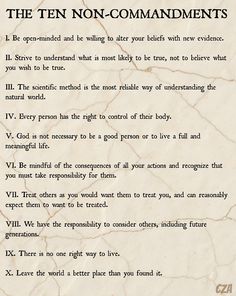
5f3129f4f2e3c4dfde49270fbb5646ccAs I understand it, a list of Ten Commandments for Atheists has been floating around for awhile, though I assume the commandery parts of these Commandments is meant to be taken with a grain of salt. Actually, it seems there are a few decalogues for non-believers out there. Richard Dawkins seems to have produce one such list in The God Delusion. Penn Jillette has one too. I don’t remember reading it, but I’m told Bertrand Russell produced such a list long before him. Hitchens has his own list, so now his face appears on memes beside such a list. The guy at Daylight Atheism on Patheos blogs is not to be outdone. Oh look! The Atheism Reddit seems to have a Ten Commandments.

h9r6qCh…it looks like someone else made that up.

…probably not a fan of the atheist reddit.

Hey, there is a Ten Commandments of Logic! Hm…

There is a Ten Commandments for Musicians. Better yet, Captain Beefheart once produced a Ten Commandments for Guitar Playing. Classical Musicians have their own Ten Commandments. Drummers have a list of Ten Commandments, but honestly, I think they have machines for that now.

How many commandments do RPG Gamers have? Ten. It appears that Gamemasters have ten of their own. Do game designers have ten commandments? Of course. But there is a different one for educational game designers. There is even a Ten Commandments specifically for video game menus. Game Inventors have one of their own.

Do Republicans have their own Ten Commandments? Yes, but apparently they didn’t write it. Or this one. Liberals don’t seem to have written theirs either.  Elizabeth Warren once issued 11 Commandments for Progressives, cause apparently one of them is breaking the frame. Mostly, Republicans and Democrats argue about the Ten Commandments, but let’s not get into that.

…today anyway.

ac95140ca7e38d9210cf7a63357977b6I can only hope that I’ve broken at least three of them, but you can damned well bet that there is a Ten Commandments for bloggers. Actually, there seems to be two of them. No, Three. Make that four. Okay, five. Six? Okay, that’s really enough. No really, stop it! Seriously, stop it! I said STOP!

Someone here says that cats have a Ten Commandments, but they only follow it when they feel like it. Dogs have their own take on the Ten Commandments. I would look for a Ten Commandments of tropical fish, but I imagine it would just go like; “1) Gloop, 2) gloop, gloop.” Horses have a Ten Commandments. There is a Ten Commandments for pets in general.

Oh Hell, I haven’t even got to all the interesting or well known decalogues! This could take all day. …maybe even ten of them. But you get the idea. What’s fascinating about the proliferation of decalogetry, at least to me, is the seeming arbitraryness of the whole thing. Even within the Abrahamioc religions, the Ten Commandments have less to do with actual scripture than pop-Christianity. Compared to its source material, the Ten Commandments are simplified and trimmed of questionable content (one might even say that ‘politically correct’, but of course that phrase is only to be used in attacking liberals). Still, the notion caught on, and caught on so well it just keeps generating itself, time and again. Some of its children are meant to be taken more seriously than others, but an awful lot of people seem to fall quite easily into the notion that ethics begins with a list of ten principle to be declared into existence by someone (with or without the authority to do so).

imagestyIn fact, maybe I’ll have a go at it myself:

The Ten Commandments of Decalogue Building

1: The Number of Commandments Shall be Ten.

2. Ten shall be the number of the commandments.

3) Thou shalt not have 11 Commandments, nor 9, except that…

4 – No Monty Python References!

5 ~ Numbers 2 through 5 are bullshit. Start over!

2b -> …or not to be. That is the question.

3b, Okay, I’ll let you get by with that one.

4b That which is numbered shall be commandments. Simple oughts and issez shall not count in the counting except insofar as one reconstructs them into shalls and shall nots, or even to fuck offs.

5c = No, not fuck-offs, dammit. Do this right!

6 This is hard.

6.2 –You’re wasting time. Do that one over!

6.3 …Okay, …No matter the subject, all that is deemed worthy of the counting shall end in an exclamation mark

6.4 …

6.5 !

7)) All commandments are to be read in the voice of Charlton Heston. Of course!

8:: The decalogue will not be televised.

  • 9 You’re off topic again.

(10) I really can’t do this.

11 Cause my rules go to 11.

Share this:

  • Tweet
  • Share on Tumblr
  • Click to print (Opens in new window) Print
  • Click to email a link to a friend (Opens in new window) Email
  • Click to share on Reddit (Opens in new window) Reddit
Like Loading...

Today’s Kinda Loaded Question – How Do You Read a Bible?

31 Monday Aug 2015

Posted by danielwalldammit in atheism, History, Religion

≈ 15 Comments

Tags

atheism, Context, contextualization, Interpretation, Jesus, religion, Scripture, The Bible, The Holy Spirit

006I always wonder what it means to ‘read the Bible’. The question comes to mind when people tell others to read the Bible; when they say they’ve read the Bible, and when they ask others if they’ve read the Bible. These questions and comments often seem intended to pack an extra bit of punch; something of value always seems to rest on them. But the phrase ‘read the Bible’ could mean anything from reading random passages to a kind of epic cover-to-cover journey. It could also mean reading specific (and very deliberately chosen) sections at length. Hell, it could mean a few other things too, but for me those are the ones that come to mind.

We could also talk about different versions of the Bible. It certainly matters what translation you look at.

The random passage reading approach is always interesting to me.  People using this approach open the book randomly and read what’s in front of them in the belief that they may be led (perhaps by the Holy Spirit) to some significant passage that will help them resolve a question or a problem of some sorts. It’s a fascinating approach to reading, one which gives the process more than a little trace of divination.

…a bit like palm reading or crystal gazing.

Which reminds me that I’ve been told many times one must be guided by the Holy Spirit to interpret the Bible correctly. Whatever else this claim means, it usually also means that my own heathen reading skills won’t account for much on Biblical topics, at least not in the ears of the person telling me this.  This may be a trip down the fallacy highway with stops in the Cities of Petitio and Ad Hominem-Circumstantial. It’s also a world in which spiritual powers and personal authority cut right across basic reading and reasoning skills, and parsing a simple sentence becomes an act of communion.

Do we want to get into the whole question of sola scriptura versus the authority of the Pope or some other religious authority?

No.

I mean, we could, but seriously, let’s not.

I sometimes wonder at the degree to which the simple physical act of opening the book could skew this divination-reading approach to the topic. I mean just how often would you land on one of the first or last pages when you try this? And if you did, would it be due to a conscious effort on your own part or guidance by …you know who?

Ah well!

What actually started me down this path was a slightly more mundane question. Do you read the whole thing or do you simply read parts? People often claim to have read the Bible. I think some folks are just bluffing really. It’s a big damned sleeping pill of a book, and I somehow doubt that some folks could actually make it from cover to cover. A much more interesting question though would be whether or not it’s actually worth it to do that? To just read the Bible cover-to-cover.

Now a serious Biblical scholar might get something out of such a reading; he presumably already knows a lot about the context behind the text. I’m talking about your average Jane just sitting at home with as much knowledge of the text, it’s language, and its relevant histories as regular life gives your average Jane. Okay, I know the average Jane is itself a tricky concept, so let’s just say that in my mind she’s a middle-class American with a high school diploma (and perhaps a college degree). She watches a lot of TV, and she’s been to church a few times in herlife; perhaps she even goes regularly. You can skew this Jane-image in whatever direction you like. The point I’m trying to make is that their daily lives haven’t prepared most people (including I’ll warrant most people who claim to have read the Bible) to understand what they are reading as they go skipping along the pages of scripture. Without giving necessary consideration to the linguistic and literary traditions encompassed in the book as well as the (often murky) historical context in which the texts were written and/or translated, I don’t see how any substantive understanding (inspired or otherwise) could come out of the epic cover-to-cover reading quest. People have enough trouble getting the cool parts from Shakespeare. I somehow doubt this even older text is more transparent on first or even a third pass. No, I can’t see reading the Bible working without a lot of side reading as you go.

And somewhere in there, I can’t help thinking this ceases to be about ‘reading’ and starts to become an exercise in ‘studying’.

I’m not just saying you can do some extra study to get more out of the Bible. What I’m saying is that the exercise of simply reading that text is a rather meaningless ritual without the studying. …Okay, so perhaps the ritual does have meaning (Holy Spirit and all that) but if it does have meaning, that meaning has little to do with what we conventionally understand to come from the act of reading. I am accordingly unimpressed when people tell me that they have read the Bible cover-to-cover. When people tell me they have read the Bible, I figure this is either a hollow exercise or an occult activity with principles quite different from those of conventional reading skills. When someone tells me that they study the Bible, well that might be interesting…

It might be.

An evangelical Christian might be tempted to think that this meditation is a trap of sorts, because of course that process of study leads one to an awful lot of perfectly mortal sources of authority. How can one truly learn the word of God if doing so requires one to make decisions about alternative translations, assess the historical context based on books written by mere mortals (some of whom may not even be Christian!), and make a number of choices oneself about how to frame the context of understanding any particular passage. Far from a discrete project, the effort to study-up on the topic if a potentially infinite regress. Most believers aren’t going to want to do that any more than the rest of us. In any event, this process will never lead to anywhere near the conviction that this or that moral principle is the absolute and unvarnished word of God. For myself, I’m comfortable with that, and I suspect there are a few liberal Christians that could say the same, but I don’t think the notion that the Bible is the infallible word of god survives this process. More to the point, I don’t think that notion survives any serious attempt to think about what it takes to understand an historical text like this.

That’s my spirit-unfulfilled 2 cents.

Share this:

  • Tweet
  • Share on Tumblr
  • Click to print (Opens in new window) Print
  • Click to email a link to a friend (Opens in new window) Email
  • Click to share on Reddit (Opens in new window) Reddit
Like Loading...

Sartre Was Right, But Hell Sometimes Has an Endearing Quality

30 Thursday Apr 2015

Posted by danielwalldammit in Alaska, atheism, Religion

≈ 10 Comments

Tags

Alaska, atheism, Jesus, Philosophy, Prayer, Recursion, religion, Secularism, World View

Atqasuk

Atqasuk

So, awhile back I’m sitting at a booth for the place I work at a largish regional conference. I’m the last guy on the planet that you want to be selling anything (trust me!), but the others are busy with an event of their own. Anyway, I’m sitting at the booth answering questions, handing out stuff, and just generally putting a face behind the table…

…in walks a sweet lady and we talk. She knows some people from up where I live. I don’t recognize most of the names and quietly kick myself for being an antisocial bastard, but otherwise the discussion seems to go well. She is friendly, and I am in a good mood. She eventually decides to move on and we say our goodbyes.

Then she tells me she loves Jesus.

I nod and I smile.

And then she asks me if I love Jesus too?

Kaktovik

Kaktovik

If I answer her with a ‘no’ that can as easily be taken to mean that I think Jesus is a jerk as that I simply don’t believe in him, which is just a bit more harsh than I would normally wish to come across, even if I weren’t the current face of my workplace. This is why the complex question is commonly thought a fallacy, but saying that here isn’t going to help me at all, because this woman is just not going to understand the problem. I’m trying to be honest and nice at the same time, and she’s NOT making it any easier for me.

This is hardly the first time my lack of faith has stuck out like a well hammered opposable digit. The North Slope of Alaska is the Bible Hat of the country and ungodly folk like me are not too common around here. So, I am trying to wrap the conversation up as gracefully as my bull-in-a-china-shop personality can manage, but honestly, professing faith in Jesus is a little more courtesy than I can muster in good faith, so I explain that I am not Christian. I do it as nicely as I can, and it’s certainly  nicer than just saying ‘no’, but well, anyway…

So, the woman says she’s going to pray for me. I am generally happy to take goodwill in whatever form it is offered, so I thank her for this, imagining her doing this kindness on her own at some indefinite time in the future. That’s when she reaches out her hands and adds that she is going to pray that Jesus will come into my life. That’s when I realize she means to do it right then and there, which casts kind of a new light on the subject. Apparently, I am to play an active role in this ritual, minimal as it may be, the point of which is explicitly designed to change my life.

There she is with hands outstretched waiting for me to take hers and commence praying for Jesus work a miracle. And once again, this is a bit more than I am willing to go along with.

One might even say that I was tad uncomfortable.

Wainwright

Wainwright

I wouldn’t call this a teachable moment so much as a learnable moment, because this is hardly the only awkward clash of worldviews to fall into my life in the last year or so, but it’s a good starting point for thinking about them. Both my would-be prayer-partner and I are trying to negotiate a significant difference in world view. Each of us is trying to be decent about it (at least I think we both are). The trouble is that each of us gets our ideas about how to treat people with different views from within our own world-view, so each of us has only the vision of fairness and respect that our own way of looking at things has to offer.

I’ve been as nice as I can be really, short of professing faith I don’t have or inviting faith I don’t want. To ask more of me is an imposition, as I look at it, and I have been as polite as possible about the boundary this woman is testing. Seems fair to me, but of course she has her own views on the situation. If I don’t know the Love of the Lord, surely the most decent thing she can do for me is to try and share that love with me! What decent person would reject such a wonderful gesture? And who could possibly regard her efforts to share the Lord as an imposition? I may sound sarcastic, but in this paragraph at least I do not mean to be. I can easily see the logic of her behavior, or at least a logic that would make that behavior reasonable within the context of the views which have produced it.

Barrow

Barrow

I could come up with less charitable interpretations for both my own behavior and hers, but I’d prefer to afford the benefit of the doubt here and ask that others do the same.

The general public entertains a broad range of ideas about the nature of belief and how to get along with people whose beliefs differ from out own. Some of these meta-beliefs provide us with practical solutions to potential conflicts, and some of these meta-beliefs water down the meaning of the beliefs people profess to have. In either event, much of the way we handle different beliefs is itself a question of sharing at least some of these beliefs about how to handle the difference. Simply put, folks get used to compromise. So, it can be rather disconcerting to meet someone who doesn’t accommodate our own sense of fairness, someone who doesn’t share in the same scripts about how to find a compromise. And that is of course how a godless fellow and an evangelical Christian end up sharing a really awkward moment over the prospect of an impromptu prayer.

Neither my would-be prayer partner nor I meant to be jerks. And still the conversation wasn’t exactly a walk in the park. Ah well!

People are hard.

Share this:

  • Tweet
  • Share on Tumblr
  • Click to print (Opens in new window) Print
  • Click to email a link to a friend (Opens in new window) Email
  • Click to share on Reddit (Opens in new window) Reddit
Like Loading...

The Problem with Deepak.

05 Sunday Apr 2015

Posted by danielwalldammit in atheism, Religion

≈ 5 Comments

Tags

Apologetics, CNN, Deepak Chopra, Faith, Law of attraction, religion, Skepticism, Story-Telling, Unbelief

I consider skepticism a way station on the way to a higher, more fulfilling kind of spirituality.

Millions of people have walked away from organized religion to become more spiritual, not less. They call themselves seekers; their disbelief is a starting point for starting their own investigations.

121021131717-deepak-chopra-medium-plus-169Deepak Chopra wants something from atheists. I somehow doubt he knows what that is anymore than the rest of us do, but his efforts to feign dialogue with unbelievers are among the creepier things one can encounter on the net. If you’re not careful you may encounter his particular brand of word salad on the #atheism hashtag at twitter, but don’t try too hard to make sense of his posts. That way lies madness!

And then the man lays this egg just before Easter weekend. It purports to be a critique of atheism, but of course it isn’t. What Chopra is doing in this post is passing off a story for a criticism, and it isn’t really a story about atheism at all. It is a story about the heroism of those who struggle with skepticism and in the end emerge victoriously with some sort of faith intact. What that belief is, or even how much the hero of his story is supposed to believe it, Deepak does not exactly tell us.

…but they will surely believe in something.

…kind of.

What does atheism have to do with this story, you might ask? Well we are one of the monsters to be encountered along the way. Near as I can tell, we represent a kind of undead to him. We are people who lost the struggle. Somewhere along the way, it would seem that we gave up all religious beliefs and thus fell into outer darkness, condemned to haunt the world of spiritual questers for the balance of our lives (or at least until Aragorn releases us from our obligations after helping in some epic battle). It is our role to test the faithful, and perhaps to bring down the champions of bad beliefs, but not to taken too seriously in our own right. Those on Deepak’s spiritual quest must ultimately get past us.

Okay, so Deepak didn’t mention Lord of the Rings. I know. But what he did do is tell us a story in which organized religion (presumably conservative Christians) and unbelievers both simply fail to meet his ideal. What that ideal is, Deepak doesn’t say. And given insistence that beliefs fall upon a sliding scale, it seems fair to suggest no answer will be forthcoming, or at least that no answer will take the form of a definitive belief. It isn’t a straight forward belief that interests Deepak so much as a kind of belief, well-hedged, and almost asserted, kind of. This belief is something about which people are not quiet certain, but certainly haven’t given up altogether. He can describe this state in the third person, but cannot assert it directly without contradicting himself (or at least in some sense preserving the option to disavow it at some point or another). Thus, it is easier for Deepak to tell us a story about the quest for this state than it is to outline the features of the beliefs in question.

One might suggest that those beliefs reside somewhere in the space between the hard problem of consciousness and current state of modern science. (We could call this land Adignorantia!) Alternatively, it could lie somewhere in that layer subatomic mysticism in which Deepak imagines Quantum Mechanics to have found a playground for wishful thinking. Either way the place in which Deepak’s beliefs reside is a place in which his word salad will actually mean something, so we are invited to imagine. It lies at the end of a never-ending quest, and if we can’t quite make sense of it today, well then that is because we aren’t there yet.

Keep trying!

One of the more amusing aspects of this game is that everyone can play it. The secular version is at least as old as Auguste Comte and his stages of progress (in which man progresses from theology, metaphysics, to positivism in every branch of study). Modern unbelievers play it every time they call religious beliefs superstition or speak of secularism as something that arises naturally from scientific progress. Conservative Christian variations are usually more personal (and hence far more interesting), but of course the tradition goes back far in the history of apologetics. The process of coming to believe appears in the all-better-now narratives of Christians throughout history (from St. Augustine or C.S. Lewis to – I’m sorry about this… Kirk Cameron). Some of these stories are profound. Some of them are damned trite. Either way, it is a common enough gambit for folks to ensnare their opponents in their life stories, the passing off a story in which unbelief appears quite as a matter of fact to be a plague in one’s life for a direct criticism demonstrating that it really is so, or even that it is simply wrong.

…or better yet, that what one actually believes is correct.

Whether it be an argument from personal biography or faith in some universal arch of progress, stories in which the happy ending takes the form of what one chooses to believe are a dime a dozen. If Chopra has anything unique to add to this it is little other than his own unique brand of obscurantism and pseudo-science. he is otherwise, treading in tired waters. It’s an easy enough game to play, telling a story in which someone else’s way of thinking is but a stage on the way to some higher calling. There was a time when I once enjoyed telling such stories mys… Oh wait a minute!

So, in the end what is wrong with Atheism according to Chopra? It would seem to be that it’s simply our role to be wrong in his script.

Meh, …I can live with that.

Share this:

  • Tweet
  • Share on Tumblr
  • Click to print (Opens in new window) Print
  • Click to email a link to a friend (Opens in new window) Email
  • Click to share on Reddit (Opens in new window) Reddit
Like Loading...

A Damnable Dilemma!

25 Wednesday Mar 2015

Posted by danielwalldammit in atheism, Religion, Write Drunk, Edit Stoned

≈ 12 Comments

Tags

Argument, atheism, Atheists, Debate, Ethics, Etiquette, Judgement, religion, Unbelief

Ah to be just as cool as this! (pun intended)

Ah to be just as cool as this! (pun intended)

Seems like I’m always reading (or hearing) that atheists are just as bad as religious folks. This theme has a few funny variants! Pushy atheists are just as bad as pushy  believers, or maybe they are just as closed minded as fundamentalists. Atheists who force their views on others are just as obnoxious as Christians who do the same. You can add all manner of pejorative adjectives and get the same formula. We non-believers always seem to be just as annoying, just as rude, and get on people’s nerves just as bad as those we criticize.

I guess atheists are justazzy people.

…which I suppose is fair enough, but is being ‘just as’ really just as bad as being what others just are when someone accuses them of being justazzy?

It’s a bit of a dark night where all cows are grey, this world of justazzyness. I guess it’s a question of priorities, and some folks’ priorities don’t leave much place for the the particulars. Those without a damn to give will hear only that others talk too much about a thing and not much about what each has to say about it.

…which makes for a whole lot of justazzyness.

It’s easy enough to imagine the possibilities. We’ve all met the assholes who could easily square this equation off quite nicely. But of course, folks complaining about the justazzyness of non-believers are rarely clear about just what it takes to cross the line into justazzyness. It could as easily be a thoughtful question as a bit of snark; just likely to be respectful disagreement as a bitter bit of insult. I can’t help thinking in most cases one enters the land of justazzyness simply by stating a point of view in the first place.

My old high school used to suspend both parties in a fight, even if one clearly attacked the other. To them defending yourself was just as much a ticket to the principal’s office as picking a fight to begin with. This would seem to have been just as much a case of justazzism as the one that has me up at this fricking hour. It’s 3:30am fer fuck’s sake! And my dreams no doubt find this topic just as poor an excuse for keeping them waiting as any other.

Soon, dammit!

Oddly enough I can’t help thinking this justazzitude is just as unfair to the justazzinination as it is for the justazzinandum. It can be no better to be a measure of damnation than it is to be damned for opposing the damnable. But of course that’s just as one would expect it to be. But is it really a forgone conclusion that faith imparts an evil to anything that shares a measure of whatever it may be? Is belief really such a settled villain that the only question left is will it take its foes down with into a Hell of great peevishness? I’m no friend of Jesus, and even I wouldn’t say it’s such a settled matter as that. But who could fault a fellow for saying ‘no’ to anything so easily dismissed as that? Who but someone who really just wants the issue off the table whatever the costs and whatever the merits of the parties involved?

What a damnable state it must be to live in a world where one can neither affirm nor deny with anything more than a shrug and a meh!

It’s a tragic narrative I suppose. An unbeliever confronts the monsters of superstition and gullibility only to find himself becoming a monster in the eyes of a third party. Try as he might, our soldier of reason can only see in those eyes staring back at him  the very darkness he seeks to combat. The vision is painted in broad strokes to be sure, but some eyes don’t see care for detail. There is no argument against apathy. But is faith not the original sin for this tragedy, a seed which bears fruit in the form of a rotten dilemma? One may accept faith, or one may just as well accept it in the very act of denial. Damned if you do and damned if you might as well have anyway.

You have to wonder! Will those impatient souls who make no distinction keep to that mood Saturday and Monday as well as Tuesday and Friday? Or will they take a side some day, perhaps one which is just as present today in their thoughts as it will be when they at least choose to voice it? Not that they will wish to discuss the matter then, now, or ever.

…which is just as frustrating to some of us anyway.

I expect this rant makes just about as much sense as a kite in a bowl of soup, but then again, I’m feeling kinda justazzy tonight.

Anyway, I guess we’ll have cause for concern when folks start talking more about how religious folks are just as bad as unbelievers. When people of great faith are just as bad as us already justazzy folk, then me must have taken a wrong turn after all.

Till then…

Share this:

  • Tweet
  • Share on Tumblr
  • Click to print (Opens in new window) Print
  • Click to email a link to a friend (Opens in new window) Email
  • Click to share on Reddit (Opens in new window) Reddit
Like Loading...

Taking The Piss Out of Magic: What it Isn’t and What it Really Isn’t: Special Gaming Edition

17 Saturday Jan 2015

Posted by danielwalldammit in Gaming, General, Movies

≈ 6 Comments

Tags

D&D, Dungeons and Dragons, Explanation, Lord of the Rings, Magic, Myth, Mythology, religion

flashlightDo you Recall that glorious moment in The Return of the King when Gandalf rides out to save Feramir and the last defenders of Osgiliath! Do you remember when he raised his staff and great light issued forth, driving the ring-wraiths away (along with all the cool kids who happen to be reading these here lines)? Yes, well, I do too. And now that it’s just us nerds here in the blog, let us talk of wondrous things!

What I’m particularly interested in on this dark morning here on the tail end of polar midnight, (aside from hope of a Gandalf-like ray of sun-light soon to come) is the way that some folks (ahem gamers!) often speak of wondrous things in particularly unwondrous ways.

‘Unwondrous’, Yeah, it’s a word now dammit!

One of the amusing meta-games that gamers have been playing ever since those heady-days of the early 80s is the game of “how do you stat that?” You know, the one where you decide that the Arnold version of Conan is a 10th level Ranger with an eighteen double-ought strength, and then your friend says; “hell no, he’s a 12th level fighter and he must have supernatural strength, 20 at least, …probably Chaotic Good alignment.” Then someone says; “You must be nuts! He’s easily true neutral.” …yeah, we geeks do that. Well anyway, the game of “how do you stat that” really comes into its own with magical effects, because stating magic helps to define the fantasy worlds in which the games take place.

In Tolkien’s work, mythic narratives began to flourish in fantasy fiction. Hell, for a time they almost seemed cool, cool enough for the mighty Zep at any rate, and this was a significant part of the cultural background informing the early days of pen&paper RPGs. But here is one moment where the game of stating the worlds around you  (real or imagined) always seemed to fall short for me, at least in mainstream games. They fall short really the minute the game of stat this is played.

You see, to stat that magic moment in which Gandalf drives off the wraiths in AD&D one would need to assign his light effect to a designated spell with a designated range, area of effect, and duration, all defined in precise mathematical terms. The effects of light on undead would be clearly defined in this spell, and the sort of power it takes to generate the spell would also be clearly explained. In Dungeons and Dragons and many of the games emulating it, this wondrous moment in the story becomes a function of well-defined principle of mechanics. One might even suggest that it becomes part of the natural laws of the universe in which the games take place.

Don’t get me wrong, I’ve enjoyed countless hours of manipulating precisely those very mechanics over the game table. Good times! I wouldn’t part with them for brand new vorpral sword. But one thing is definitely lost in this approach to gaming, the wondrous part of it all. The rules of mainstream fantasy games normalize the features of mythic narratives to such a degree that they become a kind of demi-science. One can often see gamers haggling over the details of some magic effect or trying to plot the precise mathematical formula needed to ensure that all the orcs on the game table fry-up in a fireball without singing the elven maiden. in most cases there is nothing mysterious about it; the game rules tell us exactly how this sort of thing works. It’s how many of these games are played.

What is lost in this approach to gaming is the very fluid nature of the narratives which inspire and inform the genre. The Lord of the Rings doesn’t really present us with a theory of Gandalf’s light, not a complete one at any rate. We might imagine that Gandalf is able to generate that effect because of some arcane set of rules we know nothing about, but what we have in a mythic narrative is simply the fact that he did that, odd as the whole thing may be. Wondering just how such seemingly impossible feats actually happen is an important part of the story. Wondering about it at the game table? Not so much. Not usually anyhow.

In the scientization of mythic narratives, the spell-books of classic fantasy gaming effectively set that wonder aside. Of course there are alternative approaches to the subject, such as those used in story-teller games, but my purpose here isn’t to argue for upping the nerditude of the game table. It’s to comment on something I consider an interesting twist in the culture of fantasy gaming, namely its tendency to frame wondrous things in terms of a well defined rational principles.

If fantasy games presents us with a kind of alternative physics, I don’t think this is entirely unique to modern perspectives on the subject. One sees it in references to The Force of Star Wars, and still more so in the theme-killing notion of Midi-chlorians (microorganisms responsible for the force. …blech)! You can see it in old Theosophical notions of an astral plane through which emotional and psychic powers turn out to follow a kind of physics in their own right, and of course you can see it in sundry New Age efforts to turn Quantum Mechanics into a science of wishful thinking. Folks use these notions and others like them to embed the uncanny moments of a narrative in a theory which makes sense of it. In some cases, that is the total point of the theory; in others it is one of many uses.

Time and again, folks seem to want to find a theory in stories made wonderful precisely because they defy our theories, or more importantly, because they defy our normal strategies for making sense of the world. What makes the moment Gandalf creates his light effect compelling is precisely our inability to fully make sense of it. It is likewise with more traditional epic narratives such as the role of missletoe in the killing of Baldur in Norse mythology, the origin of sea mammals in the in Sedna’s severed fingers, or the forceful eviction of the Gambler in Navajo legends (he was fired up into the skies from a great bow). What all of these and so many more narratives share is not conformity to an arcane set of natural laws so much as a momentary in-your-face violation of expectations which people are most familiar.

What I am suggesting here is that the notion of magic isn’t really a part of these narratives, or at least that it is not the key to understanding the momentary occurrence of irrational events. Such stories may relate information about a natural order (such as a world in which the availabile game-animals are in some sense part of an active relationship to Sedna), but that order does not itself explain the moment in which something odd springs forth from her severed fingers. One doesn’t really need a theory to appreciate the story, nor need one assume that the story could be explained by a valid theory. One needs only to understand that the outcome of the narrative will be meaningful. In the interim, the shear absurdity of certain moments in that story is a thing to be savored, not to be explained away.

The notion of magic along with its specific variations come into such stories in efforts to square them with more familiar realities. Where the uncanny can be a feature of such stories, it becomes a bug when one imposes an expectation of literal truth upon it. So, people sometimes concoct a theory to explain the matter. Those theories then provide an ad hoc defense of the uncanny, but they provide us with no real insight into the stories.

Magic, resides in the secondary and even tertiary rationalization of mythic narratives, but there is no reason to believe it resides in the narratives themselves. We needn’t imagine Tolkien plotting an area of effect for Gandalf’s wraith-baffling light ray, nor do we need to ascribe a theory of mythic-evolution to Inuit story-tellers relating the story of Sedna. Hell, we don’t even need to imagine that the Book of Genesis constitutes an attempt to explain the cosmos, though a world touched by the hand of Thomas Aquinas can hardly seem to imagine otherwise.

There is something in the effort to find a theory behind wondrous narratives that does violence to those narratives themselves. Such theories always end up falling short of their source material. It is the same whether we are talking about the hackneyed apologetics of fundamentalist Christians looking to read a consistent theory into all the traditions crammed into the Bible; an anthropologist trying to find such a theory in the oral traditions of some exotic people, or yes; something as simple as a game designer trying to fit a wondrous theme into a rule system. The explanation never quite lives up to the promise of its inspiration.

Sometimes that failure matters more than others, but for me at any rate, the disappointment is a fairly common reaction. What concerns me most nowadays is the ease with which people seem to accept that mythic narratives ought to have a theory behind them, a set of principles that will explain them, even if only in terms of an error. That just isn’t the case. Sometimes this expectation gives us bad story-telling, sometimes it steers a whole generation of fantasy-gamers right past the fantastic part of fantasy, and sometimes it leads people to genuinely misunderstand great texts and brilliant oral traditions. Either way the variety of magics are never quite as brilliant as the stories which inspire them.

Magic itself just isn’t all that compelling, but a man playing chess with a fish or a cat that sings itself into a dragon? No explanations required.

…or wanted!

Share this:

  • Tweet
  • Share on Tumblr
  • Click to print (Opens in new window) Print
  • Click to email a link to a friend (Opens in new window) Email
  • Click to share on Reddit (Opens in new window) Reddit
Like Loading...

Reza Aslan and New Atheists Who Really are Atheists After All

23 Sunday Nov 2014

Posted by danielwalldammit in atheism, History

≈ 8 Comments

Tags

atheism, Communism, History, New Atheism, religion, Reza Aslan, Rhetoric, Richard Dawkins, Sam Harris

r.-aslanThe ongoing feud between Reza Aslan and the so-called “New Atheists” continues to shed more heat than light. The latest round of this race to the bottom of the intellectual barrel comes to us in the form of a Salon piece written by Aslan. It presently carries the provocative title, “Reza Aslan: Sam Harris and “New Atheists” aren’t new, aren’t even atheists.” This is certainly a provocative enough title. I expect I wasn’t the only person to open the page wondering just how he was going to make the case that Dawkins and company aren’t atheists.

Score one for the god of misleading headlines. This article gets its provocative angle compliments of a rather weak bit of semantics:

In fact, not only is the New Atheism not representative of atheism. It isn’t even mere atheism (and it certainly is not “new”). What Harris, Dawkins and their ilk are preaching is a polemic that has been around since the 18th century – one properly termed, anti-theism.

Apparently, the New Atheists aren’t really Atheists because they aren’t merely Atheists. So, if you aren’t ‘merely’ a thing you aren’t that thing at all, at least in the mind of whoever wrote the title of that Salon piece. And if you’re also a thing+ or possess an extra helping of thingatude, then well, no, you’re not even a thing at all.

Out of generosity, I’ll assume it wasn’t Aslan that chose that title.

The larger point of Aslan’s piece is actually to differentiate the ‘New Atheism’ from its predecessors, and apparently to embed that differentiation in a narrative that does as much as possible to discredit new atheism. The resulting sleight of hand is definitely Aslan’s doing. It is admittedly more clever than the title fiasco.

Aslan’s essay includes a rather sweeping narrative about the history of non-belief, touching on a number of things well worth thinking about. Aslan comes to the main point with a fairly specific passage in which he ties the New Atheism with the atrocities of state communism. To get to that point, he first introduces the notion that anti-theism is an intellectual tradition in its own right, one of many twists an turns in the history of unbelief. As strident opposition to religion is what folks like Dawkins, Harris, and the late Christopher Hitchens do, Aslan assures us they are themselves clearly part of the intellectual movement of anti-theism rather than simply part of the traditions of atheism.

I’m not entirely sold on the historicism here, but as far as this goes, it’s probably fair enough to describe these folks as anti-theists. The problem here is what Aslan does with this point. While he works hard to distinguish anti-theism from mere unbelief, Aslan works equally hard to ensure that we do not distinguish intellectual opposition to religion from the slaughter of innocents.

It wasn’t atheism that motivated Stalin and Mao to demolish or expropriate houses of worship, to slaughter tens of thousands of priests, nuns and monks, and to prohibit the publication and dissemination of religious material. It was anti-theism that motivated them to do so. After all, if you truly believe that religion is “one of the world’s great evils” – as bad as smallpox and worse than rape; if you believe religion is a form of child abuse; that it is “violent, irrational, intolerant, allied to racism and tribalism and bigotry, invested in ignorance and hostile to free inquiry, contemptuous of women and coercive toward children” – if you honestly believed this about religion, then what lengths would you not go through to rid society of it?

For an historian of religion this is an inexcusable bit of misdirection. Aslan moves seamlessly from a narrative about the work of Marx and the rise of state communism to a series of direct references to his present intellectual opponents in the New Atheism movement. In fact, he uses the views of today’s New Atheists as a direct explanation for the motivations of Stalin and Mao. It doesn’t get much more anachronistic than that.

…actually, I should say he uses some of their more outrageous quotes. This isn’t really a consideration of their views so much as a bit of quote-mining masquerading as an intellectual criticism, but still the main point is, the man is explaining the actions of communist dictators with random comments from people who weren’t yet a gleam in their fathers’ eyes when Stalin was starving his peasants and Mao was waging his war on sparrows.

In effect, Aslan turns Harris and company into the present-day spokesmen for some of history’s most horrific genocides. This is anachronism at its worst, and Aslan uses it to advance the notion that anti-theism is responsible for the tragic abuses of state communism.

So, there it is. According to Aslan, the Stalinist purges and those of Mao can be understood as a direct reflection of an anti-theistic world view. We needn’t consider the politics of either nation, it’s economic complexities, or any alternative explanations behind these histories. We need only look at what New Atheists have to say today in order to know that this is what the New Atheists is capable of.

…and perhaps to shudder at the prospect.

Ironically, Aslan’s critique of New Atheism smacks of the very inattention to social complexities that many (including Aslan) see in the approach Dawkins and Harris have taken to Islam. It’s an approach that treats doctrines as if they themselves were the driving engines of history, and in doing so it reduces historical knowledge to the needs of present-day polemics. This view of history sees little in human conflict that one can’t fit into a well-written tweet (or perhaps a pithy and misleading title). Aslan has often advocated a nuanced view of the relationship between religion and violence, but with this piece, that nuance might as well be a nine-pound hammer.

Frankly, I’m a bit tired of the battle between Aslan and Harris, et. al. The dialog is increasingly more personal points, and that just isn’t the best role that a public intellectual could play. This a duel between two simplistic views of history, each of them equally myopic. If the rest of us are supposed to choose a side, then I for one will be choosing ‘none of the above’.

Share this:

  • Tweet
  • Share on Tumblr
  • Click to print (Opens in new window) Print
  • Click to email a link to a friend (Opens in new window) Email
  • Click to share on Reddit (Opens in new window) Reddit
Like Loading...

A Rambling Little Bit About the Consolations of Free Market Fundamentalism

14 Friday Nov 2014

Posted by danielwalldammit in Politics

≈ 7 Comments

Tags

Founding Fathers, Free Market, GOP, Ideology, Just World Hypothesis, Libertarianism, Politics, religion

hqdefaultAt what point does hope of success in world of rigged economic competition become indistinguishable from belief in the rewards of heaven? At what point does hope for a better life in this world become no more meaningful than hope for a better life in the next?

We’ve all heard the old historical narratives about medieval peasants living in the hope of an afterlife. The point of that narrative is usually some sort of contrast with a more open society, one in which upward social mobility is actually possible in THIS life. It’s a tidy narrative, perhaps a bit to tidy.

How many Americans, I wonder, will live their entire lives in trailer courts and small apartments, all the while counting themselves so much better off than those peasants?

Because opportunity!

Hell! Who could fault anyone for living with hope? Assuming of course that hope doesn’t interfere with their sense of reality, I sure wouldn’t. Unfortunately, the American dream is slipping further and further from our grasp. Ironically, the more distant that dream gets the harder some people fight to hold on to the illusion that it’s still a viable prospect in our current social order.

Heaven forbid a national healthcare system! Damn the welfare queens! The Hell with minimum wage, and let’s privatize Social Security!

I get why some of the economic elites would make such noises, but the every day believer in the free market is often a mystery to me? It seems that such people don’t just want success; they want it on terms which make it incredibly unlikely to ever happen. And in the meantime they reject all manner of public assistance, much of it critical to their own health and welfare. It isn’t even enough to survive; one must survive under the present terms.

In this religion, ‘socialism’ is the Devil, and one of its magic powers is an ever broadening semantic domain. It is increasingly the root evil behind social institutions that have stabilized the American economy for nearly a century. But what makes this rather a-historical devil so powerful in the minds of the average trailer-court Republican? I can’t help thinking it’s in some sense an affront to the just world hypothesis, that vague sense that the world is basically good. If that world is good, then any righteous American ought to be able to make it on his own, so the thinking appears to go. In the end it’s the promise of a certain type of success these folks cling to so desperately, one which is no less fantastic than any waiting beyond the Pearly Gates. The success they hope for is not just paid bills and a good meal on the table; it’s a success that vouches for their own moral superiority, and it is a success promised only in a world that will separate the righteous from the unworthy. It is a success held in the minds of the faithful with all the power and desperation that one could ever find among the faithful of any church. Only a dark force would suggest that this hoped for scenario wasn’t actually going to happen, and only such a dark force could be blamed for the reason it hasn’t so far. The only reason the system hasn’t worked up to this point is that someone, some dark power, has compromised the system. And so people falling further and further behind the great contest for sucess they believe in so much work ever so hard to remove one more piece of the safety net that keeps them in the game at all.

…and in some instances, keeps them alive.

What has me thinking about this was a recent reminder that ‘Democracy’ was one of the great fears plaguing some of our nation’s founding fathers. The fear that the masses would, if given the chance, vote away the privileges of the wealthy and redistribute that very wealth was quite real for the likes of John Adams or even James Madison. I wonder if these men could ever have envisioned a nation of people so content to wait for their boat to come in, so pleased to work away their lives in the hope that the labor would somehow return far more than it ever had before.

If and when the ‘job makers’ ever deem it the right time!

It’s no small wonder that so many who believe in the promise of eternal heaven would also believe in that of Free Markets. It seems that the gods of each work in mysterious ways.

But one day!

Share this:

  • Tweet
  • Share on Tumblr
  • Click to print (Opens in new window) Print
  • Click to email a link to a friend (Opens in new window) Email
  • Click to share on Reddit (Opens in new window) Reddit
Like Loading...

God, This Movie is Awfully Damned Trite!

22 Sunday Jun 2014

Posted by danielwalldammit in atheism, Religion

≈ 13 Comments

Tags

Apologetics, atheism, Christianity, College, Education, Film, God is Not Dead, Movies, religion

gods-not-dead-prof-and-studentThe most fascinating thing about the movie ‘God is Not Dead’ isn’t the conflict between atheism and Christianity; it’s the tension between narrative and argumentative styles of presentation. The premise for this film is simple enough; an atheist professor demands that his students sign a statement to the effect that God is dead. When a student refuses to do so, the professor commands him to prove that God exists in a series of 3 debates to be held in the first few weeks of class. Failure, it is clear from the outset, will mean an ‘F’ for the class, but the student’s only other option is to sign the statement. This a clash between Christianity and atheism to be sure, but its also a clash that takes the form of a debate, and the sort of reasoning that takes place in a debate changes a great deal when it is reframed in narrative form. In God is Not Dead, arguments become a story, and the premises and conclusions of those arguments become events in a storyline.

If the main characters appear as proponents in a debate between a College Professor (Jeffrey Raddison played by Kevin Sorbo) and a college student (Josh Wheaton played by Shane Harper), they are also antagonists in a life or death struggle quite familiar to movie-goers of all faiths and none. Josh is the underdog fighting for his faith; Radisson is a monster who torments his students without mercy. This is David and Goliath to be sure, but this time Goliath wields a grade-book, and David goes to the library. The David and Goliath aspects of the story are not an accident, and the film-makers were clearly trying to make a statement about the treatment of Christians in academia.

The opening scenes of God is Not Dead drive home just how important winning the debate will be to Josh Wheaton. In the event that he loses that debate, Josh will get an ‘F’ in the class, and (as his high-school sweetheart reminds him) that will be the end of long-term career plans. To make matters worse, she regards his willingness to risk his own future as a betrayal of the future they have planned together. She will thus leave him if he goes through with the effort. Josh’s pastor doesn’t help matters much by telling Josh his own actions may be the only exposure his classmates will have to Christianity. So, the stakes are awfully high. Just as David, Josh is fighting not only for his own future, but also for the good of his people (in this case, his classmates). This might seem like a heavy load to put on the shoulders of a college freshmen, but they would be quite familiar to many Christian apologists. This is not just debate over the the truth of a given claim; it is a battle for the souls of all involved.

So, this story about a classroom debate is really a sort of war-story. And of course it will be told in three acts. It should come as no surprise that the villain will be vanquished in the end, though it may come as a surprise just how completely vanquished (and yes, saved) this villain will be.

The first act of the story is largely about Josh’s decision to accept the debate in the first place. His preparations are unimportant, as is the actual argument he produces when the time comes. Josh begins this first round of battle with an argument to the effect that the Big Bang is consistent with, and even requires, the existence of a creator. Radisson simply tells him that according to Stephen Hawking it doesn’t, going on to ask if Josh thinks himself smarter than Hawking. Thus ends the first debate with an outcome that should surprise no-one. What kind of principle villain gets his ass kicked in the First Act of the story? Certainly not this mean-spirited professor!

Still, the first debate does establish a bit more than the fully expected set-back for our underdog Josh. Already, a few patterns begin to emerge from the vision of academic dialogue presented in this film. Both participants rely heavily on appeal to authority, even to the point of simple quote-mining. Both parties will also spend a significant amount of time on science, and in particular the science of cosmogony. The end result is a rather sophomoric vision of philosophy in which the battling heroes themselves pay homage to their own heroes in lieu of exploring the full arguments, all the while coming across as arm-chair scientists rather than participants in a philosophical exchange. To say that this is an impoverished vision of philosophy would be putting it mildly. To say that it is a vision common among Christian apologists would be putting it closer to the point.

In the second debate, Josh returns with a source describing Hawking’s own arguments on the origins of everything as circular. Pressed upon the matter, he reminds Professor Radisson that Hawking himself has suggested that philosophy is dead. Josh goes on to raise familiar concerns about abiogenesis in evolutionary theory.  Hawking was of course talking about precisely this sort of second-hand science discussion, but most importantly, playing the anti-philosophical card in this scene raises the dramatic significance of the debate. A humiliated Radisson has little to offer in response, opting instead to mock Wheaton after the other students have left the room. It is an angry confrontation, and in his anger Radisson reveals his greatest weakness. Asked by Josh, what happened to make him so angry, Radisson recounts the story of his own mother’s death and the prayers he offered as a twelve year old in the hopes she would live. This is an interesting speech, because it is one of the few times when the professor is allowed to be something other than a foolish caricature. He ties his own pain in the loss of a loved one to the outrage that some divine plan could ever account for it, and for just a brief moment Radisson seems both eloquent and human.

The final debate is all about the argument from evil, the notion that the existence of God as he is commonly envisioned in Christianity cannot be reconciled with the existence of suffering. Both parties advance arguments on the topic, but the most significant feature of this scene is the increasingly emotional tone of the discussion. Josh can feel the threat to his grade and his ambitions and Radisson can feel the growing threat to his own credibility. Their voices grow louder, and their demeanor more intense. As both parties become increasingly excited, Josh asks Radisson in front of the class to explain why he hates God so much knowing that science supports His existence. In the heat of the moment, Professor Radisson answers Josh in precisely those terms, proclaiming that God took everything from him.

One could chase ugly rabbits down so many holes in this film, but that single response from Professor Radisson really is the core message of the film. It is also the most disturbing thing about the film. For all it’s many simplicities and distortions, God is Not Dead is first and foremost a statement to the effect that atheism is really about hatred of God rather than disbelief.It is a statement that arguments against the existence of God (and counters to arguments in favor of His existence) are simply deceitful rationalizations. The argument from evil is, as this film would have it, less an argument about the (in)consistency of someone’s thoughts about God than an expression of hatred aimed directly at God himself.

In this plot twist, the very topic of debate simply vanishes in front of us, and the story sets all questions of god’s existence aside. Radisson is not really an unbeliever at all; he is a rebellious child (which might help to explain his childish antics). The storyline of the film thus overtakes any effort to address the issues at hand, presenting us with a narrative in which non-believers produce arguments only in the service of venting their own pain. One does not resolve their questions by rational rational argument so much as a kind of spiritual counseling. This counseling is presented still more clearly in one of the films many side-stories, that of a snarky atheist blogger who enjoys poking wholes in religious thought (…hey!). The script-writers must have found it quite amusing to pre-empt a decent portion of their future critics with this particular story-line, but to get back to the point, Amy Ryan (played by Trisha LaFache) learns that she is dying of cancer, a fact which throws quite a curve ball into her life of internet snarketry. When she finds her way backstage at a Christian concert, all of her arguments crumble quite completely as the drummer for the Newsboys suggests that she had actually come to their concert, not to mock them, but so so that they could help her find faith.

…and the subplot ends with a lovely group prayer.

The Newsboys concert fills the final moments of the film with enough exposition to compete with the worst papers from a creative writing workshop. It includes an appearance from Duck Dynasty’s Willie Robertson who cheers on Josh and invites the concert audience to send out a text telling everyone they know that God is Not Dead. This is a message clearly intended to break through the fourth wall and reach into the lives of audience members in the theaters. So I suppose it is no small wonder that evangelical Christians of all shapes and sizes were indeed pushing this film for awhile. I lost track of the number of people who told me that I really should watch the film, assuring me that even non-believers would find it thoughtful and enjoyable. Most seemed quite prepared to concede the one-sidedness of the story-line, even to accept that Sorbo’s character was a bit over the top (it was in fact, well out of earth orbit). What many of those urging this film on others seem unaware of is just how demeaning the story really is for those of us who don’t believe in God. It isn’t just that this film portrays an atheist in an extraordinarily bad light, or even that portrays academia in general as a place filled with cruel and sadistic professors just looking for an excuse to hurt those of faith. What this film does is to empower a dismissiveness that undermines any subsequent dialogue. It encourages believers to think of atheists (and skeptics in general) as people who do not understand our own motivations. It encourages Christian apologists to think of our words as unworthy of consideration, mere diversions from a spiritual tragedy which they understand and we do not.

It is a deeply dehumanizing vision of atheists that this movie presents. For me at least that vision is a conversation-ender; it is not the opening stages of a promising dialogue. As with so much of what passes for Christian apologetics, what is so unfortunate about this film is the degree to which it poisons its own well. In the end, this film does little to engage those of us who don’t share the Christian faith. It never really takes us seriously to begin with, and it never takes seriously the possibilities of dialogue between believers and non-believers.

Its fans should not be surprised to find many of us will respond in kind.


Share this:

  • Tweet
  • Share on Tumblr
  • Click to print (Opens in new window) Print
  • Click to email a link to a friend (Opens in new window) Email
  • Click to share on Reddit (Opens in new window) Reddit
Like Loading...
← Older posts
Newer posts →

Top Posts & Pages

  • I'll Just Leave This Here
    I'll Just Leave This Here
  • A Joke from a Bygone Era
    A Joke from a Bygone Era
  • An Uncommon Security Guard: Dave Eshelman, AKA 'John Wayne'
    An Uncommon Security Guard: Dave Eshelman, AKA 'John Wayne'
  • Great Movie Villains, Volume IX: That Witch With a Bow!
    Great Movie Villains, Volume IX: That Witch With a Bow!
  • Arts District, Los Angeles
    Arts District, Los Angeles
  • An Ironic Beating
    An Ironic Beating

Topics

  • Alaska
  • Animals
  • Anthropology
  • atheism
  • Bad Photography
  • Books
  • Childhood
  • Education
  • Gaming
  • General
  • History
  • Irritation Meditation
  • Justice
  • Las Vegas
  • Minis
  • Movie Villainy
  • Movies
  • Museums
  • Music
  • Narrative VIolence
  • Native American Themes
  • Philosophy
  • Politics
  • Public History
  • Re-Creations
  • Religion
  • Street Art
  • The Bullet Point Mind
  • Travel
  • Uncategorized
  • Uncommonday
  • White Indians
  • Write Drunk, Edit Stoned

Blogroll

  • American Creation
  • An Historian Goes to the Movies
  • Aunt Phil's Trunk
  • Bob's Blog
  • Dr. Gerald Stein
  • Hinterlogics
  • Ignorance WIthout Arrogance
  • Im-North
  • Insta-North
  • Just a Girl from Homer
  • Multo (Ghost)
  • Native America
  • Norbert Haupt
  • Northwest History
  • Northy Pins
  • Northy-Tok
  • Nunawhaa
  • Religion in American History
  • The History Blog
  • The History Chicks
  • What Do I Know?

Archives

  • December 2023
  • November 2023
  • June 2023
  • April 2023
  • February 2023
  • December 2022
  • November 2022
  • October 2022
  • September 2022
  • August 2022
  • July 2022
  • June 2022
  • April 2022
  • January 2022
  • December 2021
  • November 2021
  • October 2021
  • September 2021
  • August 2021
  • June 2021
  • May 2021
  • March 2021
  • February 2021
  • January 2021
  • December 2020
  • November 2020
  • October 2020
  • September 2020
  • June 2020
  • May 2020
  • March 2020
  • February 2020
  • January 2020
  • December 2019
  • November 2019
  • September 2019
  • August 2019
  • July 2019
  • June 2019
  • May 2019
  • April 2019
  • January 2019
  • December 2018
  • November 2018
  • October 2018
  • September 2018
  • August 2018
  • July 2018
  • June 2018
  • May 2018
  • April 2018
  • March 2018
  • February 2018
  • January 2018
  • December 2017
  • November 2017
  • October 2017
  • September 2017
  • August 2017
  • July 2017
  • June 2017
  • May 2017
  • April 2017
  • March 2017
  • January 2017
  • December 2016
  • November 2016
  • October 2016
  • September 2016
  • August 2016
  • July 2016
  • June 2016
  • May 2016
  • April 2016
  • March 2016
  • February 2016
  • January 2016
  • December 2015
  • November 2015
  • October 2015
  • September 2015
  • August 2015
  • July 2015
  • June 2015
  • May 2015
  • April 2015
  • March 2015
  • January 2015
  • December 2014
  • November 2014
  • October 2014
  • July 2014
  • June 2014
  • May 2014
  • April 2014
  • March 2014
  • February 2014
  • January 2014
  • December 2013
  • November 2013
  • October 2013
  • September 2013
  • August 2013
  • July 2013
  • June 2013
  • May 2013
  • April 2013
  • March 2013
  • February 2013
  • January 2013
  • December 2012
  • November 2012
  • October 2012
  • September 2012
  • August 2012
  • July 2012
  • June 2012
  • May 2012
  • April 2012
  • March 2012
  • January 2012
  • December 2011
  • November 2011
  • October 2011

My Twitter Feed

Follow @Brimshack

RSS Feed

  • RSS - Posts
  • RSS - Comments

Enter your email address to follow this blog and receive notifications of new posts by email.

Join 8,075 other subscribers

Blog at WordPress.com.

  • Subscribe Subscribed
    • northierthanthou
    • Join 8,075 other subscribers
    • Already have a WordPress.com account? Log in now.
    • northierthanthou
    • Subscribe Subscribed
    • Sign up
    • Log in
    • Report this content
    • View site in Reader
    • Manage subscriptions
    • Collapse this bar
 

Loading Comments...
 

    %d