Somewhere in the movie, God is Not Dead, the main character proclaims that the burden both theists and atheists must face is the question of how the universe was created. In this moment, I think it’s fair to suggest Wheaton speaks for the movie makers themselves; his voice is the one we are meant to believe, and in this respect I think he is also voicing the views of many Christian apologists. From this standpoint, the debate over the existence of God is essentially a debate over alternative explanations of the universe. And fair enough, I suppose, one can certainly approach the subject in this manner, but I wonder sometimes if people realize just how much baggage this leaves unpacked?
We could start with the use of deictic markers to reference one of the key points of that debate. The word ‘God’ isn’t a descriptive term, much less a scientific one. It is a label which points at someone without doing much to tell us anything about Him, thus bringing God (along with His presumed attributes) into the debate by way of presupposition rather than demonstration. Raising questions about the existence of god in this way has the effect of setting a lot of interesting questions about His nature aside. The typical manner in which we have become accustomed to talk about God thus grants a strong presupposition in his favor and in favor of a number of assumptions about who He is and what role He plays in the universe. By ‘we’ here I mean pretty much any of us who talk about the subject, including non-believers like me. We Godless bastards doubt the existence of the Lord, and yet in doing so we happily fall into a manner of speech that practically puts him in the room.
That’s a bad habit.
It would be nice if we could put this habit down to twitter-apologetics or something, but as I recall the approach was already strong in the work of Thomas Aquinas, and with him, in philosophy seminars throughout the world. But seriously, how often do we talk about alternative explanations for anything using personal pronouns for key terms? We don’t explain falling Objects with reference to Mr. Gravity. Meteorologists don’t tell us about storms by warning us that Mother Earth is in a bad mood today. And we certainly don’t expect our doctors to enter into dialogue with the causes of our aches and pains. “…the cause of your sore throat is a guy named Fred. I’ve asked him to leave, and he said he would if only you would gift him these blue pills twice a day for the next two weeks.” Anyway, the point is that this is one respect in which the very vocabulary of God-talk is damned tricky. In using it, we may start with interesting questions, but we end up discussing it in personal terms.
…literally.
The point here is that folks rarely examine the implications of that transition. But they should. Some of us may have qualms about using such sloppy rhetoric to try and explain anything, much less the entire universe (which is itself an odd almost-notion that could bear a little reflection), but you have to wonder about the proprieties of the matter? It isn’t really all that nice to talk about someone as though they aren’t in the room. It has to be a little rude to sit there and tell people about God making this and god making that when folks assure us he hears the whole conversation. We non-believers can at least plead ignorance if we turn out wrong, but I have to wonder about the theists among us. What’s your excuse?
Okay, tongue in cheek remarks aside, my point is that this whole fashion of reference to God throws every explanation sideways and it makes every theoretical explanation using God just a little conky-wobble, more than a little actually. The sheer awkwardness of that transition, seemingly naturalized by countless centuries of habitus touches on an interesting question about the history of this God. When did he become an explanation? It might have been the same time that he dispensed with all his companions and decided to become the only deity in town.
Most of your deities in classic polytheism just don’t play the same kind of role in the intellectual life of their believers. Sure they create (often by accident, …ahem, Coyote!), but they do not create out of nothing. More importantly, it isn’t clear that they are really there to serve as explanations for anything. A god of lightning may seem a poor explanation for lightning in this day and age, but one shouldn’t be too quick to assume he is really there to explain lightning. It is at least as plausible that those speaking of such gods may simply want us to think of them whenever we see lightning, in effect making the physical world (or at least its storms) a reminder of the stories told about them. This isn’t the logic of scientific (or even unscientific) explanation; it is a narrative style of its own. And the God of Abraham has his early days in those conventions. One searches in vain for anything like the rigor of Thomas Aquinas in the Book of Genesis, or even the rest of the Bible.
The God of Abraham was a god of war long before he was a First Cause. He was a god of agriculture long before he was a being than which nothing greater can be conceived. And he was a god of shepherds long before he was the supreme watch-maker. He was a god of many other things too, one of the being creation, but the conventions of that creation are not those of philosophical explanation. The account of creation we find in the Old Testament is the sort of loose-ended story-telling that one finds in the Iliad, the Mahabharata, or even the stories of elders in various native communities. The moral lessons of such stories and the ethos they facilitate are simply not those of the great philosophical arguments. We may use the same name to reference Him in each of these instances, but there is little reason to believe he is really the same person.
Truth be told, I suspect this is true of much of Christianity. The God who appears in the great philosophical arguments has little to do with the God spoken of in churches every Sunday. Small wonder that it is often the believers in the room who don’t really want to discuss the arguments for God’s existence. At least that was my experience when I taught Introduction to Philosophy. Each time I seemed to find myself, the only atheist in the room, trying to convince my students that the cosmological argument was worth thinking about, that the Ontological Argument wasn’t entirely insane, and that even Pascal’s Wager had its merits. Time and again, my students would simply proclaim that you couldn’t prove that God exists, all the while clearly insisting that he does. For me at least, the exchange was always fascinating and frustrating at the same time. I can’t help but think that my students were right about one thing though, that sort of intellectual exchange had little to do with their own approach to the subject. The God of the First Cause argument wasn’t really the God of their prayers, and it bothered them to speak of Him as though He was.
It isn’t really all that clear to me that anyone has to figure out where it all came from, so to speak, and it certainly isn’t clear that we must accept Christian accounts in the absence of an alternative. More to the point of this post, it isn’t clear that belief in God or gods has always been about answering such questions.
I understand the compulsion to wish that people would separate religion from politics, but you might as well tell the wind to stand in a corner and think about all the tall grass it pushes around. Religion IS politics. It always has been and it always will be. So, it really shouldn’t come as a surprise that the GOP has found Jesus again. The Prince of Peace showed them a little leg by means of Citizens United, and the good political Christians have been composing love poems ever since. Today it’s working on rhyme scheme full of obby, gobby, and a great big bibilo-bobby.
It’s moments like these when the distinction between religion and politics simply vanishes. Both embrace visions of a moral order; both anchor that order in some vision of the world at large, and both impose that order on real people. So, it shouldn’t come as any surprise when Jesus turns out to want the same things Uncle Sam does (especially when he’s talking out the right side of his mouth). Does it really make a difference whether the government controls your body or a church? …or for that matter a hobby store?
For practical purposes the word ‘your’ today excludes anything claimed by those of us with a y chromosome, but take heart mens’ rights activists! I’m sure someone is oppressing a man somewhere; y’all can still howl!
This notion that corporations are persons for purposes of the Bill of Rights really has opened up new ground in the frontiers of collectivism, and all manner of good commie-bashing Republicans have jumped the gun to homestead this new turf without the slightest trace of irony. So, today we face the perverse prospect that the religious views of a corporate entity may trump the personal liberties of a woman (along with the good judgement of her doctor).
Pardon me, I have to vomit.
If there was ever any doubt that religious exemptions to the terms of the Affordable Care Act are about controlling the bodies of women, that should have been dispelled long ago. It should have been dispelled the day Rush Limbaugh reacted to a critic of these exemptions by calling her a ‘slut’ and a ‘prostitute’ and spreading lies about her sex life. It should certainly have been dispelled when good respectable conservatives all across the land shouted ‘yea verily’ at the grand bigot-pontiff of hack radio and promptly drafted themselves up a rash of laws restricting the health options of any women unfortunate enough to live in the wrong state or county. For all the rhetoric of rights, one doesn’t have to look hard to see the naked power politics of the right wing’s current approach to women’s health. Control over women’s bodies is an end in itself, and the Republicans want it now.
On this topic, they can count on the support of half-baked misogynists everywhere.
Today the great masculine hope lies with Hobby Lobby and misogynists are lining up to buy a kitchy piece of cloth, or perhaps a nice candle. Others are happy to simply tweet their support. Their keyboards say ‘Religious freedom’, but so often their texts read sexism, and they read it loud and clear. Take for example this little gem from the Matt Walsh Blog. Matt’s thoughts on individual rights aren’t particularly interesting; one is hard-pressed actually to call them thoughts, at least insofar as they appear on the pages of this post, but what’s really fascinating to me is the social posture he takes in this post, the footing as it were. You see Matt isn’t content to frame a basic argument about religious freedom or the rights of supposedly Christian corporations, he wants to set his post up as a direct response to those women who may want birth control. The result is epic mansplaining.
I’ve poured through mounds of research, read pages and pages of court precedent; I’ve reflected on it, meditated, retreated into the mountains to ponder this mystery in peace; I’ve even Googled it, and all of these measures have brought me to one incredible solution for women who want birth control:
Pay for it yourselves.
Or find an employer that chooses to provide it.
Or have sex and don’t use it.
Or don’t have sex.
Basically, take responsibility for your sex life, one way or another.
By ‘epic’ I suppose I mean childish and petty, but what do you expect. Anyway, there you have it folks; at bottom this issue is basic childishness. Apparently, women need to take more responsibility for their own sex lives. So, Matt is going to give them all a good lecture and be done with it.
Can you just hear the guy saying “I won’t cum inside you baby?” No really just the tip? If it comes to that, he no doubt promises to do the honorable thing. …You get the idea. I’m almost sorry if this is too graphic, but I’ll be damned if the issue of personal responsibility for sexual matters doesn’t play out in just such moments all over the world. Seriously the notion that women need to take more responsibility for their sex lives is perversely ironic and that is precisely what Walsh’s framing of the issue sets up. His blog post isn’t a polemic on a tricky political problem, it is a lecture given to an errant little girl, one whose rights certainly don’t extend to questions about her own medical care. Why not? Well, let’s let Matt tell you…
It used to be that your rights were infringed upon if the government punished or threatened you for expressing your sincerest beliefs.
Now, your rights are infringed upon if you want something but someone refuses to buy it for you.
It used to be that the vision of tyranny was a man or woman bound, gagged, and shoved in a cage for speaking his or her mind.
Now, tyranny is the tragic image of man or woman forced to spend their own money on something because nobody would give it to them for free.
We used to fight and die for free speech.
Now we sit around and whine for free birth control.
Here Matt’s language echoes that of Limbaugh’s old attack on Sandra Fluke. This is a simple case of someone wanting something for free (which isn’t true, but don’t tell these hacks). Gone is any consideration of larger medical issues or questions about how one decides to deal with his or her own body. I say ‘his’ because I think most of us can relate to those moments when an insurance company turns out to be the reason your doc is doing this as opposed to that, and I sincerely doubt that Matt and his fawning fans are any less likely to grumble about such things when faced with them. But when Hobby Lobby turns out to be the reason why a woman can’t get birth control, well that’s just the facts of life, dontchaknow! Oh yes, of course she can pay for the birth control herself, just like you can pay for any number of medical procedures and prescriptions yourself. The fact is that in THIS world, and I by THIS world (I mean the crappy world of health-care we have here in the U.S.A.) what insurance will and won’t pay for is often the difference between what we get and what we don’t. In the real world Hobby Lobby’s policies will make a difference in the care some women get. Some of us think that difference ought to be up to her and her doctor, but apparently that is the view of tyrants.
…and of silly girls who whine.
Of course this is the tip of the Obamacare iceberg here, and many of those telling women to go fly a kite for contraception are the same folks who fought tooth and nail to stop the Affordable Care Act. Their solution for women is the same solution they offered all of us in the years leading up to the ACA, let the market run its course. Pay for your own insurance or pay for your own medical care; that’s what apple pies and supply curves are all about! That folks would say this knowing that medical bills in the U.S. have long since become prohibitive for large sections of the working public is irresponsible in the extreme. It isn’t just governments that skew the market; corporations (and particularly insurance corporations) do that too, but don’t tell the free market fundamentalists. They’ll call you un-American, …or maybe a slut or something.
In any event, the ACA is law now, warts and all, and the present battle is a classic exercise in scapegoating. It turns out that health-care for women is more complicated than it is for men, and when it comes to sex and its consequences, women are more vulnerable than men. So, Hobby Lobby and its pious supporters have risen to the occasion, leading the right wing to its scape-goat. We may have to accept this abortion of a law, they seem to be suggesting, but at least we can leave the sluts out in the cold.
And if they don’t like it?
Well then there are always mansplaining culture warriors to put them in their place. You can’t help but notice the pleasure some of these folks take in explaining the issue. For some, it’s a kind of theatrical moment, a chance to play the role of the stern father or maybe the soup Nazi.
No sex for you!
Ah well! Let’s give Matt the last word here:
And, seriously, in case I forgot to mention it: pay for your own birth control.
Meet Kateri Tekakwitha (1656-1680). She is Mohawk and Algonquin. She is also the first North American Indian be canonized by the Catholic Church. She is the fourth Native American to become a saint, having been preceded by three central American natives. You might think that is what makes her uncommon, or might have thought it unusual that I am taking time to plug a Catholic saint (which is certainly an uncommon thing for me to do), and fair enough on both points.
What really interests me here is Kateri’s attire. Standing as she is here in front of the Cathedral Basilica of St. Francis of Assisi in Santa Fe, I can’t tell if her attire is fitting or not. You see, she appears to be dressed as Pueblo, which is a little bit unusual (perhaps not fitting) for a Mohawk woman. How did she get so dressed? It might have something to do with the fact that Kateri’s sculptor in this instance was Estella Loretto of Jemez, which would make her attire fitting after all.
…but it’s still just a little odd.
Of course, for some of us ‘odd’ is good proxy for ‘interesting’.
Tekakwitha is portrayed in Iroquois dress inside the Cathedral itself. I would hardly have noticed that this was the same woman, and I have to thank my friend John for pointing this out to me. Just what to make of the changes in dress, I’m not entirely sure. A visit to a Catholic Church is certainly an uncommon experience for me.
“Who should I swear by? thou believest no god: That granted, how canst thou believe an oath?” – Titus Andronicus
It isn’t often that the villains of a narrative grow up to lead lives of their own. Such a thing seems beyond improbably; the mere suggestion flirts with magical realism. And yet, such a thing has happened, ironically enough in the growth of modern atheism.
For many centuries, atheists lived in churches and temples, so to speak, or rather, they lived in the stories told in such places. For those equating belief in a god with moral values, unbelievers have long provides a ready source of villainy, a bad counter-example to the moral of many a pious story. One really doesn’t find people proudly claiming the name of atheism until the modern era. It is only then that stories about atheists as an other come to compete with narratives told by those of us who claim the label for ourselves.
One can see readily enough that the existence of self-proclaimed atheists is perplexing to some believers. The resulting confrontations can be a rather telling moment, as some believers adjust and alter their messages to engage in real dialogue. Others seem only to find it deeply offensive that characters who should be under their control have shown up in person and refused the roles assigned to them. It isn’t really all that surprising then that a good portion of the popular dialogue over unbelief should focus on the meaning of ‘atheism’ and questions about just who gets to claim the term. It is also a question about whether ‘atheism’ will remain the province of characters known primarily in the third person, or will it now remain a label that lives in first person?
You might think that the matter has been settled in fact if not in principle, but one often finds folks trying to put the genii back in the bottle. One of the most common stratagems is a simple evidence press. “How can you be sure?” I’ve been asked that question directly a few times, and I find variations of it in a broad range of apologetics. In some of the more telling variations, atheists appear once again as the villains of a religious narrative, one in which we are presumed to be arrogant since only an omniscient being could possibly be sure that no gods exist. Those rejecting claims to omniscience may soon find themselves told they aren’t really ‘atheists’.
…they probably aren’t really Scottsmen either!
I often marvel at the double standard behind this approach; but of course it’s not just a double standard, it’s also a double bind. On the one hand people proclaiming all manner of faiths can stake out their stance on the existence or nature of God(s), and few would think to infer anything about their sense of certainty from this alone. We don’t typically assume someone has claimed omniscience simply by choosing which church they will attend on Sunday. On the other hand, that sense of certainty seems uniquely objectionable when it is projected into the mind of an atheist. Time and again, I hear (or read) believers claiming that they know with absolute certainty that God exists, and few would think they were bragging up their own abilities in so doing. Yet many of these same believers seem quite aghast at the possibility that anyone could be so certain as to the existence of God(s) as to take up the mantle of atheism. To be an atheist is, many would assume, to assert with absolutely certainty that which cannot be known at all.
Perhaps the believers are right. Perhaps there is something about the nature of the question that ties the no gods stance to some unique scale of uber-gnosticism. You can believe in Mormon-Jesus, Krishna, or even the Virgin Mary with or without certitude, but to say ‘no’ to the lot of them one must be omniscient.
Meh, ….I don’t think so.
This is somewhat of a sticking point, however, and those of us proclaiming our god-free lives must deal with the problem in one manner or another. Somewhere in the process of breathing life into the stale villain’s role of atheism, a non-believer must arrive at an answer to the question of what to do about all the possible gods, not merely the one that this or that believer is urging on you at this particular moment. If this sweeping negation of gods seems implausible, at least to the believers, then it seems a fitting enough cause to cancel the improbably narrative turn, …sufficient reason so to speak to return ‘atheism’ to the province of believers, to grant them once again the exclusive right to use that notion as they see fit.
The consolation prize is invariably ‘agnosticism’.
Old Berti!
Take for example, an essay written by Clare Carlisle, a Lecturer at King’s College in London. This is part of a series on Bertrand Russell, focusing on his views on religion and spirituality in general. Russell is of course one the great figures of freethought, and many atheists (myself among them) would count him as a strong and positive influence. Carlisle insists that Russell was an agnostic who rejected atheism. She explains:
However, the same intellectual integrity that made Russell unable to accept religious beliefs also prevented him from embracing atheism. Rather like the 18th-century Scottish philosopher David Hume, Russell maintained a sceptical attitude to metaphysical questions. He explains this position very clearly in a 1953 essay on his agnosticism, where he states that, ‘it is impossible, or at least impossible at the present time, to know the truth in matters such as God and the future life with which Christianity and other religions are concerned.’ Theoretically, agnosticism is very different from atheism, for atheists and theists share the conviction that knowledge about such matters is attainable – and, indeed, that they have attained it while their opponents have failed to do so. However, from a practical point of view Russell admits that agnosticism can come very close to atheism, for many agnostics claim that the existence of God is so improbable that it is not worth serious consideration.
Carlisle goes on to recount some of Russell’s criticism of religion and ends this particular piece by telling us that there is something spiritual about Russell’s agnosticism, that it is in fact analogous to Christian proclamations that one should not pass judgement upon other people. She has an interesting take on the subject, and I do not see clear factual errors, but I do think their is something misleading about her narrative. Far from an admission, I think Russell’s claim that agnosticism is often in practice equivalent to atheism is rather precisely the direction he wanted to take his point to begin with.
A few years back, John Wilkins of the Science Blogs used this same essay from 1953 to suggest that many who now call themselves ‘atheist’ are simply mistaken, and I sense at least a trace of that implication in some of those now shopping Carlisle’s piece around. It wasn’t that long ago that giddy believers were reminding us at every turn about rumors of Anthony Flew‘s conversion to belief (which proved true-ish). Details matter, and they often matter more in the philosophical discussions than they do in popular discussion about the great icons of any philosophical position. So, we are left with a twofold question (this seems to be a morning of homologous reasoning); was Russell in any sense an atheist? And what is the best way to deal with the problem mentioned above, nameless the impossibility of knowing whether or not God exists.
Happily Russell himself outlined the beginnings of an answer to both questions in another essay, entitled Am I an Atheist or an Agnostic, published in 1947. Russell explains:
Here there comes a practical question which has often troubled me. Whenever I go into a foreign country or a prison or any similar place they always ask me what is my religion.
I never know whether I should say “Agnostic” or whether I should say “Atheist”. It is a very difficult question and I daresay that some of you have been troubled by it. As a philosopher, if I were speaking to a purely philosophic audience I should say that I ought to describe myself as an Agnostic, because I do not think that there is a conclusive argument by which one prove (sic) that there is not a God.
On the other hand, if I am to convey the right impression to the ordinary man in the street I think I ought to say that I am an Atheist, because when I say that I cannot prove that there is not a God, I ought to add equally that I cannot prove that there are not the Homeric gods.
None of us would seriously consider the possibility that all the gods of homer really exist, and yet if you were to set to work to give a logical demonstration that Zeus, Hera, Poseidon, and the rest of them did not exist you would find it an awful job. You could not get such proof.
Therefore, in regard to the Olympic gods, speaking to a purely philosophical audience, I would say that I am an Agnostic. But speaking popularly, I think that all of us would say in regard to those gods that we were Atheists. In regard to the Christian God, I should, I think, take exactly the same line.
Significantly, the passage above addresses the issue in terms quite similar to those of the latter article. Here is the passage Carlisle referenced, as quoted in Wilkin’s own piece:
Are agnostics atheists? No. An atheist, like a Christian, holds that we can know whether or not there is a God. The Christian holds that we can know there is a God; the atheist, that we can know there is not. The Agnostic suspends judgment, saying that there are not sufficient grounds either for affirmation or for denial. At the same time, an Agnostic may hold that the existence of God, though not impossible, is very improbable; he may even hold it so improbable that it is not worth considering in practice. In that case, he is not far removed from atheism. His attitude may be that which a careful philosopher would have towards the gods of ancient Greece. If I were asked to prove that Zeus and Poseidon and Hera and the rest of the Olympians do not exist, I should be at a loss to find conclusive arguments. An Agnostic may think the Christian God as improbable as the Olympians; in that case, he is, for practical purposes, at one with the atheists.
Perhaps the latter essay reflects Russell’s final take on the matter, but what seems most interesting about the two passages above is just how closely the mirror each other. The only difference is that in 1946, Russell was claiming to be an agnostic in one sense and an atheist in another. In 1953, he was distinguishing atheism from agnosticism on the basis of the claim that atheism necessarily believe they can know whether or not God exists.
The problem with this hard and fast distinction between atheism and agnosticism is illustrated in both passages. Russell is aware of that problem, and he is commenting on it directly in both essays. On the one hand, Russell’s earlier text shows us clearly what is lost in the narrower use of the term ‘atheism’, a sense of the active rejection, a sense of someone who has considered the prospect of God’s existence and in effect decided against it. This atheism doesn’t reside in epistemology, but it is worth noting just the same. Ironically, this atheism comes close to some of the more archaic uses of atheism as if it were a synonym for immorality, those informing the character of Aaron the Moor for example in Titus Andronicus. Labels such as this one are not merely descriptions of theoretical positions in technical discussion; they are also descriptions of the way one lives one’s life. Believers have been commenting on that larger question of godlessness for millennia, and I don’t believe unbelievers gain much by restricting our self-representation to the more theoretical questions about what can and cannot prove with absolute certainty
Which brings us to a second points…
Both passages above proceed immediately from a comparison of atheism and agnosticism to present a more subtle approach to the question of belief. Russell seems to be suggesting that the possibilities at hand are not sufficient to resolve the problem. One could perhaps recognize hints of Russell’s Teapot in both passages, but more to the point, in both of these essays Russell moves on to suggest that we need a more finely grained approach to the question of knowledge to deal with this question. He raises the prospect of degrees of certainty in the essay of 1946 whereas he speaks of probability in 1953, ending the quote above by telling us that for practical purposes an agnostic might as well be an atheist. In both cases, Russell suggests grounds for rejecting belief in God even as he concedes his inability to present a categorical solution to the question of his existence.
Russell’s position is little different from that of many atheists today; it is his use of vocabulary which seems different, and he is clearly uncomfortable with that vocabulary.
This is far and away from a rejection of atheism; it is at best a qualification as to what atheism means. Russell is effectively locating his atheism in the practical sphere of life, distinguishing it in some sense from a philosophical claim. Significantly, he appears to assume (as many do today) that philosophical atheism must take the form of a strong assertion backed by something greater than considerations of probability. But of course there is little reason to restrict use of the word ‘atheism’ to such narrow grounds, and still less precedent for that approach in the vocabulary used for other people’s beliefs and religious orientations.
I don’t particularly know if Carlisle or anyone else is hoping to inspire others to reject atheism through this argument as she believes Russell does, but she does seem intent on working a wedge into the difference between agnosticism and atheism. In point of practice, this denies to atheists a range of considerations quite available to believers, and it provides yet another spurious reason to restrict use of ‘atheism’ to an exceedingly narrow range of acceptable applications. Suffice to say that I do not find the argument convincing.
As far as irritation goes, this one comes close to being a mere amusement. I am talking about a challenge issued by The Atheist Advocate, the terms of which are fairly well explained by the illustration here, and I have to admit it’s tempting to just get behind this one. Seriously, I can almost go along with it.
…almost.
If only I had a nickel for all the times I have seen Christians complain about petty grievances or pass along outright falsehoods about this or that attack on their faith, well I could certainly afford another nice meal on that change. Hell, the non-existent war on Christmas alone ought to earn some believers a permanent subscription to “Cry Wolf Daily” (which actually wouldn’t be a bad blog project, come to think of it). Anyway, the point is that it gets damned tiresome to hear a dominant religious majority whine about how religious minorities are oppressing them.
But of course it isn’t really a dominant majority that spreads these cries of repression. Rather it is a small and highly vocal group of political Christians who would like very much to define repression of their beliefs so broadly as to include the failure to bow to their every Goddamned whim.
Taken at face value, I can’t help thinking this little gambit doesn’t quite rise above the difficulties it seeks to address. This whole thing really strikes me as something of a contest over First World Problems. One would hate to run into the occasional lunatic that might make either of these T-Shirts cause for real violence. …or the occasional workplace bigot that might actually use less violent means of putting someone from the wrong camp in their place. In any event, I expect most folks here in America would probably face little other than an uncomfortable conversation or three over wearing either of these shirts. There are some definite regional exceptions to be sure (cough! …deep South! …midwest!), but for the most part I think we are talking about a war of words.
Yes, I do figure those wearing an ‘atheist’ T-Shirt will have quite a few more of those unpleasant conversations than those wearing a ‘Christian’ T-Shirt, but I am open to the possibility that I am wrong about that, and I certainly wouldn’t estimate the flack for wearing the Christian shirt to be zero. Oddly enough, I expect some of the grief given to both Christians and atheists over this sort of thing could come from the same sources. An awful lot of people seem to want to have their sin and get to heaven too, so to speak, and they can be equally testy with religious fundamentalists and non-believers alike. This ‘moderate’ bunch can be especially testy if they believe someone else has brought the issue to the table and tried to force the question, …say by advertizing their (non-)beliefs in public.
That said, yes, I do think Christians are more likely to get a free pass on public expressions of their views f for no other reasn than that they have had their foot in that door for longer than those of us in the just-say-no camp. What strikes me as far more important is the fact that the list of people who have found out what ‘persecution really is’ would be unlikely to include anyone whose main worry of the day is what people will say about an ugly T-Shirt. There are people out there who face real consequences because of their belief-stances, and both atheists and theists are among them. That list also includes plenty of people who face real suffering as a result of things over which they have absolutely no control whatsoever. So, I think people should count themselves blessed if they live somewhere that you could actually play this game and expect life to continue in the wake of it.
As a general rule, I think anyone who wants others to appreciate the struggles they face could do better than to start by trivializing those of others people. I also think we would all be better served if folks spent less time claiming the title of most-repressed and more time thinking about what constitutes reasonable treatment of those with whom we disagree.
Oddly enough I’m not really opposed to the challenge, per se, just a certain over-billing of its significance. Still, if this leads a few of the more self-important Christians to rethink their narratives of martyrdom, then perhaps it’s a good thing. If it leads some people of either camp (or any other) to think carefully about their own bully-triggers and what we can do to help those under the gun for such things, so much the better.
I found this piece on Stumbleupon, I believe. As far as Memes go, I actually kind of like this one. And by ‘kind of” I mean ‘really’ …kind of.
You see, I look at this meme, and a part of me wants to shout; “Yeah Boyeeee!” (…preferably in the face of some believer who has just suggested one of the alternatives). It’s damned frustrating to deal with that kind of commentary. You know how it goes; “The only reason you don’t believe is blah blah, blah…” …Blech! Seriously I’ve heard that line way too many times (and apparently so did someone else). So, it’s nice to see a bold affirmation that one’s own judgement really is the basis of, …well, ones own judgement!
…as opposed to some dismissive third person narrative.
Still, I wonder, would this look any different from any other religious perspective? If I asked for ‘Reasons I believe in God’, used the exact same sentence for the red color, and then made just a few strategic changes to the decoy list (Peer Pressure, Social Conformity, Afraid of Death, Raised That Way, Mental Disturbance, Haven’t Really Thought About It), I imagine we could present this to a few believers and generate exactly the same sense of vindication that I feel looking at this meme right now. “Damned right,” I can just hear them saying about that red line. …some might even add a “Praise Jesus!” or something like that, but my mind’s ear just doesn’t really want to go there.
Seriously, …yuck!
My point is of course that trivializing generalizations are a stick in the side of lots of folks, not just atheists. This is just the tip of the iceberg, a larger problem looms beneath the surface. And no, I didn’t just choose that image, because I live in Alaska; I actually thought about it and decided that it would be the best metaphor I could… well, anyway… the point is that this is part of a larger problem.
In the classic formulation of the problem, humans seem to possess a nearly universal tendency to explain other people’s actions (particularly those we don’t like) as a function of some consistent feature of their own personality while explaining our own actions in terms of situational factors. This tendency has generally been described as the Fundamental Attribution Error, or alternatively, as a function of Actor-Obeserver Asymmetry. What does this mean? Well, it means the reason you didn’t pay your bill on time this month is because of those unexpected medical expenses, the repair bill for the car, and well, it was little Johnny’s birthday, and you had to get him something… (You know the story). The reason your friend didn’t pay you the money he owes you? Well, he’s just a lazy bastard!
Okay, so that’s classical attribution theory, at least if you add a little salt to the vocabulary. Recent studies have shown that this basic contrast between situational versus dispositional explanations doesn’t quite explain the full range of data on this topic. Not to worry, a replacement theory is available, and it seems to illustrate the same point, albeit with a little less flair. The folk-conceptual theory approaches this same phenomenon by suggesting that people apply a range of different folk models to explain their own behavior and those around them. Depending on just how much one identifies with a person whose behavior they seek to explain, he/she is likely to adopt radically different descriptions of the behavior in question. One of the variables, for example is a difference between offering a reason for a behavior as its explanation and offering a history of reasoning as its explanation.
Case in point?
Saying; “I don’t believe in the Christian God, because the problem of evil renders this notion incoherent,” or conversely, saying; “I believe in God, because aspects of DNA coding appear to be irreducibly complex, and hence they require more of an explanation than chance evolution could provide.” What both of these explanations for a belief have in common is that each serves to explain a belief and at the same time to advance an active case for it. Conversely, saying “That guy Johnny, well he believes what he believes, because he has a deep fear of death (or Hell).” This latter sort of explanation describes a stage in a causal chain of behavior, one which doesn’t actively make much of a case for Johnny’s beliefs. In fact, the explanation undermines his credibility. The bottom line here is that we are looking at two different types of explanation, and the choice of which type to offer depends an awful lot on the disposition of the speaker towards the behavior/belief in question.
People thus have different ways of explaining behavior that they value and behavior that they don’t, and those differences serve more to shift the narrative around our feet than they do to set up a straight-forward evaluation of the issue. I really do think this is the key to the problem addressed in that meme above. People use dismissive explanations for beliefs they don’t identify with while presenting the reasons for beliefs they do identify with in terms of their own judgements.
You can see this consistently in the sphere of religious and philosophical discussions wherein you and I can supply all manner of thoughtful reasons for the judgements we’ve made, but that guy over there? Well, you know where he was raised and how his parents are! And all those people in the church on the corner? Well, they just have to believe in something; it fills a void somehow; they really are just brained washed aren’t they!?!
…and so on.
I’m including you in the good and thoughtful narrative of course, dear reader, but that’s just because you are reading my blog. When you’re gone I’m going to tell my other friend that you just had a traumatic experience.
😛
The bottom line is that it’s difficult to disentangle the full range of human motivation, and when we do this for religion, the tendency is to do it in a way that privileges one’s own judgement while trivializing that of others. Folks we identify with can enjoy praise by association, and those that we don’t, well damn them anyhow, right? They really need to learn to think for themselves!
So, why do I like this meme? Well, it took me down that path just now, and lucky you, I brought you along for the ride. I guess this is yet another instance of ‘liking’ something not quite meaning that I agree with it.
This meme is a good answer to half of the actor-observer bias.
…and it’s a damned good illustration of the other half.
I suppose that is something of a win-win situation.
Okay, I love Condescending Wonka as much as the next connoisseur of sarcasm, but sometimes its difficult to separate the crap he rightfully calls out from the crap he obscures in the process.
Case in point?
Look to your left.
The thing about this gem is that it skewers a pretense for which I have absolutely no sympathy. I’ve been asked far too many times why I don’t commit great acts of cruelty dishonesty, or outright villainy, all on the assumption that failure to believe in God apparently means you are well on your way to doing the worst things imaginable. It’s a pretty common theme in the amateur apologetics camps, and some folks keep coming back to it no matter how often (or how reasonably) you answer their questions.
And yes, the people who insist that all sense of morality goes out the window once you walk away from God scare me, …more than a little bit.
So, I have no sympathy for the mindset mocked by this little meme, none whatsoever.
But Wonka’s argument here is a little troubling in itself, because of course nobody really does figure out that murder is wrong, all by themselves. It might be easier if the category in question were simply ‘killing’, but it isn’t. It’s ‘murder’. And murder is a social construction. (How many people are really against ‘killing’ in all its forms anyway, or even ‘killing sentient creatures.’ No. Most of us are quite willing to kill under the right circumstances, even if we might find it difficult to do so.
If you’ve ever tried to sort the difference between killing that is acceptable from killing that isn’t you can see how very quickly a simple question leads to a very complex maze of possible answers. Issues of self defense, defense of others, and military or police service all skew the simple answer in a variety of ways. Add in possible mercy killings and a mix of government and business polices that lead accidentally or by design to deaths of innocent people in one part of the world or another, the whole damned thing gets that much more messy.
I’m not even suggesting that you can’t sort the mess. What I am saying is that social conventions are a big part of the means by which this mess does get sorted. We don’t figure out that murder is wrong all by ourselves; we learn what murder is from those around us. Others are actively involved in helping is form an orientation towards the prospect of killing another person, helping us decide when and under what circumstances we would be willing to do so.
It’s worth noting that references to God(s) serve as a pretty common part of that social process by which this and other moral questions are sorted out for a lot of people. One could question, as I do, whether or not gods are an essential part5 of that equation, and even conceding the role that gods do play in communicating ethics for many people does not entail belief in the literal existence of any of them. But there is a big difference between suggesting you can be good without God, or even questioning the role of divine entities in ethical lessons and the pretense that it’s all so perfectly obvious you can settle the whole matter all on your own.
It’s a particularly obnoxious fellow that insists we would all go conky-wobble with each other in the absence of God. More reasonable theologians have asked whether or not non-believers can produce an adequate explanation for the ethics that we do have. …I think the answer is yes, but that’s a response to a different kind of discussion. It’s hard to tell what to do when one runs into someone who insists that we are all one god shy of an shoot-out at the K-Mart Corral. Their position is crap, and their arguments are profoundly disturbing.
Still, it isn’t quite true that each of us handles the moral questions of life on the strength of our own individual conscience alone. We get a lot of help from our friends and loved ones.
The answer to both Wonka and the target of his abuse turns out to be the same; it’s more complicated than that.
One hears it all the time; the notion that religion ought to be kept out of politics. I’m torn by the suggestion, because it is commonly used in response to the politics of conservative Christians, …and I have little sympathy for their politics. But the fact is, that just isn’t where I would draw the battle lines. If most people frown at the likes of Pat Robertson or Rick Warren, I suspect they are frowning for reasons that differ significantly from my own.
Religion IS politics as far as I am concerned; it’s bad politics, but politics just the same. I don’t quite mean to suggest that religion is simply a crass tool by which some folks seek to enhance their own power and influence.
….seriously, I don’t QUITE mean to say that.
…at least not as a general rule.
No. What I am suggesting is that religion consistently presents folks with a vision of order in the cosmos. That vision answers questions about how one ought to behave, yes, but it also contains answers to questions about the nature of authority and the social expectations that go with it. These traditions may tell us about Heaven and Hell, Karma, etc. all visions of a cosmic order, but they also tell us a little about how one ought to treat others, assess other people’s character, and what we may fairly do in response to the virtues or vices of those around us. The notion that all of this is supposed to stop short of addressing real political questions strikes me as a rather improbable.
…it’s also unreasonable.
To put it in more concrete terms, it makes sense to me that someone who believes in the Ten Commandments would (when stepping into the voting booth) bear in mind the likelihood that a political candidate was going to follow them as well. It makes sense to me that folks would bear such things in mind when making in countless other decisions of a political nature.
Which is part of what makes the role of religion in American government (and perhaps other settings as well) so completely absurd. On the one hand, religious teachings are all about precisely the sort of questions that one must address in politics; on the other, it is separate from and distinct from those institutions, limited in some respect by the establishment clause and re-enforced by the free exercise clause. Religion has a potentially absolute absolute claim on every aspect of life, and yet while protecting the rights of believers, we expect them to stop short of weighing in on the most important questions of the day. The whole situation is at least a little odd, to say the least.
Far from the natural order of things, this feature of American politics rests in our Constitution and popular culture like a fault line running through a population trying its best to ignore it and get on with life.
…which I think is the real reason people want to keep religion out of politics. If they can keep folks from putting the two topics together in the same conversation, then they can avoid dealing with a mountain of contradictions even Mohammed would be hard pressed to move about.
The history of religion certainly doesn’t teach us to expect its proponents to stop short of political commentary. The God of Abraham in particular has played an overtly political role in each of his major religions. It is only with the decline of ancient empires that Christianity and Islam have come to be defined as something distinct from politics. Each of these traditions became mere ‘religions’ when the moral order they espoused lost its connections to the political order in which they once flourished. Institutions that we think of today as religion were once unashamedly political. Few if any thought twice about it.
What distinguishes religious traditions from those of modern politics is less of an ontological divide than a range of social conventions, not the least of them being a clear discordance between the visions of authority contained in each. Indeed, the notions are so far apart that people often fail to recognize them as different answers to the same question. The end result is a rather marked failure to notice something very interesting about the relationship between religion and politics in modern life. You see, there is something highly ironic (and more than a little tragic) about the sensibilities of those who speak of a Lord in world wherein we elect a President (or, for that matter, a Congressman or a Parliamentian).
And this is what I mean by a fault line that the public does its damnedest to ignore. Most people don’t even pause to think about this, but the notion of a ‘Lord’ has not always been so divorced from the social order. The language about which one spoke of God was not always so completely severed from the language about which one thought about their own government. There was a time when that term, ‘Lord’, would have pointed not merely to a benign old man in the sky, but also to the nobility of Europe. The implication was neither accidental, nor trivial. Indeed, the point of such language was to draw a clear parallel between the loyalties that men owed to each other (or more to the point, that commoners owed to the aristocracy) and those that they owed to the keeper of cosmic justice. A reference to the ‘Lord’ would have meant for many in past times a role reflected in both their religious discourse and in the social realities of their daily lives.
How weird it must be to live in a world in which one answers to a Lord in Heaven but votes for politicians down here! At least it would be weird if we paid more attention to the way either of these institutions actually handle questions about how people ought to behave.
But of course the problem is not merely a function of this one word. When Conservative Christians speak of power, they almost invariably invoke a range of metaphors ill-fitted to the realities of a republican style government. They speak of God as a sovereign, all the while operating in a public life wherein the people are assumed to be sovereign. They speak of the Ten Commandments in a world wherein laws are deemed in some sense to be created by the people (albeit indirectly). And how strange that we (and by ‘we’ I mean mainly Christians) want Children to pledge allegiance to one nation (under God or not), as if such an oath had much bearing on modern notions of citizenship! It cannot mean nothing that people who live in a participatory democracy envision so much of their lives through the language of aristocracy.
Does this mean that Conservative Christians do not understand democracy?
No it doesn’t.
…at least not in principle, but I can think of a few folks!
It does suggest a certain tension between the nature of authority some folks encounter on Sunday and those they are called upon to use in the voting booth. This sort of tension might even have some positive benefits, though I suspect that would require people to be more aware of the difference than they generally seem to be. It probably should not surprise us too much when the language of one sphere creeps into that of another. I think we can see this in the way that many conservative Christians speak of the founding fathers in reference to a broad range of constitutional questions. So much the more so on litmus test politics such as gay rights which so many use to discern the loyalties of those around us.
I could field a number of polemics at this point, but perhaps that is not really where I want to go with this. The divergence between modern visions of political authority and the archaic language with which conservative Christians approach that same subject is an interesting point in itself. What to make of it is another question. And of course this returns us to the original question of whether or not one can reasonably expect religious leaders to keep their noses out of politics.
If I am reading the popular culture correctly, I think most people expect a natural division between these spheres of social (and political) life, as if some great natural boundary separates them. For my own part, I think it’s little other than history. Indeed, I don’t think the term ‘religion’ denotes a clear and well defined body of institutions, beliefs, or practices, certainly not any that fall neatly outside the boundaries of political life. As it happens, the modern world has developed a range of political expectations which simply differ from those of the institutions we now call religion. That difference does not lie in the nature of the institutions in questions, it lies in the particular approach that each takes to the deeper moral questions of social life.
What keeps conservative Christianity from enjoying a more direct role in American political life is its political anachronism. It’s vision of authority is not (thankfully) that of our own government.
The first sin was not the eating of an apple (or even a pomegranate). No, it began when mankind (or at least Eve) gave an ear to the Serpent, or so the story goes, at least according to my old Bible-as-Literature prof. I try to keep that in mind whenever I find myself cast in the role of that Serpent, or at least one of his servants.
I am speaking of course of those moments when someone tells me that I worship Satan, or that I serve him. It is common enough to see this charge leveled at atheists, at least on the net. I doubt its occurrence is limited to that context.
I must say that it took me some time to wrap my mind around the concept. You might think it would be a little difficult to worship an entity in which you don’t believe. I certainly did. But it turns out to be remarkably easy to serve him, he does all the work for you, even without letting you know about it. I have been reassured many times that my actions serve the dark lord, regardless of my own conscious intent. I have also been told that deep down I know this to be the case, whether I will admit it or not. It’s always fascinating to find out what I know and what I believe, especially when it has the makings of a good horror story.
Just think of it; you have two competing stories!
– On the one hand, I would like to think of my story as one of a sincere guy tapping away at the keyboard in the hopes that he can present a reasonable case for a position that he thinks is correct. In the end maybe I can teach something to someone, or perhaps learn something from a well-reasoned response. We could call this the intellectual exchange model of the disc… hey you! Wake up, dammit!
– Okay, on the other hand, you have a minion of Lucifer operating under the auspices of the Dark Lord himself to invest ordinary binary code with the force of evil and send it out to work its insidious wonders on unsuspecting believers. The argument itself is hardly important; it serves as a vehicle for some sort of insidious power.
Honestly, it doesn’t take much effort to figure out which is the more interesting story. (Sigh!) And if you too count yourself as a vocal non-believer, this whole thing probably rings a bell or three in your own experience.
In truth, there is little one could do to answer such a claim, that one serves Satan, because of course every answer you give would be subject to the same suspicion. This is why I am inclined to think of the story of Adam and Eve here. …and of the Serpent. The trouble really does begin for that narrative in the decision to listen to that serpent as it is an act of disloyalty to God. To speak with His enemy at all is itself unthinkable! Subsequent troubles could hardly be surprising; they are the narrative consequence of willfully opening oneself to an evil message. If that’s the way some believers see the input of atheists, then that doesn’t bode well for anything along the lines of, um, constructive dialogue.
I do think this is the model behind the charge that atheists serve Satan. It not merely some bit of empirical confusion about what we do and don’t believe, so much as it is a warning about the nature of any message we happen to carry. That is precisely the point of casting atheists in the role of Satan’s servants; it is in effect to construe our every word and deed as an evil which one ought not to give reasonable consideration. It isn’t really even the metaphysics of this proposition that matters; it’s the pragmatics. Simply put, the moral of the story is don’t listen to anyone who casts any sort of doubt on God.
I have tried myself and seen others attempt a range of different responses to this kind of charge, but lately I am inclined to accept it.
I’ll be your huckleberry.
I don’t mean to say that I actually intend harm to others, but I am simply done trying to convince certain parties that I (or other atheists) can be good without God. If these are the terms, then I sometimes want to say ‘so be it’. I will not give those who make such accusations the satisfaction of trying to plead innocence from the bottom of a poisoned well.
The whole accusation smacks of manipulation of course, but it is not merely manipulation, because some people actually do seem to believe it, or at least they say that they do. In its own right, this sort of charge is actually a fascinating example of the limitations of reasoning.
Another of my old professors, Maurice Finnochiaro, used to talk about the study of argumentation as an historical phenomenon. He was interested in meta-argumentation, arguments about arguments. And in its own way this little gift of frustration for an unbeliever is in fact an argument about an argument. It is a clear and concise statement about the prospects for constructive discussion, albeit a rather pessimistic one.
The viewpoint in question is very much informed by the outlook of Spiritual Warfare. It reflects a range of suppositions about the spiritual powers at play in the world. It is the same sort of thinking that finds Satanic messages in so many rock&roll lyrics, Devil Worshipers in Day-care centers everywhere, and demons in Hentai images. It is the same thinking that leads to talk of protecting baby-Christians (those new in the faith) from exposure to other views, and it is the same sort of thinking that plays havoc with the lives of homosexuals in Uganda and other places where some Charismatic Christians go to press for policies they could never manage in the west. But seriously, my list of horribles aside, the point is that there is a body of religious tenets behind the sort of charge that atheists serve Satan. If we are inconvenienced by the whole thing, chances are we should count our blessings.
…though we won’t actually want to call them ‘blessings’ of course.
But the charge of Satanic worship, absurd though it may be to the mind of an unbeliever is a good reminder of the reflexive nature of reasoning. It would be a swell world for rationalists if we could divide all the ideas of humanity up into those about which we reason and then a separate list of ideas about how to reason about the items on the first list. It would be swell if that second set rested safely outside the scope of disagreement, a sort of neutral arbiter in our disputes. But it just doesn’t work like that. And in this as in any other debate, one must remember that among our disagreements we often also differ on the significance of the disagreements themselves. In other words, part of the argument is also always about the nature of argumentation itself.
Sometimes we are fortunate enough to discuss (or even debate) people with whom we share enough assumptions about the nature of reasoning to proceed with a constructive discussion, even in the face of vast disagreements over issues like belief in God. Folks may not flip their whole belief orientation on the basis of a single conversation (or even thirty of them), but sometimes we shift a little, modify an assumption, or even simply come to appreciate the aesthetics of a well argued point from the other side. Such discussions can be rewarding and pleasant exchanges, …if that is, one starts with a range of assumptions that makes it possible.
Some people just don’t make those same assumptions. When someone says that atheists serve Satan, they are sending a very clear signal that they are not down for the discussion, at least on any terms which would give an unbeliever a chance. To do so would already be a betrayal of their faith, and a mistake exposing them to tremendous evil (evil carried by you and I, my unbelieving friends). It is also a signal that the clear significance of your words (to that person) lies not in the quality of your reasoning so much as an impersonal force over which you may not have conscious control. That force will be the focus of the accuser, not the cogency of any argument you make.
Sometimes idealization strengthens a value; sometimes it destroys it. The trick is to know the difference.
It gets more difficult to tell the difference when a value becomes central to one’s own life, or if it has become a commonplace theme in the community around her. Failure to follow a given value can become so unthinkable that dissonance reduction strategies simply overtake the effort to apply it to the miscellaneous judgement calls of daily life.
At the extreme end of caring about something, defense mechanisms become so strong that the rhetoric of rationalization simply eclipses the discourse needed to plan effective action. Thus, love becomes a foreign notion to much of Christianity, Reason and Logic brand-names jealously guarded by unbelievers, and self-reliance the hallmark of Americans themselves as dependent on others as any people ever were. In like manner, racism becomes unthinkable to liberals, notwithstanding the prominence of racial categories in our policies, and patriotism goes without saying to conservatives, even when they attack their own nation (literally or metaphorically). It is easy enough to see that talking-up a value doesn’t always mean living up to it; but things are worse than that. Talking up a value can sometimes chase any meaningful effort to put it into practice right out of the building.
***
I used to think about this a lot when I worked in Navajo country. Out there the value term with the most weight to it was hózhǫ́. This is usually translated as something like ‘balance’ or ‘harmony,’ and for many this is enough to tie the notion to themes better suited to American pop-Buddhism and New Age thought. In contrast to bilagáanas, diné (Navajos) were non-confrontational, at least according to common folk-wisdom on the subject.But it wasn’t merely outsiders that approached the concept in these terms; Navajos themselves sometimes use this approach to explain themselves to others.
This theme always troubled me, because it sure as Hell didn’t describe the people I knew and worked with. Sure I had seen plenty of situations in which I had seen diné show notable restraint or reluctance to engage in confrontation. But I had seen some spectacular confrontations in my days out there. More to the point, it had always seemed to me that conflict rested just under the surface of pretty much every item of business occurring in that area. The question it seems to me is not whether Navajos engage in conflict more or less than the average Bilagáana (white person); but rather under what circumstances will each do so and for what purposes. I think the answer to this question is different for Navajo than it is for Anglos, but I also think this requires a lot more subtlety than the oppositional stereotypes generally allow.
I had a boss out there who used to tell me that the sort of balance implied in the concept of hózhǫ́actually entailed a trace of conflict. Conflict too had its value in this ideal, he seemed to be telling me, and so it too had its place in the balance people strove to attain. So, I shouldn’t have been surprised to find a layer of conflict in the workings of folks who embraced this value. But sometimes I am a damned slow student. Years after I had moved on from that job, I think I finally got this lesson. I got the point while reading up on Henry Kissenger. Thinking of hózhǫ́ as a kind of Realpolitik is of course little more than replacing one metaphor for another, but I continue to think it is a helpful correction to the cosmic muffin concepts that saturated so much of the public discussion of hózhǫ́, at least when the rest of the conversation occurred in English. Even still, the distance between this value and the practices of those who hold it dear is vast, so vast that it seems often to escape the ability of folks to conceptualize the matter.
Which I suppose puts diné on par with the rest of us.
***
It used to drive me to tears, back during my brief stint as a moderator on the Internet Infidels message boards, when I would see some fellow heathen lecturing a Christian on the virtues of reason and rationality. Okay, this didn’t always bother me, but it drove me nuts those specific moments when the Christian was doing a damned good job of reasoning about the particular issue and the unbeliever not so much
Yes, that does happen.
I wouldn’t count myself an Atheist if I didn’t think that ultimately the most reasonable thing to do about gods is to just say ‘no’ to them. But the backing of reason needs to be earned in the details of a discussion, and which side will earn it is back on the table every time you decide to take up the subject. Like it or not, in some conversations about religious matters, it is in fact the believer that is doing a better job of reasoning. That really shouldn’t surprise anyone whose sense of human nature hasn’t been completely overdetermined by their sense of the battle lines in question. Yet in such moments, when the compelling argument just isn’t coming, leave it to the rotten-hearted to simply claim the cultural capital of a free thinking rational person and remind the believer that she isn’t in the club, so to speak.
That is the sort of hypocrisy I suppose I should expect in any camp, including my own, but it doesn’t make seeing it any easier. Take any given value, and you will always see a sort of tension between its motivating characteristics, the oughtness it urges on us, and its currency for those with some claim to that value. Ideally, one could expect those claiming the virtue of reason to be those who actually live up to it, but ideological movements and philosophical orientations also generate a degree of association with a given virtue. And for some, that is enough. They are more rationale by virtue of their allegiances; and little else need be said about the matter.
***
Likewise I will never accept the excuses that conservative Christians make for opposition to homosexuality. It is common enough to hear from folks that their stance on the topic is taken out of love, that they have gay friends, and that they are merely following the word of the Lord on this. (I’ll skip the example of the lady who re-assured me that she had nothing personal against gay people, because she loved Will & Grace. …okay, I didn’t quite skip it, but, well, …I can’t help myself sometimes.) Conservative Christians often cry foul when their position is described as hateful, insisting that we take their own motivations into account.
In my book, you measure goodwill by the way people treat others; and efforts to deprive gay lesbian folks of the right to marry, to adopt, or to security in the workplace make for a straight forward case of malice. Even without these concrete harms, the high suicide rates for those of homosexual orientation speak to the high costs that some folks pay for unwarranted stigma placed on certain sexual preferences. Against all this and more, the oft-repeated claims that one can oppose homosexuality while keeping to the admonition to love others starts to ring a bit hollow. The approach taken by conservative Christians against homosexuality makes of ‘love’ a mere footnote, an intellectual exercise in resolving an apparent inconsistency. It falls well short of living up to a virtue which could well be the shining light of Christian faith.
***
What has me thinking about this is a recent encounter with one of the ways this sort of problem is commonly expressed in ordinary language. I can’t think of any other way to put it, so I will just call it ‘vacuous Idealization’. What I mean to get at by coining this monstrous bit if vocabulary is a variety of rhetoric that cancels a value in practice by elevating it to a level of abstraction which is utterly meaningless.
Take for example ‘true love,’ which we are often assured isn’t selfish at all. But that’s not all that true love isn’t. It also isn’t carnal, and it isn’t fleeting. It really isn’t harmful to the one who is loved, and it most certainly isn’t conditional. True love doesn’t keep track of the time, and it doesn’t care how much money you have or how tall you are. True love is timeless, and true love is, …blech! I can’t go on.
By the time we get done with all the things true love isn’t, I can’t help wondering if anything is left in the category at all. And that I suspect is the point of ‘true love’; it is actually an empty set, with no concrete members no associated concepts to define it. Instead we get the illusion that true love has been defined by taking ordinary instances of perfectly human (and rather flawed) love and negating each of the flaws. We are left to believe that we still know what we are talking about when all of the frailties of human relationships have been tossed in the trash of love that is merely real, as opposed to that which is true, …pardon me True.
I call Shenanigans!
Real love looks nothing like this True love that people talk about. You notice when she gets in bed without brushing her teeth. And yes Real Love hopes that her relatives will take care of her when she needs them. Real love may not care how tall you are, but she’s damned glad you don’t have any really ugly birthmarks. And if real love hasn’t made a point of principle out of your race, your nationality, your political party or your religion, then she certainly does have a way of finding people most when they travel in the same circles she does. Real love comes and goes (dammit anyhow) sometimes without warning and without leaving behind any explanation for her visit, or her departure. And sad to say, real love does have her contingencies, much as we might wish otherwise. Real love always comes with the blemishes, and the do matter, and they don’t go away.
True love is little other than the hope of some ineffable residue left when we’ve taken out all the things that come with Real love in our actual lives. But that is a hope hung on an imaginary hook. If you take away enough of the things that come with real love, you end up with nothing at all. Sadly, I am inclined to think that may be the point of this kind of rhetoric. By stripping out the foibles of real human relationships and the attitudes that go with them, one ends up with a value that is whatever you will make of it. It is something that will never happen, a virtue no-one will ever realize, nor will they ever have to.
And being thus emptied of its meaning, True Love is the perfect predicate for an imaginary subject, to wit, “God is love!”
***
On a side note, and I will just throw it out there, I do think this is one the reasons those who emphasize the divinity of Jesus most seem least likely to emulate his actions and teachings. If he is a human, with real human foibles, then the stories told about him offer a real example of how one ought to live. If he is a God, though, well then who could hope to live up to that example?
Yes, I get that this is generally thought to be a paradox in that Jesus is commonly supposed to be both. And yet it is the nature of such enigma that one can only meaningfully speak of, or think about, one of its axes at any given moment. You can say of a paradox that it is both x and y, but you cannot grasp both at the same time. And of course believers do typically come with a marked preference.
***
In like manner, I think people often approach issues of objectivity in the most self-defeating manner. It is common enough to speak of a knowing subject and known object when framing different questions about how knowledge works. There is nothing particularly wrong with this, providing one understands the two as part of a relationship of sorts. Once folks start talking about the possibility that a claim could belong entirely to one or the other, the whole model gets rather misleading.
To put it another way, I think we can speak meaningfully about objective features in knowledge, or even of greater or lesser degrees of objectivity, but if objectivity is defined as the total absence of subjective input, well then that is epistemological failure on the horizon. Bringing this a little closer to actual contexts of reasoning, I often hear (or read) commentary in which people compare reasoning with emotion or logic with rhetoric, etc., the implication being that one must choose one over the other. In the popular imagination good reasoning does not appeal to emotion, and rhetoric is always a bad.
But of course the point of much good reasoning is rhetorical; it is an attempt to convince someone of something. Far from requiring an absence of emotion, this kind of project is often enhanced by a display of emotion. If you want people to care about something, then you ought to show them that you do too. Fail to do that and watch them doodle as you talk.
The bottom line here is that the quest for objectivity becomes mysticism when it is conceived in terms of purity. If the practice of careful judgement requires an absence of subjectivity, emotion, or conscious efforts at persuasion, then careful judgement resides in a world we have never been and never will be. In fact, we don’t have the faintest idea how to get there, because the very notion is simply nonsense.
***
On a related note, let us consider the notion of Truth with a capital T. I’ve long since lost track of the number of times I have been told that truth is unattainable, or heard questions such as ‘what is truth’ framed as though it were something ‘out there’, so to speak. Not surprisingly, this approach has the effect of rendering meaningless the mundane truths of daily life. Against the promise of this cosmic Truth, no mere fact could possibly hope to hold our attention. And so the quest for Truth so often becomes an escape from truths.
Countless sophomoric essays have been written about the unattainability of this grand truth …Truth. It sits like the Kantian thing-in-itself well beyond our mere mortal efforts to find it. Many are the ways people have found to explain our failure to find this elusive entity, hiding somewhere in the mountains of philosophical goodness. But the details are un-necessary, because the failure of this quest begins with the framing of the question.
We use the concept of truth (or falsehood) on a daily basis to help us distinguish between claims we agree with and those we don’t. There is a lot of room for disagreement over the nature of that process, and it’s a damned interesting question, but if any theory of truth doesn’t address that sort of process then it is already headed down the wrong path from the outset.
Ultimately, questions about truth are less a matter of discovering a fact in the myriad lands of facts about the world around us, than it is a question of figuring out what means to say that something is true (and how that possibility relates its alternatives). Questions of truth value often involve great concepts and momentous philosophical questions, but they also occur in the context of topics of little importance, some of them being outright dull. I know that I consider it true that the Dr. Pepper I am drinking is too warm and false that the weather is nice outside. (I live in the arctic; what did you expect?) Any theory about the nature of truth that separates it entirely from such mundane matters is less a theory about truth than a hijacking of the notion for some other purpose.
What is Truth?
If you really must go on a quest to discover the answer to this question, then don’t let that quest
***
On a related note, and because it fits the pattern, could someone please tell the boys from Chicago what time it is. It is a good song, but seriously, does anyone really know what time it is?
YES!
We know what time it is, because time is not a thing to be known independent of human reckoning. If the conventions of human discourse say it is 5:30pm, Alaskan Standard Time, then it is 5:30pm, Alaskan Standard Time.
To make the question more complicated than that is not a quest for something profound; it is a dramatic self-indulgence.
Yes, I’m a lot of fun at parties too.
***
And with that the rant is nearing its end. If you are still reading this, then you have more patience than I do, and I apologize for tramping through matters both sacred and profane as well as a good many points in between. But of course that is my point, so to speak, that in effect the two extremes may at times prove to be one in the same. When a value becomes too important, even to conceive the possibility of transgressing against it, then people remove it from conscious thought in ways that parallel the treatment of things they abhor. Such sacred values can cease to be an effective means of motivating people, precisely because they mean too much to allow for the full range of human possibilities. Worse yet, people sometimes seem to take a value down this road for the very purpose of cancelling its bearing on daily life. Either way my point is that you should be careful about just how much you care about such things, because somewhere past “a lot” lies “Fuhgetaboutit!


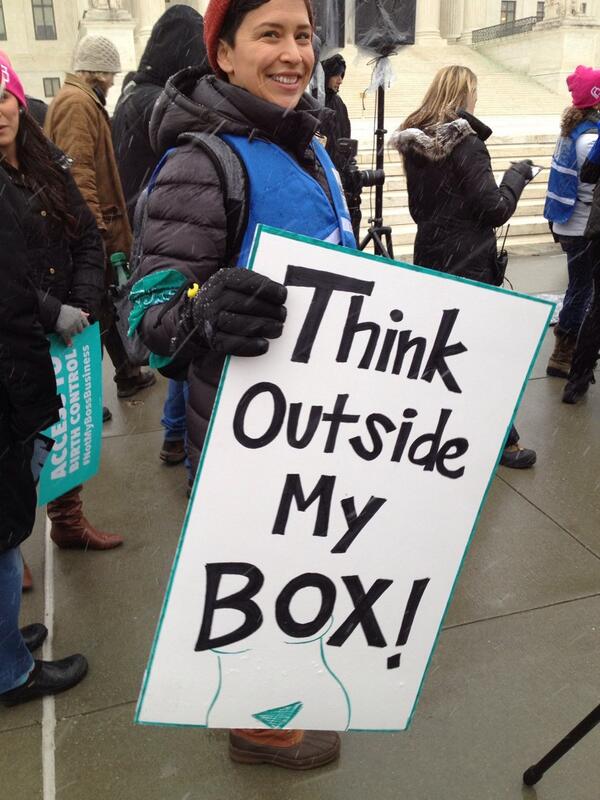

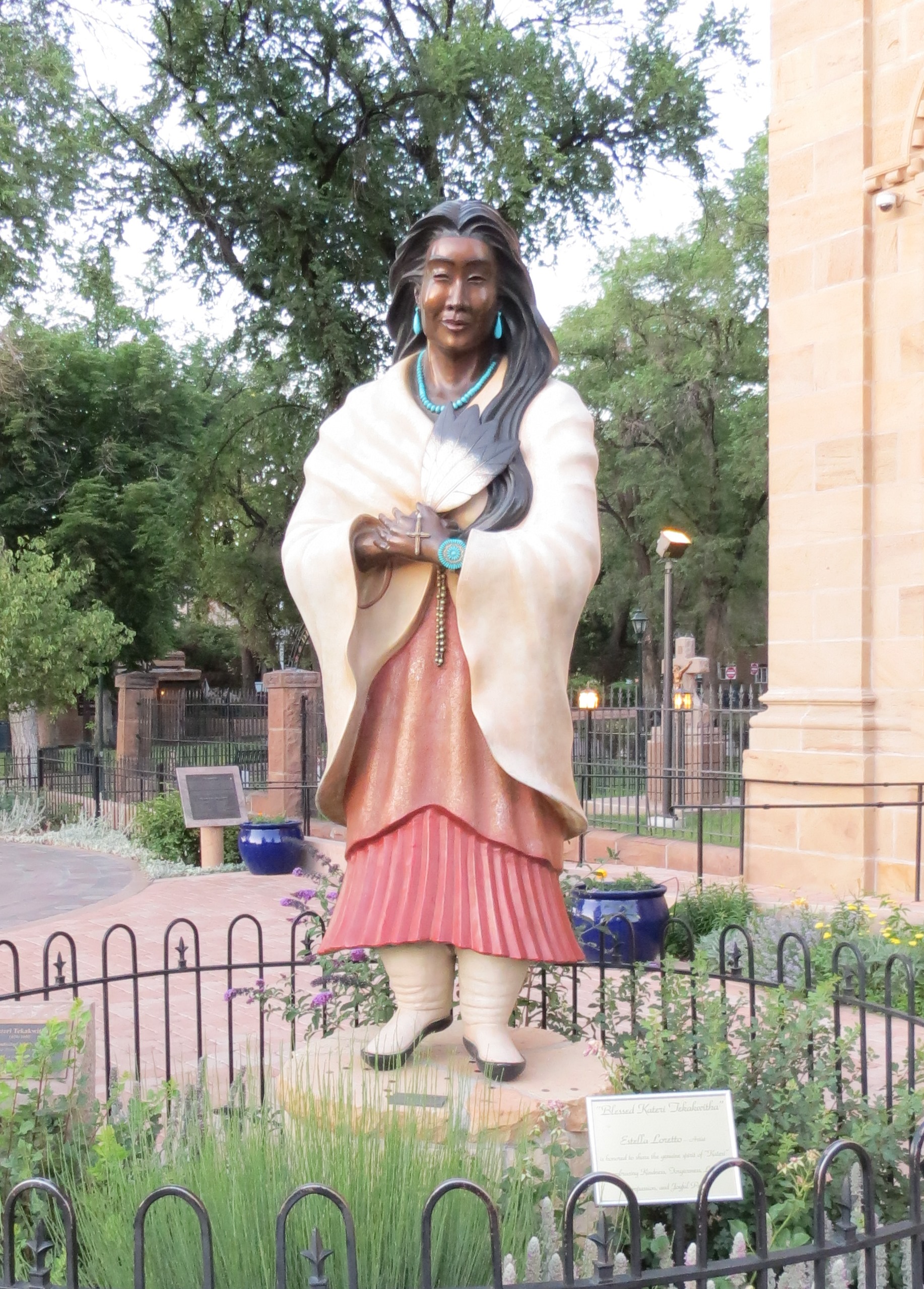


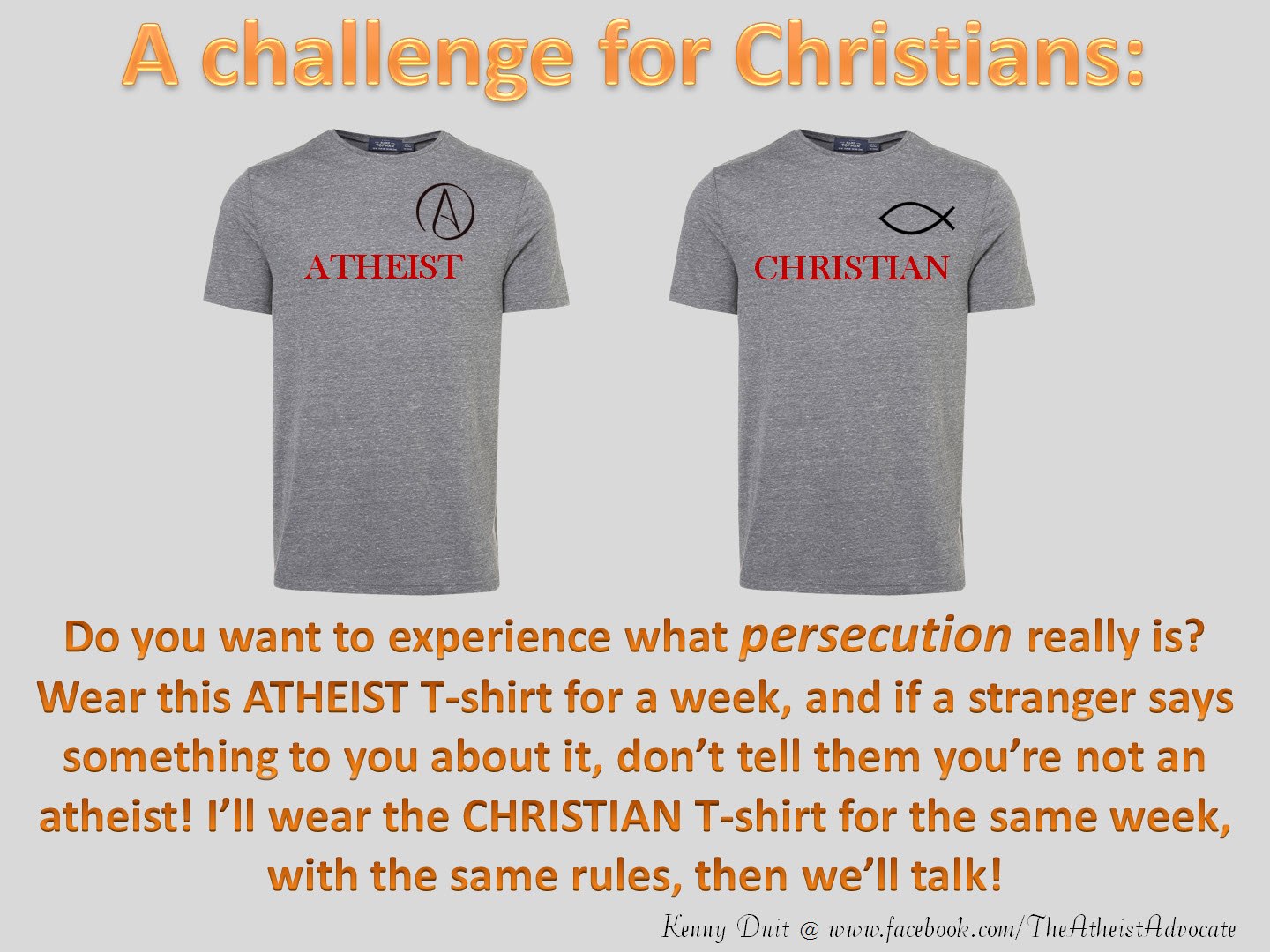

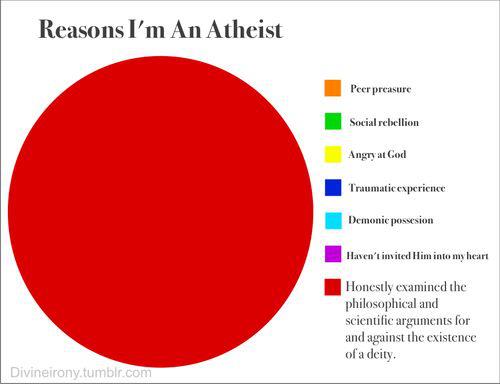

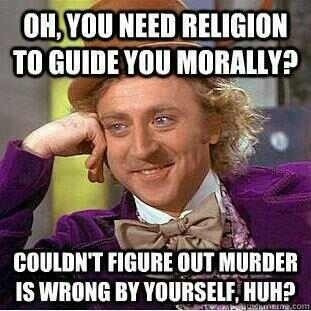


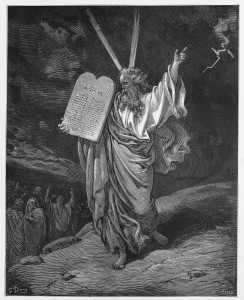









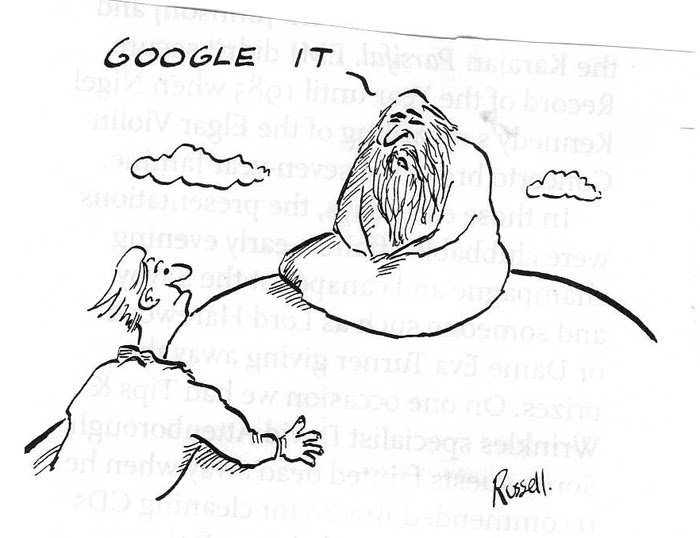

 northierthanthou