• About

northierthanthou

northierthanthou

Yearly Archives: 2013

Damn the Semiotics! All Hail the Lexicographer-Judge (If Only We Could Find Him)

05 Thursday Dec 2013

Posted by danielwalldammit in Religion

≈ 28 Comments

Tags

Authority, Cultural Conservatism, Dictionary, Language, Rhetoric, Semantics, Semiotics, Vocabulary, Words

046

Consulting Lexi-Kitties

I am continually amazed at the faith some conservative Christians place in the authoritative pronouncements of a single ancient book. No, not that one. I am talking about the dictionary.

…pardon me, ‘thuh dictionary’.

I have long since lost track of the number of times someone has told me what this or that word means according to ‘thuh dictionary’. It could be any word, but frankly, the most common ones to land me in front of the court of lexicography are ‘homophobia’ and ‘atheism’. Significantly, I don’t think many of the people who launch into this sort of dictionary-whinging gambit have even looked up the words they hold court over. If you ask them which dictionary, they will often tell you ‘Websters’, as if that meant a damned thing!

Dictionary-Whinging (Sorta verb-like, but more gerundy) Pronounce the g like a j, dammit. It means being a jerk, but a certain kind of jerk. …a jerk with or over a dictionary.

Sometimes folks will invoke the power of ‘Merriam-Webster‘. This at least is a real entity, a branch of Encyclopaedia Britannica, so that will at least tell us something about the source, but it doesn’t do much to pin down the book in question. As to the name ‘Webster’s’? That is in the public domain. Anybody can publish a Webster’s Dictionary. You, me, the homeless guy down the street could write out a couple definitions and call it a “Webster’s Dictionary” Hell I could translate my cats noises and call it a Webster’s Dictionary.

In fact, let’s do that!

WEBSTER’S COLLEGIATE DICTIONARY OF ARCTIC CATISMS

Compilerized and Authoritated by Daniel S. Dammit

July or maybe December, 2013.

Editorial Staff: Fido, Junkmail, and Auto-Kitty

Mrrour: Pet. (e.g. ‘Pet me please!’)

Me’a’our: Pet, used with a sense of urgency (e.g. ‘pet me now dammit!’)

Mmmmmeuurrrrrr: Pet, used in a polite way (e.g. “If you have a moment, could you please pet me, …and perhaps change teh literbox. …no hurry.”)

Meow: Ironic Usage. It means; “I don’t actually sound like this human. You are imagining things.”

Meeeh!: Head-Butt (e.g. I’m lonely, human. Please head-butt me this very instant.”)

There. That’s my Webster’s Dictionary. Suck it Lexi-Judges! You have to use that now when you interpret cat. I has spoken.

(Aside over. We now bring you back to your regularly scheduled, cat-free, post.)

The bottom line is that a significant portion of people citing the authority of ‘Webster’s’ are simply bluffing. They haven’t looked anything up, much less thought about it. I guess they figure the meaning of the words in question is so obvious to anyone but the idiot they are talking to (which if often me) that there is no real need to consult the authority of the imaginary lexical-judge; it goes without saying that this good Justice will back their own understanding. I guess the spirit-filled just know what thuh dictionary would say.

It seems to me that some people look upon a dictionary as a judge of sorts, or maybe a legislature, both if they get their way, but most of these folks are happy to admit that ‘thuh dictionary’ is not an executioner. No, that is a role they hope to play themselves.

One thing I find quite amusing about all of this feigned dictionary-deference is that it always works best with the really bad dictionaries. You see a good dictionary will include a number of entries spelling out a variety of different uses of a given term, but the ideal dictionary for the the lexical authoritarian contains just one reference for every word. So, on the off chance that he actually bothers to look anything up, our dictionary-whinging fellow is not going to want to bother with anything resembling choice. He wants a single entry, and (Webster’s willing) he will present that single entry as clear and convincing proof that the word in question has just that one proper meaning. …thus effectively turning the weaknesses of an incomplete dictionary into a virtue. For these purposes Dictionary.com will serve the vocabulary fascists much better than the Oxford English Dictionary. Webster’s Third New International would be right out, …at least it would be if such folks knew enough about dictionaries to realize what that infamous source of lexical permissiveness contains.

Which brings me to a second point of amusement about the art of dictionary-whinging. Its practitioners seldom (perhaps never) understand how dictionaries are actually made. They haven’t studied lexicography, and they haven’t even read the methodology section of any given dictionary. Most, probably don’t even know that such a section exists; it fits in those automatically skipped pages at the beginning of the book they aren’t actually reading anyway. These folks certainly haven’t read Samuel Johnson’s preface to his Dictionary of the English language or any other thoughtful discussion of the topic. If they did, the first thing they would find is that lexicographers generally don’t work the way they think they do, and they don’t intend their dictionaries to be used the way they think they do.

Now let me give you a minute to parse all the ‘they’s of the last sentence. Wait a minute! I sense a new volume of Webster’s coming. Here it is:

WEBSTER’S NEW NOT-SO-COLLEGIATE DICTIONARY OF DANOLOGICAL THEM-ITUDE

Compiled on a Lark, 2013

They: Them.

They2: Those people.

They3: Them other guys.

They4: They (like I sad …dammit!)

They5: I obviously don’t get laid often enough.

Anyway, my point is that with the possible exception of early editions of the American Heritage Dictionary, lexicographers are not legislating and they are not adjudicating language. They are informing us about common usage. In short, their approach is descriptive rather than prescriptive. This is exactly NOT the approach that those seeking to use dictionaries authoritatively would wish it to be.

To put it another way the judge in this instances refuses to do his job as the dictionary-whinging bastards of this world would have him do it. What dictionary-makers consistently seek to do is provide us with a responsible account of the way language is actually spoken and the meanings of words that people speaking a given language actually use. What the dictionary-whinging types consistently want is an authoritative pronouncement delivered from on-high about just what meanings we SHOULD be attaching to any given word. They want the dictionary to tell us how to use language.

That really should be end-game folks. When the judge doesn’t adjudicate; it oughtta be case-dismissed, but that is almost never the case. Pretty much every one hitting me over the head with an imaginary Websters will just go right on doing it after they have just been shown that their weapon of choice is not really meant to be used that way.

Dunning and Kruger should demand that such folks return their effect with interest.

My rant began with a reference to religious folks though, didn’t it? Okay, it did. To be fair, this is a post I dropped several months ago and just picked back up. The sticking point was just that. Do I really want to talk about the general misuse of imaginary lexical authority? Or do I want to explore the specific role of such  practices in the thinking of pious people. Tonight, my solution is this. I will make just one point about the religious variation, and that is this:

It is sort of fitting to find that people who wish to approach life as though it must be lived according to a specific set of directives from on-high would replicate that model in their approach to language. This is the prescriptive life well lived. They find an ought-to in every decision and an essential meaning in every word, all hard-wired right into the universe itself. Actual language use then becomes a set of cases fitting clearly into categories of right and wrong, just as anything else one might do in a world defined by an ultimate Legislator. The deus ex machina that some folks look for in a dictionary is thus pretty much the same one they commonly proclaim outright in their other book-weapon of choice.

So much for the arbitrary nature of the sign!

71.271549 -156.751450

Share this:

  • Tweet
  • Share on Tumblr
  • Print (Opens in new window) Print
  • Email a link to a friend (Opens in new window) Email
  • Share on Reddit (Opens in new window) Reddit
Like Loading...

Uncommonday Morning News – Shaka May Have a Patent-Suit Against Sitting Bull

02 Monday Dec 2013

Posted by danielwalldammit in History, Native American Themes, Uncommonday

≈ 13 Comments

Tags

American Indians, Anheuser-Busch, Cassilly Adams, Custer's Last Fight, Custer's Last Stand, George Armstrong Custer, History, Little Big Horn, Native Americans, Sioux

62300

(Click to embiggen)

This painting is one of the reasons Custer is still remembered as a hero in some quarters. To quote a fellow-blogger:

In 1884, eight years after George Armstrong Custer’s death, the Anheuser-Busch brewing company commissioned an original oil painting, Custer’s Last Fight, by Cassilly Adams.  It was reproduced as a lithograph by F. Otto Becker in 1889 and distributed as an advertising poster by Anheuser-Busch.  This depiction of the Battle Of the Little Bighorn undoubtedly hung in more saloons than any image before or since, and fixed the iconography of Custer’s last moments in the national imagination.

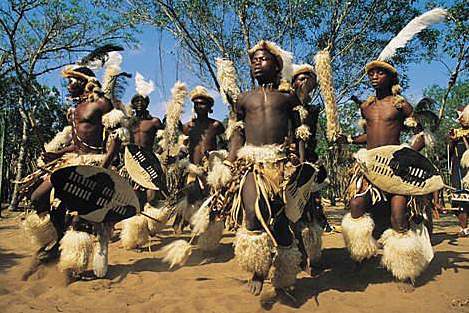
I am told the image represents the terrain at Little Big Horn reasonably well, though some question its depiction of the soldier’s uniforms, the lack of guns among the Sioux, and of course Custer’s heroic posture in those final moments is open to more than a little doubt. What makes this image a truly golden bit of absurdity, however, would have to be the Indian shields.

…just a little off.

???????????????????????????????????????????????????????????????????????????????????????????????????????????????????????????????????????????????????????????????????????????????????????????????????????????????????

hm…

???????????????????????????????????????????????????????????????????????????????????????????????????????????????????????????????????????????????????????????????????????????????????????????????????????????????????

hmmm again!

shakazulu4

Ahem!

71.271549 -156.751450

Share this:

  • Tweet
  • Share on Tumblr
  • Print (Opens in new window) Print
  • Email a link to a friend (Opens in new window) Email
  • Share on Reddit (Opens in new window) Reddit
Like Loading...

Your Lips Say ‘No’, But Your Eyes Say ‘Chicken-Whistle Star-Bullets!’

01 Sunday Dec 2013

Posted by danielwalldammit in atheism, Movies, Religion

≈ 15 Comments

Tags

atheism, Critical Thinking, Debate, Film, Movies, Religulous, Reliion, Rhetoric, Sarcasm

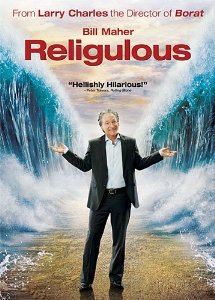
51mGiYaPfqL._SY300_So I finally watched Religulous. I found it a truly underwhelming experience. Honestly, I think I must be over the joys of poking holes in religious thinking. In other news, boxing with Girl Scouts no longer brings me quite the same thrills that it used to.

…at least on Thursdays and Saturdays. It is entirely possible that I may relapse on Tuesdays and Fridays.

Okay, it’s not always that easy, I know; sometimes I meet a religious person with genuinely challenging thoughts, but perhaps that is my point. One can find a pretty broad range of qualities fitting under the heading of ‘religion’, and it can be just a little too easy to look for the easy pickings. Some people treat debunking religion as a sport, and those people rarely seek out the challenging thinkers. No, they hunt the naive in remote and highly uneducated corners of the globe; they sniff out the cooks and the crankcases. I should point out that the sport-debunker isn’t always an atheist, but of course, this time it is.

Religulous is the intellectual equivalent of a canned hunt. In this movie, Bill Maher seeks out and makes a fool of one believer after another and I cannot help but think most of those interviewed have been selected for their capacity to appear nutty to the rest of us. Maher does little to explore the intellectual lives of any of those interviewed in Religulous. His discussions bear a strong-resemblance to a cross-examination in a courtroom (or at least a courtroom drama). Maher’s questions rarely veer far from the effort to produce a contradiction or an implausible claim, and he doesn’t hesitate to interrupt, argue, or insult his subjects at any point in the movie. Not wanting his subjects to go-off half-mocked, Maher includes several segments in which he trashes those already interviewed while driving about, presumably on the way to the next ambush interview. When he does interview intelligent believers, Maher’s sole interest seems to be getting them to help debunk their brethren. The most interesting and complex thinkers in this movie would easily include a number of Priests but they are of interest to Maher only insofar as they help us to dismiss the beliefs of others.

I have to admit, there was a time when I would have been into this. Now, I just find it rather predictable.

…and pointlessly rude.

Ironically, I think Maher’s snide disrespect for his quarry in this film actually blunts the force of his criticism and lets them off the hook. In interviewing John Westcott,  an ex-gay minister, for example, Maher makes a point to suggest the sexuality of the man’s children remains in question. In the commentary track, he further laughs at the irony of a man denying his homosexuality when Maher can tell by his behavior that the man is gay. Personally, I think this underscores the irony of a man proporting to call a believer to task for mistreatment of homosexuality while exhibiting all the insight and sensitivity one might expect to find in the boys locker room of a high school football game. Maher’s games do absolutely nothing to reveal the intellectual dishonesty and outright harmfulness of ex-gay therapies and related ministries. While Maher plays to the cheap seats by making fun of the man and his children, the interview goes nowhere. Maher learns nothing about the minister’s actual point of view, and he does nothing to show us just how harmful these organizations can actually be.

And I wonder if I am supposed to be pleased with this?

Maher is casting religion in a bad light, and in this movie (as in other contexts), he does sometimes score a hit, or even a home-run. I should be able to enjoy this, and I would, if I thought Maher was doing a consistently good job of it, but what bothers me most about this movie is a sneaking suspicion that it isn’t an exercise in healthy skepticism, that in fact Maher is selling a message that doesn’t quite fit the label on the packaging. Shallow as it is, Maher’s engagement with the proponent’s of God-talk is not merely intended to show us how foolish they are. He is building a narrative with assumptions going well beyond the foibles of his hapless quarry.

One particularly telling moment occurs during an interview with a Muslim cleric. the man’s cell phone goes off, and the ringtone is Led Zeppelin’s Kashmir. Maher suggests that this is odd. The prospect that a song called ‘Kashmir’ might strike a cord with a Muslim seems to have completely escaped him. More to the point, he doesn’t ask why the Cleric uses that ringtone or what it means to him. To Maher it seems to be self-evident that the Cleric’s choice of music reveals an inconsistency. He drives this point home further in the commentary track, suggesting that people steeped in outdated beliefs should not get to use modern conveniences.

The mode of engagement used here is consistently that of polemics. Maher wants to poke holes in religion; he doesn’t want to understand anything else about the people he is talking to, or at least he doesn’t want to show us anything else in the final cut of the movie. To describe the end result as superficial would be giving superficial a bad name. But of course there is something a little more insidious at work here. It arises in the notion that religion is simply outdated, that the cleric’s interest in a cell phone is simply incommensurate with religious beliefs. This is old fashioned unilineal evolution, the belief that human history follows a set course. To Maher (and evidently his producer) it goes without saying that religious beliefs are chatter out of place, so to speak, and that history is incomplete so long as these throwbacks remain with us. This is the key to his polemic approach. He wants to show us that religion is stupid, urge us all to leave it all behind, and thereby advance one further step in human history.

In taking this approach, Maher is unfortunately (and ironically) doing a good deal more than debunking the beliefs of his interview subjects; he is advancing a faith of his own, a faith in Progress with a capital ‘P’, and a specific vision of that Progress. The film ends with an emphasis on growing conflicts between Muslims and Christians, and a recurrent expression of fear that these faiths will lead us to nuclear disaster. Maher addresses the claim that these conflicts are really political, and of course it is easy enough for Maher to assert that they are also religious, but of course this is a unique marriage of the fallacies of straw man false alternatives. The question is not which category various conflicts fall into, but rather how politics and religion intersect in actual human history. That is a question Maher is completely unprepared to answer, or even ask. He relies on a stock vision of humanity’s course throughout the film, and herein lies the value of his deceptively simple interview agenda. So long as we are focused on the foibles of the faithful we may not take the time to think critically about Maher’s own millenarian vision of the future.

This is bait & switch.

Maher quite rightly calls some of his interview subjects to task for glossing over the role of faith in political violence, but his refusal to address the politics is itself a telling source of ignorance. He is telling as simple story in which the source of modern evil is found in beliefs and beliefs alone. If only we can deal with the bad beliefs once and for all in the fashion of lunch-room debate tactics, then the world will be a better place.

In advancing this simple message Maher shows us that he has a lot more in common with believers than he would suppose.

71.271549 -156.751450

Share this:

  • Tweet
  • Share on Tumblr
  • Print (Opens in new window) Print
  • Email a link to a friend (Opens in new window) Email
  • Share on Reddit (Opens in new window) Reddit
Like Loading...

Uncommonday – The Sun Never sets on the Cricket Empire

25 Monday Nov 2013

Posted by danielwalldammit in Anthropology, Uncommonday

≈ 12 Comments

Tags

Anthropology, Cricket, Cultural Change, Cultural Diffusion, Culture, Maasai, Sports, Trobiand Islands

Just what ain’t Cricket? I really wouldn’t know the answer to that question, but I am occasionally quite amused to find out just what is cricket, or at least who has learned to play and how they play it. More than most of the big world sports, it seems that cricket lends itself to regional variation, and there are some really interesting variations out there. I’m not a very sporty guy, but I’m thinking Kilikiti Estonian style out on the lagoon for Piuraagiaqta.

Oh yes!

Kilikiti (Samoan Cricket).

This Masai team appears to play a pretty standard version of the game, but you wouldn’t know it from their uniforms.

And heading back out into the Pacific, we get Trobriand Cricket.

This is how they do it in Estonia.

71.271549 -156.751450

Share this:

  • Tweet
  • Share on Tumblr
  • Print (Opens in new window) Print
  • Email a link to a friend (Opens in new window) Email
  • Share on Reddit (Opens in new window) Reddit
Like Loading...

Sometimes the Story Tells You! A Few Comments on Narrative Scope and Survey Sedatives.

22 Friday Nov 2013

Posted by danielwalldammit in Education, History

≈ 15 Comments

Tags

American Indians, College, Dakota, Native Americans, Santee, Sioux Uprising, Story-Telling, Survey Texts, The Dakota Sioux Uprising

006When people introduce a given piece of information as “something you don’t learn in the history books” or “something they don’t teach in history class” I often find myself wondering if the individual in question really has read any history books lately?

I think these are comments that just roll off the tongue while someone thinks about what they are going to say next. When I hear what they do say next, as often as not I find myself thinking; “well I teach that,” or even “Hell, that’s right in my textbook!” Sometimes I even find myself thinking; “Every teacher I’ve ever had and every textbook I’ve ever used teach that very thing you numbskull!”

Just kidding; I don’t actually use the word ‘numbskull’ in my internal monologues.

The kind of history-bashing that I am talking about almost always involves old yarns long since unraveled by the majority of historians out there. Just to provide one example, most of the myths about Columbus fall under this heading. I don’t think I’ve ever had a teacher present the classic myth of Columbus discovering America or proving the world is round, at least not without including some form of ironic commentary. I can think of numerous instances where the critique didn’t go far enough, but even my second grade teacher in a conservative lily-white community way back in the 70s made a real effort to debunk some of the standard Columbian themes. My American history textbooks don’t present the classic Columbus myths and my world history textbook even has a small section about the invention of those very myths. Yet, I still hear people preface the standard critique of Columbus with the pretense that we are about to take on the entire history profession just by listening to them.

I get a little tired of it.

***

This isn’t to say that I don’t have my own complaints about the state of the art in teaching history, and especially about textbooks. It’s a rare day that an encounter with any given survey text doesn’t leave me in tears, or at least put me to sleep, and I regard it as poetic justice that I will forever be teaching introductory classes where these instruments of torture seem to be a staple crop.

The problems that plague survey texts are generally a bit more subtle than Sunday morning historians would have it, however, and those problems are often difficult to resolve without asking students to do more than most wish to. The inaccuracies of history texts aren’t always due to fundamental misunderstanding; they often seem to be the result of narrative choices, choices often dictated by the nature of survey-text sedatives.

Case in point?

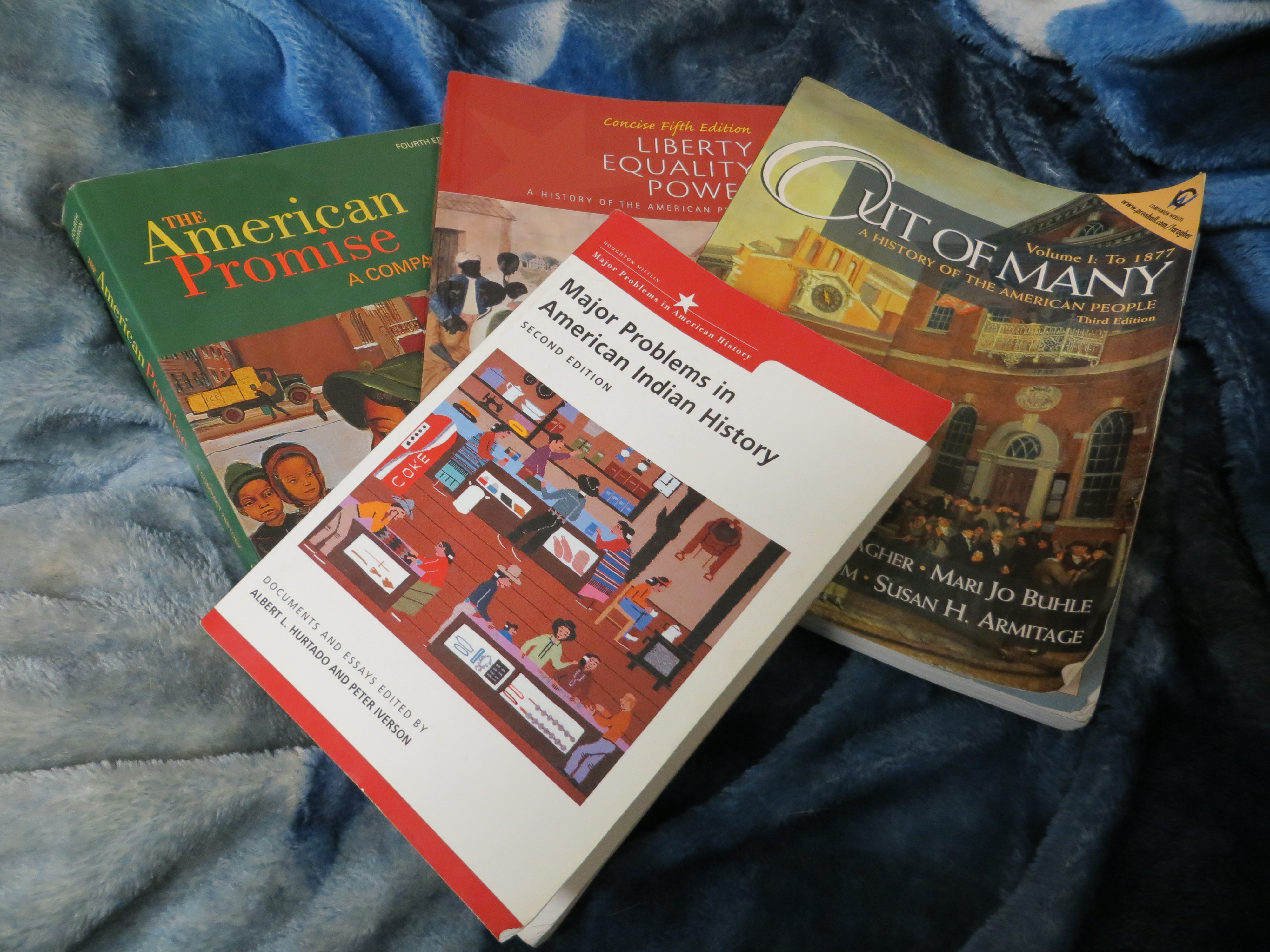
I use a reader for my Native American History class, Major Problems in American Indian History. It contains both primary documents (those produced by actual participants and witnesses in various stages of history) and interpretive essays. One of those essays in this text, “The Dakota Sioux Uprising, 1862” by Gary Clayton Anderson, presents a wonderful glimpse into the internal conflicts associated with this event. In this article Anderson takes on a terrible event in the history of Indian-white relations, one in which a number of atrocities were committed against non-native civilians, including women and children. If one were of a mind to tell such stories, this event could easily be the classic ‘Indian massacre’ that haunts the background of virtually the entire western genre in both film and literature. The uprising certainly contains enough frightful particulars to transform any narrative into a genuine nightmare. In fact Stan Hoig makes a point to suggest fears of a similar outbreak helped to explain the actions of officials in Colorado during the events prior to Sand Creek.

Note: I said prior to Sand Creek; Chivington and his men are a special kind of evil, but that’s a rant for another day.

In Anderson’s view, the uprising is a complex story in which various factions within the Dakota (otherwise known as Santee Sioux) square off against various factions of outsiders. As hunting became impossible, and rations promised by the U.S. government failed to appear, the prospect of starvation became inextricably mixed with questions about ways of living (farming versus hunting) and relations with outsiders. Some Santee had taken up farming; others wanted to resume (or take up) hunting as a primary means of subsistence. Significantly, many of those who had taken up farming had established connections (even marital relations) with local whites. So, the Santee population included a substantial ‘mixed blood’ population, and the local whites included many who had established ties to the tribe, some of which rose to the level of fictive (adoptive) kin ties.

Without going too much further down this rabbit hole (interesting as it is), Anderson does an excellent job of putting the violence of the outbreak in the context of all these factions. He argues that those perpetuating the violence were trying to pull their own community towards hunting as a way of life while punishing those whites they regarded as responsible for their own situation. Mixed bloods and whites with clear ties to Santee were generally spared (with some Santee going to great lengths to protect such people), and significant factions of the Santee pressed to end the fighting. Rivalries between those pressing the fight (which included a conflict over the question of whether to attack civilians or focus on military targets) and those seeking to end the fighting rose to the scale of potential intra-tribal warfare. Indeed, the actions of Santee opposed to the fighting helped to bring an end to the fighting.

One read through this article, and the simple narratives for this uprising go right out the window.

***

So, what do the survey texts in American History classes have to say about all this? Well let’s look at a couple of them…

I used to use a textbook called Out of Many: A History of the American People by John Mack Faragher, et. al. The third edition of this book has the following to say about these events:

Elsewhere in the West, other groups of Indians found themselves caught up in a wider war. An uprising by the Santee Sioux in Minnesota occurred in August of 1862, just as McClellan conceded defeat in the Penninsular campaign in Virginia. Alarmed whites, certain that the uprising was a Confederate plot, ignored legitimate Sioux grievances and responded in kind to Sioux ferocity. In little more than a month 500-800 white settlers and an even greater number of Sioux were killed.  Thirty-eight Indians were hanged in a mass execution in Mankado on December 26, 1862, and subsequently all Sioux were expelled from Minnesota. In 1863, U.S. Army Colonel Kit Carson invaded Navajo country in Arizona…

Let’s look at another text called Liberty, Equality, Power: A History of the American People (Concise Fifth Edition) by John M. Murrin, et.al. This book has the following to say on the subject:

The civil war set in motion a generation of Indian warfare that was more violent and widespread than anything since the 17th century. Herded onto reservations along the Minnesota River by the Treaty of Traverse des Sioux in 1851, the Santee Sioux were angry in the summer of 1862 that annuity payments did not arrive, threatening them with starvation. Young warriors began to speak openly of reclaiming ancestral hunting grounds. Then on August 17, a robbery in which five white settlers were murdered opened the floodgates. The warriors persuaded Chief Little Crow to take them on the warpath, and over the next few weeks at least 500 white Minnesotans were massacred.

Hastily mobilized militia and army units finally suppressed the uprising. A military court convicted 319 Indians of murder and atrocities and sentenced 303 of them to death. Appalled, Lincoln personally reviewed the trial transcripts and reduced the number of executions to 38, the largest act of executive clemency in American history. The government evicted the remaining Sioux from Minnesota to Dakota Territory.

My current textbook, The American Promise: A Compact History, Fourth Edition by James L. Roarke, et. al. has the following passage on the uprising:

The Indian wars in the West marked the last resistance of a Native American population devastated by disease and demoralized by the removal policy pursued by the federal government. More accurately called ‘settlers’ wars’ (since they began with ‘peaceful settlers,’ often miners, overrunning Native American land, the wars flared up again only a few years after the signing of the Fort Laramie treaty. The Dakota Sioux in Minnesota went to war in 1862. For years, under the leadership of Chief Little Crow, the Dakota, also known as the Santee, had pursued a policy of accommodation, ceding land in return for the promise of annuities. But with his people on the verge of starvation (the local Indian agent told the hungry Dakota, ‘Go and eat grass’), Little Crow reluctantly led his angry warriors in a desperate campaign against the intruders, killing more than 1,000 settlers. American troops quelled what was called the Great Sioux Uprising (also called the Santee Uprising) and marched 1,700 Sioux to Fort Snelling where 400 Indians were put on trial for murder and 38 died in the largest mass execution in American history.

Anyway, that’s three texts. I have a couple more that don’t even mention this event, which is a little disturbing.

***

So, what do we get out of all this?

Well, first, you gotta love the way one book describes the event as the largest use of executive clemency in history and another describes it as the largest mass execution in American history. There is probably an interesting lesson in fact selection there, but the most interesting thing about that little point may well be that both facts seem to be part of the same story. In one text, that is a story of great mercy, and in the other it’s a story of slaughter, and neither story is contradicted by the facts (at least not at this level of detail).

Ah well, moving on…

The first thing that I would say here is that none of these texts paints the natives in an overtly negative light. These were not written with the intention of slandering the Santee and pleading the cause of manifest destiny after the fact, so to speak. Such narratives do exist, but I didn’t find them in my stack of survey sedatives. If anything, each of these narratives seems almost painfully to be pleading the Sioux’s case and working hard to ensure the reader understand they had their reasons, so to speak.

The distortions here are a little more subtle; most of them being a function of basic story telling technique. Simply put, the question here is one of peopling the story-line. Where Anderson talks about multiple factions in and around the Santee community, each of these authors is telling a story about whites and natives. When they choose to break that down a little, we get references to ‘warriors’ and to Chief Little crow. Gone is the conflict within the tribe between pro-war and pro-peace factions, the entire existence of mixed bloods, arguments about who should and who should not be killed, and especially the active opposition of some villages to participation in the fighting. The decision to spare some whites while killing others is nowhere on the horizon here. And of course the notion that Little Crow simply led his people ‘on the warpath’ (reluctantly or otherwise) simplifies the nature of his leadership as well as the politics of the uprising itself. None of these sub-themes can be worked into the narrative (or even envisioned within it), because the characters are not even in the cast. There is simply no place for them.

So, what do I expect? Pretty much this, actually. These are survey texts, and the authors are struggling here to get a complex story into a paragraph or two. This means simplification, even oversimplification. It seems to me that in each of these cases, the author has made choices based at least partly on the larger narratives in which this story fits. Where Anderson is telling the story of a specific event, each of the survey text authors is treating this as a moment in a larger narrative about Indian-white relations in the west. They identify the participants in the Santee Sioux uprising based on the characters already filling that larger narrative.

Of course one of the central ironies here is that having put an insufficient number of players on the stage, so to speak, each of the survey authors is then at pains to make understandable the actions of the fictional Santee tribe which has become responsible for these events. Unable to assign specific actions to specific agents in the story, these authors must then work to keep us from walking away with a great big anti-Santee bottom line. But that bottom line is precisely a function of the narrative decisions they have already made. If we knew more about who was doing what and why, that impression would have no place to creep into the story, but we don’t. In the end, I suspect that anti-Santee bottom line will be the take-away for so many students, no matter how many sympathetic comments an author works into the text. In the larger story of American growth, the Santee can’t help but appear as an obstacle to that growth. You can make them sympathetic, but the only way to make them something other than an antagonist is to change the larger story altogether. Nothing done within the space of a couple paragraphs is going to work.

But a couple paragraphs are all the Santee uprising are going to get in the average textbook.

Now, just imagine that same kind of trade-off in every paragraph of virtually every page (side-bars excepted) of every history text out there. So, you see, this isn’t a problem of what is and isn’t taught; it’s a problem of how it’s taught. Many of these stories are just begging to be forgotten. You can see it in the way they are written.

Enjoy your reading kids!

71.271549 -156.751450

Share this:

  • Tweet
  • Share on Tumblr
  • Print (Opens in new window) Print
  • Email a link to a friend (Opens in new window) Email
  • Share on Reddit (Opens in new window) Reddit
Like Loading...

Please Make a Note of it

20 Wednesday Nov 2013

Posted by danielwalldammit in Politics

≈ 4 Comments

Tags

Aphorisms, Arrogance, Assumptions, Condescension, Fishing, Hunger, Poverty, Undeserving Poor

???????????????????????????????

.

Just because a man is hungry doesn’t mean he knows any less about fishing than you do.

71.271549 -156.751450

Share this:

  • Tweet
  • Share on Tumblr
  • Print (Opens in new window) Print
  • Email a link to a friend (Opens in new window) Email
  • Share on Reddit (Opens in new window) Reddit
Like Loading...

Uncommonday – An Overly Honest Funeral Sermon

18 Monday Nov 2013

Posted by danielwalldammit in Movies, Uncommonday

≈ 9 Comments

Tags

Ambivalence, Death, Funeral, Humor, Irony, Schizopolis, sermon, Steven Soderbergh

Awhile back I posted a film clip featuring a wonderful wedding sermon. Today, I thought I’d post my favorite funeral sermon. This scene is from the movie Schizopolis, one of Soderbergh’s lesser known films. If you’re feeling a little left of your own mind, let me assure you the rest of the film is no closer to normal than this scene.

* By ‘Honest’ I might mean ‘cynical’ in which case I think we can dispense with the ‘Overly’ part of the title.

71.271549 -156.751450

Share this:

  • Tweet
  • Share on Tumblr
  • Print (Opens in new window) Print
  • Email a link to a friend (Opens in new window) Email
  • Share on Reddit (Opens in new window) Reddit
Like Loading...

A Bullet Point Mind

17 Sunday Nov 2013

Posted by danielwalldammit in Education, The Bullet Point Mind

≈ 13 Comments

Tags

Communications, Critical Thinking, Education, Power Point, Public Speaking, Slideshows, Speech, Visual Presentations, What not to do

Irrelevant Image! ...or is it?

Relevancy – Perhaps Paradoxical

I still remember the first day I learned to dread the power point presentation. Don’t get me wrong; I’ve seen good ones. I have at times been well pleased to take in a well designed power point presentation. If only I could have more of those days, and fewer of the kind that I have so often grown to expect.

Anyway…

I was sitting in a lecture hall many years ago listening to a colleague do a training for the rest of the faulty at our college. She was trying to teach us something about assessment techniques for accreditation, but the fact is that this particular colleague had nothing to say about the topic, and she was painfully slow in the way she was not saying it. The overall effect was a lot like a sedative and one of Pink Floyd’s longer and slower songs. Every point this woman made began with a new slide that added a phrase or quick sentence. She would stop talking, click a button, wait to see the new phrase appear and then pause long enough for us to read the phrase ourselves (twice). She would then read the phrase and give us a little more time to let it sink in. In a rare moment of personal empowerment, our illustrious lecturer would add a comment or two about the phrase before moving onto the next one. Mostly, she just let us take in the power of each individual bullet point. So, I’m sitting there watching this and trying desperately not run screaming from the room as I study the slide-show and wonder why I hated it so much. Of course training days are often a painful experience, but this was a special kind of heck, and the source of my particular sorrow on that day wasn’t immediately apparent. Eventually, I come to a realization.

It’s her outline!

What my colleague had chosen to pass off as a power-point presentation was nothing more than the outline for her speech, exactly the sort of outline we had all learned to write in our Freshmen Composition and Speech classes. There it was, unfolding there on the screen, one line at a time, as if it were some sad librarian’s version of dramatic tension.

Far from enhancing the presentation, this visual was slowing the speaker down and enabling her to avoid the responsibility even to explain the connections between the points of her talk. The speaker didn’t need to decide how each individual bullet point related to the major themes of her discussion; all she needed to do was read them at us. The visual served to occupy our attention and help us to forget that she had crammed a whole 5 minutes of information into an hour-long presentation. In effect, the presenter had looked into the heart of her software and found a new and improved means of bluffing.

…Would that this was a unique experience!

This technique also seemed to lend an ontological claim to the individual bullet points. Things that a person might just say offhand, or as part of a larger argument often seem to acquire a objectivity all their own, standing up there on a screen. A list of bullet points might contain causes, effects, and side comments to a larger heading, all quite unmarked in the visual. The verbal presentation did nothing to clarify matters. I grew slowly to realize the presenter did not herself know exactly how each sub-point of her presentation related to the main themes. She knew only that the topics traveled in a pack together, so to speak, and she wanted us to know that too. The visual solved this problem by telling us exactly how each point related to the next.

…mainly vertically.

This was the secret of the power-point visual, it lent the illusion of mystic substance to each individual point while undermining the need to explore rational connections between the. Each individual point on the screen in front of us looked terribly important in its own right, certainly more important than the explanations that connect each point to the others. Those connections didn’t appear on the screen. the bullet points did. They mattered more.

…and critical thinking wept!

71.271549 -156.751450

Share this:

  • Tweet
  • Share on Tumblr
  • Print (Opens in new window) Print
  • Email a link to a friend (Opens in new window) Email
  • Share on Reddit (Opens in new window) Reddit
Like Loading...

Damn the Science Exhibit; We’re Looking at Dioramas!

15 Friday Nov 2013

Posted by danielwalldammit in Alaska, Museums

≈ 5 Comments

Tags

Alaska Natives, Aleutians, Anchorage, Anchorage Museum, Athabaskan, Dioramas, Haida, Inupiat, Museums, Tlingit

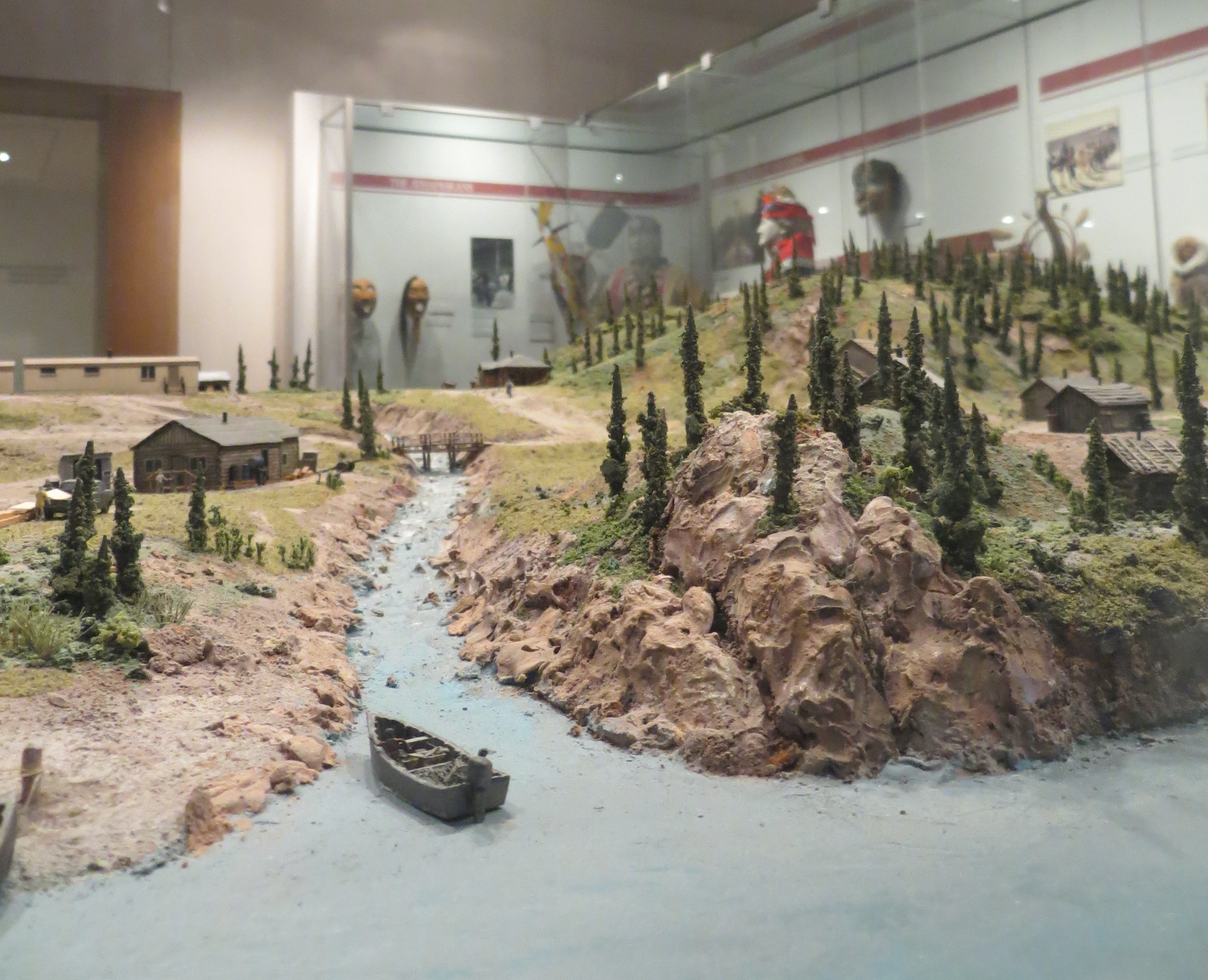
I'm not sure what community this represents, but I really like the scene.

A small community on the coast.

A couple of months back I found myself in Anchorage without too much to do. On my last day down there the devil that sits on my shoulder lost a debate with the nerdy bookworm that sometimes passes for my angelic adviser, and so I actually chose to do something instructive and educational. I went to the Anchorage Museum.

Don’t be too disappointed; it was actually kinda cool. My favorite part of the museum was actually the science exhibit, much of which was interactive. sadly, I don’t think my pictures and videos did much to capture the brilliance which was that particular part of the museum. Being a museum, the place was of course full of wonderful artifacts and displays casting light on all manner of things Alaskan. Being a cruel fellow, I am not going to show you much of that.

…at least not today.

No.

Today, we are looking at dioramas. A number of these were strewn about the museum, and I managed to get few decent pictures of some. I won’t pretend that this is a complete set, so to speak, as I am pretty sure that a few of thee exhibits told my camera to screw off and I completely neglected to right those wrongs, but at any rate, these are the pics I got. Both my devil-advisor and my nerdy-near-angel hope you enjoy them.

Quick Note: rather predictably, the scenes depicting Alaska Natives seem to have got most of my attention here. Depending on how broad you want your paint strokes to be we can bundle the Native Alaska population into 3, 5, or lots of general groups. I would normally go with 5; the natives of the outer Aleutian Islands (Aleutian or Unangan, depending on who you ask);  the Alutiiq (or Sugpiak) of the Eastern Aleutians parts of the Southwest coastal region; Yupiit of the Western coast, Inupiat of the Northern coasts, and Athabaskans who occupied interior Alaska. For those wondering, the Yupiit and Inupiat are the natives once commonly referred to as ‘Eskimos’, but we aren’t going to do that here. …oh, and let’s not forget the Northwest Coastal natives, who are ironically located in Southeast Alaska. When I say “Northwest Coast natives” I am referring to a common classification used by anthropologists to break the Native American population into about 10 distinct culture areas. So, ironically enough, Alaska’s Northwest Coastal natives are in the Southeast. …and if that manner of speaking seems weird, then the devil on my shoulder is well pleased.

I don’t seem to have pictures (even bad ones) for Yupiit or Alutiiq populations. I don’t know if Missed an exhibit or if I just wasn’t in a button pressing mood when I happened upon them. So, we have here representations of 3 native populations (depicted more or less as they might have lived prior to contact). I also have a few other pieces on the Alaskan Railroad, the Aleutian Campaign of World War II, and one beautiful scene of a community that I failed to identify (cause I’m a bad man).

A small community on the coast.
This piece represents Northwest Coastal natives.
The Northwest Coastal Natives (mainly Tlingit and Haida)

This part of Alaska is about as far from Barrow as Orlando is from New York.
Elder Native.
Elder from another angle.

Inupiat hauling up a Bowhead Whale
Lots of mini muktuk for the mini villagers!
Yes, they still do this. Add a few modern tools to the diorama, and this could be a Spring hunt today.

These are the railroad shops of about 1919.
The shops are of course where railroady stuff got fixed.
This represented an Athabaskan community hunting caribou.

Definitely not the best picture, but this is another pic of the Athabaskan village.
Aleutian village.
Aleutian Villager.

Aleutian Home haunted by a reflection from some other exhibit.
Aleut Village Again.
Moar Aleutian Goodness!

This depicts the Aleutian Campaign in World War II.
More from the Aleutian Campaign
The weather was probably as much trouble in the Aleutian campaign as the Japanese

71.271549 -156.751450

Share this:

  • Tweet
  • Share on Tumblr
  • Print (Opens in new window) Print
  • Email a link to a friend (Opens in new window) Email
  • Share on Reddit (Opens in new window) Reddit
Like Loading...

Unommonday – The Fightin’ Whities!

11 Monday Nov 2013

Posted by danielwalldammit in Native American Themes, Uncommonday

≈ 3 Comments

Tags

American Indians, Basketball, Native Americans, Sports, Sports Mascots, The Fighting Whites, The Fighting Whities, University of Northern Colorado

fightinwhitesSince sports mascots are on the public mind once again, I thought it might be a good time to post my all-time favorite team. Mind you, I don’t follow sports. When people talk about sports, to me it sounds a lot like the adults in a Peanuts cartoon. When a game is on the tube, I just see a blue screen. And I must say that I have never seen these guys play, nor do I know anything about their record. I just know the name of the mascot for an intramural basketball team at the University of Northern Colorado: It’s ‘The Fightin’ Whites’, or the ‘fightin’ whities’ as they were more popularly known. Their motto was “Every thang’s gonna be all white.” And just in case the ironic tone isn’t clear, let me point out that the school used sales of team merchandise to fund an excellent scholarship program for Native American Students.

71.271549 -156.751450

Share this:

  • Tweet
  • Share on Tumblr
  • Print (Opens in new window) Print
  • Email a link to a friend (Opens in new window) Email
  • Share on Reddit (Opens in new window) Reddit
Like Loading...
← Older posts
Newer posts →

Top Posts & Pages

  • An Uncommon Security Guard: Dave Eshelman, AKA 'John Wayne'
    An Uncommon Security Guard: Dave Eshelman, AKA 'John Wayne'
  • "No Kings" and No Kings
    "No Kings" and No Kings
  • Taking a Knee?
    Taking a Knee?
  • Hostiles and Spoilers: A Magic Studi
    Hostiles and Spoilers: A Magic Studi
  • When Sex Falls Out of the Performance
    When Sex Falls Out of the Performance
  • Rooting for the Indians and Damn that Custer Anyway!
    Rooting for the Indians and Damn that Custer Anyway!
  • An Uncommonly Normal Picture Post
    An Uncommonly Normal Picture Post
  • Today's Pointless Anecdote - A Conversation Between a Gang Leader and His Probation Officer.
    Today's Pointless Anecdote - A Conversation Between a Gang Leader and His Probation Officer.
  • Gray Mountain Murals
    Gray Mountain Murals
  • The Truly Trashy Post: Barrow's Finest Dumpsters!
    The Truly Trashy Post: Barrow's Finest Dumpsters!

Topics

  • Alaska
  • Animals
  • Anthropology
  • atheism
  • Bad Photography
  • Books
  • Childhood
  • Education
  • Gaming
  • General
  • History
  • Irritation Meditation
  • Justice
  • Las Vegas
  • Minis
  • Movie Villainy
  • Movies
  • Museums
  • Music
  • Narrative VIolence
  • Native American Themes
  • Philosophy
  • Politics
  • Public History
  • Re-Creations
  • Religion
  • Street Art
  • The Bullet Point Mind
  • Travel
  • Uncategorized
  • Uncommonday
  • White Indians
  • Write Drunk, Edit Stoned

Blogroll

  • American Creation
  • An Historian Goes to the Movies
  • Aunt Phil's Trunk
  • Bob's Blog
  • Dr. Gerald Stein
  • Hinterlogics
  • Ignorance WIthout Arrogance
  • Im-North
  • Insta-North
  • Just a Girl from Homer
  • Multo (Ghost)
  • Native America
  • Norbert Haupt
  • Northwest History
  • Northy Pins
  • Northy-Tok
  • Nunawhaa
  • Religion in American History
  • The History Blog
  • The History Chicks
  • What Do I Know?

Archives

  • March 2026
  • December 2023
  • November 2023
  • June 2023
  • April 2023
  • February 2023
  • December 2022
  • November 2022
  • October 2022
  • September 2022
  • August 2022
  • July 2022
  • June 2022
  • April 2022
  • January 2022
  • December 2021
  • November 2021
  • October 2021
  • September 2021
  • August 2021
  • June 2021
  • May 2021
  • March 2021
  • February 2021
  • January 2021
  • December 2020
  • November 2020
  • October 2020
  • September 2020
  • June 2020
  • May 2020
  • March 2020
  • February 2020
  • January 2020
  • December 2019
  • November 2019
  • September 2019
  • August 2019
  • July 2019
  • June 2019
  • May 2019
  • April 2019
  • January 2019
  • December 2018
  • November 2018
  • October 2018
  • September 2018
  • August 2018
  • July 2018
  • June 2018
  • May 2018
  • April 2018
  • March 2018
  • February 2018
  • January 2018
  • December 2017
  • November 2017
  • October 2017
  • September 2017
  • August 2017
  • July 2017
  • June 2017
  • May 2017
  • April 2017
  • March 2017
  • January 2017
  • December 2016
  • November 2016
  • October 2016
  • September 2016
  • August 2016
  • July 2016
  • June 2016
  • May 2016
  • April 2016
  • March 2016
  • February 2016
  • January 2016
  • December 2015
  • November 2015
  • October 2015
  • September 2015
  • August 2015
  • July 2015
  • June 2015
  • May 2015
  • April 2015
  • March 2015
  • January 2015
  • December 2014
  • November 2014
  • October 2014
  • July 2014
  • June 2014
  • May 2014
  • April 2014
  • March 2014
  • February 2014
  • January 2014
  • December 2013
  • November 2013
  • October 2013
  • September 2013
  • August 2013
  • July 2013
  • June 2013
  • May 2013
  • April 2013
  • March 2013
  • February 2013
  • January 2013
  • December 2012
  • November 2012
  • October 2012
  • September 2012
  • August 2012
  • July 2012
  • June 2012
  • May 2012
  • April 2012
  • March 2012
  • January 2012
  • December 2011
  • November 2011
  • October 2011

My Twitter Feed

Follow @Brimshack

RSS Feed

  • RSS - Posts
  • RSS - Comments

Enter your email address to follow this blog and receive notifications of new posts by email.

Join 8,068 other subscribers

Blog at WordPress.com.

  • Subscribe Subscribed
    • northierthanthou
    • Join 8,068 other subscribers
    • Already have a WordPress.com account? Log in now.
    • northierthanthou
    • Subscribe Subscribed
    • Sign up
    • Log in
    • Report this content
    • View site in Reader
    • Manage subscriptions
    • Collapse this bar
 

Loading Comments...
 

    %d