• About

northierthanthou

northierthanthou

Yearly Archives: 2013

A Couple More Murals and a Squirrel from Denver, no the one is not a Self Portrait

19 Sunday May 2013

Posted by danielwalldammit in Bad Photography, Street Art

≈ 13 Comments

Tags

Ar, Colorado, Denver, Photography, Photos, Pics, Street Art, Travel

I call them Love and Peace

I call them Love and Peace

As it happens Denver becomes Vegas and my mind is still on a few things. One of them was an angry squirrel (evidently I was supposed to donate peanuts or something). I really miss the mild temperatures, because Vegas has grown more cruel since I moved to Alaska. Denver was perfect; Vegas is sweltering. Seriously, could someone please turn down the sun?

In any event, I am not well away from the Rocky Mountains and looking over my cache of photos. I thought I’d post a few fun ones, mostly street art. The parks and the mountains were gorgeous. It’s also funny how fascinating trees become when you don’t see them for half the year, but I’ll spare the bulk of these photos. Mostly, you get the art.

Never did get a chance to order from Sexy Pizza.

…dammit!

Here we go… (Click to embiggen!)

Hello!
He was a bit angry as my Squirrel etiquette was lacking (no food)
Top of the World

3-Stories of Mural
Car Mural
Japanese Restaurant

Don’t drink and squid!
Gypsy Place
Sunlight, Trees, and Puddles

Street Art Taken to 11
Escher-Bumper!
Um…

The wacky guys at Whole Foods!
Vines on the front.
Patriotic Mural

School Mural
School Mural 2
School 3

Alley Art
Alley Art 2

Christmas theme?
Lovely Lady!
Diggin it!

er…
I call them Love and Peace
Long View

Happy Fellow
Everyone has critics!
Lotta pastels

Central Theme
Tree and a Mural
Earth Face

Purple Place at Twilight
Mountains
Some day I will get a good pic of this damned horse.

71.271549 -156.751450

Share this:

  • Tweet
  • Share on Tumblr
  • Print (Opens in new window) Print
  • Email a link to a friend (Opens in new window) Email
  • Share on Reddit (Opens in new window) Reddit
Like Loading...

Tu Quoque as a Modus Operandi: Rush Limbaugh Doing What He Does Best

12 Sunday May 2013

Posted by danielwalldammit in Politics

≈ 22 Comments

Tags

Deceit, Hawaii 5-0, Hypocrisy, Kidnapping, Narrative, Politics, Propaganda, Rush Limbaugh

rushcigarWhen you catch the other guy doing something wrong, most folks would say that’s an opportunity of sorts, an opportunity to correct them. For some though, it’s license. This is the basis for much of Rush Limbaugh’s schtick. His narratives rarely stray far from the Libs-do-it-too theme. He is particularly fond of saying that he is only “illustrating absurdity with the absurd”, which is a fancy way of saying that his cheap shots are really attempts to undermine some parallel logic on the part of his political enemies. Were such moments carefully tacked to some particular piece of liberal rhetoric, this might be a plausible angle, but this just isn’t generally the case.

If Rush Limbaugh is satire, then it is a particularly adolescent form of satire. Whether or not he is just kidding depends a lot on how much backlash he gets, and whether or not he and his fans feel like distancing themselves from a given comment. All to often, his cheap shots become gospel to a significant segment of the pseudo-conservative public. His game becomes satire precisely when Limbaugh is forced to deal with the absence of a rational case for his position.

Case in point, many people still seem to think Sandra Fluke testified about her own sexual activities and/or that she wanted the public to pay for her contraceptives. She didn’t.

But that’s a different rant. What has my attention today is a rather different gambit, Limbaugh’s efforts to spin the captivity and sexual abuse of three young women in Cleveland Ohio into a diatribe against the welfare state. Media Matters ran a story about Limbaugh’s comments here. The audio is painful to anyone with an ounce of sense, but it’s what I will be commenting on, so my apologies…

Limbaugh’s narrative is slick as Hell. He doesn’t assert that the Cleveland kidnapping has anything directly to do with welfare opportunism; he simply uses the coincidence of an episode of Hawaii 5-0 to field the story. The potential effectiveness of this meme is readily apparent, welfare as a subsidy for kidnappers, the mere thought of it may do more to combat aid to the poor than a thousand stories about the dreaded welfare mother. Limbaugh doesn’t need to assert the truth of his narrative; it is enough to generate the association. Much as he has done with one outrageous suggestion after another, Limbaugh settles for insinuation.

Limbaugh will of course cry foul (or ‘drive-by media’) if people call him on the claim, because of course he never quite made it. But that is a skillful propagandist for you. Long after his audience has forgotten the details of his particular presentation, they will remember the narrative he presented for them. The power of that narrative is what will matter in the long run, and neither the facts of the case, nor the logic of Limbaugh’s half-assed argument will matter in the long run.

But what really interests me is the disclaimer; “I couldn’t help but make the connection. I mean if everybody else in the low-information crowd is gonna use what happens on TV for reality, why can’t I?”

‘Low-information crowd’ is of course a reference to ‘low information voters’ which is how the right wing echo-chamber has taken to referring to liberals. That this summary judgement is utter nonsense has little to do with its value in pseudo-conservative rhetoric, and Limbaugh must know that his own less-than-impressive fan-base will love to think of their enemies as ill-informed. Of course this remark adds another ingredient to that theme, suggesting that liberals rely too much on TV for their information. He doesn’t need a reason to believe this is true, and neither will his fans. It is enough to assert it.

But all of this is the powdered sugar on the brownie, so to peak. The real work of this disclaimer is the suggestion that if there is anything wrong with using a TV show to interpret a news story about which Limbaugh admits himself to be ignorant, well then that fault lies with his liberal opponents. They are the ones who do this for real, Limbaugh is merely showing us how silly they are. This gambit is a tu quoque fallacy at best, or in terms with a little more widespread usage, it is two-wrongs-make-a-right. I think teh average third grader can understand the problem with this gambit, but it’s pretty much standard operational procedure for Limbaugh.

The particular particular utility of this you-do-it-too gambit lies in its conjunction with the inability to field a hard claim in this instance (and so many others). Limbaugh has no evidence that this kidnapping is a welfare scam; he just wants people to associate the two themes, preferably without thinking too much about the details. A quick they-do-it-too serves both to relieve him of responsibility for checking the facts before spouting off about them, and to shift responsibility for his own sleazy gambit to others. If it is shocking that Limbaugh would make (or almost make) such a wildly outrageous claim without any evidence, well then that is all the fault of liberals, because Limbaugh is only satirizing their behavior.

…except it isn’t.

This is Limbaugh advancing a narrative, and past experience has shown it is an effective strategy. Time and again Limbaugh’s fans have adopted his narratives as gospel truth long after the facts should have led any reasonable person to conclude otherwise. There is no satire in the successful propagation of such lies. The tu quoque gambit is there simply to cover his tracks in the event that the backlash proves too strong. When the public tires of answering this kind of idiocy, Rush and his fans stick to their guns.

This is not mere entertainment, and it is not satire. It is a propagandist doing what he does best, which is to deceive the public. The man has made quite a career out of it.

It is the career of a con artist.

71.271549 -156.751450

Share this:

  • Tweet
  • Share on Tumblr
  • Print (Opens in new window) Print
  • Email a link to a friend (Opens in new window) Email
  • Share on Reddit (Opens in new window) Reddit
Like Loading...

Today’s Pointless Yarn: A Rude Awakening and an Odd Dream

10 Friday May 2013

Posted by danielwalldammit in Childhood

≈ 5 Comments

Tags

1970s, Apple Valley, California, Childhood, Concussions, Dreams, Head Injuries, Skateboarding, Victorville

alphbet

Looks different but the drainage is still there

I remember waking eager in anticipation one night. I think I was about twelve  at the time, and we were living in Southern California. A friend had invited me to go skateboarding at a local drainage ditch just out behind the Alpha Beta (about half way between Apple Valley and Victorville). This was a perfect half pipe, and a nice down-hill at that. My friend was a far better skater, and so this was also a chance to pick up a trick or two, and enjoy a day on my board. Plus, it was a rare sociable moment in the life of a young hermit. I was really looking forward to this day. The only problem was it was night-time.

This confused me.

I was pretty sure I had had a full night of sleep, and this didn’t seem like the darkness just before morning. It really seemed like the darkness just before you go to sleep and stay that way for the night. Luckily my Mom entered the room shortly after I sat up and asked me how I felt. I was eager to go skateboarding, but a little confused about the time.

…and about the dream I had, the one where I had already gotten up and gone skateboarding. Then my friends kept pestering me to call home, and I didn’t know why, but in this dream they seemed to think I should get ahold of my parents for some reason.

People talk a lot about making your dreams come true. I don’t think this is what they typically mean by it. At any rate, I got a cool new phrase out of the whole experience, “post cerebral concussion syndrome.”

71.271549 -156.751450

Share this:

  • Tweet
  • Share on Tumblr
  • Print (Opens in new window) Print
  • Email a link to a friend (Opens in new window) Email
  • Share on Reddit (Opens in new window) Reddit
Like Loading...

Spring in Barrow and the Sudden Onset of Southitation!

07 Tuesday May 2013

Posted by danielwalldammit in Alaska, Bad Photography

≈ 31 Comments

Tags

Barrow, Denver, Ice, Ocean, Photos, Pics, Spring, Travel

Sun Dogs 2

Sun Dogs 2

The last couple weeks have been a bit of a blur, what with the end of the semester, several work-related projects, and plenty of random events.

The ocean has been unusually interesting this Spring. By ‘unusually interesting’ I mean ‘rather disturbing’. As mentioned in a previous post, the ice pack had shorn off rather early this year and very close to the shore. That isn’t entirely unheard of, but it is very unusual. It’s particularly problematic for the whaling crews as they hunt from the ice in the Spring. It didn’t take too long for the ice to flow back in and begin bonding with the shore-fast. It even piled up a bit at the meeting point, but the overall effect was a little thin. And by ‘thin’ I mean ‘dangerous’. I understand the ice was still fairly solid out North toward the point, but all-in-all folks seemed a little hesitant this year. As I left Barrow, the whaling crews had begun the hunt, and people were out on the ice.I can only hope they stay safe.

…and bring home the muktuk.

One day, I saw the most amazing ice-bow. It lasted only a minute or so, and I didn’t have my camera or my phone, …cause I suck. But I took my camera the next day when a sun halo came out, complete with a pair of perfect sun dogs. I caught those pics from the school van.

So, here I sit on the 14th floor of an apartment complex in Denver. I’ve finally slept off the jet lag, and I’m starting to think about stuff to do for the day. My head is still in Barrow, not the least of reasons being that I brought unfinished work with me. I miss my cats, but I’m waiting for someone wonderful.

Civilization is beginning to seep into my thick skull, and I’m taking in the new setting. I’ve seen more people in the last day than I have all winter. Plus a fly! I saw a fly. It flew right past me, as if to say; “yes Dan, we still exist.” I don’t miss bugs, really I don’t.

On the other, hand last night’s chicken satay was amazing.

Ice Build Up
Build-Up Close-Up
I seem to be really fascinated with this one.)

Ice and Open Water
Ocean
The Ice returneth!

More Ice
This was the ice a couple days before I left.
This slogan was big on the North Slope in the days of the Duck In

Sun Dog
Sun Dogs 2
Sun Dogs 3

The Sun at 10:30pm. By the end of this month, it will cease to set.
Barrow Graveyard
The place was messier than usual toward the end, but the kitties didn’t seem to mind

Denver
The View from Above
Koi

71.271549 -156.751450

Share this:

  • Tweet
  • Share on Tumblr
  • Print (Opens in new window) Print
  • Email a link to a friend (Opens in new window) Email
  • Share on Reddit (Opens in new window) Reddit
Like Loading...

Kivgiq II: The Box Drum Dance

05 Sunday May 2013

Posted by danielwalldammit in Alaska, Native American Themes

≈ 6 Comments

Tags

Alaska, Barrow, Celebration, Dance, Drumming, Festival, Inupiat, Kivgiq, New year

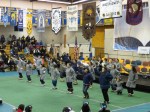
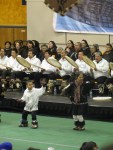
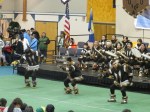
As I mentioned in the last post, my favorite dance at Kivgiq is the Box Drum Dance. As it happens, I got a decent set of videos from a performance of the Barrow Dancers. By ‘decent’ I of course mean for a random guy sitting in the stands with an okay sorta camera. This stuff ain’t gonna make the Home Video Hall of fame. But the subject speaks for itself. The first video is the Box Drum Dance. Unfortunately, I botched the second film, so one key dance is missing. It’s a damned shame too, because it’s an interesting dance. But immediately following that missing dance, there are usually a series of performances usually described as fun dances. I got those.

I wouldn’t pretend to know enough about this dance to describe it accurately. So, I will instead include a link to a wonderful page on the topic.

http://www.nativetech.org/inupiat/pullinginnewyearbody.html

Anyway, here are the videos.

.

100

100

.

101

101

.

102

102

.

103

103

.

104

104

.

105

105

.

108

108

71.271549 -156.751450

Share this:

  • Tweet
  • Share on Tumblr
  • Print (Opens in new window) Print
  • Email a link to a friend (Opens in new window) Email
  • Share on Reddit (Opens in new window) Reddit
Like Loading...

Kivgiq!!!

02 Thursday May 2013

Posted by danielwalldammit in Alaska, Anthropology, History, Native American Themes

≈ 14 Comments

Tags

Alaska, Barrow, Celebration, Charles Brower Sr., Dance, David Graeber, Inupiat, Kivgiq, Messenger Feast

Canadian Guests

Canadian Guests

Oh my, how time does fly!

It’s been over two months since Kivgiq. I’ve been meaning to write something about that since, well, …since two months ago. I’ve also been putting it off while catching up on other things. But you never do catch up, do you? And Kivgiq is worth a moment of bloggetry, so here goes!

So, what the Hell am I talking about? I’m talking about the Messenger Feast! At this point, it’s a biennial celebration taking place in February here in the North Slope. All the other villages of the North Slope are invited to several days of singing and dancing, and of course to a grand feast. Mostly, it means Iñupiat dance troops from all over the place. Sometimes folks even come in from Canada.

February is a special time of year in the North Slope, owing to the rapid return of the sun. It’d difficult to convey just how much that means to folks. After two months of polar midnight, people are ready for it. More than ready for it! And it’s return is spectacular. By February, we are starting to have something resembling an actual day here in Barrow, and yes, this is one more thing to celebrate.

Having recently picked up David Graeber’s chapter on the Myth of barter in Debt: The First 5,000 Years I was particularly interested in the role this feast may have played in the traditional economies of the region. One of the most interesting chapters in Graeber’s work details the absence of barter within small-scale small scale communities (this despite all the efforts of economists to put it there via thought experimentation). What happens in such communities, according to Graeber? Well people share the resources within their own community; they barter with outsiders, particularly those with whom they might be as likely to fight as to trade. Graeber further notes that the possibility of violence is often worked into the symbolism of the exchange.

To see the cooperative economics of the native community in Barrow, one needs only look at the whaling activities and subsequent distribution of muktuk throughout the community, though I suppose if you were looking for a ritual that enshrines this practice it would be Nalukataq in mid to late June. To see the tradition of bartering with neighbors? Well, now that would be Kivgiq, at least as it was initially practiced.

Charles Brower Sr., a town patriarch of sorts, provided a description of a Messenger Feast from the early twentieth-century which is particularly striking. Two messengers had been sent out to other villages, returning with the guests in July. The feast began as it does today with a footrace. Afterwards…

The main body of visitors followed, two hundred or more stretching out in a long line. Some bore mysterious packages on their backs, others dragged sleds piled high with skins. Everyone was dressed in his worst. I never saw a more disreputable looking crowd – nor one whose tatters covered more suppressed excitement.

Just above the station they were met by a picked up group of village men, naked to the waist. Each wore a loonskin on his head and carried a few arrows and a bow. Suddenly they gave a yell and started shooting over the heads of the strangers. Their arrows gone, they then retreated to the dance house where the rest of the crowd was congregated, still a bit put out over the results of the foot race (the local participants from the village of Utkiagvik had been soundly beaten).

At this time our messengers who had supposedly returned with the guests were nowhere to be seen. They’d have a hard time sneaking in the dance house now, I thought unless they too had dressed in old clothes, hoping to mingle with the guests and escape detection.

I was scanning the crowd with this in mind when a riot broke out in the doorway. A group of visitors laden with rolls of deer-skins, were demanding entrance, the guards steadfastly refusing to let them through. Higher and higher rose angry voices until, with final protesting shrieks, the guests were forced to unroll their deer-skins, and there inside lay our messengers, nearly smothered by heat and stifled laughter.

Mungie came by, grinning broadly. an old trick, he said.these inland people must have thought we’d never heard of it.

Our ‘home folks’ furnished the music that first day, visitors doing the dancing. A man and a woman would enter and dance, then loudly announce what they had brought for the one who had invited them. After which the recipient joined in and all three danced together.

Later the women disappeared to make ready the feast – mostly whale meat and seal. Many of the inland people, unfamiliar with such delicacies, couldn’t get the stuff down. Lucky for me that I’d learned to take my muctuc like any coast native, for this enabled me to join the crowd in making fun of our visitors. Their only comeback was to hint broadly at what they expected in return for their presents.

Since it was a matter of tribal pride that visitors be satisfied or else given back their own presents – a most humiliating procedure, our people went to ridiculous lengths to meet the demands. Many sold their whalebone to provide needed funds. A few of the poorest even asked for additional credit at the station. Anything to uphold the reputation of Utkiavie. It was silly – and a little touching.

I hadn’t yet seen our visitors at their best, for all this time they had been wearing their most ragged clothing. But when they took over the drums the second day while our crowd danced it was like the transformation of cocoons into butterflies. Decked in all the finery they had brought in bundles, they certainly were a fine looking lot of people. Many of the men were six feet tall. Even their women seemed larger and better looking than average Eskimos.

The third and last day was given over to the actual exchange of presents. I say ‘exchange.’ In reality it turned into one grand bargain-driving spree. If a gift fell below expectations, the owner kept adding to it until he had nothing more to offer. And when this failed to satisfy, the other par6ty demanded his present back even though he often sold it later for whatever it would bring.

I’ll end the narrative there, both because that is the relevant portion and because the whole story soon takes a tragic turn. After trading with non-native whaling crews, the guests contracted a disease, Brower figured it to be a kind of flu. Severely weakened from the flu, they elected to return home. For some time, the bodies could be found scattered along the river way headed inland, Brower doubts that any made it home.

What Brower saw was one of the last celebrations of the Messenger Feast held in the early twentieth-century. By the 1920s, natives had stopped holding this feast entirely. It would not be revived until 1988 when North Slope Borough leadership held the first Messenger Feast in roughly 80 years.

The Messenger Feast still retains many of the same themes present in Brower’s description, though specific details vary considerably. If I had dragged my butt out of bed early enough to catch the race, I could tell you all about that, but well, …I suck.

Seriously, I do.

The tradition of gift giving is still present, though it is less central to the ritual. People give a broad range of gifts to others (though items with a distinctively Iñupiat cultural significance seem to figure prominently in these events). One often sees the gifts sitting on the floor of selected open dances (in which any in the audience are invited to participate). Special gifts sometimes merit a moment in the spotlight for those involved. Either way the giver and the recipient will be out there for at least one dance.

I have asked a number of people whether or not reciprocation is expected, and or how that might be structures. The range of answers I’ve collected so far defies my ability to interpret all the variations. I most definitely did not see haggling, or heated exchanges over the value of the items in question. And if the significance of this theme has faded a bit, I would suggest that is at least partly due to the changing local economy. Gone are the days when inland and coastal peoples would have provided distinct contributions, much less the days when an event such as this could have presented a truly unique opportunity to get exotic foods or products. What remains is a symbol of generosity, albeit one with a very interesting history.

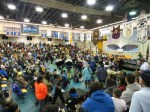
My favorite event in Kivgiq would have to be the box-drum dance, but I’ll save that material for a follow-up post. I wasn’t that happy with my pictures this year, but I think a few of them are worth sharing. If you click the pictures they will of course embiggen.

Entertainment during a massive potluck. …yes, it was bluegrass.
Banners
Dancing 1

Elder and child dancing together
Box Drum
Canadian Guests

It ain’t all serious.
Looks like an open dance, these come at the end of a performance.
The follow up to a Box Drum Dance.

Look at the crowd!
Yep, she dances.
Box drum preparations.

Note the gift on the floor
Event staff and security was called up for this dance.

I just have one video here that I will include in this batch. It stands out for me, because it illustrates so wonderfully the role of children at these events. Planned or unplanned, they are seemingly always involved in the performances. And if that lends a little chaos to a dance, then so much the better.

child

child

71.271549 -156.751450

Share this:

  • Tweet
  • Share on Tumblr
  • Print (Opens in new window) Print
  • Email a link to a friend (Opens in new window) Email
  • Share on Reddit (Opens in new window) Reddit
Like Loading...

Irritation Meditation # 5: Persecution Ain’t a Fricking Contest!

29 Monday Apr 2013

Posted by danielwalldammit in atheism, Irritation Meditation, Religion

≈ 33 Comments

Tags

atheism, discrimination, First World Problems, Logos, Persecution, religion, Repression, T-Shirts

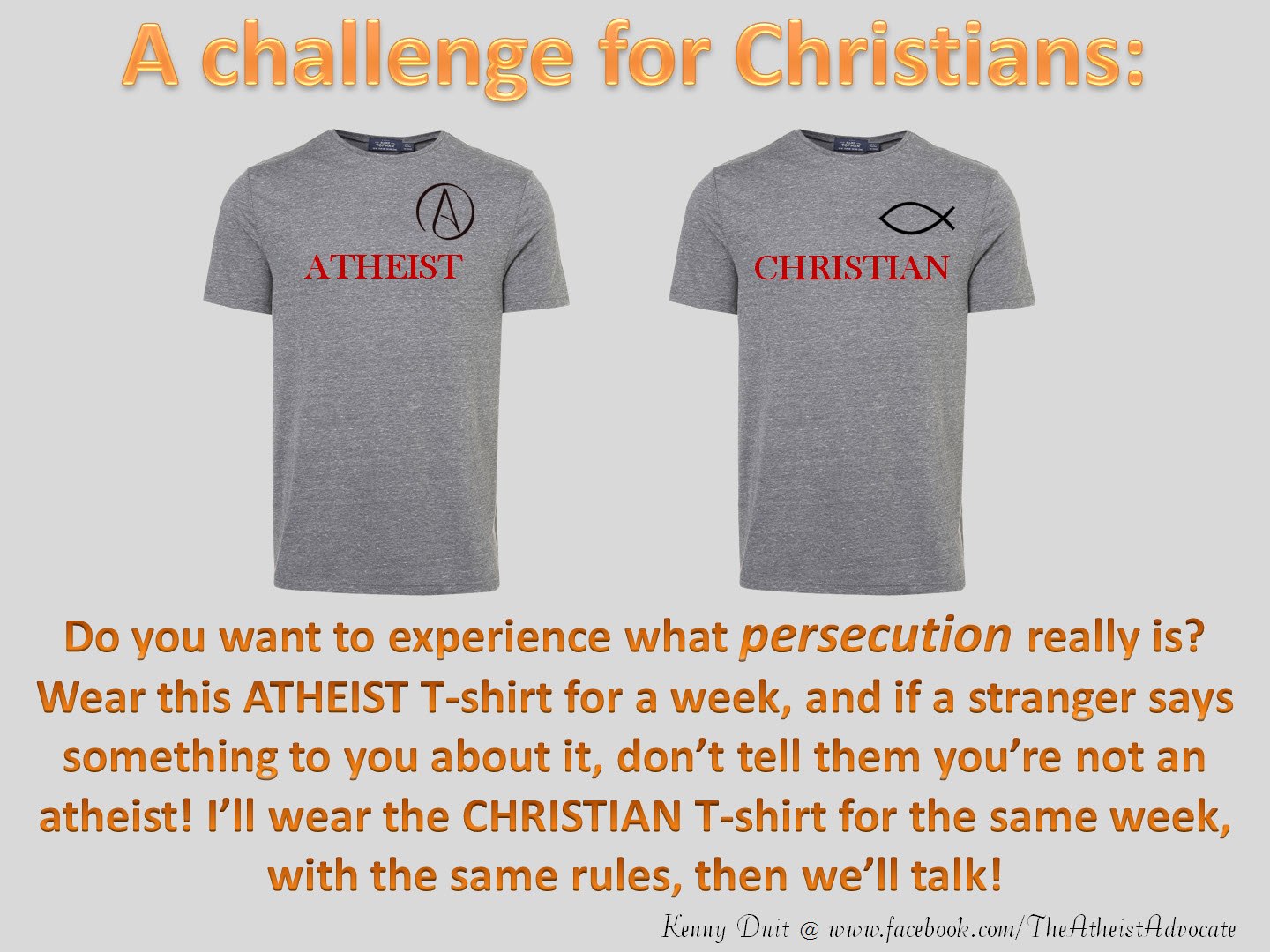
FXdukveAs far as irritation goes, this one comes close to being a mere amusement. I am talking about a challenge issued by The Atheist Advocate, the terms of which are fairly well explained by the illustration here, and I have to admit it’s tempting to just get behind this one. Seriously, I can almost go along with it.

…almost.

If only I had a nickel for all the times I have seen Christians complain about petty grievances or pass along outright falsehoods about this or that attack on their faith, well I could certainly afford another nice meal on that change. Hell, the non-existent war on Christmas alone ought to earn some believers a permanent subscription to “Cry Wolf Daily” (which actually wouldn’t be a bad blog project, come to think of it). Anyway, the point is that it gets damned tiresome to hear a dominant religious majority whine about how religious minorities are oppressing them.

But of course it isn’t really a dominant majority that spreads these cries of repression. Rather it is a small and highly vocal group of political Christians who would like very much to define repression of their beliefs so broadly as to include the failure to bow to their every Goddamned whim.

Taken at face value, I can’t help thinking this little gambit doesn’t quite rise above the difficulties it seeks to address. This whole thing really strikes me as something of a contest over First World Problems. One would hate to run into the occasional lunatic that might make either of these T-Shirts cause for real violence. …or the occasional workplace bigot that might actually use less violent means of putting someone from the wrong camp in their place. In any event, I expect most folks here in America would probably face little other than an uncomfortable conversation or three over wearing either of these shirts. There are some definite regional exceptions to be sure (cough! …deep South! …midwest!), but for the most part I think we are talking about a war of words.

Yes, I do figure those wearing an ‘atheist’ T-Shirt will have quite a few more of those unpleasant conversations than those wearing a ‘Christian’ T-Shirt, but I am open to the possibility that I am wrong about that, and I certainly wouldn’t estimate the flack for wearing the Christian shirt to be zero. Oddly enough, I expect some of the grief given to both Christians and atheists over this sort of thing could come from the same sources. An awful lot of people seem to want to have their sin and get to heaven too, so to speak, and they can be equally testy with religious fundamentalists and non-believers alike. This ‘moderate’ bunch can be especially testy if they believe someone else has brought the issue to the table and tried to force the question, …say by advertizing their (non-)beliefs in public.

That said, yes, I do think Christians are more likely to get a free pass on public expressions of their views f for no other reasn than that they have had their foot in that door for longer than those of us in the just-say-no camp. What strikes me as far more important is the fact that the list of people who have found out what ‘persecution really is’ would be unlikely to include anyone whose main worry of the day is what people will say about an ugly T-Shirt. There are people out there who face real consequences because of their belief-stances, and both atheists and theists are among them. That list also includes plenty of people who face real suffering as a result of things over which they have absolutely no control whatsoever. So, I think people should count themselves blessed if they live somewhere that you could actually play this game and expect life to continue in the wake of it.

As a general rule, I think anyone who wants others to appreciate the struggles they face could do better than to start by trivializing those of others people. I also think we would all be better served if folks spent less time claiming the title of most-repressed and more time thinking about what constitutes reasonable treatment of those with whom we disagree.

Oddly enough I’m not really opposed to the challenge, per se, just a certain over-billing of its significance. Still, if this leads a few of the more self-important Christians to rethink their narratives of martyrdom, then perhaps it’s a good thing. If it leads some people of either camp (or any other) to think carefully about their own bully-triggers and what we can do to help those under the gun for such things, so much the better.

71.271549 -156.751450

Share this:

  • Tweet
  • Share on Tumblr
  • Print (Opens in new window) Print
  • Email a link to a friend (Opens in new window) Email
  • Share on Reddit (Opens in new window) Reddit
Like Loading...

Thoughts on the Cherokee Blood-Feud, or Anthropology is Only Fun Till Someone Puts an Eye Out!

26 Friday Apr 2013

Posted by danielwalldammit in Anthropology, Education, History, Native American Themes

≈ 22 Comments

Tags

Blood Feud, Cherokee, Collectivism, Conflict Resolution, Ethnography, History, Justice, Navajo, War

Three Cherokee

Three Cherokee

…and of course that is when it gets really interesting.

By poking an eye out, I am of course talking about a special sort of moment one gets from time to time in the study of anthropology, at least I do. It’s the sort of moment when some cultural practice causes the hair on the back of your neck stand up and your stomach tries to dig its way to China (or Antarctica, as would be the case here in Barrow). I’m talking about that kind of moment when you encounter something in an ethnography that just seems like too much. So, you sit there and ask yourself, “How in the Hell could that be anything but wrong?” And for a little while anyway, your mind just doesn’t want to travel down that road, the one that leads to understanding the practice in its own context. You’d rather just say ‘no’. Hell, you’d rather shout it at them across the waters, over the mountains, and even if need be through the ages, cause someone needs to say it somehow, “This is just wrong!”

For the students in one of my classes this semester that moment came courtesy of the Cherokee blood feud, and the sticking point was very clearly collective responsibility for murder. Simply put, the feud enabled the clan of a murdered individual to claim revenge against any member of the clan to which the offending party belonged. More than that, the terms of this blood feud obligate people to do so.

But I said ‘murdered’ didn’t I?

Sequoyah

Sequoyah

That’s not quite right. In the old way, any individual responsible for killing another Cherokee could initiate the obligation to exact revenge, even if the killing was an accident. As our reading described it, a horse borrowed for the day could start trouble by bucking its rider off, thus triggering a feud between the clan of its owner and that of the deceased rider. So pretending for this paragraph anyway that I am Cherokee – I’m not, …not even the ubiquitous Cherokee grandmother every other white guy seems to have been blessed with – but let’s just pretend for a moment. If my brother’s horse spooks and kills a rider, I could be killed in revenge for this event. They do not need to take the offending party (if there even is such a person in this example); they might prefer to kill a different member of my brother’s clan (someone like ME, perhaps). So, I could die because of something my brother did, …even if that was an accident. The article we read even contained an instance in which a killer talked the avenging parties into killing someone else from his own clan.

And yes, this bothered my students. I can’t really blame them, because I can remember my own feelings years ago as I came to grips with this kind of dispute-system. It violates my sense of justice too, or at least the master metaphors through which I and my students typically process this kind of information.

But it’s worse than that!

You see, the point here isn’t merely that people do this, but that this system is actually normative. In a certain time and place, according to a certain cultural order, this is what was SUPPOSED to happen. This is what’s right, at least as the Cherokee once defined it, and that proved more than a little disturbing to my students this semester.

Proper verdicts thunder!

Proper verdicts thunder!

I’m inclined to think the sticking point is an intuitive sense that guilt is an individual responsibility, at least for myself and the students in my classroom last week. Guilt is the medium through which we seem to want to look at deviant behavior, and that concept does not seem to want to travel in large groups; it resides in the soul of a single individual.

Heh, …I said soul, didn’t I?

It is perhaps part of the legacy of historical Christianity under which all moral failings could at one time be construed as defiance of the Lord. Whether one had committed murder, taken to drink, or charged interest on a loan, all of these crimes and others were testimony to personal defiance of the Lord. And of course, much like Santa Clause, He would know!

I’m inclined to think the projection of an omniscient judge and jury played an important role in shaping the concepts of guilt so familiar to people today. One can even see a trace of this mythic imaginary in secularized notions such as crimes against the state (or against society as a whole). Guilt is personal, it is absolute, and it obtains even when the social facts proceed on without taking notice of it. Even the medicalized notions of deviance stemming from the mid to late twentieth-century seem to be largely focused on the individual. The insanity defense is about the capacity of an individual to grasp right or wrong, and it is one individual after another whose failures in life can be described as due to this or that syndrome. When we withhold the pronouncement of guilt on an individual, it is rather often to pronounce sickness upon him instead. Either way, we do not typically assign counseling as a condition of probation for all the members of his extended family.

In short, we care who dunnit. We really care!

Adam and Eve Hide from God

Adam and Eve Hide from God

That of course has less to do with anything inherently wrong with clan-based blood-feuds than it does the cultural logic of western traditions. What pokes my students and I in the eye as we study this custom has less to do with has less to do with Cherokee society than our moral sensibilities. We just can’t fit their approach into our own world, not without feeling a little violated when doing it.

I’ve learned to regard that feeling as evidence that I have just found something worth studying. For some of my students, the problem was collective responsibility, but the real irony here is that we are not really strangers to collective responsibility. Not by a long shot.

It probably won’t help matters much to mention gangs in this regard, though the logic of a gang hit is certainly comparable in some respects (one needn’t get the original culprit, just one of his home-boys). But of course gang members are hardly the only people in modern America to engage in disputation at the level of collective responsibility. We may have fought a war against Saddam Hussein, but in real-world terms that meant killing a lot of Iraqis. The same can be said of the Taliban whose principal cause of war appears to have been sheltering Bin Laden. The story will not change much for any given war; war is by definition a conflict between collective entities. Either way someone is dying because of what some other bastard did, and folks may be sad about it, we might even make a regretful movie or sing a sad song about it, but such is war.

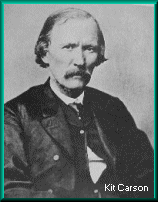
kcarson2In some cases the absurdity of this collective logic creeps through the practice of war more than others. When I used to teach Navajo history, I used to despair that the first of my two textbooks spent far too much time detailing a pattern of raid and retribution between Navajos and the Spanish. Time and again, the book would describe a raid conducted by Navajos followed by a punitive expedition carried out by the Spanish. It’s a pattern that continued clear up through the Mexican period in the Southwest, and further still into the early years of American occupation. And in all these punitive actions, no-one seems to have bothered to ask if the Navajo communities bearing the brunt of the attack had much to do with those who had been doing the raiding. Collective responsibility was simply assumed.

It should be added that Navajos seem to have taken the brunt of the blame for a pattern of raiding that was fairly ubiquitous in the Southwest. They were certainly not the only group conducting such raids, but that is a gripe for another day.
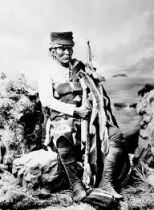
imagesFor their own part Navajos developed an oral tradition describing a very different allocation of responsibility to the specific raiding parties, viewed as irresponsible young men bringing trouble to their own people. This point becomes that much more clear in the wake of the Long Walk and internment at Fort Sumner. This event marks the nadir of most stories about Navajo history, it is story in which Kit Carson ’rounded up’ the vast majority of the Navajo people and took them to a small reservation in Southeastern New Mexico. The next four years (1864-68) were difficult to say the least for Navajos and damned expensive for the U.S. government. In the end they were allowed to return home.

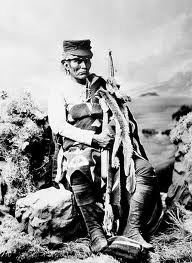
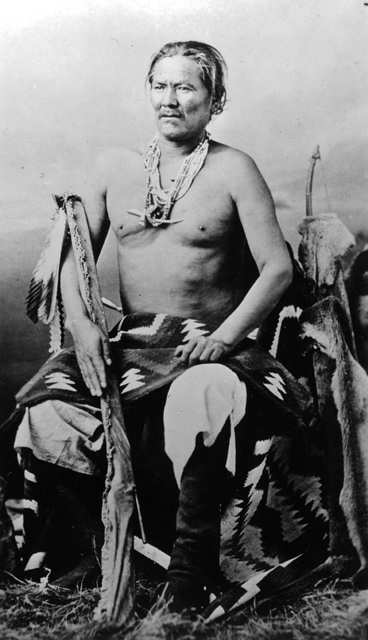
ManuelitoSome have defended Carson’s actions on the grounds that it had at least ended the raiding patterns of the past centuries. What these historians consistently missed was that the raiding patterns continued in the years after fort Sumner. After Fort Sumner, a raid brought Federal troops who went straight to the Navajo police under the leadership of Ganado Mucho or Manuelito. The Navajo police then brought back whatever livestock had been stolen. Before Fort Sumner a Navajo raid was an act of war with collective responsibility applying to the Navajo people as a whole; after Fort Sumner it was a criminal act, the responsibility for which fell on individual shoulders. The difference that makes this distinction had less to do with actions than understandings.

…and in this case that was all the difference in the world.

Perhaps the logic of warfare is too remote for the majority of us in modern America, but there is one respect in which the notion of collective responsibility is absolutely a part of our every day lives, the business of corporations. As some would describe it, the very point of forming a corporation is to re-allocate responsibility for the actions associated with a business concern. Once a source of great controversy, the existence of these collective entities in American business (and that of the world at large) is easily accepted as an accomplished fact.

It is just the way the world works, so common wisdom would have it. We accept that we will not get to talk to the bastard (or bastards) at Bank of America, Wells Fargo, or any other major bank who decided they could reorder your checks from the biggest to the smallest in the event of an overdraft and charge extra fees in the process. We accept that the poor agent who answers our call will be the one to hear whatever we have to say about such an outrage. We accept that CEOs in charge of failing corporations may travel freely on to the next chapter in their bright shining futures, leaving countless lives ruined in their wake. And we accept that (with rare exceptions) lives lost or immiserated by corporations will never result in punishment of those specifically responsible for polluting this river or putting that firebomb of a vehicle on the market.

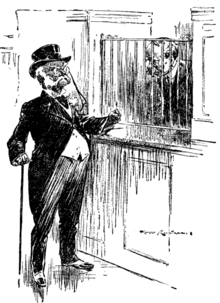
"I warn you, Sir! The discourtesy of this bank is beyond all limits. One word more and I — I withdraw my overdraft!"

“I warn you, Sir! The discourtesy of this bank is beyond all limits. One word more and I — I withdraw my overdraft!”

Of course, there are circumstances in which charges of criminal fraud or negligence may occur, but this would seem to be the rare exception (except perhaps in Island where they actually have the balls to hold white collar criminals accountable for wrecking a national economy) Under normal circumstances, these giant entities screw customers and maim communities with impunity, and there is little one can do about it. The most one might hope to see in the way of justice from such practices will take the form of financial compensation from a corporate entity, the loss shared out through its stock-holders. Those directly responsible for terrible decisions will in most cases never see any significant retribution for the harm they cause to others.

…and the more I think about it, the more this one starts to feel like another poke in the eye.

If collective responsibility is the sticking point in accepting the justice of a clan-based feud system, it is not because collective responsibility escapes us, or perhaps it is because it escapes us when we actually use such an approach in our own lives. The real question is just why do we allow for collective responsibility in warfare and corporate business activities while insisting on individual responsibility for ‘crimes’? I and my students didn’t follow this question, because of course that wasn’t the task at hand, but it’s the sort of thing I hope will hang in their minds long after they have hit send on their final papers. If it’s done right, a good anthropology course should leave students with more than a collection of facts about other people in other times and places, it should also leave them with a new sense of the communities in which they themselves live.

The cognitive poke in the eye is on the house.

***

Three Cherokee are from here. The image of Sequoyah is from the Smithsonian Institution. The image of Kit Carson is from the Kit Carson Museum. Ganado Mucho comes from Navajo People.org. Adam and Eve hiding from God comes from an old engraving by Julius Schnorr von Carolsfeld. I got it from istockphoto. Manuelito comes from a class at ASU. The gavel is from Sara Marberry’s Blog. The Bank Cartoon comes origonally from an entry of Punch Magazine published in 1917, but I got it from Wikipedia.

71.271549 -156.751450

Share this:

  • Tweet
  • Share on Tumblr
  • Print (Opens in new window) Print
  • Email a link to a friend (Opens in new window) Email
  • Share on Reddit (Opens in new window) Reddit
Like Loading...

Piuraagiaqta!

22 Monday Apr 2013

Posted by danielwalldammit in Alaska

≈ 12 Comments

Tags

Alaska, Barrow, Contests, Games, Photos, Piuraagiaqta, Spring, Whaling

A Sledding We Will Go! (Pic taken with my phone.)

A Sledding We Will Go! (Pic taken with my phone.)

So, we recently celebrated Piuraagiaqta here in Barrow. That’s our Spring festival for those of you whose tongues aren’t feeling adventurous. I was pretty busy during this several-day event, but I snuck outside on a few occasions to catch the outdoor games held on one of our lagoons.

Simon Says “Click to embiggen!”

yes, this is what a parade looks like at the top of the world.
Gotta Have Emergency Vehicles
Balloons and moar!

“ASRC” stands for “Arctic Slope Regional Corporation”
an I get a little Elevation?)
This one makes me feel warm, …almost!

Truck!
Yes, they throw candy (everyone throws candy)
College float. Hey why aren’t you in class!?!

Games on the Middle Lagoon
Moar Games
The Harpoon toss turned out to be a 2×4 aimed at a painted picture of a whale. …mind you, some guys were pretty good.

Did I mention this whole thing is held on a lagoon?
Coming Around the turn!
Sculptures, and the whaling theme is on everyone’s mind. It’s about that time, if the ice will just cooperate!

Sculpture In-Progress
Youngsters racing snow machines
A Sledding We Will Go! (Pic taken with my phone.)

Moar Sculptures (And golfers in the background) (pic by phone)

Harpoon Toss!

114

114

A view of the games from above.

The Final Race. It was held at 4:00pm Barrow time, which turned out to be about 5:00pm. For the longest time it looked like they were going to have 3 racers, but a fourth showed. (and my battery died just before the second place guy crashed.  I think he was okay, but maybe his machine wasn’t)

174

174

71.271549 -156.751450

Share this:

  • Tweet
  • Share on Tumblr
  • Print (Opens in new window) Print
  • Email a link to a friend (Opens in new window) Email
  • Share on Reddit (Opens in new window) Reddit
Like Loading...

I’ll take Cold Tropes and War Analogies for $50, Alex!

19 Friday Apr 2013

Posted by danielwalldammit in Education, History

≈ 26 Comments

Tags

Analogies, Cold War, Communism, Education, History, Metaphors, Pokemon, teaching, Trops

coldwar_nike1It’s getting harder to explain the history of the cold war, at least insofar as students are less and less likely to relate to the era in any personal way. Gone are the days when the subject could elicit a visceral reaction from the under-thirty age-set. I distinctly recall that fear of the world ending with the push of a single button played a big role in my own teen angst, and I doubt I am special in that regard. Hell, I sorta figured it was actually going to happen at some point, all of us were going to die in one big final feud, but then again I’m fun like that. The point is that the subject hung like a cloud over the heads of some of us back in the day.

I suspect a lot of my students have trouble wrapping their minds around the whole thing. So, when you come to something like the Cuban Missile Crisis, it takes a little prep work to get across what would have seemed obvious to my own generation, that this little event, a paragraph or two in the average textbook, actually threatened all of life as we know it. Today, I usually just tell my students that none of us would have been born had things gone differently in that particular sequence of events.

I think they get it.

…sort of.

It’s not just the subject matter that is slipping away, so to speak; it’s also the imagery. This isn’t just true of the cold war. Many of my favorite pop-references are becoming less and less relevant to younger students as my youth passes further and further from the realm of things about which the kids at the cool table could be asked to give a damn.

cokeOne of my favorite teaching-gambits for the cold war has slowly faded into the realm of useless. For years I used to ask my students who lost the cola wars. This always got some funny looks, followed by suggestions of ‘Coke’ then ‘Pepsi’ both of which I would shoot down without the slightest hint of an explanation, …leaving them to give me more funny looks.

How could it be neither?

Sooner or later someone would suggest Shasta, Nehi, RC-Cola, or some other obscure brand of soda most likely consumed by cave men in the sad old days before Paula Abdul and Michael Jackson. This suggestion would then become a jumping off point for discussing the impact of the cold war on various third world nations forced to articulate their own interests in terms framed by the U.S. and Soviet Union.

imagesToday my students still give me blank stares, but they are not the blank stares of students struggling with a conundrum; they are the blank stares of students listening to someone try and explain a complicated issue by means of a metaphor that is no more accessible to them than the full story in itself. Sadly, it is time for me to move this metaphor to the back shelf and put some other theme in the specials section of my intellectual supermarket.

(See what I did there?)

Missionary colonial periodI once TAed for an instructor that used to compare the Cold War to the conflict between Protestants and Catholics in the colonial era, each bringing a vision of absolute truth to Native Americans, promising that truth was the key to liberation, demanding their loyalty, and taking everything they had in the process. (How’s that for a run-on sentence!) So, that professor seemed to be suggesting there was nothing new under the sun, just two new world powers playing the same old shell games with the rest of humanity. I like this analogy too, but it’s not so much a quick entry into the topic as a food-for-thought and what-does-it-all-mean kinda notion.

Today I was trying to explain the dynamics of proxy wars to a student when I could see the light go off over her head. A moment later she exclaimed that it was just like Pokémon. The other students quickly nodded, and after a brief moment in which I sort of wanted to cry, I thought actually that isn’t too bad.

PiakchuSo, here I sit, watching the next batch of students suffer their way through an exam and wondering if this is the wave of my pedagogical future? Will I soon find myself saying things like; “And then Nikita Kruschev said, ‘Fidel Castro, I choose you!'” Can I wrap my mind around the concept of West Germany as Picachu? Can I use this narrative without promoting anyone to the heroic status of Ash? Or should I just let John Wayne have that role? Can y’all imagine the Duke in his Green Beret uniform whipping out a pocket monster and saying; “have at ’em liddle pardner!” The imagery almost seems promising, but I just don’t know if I am up to the task. This isn’t my era, and I don’t know the game.

The whole project does have a certain amount of promise. I wonder if I can get faculty development funds for this? I wonder if the Dean of Instruction will give me money to go to the gym and develop my Pokédex?

Cause I really don’t think I can teach this subject without a fancy new gym badge!

71.271549 -156.751450

Share this:

  • Tweet
  • Share on Tumblr
  • Print (Opens in new window) Print
  • Email a link to a friend (Opens in new window) Email
  • Share on Reddit (Opens in new window) Reddit
Like Loading...
← Older posts
Newer posts →

Top Posts & Pages

  • "No Kings" and No Kings
    "No Kings" and No Kings
  • An Uncommon Security Guard: Dave Eshelman, AKA 'John Wayne'
    An Uncommon Security Guard: Dave Eshelman, AKA 'John Wayne'
  • Taking a Knee?
    Taking a Knee?
  • Hostiles and Spoilers: A Magic Studi
    Hostiles and Spoilers: A Magic Studi
  • When Sex Falls Out of the Performance
    When Sex Falls Out of the Performance
  • Rooting for the Indians and Damn that Custer Anyway!
    Rooting for the Indians and Damn that Custer Anyway!
  • An Uncommonly Normal Picture Post
    An Uncommonly Normal Picture Post
  • Today's Pointless Anecdote - A Conversation Between a Gang Leader and His Probation Officer.
    Today's Pointless Anecdote - A Conversation Between a Gang Leader and His Probation Officer.
  • Gray Mountain Murals
    Gray Mountain Murals
  • The Truly Trashy Post: Barrow's Finest Dumpsters!
    The Truly Trashy Post: Barrow's Finest Dumpsters!

Topics

  • Alaska
  • Animals
  • Anthropology
  • atheism
  • Bad Photography
  • Books
  • Childhood
  • Education
  • Gaming
  • General
  • History
  • Irritation Meditation
  • Justice
  • Las Vegas
  • Minis
  • Movie Villainy
  • Movies
  • Museums
  • Music
  • Narrative VIolence
  • Native American Themes
  • Philosophy
  • Politics
  • Public History
  • Re-Creations
  • Religion
  • Street Art
  • The Bullet Point Mind
  • Travel
  • Uncategorized
  • Uncommonday
  • White Indians
  • Write Drunk, Edit Stoned

Blogroll

  • American Creation
  • An Historian Goes to the Movies
  • Aunt Phil's Trunk
  • Bob's Blog
  • Dr. Gerald Stein
  • Hinterlogics
  • Ignorance WIthout Arrogance
  • Im-North
  • Insta-North
  • Just a Girl from Homer
  • Multo (Ghost)
  • Native America
  • Norbert Haupt
  • Northwest History
  • Northy Pins
  • Northy-Tok
  • Nunawhaa
  • Religion in American History
  • The History Blog
  • The History Chicks
  • What Do I Know?

Archives

  • March 2026
  • December 2023
  • November 2023
  • June 2023
  • April 2023
  • February 2023
  • December 2022
  • November 2022
  • October 2022
  • September 2022
  • August 2022
  • July 2022
  • June 2022
  • April 2022
  • January 2022
  • December 2021
  • November 2021
  • October 2021
  • September 2021
  • August 2021
  • June 2021
  • May 2021
  • March 2021
  • February 2021
  • January 2021
  • December 2020
  • November 2020
  • October 2020
  • September 2020
  • June 2020
  • May 2020
  • March 2020
  • February 2020
  • January 2020
  • December 2019
  • November 2019
  • September 2019
  • August 2019
  • July 2019
  • June 2019
  • May 2019
  • April 2019
  • January 2019
  • December 2018
  • November 2018
  • October 2018
  • September 2018
  • August 2018
  • July 2018
  • June 2018
  • May 2018
  • April 2018
  • March 2018
  • February 2018
  • January 2018
  • December 2017
  • November 2017
  • October 2017
  • September 2017
  • August 2017
  • July 2017
  • June 2017
  • May 2017
  • April 2017
  • March 2017
  • January 2017
  • December 2016
  • November 2016
  • October 2016
  • September 2016
  • August 2016
  • July 2016
  • June 2016
  • May 2016
  • April 2016
  • March 2016
  • February 2016
  • January 2016
  • December 2015
  • November 2015
  • October 2015
  • September 2015
  • August 2015
  • July 2015
  • June 2015
  • May 2015
  • April 2015
  • March 2015
  • January 2015
  • December 2014
  • November 2014
  • October 2014
  • July 2014
  • June 2014
  • May 2014
  • April 2014
  • March 2014
  • February 2014
  • January 2014
  • December 2013
  • November 2013
  • October 2013
  • September 2013
  • August 2013
  • July 2013
  • June 2013
  • May 2013
  • April 2013
  • March 2013
  • February 2013
  • January 2013
  • December 2012
  • November 2012
  • October 2012
  • September 2012
  • August 2012
  • July 2012
  • June 2012
  • May 2012
  • April 2012
  • March 2012
  • January 2012
  • December 2011
  • November 2011
  • October 2011

My Twitter Feed

Follow @Brimshack

RSS Feed

  • RSS - Posts
  • RSS - Comments

Enter your email address to follow this blog and receive notifications of new posts by email.

Join 8,068 other subscribers

Blog at WordPress.com.

  • Subscribe Subscribed
    • northierthanthou
    • Join 8,068 other subscribers
    • Already have a WordPress.com account? Log in now.
    • northierthanthou
    • Subscribe Subscribed
    • Sign up
    • Log in
    • Report this content
    • View site in Reader
    • Manage subscriptions
    • Collapse this bar
 

Loading Comments...
 

    %d