• About

northierthanthou

northierthanthou

Tag Archives: Movies

Great Movie Villains, Volume VIII: Your Mother!!!!

13 Sunday May 2012

Posted by danielwalldammit in Movie Villainy, Movies

≈ 10 Comments

Tags

A Christmas Story, BB Gun, Christmas, Film, Mother, Mother's Day, Movies, Shoot Your Eye Out, Villainy

Okay, maybe not your mother, but damned close! Today’s movie villain is that lovable every-Mom from A Christmas Story.

What?

I should wait for Christmas?

This villain isn’t Santa Clause! It’s Mother. And today is exactly the day to celebrate the most excellent movie villainy of Mom.

The Mom from A Christmas Story is the perfect Mom to be our movie villain of the day. From the very first scene you cannot help but fall in love with her. …which would only be your first mistake.

Don’t even try to tell me that you don’t see it, because we all know that you are right there with Ralphie on that Red Rider BB Gun thing. You want it for him. You want it for yourself. Even if you are a girl, you want the Red Rider BB Gun, or at least you’ve wanted something as badly as Ralphie wanted that Red Rider BB Gun. Your own Red Rider BB Gun might have been a Cabbage Patch Kid, a new bike or even a bullwhip, …mine was a bullwhip. Anyway, the point is that we’ve all had our Red Rider BB Gun. So, when Ralphie says he wants one for Christmas, he speaks for all of us. Hell, he is us!

And that makes his Mom, OUR Mom!

…at least for the balance of the movie.

And when Ralpie’s Mom says ‘no’ to that Red Rider, you all know damn well how it feels, because you heard it from your Mom too. If there was ever any doubt that his Mom was your Mom and my Mom, it vanished in that very moment. Right there and then Mother squashes your one true purpose in life. What on earth would possibly be better than a Red Rider BB Gun? Nothing! And she says ‘no’! It’s soul-crushing.

You know what I am talking about. You are right there in the scene with Ralphie and I right now, aren’t you? You are there.

And sure enough, there Mom is, telling you ‘no’. “You’ll shoot your eye out,” she says. It is the first of many times you will hear this terrible proclamation. And seriously, is Mother not acting as the true villain here? Is she not the central obstacle to fulfillment of our major ambition. How could Mother possibly be anything else but a villain while doing such a terrible thing?

Dad would understand. At least he would if it weren’t for Mom. She’ll talk to him and that will ruin everything.

Don’t try to say that it’s okay, because it’s not. At that moment Mother crushes the heart of hope itself. World Peace, the love of God and country, even the taste of really great candy; all these things fail when you hear those words; “You’ll shoot your eye out.” No movie villain has ever taken more away from a protagonist than Mom did in that moment when she first uttered those terrible words.

But that is not all. Let us not forget how skillfully Mother wielded the winter-clothing torture against our little brother! Let us not forget how he cried all the way to school, how he fell in the snow, and how we had to help him up! Let us not forget the vision of our poor dear brother crying as no child has ever cried before, all because Mom insisted on packing him into such a bundle of cloth. What villain could possibly have been more ruthless?

Let us not even speak of the lamp! …that beautiful lamp that father loved so much, the one she destroyed, thus proving her total domination of the household! No, let us not speak of these things. It is enough to remember them.

…and cry.

Yes, my friends, the mother of A Christmas Story is perhaps the most powerful movie villain ever. Who else could possibly block our greatest ambitions with a single phrase, bring our closest kin to tears, and destroy our father’s prize possessions? Who else but Mom? Worse still, who could do all that and make us love her for it? With her gentle strength and calm demeanor, the Mother of this story seeks to seduce us all, to help us find in her what we loved most about our own Mothers, all the while inflicting upon us that which we most feared in them. She beckons us to find reasons to thank her for every crime against our hopes. She insists that we learn to see it her way. There is no quarreling with this mother, no chance to fight back against her charms. She is relentless!

Who could make us love her even as she rules over us with a gentle but overwhelming smile?

Only Mother.

Best villain EVAR!

71.271549 -156.751450

Share this:

  • Tweet
  • Share on Tumblr
  • Click to print (Opens in new window) Print
  • Click to email a link to a friend (Opens in new window) Email
  • Click to share on Reddit (Opens in new window) Reddit
Like Loading...

Ten Little White Indians, Final Volume! (Spoilers Already Spoiled!)

28 Saturday Apr 2012

Posted by danielwalldammit in Movies, Native American Themes, White Indians

≈ 13 Comments

Tags

American Indian, Avatar, Dances With Wolves, Film, Graham Greene, Kevin Costner, Lakota, Last Samurai, Movies, Pawnee, Stereotypes

Bet y’all didn’t notice!

I am one short on my promise of 10 Little White Indians. Well, it turns out that my three-part series on White Indians has four parts, and there is surely a good Monty Python reference in there somewhere, but maybe we’ll save that for another day

***

Let us start with a brief consideration of the near misses.
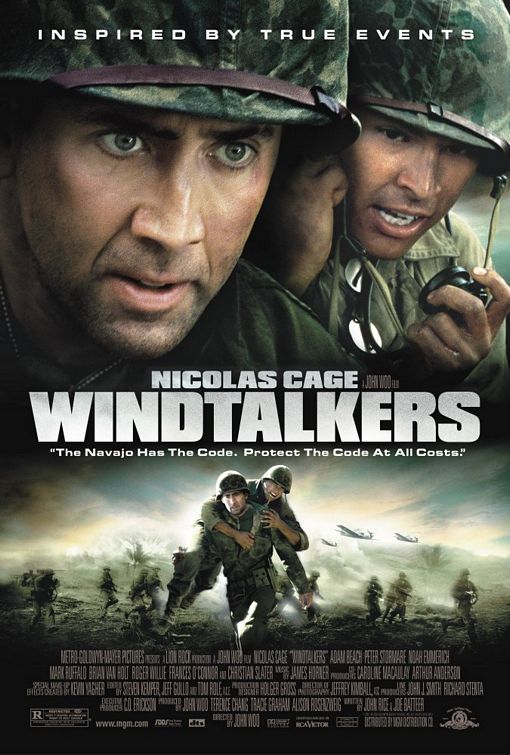
Wind talkers

WIND TALKERS (2002): I remember when this movie was on its way to the theaters, rumor had it that the flick was about the Navajo Code Talkers. Working as I did then on the Navajo Nation, I was (like a lot of my students and colleagues) really excited to see this part of American history portrayed on screen. My enthusiasm waned considerably when I realized it wasn’t about a Code Talker so much as a white guy who might have to kill a Code Talker if things took a turn for the worse. I don’t think I was the only one who sank in my seat when I realized where this was going.

…not quite a white Indian, but definitely the same sort of bait&switch one normally gets with this theme.

The Last (White) Samurai

THE LAST SAMURAI (2003): Don’t act surprised. You know this movie is about a white Indian. I mean, the Indians are Japanese, but let’s not get too worked up about the details. It’s the same story, just transplanted to a different setting. Tom cruise goes to live with a strange and seemingly savage people. He comes to know their ways and love them. Finally, he leads them in a battle to revitalize the way of life that is so brilliant, it needs an outsider to save it.

What separates this from A Man Called Horse? Geography.
Avatar

AVATAR (2009): I owe this reference to simplycarola as she mentioned it in another discussion. But the story of a human who enters an alien world filled with nature-loving creatures is just too much to pass up. Jake Sully, our hero, in this film struggles to survive among these savages, finds them wonderful, and leads them in war against his own people. Yes, this is a white Indian on another planet. …and the ease with which ‘white’ transits into ‘human’ while the role normally reserved for Native Americans morphs into an altogether alien species, …well that takes icky to infinity!

***

Okay, so what about it? Why does it matter that Hollywood makes so many stories about white Indians?

Truth be told, I don’t see anything wrong with this kind of story. In fact, the subject of white Indians (or any other non-Indians going native) is fertile ground for storytelling. The problem lies rather in the way this persistent theme seems to marks an inability to venture into stories about Indians themselves, a sort of hesitance at the threshold of another interesting subject. We want to know about Lakota, about Cheyenne, about all of these people! But in the end it seems that they prove too strange, their world too foreign to deal with on its own terms, so we end up with a story about someone else, someone who knew them.

That is the problem; in at least some of these cases, the white Indian is a confession of sorts, an admission that certain movie-makers, and perhaps certain audiences are not quite up to the subject at hand.

Non-Natives seem to better appreciate film depictions of Native Americans if we get to see that depiction through the lens of another non-Native. That in itself certainly isn’t a crime, but it does skew the details of the story in odd ways. The frequency with which the white guy gets the red girl is a bit disturbing, as is the myopic celebration of a romance in the midst of a world that is rapidly falling apart around the fair Indian maiden. Are we really supposed to be happy for the hero that he gets the girl, devastated though she must be? And doesn’t the loss of her family and her people merit a little more than a brief moment of regret. Hell, I can’t help wondering if her story isn’t clearly the more dramatic one in every single one of these films. That the Indian maiden is so often portrayed as a kind of princess should drive the irony meter all the way to 11.

And then of course there are the men who come to lead their adopted native communities. It isn’t enough to imagine one’s white self as an Indian, one has to be their leader too! The characters have to out-Indian the Indians (or in the case of Tom Cruise’s, out-samurai the samurai). As far as self-indulgence goes, I have to admit this theme makes me a little ill.

It’s not that these movies are terrible. Okay, some are. (Pathfinder was dreadful!) Others are really quite wonderful.

And some are both at the same time.

***

Dances With Wolves

Which brings us to the 10th and final white Indian. You guessed it, DANCES WITH WOLVES (1990). The narrative is familiar to most by now. This is the story of a white Indian made larger than life and then some. Disturbed by his experiences in the Civil war, John J. Dunbar (Kevin Costner) asks for a post on the frontier and soon finds himself quite alone on the great plains.

In time, Dunbar will befriend a local band of Lakota. He will hunt buffalo with them, help to defend them against Pawnee raiders, and fall in love. His love interest (“Stands-with-a-Fist” played by Mary McDonnell) is herself a white woman, adopted by kicking Bird (Graham Greene), the village Medicine Man. Dunbar soon finds himself on the Indian side of hostilities with the U.S. Army. It is a role he embraces willingly.

There is no happy ending here. Realizing that his presence puts the people in danger, Dunbar leaves with Stands-with-a-Fist, and the movie ends with an epilogue telling us that the Sioux were subjugated 13 years later.

…ouch!
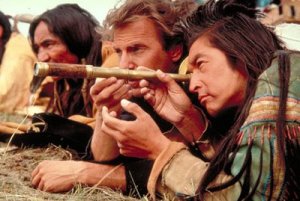
Kicking Bird Takes a Look

This movie has all the elements one might expect from a story about a white Indian, and it presents those elements in truly majestic fashion. The Buffalo-hunting scene alone is enough to warrant at least three viewings of this wonderful movie. And the Indian characters around Dunbar come through with a richness seldom seen in Hollywood productions. Greene proved himself to be especially brilliant.

But Dances With Wolves also has all the vices of a movie about white Indians. Dunbar’s girl is not quite an Indian princess. At least the facts of her life story seem to complicate that theme, but then again she is still the daughter of the most prominent Indian in the story, and Stands-with-a-Fist is fully assimilated when Dunbar finds her. White or not, she occupies the role of an Indian princess to a T (…or maybe a P), helping us to tread old ground in this awful movie.

Stands With a Fist

Do I need to comment on Dunbar’s role as a leader in the battle scenes? He never quite becomes a chief, but Dunbar rallies the troops (…pardon me, warriors) to great effect during a battle scene with the Pawnee. If he lacks a crown (or rather a feather), it is clear enough that Dunbar has already begun to assume the role of a war chief when the final plot twists interrupt his happy ending. As far as the out-Indianing-the-Indians theme goes, Dances With Wolves would have to be considered among the worst offenders.

But of course this magnificent film is best remembered for its nuanced treatment of Indian characters. The film rightfully received much praise for getting past stern warriors and stoic expressions to show us real people with complicated lives and rich personalities living in that Lakota camp. Dances With Wolves did a lot to dispel the Hollywood Stereotypes and introduce people to a fuller sense of the humanity in Indian peoples.

…unless, of course you are a Pawnee. If you are Pawnee, this movie takes all those stereotypes and dumps them right on your shoulders. Don’t get me wrong. Dances With Wolves does not make any overt statement that Pawnee are evil; it just consistently portrays them as the aggressors in every major conflict of the film. (The historical irony is, well a topic for another post.) It is Pawnee that orphaned Stands-with-a-Fist, and it is Pawnee that attack the Lakota village forcing Dunbar to become the white Indian hero that he was meant to be. The closest we get to any indication that Pawnee might not be a uniformly homicidal indigenous nation is a line from one Pawnee warrior questioning the wisdom of his aggressive leader. That one moment, aside, Pawnee appear largely to exist in this movie for the sole purpose of making other people miserable.

In its treatment of Pawnee, Dances With Wolves carries forward a Hollywood tradition. It seems that so many films sympathetic to Indians deal with Cheyenne or Lakota, indigenous peoples that went to war with the Pawnee. Not surprisingly, Pawnee come out bad in the resulting narratives. Even Jack Crabb didn’t have much use for them, as he told us. But if Little Big Man’s treatment of the subject was nuanced, qualified through use of an obvious frame, the treatment in Dances With Wolves seems flat-footed. One cannot help but to think that we are invited to think of Pawnee as the bad Indians in this awful movie just as its main character would.

After all, we do need some sort of villain don’t we?

And here is where I come to wonder about the real significance of Dances With Wolves. I remember the rave-reviews when it came out. I remember the gushing praise from folks happy to finally have a movie that portrays Indians in a positive light. And I wonder how the Hell so many people could have forgotten about Little Big Man? The stereotypes had already been kicked around quite a bit back in that old flick. So, why didn’t people remember the last time someone went out of their way to introduce us to the rich characters living in those tepees? Why did the stereotypes need a fresh thrashing in 1990?

Dances With Wolves

It might well be that those characters faded with time, and what we were left with was the story of the white guy who lived among them.

And therein lies the problem. However wonderful the part, a supporting role is still a supporting role. And that can be a wonderful thing. But one must remember the difference.

When done well, stories about white Indians may give us a glimpse of life in Native American communities, but that glimpse is always filtered through the significance of a character whose role in that world is tenuous at best. At their worst, such films celebrate Native themes only to subordinate them with a (hopefully unintended) message of white dominance. Even at their best, however, one should always remember the real subjects of the story-line are NOT the indigenous people. Whether the treatment of Native American subjects in such films is sympathetic or hostile, nuanced or  crass; either way the treatment is filtered through the eyes of the white characters.

The limitation is rather signifcicant.

71.271549 -156.751450

Share this:

  • Tweet
  • Share on Tumblr
  • Click to print (Opens in new window) Print
  • Click to email a link to a friend (Opens in new window) Email
  • Click to share on Reddit (Opens in new window) Reddit
Like Loading...

Ten Little White Indians: Reflections on a Hollywood Cliché

18 Wednesday Apr 2012

Posted by danielwalldammit in History, Movies, Native American Themes, White Indians

≈ 24 Comments

Tags

Dance Me Outside, Film, History, Holywood, Hombre, Indian, Little Big Man, Movies, Native American, Stereotypes, White Indians

Let’s talk about American Indians!

Better yet, let’s talk about Indians in the movies!

You ever notice how many movies about Indians are really movies about white people? More specifically, many stories about Indians are actually about white people who live among them. Such characters are often called “white Indians” in the literature. They are certainly a worthy subject in their own right, but Hollywood seems quite dependent on these characters in its treatment of Native American subjects. The white character provides a lens through which non-natives can observe native culture. It is a role that we can identify with, even as we are shown a world perhaps foreign to us (assuming the film actually does attempt to show us something about the lives of Native Americans, which is not always the case).

It’s an old cliché, often tiresome, and in some respects outright pernicious, but I must admit that a couple of these characters actually resonate for me. At other times, it tempts my lunch to return to the free air about me. At the very least, I think one ought to be clear about the subject matter. All too often these films about non-natives are pitched to the public as films about the lives and customs of Native Americans. Even if this is just a difference in emphasis, the emphasis is often highly significant.

So, let’s see a few examples, shall we?

***

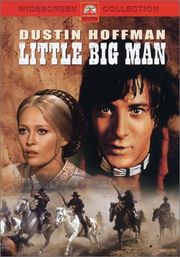
Little Big Man

We shall begin with an old favorite of mine, LITTLE BIG MAN. This is the story of Jack Crabb, supposedly the sole white survivor of the Battle of Little Bighorn. We meet jack in an old folks home as a man well over a hundred years old. Visited by an anthropologist, Jack is angered at the suggestion that was an old Indian fighter and proceeds to tell his life story with a tape recorder rolling.

It turns out that Jack had been adopted by Cheyenne (whom he refers to as “Human Beings” throughout the narrative) after his family was slaughtered by Pawnee. During the course of his life, Jack returns to white society for a time and experiences life as a religious youth, a con artist, a “gun fighter,” a drunkard, and even a mule skinner. But Jack returns to the Human Beings several times during the course of the movie, even taking a wife (eventually four) and living among them. Jack explains that he reckoned he would stay there and live among Human Beings for the rest of his life, right there on the Washita River.

And for those that know a little about the history of Indian-white relations, the appearance of Custer will be no surprise. For me at least, the scenes that follow are quite difficult to watch. It is in revenge for this attack, that Jack Crabb ultimately plots to lead Custer into a trap, tricking him as it were into attacking the Indian village at Little Bighorn.

Little Big man was the first major motion picture in decades to take an explicitly pro-Indian stance on the history of the west. It is almost too late to capture the full shock value of its portrayal. The movie and television audiences of the 1970s had seen many depictions of Indian savagery. To see the U.S. cavalry shooting women and children in cold blood was a straight-forward reversal of the prevailing expectations of the time.

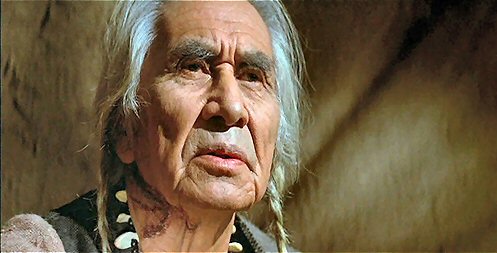
More than that, Little Big Man is filled with vibrant Cheyenne characters, not least of them being Old Medicine Lodge (played by chief Dan George). The characters are even allowed to occupy social roles defined at least partly by Cheyenne cultural patterns. (We are for example introduced to a contrary and a hee-man-eh.) Crabb himself manages to occupy the role of the White Indian without crowding the Native American characters into the background. He is accepted among the Human Beings, not because he is a great warrior (not really, at any rate), but because he has a knack for survival. Crabb bumbles his way through life, understanding a lot about what goes on around him, but without ever really taking control of his own fate.

Chief Dan George

But what has always struck me as the true genius of this movie is that having done far more than normal for the times, it makes no real claims to historical accuracy. Jack Crabb is essentially telling us a tall tale, and his own biases provide the filter through which each event is portrayed. One gets the impression that Crabb’s story must approximate the actual truth (he simply knows too much to have made everything up), but if we believe him a number of the particulars, we have certainly gone well beyond the boundaries of fact when he takes credit for the slaughter of Custer.

But who could fault Crabb for stretching the truth. We can only love him for somehow surviving the real events of his life whatever they may have been, and for sharing a perspective on events which was at that time completely novel to the motion picture industry of that day.

***

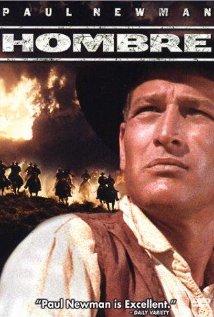
Hombre

Did you know that Paul Newman once played an Apache? …well, sort of. In HOMBRE, Newman plays John Russell, a white man raised among the Apache. Old pictures of Apaches fill the screen during the opening credits, and soon we are treated to an image of Newman dressed as an Apache.

Hombre

Russel and two Apache companions have been earning a living by capturing wild horses to be sold to the stage-coach line. They learn that a railroad will soon replace the stage-coach line, and horses will no longer be needed.

Russell learns that he has inherited a boarding house from his original family. He returns to civilization and sells the house before heading back west aboard a stage-coach.

Newman in Hombre

When the stage-coach is robbed, it is Russell (with his superior survival instincts) who keeps the other passengers alive, their prejudice against him notwithstanding. In time, Russell learns that the robbers are after money meant for the San Carlos Apache reservation. It had been stolen by a fellow passenger. Russell’s treatment of his companions is harsh, bordering on cruel, which seems fitting enough given their own attitudes towards him. In the end, Russell will sacrifice himself to save a woman who would not share the stage-coach with him. He asks only that the money should be taken to the people for whom it was intended.

The movie ends with a vintage photograph. It contains the image of a white boy surrounded by Apache children of his own age.

***

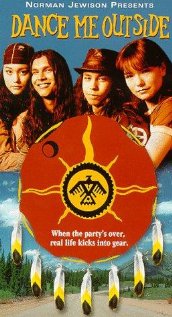
Dance Me Outside

DANCE ME OUTSIDE: This movie is not on the whole about a white Indian. I include it in this list, because it has an absolutely wonderful scene which serves to comment on the whole phenomenon. For reasons which we need not get into here, the main characters, Silas crow and Frank Fencepost (both Anishinabe), are asked to keep Robert McVey, a white in-law, busy while his wife is off doing something important. Unable to think of anything else to do, and really unhappy about spending the night in his rather lame company, Silas and Frank decide to initiate him into the tribe. What follows is a hilariously improvised ceremony. The scene could easily have been painful to watch, but there is something about the way the white character embraces the ceremony which comes across as endearing. It is as though he has simply chosen to accept the ritual for whatever it is. The man commits so completely to the absurd little made-up ritual that his own sincerity (absurd as it is) seems to redeem the whole event. In the end, he earns a grudging respect from Silas and Frank, not for being a properly initiated member of the tribe, but for simply being human, foibles and all.

Silas and Frank

What I particularly like about this scene is the sense of compassion behind the treatment of this subject. This movie takes the piss out the old white Indian cliché as well as anyone has, but it does it without rancor. The white character is mocked, yes, but he is mocked with a gentle touch. Dance me outside is an obscure movie, and I must say that it has a kind of after-school special quality to it. Still it’s a wonderful tale well told.

***

That’s it for now. There will be two more volumes in this one.

***

Okay, no I can’t let my readers off that easy. These movies are actually pretty good, so I’m afraid you haven’t got the full cringe-worthyness of this subject. So, let’s have a listen shall we?

…okay, I know. That was unnecessary. I’m a bad man, and I’m sorry.

…sort of.

71.271549 -156.751450

Share this:

  • Tweet
  • Share on Tumblr
  • Click to print (Opens in new window) Print
  • Click to email a link to a friend (Opens in new window) Email
  • Click to share on Reddit (Opens in new window) Reddit
Like Loading...

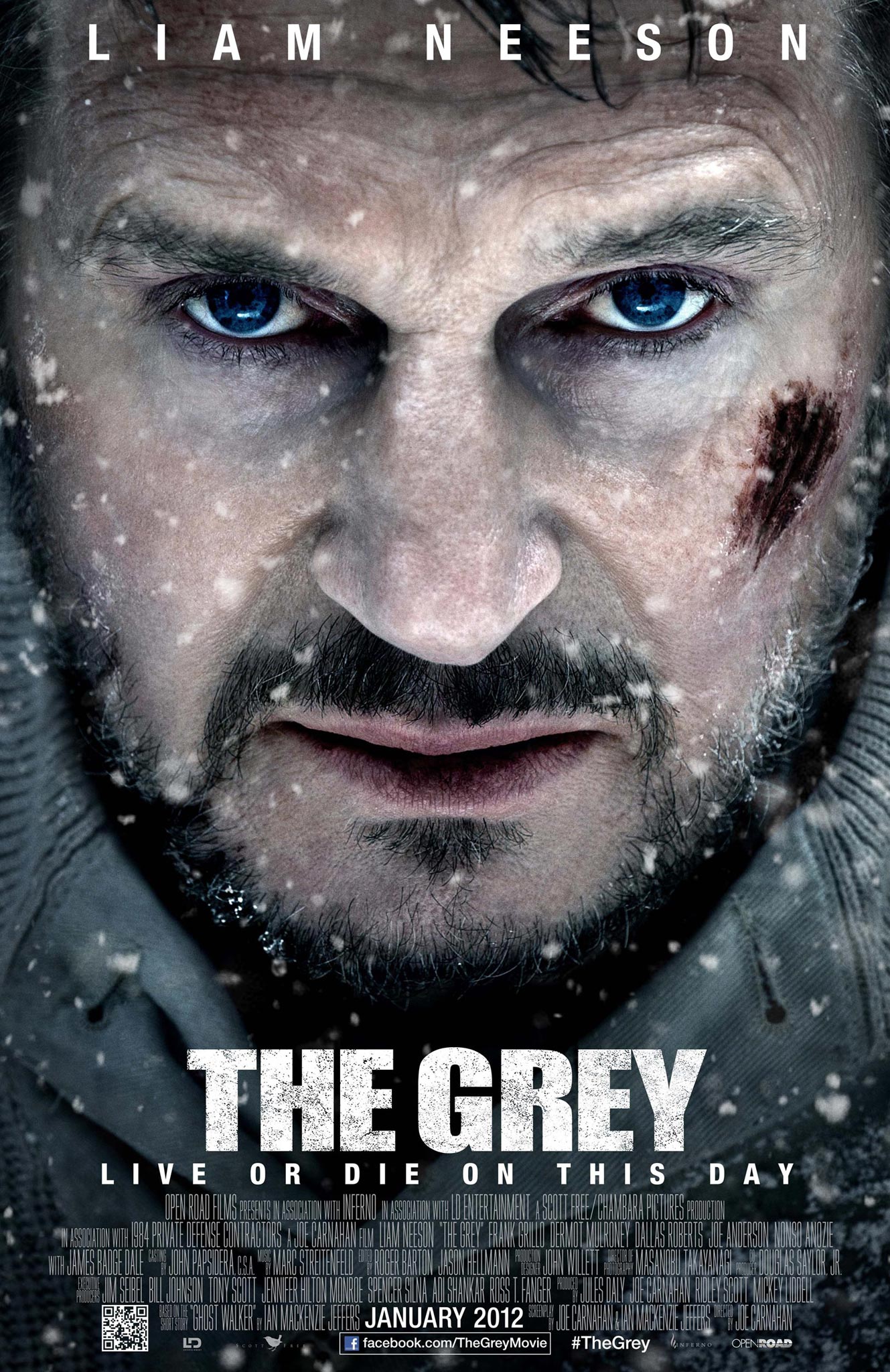
The Grey – Movie Review (Yeah Spoilers)

14 Saturday Apr 2012

Posted by danielwalldammit in Alaska, Movies

≈ 5 Comments

Tags

Alaska, Entertainment, Film, Liam Neeson, Movies, Prudhoe Bay, The Grey, Wolves

In The Grey, Liam Neeson along with a small cast of characters survive a plane crash in remote parts of Alaska. The crash is, well, …the first of their challenges.

I saw this movie in a theater in Anchorage. I had just come off a flight very much like the one portrayed in the film, and I was killing time during the layover before a second round of middle-seat torment, when someone suggested watching this movie. It sounded like a good way to kill some time.

It wasn’t.

Don’t get me wrong. Liam Neeson turned in a fine performance, as did the rest of the cast. Do I need to say that he was compelling? Do I have to tell you that he made the character come alive? Let’s just take that as a given, and add that the rest of the cast also turned in excellent performances. Really, I have no qualms about the acting.

The problem I have with this movie is the story itself. The damned plot reminded me of chalk boards at nearly every turn.

Chalk boards and fingernails that is.

We could start with its portrayal the sort of people who work in the oil fields of Alaska. Neeson’s character, John Ottway tells us early on that he is a hired killer of sorts, working in the oil fields of Alaska. He then goes on to describe the oil-field workers as a mindless, hard-drinking and violent lot, prone to criminal actions. There is little in the opening scenes to suggest that Ottway’s comments are intended as anything less than the truth, at least as this movie envisions it.

Having shared an airplane with workers from Prudhoe Bay several times, I couldn’t help but cringe. I kept thinking about a long discussion I had on one flight with mechanic headed home to Texas. He spoke with me about his faith in the Baha’i church and a range of experiences working in different parts of the world. Did this movie do him justice? Not by a long shot, nor I suspect did it do justice for the rest of the workers at these fields.

Mind you, I am happy to go with a bit of slanderous fiction if we can then get along with a plausible storyline. I could just accept the movie’s take as a given and put it behind me. I could.

But let’s just return to the, “hired killer” theme. Who or what does Ottway kill?

Wolves.

Yes, Ottway kills wolves for a living, as is established in an early scene when we see him bring a lone wolf down with one well-placed shot, just in the nick of time. This would be a lone wolf that moved from stalking to charging multiple oil workers. The movie offers no explanation for the conduct of this wolf, giving the impression that this sort of thing is par for the course.

The Grey does give us a moving little moment where Ottway lays his hand reassuringly on the wolf as it dies. (Yes, that’s right, he touched the dying wolf as it died. …cause that’s what you do with a wounded and dying wolf. …Yep.)

And I should add that this scene is one of the more realistic moments in the films lupine antics. To say that the wolves of this film do not much act like the real thing is putting it mildly, unless of course you mean the Dire Wolves from Dungeons and Dragons. These wolves are smarter, meaner, more persistent, and just generally more bad-ass than any wolves in the known world, …Tolkein novels and role-playing games aside, I mean. Yes, I do think this movie depicts the Dire Wolves of D&D quite accurately.

Which is of course the major basis for the plot. First the plane crashes, and then a pack of Dire Wolves hunts the survivors for the rest of the movie, picking them off one by one.

If you’ve read my blog, you probably think I rooted for the wolves throughout the movie.

I did.

The trouble is that for all their extraordinary powers, these magical wolves take an awful long time to finish off their human quarry. And just when I was getting to the point where I thought the last bunch off heroes might actually make it (or perish in one merciful slaughter), the movie finds a new tone of nails-on-chalkboard resonance to strike. You see, it wasn’t enough to hit me with condescending portrayals of oil workers pit up against magical uber-wolves from fantasy land. No, this movie had one more means of tormenting yours truly.

It found my true weakness.

With but three survivors left, one of them finally gives up. The character, John Diaz, a particularly rough and tumble fellow decides he simply cannot go on. Now this might seem plausible, because of course he is hungry, cold, and tired at this point (much as I was sitting in that theater in Anchorage), but that would be far too predictable an excuse to lay down and die. No, it turns out that Diaz, the problem child of survivor group, has finally seen the error of his. He realizes how beautiful the countryside is, and realizes that the rest of his miserable life has been wasted all along. So, Diaz tells the other two to go on. And Ottway? Ottway understands and accepts this decision. This really belongs in an Iron John book. They leave Diaz sitting by a rover waiting for the wolves to get him, but not before some very meaningful moments of male-bonding occur.

At this point of the movie, I think I was genuinely squirming in my seat. In fact I am squirming now, just thinking of it.

So, I will just take a moment to mention some of the more interesting features of the movie. Ottway has a number of flashbacks during the course of the movie, consistently returning to a past relationship with a beautiful woman. These moments do serve to set up an interesting aspect of the film narrative; it is the reason he now works in the oil fields, and it is the source of his outlook and (ironically) his leadership qualities. Sadly, this theme never develops into its full potential.

I should also say that there is a drowning scene in this movie that is quite well done, a bit reminiscent of an old Paul Newman film, Sometimes a Great Notion. What makes it so interesting. Well you will have to brave the wolves to find out, because I’m not going to give this one away.

Well that’s it. I could go on, but, …no, I can’t. The memory of this movie is too much for me. I really don’t feel well at all right now. I look outside my window at the beautiful Alaskan scenery, and I realize that I just cannot go back to this movie review. You my dear reader should go on without me. Maybe you can make safely it to the next blog on your own. Just click the link to the Bill Hess Blog and you’ll be safe.

I’ll just sit here and let the chalkboard-sounds and the wolves get me.

Go!

Just go!

71.271549 -156.751450

Share this:

  • Tweet
  • Share on Tumblr
  • Click to print (Opens in new window) Print
  • Click to email a link to a friend (Opens in new window) Email
  • Click to share on Reddit (Opens in new window) Reddit
Like Loading...

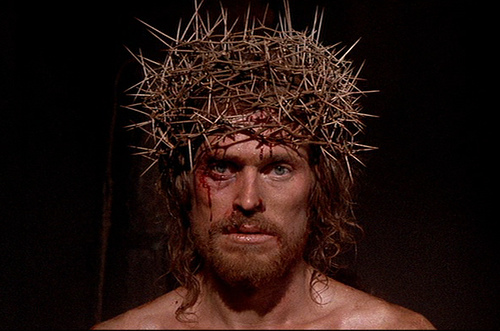
Special Easter Edition Movie Villain: Jesus Christ!

08 Sunday Apr 2012

Posted by danielwalldammit in Movie Villainy, Movies, Religion

≈ 20 Comments

Tags

Blasphemy, Easter, Film, Jesus Christ, Jesus Christ Superstar, Movie Villainy, Movies, religion, The Greatest Story Ever Told, The Passion

Can you see it my Brothers?

Can you see the truth of what I am saying?

Because not everyone can see this. Some consider the topic just too boring to bother with. They’d rather watch a slasher flick. Others are too busy with their prayers. Jesus is too beautiful to them, too noble, too good, too strong, too gentle, too much of a blank check upon the bank account of all things warm and wonderful.

They cannot see it. But Jesus can be downright terrifying.

The Prince of Peace makes an awesome movie villain.

Just ask the merchants in the temple! Yes, that would be the one Jesus trashed, because apparently commerce is supposed to be a bad thing. Just a temper tantrum, you say? Well tell that to someone whose entire livelihood has just been trashed by a madman. A madman who threatens to destroy the very temple of God Himself.

Do not think, he didn’t warn us my friends. Jesus told everyone about his nefarious plans. He told us that he came bringing a sword. He told us that he came to destroy our families. He told us that we would have to forsake everything we know and love to join his kingdom.

And I ask you, what sort of dark kingdom begins with the abandonment of one’s own family?

Let us not even mention the practice of necromancy! Well, okay, yes, let’s go there. Do not imagine that little girl was the only time this fisher of men came to practice the dark arts. On this matter (and many others), the dear Lord is definitely a repeat offender. Seriously, when in the Hell does someone raise the dead and NOT end up as the principle villain of the story? Oh I’m not talking about accidentally awakening a Mummy. That gets you an hour of running and a hero status when you finally beat the bad guy back into the ground. No, I am talking about the deliberate act of pulling a dead man out of the grave and setting him back to walking about the earth. And Jesus did it at least twice!

There is a reason the name of Frankenstein fills us with terror, but Jesus gets a free pass on this one, does he?

And then of course of course there is his skillful use and disposal of Judas. Even as the man betrays Jesus with a kiss, Jesus himself has willed the whole thing to happen, …from the moment of creation, so some folks say. And thus does Judas play into the great cosmic scheme, a lamb for the sins of man. But who is the real sacrifice here? And how wicked is the villain that has chosen a single man for the greatest crime of all history? How wicked is the puppet-master who could bring his chosen victim to accept eternal damnation …with a kiss?

How did he do it? Well great movie villains work in mysterious ways.

Not even the Cylons of the new Battlestar Gallactica series could manipulate humans with such ease and skill. Neither Darth Vader, nor Sauron, nor Scorpius from Farscape have ever had such an elusive evil plan! Professor Moriarty could only dream of such eloquence. Christopher Walken was never so creepy in all his career! And the Devil in all his movie incarnations has never, NEVER, been so menacing.

The question you have to ask is just why everyone found this fellow so frightening to begin with? Why is that this Jesus must die?

Must die!

Must die!

Must die!

The Romans, The Pharisees, even apparently the average man on the street came to call for the blood of the lamb.

So we are told anyway!

But were they really so short-sighted, so bloodthirsty as to want the death of a miracle worker and healer? Or did they know something the rest of us seem to have forgotten? Did they see into the depths of the darkness? Did they know just how terrible this villain really was?

It’s a damn good question, I tell you.

Note: The original version of this post included a lot of links to various movies. I really was talking about Jesus as a movie character and using the videos to illustrate the point. Anyway, dead links happen. So, I took most of them down. Left up Judas, cause, yeah.


71.271549 -156.751450

Share this:

  • Tweet
  • Share on Tumblr
  • Click to print (Opens in new window) Print
  • Click to email a link to a friend (Opens in new window) Email
  • Click to share on Reddit (Opens in new window) Reddit
Like Loading...

Great Movie Villains Volume VI: The Baudelaire Brats (Yeah – Spoilers!)

16 Friday Mar 2012

Posted by danielwalldammit in Movie Villainy, Movies

≈ 6 Comments

Tags

Film, Lemony Snickets, Movies, Story-Telling, Villains

Violet, Klaus, and Sunny. Remember those names. And should these “children” ever show up at your door…

Run like Hell!

These are not really children. They are demons. Just ask their beloved uncle, Count Olaf. A Series of Unfortunate Events, my ass! The terrors of this story-line are precisely what happens when the world is thrown out of balance, which is exactly what happens whenever these kids enter the story.

The Baudelaire children are way too smart for their own good, solving problems children aren’t suppose to solve, and generally proving themselves smarter than the adults around them at every turn. Even the world which they inhabit seems somehow way too interesting and way too clever for a children’s movie. And you may think that is hardly their fault, but you would be wrong to think that.

Just ask Violet!!!

You see the whole point of a children’s movie isn’t to tell a story that children will find entertaining; it is to tell a story that adults like to think children will find entertaining. The children in such movies have faults we can live with; they might like candy a little too much or want to stay up a little too late. But they are not too cool for the whole school.

Not so, the Baudelaire Brats! They are smart. They are savvy.

Shame on them!

A good child would accept without question the wisdom of the adult world, but these little demons notice things. Oh yes they do. And they exchange knowing looks.

More a living shark than a little girl, the youngest (Sunny) is a true freak of nature. The middle brat reads incessantly. Like some sort of uber-nerd who won’t settle for throwing the class average, Klaus consumes whole libraries and then uses the knowledge contained therein to crush his enemies and bring about their downfall. Worse yet, Violet is a devious inventor. Give her a ribbon and a few trinkets and she will fashion for you a gadget to solve whatever problems you may have.

So, where did she get the ribbon, you may ask?

Could it be ….Satan!?!

You bet your sweet ass it was Satan that gave this little girl her powers. When Robert Johnson went down to the crossroads all those long years ago, he took the spirit of this sweet little girl with him and she sowed the fate of her family that very evening.

Small wonder that the children lost their parents. Why did that happen you may ask? And we are supposed to believe it had something to do with a giant magnifying glass? Not a chance, baby! The fate of their folks had been sealed down at the crossroads. You know it, I know it. Robert Johnson knows it and so does Eric Clapton. Most importantly, Violet sure as HELL knows it. So, let’s not hear of any more great mystery deaths okay. The Devil torched the Baudelaire house when he came to reclaim is due. Her parents were just collateral damage.

And that was just the start of it. Are we supposed to believe that the deaths of Uncle Montgomery and Aunt Josephine are mere accidents? With Uncle Montgomery being so brave and Aunt Josephine so careful, do you really think they could be offed so easily as this movie suggests? I don’t think so. And don’t even try to tell me it was Count Olaf that killed them. No, it was their love that condemned them.

Their love for these demon-children.

Anyone could see those deaths coming. When children are too smart for their own good, bad things happen to those that care for them. It’s as obvious as sending someone else down to the planet with Mr. Spock, Bones, and Captain Kirk. These characters were dead from the moment they opened their doors to the Baudelaire children. Blaming Uncle Olaf is like condemning a gun for serving as the instrument of a murder.

It should come as no surprise that the film culminates in a blasphemous attack on the institution of marriage. Violet rejects her marriage to Uncle Olaf just as she rejects every other good wholesome value that may fall in her path. What’s next? A pact with the ACLU?

I wouldn’t put it past her.

And then of course we get the final insult. These characters somehow contrived to avoid parts 2 and 3 of the trilogy altogether. Yes, that’s right, the actors who played the children are now well into adulthood, thus forever ending the hopes of a sequel. Don’t think it’s an accident either. Only the likes of the Baudelaire children could have foiled plans for a sequel by aging out of the narrative, letting the real world stand in the way of a good story.

Devil children, I tell you!

I know damned well that Count Olaf would have gotten them in the end. Cheated, he is, out of his money, just as we were all cheated out of a righteous and proper ending. We will not be seeing a Lemony Snickets Two and Three, and that is indeed a crime for which the Baudelaire Brats should be condemned for all time. They have cheated all of us out of this ending, I tell you.

Just like Uncle Olaf, we are all cheated.

Cheated!!!!

71.271549 -156.751450

Share this:

  • Tweet
  • Share on Tumblr
  • Click to print (Opens in new window) Print
  • Click to email a link to a friend (Opens in new window) Email
  • Click to share on Reddit (Opens in new window) Reddit
Like Loading...

Special Sarcasm-Free Saturday: Three Indigenous Films (in Ascending Order of Coolness)

13 Tuesday Mar 2012

Posted by danielwalldammit in Movies

≈ 4 Comments

Tags

Aborigine, Atanarjuat, Entertainment, Ethnography, Film, Indigenous Peoples, Inuit, Massai, Movies, Ten Canoes, The Rain Warriors

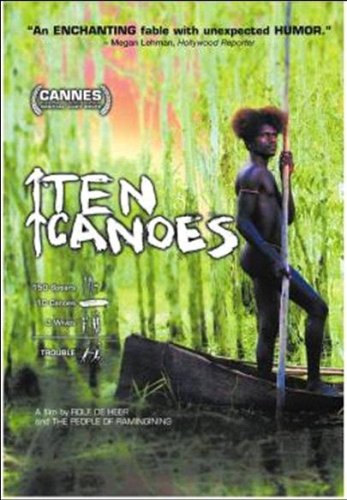
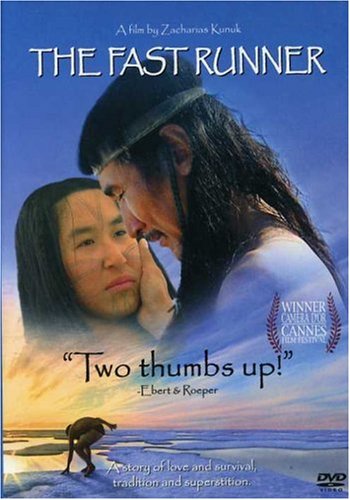
Okay, I know it’s not actually Saturday, but I wanted the alliteration. I’ll try to stick to the Sarcasm-Free theme though, which should be easy enough, because I actually like today’s subject. Yes, I actually like some things. Honest! Case in point, here is a batch of my favorite movies. They are not documentaries. Each tells a fictional story, but each sets that story squarely in a distinctive “tribal” setting. Each is carried out in the native language of its setting, and each uses native actors. The authenticity of each depiction varies (and that is always a tricky question no matter how it’s handled). Suffice to say that in each of these cases, there seems enough to get my attention, and each tells an interesting story in its own right. We can begin this tour in Africa with a movie called The Rain Warriors (2005). The story follows a group of young Massai warriors as they embark on a quest to slay the incarnation of a deity. Yes, I said “deity,” but it’s worse than that, really. The deity has taken on the form of a lion, and killing this lion-deity is the price it will take to bring rain back to the region, thus saving their people from starvation. In the process, this young group of warriors will also have to prove that they are ready to become men. Given the role of Age-sets in Massai life, it is interesting enough to see a coming of age n this setting, but some reviewers have suggested the plot is a bit too romantic to be taken too seriously. It is difficult to say how much of this premise is genuinely rooted in Massai thought and how much is the projection of its French Director, Pascal Plisson, but the same could be said said about some serious scholarship on the very same subject. In the end, what I like most about this movie is the juxtaposition of the classic coming-of-age theme with the role of warriors. It is a simple paradox. The main characters face life and death challenges, the sort of challenges that separate the men from the boys, so to speak. …and yet, the main characters are boys, a fact which they demonstrate often enough during the course of the story, and sometimes with dire consequences. This feature of the movie isn’t just interesting story-telling. It a truth of actual warfare, that it is often carried out by youth. With so little to separate them from the activities of childhood, these characters must somehow find within themselves the courage and judgement to make adulthood possible. Watching this movie reminded me of the First chapter of Slaughterhouse Five and Vonnegut’s comparison of his own wartime experience to the Children’s Crusade. Add this touching theme to the unique flavor of the cultural setting, and we have a worthwhile sitting. But don’t try to eat dinner while you watch this movie. …unless, you speak Massai. It sucks to read subtitles in between bites of a taco. I’ve tried. Sailing a ways out to sea, we come to the movie, Ten Canoes (2006). This movie is set in the wetlands of Arnhem Land in Australia. With its two European Directors, this movie too has its non-native input, but the team makes a serious effort to produce an authentically indigenous story. (And this is an interesting story in itself, as made clear in the extras provided in the movie.) The most interesting thing about this film (to me anyway) is the double framing of the story. We begin with a humorous narrative by David Gulpilil whom you may recognize from Rabbit Proof Fence, Cocodile Dundee, or The Proposition (to name just a few of his credits). This story sets the stage for another one (depicted in black and white) about a group of men cutting canoes to go hunting birds in the wetlands. One of the men, Dayindi, is envious of his older brother’s wives, or at least one of them (if you get the drift). he also thinks it unfair that he should have no wives while older men in his community should have so many. Responding to his younger kin, his brother, Minygululu, tells Dayindi the story of an ancester similarly stressed by thoughts of his own brother’s wives. This latter story is depicted in full color. So, we have a story within a story within a story. If that doesn’t make your sense of awesome blossom, then you can go suck a carrot! Without giving too much away, the framing infuses the movie with a meaning well beyond each of the individual narratives. Gulpilil’s opening comments help to set in perspective the nature of life itself and the ties between people and their land in Aboriginal thought. The middle narrative sets up a moral dilemma which will generate not one but two separate plot-lines. The conclusion of Minygululu’s narrative then turns out to be an answer to Dayindi’s own dilemma. Its significance for the opening narrative is a little less clear, but that just leaves us with something to think about. And a reason to watch this movie yet again. And Finally we have Atanarjuat, or The Fast Runner (2001). This movie is set in Canada, or more properly Igloolik. It’s cast speaks Inuktitut throughout the film. To say that this is an Inuit production would be putting it mildly. The plot for the movie is derived from (and largely faithful to) an Inuit story. It’s directer, cast, and crew, are all Inuit. (Okay, maybe not everyone on the crew, but you get the idea.) And just to be clear about this, the intended audience appears to be Inuit as well. (To say that Inupiat seem to like this film too is putting it mildly.) True to the nature of native story-telling, the film wastes little time explaining the cultural landscape, or establishing the setting in which its characters live. The movie is made for those who know the setting and will recognize its central characters and themes. It gets right into the plot, relating the central challenge of Atanarjuat and his family, a powerful curse which is to haunt his family throughout the story. The curse which begins the story is placed on Atanarjuat’s father, leading the family to experience great hardship. In time Atanarjuat and his brother grow strong and prove themselves capable hunters. Atanarjuat himself vies with a rival, Oki, for the the affection of a beautiful young woman, Atuat. The twists are turns in this story are many and varied (I cannot do justice to them), leading eventually to the scene which provides this film with its English title. Attacked in his sleep, Atanarjuat flees naked across the sea ice, chased by three spear-wielding foes. And here, let us take a moment to acknowledge the lead actor in this production, Natar Ungalaaq, for the bad-ass that he is. The man did in fact run naked across the ice during this production. yes, he had some fake feet made, but they didn’t last long, and otherwise he was naked. How cold was it? When he was naked? Well, here’s a clue, the ocean underneath him was frozen! Bad ass. BAD ASS! There is an interesting twist at the end of this movie, which I will not relate here. Suffice to say that there is at least one respect in which the film deviates from the traditional narrative, It was a conscious choice and one that substantially changes the meaning of the story, hopefully rendering it more salient to modern life. To learn what I am talking about, you are just going to have to watch the movie. Okay, this may not be entirely free of sarcasm, but then again it isn’t really Saturday either. What did you expect? Postcript: I have heard good things about The Orator (2011), a Samoan film which is unfortunately difficult to get in the U.S. and more difficult still here at the top of the world. Luckily, a copy has been floating around here in Barrow and I am hoping to get my hands on it soon.

71.271549 -156.751450

Share this:

  • Tweet
  • Share on Tumblr
  • Click to print (Opens in new window) Print
  • Click to email a link to a friend (Opens in new window) Email
  • Click to share on Reddit (Opens in new window) Reddit
Like Loading...

Great Movie Villains, Volume V: God Damn Us Every One!

19 Monday Dec 2011

Posted by danielwalldammit in Movie Villainy, Movies

≈ 4 Comments

Tags

Capitalism., Christmas, Christmas Carol, Ebenezer Scrooge, Film, Movie Villainy, Movies, Tiny Tim

Yeah, that’s right folks! I’m talking about Tiny Tim here. Don’t even pretend you don’t know what I am talking about! Or did you think maybe it was those damned spooks that brought about the downfall of a Ebenezer Scrooge?

No, I am telling you Scrooge wasn’t afraid of no ghost! Nor even three of them. He may have hesitated a bit with the first one, but I am telling you that stalwart icon of good business sense rose to the occasion. He faced those ghosts down like a true champion. Were it for their vainglorious efforts, I feel quite certain that Scrooge would have gone to his grave a good thrifty capitalist, just as he was at the beginning of this terrible tragedy.

And it is a tragedy, make no mistake about it. A Christmas Carol is a dark and terrible story about the downfall of fine American. Don’t even try to tell me that Scrooge was British! Just listen to the man! Asked to give to the poor, how does Scrooge reply?

“Are there no prisons? Are there no poor houses?”

American, Hell! If only Scrooge were still around, the Republican party would know just who to run against Obama. I’m telling you, Scrooge was a good American even if he was British. What this country would not give to have someone of his moral fortitude around today! But no, sadly the old man is dead. And not just dead. His spirit was broken long before he entered the grave. All on account of that sad-adorable little boy, Tiny Tim!

It’s enough to make you want to puke.

Scrooge was a man of principle. He was a man of industry. A man who understood what happens when you subsidize sloth by saving a life instead of letting the market work its magic. Scrooge was all these things, and above all he was a man of wit and reason. He handled life’s problems rationally, and all he asked of others was that they do the same.

And then along comes this poor boy with a treatable illness and just like liberals everywhere the damned ghosts go to work on your heart-strings. Oh look, Ebenezer, look at the poor sick child! Can’t you pay Cratchit a little more? Can’t you save little Tim, Ebenezer? You have so much money, surely you can save him! Oh look Ebenezer, if you don’t help him, poor little helpless Tim is gonna die.

And the little runt plays his heart perfectly, acting so sweet and innocent. The ghosts don’t show Scrooge a moment of Tim slacking off instead of doing his homework. Hell, they don’t even focus on the fact that he doesn’t have a job as every good working class kid his age should have had by that age. And they sure as Hell don’t show him sneaking an extra helping of mashed potatoes or pulling on his sister’s pig-tails. No, they only show him Tim at his most pure, most adorable, most pathetic.

Sad to say the old man cracked.

I know, we are supposed to say that his heart melted, that he found his inner goodness, or some such rotten sentiments. We are supposed to believe that this is a story of redemption, that Scrooge was a better man on account of the story of Tiny Tim. We are supposed to believe that Tiny Tim was the instrument by which Scrooge became a better person.

More than that, we are supposed to be inspired by this story. We are supposed to learn to care. It is supposed to warm our hearts and help all of us to become better people.

Bah Humbug!

71.271549 -156.751450

Share this:

  • Tweet
  • Share on Tumblr
  • Click to print (Opens in new window) Print
  • Click to email a link to a friend (Opens in new window) Email
  • Click to share on Reddit (Opens in new window) Reddit
Like Loading...

In Honor of Nigel Tufnel Day, this Movie Villain Takes it to 11!

11 Friday Nov 2011

Posted by danielwalldammit in Movie Villainy, Movies, Music

≈ 2 Comments

Tags

11/11/11, Film, Guitar Hero, Movie Villainy, Movies, Music, Nigel Tufnel, Rob Reiner, Rock&Roll, Rock&Roll. November 11th, Spinal Tap

Most movie villains would be content to achieve a ten out of ten on a villain rating. Not this one. No, Nigel Tufnel isn’t satisfied with that kind of mediocre performance.  His villainy is always one louder.

Oh sure, just another misunderstood heavy metal musician you say? We’ve all heard the wild rumors that rock&roll is subversive? They’re just rumors, aren’t they?

Well no, dammit they’re not. When rock&roll is done right it is subversive.

And no-one is more subversive than Nigel Tufnel.  With songs like Big Bottom and Sex Farm Woman, he destroyed the sexual mores of middle class culture. With Hell Hole, he exposed the veneer of “success,” and with Stonehenge, Nigel reminded us all that Pagan worship is damned cool.

Not content to corrupt the souls of the young, Nigel inflicted his musical perversity on the fans of classical music, or at least he will as soon as he completes his long awaited trilogy and “Lick My Love Pump” knocks Beethoven, Bach, and Mozart right off the charts and into the corner pub where lesser musicians belong.

This man isn’t misunderstood at all. He is rock&roll badness at its worst. He wants your money, your daughter, and your freakin’ Oreos. And he doesn’t want the damned creamy filling!

Nigel doesn’t just create the music. This make-up wearing, Gumby-Lovin tight-panted freak with a guitar and a violin is the music your parents don’t want you to hear.

He is the music they don’t want you to touch.

…to look at.

…or even to think about.

You’re thinking about Nigel now aren’t you?

Well don’t!

71.271549 -156.751450

Share this:

  • Tweet
  • Share on Tumblr
  • Click to print (Opens in new window) Print
  • Click to email a link to a friend (Opens in new window) Email
  • Click to share on Reddit (Opens in new window) Reddit
Like Loading...

Great Movie Villains, Vol. III: Nevermind the Nazgûl, Fear the Fellowship!

03 Thursday Nov 2011

Posted by danielwalldammit in Movie Villainy, Movies

≈ 5 Comments

Tags

D&D, Fantasy, Film, Hobbits, Irony, Lord of the Rings, Movie Villainy, Movies, Storytelling, Tolkein

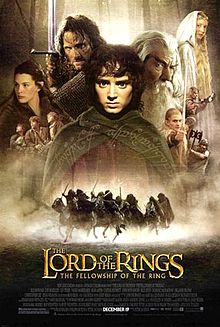
Which members of the Fellowship of the Ring are villainous? Almost all of them, if you ask me.

Just not Boromir though. He’s the one guy you can almost trust. Given a chance for power, he took it. Sounds like a straight-up kinda guy. He’s okay by me.

But those damned Halflings! They are just all bad.

We’ll save Frodo for later, but it’s short work to see that a couple of no-good thieves like Pippin and Merry are full-on bad guys, even if they are short and cheerful. Between starting fires, and raising false alarms, Pippin is a damned mess. I can almost understand his desire to steal the biggest marble in the known universe. That’s understandable. But with a petty offense like that, you gotta come clean when the jig is up. I mean, seriously, it’s Sauron’s marble. Pippin didn’t win it in a fair match. The least he can do is have a polite conversation with the man he’s cheated out of the coolest boulder on the playground. But no! Apparently, that was too much to ask. He has to cry to Gandolf and start a war over it, just so he can keep his prize. It wasn’t even a cleary, fer cryin’ out loud!

And then there is Merry stabbing the king of Angmar in the back during what would have been a perfectly honorable duel with an upstart Princess who has done nothing but disrespect her father, her brother, and every authority figure who tried to help her out in the course of the story. She was about to get taught a damned good lesson when that little runt goes and gets all 9th-level Rogue on her enemy.  Absolutely disgraceful!

Don’t even get me started on that “faithful” toadie, Samwise Gamgee! Can there be any doubt that he is responsible for the terrible depression that befell poor Golem? I mean that guy is in the middle of a deep blue funk that lasts for well over a hundred years and this furry-footed bully goes around calling him names and picking on him constantly.

Plus, poor golem had lost his precious ring. Who the Hell can blame him for wanting it back? It was a damned good ring! And look who stole it? Hobbits. Hobbits, like the very two halfwits golem is now supposed to be helping, one of whom is flaunting his precious under the poor wretche’s very nose. This whole story-line is messed-up in a big morbid way, and there poor golem is on the edge of sanity. Leave it to the fricking henchman to push him off.

Then there is the Gimli and Legolas, with their friendly little competition over how many orcs they can kill. War is one thing folks, you gotta do what you gotta do, but this shit is way over the line! When did killing become fun, I ask you people? Just when did it become a contest? Apparently, when the killers became an elf and a dwarf. Oh look at the cute little creatures killing the ugly people! Let’s bet on who can kill the most!

And then of course there is Aragorn. I could go on and on about this geriatric black sheep of the royal family, but let’s just look at one thing here. Have you ever noticed Aragorn’s sword in the minutes before the final battle at the gates of Mordor? It’s got blood on it. Yeah that’s right, BEFORE the fight he has blood on his sword. Know why? Cause he killed a messenger from Sauron in a deleted scene.

That’s right!

No sooner had said messenger returned a lost mithril shirt that stupid Frodo lost somewhere in Mordor when Aragorn goes and repays this act of great kindness by killing the guy (in cold blood, and during a parlay, no less). Small wonder the director chose to cover that  up. …but he couldn’t hide the blood.

No he couldn’t

Next time someone tries to tell you Aragorn is a hero, just keep asking him; “what about the blood?”

So, now we are down to the last two bad guys. Which is the worse? I know what you’re thinking; it’s Frodo right? After all, he is the one that destroys the most valuable piece of jewelry in all of Middle Earth, causing a great cataclysm which leads to the genocidal destruction of many of the world’s great kindreds. (Seriously do you not see all the orcs and goblins and trolls falling into a great pit at the end of this terrible tragedy? Are we supposed to cheer that shit on?) Yes, Frodo did that. All that destruction is Frodo’s claim to infamy, and it’s a damned good one.  But it still doesn’t win him the prize for the most-hated villain at the Fellowship ball.

Before moving on though, I wonder if we need to say a thing or two about the little guy’s sappy buzz-kill attitude through just about the complete series? What do you do when you have the power to rule the entire world at your finger tips? Sulk and cry about it for three fricking over-long movies. Three of them, I tell you! That alone should get him an award for something.

Still!

Frodo is not the principal villain of this story. It’s Gandolf. What you have to ask yourself is why this big-ass powerful wizard uses his magic so sparingly. I know, I know, he’s only supposed to help and council people, not solve their problems for them. Right? He’s been sent by the powers that be to guide mankind in its struggles. Doing more than that would spoil the moral of the story for them and us. Yadayadayada! We’ve heard this yarn before.

That’s the excuse of every manipulative god-like being in all of history, real or imagined. Just what the Hell are people supposed to get out of all this anyway? Wisdom? A sense of accomplishment?

Tell that to the dead!

Gandolf could have ended the entire war with a bit of basic parlor-magic. He could have returned the ring to its rightful owner and all would have been right with the world of middle earth. Failing that, he could have gone wompy-stompy with his great powers and beat the crap out of his enemies in the first half of the first movie. Still the bad guys win that way, but at least it’s over with quickly. And that my friends is what makes Gandolf the ultimate villain. He doesn’t just want to kill Sauron, whose only crime was in gifting jewelry to the great leaders of the world. No, Gandolf wants to make sure a lot of people die unnecessarily along the way. If you ask me this villainous puppet-master is the worst of the bunch.

…which is saying a lot, because he has a real den of iniquity there in the Fellowship of the Ring. What’s the difference between the dirty dozen and these guys?

Three people!

71.271549 -156.751450

Share this:

  • Tweet
  • Share on Tumblr
  • Click to print (Opens in new window) Print
  • Click to email a link to a friend (Opens in new window) Email
  • Click to share on Reddit (Opens in new window) Reddit
Like Loading...
← Older posts
Newer posts →

Top Posts & Pages

  • I'll Just Leave This Here
    I'll Just Leave This Here
  • Hostiles and Spoilers: A Magic Studi
    Hostiles and Spoilers: A Magic Studi
  • When Sex Falls Out of the Performance
    When Sex Falls Out of the Performance
  • Dancing for the Dead - Movie Review
    Dancing for the Dead - Movie Review
  • A Godless Reason for the Season
    A Godless Reason for the Season
  • What Does it Mean to Like Something?
    What Does it Mean to Like Something?
  • Bonus Super-Villain: This Girl is Nasty in Real Life and on Screen!
    Bonus Super-Villain: This Girl is Nasty in Real Life and on Screen!
  • Barrow on the Big Screen, A Little at a Time
    Barrow on the Big Screen, A Little at a Time
  • Southern Paiutes as Portrayed in Las Vegas Area Museums.
    Southern Paiutes as Portrayed in Las Vegas Area Museums.
  • Old Pranks Don't Matter, ...Unless They Do.
    Old Pranks Don't Matter, ...Unless They Do.

Topics

  • Alaska
  • Animals
  • Anthropology
  • atheism
  • Bad Photography
  • Books
  • Childhood
  • Education
  • Gaming
  • General
  • History
  • Irritation Meditation
  • Justice
  • Las Vegas
  • Minis
  • Movie Villainy
  • Movies
  • Museums
  • Music
  • Narrative VIolence
  • Native American Themes
  • Philosophy
  • Politics
  • Public History
  • Re-Creations
  • Religion
  • Street Art
  • The Bullet Point Mind
  • Travel
  • Uncategorized
  • Uncommonday
  • White Indians
  • Write Drunk, Edit Stoned

Blogroll

  • American Creation
  • An Historian Goes to the Movies
  • Aunt Phil's Trunk
  • Bob's Blog
  • Dr. Gerald Stein
  • Hinterlogics
  • Ignorance WIthout Arrogance
  • Im-North
  • Insta-North
  • Just a Girl from Homer
  • Multo (Ghost)
  • Native America
  • Norbert Haupt
  • Northwest History
  • Northy Pins
  • Northy-Tok
  • Nunawhaa
  • Religion in American History
  • The History Blog
  • The History Chicks
  • What Do I Know?

Archives

  • December 2023
  • November 2023
  • June 2023
  • April 2023
  • February 2023
  • December 2022
  • November 2022
  • October 2022
  • September 2022
  • August 2022
  • July 2022
  • June 2022
  • April 2022
  • January 2022
  • December 2021
  • November 2021
  • October 2021
  • September 2021
  • August 2021
  • June 2021
  • May 2021
  • March 2021
  • February 2021
  • January 2021
  • December 2020
  • November 2020
  • October 2020
  • September 2020
  • June 2020
  • May 2020
  • March 2020
  • February 2020
  • January 2020
  • December 2019
  • November 2019
  • September 2019
  • August 2019
  • July 2019
  • June 2019
  • May 2019
  • April 2019
  • January 2019
  • December 2018
  • November 2018
  • October 2018
  • September 2018
  • August 2018
  • July 2018
  • June 2018
  • May 2018
  • April 2018
  • March 2018
  • February 2018
  • January 2018
  • December 2017
  • November 2017
  • October 2017
  • September 2017
  • August 2017
  • July 2017
  • June 2017
  • May 2017
  • April 2017
  • March 2017
  • January 2017
  • December 2016
  • November 2016
  • October 2016
  • September 2016
  • August 2016
  • July 2016
  • June 2016
  • May 2016
  • April 2016
  • March 2016
  • February 2016
  • January 2016
  • December 2015
  • November 2015
  • October 2015
  • September 2015
  • August 2015
  • July 2015
  • June 2015
  • May 2015
  • April 2015
  • March 2015
  • January 2015
  • December 2014
  • November 2014
  • October 2014
  • July 2014
  • June 2014
  • May 2014
  • April 2014
  • March 2014
  • February 2014
  • January 2014
  • December 2013
  • November 2013
  • October 2013
  • September 2013
  • August 2013
  • July 2013
  • June 2013
  • May 2013
  • April 2013
  • March 2013
  • February 2013
  • January 2013
  • December 2012
  • November 2012
  • October 2012
  • September 2012
  • August 2012
  • July 2012
  • June 2012
  • May 2012
  • April 2012
  • March 2012
  • January 2012
  • December 2011
  • November 2011
  • October 2011

My Twitter Feed

Follow @Brimshack

RSS Feed

  • RSS - Posts
  • RSS - Comments

Enter your email address to follow this blog and receive notifications of new posts by email.

Join 8,075 other subscribers

Blog at WordPress.com.

  • Subscribe Subscribed
    • northierthanthou
    • Join 8,075 other subscribers
    • Already have a WordPress.com account? Log in now.
    • northierthanthou
    • Subscribe Subscribed
    • Sign up
    • Log in
    • Report this content
    • View site in Reader
    • Manage subscriptions
    • Collapse this bar
 

Loading Comments...
 

    %d