• About

northierthanthou

northierthanthou

Category Archives: Movies

I watch a lot of movies. …a lot more now that it’s 30 below outside.

Taking The Piss Out of Magic: What it Isn’t and What it Really Isn’t: Special Gaming Edition

17 Saturday Jan 2015

Posted by danielwalldammit in Gaming, General, Movies

≈ 6 Comments

Tags

D&D, Dungeons and Dragons, Explanation, Lord of the Rings, Magic, Myth, Mythology, religion

flashlightDo you Recall that glorious moment in The Return of the King when Gandalf rides out to save Feramir and the last defenders of Osgiliath! Do you remember when he raised his staff and great light issued forth, driving the ring-wraiths away (along with all the cool kids who happen to be reading these here lines)? Yes, well, I do too. And now that it’s just us nerds here in the blog, let us talk of wondrous things!

What I’m particularly interested in on this dark morning here on the tail end of polar midnight, (aside from hope of a Gandalf-like ray of sun-light soon to come) is the way that some folks (ahem gamers!) often speak of wondrous things in particularly unwondrous ways.

‘Unwondrous’, Yeah, it’s a word now dammit!

One of the amusing meta-games that gamers have been playing ever since those heady-days of the early 80s is the game of “how do you stat that?” You know, the one where you decide that the Arnold version of Conan is a 10th level Ranger with an eighteen double-ought strength, and then your friend says; “hell no, he’s a 12th level fighter and he must have supernatural strength, 20 at least, …probably Chaotic Good alignment.” Then someone says; “You must be nuts! He’s easily true neutral.” …yeah, we geeks do that. Well anyway, the game of “how do you stat that” really comes into its own with magical effects, because stating magic helps to define the fantasy worlds in which the games take place.

In Tolkien’s work, mythic narratives began to flourish in fantasy fiction. Hell, for a time they almost seemed cool, cool enough for the mighty Zep at any rate, and this was a significant part of the cultural background informing the early days of pen&paper RPGs. But here is one moment where the game of stating the worlds around you  (real or imagined) always seemed to fall short for me, at least in mainstream games. They fall short really the minute the game of stat this is played.

You see, to stat that magic moment in which Gandalf drives off the wraiths in AD&D one would need to assign his light effect to a designated spell with a designated range, area of effect, and duration, all defined in precise mathematical terms. The effects of light on undead would be clearly defined in this spell, and the sort of power it takes to generate the spell would also be clearly explained. In Dungeons and Dragons and many of the games emulating it, this wondrous moment in the story becomes a function of well-defined principle of mechanics. One might even suggest that it becomes part of the natural laws of the universe in which the games take place.

Don’t get me wrong, I’ve enjoyed countless hours of manipulating precisely those very mechanics over the game table. Good times! I wouldn’t part with them for brand new vorpral sword. But one thing is definitely lost in this approach to gaming, the wondrous part of it all. The rules of mainstream fantasy games normalize the features of mythic narratives to such a degree that they become a kind of demi-science. One can often see gamers haggling over the details of some magic effect or trying to plot the precise mathematical formula needed to ensure that all the orcs on the game table fry-up in a fireball without singing the elven maiden. in most cases there is nothing mysterious about it; the game rules tell us exactly how this sort of thing works. It’s how many of these games are played.

What is lost in this approach to gaming is the very fluid nature of the narratives which inspire and inform the genre. The Lord of the Rings doesn’t really present us with a theory of Gandalf’s light, not a complete one at any rate. We might imagine that Gandalf is able to generate that effect because of some arcane set of rules we know nothing about, but what we have in a mythic narrative is simply the fact that he did that, odd as the whole thing may be. Wondering just how such seemingly impossible feats actually happen is an important part of the story. Wondering about it at the game table? Not so much. Not usually anyhow.

In the scientization of mythic narratives, the spell-books of classic fantasy gaming effectively set that wonder aside. Of course there are alternative approaches to the subject, such as those used in story-teller games, but my purpose here isn’t to argue for upping the nerditude of the game table. It’s to comment on something I consider an interesting twist in the culture of fantasy gaming, namely its tendency to frame wondrous things in terms of a well defined rational principles.

If fantasy games presents us with a kind of alternative physics, I don’t think this is entirely unique to modern perspectives on the subject. One sees it in references to The Force of Star Wars, and still more so in the theme-killing notion of Midi-chlorians (microorganisms responsible for the force. …blech)! You can see it in old Theosophical notions of an astral plane through which emotional and psychic powers turn out to follow a kind of physics in their own right, and of course you can see it in sundry New Age efforts to turn Quantum Mechanics into a science of wishful thinking. Folks use these notions and others like them to embed the uncanny moments of a narrative in a theory which makes sense of it. In some cases, that is the total point of the theory; in others it is one of many uses.

Time and again, folks seem to want to find a theory in stories made wonderful precisely because they defy our theories, or more importantly, because they defy our normal strategies for making sense of the world. What makes the moment Gandalf creates his light effect compelling is precisely our inability to fully make sense of it. It is likewise with more traditional epic narratives such as the role of missletoe in the killing of Baldur in Norse mythology, the origin of sea mammals in the in Sedna’s severed fingers, or the forceful eviction of the Gambler in Navajo legends (he was fired up into the skies from a great bow). What all of these and so many more narratives share is not conformity to an arcane set of natural laws so much as a momentary in-your-face violation of expectations which people are most familiar.

What I am suggesting here is that the notion of magic isn’t really a part of these narratives, or at least that it is not the key to understanding the momentary occurrence of irrational events. Such stories may relate information about a natural order (such as a world in which the availabile game-animals are in some sense part of an active relationship to Sedna), but that order does not itself explain the moment in which something odd springs forth from her severed fingers. One doesn’t really need a theory to appreciate the story, nor need one assume that the story could be explained by a valid theory. One needs only to understand that the outcome of the narrative will be meaningful. In the interim, the shear absurdity of certain moments in that story is a thing to be savored, not to be explained away.

The notion of magic along with its specific variations come into such stories in efforts to square them with more familiar realities. Where the uncanny can be a feature of such stories, it becomes a bug when one imposes an expectation of literal truth upon it. So, people sometimes concoct a theory to explain the matter. Those theories then provide an ad hoc defense of the uncanny, but they provide us with no real insight into the stories.

Magic, resides in the secondary and even tertiary rationalization of mythic narratives, but there is no reason to believe it resides in the narratives themselves. We needn’t imagine Tolkien plotting an area of effect for Gandalf’s wraith-baffling light ray, nor do we need to ascribe a theory of mythic-evolution to Inuit story-tellers relating the story of Sedna. Hell, we don’t even need to imagine that the Book of Genesis constitutes an attempt to explain the cosmos, though a world touched by the hand of Thomas Aquinas can hardly seem to imagine otherwise.

There is something in the effort to find a theory behind wondrous narratives that does violence to those narratives themselves. Such theories always end up falling short of their source material. It is the same whether we are talking about the hackneyed apologetics of fundamentalist Christians looking to read a consistent theory into all the traditions crammed into the Bible; an anthropologist trying to find such a theory in the oral traditions of some exotic people, or yes; something as simple as a game designer trying to fit a wondrous theme into a rule system. The explanation never quite lives up to the promise of its inspiration.

Sometimes that failure matters more than others, but for me at any rate, the disappointment is a fairly common reaction. What concerns me most nowadays is the ease with which people seem to accept that mythic narratives ought to have a theory behind them, a set of principles that will explain them, even if only in terms of an error. That just isn’t the case. Sometimes this expectation gives us bad story-telling, sometimes it steers a whole generation of fantasy-gamers right past the fantastic part of fantasy, and sometimes it leads people to genuinely misunderstand great texts and brilliant oral traditions. Either way the variety of magics are never quite as brilliant as the stories which inspire them.

Magic itself just isn’t all that compelling, but a man playing chess with a fish or a cat that sings itself into a dragon? No explanations required.

…or wanted!

Share this:

  • Tweet
  • Share on Tumblr
  • Click to print (Opens in new window) Print
  • Click to email a link to a friend (Opens in new window) Email
  • Click to share on Reddit (Opens in new window) Reddit
Like Loading...

One Story to Rule Them All!

13 Tuesday Jan 2015

Posted by danielwalldammit in Movies

≈ 5 Comments

Tags

Fantasy, Film, J. R. R. Tolkien, Lord of the Rings, Movie Reviews, Movies, Peter Jackson, Story-Telling, The Hobbit

the_hobbit_the_battle_of_the_five_armies_2-t2We All know that the ring destroyed the kings of men. We know it haunted Bilbo all those years in the shire. The ring destroyed Boromir and he was never even a ring bearer. We all watched as Frodo waste away under the influence of the one ring. But my question is what has the ring done to Peter Jackson?(Warning – Spoilers to follow. And yes, I know. I’m a grumpy old grognard. It’s worse than you think.) Yeah, I finally saw The Battle of the Five Armies, so I guess now is as good a time as any to share my thoughts on it. I’m not angry really. I’m just disappointed. More than that, I am concerned, very concerned.

I think I read the hobbit around 6th grade or soon thereafter. What I remember of the book was an enjoyable light read. It was the sort of story you read when young and cherish well into adulthood. I could identify with it as a youth because it was the story of a child like character adrift in a world larger in every respect than he was. Bilbo learned to get along in the Hobbit, even to thrive in it, but he never quite got a handle on the larger forces at work in that story, and neither did we as its readers.

It was a fascinating world that Bilbo carried us into. It was a world of myth to be sure, but not just because of the elves and the dragons. It was also a story in which the quest for gold seemed a perfectly sufficient reason to undertake a dangerous adventure, and a world in which orcs and goblins attack, because frankly that’s what they do. It’s a just-so logic that guides The Hobbit, and that is just as any good mythic narrative would have it. a world in which great wars will happen. They will simply happen. No need for political complexities or struggles on which the fate of a whole world will hang. That sort of story will come later, but in the Hobbit, wars happen for simpler reasons, and that is all there is to it.

It is one of the charming features of The Hobbit that Bilbo never quite accepts the logic of that world, at least not its more violent features. His rejection is visceral, childlike. It isn’t a worldly critique of the Draco-gold standard or the perils of Dwarven real-politik. Bilbo just never quite understands the logic of the battle which serves as the focus of this last film, not that I remember anyway. One suspects that there is nothing really to understand; it is simply what these characters were born to do, how Thorin was born to die.

Tolkien does not unleash the complexities of Middle Earth on his readers until the Lord of the Rings. He did rewrite the Hobbit to put it more in sink with the larger work, but even then he let much of the larger scheme rest on the background of The Hobbit. We may even see hints of that larger scheme, even as we continue to see hints of material from the Silmarillion in the Lord of the Rings. But what isn’t explained in both stories is as essential to each as what is explained. We aren’t supposed to get all this, and we are certainly not supposed to get all of it when seeing the whole thing through the eyes of Bilbo. Tolkien understands this. If Jackson ever did understand it, he has almost certainly forgotten it by now.

Watching The Hobbit has been a lot like attending a play with someone who has read he script and wants to make sure we know it, along with everyone in the next three rows. Just as an annoying theater-troll will spout the next lines ahead of the actors, Jackson keeps turning The Hobbit into a chance to tell us about the Lord if the Rings. He simply will not let the Hobbit be the Hobbit. It must instead be a prequel to that later (larger) story.

Focused as he is on the grand scheme of things, Jackson has all but forgotten Bilbo. The epic narrative that Jackson insists on relating has little time for a simple hobbit and little place for a Hobbit’s point of view. Yes Bilbo does many of the same things in this trilogy that he does in the book, but his story is never really allowed to compete with that of Thorin’s quest for power, the rise of the bowman to leadership, the doomed love affair between a Dwarven romeo and his elven Juliette, or for that matter, Gandalf’s efforts to piece together the story of the Necromancer. How could Bilbo possibly compete with all that!

All that Bilbo can do is to play a bit part in a failed bid to avert a war. Yet, the problem isn’t that Bilbo is a minor player in the great scheme of things. Rather it is that this version of The Hobbit has forgotten the importance of bit players. It is too interested in the great heroes to give any real credence to those with humbler ambitions. In that respect, this version of The Hobbit couldn’t have wandered further away from its original source.

This Hobbit is a story that contains a hobbit, but it most certainly is not a story about a hobbit. It is too busy being a story about other things.

So what? If Jackson and his writing team want to tell a different story, there is no particular reason why they shouldn’t do just that. And yet The Hobbit remains unsatisfying (for me at any rate) because it can never really be what Jackson and his team want it to be, which is another Lord of the Rings. The story line simply doesn’t support the tone of an epic narrative; it’s characters have never been quite up to the task. The Dwarves are just a bit too foolish, the elves a bit too vain, and the men too reluctant to be anything at all. These are interesting characters for a story with less ambition than Jackson has brought to the story. For a grand epic, they simply will not do. So, The Hobbit trilogy remains overshadowed and upstaged by the epic narrative which is to follow, the one we’ve already seen, the one against which this story cannot help but pale in comparison.

Yes, Jackson and company can certainly tell us whatever story they like, but I cannot help thinking something a little closer to the original Hobbit would have been more valuable. I find myself wanting to say; we’ve seen this. You did it right the first time. Now show us something new.

But alas! This was not to happen.

For whatever reason, Jackson could not bring himself to let the hobbit be the hobbit, or even to fashion it into something altogether new and creative. So many of his interventions pull the story towards the Lord of the Rings, which is something it simply can never be. Jackson’s heart is set on the Lord if the rings. His mind is bent on it. And it is his master.

The final scenes of the Hobbit are filled with allusions to the coming trilogy, and truth be told, that is to be expected, even relished. Yet each of these references drags on a bit too long. We get the reference to Aragorn, and we get the moment Bilbo replies to a knock on his door, which is actually kind of clever, or at least it would have been if Jackson had been content to let a couple quick lines connect the two stories. But he can’t do that. Jackson has to make sure we get the point, and each of these references seems to carry on well after we get the point.

Spoiling it.

It seems as though Jackson just cannot let the coming epic go, and the urge to tell us about his precious Lord of the Rings won’t let him settle for a proper allusion, just as it would not let him simply tell us the story of the Hobbit in the first place. It’s as though the Lord of the Rings has hold of his spirit.

It will not let him go!

Share this:

  • Tweet
  • Share on Tumblr
  • Click to print (Opens in new window) Print
  • Click to email a link to a friend (Opens in new window) Email
  • Click to share on Reddit (Opens in new window) Reddit
Like Loading...

Rooting for the Indians and Damn that Custer Anyway!

04 Sunday Jan 2015

Posted by danielwalldammit in History, Movies, Narrative VIolence, Native American Themes, Politics

≈ 29 Comments

Tags

Alice Cooper, Dances With Wolves, George Armstrong Custer, Indians, Iraq, Little Big Man, Movies, Patriotism, Time

Dances-With-WolvesWhen Dances With Wolves came out in November 1990, audiences throughout the country cheered as Kevin Costner and his Lakota friends killed U.S. soldiers in one of the final scenes of the film. The Lakota in this film were decent (perhaps noble?), and the soldiers had been as contemptible as any character could be. More than that, the soldiers were emissaries of an aggressive nation bent on taking everything Costner’s Lakota friends had. Nothing could have been more obvious than our loyalties at that point in the film. Of course we rooted for the Indians!

Two months later, American troops attacked Iraqi forces that had taken Kuwait, and Americans cheered as bombing attacks appeared on CNN just about all day every day for some time. Iraqi treatment of the Kuwaitis had been cruel and Saddam Hussein posed a threat to world peace comparable to that the great Hitler (as some would have it anyway). Nothing could have been more obvious than our loyalties at that point in history. Of course we rooted for the American forces!

The transition always appeared to me rather seamless. It was a very disheartening moment, an indication of just how powerless the left wing critique of American imperialism had been. Seeing audiences cheer on the Indians in Dances With Wolves, it seemed as if for once, the American public had gotten the message, at least one some level, and then they went right out and repeated all the same mistakes over again. Just as sensationalist accounts of Indian atrocities had once fueled military aggression against them, lurid stories of Iraqi conduct fueled support for military action in the Gulf War. And once again, America expanded its military presence in the world, to what end, we are still learning.

There are differences between these stories of course, and we could haggle over the details, but I’m not particularly interested in debating the Gulf War here. What concerns me is the question of which difference made the distinction matter? I can’t help but think that difference was time.

I would say that the critical difference is also a question of entertainment versus reality, but of course few war movies have provided near the entertainment value that the Gulf War presented to the American public. Whatever else that conflict represents, it was also a tremendous achievement in the theatrical violence. Plus, the conflicts depicted in Dances With Wolves have real world analogs. The specifics may have been fictional, but the issues in question were quite real. no, the difference is time. Dances With Wolves depicts a conflict most Americans believe to be over, and that makes it safe to flirt with critical appraisal providing it isn’t going anywhere.

Dances With Wolves was a story about America’s past. Cheering for the Indians in a fictional skirmish about an event long ago didn’t pose much of a personal cost for the average American. Sure, there may be some jingoists out there who really couldn’t stomach the thought that any aspect of American history had been anything short of a gift from God himself, but any discomfort they might have felt at the final scenes of Costner’s epic was surely the price of their own extremism. More folks could flip loyalties for that one brief moment, and then flip them right back again when push came to petro.

Custer Little Big manThat’s hardly an unusual transition. It’s as easily done as shifting from present to past tense when the topic of Indians comes up in a conversation, or shifting from particular issues to a great big general narrative about the history of Indian white relations. The hat trick is of course the phrase; “what we did to the Indians.” What continually fascinates me is its appearance in otherwise focused conversations. You could be talking about some specific policy and its impact on some specific native community RIGHT NOW, and the next thing you hear is someone telling you that they really think it’s sad what ‘we’ did to the Indians.

…except the past tense undermines the ‘we’ part. Those saying this know very well they aren’t including themselves in the damned ‘we’ of that sentiment, not really. A good portion of the times I’ve heard this, the impact of the utterance was precisely to shift the conversation away from anything that ‘we’ really could do anything about today. And that is of course my rather long winded point; it’s easy to root for the Indians in Dances With Wolves, much easier than it is to support them in present, and much easier to support them than it is to question attacks on any prospective enemy we have today. Whether it be casinos, tribal mascots, or tribal jurisdiction, the same folks who will happily root for the Indian in a fictional battle set in the remote past are much less likely to support the native side in present day conflicts. As to foreign policy? Well…

Bombs away!

But let’s stick with Indian-white relations for a bit. You can see the whole transition in a stanza from one of Alice Cooper’s more obscure songs, but to get the full effect, you have to listen to the full tune. (Don’t worry; it’s one of his less shocking pieces.).

In case you missed it, the relevant lines are as follows:

I love the bomb, hot dogs, and mustard.

I love my girl, but I sure don’t trust her.

I love what the Indians did to Custer.

I love America.

There they Come. There they go.

– Alice Cooper

The line about Custer fits with the rest of Cooper’s rhyme scheme, but the line about Custer is a bit of a thematic twist. The over-the-top jingoism of Cooper’s song seems inconsistent with the celebration of a set-back to the march of American history. We wouldn’t expect Cooper to root for the other side. And then suddenly, he isn’t cheerful at all, or at least the song isn’t, as we hear an Indian war-party come and go accompanied to faux-Indian music right out of the movies. He drops his rhyme scheme and sings almost as an aside, “There they come,” and then “there they go.” And thus a line about the demise of Custer and his troops becomes a comment about the proverbial vanishing Indian.

It’s safe to root for him, because he’s vanished.

Cooper’s song celebrates an Indian victory in order to mourn a Native loss, and of course that loss is precisely what the voice of the song calls for, the removal of an obstacle to the America cooper loves so much. And then of course the song picks up again as Cooper continues to celebrate all-things red, white, and soldier blue. It seems likely that Cooper’s treatment was deliberately ironic; it seems equally unlikely that he appreciated the full depths of that irony.

alicecooper13I don’t think Cooper’s attitude is at all unusual. I’ve heard similar sentiments many times. I understand why my old professor, a Choctaw celebrated the Custer’s last stand, and I understand why Lakota and Cheyenne do today, but they are celebrating a victory, something their people did right. Folks like Cooper are celebrating a loss, and one has to wonder just what they think that loss means?

As with any other great cultural icon, what is said of Custer is often really said of other things. At this point he seems to stand in proxy all of western history. The man has always had his critics, but it was probably the movie Little Big Man that taught the public to think of him as a raving lunatic. The Custer of this film is as ruthless as he is incompetent, and he is clearly the voice of western expansion. In the real world, it was Horace Greeley who advised young men to go to the West. In Little Big Man, it is Custer who tells the main character, Jack Crabb, to go West. It is Custer who carries out the most horrible atrocities of the film, the ones which make that migration possible, and ultimately, it is Custer (along with his troops) who will pay the price for Western expansion.

I grew up with that vision of a Custer in mind, one shared by multiple sources of popular culture in the 70s and 80s. I can’t recall meeting anyone personally who defended Custer in my youth, not once. From time to time, I heard or saw echoes of Custer’s previous incarnations in popular culture, the heroic Custer of Anheuser Busch or the onion-loving Custer of some old movie whose name I’ve long since forgotten. I could easily think that heroic vision as deluded, but of course that was a Custer who belonged to someone else, one who had been slain literally and figuratively on the screen of Little Big Man.

While we can haggle over the facts of Custer’s career and the details of his final battle, the successful caricature of Custer doesn’t facilitate a pro-native view so much as a an easy dismissal of the larger problems of American expansionism. This is where Little Big Man fails in its politics. (It was of course also a commentary on Vietnam.) In framing the horrors of American Indian policy as a reflection of personal lunacy, the movie invited us all to feel far too much relief at Custer’s ultimate defeat. It’s simply easier for all of us if Custer can take responsibility for all the horrors of America’s Indian policies, easier because he lost, and in his loss, folks can well imagine that he carries those horrors with him into the grave.

All of which brings to mind the title of Vine Deloria’s old classic, Custer Died for Your Sins.

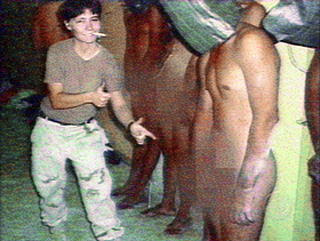
abu+grahib+photo+4To be sure films like Little Big Man and Dances With Wolves call attention to larger problems, but they also point to a way out which all too many Americans seem to have taken, the belief that the ugly side of American military can be laid at the feet of the occasional lunatic clad in buckskin.

Or perhaps to a cigarette puffing soldier who lost her moral compass somewhere along the way.

Because surely the problems don’t go any further than that!


Share this:

  • Tweet
  • Share on Tumblr
  • Click to print (Opens in new window) Print
  • Click to email a link to a friend (Opens in new window) Email
  • Click to share on Reddit (Opens in new window) Reddit
Like Loading...

What are the Necessities of Life?

20 Saturday Dec 2014

Posted by danielwalldammit in Movies, Native American Themes

≈ 4 Comments

Tags

Canada, Eskimo, Film, Foraging, History, Inuit, Movies, Progress, The Necessities of Life

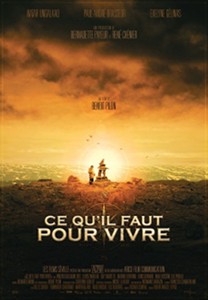
The_Necessities_of_LifeWhat are the Necessities of Life?

We meet the protagonist of this 2008 Canadian film in Baffin Island of the 1950s. Tiivii (played by Natar Ungalaaq) struggles for breath as he ascends a small hill in search of geese, his wife and children are just waking in their tent below. Upon seeing a boat on the half-frozen ocean, Tiivii sets aside the hunt and takes his family aboard for a series of medical tests. As the boat prepares to leave, Tiivii is told he must remain aboard, leaving his wife and children to fend for themselves while he undergoes treatment for tuberculosis.

When next we see Tiivii, he is soon staring at a tree at the hospital in Quebec City, amazed at his new surroundings and quite unprepared for the coming hardships that await him. He does not fully understand his illness, nor does he realize how long it will take him to recover. He also has no idea how his family will fair without him.

An Inuit lost in civilizations? It’s an interesting twist on a familiar theme, that of a stranger in a strange land. The point is soon driven home as we see Tiivii struggle to master the use of a fork and spoon while the other hospital patients consume platefuls of pasta. He figures it out, but not before earning the derision of his roommates.

Through the story, we are invited to see the hospital and western civilization through Tiivii’s eyes, to see common utensils from the perspective of one who has never used them before and to imagine a common meal from the standpoint of someone has never eaten anything like it. We can also imagine his confusion at the sterile bathroom with its flush toilet; his longing for someone to talk to makes perfect sense; as does his desire to eat familiar food.

the-necessities-of-lifeWe’ve seen this storyline before, a person completely out of his element. It is often used to explore the differences between civilization and savagery. This was the premise for Dances With Wolves, and before that with Little Big-Man and A Man Called Horse. It’s a common enough theme in arctic films as well, being found in White Dawn and Snow Walker among others. What makes this film different is the trajectory of the stranger in this case; he has left a world unfamiliar to most of us, to enter one most of us will find rather familiar. We are used to seeing the story go the other way. Still Tiivii’s journey is compelling. Through his eyes, the western world becomes strange, unreasonable, and quite insane.

This particular twist on the stranger in a strange land contains an element of nuance, however, that would be easy to miss. Audiences may think they know what it means for an emissary of modern western society to live amongst primitives, but what does it mean for such an individual to come live amongst us, or at least the 1950s variation thereof? It would be easy to think that Tiivii spends the entire story marveling at the wealth and richness of the city. In the space of a few opening scenes he has made a transition from the life of a forager scratching out a meager existence on the tundra to a cosmopolitan center with all the wonders of contemporary society. Tiivii may see this world from the shelter of a hospital bed, but he does see it just the same. How could he possibly understand the complexities which have put food on his plate in that hospital, or those that enable him to flush that same food away in the porcelain toilet? It would be awfully easy to think of this as the story of a simple man lost in the wealth of the modern world
…except that would not explain the title of the movie.

necThe title comes to us in a scene near the end of the film, one in which Tiivii explains to a young patient named Kaki (Paul-André Brasseur) what it is like to be out on the tundra. Although Inuit himself, Kaki, has spent his formative years in the hospitals. He does not understand the kind of life his own people have led. Asked what his homeland is like, Tiivii explains:

Beautiful. Lots of mountains. From the top you can see everything. You can see exactly where you are going. Not like here, where there are trees everywhere and you can’t see ahead. There’s a huge island. It takes many days to travel around it. There’s everything you need, all the necessities of life. Seals. Caribou. Geese.

Tiivii’s face lights up with each point of his speech, but the point of the scene would be missed entirely if this was thought to be nostalgia. Tiivii’s speech provides the strongest hint in the movie as to just how he sees the world around him. It is not a world of abundance at all; it is one in which he cannot see the materials out of which to make his clothes much to less to build a home. It is a world in which he cannot see food or medicine. All of these things must be brought to him. If this is mysterious, it is not the mystery of a miracle so much as a perverse trickery, one which hides the means of life from him while doling out the necessities a little at a time. Far from marveling at the wealth of civilization, Tiivii has been lost in the desert the whole time. He doesn’t see modern miracles in plumbing or cutlery. Instead he sees a world of mostly useless materials.

I think this is the real genius of Necessities of Life, that it actually flies in the face of conventional notions of the difference between foragers and civilized folks. Ever since Nanook of the North, mainstream film-makers have marveled at the struggle of arctic hunters against hunger and the elements. Time and again, Hollywood’s ‘Eskimos’ have been portrayed as dwelling on the edge of starvation, and it would be awfully easy to see in Tiivii’s story just another chapter in that narrative, one in which one of these primitives actually gets to experience the wealth of modernity. And yet, what Tiivii actually tells us is just the opposite; wealth is waiting for him back home on Baffin Island, and he cannot wait to leave the extreme poverty of the modern world behind.

Share this:

  • Tweet
  • Share on Tumblr
  • Click to print (Opens in new window) Print
  • Click to email a link to a friend (Opens in new window) Email
  • Click to share on Reddit (Opens in new window) Reddit
Like Loading...

Paul Newman IS Homo Economicus: A Spoiler-Filled Review of Hud.

03 Wednesday Dec 2014

Posted by danielwalldammit in Movies, Politics

≈ 2 Comments

Tags

Capitalism., Cattle Ranching, Film, Homo Economicus, Hud, Libertarianism, Movie Reviews, Movies, Paul Newman

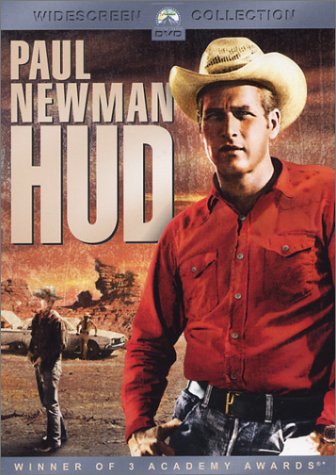
51YVV4PKWJLSo, I finally got around to watching Hud for the first time. It was about a month or so back that I popped a copy into the disk player. I didn’t know what to expect really, but I’d heard it described as one of Paul Newman’s rebellious best. So, I sat back and prepared to watch him take on the world for the umpteenth time in my viewing history. He does of course, just as expected.

What I didn’t expect was that this time I’d be rooting for the world.

We meet Hud as he emerges from the house of a married woman, angry to have been interrupted by his nephew, and not the least bit remorseful about where he spent the night, not even when her husband arrives before Hud and his nephew can quit the scene. Not to worry though, Hud lays the blame on his nephew and they hightail it out of there. It’s a pretty damned low move, but just the sort one might expect from a devil-may-care young character Newman has played before. Still unwise to the story that would unfold before me, I sat back waiting to see what Hud would do to make us forgive him in the end. To be sure, this character had the usual mixture of charm and recklessness you might expect from such a role. I couldn’t wait to see where the plot would take him.

Make no mistake, however, this is not a film about redemption, reform, or freedom from convention. Quite the contrary.

So what is the story here?

Hud stands to inherit a ranch from his father, but a likely outbreak of hoof&mouth disease creates a dilemma for the family and their ranch-hands. Hud wants to sell the cattle before the veterinarian can diagnose it. His father (Homer) won’t hear of it. It isn’t simply that the two men disagree; they genuinely don’t like each other and their conflict over the cattle considerably widens the rift between them. Hud believes his father’s distrust to be the result of an accident resulting in the death of his brother (Homer’s other son). Hud had been driving, and yes, liquor had been involved. But Hud’s father tells us that wasn’t the source of the problem. Something about Hud had always bothered him, something about the way Hud treated others. Hud’s response to this new crisis served only to make Homer that much more uncomfortable with his remaining son, and with the prospects of his own legacy, the ranch.

As Hud takes ever greater liberties with those around him, I couldn’t help but side with his father. In time, all the more decent characters will leave Hud. His father dies’ a prospective love interest leaves town (for damned good reason!); the ranch workers are let go because there is nothing for them to do; and finally Hud’s nephew abandons him in the final scenes. I couldn’t help but cheer for each of them that got away, and in the final scene, as Hud slams the doorway of the ranch-house leaving us outside, I couldn’t help but feel a trace of relief to finally get away from him myself.

It was an awesome performance.

This is a film about conflicting values. Hud sees his many years working on the ranch as an investment, and he expects a return on that invest in the form of an economically viable property. The outbreak of disease now threatens that return, and his father’s moral scruples aren’t helping much in his view.

Over the course of the film it becomes ever more clear just how little Hud sees in that ranch besides the money it may one day provide him. His failure to find any meaning in the work he does for the ranch itself is matched by his failure to connect with those around him. Hud has his moments of course. Here and there, we could almost hope to think him human, but this character was made to disappoint us at every turn. It’s only fitting that he should end up with the ranch and nothing else. no cattle, no family, no friends, nothing living around him. There is little doubt that he will somehow make the ranch work, and still less that he will do so utter alone. In the end, that is the choice Hud has made, and he seems quite content with the results.

I can’t help but see in Hud a perfect avatar of homo economicus as libertarians seem to understand him, a perfectly functioning rational agent out to maximize his pleasures and minimize his pains. He sees in work nothing but the exchange value of his products and in other people only the chance to cash in those values for direct personal pleasure. The bottom line in his thought is pure profit, nothing more.

And so, he’s a villain, so what? Who today could possibly oppose such an approach to a business venture? Who but a communist? …or worse, a liberal!

…or Hud’s father, a cultural conservative in his own right. Hud’s father, Homer, isn’t looking to redistribute wealth, but he understands the value of work itself, something not entirely reducible to the dollar value of its products. Homer understands that in working men also produce themselves and their communities, and that this has a value, one that cannot be reduced to profits. The issue becomes most clear when someone raises the prospect of drilling for oil.

On this matter, we’ll let Homer speak for himself:

Hud Bannon: My daddy thinks oil is something you stick in your salad dressing.

Homer Bannon: If there’s oil down there, you can get it sucked up after I’m under there with it. There’ll be no holes punched in this land while I’m here. They ain’t gonna come in and grade no roads so the wind can blow me away. What’s oil to me? What can I do with a bunch of oil wells? I can’t ride out every day and prowl amongst ’em like I can my cattle. I can’t breed ’em or tend ’em or rope ’em or chase ’em or nothing. I can’t feel a smidgen of pride in ’em ’cause they ain’t none of my doing.

Hud Bannon: There’s money in it.

Homer Bannon: I don’t want that kind of money. I want mine to come from something that keeps a man doing for himself.

So, I watch this film and I see in Homer a vision of generations that seem well past in the present day political landscape, generations who say capitalism as it is practiced today as a threat their own way of life, a force that would destroy the conditions under which they would work and earn a living. It has been far too easy for far too long to assume that the opponents of capitalism have always been communists. What too many people seem to miss is that moment in history when the juggernaut of modern corporatism first threatens to take away the livelihood of those content with free markets, a moment in history when some at least might have known the difference.

Irony of ironies!

It seems many of the film’s viewers didn’t see the difference themselves. Apparently, a good portion of the American audience saw in Hud precisely the rebellious hero that I had hoped to, and not the merciless villain I felt the film had actually shown me. Film critic Pauline Kael even went so far as to argue that the audience was wiser than the film-makers insofar as they rejected its critique of capitalism and celebrated the villain as if he were a hero. Kael’s view is one way to look at it. Another would be to take this approval as an indication of just how much modern America and its sensibilities had in 1963 already been shaped by men such as Hud.

Share this:

  • Tweet
  • Share on Tumblr
  • Click to print (Opens in new window) Print
  • Click to email a link to a friend (Opens in new window) Email
  • Click to share on Reddit (Opens in new window) Reddit
Like Loading...

An Uncommon Pitch Line

20 Monday Oct 2014

Posted by danielwalldammit in History, Movies, Uncommonday

≈ 4 Comments

Tags

Advertising, Film, Mental health, Misrepresentation, Movies, Psychiatry, Siegfried Sassoon, War, World War I

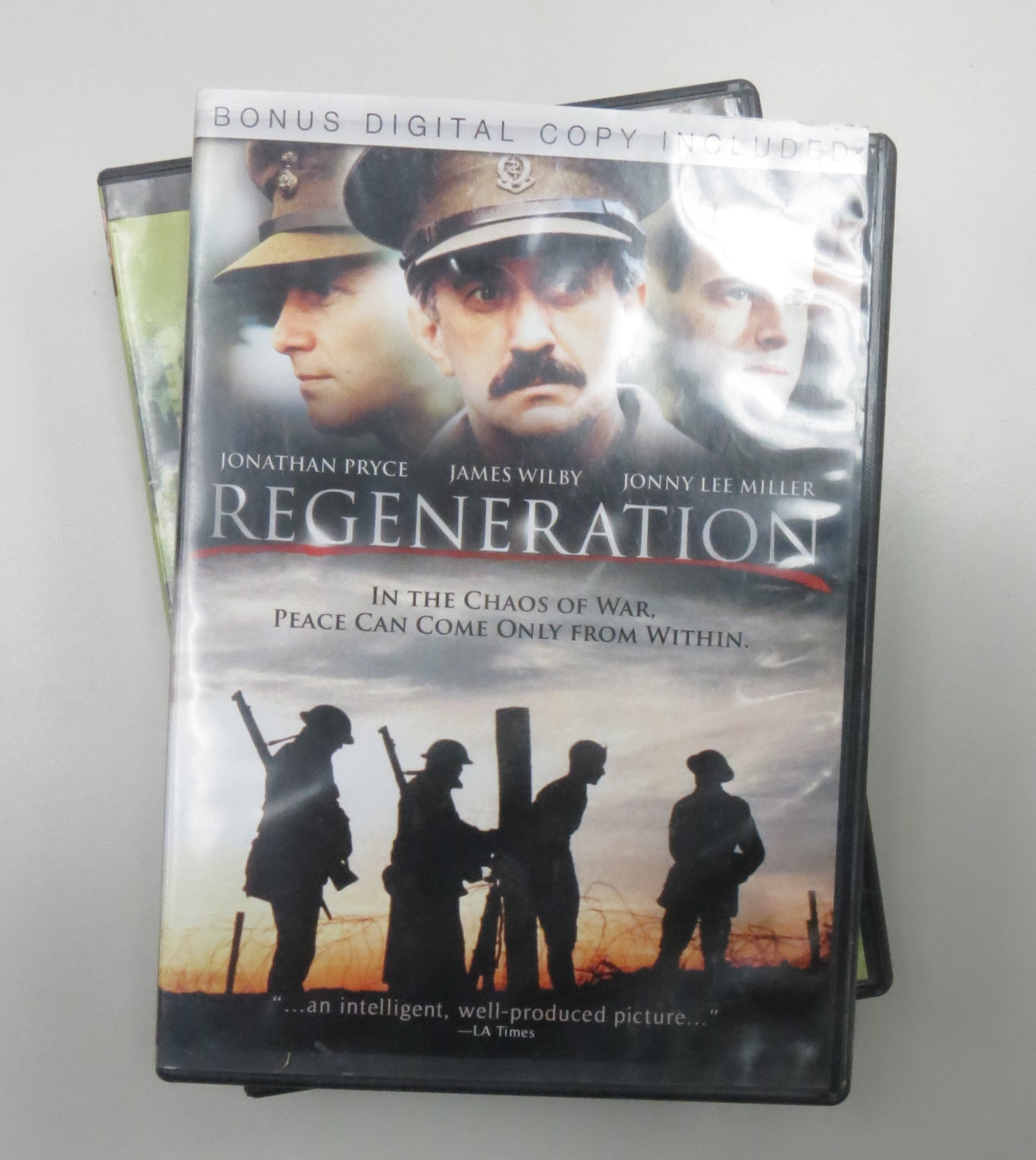
???????????????????????????????Have a look at the pitch line on this movie. “In the chaos of war, peace can only come from within.” What’s odd about that, you may ask? It is after all a story about a soldier and the psychiatrist who has been assigned to help him recover from Shell Shock. So, the line makes a lot of sense right? Well, yes it does.

Unless of course, you’ve seen the movie.

Because if you’ve seen the movie, then you will likely realize that the premise of the film is actually that the soldier, Sigfried Sassoon is NOT actually suffering from Shell Shock. (Sassoon was in fact a real historical figure, by the way, one well worth knowing about.) He had in fact published an open letter in opposition to the war. As the man was already a highly celebrated war hero and a recipient of the military cross, this posed a bit of an unusual problem for the British high command. You can’t just put a hero in front of a firing squad, can you? So, the British military wasn’t quite sure what to do about this. The solution was to declare him ill and assign a psychiatrist to treat him. By ‘treat’ in this case we mean of course that the psychiatrist in the film was expected to talk Sassoon into going back out to join the fighting. Far from a movie about finding inner peace, this is a film about the misuse of medical science in the politics of war. It is in fact a very bitter tale of a medical practice that wasn’t about finding peace of any kind.

But, hey ad guys! Don’t let that stop you from putting a perfectly vapid cliché on the cover of this wonderful film. Better yet, why don’t you pick a theme that carries forward the very hypocrisy addressed in the movie itself.

Share this:

  • Tweet
  • Share on Tumblr
  • Click to print (Opens in new window) Print
  • Click to email a link to a friend (Opens in new window) Email
  • Click to share on Reddit (Opens in new window) Reddit
Like Loading...

Much as Love and Murder, Freedom is a Many-Splendored Thing

13 Thursday Feb 2014

Posted by danielwalldammit in Movies, Narrative VIolence

≈ 14 Comments

Tags

Death Squads, Film, Freedom, Genocide, Indonesia, Joshua Oppenheimer, Movies, Murder, The Act of Killing

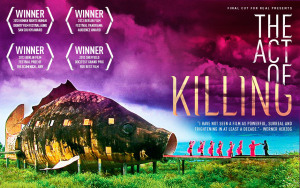
17711-series-headerYapto Soerjosoemarno is a middle-aged man. He is the leader of Pankasila, an Indonesian youth group three million strong. The camera follows him out onto a golf course where he explains; “Gangsters are free men. They want to live life in their style. Relax and Rolex.” A moment later he tells his young caddy she has a mole on her pussy.

And she smiles.

Of course all of this comes after Yapto explains that Pankasila had killed all the communists in Indonesia. It comes after he has spoken at a Pankasila rally, one in which he calls himself the biggest gangster of all.

What else could the young girl do but smile?

KillingAs he and his friends try on colorful gangster outfits, Anwar Kongo waxes on about his inspirations; Al Pacino, John Wayne, and others like them. He goes on to relate the story of how he once placed the leg of a table on a man’s throat before he and others sat on the table and bounced up and down, “having fun!” Those present place a bag of clothing under the table-leg and re-enact the scene, singing and smiling as they do.

Eventually, they declare the bag dead.

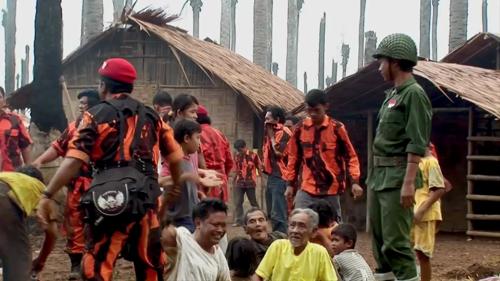
…these are just some of the opening scenes in The Act of Killing. This film doesn’t contain much graphic violence, but the significance of the violence does show is compounded rather heavily by the knowledge that it is in some sense real, that those in front of the camera are acting out real murders they themselves committed decades in the past.

taok_waterfall_rgb_wide-ccc2039ee7eeef83f3fa96fdf27026d59ad2b2e7-s40-c85The Act of Killing explores a wave violence occurring in the wake of a military coup in Indonesia. The coup happened in 1865, and most of the killing occurred within the next few years, but those who carried it out have been living in freedom ever since. Their friends and neighbors have (it would seem) been living in fear all this time, a point driven home quite clearly when the cameras follow several thugs into a market to shakedown Chinese merchants.

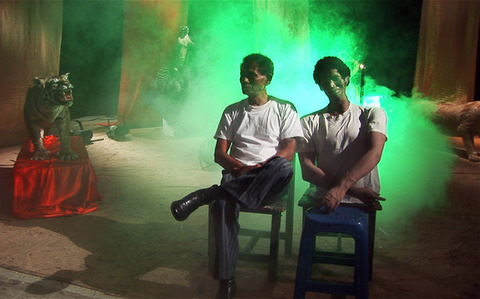
What makes this movie so remarkable is of course its unique approach to the subject. When filming the survivors of this bloody era proved too dangerous for them, and when the perpetrators proved all-to-willing to explain everything, Film-maker Joshua Oppenheimer, elected to focus on the killers. Finding his subjects kept imagining their actions in cinematic terms, he finally invited some of them to direct scenes of their own killings, and to stage them in the manner of their own choosing.

The resulting scenes are terrible in more ways than I can count. These aren’t professional actors; they are really killers, and their efforts to appear as they actually are seemed doom to failure. They just don’t have the skills to produce a convincing performance, but what sort of performance could be more convincing than a killing portrayed by its actual perpetrators? These staged productions are full of incongruous moments, just as one might expect from a story one learns by those who were actually there. A single narrator cleans up a lot of ambiguity, but a bunch of thugs trying to shape their own legacy? That is bound to produce more questions than it answers. In the interim, one is left with the image of a thug playing at being a thug in the full knowledge that he really is a thug.

ActOfKilling-621x312One wonders what Jean Paul Sartre would have done with this?

The Act of Killing is far worse than this! It isn’t merely a farcicle study of bad faith, because victims of these atrocities are all over this film. Those killed are gone of course, completely silent all these years after their murders, but their friends and relatives are present, as are the memories of the community, and the knowledge of that community that these stories are indeed real, that the killers are just that, even now! For all the bad acting, and banal story-telling everyone knows that these people are truly dangerous men. Time and again, on-stage victims cry long after someone has yelled ‘cut’, and all the stroking and kind words in the world are of no avail for some of these people.

In one particularly brutal scene, a man tells us about his step-father, taken out in the night by a death squad. They found his corpse nearby in the morning. This story-teller explains this as he sits in a chair, about to play the victim of an interrogation and execution, and those who will torment him in the scene sit in stone silence. One wonders if they recognize the story, or if they may just be ticking off faces in their mind, wondering if one of them was this man’s step-father. No matter! The story is rejected, because there isn’t enough time to add it to their project, but one cannot help but think this story is just out of place. They are filming the glories of their own murderous past, not the horrors of their murder victims. A few moments later, the scene begins, and we watch a man who lost his step-father to the death squads play victim to the very men who carried out such killings. The acting is terrible, except for that of the the victim. He is, as you might imagine, absolutely spot-on! It would be an Oscar-worthy performance, except that it is difficult to call it a performance. …and when the scene is over, the man continues to sob as his interrogators move on to discuss the philosophical implications of their past.

The Act of KillingTime and again, the gangsters in this movie return to the theme of ‘freedom’. They repeatedly explain that the word gangster means ‘free men’, (They are playing on the origins of the Indonesian word ‘preman‘, which comes from the Dutch term ‘vrijman‘, once used for those trading in the region without the sanctions of the Dutch east India Company.) These same gangsters proudly brag of being just that, free men. They have chosen ‘Born Free’ as the theme song for the film; it’s significance is driven home by a dance number during which one of Anwar Congo’s dead victims thank him for sending them to a batter place.

…and gift him with a medal.

The word ‘freedom’ seems both incongruous and yet oddly appropriate to all of this. It seems strange to hear such a beautiful word falling from the lips of men perpetrating so much ugliness. And yet, there is little doubt that their understanding of freedom must resonate with the stories of their own lives. Surrounded by people afraid to contradict them, these men are indeed free. They do as they wish, both on and off screen, and they have done so for decades. This freedom is not an ideal to be shared; it is a freedom hoarded by the few at the expense of the many. It is the freedom of a man to take liberties with a young girl on a golf course.

But of course it is also freedom to do much more than that.

the-act-of-killing-main-reviewI wish I could say this vision of freedom was unfamiliar, but it simply isn’t. It is present in many times and places, from the defense of a freedom loving and slave owning Confederacy to the liberation of Germany from the oppression of ‘Jewish conspirators’, or for that matter to countless instances in which the privileged exhibit their own sense of entitlement, never quite noticing how much they take from others. Freedom it would seem, can sometimes mean liberation from the lives of others. It is hardly an innocent word; we just aren’t accustomed to seeing it covered in so much blood. But is the more innocent sounding freedom we enjoy here in the U.S. really all that divorced from this freedom that demands its victims? One has only to look across our borders or follow our commodities back to the lands that produce them.

..or to realize that the slaughter carried in Indonesia following the coup in 1965 with the full backing of the officials in the United States. After all, this was also freedom from communism! Freedom for Anwar to kill was also freedom from trade barriers. That freedom was a small drop in the ocean of consumer freedom we enjoy here in America to this day.

I’ll leave that point to the side for the present, but this movie contains at least one other important connection to daily life in the United States. It’s difficult to wrap one’s mind around the many layers of constructed reality in this film, gangsters playing at being gangsters and all that, but perhaps the most disturbing layer of this production lies in the role that gangster films may have played in the violence itself. The killers in this film are quite clear about their own inspirations being American gangster films. Many of these killers had been associated with the local movie theaters, theaters facing restrictions under the communist regime they would rebel against (it seems the film industry was suspected  of plotting against the government of Indonesia). Recruited by the military to carry out the mass killings, these same men drew inspiration from movies depicting gangster violence. So the loop closes once again, as the pretend killers who really are killers turn out to have been guided by the actions of fake killers in the first place, the very same ones you and I watch with a clean conscience.

…and this dark and painful ‘reality’ proves to be far more surreal than any artistic contrivance one could possibly imagine!

71.271549 -156.751450

Share this:

  • Tweet
  • Share on Tumblr
  • Click to print (Opens in new window) Print
  • Click to email a link to a friend (Opens in new window) Email
  • Click to share on Reddit (Opens in new window) Reddit
Like Loading...

Your Lips Say ‘No’, But Your Eyes Say ‘Chicken-Whistle Star-Bullets!’

01 Sunday Dec 2013

Posted by danielwalldammit in atheism, Movies, Religion

≈ 15 Comments

Tags

atheism, Critical Thinking, Debate, Film, Movies, Religulous, Reliion, Rhetoric, Sarcasm

51mGiYaPfqL._SY300_So I finally watched Religulous. I found it a truly underwhelming experience. Honestly, I think I must be over the joys of poking holes in religious thinking. In other news, boxing with Girl Scouts no longer brings me quite the same thrills that it used to.

…at least on Thursdays and Saturdays. It is entirely possible that I may relapse on Tuesdays and Fridays.

Okay, it’s not always that easy, I know; sometimes I meet a religious person with genuinely challenging thoughts, but perhaps that is my point. One can find a pretty broad range of qualities fitting under the heading of ‘religion’, and it can be just a little too easy to look for the easy pickings. Some people treat debunking religion as a sport, and those people rarely seek out the challenging thinkers. No, they hunt the naive in remote and highly uneducated corners of the globe; they sniff out the cooks and the crankcases. I should point out that the sport-debunker isn’t always an atheist, but of course, this time it is.

Religulous is the intellectual equivalent of a canned hunt. In this movie, Bill Maher seeks out and makes a fool of one believer after another and I cannot help but think most of those interviewed have been selected for their capacity to appear nutty to the rest of us. Maher does little to explore the intellectual lives of any of those interviewed in Religulous. His discussions bear a strong-resemblance to a cross-examination in a courtroom (or at least a courtroom drama). Maher’s questions rarely veer far from the effort to produce a contradiction or an implausible claim, and he doesn’t hesitate to interrupt, argue, or insult his subjects at any point in the movie. Not wanting his subjects to go-off half-mocked, Maher includes several segments in which he trashes those already interviewed while driving about, presumably on the way to the next ambush interview. When he does interview intelligent believers, Maher’s sole interest seems to be getting them to help debunk their brethren. The most interesting and complex thinkers in this movie would easily include a number of Priests but they are of interest to Maher only insofar as they help us to dismiss the beliefs of others.

I have to admit, there was a time when I would have been into this. Now, I just find it rather predictable.

…and pointlessly rude.

Ironically, I think Maher’s snide disrespect for his quarry in this film actually blunts the force of his criticism and lets them off the hook. In interviewing John Westcott,  an ex-gay minister, for example, Maher makes a point to suggest the sexuality of the man’s children remains in question. In the commentary track, he further laughs at the irony of a man denying his homosexuality when Maher can tell by his behavior that the man is gay. Personally, I think this underscores the irony of a man proporting to call a believer to task for mistreatment of homosexuality while exhibiting all the insight and sensitivity one might expect to find in the boys locker room of a high school football game. Maher’s games do absolutely nothing to reveal the intellectual dishonesty and outright harmfulness of ex-gay therapies and related ministries. While Maher plays to the cheap seats by making fun of the man and his children, the interview goes nowhere. Maher learns nothing about the minister’s actual point of view, and he does nothing to show us just how harmful these organizations can actually be.

And I wonder if I am supposed to be pleased with this?

Maher is casting religion in a bad light, and in this movie (as in other contexts), he does sometimes score a hit, or even a home-run. I should be able to enjoy this, and I would, if I thought Maher was doing a consistently good job of it, but what bothers me most about this movie is a sneaking suspicion that it isn’t an exercise in healthy skepticism, that in fact Maher is selling a message that doesn’t quite fit the label on the packaging. Shallow as it is, Maher’s engagement with the proponent’s of God-talk is not merely intended to show us how foolish they are. He is building a narrative with assumptions going well beyond the foibles of his hapless quarry.

One particularly telling moment occurs during an interview with a Muslim cleric. the man’s cell phone goes off, and the ringtone is Led Zeppelin’s Kashmir. Maher suggests that this is odd. The prospect that a song called ‘Kashmir’ might strike a cord with a Muslim seems to have completely escaped him. More to the point, he doesn’t ask why the Cleric uses that ringtone or what it means to him. To Maher it seems to be self-evident that the Cleric’s choice of music reveals an inconsistency. He drives this point home further in the commentary track, suggesting that people steeped in outdated beliefs should not get to use modern conveniences.

The mode of engagement used here is consistently that of polemics. Maher wants to poke holes in religion; he doesn’t want to understand anything else about the people he is talking to, or at least he doesn’t want to show us anything else in the final cut of the movie. To describe the end result as superficial would be giving superficial a bad name. But of course there is something a little more insidious at work here. It arises in the notion that religion is simply outdated, that the cleric’s interest in a cell phone is simply incommensurate with religious beliefs. This is old fashioned unilineal evolution, the belief that human history follows a set course. To Maher (and evidently his producer) it goes without saying that religious beliefs are chatter out of place, so to speak, and that history is incomplete so long as these throwbacks remain with us. This is the key to his polemic approach. He wants to show us that religion is stupid, urge us all to leave it all behind, and thereby advance one further step in human history.

In taking this approach, Maher is unfortunately (and ironically) doing a good deal more than debunking the beliefs of his interview subjects; he is advancing a faith of his own, a faith in Progress with a capital ‘P’, and a specific vision of that Progress. The film ends with an emphasis on growing conflicts between Muslims and Christians, and a recurrent expression of fear that these faiths will lead us to nuclear disaster. Maher addresses the claim that these conflicts are really political, and of course it is easy enough for Maher to assert that they are also religious, but of course this is a unique marriage of the fallacies of straw man false alternatives. The question is not which category various conflicts fall into, but rather how politics and religion intersect in actual human history. That is a question Maher is completely unprepared to answer, or even ask. He relies on a stock vision of humanity’s course throughout the film, and herein lies the value of his deceptively simple interview agenda. So long as we are focused on the foibles of the faithful we may not take the time to think critically about Maher’s own millenarian vision of the future.

This is bait & switch.

Maher quite rightly calls some of his interview subjects to task for glossing over the role of faith in political violence, but his refusal to address the politics is itself a telling source of ignorance. He is telling as simple story in which the source of modern evil is found in beliefs and beliefs alone. If only we can deal with the bad beliefs once and for all in the fashion of lunch-room debate tactics, then the world will be a better place.

In advancing this simple message Maher shows us that he has a lot more in common with believers than he would suppose.

71.271549 -156.751450

Share this:

  • Tweet
  • Share on Tumblr
  • Click to print (Opens in new window) Print
  • Click to email a link to a friend (Opens in new window) Email
  • Click to share on Reddit (Opens in new window) Reddit
Like Loading...

Uncommonday – An Overly Honest Funeral Sermon

18 Monday Nov 2013

Posted by danielwalldammit in Movies, Uncommonday

≈ 9 Comments

Tags

Ambivalence, Death, Funeral, Humor, Irony, Schizopolis, sermon, Steven Soderbergh

Awhile back I posted a film clip featuring a wonderful wedding sermon. Today, I thought I’d post my favorite funeral sermon. This scene is from the movie Schizopolis, one of Soderbergh’s lesser known films. If you’re feeling a little left of your own mind, let me assure you the rest of the film is no closer to normal than this scene.

* By ‘Honest’ I might mean ‘cynical’ in which case I think we can dispense with the ‘Overly’ part of the title.

71.271549 -156.751450

Share this:

  • Tweet
  • Share on Tumblr
  • Click to print (Opens in new window) Print
  • Click to email a link to a friend (Opens in new window) Email
  • Click to share on Reddit (Opens in new window) Reddit
Like Loading...

Barrow on the Big Screen, A Little at a Time

06 Wednesday Nov 2013

Posted by danielwalldammit in Alaska, Movies

≈ 7 Comments

Tags

Alaska, Barrow, Ethnicity, Film, Film Reviews, Movies, On the Ice, The Big Miracle, Thirty Days of Night

38483_1544951388794_3220306_nOne thing about coming to Barrow, it has made conversation much easier, at least in the lower 48. All I have to do is tell people I am from Alaska and the conversation is well on its way. They will ask more questions than I could possibly answer, and once I start telling them about Barrow I can generally be assured of willing and sympathetic audience. I’m a socially awkward kinda guy, so yes, this is a good thing. Anyway, I’m happy to talk about my new home. Barrow can be damned interesting!

…so I suppose it should come as no surprise that this town has made its way into the occasional television show or movie production. Three particular movies about Barrow seem to have made it into the popular culture to one degree or another. These films couldn’t be more different from one another. Each tells a different kind of story to a completely different audience, and each portrays the community of Barrow in a very different way. I’m always fascinated to see the community change its shape in order to meet the needs of the film-makers behind these project.

…fascinated enough to write a post about it anyway!

***

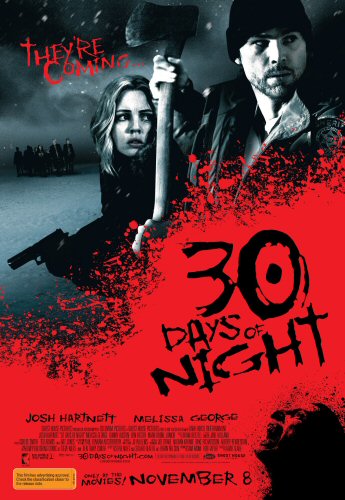
30-days-of-night-poster-1_6599Barrow as Darkness: Thirty Days of Night is of course the most well known movie about Barrow. In this film based on a graphic novel) vampires descend upon the town at the outset of Polar Midnight in order to enjoy a month-long feast in the safety of a season without sun. Thirty Days of Night wasn’t filmed here; it was filmed in New Zealand. Still, the central premise of the film is very much about Barrow and the dramatic significance of a long polar night.

The small hills and valleys of the movie’s opening sequences were about all it took to shake my sense that this film had much to do with the Barrow in which I live. The exaggerated sense of polar midnight didn’t help either. Once it goes dark in this film, it stays dark, …completely dark. What a lot of people don’t realize (and what the film-makers didn’t seem to find interesting) is the fact that we get a kind of fake sunrise here. If you can imagine the moment before the sun actually rises, that’s what we get in the midst of polar midnight, only it isn’t followed by an actual sunrise. You could swear the big ball of warmth was just about to pop over that horizon, and then the light just starts to fade.

…yes, it can be a little disappointing.

…kinda like Thirty Days of Night.

30DaysofNight_6lgBut perhaps I am being too harsh. Barrow does one thing only for this film and that is to provide the central premise, a vampire paradise. So, it should come as no surprise that the movie makes no attempt to convey anything meaningful about the people of this community. Still, you would think the directors would be kind enough to give their villainous horde of undead a bit of variety in their diet? Nope. The  Barrow of this film is a lily white community if ever I saw one before. As I recall, a token native does make an appearance in the living feast that is Barrow’s population for this film. Other than that, the menu is white meat only.

This is a fun film in its own right, but it is definitely, not the Barrow I know.

***

bigmiracleartworkpic1Barrow as a Big Warm Hug: Hollywood has made one popular film here in Barrow, and they did it since I arrived, The Big Miracle. At least it was about Barrow, and they did shoot some film up here. Some residents even made it into the movie, as did natives from other parts of Alaska. With a cast featuring Drew Barrymore and Ted Danson, this film recounts a real event in the history of this community. In 1988, three grey whales became trapped in the ice not far from here. The entire town as well as a number of outsiders (including a Russian icebreaker) worked hard to break them free.

The ironic thing about this movie is that it was based on a rather cynical book, ‘Everyone Loves Whales’. I gather the original script may even have had a little bite to it, but the final cut of this film is a feel-good celebration of compassion, humanity, and …whales! By the end of the film, the plot is fully focused on efforts to save the big lugs of the sea, but the early scenes focus on political questions about whether or not anyone will help them. One of those questions was apparently whether or not to eat the whales instead of saving them. The Iñupiat community of the north slope harvests Bowhead whales every year, so that possibility could hardly be described as a stretch. This plot point is eventually resolved when the whaling captains of the town decide instead to help free the whales.

(Big sigh folks!)

images (2)The eat-or-save sub-theme provides The Big Miracle with its main window into the community up here. Unlike Thirty Days of Night, this film actually finds a place for the Iñupiat community of Barrow in its storyline. They start out as potential villains and end up being god guys in the end.

…kinda like Clint Eastwood, only with chainsaws and snow-machines instead of Colt Walkers and a horse. (Let’s not talk about the harpoons.)

Folks up here are of mixed minds about how whether or not the film does justice to Iñupiat community of Barrow. Drew Barrymore (who plays a Greenpeace activist in the film) gives a pretty brutal speech about the native community and its whaling practices, and its hard to shake the sense that some of her points in that speech might have served as the voice of the film-makers. Later attempts to show the native community in a more positive light may or may not be enough to settle concerns about the politics of the movie, and for those here still very much committed to whaling, the major theme of the movie itself may be a little discomfitting. Barrow’s native community gets some love here precisely to the extent that their actions do not reflect what natives of the North Slope normally do with whales. It’s a conditional kind of love, and I can’t blame folks for being wary of the conditions.

For what it’s worth, this movie at least knows that natives exist in Barrow. It even kind-of likes them, so long as they aren’t eating muktuk.

***

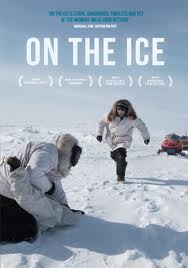
imagesBarrow as Native Youth: I can think of one REALLY good film set in Barrow, and that is On the Ice by Andrew Okpeaha MacLean. MacLean is from Barrow, and he uses the film quite deliberately to tell us something about life here at the top of the world. On the Ice tells the story of two young Iñupiat men with a secret they’ve been concealing from the rest of the community. And while this main story plays out, the film does a wonderful job of revealing the interplay between indigenous values and outside cultural influence in the native youth of this community.

On the Ice is a tense drama, and one which portrays the native community with a deliberate sense of realism. This film was shot in Barrow, and it features a number of residents in the supporting cast. It’s both amusing and a little disconcerting to see scenes on street corners I pass regularly, and even more so to see people I know in various scenes, but that is definitely one of the film’s charms. If the other films are set in Barrow (or at least an imaginary version thereof), the real Barrow jumps right out at you from this film.

…at least it does for me.

On-the-ice-premieresWhat’s missing from On the Ice is everyone else! …besides the Iñupiat community, I mean. Every once in awhile you can catch a glimpse of a non-native somewhere onscreen in this film, but that is definitely the exception. For the most part this film has eyes only for the native population. Gone are the white folks, yes, but so are the Koreans, the Thais, the Tongans, the Samoans, and the Filipinos, each of whom has a substantial place in this town.

On one level, fair enough. This movie is about native youth not the rest of us. On another, it’s a simplification, perhaps even an over-simplification. I can’t help but think it makes a difference that the outside influences (and the people who represent them) are present here in Barrow itself, and I would think that would be part of the story of native youth, at least if that story is to be a realistic portrayal (perhaps it is not). It would have been interesting to see how these characters dealt with ethnic relations over the course of the story. Leaving out all the sub-communities from the town simplifies the storyline and that is the one thing that jars me a bit when I watch it. But seriously, I mean to praise the film with faint damn. Because what this film does, it does well.

If you want to watch a movie about Barrow, this is the one.

***

So there it is. The community in which I live takes on radically different forms whenever a camera is pointed at it. It is darkness for those seeking a fright, a reluctant helper for those seeking a heart-warming smile, and in it’s best incarnation to date, it is an all-native community. The full community of Barrow never seems to make it into these stories, and the interplay between all the ethnicities of this town has yet to make it onto the big screen.

Ah well, goodnight.

71.271549 -156.751450

Share this:

  • Tweet
  • Share on Tumblr
  • Click to print (Opens in new window) Print
  • Click to email a link to a friend (Opens in new window) Email
  • Click to share on Reddit (Opens in new window) Reddit
Like Loading...
← Older posts
Newer posts →

Top Posts & Pages

  • Hostiles and Spoilers: A Magic Studi
    Hostiles and Spoilers: A Magic Studi
  • I'll Just Leave This Here
    I'll Just Leave This Here
  • When Sex Falls Out of the Performance
    When Sex Falls Out of the Performance
  • The Erotic Heritage Museum in Las Vegas: A Very NSFW Review
    The Erotic Heritage Museum in Las Vegas: A Very NSFW Review
  • A Godless Reason for the Season
    A Godless Reason for the Season
  • Dancing for the Dead - Movie Review
    Dancing for the Dead - Movie Review
  • An Uncommon Security Guard: Dave Eshelman, AKA 'John Wayne'
    An Uncommon Security Guard: Dave Eshelman, AKA 'John Wayne'
  • Southern Paiutes as Portrayed in Las Vegas Area Museums.
    Southern Paiutes as Portrayed in Las Vegas Area Museums.
  • Race Card Recursion: A Game of Social (In-)Justice
    Race Card Recursion: A Game of Social (In-)Justice
  • The CSS Shenandoah
    The CSS Shenandoah

Topics

  • Alaska
  • Animals
  • Anthropology
  • atheism
  • Bad Photography
  • Books
  • Childhood
  • Education
  • Gaming
  • General
  • History
  • Irritation Meditation
  • Justice
  • Las Vegas
  • Minis
  • Movie Villainy
  • Movies
  • Museums
  • Music
  • Narrative VIolence
  • Native American Themes
  • Philosophy
  • Politics
  • Public History
  • Re-Creations
  • Religion
  • Street Art
  • The Bullet Point Mind
  • Travel
  • Uncategorized
  • Uncommonday
  • White Indians
  • Write Drunk, Edit Stoned

Blogroll

  • American Creation
  • An Historian Goes to the Movies
  • Aunt Phil's Trunk
  • Bob's Blog
  • Dr. Gerald Stein
  • Hinterlogics
  • Ignorance WIthout Arrogance
  • Im-North
  • Insta-North
  • Just a Girl from Homer
  • Multo (Ghost)
  • Native America
  • Norbert Haupt
  • Northwest History
  • Northy Pins
  • Northy-Tok
  • Nunawhaa
  • Religion in American History
  • The History Blog
  • The History Chicks
  • What Do I Know?

Archives

  • December 2023
  • November 2023
  • June 2023
  • April 2023
  • February 2023
  • December 2022
  • November 2022
  • October 2022
  • September 2022
  • August 2022
  • July 2022
  • June 2022
  • April 2022
  • January 2022
  • December 2021
  • November 2021
  • October 2021
  • September 2021
  • August 2021
  • June 2021
  • May 2021
  • March 2021
  • February 2021
  • January 2021
  • December 2020
  • November 2020
  • October 2020
  • September 2020
  • June 2020
  • May 2020
  • March 2020
  • February 2020
  • January 2020
  • December 2019
  • November 2019
  • September 2019
  • August 2019
  • July 2019
  • June 2019
  • May 2019
  • April 2019
  • January 2019
  • December 2018
  • November 2018
  • October 2018
  • September 2018
  • August 2018
  • July 2018
  • June 2018
  • May 2018
  • April 2018
  • March 2018
  • February 2018
  • January 2018
  • December 2017
  • November 2017
  • October 2017
  • September 2017
  • August 2017
  • July 2017
  • June 2017
  • May 2017
  • April 2017
  • March 2017
  • January 2017
  • December 2016
  • November 2016
  • October 2016
  • September 2016
  • August 2016
  • July 2016
  • June 2016
  • May 2016
  • April 2016
  • March 2016
  • February 2016
  • January 2016
  • December 2015
  • November 2015
  • October 2015
  • September 2015
  • August 2015
  • July 2015
  • June 2015
  • May 2015
  • April 2015
  • March 2015
  • January 2015
  • December 2014
  • November 2014
  • October 2014
  • July 2014
  • June 2014
  • May 2014
  • April 2014
  • March 2014
  • February 2014
  • January 2014
  • December 2013
  • November 2013
  • October 2013
  • September 2013
  • August 2013
  • July 2013
  • June 2013
  • May 2013
  • April 2013
  • March 2013
  • February 2013
  • January 2013
  • December 2012
  • November 2012
  • October 2012
  • September 2012
  • August 2012
  • July 2012
  • June 2012
  • May 2012
  • April 2012
  • March 2012
  • January 2012
  • December 2011
  • November 2011
  • October 2011

My Twitter Feed

Follow @Brimshack

RSS Feed

  • RSS - Posts
  • RSS - Comments

Enter your email address to follow this blog and receive notifications of new posts by email.

Join 8,075 other subscribers

Blog at WordPress.com.

  • Subscribe Subscribed
    • northierthanthou
    • Join 8,075 other subscribers
    • Already have a WordPress.com account? Log in now.
    • northierthanthou
    • Subscribe Subscribed
    • Sign up
    • Log in
    • Report this content
    • View site in Reader
    • Manage subscriptions
    • Collapse this bar
 

Loading Comments...
 

    %d