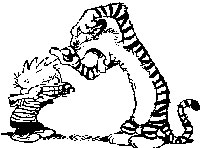
Uncharitable Thoughts About the Principle of Charity

Tags

, , , , , ,

This may seem ironic, but among the topics generally falling under the purview of logic and/or critical thinking is a little gem called the “principle of charity.” Simply put, this entails an obligation to interpret any given argument in the strongest sense possible, consistent with its actual wording. In other words, when you come to one of those moments where you could think of more than one way to take what someone else is saying, pick the one that gives them the strongest case possible. You don’t have to rewrite an argument for someone, or pretend you don’t see obvious flaws, but when there are genuine questions about the intent of an author, opt for the interpretation that gives him a fighting chance.

Then give him a hug.

This isn’t really about being nice. One of the most important reasons for applying the principle of charity is that it helps to ensure your own analysis will not be wasted. If you take advantage of some ambiguity in the text of an argument and spin it into something utterly foolish, then your own evaluation of that argument becomes all that much more trivial. If you are in actual dialogue with someone, then it’s easy enough for the other guy to simply restate his argument, filling in the gaps so as to avoid whatever silliness you have read into his claims. By sticking with the strongest version of an argument, you an help to ensue that you really are evaluating a case worth considering.

And then it’s open season!

I’ve often had occasion to reconsider this approach to critical thinking, not the least of reasons being that there seem to exist a rather large number of occasions when folks don’t want to use it. And by ‘folks’ in this instance, I mean “me too!” Whether reading or listening to an argument, sometimes I just don’t feel all that charitable. More to the point, sometimes, I think there are substantial reasons to set the principle aside.

I first noticed this, sitting in an anthropology class, listening to a critical theorist shred some text I have long since forgotten. Simply put, the principle of charity was quite lacking in that analysis, as it was with many similar texts I had been reading in that program. This was no accident. Where my critical thinking teachers had been preparing me for open dialogue with people with whom I might disagree, the critical theorists I had begun to read were far more interested in exploring the role of a given text in promoting power relations within a larger social context. Where the one approach talked about what a text might mean, the other talked about what it did in fact mean, at least under the prevailing circumstances.

And it occurs to me that I did this sort of thing myself in my post on the California law for the protection of the Indian, …i.e. the Law that enslaved Indians in California even as that very state entered the union as a “Free state.” The text is not an argument, but it raises many of the questions I am talking about here.  The text sets up a range of legal mechanisms which include indentured servitude as a possible alternative to incarceration. Bearing, in mind the principle of charity, one could ask if it is really fair to think of this law as a means of establishing slavery? You have to read between the lines, or you have to know some facts about the politics which produced it and guided its implementation. Once, you do know these things, the answer very quickly becomes ‘yes’.

And herein lies the crux of the problem. Application of the principle of charity means setting aside important questions about the actual impact of an argument in order to engage in dialogue with its proponents. This begs the question of whether or not you want such a dialogue in the first place (or whether or not it is even possible). And sometimes, the answer to that question is just ‘no’.

Case in point? Let’s look at this moment of Mitt Romney fame.

Now I know you think I’m going to attack him, and the truth is that I probably am, but not until after I am done defending him.

…I know; it confuses me too.

The common take on this topic is that Romney was echoing the sentiments of Citizens United v. Federal Election Commission (2010), namely the principle that corporations possess many if not all of the same rights as people. The notion that corporations are fictional people is hardly new to the political landscape. My Constitutional History Teacher was quite clear about that matter back in 1992, long before the current outrage, but for various reasons which needn’t concern us here, Citizens United brought about a frightful new firestorm of controversy over the notion, and that was fresh in a lot of people’s minds when Romney made this speech. Add to this a general sense that the Republican party is responsible for the relevant composition of the Supreme Court and for backing its rationale, and you have a ready-made battle just waiting for someone to drop in with the perfect phrasing

But is that what Romney was actually trying to tell his audience? If you look at the video, he was in the midst of making a very different point at the time, namely the fact that someone will have to bear the cost of raising taxes. Urged to levy the tax on corporations, Romney adds quickly that corporations are people. So, the question is this; was he affirming the legal rights of corporations, as per Citizens United, or was Romney trying to suggest that any costs applied to corporations will be paid by people somewhere in the marketplace (investors, employees, or even customers)? Although the categorical language suggests the former, Romney’s subsequent comments suggest the latter. The video itself doesn’t really yield a clear answer, and it is entirely possible that both lines of thought came together in one big mutant two-headed reason with no clear notion of the relationship between its sources.

At some point you have to make a choice as to the meaning of his comment.

If it’s the former choice, then well, go get him Lizzy Warren! And I must admit to a certain soft-spot for this inquiry as to the kind of person that a modern corporation would be, if indeed it were a person. But if Romney really was trying to tell us that costs accrued to corporations are ultimately borne out by people, then he is right.

Broken clocks, and all that!

Hell, there really isn’t much to gainsay that proposition that people will ultimately pay for costs imposed on corporations. There is a lot room for debate about how that works (or doesn’t) and whether or not it adds up to the kind of policies Romney wants to advocate. But that is a debate in which those of us on the left have as much responsibility to chase the devil through the details as Romney and the conservatives.

It’s a lot easier to tell Romney that corporations aren’t really people.

And here is where questions about the willingness to grant someone the Principle of Charity shade into larger questions about whether or not one wishes meaningful dialogue with them to begin with. If you really are exploring an issue with someone, and if they are approaching it in the same spirit, then the effort to assess their views in the strongest light possible facilitates that discussion. If no such goodwill exists, then extending the benefit of the doubt can cost more than its worth.

If the target audience for a debate is more responsive to cheap shots and sound bites, then failure to respond on that level begins to look a lot less like the responsible (grown-up) approach to a discussion and a lot more like failure on the horizon, all the more so if the point of the debate is really is to win something (a legal case or an election for example). If the other guy is just being a jerk, then you can always walk away. But if that jerk is trying to take something of value, then it may well be time to roll up your sleeves and pull out that roll of dimes hidden in your pocket.

Metaphorically speaking, of course.

So, do you really want to have a thoughtful discussion, or do you just want to kick the other guy’s ass? I know the Dudley Dialogue-Right in me wants to say “let’s have that thoughtful discussion,” but years of figurative blunt head trauma combine with political realism to say that sometimes the answer is just ‘no’.

Sometimes the answer is ‘no’, because the larger social context removes all doubt as to intent (the California example); sometimes it’s ‘no’ because the expectations of dialogue are essentially “no quarter given” (Romney?); and sometimes the answer is ‘no’, because you just don’t want to grant any legitimacy to the other side. This is why responsible scholars rarely debate holocaust revisionists, flat-earthers, or creation science hacks. It’s why feminists often give Men’s Rights Activists the face-palm instead of an argument, and its one of the reasons that both sides of the recent debate over Atheism-Plus have done a wonderful job of talking right past one another (just to name a couple netroversies currently bubbling over in sundry parts of the blogosphere). It’s also why you should never read the comments on any article posted anywhere (except here). And of course it’s why only a fool would debate anyone with a 160 character limit on each tweet.

…okay guilty as charged on that last one, but the point stands.

There are of course many ways in which one can shut off meaningful dialogue with others, but at least one of them occurs when you are no longer willing to give someone the benefit of the doubt. One takes their statements at face value and fills in the ambiguities according to a standard script; the possibility that the other guy may have something more interesting in mind is simply not worth the effort to give him a chance. This isn’t the kind of approach folks normally recommend, but it is the kind many of us engage in at one time or another. Combine this with the increasing role of discursive minimalism in public discourse and we have an ever increasing premium on short snide answers to arguments that never really came into their own to begin with.

There is no clear formula here; no objective test to distinguish those who have earned the benefit of the doubt from those who haven’t. While it can be particularly satisfying to see someone you think unworthy of debate forced to talk to the hand, it is equally frustrating when you are looking at that palm yourself. When neither side of a given debate seems capable of engaging the other in meaningful discussion, the results range from entertaining to downright tragic, often within the space of a single paragraph.

I certainly don’t have any great notions about how to make the call, but I do find it a interesting feature of public debate.


A Mild Bout of Southiness; Don’t Worry I am Recovering Well

Tags

, , , , , , ,

Giant Dancers Inhabit Downtown Denver
…eek!

I recently spent a couple days in Denver, which was a lot of fun while attending a conference at the Community College of Denver on  the Auraria campus. CCD shares this campus with two other institutions, Metropolitan State College of Denver and the University of Colorado, Denver. Its a rather unique arrangement which seems to work well for the students.

Highlights of the trip included time spent at the old St. Cajetan’s church, a wonderful presentation by Carlos Fresquez, a Friday evening in Downtown Denver, and seeing the infamous mustang statue at the Denver airport. Sadly, I did not get a picture of this last one, but you just gotta love a statue so Demonic that it killed its maker. …okay maybe not, but it makes a good story anyway.

I can’t believe I didn’t get a picture of that!

So, here I sit in Hotel in Anchorage, waiting to go back home. It can be quite an ordeal getting into or out of the North Slope. I once spent 36 hours in the hands of the airlines, just getting to Santa Fe. A trip to San Antonio once took 24 hours. But the worst experience for me was a 30 hour trip from Vegas to the North Slope with 3 cats in tow. This time, the business office was merciful, and I have a nice layover in a good place …notwithstanding the storm.

I soon shall recover my full Northosity!

(If you click on the pics, they will embiggen.)

What Does it Mean to Like Something?

Tags

, , , , , , ,

“I like this!”

You’d think a sentence like that would have a pretty clear meaning, wouldn’t you? If that whole 3 word sentence is a little complex, then surely the single word “like” must convey something pretty simple and obvious.

Unless it doesn’t.

But before I go on to suggest what I mean by that, let’s take a moment to note that that word alone is creeping (by itself even) into more and more of our public discourse. (Discourse? Now there is a word I haven’t used in awhile.)

It seems rather innocuous, the little “like” button underneath a Facebook entry, a Youtube video, or a post on WordPress. I can see another one right now up in Stumbleupon bar above the page I’m working on. I’ve long since lost count of the number of discussion forums that make use of similar conventions. Let’s not even get into the whole reddit thing okay! My point is that an awful lot of mass communication these days comes with the invitation to express our approval in terms of an upvote, like button, or some similar device. Ever greater portions of our news and entertainment now come with a prefabricated seal of approval just waiting for us to click yea or nay and thus to make ourselves heard.

…in a really limited way.

But what does our little click of approval mean? What these buttons mean to us and what they might mean to the websites that host them isn’t always clear. Often, the significance seems pretty obvious. You liked what you read, listened to, watched, or otherwise consumed. But sometimes, there is a twist to the content, something that skews the meaning of your approval. If you are reading a news article about a political speech you like, I’ll bet you are happy to give your blessings to both the speech and the article with a single click of a button. But what about a well written piece about a political speech by that fart-for-brains bastard you can’t wait to vote against? Well, then the ‘like’ button only applies to the article itself, right? …or do you refrain from clicking the ‘like’ button at all in cases like that? We don’t have a button that helps us to distinguish content from style or subject matter from the simple decision to call our attention to it.

And I’m sure most of us are familiar with the dilemma posed by a friend describing on Facebook something awful they’ve just experienced. Suddenly the like button just isn’t quite the tiny gesture of personal support that it has been for the last hundred or so mind-numbing left clicks we’ve executed while watching bad TV or not-quite-reading the  memos at work. So, you sit there for a moment and think about it before telling yourself you better actually write something this time. And since it’s significant and personal, you’re going to have to think about it and choose your words carefully. …dammit!

But perhaps there is a sob-story in this too

I have 5 minutes of time to kill, and I want to enjoy it by reading funny stories from my friends and thanking them for it with a simple click of a button. I’m even happy to cheer folks on when they tell me good things about their lives. But now one of my close friends has just experienced a major tragedy, and she snuck a note about it into this stream of otherwise happy-and-light fluff I am using for my entertainment. Now I feel obligated to say something meaningful, and I’m really not ready to get all emotional, and fuck I only have 2 minutes left before I have to do something anyway, and I have no idea what to say. Fuck!

Presumably this sort of Facebook entry would create a similar tragedy for anyone with enough heart to know just how frustrating that kind of moment can be. The social niceties of liketry can be very complex. We need a button that says; “I don’t really like what you’ve just described but I like you and want you to know that I support you in your struggles, …at least enough to press a button about it.”

On WordPress at least, hitting the “Like” button a little akin to saying “Hey baby!” It is often a way of telling someone you exist and inviting them back to your apartment. Whatever else the ‘like’ button means around here, it is also a potential means of hinting that someone should come visit your own blog, where of course you hope they will read and like your own material. …which is what one will likely presume when you see that they have hit the like button underneath your own article.

…unless it means that they just want you to come back and read their new post.

The possibilities of mutually re-enforced self-deception here are astounding! Sometimes I think it is entirely possible that nobody is reading anybody’s work anymore, online or otherwise, or even looking at the pictures. Could WordPress be a community of illiterate button-pushers, liking each other in one great big orgy of self-referential liketude? …with nary a word ever making its way into a single skull!

I can’t think about it anymore; that way lies madness!

I suppose the fact that giving gestures of approval may be a means of getting them back didn’t exactly begin with the internet, but sites like WordPress have certainly re-arranged the economics of liketry in new and interesting ways.

By ‘interesting’ I probably mean ‘just a little sickening.’ …yeah.

I recently got a bit of an object-lesson in what it can mean to ‘like’ something on Stumbleupon. You see, when I first started using that service, I wasn’t entirely sure how I wanted to set my standards for liking a webpage. Was it enough if I liked something a little? Or did I want to be a hard-sell and like only the very best of the very best? It really didn’t take long before I realized that there are real advantages to liking more pages (more followers being chief among them), so I loosened up a bit, but I still insist on somehow keeping a trace of sincerity to the whole thing. I don’t ‘like’ things that I don’t actually like.

Seriously.

For the first month or so I followed my usual approach of restricting approval to those things about which I could voice clear and unmitigated approval. I ‘liked’ only those things which I really did like, completely and unreservedly, from the bottom of my soul, …or at least my liver. I held back from approving many thoughtful articles on a range of interesting subjects because I had a problem with something in the third paragraph of this one or the specific language used in expressing a minor point in that one. Pictures on the other hand? Well, I found quite a few of them to be like-worthy, not the least of reasons being that I’m not a photographer. I wouldn’t know how to pick at them if I wanted to, …well not that much anyhow. The point is, that I liked a lot of pictures.

Of course the thing about Stumbleupon is that the site shows you more of what you like and less of what you don’t as you establish the difference by clicking those buttons. So, I suppose I should not have been surprised the that thoughtful articles on religion and politics answered the call of the stumble button with ever decreasing regularity, or that they had been replaced with images of kittens, sunsets, and street art. The more time I spent on Stumbleupon, the less useful information I got from it.

I figured this out when I heard a strange and stupid voice saying; “this site is useless for anything but lolcats!” The voice was of course my own. A moment later, I think I called myself an idiot.

At least I should have.

Because of course I had been telling the Stumbleupon site to supply me with frivolous content all along. Every time I hit the ‘like’ button I was effectively saying “more of these please.” And since I was only saying that when I looked at things about which I had few serious concerns, I was pretty much telling the software demons at Stumbleupon to keep it light and fluffy when they chose my content.

Once I figured this out, the remedy seemed rather obvious. If I wanted to see more interesting material, I was going to have to give a pass to the next pretty scene and (more to the point) swallow at least some of my reservations long enough to say ‘yes’ to a opinion piece or three. I made the adjustment, and today I am finding the material I get from Stumbleupon far more interesting than I did at the end of my first month on the site. I simply had to stop thinking of the ‘Like’ button as a sign of ultimate approval and start thinking of it as a sign of general interest, or even an outright request for more of the same sort of content.

Of course that wasn’t the end of my adjustments. I find that my likes page at Stumbleupon includes articles I really don’t agree with at all, but which I might want to read again, anyway, or to reference for purposes of one of my classes. Somewhere along the line it dawned on me that I could use my Stumble account as a kind of caché for anything of interest to me in any way. So, the ‘like’ button on Stumbleupon no longer means as that I actually approve the content at all; it means that I am interested in reading it again. Sometimes it means I dislike the content of an article enough to want to come back to it, …probably to pick a fight of some kind over the matter.

So, I guess I do ‘like’ something that I don’t like, which is a fact that I don’t like at all.

…I need a drink.

Lest you think this ramble is entirely about the trivialities of internet liketry, I should say that the whole Stumble incident has me rethinking my overall philosophy of likalism. yes, it is. I’ve always been reluctant to place my stamp of approval on most anything in life, and I can’t help thinking this business showed me something interesting about the mental landscape that produces this pattern. Perhaps, I’m a little to prone to hold a flaw or two against the overall value of an otherwise interesting work. Would it be wiser to think of my approval less as a pass on the problems and more as a sign of interest?

Perhaps.

Then again, I’m not much sure if I like what I’ve just written. I mean what the Hell? Somewhere in here I touch on some really interesting questions (or so I thought) about how the net skews our sense of meaning and commodifies approval, …and then I end up with this quasi-self-help lesson. I hate self-help lessons! Seriously, how the Hell did I veer so far off the path on this one!?!

If I were y’all, I wouldn’t like this post.

Myth-Busting For Fun and Frustration: A History Lesson that Just Didn’t Take

Tags

, , , , , , , , , ,

I still remember my first real object-lesson in teaching. I had just started as a teaching assistant and they had me working in a class on early American History. The professor spent a good deal of time on the Puritan colonists that semester. By “spent a good deal of time on” I mean he railed on about this particular subject for hours while we slowly fell behind the syllabus, …which was fine with me actually, but quite a few students balked at this approach.

The professor did his best to debunk one common misconception about the Puritans; the notion that they came to America for religious liberty. In his view, it would have been more fair to describe the Puritans as coming to America because their efforts to oppress others had been thwarted in England and Holland. He could go on in great detail about various things they did which were wholly inconsistent with the notion of religious freedom. The very idea was as foreign to them as it was to any of their supposed oppressors.

This message found its way into several lectures that semester. The textbook was a little less emphatic on the subject, but it certainly did nothing to undermine the message my Professor had been working so hard to get across. Whenever I had a chance to talk to the students I was right on the message. Hell I loved that argument, and I was happy to have a go at it whenever I got a chance. With three separate sources providing re-enforcement for the same message, I was pretty confident that it would get through. If the students in that course had learned nothing else, surely I thought they would have learned that the Puritans did not really come to America seeking anything we would recognize as religious liberty.

So, you can imagine my surprise when well over half the class turned in midterm exams with essays going on at length about how the Puritans had come here to find religious liberty and establish democracy!  I actually had to ask the instructor to go over the subject one more time, just for me, because I was convinced I must have misunderstood something. But no, his take on the subject was exactly as I had remembered it.

I looked for signs of conscious disagreement. Were these students showing spine? Could they be fighting back (I hoped)? No. I didn’t see that either; no-one fielded a counter to the specific points made in class. Not one essay fielded any new ideas or information. They were simply repeating the same platitudes the teacher had been at pains to refute as if they had no reason to suspect anything was wrong with those notions. Near as I could tell, these students were telling a story they simply took for granted, a story the truth of which they had no call to question at ll. It wasn’t absenteeism either; many of those hitting this theme had been present virtually every day of class. Judging by the essays, only a handful of the seventy or so students in that class had picked up on the actual lesson. Most were completely unaware that they were telling us the exact opposite of what we had been telling them for over a month.

Why?

It was a complete mystery to me, but I red-inked the Hell out of the tests, assigned grades with a touch of mercy, and we both set about explaining the subject one more time.

Over the next few weeks I came up with a theory. I never had a chance to test this explanation, but it remains my guess as to how the whole thing happened. I watched carefully to see how the students were taking notes, and in most cases the pattern was pretty clear. When the instructor announced the general topic for a stretch of his lectures, the students I could see wrote down down that topic and then sat back to listen to what he had to say about it (or perhaps to drift off to think of something else while appearing as though they were listening). As each each major sub-theme came down, they would write down a single word or phrase underneath the major topic and continue listening. The end-result was something that looked a lot like the outline for a speech or paper. So, when it came time to study for the midterm, a lot of the notebooks must have ended up with a section that looked something like this:

Puritans

– Religious Freedom

– Democracy

Assuming I am right about the note-taking, I can just see the students looking down at their notes when it came time to study for that exam and seeing a simple list of topics. Lacking any of the details from the actual lecture, the students must have simply filled in the gaps with their own preconceptions about the topic, preconceptions that had been re-enforced by years of K-12 lessons and countless pop-cultural references.

All the instructor had managed for all his railing against the notion was to underscore the importance of the very message he had set out to refute. All I had done was to help him underscore that very message.

I try keep this in mind whenever I feel like indulging in a spat of myth-busting.

Won’t Someone Please Think of the Children? …No Really!

Tags

, , , , , , , , ,

Sometimes you just get a wonderful glimpse into the priorities that guide people’s decisions. Take for example this campaign from One Million Moms. They want people to take action against this ad:

Now frankly, I can’t make up my mind whether or not the ad is post-modern brilliance, or a broccoli fart filtered through used bong water (though I am leaning a bit towards the latter), but the Million Moms are screaming bloody murder. They have posted the following diatribe against this travesty of marketing brilliance, …er, bullshit:

We are not sure of Skittles’ thought process behind their new ad, but if they are attempting to offend customers, they have succeeded. Skittles’ newest “Walrus” commercial includes a teen girl making out with a walrus. The two are on a sofa in an apartment kissing on the mouth when her shocked roommate walks in on them. Parents find this type of advertising inappropriate and unnecessary. Does Skittles’ have our children’s best interest in mind? Skittles candies are for all ages, but their target market is children.

Skittles Marketing Team may have thought this was humorous, but not only is it disgusting, it is taking lightly the act of bestiality. Let Skittles know their new ad is irresponsible.

What interests me most about this whole screed, is the rhetorical question. “Does Skittles’ have our children’s best interest in mind?”

I don’t suppose it has occurred to any of the One Million Moms that the purpose of the ad is to sell CANDY to their children.

And I’ll leave it at that.

***

Special thanks to Jessica Bluemke. It was her guest post on The Friendly Atheist where I first stumbled across this little gem of …something.

A Touch of Tension makes the Dream Grow Odder

Tags

, , , , ,

I don’t remember the joke, but it triggered the effect again. My black friend wasn’t black anymore; he was a machine and his face changed into a sort of digital display inside of which numbers and digits buzzed and whirred far too fast to read. I could tell he wasn’t pleased.

“Do you see me laughing?”

The face of my other black friend appeared above  me. (Apparently I had precisely two of them in this story.) He seemed to be leaning over the wall I was sitting against, and he was smiling. The smile seemed to suggest that we were still friends, but that he too wasn’t pleased with my last comment.

I gave a weak smile, ‘no.’

“Maybe that’s because it wasn’t funny.”

“I know,” I stammered and cringed;  “I don’t mean to be a jack-ass; it’s just that I can say that sort of thing with my indigenous friends and they laugh about it.”

“Well, we don’t think it’s funny.”

I told him I understood. I said I was sorry and that I will try to be more sensitive about things in the future.

The face above me looked across the street at our companion; “Have you explained that to him?”

“No, he turns into a magic parking meter whenever I attempt ethnic humor. I’ll apologize and discuss it with him when he changes back in a minute or two.”

“That sounds like a plan.”

***

Okay, those are pretty much the final moments of my dream this morning.

No Horses Were Harmed in the Making of this Post!

Tags

, , , , , , , ,

Prudhoe Bay + Clouds, and Clouds Again!

So, compliments of a couple flight delays, I recently spent an evening in Deadhorse. I’ve touched ground here a number of times, but I never managed to get off the plane. It was difficult to get a sense for the community in a short time and without a vehicle, but it was a fascinating glimpse into an interesting community.

No, I did not find a bar full of drunken, brawling brutes, so that’s strike two against The Grey (awful movie). In fact, Deadhorse is a dry community, though my shuttle driver could tell me of times long past when leaving $10.00 on your pillow could get you a bottle of Jack Daniels (sh…). For the present, however, it looks like people keep their nose pretty much to the grindstone while they are up here. The urge to party can wait to folks finish a stretch and fly home. The town has few permanent residents, but its temporary workers number a few thousand.

I arrived to find the power out at the airport (not to worry, the runway lights were doing just  fine). My first step outside led me to the Prudhoe Bay Hotel, ..but alas, I was not to set foot inside it.

***

***

My own reservations were at the Aurora Hotel, which was a lovely place. To control the inevitable muddy boots, guests were expected to wear booties about the place. The food was good (though not as good as Mike’s cooking at the Marsh Creek Inn). Guests could be found sleeping at all hours, and many rooms had signs posted to that effect. Production continues here at all hours, so I suppose it should come as no surprise to see that sleep does too. The Hotel had a nice gym on the 2nd floor (yeah right!) and a nicer lounge on the 3rd floor (that was tempting), but I wanted to take a walk.

I was told to be careful as a mama bear and her cubs had been hanging around town for a couple days. I said; “she’s here already?” Seriously, I thought I left them in Kaktovik! At any rate, these bears never put in an appearance, which is just as well, cause I was on foot.

Getting up at 6:30 in the morning, I really didn’t think I needed to leave a note on my own door, but I learned otherwise at about 4:00am. Apparently, housekeeping at the Aurora is also a 24/7 affair.

And that’s that. Home safe and sound!

(If you click them, they will grow!)

Barter Island …Includes Bears

Tags

, , , , , , ,

Not a Bear,
…ha!

So, I just spent the last 3 days in the village of Kaktovik on Barter Island. From listening to friends, students, and coworkers, the village brings to mind three things; ANWR, The Bone Yard, and the Marsh Creek Inn.

Kaktovik lies off the coast of the Arctic National Wildlife Refuge; its residents hunt in the area, and they will be directly affected by any changes to its status. How the particulars are likely to shake out is the subject of a different post.

The bone yard at Kaktovic is a well known bear hang out. It’s located just off the end of the runway, and it is a regular attraction for polar bears, …and people with cameras. I didn’t get out to the bone yard itself, but I did get to watch a mother and her cubs amble their way toward town. …Later that night I awoke to the sound of shots fired in an effort to scare them off. The next day, I spoke with a lady whose supply of seal oil stores had been raided the night before and another who had been up all night on bear patrol …you could say that this time of year, the population of Kaktovic increases a bit.

…and the difference is bears.

Finally, the food at the Marsh Creek Inn has been nothing short of legendary among my friends and coworkers. Mike, the proprietor of the inn, serves not only as the clerk and the head cook, he often drives the shuttle out to the airport. His cooking surpassed my expectations. It was fantastic.

***

***

It took me a couple extra days to get out of Barter Island. Fog proved to be the culprit on day one, but day two was a mystery. The plane didn’t leave Fairbanks until it was too late to make my connections. Tonight I’m in Dead Horse, one step closer to home at any rate.

Here are my pics from Kaktovik (you may click a picture to embiggen it):

Northitude Returns to Me: This Time With an Actual Camera!

Tags

, , , , , , , ,

Barrow-side from Browerville 4

So, I’ve been back in the arctic for a little over a week, and the fog has only just given me a chance to get out with my new camera. I took a walk yesterday, mostly around the perimeter of town, and yes water and pretty stuff seems to have held my attention for most of the day. The place looks pretty much the way I left it which isn’t exactly surprising. Let’s just say that with the onset of drilling in the North Slope there was some cause for doubt.

The housing situation in Barrow is never all that good, but with Shell on its way, several of my colleagues and students were struggling to find a place as landlords held out in hopes of windfall rent profits. But it was never clear that Barrow was going to get a large influx of workers, and Shell has scaled back its plans for this year. So, things seem to be easing up a bit, a little too late for at least one couple.

Sad to see them go.

Most of the migratory waterfowl seem to have left already, but a bird or two remains. Other than that, a few familiar faces are missing and a few new faces have appeared. Barrow remains Barrow, just like paradise.
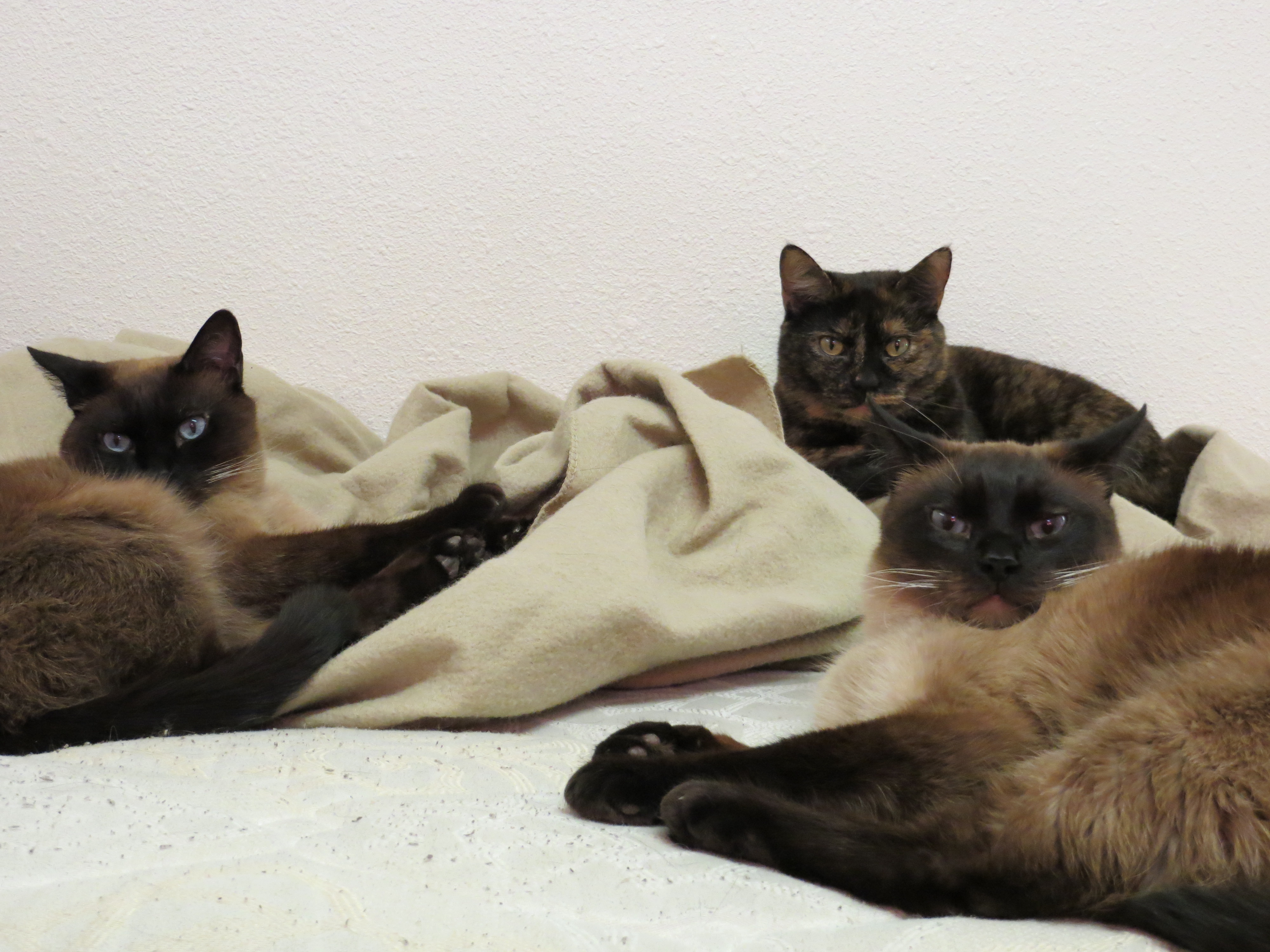
…only not at all.

(Click to Embiggen)

Jesus and the Devil Get into a Fight, …He Wins!

Tags

, , , , , , , , ,

If I have to be terrified of God, then I don’t see a difference between God and Satan…

Sonya D. Fowler, Posted on Twitter, July 29th, 2012

South Park

It’s a funny thing, even unbelievers typically assume there is a difference between God and Satan. It seems so obvious. After all we don’t confuse our friend Mike with our friend Chuck, but such friends are there to remind us of the difference between them on a daily basis. Entities such as God and Satan operate under no such constraints. Their traits change from one faith to another, even from one believer to another, or (truth be told) sometimes from morning to noon out of the same mouth.

Satan has certainly made a few significant changes in the years, graduating from a mere servant of the Lord to a principle nemesis for the Lord. For his own part, God has taken on a range of different faces over the course of human history. He still keeps an awful lot of them handy, even within the same tradition. Indeed the Christian world keeps its pretension to monotheism only by ignoring a likely case of multiple personality disorder. He is at the least bipolar.

And of course a trace of projection runs through all of this, right down to the most specific details and sources. You can tell a lot about people from what they say about their gods. And that is precisely why the quote above gives me such pause. To hear some folks talk about God, they might as well be speaking of the Devil.

When I was younger, I used to hear this phrase a lot; “The devil made me do it!” This usually came after someone had just done something they shouldn’t have, something they knew was wrong. Seems like these days people are more likely to lay their sins off on Jesus. Whenever their actions cannot be defended in reasonable terms, it is because Jesus wants it that way.

I’m not just being facetious here, not JUST anyway.

All to often, Jesus is the reason someone must suffer some indignity at the hands of a believer. Every enemy of Christendom, every native forced to endure abuse at the hands of his more forceful missionaries has certainly borne the brunt of this gambit. Yet they are not alone in learning that the Prince of Peace has ugly designs on their health and happiness. Jesus, we are told, is the reason that gay couples cannot marry; he is also the reason those of homosexual orientation must endure any number of indignities from ‘Christian’ circles. Jesus is the reason for compromising women’s health care. He is often the reason you cannot find certain books at the librar. He is the inspiration for a good deal of pseudo-science (some of which is genuinely harmful), for a good deal of pseudo-history, and even for the occasional cold cereal mishap. Jesus may or may not be responsible for some novel forms of corporal punishment and parenting practices, but if sundry Christian organizations are to be believed, he certainly approves of some highly creative approaches to that practice. Time and again, Jesus is the reason someone supplies for actions that are manifestly dishonest or demonstrably harmful to other people.

It really is difficult to tell just how far the Lamb of God is willing to take his lust for violence and cruelty, but it seems that he likes to do the really nasty work himself. To hear some folks talk, he is the reason for one or two great disasters; 9-11, earthquakes and Tsunamis ravaging Thailand or  Japan. I remember when Jesus demanded a ransom to spare the life of Oral Roberts, one of His most trusted servants. But of course, such divine temper tantrums are nothing new; just ask Lot’s wife.

Has it escaped anyone’s notice that the witnesses to Jesus’ greater crimes are the ones who so consistently inflict suffering in his name? Can it be a coincidence that the same people who speak approvingly of god’s greater acts of cruelty would be so quick to commit the mortal equivalent in his name?

Jesus is not just a source of terrible headlines; he is also the source of myriad petty cruelties which will never make it far into the public discussion. I expect most of us have learned in one form or another that Jesus has taken sides in some personal dispute with friends, family, or coworkers. Lord knows, he is certainly the reason given for most of the dick moves made by the moderators on sundry Christian message boards. Indeed, Jesus seems to be implicated in all manner of grievances great and small.

One wants to say to some of these people; “dude, your Jesus is a dick!”

But of course, the real point is that Jesus could never have been anything else but a dick to some of these people; he begins and ends in their least admirable qualities. And if there is anything more to the story of Jesus than a sort of malice to be inflicted upon others, you would never know this from the words and deeds of so many who claim to be doing his will.

There comes a time in all of this, when Jesus can no longer be distinguished from Satan. For some people, He is in effect little other than a name they give to their own vices.